


 Скачать презентацию Ergonomics for Fire and EMS Departments Developing
70d629dcf99d7029537b2afac4c76ca9.ppt
- Количество слайдов: 29
 Ergonomics for Fire and EMS Departments Developing & Implementing Ergonomic Solutions University of Oregon Labor Education and Research Center This material has been made possible by a grant from the Oregon Occupational Safety and Health Division, Department of Consumer and Business Services 1
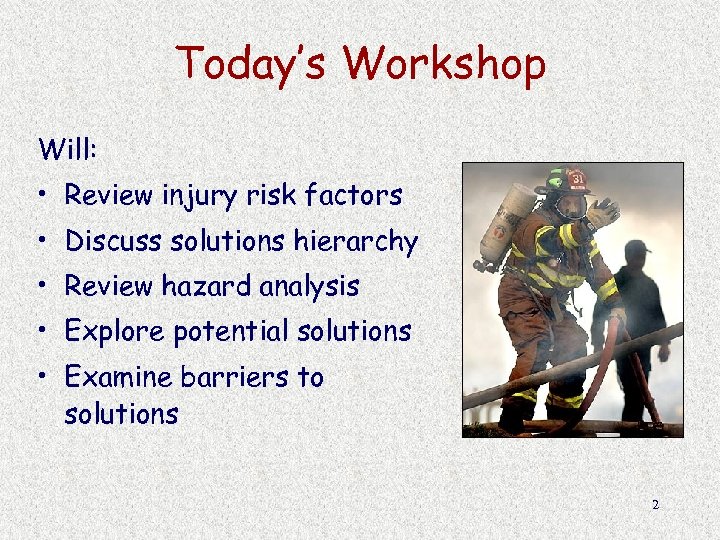 Today’s Workshop Will: • Review injury risk factors • Discuss solutions hierarchy • Review hazard analysis • Explore potential solutions • Examine barriers to solutions 2
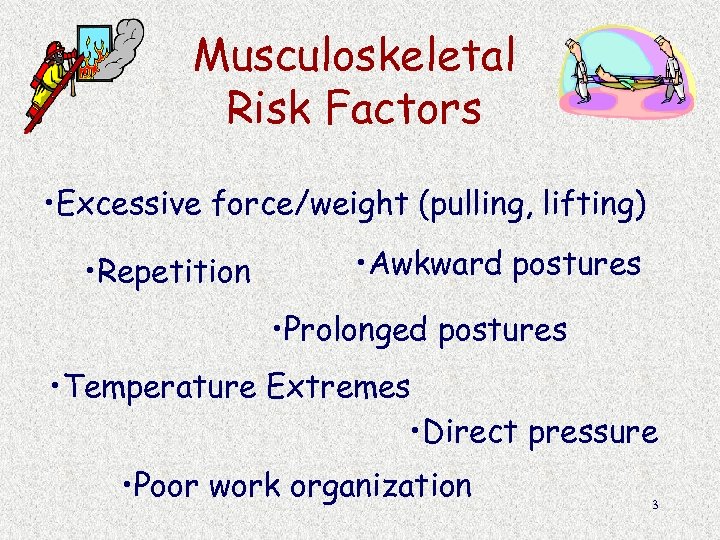 Musculoskeletal Risk Factors • Excessive force/weight (pulling, lifting) • Repetition • Awkward postures • Prolonged postures • Temperature Extremes • Direct pressure • Poor work organization 3
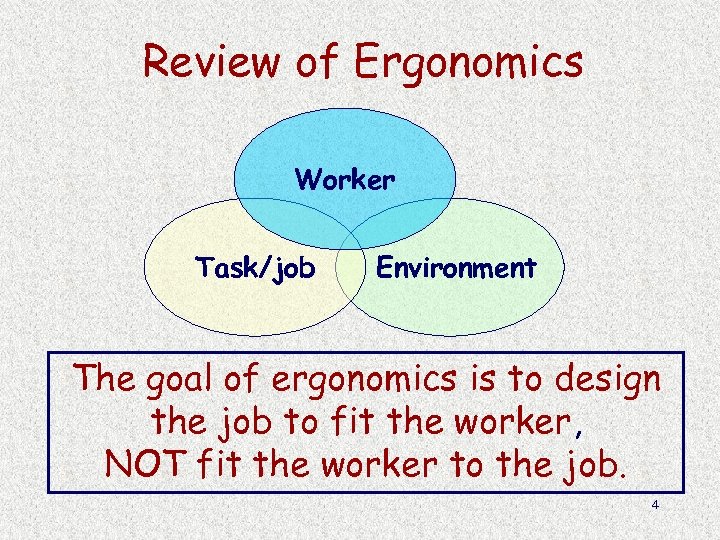 Review of Ergonomics Worker Task/job Environment The goal of ergonomics is to design the job to fit the worker, NOT fit the worker to the job. 4
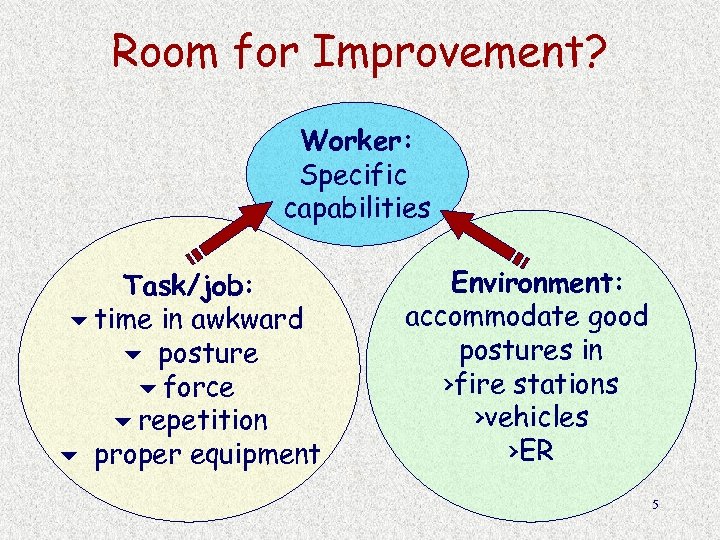 Room for Improvement? Worker: Specific capabilities Task/job: time in awkward posture force repetition proper equipment Environment: accommodate good postures in ›fire stations ›vehicles ›ER 5
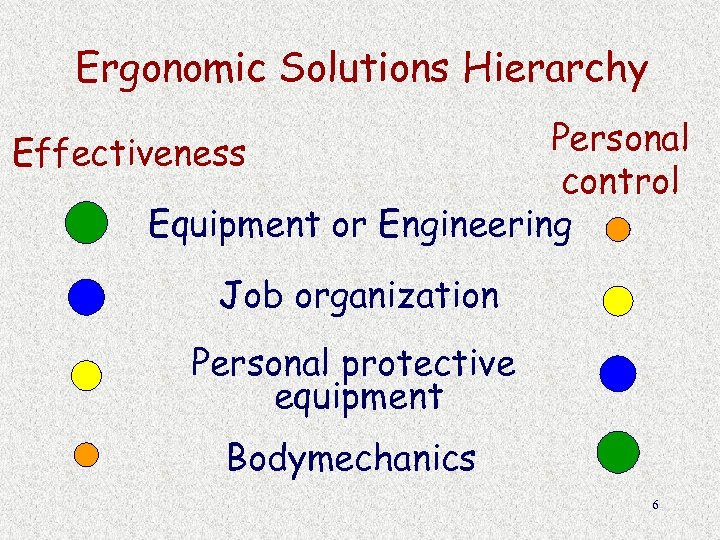 Ergonomic Solutions Hierarchy Personal Effectiveness control Equipment or Engineering Job organization Personal protective equipment Bodymechanics 6
 Injury 7
 fitness & wellness Injury 8
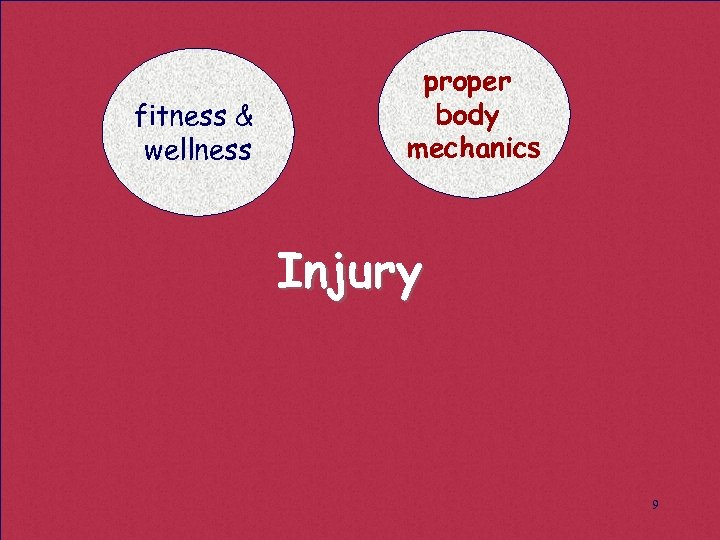 fitness & wellness proper body mechanics Injury 9
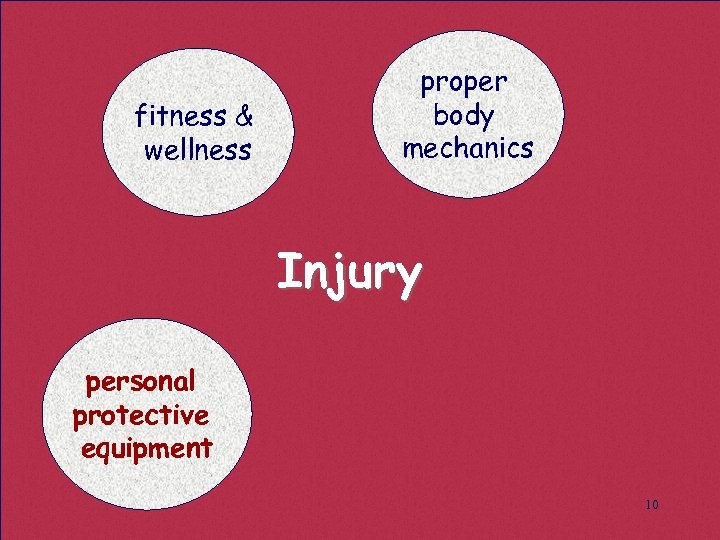 fitness & wellness proper body mechanics Injury personal protective equipment 10
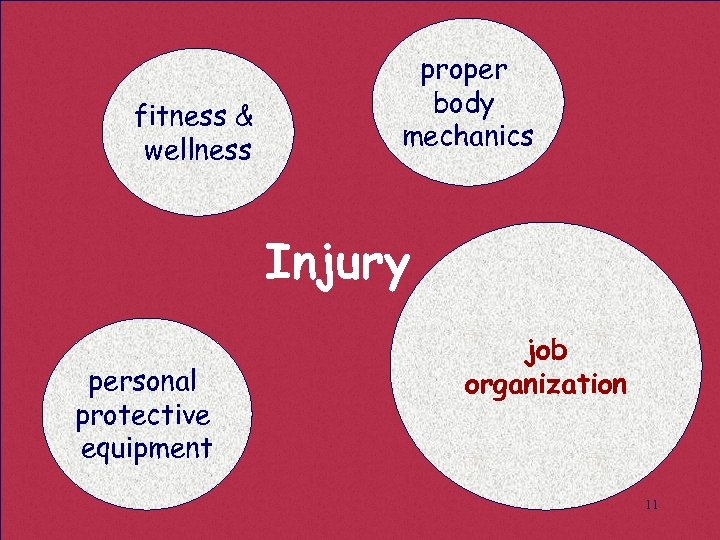 fitness & wellness proper body mechanics Injury personal protective equipment job organization 11
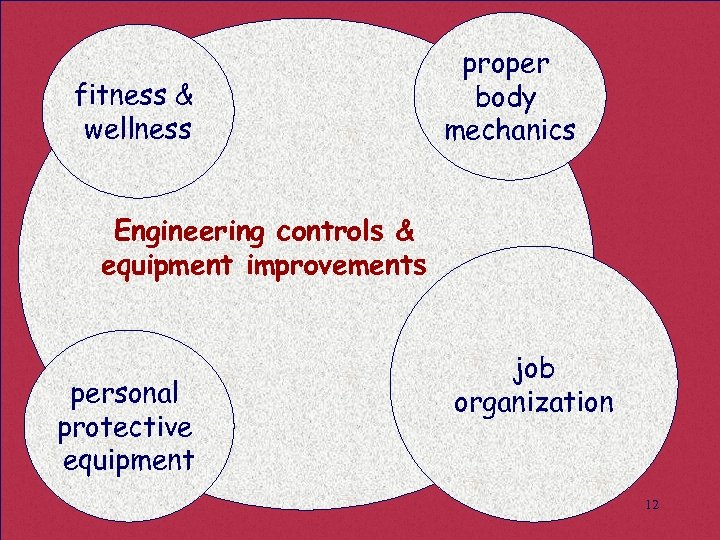 fitness & wellness proper body mechanics Engineering controls & equipment improvements personal protective equipment job organization 12
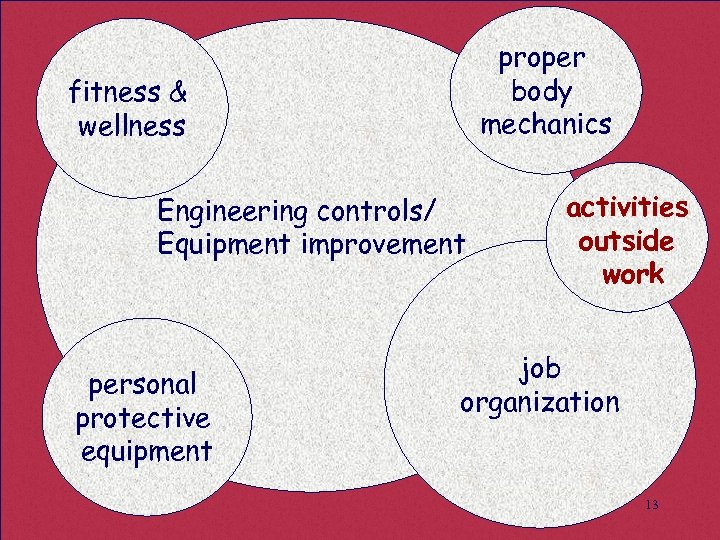 proper body mechanics fitness & wellness Engineering controls/ Equipment improvement activities outside work Risk of musculoskeletal injury personal protective equipment job organization 13
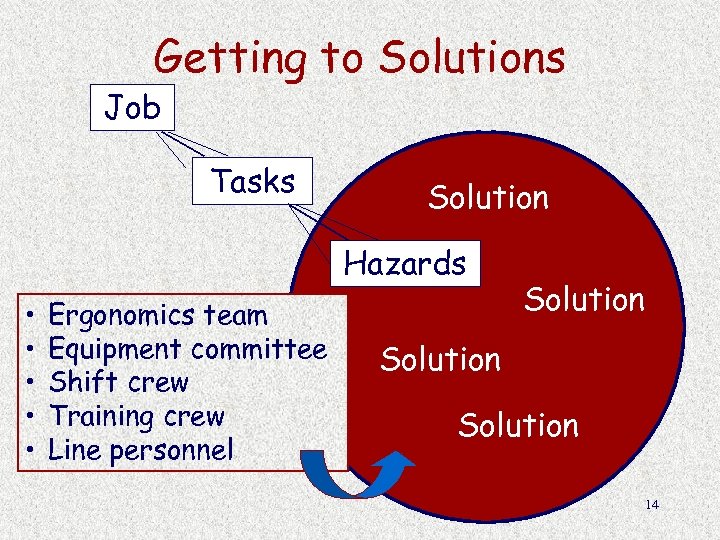 Getting to Solutions Job Tasks Solution Hazards • • • Ergonomics team Equipment committee Shift crew Training crew Line personnel Solution 14
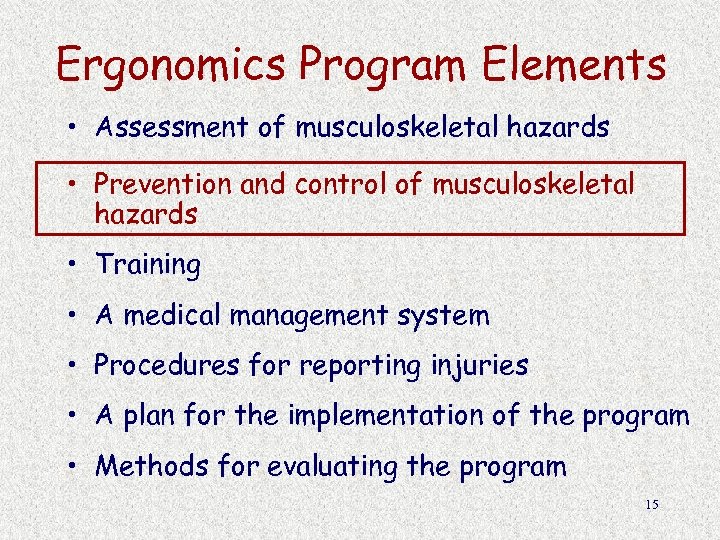 Ergonomics Program Elements • Assessment of musculoskeletal hazards • Prevention and control of musculoskeletal hazards • Training • A medical management system • Procedures for reporting injuries • A plan for the implementation of the program • Methods for evaluating the program 15
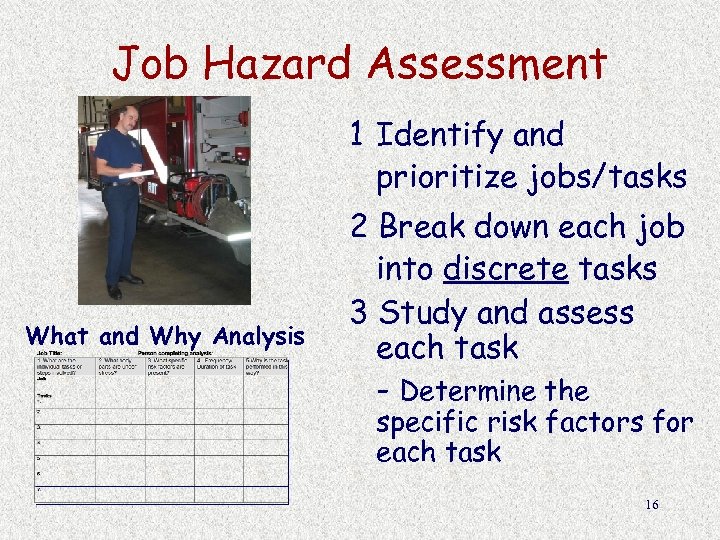 Job Hazard Assessment 1 Identify and prioritize jobs/tasks What and Why Analysis 2 Break down each job into discrete tasks 3 Study and assess each task - Determine the specific risk factors for each task 16
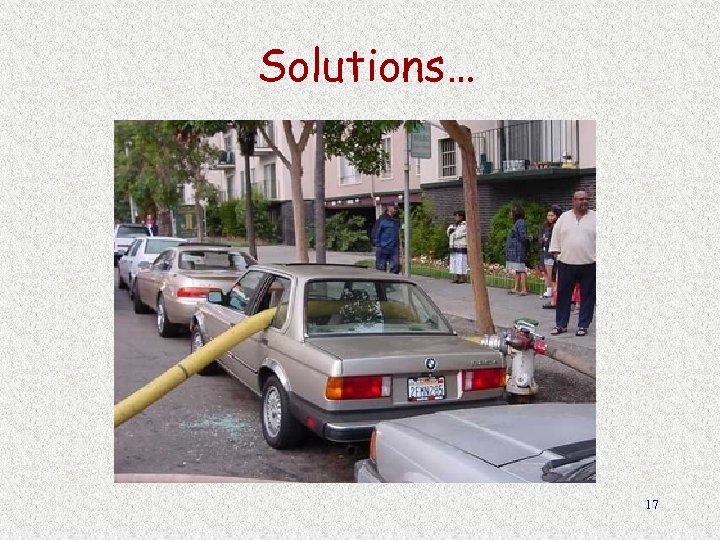 Solutions… 17
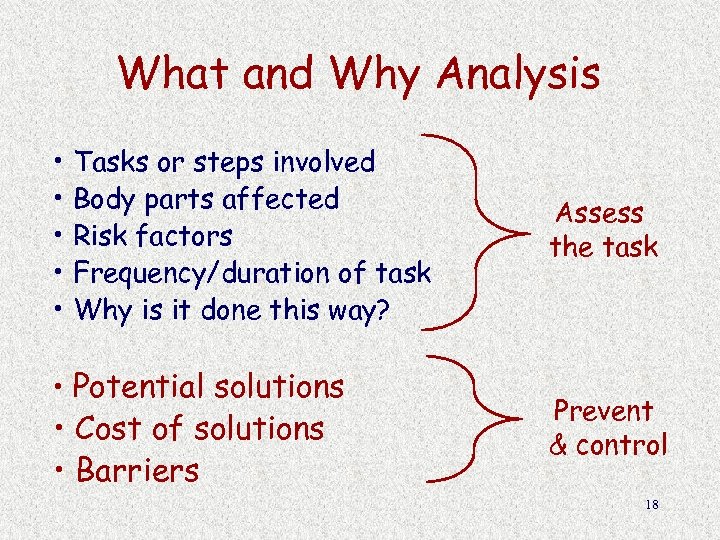 What and Why Analysis • Tasks or steps involved • Body parts affected • Risk factors • Frequency/duration of task • Why is it done this way? • Potential solutions • Cost of solutions • Barriers Assess the task Prevent & control 18
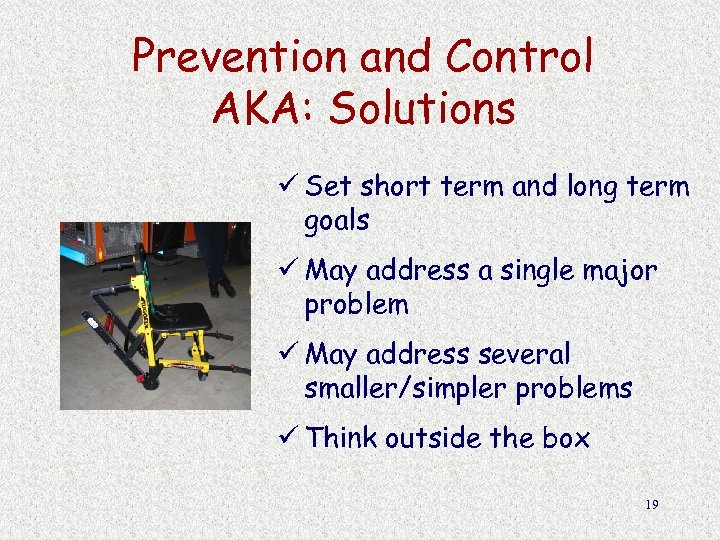 Prevention and Control AKA: Solutions ü Set short term and long term goals ü May address a single major problem ü May address several smaller/simpler problems ü Think outside the box 19
 Solutions • Come up with many solutions • Dream big and small • Decide what is optimal • Barriers • Cost/benefit • Best way to implement • Worker buy in • Department buy in • Have a process 20
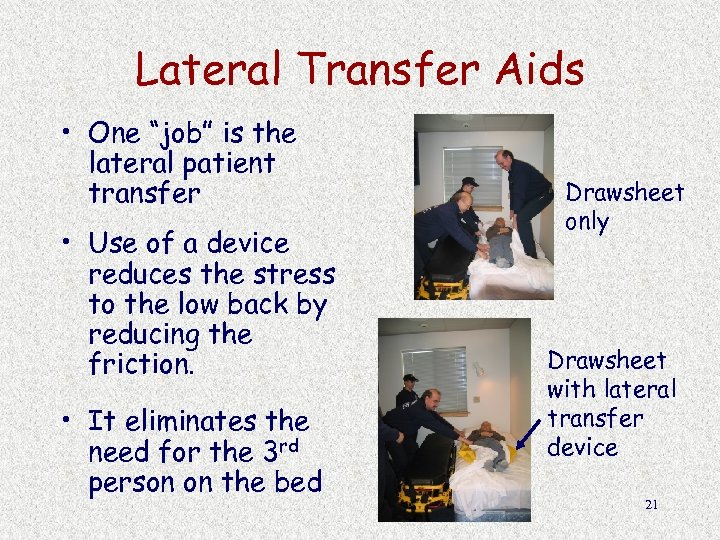 Lateral Transfer Aids • One “job” is the lateral patient transfer • Use of a device reduces the stress to the low back by reducing the friction. • It eliminates the need for the 3 rd person on the bed Drawsheet only Drawsheet with lateral transfer device 21
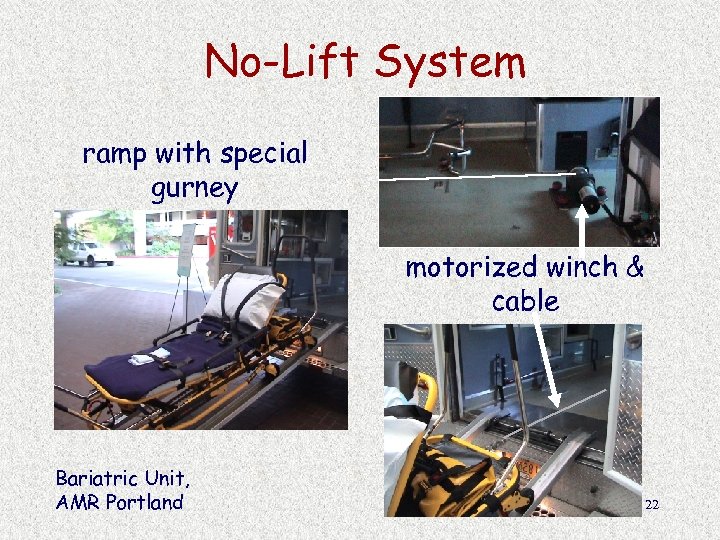 No-Lift System ramp with special gurney motorized winch & cable Bariatric Unit, AMR Portland 22
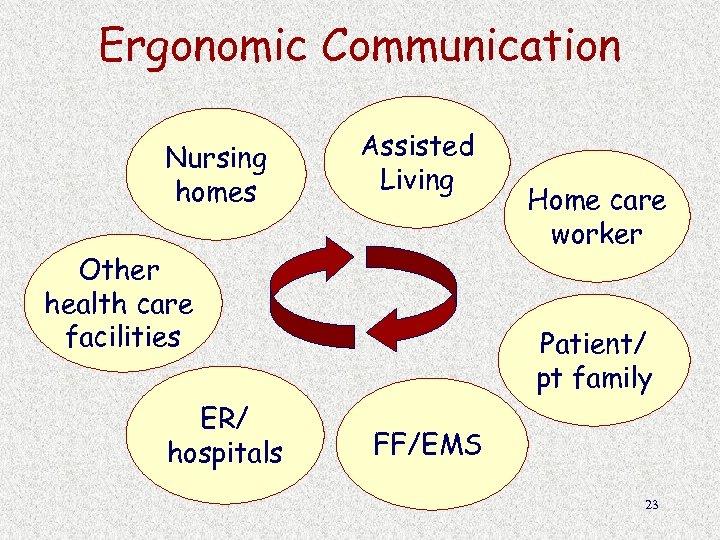 Ergonomic Communication Nursing homes Assisted Living Other health care facilities ER/ hospitals Home care worker Patient/ pt family FF/EMS 23
 Ergonomic Communication • Understanding the “bigger” picture can help all the workers involved • Establish appropriate communication with stakeholders – Patient handling – Patient logistics – Patient care • Develop policies 24
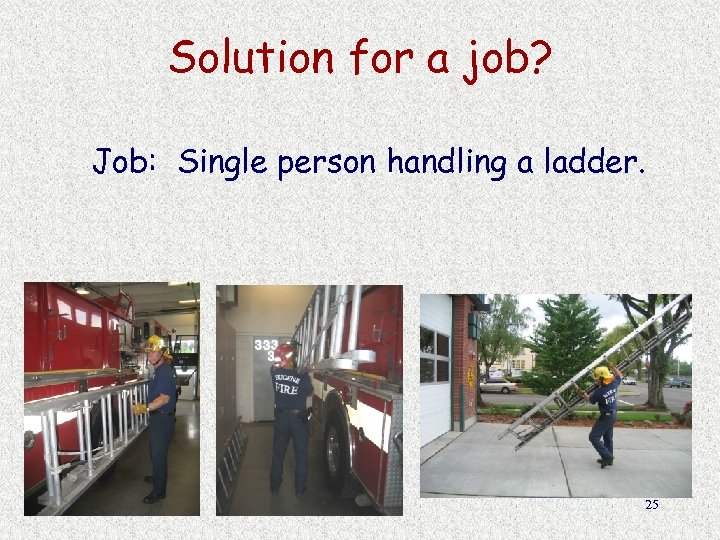 Solution for a job? Job: Single person handling a ladder. 25
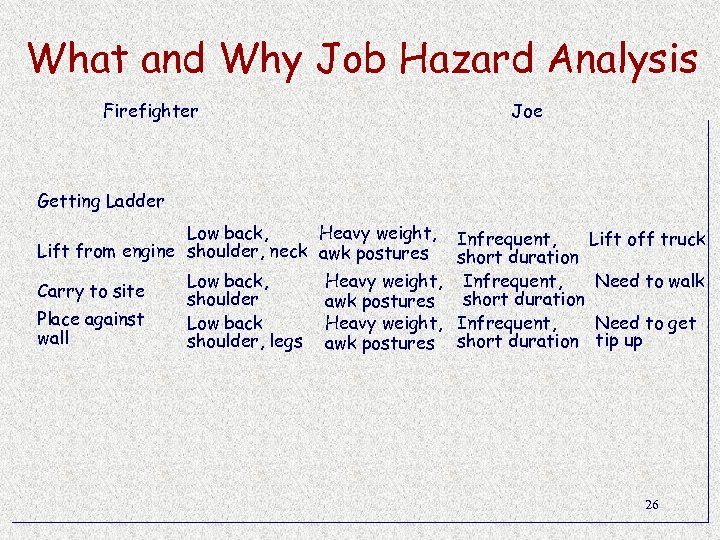 What and Why Job Hazard Analysis Firefighter Joe Getting Ladder Low back, Heavy weight, Lift from engine shoulder, neck awk postures Carry to site Place against wall Low back, shoulder Low back shoulder, legs Infrequent, Lift off truck short duration Heavy weight, Infrequent, Need to walk short duration awk postures Need to get Heavy weight, Infrequent, awk postures short duration tip up 26
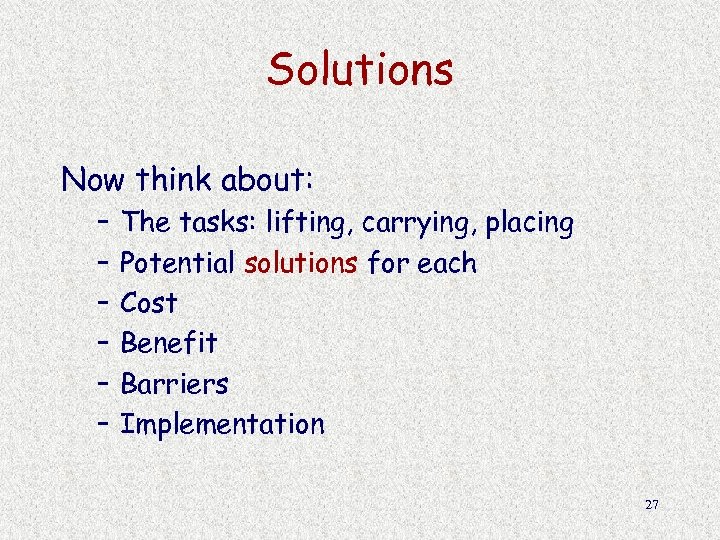 Solutions Now think about: – – – The tasks: lifting, carrying, placing Potential solutions for each Cost Benefit Barriers Implementation 27
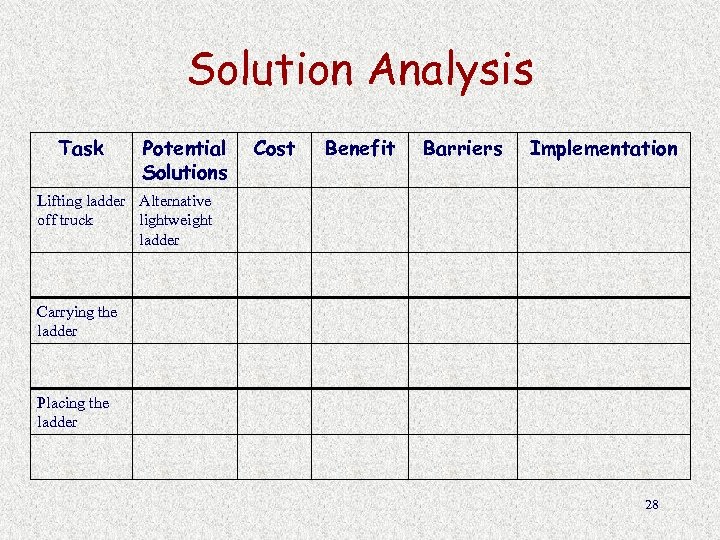 Solution Analysis Task Potential Solutions Cost Benefit Barriers Implementation Lifting ladder Alternative off truck lightweight ladder Carrying the ladder Placing the ladder 28
 ? ? Questions and Evaluation Thank you for your attention 29