


 Скачать презентацию Equity in Health Dr Shahram Yazdani The
817d5e1dfa10c4dc1c323f85370f34a5.ppt
- Количество слайдов: 46
 Equity in Health Dr. Shahram Yazdani
 The Right to Health n Preamble to the constitution of the WHO states “The enjoyment of the highest standard of health is one of the fundamental rights of every human being without distinction of race, religion, political belief, economic or social condition” Dr. Shahram Yazdani
 The Right to Health n The Declaration of Alma Ata, International Conference on Primary Health Care “The right to health is the most important social goal” Dr. Shahram Yazdani
 The Right to Health n The International Declaration of Human Rights “Everyone has a right to a standard of living adequate for the health and well being of his family including food, clothing, housing and medical care” Dr. Shahram Yazdani
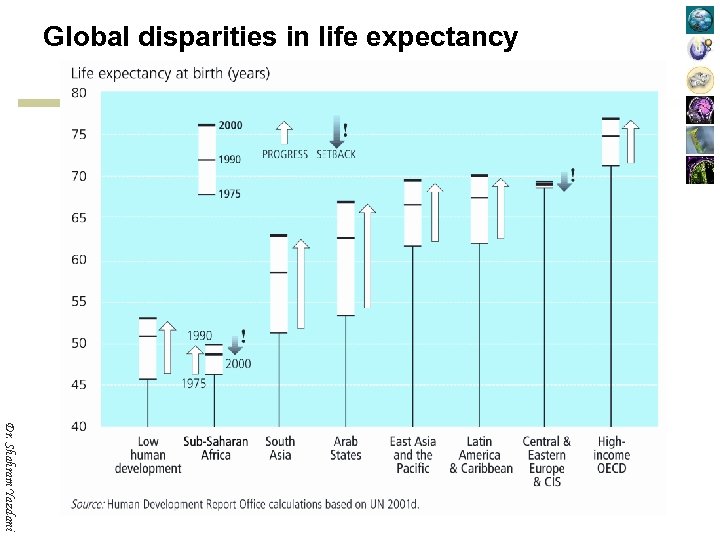 Global disparities in life expectancy Dr. Shahram Yazdani
 Inequity within countries n African American age adjusted death rates exceeded those for whites ¡ By 77% in stroke ¡ By 47% for heart disease ¡ By 34% for cancer ¡ By 655% for HIV infection Dr. Shahram Yazdani
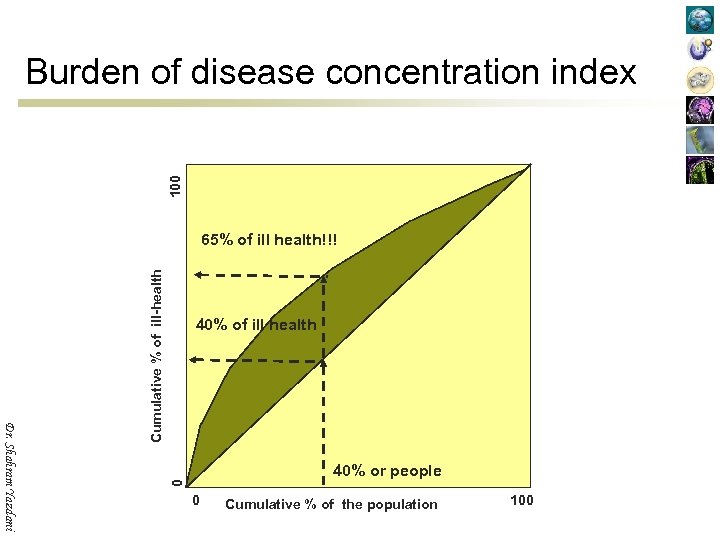 100 Burden of disease concentration index 40% of ill health 40% or people 0 Dr. Shahram Yazdani Cumulative % of ill-health 65% of ill health!!! 0 Cumulative % of the population 100
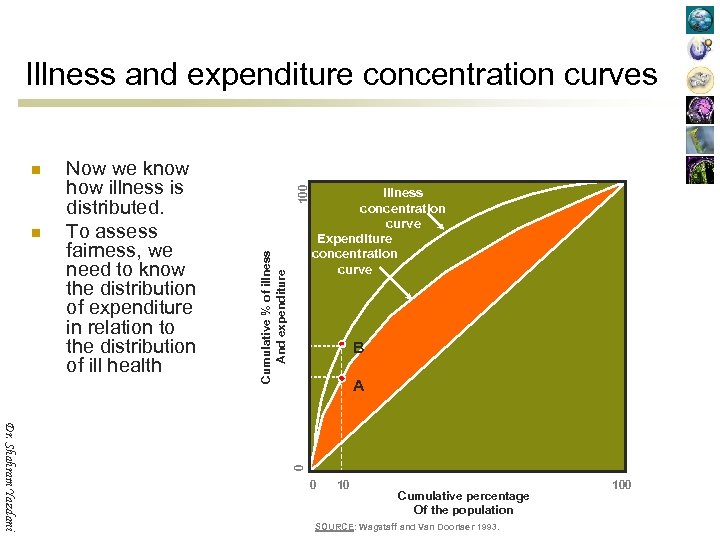 Illness concentration curve Expenditure concentration curve B A Dr. Shahram Yazdani 0 n Now we know how illness is distributed. To assess fairness, we need to know the distribution of expenditure in relation to the distribution of ill health Cumulative % of illness And expenditure n 100 Illness and expenditure concentration curves 0 10 Cumulative percentage Of the population SOURCE: Wagstaff and Van Doorlaer 1993. 100
 Defining equity It is important to distinguish between equality and equity: n Equality – concerned with equal shares n Equity – about fairness and it may be fair to be unequal Dr. Shahram Yazdani
 Equality of what? n n Equality of use Equality of access Equality of outcome Equality of Opportunity Dr. Shahram Yazdani
 Equality of use Dr. Shahram Yazdani There are many problems with this principle: n Not everybody responds to treatment in the same way n It requires that there are no differences in quality. n It ignores differences in individual preferences over health and health care n And it cannot be used as a proxy for equality of access or equality of outcomes
 Equality of access n n Access to health care may have instrumental value to promoting better outcomes but it may also be valued in its own right as contributing towards procedural justice Dr. Shahram Yazdani
 Equality of health n n n Dr. Shahram Yazdani This is concerned with distributive justice and represents a consequentialist view in which the only concern is with the distribution of health It has been criticised on the grounds that it is paternalistic and ignores individual choice and differences in preferences But Culyer and Wagstaff (1993) argue that “There is a danger in straining out the gnat of offending personal liberty that one swallows the camel of enduring and outrageous inequalities of health. ”
 Equality of opportunity n Equality of opportunity of having a healthy life Dr. Shahram Yazdani
 Equity in Health n Equity in delivery n Equity in financing Dr. Shahram Yazdani
 Equity in Health n n Delivery in relation to health need Financing in relation to ability to pay Dr. Shahram Yazdani
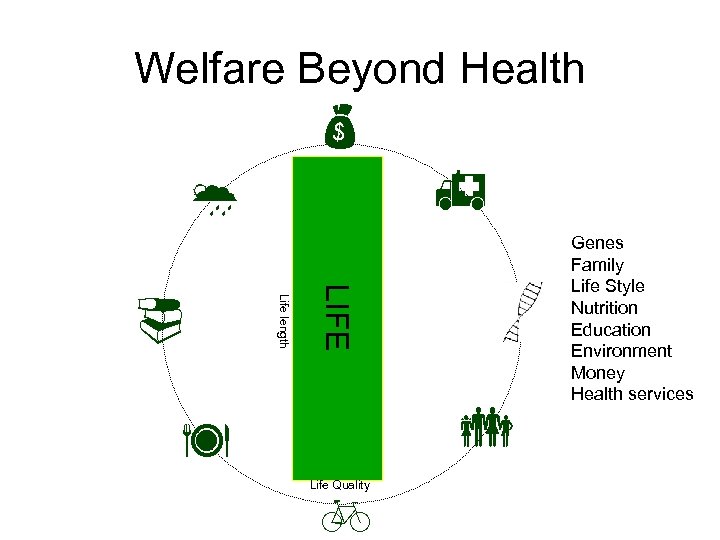
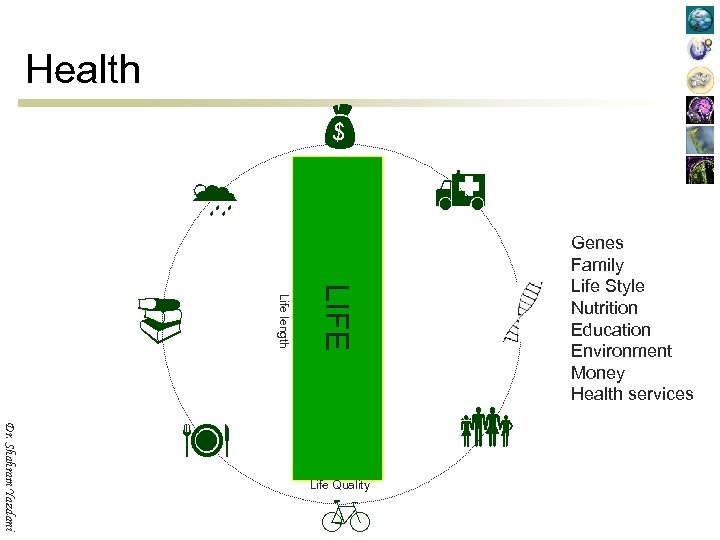 Health LIFE Life length Dr. Shahram Yazdani Life Quality Genes Family Life Style Nutrition Education Environment Money Health services
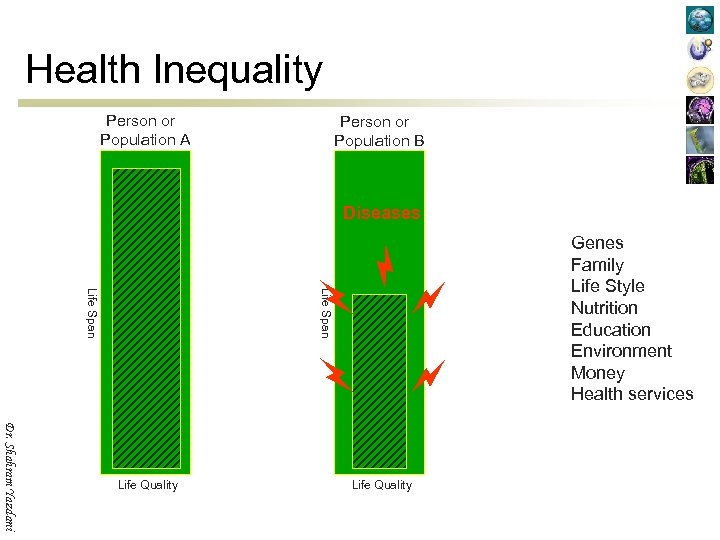 Health Inequality Person or Population A Person or Population B Diseases Life Span Dr. Shahram Yazdani Life Quality Genes Family Life Style Nutrition Education Environment Money Health services
 Does equality of health status imply equity in delivery or in financing? n n Dr. Shahram Yazdani Should a health system could be considered equitable if all citizens had the same health status ¡ No. Too many factors other than health care influence health status. Still, although health status is an incomplete and sometimes misleading measure of equity in health, it is an important input in design of targeting policies and in design and evaluation of social welfare programs.
 Equity in Health n n Delivery in relation to health need Financing in relation to ability to pay Dr. Shahram Yazdani
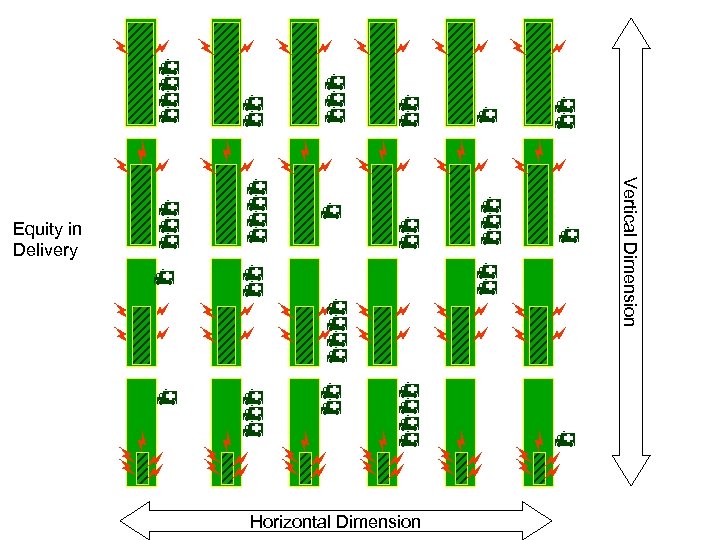 Vertical Dimension Horizontal Dimension Equity in Delivery
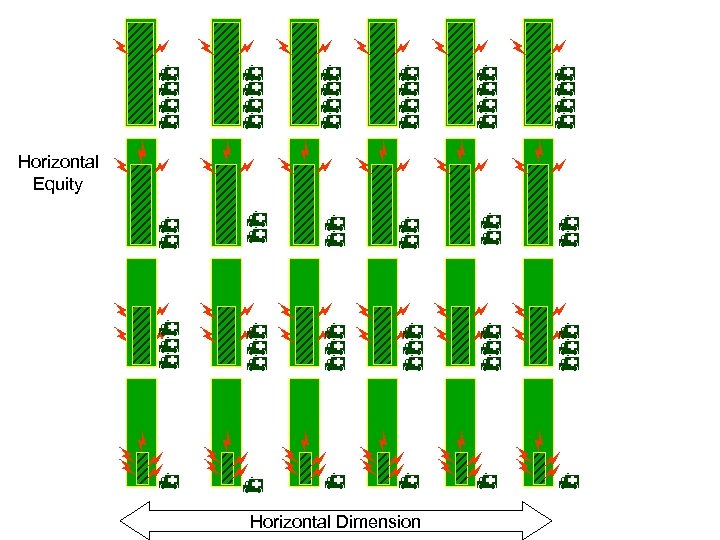 Horizontal Equity Horizontal Dimension
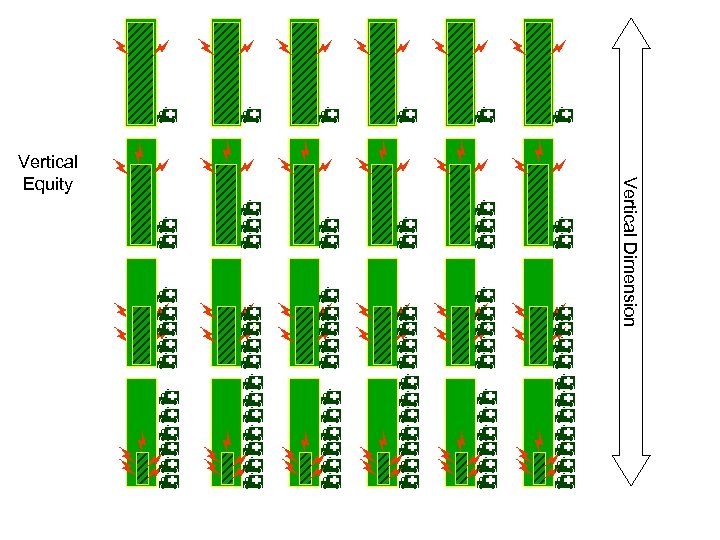 Vertical Dimension Vertical Equity
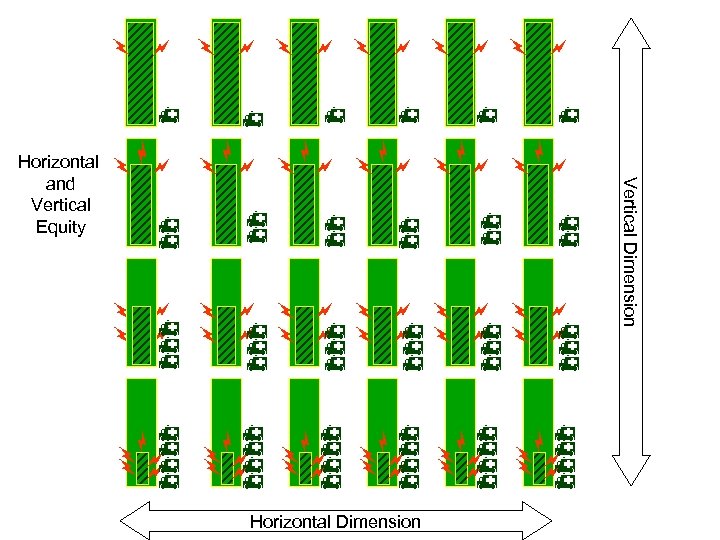 Horizontal Dimension Vertical Dimension Horizontal and Vertical Equity
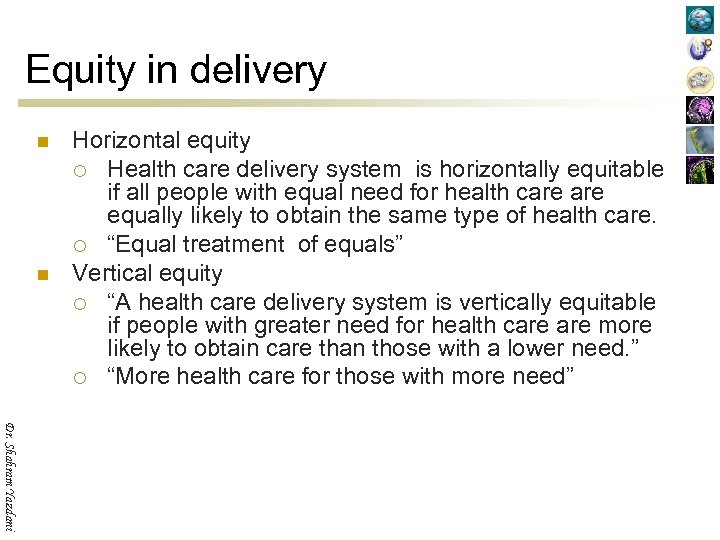 Equity in delivery n n Horizontal equity ¡ Health care delivery system is horizontally equitable if all people with equal need for health care equally likely to obtain the same type of health care. ¡ “Equal treatment of equals” Vertical equity ¡ “A health care delivery system is vertically equitable if people with greater need for health care more likely to obtain care than those with a lower need. ” ¡ “More health care for those with more need” Dr. Shahram Yazdani
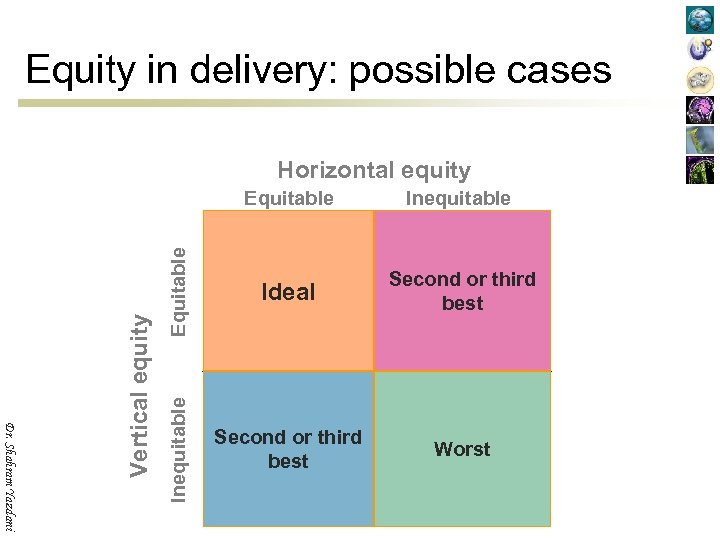 Equity in delivery: possible cases Inequitable Equitable Vertical equity Dr. Shahram Yazdani Equitable Ideal Second or third best Inequitable Horizontal equity Second or third best Worst
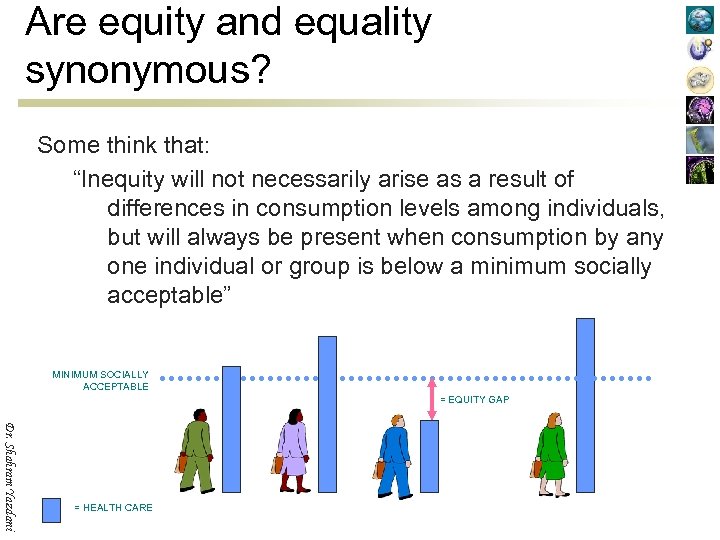 Are equity and equality synonymous? Some think that: “Inequity will not necessarily arise as a result of differences in consumption levels among individuals, but will always be present when consumption by any one individual or group is below a minimum socially acceptable” MINIMUM SOCIALLY ACCEPTABLE = EQUITY GAP Dr. Shahram Yazdani = HEALTH CARE
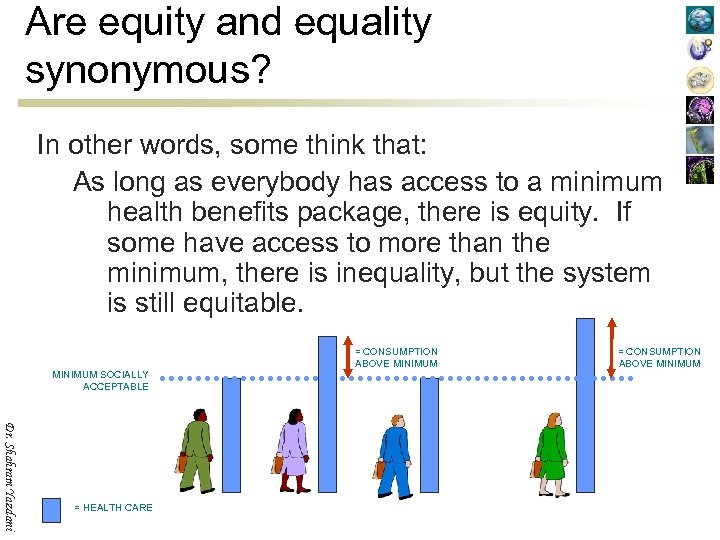 Are equity and equality synonymous? In other words, some think that: As long as everybody has access to a minimum health benefits package, there is equity. If some have access to more than the minimum, there is inequality, but the system is still equitable. MINIMUM SOCIALLY ACCEPTABLE Dr. Shahram Yazdani = HEALTH CARE = CONSUMPTION ABOVE MINIMUM
 Equity in Health n n Delivery in relation to health need Financing in relation to ability to pay Dr. Shahram Yazdani
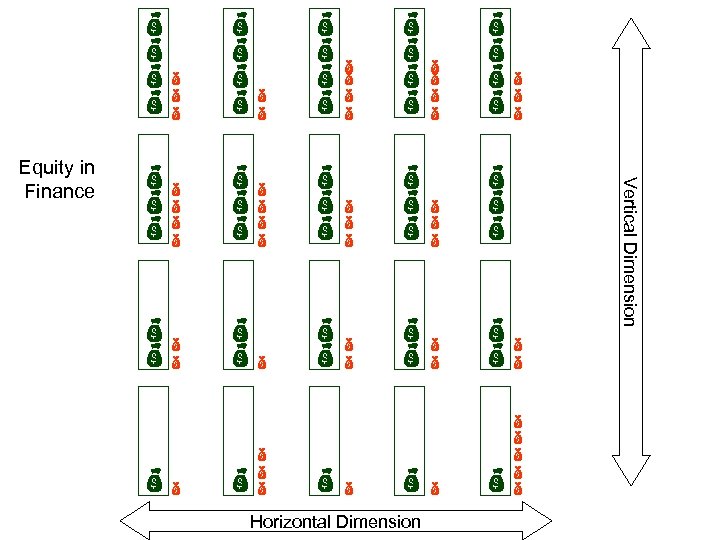 Equity in Finance Horizontal Dimension Vertical Dimension
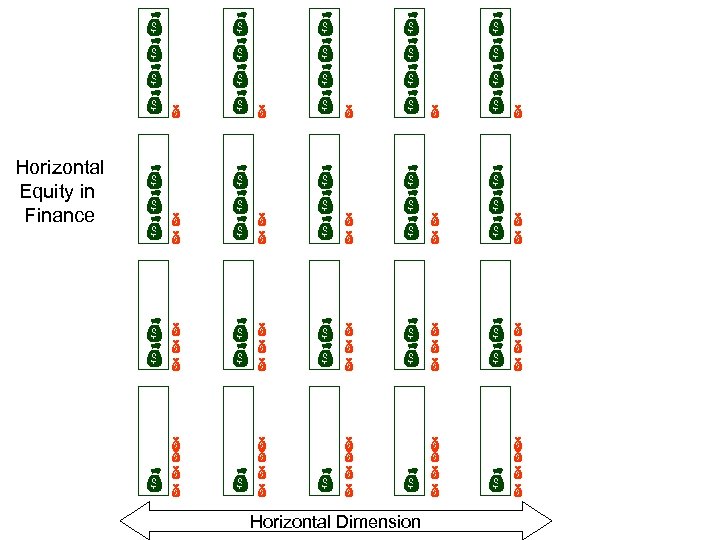 Horizontal Equity in Finance Horizontal Dimension
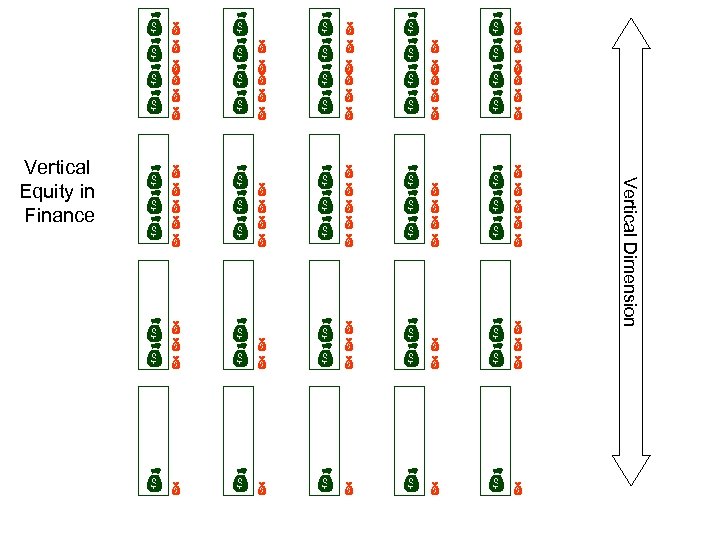 Vertical Equity in Finance Vertical Dimension
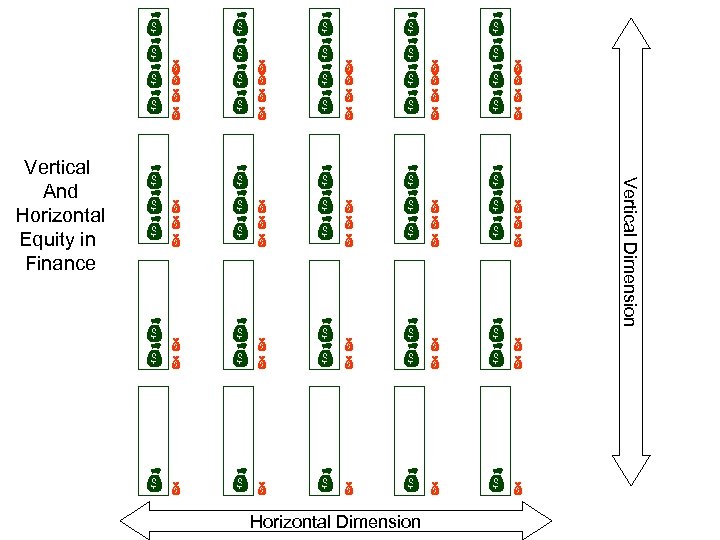 Vertical And Horizontal Equity in Finance Horizontal Dimension Vertical Dimension
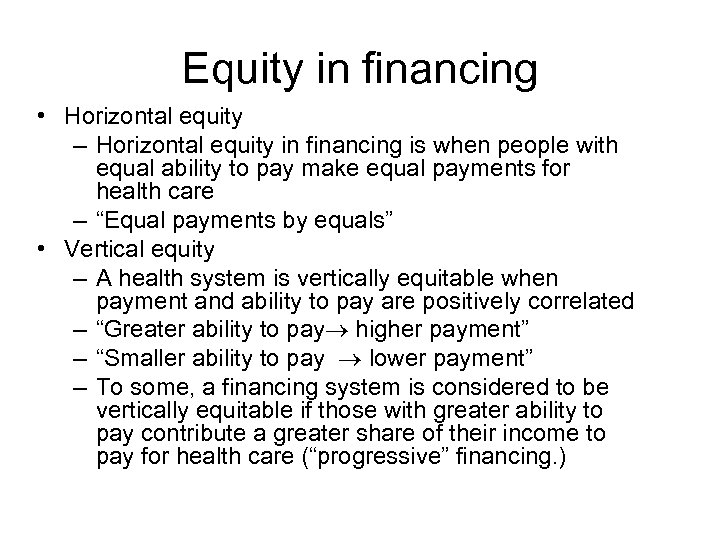 Equity in financing • Horizontal equity – Horizontal equity in financing is when people with equal ability to pay make equal payments for health care – “Equal payments by equals” • Vertical equity – A health system is vertically equitable when payment and ability to pay are positively correlated – “Greater ability to pay higher payment” – “Smaller ability to pay lower payment” – To some, a financing system is considered to be vertically equitable if those with greater ability to pay contribute a greater share of their income to pay for health care (“progressive” financing. )
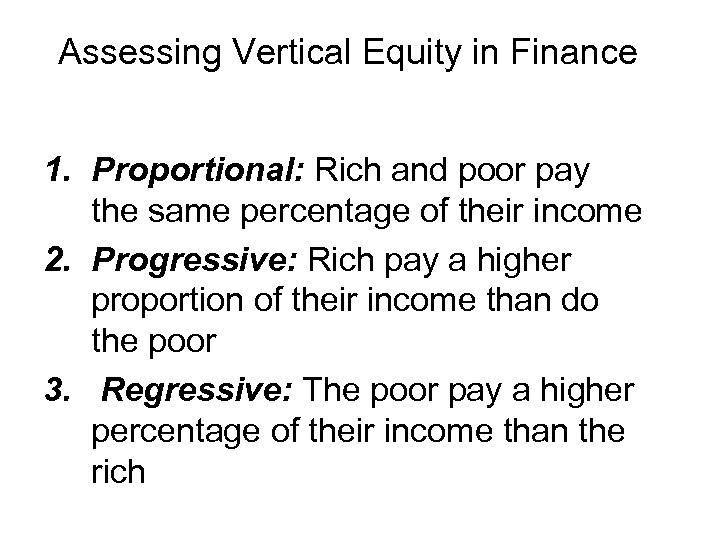 Assessing Vertical Equity in Finance 1. Proportional: Rich and poor pay the same percentage of their income 2. Progressive: Rich pay a higher proportion of their income than do the poor 3. Regressive: The poor pay a higher percentage of their income than the rich
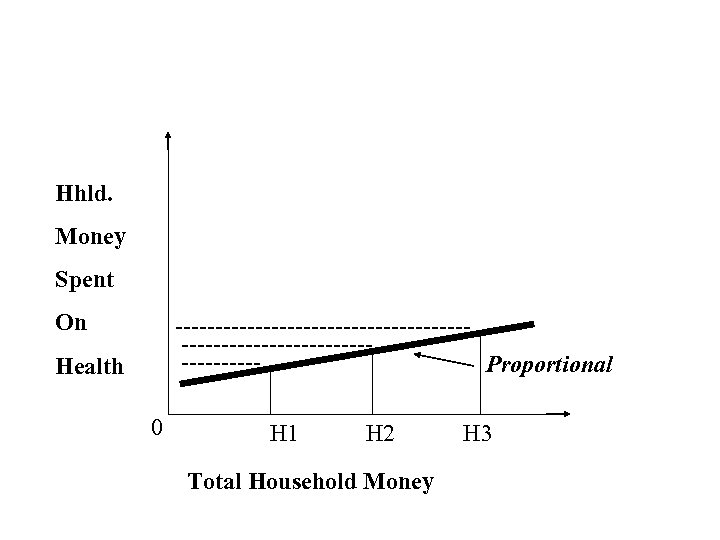 Hhld. Money Spent On ----------------------------------Proportional Health 0 H 1 H 2 Total Household Money H 3
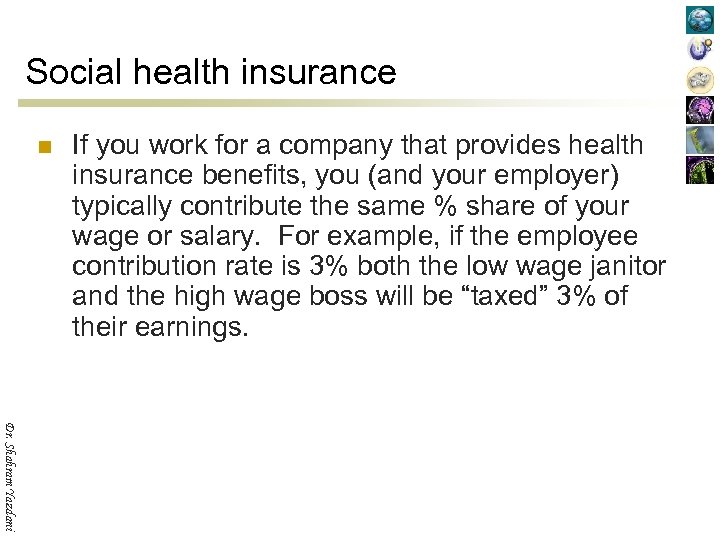 Social health insurance n If you work for a company that provides health insurance benefits, you (and your employer) typically contribute the same % share of your wage or salary. For example, if the employee contribution rate is 3% both the low wage janitor and the high wage boss will be “taxed” 3% of their earnings. Dr. Shahram Yazdani
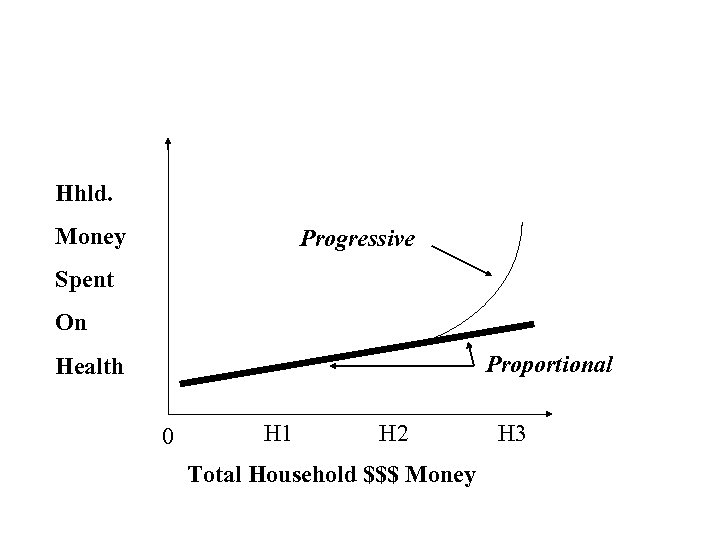 Hhld. Money Progressive Spent On Proportional Health 0 H 1 H 2 Total Household $$$ Money H 3
 Annual income tax (a “direct tax”) • There tends to be exemption from income tax for very low household income, whereas income tax rates climb with levels of household income and then become relatively high for highest income households.
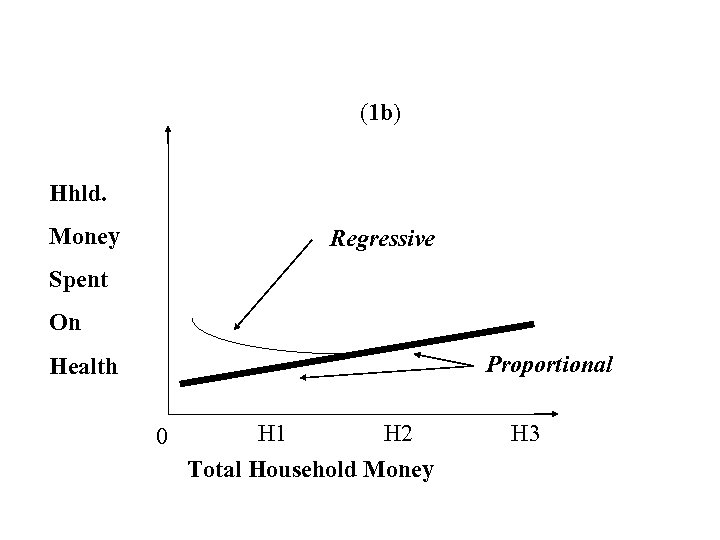 (1 b) Hhld. Money Regressive Spent On Proportional Health 0 H 1 H 2 Total Household Money H 3
 User Fees (or Out-of-pocket payments) • Both poor and rich tend to be charged the same amount for a health service, regardless of ability to pay. This applies especially to drugs, whereas exemptions may be in place with respect to out-patient and in-patient services.
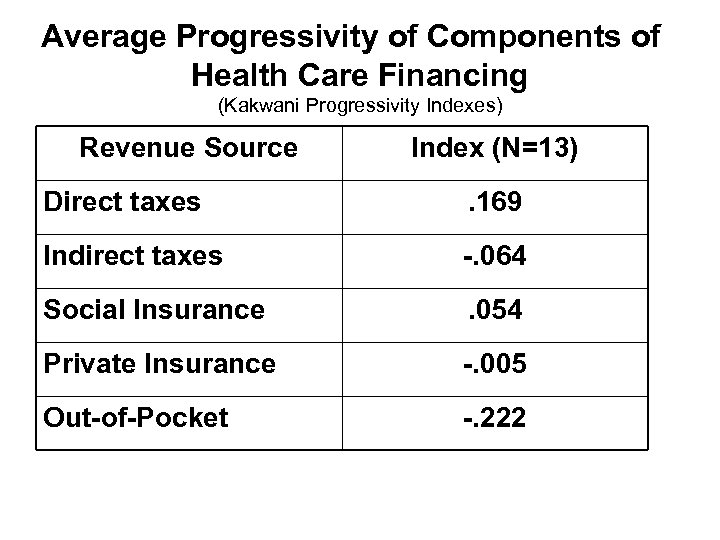 Average Progressivity of Components of Health Care Financing (Kakwani Progressivity Indexes) Revenue Source Index (N=13) Direct taxes . 169 Indirect taxes -. 064 Social Insurance . 054 Private Insurance -. 005 Out-of-Pocket -. 222
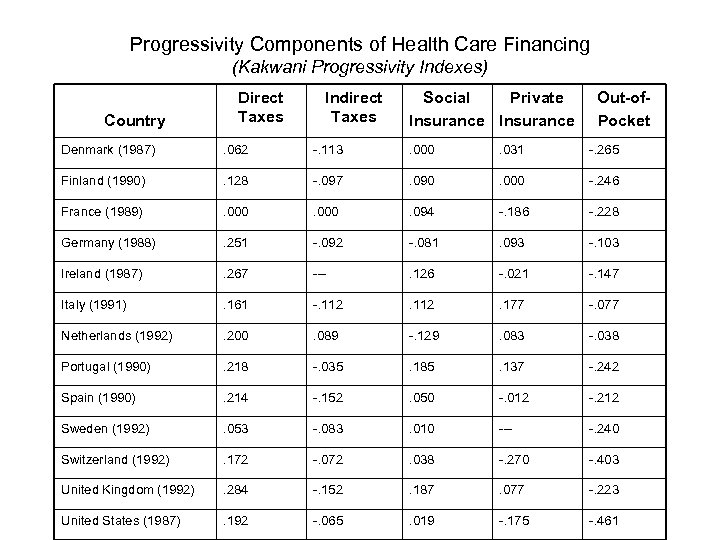 Progressivity Components of Health Care Financing (Kakwani Progressivity Indexes) Country Direct Taxes Indirect Taxes Social Private Insurance Out-of. Pocket Denmark (1987) . 062 -. 113 . 000 . 031 -. 265 Finland (1990) . 128 -. 097 . 090 . 000 -. 246 France (1989) . 000 . 094 -. 186 -. 228 Germany (1988) . 251 -. 092 -. 081 . 093 -. 103 Ireland (1987) . 267 --- . 126 -. 021 -. 147 Italy (1991) . 161 -. 112 . 177 -. 077 Netherlands (1992) . 200 . 089 -. 129 . 083 -. 038 Portugal (1990) . 218 -. 035 . 185 . 137 -. 242 Spain (1990) . 214 -. 152 . 050 -. 012 -. 212 Sweden (1992) . 053 -. 083 . 010 --- -. 240 Switzerland (1992) . 172 -. 072 . 038 -. 270 -. 403 United Kingdom (1992) . 284 -. 152 . 187 . 077 -. 223 United States (1987) . 192 -. 065 . 019 -. 175 -. 461
 Welfare Beyond Health LIFE Life length Life Quality Genes Family Life Style Nutrition Education Environment Money Health services
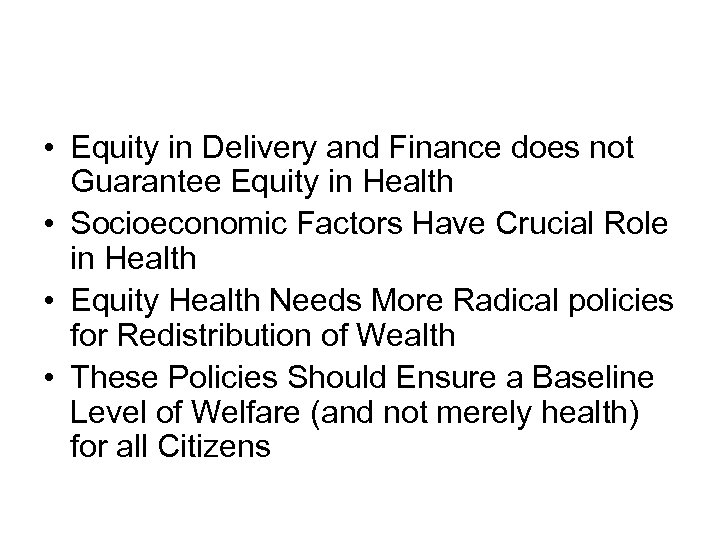 • Equity in Delivery and Finance does not Guarantee Equity in Health • Socioeconomic Factors Have Crucial Role in Health • Equity Health Needs More Radical policies for Redistribution of Wealth • These Policies Should Ensure a Baseline Level of Welfare (and not merely health) for all Citizens
 Thank You ! Any Question? Dr. Shahram Yazdani