


 Скачать презентацию EPILEPSY SURGERY Nonlesional Localization-related Epilepsy Sang Kun Lee
275026ac807490da4b00cd5491cd529c.ppt
- Количество слайдов: 39
 EPILEPSY SURGERY Nonlesional Localization-related Epilepsy Sang Kun Lee Department of Neurology Seoul National University Hospital Seoul, Korea
 Seizure 2002; 11: 184– 192 Pre-surgical evaluation and surgical outcome of 41 patients with non-lesional neocortical epilepsy KEUN-SIK HONG, SANG KUN LEE‡, JOO-YONG KIM‡, DONG-SOO LEE§& CHUN-KEE CHUNG¶† Department of Neurology, Inje University Ilsan Paik Hospital, Korea; ‡ Department of Neurology; § Nuclear Medicine; ¶ Neurosurgery, College of Medicine, Seoul National University, Korea
 Presurgical evaluation and surgical outcome of 89 patients with non-lesional neocortical epilepsy
 SURGICALLY REMEDIABLE EPILEPSY SYNDROMES • Nearly 40% of adults with partial epilepsy have medically refractory seizures. • The diagnostic yield of MRI in patients with MTS and lesional epilepsy has been confirmed. • Patients with MTLE and lesional epilepsy may be highly favorable candidates for epilepsy surgery. • A structural neuroimaging alteration almost invariably is a reliable indicator of the site of seizure onset.
 DIAGNOSTIC ROLE OF NEUROIMAGING IN MEDIAL TLE • Hippocampal sclerosis can be easily found by MRI. • Cases without any abnormal findings exit but rare (Son YJ, 1999). • Diagnostic role in three types of medial TLE – Not prominent hippocampal sclerosis – Bilateral hippocampal sclerosis – Normal MRI findings
 NONLESIONAL NEOCORTICAL EPILEPSY • The most frequent site of seizure onset is extratemporal, mainly frontal lobe. • Pathology: gliosis, focal cell loss, MCD, FCD or normal • Inherent difficulty in identifying the epileptogenic zone may lead to incomplete resection. • Only a minority of patients are rendered seizure-free after surgical treatment: An estimated 20 to 30% in previous series with extratemporal, mainly frontal lobe, experienced a seizure remission after a focal cortical resection (Cascino GD, 2004, 1992).
 ROLE OF NEUROIMAGING TOOLS • FDG-PET has known to be frequently normal in patients with nonlesional localization-related epilepsy • Ictal SPECT with SISCOM analysis may be good in the localization of epileptogenic foci and in predicting surgical outcome (O’Brien TJ, 2000). • Need to delineate the roles of various diagnostic techniques
 PURPOSE • To evaluate the surgical outcome of nonlesional neocortical epilepsy • To assess the diagnostic and prognostic roles of interictal and ictal scalp EEG, interictal FDG-PET, subtraction 99 m. Tc-HMPAO SPECT, and invasive study
 PATIENTS • 89 non-lesional neocortical epilepsy patients (35 frontal lobe epilepsy, 31 neocortical temporal lobe epilepsy, 11 occipital lobe epilepsy, 11 parietal lobe epilepsy, and one with multifocal onset) who underwent focal neocortical resection and invasive study between December 1994 and July 2002 • Follow-up for at least two years after surgery
 PRESURGICAL EVALUATIONS • Interictal EEG • Video-EEG monitoring • Interictal and ictal SPECT: Visual and subtraction analysis • FDG-PET: Visual and SPM analysis • Invasive monitoring: Onset pattern and onset frequency
 ANALYSIS • Assessing surgical outcome as a whole and according to the location of epileptogenic lobe • Diagnostic accuracy of presurgical evaluations in seizure free patients • Assessing the relationship between the results of presurgical evaluations and the surgical outcome • Assessing the relationship between the surgical outcome and the concordance of the presurgical evaluations
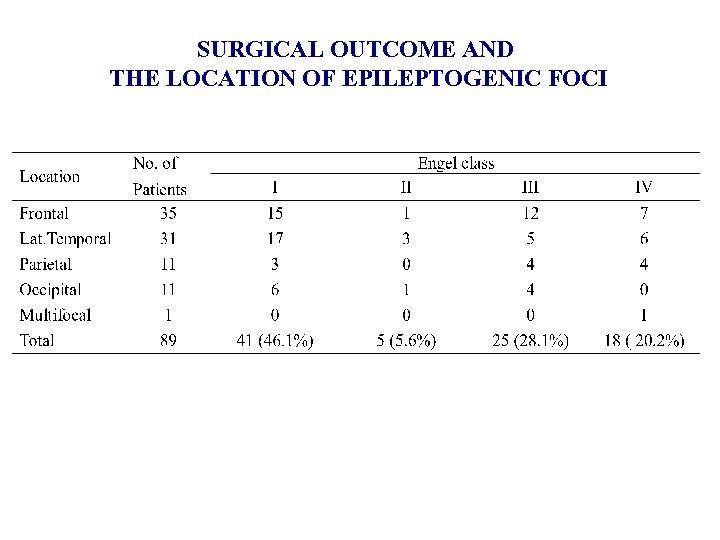 SURGICAL OUTCOME AND THE LOCATION OF EPILEPTOGENIC FOCI
 SURGICAL OUTCOME AND THE LOCATION OF EPILEPTOGENIC FOCI • Seventy-one patients (80. 0%) had good surgical outcome (Engel class 1 -3) including 41 seizure free patients (46. 1%). • The surgical outcome of FLE and PLE was less favorable than neocortical TLE and OLE but failed to reach statistical significance (P=0. 428).
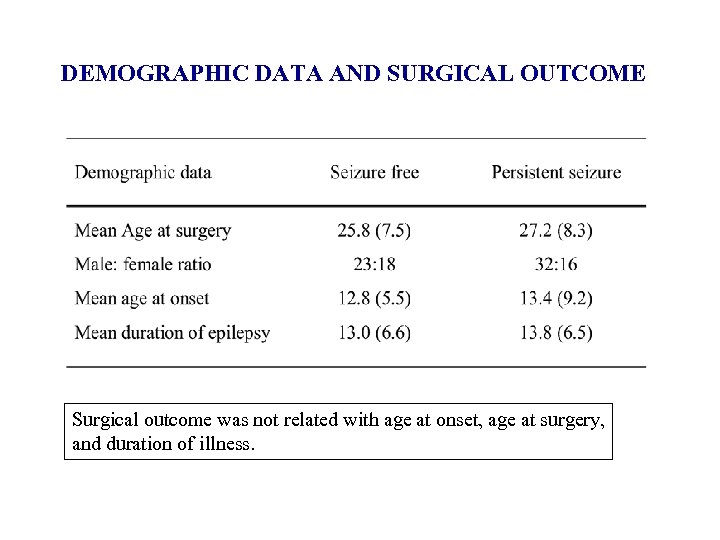 DEMOGRAPHIC DATA AND SURGICAL OUTCOME Surgical outcome was not related with age at onset, age at surgery, and duration of illness.
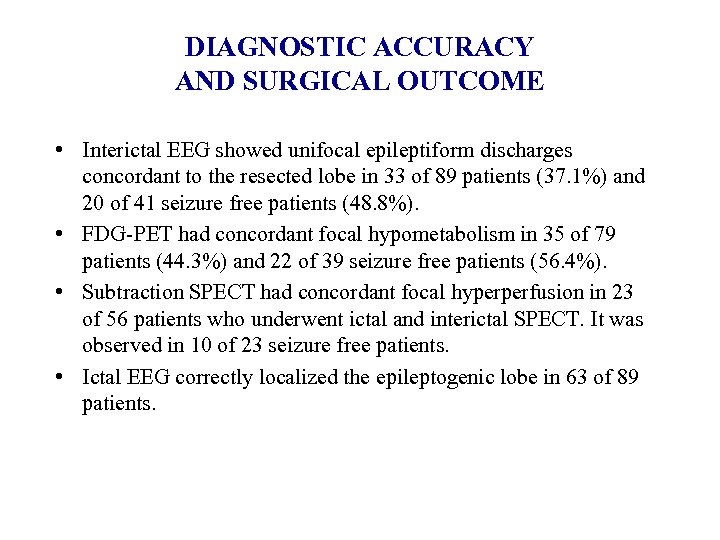 DIAGNOSTIC ACCURACY AND SURGICAL OUTCOME • Interictal EEG showed unifocal epileptiform discharges concordant to the resected lobe in 33 of 89 patients (37. 1%) and 20 of 41 seizure free patients (48. 8%). • FDG-PET had concordant focal hypometabolism in 35 of 79 patients (44. 3%) and 22 of 39 seizure free patients (56. 4%). • Subtraction SPECT had concordant focal hyperperfusion in 23 of 56 patients who underwent ictal and interictal SPECT. It was observed in 10 of 23 seizure free patients. • Ictal EEG correctly localized the epileptogenic lobe in 63 of 89 patients.
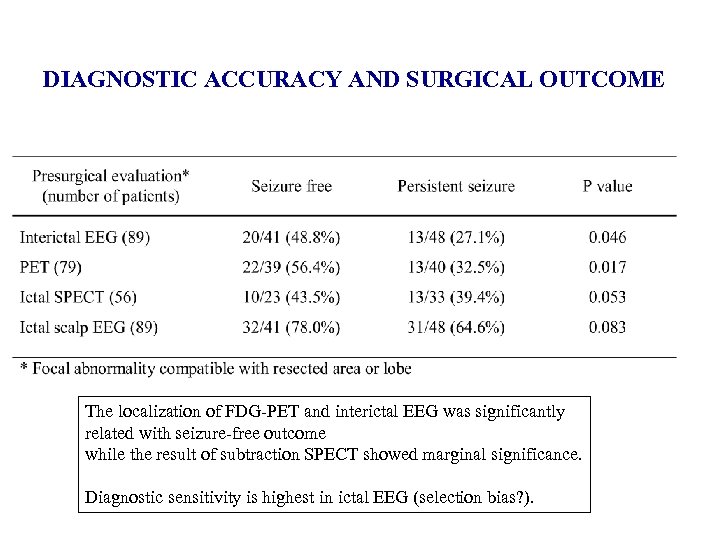 DIAGNOSTIC ACCURACY AND SURGICAL OUTCOME The localization of FDG-PET and interictal EEG was significantly related with seizure-free outcome while the result of subtraction SPECT showed marginal significance. Diagnostic sensitivity is highest in ictal EEG (selection bias? ).
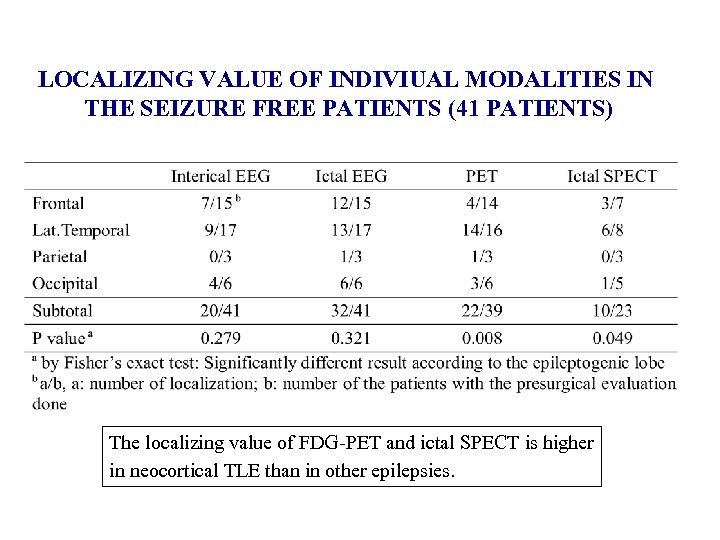 LOCALIZING VALUE OF INDIVIUAL MODALITIES IN THE SEIZURE FREE PATIENTS (41 PATIENTS) The localizing value of FDG-PET and ictal SPECT is higher in neocortical TLE than in other epilepsies.
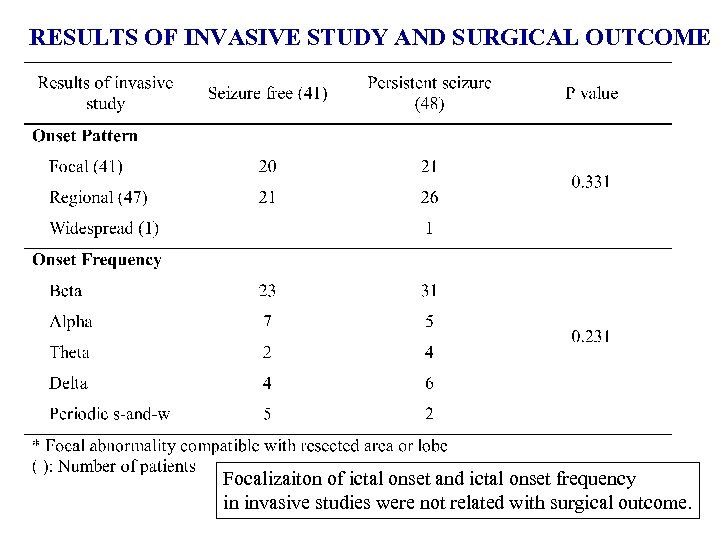 RESULTS OF INVASIVE STUDY AND SURGICAL OUTCOME Focalizaiton of ictal onset and ictal onset frequency in invasive studies were not related with surgical outcome.
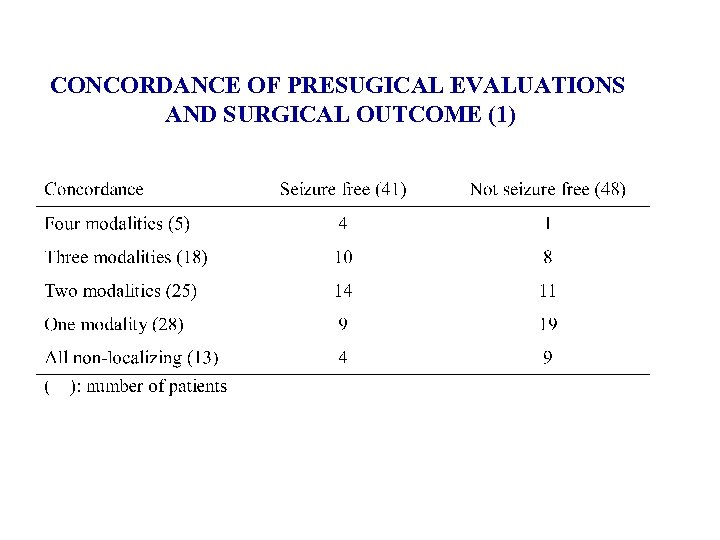 CONCORDANCE OF PRESUGICAL EVALUATIONS AND SURGICAL OUTCOME (1)
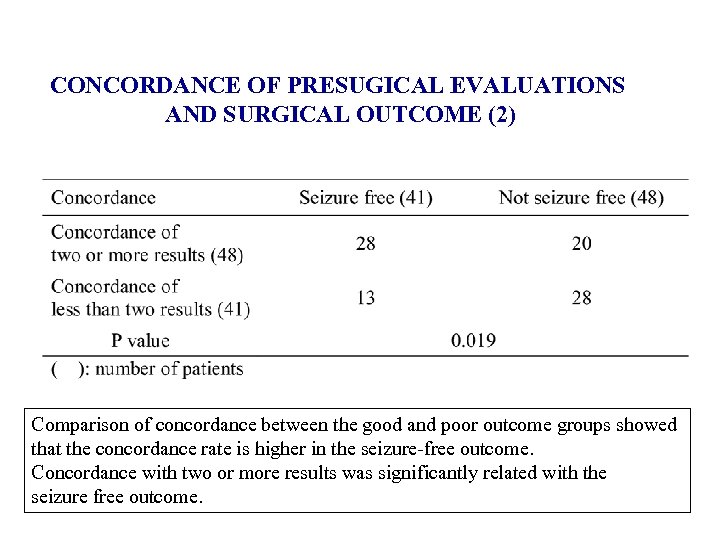 CONCORDANCE OF PRESUGICAL EVALUATIONS AND SURGICAL OUTCOME (2) Comparison of concordance between the good and poor outcome groups showed that the concordance rate is higher in the seizure-free outcome. Concordance with two or more results was significantly related with the seizure free outcome.
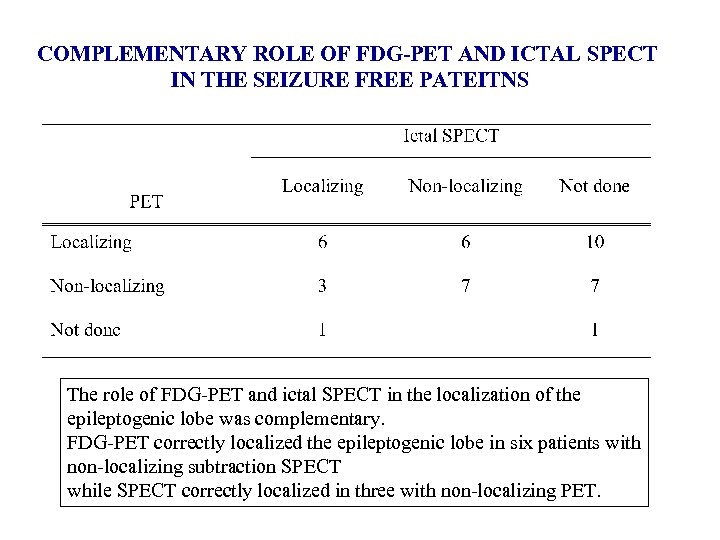 COMPLEMENTARY ROLE OF FDG-PET AND ICTAL SPECT IN THE SEIZURE FREE PATEITNS The role of FDG-PET and ictal SPECT in the localization of the epileptogenic lobe was complementary. FDG-PET correctly localized the epileptogenic lobe in six patients with non-localizing subtraction SPECT while SPECT correctly localized in three with non-localizing PET.
 DISCUSSION
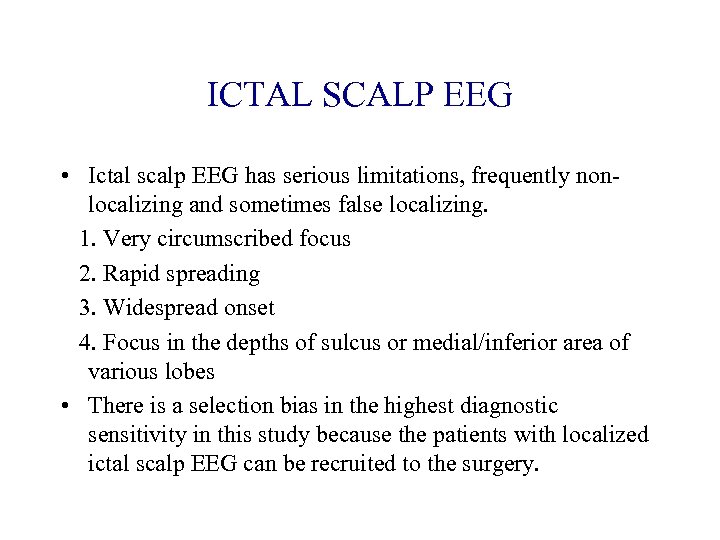 ICTAL SCALP EEG • Ictal scalp EEG has serious limitations, frequently nonlocalizing and sometimes false localizing. 1. Very circumscribed focus 2. Rapid spreading 3. Widespread onset 4. Focus in the depths of sulcus or medial/inferior area of various lobes • There is a selection bias in the highest diagnostic sensitivity in this study because the patients with localized ictal scalp EEG can be recruited to the surgery.
 Epilepsia 2000; 41: 1450 -1455 The Clinical Usefulness of Ictal Surfacce EEG in Neocortical Epilepsy Sang Kun Lee, Joo-Yong Kim, Keun-Sik Hong, Hyun-Woo Nam, Sung-Ho Park, and Chun-Kee Chung Department of Neurology and Neurosurgery, Seoul National University College of Medicine, Seoul, Korea
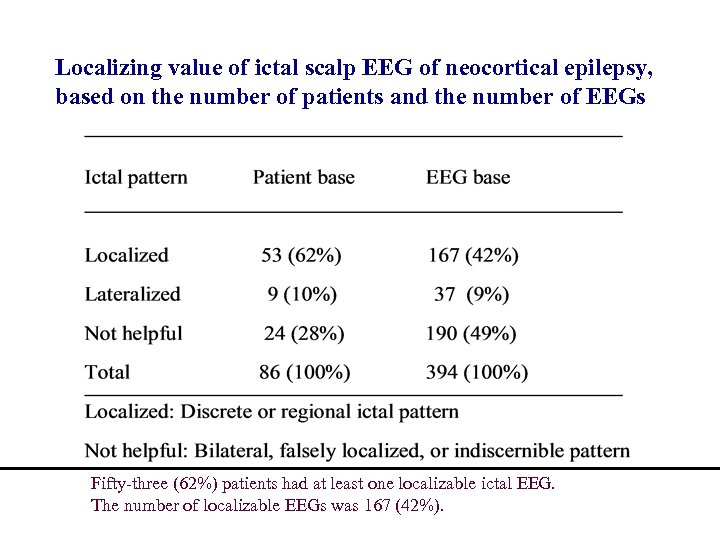 Localizing value of ictal scalp EEG of neocortical epilepsy, based on the number of patients and the number of EEGs Fifty-three (62%) patients had at least one localizable ictal EEG. The number of localizable EEGs was 167 (42%).
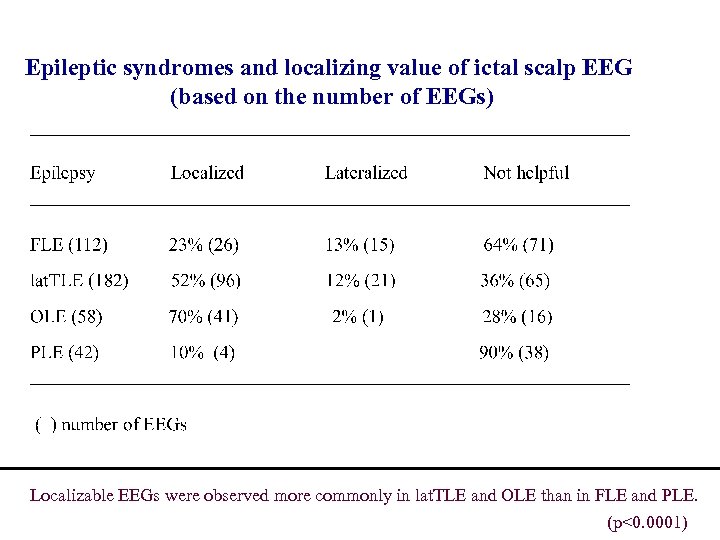 Epileptic syndromes and localizing value of ictal scalp EEG (based on the number of EEGs) Localizable EEGs were observed more commonly in lat. TLE and OLE than in FLE and PLE. (p<0. 0001)
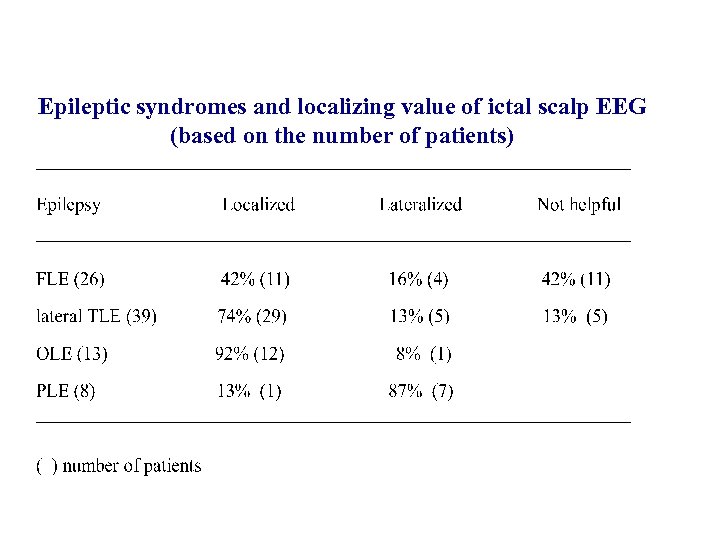 Epileptic syndromes and localizing value of ictal scalp EEG (based on the number of patients)
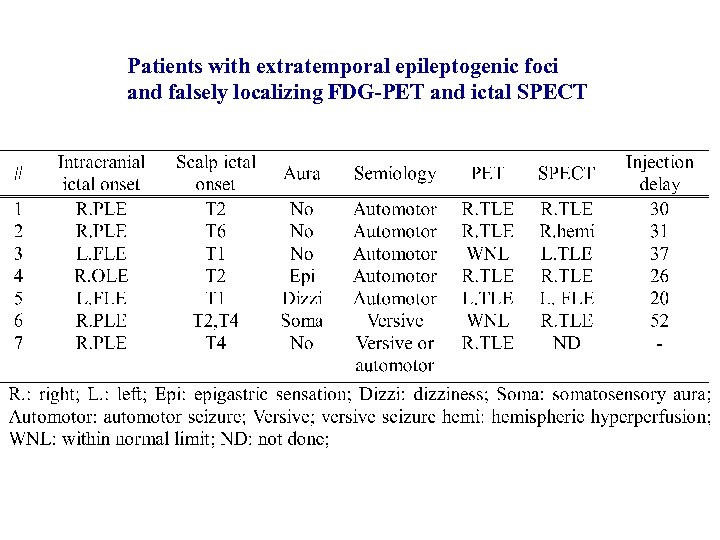
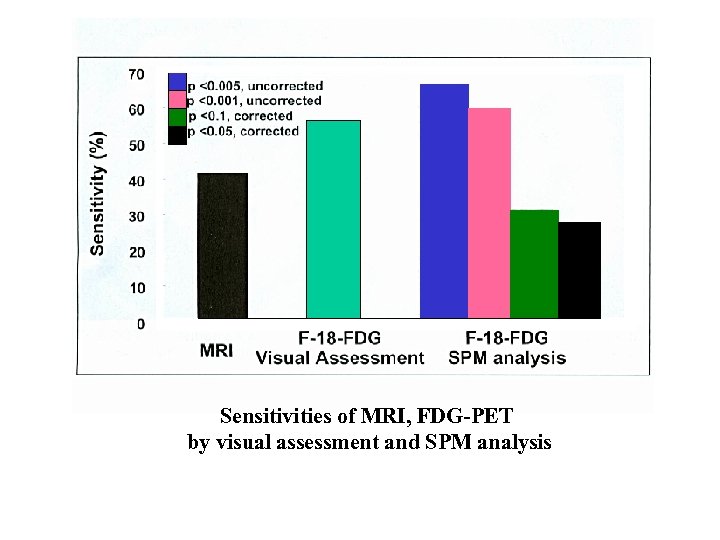
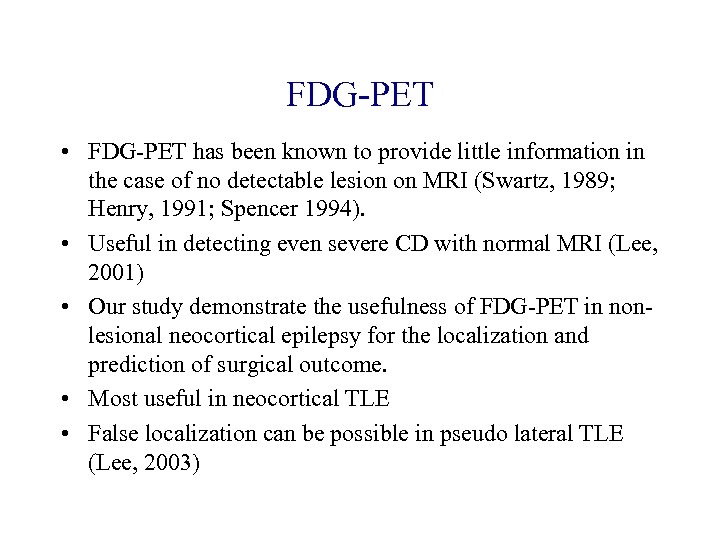 FDG-PET • FDG-PET has been known to provide little information in the case of no detectable lesion on MRI (Swartz, 1989; Henry, 1991; Spencer 1994). • Useful in detecting even severe CD with normal MRI (Lee, 2001) • Our study demonstrate the usefulness of FDG-PET in nonlesional neocortical epilepsy for the localization and prediction of surgical outcome. • Most useful in neocortical TLE • False localization can be possible in pseudo lateral TLE (Lee, 2003)
 Neurology 2003; 61: 757 -764 Intracranial ictal onset zone in nonlesional lateral temporal lobe epilepsy on scalp ictal EEG S. K. Lee, MD; C. H. Yun, MD; J. B. , Oh, MD; H. W. Nam, MD; S. W. Jung, MD; J. C. Paeng, MD; D. S. Lee, MD; C. K. Chung, MD; and G. Choe, MD
 Patients with extratemporal epileptogenic foci and falsely localizing FDG-PET and ictal SPECT
 J Nuc Med 2002; 43: 1167 -1174 18 F-FDG PET in Localization of Frontal Lobe Epilepsy: Comparison of Visual and SPM Analysis Yu Keyong Kim, MD; Dong Soo Lee, MD; Sang Kun Lee, MD; Chun Kee Chung, MD June-Key Chang, MD; and Myung Chul Lee, MD Department of Nuclear Medicine, Neurology, and Neurosurgery College of Medicine, Seoul National University, Seoul, Korea
 Sensitivities of MRI, FDG-PET by visual assessment and SPM analysis
 ICTAL SPECT • Known to be useful in localization and predicting surgical outcome • Side by side visual analysis vs. subtraction analysis: Complementary? • Also complementary with FDG-PET • Concordance with other results is also important.
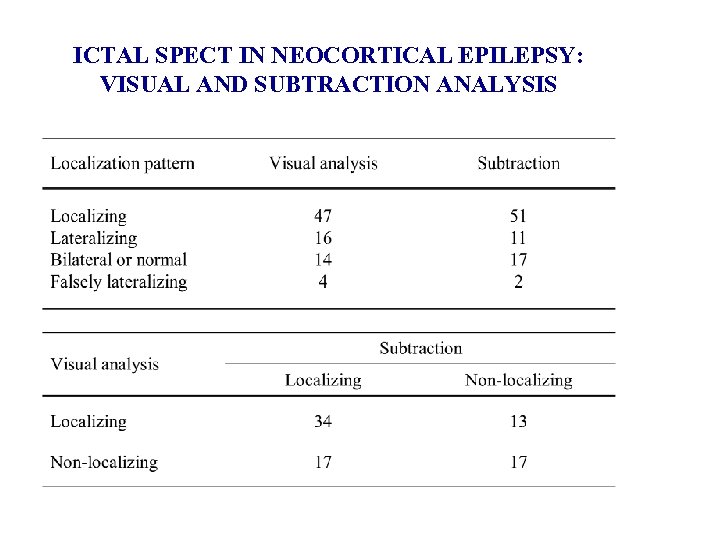 ICTAL SPECT IN NEOCORTICAL EPILEPSY: VISUAL AND SUBTRACTION ANALYSIS
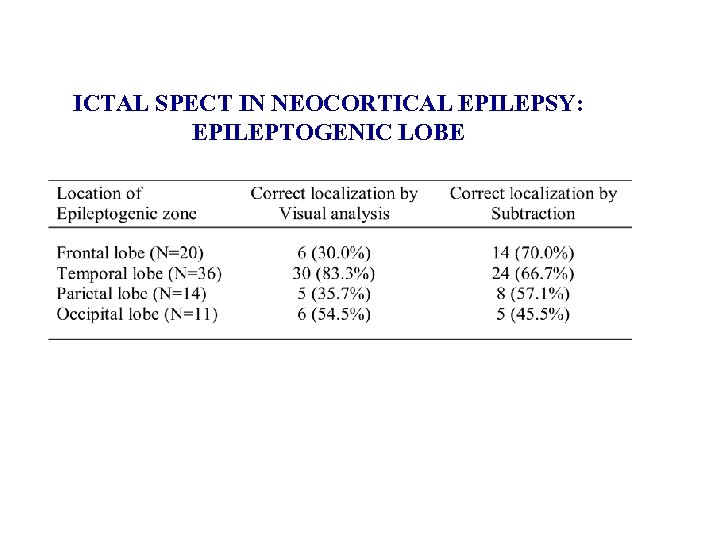 ICTAL SPECT IN NEOCORTICAL EPILEPSY: EPILEPTOGENIC LOBE
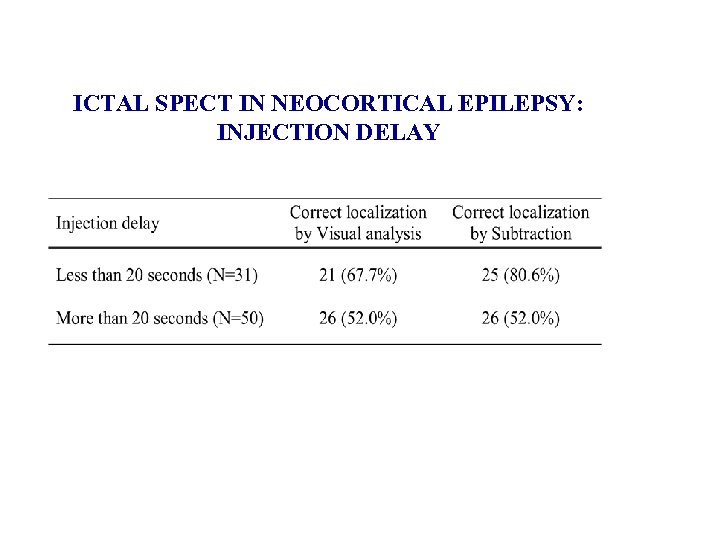 ICTAL SPECT IN NEOCORTICAL EPILEPSY: INJECTION DELAY
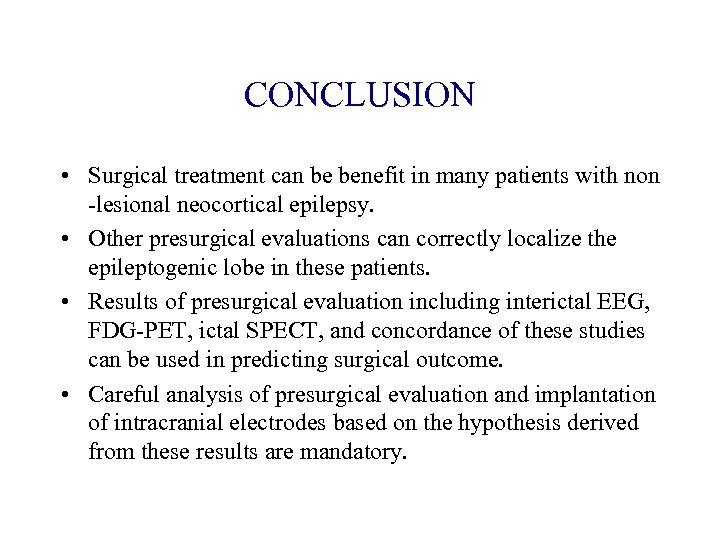 CONCLUSION • Surgical treatment can be benefit in many patients with non -lesional neocortical epilepsy. • Other presurgical evaluations can correctly localize the epileptogenic lobe in these patients. • Results of presurgical evaluation including interictal EEG, FDG-PET, ictal SPECT, and concordance of these studies can be used in predicting surgical outcome. • Careful analysis of presurgical evaluation and implantation of intracranial electrodes based on the hypothesis derived from these results are mandatory.
 REDUNDANT COMMENTS: REPOSITIONING OR ADDITION OF INTRACRANIAL ELECTRODES
 J Neurosurg 2004; 100: 463 -471 Adding or repositioning intracranial electrodes during presurgical assessment of neocortical epilepsy: electrographic seizure pattern and surgical outcome SANG KUN LEE, M. D. , KWANG-KI KIM, M. D. , HYUNWOO NAM, M. D. , JONG BAI OH, M. D. , CHANG HO YUN, M. D. , AND CHUN-KEE CHUNG M. D. Department of Neurology and Neurosurgery, Seoul National University college of Medicine, Seoul, Korea