 Скачать презентацию Epidemiology of Type 2 Diabetes 2009 Middle Eastern
7e3f1fba8a7ef4a9f0b893a610734449.ppt
- Количество слайдов: 54




Epidemiology of Type 2 Diabetes 2009 Middle Eastern Region Epidemiology Supercourse Bibliotheca Alexandria, Egypt Edward Gregg, Ph. D Epidemiology and Statistics Branch Division of Diabetes Translation Centers for Disease Control and Prevention Atlanta, GA The findings and conclusions in this presentation are those of the author and do not necessarily represent the views of the CDC.

What is the role of epidemiology in guiding the public health response to diabetes?

Definitions of Public Health: The science and art of preventing disease, prolonging life, and promoting health through organized efforts of society. …The Acheson Report, Public Health In England, 1988 One of the efforts organized by society to protect, promote, and restore the people’s health…. . Emphasizes the prevention of disease and the health needs of the population as a whole. Public health is a social institution, a discipline, and a practice. John Last, Dictionary of Epidemiology, 1995
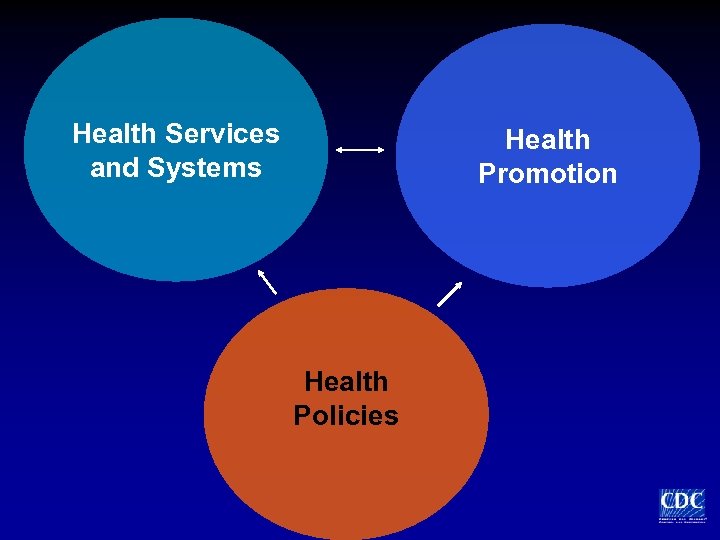
Health Services and Systems Health Promotion Health Policies
Major Public Health Successes During the 20 th Century § § § § Control of infectious diseases Vaccination Healthy foods and safe water Water chlorination Reduced automobile deaths Reduced occupational injuries and deaths Reduced maternal and infant mortality Reduction of deaths due to cardiovascular diseases CDC, MMWR, 1999
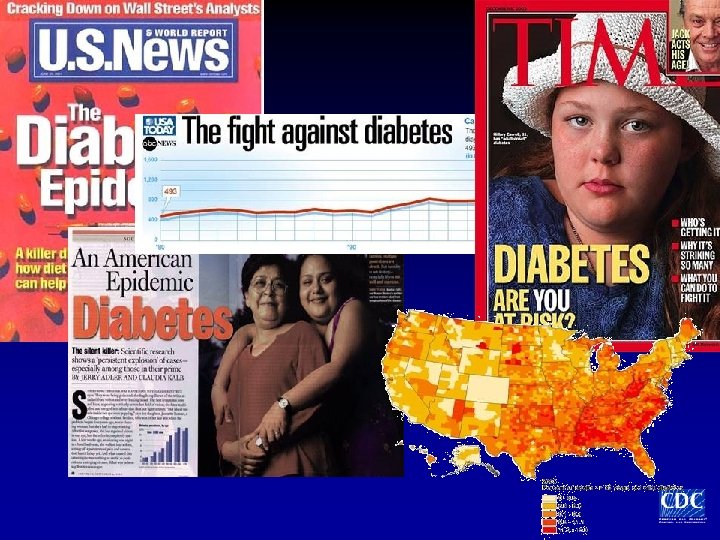
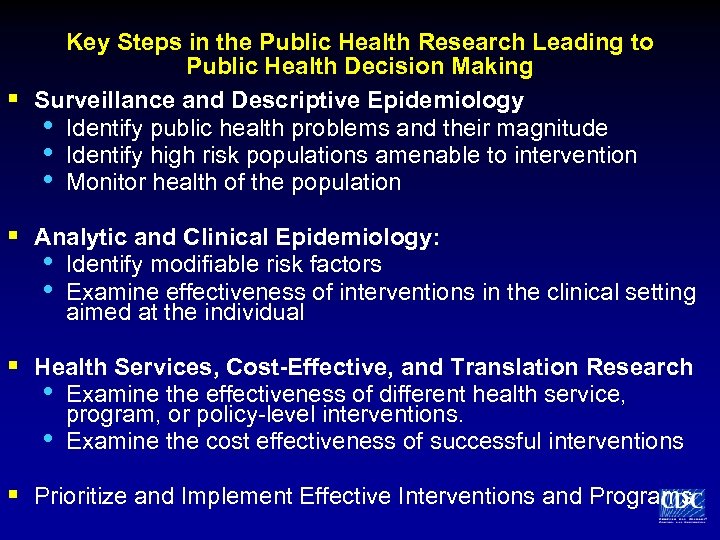
Key Steps in the Public Health Research Leading to Public Health Decision Making § Surveillance and Descriptive Epidemiology • Identify public health problems and their magnitude • Identify high risk populations amenable to intervention • Monitor health of the population § Analytic and Clinical Epidemiology: • • Identify modifiable risk factors Examine effectiveness of interventions in the clinical setting aimed at the individual § Health Services, Cost-Effective, and Translation Research • • Examine the effectiveness of different health service, program, or policy-level interventions. Examine the cost effectiveness of successful interventions § Prioritize and Implement Effective Interventions and Programs
Objectives / Outline § Describe the principles of diabetes surveillance and the application of epidemiologic methods to chronic disease surveillance. § Describe the development of the U. S. diabetes surveillance system. § Summarize what we have learned from the diabetes surveillance system about successes, failures, and needs in the public health response to diabetes. § Limitations, future needs and implications for future systems.
Public Health Surveillance is the ongoing, systematic collection, analysis, interpretation, and dissemination of data regarding a health-related event for use in public health action to reduce morbidity and mortality and to improve health. CDC, MMWR, July 27, 2001/50(RR 13); 1 -35.
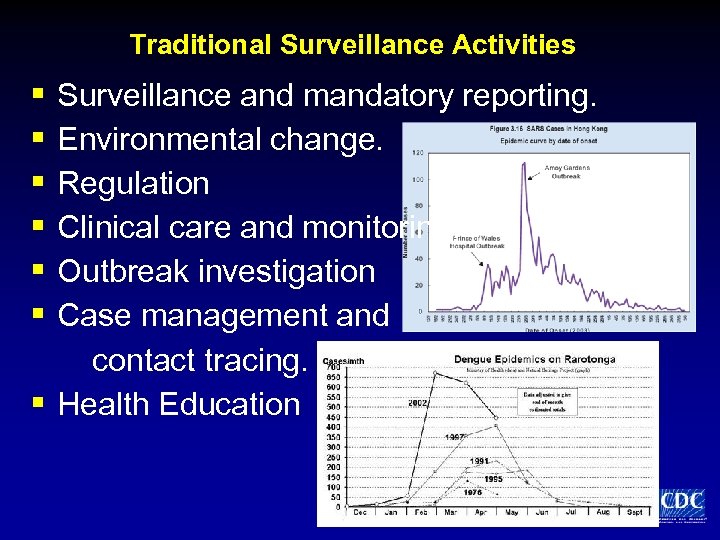
Traditional Surveillance Activities § Surveillance and mandatory reporting. § Environmental change. § Regulation § Clinical care and monitoring. § Outbreak investigation § Case management and contact tracing. § Health Education
Main Objectives of Chronic Disease Surveillance Systems: § Monitor: • • Detect new health problems. Assess and track magnitude of diabetes and risk factors and status of care of the population. § Prioritize: • • Identify / prioritize key problems and groups for intervention. Set national objectives for management and prevention. Identify research needs. Plan, facilitate and justify rational use of available resources. § Evaluate: • Evaluate and track the public health response to the problem.
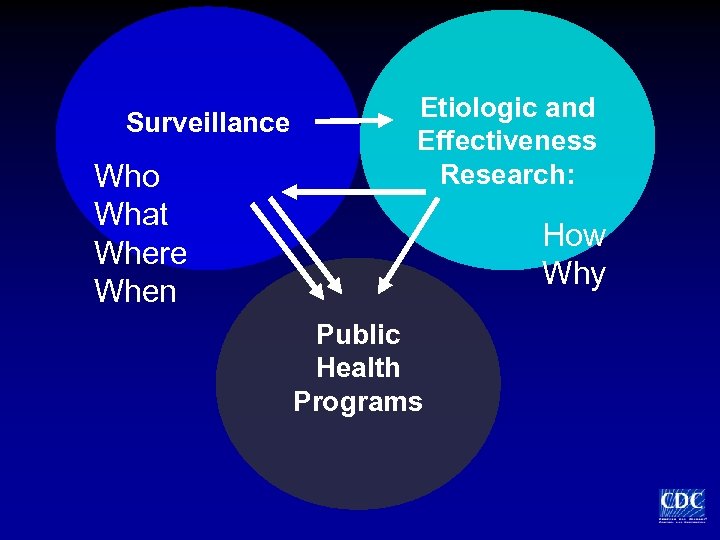
Surveillance Who What Where When Etiologic and Effectiveness Research: How Why Public Health Programs
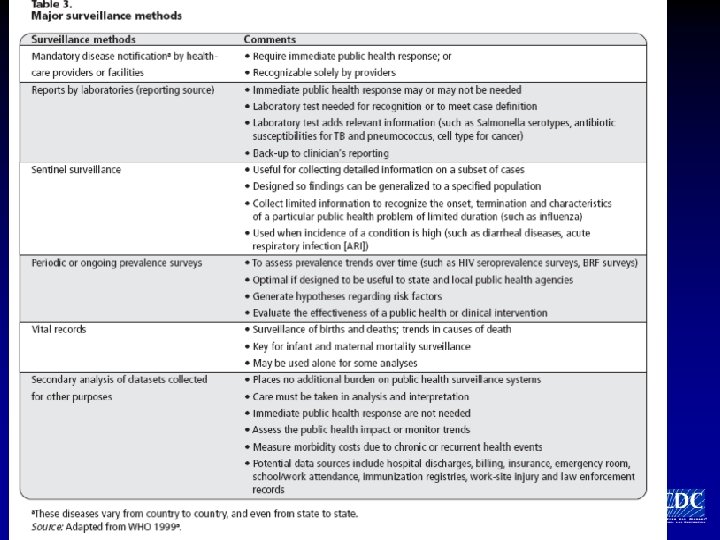
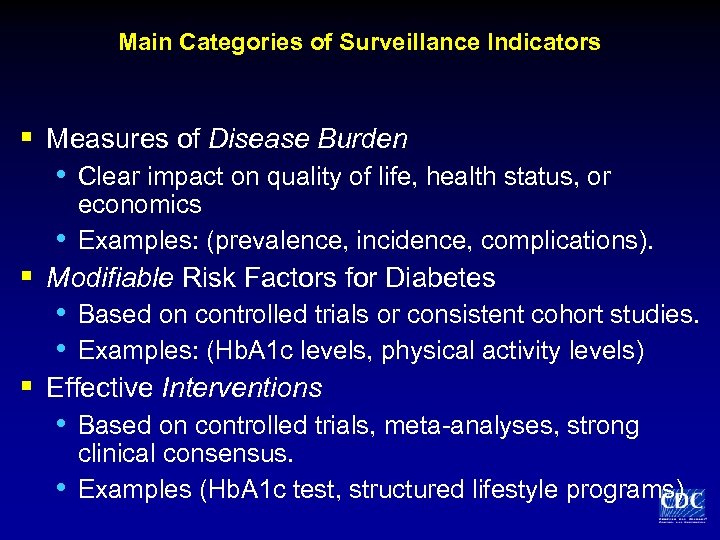
Main Categories of Surveillance Indicators § Measures of Disease Burden • • Clear impact on quality of life, health status, or economics Examples: (prevalence, incidence, complications). § Modifiable Risk Factors for Diabetes • • Based on controlled trials or consistent cohort studies. Examples: (Hb. A 1 c levels, physical activity levels) § Effective Interventions • • Based on controlled trials, meta-analyses, strong clinical consensus. Examples (Hb. A 1 c test, structured lifestyle programs)
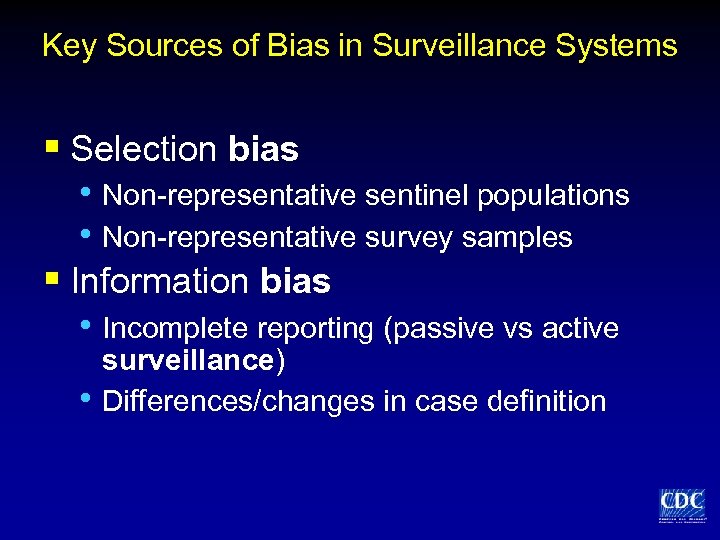
Key Sources of Bias in Surveillance Systems § Selection bias • Non-representative sentinel populations • Non-representative survey samples § Information bias • Incomplete reporting (passive vs active • surveillance) Differences/changes in case definition
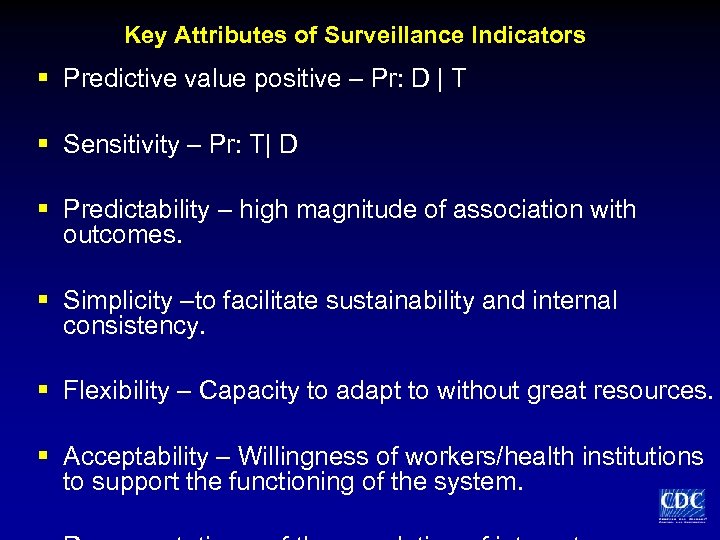
Key Attributes of Surveillance Indicators § Predictive value positive – Pr: D | T § Sensitivity – Pr: T| D § Predictability – high magnitude of association with outcomes. § Simplicity –to facilitate sustainability and internal consistency. § Flexibility – Capacity to adapt to without great resources. § Acceptability – Willingness of workers/health institutions to support the functioning of the system.
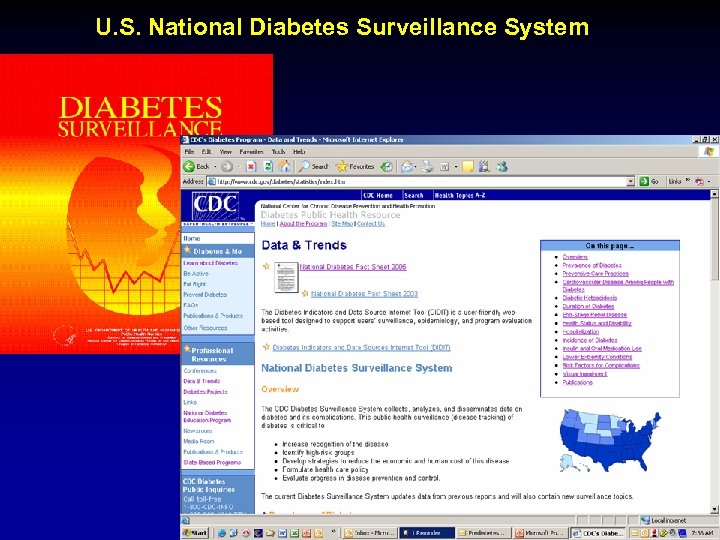
U. S. National Diabetes Surveillance System

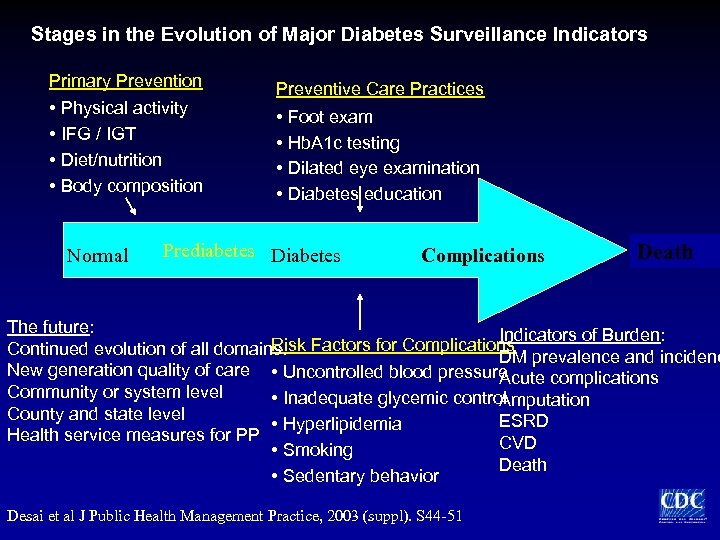
Stages in the Evolution of Major Diabetes Surveillance Indicators Primary Prevention • Physical activity • IFG / IGT • Diet/nutrition • Body composition Normal Preventive Care Practices • Foot exam • Hb. A 1 c testing • Dilated eye examination • Diabetes education Prediabetes Diabetes Complications Death The future: Indicators of Burden: Risk Continued evolution of all domains. Factors for Complications prevalence and incidenc DM New generation quality of care • Uncontrolled blood pressure Acute complications Community or system level • Inadequate glycemic control Amputation County and state level ESRD • Hyperlipidemia Health service measures for PP CVD • Smoking Death • Sedentary behavior Desai et al J Public Health Management Practice, 2003 (suppl). S 44 -51
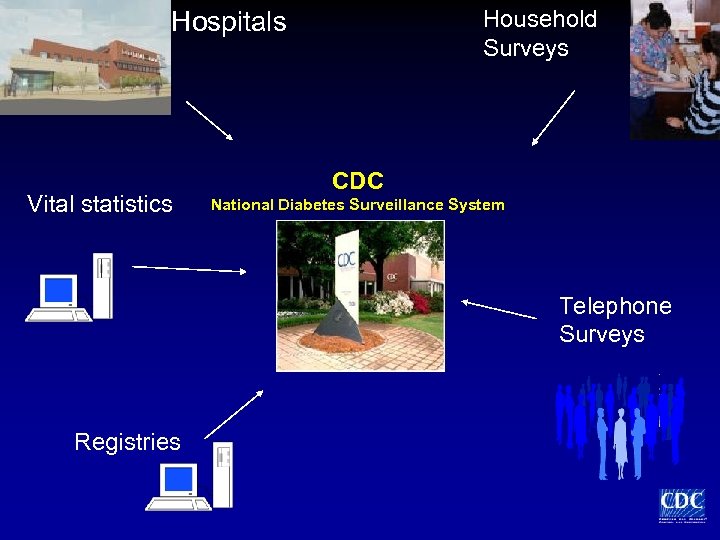
Household Surveys Hospitals Vital statistics CDC National Diabetes Surveillance System Telephone Surveys Registries
Recent Observations from the National Diabetes Surveillance System
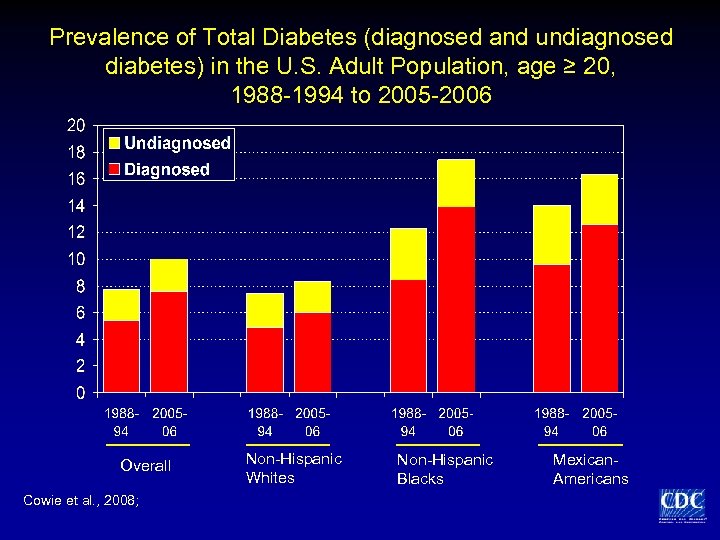
Prevalence of Total Diabetes (diagnosed and undiagnosed diabetes) in the U. S. Adult Population, age ≥ 20, 1988 -1994 to 2005 -2006 Overall Cowie et al. , 2008; Non-Hispanic Whites Non-Hispanic Blacks Mexican. Americans

Trends in Diabetes Incidence in the U. S. Population, By Age, National Health Interview Survey, 1997 -2003 Geiss et al. , Am J Prev Med 2005
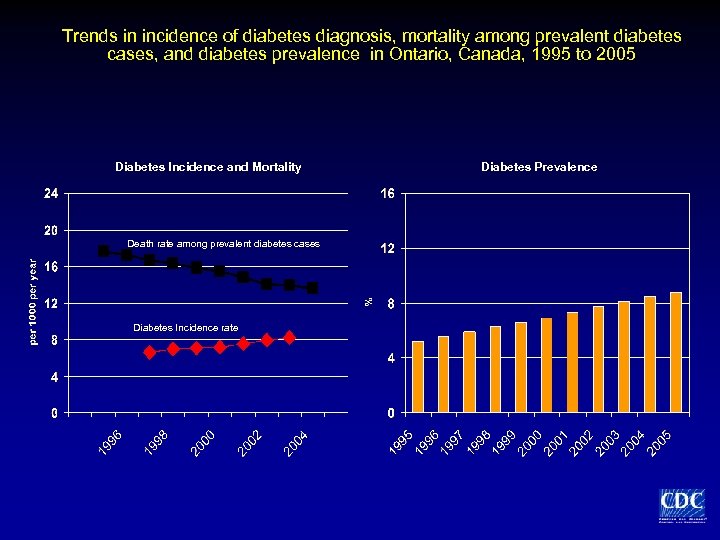
Trends in incidence of diabetes diagnosis, mortality among prevalent diabetes cases, and diabetes prevalence in Ontario, Canada, 1995 to 2005 Diabetes Incidence and Mortality Death rate among prevalent diabetes cases Diabetes Incidence rate Diabetes Prevalence
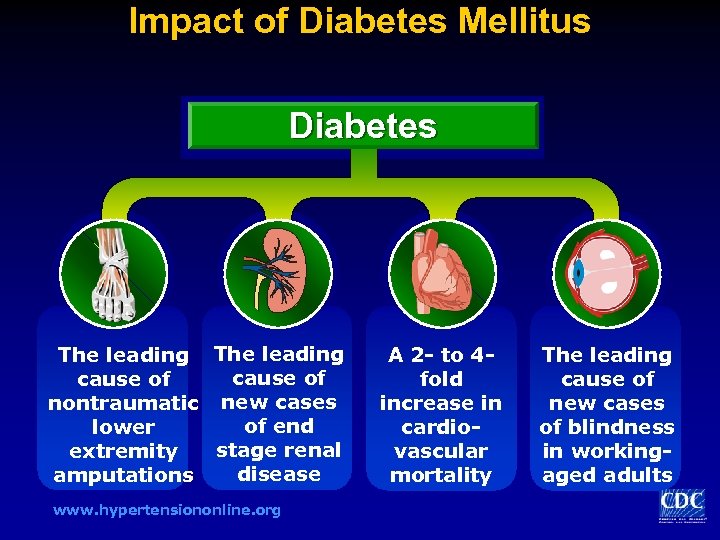
Impact of Diabetes Mellitus Diabetes The leading cause of nontraumatic new cases of end lower stage renal extremity disease amputations www. hypertensiononline. org A 2 - to 4 fold increase in cardiovascular mortality The leading cause of new cases of blindness in workingaged adults
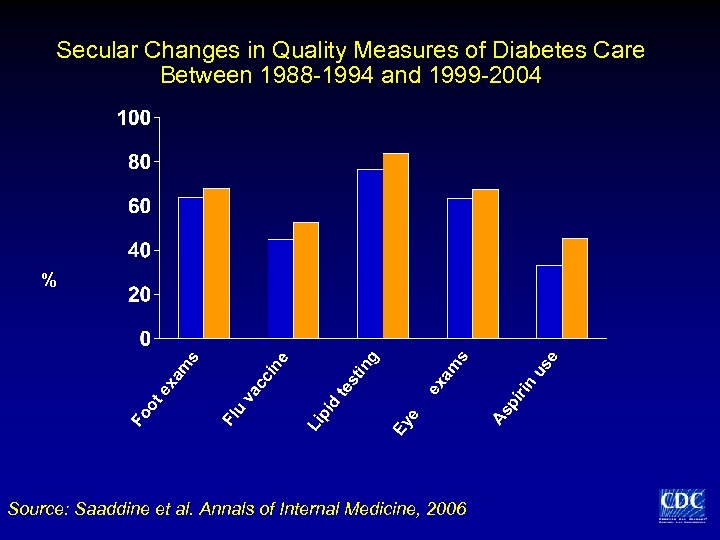
Secular Changes in Quality Measures of Diabetes Care Between 1988 -1994 and 1999 -2004 % Source: Saaddine et al. Annals of Internal Medicine, 2006
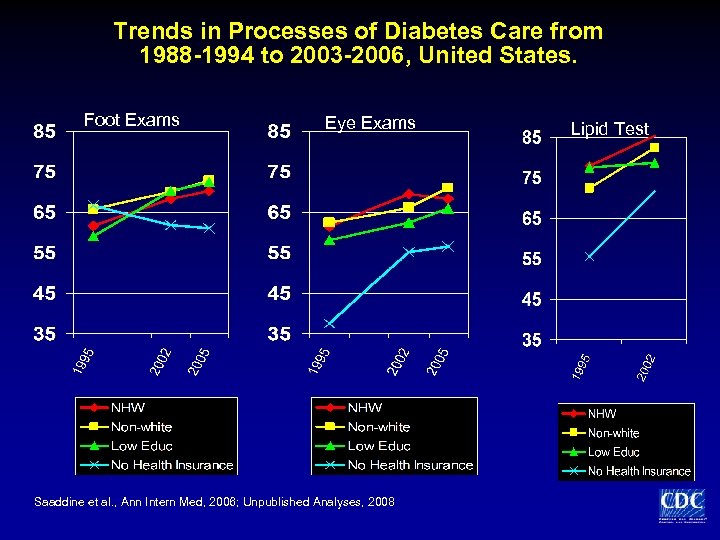
Trends in Processes of Diabetes Care from 1988 -1994 to 2003 -2006, United States. Foot Exams Eye Exams Saaddine et al. , Ann Intern Med, 2006; Unpublished Analyses, 2008 Lipid Test
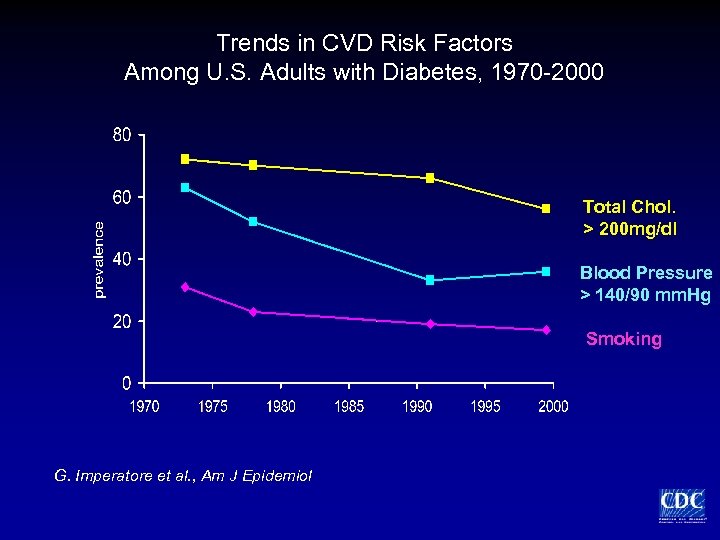
Trends in CVD Risk Factors Among U. S. Adults with Diabetes, 1970 -2000 Total Chol. > 200 mg/dl Blood Pressure > 140/90 mm. Hg Smoking G. Imperatore et al. , Am J Epidemiol
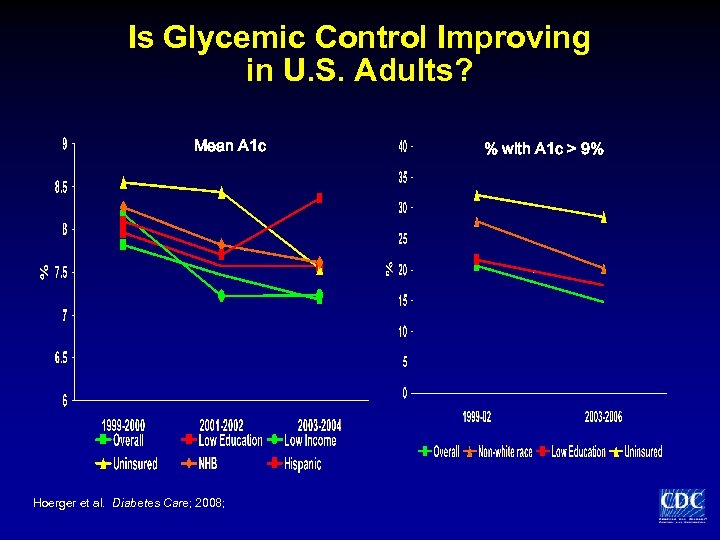
Is Glycemic Control Improving in U. S. Adults? Mean A 1 c Hoerger et al. Diabetes Care; 2008; % with A 1 c > 9%
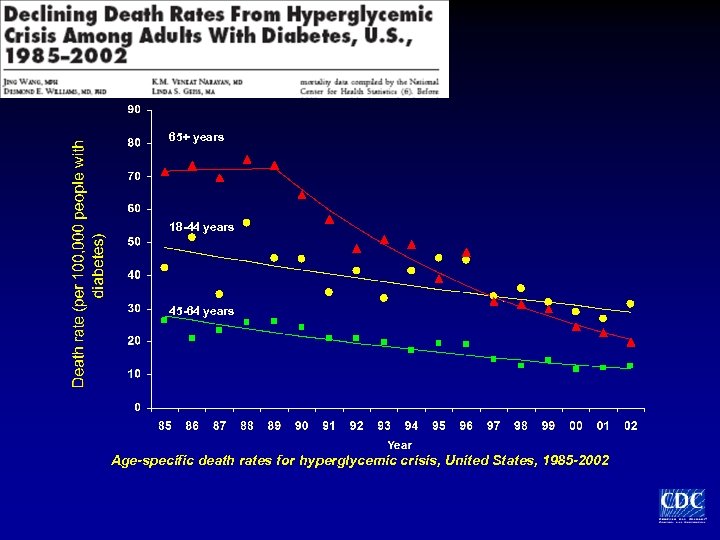
65+ years 18 -44 years 45 -64 years Age-specific death rates for hyperglycemic crisis, United States, 1985 -2002
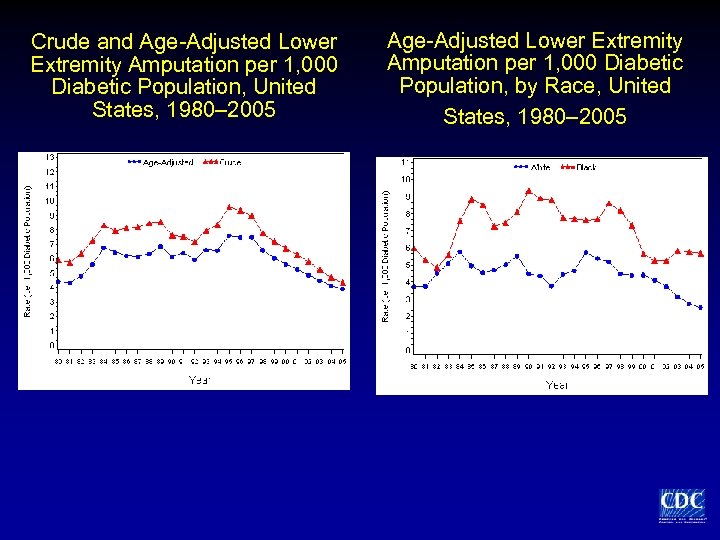
Crude and Age-Adjusted Lower Extremity Amputation per 1, 000 Diabetic Population, United States, 1980– 2005 Age-Adjusted Lower Extremity Amputation per 1, 000 Diabetic Population, by Race, United States, 1980– 2005
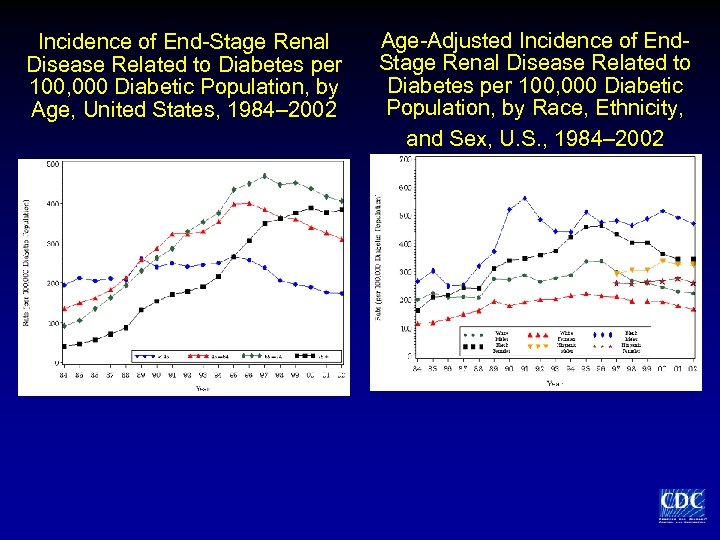
Incidence of End-Stage Renal Disease Related to Diabetes per 100, 000 Diabetic Population, by Age, United States, 1984– 2002 Age-Adjusted Incidence of End. Stage Renal Disease Related to Diabetes per 100, 000 Diabetic Population, by Race, Ethnicity, and Sex, U. S. , 1984– 2002
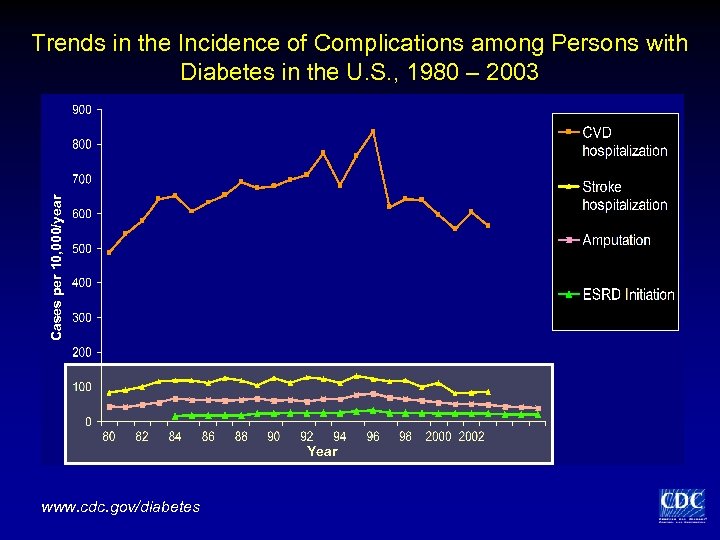
Cases per 10, 000/year Trends in the Incidence of Complications among Persons with Diabetes in the U. S. , 1980 – 2003 Year www. cdc. gov/diabetes
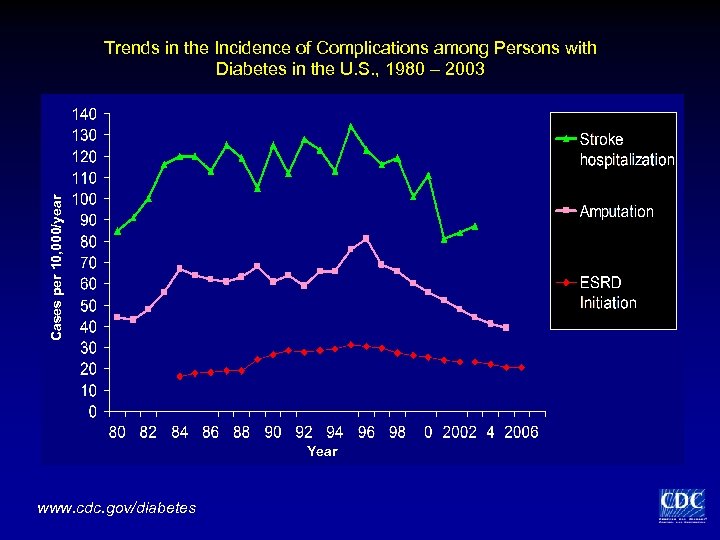
Cases per 10, 000/year Trends in the Incidence of Complications among Persons with Diabetes in the U. S. , 1980 – 2003 Year www. cdc. gov/diabetes
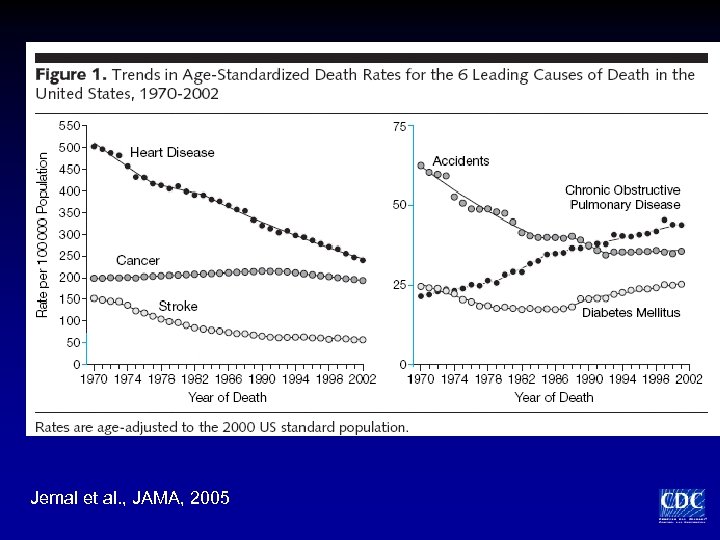
Jemal et al. , JAMA, 2005
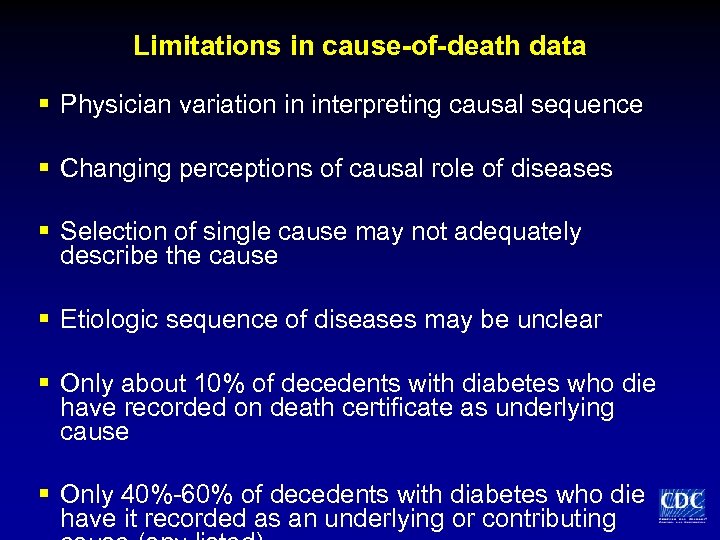
Limitations in cause-of-death data § Physician variation in interpreting causal sequence § Changing perceptions of causal role of diseases § Selection of single cause may not adequately describe the cause § Etiologic sequence of diseases may be unclear § Only about 10% of decedents with diabetes who die have recorded on death certificate as underlying cause § Only 40%-60% of decedents with diabetes who die have it recorded as an underlying or contributing
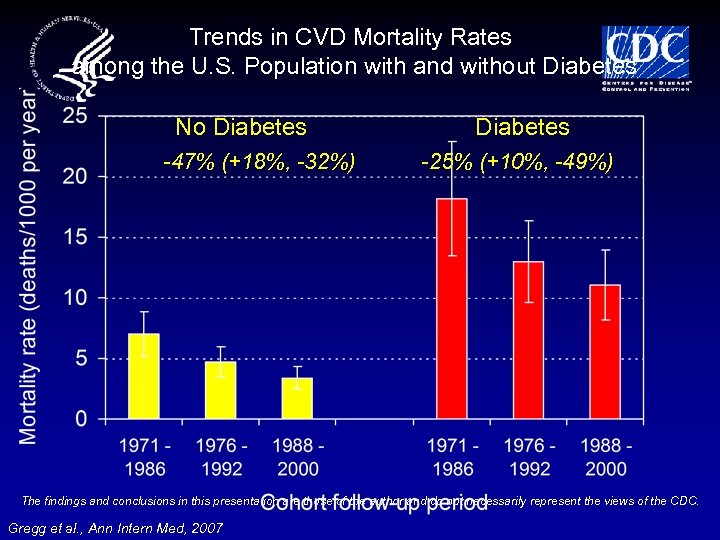
Trends in CVD Mortality Rates among the U. S. Population with and without Diabetes No Diabetes -47% (+18%, -32%) Diabetes -25% (+10%, -49%) The findings and conclusions in this presentation are those of the author and do not necessarily represent the views of the CDC. Gregg et al. , Ann Intern Med, 2007
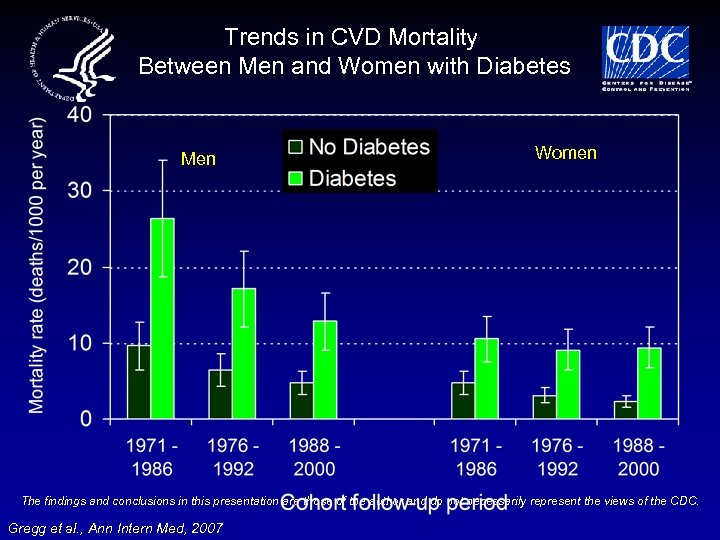
Trends in CVD Mortality Between Men and Women with Diabetes Men Women The findings and conclusions in this presentation are those of the author and do not necessarily represent the views of the CDC. Gregg et al. , Ann Intern Med, 2007
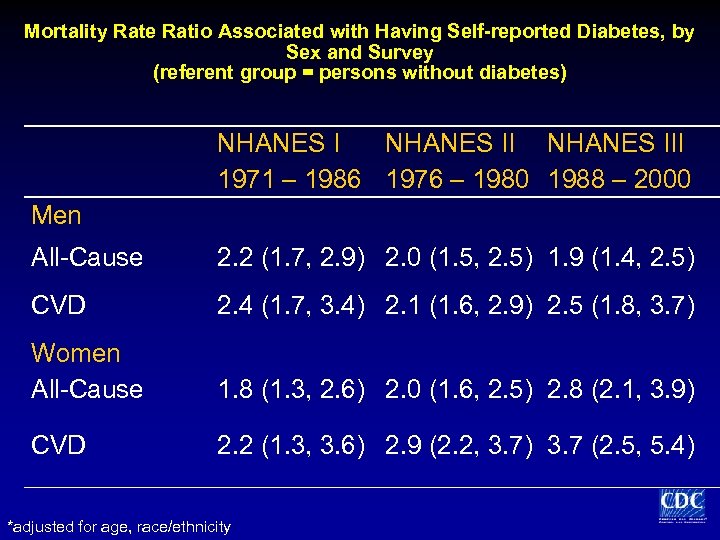
Mortality Rate Ratio Associated with Having Self-reported Diabetes, by Sex and Survey (referent group = persons without diabetes) NHANES III 1971 – 1986 1976 – 1980 1988 – 2000 Men All-Cause 2. 2 (1. 7, 2. 9) 2. 0 (1. 5, 2. 5) 1. 9 (1. 4, 2. 5) CVD 2. 4 (1. 7, 3. 4) 2. 1 (1. 6, 2. 9) 2. 5 (1. 8, 3. 7) Women All-Cause 1. 8 (1. 3, 2. 6) 2. 0 (1. 6, 2. 5) 2. 8 (2. 1, 3. 9) CVD 2. 2 (1. 3, 3. 6) 2. 9 (2. 2, 3. 7) 3. 7 (2. 5, 5. 4) *adjusted for age, race/ethnicity
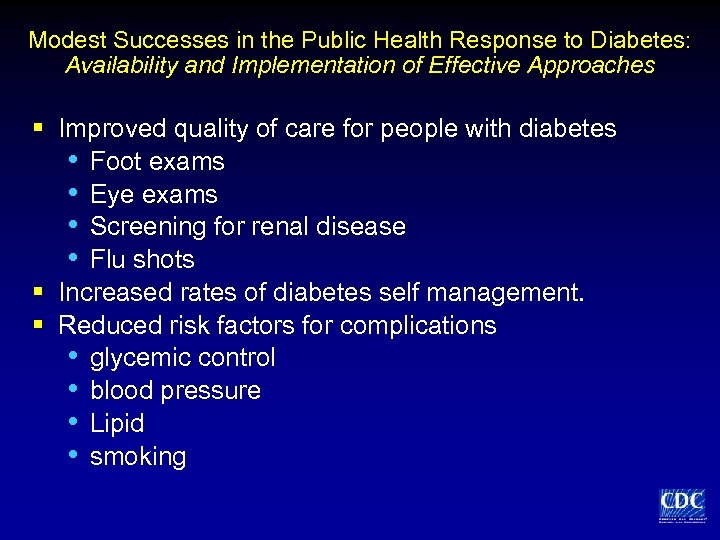
Modest Successes in the Public Health Response to Diabetes: Availability and Implementation of Effective Approaches § Improved quality of care for people with diabetes • • Foot exams Eye exams Screening for renal disease Flu shots § Increased rates of diabetes self management. § Reduced risk factors for complications • glycemic control • blood pressure • Lipid • smoking
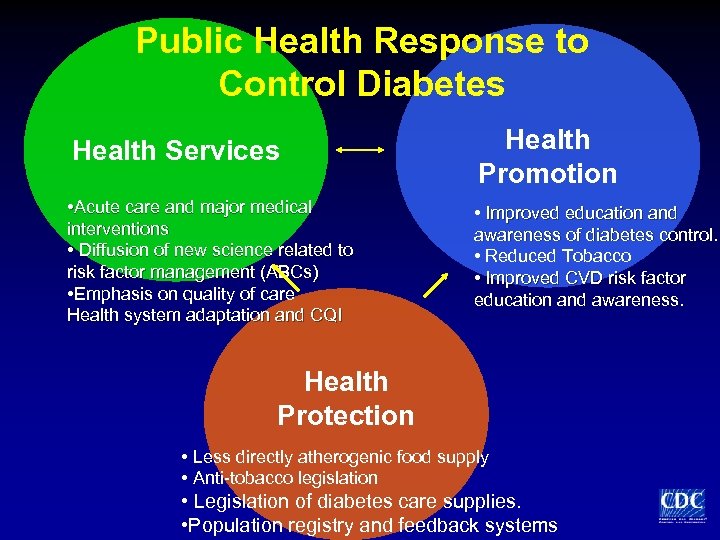
Public Health Response to Control Diabetes Health Services Health Promotion • Acute care and major medical interventions • Diffusion of new science related to risk factor management (ABCs) • Emphasis on quality of care Health system adaptation and CQI • Improved education and awareness of diabetes control. • Reduced Tobacco • Improved CVD risk factor education and awareness. Health Protection • Less directly atherogenic food supply • Anti-tobacco legislation • Legislation of diabetes care supplies. • Population registry and feedback systems
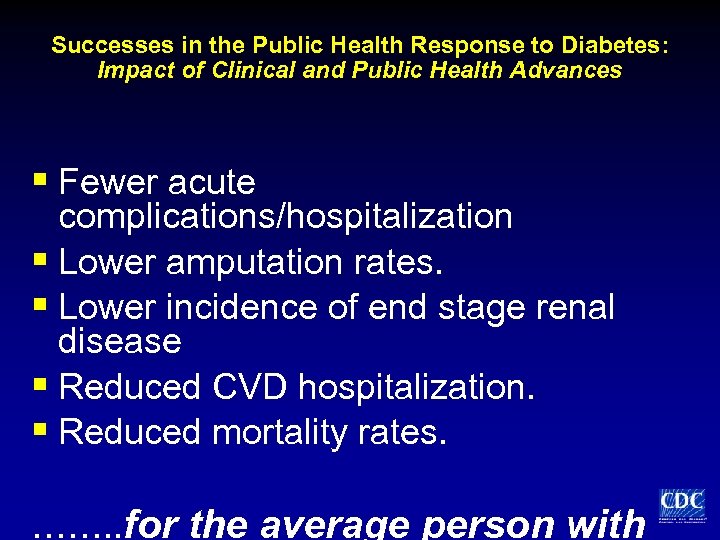
Successes in the Public Health Response to Diabetes: Impact of Clinical and Public Health Advances § Fewer acute complications/hospitalization § Lower amputation rates. § Lower incidence of end stage renal disease § Reduced CVD hospitalization. § Reduced mortality rates. ……. . for the average person with
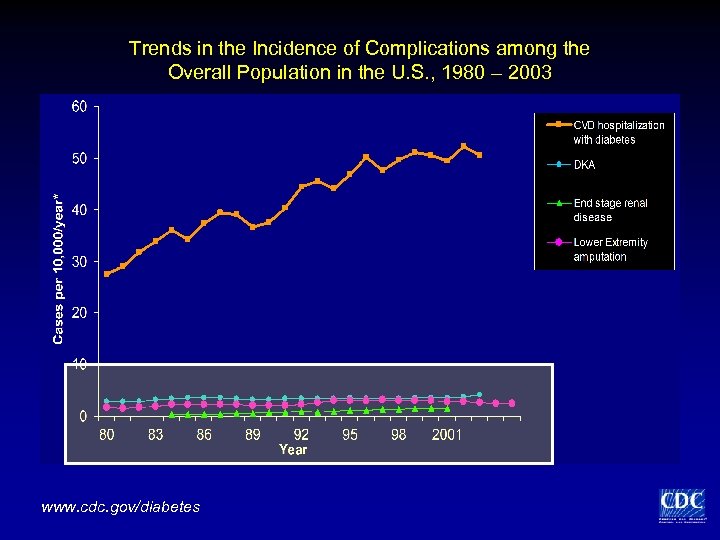
Trends in the Incidence of Complications among the Overall Population in the U. S. , 1980 – 2003 www. cdc. gov/diabetes
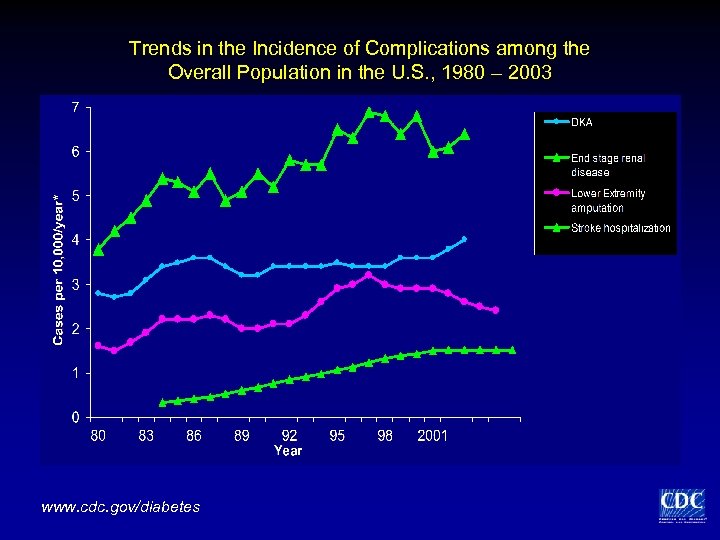
Trends in the Incidence of Complications among the Overall Population in the U. S. , 1980 – 2003 www. cdc. gov/diabetes
Failures / Areas of Concern § Stalling of some risk factor improvements? § Persistent Disparities • Renal disease in African Americans, Native Amer, Latinos • Stroke in African Americans • Blood pressure and glucose • Diabetes incidence and prevalence in nonwhites § Failure to prevent and slow the trends in incidence of diabetes. § Growing burden in youth and young adults represent a new area of concern
Strengths and Weaknesses: What the U. S. National Diabetes Surveillance System Does Well? § Provides source for comprehensive national-level data. • Burden of disease • Delivery of health services • Risk Factors § Examine sub-groups and specific conditions at national level. § Track trends over time in disease and control at national level. § Influence decisions at the macro and national level. § Examine some indicators of diabetes at the state level.
Strengths and Weaknesses: What the U. S. National Diabetes Surveillance System Not Do so well § Provide information and influence decisions at the § § § local level. Provide community and environmental characteristics. Rapidly adapt to new and emerging problems. Rapidly overcome data limitations. Serve as a basis for etiologic research. Serve as a basis for evaluation of clinical, health service, and policy interventions.
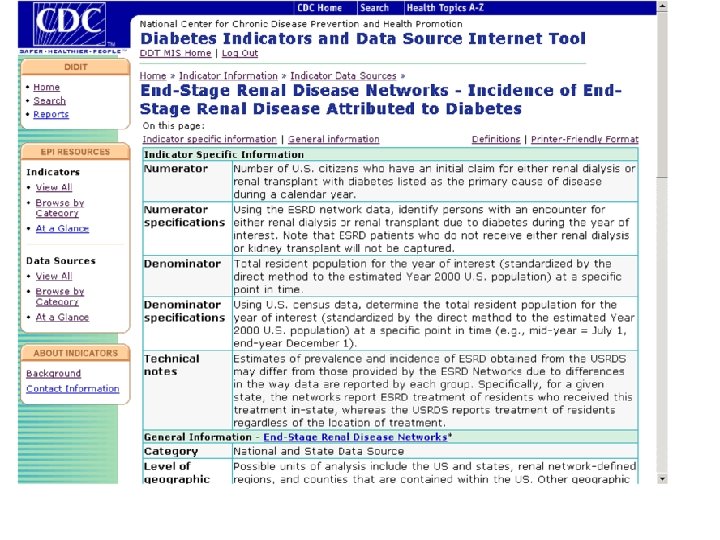
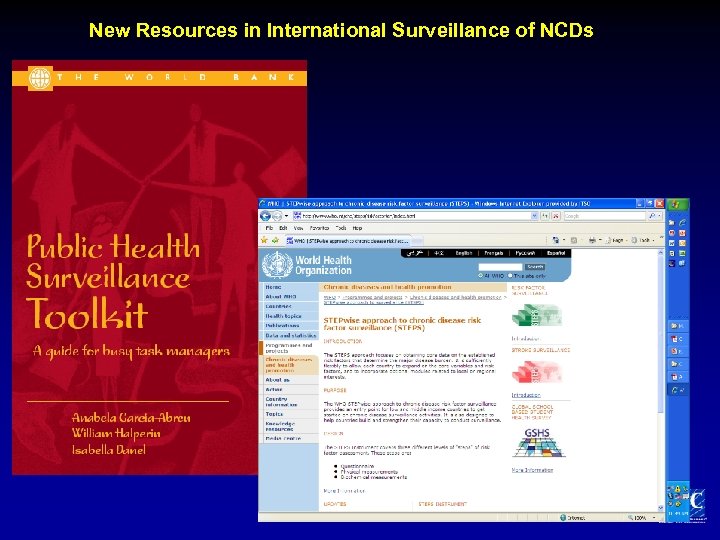
New Resources in International Surveillance of NCDs
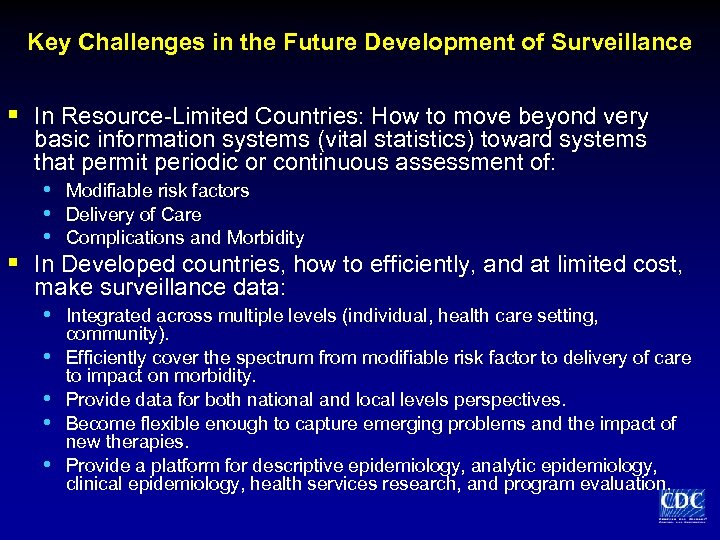
Key Challenges in the Future Development of Surveillance § In Resource-Limited Countries: How to move beyond very basic information systems (vital statistics) toward systems that permit periodic or continuous assessment of: • Modifiable risk factors • Delivery of Care • Complications and Morbidity § In Developed countries, how to efficiently, and at limited cost, make surveillance data: • Integrated across multiple levels (individual, health care setting, • • community). Efficiently cover the spectrum from modifiable risk factor to delivery of care to impact on morbidity. Provide data for both national and local levels perspectives. Become flexible enough to capture emerging problems and the impact of new therapies. Provide a platform for descriptive epidemiology, analytic epidemiology, clinical epidemiology, health services research, and program evaluation.

Discussion Questions § If the Ministry of Health contacted you with news that of a $3 million grant to begin a diabetes and NCD surveillance system in your country. • How would you begin? • What would you propose? • Would you build on current systems? • With whom would you contact as collaborators and stakeholders? • What would you measure? • What types of systems would you develop? • What types of study designs would you use? • What indicators would you use?
Review Questions (Developed by the Supercourse team) • Why should we do surveillance for diabetes? • What is the main categories for surveillance? • What is the role of health insurance in Diabetes care? • What does the trends in CVD mortality for men compared to women who have diabetes in the US? What might account for the difference?
Скачать презентацию Epidemiology of Type 2 Diabetes 2009 Middle Eastern
7e3f1fba8a7ef4a9f0b893a610734449.ppt