 Скачать презентацию Epidemiology and Sex ually Transmitted Diseases The Basics Willard
5d54177ac298f225e8f733fadac50123.ppt
- Количество слайдов: 40



Epidemiology and Sex(ually Transmitted Diseases): The Basics Willard Cates, Jr. , MD, MPH Family Health International Principles of STD/HIV Research University of Washington Seattle, Washington July 22, 2002
Objectives • To understand basic definitions of epidemiology • To describe components of descriptive, observational and experimental epidemiology • To know advantages and disadvantages of case-control and cohort designs
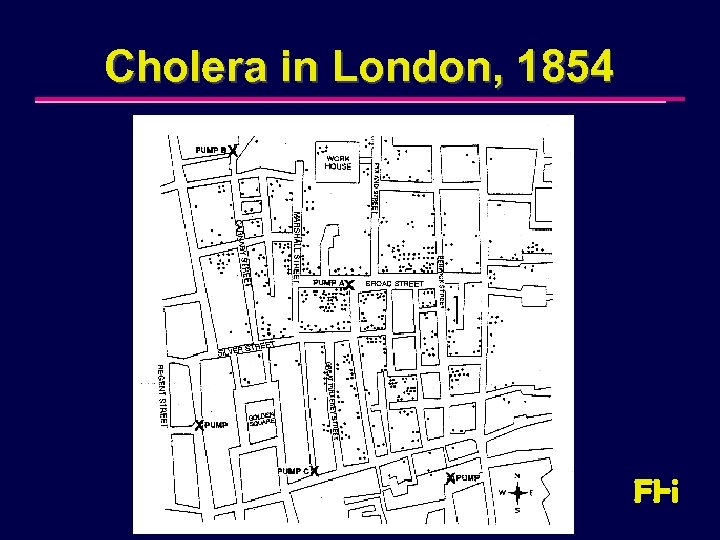
Cholera in London, 1854


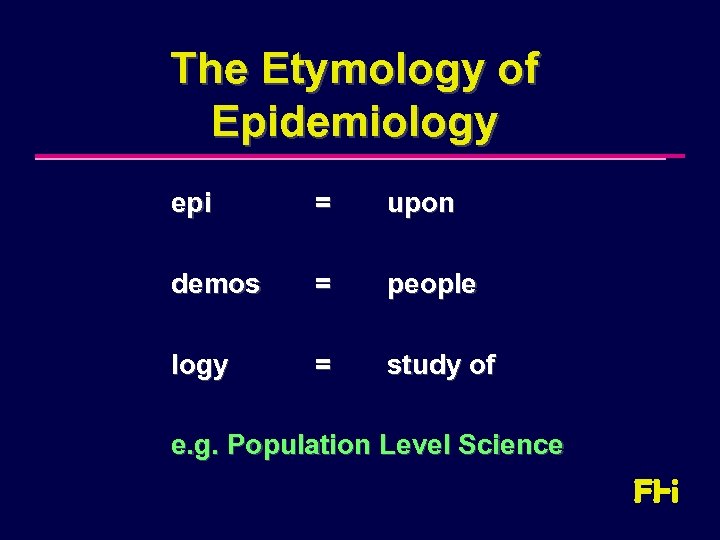
The Etymology of Epidemiology epi = upon demos = people logy = study of e. g. Population Level Science
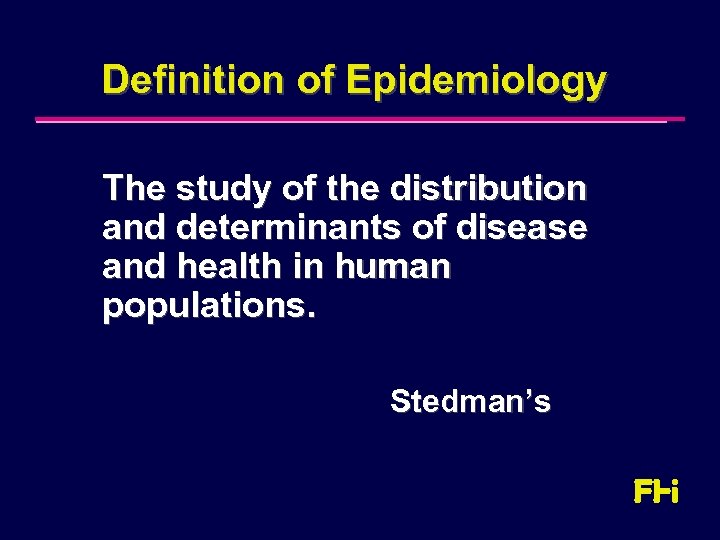
Definition of Epidemiology The study of the distribution and determinants of disease and health in human populations. Stedman’s
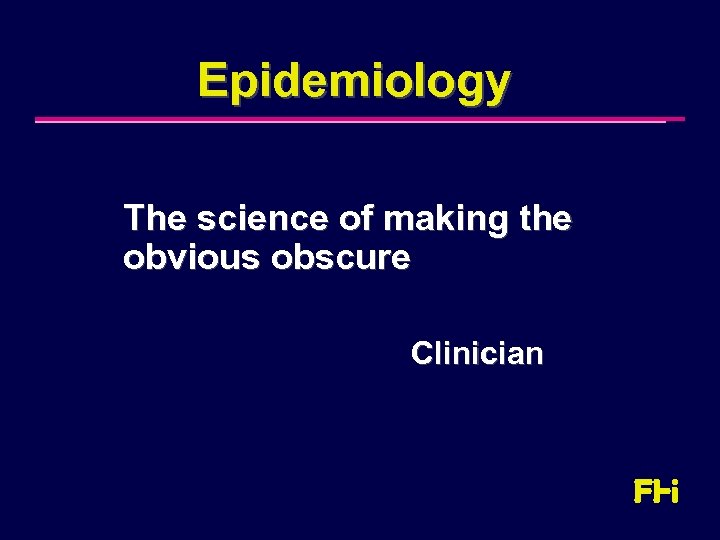
Epidemiology The science of making the obvious obscure Clinician
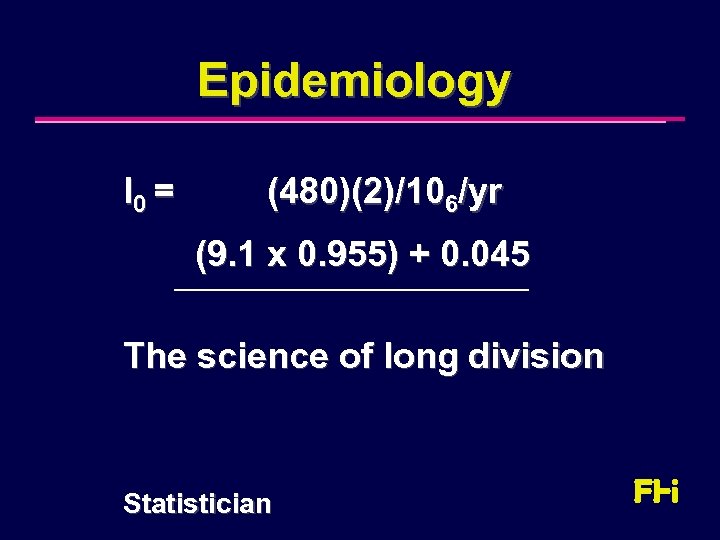
Epidemiology I 0 = (480)(2)/106/yr (9. 1 x 0. 955) + 0. 045 The science of long division Statistician
Epidemiology The worst-taught course in medical school Anonymous Med Student
Epidemiology The study of skin diseases Atlanta Native
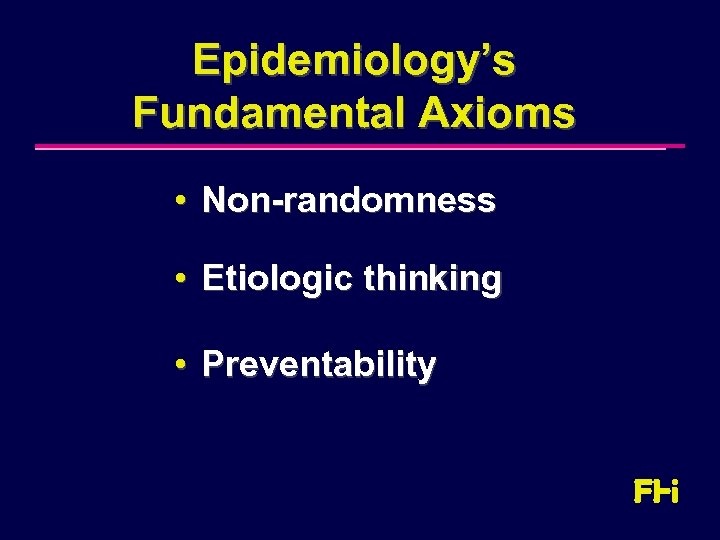
Epidemiology’s Fundamental Axioms • Non-randomness • Etiologic thinking • Preventability
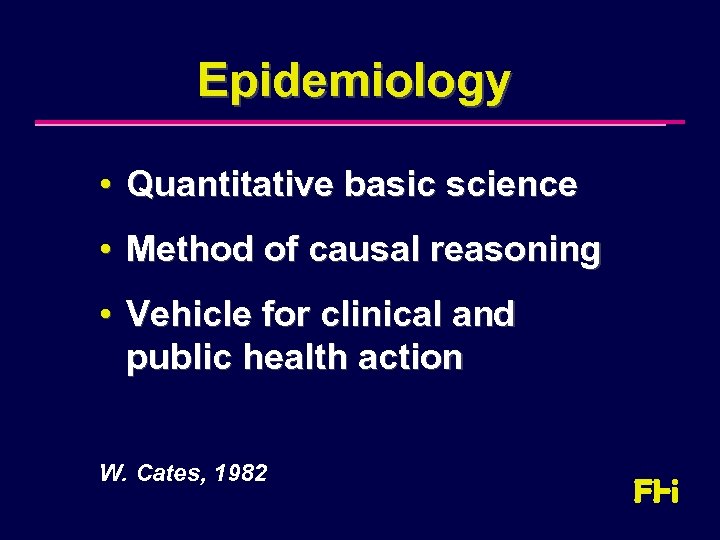
Epidemiology • Quantitative basic science • Method of causal reasoning • Vehicle for clinical and public health action W. Cates, 1982
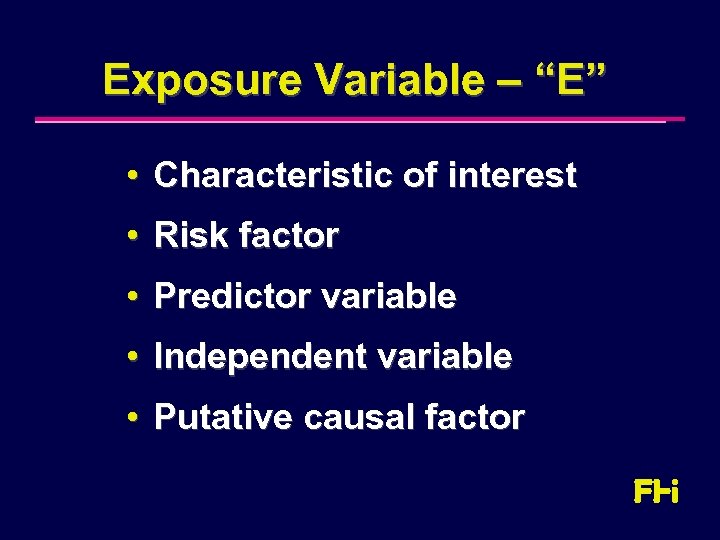
Exposure Variable – “E” • Characteristic of interest • Risk factor • Predictor variable • Independent variable • Putative causal factor
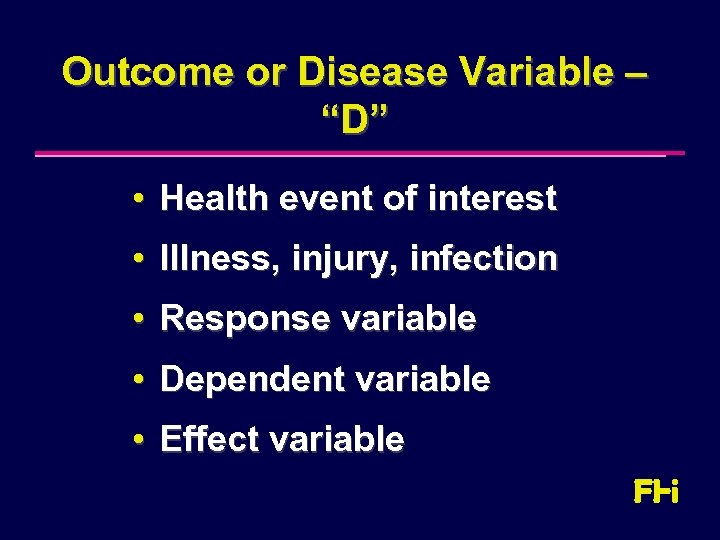
Outcome or Disease Variable – “D” • Health event of interest • Illness, injury, infection • Response variable • Dependent variable • Effect variable
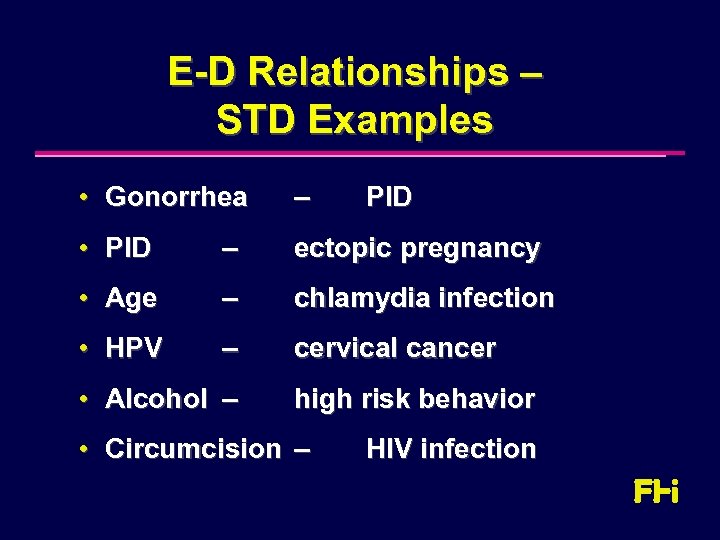
E-D Relationships – STD Examples • Gonorrhea – • PID – ectopic pregnancy • Age – chlamydia infection • HPV – cervical cancer • Alcohol – PID high risk behavior • Circumcision – HIV infection
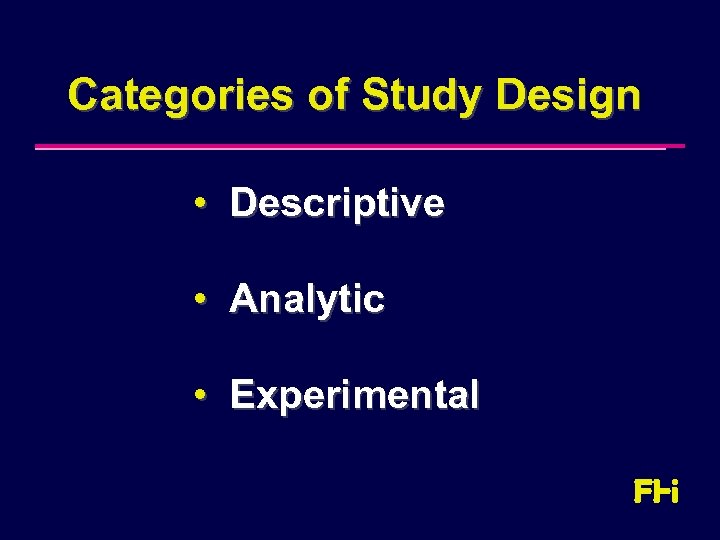
Categories of Study Design • Descriptive • Analytic • Experimental
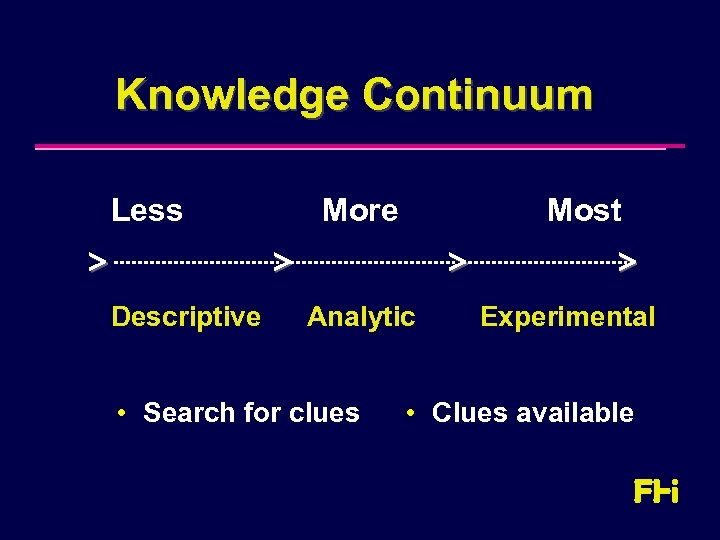
Knowledge Continuum Less More Most Descriptive Analytic • Search for clues Experimental • Clues available
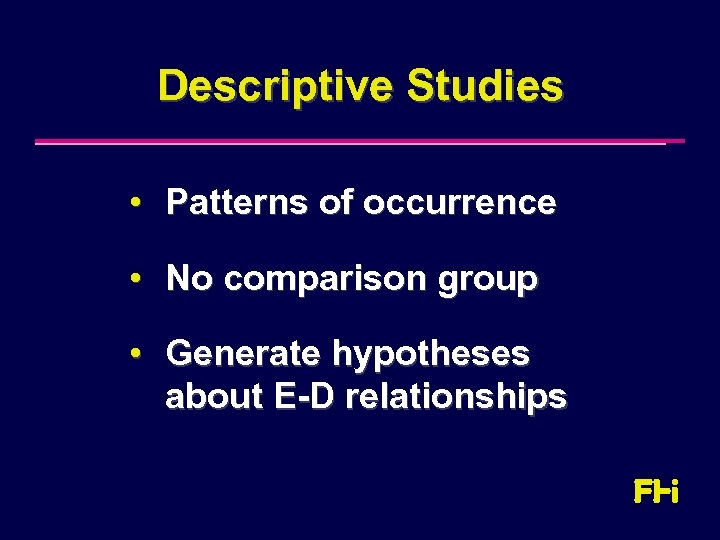
Descriptive Studies • Patterns of occurrence • No comparison group • Generate hypotheses about E-D relationships
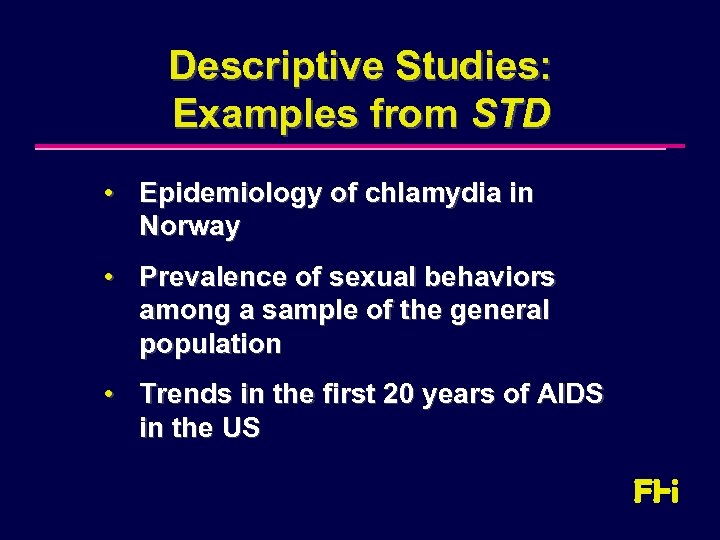
Descriptive Studies: Examples from STD • Epidemiology of chlamydia in Norway • Prevalence of sexual behaviors among a sample of the general population • Trends in the first 20 years of AIDS in the US
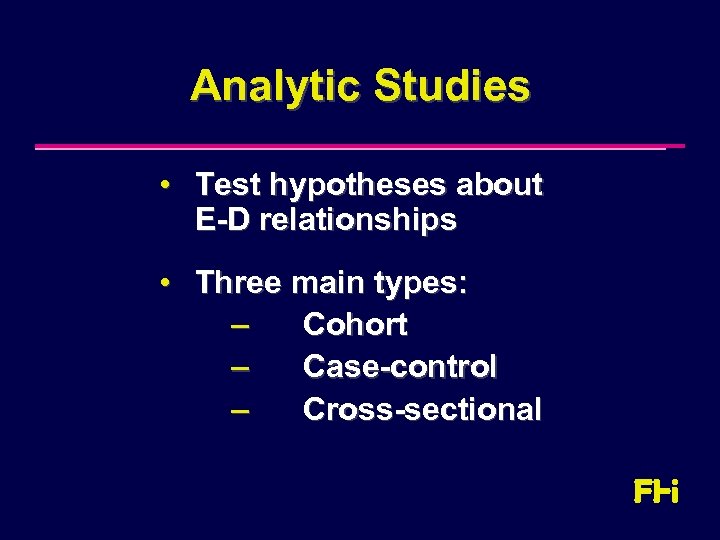
Analytic Studies • Test hypotheses about E-D relationships • Three main types: – Cohort – Case-control – Cross-sectional
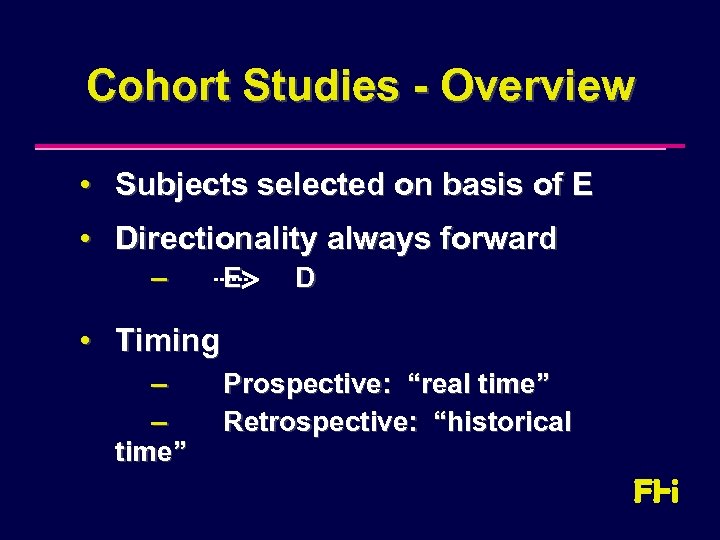
Cohort Studies - Overview • Subjects selected on basis of E • Directionality always forward – E D • Timing – – time” Prospective: “real time” Retrospective: “historical
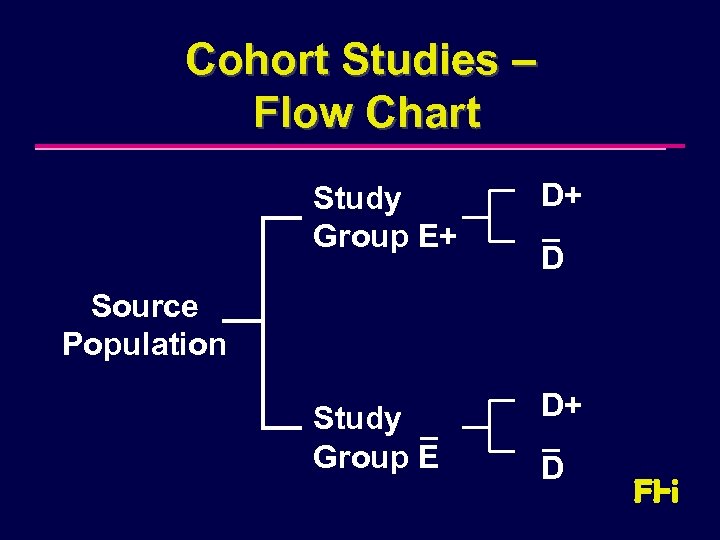
Cohort Studies – Flow Chart Study Group E+ D+ Study Group E D+ D Source Population D
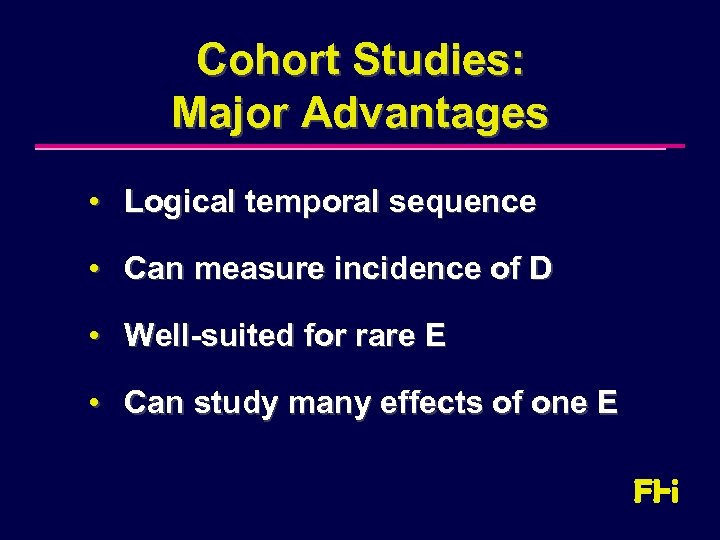
Cohort Studies: Major Advantages • Logical temporal sequence • Can measure incidence of D • Well-suited for rare E • Can study many effects of one E
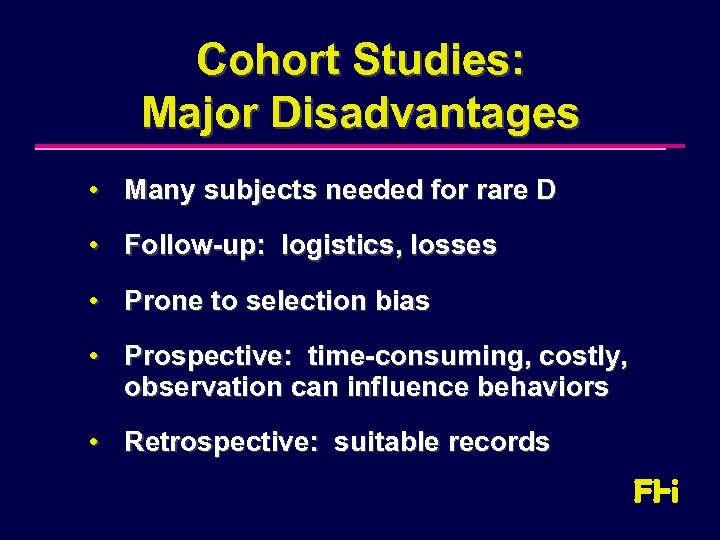
Cohort Studies: Major Disadvantages • Many subjects needed for rare D • Follow-up: logistics, losses • Prone to selection bias • Prospective: time-consuming, costly, observation can influence behaviors • Retrospective: suitable records
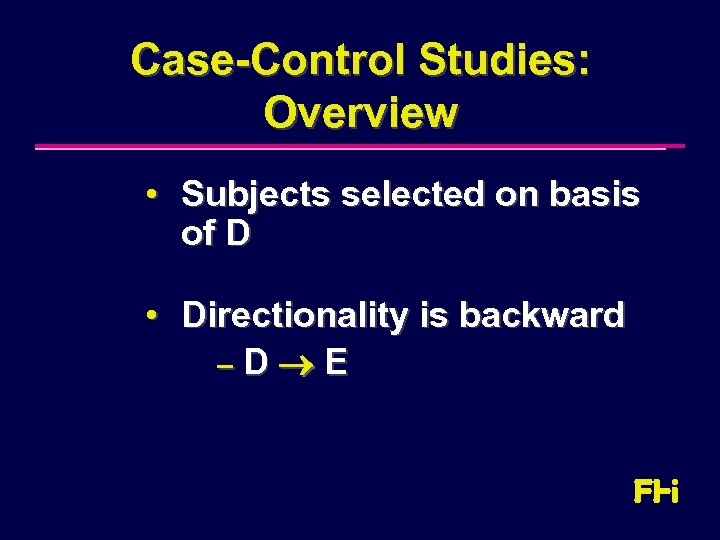
Case-Control Studies: Overview • Subjects selected on basis of D • Directionality is backward –D E
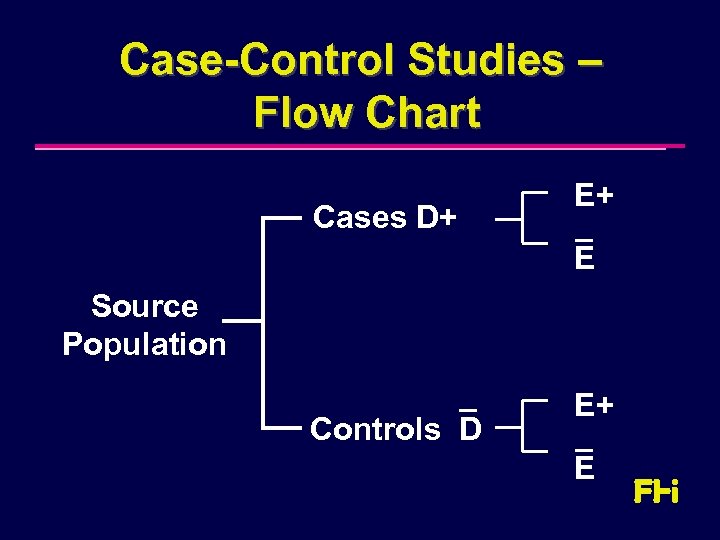
Case-Control Studies – Flow Chart Cases D+ E+ E Source Population Controls D E+ E
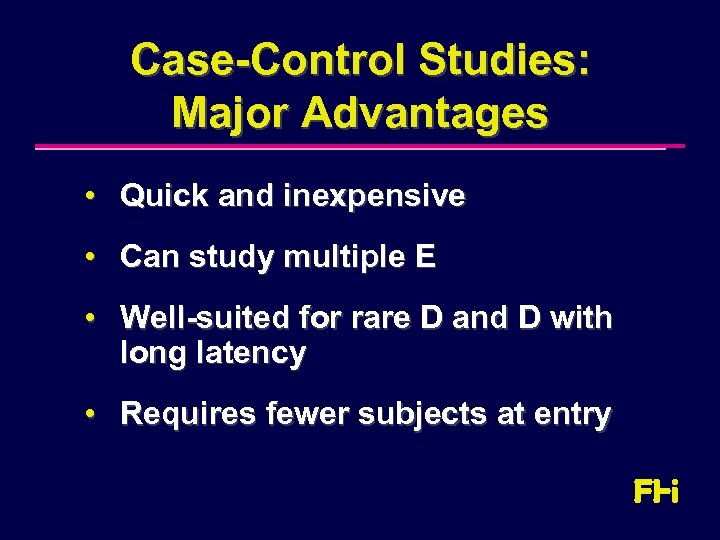
Case-Control Studies: Major Advantages • Quick and inexpensive • Can study multiple E • Well-suited for rare D and D with long latency • Requires fewer subjects at entry
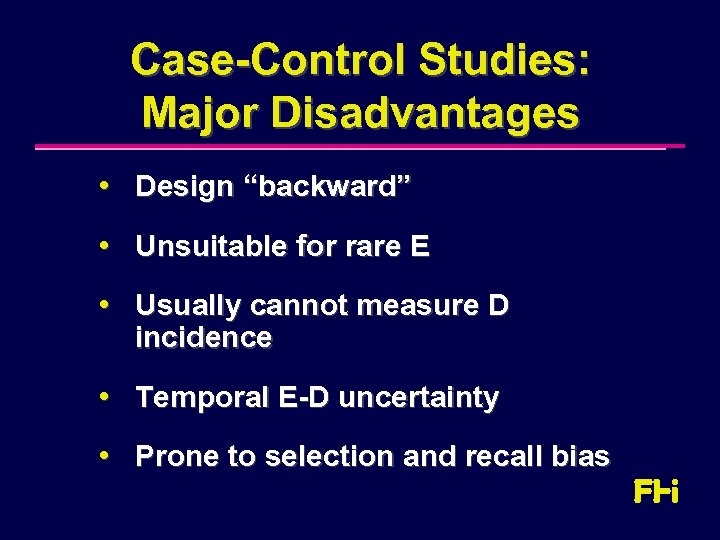
Case-Control Studies: Major Disadvantages • Design “backward” • Unsuitable for rare E • Usually cannot measure D incidence • Temporal E-D uncertainty • Prone to selection and recall bias
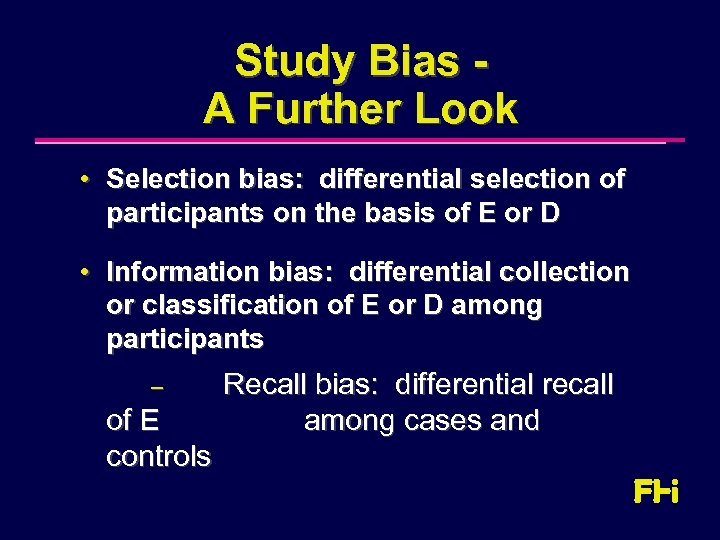
Study Bias A Further Look • Selection bias: differential selection of participants on the basis of E or D • Information bias: differential collection or classification of E or D among participants – of E controls Recall bias: differential recall among cases and
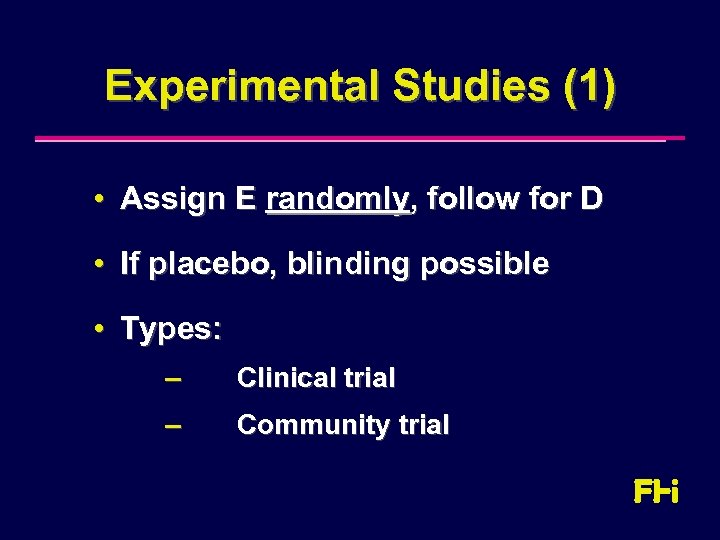
Experimental Studies (1) • Assign E randomly, follow for D • If placebo, blinding possible • Types: – Clinical trial – Community trial
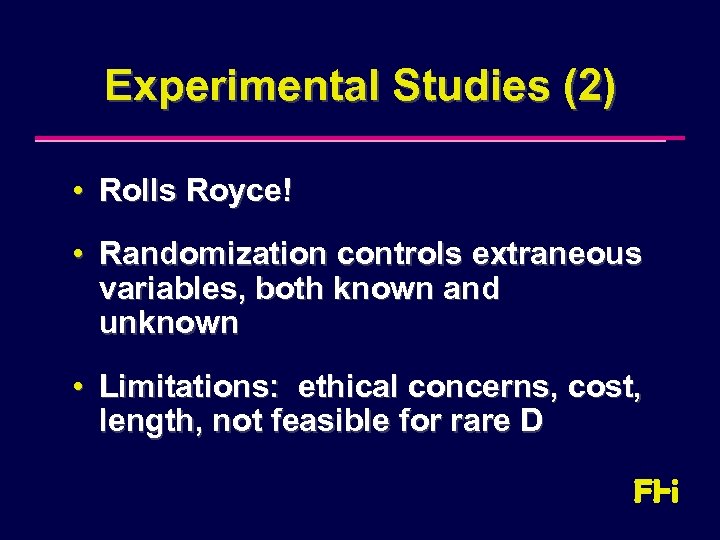
Experimental Studies (2) • Rolls Royce! • Randomization controls extraneous variables, both known and unknown • Limitations: ethical concerns, cost, length, not feasible for rare D
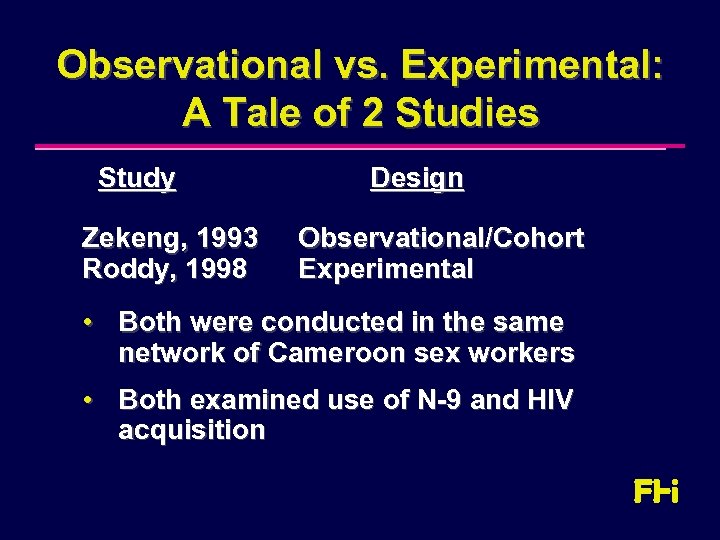
Observational vs. Experimental: A Tale of 2 Studies Study Zekeng, 1993 Roddy, 1998 Design Observational/Cohort Experimental • Both were conducted in the same network of Cameroon sex workers • Both examined use of N-9 and HIV acquisition
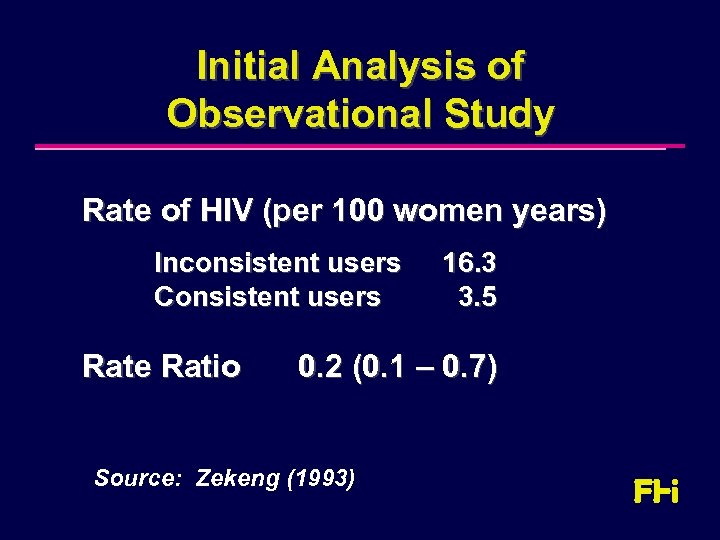
Initial Analysis of Observational Study Rate of HIV (per 100 women years) Inconsistent users Consistent users Rate Ratio 16. 3 3. 5 0. 2 (0. 1 – 0. 7) Source: Zekeng (1993)
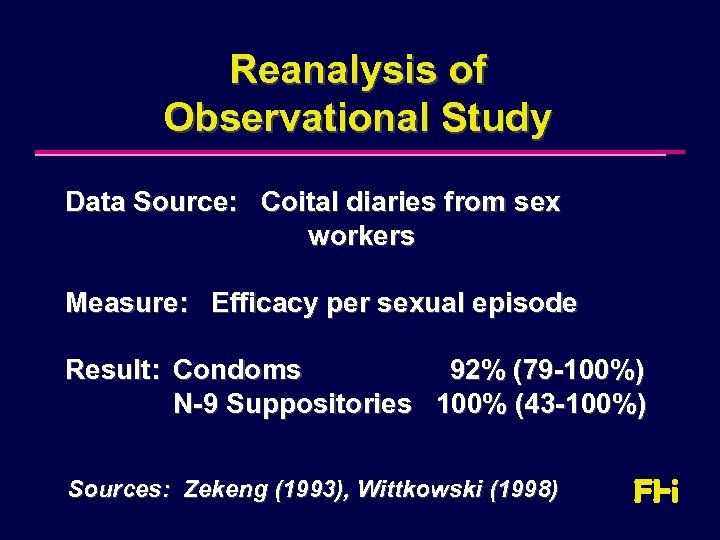
Reanalysis of Observational Study Data Source: Coital diaries from sex workers Measure: Efficacy per sexual episode Result: Condoms 92% (79 -100%) N-9 Suppositories 100% (43 -100%) Sources: Zekeng (1993), Wittkowski (1998)
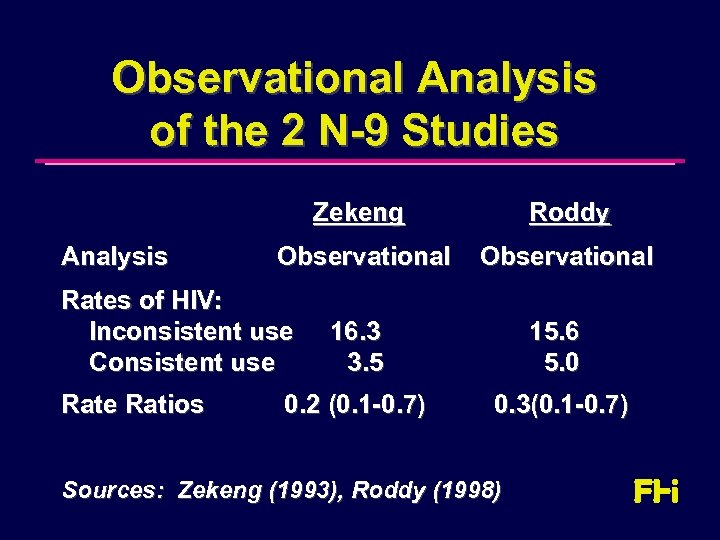
Observational Analysis of the 2 N-9 Studies Zekeng Analysis Roddy Observational Rates of HIV: Inconsistent use Consistent use Ratios 16. 3 3. 5 15. 6 5. 0 0. 2 (0. 1 -0. 7) 0. 3(0. 1 -0. 7) Sources: Zekeng (1993), Roddy (1998)
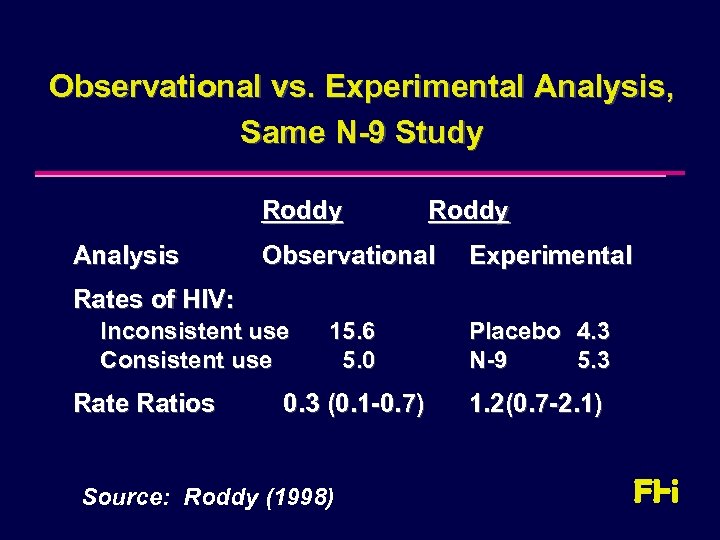
Observational vs. Experimental Analysis, Same N-9 Study Roddy Analysis Roddy Observational Experimental Rates of HIV: Inconsistent use Consistent use Ratios 15. 6 5. 0 Placebo 4. 3 N-9 5. 3 0. 3 (0. 1 -0. 7) 1. 2(0. 7 -2. 1) Source: Roddy (1998)

Study Design: Concluding Remarks • Must consider: – Objectives of study – Current knowledge about E-D – Ethical issues – Time, money, human resources • Different approaches • Flexibility and creativity are KEY!
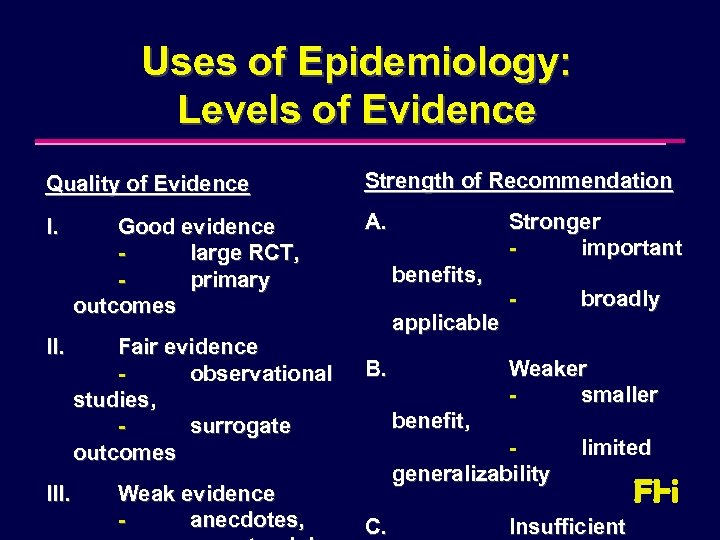
Uses of Epidemiology: Levels of Evidence Quality of Evidence Strength of Recommendation I. A. III. Good evidence large RCT, primary outcomes Fair evidence observational studies, surrogate outcomes Weak evidence anecdotes, Stronger important benefits, applicable B. - broadly Weaker smaller benefit, generalizability C. limited Insufficient
Скачать презентацию Epidemiology and Sex ually Transmitted Diseases The Basics Willard
5d54177ac298f225e8f733fadac50123.ppt