 Скачать презентацию Epidemiological studies Tunis 29 th October 2014 Source
bb0f63ee3291c5b5d371b439417fa731.ppt
- Количество слайдов: 81



Epidemiological studies Tunis, 29 th October 2014 Source: Alain Moren, EPIET Introductory courses Prof. Vesna Velikj Stefanovska Institute of Epidemiology and Biostatistics, Medical Faculty, FYROM vesnamia@t-home. mk
Epidemiological studies Two types: q. Observational q. Experimental
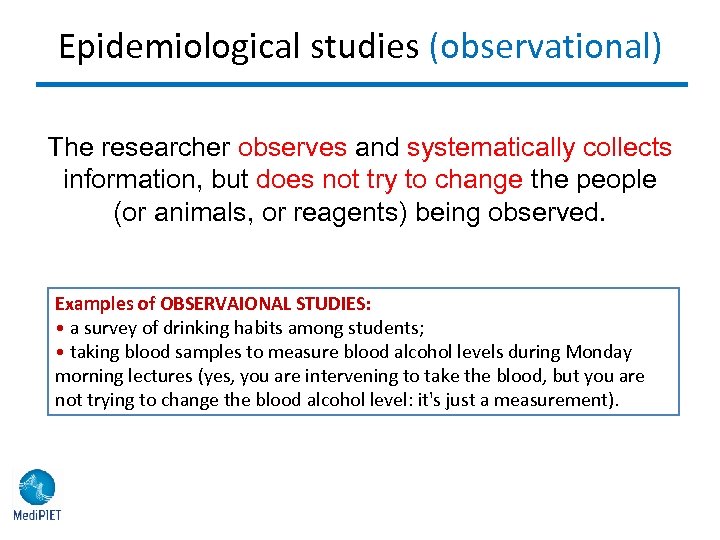
Epidemiological studies (observational) The researcher observes and systematically collects information, but does not try to change the people (or animals, or reagents) being observed. Examples of OBSERVAIONAL STUDIES: • a survey of drinking habits among students; • taking blood samples to measure blood alcohol levels during Monday morning lectures (yes, you are intervening to take the blood, but you are not trying to change the blood alcohol level: it's just a measurement).
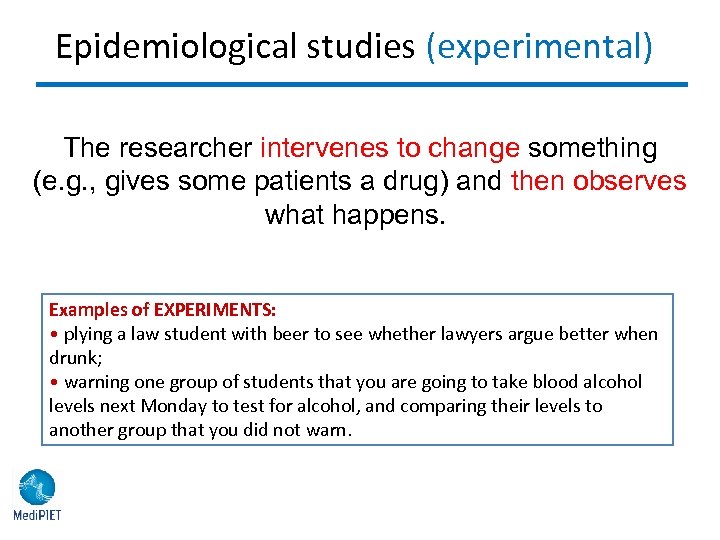
Epidemiological studies (experimental) The researcher intervenes to change something (e. g. , gives some patients a drug) and then observes what happens. Examples of EXPERIMENTS: • plying a law student with beer to see whether lawyers argue better when drunk; • warning one group of students that you are going to take blood alcohol levels next Monday to test for alcohol, and comparing their levels to another group that you did not warn.
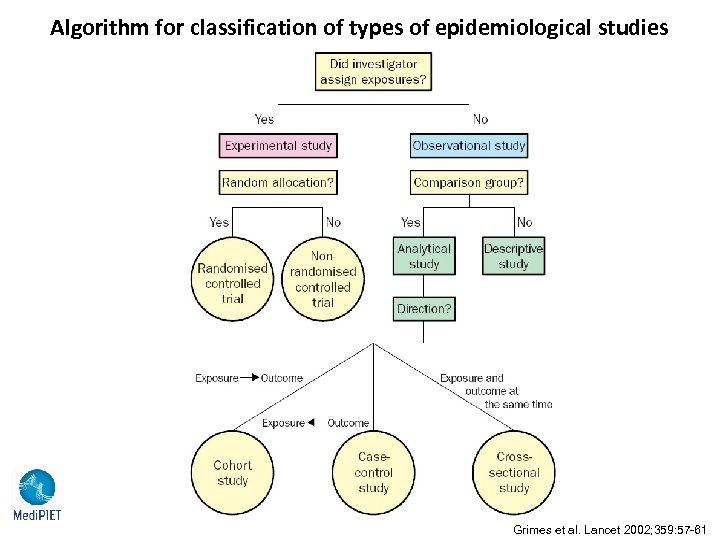
Algorithm for classification of types of epidemiological studies Grimes et al. Lancet 2002; 359: 57 -61
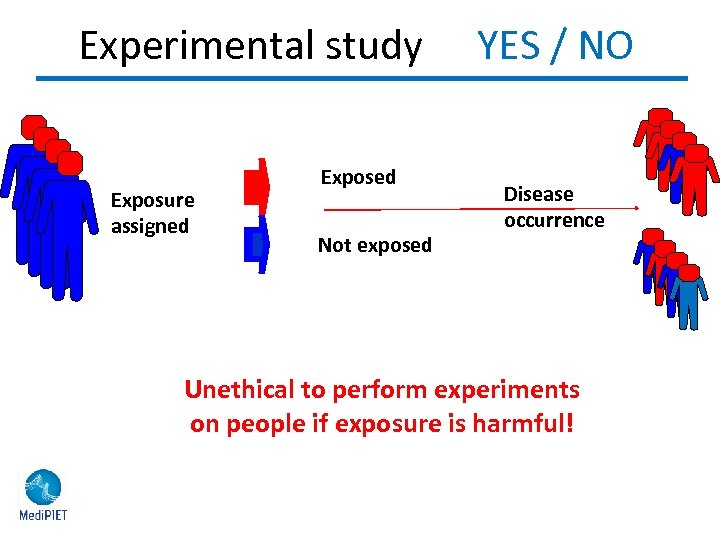
Experimental study Exposure assigned Exposed Not exposed YES / NO Disease occurrence Unethical to perform experiments on people if exposure is harmful!
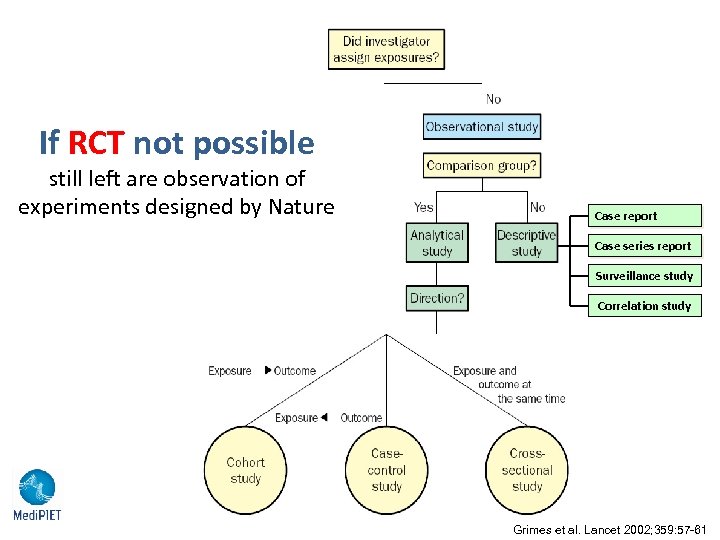
If RCT not possible still left are observation of experiments designed by Nature Case report Case series report Surveillance study Correlation study Grimes et al. Lancet 2002; 359: 57 -61

Descriptive studies what they can and cannot do
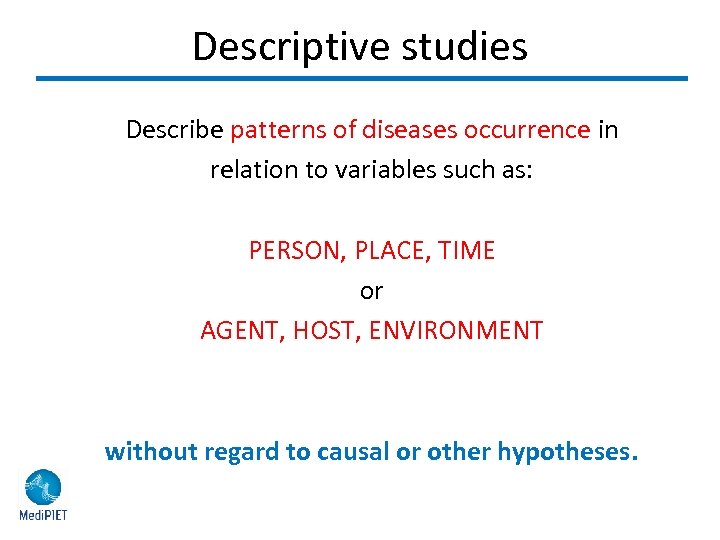
Descriptive studies Describe patterns of diseases occurrence in relation to variables such as: PERSON, PLACE, TIME or AGENT, HOST, ENVIRONMENT without regard to causal or other hypotheses.
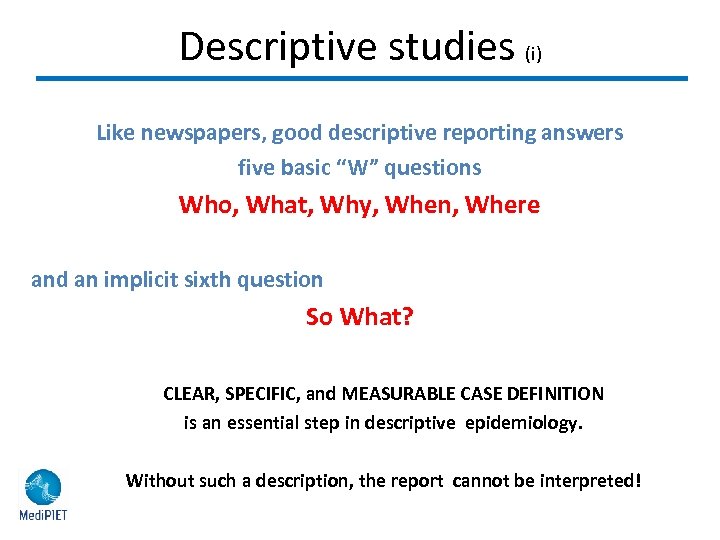
Descriptive studies (i) Like newspapers, good descriptive reporting answers five basic “W” questions Who, What, Why, When, Where and an implicit sixth question So What? CLEAR, SPECIFIC, and MEASURABLE CASE DEFINITION is an essential step in descriptive epidemiology. Without such a description, the report cannot be interpreted!
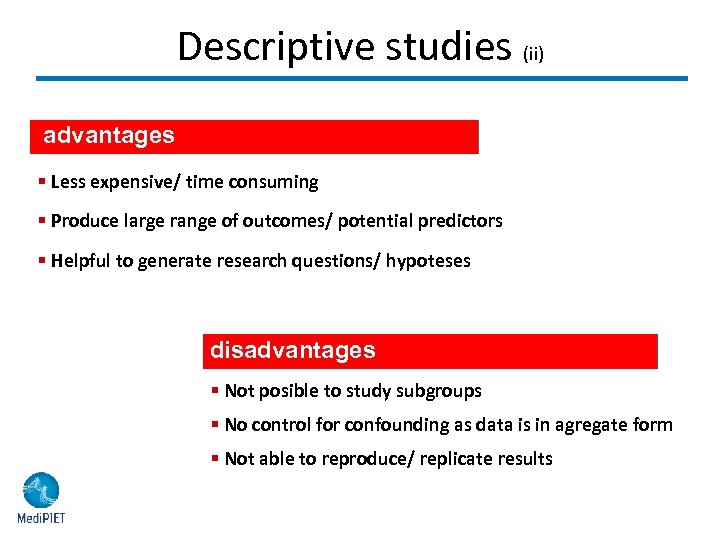
Descriptive studies (ii) advantages § Less expensive/ time consuming § Produce large range of outcomes/ potential predictors § Helpful to generate research questions/ hypoteses disadvantages § Not posible to study subgroups § No control for confounding as data is in agregate form § Not able to reproduce/ replicate results
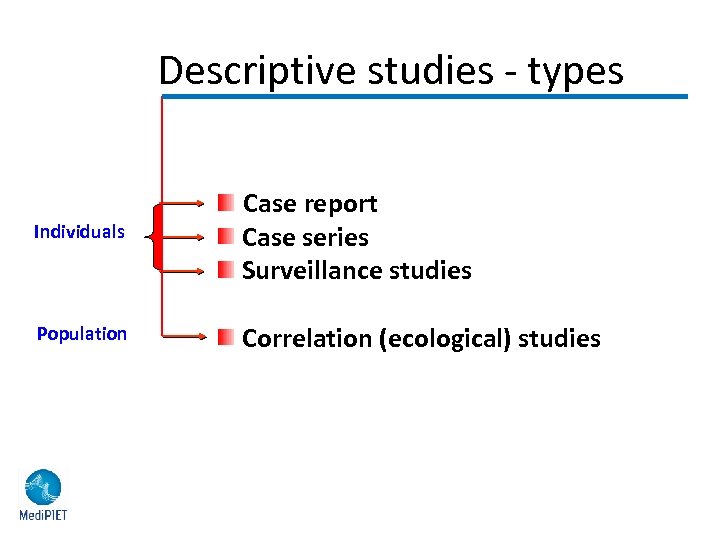
Descriptive studies - types Individuals Case report Case series Surveillance studies Population Correlation (ecological) studies

Case Report - descriptive studies -
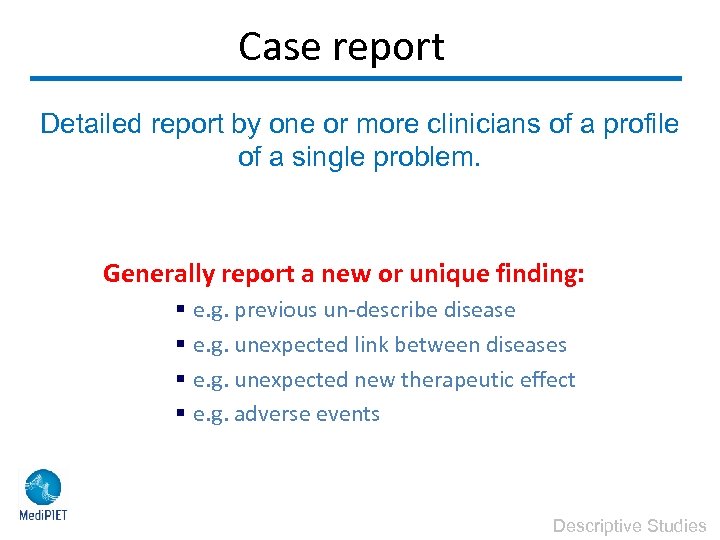
Case report Detailed report by one or more clinicians of a profile of a single problem. Generally report a new or unique finding: § e. g. previous un-describe disease § e. g. unexpected link between diseases § e. g. unexpected new therapeutic effect § e. g. adverse events Descriptive Studies
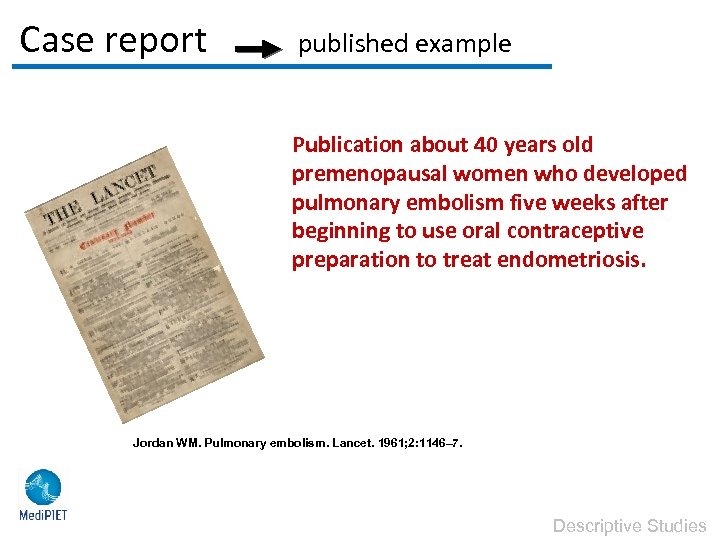
Case report published example Publication about 40 years old premenopausal women who developed pulmonary embolism five weeks after beginning to use oral contraceptive preparation to treat endometriosis. Jordan WM. Pulmonary embolism. Lancet. 1961; 2: 1146– 7. Descriptive Studies

Case Series - descriptive studies -
Case series Descriptive Studies Collection of individual case reports which describes characteristics of a number of patients with a given disease. Cases: § § identified from a single or multiple sources within a fairly short period of time generally report on new/ unique condition may be only realistic design for rare condition
Case series (i) Descriptive Studies advantages § Useful for hypothesis generation § Informative for very rare disease with few established risk factors § Characterizes averages for disorders disadvantages § Cannot study cause and effect relationships § Cannot assess disease frequency used as an EARLY MEANS to IDENTIFY THE BEGINNING OR PRESENCE OF AN EPIDEMIC
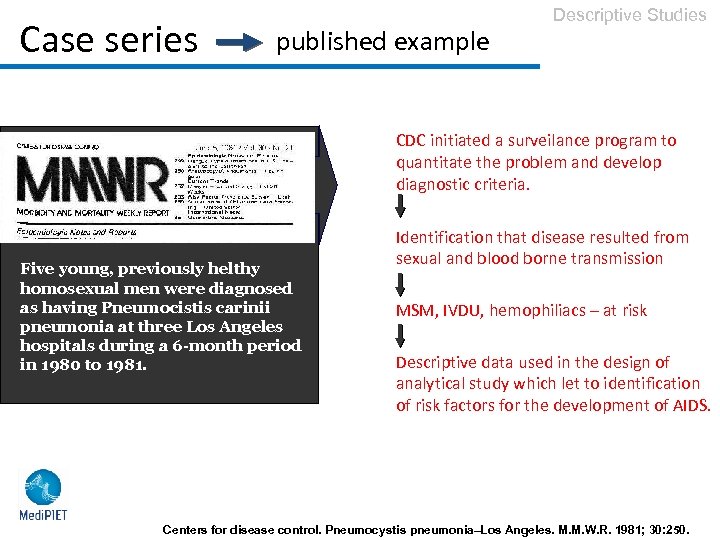
Case series published example Descriptive Studies CDC initiated a surveilance program to quantitate the problem and develop diagnostic criteria. Five young, previously helthy homosexual men were diagnosed as having Pneumocistis carinii pneumonia at three Los Angeles hospitals during a 6 -month period in 1980 to 1981. Identification that disease resulted from sexual and blood borne transmission MSM, IVDU, hemophiliacs – at risk Descriptive data used in the design of analytical study which let to identification of risk factors for the development of AIDS. Centers for disease control. Pneumocystis pneumonia–Los Angeles. M. M. W. R. 1981; 30: 250.

Surveillance Studies - descriptive studies -
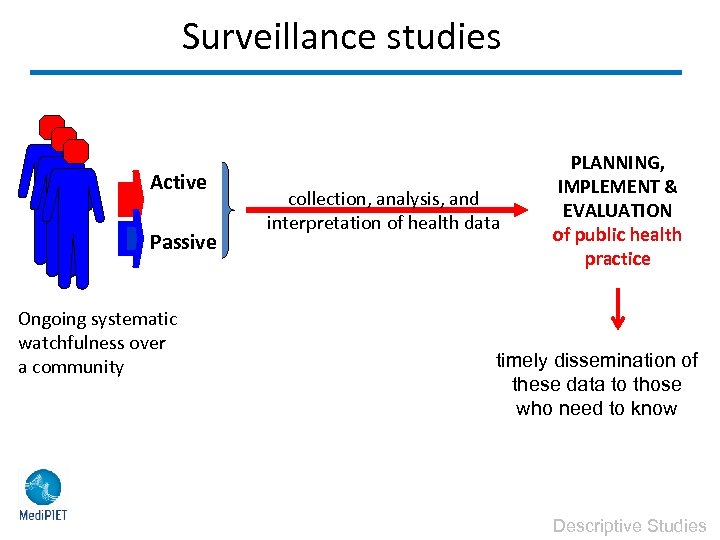
Surveillance studies Active Passive Ongoing systematic watchfulness over a community collection, analysis, and interpretation of health data PLANNING, IMPLEMENT & EVALUATION of public health practice timely dissemination of these data to those who need to know Descriptive Studies

Correlational Studies - descriptive studies -
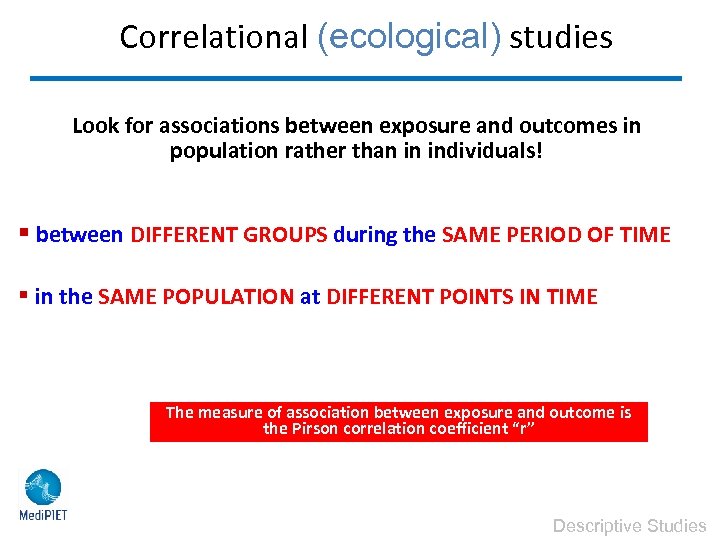
Correlational (ecological) studies Look for associations between exposure and outcomes in population rather than in individuals! § between DIFFERENT GROUPS during the SAME PERIOD OF TIME § in the SAME POPULATION at DIFFERENT POINTS IN TIME The measure of association between exposure and outcome is the Pirson correlation coefficient “r” Descriptive Studies
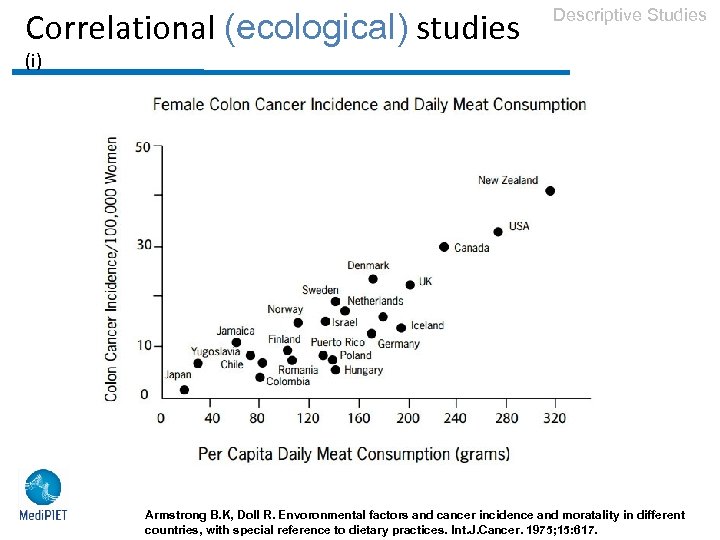
Correlational (ecological) studies Descriptive Studies (i) Armstrong B. K, Doll R. Envoronmental factors and cancer incidence and moratality in different countries, with special reference to dietary practices. Int. J. Cancer. 1975; 15: 617.
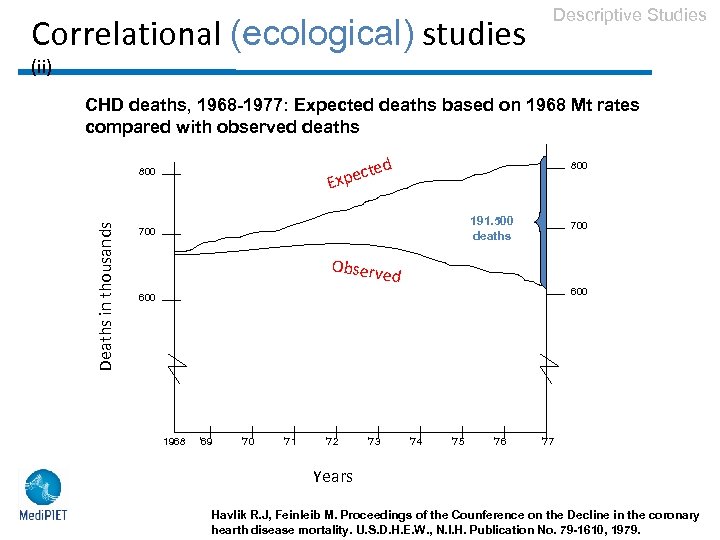
Correlational (ecological) studies Descriptive Studies (ii) CHD deaths, 1968 -1977: Expected deaths based on 1968 Mt rates compared with observed deaths ed pect Ex Deaths in thousands 800 191. 500 deaths 700 Observe d 600 1968 ‘ 69 ‘ 70 ‘ 71 ‘ 72 ‘ 73 ‘ 74 ‘ 75 ‘ 76 ‘ 77 Years Havlik R. J, Feinleib M. Proceedings of the Counference on the Decline in the coronary hearth disease mortality. U. S. D. H. E. W. , N. I. H. Publication No. 79 -1610, 1979.
Correlational (ecological) studies (iii) Limitation § Inability to link exposure with disease in particular individuals § Lack of ability to control for the effects of potential confounding factors § Data represent average exposure levels rather than actual individual values Descriptive Studies
Analytic studies
Analytic studies Evaluate the relationship of disease to different exposures describe ASSOCIATION between ASSOCIATION exposure and outcome
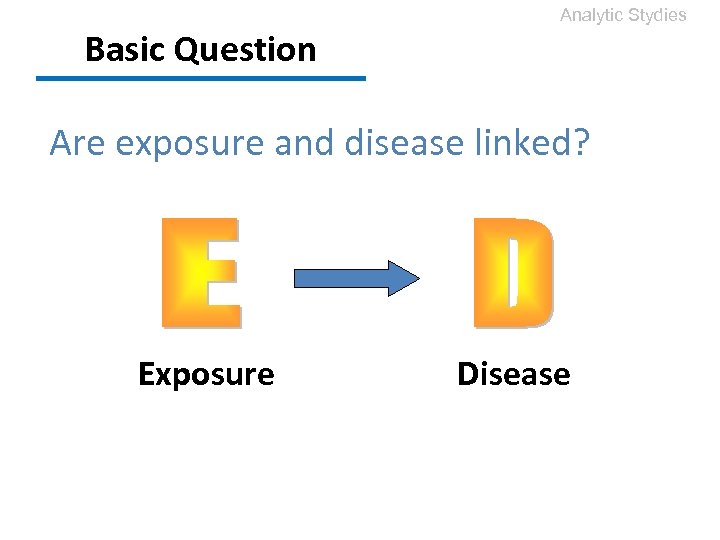
Basic Question Analytic Stydies Are exposure and disease linked? Exposure Disease
Analytic Studies Additional questions to link exposure and disease § What is the exposure? § Who are the exposed? § What are the potential health effects? § What approach to take to study the relationship between exposure and effect?
Analytic studies Three types: q. Cross sectional studies q. Cohort studies q. Case control studies
Cross-sectional studies a snapshot in time
Cross-sectional (prevalence) studies Assess EXPOSURE and DISEASE status simultaneously among individuals in a well-defined population at a single point in time. § Recruitment of study participants - Population sample § Observation for the presence of: - One or more outcomes - One or more exposures
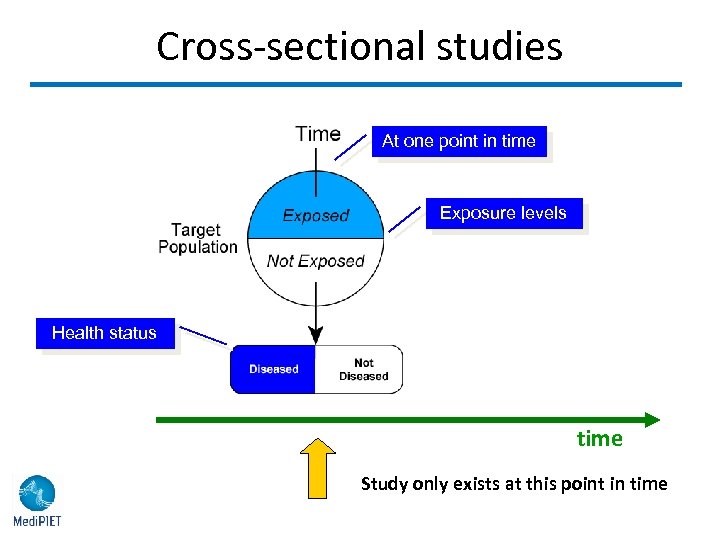
Cross-sectional studies At one point in time Exposure levels Health status time Study only exists at this point in time
Cross sectional studies - types • Descriptive § Frequency and characteristics of EXPOSURE/ DISEASE § Estimate prevalence • Analytic § Compare the PREVALENCE OF A DISEASE/ EXPOSURE in various subgroups, exposed and unexposed § Search ASSOCIATION between EXPOSURE and DISEASE
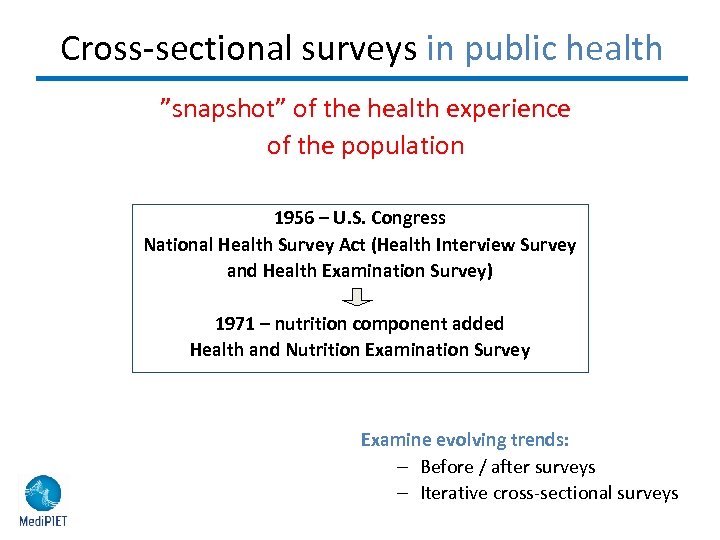
Cross-sectional surveys in public health ”snapshot” of the health experience of the population 1956 – U. S. Congress National Health Survey Act (Health Interview Survey and Health Examination Survey) 1971 – nutrition component added Health and Nutrition Examination Survey Examine evolving trends: – Before / after surveys – Iterative cross-sectional surveys
Cross-sectional surveys in public health • • • Estimate prevalence of disease / risk factors Estimate burden Measure health status in a defined population Plan health care services delivery Set priorities for disease control Generate hypotheses
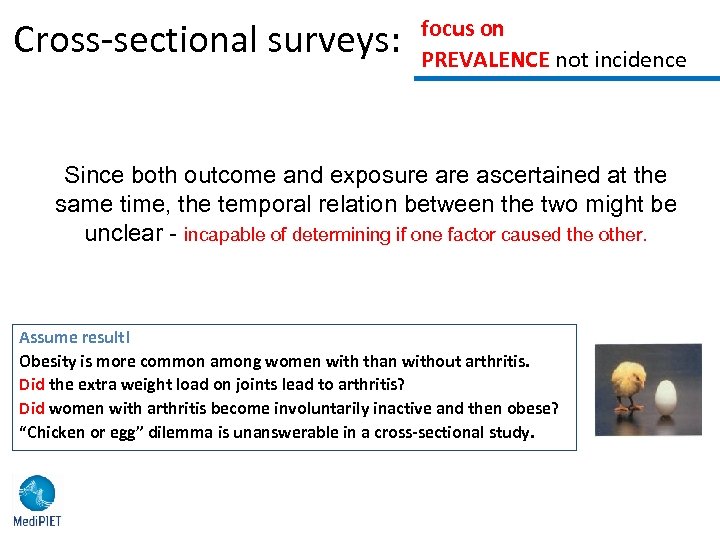
Cross-sectional surveys: focus on PREVALENCE not incidence Since both outcome and exposure ascertained at the same time, the temporal relation between the two might be unclear - incapable of determining if one factor caused the other. Assume result! Obesity is more common among women with than without arthritis. Did the extra weight load on joints lead to arthritis? Did women with arthritis become involuntarily inactive and then obese? “Chicken or egg” dilemma is unanswerable in a cross-sectional study.
Analitical cross-sectional surveys Cross-sectional survey are considered as a type of analytic study and used to test epidemiologic hypothesis! WHEN ? When current values of the exposure variables are unalterable over time EXAMPLE ! Factors present at birth (eye color, blood group…)
Measuring association in analytical cross-sectional surveys § Prevalence among exposed / unexposed § Prevalence ratio (cross sectional analog to RR) Concept different § Only prevalence - depends on both occurrence of new cases & duration of disease
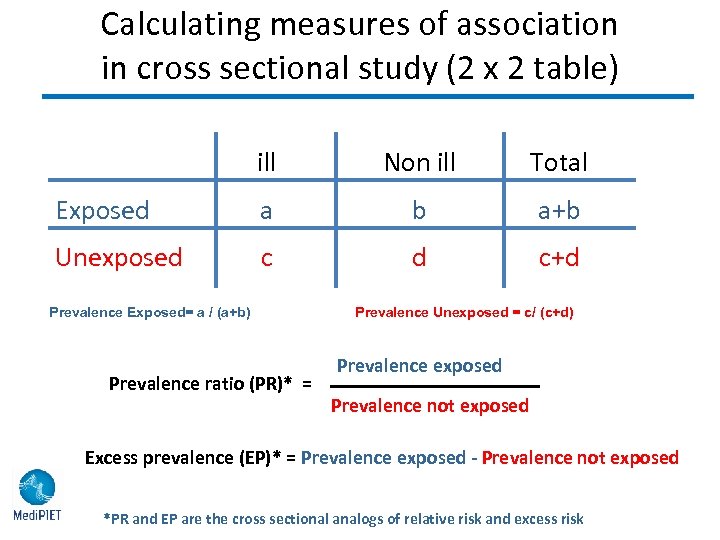
Calculating measures of association in cross sectional study (2 x 2 table) ill Non ill Total Exposed a b a+b Unexposed c d c+d Prevalence Exposed= a / (a+b) Prevalence ratio (PR)* = Prevalence Unexposed = c/ (c+d) Prevalence exposed Prevalence not exposed Excess prevalence (EP)* = Prevalence exposed - Prevalence not exposed *PR and EP are the cross sectional analogs of relative risk and excess risk
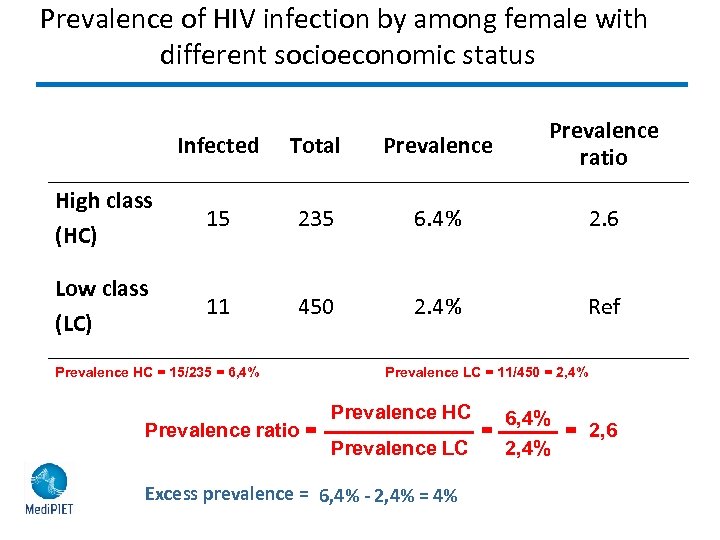
Prevalence of HIV infection by among female with different socioeconomic status Infected Total Prevalence ratio High class (HC) 15 235 6. 4% 2. 6 Low class (LC) 11 450 2. 4% Ref Prevalence HC = 15/235 = 6, 4% Prevalence ratio = Prevalence LC = 11/450 = 2, 4% Prevalence HC Prevalence LC Excess prevalence = 6, 4% - 2, 4% = 6, 4% = 2, 6 2, 4%
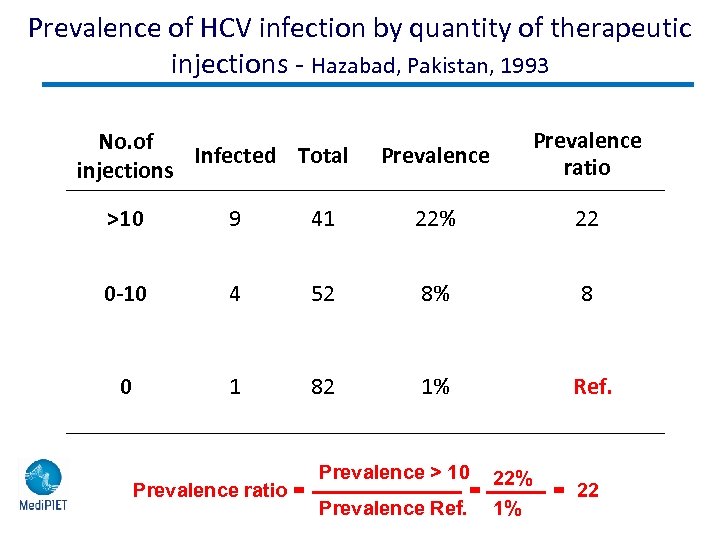
Prevalence of HCV infection by quantity of therapeutic injections - Hazabad, Pakistan, 1993 No. of Infected Total injections Prevalence ratio >10 9 41 22% 22 0 -10 4 52 8% 8 0 1 82 1% Ref. Prevalence > 10 22% Prevalence ratio = = = 22 Prevalence Ref. 1%
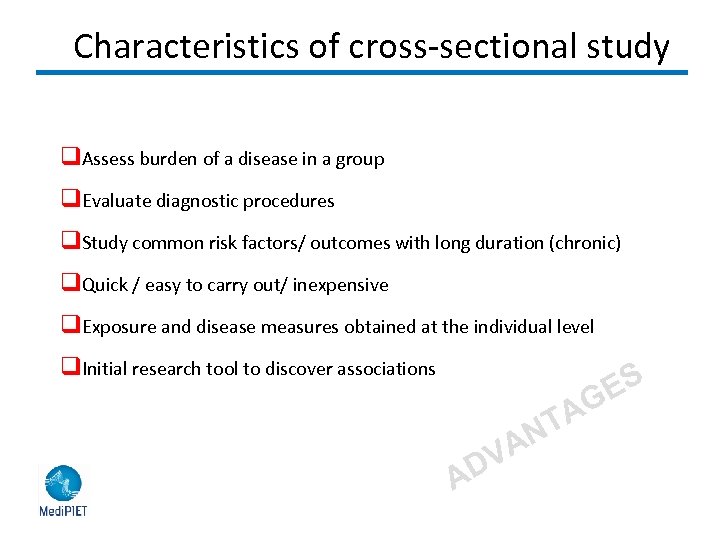
Characteristics of cross-sectional study q. Assess burden of a disease in a group q. Evaluate diagnostic procedures q. Study common risk factors/ outcomes with long duration (chronic) q. Quick / easy to carry out/ inexpensive q. Exposure and disease measures obtained at the individual level q. Initial research tool to discover associations ES G A TA AN DV
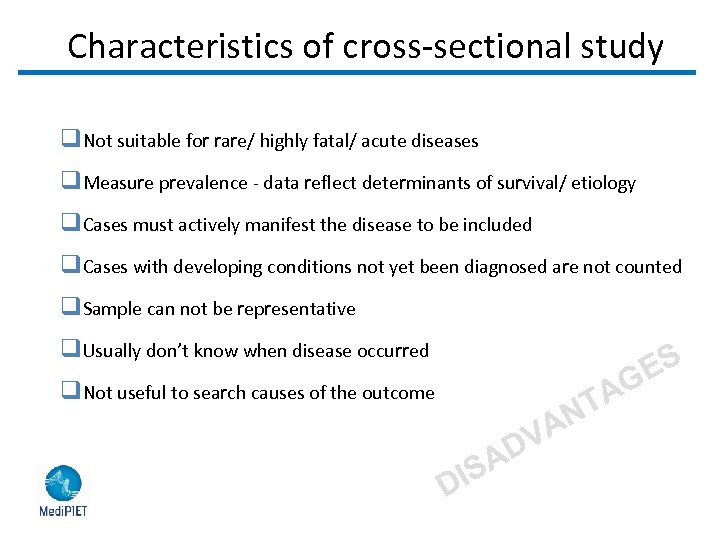
Characteristics of cross-sectional study q. Not suitable for rare/ highly fatal/ acute diseases q. Measure prevalence - data reflect determinants of survival/ etiology q. Cases must actively manifest the disease to be included q. Cases with developing conditions not yet been diagnosed are not counted q. Sample can not be representative q. Usually don’t know when disease occurred ES G TA AN V q. Not useful to search causes of the outcome AD IS D
Cohort studies marching towards outcomes
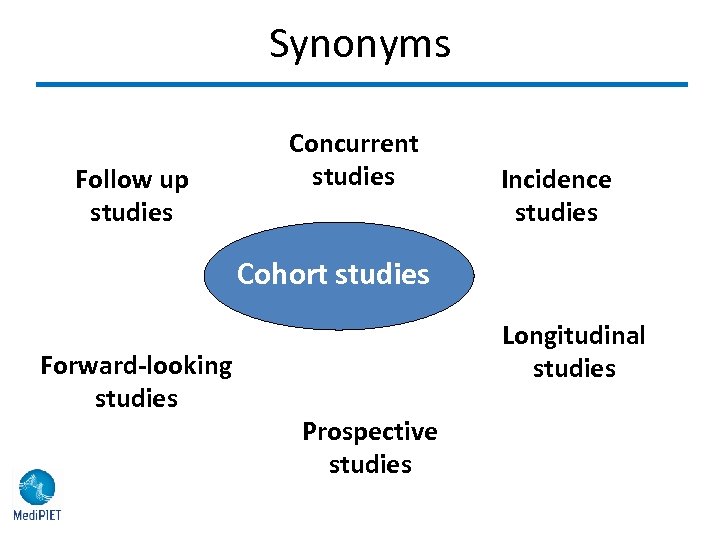
Synonyms Follow up studies Concurrent studies Incidence studies Cohort studies Forward-looking studies Longitudinal studies Prospective studies
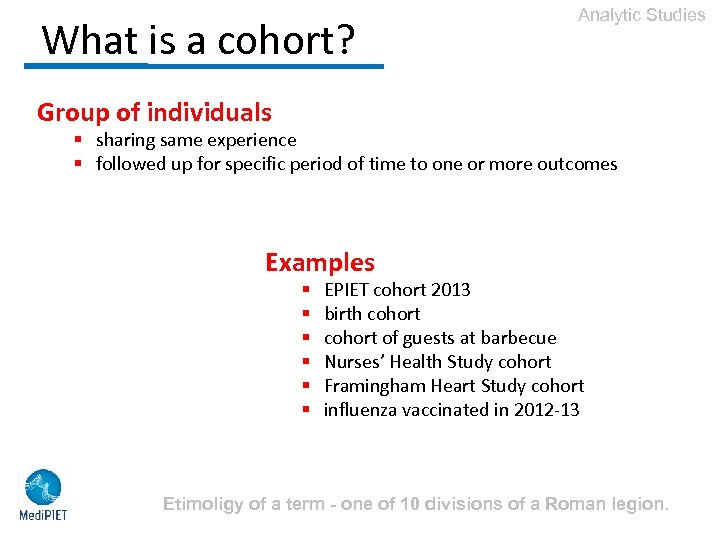
What is a cohort? Analytic Studies Group of individuals § sharing same experience § followed up for specific period of time to one or more outcomes Examples § § § EPIET cohort 2013 birth cohort of guests at barbecue Nurses’ Health Study cohort Framingham Heart Study cohort influenza vaccinated in 2012 -13 Etimoligy of a term - one of 10 divisions of a Roman legion.
Analytic Studies Cohort membership § Being at risk of outcome(s) studied § Being alive and § Being free of outcome at start of follow-up
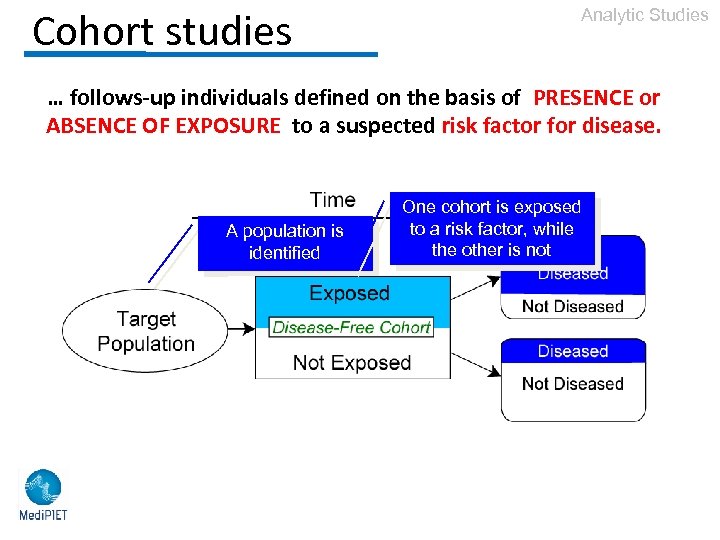
Cohort studies Analytic Studies … follows-up individuals defined on the basis of PRESENCE or ABSENCE OF EXPOSURE to a suspected risk factor for disease. A population is identified One cohort is exposed to a risk factor, while the other is not
Cohort studies (i) Analytic Studies Purpose: § Study if an exposure is ASSOCIATED with outcome(s) § ESTIMATE RISK of outcome in exposed and unexposed groups § COMPARE RISK of outcome in the two groups Analytic Studies
Cohort studies Analytic Studies Variations of cohort design: prospective retrospective ambidirectionale Researchers go forward in time from the present or go back in time to choose their cohorts. Either way, a cohort study moves in the same direction - although gathering data might not.
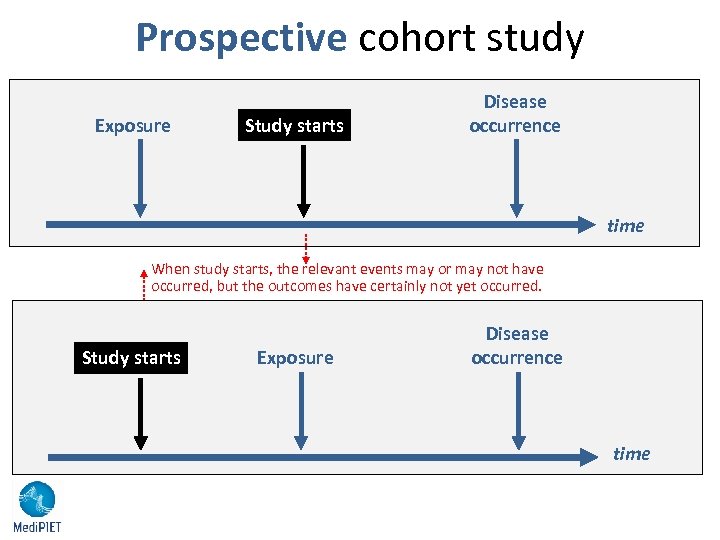
Prospective cohort study Exposure Study starts Disease occurrence time When study starts, the relevant events may or may not have occurred, but the outcomes have certainly not yet occurred. Study starts Exposure Disease occurrence time
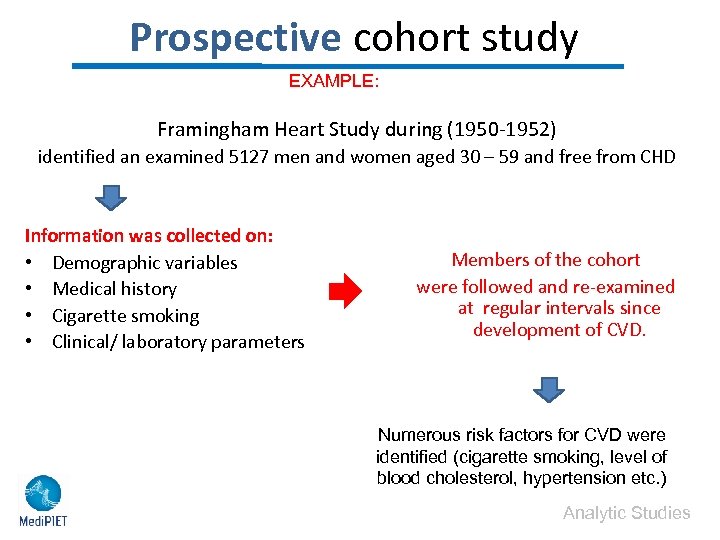
Prospective cohort study EXAMPLE: EXAMPLE Framingham Heart Study during (1950 -1952) identified an examined 5127 men and women aged 30 – 59 and free from CHD Information was collected on: • Demographic variables • Medical history • Cigarette smoking • Clinical/ laboratory parameters Members of the cohort were followed and re-examined at regular intervals since development of CVD. Numerous risk factors for CVD were identified (cigarette smoking, level of blood cholesterol, hypertension etc. ) Analytic Studies
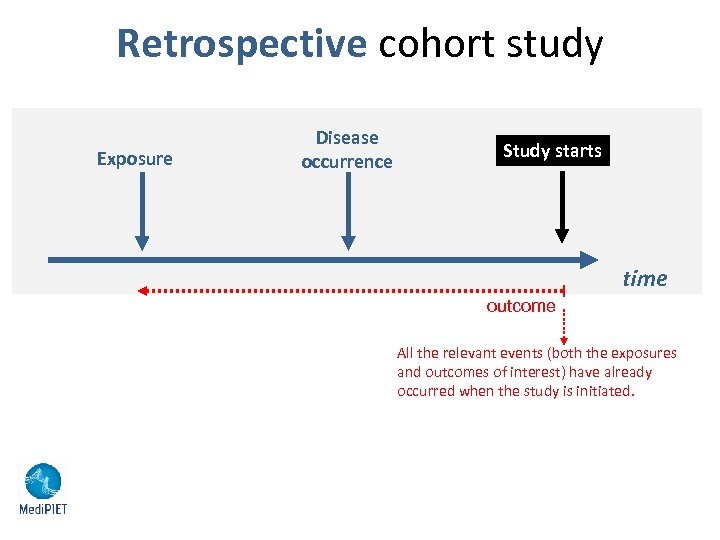
Retrospective cohort study Exposure Disease occurrence Study starts time outcome All the relevant events (both the exposures and outcomes of interest) have already occurred when the study is initiated.
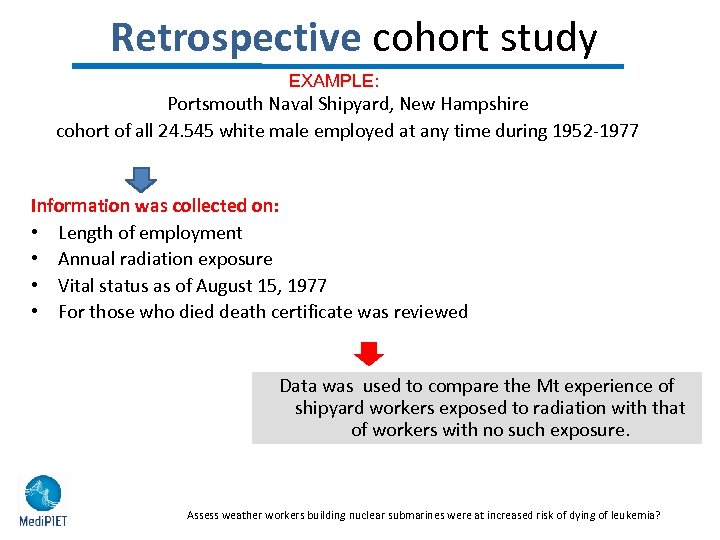
Retrospective cohort study EXAMPLE: EXAMPLE Portsmouth Naval Shipyard, New Hampshire cohort of all 24. 545 white male employed at any time during 1952 -1977 Information was collected on: • Length of employment • Annual radiation exposure • Vital status as of August 15, 1977 • For those who died death certificate was reviewed Data was used to compare the Mt experience of shipyard workers exposed to radiation with that of workers with no such exposure. Assess weather workers building nuclear submarines were at increased risk of dying of leukemia?
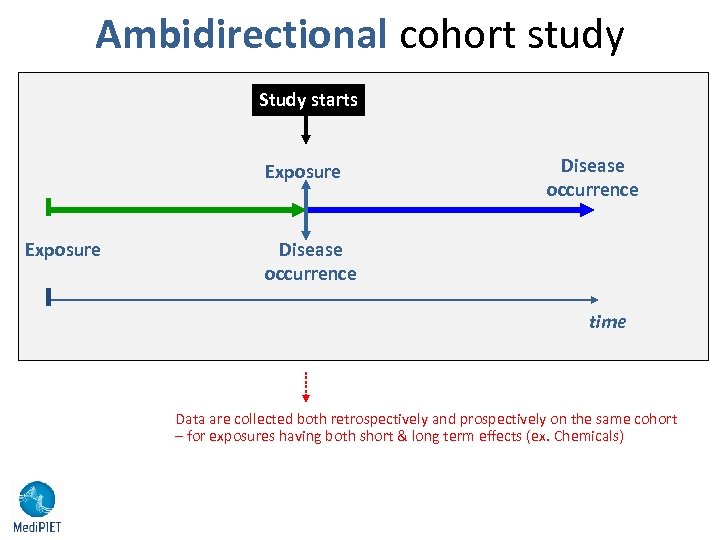
Ambidirectional cohort study Study starts Exposure Disease occurrence time Data are collected both retrospectively and prospectively on the same cohort – for exposures having both short & long term effects (ex. Chemicals)
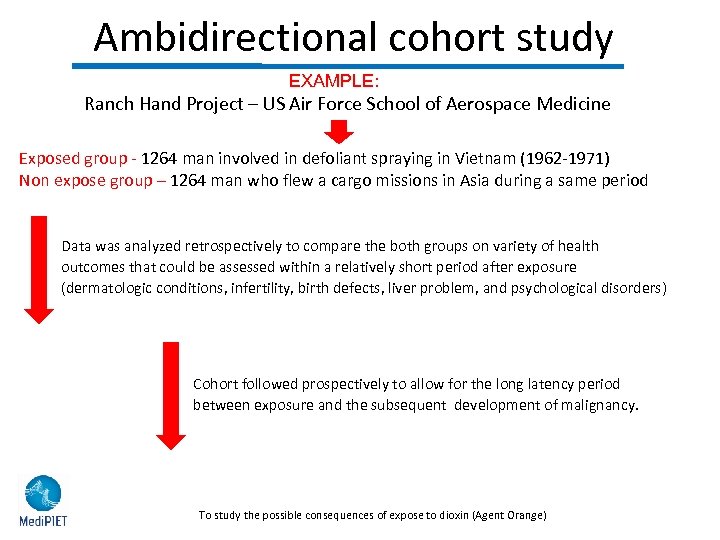
Ambidirectional cohort study EXAMPLE: EXAMPLE Ranch Hand Project – US Air Force School of Aerospace Medicine Exposed group - 1264 man involved in defoliant spraying in Vietnam (1962 -1971) Non expose group – 1264 man who flew a cargo missions in Asia during a same period Data was analyzed retrospectively to compare the both groups on variety of health outcomes that could be assessed within a relatively short period after exposure (dermatologic conditions, infertility, birth defects, liver problem, and psychological disorders) Cohort followed prospectively to allow for the long latency period between exposure and the subsequent development of malignancy. To study the possible consequences of expose to dioxin (Agent Orange)
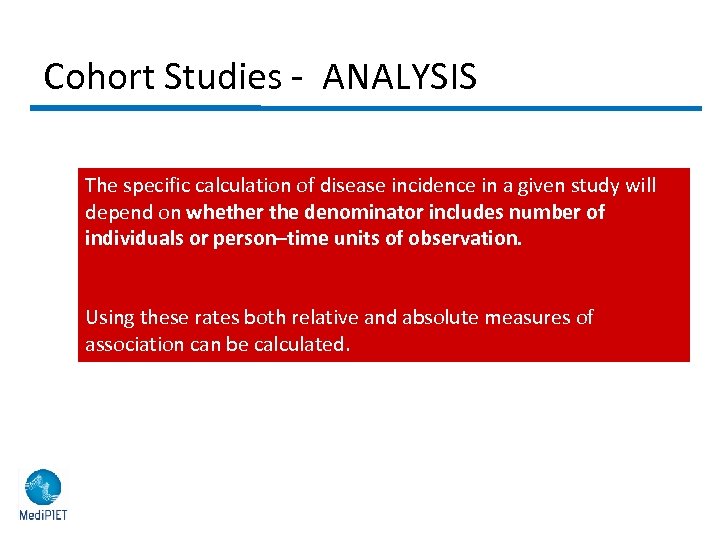
Cohort Studies - ANALYSIS § Rates of incidence of a disease (among the cohorts under The specific calculation of disease incidence in a given study will investigation) depend on whether the denominator includes number of individuals or person–time units of observation. § Rates can be compared for: - exposed/ nonexposed Using these rates both relative and absolute measures of - exposed to various level of the factor association can be calculated. - exposed to combination of factors
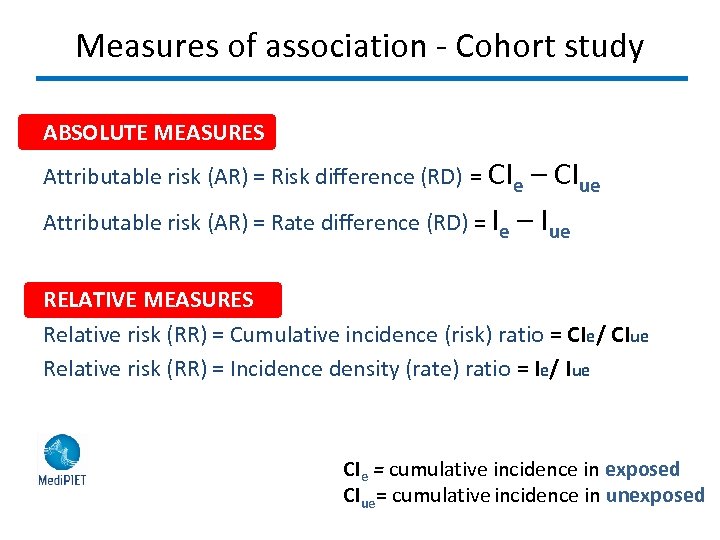
Measures of association - Cohort study ABSOLUTE MEASURES Attributable risk (AR) = Risk difference (RD) = CIe – CIue Attributable risk (AR) = Rate difference (RD) = Ie – Iue RELATIVE MEASURES Relative risk (RR) = Cumulative incidence (risk) ratio = CIe/ CIue Relative risk (RR) = Incidence density (rate) ratio = Ie/ Iue CIe = cumulative incidence in exposed CIue= cumulative incidence in unexposed
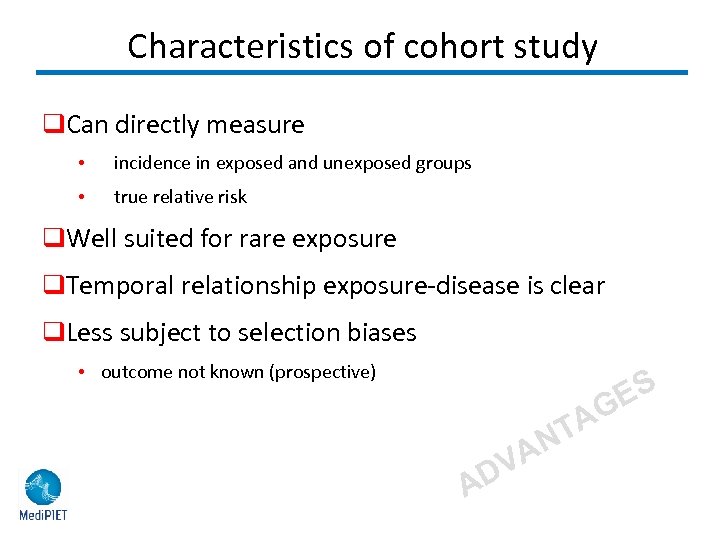
Characteristics of cohort study q. Can directly measure • incidence in exposed and unexposed groups • true relative risk q. Well suited for rare exposure q. Temporal relationship exposure-disease is clear q. Less subject to selection biases • outcome not known (prospective) ES G TA N A VA D
Characteristics of cohort study q Large sample size q Latency period q Cost q Time-consuming q Loss to follow-up q Exposure can change ES G TA AN V q Multiple exposure - difficult q Ethical considerations AD IS D
Case-control studies research in reverse
Case Control Studies Synonym Retrospective studies
Case-control studies In Case-Control Study the individuals are selected on the basis of whether they HAVE DISEASE (cases) or DON’T HAVE A DISEASE (controls). and then the groups are compared with respect to the proportion having a history of an exposure. Case-Control Studies try to identify risk factor for disease!
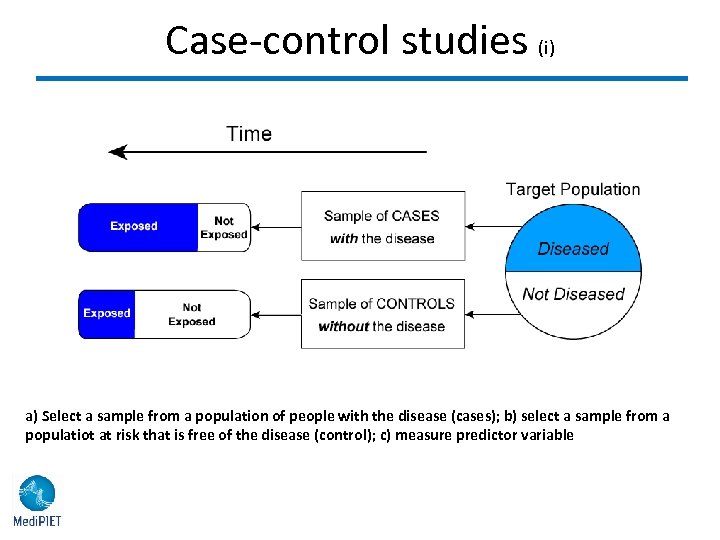
Case-control studies (i) a) Select a sample from a population of people with the disease (cases); b) select a sample from a populatiot at risk that is free of the disease (control); c) measure predictor variable
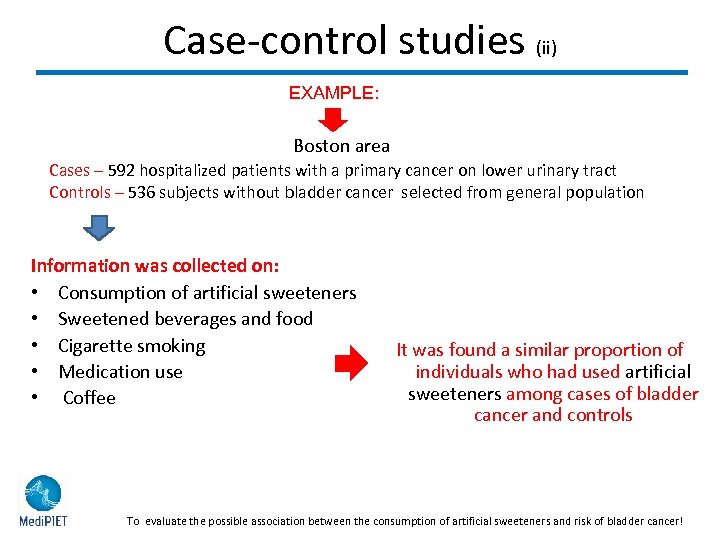
Case-control studies (ii) EXAMPLE: EXAMPLE Boston area Cases – 592 hospitalized patients with a primary cancer on lower urinary tract Controls – 536 subjects without bladder cancer selected from general population Information was collected on: • Consumption of artificial sweeteners • Sweetened beverages and food • Cigarette smoking • Medication use • Coffee It was found a similar proportion of individuals who had used artificial sweeteners among cases of bladder cancer and controls To evaluate the possible association between the consumption of artificial sweeteners and risk of bladder cancer!
Case-control studies (ii) David L Sackett – I would trust only six people in the world to do a proper case-control study! Rothman comments: “because it need not be extremely expensive nor time-consuming to conduct a case-control study, many studies have been conducted by “would be” investigators who lack even a rudimentary appreciation for epidemiologic principles. Occasionally such haphazard research can bring important results, but often the results are wrong because basic research principles have been violated. ” Rothman KJ. Modern epidemiology. Boston: Little, Brown and Company, 1986.
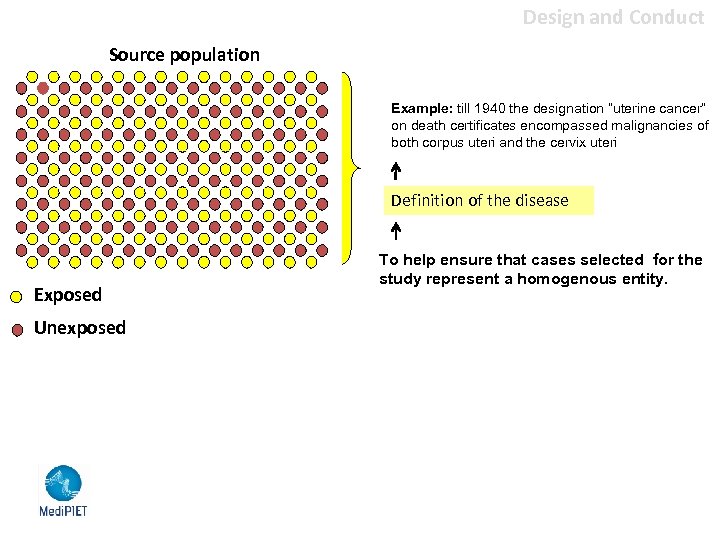
Design and Conduct Source population Example: till 1940 the designation “uterine cancer” on death certificates encompassed malignancies of both corpus uteri and the cervix uteri Definition of the disease Exposed Unexposed To help ensure that cases selected for the study represent a homogenous entity.
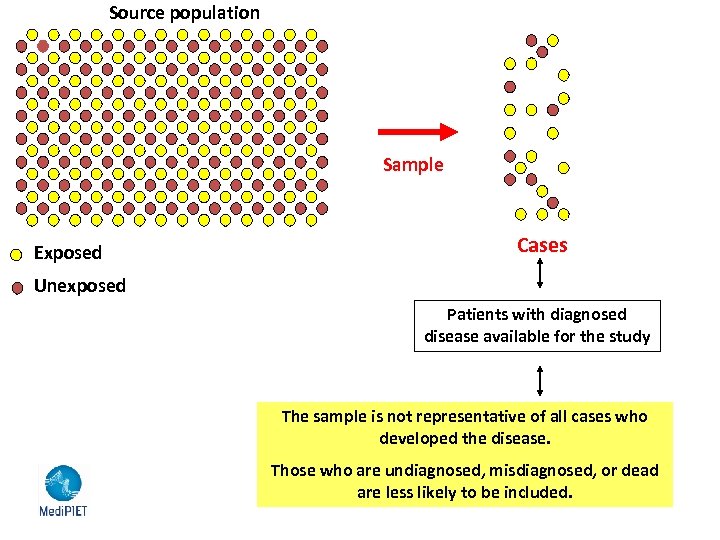
Source population Sample Exposed Cases Unexposed Patients with diagnosed disease available for the study The sample is not representative of all cases who developed the disease. Those who are undiagnosed, misdiagnosed, or dead are less likely to be included.
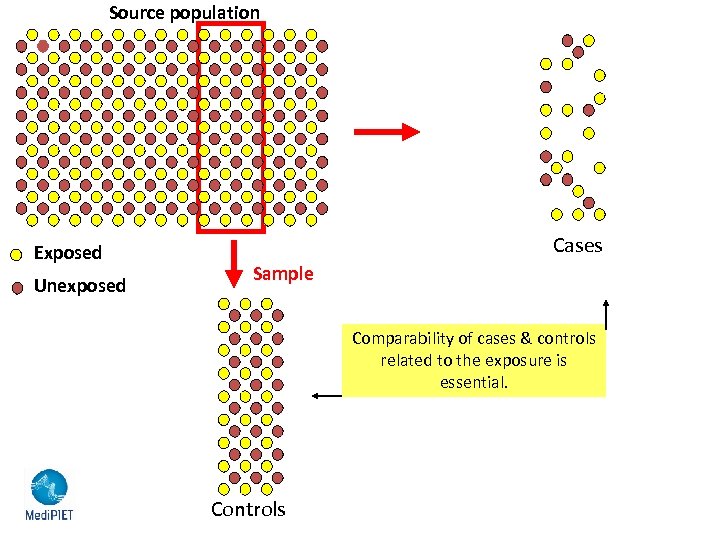
Source population Exposed Unexposed Cases Sample Comparability of cases & controls related to the exposure is essential. Controls
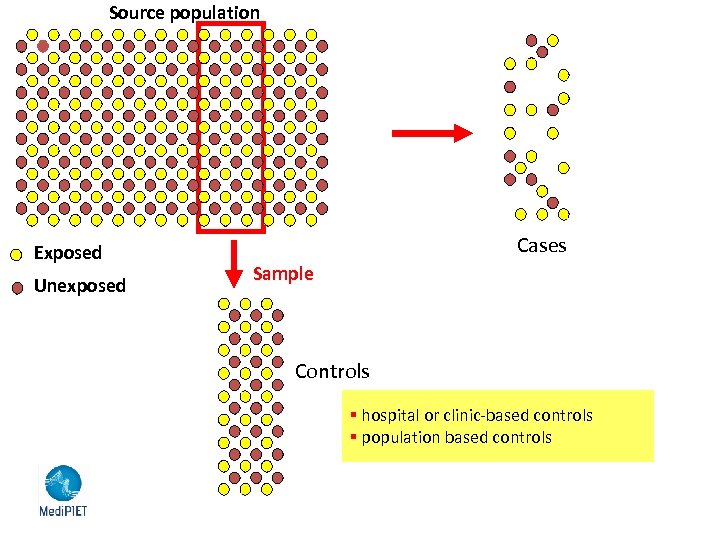
Source population Exposed Unexposed Cases Sample Controls § hospital or clinic-based controls § population based controls
Case-control studies - categories Prevalent case - all persons with the disease during the observation period are included in the study Example: all low back pain patients at a chiropractic clinic between Jan. 1 and Dec. 31 Cumulative incidence - only new (incident) cases that occur during the period of observation are selected
Intuitively if the frequency of exposure is higher among cases than controls then the incidence rate will probably be higher among exposed than non-exposed
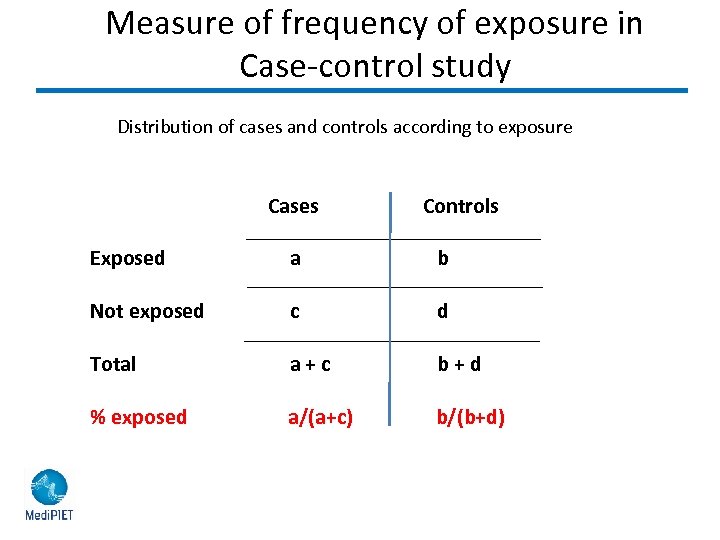
Measure of frequency of exposure in Case-control study Distribution of cases and controls according to exposure Cases Controls Exposed a b Not exposed c d Total a+c b+d % exposed a/(a+c) b/(b+d)
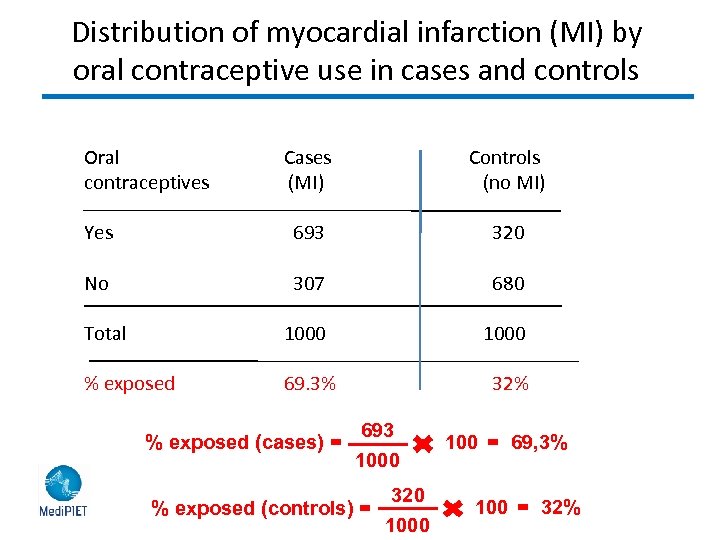
Distribution of myocardial infarction (MI) by oral contraceptive use in cases and controls Oral Cases contraceptives (MI) Controls (no MI) Yes 693 320 No 307 680 Total 1000 % exposed 69. 3% 32% % exposed (cases) = 693 1000 % exposed (controls) = 320 100 = 69, 3% 100 = 32%
Calculating measures of association in Case-control studies cannot yield incidence rates. Instead, they provide an odds ratio, derived from the proportion of individuals exposed in each of the case and control groups.
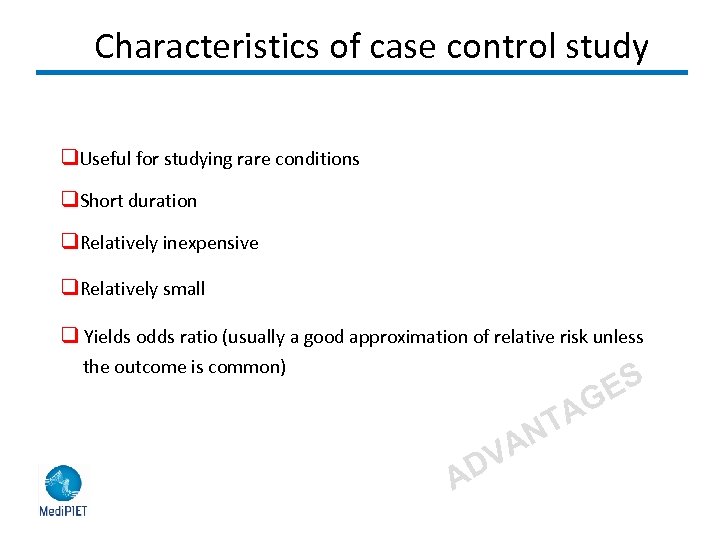
Characteristics of case control study q. Useful for studying rare conditions q. Short duration q. Relatively inexpensive q. Relatively small q Yields odds ratio (usually a good approximation of relative risk unless the outcome is common) ES G A TA AN DV
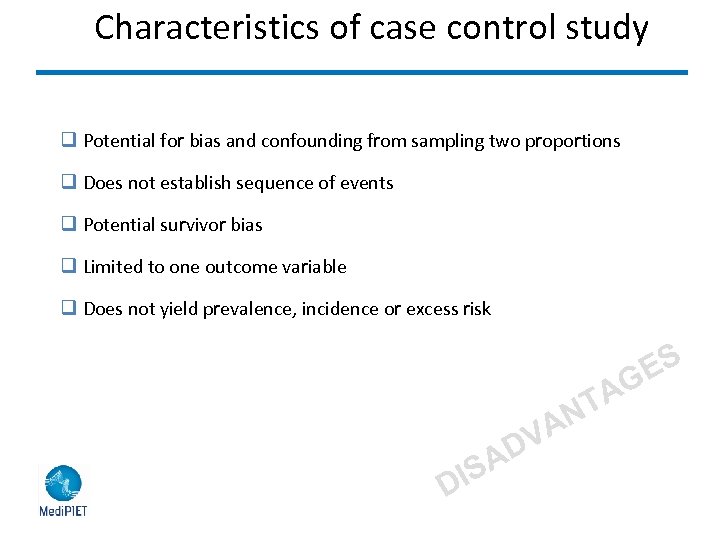
Characteristics of case control study q Potential for bias and confounding from sampling two proportions q Does not establish sequence of events q Potential survivor bias q Limited to one outcome variable q Does not yield prevalence, incidence or excess risk ES G AD IS D TA AN V
Take home message The cohort study is the gold-standard of analytical epidemiology. Case-control studies have also their place in epidemiology, but if cohort study possible, do not settle for second best.
Thank you! Prof. Vesna Velikj Stefanovska Institute of Epidemiology and Biostatistics, FYROM vesnamia@t-home. mk
Скачать презентацию Epidemiological studies Tunis 29 th October 2014 Source
bb0f63ee3291c5b5d371b439417fa731.ppt