 Скачать презентацию Environmental Protection of European Marine Sites Prepared by
b2897ccbd40361bb0b9dde4b85a7cdf3.ppt
- Количество слайдов: 23



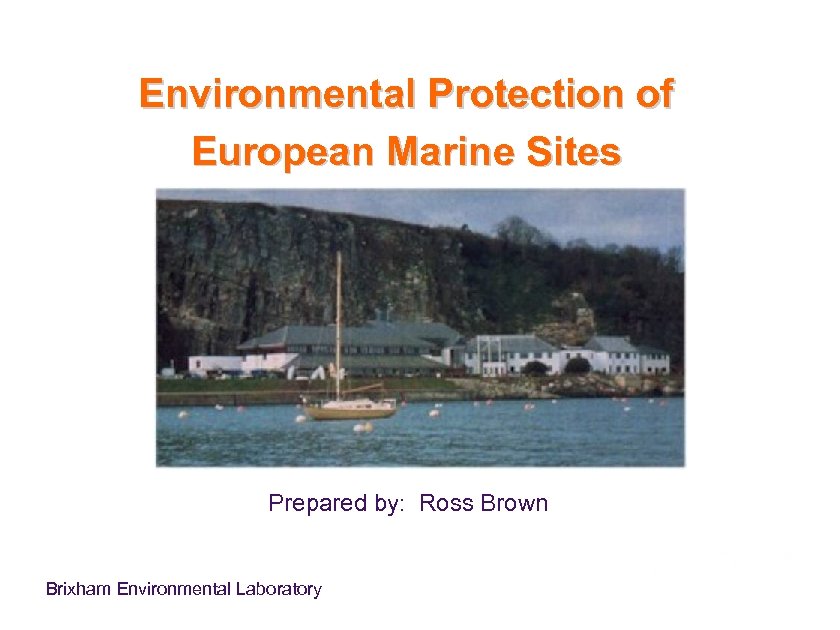
Environmental Protection of European Marine Sites Prepared by: Ross Brown Brixham Environmental Laboratory
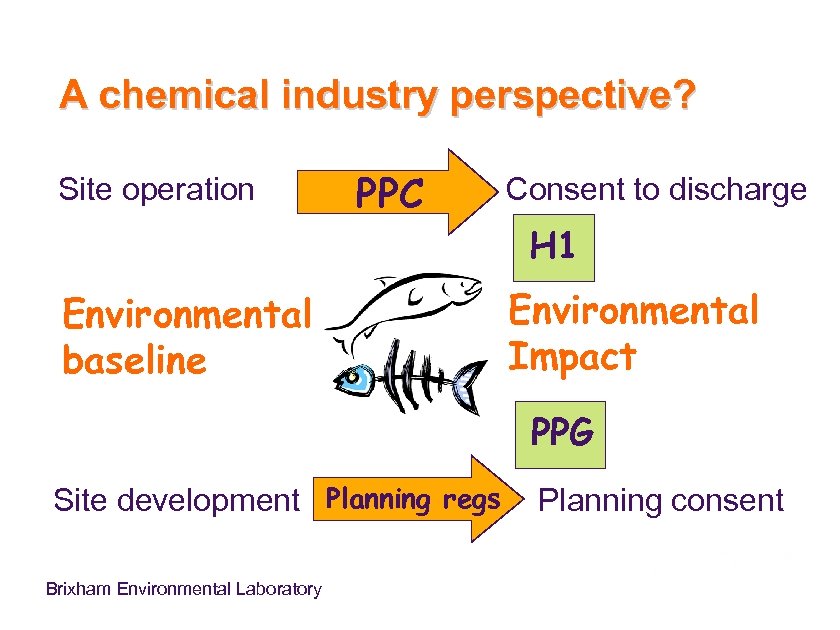
A chemical industry perspective? Site operation PPC Environmental baseline Consent to discharge H 1 Environmental Impact PPG Site development Planning regs Brixham Environmental Laboratory Planning consent
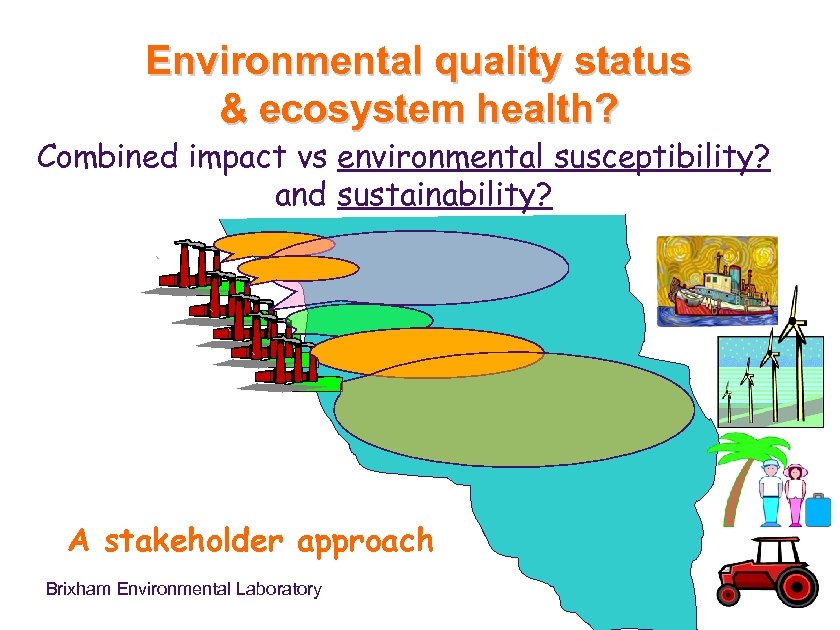
Environmental quality status & ecosystem health? Combined impact vs environmental susceptibility? and sustainability? A stakeholder approach Brixham Environmental Laboratory
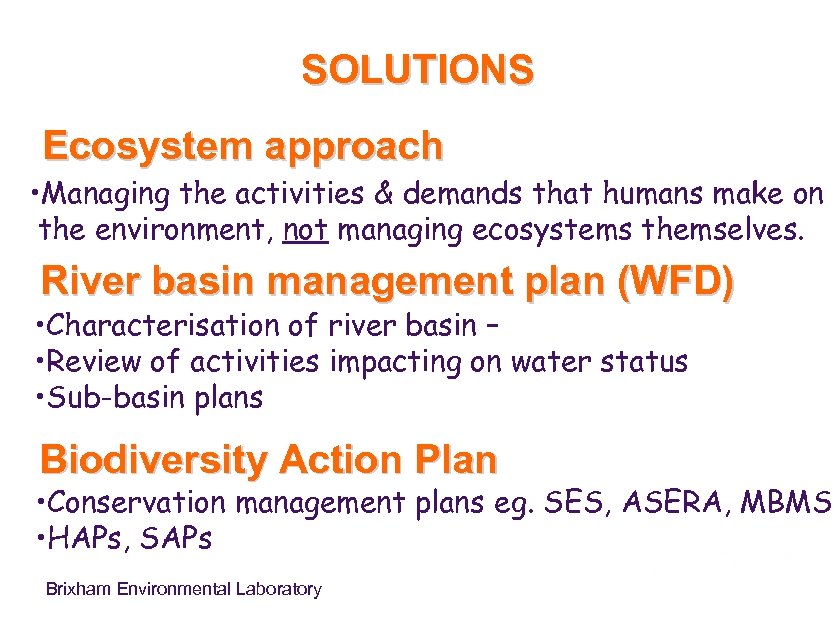
SOLUTIONS Ecosystem approach • Managing the activities & demands that humans make on the environment, not managing ecosystems themselves. River basin management plan (WFD) • Characterisation of river basin – • Review of activities impacting on water status • Sub-basin plans Biodiversity Action Plan • Conservation management plans eg. SES, ASERA, MBMS • HAPs, SAPs Brixham Environmental Laboratory
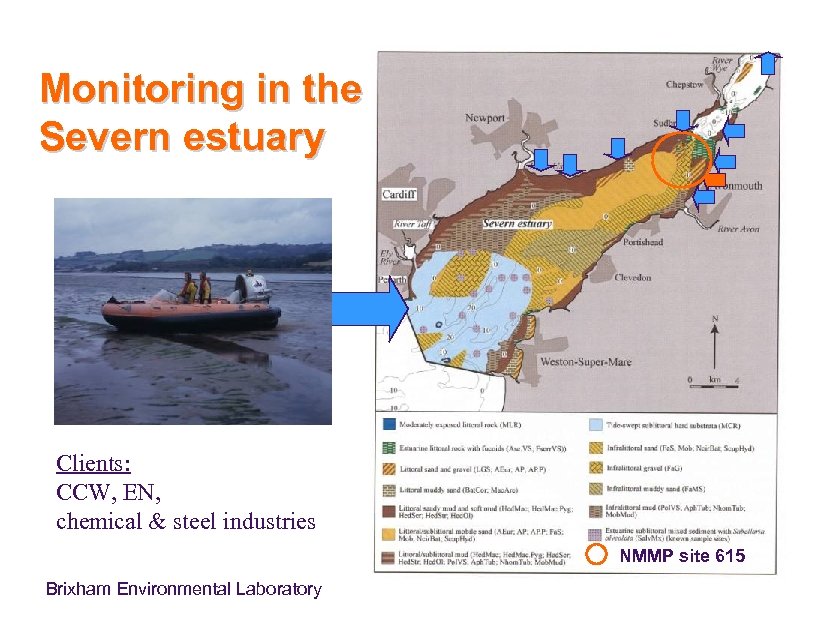
Monitoring in the Severn estuary Clients: CCW, EN, chemical & steel industries NMMP site 615 Brixham Environmental Laboratory
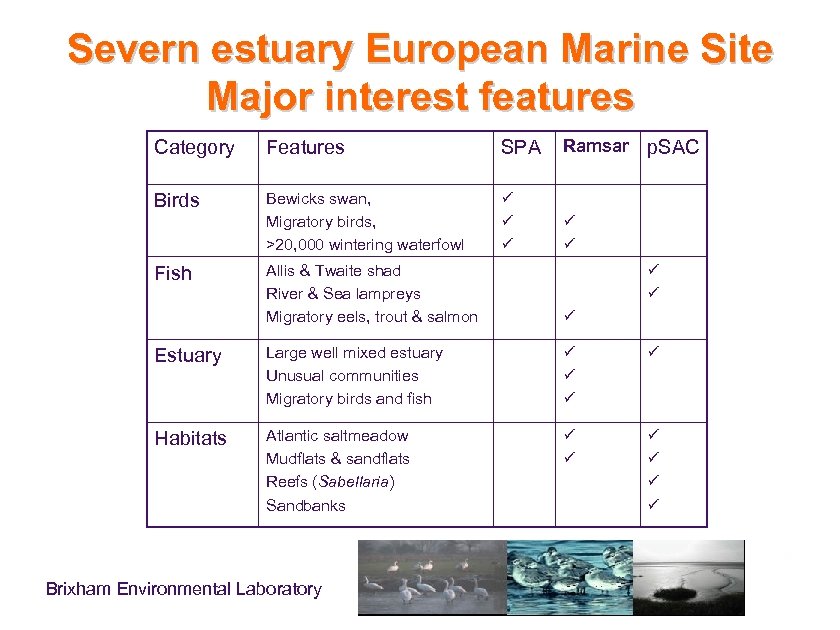
Severn estuary European Marine Site Major interest features Category Features SPA Ramsar Birds Bewicks swan, Migratory birds, >20, 000 wintering waterfowl p. SAC Allis & Twaite shad River & Sea lampreys Migratory eels, trout & salmon Estuary Large well mixed estuary Unusual communities Migratory birds and fish Habitats Atlantic saltmeadow Mudflats & sandflats Reefs (Sabellaria) Sandbanks Fish Brixham Environmental Laboratory
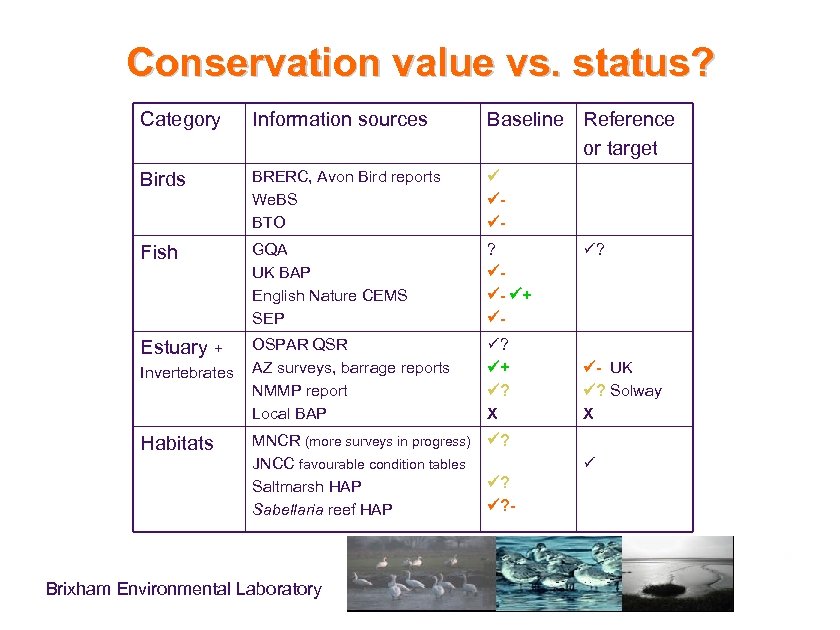
Conservation value vs. status? Category Information sources Baseline Reference or target Birds BRERC, Avon Bird reports We. BS BTO - Fish GQA UK BAP English Nature CEMS SEP ? - + - Estuary + OSPAR QSR AZ surveys, barrage reports NMMP report Local BAP ? + ? X MNCR (more surveys in progress) JNCC favourable condition tables Saltmarsh HAP Sabellaria reef HAP ? Invertebrates Habitats Brixham Environmental Laboratory ? - UK ? Solway X ? ? -
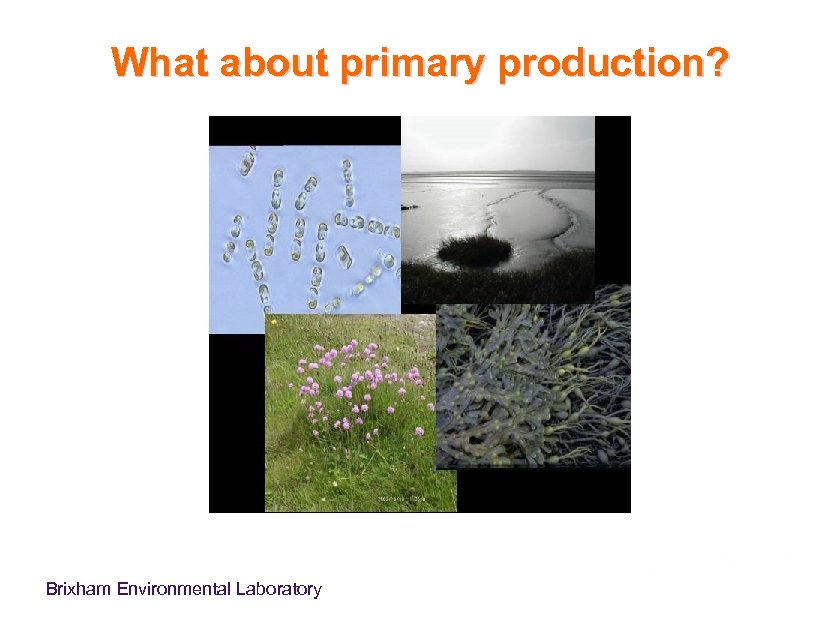
What about primary production? Brixham Environmental Laboratory
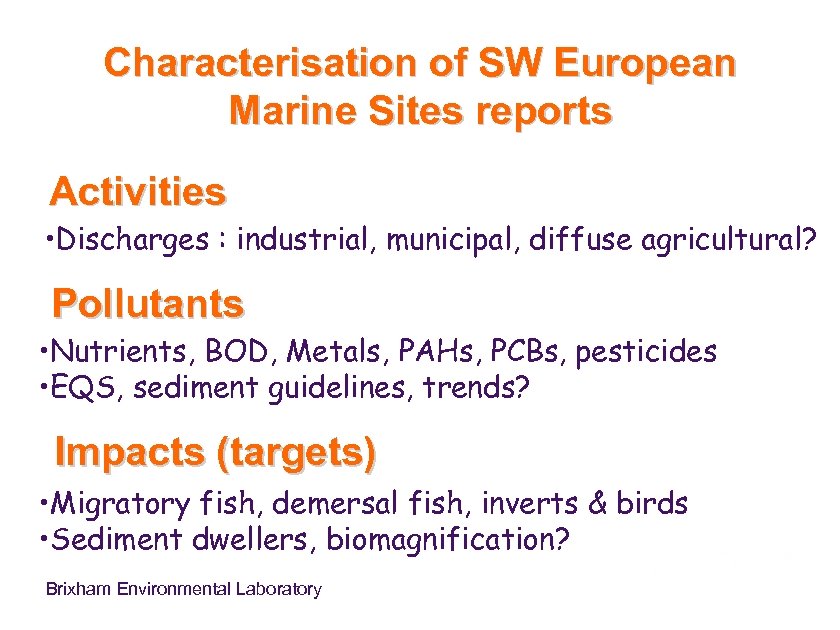
Characterisation of SW European Marine Sites reports Activities • Discharges : industrial, municipal, diffuse agricultural? Pollutants • Nutrients, BOD, Metals, PAHs, PCBs, pesticides • EQS, sediment guidelines, trends? Impacts (targets) • Migratory fish, demersal fish, inverts & birds • Sediment dwellers, biomagnification? Brixham Environmental Laboratory
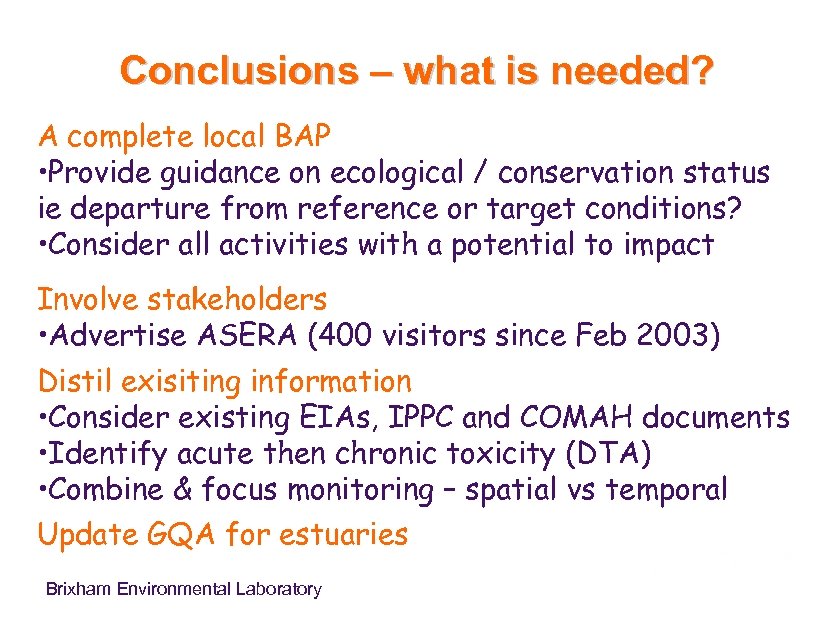
Conclusions – what is needed? A complete local BAP • Provide guidance on ecological / conservation status ie departure from reference or target conditions? • Consider all activities with a potential to impact Involve stakeholders • Advertise ASERA (400 visitors since Feb 2003) Distil exisiting information • Consider existing EIAs, IPPC and COMAH documents • Identify acute then chronic toxicity (DTA) • Combine & focus monitoring – spatial vs temporal Update GQA for estuaries Brixham Environmental Laboratory
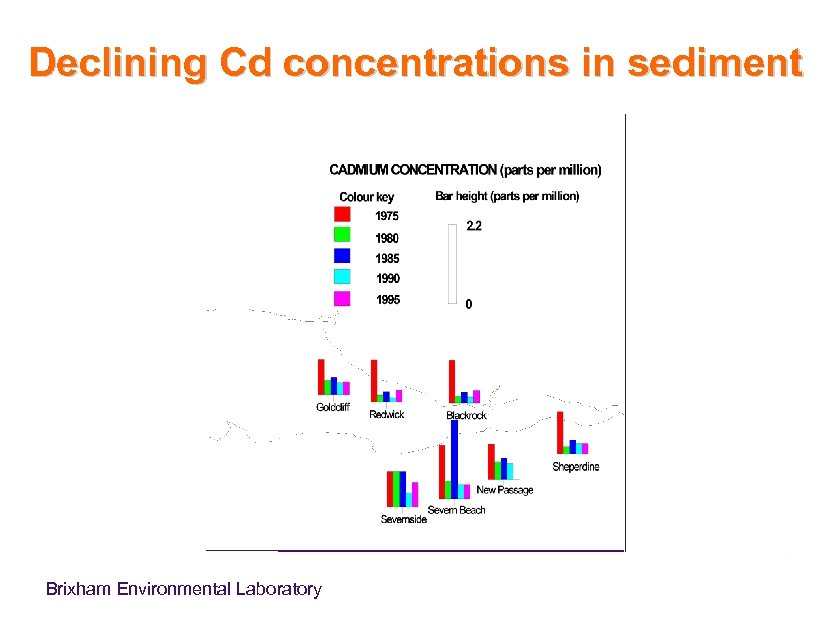
Declining Cd concentrations in sediment Brixham Environmental Laboratory
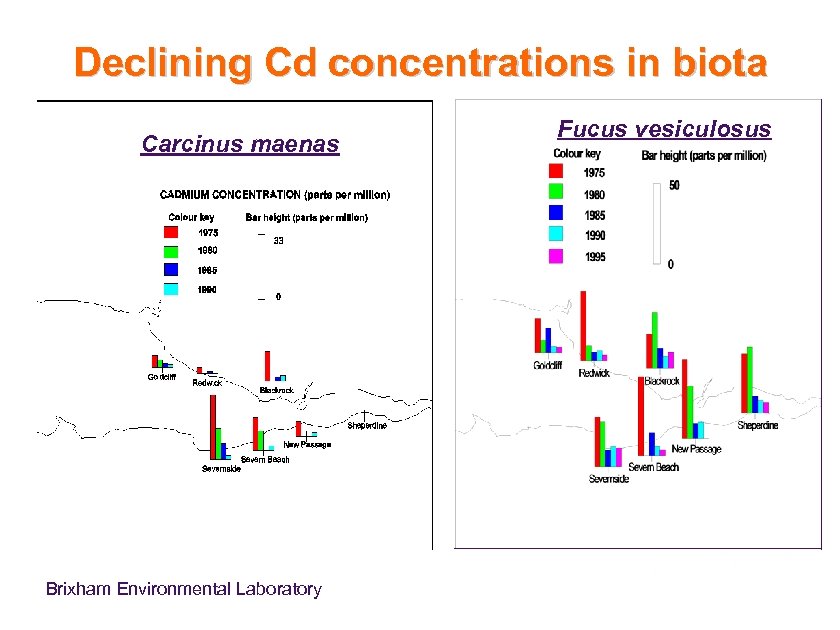
Declining Cd concentrations in biota Carcinus maenas Brixham Environmental Laboratory Fucus vesiculosus
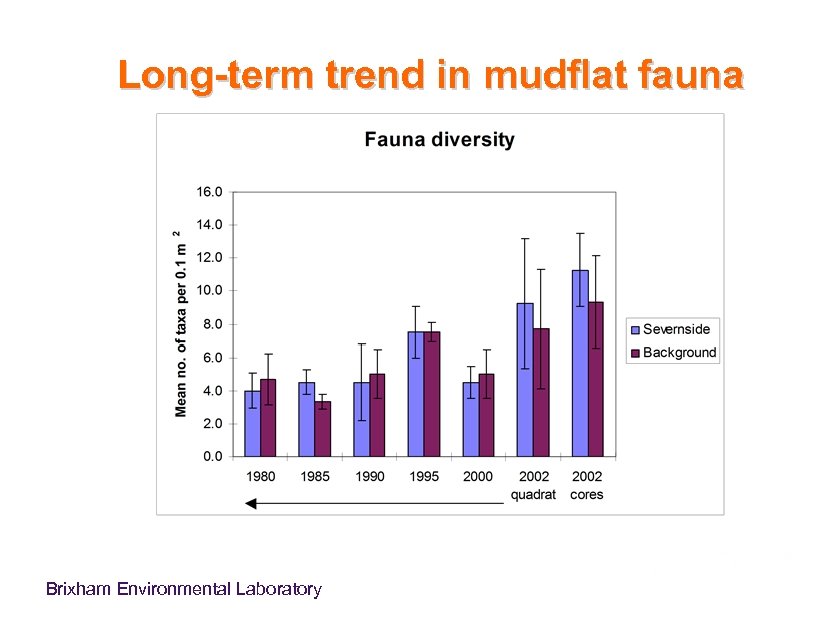
Long-term trend in mudflat fauna Brixham Environmental Laboratory
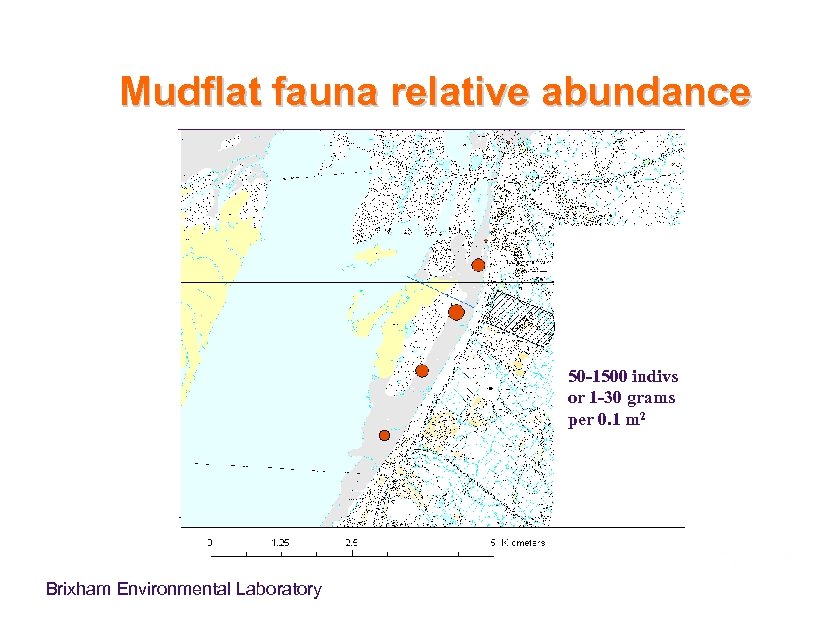
Mudflat fauna relative abundance 50 -1500 indivs or 1 -30 grams per 0. 1 m 2 Brixham Environmental Laboratory
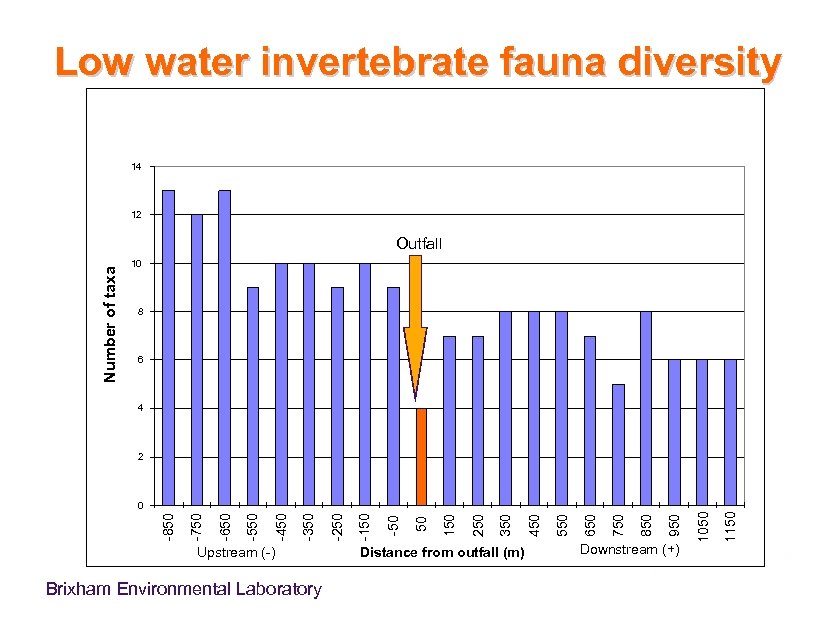
Low water invertebrate fauna diversity 14 12 Number of taxa Outfall 10 8 6 4 2 Upstream (-) Brixham Environmental Laboratory Distance from outfall (m) 1150 Downstream (+) 1050 950 850 750 650 550 450 350 250 150 50 -150 -250 -350 -450 -550 -650 -750 -850 0
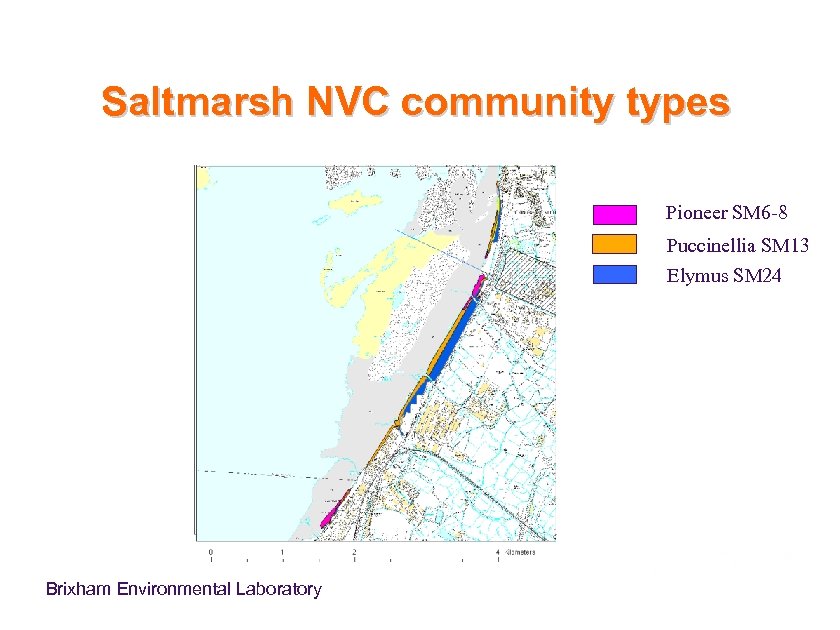
Saltmarsh NVC community types Pioneer SM 6 -8 Puccinellia SM 13 Elymus SM 24 Brixham Environmental Laboratory
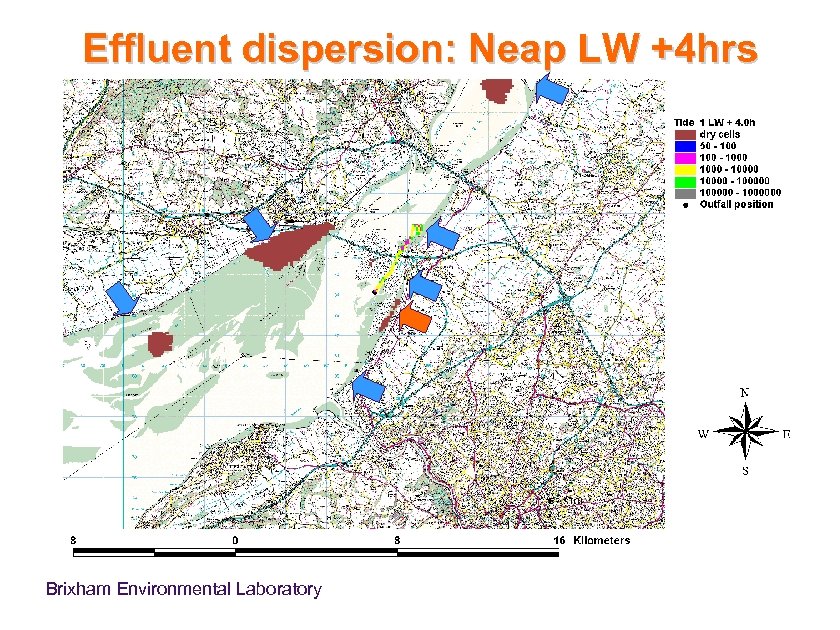
Effluent dispersion: Neap LW +4 hrs Brixham Environmental Laboratory
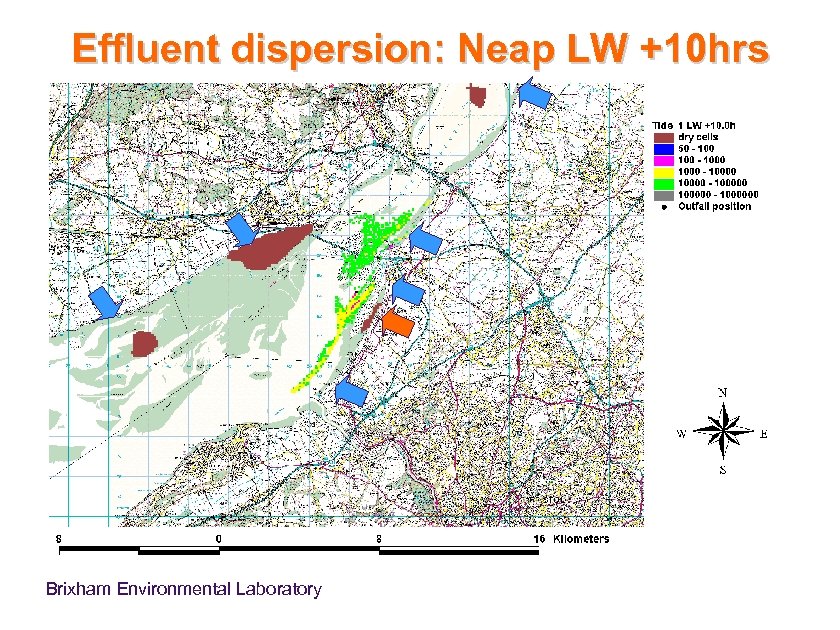
Effluent dispersion: Neap LW +10 hrs Brixham Environmental Laboratory
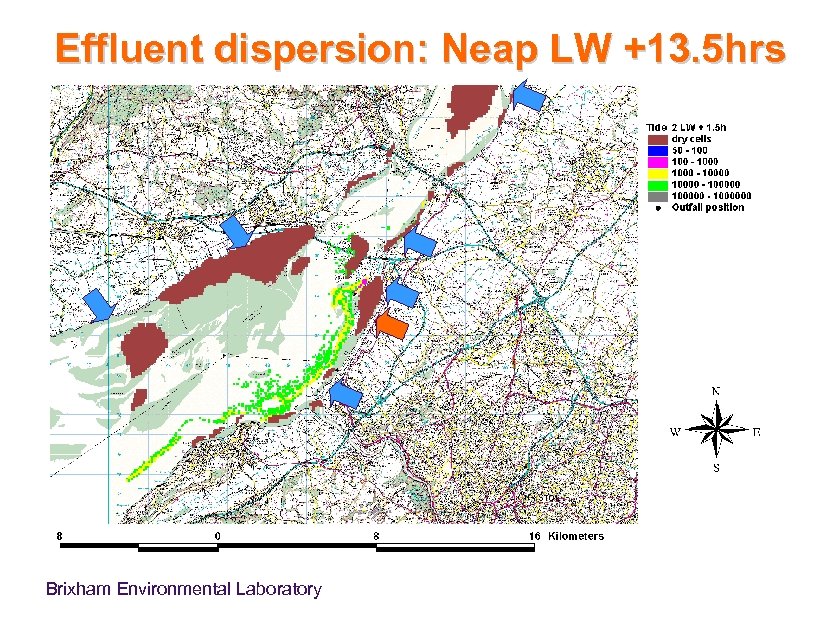
Effluent dispersion: Neap LW +13. 5 hrs Brixham Environmental Laboratory
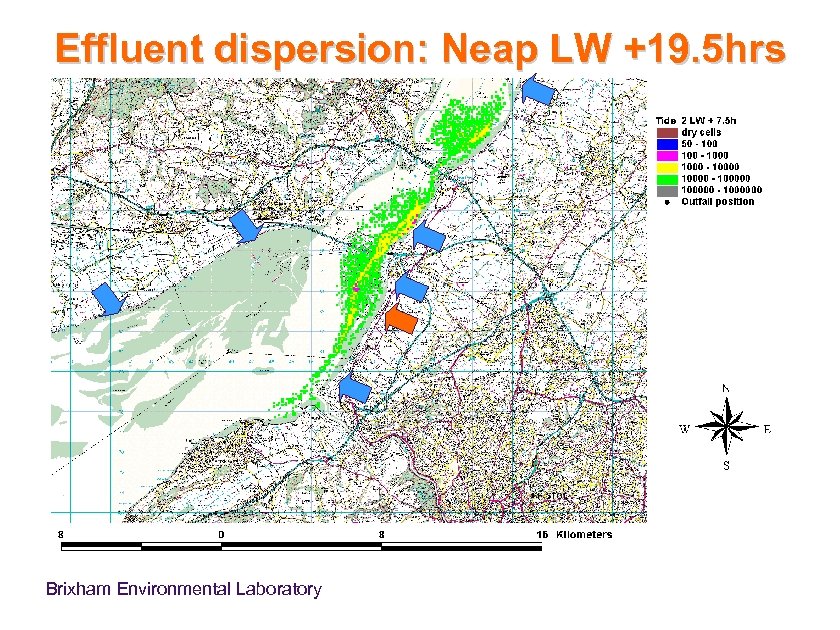
Effluent dispersion: Neap LW +19. 5 hrs Brixham Environmental Laboratory
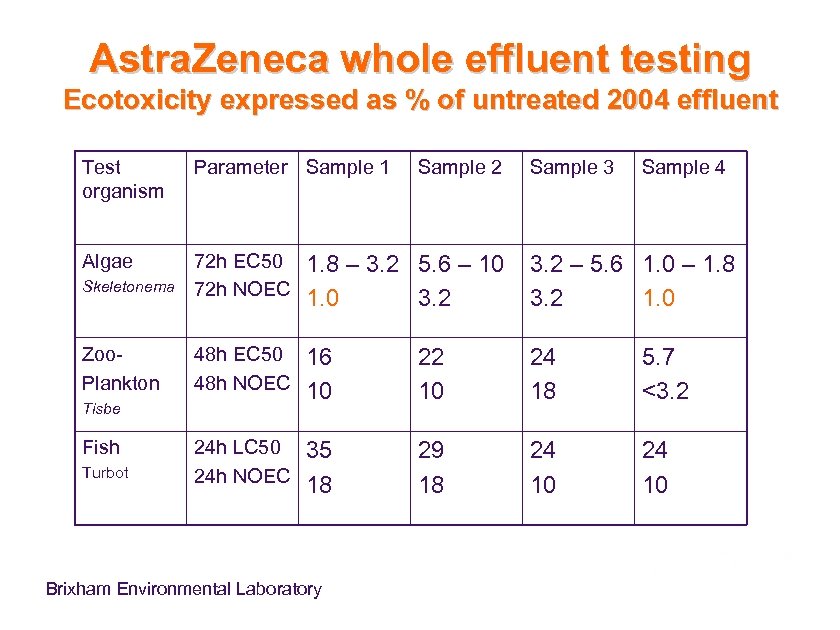
Astra. Zeneca whole effluent testing Ecotoxicity expressed as % of untreated 2004 effluent Test organism Parameter Sample 1 Algae Skeletonema 72 h EC 50 72 h NOEC 1. 8 – 3. 2 5. 6 – 10 1. 0 3. 2 – 5. 6 1. 0 – 1. 8 3. 2 1. 0 Zoo. Plankton 48 h EC 50 48 h NOEC 16 10 22 10 24 18 5. 7 <3. 2 24 h LC 50 24 h NOEC 35 18 29 18 24 10 Tisbe Fish Turbot Brixham Environmental Laboratory Sample 2 Sample 3 Sample 4
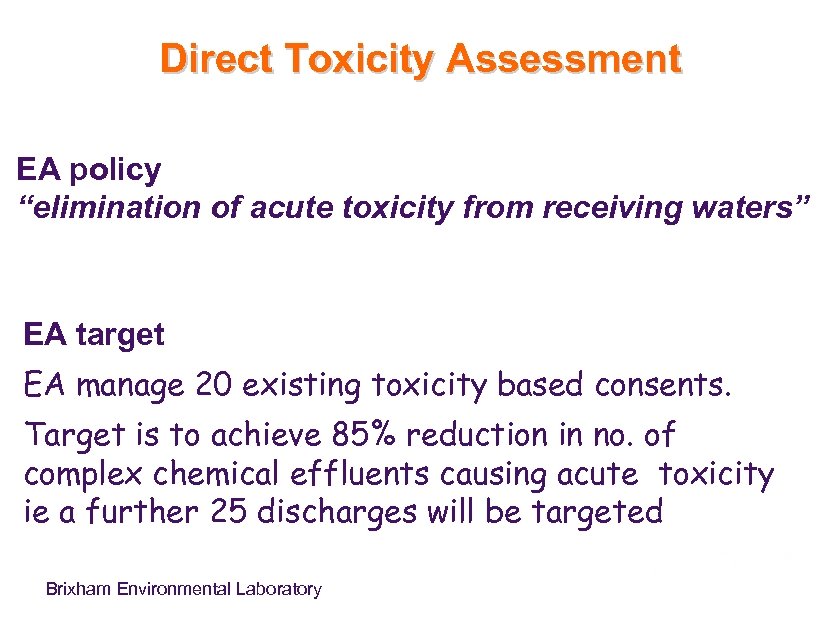
Direct Toxicity Assessment EA policy “elimination of acute toxicity from receiving waters” EA target EA manage 20 existing toxicity based consents. Target is to achieve 85% reduction in no. of complex chemical effluents causing acute toxicity ie a further 25 discharges will be targeted Brixham Environmental Laboratory
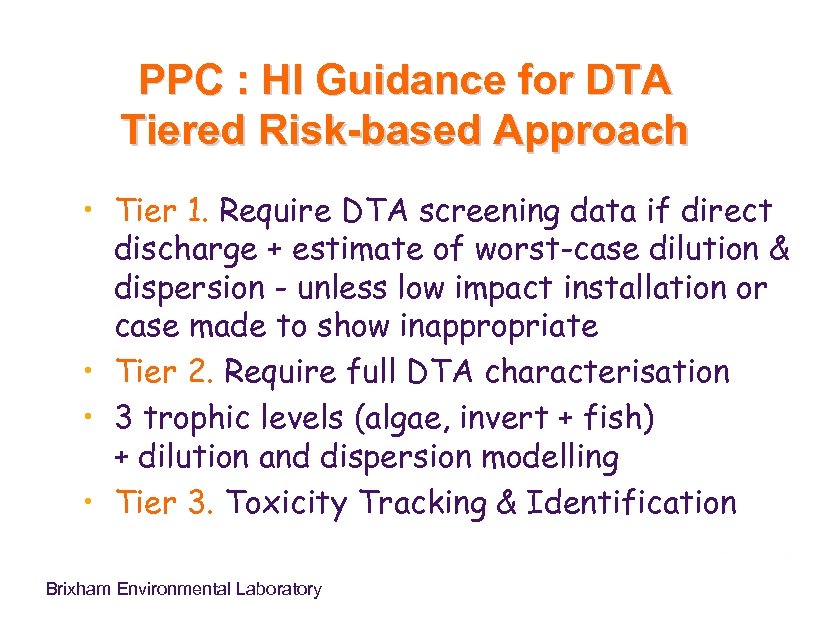
PPC : HI Guidance for DTA Tiered Risk-based Approach • Tier 1. Require DTA screening data if direct discharge + estimate of worst-case dilution & dispersion - unless low impact installation or case made to show inappropriate • Tier 2. Require full DTA characterisation • 3 trophic levels (algae, invert + fish) + dilution and dispersion modelling • Tier 3. Toxicity Tracking & Identification Brixham Environmental Laboratory
Скачать презентацию Environmental Protection of European Marine Sites Prepared by
b2897ccbd40361bb0b9dde4b85a7cdf3.ppt