


 Скачать презентацию Environmental Impacts on Reproductive Health Foundations of the
b081afde46e5852dd606b83045bad06b.ppt
- Количество слайдов: 72
 Environmental Impacts on Reproductive Health: Foundations of the Science Association of Reproductive Health Professionals www. arhp. org
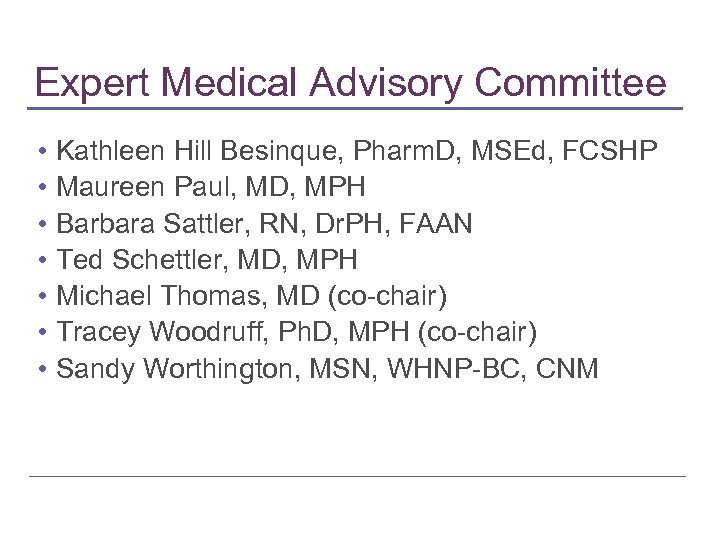 Expert Medical Advisory Committee • • Kathleen Hill Besinque, Pharm. D, MSEd, FCSHP Maureen Paul, MD, MPH Barbara Sattler, RN, Dr. PH, FAAN Ted Schettler, MD, MPH Michael Thomas, MD (co-chair) Tracey Woodruff, Ph. D, MPH (co-chair) Sandy Worthington, MSN, WHNP-BC, CNM
 Acknowledgment of Support This project is funded through a grant from the Passport Foundation and the Richard and Rhoda Goldman Fund.
 Faculty Disclosure Speaker: Kirtly Jones, MD: nothing to disclose • Note: Staff and committee disclosures listed in program
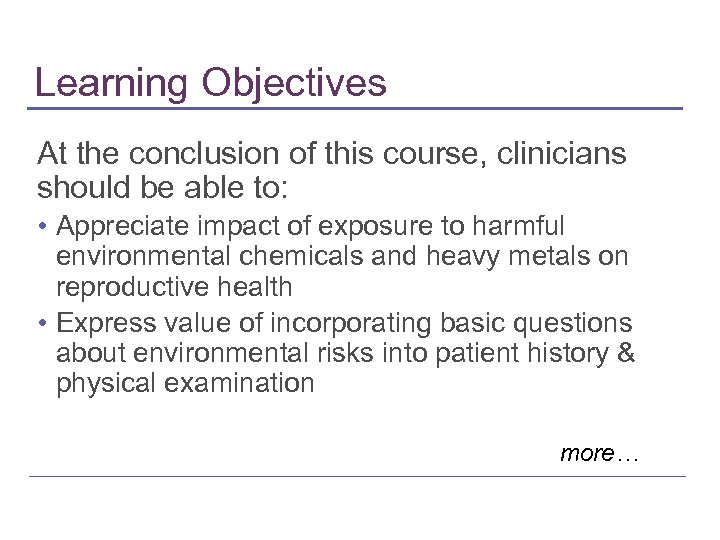 Learning Objectives At the conclusion of this course, clinicians should be able to: • Appreciate impact of exposure to harmful environmental chemicals and heavy metals on reproductive health • Express value of incorporating basic questions about environmental risks into patient history & physical examination more…
 Learning Objectives (continued) • Use resources that provide information about environmental exposures in their communities & patient populations • Refer patients to relevant resources & further information to learn more about environmental risks
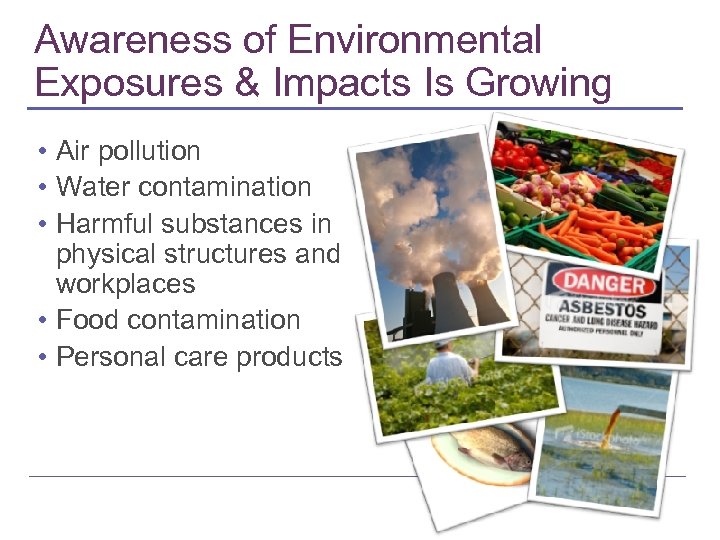 Awareness of Environmental Exposures & Impacts Is Growing • Air pollution • Water contamination • Harmful substances in physical structures and workplaces • Food contamination • Personal care products
 Awareness of Reproductive Effects Is Growing “…exposures of males and females to foreign substances prior to conception can affect both their ability to conceive and the health of their offspring. ” Davis DL, et al. JAMA. 1998
 Reproductive Trends in Some Geographic Areas Raise Concerns • • • Increase in testicular cancer incidence Decreasing sperm counts Decline in serum testosterone Earlier pubertal development in girls Fewer males being born Documented increases in certain types of birth defects Bray F, et al. Int J Cancer. 2006; Edmond LD, James LM. MMWR Surveill Summ. 1990; Euling et al. Pediatrics. 2008; Herman-Giddens ME. Int J Androl. 2006; Harris KB. Mol Genet Metab. 2007; Hertz-Picciotto et al. Environmental Health. 2008; Jørgensen N, et al. Int J Androl. 2006; Mackenzie CA. Environ Health Perspect. 2005; Travison TG, et al. J Clin Endocrinol Metab. 2007; Vu LT. J Pediatr. 2008.
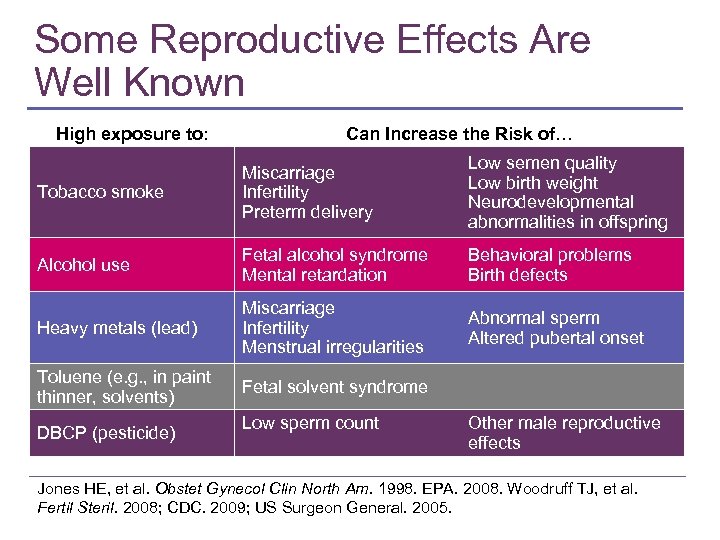 Some Reproductive Effects Are Well Known High exposure to: Can Increase the Risk of… Tobacco smoke Miscarriage Infertility Preterm delivery Low semen quality Low birth weight Neurodevelopmental abnormalities in offspring Alcohol use Fetal alcohol syndrome Mental retardation Behavioral problems Birth defects Heavy metals (lead) Miscarriage Infertility Menstrual irregularities Abnormal sperm Altered pubertal onset Toluene (e. g. , in paint thinner, solvents) Fetal solvent syndrome DBCP (pesticide) Low sperm count Other male reproductive effects Jones HE, et al. Obstet Gynecol Clin North Am. 1998. EPA. 2008. Woodruff TJ, et al. Fertil Steril. 2008; CDC. 2009; US Surgeon General. 2005.
 Content Overview This slide set will review: • • State of the science Windows of susceptibility Patient counseling Further information and resources
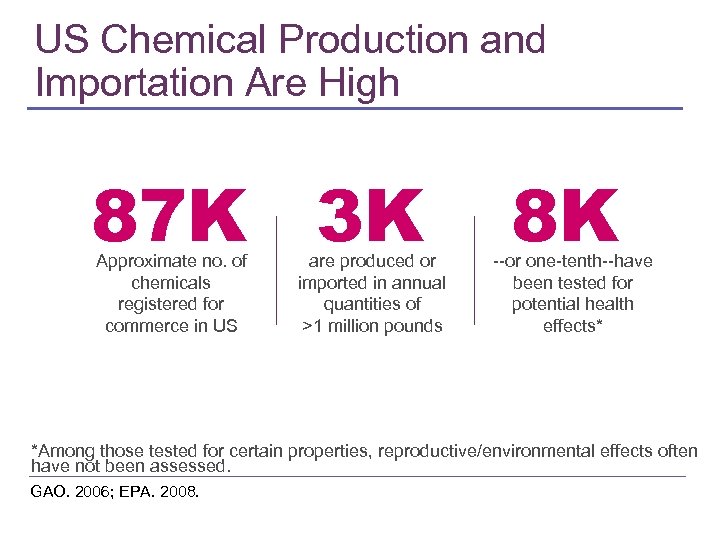 US Chemical Production and Importation Are High 87 K 3 K Approximate no. of chemicals registered for commerce in US are produced or imported in annual quantities of >1 million pounds 8 K --or one-tenth--have been tested for potential health effects* *Among those tested for certain properties, reproductive/environmental effects often have not been assessed. GAO. 2006; EPA. 2008.
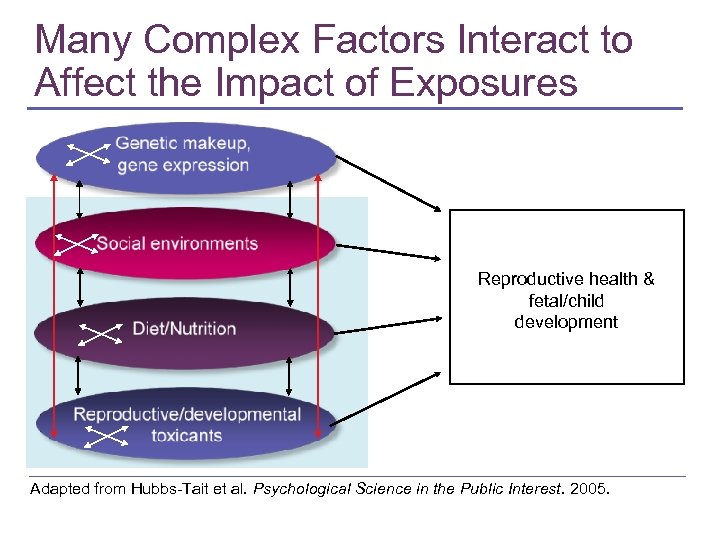 Many Complex Factors Interact to Affect the Impact of Exposures Reproductive health & fetal/child development Adapted from Hubbs-Tait et al. Psychological Science in the Public Interest. 2005.
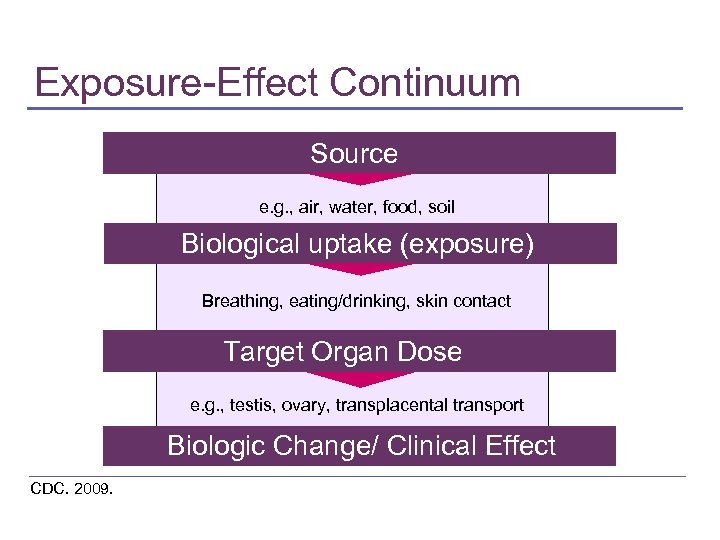 Exposure-Effect Continuum Source e. g. , air, water, food, soil Biological uptake (exposure) Breathing, eating/drinking, skin contact Target Organ Dose e. g. , testis, ovary, transplacental transport Biologic Change/ Clinical Effect CDC. 2009.
 The Barker Hypothesis “Exposures to adverse insults during critical…windows of development can permanently reprogram normal physiologic responses, and thus give rise to…disorders later in life. ” Woodruff TJ, et al. Fertil Steril. 2008 Barker DJ. Trends Endocrinol Metab. 2002; Woodruff TK, Walker CL. Fertil Steril. 2008; Woodruff TJ, et al. Fertil Steril. 2008.
 Biomonitoring Can Yield Useful Information • Measures chemical levels in body tissues or fluids (e. g. , organ tissue, hair, breast milk, blood, urine) • One way to document exposures • Often accurate at low levels • But… • Usually unable to identify source • Often clinical significance is unclear Sexton K, et al. American Scientist. 2004.
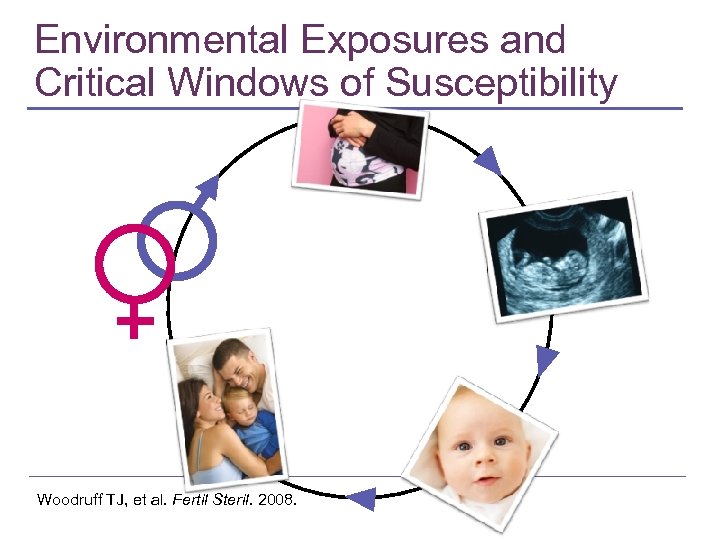 Environmental Exposures and Critical Windows of Susceptibility Woodruff TJ, et al. Fertil Steril. 2008.
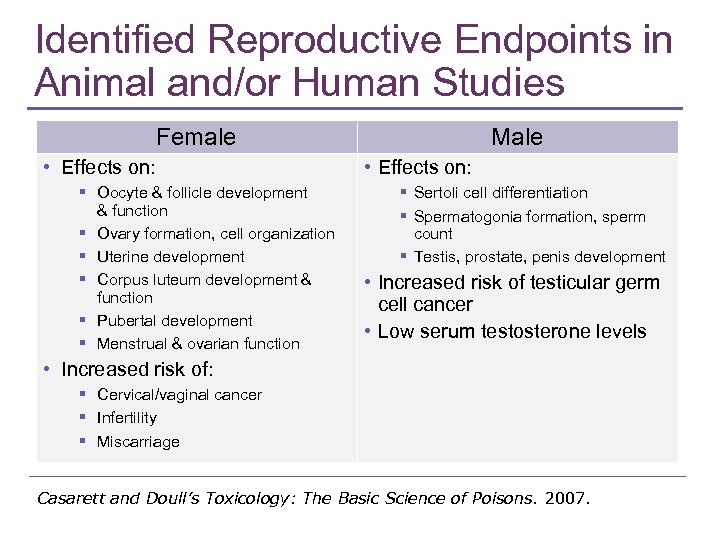 Identified Reproductive Endpoints in Animal and/or Human Studies Female • Effects on: § Oocyte & follicle development & function § Ovary formation, cell organization § Uterine development § Corpus luteum development & function § Pubertal development § Menstrual & ovarian function Male • Effects on: § Sertoli cell differentiation § Spermatogonia formation, sperm count § Testis, prostate, penis development • Increased risk of testicular germ cell cancer • Low serum testosterone levels • Increased risk of: § Cervical/vaginal cancer § Infertility § Miscarriage Casarett and Doull’s Toxicology: The Basic Science of Poisons. 2007.
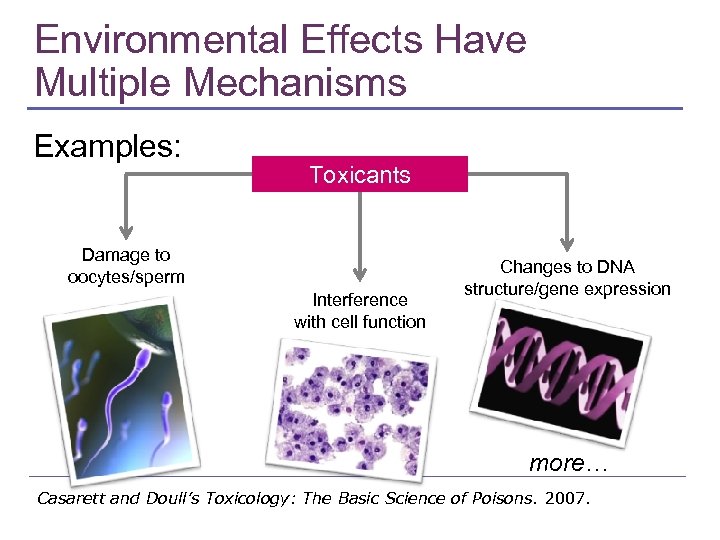 Environmental Effects Have Multiple Mechanisms Examples: Toxicants Damage to oocytes/sperm Interference with cell function Changes to DNA structure/gene expression more… Casarett and Doull’s Toxicology: The Basic Science of Poisons. 2007.
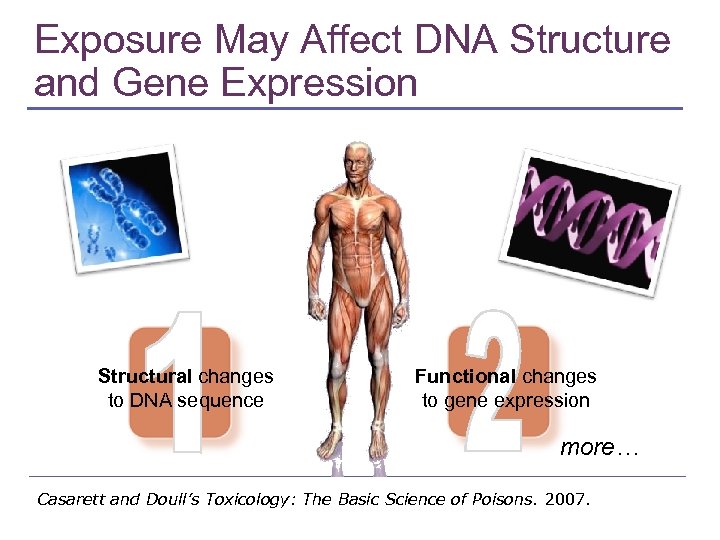 Exposure May Affect DNA Structure and Gene Expression Structural changes to DNA sequence Functional changes to gene expression more… Casarett and Doull’s Toxicology: The Basic Science of Poisons. 2007.
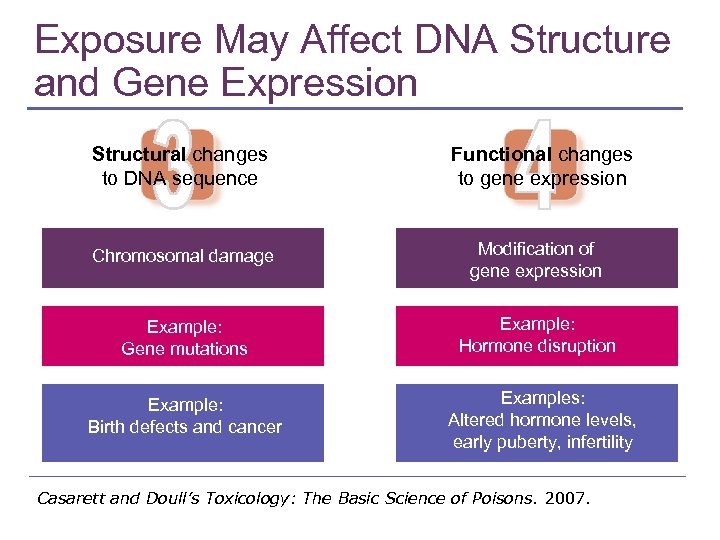 Exposure May Affect DNA Structure and Gene Expression Structural changes to DNA sequence Functional changes to gene expression Chromosomal damage Modification of gene expression Example: Gene mutations Example: Hormone disruption Example: Birth defects and cancer Examples: Altered hormone levels, early puberty, infertility Casarett and Doull’s Toxicology: The Basic Science of Poisons. 2007.
 Epigenetic Effects Result from Changes in Gene Expression Epigenetic effects: • Not caused by internal changes in DNA • May be caused by external environmental factors that modify gene activation • May be passed to subsequent generations (preliminary evidence) Bird A. Nature. 2007; Cavalli G, et al. Cell. 1998.
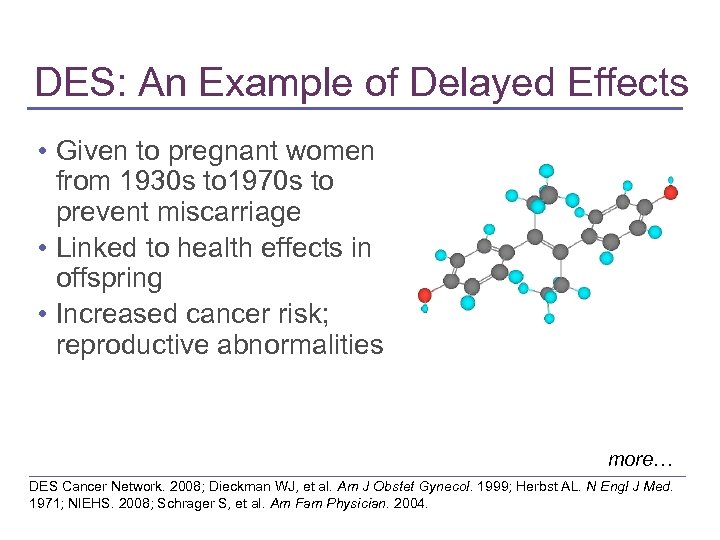 DES: An Example of Delayed Effects • Given to pregnant women from 1930 s to 1970 s to prevent miscarriage • Linked to health effects in offspring • Increased cancer risk; reproductive abnormalities more… DES Cancer Network. 2008; Dieckman WJ, et al. Am J Obstet Gynecol. 1999; Herbst AL. N Engl J Med. 1971; NIEHS. 2008; Schrager S, et al. Am Fam Physician. 2004.
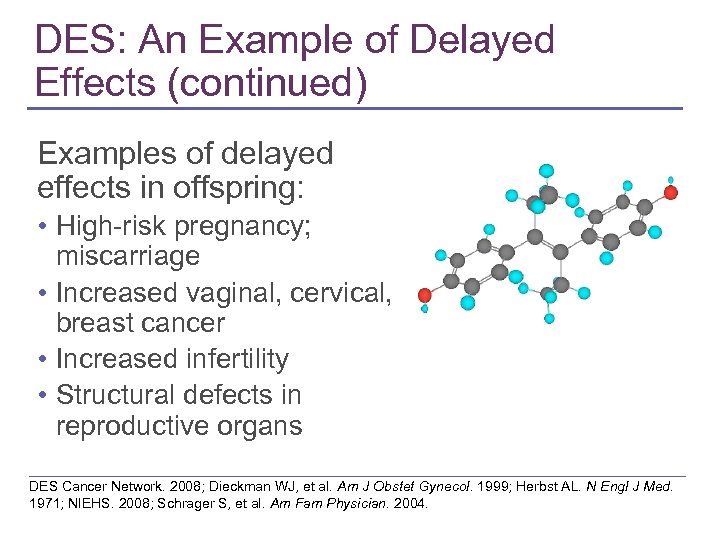 DES: An Example of Delayed Effects (continued) Examples of delayed effects in offspring: • High-risk pregnancy; miscarriage • Increased vaginal, cervical, breast cancer • Increased infertility • Structural defects in reproductive organs DES Cancer Network. 2008; Dieckman WJ, et al. Am J Obstet Gynecol. 1999; Herbst AL. N Engl J Med. 1971; NIEHS. 2008; Schrager S, et al. Am Fam Physician. 2004.
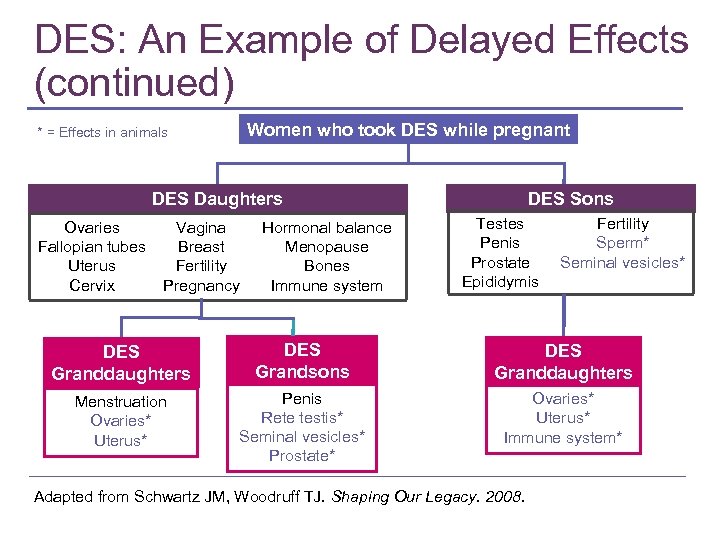 DES: An Example of Delayed Effects (continued) Women who took DES while pregnant * = Effects in animals DES Sons DES Daughters Ovaries Fallopian tubes Uterus Cervix Vagina Breast Fertility Pregnancy Hormonal balance Menopause Bones Immune system Testes Penis Prostate Epididymis Fertility Sperm* Seminal vesicles* DES Granddaughters DES Grandsons DES Granddaughters Menstruation Ovaries* Uterus* Penis Rete testis* Seminal vesicles* Prostate* Ovaries* Uterus* Immune system* Adapted from Schwartz JM, Woodruff TJ. Shaping Our Legacy. 2008.
 Endocrine-Disrupting Chemicals • Certain pesticides, industrial chemicals & byproducts, ingredients in plastics manufacture --Interfere with hormonal levels or functions, including estrogen, testosterone, prolactin, LH, FSH, thyroid, etc. --Demonstrated by rigorous animal studies & epidemiological observations Welshons WV. Environ Health Perspect. 2003.
 Position Statement on EDCs “Until such time as conclusive scientific evidence exists to either prove or disprove harmful effects of substances, a precautionary approach should be taken in the formulation of EDC policy. ” The Endocrine Society, June 2009 Endocrine Society. 2009.
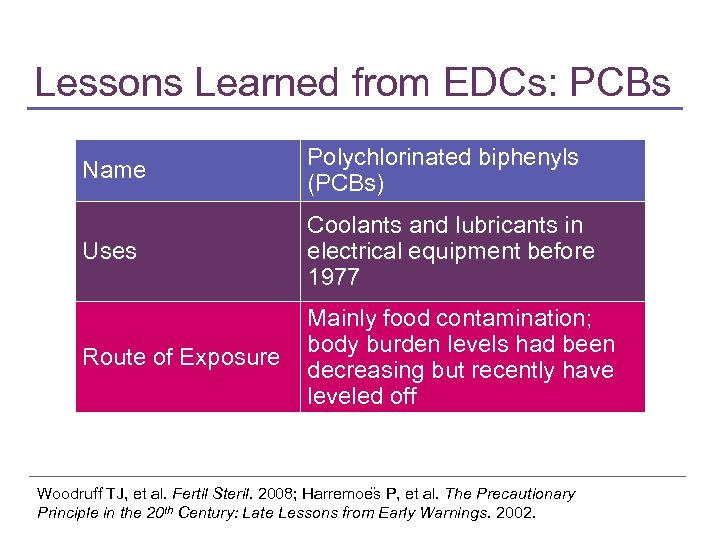 Lessons Learned from EDCs: PCBs Name Polychlorinated biphenyls (PCBs) Uses Coolants and lubricants in electrical equipment before 1977 Route of Exposure Mainly food contamination; body burden levels had been decreasing but recently have leveled off Woodruff TJ, et al. Fertil Steril. 2008; Harremoe s P, et al. The Precautionary Principle in the 20 th Century: Late Lessons from Early Warnings. 2002.
 EDC Lessons Learned: PCBs (continued) Examples of potential effects: • Altered neurodevelopment as a result of in utero exposure • Endometriosis • Reduced fertility • Decreased semen quality • Miscarriage • Altered pubertal development • Reproductive tract malformations Woodruff TJ, et al. Fertil Steril. 2008.
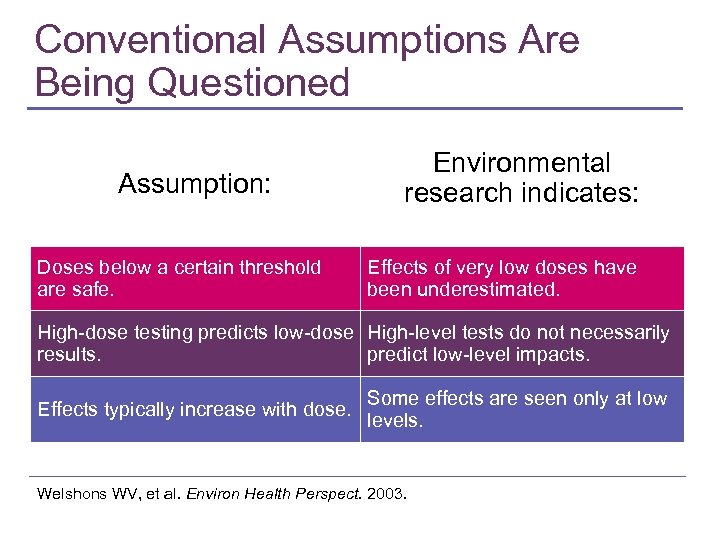 Conventional Assumptions Are Being Questioned Assumption: Doses below a certain threshold are safe. Environmental research indicates: Effects of very low doses have been underestimated. High-dose testing predicts low-dose High-level tests do not necessarily results. predict low-level impacts. Effects typically increase with dose. Some effects are seen only at low levels. Welshons WV, et al. Environ Health Perspect. 2003.
 Most Environmental Health Science Is Based on Animal Studies • Most evidence derived from animal studies and epidemiologic observation (e. g. , occupational studies) • Effects found at “real-life” doses Andrade AJM, et al. Toxicology. 2006; Welshons WV, et al. Environ Health Perspect. 2003; Welshons WV, et al. Endocrinology. 2006.
 Many Factors Complicate the Environmental Health Picture • Epidemiological studies have limited capacity to identify causal relationships • Many factors contribute to the complexity of observed health outcomes • Clinical relevance of population exposures are not always clear in the individual • “Safe” levels are often based on many factors that can influence the interpretation of the scientific data
 “First, Do No Harm” “When an activity raises threats of harm to human health or the environment, precautionary measures should be taken even if some causeand-effect relationships are not fully established scientifically. ” Wingspread Consensus Statement on the Precautionary Principle. 1998.
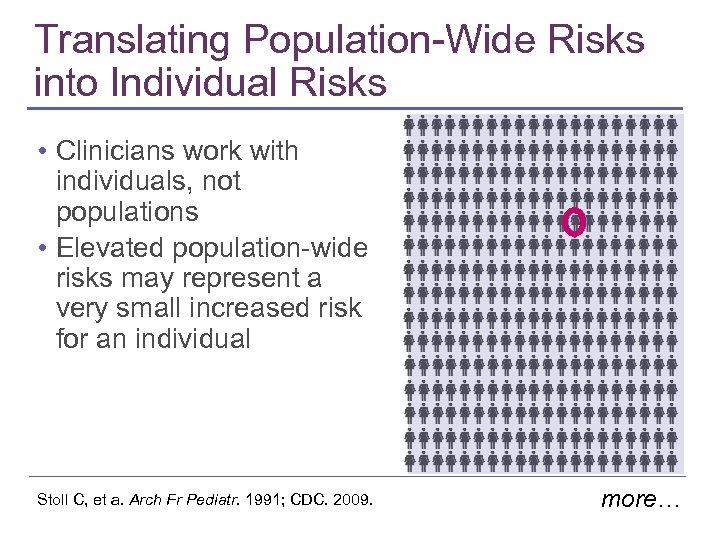 Translating Population-Wide Risks into Individual Risks • Clinicians work with individuals, not populations • Elevated population-wide risks may represent a very small increased risk for an individual Stoll C, et a. Arch Fr Pediatr. 1991; CDC. 2009. more…
 Translating Population-Wide Risks into Individual Risks (continued) • Modest increases in risk can result in major public health concerns if exposed population is large • A large increase in population-wide risk will be increasingly important in individuals, even if not many people are exposed • Two times a rare event = still a very rare event
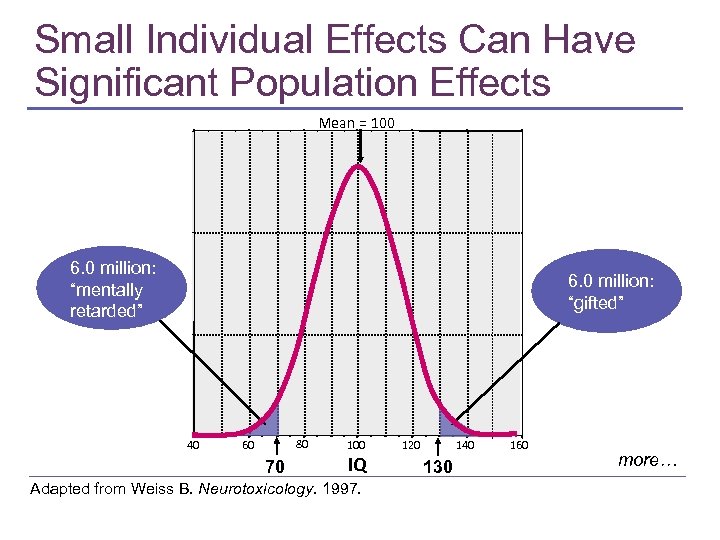 Small Individual Effects Can Have Significant Population Effects Mean = 100 6. 0 million: “mentally retarded” 6. 0 million: “gifted” 40 80 60 70 100 IQ Adapted from Weiss B. Neurotoxicology. 1997. 120 140 130 160 more…
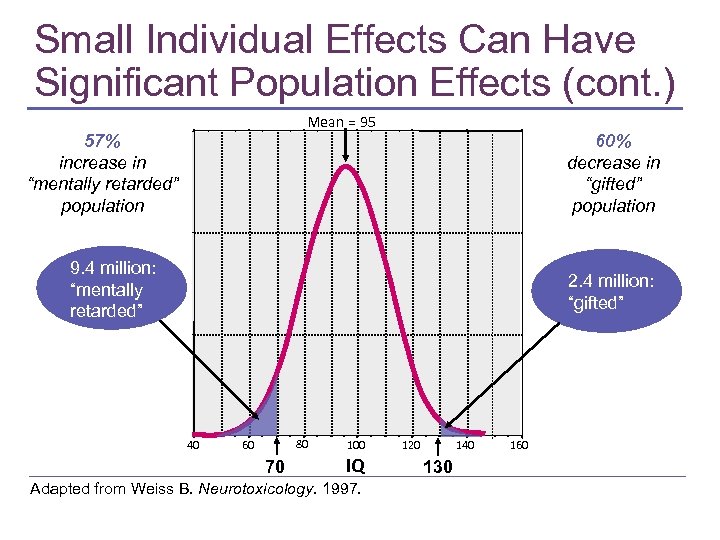 Small Individual Effects Can Have Significant Population Effects (cont. ) Mean = 95 57% increase in “mentally retarded” population 60% decrease in “gifted” population 9. 4 million: “mentally retarded” 2. 4 million: “gifted” 40 80 60 70 100 IQ Adapted from Weiss B. Neurotoxicology. 1997. 120 140 130 160
 Relevant for Every Patient • Assessment of exposure risk is relevant for all patients • Particular focus on points of heightened susceptibility: ▪ Preconception ▪ Pregnancy ▪ Childhood ▪ Pre-puberty ▪ Adolescence
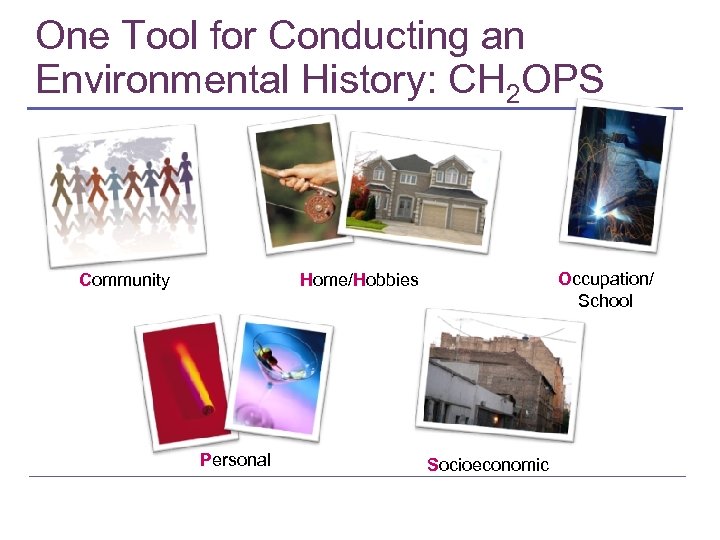 One Tool for Conducting an Environmental History: CH 2 OPS Community Occupation/ School Home/Hobbies Personal Socioeconomic
 CH 2 OPS: Community Recreational areas Farms Hazardous waste sites Factories Landfills Businesses
 “So What Do I Do? ” • Learn about local environmental issues • Incorporate questions about exposures into every health history • Suggest alternatives to reduce exposures • Give specific guidance to patients who may become pregnant • Provide handouts and websites for patients • Conduct thyroid screening • Work with women to assess workplace exposures
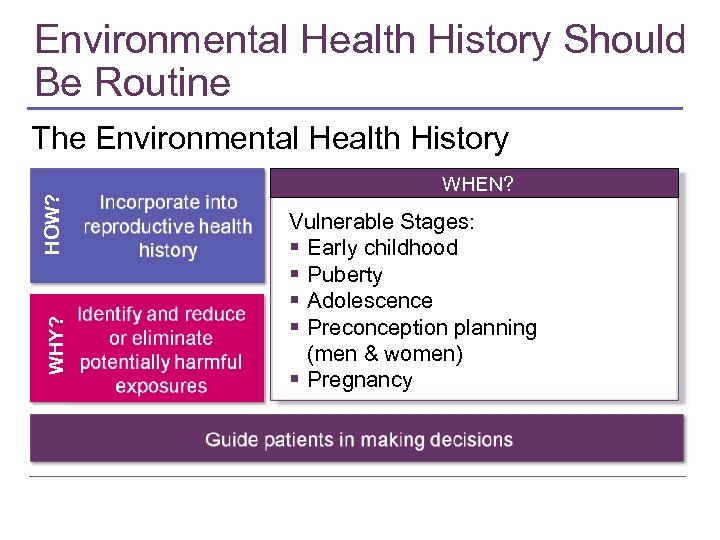 Environmental Health History Should Be Routine WHY? HOW? The Environmental Health History WHEN? Vulnerable Stages: § Early childhood § Puberty § Adolescence § Preconception planning (men & women) § Pregnancy
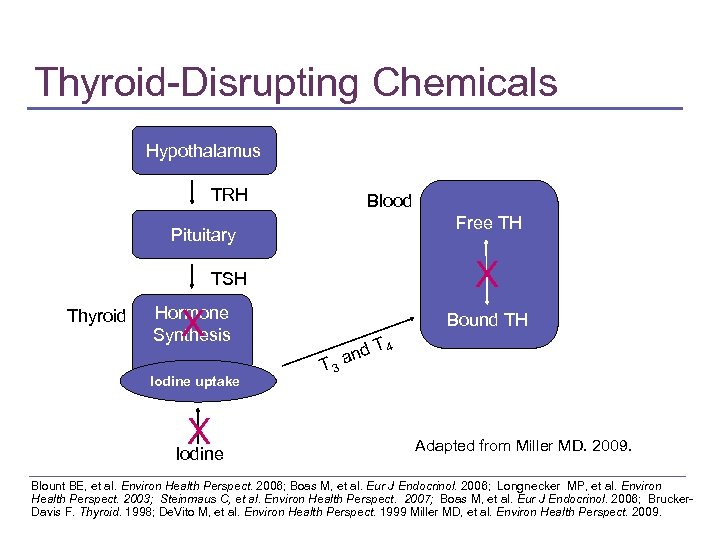 Thyroid-Disrupting Chemicals Hypothalamus TRH Blood Free TH Pituitary X TSH Thyroid Hormone Synthesis X Iodine uptake X Iodine Bound TH T 3 nd T 4 a Adapted from Miller MD. 2009. Blount BE, et al. Environ Health Perspect. 2006; Boas M, et al. Eur J Endocrinol. 2006; Longnecker MP, et al. Environ Health Perspect. 2003; Steinmaus C, et al. Environ Health Perspect. 2007; Boas M, et al. Eur J Endocrinol. 2006; Brucker. Davis F. Thyroid. 1998; De. Vito M, et al. Environ Health Perspect. 1999 Miller MD, et al. Environ Health Perspect. 2009.
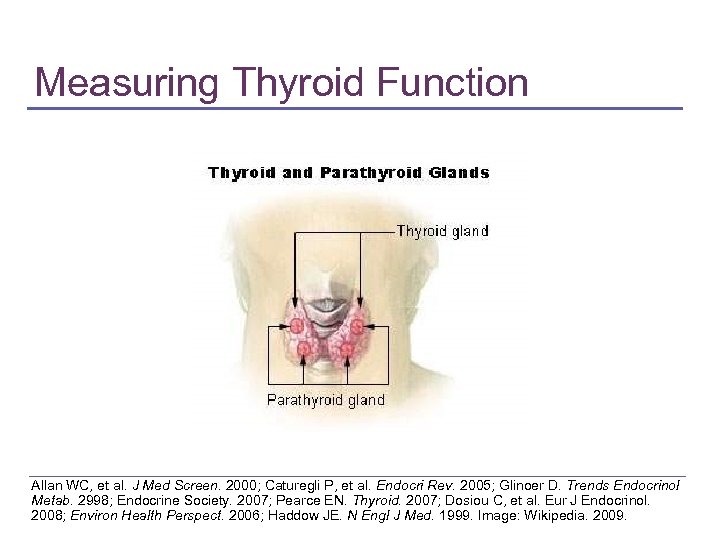 Measuring Thyroid Function Allan WC, et al. J Med Screen. 2000; Caturegli P, et al. Endocri Rev. 2005; Glinoer D. Trends Endocrinol Metab. 2998; Endocrine Society. 2007; Pearce EN. Thyroid. 2007; Dosiou C, et al. Eur J Endocrinol. 2008; Environ Health Perspect. 2006; Haddow JE. N Engl J Med. 1999. Image: Wikipedia. 2009.
 Community: Guidance for Patients Access community organizations & resources, for information about: • Dry cleaners that avoid toxic solvents • Salon products without toluene, phthalates, and other toxic chemicals • Grocery stores that carry organic products Resource Tip: • Download the What We Can Do: Community Efforts to Protect Our Health Tool Kit from the Women’s Health and the Environment Web site
 CH 2 OPS: Home/Hobbies • • • Pesticides Adhesives Furniture products Cleaners Detergents Gardening products (e. g. , pesticides, plant food) more…
 CH 2 OPS: Home/Hobbies, cont. Exposure to: • Carbon monoxide • Metals • Solvents Fishing: • Be aware of fish advisories for mercury more…
 Home: Guidance for Patients • Check for lead paint and pipes; manage dust • Avoid canned foods and beverages • Avoid certain types of plastics: ▪ No. 3: Polyvinyl chloride (PVC) ▪ No. 6: Styrene (Styrofoam) ▪ No. 7: Polycarbonate (bisphenol A [BPA]) • Where possible, avoid food stored in plastic containers or plastic wrap • Avoid vinyl products, such as shower curtain liners Center for Health, Environment and Justice. 2008; NRDC. 2008; CDC. 2002.
 Home: Guidance for Patients (continued) • Use non-polycarbonate plastic or glass baby bottles • Drink from unlined stainless steel bottles • Eat fresh food when possible - frozen better than canned • Buy processed food in cardboard • Microwave food in glass or “microwave safe” plastic containers NRDC. 2008.
 Home: Guidance for Patients (continued) • Avoid using pesticides in homes, lawns, gardens, or on pets • Wash fruits and vegetables; buy organic when possible; favor thick-skinned fruits and vegetables Resource Tips: Extensive resources are available to eliminate the use of pesticides or to use less toxic products. Some examples include: • Visit www. beyondpesticides. org • Visit the Pesticide Action Network (PAN): www. pesticideinfo. org • Download the Shopper’s Guide to Pesticides wallet card from the Environmental Working Group
 Home: Guidance for Patients (continued) • Read labels on cleaning products • Use ammonia and chlorine bleach sparingly, with ventilation • Avoid mixing ammonia and chlorine • Use inexpensive, nontoxic products such as vinegar and baking soda Resource Tip: • Find nontoxic cleaning recipes on the Women’s Voices for the Earth Web site or www. care 2. com
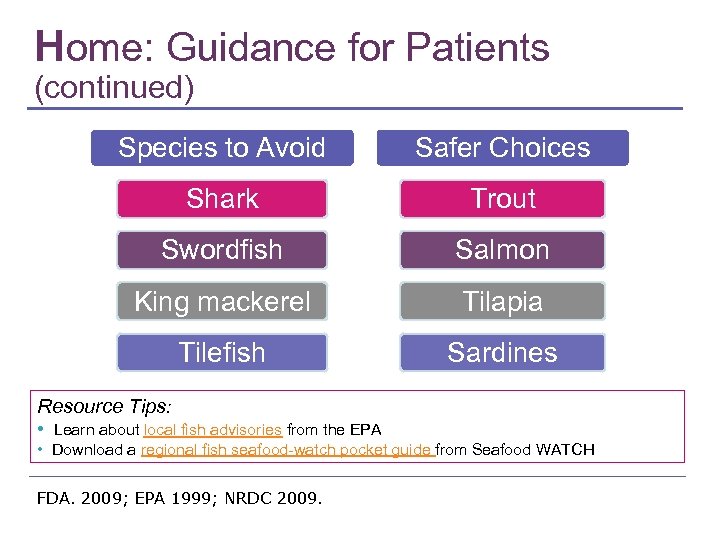 Home: Guidance for Patients (continued) Species to Avoid Safer Choices Shark Trout Swordfish Salmon King mackerel Tilapia Tilefish Sardines Resource Tips: • Learn about local fish advisories from the EPA • Download a regional fish seafood-watch pocket guide from Seafood WATCH FDA. 2009; EPA 1999; NRDC 2009.
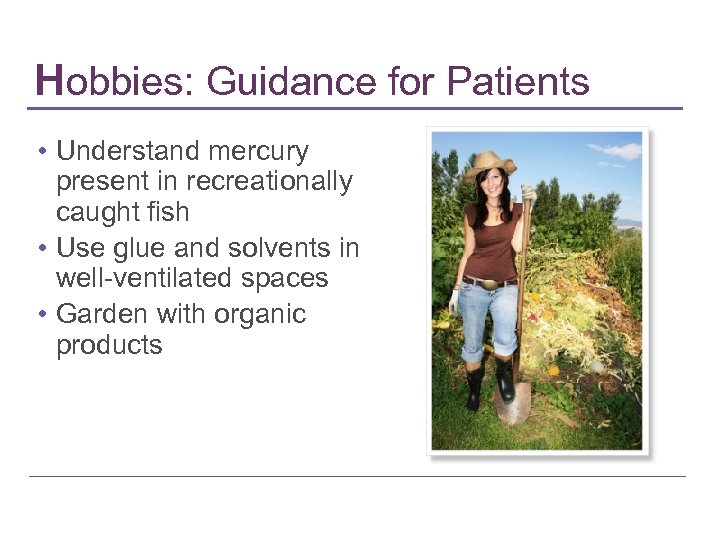 Hobbies: Guidance for Patients • Understand mercury present in recreationally caught fish • Use glue and solvents in well-ventilated spaces • Garden with organic products
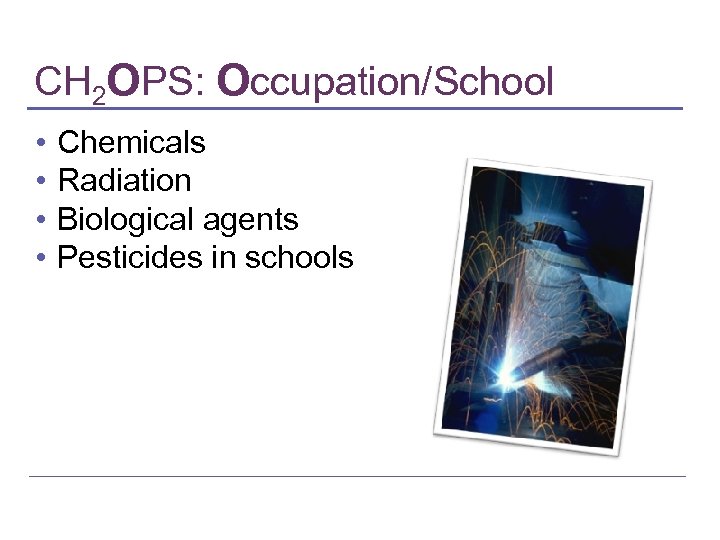 CH 2 OPS: Occupation/School • • Chemicals Radiation Biological agents Pesticides in schools
 Occupation: Guidance for Patients • Become familiar with all chemicals used or encountered at work • Learn about toxic properties of these chemicals • Wash any exposed skin; change from work clothes at night; wash exposed clothes separately • Take extra care if pregnant (or planning pregnancy) • Use protective gear with toxic substances or radiation Resource Tip: • Learn more from the CDC report, “The Effects of Workplace Hazards on Female Reproductive Health”
 Occupation (Schools): Guidance for Patients Advise patients: • Practice non-pesticide insect management; inform parents if pesticides used • Use fruit &vegetables for snacks; avoid junk foods in cafeterias • Avoid pressure-treated woods (arsenic) in playground equipment Resource Tip: • Visit the Healthy Schools Network Web site and EPA’s Healthy School Environments Web site to learn more about creating a healthier school environment
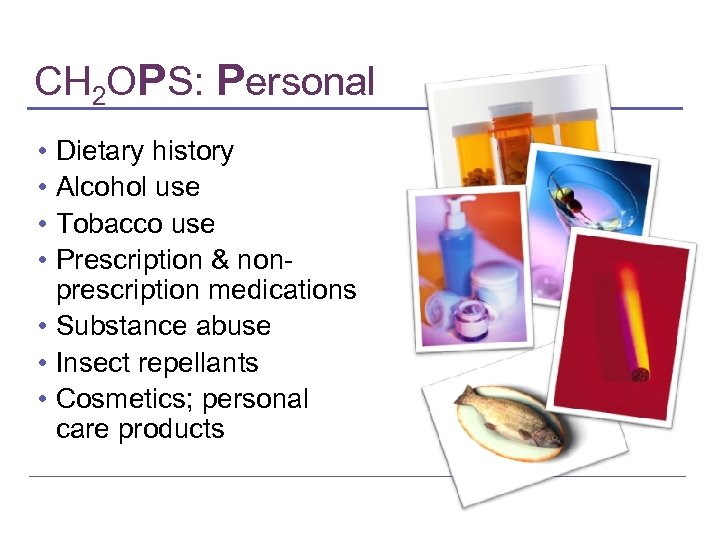 CH 2 OPS: Personal • • Dietary history Alcohol use Tobacco use Prescription & nonprescription medications • Substance abuse • Insect repellants • Cosmetics; personal care products
 Personal: Guidance for Patients Advise patients: • • Don’t trust “dermatologist-tested, ” “natural, ” “organic” Learn about skin products that are safe for children Avoid tobacco use; exposure to 2 nd-hand smoke Use alcohol in moderation Resource Tips: • Check the safety of your own personal care products at the Skin Deep Cosmetic Safety Database and the Campaign for Safe Cosmetics • Download the Safety Guide to Children's Personal Care Products from the Environmental Working Group • Visit www. healthytoys. org to find toy rankings and a safer toy shopping list
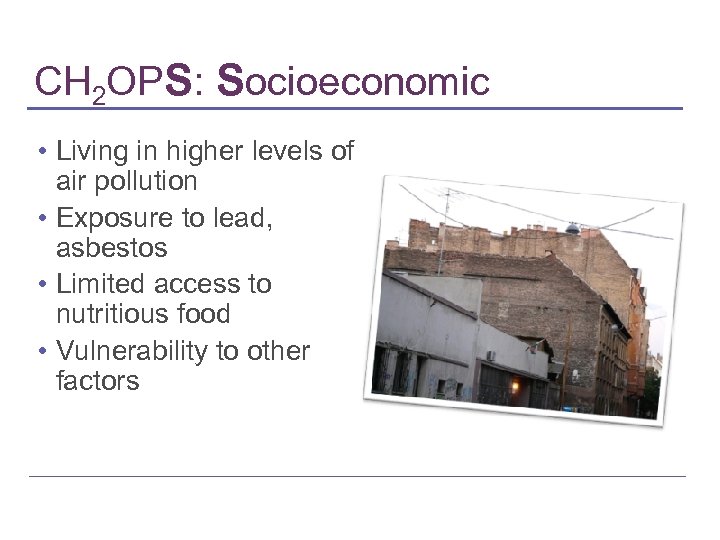 CH 2 OPS: Socioeconomic • Living in higher levels of air pollution • Exposure to lead, asbestos • Limited access to nutritious food • Vulnerability to other factors
 Socioeconomic: Guidance for Patients Advice for patients: • Know tenant & citizen rights • Work with community organizations, government agencies to ensure risk awareness & knowledge Resource Tip: • Visit the Alliance for Healthy Homes Web site for tools and tips on reducing environmental hazards in homes and communities
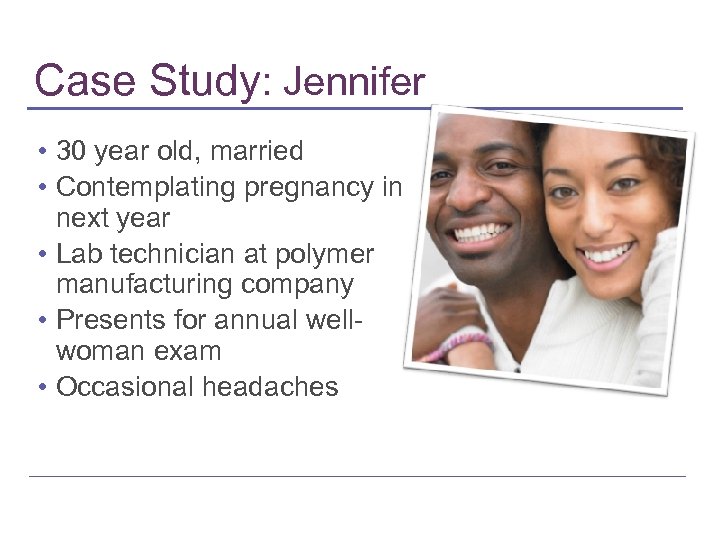 Case Study: Jennifer • 30 year old, married • Contemplating pregnancy in next year • Lab technician at polymer manufacturing company • Presents for annual wellwoman exam • Occasional headaches
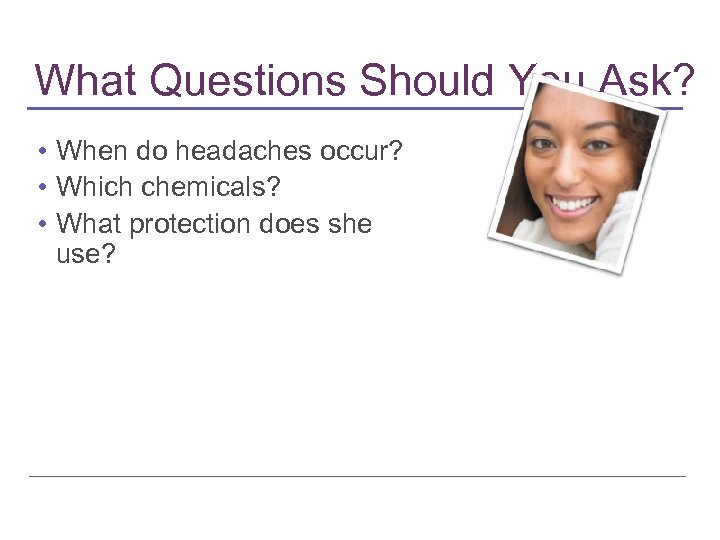 What Questions Should You Ask? • When do headaches occur? • Which chemicals? • What protection does she use?
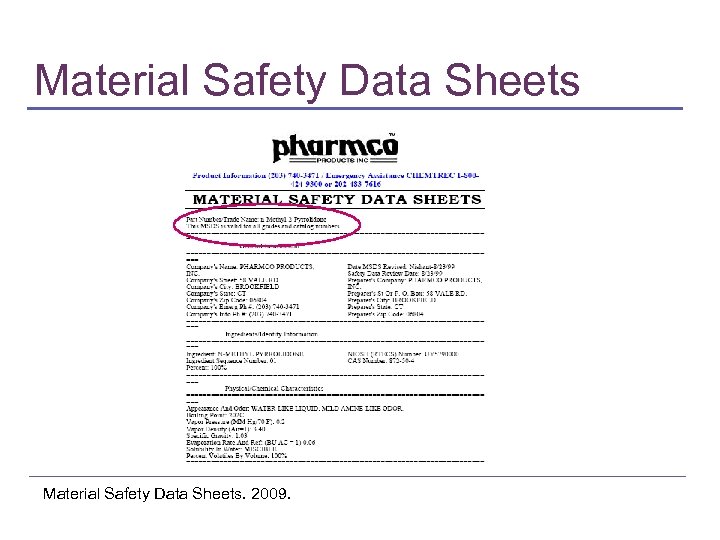 Material Safety Data Sheets. 2009.
 Next Step? • Order pregnancy test • Carefully explore her options for transferring out of the lab to a less toxic work environment • Offer to write a letter to her employer with recommendations for improved safety protections • Consider an occupational health consult
 Advocating for Workplace Safety
 An Important Take-Home Message Identifying and reducing exposures to potentially harmful toxicants now increases the likelihood of a successful pregnancy outcome.
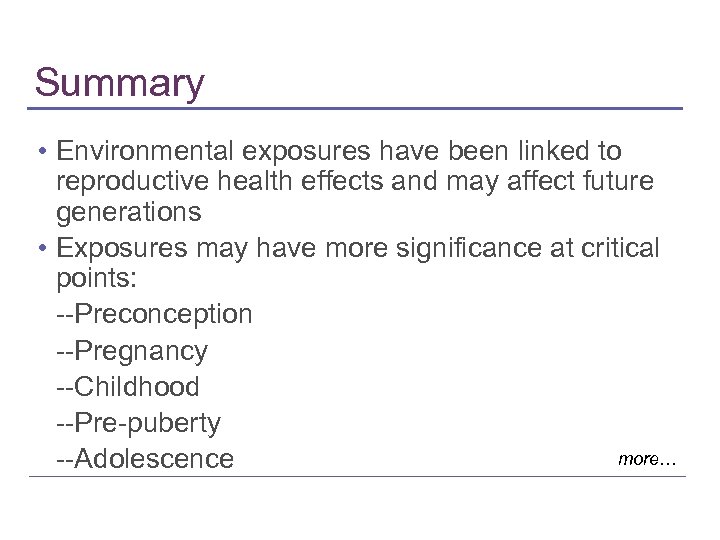 Summary • Environmental exposures have been linked to reproductive health effects and may affect future generations • Exposures may have more significance at critical points: --Preconception --Pregnancy --Childhood --Pre-puberty more… --Adolescence
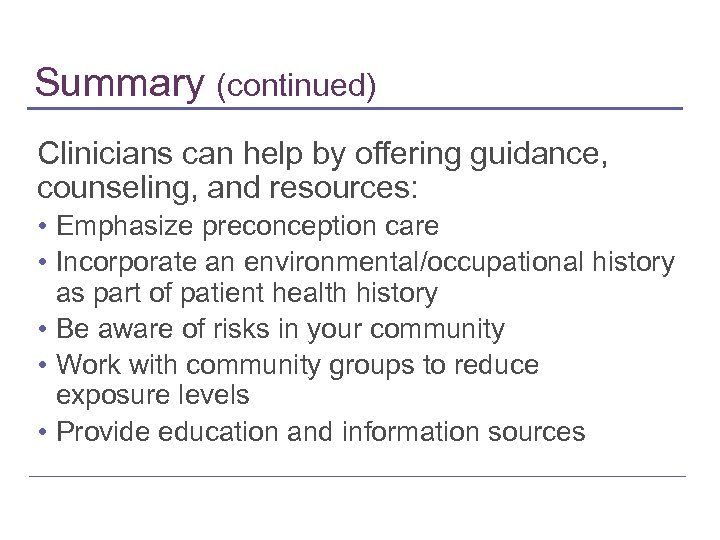 Summary (continued) Clinicians can help by offering guidance, counseling, and resources: • Emphasize preconception care • Incorporate an environmental/occupational history as part of patient health history • Be aware of risks in your community • Work with community groups to reduce exposure levels • Provide education and information sources
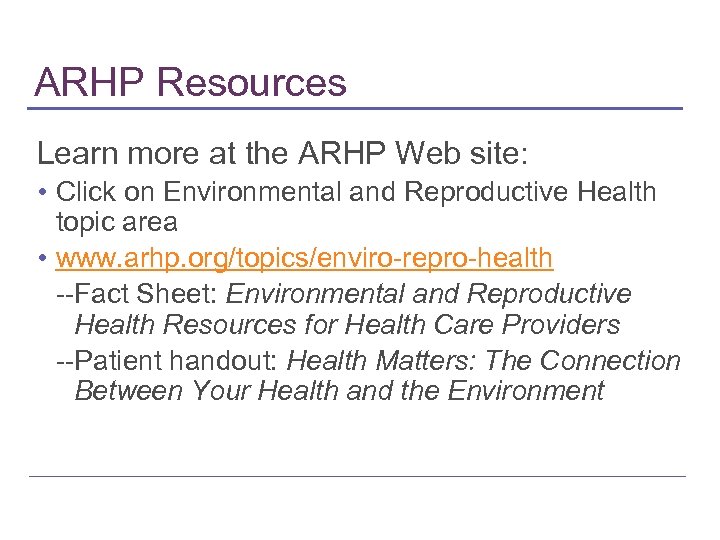 ARHP Resources Learn more at the ARHP Web site: • Click on Environmental and Reproductive Health topic area • www. arhp. org/topics/enviro-repro-health --Fact Sheet: Environmental and Reproductive Health Resources for Health Care Providers --Patient handout: Health Matters: The Connection Between Your Health and the Environment
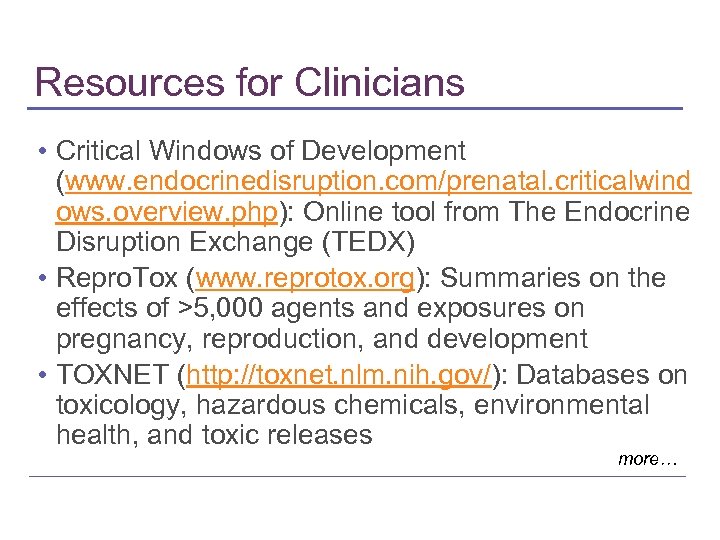 Resources for Clinicians • Critical Windows of Development (www. endocrinedisruption. com/prenatal. criticalwind ows. overview. php): Online tool from The Endocrine Disruption Exchange (TEDX) • Repro. Tox (www. reprotox. org): Summaries on the effects of >5, 000 agents and exposures on pregnancy, reproduction, and development • TOXNET (http: //toxnet. nlm. nih. gov/): Databases on toxicology, hazardous chemicals, environmental health, and toxic releases more…
 Resources for Clinicians (continued) • American College of Occupational and Environmental Medicine (www. acoem. org) • Collaborative on Health and Environment (CHE) database (http: //database. healthandenvironment. org/) • Envi. RN (www. envirn. umaryland. edu) • Local environmental health specialists • Occupational and environmental health departments in universities
 Visit CORE (www. arhp. org/core) to Download Slides