


 Скачать презентацию Environment Health Safety Radiation Safety Seminar 2010
4753da9431ac711a789df40be8917a48.ppt
- Количество слайдов: 44
 Environment, Health & Safety Radiation Safety Seminar 2010 Robert Carrara David Skydel 2010
 Topics Licensing/Administration User responsibilities Working with isotopes Other Important Information You will receive a Certificate of Completion for this seminar sent to the mail code you provided on your enrollment form.
 5 Key concepts you must take away from this seminar and will be held accountable for while you remain an active user listed on an RUA. 1: 2: 3: 4: 5:
 Licensing/Administration
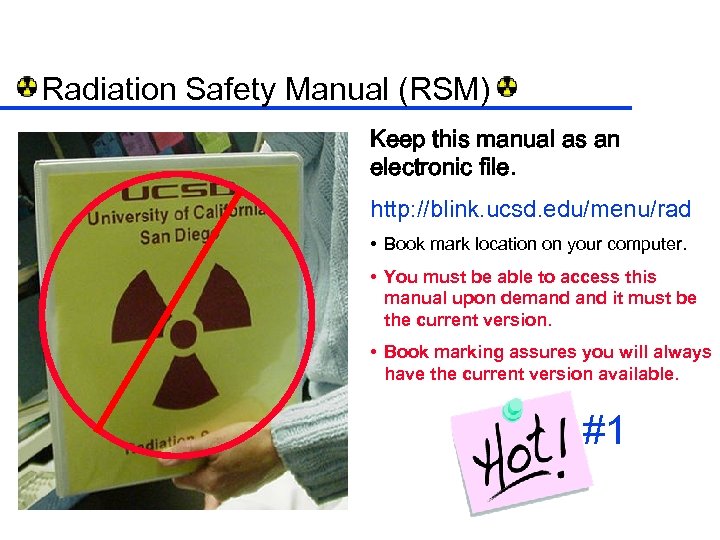 Radiation Safety Manual (RSM) Keep this manual as an electronic file. http: //blink. ucsd. edu/menu/rad • Book mark location on your computer. • You must be able to access this manual upon demand it must be the current version. • Book marking assures you will always have the current version available. #1
 5 Key concepts you must take away from this seminar and will be held accountable for while you remain an active user listed on an RUA. 1: Know how to access your RSM 2: 3: 4: 5:
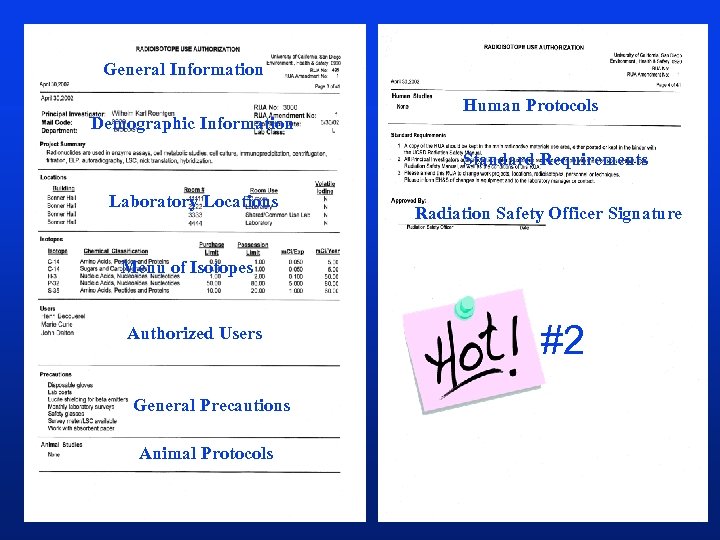 General Information Demographic Information Human Protocols Standard Requirements Laboratory Locations Radiation Safety Officer Signature Menu of Isotopes Authorized Users General Precautions Animal Protocols #2
 5 Key concepts you must take away from this seminar and will be held accountable for while you remain an active user listed on an RUA. 1: Know how to access your RSM 2: Know where your RUA is located 3: 4: 5:
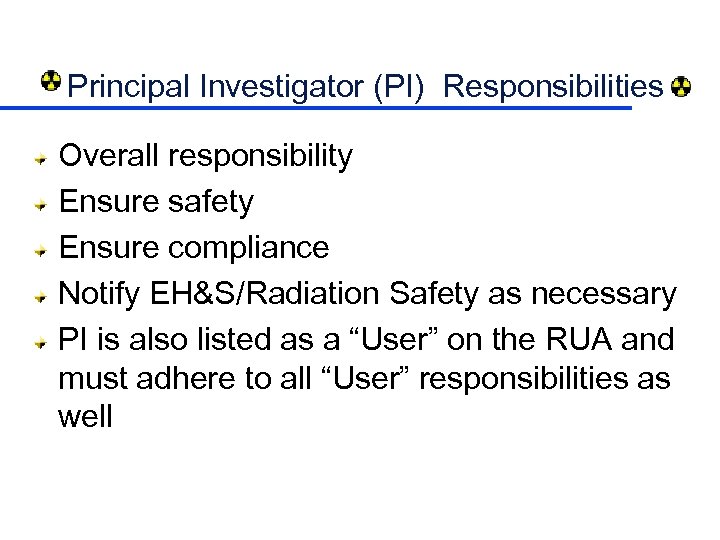 Principal Investigator (PI) Responsibilities Overall responsibility Ensure safety Ensure compliance Notify EH&S/Radiation Safety as necessary PI is also listed as a “User” on the RUA and must adhere to all “User” responsibilities as well
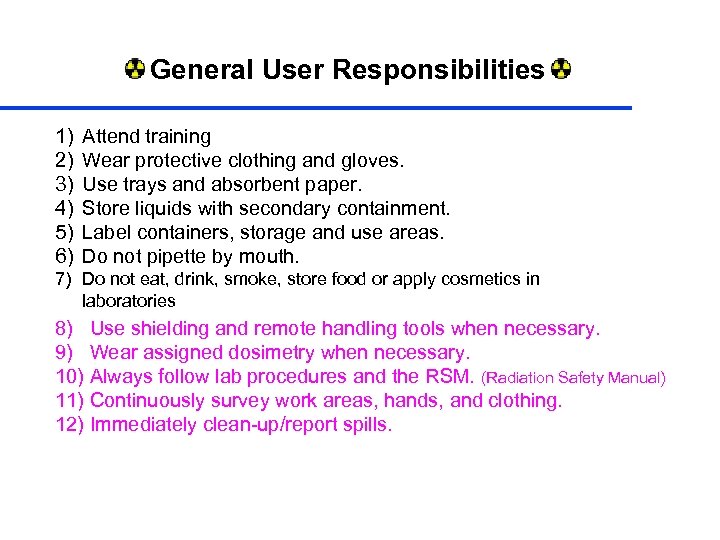 General User Responsibilities 1) 2) 3) 4) 5) 6) Attend training Wear protective clothing and gloves. Use trays and absorbent paper. Store liquids with secondary containment. Label containers, storage and use areas. Do not pipette by mouth. 7) Do not eat, drink, smoke, store food or apply cosmetics in laboratories 8) Use shielding and remote handling tools when necessary. 9) Wear assigned dosimetry when necessary. 10) Always follow lab procedures and the RSM. (Radiation Safety Manual) 11) Continuously survey work areas, hands, and clothing. 12) Immediately clean-up/report spills.
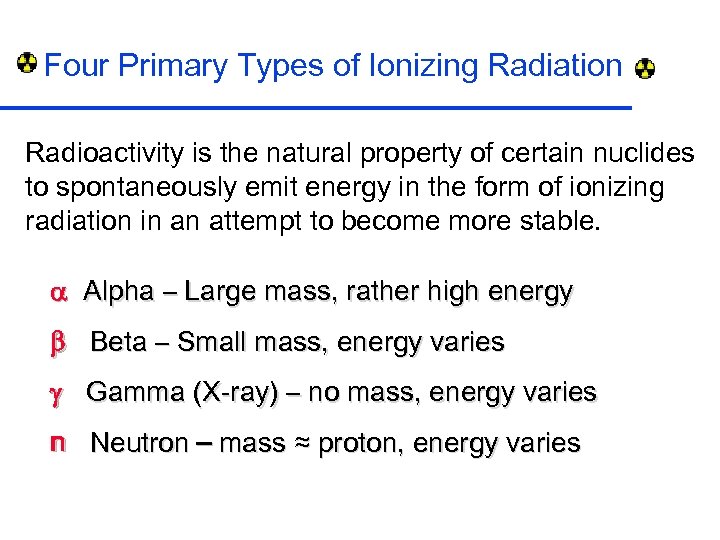 Four Primary Types of Ionizing Radiation Radioactivity is the natural property of certain nuclides to spontaneously emit energy in the form of ionizing radiation in an attempt to become more stable. Alpha – Large mass, rather high energy Beta – Small mass, energy varies Gamma (X-ray) – no mass, energy varies n Neutron – mass ≈ proton, energy varies
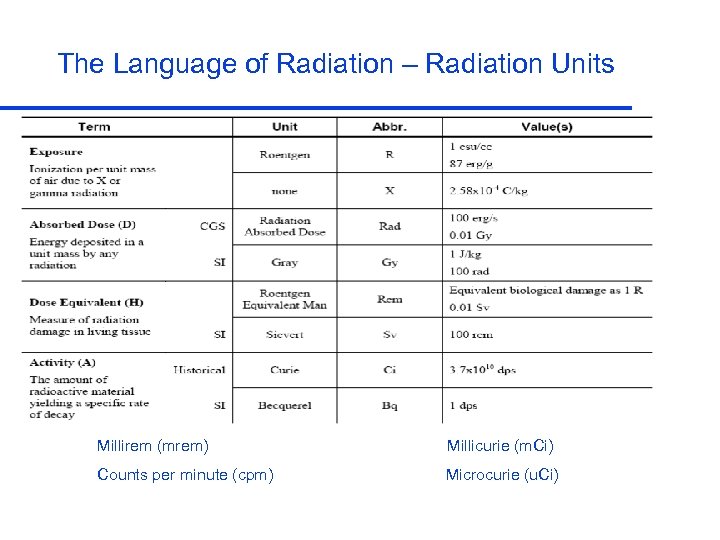 The Language of Radiation – Radiation Units Millirem (mrem) Millicurie (m. Ci) Counts per minute (cpm) Microcurie (u. Ci)
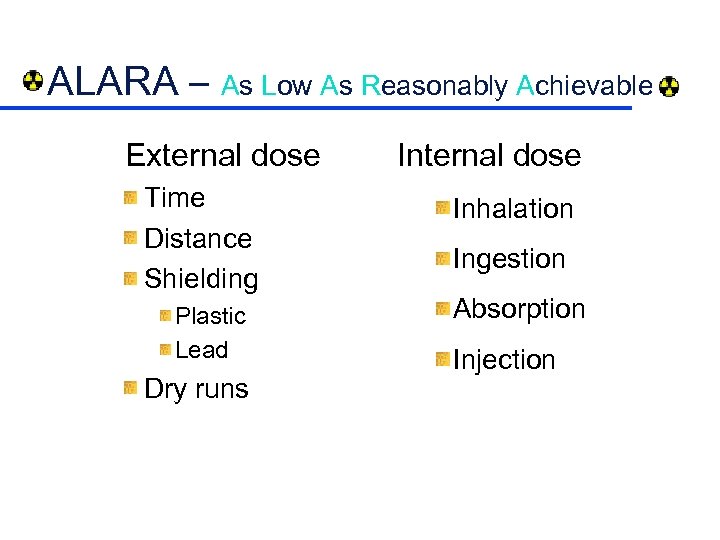 ALARA – As Low As Reasonably Achievable External dose Time Distance Shielding Plastic Lead Dry runs Internal dose Inhalation Ingestion Absorption Injection
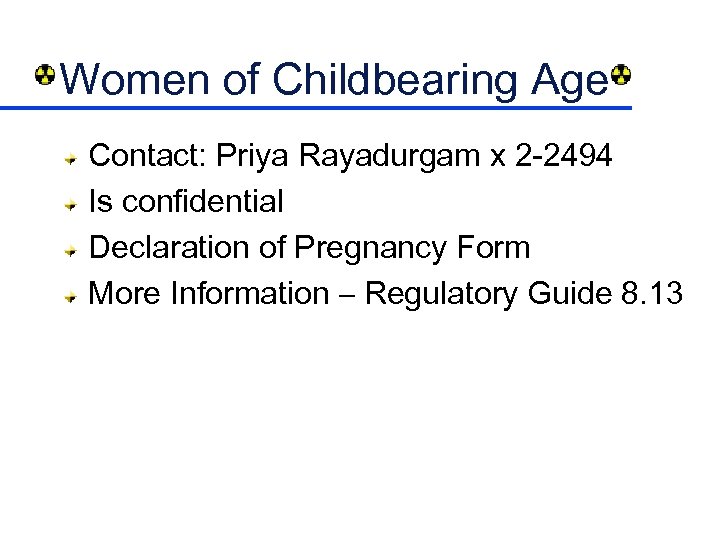 Women of Childbearing Age Contact: Priya Rayadurgam x 2 -2494 Is confidential Declaration of Pregnancy Form More Information – Regulatory Guide 8. 13
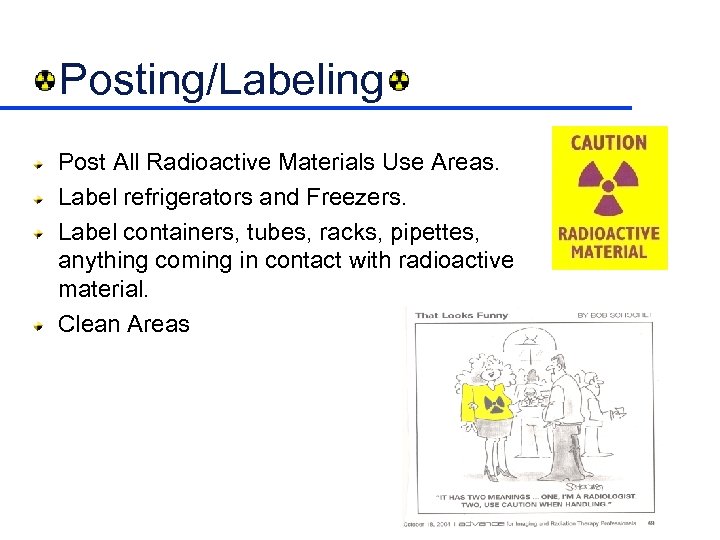 Posting/Labeling Post All Radioactive Materials Use Areas. Label refrigerators and Freezers. Label containers, tubes, racks, pipettes, anything coming in contact with radioactive material. Clean Areas
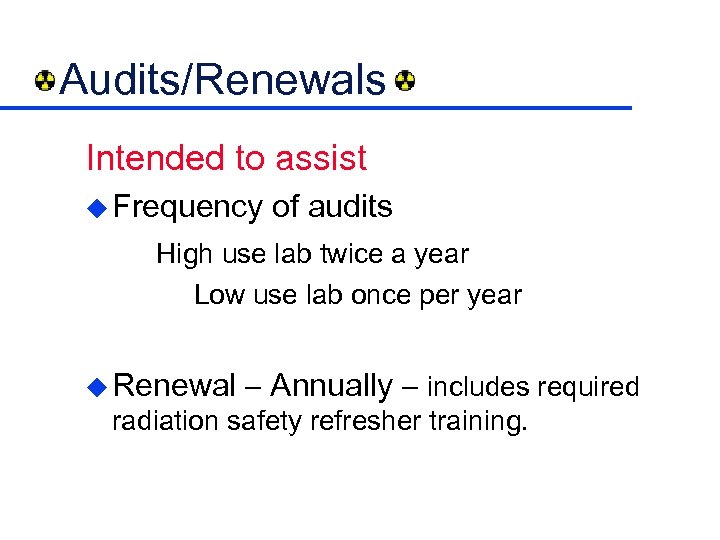 Audits/Renewals Intended to assist u Frequency of audits High use lab twice a year Low use lab once per year u Renewal – Annually – includes required radiation safety refresher training.
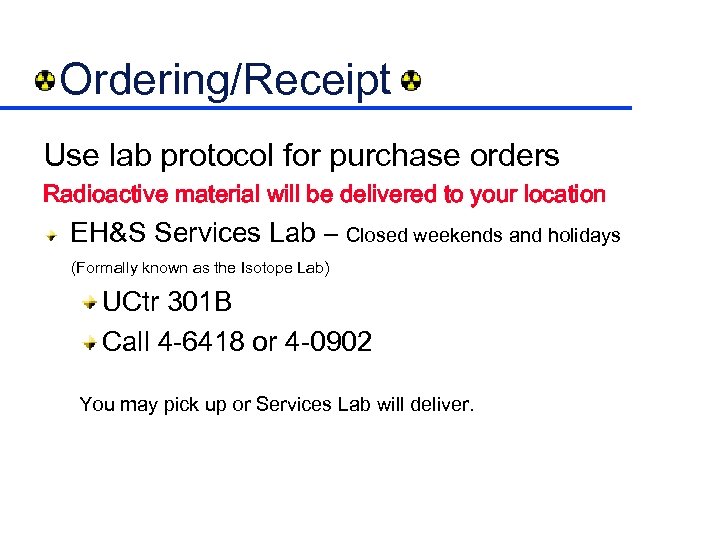 Ordering/Receipt Use lab protocol for purchase orders Radioactive material will be delivered to your location EH&S Services Lab – Closed weekends and holidays (Formally known as the Isotope Lab) UCtr 301 B Call 4 -6418 or 4 -0902 You may pick up or Services Lab will deliver.
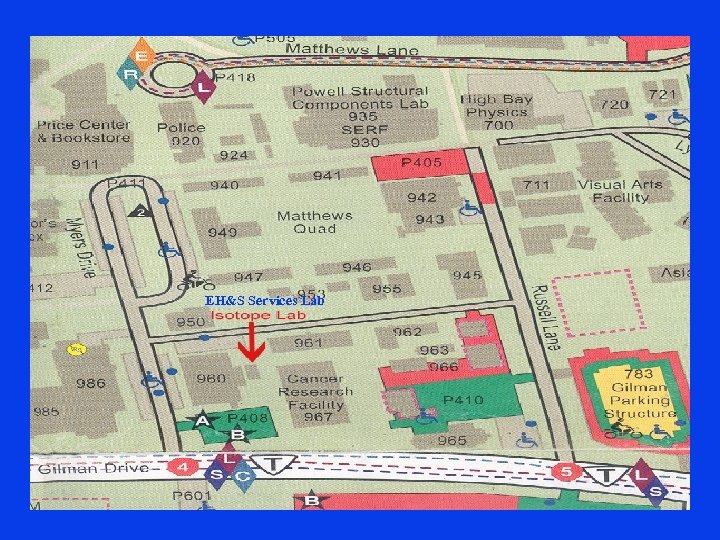 EH&S Services Lab
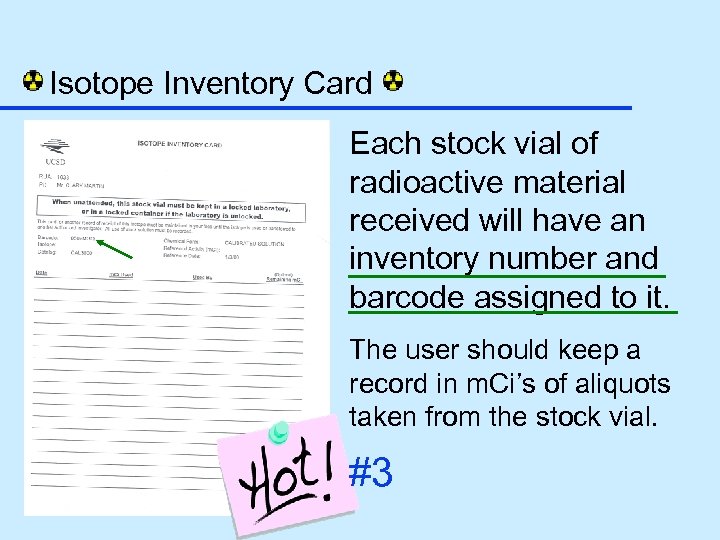 Isotope Inventory Card Each stock vial of radioactive material received will have an inventory number and barcode assigned to it. The user should keep a record in m. Ci’s of aliquots taken from the stock vial. #3
 5 Key concepts you must take away from this seminar and will be held accountable for while you remain an active user listed on an RUA. 1: Know how to access your RSM 2: Know where your RUA is located 3: Complete Isotope Inventory Card 4: 5:
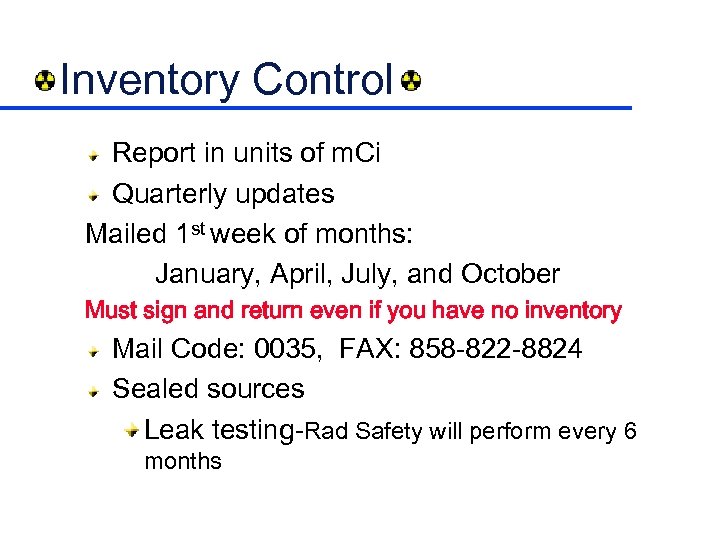 Inventory Control Report in units of m. Ci Quarterly updates Mailed 1 st week of months: January, April, July, and October Must sign and return even if you have no inventory Mail Code: 0035, FAX: 858 -822 -8824 Sealed sources Leak testing-Rad Safety will perform every 6 months
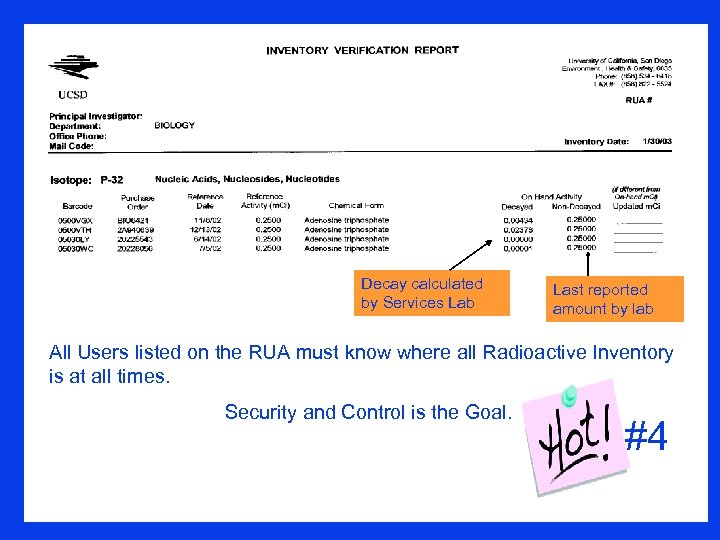 Decay calculated by Services Lab Last reported amount by lab All Users listed on the RUA must know where all Radioactive Inventory is at all times. Security and Control is the Goal. #4
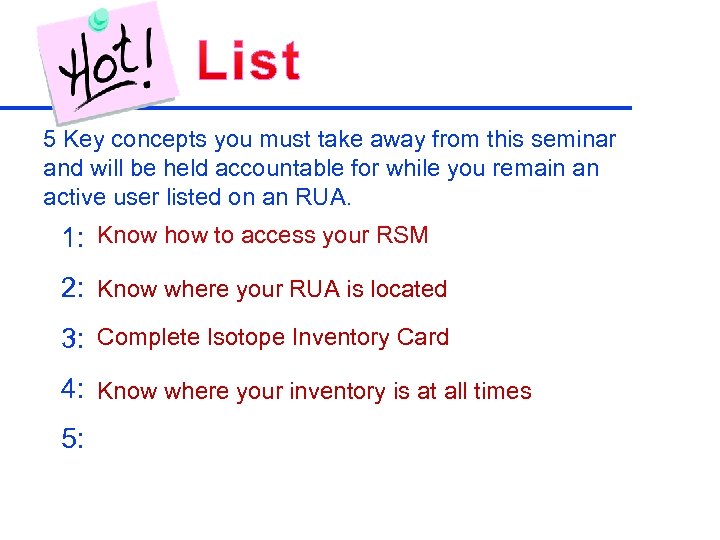 5 Key concepts you must take away from this seminar and will be held accountable for while you remain an active user listed on an RUA. 1: Know how to access your RSM 2: Know where your RUA is located 3: Complete Isotope Inventory Card 4: Know where your inventory is at all times 5:
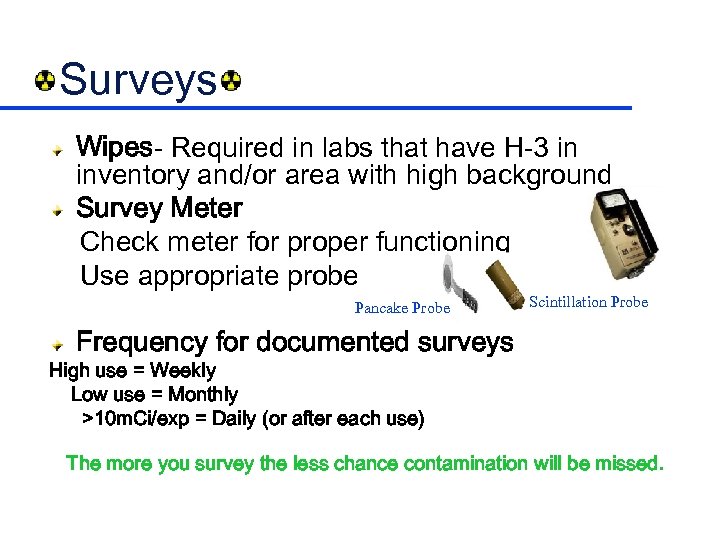 Surveys Wipes- Required in labs that have H-3 in inventory and/or area with high background Survey Meter Check meter for proper functioning Use appropriate probe Pancake Probe Scintillation Probe Frequency for documented surveys High use = Weekly Low use = Monthly >10 m. Ci/exp = Daily (or after each use) The more you survey the less chance contamination will be missed.
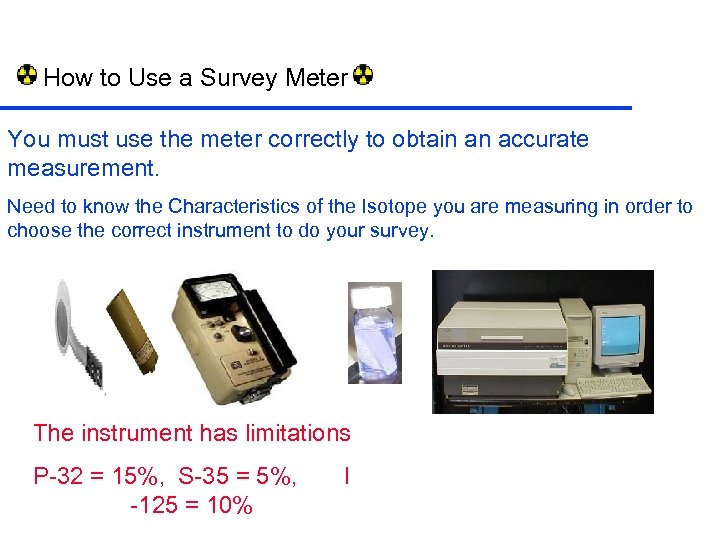 How to Use a Survey Meter You must use the meter correctly to obtain an accurate measurement. Need to know the Characteristics of the Isotope you are measuring in order to choose the correct instrument to do your survey. The instrument has limitations P-32 = 15%, S-35 = 5%, I -125 = 10%
 Radioactive Waste • Radioactive Materials/Waste cannot go down the drain or in the trash Store behind appropriate shielding • Collect in appropriate containers • Collect rinses from contaminated lab-ware • Labeling • At start of accumulation label with: • “Isotope” & “Caution – radioactive materials” • International Trefoil “symbol” • RAD waste tag must be complete at time of pick up Keep outside surface of waste containers free of contamination Keep waste areas clear of debris Avoid accumulating large amounts of radioactive waste on site
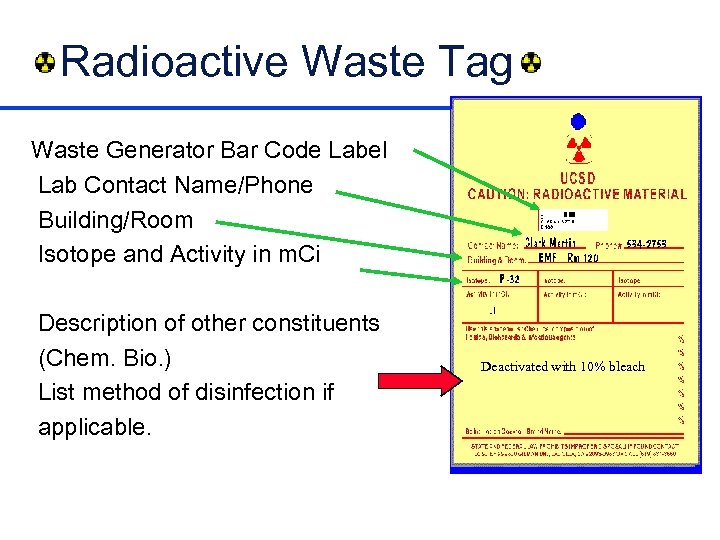 Radioactive Waste Tag Waste Generator Bar Code Label Lab Contact Name/Phone Building/Room Isotope and Activity in m. Ci Description of other constituents (Chem. Bio. ) List method of disinfection if applicable. Deactivated with 10% bleach
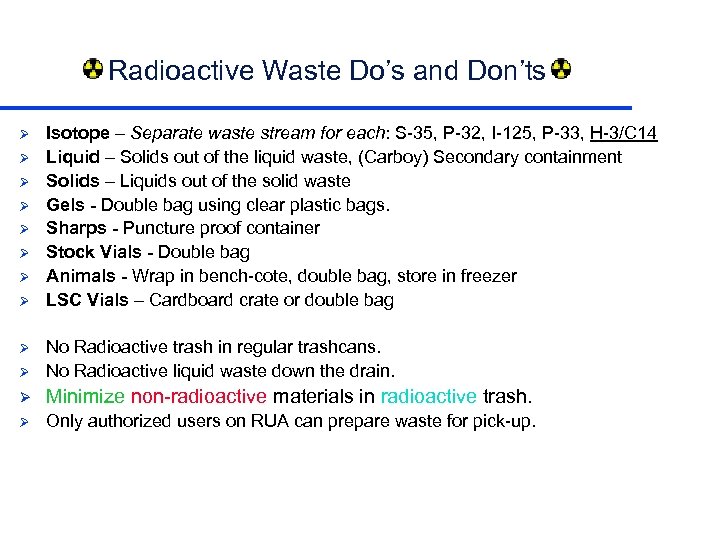 Radioactive Waste Do’s and Don’ts Ø Ø Ø Ø Isotope – Separate waste stream for each: S-35, P-32, I-125, P-33, H-3/C 14 Liquid – Solids out of the liquid waste, (Carboy) Secondary containment Solids – Liquids out of the solid waste Gels - Double bag using clear plastic bags. Sharps - Puncture proof container Stock Vials - Double bag Animals - Wrap in bench-cote, double bag, store in freezer LSC Vials – Cardboard crate or double bag Ø No Radioactive trash in regular trashcans. No Radioactive liquid waste down the drain. Ø Minimize non-radioactive materials in radioactive trash. Ø Only authorized users on RUA can prepare waste for pick-up. Ø
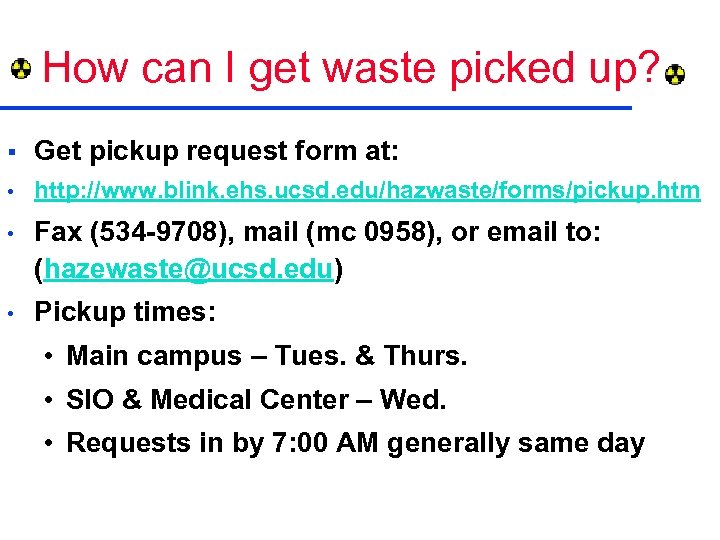 How can I get waste picked up? § Get pickup request form at: • http: //www. blink. ehs. ucsd. edu/hazwaste/forms/pickup. htm • Fax (534 -9708), mail (mc 0958), or email to: (hazewaste@ucsd. edu) • Pickup times: • Main campus – Tues. & Thurs. • SIO & Medical Center – Wed. • Requests in by 7: 00 AM generally same day
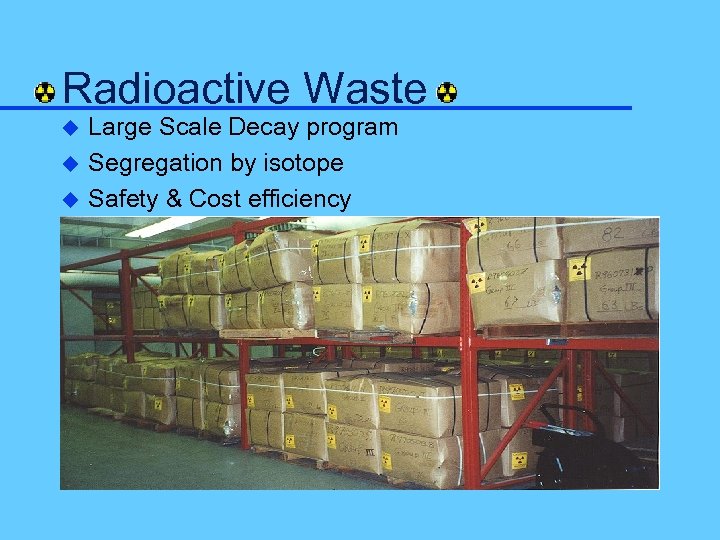 Radioactive Waste u u u Large Scale Decay program Segregation by isotope Safety & Cost efficiency
 Safety Video I
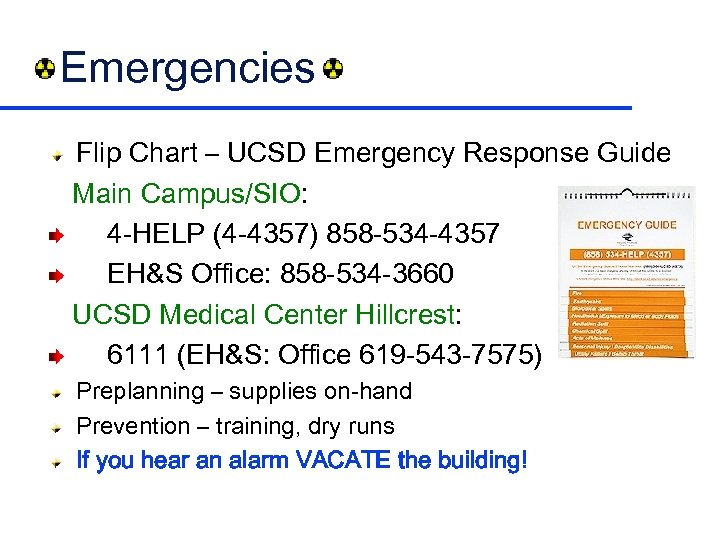 Emergencies Flip Chart – UCSD Emergency Response Guide Main Campus/SIO: 4 -HELP (4 -4357) 858 -534 -4357 EH&S Office: 858 -534 -3660 UCSD Medical Center Hillcrest: 6111 (EH&S: Office 619 -543 -7575) Preplanning – supplies on-hand Prevention – training, dry runs If you hear an alarm VACATE the building!
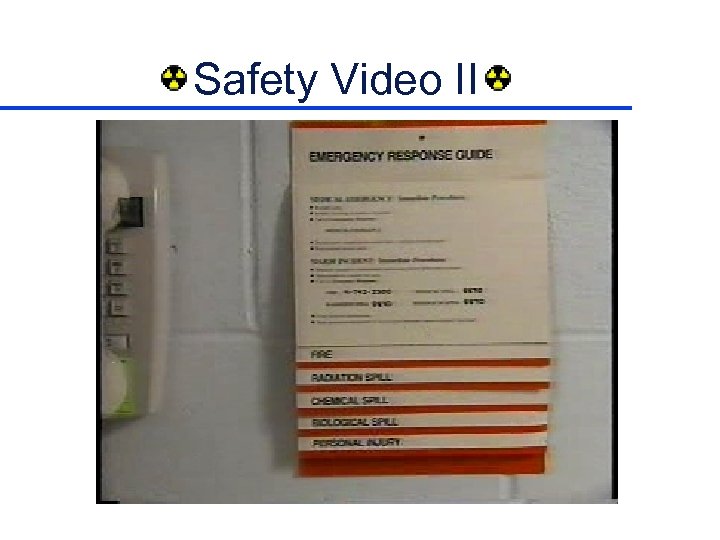 Safety Video II
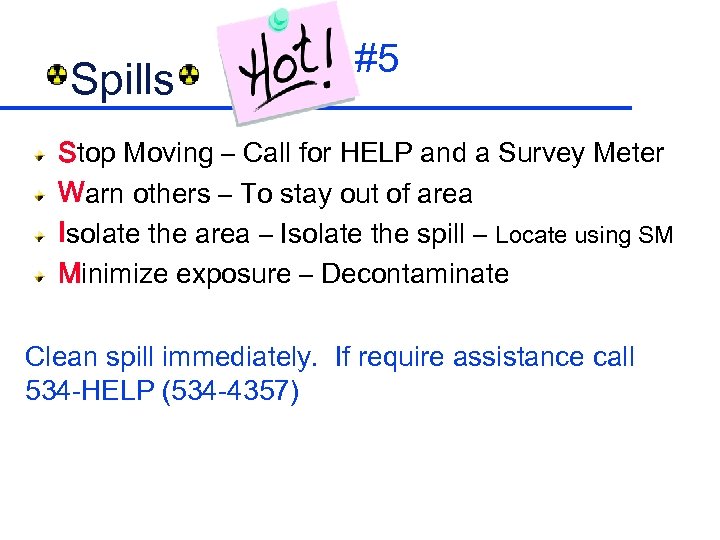 Spills #5 Stop Moving – Call for HELP and a Survey Meter Warn others – To stay out of area Isolate the area – Isolate the spill – Locate using SM Minimize exposure – Decontaminate Clean spill immediately. If require assistance call 534 -HELP (534 -4357)
 5 Key concepts you must take away from this seminar and will be held accountable for while you remain an active user listed on an RUA. 1: Know how to access your RSM 2: Know where your RUA is located 3: Complete Isotope Inventory Card 4: Know where your inventory is at all times 5: First thing to do if you spill – STOP Moving
 Spills continued… Decontaminate personnel first! Contaminated clothing should be removed. warm water, be gentle, do not break skin, no scrub brush, consult with EH&S Radiation Safety do Using two people to clean up a spill is preferable. Spill needs to be documented according to UCSD requirements. Use
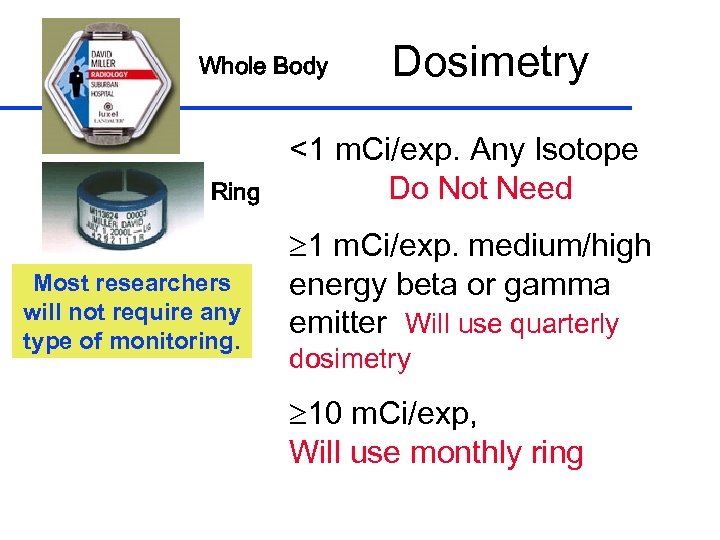 Whole Body Ring Most researchers will not require any type of monitoring. Dosimetry <1 m. Ci/exp. Any Isotope Do Not Need 1 m. Ci/exp. medium/high energy beta or gamma emitter Will use quarterly dosimetry 10 m. Ci/exp, Will use monthly ring
 Annual Dose Limits 5, 000 mrem (whole body) 15, 000 mrem (lens of the eye) 50, 000 mrem (skin or extremities) minors - 10% of adult limits embryo/fetus - 500 mrem (over gestation period) Typical whole body dose for a researcher at UCSD is 0. 00 mrem/year Typical background exposure in San Diego is approximately 160 mrem/yr
 Transfer/Shipping Forms are required. http: //blink. ucsd. edu/menu/rad You are transferring the security and control obligations from UCSD to the recipient.
 Forms Radioisotope User Enrollment* *Researchers Using Unsealed Radioisotopes All forms are on the web http: //blink. ucsd. edu/menu/rad
 Other Training (May be Required) Iodination – Iodine Safety Seminar P-32 > 10 m. Ci/Exp – P-32 Safety Seminar S-35 > 10 m. Ci/Exp – S-35 Safety Seminar Arranged as needed with your Health Physicist. Radiation Producing Machines - Radiation Machine Safety Seminar New State Mandated Training Coming soon Stand By for more details
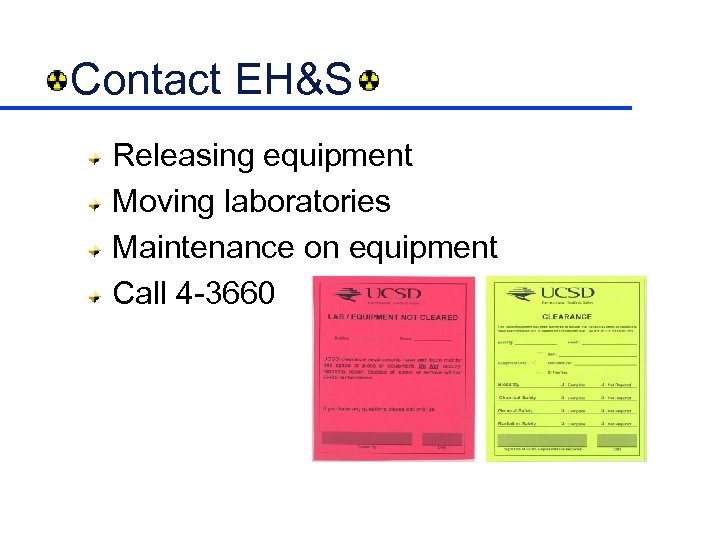 Contact EH&S Releasing equipment Moving laboratories Maintenance on equipment Call 4 -3660
 Questions David Skydel – dskydel@ucsd. edu, x 2 -5526 Robert Carrara – rcarrara@ucsd. edu, x 2 -2878 EH&S Main Desk - 534 -3660 RSO (Radiation Safety Officer) Corey Singleton csingleton@ucsd. edu, x 2 -4045 Contact your HP/RAP directly