


 Скачать презентацию Environment and Development Challenges The Imperative to Act
fd1b366abc4ec1e4d0ce16f123029a78.ppt
- Количество слайдов: 65
 Environment and Development Challenges: The Imperative to Act Bob Watson Strategic Director of the Tyndall Centre, UEA Sir Louis Matheson Distinguished Visiting Professor, Monash Sustainability Institute, Monash University Based on a paper prepared by the Asahi Glass Foundation Blue Planet Laureates for Rio+20 University of Maryland 8 October, 2014
 Environment and Development Challenges: The Imperative to Act Gro Harlem Brundtland, Paul Ehrlich, Jose Goldemberg, James Hansen, Amory Lovins, Gene Likens, Suki Manabe, Bob May, Hal Mooney, Karl. Henrik Robert, Emil Salim, Gordon Sato, Susan Solomon, Nicholas Stern, MS Swaminathan, Bob Watson Barefoot College, Conservation International, International institute for Environment and Development, and International Union for the Conservation of Nature
 Current Situation • • • Unacceptable levels of poverty and income inequality Unacceptable levels of hunger Lack of access to clean water and energy Significant increases in population Unsustainable economic system Rapid Environmental changes n Climate change n Loss of biodiversity and ecosystem degradation n Land degradation n Water pollution n Local and regional air pollution
 The Blue Planet Laureates Dream A world n without poverty n that is equitable n that respects human rights n with increased and improved ethical behavior n that is environmentally, socially and economically sustainable, where the challenges such as climate change and loss of biodiversity have been successfully addressed This is an achievable dream, but the current system is deeply flawed and our current pathway will not realize it
 The time to act is now § Address population – education of girls, empowerment of women and access to modern forms of contraception § Improve resource efficiency – production and use § Transition to a low-carbon economy, coupled with adaptation to climate change § Address the drivers of biodiversity loss and the degradation of ecosystem services § Go beyond GDP – complement with the five forms of capital – built, financial, human, social and natural § Eliminate subsidies and create functioning markets to pay for ecosystem services § Address failures of governance at the local, national and global level – eliminate the power of vested interests - create systems that are multi-sectoral § Scale up grass-roots actions § Enhanced levels of education, training, R&D and assessments
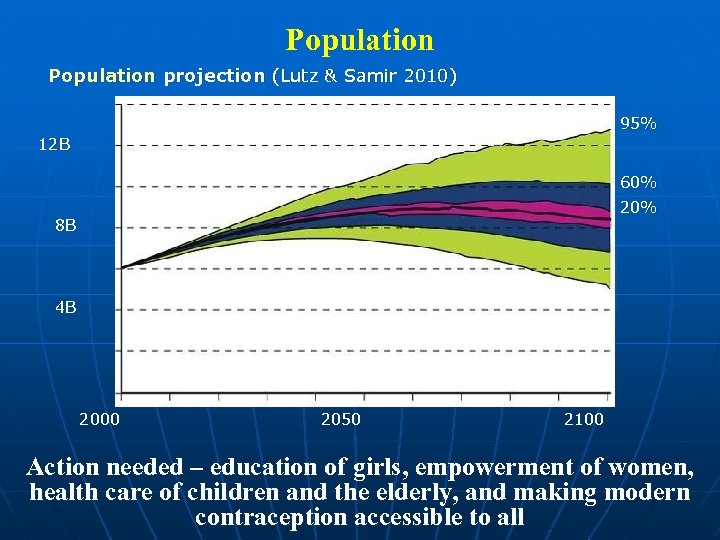 Population projection (Lutz & Samir 2010) 95% 12 B 60% 20% 8 B 4 B 2000 2050 2100 Action needed – education of girls, empowerment of women, health care of children and the elderly, and making modern contraception accessible to all
 Sustainable Production and Consumption n n There is an urgent need to break the link between production and consumption on the one hand environmental destruction on the other This would allow raising material living standards for a period that would allow us to overcome world poverty However, indefinite material growth on a planet with finite and often fragile natural resources will eventually be unsustainable We need to get the economics right – see upcoming slides
 Climate Change
 Climate Change n The composition of the atmosphere, and the Earth’s climate has changed, mostly due to human activities (highly certain), and is projected to continue to change, globally and regionally: • Increased greenhouse gases and aerosols • Warmer temperatures • Changing precipitation patterns – spatially and temporally • Higher sea levels – higher storm surges • Retreating mountain glaciers • Melting of the Greenland ice cap • Reduced arctic sea ice • More frequent extreme weather events heat waves, floods and droughts • More intense cyclonic events, e, g. , hurricanes in the Atlantic n
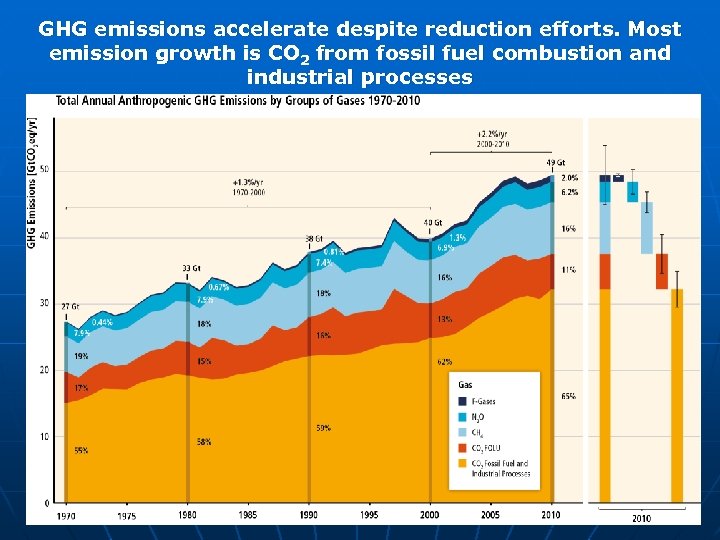 GHG emissions accelerate despite reduction efforts. Most emission growth is CO 2 from fossil fuel combustion and industrial processes
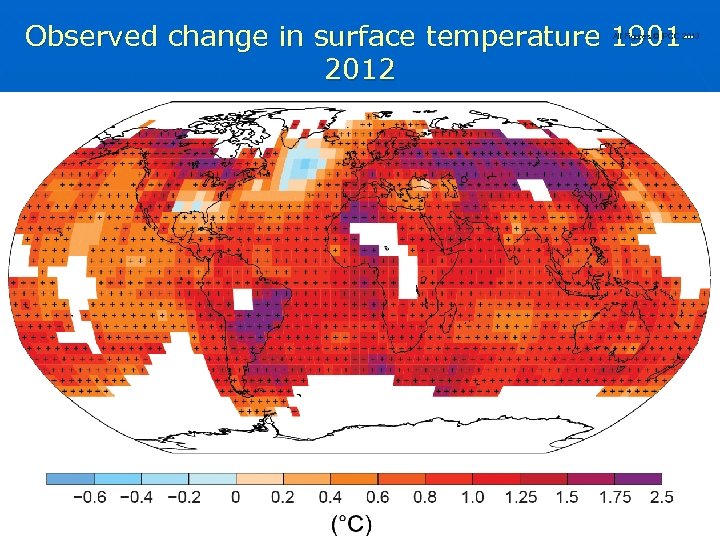 Observed change in surface temperature 19012012 All Figures © IPCC 2013
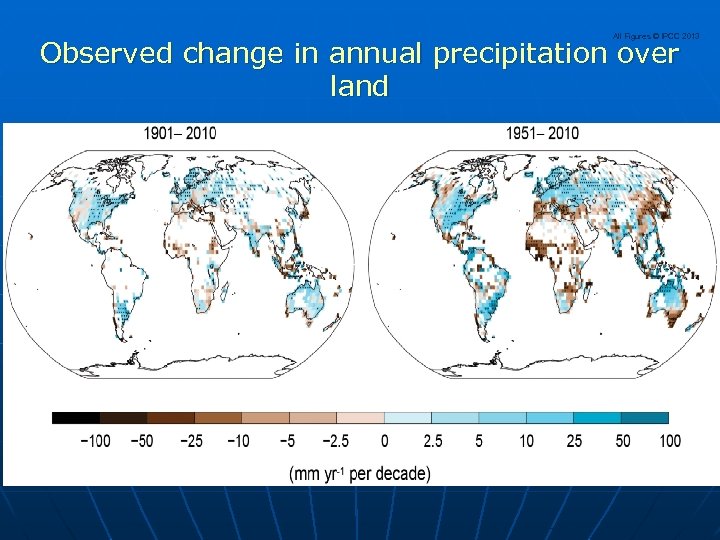 All Figures © IPCC 2013 Observed change in annual precipitation over land
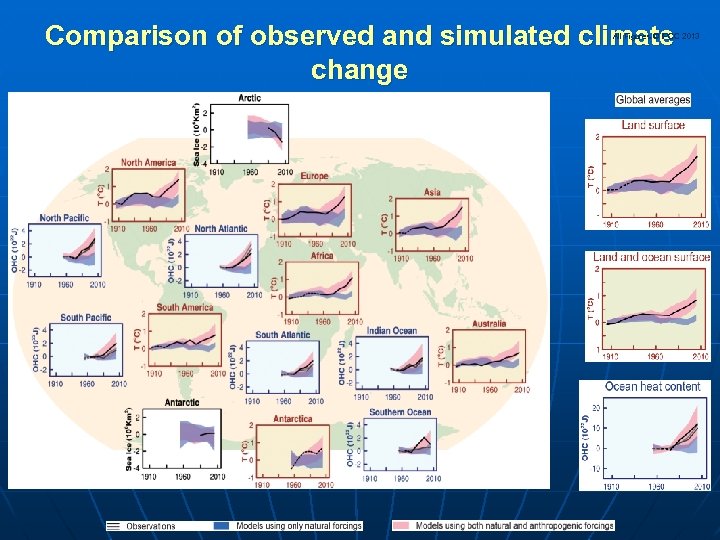 Comparison of observed and simulated climate change All Figures © IPCC 2013
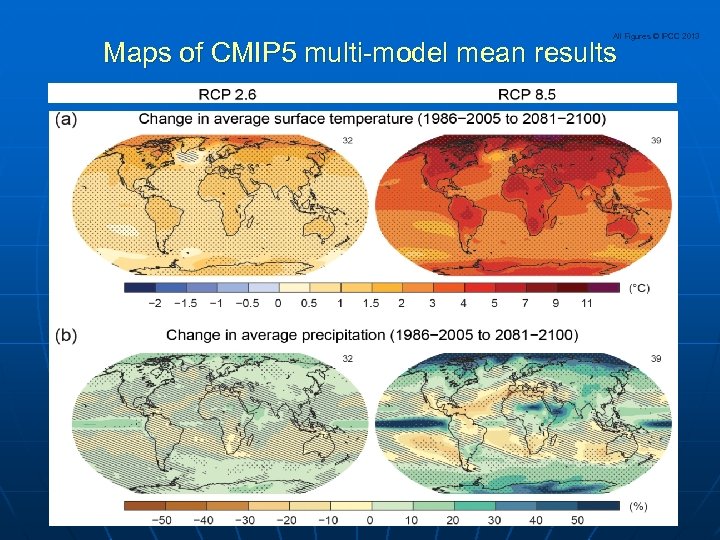 All Figures © IPCC 2013 Maps of CMIP 5 multi-model mean results
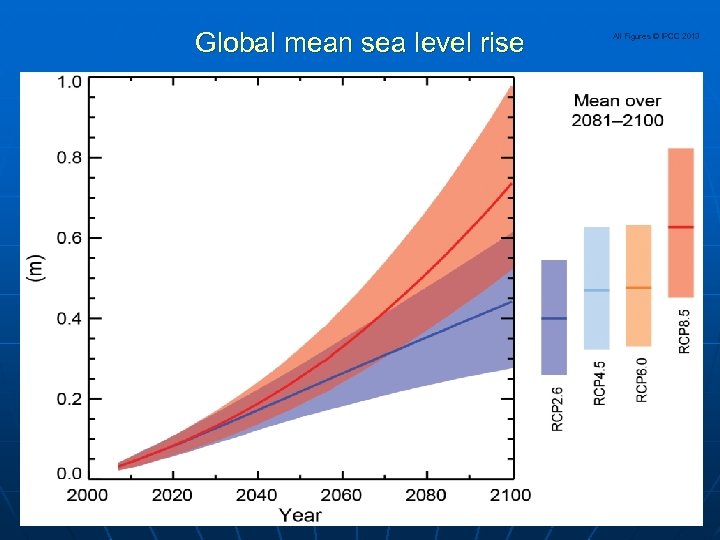 Global mean sea level rise All Figures © IPCC 2013
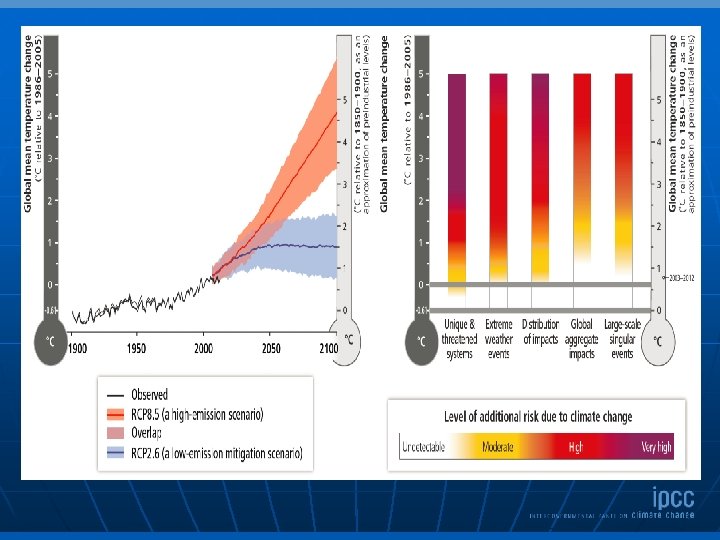
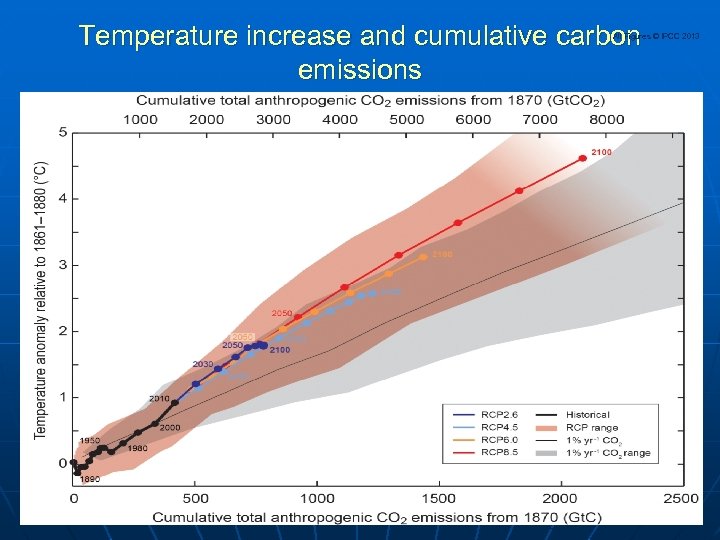 Temperature increase and cumulative carbon emissions All Figures © IPCC 2013
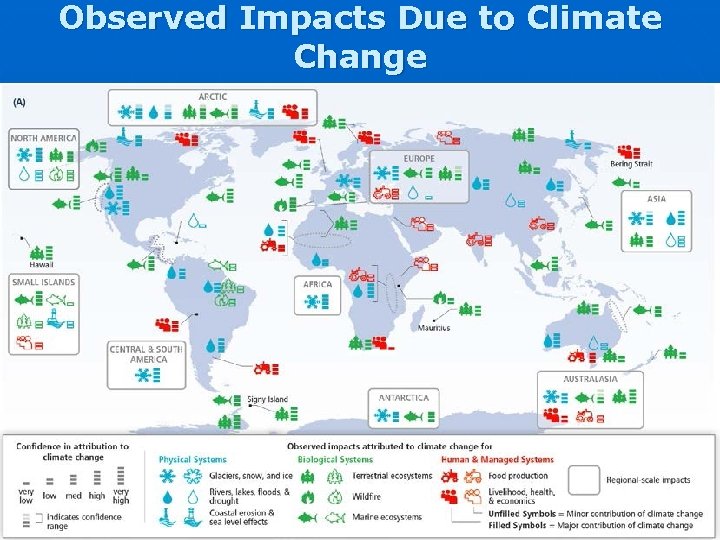 Observed Impacts Due to Climate Change
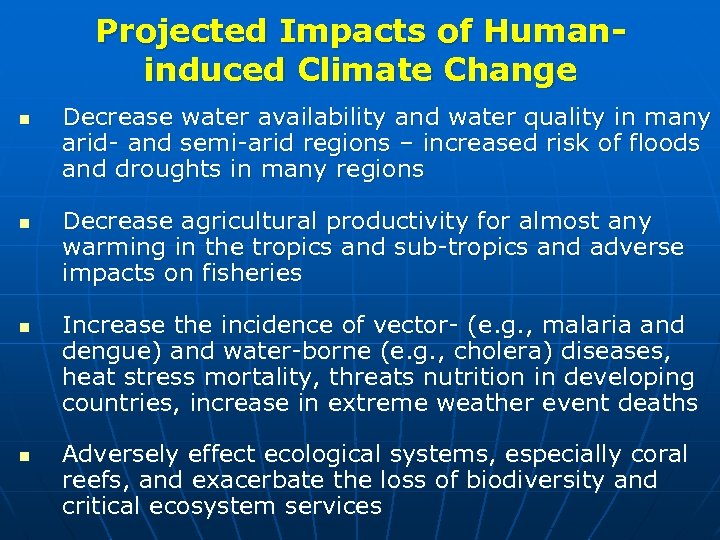 Projected Impacts of Humaninduced Climate Change n n Decrease water availability and water quality in many arid- and semi-arid regions – increased risk of floods and droughts in many regions Decrease agricultural productivity for almost any warming in the tropics and sub-tropics and adverse impacts on fisheries Increase the incidence of vector- (e. g. , malaria and dengue) and water-borne (e. g. , cholera) diseases, heat stress mortality, threats nutrition in developing countries, increase in extreme weather event deaths Adversely effect ecological systems, especially coral reefs, and exacerbate the loss of biodiversity and critical ecosystem services
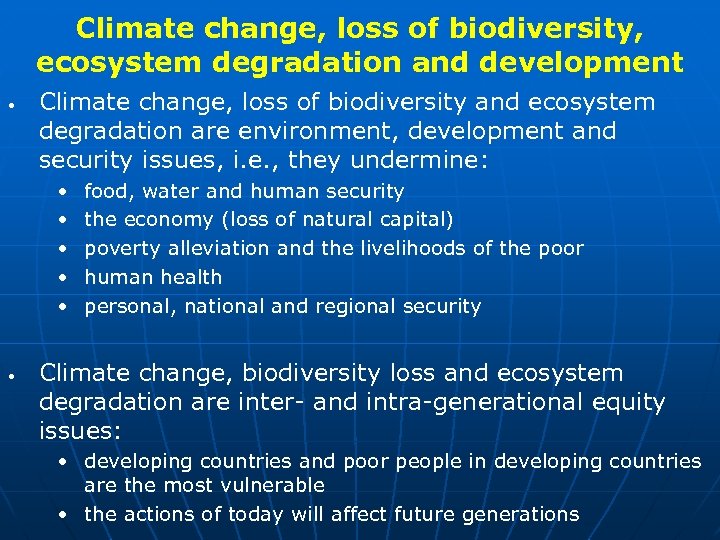 Climate change, loss of biodiversity, ecosystem degradation and development • Climate change, loss of biodiversity and ecosystem degradation are environment, development and security issues, i. e. , they undermine: • • • food, water and human security the economy (loss of natural capital) poverty alleviation and the livelihoods of the poor human health personal, national and regional security Climate change, biodiversity loss and ecosystem degradation are inter- and intra-generational equity issues: • developing countries and poor people in developing countries are the most vulnerable • the actions of today will affect future generations
 Climate change, biodiversity, and ecosystem services n Climate change affects biodiversity, and changes in biodiversity and ecosystem functioning affect climate change. • The carbon and water cycles, two important large-scale processes for life on Earth, both depend on biodiversity — at genetic, species and ecosystem levels n Climate change is/will be a dominant driver of biodiversity loss. • The Millennium Ecosystem Assessment scenarios highlight the fundamental interdependence between climate change, energy, biodiversity, wetlands, desertification, food, health, trade and the economy n Climate change is projected to further adversely affect key development challenges. • Including provision of clean water, energy services, and food; maintaining a healthy environment; and conserving ecological systems, their biodiversity, and associated ecological goods and services
 Transition to a Low-Carbon Economy n n n Universal access to clean energy services is vital for the poor A transition to a low carbon economy will require rapid technological evolution in the efficiency of energy use, environmentally sound low-carbon renewable energy sources and carbon capture and storage The longer we wait to transition to a low carbon economy the more we are locked into a high carbon energy system with consequent environmental damage to ecological and socio-economic systems, including infrastructure
 Mitigation Strategy n Putting a price on carbon through • emissions trading • taxation • regulation - national, regional and global n Technology transformation • Carbon capture and storage • Future generation biofuels n Mobilising behaviour change • • • Citizens Business Public sector
 Potential technological options • Efficient production and use of energy: coal plants (e. g. , re -powering old inefficient plants and developing IGCC); vehicles (e. g. , fuel cell cars) and reduced use of vehicles (e. g. , mass transit and urban planning), buildings, and industries • Fuel shift: coal to gas • Renewable Energy and Fuels: Wind power; solar PV and solar thermal; wave and tidal power: small and large-scale hydropower; bio-energy • CO 2 Capture and Storage: Capture CO 2 in the production of electricity followed by geological storage (e. g. , IGCC – CCS) • Nuclear fission: Nuclear power • Forests and Agricultural Soils: Reduced deforestation and degradation; reforestation; afforestation; conservation tillage; reduced fertilizer use
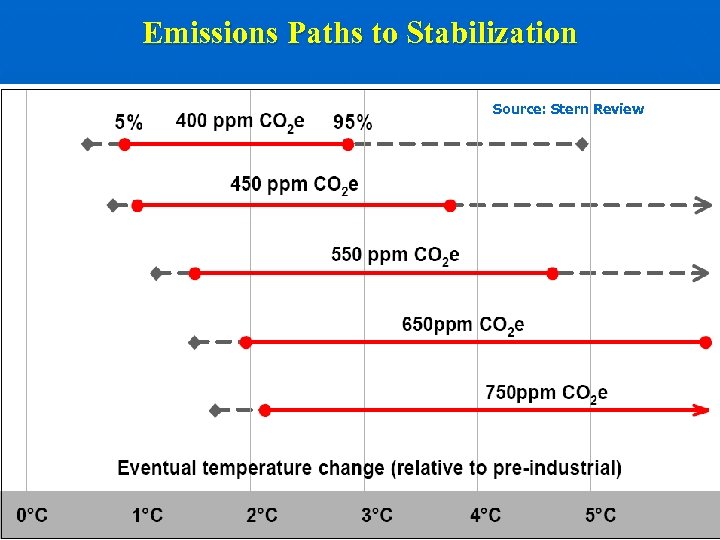 Emissions Paths to Stabilization Source: Stern Review
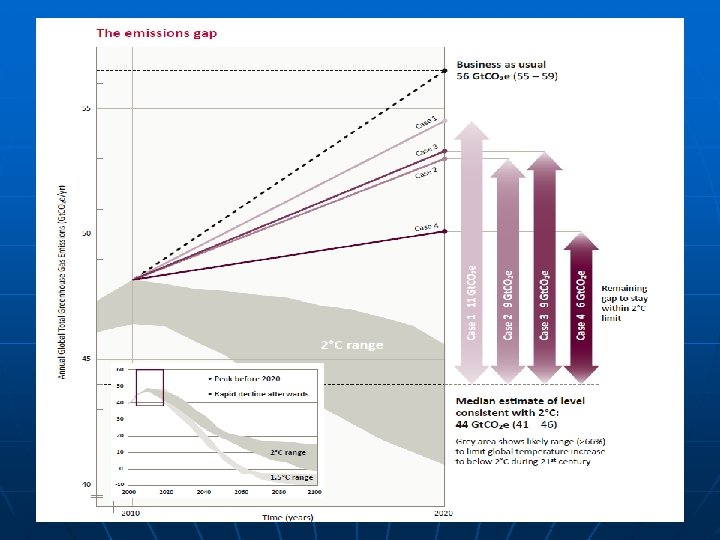
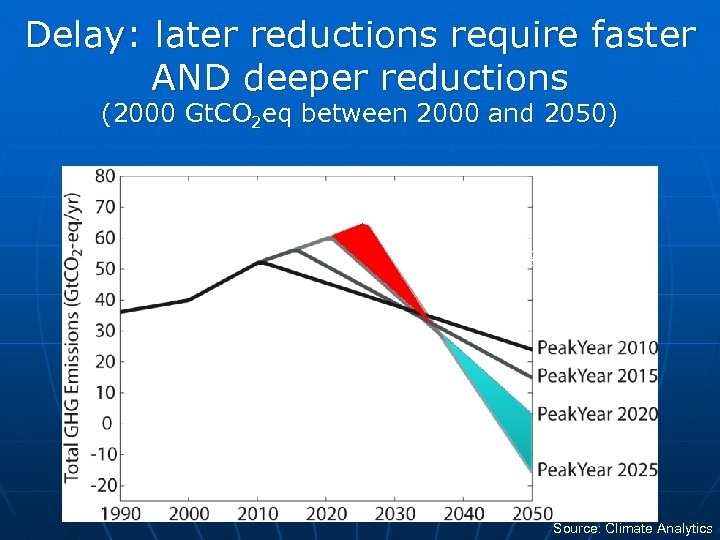 Delay: later reductions require faster AND deeper reductions (2000 Gt. CO 2 eq between 2000 and 2050) “overspending” “compensating” Source: Climate Analytics
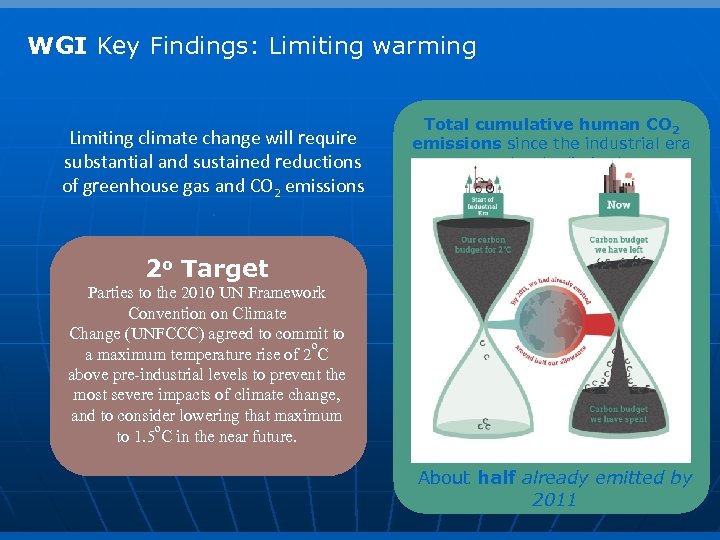 WGI Key Findings: Limiting warming Limiting climate change will require substantial and sustained reductions of greenhouse gas and CO 2 emissions. Total cumulative human CO 2 emissions since the industrial era need to be limited. 2 o Target Parties to the 2010 UN Framework Convention on Climate Change (UNFCCC) agreed to commit to o a maximum temperature rise of 2 C above pre-industrial levels to prevent the most severe impacts of climate change, and to consider lowering that maximum o to 1. 5 C in the near future. Past Present About half already emitted by 2011
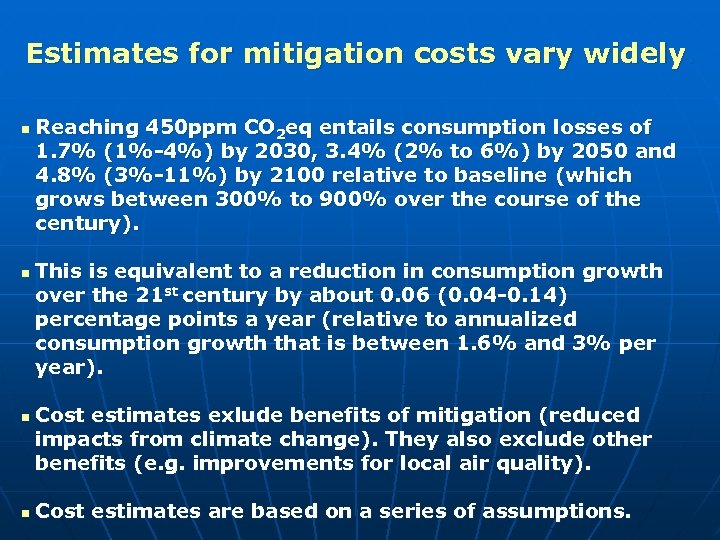 Estimates for mitigation costs vary widely. n n Reaching 450 ppm CO 2 eq entails consumption losses of 1. 7% (1%-4%) by 2030, 3. 4% (2% to 6%) by 2050 and 4. 8% (3%-11%) by 2100 relative to baseline (which grows between 300% to 900% over the course of the century). This is equivalent to a reduction in consumption growth over the 21 st century by about 0. 06 (0. 04 -0. 14) percentage points a year (relative to annualized consumption growth that is between 1. 6% and 3% per year). Cost estimates exlude benefits of mitigation (reduced impacts from climate change). They also exclude other benefits (e. g. improvements for local air quality). Cost estimates are based on a series of assumptions.
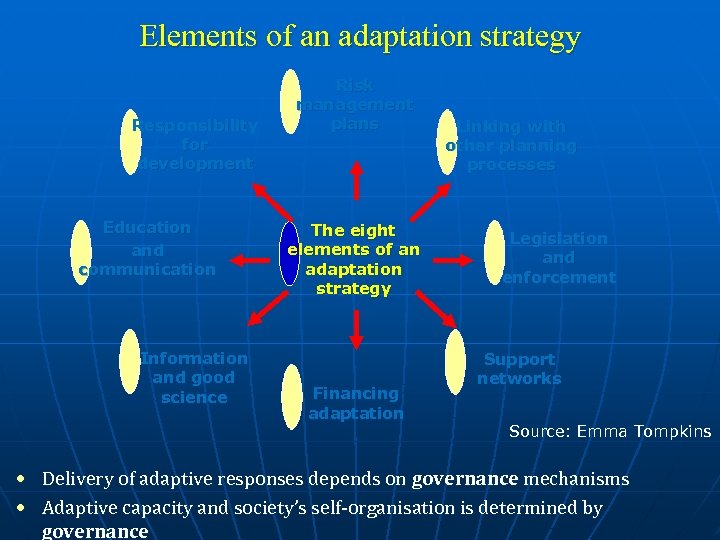 Elements of an adaptation strategy Responsibility for development Education and communication Information and good science Risk management plans The eight elements of an adaptation strategy Financing adaptation Linking with other planning processes Legislation and enforcement Support networks Source: Emma Tompkins • Delivery of adaptive responses depends on governance mechanisms • Adaptive capacity and society’s self-organisation is determined by governance
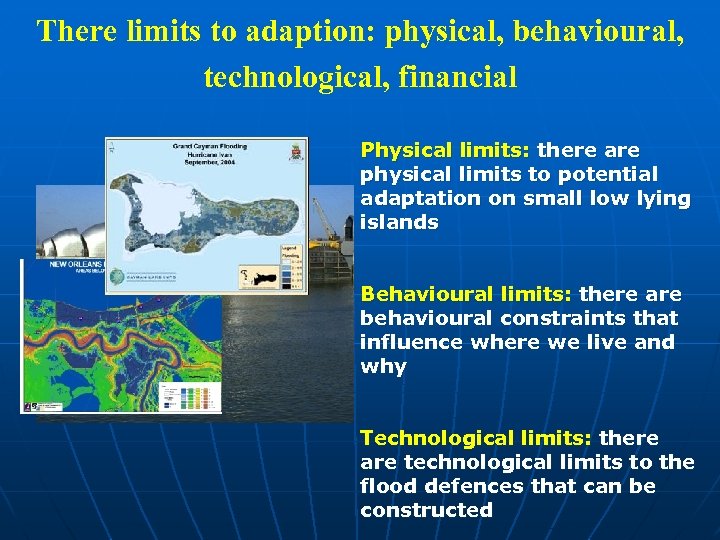 There limits to adaption: physical, behavioural, technological, financial Physical limits: there are physical limits to potential adaptation on small low lying islands Behavioural limits: there are behavioural constraints that influence where we live and why Technological limits: there are technological limits to the flood defences that can be constructed
 Biodiversity Loss and Ecosystem Degradation
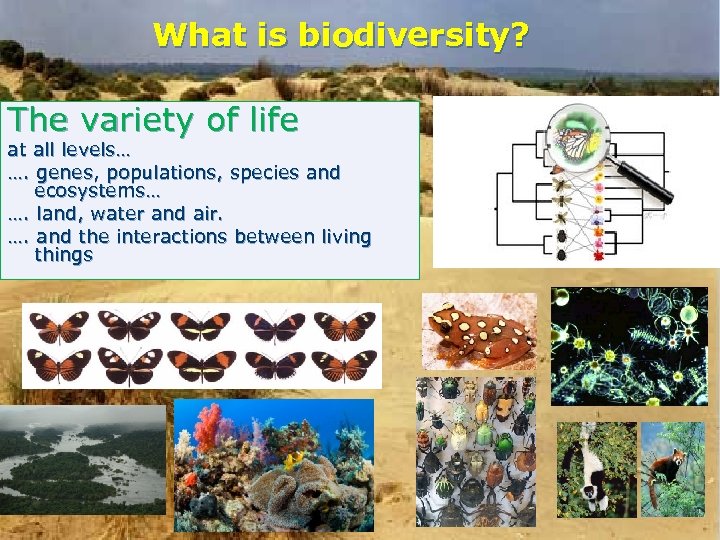 What is biodiversity? The variety of life at all levels… …. genes, populations, species and ecosystems… …. land, water and air. …. and the interactions between living things
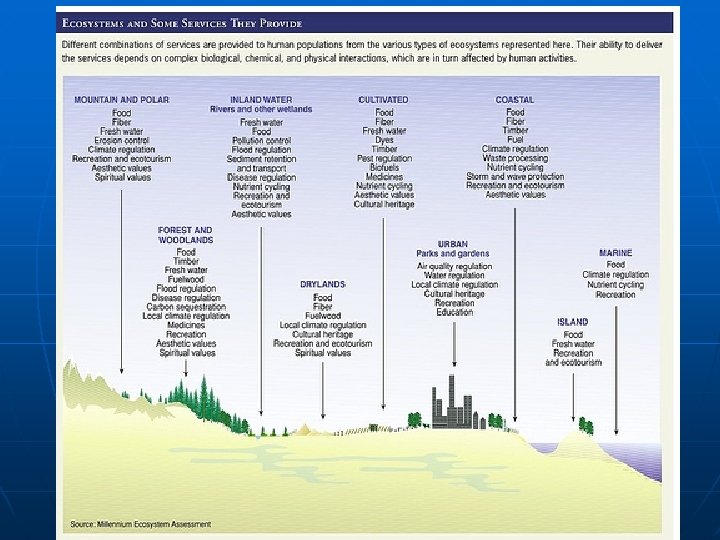
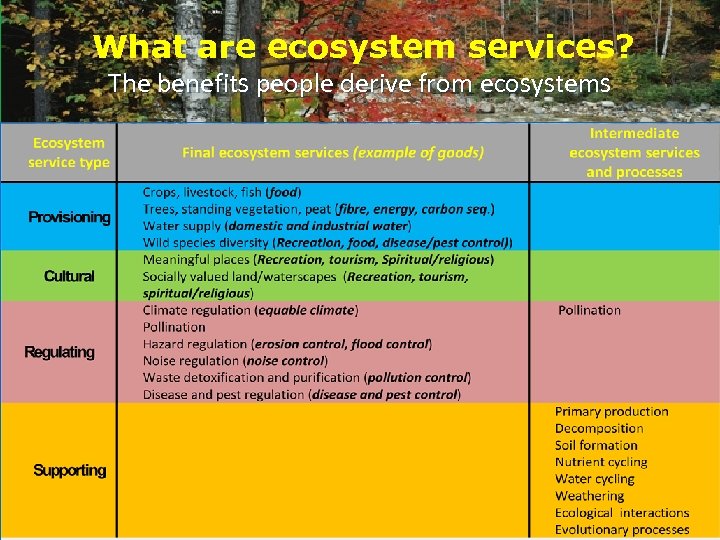 What are ecosystem services? The benefits people derive from ecosystems
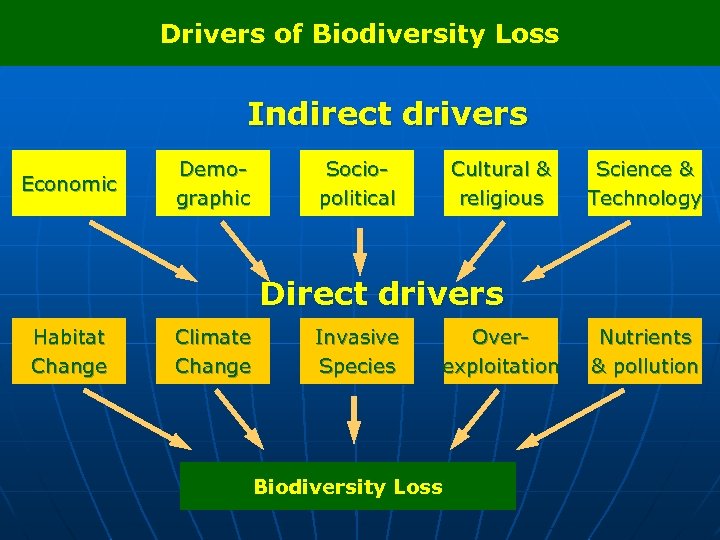 Drivers of Biodiversity Loss Indirect drivers Economic Demographic Sociopolitical Cultural & religious Science & Technology Direct drivers Habitat Change Climate Change Invasive Species Overexploitation Biodiversity Loss Nutrients & pollution
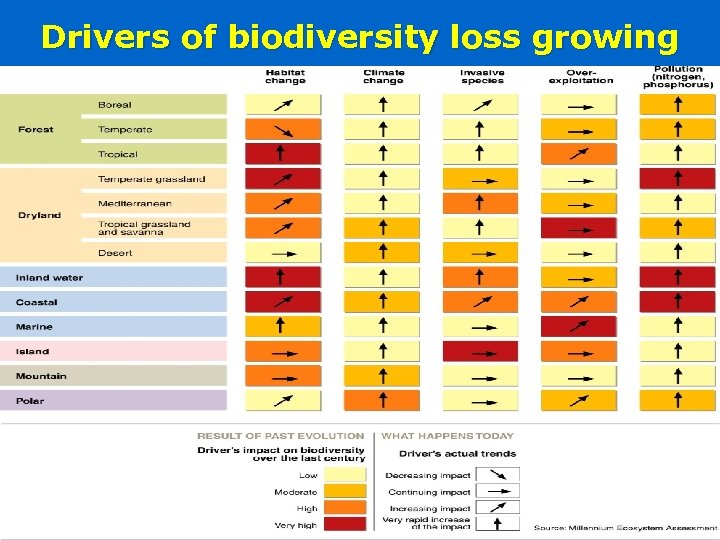 Drivers of biodiversity loss growing
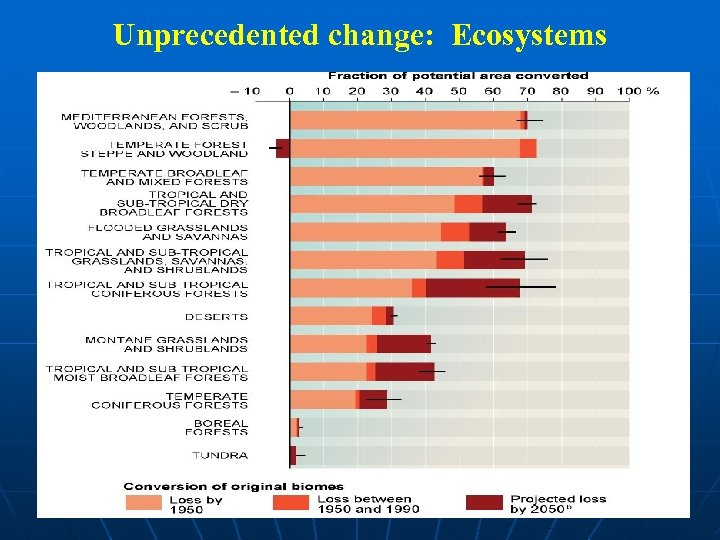 Unprecedented change: Ecosystems
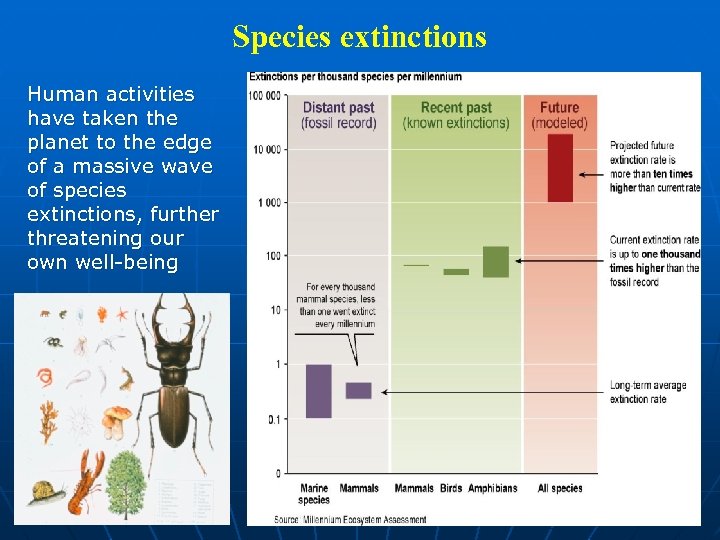 Species extinctions Human activities have taken the planet to the edge of a massive wave of species extinctions, further threatening our own well-being
 Change the economic background to decisionmaking to implement ecosystem-based activities • Make sure the value of all ecosystem services, not just those bought and sold in the market, are taken into account when making decisions • Remove subsidies to agriculture, fisheries, and energy • Payments to landowners in return for managing their lands in ways that protect and enhance ecosystem services • Appropriate pricing policies for natural resources, e. g. , water • Apply fees, taxes, levees and tariffs to discourage activities that degrade biodiversity and ecosystem services • Establish market mechanisms to reduce nutrient releases and carbon emissions in the most cost-effective way
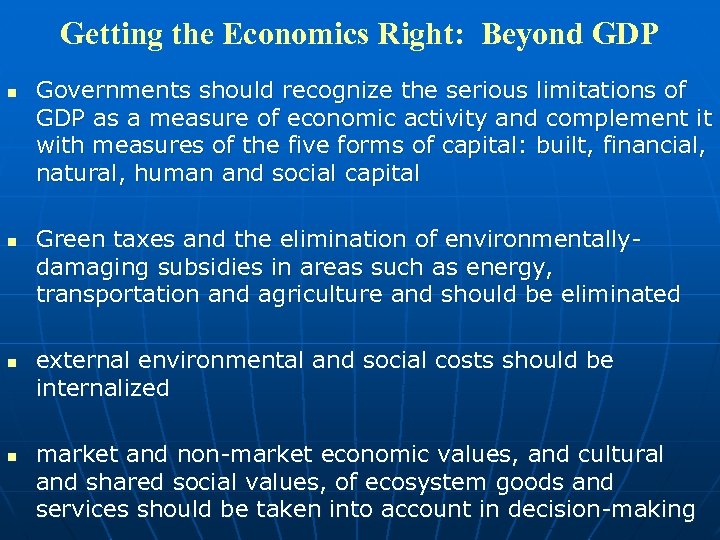 Getting the Economics Right: Beyond GDP n n Governments should recognize the serious limitations of GDP as a measure of economic activity and complement it with measures of the five forms of capital: built, financial, natural, human and social capital Green taxes and the elimination of environmentallydamaging subsidies in areas such as energy, transportation and agriculture and should be eliminated external environmental and social costs should be internalized market and non-market economic values, and cultural and shared social values, of ecosystem goods and services should be taken into account in decision-making
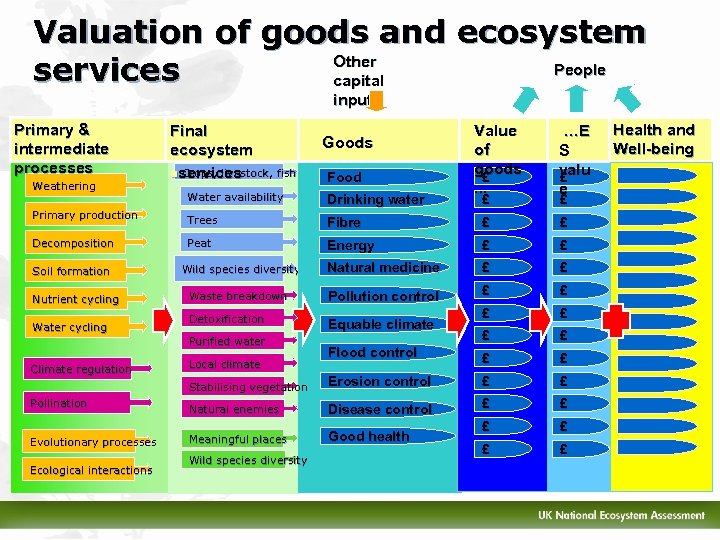 Valuation of goods and ecosystem Other People services capital inputs Primary & intermediate processes Weathering Final ecosystem Crops, livestock, fish nservices Goods Food Value of goods £. . . …E S valu £ e Water availability Primary production Drinking water Trees Fibre £ £ Decomposition Peat Energy £ £ Wild species diversity Natural medicine £ £ Waste breakdown Pollution control £ £ Detoxification Equable climate £ £ Flood control £ £ Stabilising vegetation Erosion control £ £ Natural enemies Disease control £ £ Meaningful places Good health £ £ £ Health and Well-being £ Soil formation Nutrient cycling Water cycling Climate regulation Pollination Evolutionary processes Ecological interactions Purified water Local climate Wild species diversity £ £ 42
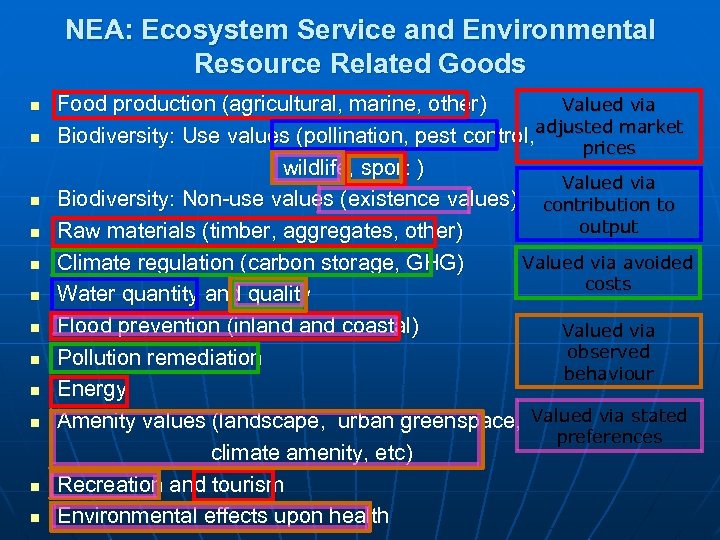 NEA: Ecosystem Service and Environmental Resource Related Goods n n n Valued via Food production (agricultural, marine, other) Biodiversity: Use values (pollination, pest control, adjusted market prices wildlife, sport ) Valued via Biodiversity: Non-use values (existence values) contribution to output Raw materials (timber, aggregates, other) Valued via avoided Climate regulation (carbon storage, GHG) costs Water quantity and quality Flood prevention (inland coastal) Valued via observed Pollution remediation behaviour Energy Amenity values (landscape, urban greenspace, Valued via stated preferences climate amenity, etc) Recreation and tourism Environmental effects upon health
 Food Security
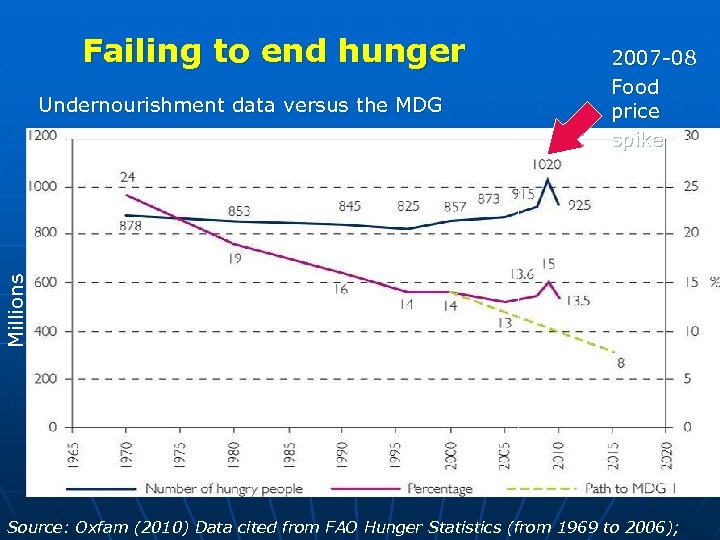 Failing to end hunger Undernourishment data versus the MDG Millions target 2007 -08 Food price spike Source: Oxfam (2010) Data cited from FAO Hunger Statistics (from 1969 to 2006);
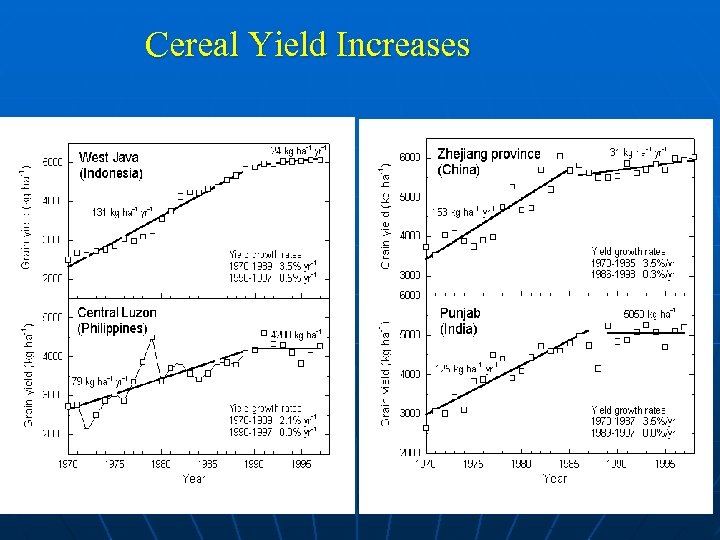 Cereal Yield Increases
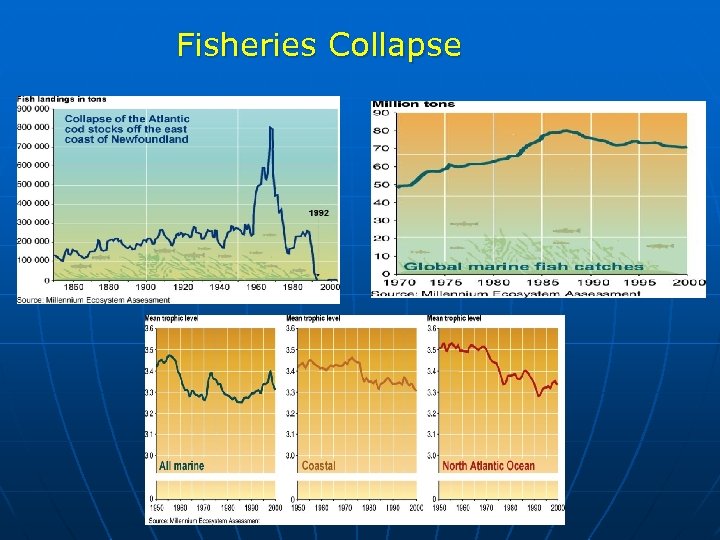 Fisheries Collapse
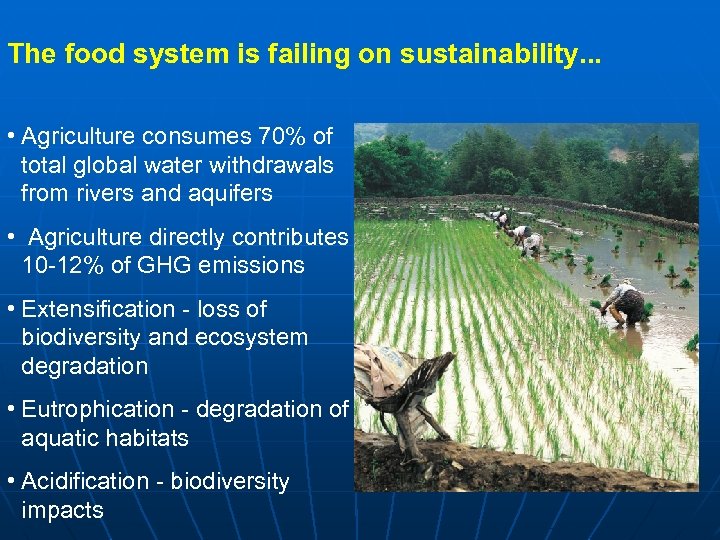 The food system is failing on sustainability. . . • Agriculture consumes 70% of total global water withdrawals from rivers and aquifers • Agriculture directly contributes 10 -12% of GHG emissions • Extensification - loss of biodiversity and ecosystem degradation • Eutrophication - degradation of aquatic habitats • Acidification - biodiversity impacts
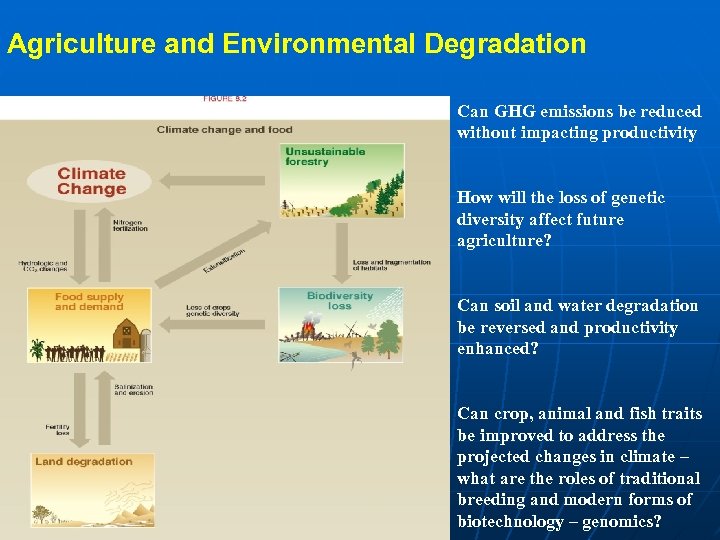 Agriculture and Environmental Degradation Can GHG emissions be reduced without impacting productivity Sub-title here Bullet text here How will the loss of genetic diversity affect future agriculture? Can soil and water degradation be reversed and productivity enhanced? Bullet text here Can crop, animal and fish traits be improved to address the projected changes in climate – what are the roles of traditional breeding and modern forms of biotechnology – genomics?
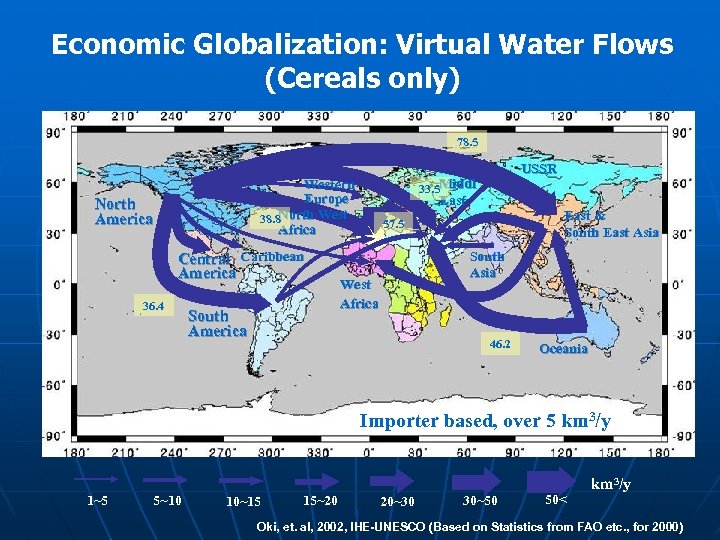 Economic Globalization: Virtual Water Flows (Cereals only) 78. 5 33. 5 Middl Western Europe 38. 8 North West Africa North America Central Caribbean America 36. 4 South America USSR East & South East Asia 57. 5 South Asia West Africa 46. 2 Oceania Importer based, over 5 km 3/y 1~5 5~10 10~15 15~20 20~30 30~50 50< km 3/y Oki, et. al, 2002, IHE-UNESCO (Based on Statistics from FAO etc. , for 2000)
 Food Security The future Challenge n n The demand for food will double within the next 25 -50 years, primarily in developing countries, and the type and nutritional quality of food demanded will change We need sustained growth in the agricultural sector to feed the world, enhance rural livelihoods and stimulate economic growth, while meeting food safety standards Context n n n n Less labor - diseases and rural to urban migration Less water – competition from other sectors and climate change in arid/semi-arid areas Yield increases are slowing dramatically Less arable land – competition, e. g. , bio-energy Increasing land policy conflicts Loss of biodiversity: genetic, species and ecosystem Increasing levels of pollution – ozone and acid deposition A changing climate – temperature and precipitation
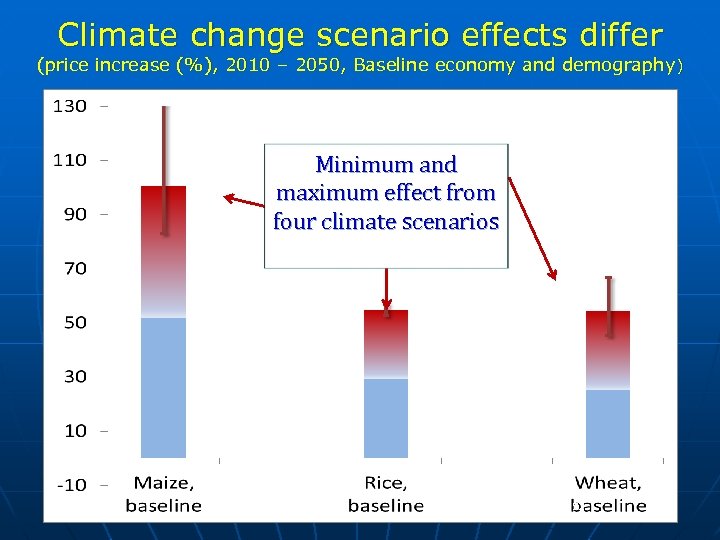 Climate change scenario effects differ (price increase (%), 2010 – 2050, Baseline economy and demography ) Minimum and maximum effect from four climate scenarios Page 52
 Food security: options to increase production § § Embed economic, environmental and social sustainability into agricultural policies, practices and technologies Today’s hunger problems can be addressed with appropriate use of current technologies, emphasizing agro-ecological practices (e. g. , no/low till, IPM, INRM), coupled with decreased post-harvest losses § Small-scale farmers need access to the best seeds, financing and access to markets § Advances in S&T are always a needed but cannot be fully utililzed without rural development, institutional and governance reform Advanced biotechnologies (genomics) may be needed to address future demands for increased productivity and emerging issues such as climate change and new plant and animal pests – but the risks and benefits must be fully understood Access to financing, better seeds, and markets (improved roads)
 Food security: options to increase production n § § Provide payments to the farmer for maintaining and enhancing ecosystem services Empower women – gender sensitive extension services, access to financing, property rights Reform international trade, e. g. , eliminate OECD production subsidies, eliminate tariff escalation on processed products, recognize the special needs of the least developed countries through non-reciprocal market access Increase public and private sector investment in research and development, and weather and market information Improve public-private-CSO involvement in AKST with accountability for social and environmental outcomes
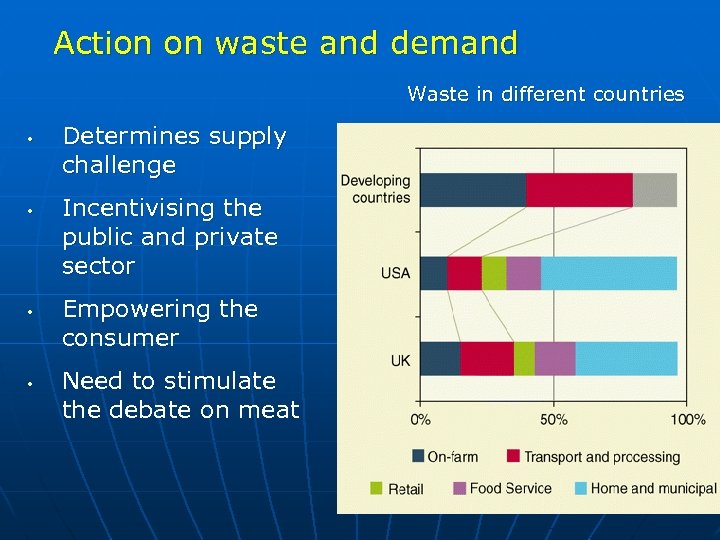 Action on waste and demand Waste in different countries • • Determines supply challenge Incentivising the public and private sector Empowering the consumer Need to stimulate the debate on meat
 Governance, Grass Roots, Education, Training and Knowledge
 Better Governance is Essential n n There are serious short-comings in the decision making systems at local, national and global levels The rules and institutions for decision making are influenced by vested interests with an interest in the status quo Effective change in governance demands action to establish transparent means for holding those in power to account • Local level public hearings and social audits to give voice to marginalized groups • National level, parliamentary and press oversight • Globally, we must find better means to agree and implement measures to achieve collective goals Governance failures also occur because decisions are being made in sectoral compartments, with environmental, social and economic dimensions addressed by separate, competing structures
 Learn from Grass Roots Actions n n Decision makers should learn from ongoing grass-roots actions and knowledge in areas such as energy, food, water, natural resources, finance and governance This is key, not the least in rural communities with a view to their management, control and ownership of these resources There is a need to scale-up the grass roots actions by bringing together a complementary top-down and bottom-up approach to addressing these issues Global cooperation can be improved by building on ongoing regional cooperation to deal with common sustainable development issues
 Training, Education, Research and Assessments are Critical n Effective training programs for decision makers in business and government to learn how to: • integrate programs and policies within sustainability constraints, and • acquire the skills to strategically move towards such sustainability goals n Increase investments in education for all n Multi-disciplinary research – “Future Earth Initiative” n Assessments of knowledge – need to be coordinated
 Summary § The world is long on rhetoric – short on action § § § We need the right mix of policies, practices, technologies and behavior change, particularly: § § Climate change – atmospheric concentrations of greenhouse gases are increasing rapidly - no legally binding post-Kyoto targets agreed Biodiversity is being lost at an unprecedented rate – we need to implement actions to achieve the Aichi targets we must get the economics right – eliminate subsidies, internalize environmental externalities and value all ecosystem services (market and non-market) into national accounts and decision-making We must address the economic, environmental, and social aspects of all development issues simultaneously So what is the international community doing? ?
 International Sustainable Development Processes n n In 2015 the MDG process is scheduled to be completed, with some successes and some shortcomings In 2012 Ban Ki Moon established a High-Level Panel to advise on a post-2015 Development Framework, and a Sustainable Development Solutions Network Governments at the Rio+20 Conference in 2012 established an Intergovernmental Open Working Group to advise the General Assembly on a set of Sustainable Development Goals, applicable to all nations The High-level Panel report and the SDSN report are providing input to the UN Open Working Group, who will report to the UN General Assembly in September 2014, whom will make any final decisions
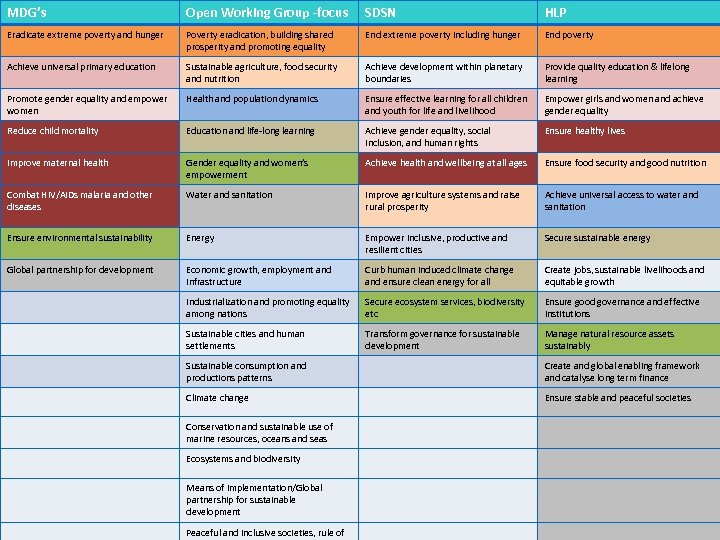 MDG’s Open Working Group -focus SDSN HLP Eradicate extreme poverty and hunger Poverty eradication, building shared prosperity and promoting equality End extreme poverty including hunger End poverty Achieve universal primary education Sustainable agriculture, food security and nutrition Achieve development within planetary boundaries Provide quality education & lifelong learning Promote gender equality and empower women Health and population dynamics Ensure effective learning for all children and youth for life and livelihood Empower girls and women and achieve gender equality Reduce child mortality Education and life-long learning Achieve gender equality, social inclusion, and human rights Ensure healthy lives Improve maternal health Gender equality and women’s empowerment Achieve health and wellbeing at all ages Ensure food security and good nutrition Combat HIV/AIDs malaria and other diseases Water and sanitation Improve agriculture systems and raise rural prosperity Achieve universal access to water and sanitation Ensure environmental sustainability Energy Empower inclusive, productive and resilient cities Secure sustainable energy Global partnership for development Economic growth, employment and infrastructure Curb human induced climate change and ensure clean energy for all Create jobs, sustainable livelihoods and equitable growth Industrialization and promoting equality among nations Secure ecosystem services, biodiversity etc Ensure good governance and effective institutions Sustainable cities and human settlements Transform governance for sustainable development Manage natural resource assets sustainably Sustainable consumption and productions patterns Create and global enabling framework and catalyse long term finance Climate change Ensure stable and peaceful societies Conservation and sustainable use of marine resources, oceans and seas Ecosystems and biodiversity Means of implementation/Global partnership for sustainable development Peaceful and inclusive societies, rule of
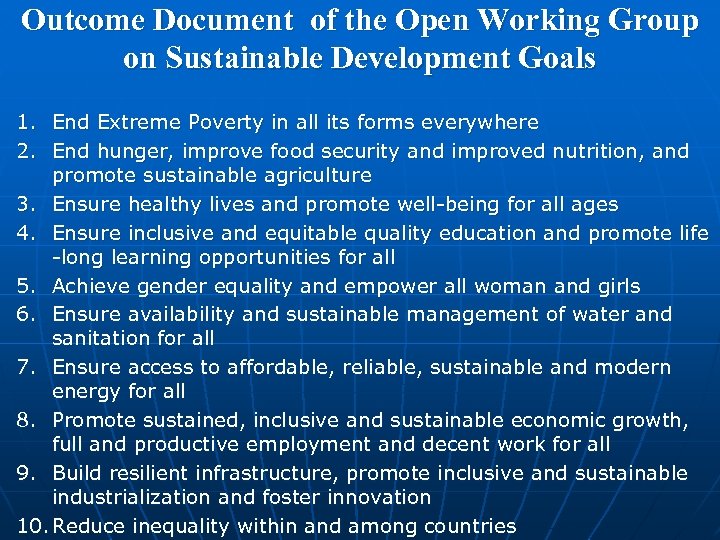 Outcome Document of the Open Working Group on Sustainable Development Goals 1. End Extreme Poverty in all its forms everywhere 2. End hunger, improve food security and improved nutrition, and promote sustainable agriculture 3. Ensure healthy lives and promote well-being for all ages 4. Ensure inclusive and equitable quality education and promote life -long learning opportunities for all 5. Achieve gender equality and empower all woman and girls 6. Ensure availability and sustainable management of water and sanitation for all 7. Ensure access to affordable, reliable, sustainable and modern energy for all 8. Promote sustained, inclusive and sustainable economic growth, full and productive employment and decent work for all 9. Build resilient infrastructure, promote inclusive and sustainable industrialization and foster innovation 10. Reduce inequality within and among countries
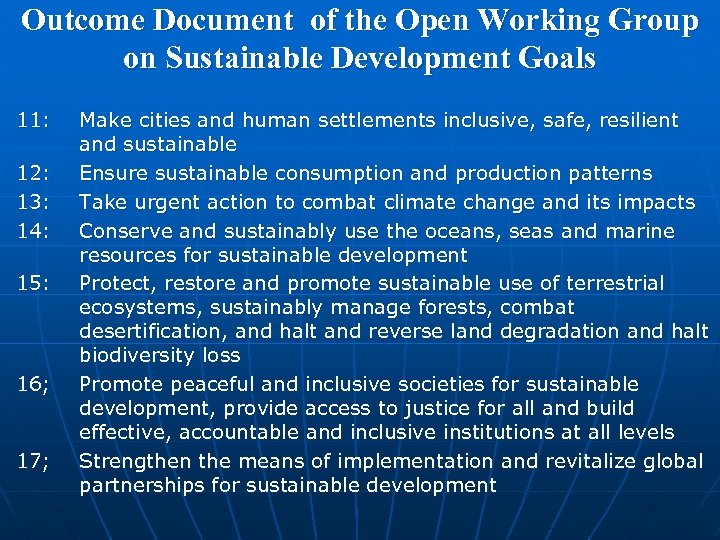 Outcome Document of the Open Working Group on Sustainable Development Goals 11: 12: 13: 14: 15: 16; 17; Make cities and human settlements inclusive, safe, resilient and sustainable Ensure sustainable consumption and production patterns Take urgent action to combat climate change and its impacts Conserve and sustainably use the oceans, seas and marine resources for sustainable development Protect, restore and promote sustainable use of terrestrial ecosystems, sustainably manage forests, combat desertification, and halt and reverse land degradation and halt biodiversity loss Promote peaceful and inclusive societies for sustainable development, provide access to justice for all and build effective, accountable and inclusive institutions at all levels Strengthen the means of implementation and revitalize global partnerships for sustainable development
 The Time to Act is Now If we are to achieve our dream, the time to act is now, given: n The inertia in the socio-economic system n n n The adverse effects of climate change and loss of biodiversity cannot be reversed for centuries or are irreversible (for example, species loss) We know enough to act - we are facing a problem of risk management on an immense scale Failure to act will impoverish current and future generations