


 Скачать презентацию Entrepreneurship and Innovation Running the place creating
117ebd4a2d6b32dfbf9218d25a5b59c5.ppt
- Количество слайдов: 54
 Entrepreneurship and Innovation Running the place … creating profits … having fun. . .
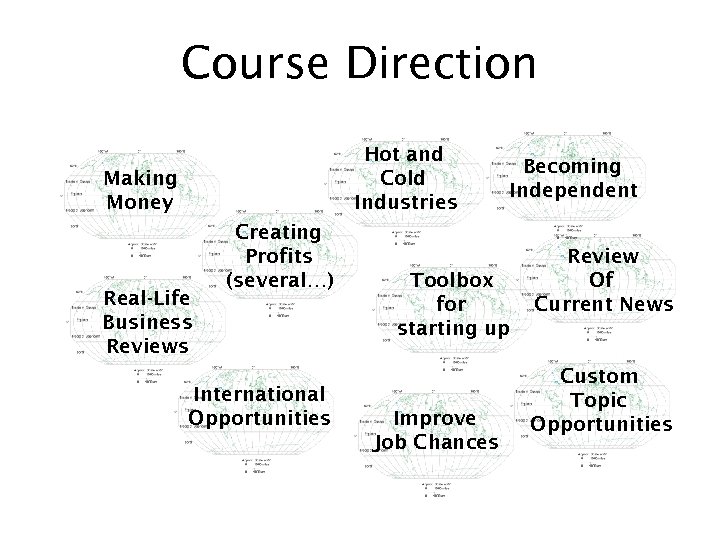 Course Direction Hot and Cold Industries Making Money Real-Life Business Reviews Creating Profits (several…) International Opportunities Becoming Independent Toolbox for starting up Improve Job Chances Review Of Current News Custom Topic Opportunities
 Logistics • Class Sessions – Handout materials in binder or prior to class – If you want files sent by e-mail, send me e-mail address • Contact – M@usainfo. net – Text/SMS: 021 516 326 • Material Covered/Tested – All class material including discussions – All assigned reading materials – All handouts and supplementary materials
 Assessments • Individual Article Review Anonymous – You pick the article. – Apply class material. Identify issues. Write crisply. – Do not ramble - conclude firmly • Individual Class Assessment (424 only) Anonymous – Combination of multiple-choice, short fact and essay questions • Group Project Anonymous – – Last Day Identify how entrepreneurial a business acts Can be start-up or existing firm Act as entrepreneurship consultant
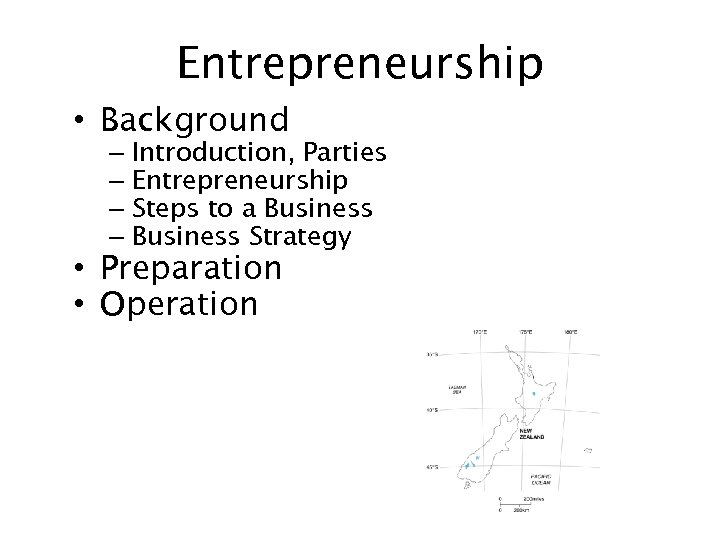 Entrepreneurship • Background – Introduction, Parties – Entrepreneurship – Steps to a Business – Business Strategy • Preparation • Operation
 Entrepreneurship • Background • Preparation – Market Evaluation – Franchising – Goal Setting – Marketing & Market Research • Operation
 Entrepreneurship • Background • Preparation • Operation – – – Legal Framework Corporate Governance Financing Multinational Business E-Commerce Business Plans
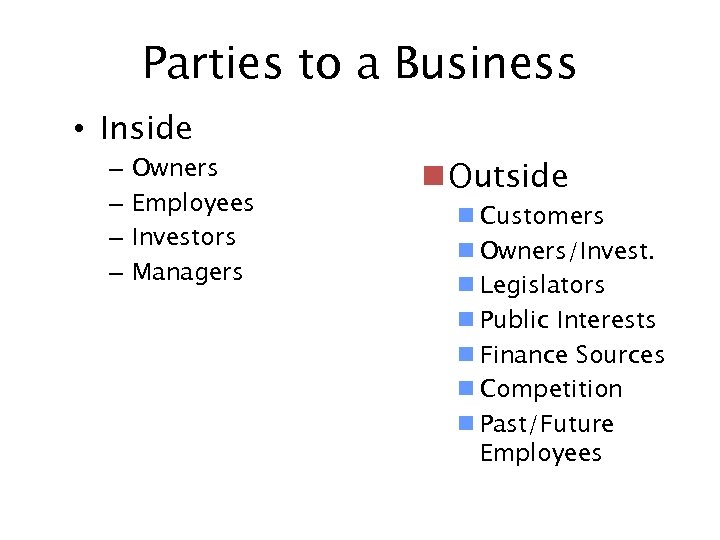 Parties to a Business • Inside – – Owners Employees Investors Managers n Outside n Customers n Owners/Invest. n Legislators n Public Interests n Finance Sources n Competition n Past/Future Employees
 What is worth the risk?
 Who makes Money? • Employees • Government/Taxation • Fixed Cost Supplier – Rent – Leases • Variable Cost Suppliers • Government Taxation • Owners
 Environmental Requirements • Free markets • Permission to hold personal ownership stake • Failure as a true risk
 Stakeholders • • • Collective or individuals? Ability to influence business? With whom are their interests aligned? Experience as stakeholders? Ability to take their case public? Extent of alliances with other stakeholders?
 Why do parties become involved? • • • Employment Tradition Financial Opportunity Independence Mandate
 Environmental Changes • • • Industrial Revolution Communication Transportation Systems Wars and Internal Conflicts Innovation Sustainability How predictable is our environment?
 Resources • Protected Resources – Unique – Patented/License • Non-Protected Resources – Generally available – For sale Where do people come in?
 Resources • • • Unique Rare Exclusively under contract Intangible Valuable
 Types of Resources • Financial – Funds/Assets – Access to Credit – Internal Return • • Physical People Technology Goodwill
 Types of Resources • Financial • Physical – Input of materials • People – Past/current/future employees – Education – Strength of bond • Technology • Goodwill
 Types of Resources • • Financial Physical People Technology – Know How – Intellectual Capital • Goodwill – Reputation – Trademarks
 Theories to Value Resources • Neoclassical • • • – Everyone can access all needed resources – The best combiner/organizer wins Industrial Organization Schumpeter Chicago School Resource-Based Transaction Cost
 Theories to Value Resources • Neoclassical • Industrial Organization – Big firms create open of non-disclosed monopolies • Schumpeter – Entrepreneurship is a valuable resource • Chicago School • Resource-Based • Transaction Cost
 Theories to Value Resources • • Neoclassical Industrial Organization Schumpeter Chicago School – Competition creates efficiencies • Resource-Based – With unique resources come protected longterm profits • Transaction Cost
 Theories to Value Resources • • • Neoclassical Industrial Organization Schumpeter Chicago School Resource-Based Transaction Cost – By reducing friction cost between all business elements, profits are created
 Are Entrepreneurs Born? • No • Match required of: – External opportunities – Internal resources – Timing
 Entrepreneurship Forms • • Self employed Internal entrepreneurs Inventors Pattern multipliers Economy of scale operators Acquirers Speculators
 Are all rich people smart? • Are all smart people rich? • What does it take to rich from work? • Are there different definitions for “getting rich”?
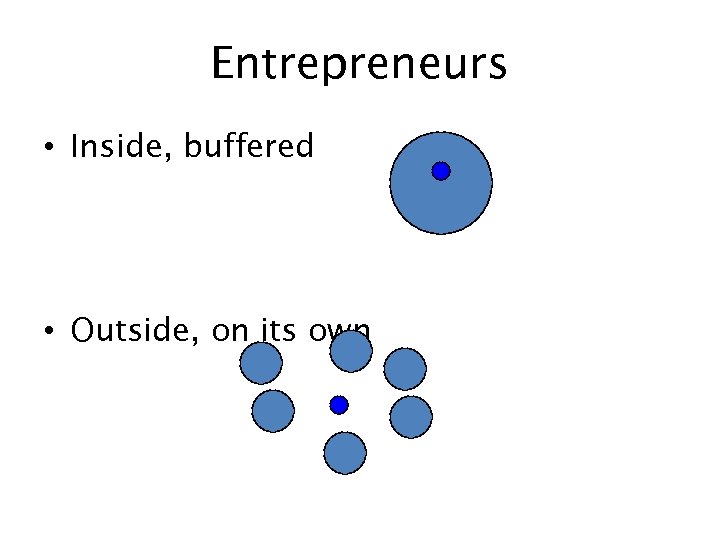 Entrepreneurs • Inside, buffered • Outside, on its own
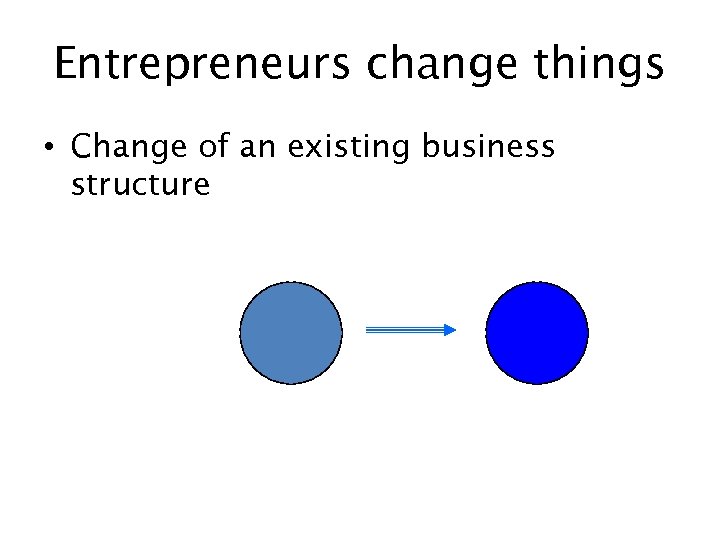 Entrepreneurs change things • Change of an existing business structure
 Creation of an Organization • Organizations contribute: – Economically – Intellectually – Goodwill – Creativity
 Economic Organization • Use resources to create output which exceeds input • Where does this leave not-for-profits, churches, governments, military, etc. ?
 Entrepreneurial Threshholds • • New products or services? New approach to production/delivery? New markets created or targeted? Involvement of new parties in the organization?
 Entrepreneurship and Innovation Running the place … creating profits … having fun. . .
 Peter Drucker To attract and hold entrepreneurial people and to promote innovation, companies will have to create new structures with new relationships and new policies and supplemental management compensation, benefits and rewards with those appropriate to the very different realities of entrepreneurialism. The Frontiers of Management, 1986
 Vijay Sathe Rather than cling to the myth of “entrepreneurial personality”, it may be useful to view entrepreneurship as a result of the interaction between the individual, the organization, and the external environment. Fostering entrepreneurship in the large diversified firm, 1989
 The Starting Point • Research – Industry – People – Technology – Opportunities Idea
 Establishment • • Organization/Planning Funding People Business Plan Operation
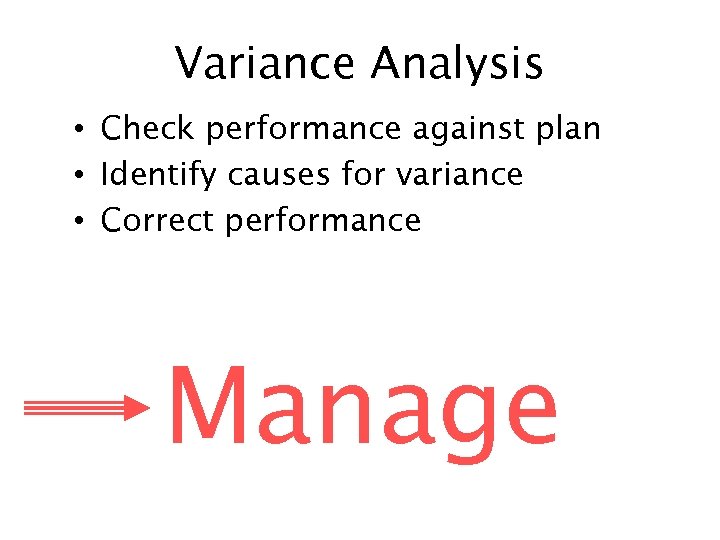 Variance Analysis • Check performance against plan • Identify causes for variance • Correct performance Manage
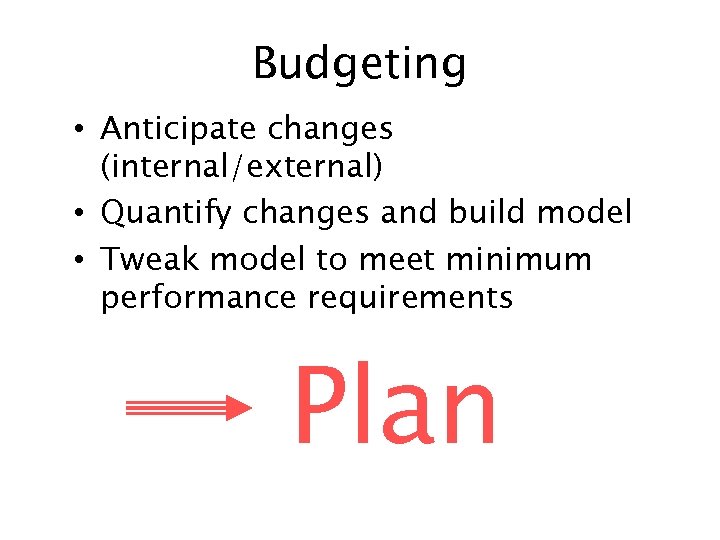 Budgeting • Anticipate changes (internal/external) • Quantify changes and build model • Tweak model to meet minimum performance requirements Plan
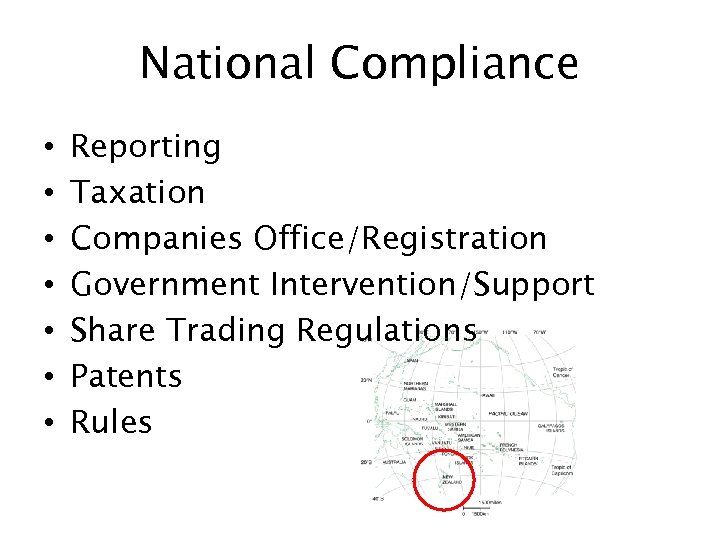 National Compliance • • Reporting Taxation Companies Office/Registration Government Intervention/Support Share Trading Regulations Patents Rules
 International Compliance • • Market Acceptance Political/Economic Risks Logistics Legal System Cultural Norms Partnering Profit Repatriation
 A Look Outside • • • Market Shifts Population Changes Social Trends Competitive Quicksand Seasonal/Product Life Cycles Buying Power Changes
 Use of Technology Build or Buy? Invent or Copy? Improve or Use as is? Sustainable/Affordabl e? • First Mover advantages? • •
 Barriers of Entry • Why is no one else doing what you are planning to do? • Who will care if you do it? • Structural Barriers: – Economies of scale – Excess capacity – Product similarity – Capital needs/availability – Access to channels – Conversion/switching costs
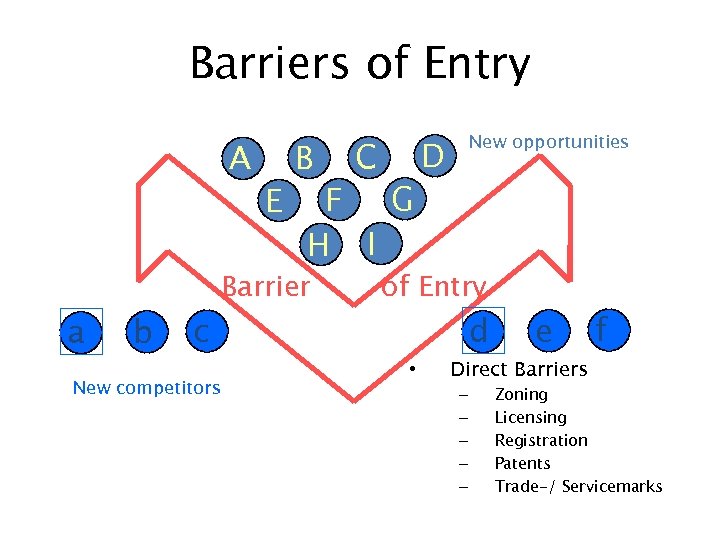 Barriers of Entry A B E b D C G F H I Barrier a New opportunities of Entry d c New competitors • e Direct Barriers – – – f Zoning Licensing Registration Patents Trade-/ Servicemarks
 Barriers of Entry • • Inertia of existing business powers Capital needs Business plan uniqueness Low-tech/low-investment versus high -tech/high-risk
 Competitive Reaction • • PR Pricing Power Quality Feature Matching • Example: Kiwi Air
 Manfred F. R. Kets De Vries Successful entrepreneurs soon make the transition from a tactical to a strategic orientation so that they can begin to build crucial capabilities and resources. The Dark Side of Entrepreneurship, 1985
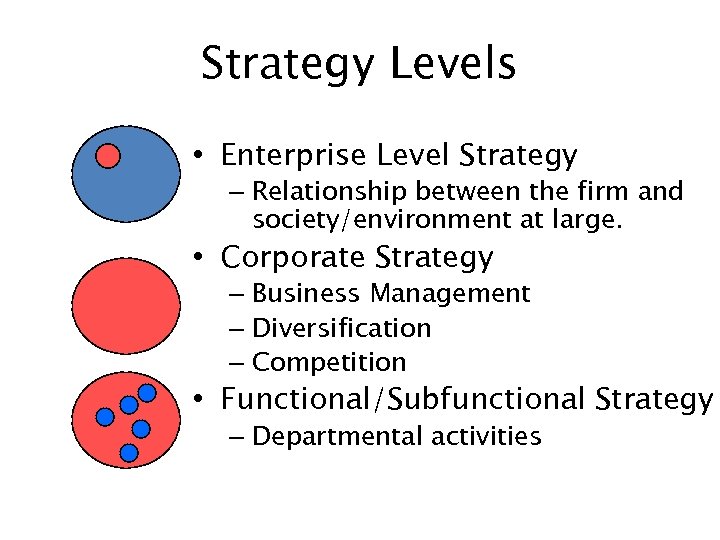 Strategy Levels • Enterprise Level Strategy – Relationship between the firm and society/environment at large. • Corporate Strategy – Business Management – Diversification – Competition • Functional/Subfunctional Strategy – Departmental activities
 Resource-Based Strategies • Ricardian Rent – Owning/controlling scarce, valuable resources. • Monopoly Rent – Government protection – Patent/license – High entry barriers • Entrepreneurial Rent – Risk-Taking – Unique strategies
 Basic Strategy Review • Resource Inventory – Type, strength/weakness, availability, etc. • Capabilities Review – Identification, classification – New firms usually have advantage over existing firms • Competitive Strengths • Develop Resulting Business Strategy • Review, Probe, Criticize, Act
 Why Strategy? • Focus on Matching Resources with Goals • Identify Pathways to Goals • Identify Obstructions on Pathways • Cost of Obstruction Removal? • Remaining Viability of Firm • Resulting Operational Strategies
 A Special Person • • Achievement Control Assumption of the Risk Management Style
 A Special Environment? • Self-employment as a desire or necessity? • Opportunity to begin something new • Tales from the rich side
 The Right Situation? • • • Knowledge Money Support Attitude Survive Discrimination Mentor Availability