


 Скачать презентацию Enterprise Information Systems MIS 2101 Management Information Systems
8b93ac43dc55f77179ace8a32a5e36c2.ppt
- Количество слайдов: 44
 Enterprise Information Systems MIS 2101: Management Information Systems Based on material from Information Systems Today: Managing in the Digital World, Leonard Jessup and Joseph Valacich, Pearson Prentice Hall, 2007 Also includes material by David Schuff, Paul Weinberg, and Cindy Joy Marselis.
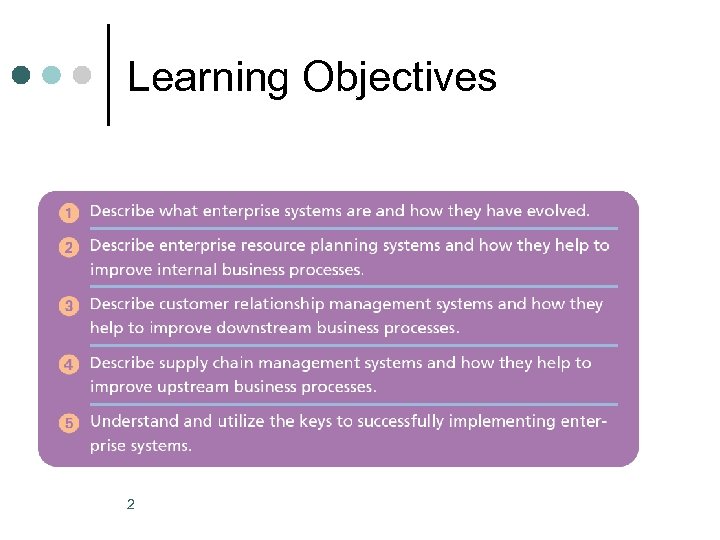 Learning Objectives 2
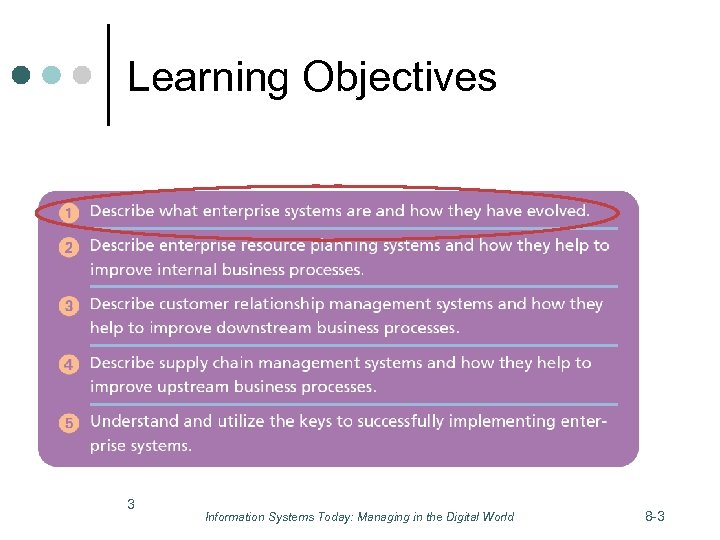 Learning Objectives 3 Information Systems Today: Managing in the Digital World 8 -3
 Legacy Systems ¢ Problem: Information systems growing over time l Lack of integration in existing systems l • Different computing platforms • Difficult to integrate • Data must be reentered from one system to another • Same pieces of data stored in several versions 4
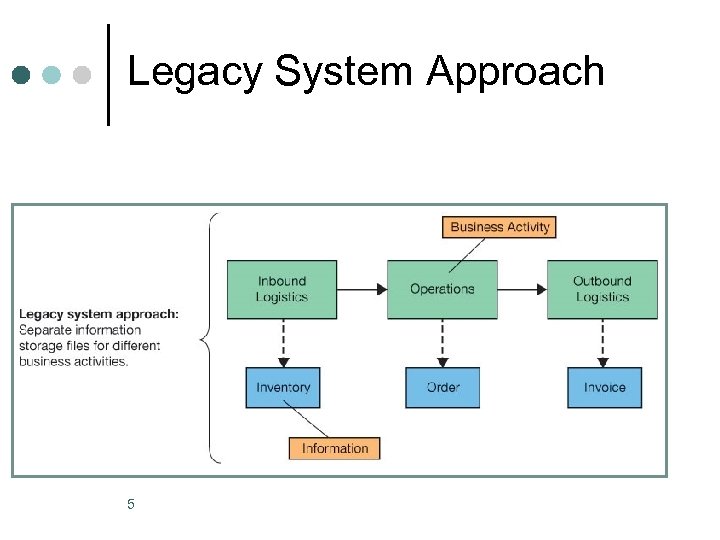 Legacy System Approach 5
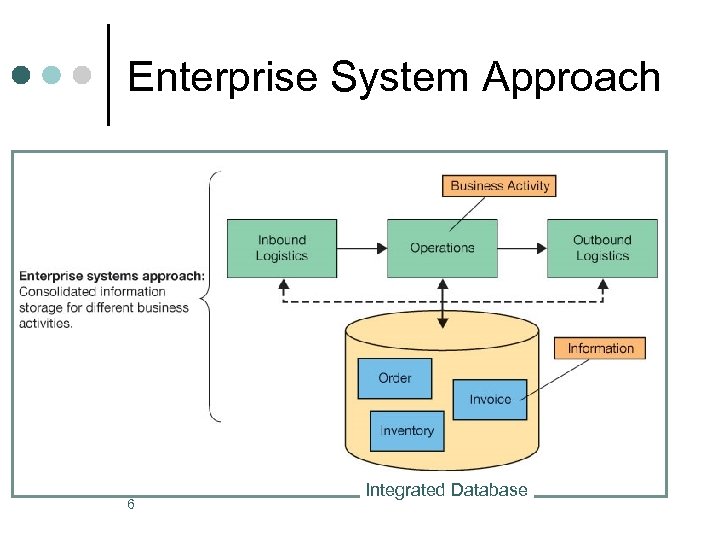 Enterprise System Approach 6 Integrated Database
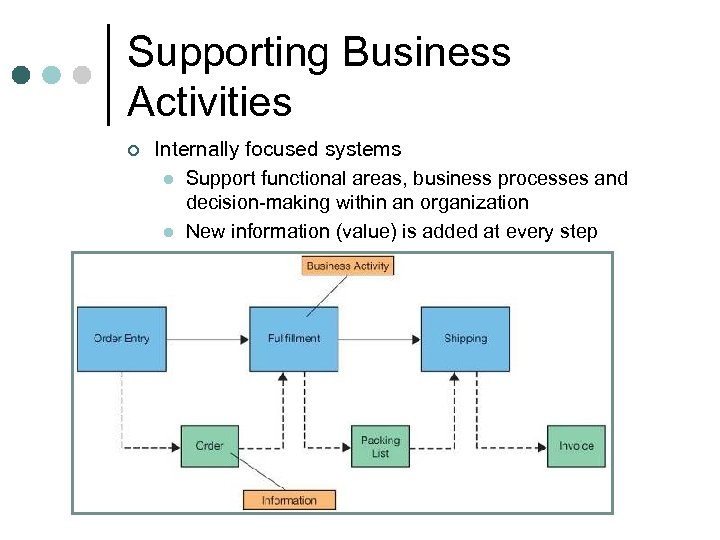 Supporting Business Activities ¢ 7 Internally focused systems l Support functional areas, business processes and decision-making within an organization l New information (value) is added at every step
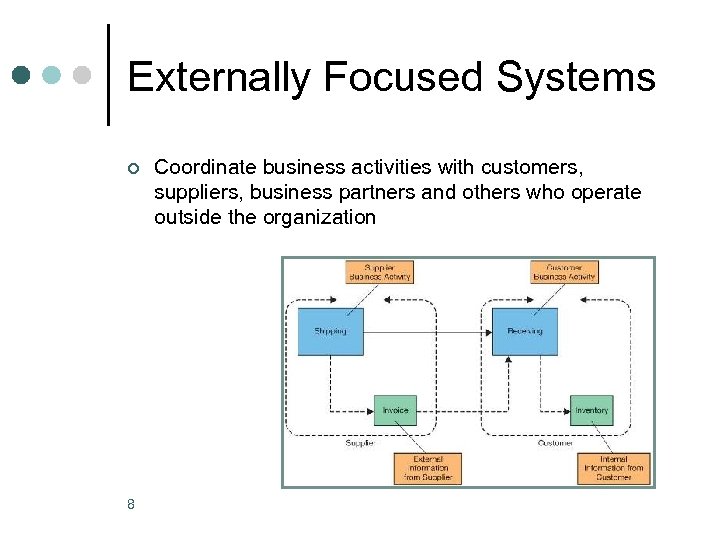 Externally Focused Systems ¢ 8 Coordinate business activities with customers, suppliers, business partners and others who operate outside the organization
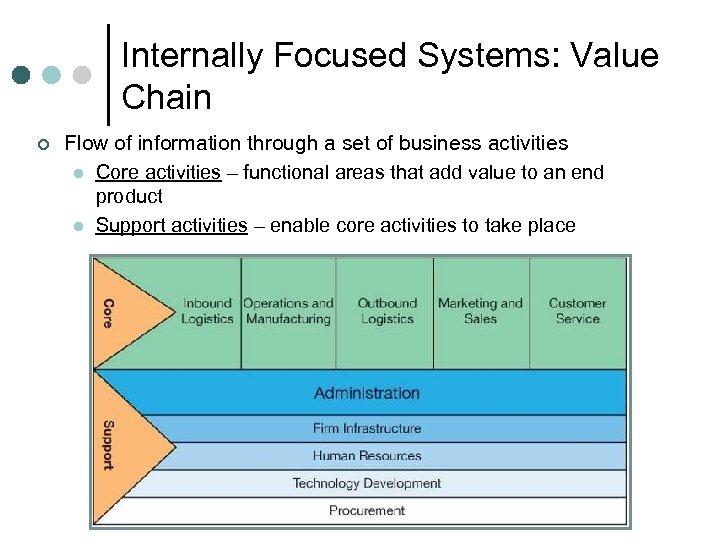 Internally Focused Systems: Value Chain ¢ Flow of information through a set of business activities l Core activities – functional areas that add value to an end product l Support activities – enable core activities to take place 9 Information Systems Today: Managing in the Digital World
 Core Activities ¢ Inbound logistics activities • Receiving and stocking raw materials, parts and products • Cisco – delivery of electronic components from suppliers ¢ Operations and manufacturing activities • Order processing and/or manufacturing of end products • Dell – component parts assembled to make products ¢ Outbound logistics activities • Distribution of end products • Amazon. com – delivery of books to customers 10
 Core Activities ¢ Marketing and Sales activities • Presale marketing activities (e. g. , creating marketing brochures) • Amtrak – use of IS to update prices and schedules ¢ Customer service activities • Postsale activities • HP – downloads related to purchased products 11
 Vanilla Versus Customized Software ¢ Vanilla version Modules the version comes with out of the box l Certain processes might not be supported l ¢ Customization Additional software or changes to vanilla version l Always needs to be updated with new versions of vanilla l 12
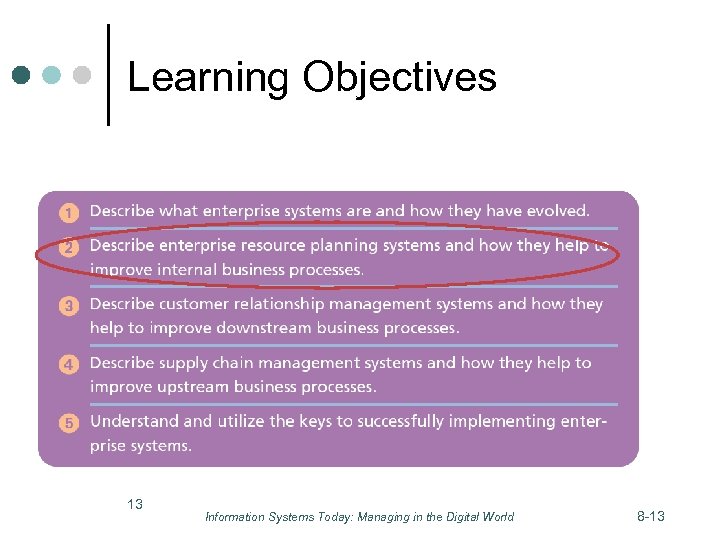 Learning Objectives 13 Information Systems Today: Managing in the Digital World 8 -13
 ENTERPRISE RESOURCE PLANNING ¢ 14 Enterprise resource planning (ERP) – integrates all departments and functions throughout an organization into a single IT system so that employees can make enterprise-wide decisions by viewing enterprise-wide information on all business operations
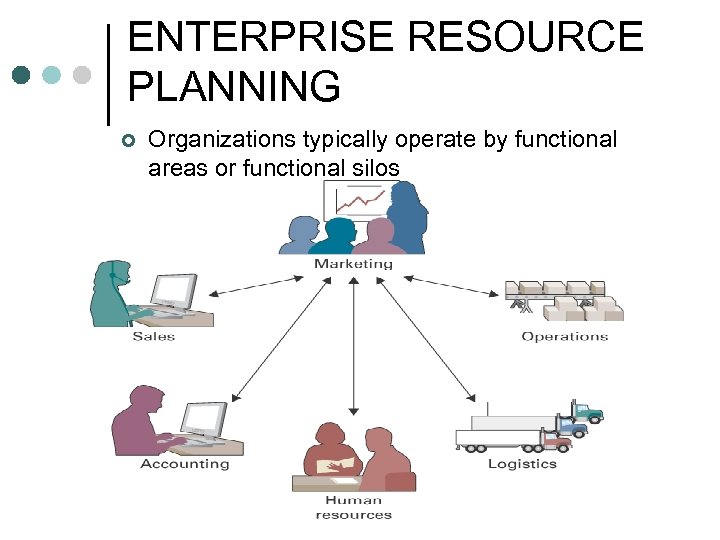 ENTERPRISE RESOURCE PLANNING ¢ 15 Organizations typically operate by functional areas or functional silos
 Enterprise Resource Planning “Ground up” integration of business processes ¢ A single application ties together multiple business functions ¢ l ¢ Accounting, purchasing, HR Applies “best practices” to these processes 16
 Enterprise Resource Planning ¢ Architecturally… l l l ¢ ¢ The ERP system contains the central database Business units utilize the central system All must conform to the data and procedural standards of the application Configuration is notoriously difficult Implementations are notoriously complex Why would a company want to do this? Who might resist? Why? 17
 ENTERPRISE RESOURCE PLANNING ¢ Large ERP vendors include SAP l Oracle l ¢ 18 Most ERP solutions include Supply Chain Management (SCM) and Customer Relationship Management (CRM) components
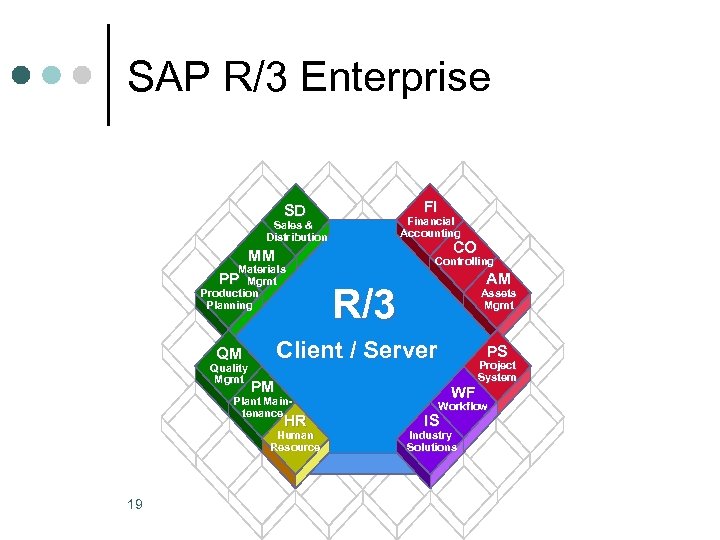 SAP R/3 Enterprise FI SD Financial Accounting Sales & Distribution CO MM Materials Mgmt Production Planning PP R/3 PM Plant Maintenance HR Human Resource 19 AM Assets Mgmt Client / Server QM Quality Mgmt Controlling PS WF Project System Workflow IS Industry Solutions
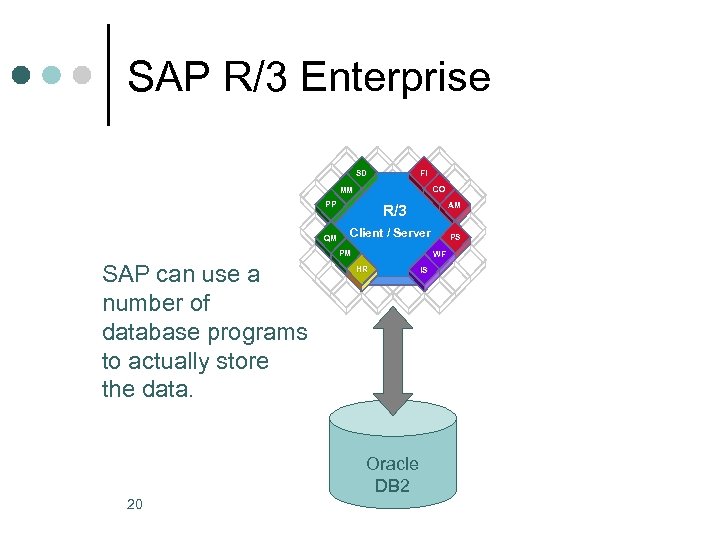 SAP R/3 Enterprise SD FI CO MM PP QM AM R/3 Client / Server PM SAP can use a number of database programs to actually store the data. WF HR Oracle DB 2 20 PS IS
 Configuration ¢ Configuration is the process of making standard software fit a specific business. SAP, as an example, has: l. Over 8000 configuration decisions l. Data structuring • Sales divisions, distribution channels l. Rewriting Code (Modifications) • Not recommended because of compatibility problems when updated versions of the software installed. l. Customization • Writing code at SAP-specified user exits l. Third-party 21 software solutions
 Data Types ¢ Master Data l Data that is relatively stable • Materials, Customers, Vendors ¢ Transaction Data that is relatively temporary l Stored at various stages of a business process l • Customer orders, purchase orders, production orders, customer payments 22
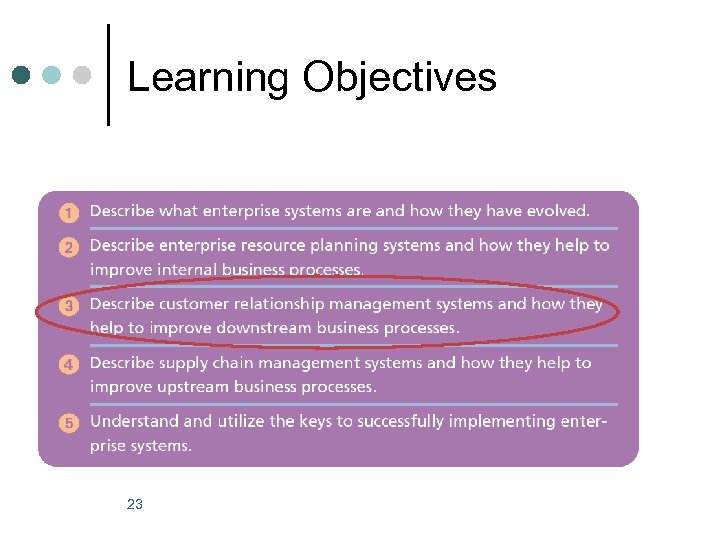 Learning Objectives 23
 Customer Relationship Management 24
 CUSTOMER RELATIONSHIP MANAGEMENT ¢ Customer relationship management (CRM) – involves managing all aspects of a customer’s relationship with an organization to increase customer loyalty and retention and an organization's profitability ¢ Many organizations, such as Charles Schwab and Kaiser Permanente, have obtained great success through the implementation of CRM systems 25
 CUSTOMER RELATIONSHIP MANAGEMENT ¢ CRM is not just technology, but a strategy, process, and business goal that an organization must embrace on an enterprise-wide level ¢ CRM can enable an organization to: l Identify types of customers l Design individual customer marketing campaigns l Treat each customer as an individual l Understand customer buying behaviors 26
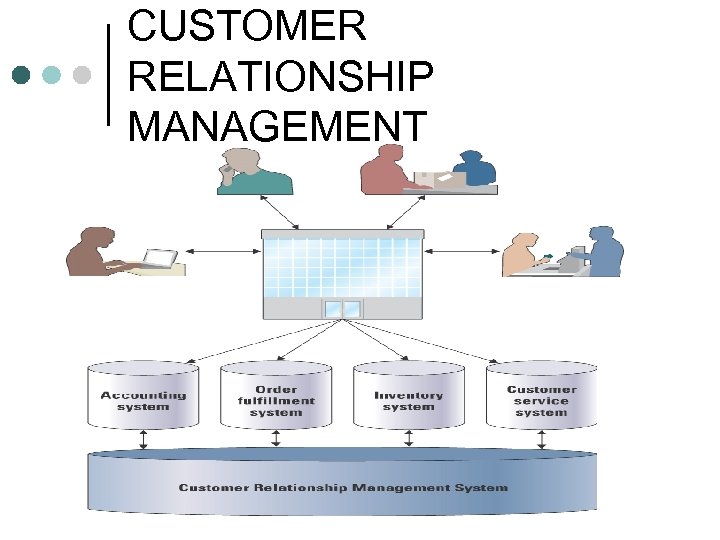 CUSTOMER RELATIONSHIP MANAGEMENT ¢ 27 CRM overview
 CUSTOMER RELATIONSHIP MANAGEMENT ¢ Multiple Contact Points l ¢ The goal is to provide a single, integrated view of all customer activity, available to all employees who interact with the customer. Feedback, Individual Needs, and Cross Selling l Having better information enables workers to provide better service, meet the individual needs of each customer. 28
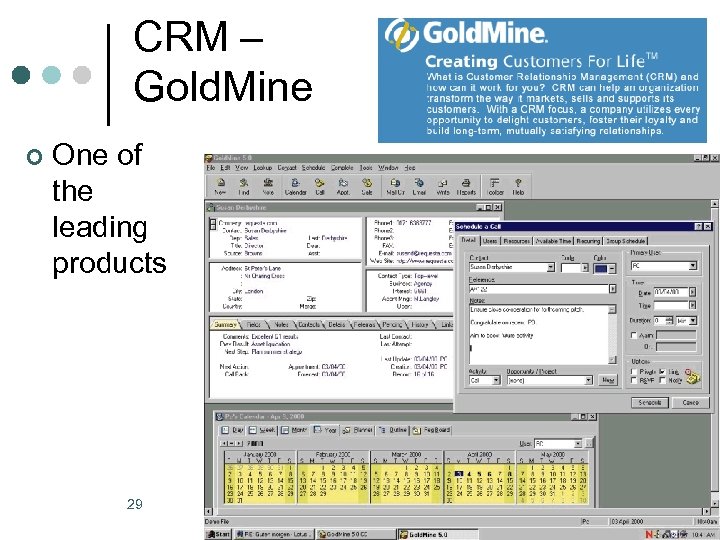 CRM – Gold. Mine ¢ One of the leading products 29
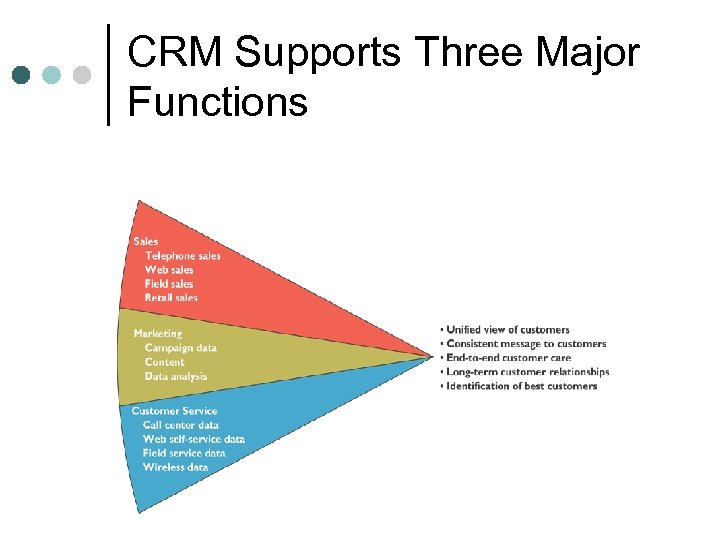 CRM Supports Three Major Functions 30
 CRM – Management Issues ¢ Data Sharing and Data Ownership: Sales force may not want to share. l Some customer service data might not be suitable for sharing. l Privacy Issues l ¢ Technology Issues: l CRM can be a high cost, high risk undertaking. (Why can it be high risk? ) 31
 Learning Objectives 32
 SUPPLY CHAIN MANAGEMENT ¢ 33 Supply Chain Management (SCM)– involves the management of information flows between and among stages in a supply chain to maximize total supply chain effectiveness and profitability
 SUPPLY CHAIN MANAGEMENT ¢ 34 Four basic components of supply chain management include: l Supply chain strategy – strategy for managing all resources to meet customer demand l Supply chain partners – partners throughout the supply chain that deliver finished products, raw materials, and services. l Supply chain operation – schedule for production activities l Supply chain logistics – product delivery process
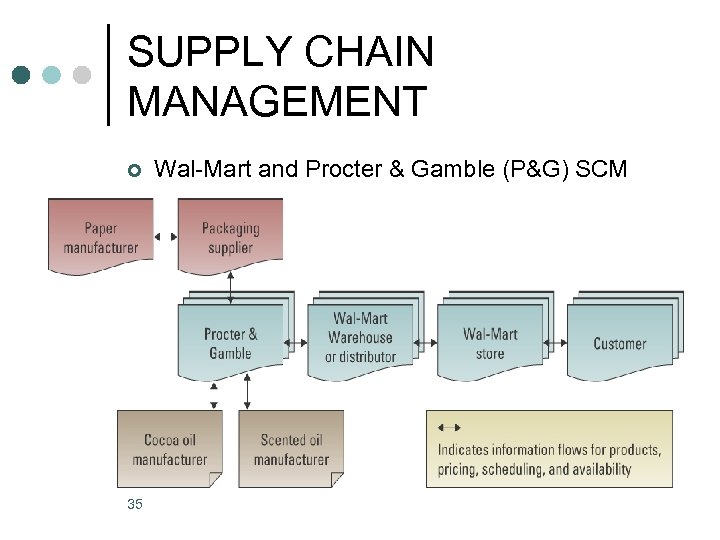 SUPPLY CHAIN MANAGEMENT ¢ 35 Wal-Mart and Procter & Gamble (P&G) SCM
 SUPPLY CHAIN MANAGEMENT ¢ 36 SCM systems can enable an organization to: l Decrease the power of its buyers l Increase its own supplier power l Increase switching costs to reduce threat of substitute products or services l Create entry barriers thereby reducing the threat of new entrants l Reduce the cost of maintaining inventory
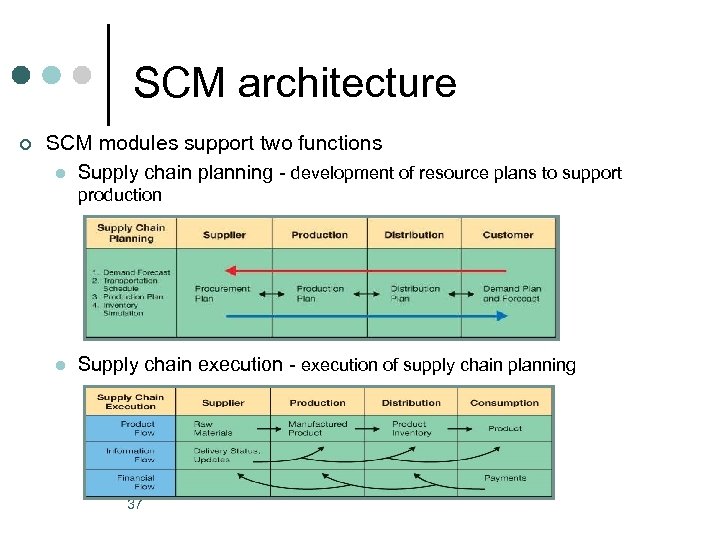 SCM architecture ¢ SCM modules support two functions l Supply chain planning - development of resource plans to support production l Supply chain execution - execution of supply chain planning 37
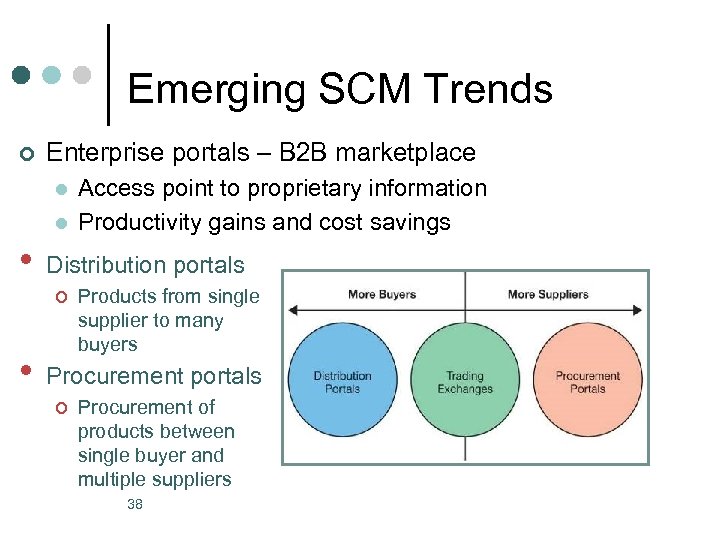 Emerging SCM Trends ¢ Enterprise portals – B 2 B marketplace l l • Access point to proprietary information Productivity gains and cost savings Distribution portals o Products from single • supplier to many buyers Procurement portals o Procurement of products between single buyer and multiple suppliers 38
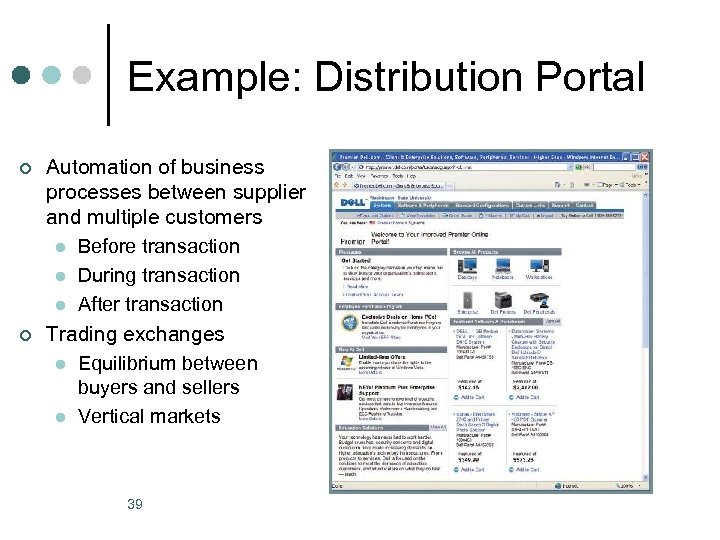 Example: Distribution Portal ¢ ¢ Automation of business processes between supplier and multiple customers l Before transaction l During transaction l After transaction Trading exchanges l Equilibrium between buyers and sellers l Vertical markets 39
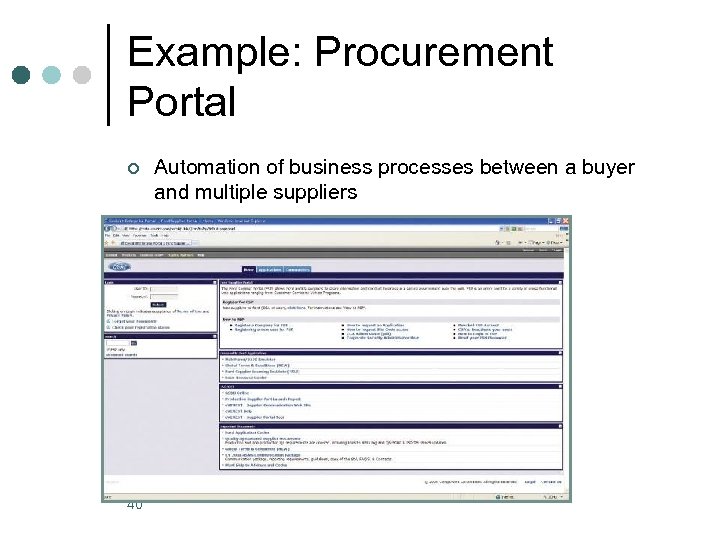 Example: Procurement Portal ¢ 40 Automation of business processes between a buyer and multiple suppliers
 Trading Exchanges ¢ ¢ Small companies don’t have funds for SCM Trading exchanges provide a solution l l Operated by third-party vendors Revenue model • Commission for each transaction • Usage and association fees • Advertising l l Many buyers and many sellers can come together Popular trading exchanges • www. scrapsite. com (steel) • www. paperspace. com (paper) • www. sciquest. com (medical equipment) 41
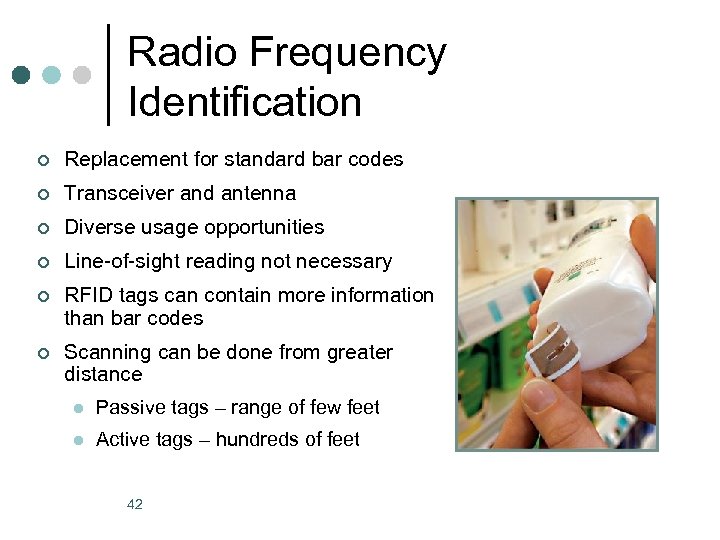 Radio Frequency Identification ¢ Replacement for standard bar codes ¢ Transceiver and antenna ¢ Diverse usage opportunities ¢ Line-of-sight reading not necessary ¢ RFID tags can contain more information than bar codes ¢ Scanning can be done from greater distance l Passive tags – range of few feet l Active tags – hundreds of feet 42
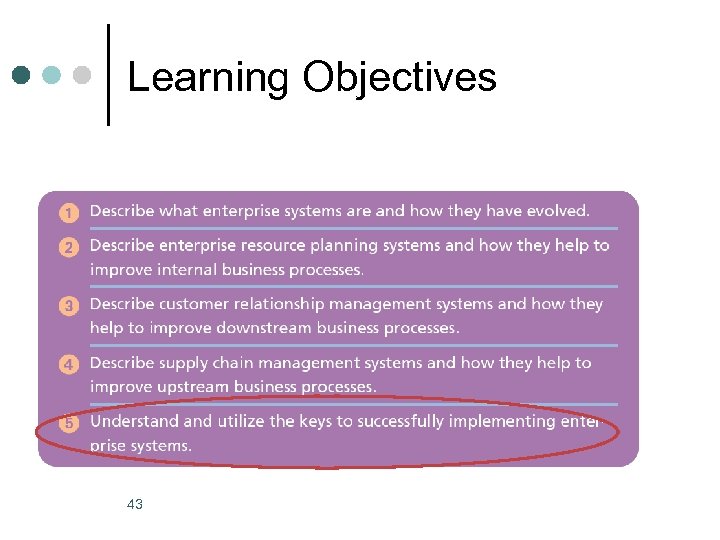 Learning Objectives 43
 The Formula for Enterprise System Success 1. 2. 3. 4. Secure executive sponsorship l Most failures due to lack of top-level management support Get help from outside experts l Consultants are specifically trained l Implementation tends to happen faster Thoroughly train users l Most overlooked, underestimated and poorly budgeted expense l Training can prevent dissatisfaction Take a multidisciplinary approach to implementations l Include end users from all functional areas in the implementation 44