


 Скачать презентацию Enhancing Efficiency Effectiveness of The Cargo Control
4dbc1201285a08cc3b945f74556ae155.ppt
- Количество слайдов: 31
 Enhancing Efficiency & Effectiveness of The Cargo Control System of Sri Lanka Customs Using a New Decision Making Model Chaminda Saman Rathnayake Assist. Superintendent of Customs ICT Division Sri Lanka Customs
 Introduction to Sri Lanka Customs Main Functions of Sri Lanka Customs includes: v. Collection of taxes, duties and other levies as imposed by the government v. To ensure proper enforcement of tariff, trade and social protection policies of the state v. To ensure flow of passenger, goods and related means of transport
 Customs Systems and Procedures Risk Management v. A balanced and modern Customs administration v. A measure for controls and trade facilitation v. Allows compliant traders to move their goods more quickly through Customs controls: fewer documentary checks : physical examinations v. Identify illegitimate trade v. Provides an opportunity for the Customs administration to undertake more targeted selection : speedier clearance of goods
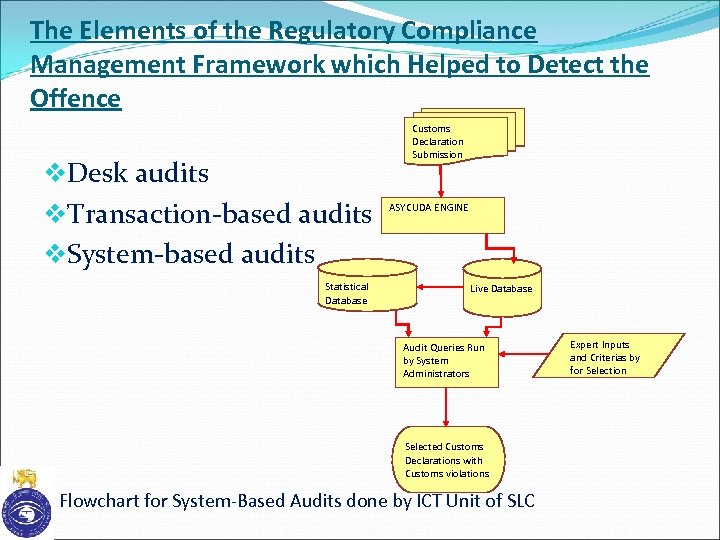 The Elements of the Regulatory Compliance Management Framework which Helped to Detect the Offence v. Desk audits v. Transaction-based audits v. System-based audits Statistical Database Customs Declaration Submission ASYCUDA ENGINE Live Database Audit Queries Run by System Administrators Selected Customs Declarations with Customs violations Fig Flowchart for System-Based Audits done by ICT Unit of SLC Expert Inputs and Criterias by for Selection
 Central Cargo Examination Division At present there are three container cargo (FCL) examination yards namely RCT, Grayline 1 and Grayline 2 The movement of these containers are controlled and monitored by using software called Cargo Control System until the cargo is released after examination at the yards.
 Examination levels Red Channel (a) 100% Examination at specific yard (b) Detailed examination at specified yard Amber Channel (a) Panel Examination at specific yard (b) Panel examination at Importer's go-down Green Channel No examination
 Introduction to Cargo Control System & Existing Problems • No System to monitor the movement of the container under Customs supervision until it is delivered to the correct consignee. • Customs gates were not updated with the “Asycuda” payment information. • Therefore Cargo Control System was introduced to monitor the container movement under the supervision of Sri Lanka Customs. • (Manage around 1000 containers per day)
 Objective of The Project “ Secure and Monitor the Container until it reaches the destination container terminal (Grayline I & II, RCT) in a predefined route within a given time period after it is released from the NCT Gate”
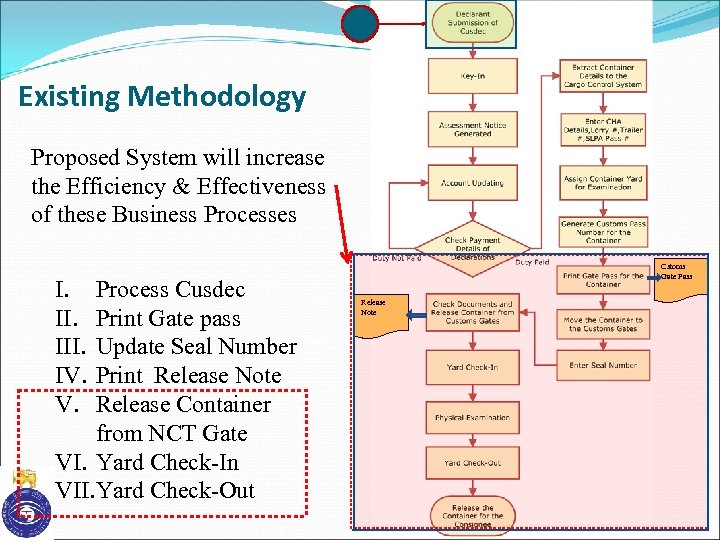 Existing Methodology Proposed System will increase the Efficiency & Effectiveness of these Business Processes I. III. IV. V. Process Cusdec Print Gate pass Update Seal Number Print Release Note Release Container from NCT Gate VI. Yard Check-In VII. Yard Check-Out Cstoms Gate Pass Release Note
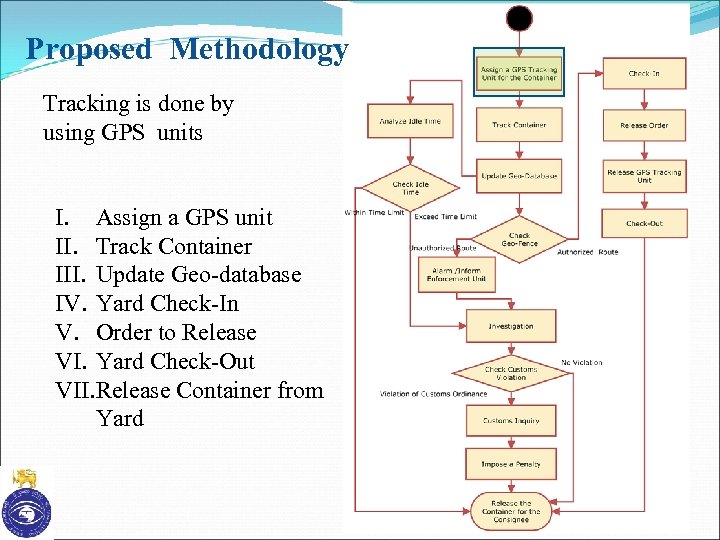 Proposed Methodology Tracking is done by using GPS units I. Assign a GPS unit II. Track Container III. Update Geo-database IV. Yard Check-In V. Order to Release VI. Yard Check-Out VII. Release Container from Yard
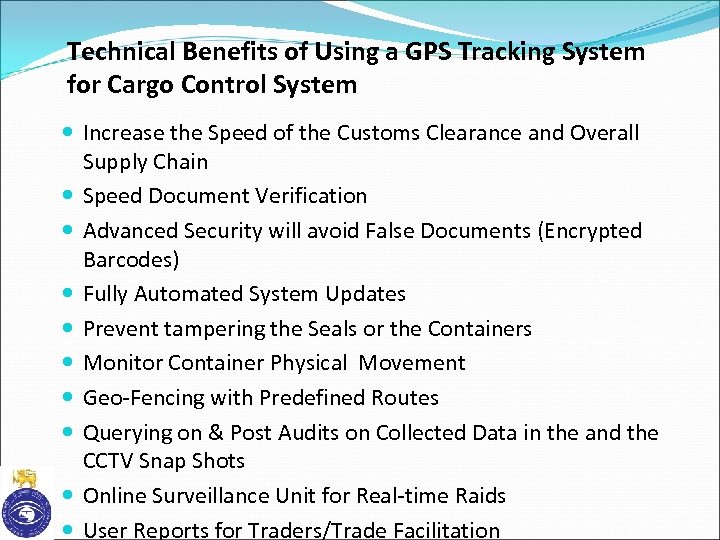 Technical Benefits of Using a GPS Tracking System for Cargo Control System Increase the Speed of the Customs Clearance and Overall Supply Chain Speed Document Verification Advanced Security will avoid False Documents (Encrypted Barcodes) Fully Automated System Updates Prevent tampering the Seals or the Containers Monitor Container Physical Movement Geo-Fencing with Predefined Routes Querying on & Post Audits on Collected Data in the and the CCTV Snap Shots Online Surveillance Unit for Real-time Raids User Reports for Traders/Trade Facilitation
 Phase-I Preparing GIS Framework
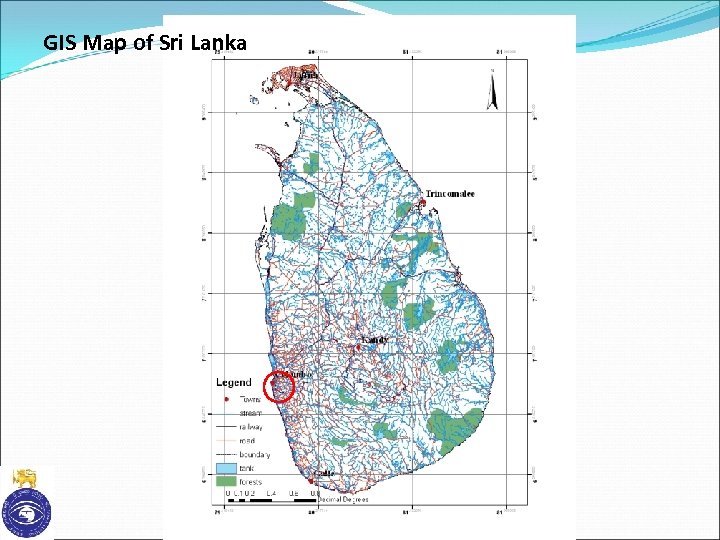 GIS Map of Sri Lanka
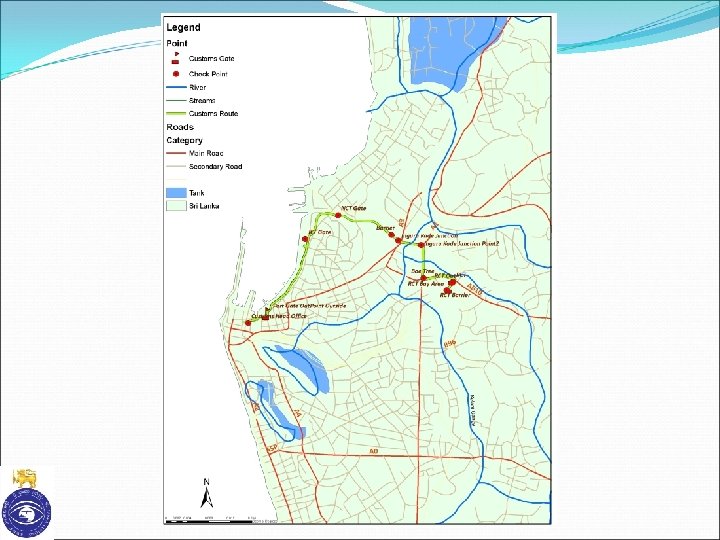
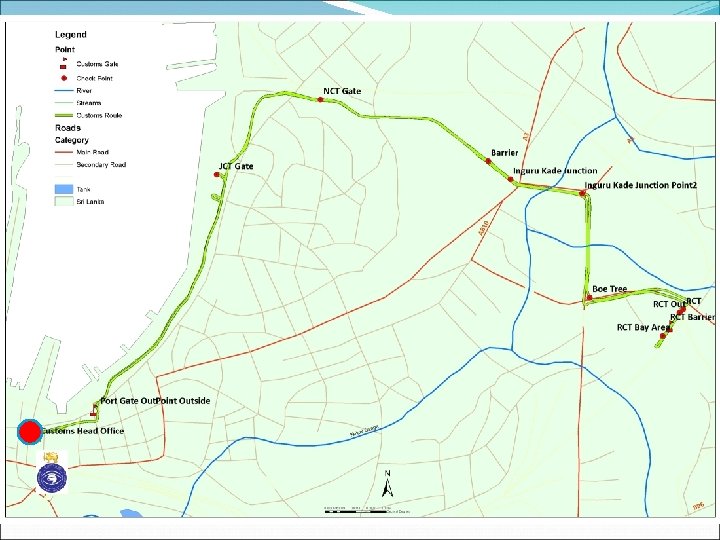
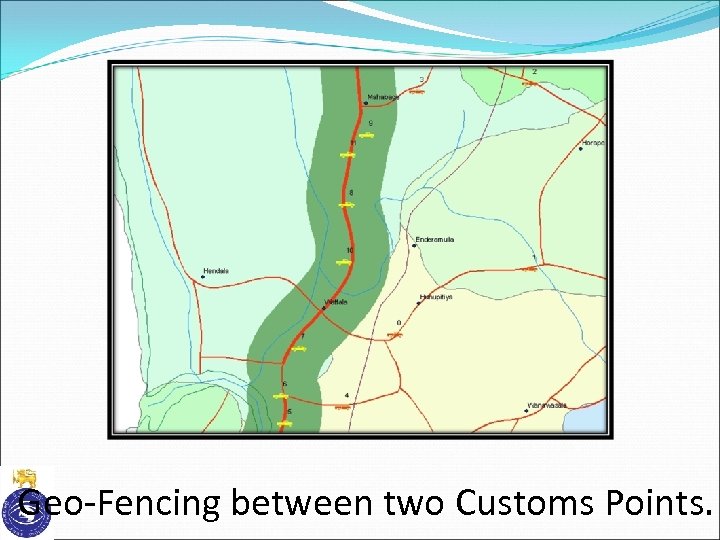 Geo-Fencing between two Customs Points.
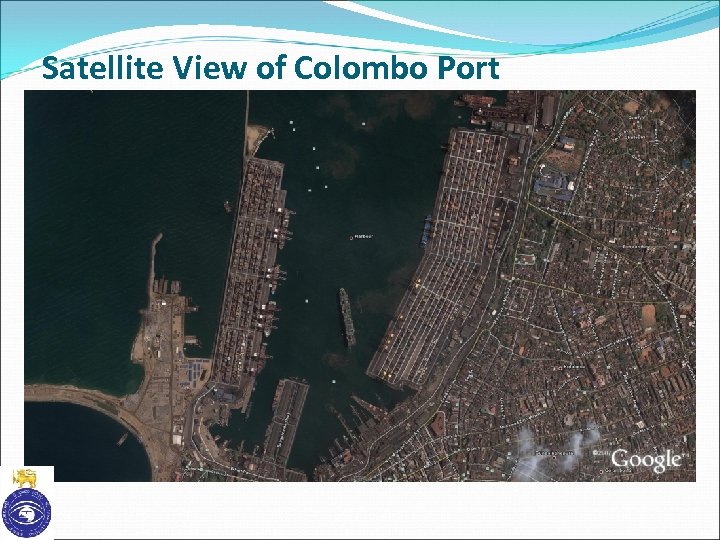 Satellite View of Colombo Port
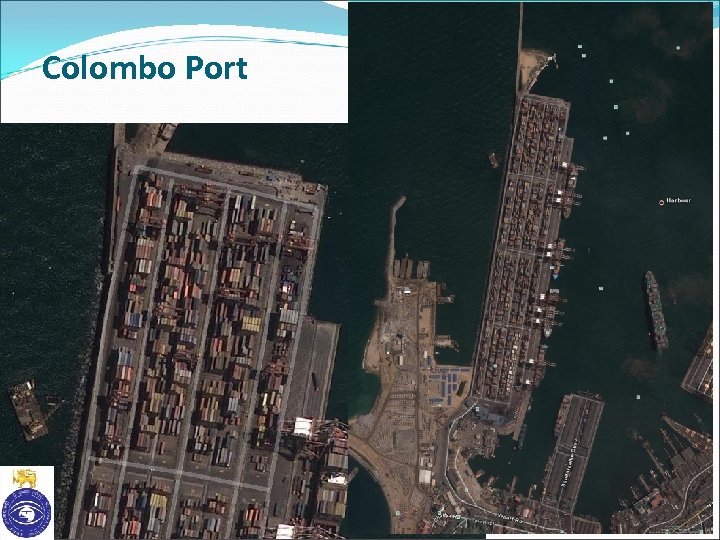 Colombo Port
 Phase-II Installation of GPS Tracking Units
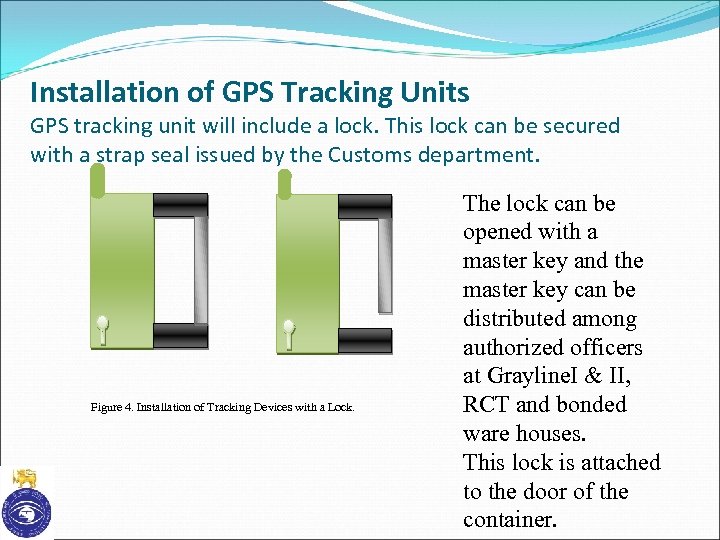 Installation of GPS Tracking Units GPS tracking unit will include a lock. This lock can be secured with a strap seal issued by the Customs department. Figure 4. Installation of Tracking Devices with a Lock. The lock can be opened with a master key and the master key can be distributed among authorized officers at Grayline. I & II, RCT and bonded ware houses. This lock is attached to the door of the container.
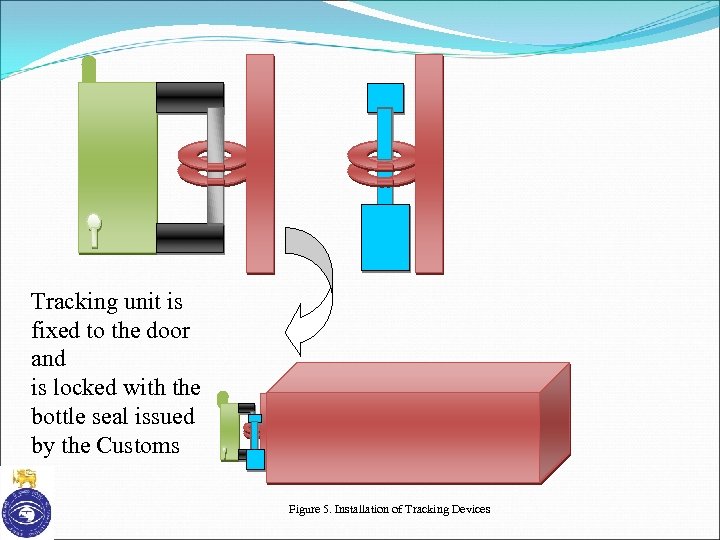 Tracking unit is fixed to the door and is locked with the bottle seal issued by the Customs Figure 5. Installation of Tracking Devices
 System Architecture for the Proposed GPS enabled Tracking System
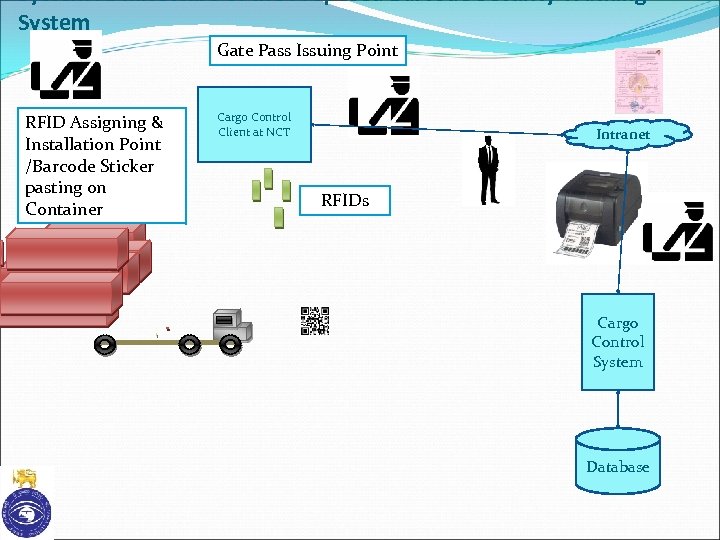 System Architecture of the Proposed Barcode Security Tracking System Gate Pass Issuing Point RFID Assigning & Installation Point /Barcode Sticker pasting on Container Cargo Control Client at NCT Intranet RFIDs Cargo Control System Database
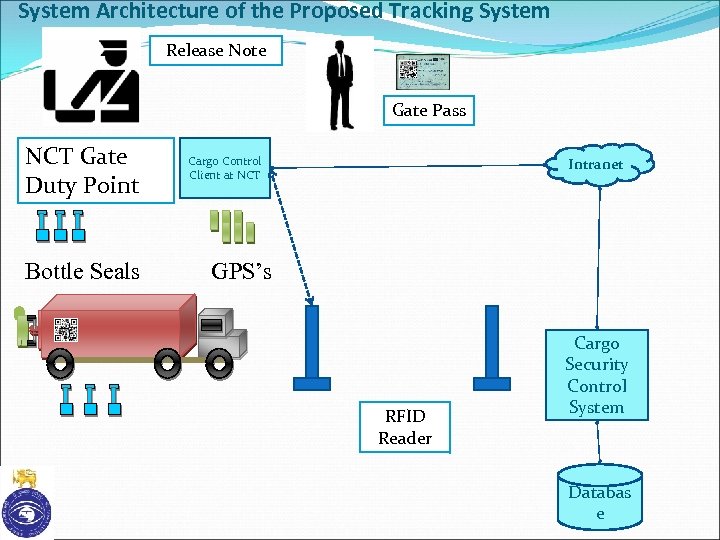 System Architecture of the Proposed Tracking System Release Note Gate Pass NCT Gate Duty Point Bottle Seals Cargo Control Client at NCT Intranet GPS’s RFID Reader Cargo Security Control System Databas e
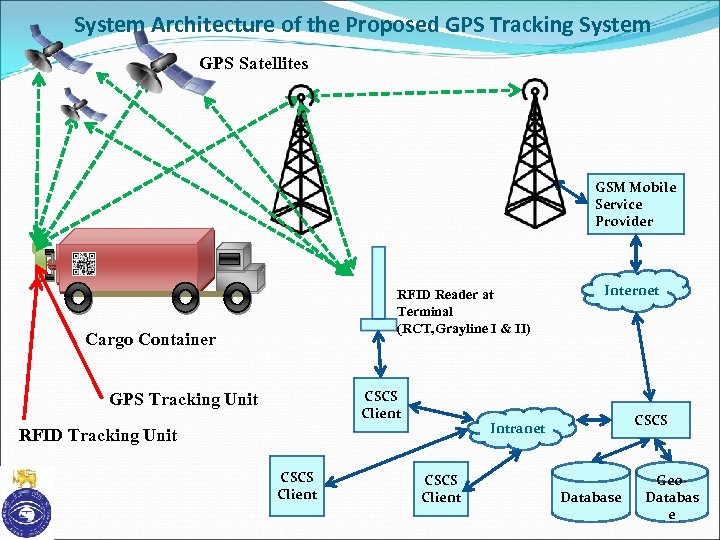 System Architecture of the Proposed GPS Tracking System GPS Satellites GSM Mobile Service Provider RFID Reader at Terminal (RCT, Grayline I & II) Cargo Container CSCS Client GPS Tracking Unit CSCS Intranet RFID Tracking Unit CSCS Client Internet CSCS Client Database Geo. Databas e
 Phase-III Trade Facilitation
 Trade Facilitation v. Providing Reports to the Importers/Exporters v. Real-Time Tracking Information of containers v. Fast Clearance for Legitimate Traders
 Conclusions Keeping a Tight Customs Control Speedy Clearance/Trade facilitation Increasing Transparency/Integrity Reduce the Overall Customs Clearance Cost for Government and Traders ROI Comply with E-Government Policies and Concepts Increase Compliance Level of Traders
 References US Customs Official Website Australian Customs Official Website UK Customs Official Website Singapore Customs Official Website World Customs Organization Official Website www. wcoomd. org DHL Official Website , www. dhl. com Environment al Systems Research Institute (ESRI) Official Website , www. esri. com E-Government policies materials published by ICTA, www. icta. lk Study material CCES, University of Canberra on Compliance Management & Customs Regulatory Environment
 Questions & Comments
 Thank You!