 Скачать презентацию Englishes British Scottish Global Dialect idiolect sociolect
fe1654a13c37ac8bec2c7ab572fb5040.ppt
- Количество слайдов: 17



Englishes: British, Scottish, Global
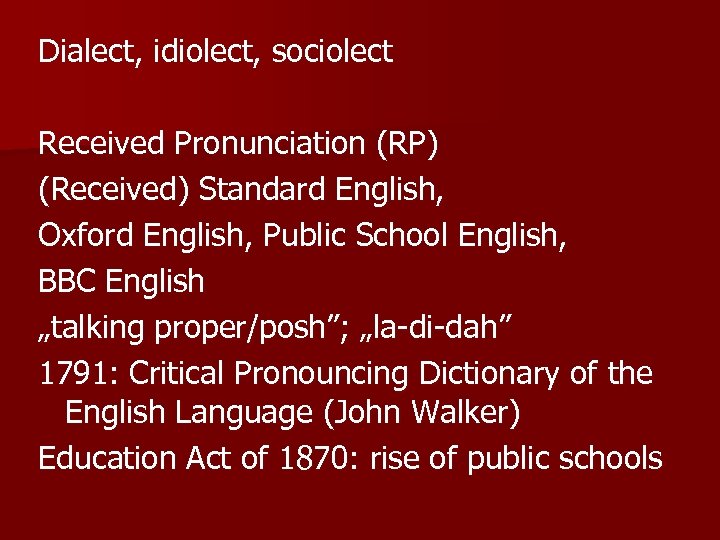
Dialect, idiolect, sociolect Received Pronunciation (RP) (Received) Standard English, Oxford English, Public School English, BBC English „talking proper/posh”; „la-di-dah” 1791: Critical Pronouncing Dictionary of the English Language (John Walker) Education Act of 1870: rise of public schools
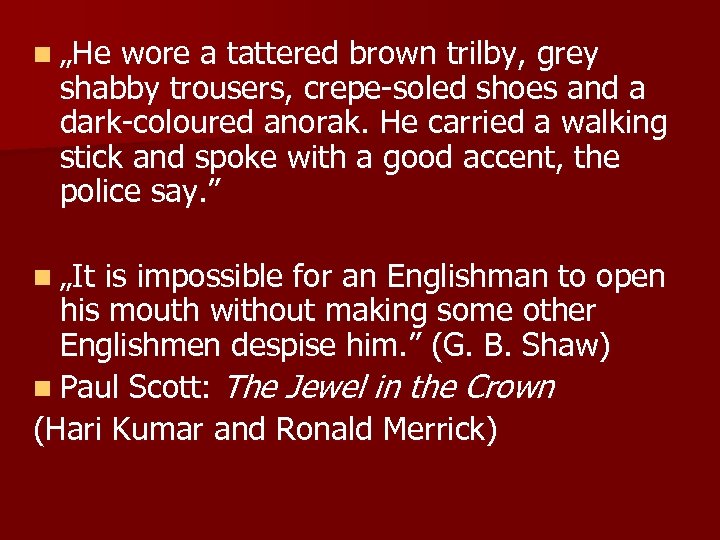
n „He wore a tattered brown trilby, grey shabby trousers, crepe-soled shoes and a dark-coloured anorak. He carried a walking stick and spoke with a good accent, the police say. ” n „It is impossible for an Englishman to open his mouth without making some other Englishmen despise him. ” (G. B. Shaw) n Paul Scott: The Jewel in the Crown (Hari Kumar and Ronald Merrick)
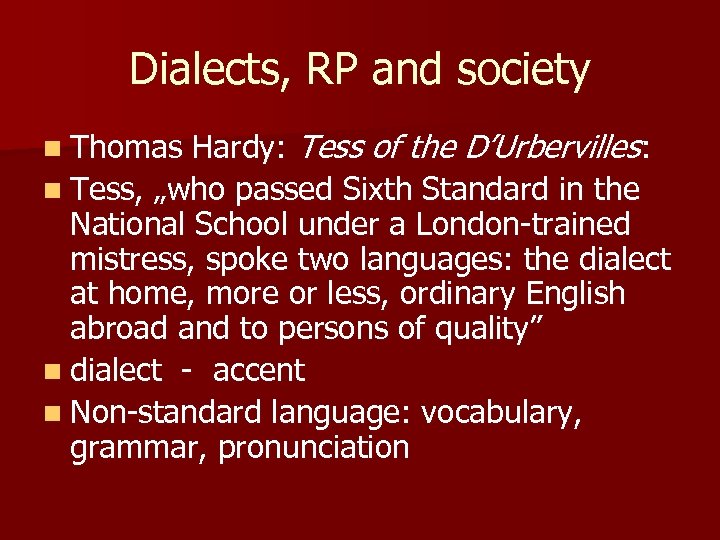
Dialects, RP and society Hardy: Tess of the D’Urbervilles: n Tess, „who passed Sixth Standard in the National School under a London-trained mistress, spoke two languages: the dialect at home, more or less, ordinary English abroad and to persons of quality” n dialect - accent n Non-standard language: vocabulary, grammar, pronunciation n Thomas
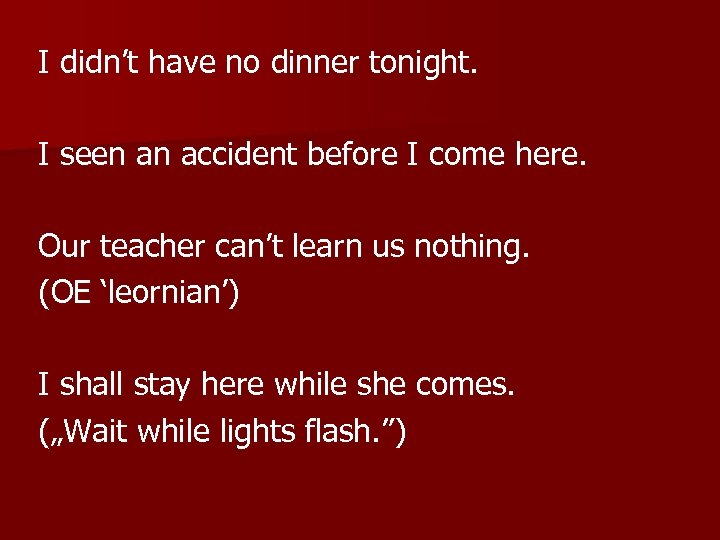
I didn’t have no dinner tonight. I seen an accident before I come here. Our teacher can’t learn us nothing. (OE ‘leornian’) I shall stay here while she comes. („Wait while lights flash. ”)
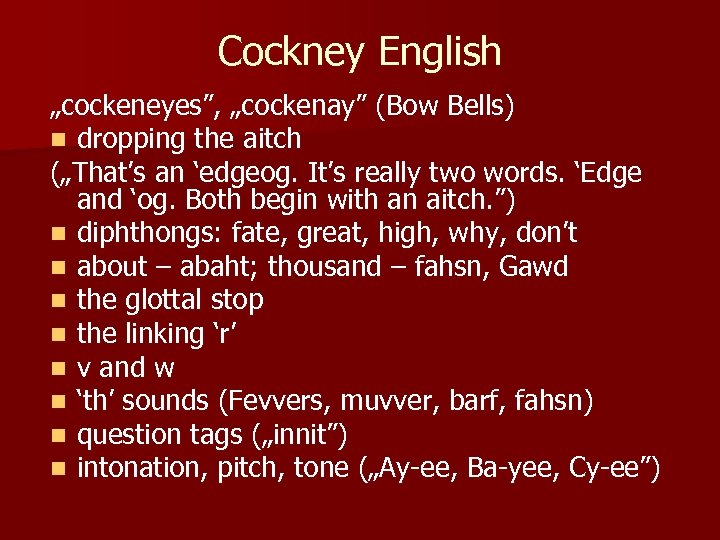
Cockney English „cockeneyes”, „cockenay” (Bow Bells) n dropping the aitch („That’s an ‘edgeog. It’s really two words. ‘Edge and ‘og. Both begin with an aitch. ”) n diphthongs: fate, great, high, why, don’t n about – abaht; thousand – fahsn, Gawd n the glottal stop n the linking ‘r’ n v and w n ‘th’ sounds (Fevvers, muvver, barf, fahsn) n question tags („innit”) n intonation, pitch, tone („Ay-ee, Ba-yee, Cy-ee”)
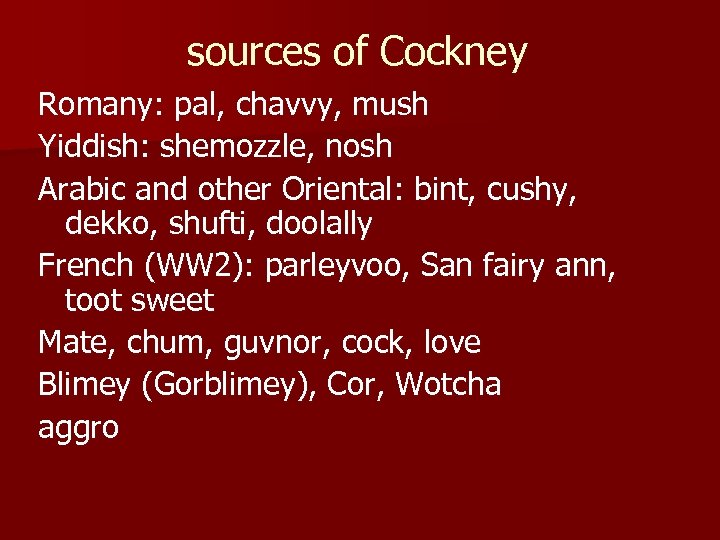
sources of Cockney Romany: pal, chavvy, mush Yiddish: shemozzle, nosh Arabic and other Oriental: bint, cushy, dekko, shufti, doolally French (WW 2): parleyvoo, San fairy ann, toot sweet Mate, chum, guvnor, cock, love Blimey (Gorblimey), Cor, Wotcha aggro
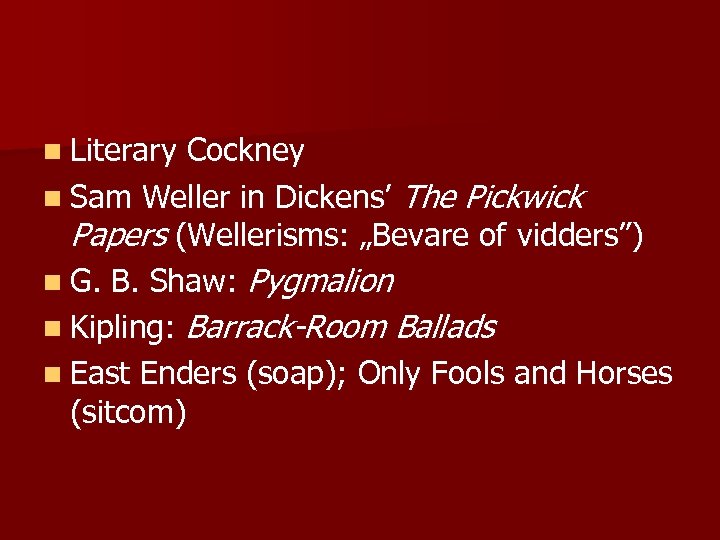
n Literary Cockney n Sam Weller in Dickens’ The Pickwick Papers (Wellerisms: „Bevare of vidders”) n G. B. Shaw: Pygmalion n Kipling: Barrack-Room Ballads n East Enders (soap); Only Fools and Horses (sitcom)
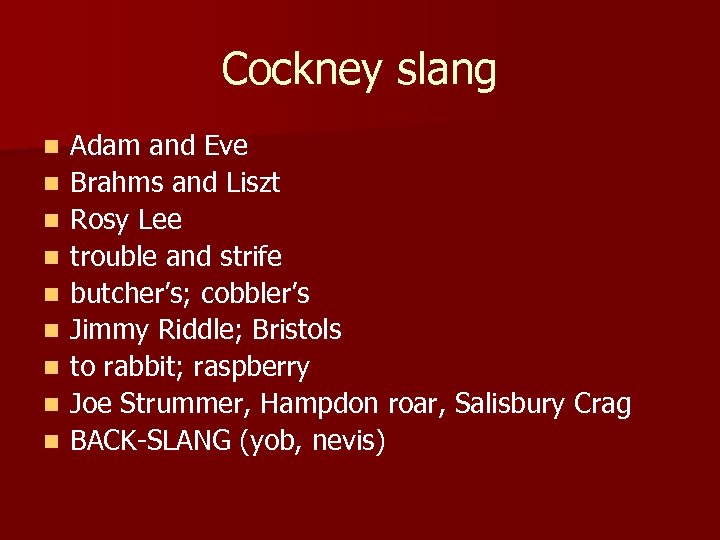
Cockney slang n n n n n Adam and Eve Brahms and Liszt Rosy Lee trouble and strife butcher’s; cobbler’s Jimmy Riddle; Bristols to rabbit; raspberry Joe Strummer, Hampdon roar, Salisbury Crag BACK-SLANG (yob, nevis)
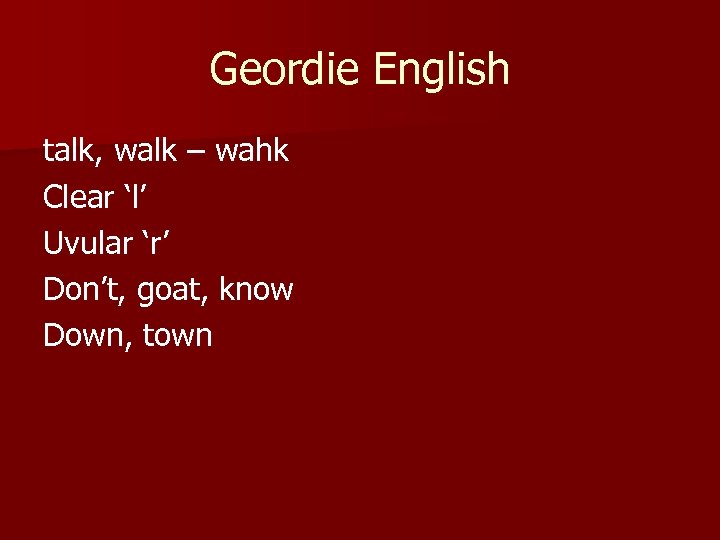
Geordie English talk, walk – wahk Clear ‘l’ Uvular ‘r’ Don’t, goat, know Down, town
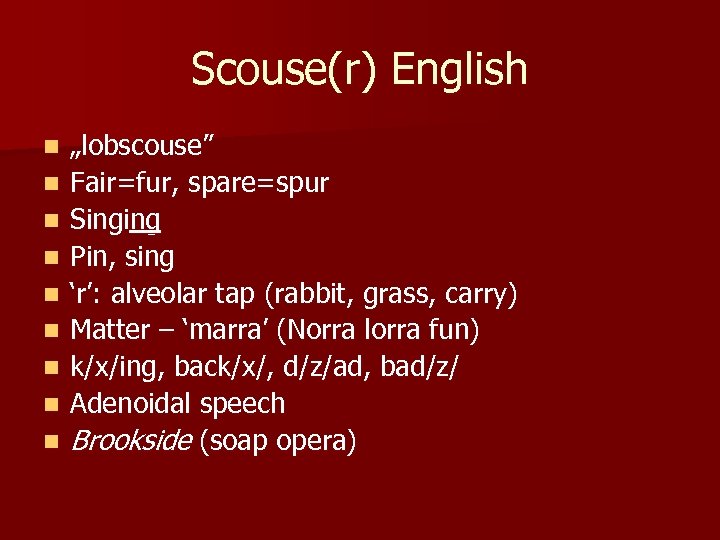
Scouse(r) English n n n n n „lobscouse” Fair=fur, spare=spur Singing Pin, sing ‘r’: alveolar tap (rabbit, grass, carry) Matter – ‘marra’ (Norra lorra fun) k/x/ing, back/x/, d/z/ad, bad/z/ Adenoidal speech Brookside (soap opera)
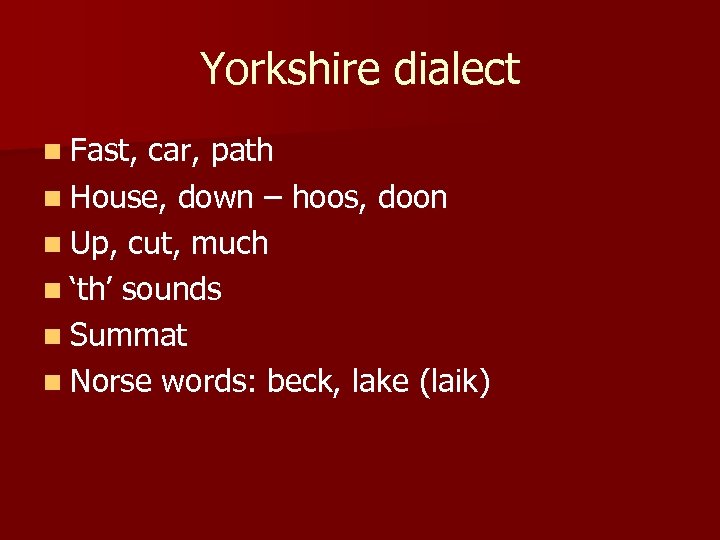
Yorkshire dialect n Fast, car, path n House, down – hoos, doon n Up, cut, much n ‘th’ sounds n Summat n Norse words: beck, lake (laik)
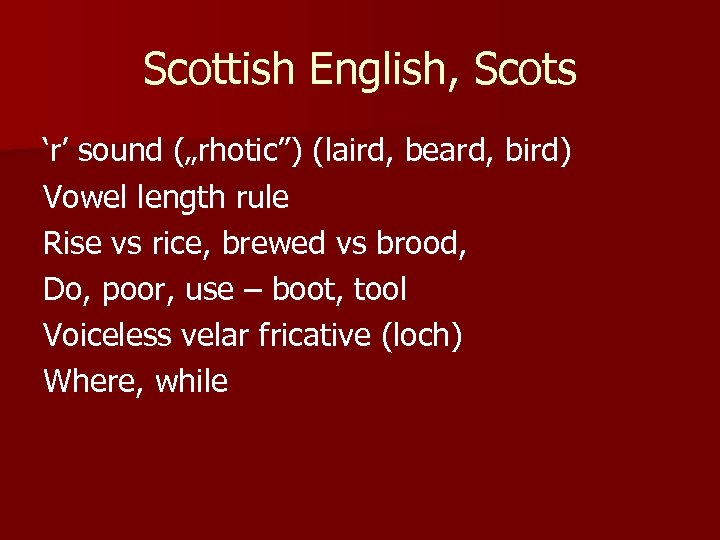
Scottish English, Scots ‘r’ sound („rhotic”) (laird, beard, bird) Vowel length rule Rise vs rice, brewed vs brood, Do, poor, use – boot, tool Voiceless velar fricative (loch) Where, while
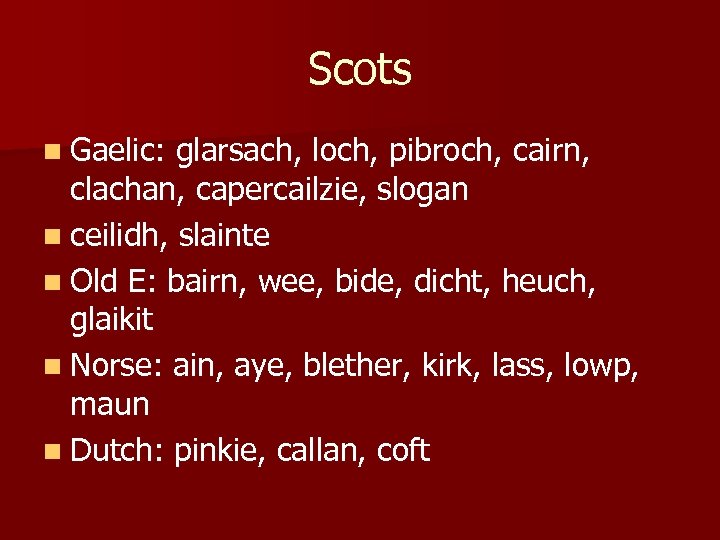
Scots n Gaelic: glarsach, loch, pibroch, cairn, clachan, capercailzie, slogan n ceilidh, slainte n Old E: bairn, wee, bide, dicht, heuch, glaikit n Norse: ain, aye, blether, kirk, lass, lowp, maun n Dutch: pinkie, callan, coft
Literary Scots (Lallans Scots) n Robert Burns (18 th cent. ) n Scottish Renaissance (1920 -s, 30 s) n Hugh Mac. Diarmid: The Eemis Stane
India Hindi loanwords: bungalow, pundit, pukka, juggernaut, jungle, the Hobson-Jobson (dictionary, 1886) Three Language Formula
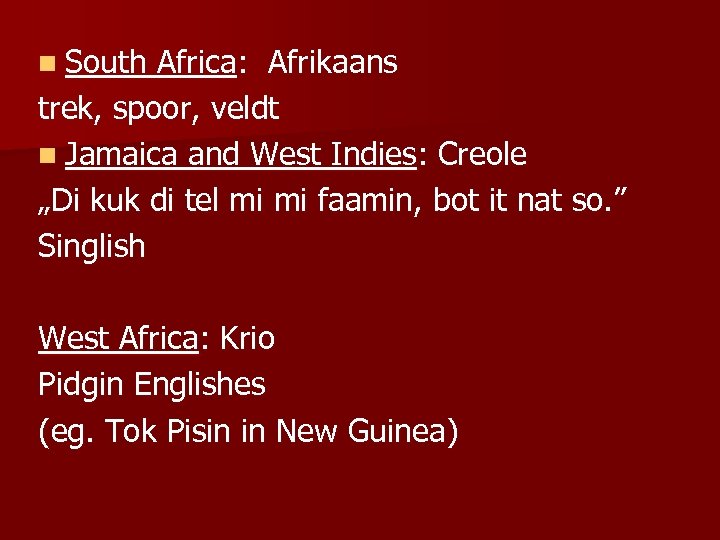
n South Africa: Afrikaans trek, spoor, veldt n Jamaica and West Indies: Creole „Di kuk di tel mi mi faamin, bot it nat so. ” Singlish West Africa: Krio Pidgin Englishes (eg. Tok Pisin in New Guinea)
Скачать презентацию Englishes British Scottish Global Dialect idiolect sociolect
fe1654a13c37ac8bec2c7ab572fb5040.ppt