 Скачать презентацию ENGLISH PHRASAL VERBS Speaker Lewis G Sager III
phrasal.ppt
- Количество слайдов: 21



ENGLISH PHRASAL VERBS Speaker: Lewis G. Sager III Sponsored by Mac. Millan Publishers
What are Phrasal Verbs? 2 -word and 3 -word verbs 2 -word verbs: cut up cut off turn on turn off put up put off 3 -word verbs: look up to put up with come up with catch up with
Why do phrasal verbs exist? Phrasal verbs (separable verbs) are prevalent in Germanic languages: German, Dutch, Danish, Swedish, Norwegian, and English. Phrasal verbs are not very prevalent in Latin languages: Castilian, Portuguese, Italian, French, Catalan, Romanian, etc. Latin languages use ‘reflexive verbs’ to a great extent to express the same ideas and concepts that we do in English with Phrasal Verbs.
Modern-day English is a combination of: Germanic dialects, as far back as the 5 th century a. d. Viking words (invasions) from 700 to 1000 a. d. French of the Middle Ages, thanks to the Norman Invasion of 1066 and the Battle of Hastings. Latin words, thanks to authors like Chaucer and Shakespeare of the 14 th and 16 th centuries.
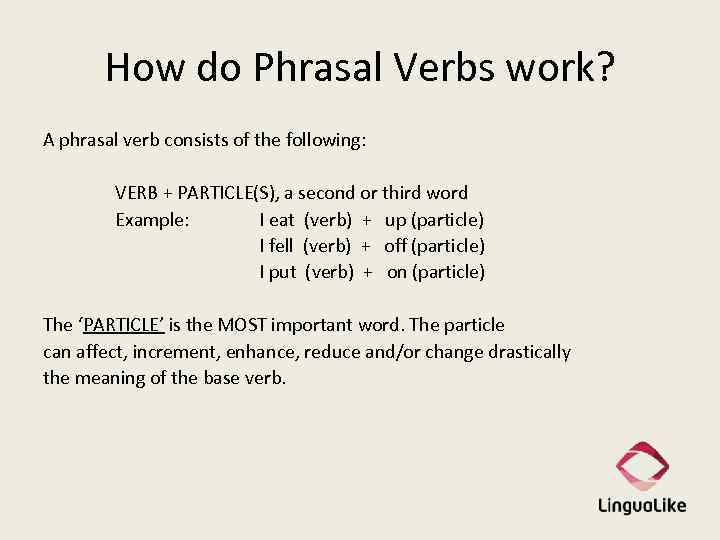
How do Phrasal Verbs work? A phrasal verb consists of the following: VERB + PARTICLE(S), a second or third word Example: I eat (verb) + up (particle) I fell (verb) + off (particle) I put (verb) + on (particle) The ‘PARTICLE’ is the MOST important word. The particle can affect, increment, enhance, reduce and/or change drastically the meaning of the base verb.
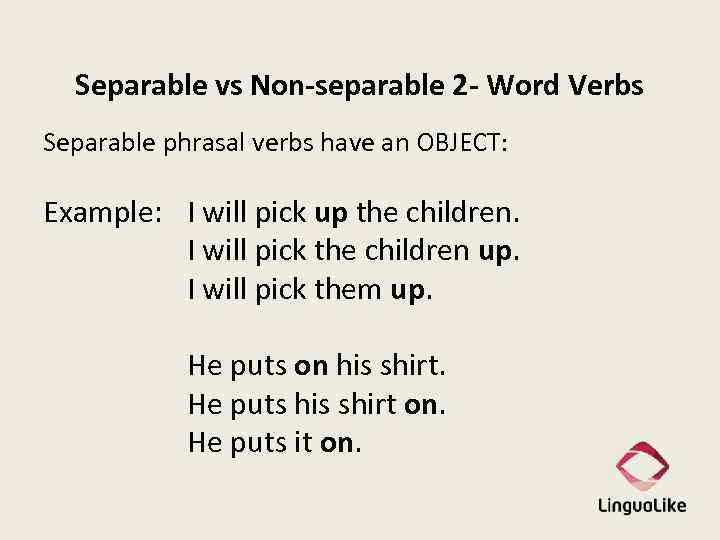
Separable vs Non-separable 2 - Word Verbs Separable phrasal verbs have an OBJECT: Example: I will pick up the children. I will pick the children up. I will pick them up. He puts on his shirt. He puts his shirt on. He puts it on.
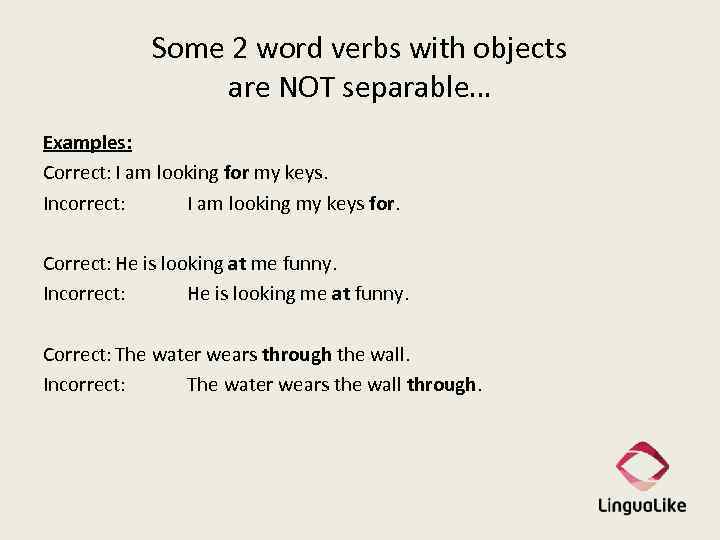
Some 2 word verbs with objects are NOT separable… Examples: Correct: I am looking for my keys. Incorrect: I am looking my keys for. Correct: He is looking at me funny. Incorrect: He is looking me at funny. Correct: The water wears through the wall. Incorrect: The water wears the wall through.
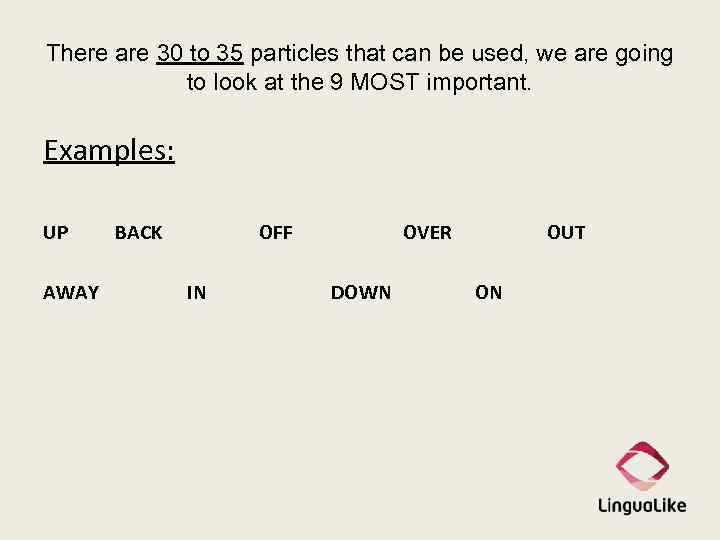
There are 30 to 35 particles that can be used, we are going to look at the 9 MOST important. Examples: UP AWAY BACK OFF IN OVER DOWN OUT ON
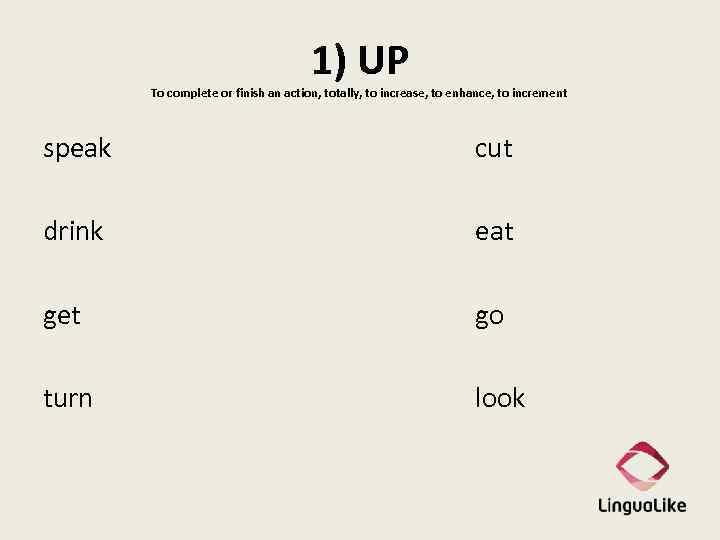
1) UP To complete or finish an action, totally, to increase, to enhance, to increment speak cut drink eat get go turn look
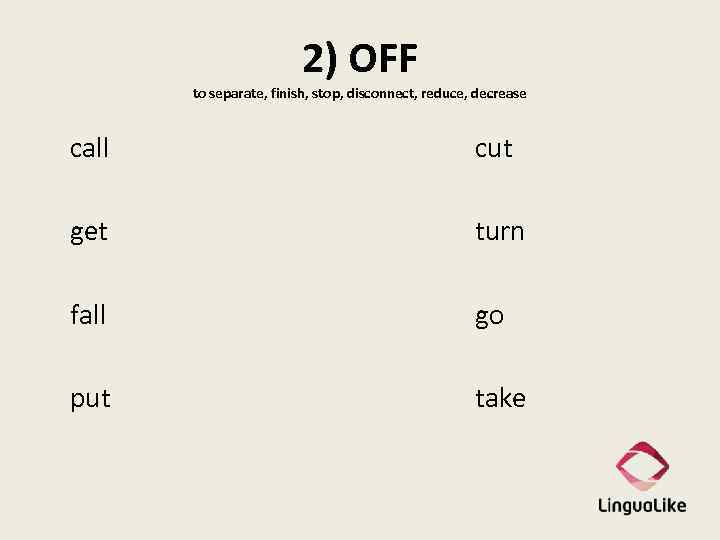
2) OFF to separate, finish, stop, disconnect, reduce, decrease call cut get turn fall go put take
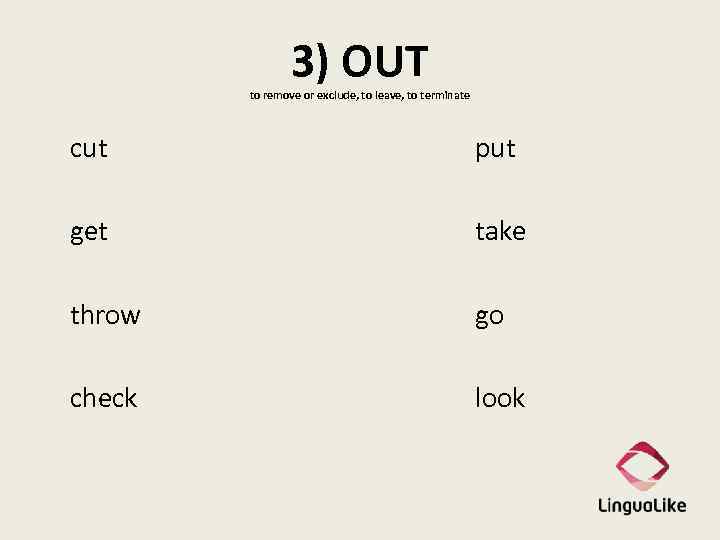
3) OUT to remove or exclude, to leave, to terminate cut put get take throw go check look
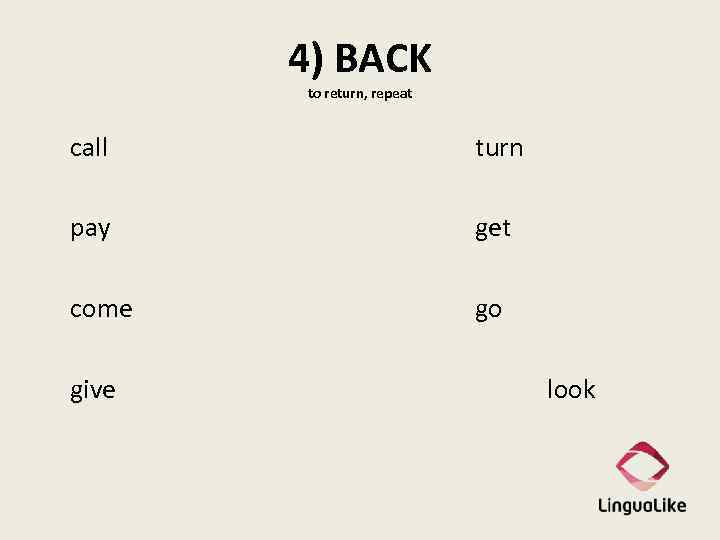
4) BACK to return, repeat call turn pay get come go give look
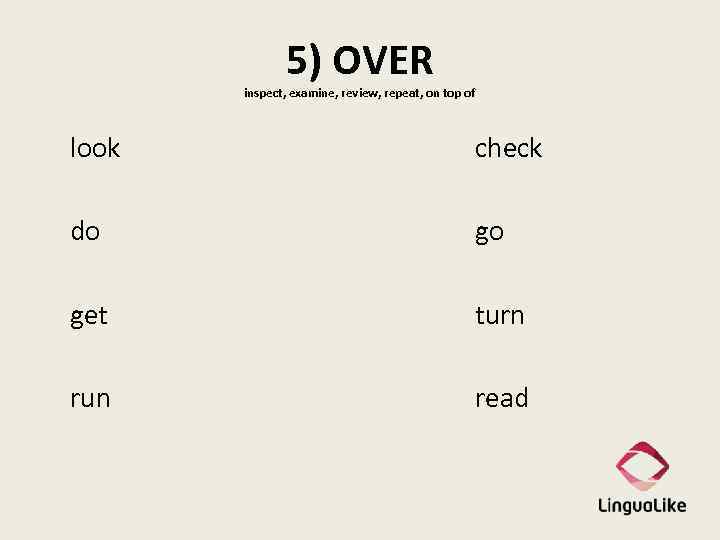
5) OVER inspect, examine, review, repeat, on top of look check do go get turn run read
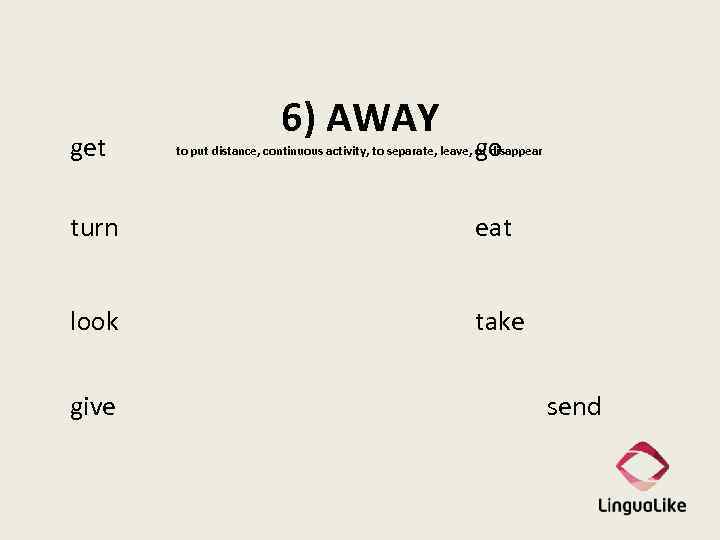
get 6) AWAY go to put distance, continuous activity, to separate, leave, or disappear turn eat look take give send
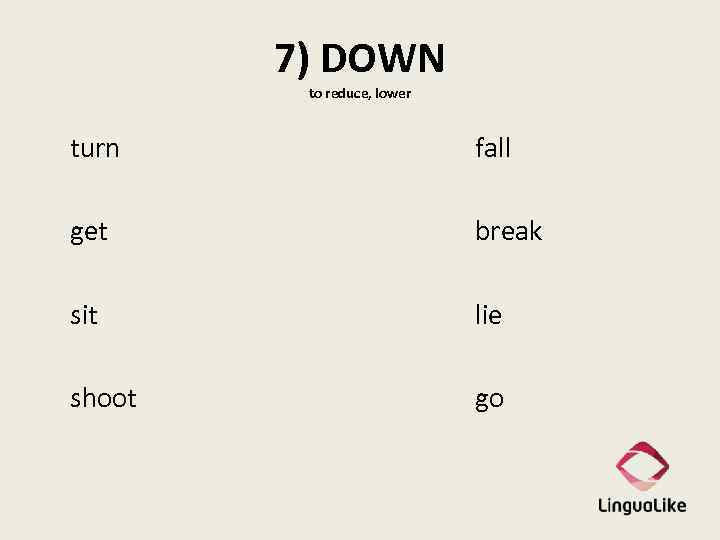
7) DOWN to reduce, lower turn fall get break sit lie shoot go
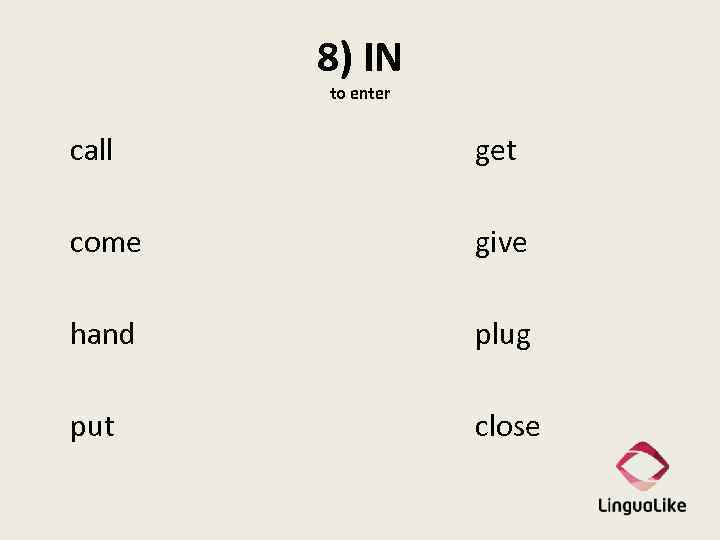
8) IN to enter call get come give hand plug put close
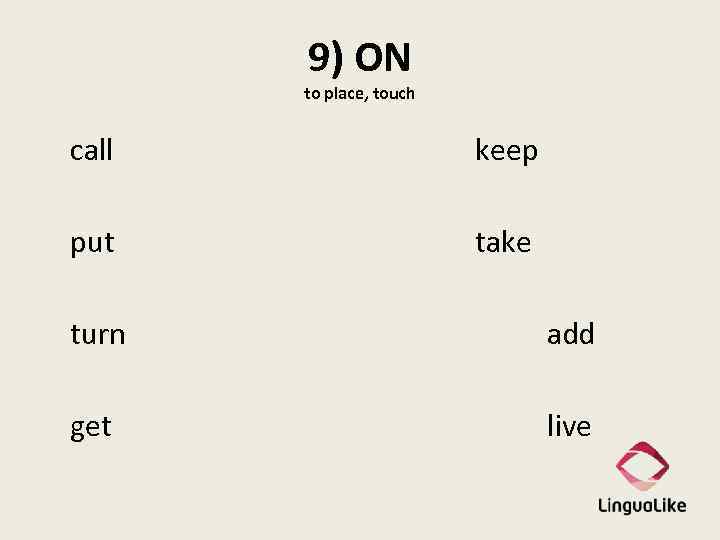
9) ON to place, touch call keep put take turn add get live
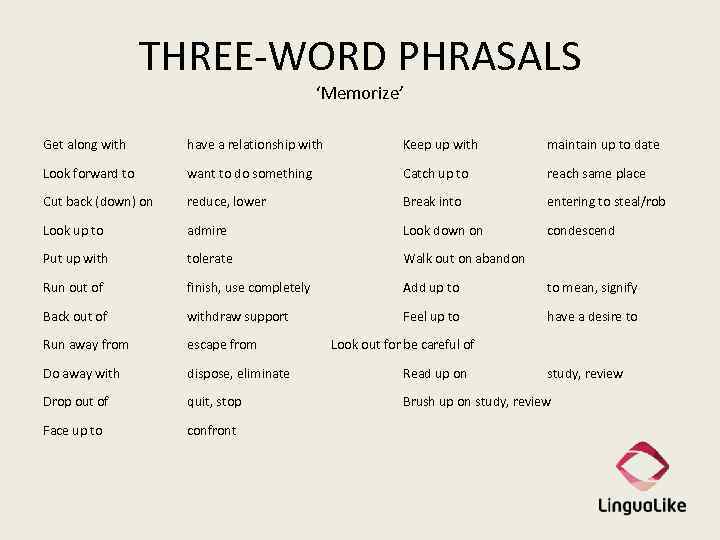
THREE-WORD PHRASALS ‘Memorize’ Get along with have a relationship with Keep up with maintain up to date Look forward to want to do something Catch up to reach same place Cut back (down) on reduce, lower Break into entering to steal/rob Look up to admire Look down on condescend Put up with tolerate Walk out on abandon Run out of finish, use completely Add up to to mean, signify Back out of withdraw support Feel up to have a desire to Run away from escape from Do away with dispose, eliminate Read up on Drop out of quit, stop Brush up on study, review Face up to confront Look out for be careful of study, review
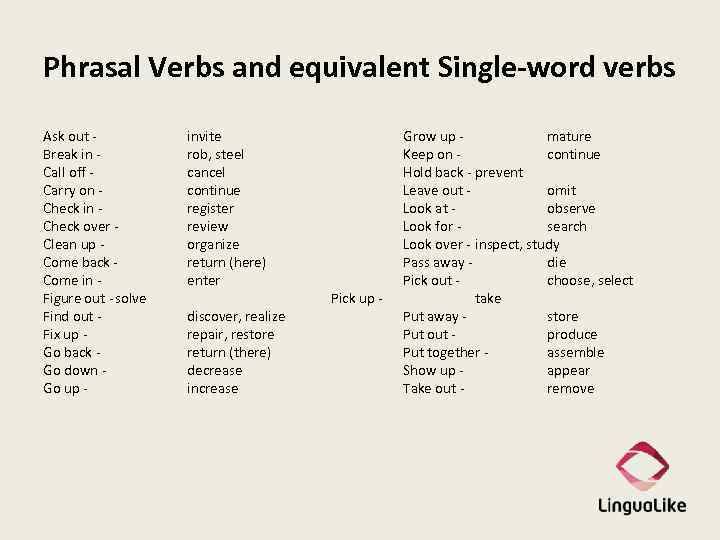
Phrasal Verbs and equivalent Single-word verbs Ask out Break in Call off Carry on Check in Check over Clean up Come back Come in Figure out - solve Find out Fix up Go back Go down Go up - invite rob, steel cancel continue register review organize return (here) enter discover, realize repair, restore return (there) decrease increase Pick up - Grow up mature Keep on continue Hold back - prevent Leave out omit Look at observe Look for search Look over - inspect, study Pass away die Pick out choose, select take Put away store Put out produce Put together assemble Show up appear Take out remove
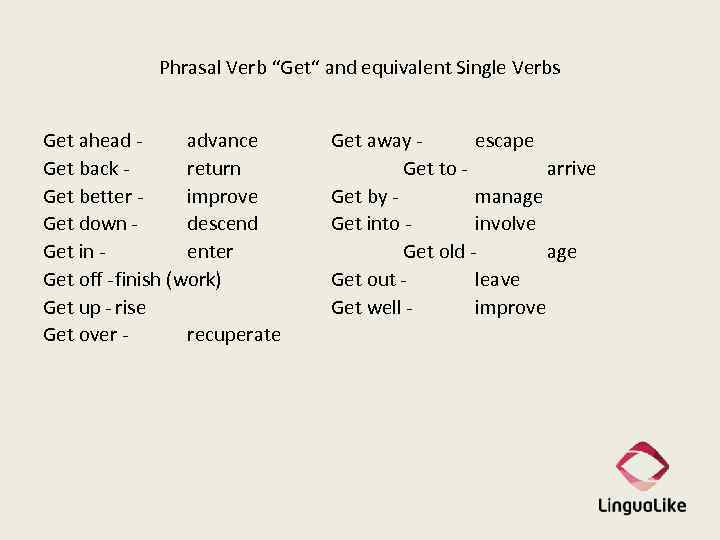
Phrasal Verb “Get“ and equivalent Single Verbs Get ahead advance Get back return Get better improve Get down descend Get in enter Get off -finish (work) Get up - rise Get over recuperate Get away escape Get to arrive Get by manage Get into involve Get old age Get out leave Get well improve
IN SUMMARY Phrasal verbs make life a lot more interesting and fun when you speak English, and a lot more expressive. So, next time you speak English, use a Phrasal Verb… Brush up on Them! They will ‘SPICE UP’ your life!
Скачать презентацию ENGLISH PHRASAL VERBS Speaker Lewis G Sager III
phrasal.ppt