


 Скачать презентацию English Irish Gothic and Their Modernist Turns
925d4a2f2bde3aaade297e999f50dfde.ppt
- Количество слайдов: 93
 English & Irish Gothic: and Their Modernist Turns Ying-hsiung Chou yhchou@mail. nctu. edu. tw 幻奇文學跨界想像研習營 (Dec. 9, 2007) 1
 I. Gothicism and/or Modernity 2
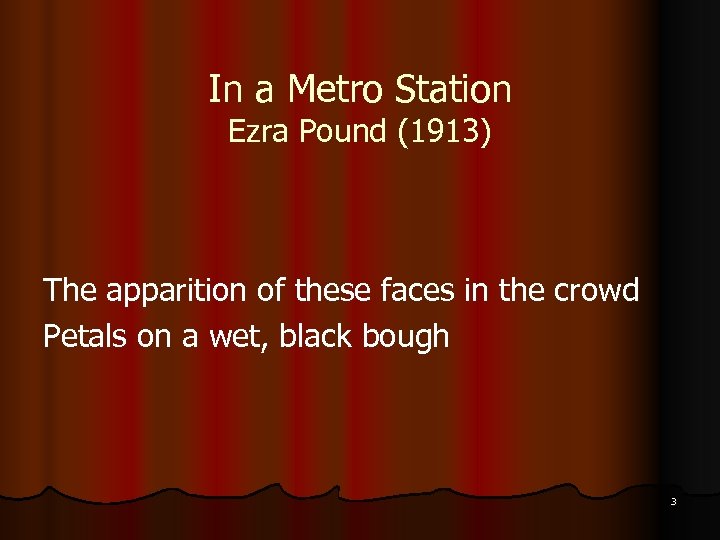 In a Metro Station Ezra Pound (1913) The apparition of these faces in the crowd Petals on a wet, black bough 3
 Gothicism and Modernity l Gothicism in modern times: l literature, etc. architecture, film, music, fashion, l Modernity=Gothicism? 4
 5
5
 6
6
 7
7
 8
8
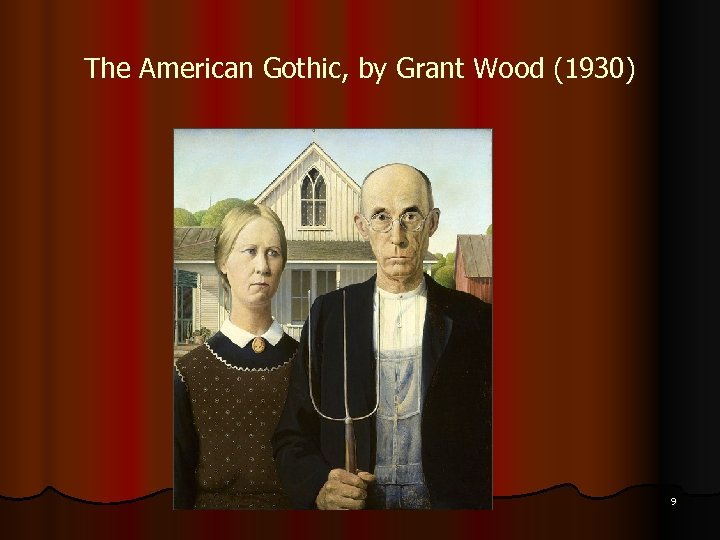 The American Gothic, by Grant Wood (1930) 9
 Two Faces of Modernity I (positive) l Modernist disenchantment (Weber) l Then: l Enchantment of the world dominated by myth and religion in the Medieval world l Now: l Its disenchantment through science 10
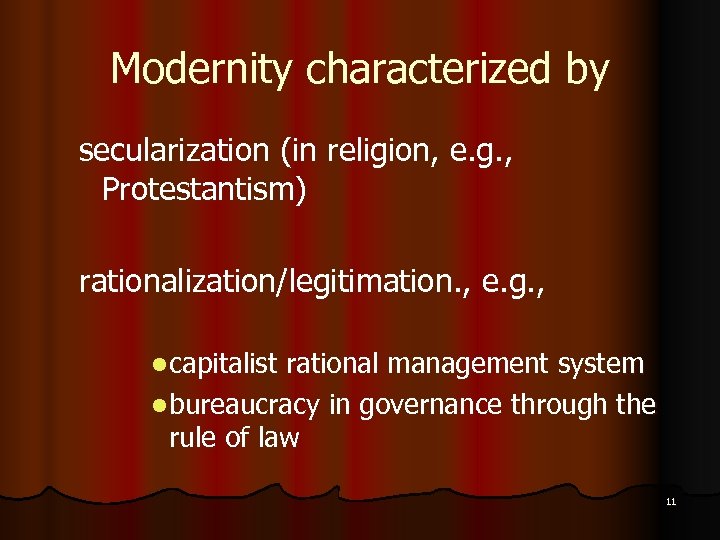 Modernity characterized by secularization (in religion, e. g. , Protestantism) rationalization/legitimation. , e. g. , l capitalist rational management system l bureaucracy in governance through the rule of law 11
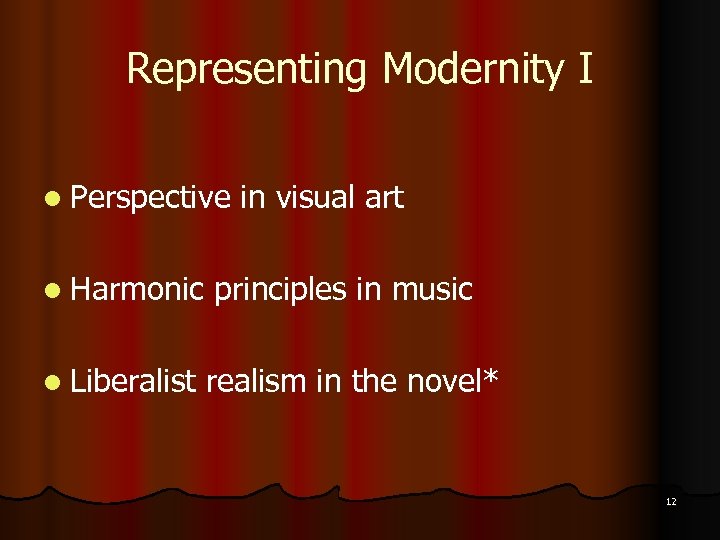 Representing Modernity I l Perspective l Harmonic l Liberalist in visual art principles in music realism in the novel* 12
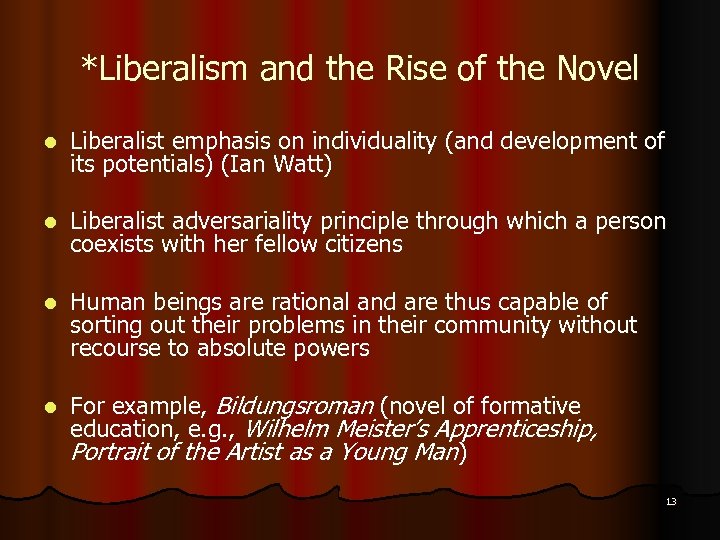 *Liberalism and the Rise of the Novel l Liberalist emphasis on individuality (and development of its potentials) (Ian Watt) l Liberalist adversariality principle through which a person coexists with her fellow citizens l Human beings are rational and are thus capable of sorting out their problems in their community without recourse to absolute powers l For example, Bildungsroman (novel of formative education, e. g. , Wilhelm Meister’s Apprenticeship, Portrait of the Artist as a Young Man) 13
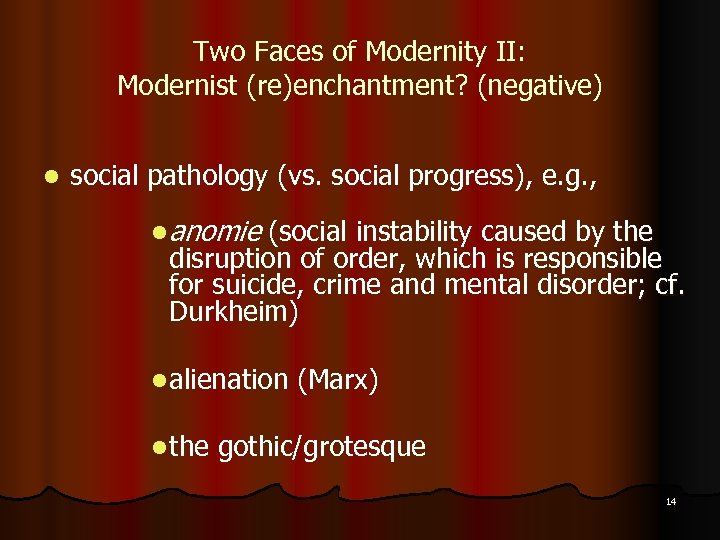 Two Faces of Modernity II: Modernist (re)enchantment? (negative) l social pathology (vs. social progress), e. g. , l anomie (social instability caused by the disruption of order, which is responsible for suicide, crime and mental disorder; cf. Durkheim) l alienation l the (Marx) gothic/grotesque 14
 Gothic Modernity or, the underside of modernity l Woolf: haunted house of the mind l Joyce: capitalist specteralization 15
 Woolf’s experimentations on l The mind and the world, and their interpenetration l By way of probing the underside of reality l. A reality that is felt to be unacceptable (due to war, paternalism, materialism, etc. ) 16
![“A Haunted House” (from Virginia Woolf, Monday or Tuesday [1921]) l. A classic Gothic](https://present5.com/presentation/925d4a2f2bde3aaade297e999f50dfde/image-17.jpg "“A Haunted House” (from Virginia Woolf, Monday or Tuesday [1921]) l. A classic Gothic") “A Haunted House” (from Virginia Woolf, Monday or Tuesday [1921]) l. A classic Gothic story with l. A ghostly couple l. A haunted house l Supernatural l Innocent happenings subjects 17
“A Haunted House” (from Virginia Woolf, Monday or Tuesday [1921]) l. A classic Gothic story with l. A ghostly couple l. A haunted house l Supernatural l Innocent happenings subjects 17
 Gothicism with a Modernist Turn Cognitive Hesitancies l. A ghostly couple revisit their old house looking for “it” (that they’ve left behind or left unachieved before they died? ) l They go about their search, trying as much as possible not to disturb the current tenants. 18
 l But the latter (the narrator being one of them) are already aware of their visit l While the house is haunted by the visitors, the ghostly couple are also being stalked by the narrator l And in the “melee” of knowing and being known, the house also takes on a life of its own and pronounces, “Safe, safe” 19
 l To add to the confusion, nature--as an extension of the house, including what’s inside and outside --also joins in, making “sense” further inaccessible l The outside scene is seen darkly through the glass (cf. 1 Corinthians 12: “Now we see through a glass, darkly) l And as the natural world is projected unto the domestic space, it becomes free-floating and intangible 20
 l As the narrator pushes for an explanation for the visitation, death is introduced as it has already taken the ghostly couple away from each other hundreds of years ago l ”Death us” was the glass; death was between 21
 l The story ends with “I” (the narrator) waking up (cf. “human voices wake us, and we drown, ”) crying, is this your buried treasure? The light in the heart” l “Oh, 22
 Six Implications l Am I the one you’ve been looking for? Or, am I the light in the heart? (The perceiver turned into the perceived? ) l And, like narrator, like reader: Am I, the reader, the haunted, somehow suffering from my inability to know the world l And yet am paradoxically implicated in narration (i. e. , the focus being no longer on the hard-nosed world out there, but the mind itself, asking: “What do I know” [cf. Montaign] )? l 23
 Strategies of a Modern Gothic Reading l 1. Floating pronouns (in the absence of fixed antecedents): they (the ghostly couple? ), one (the resident in the house, I? ), it (the buried treasure, the past, death? ) l 2. countrapuntality of self and other 24
 l 3. Seeing and being seen as two-way, reciprocal cognition l I, the narrator, am left undisturbed and l I stalk them even though they could not been seen, because, l we are separated by the glass, which is death 25
 l 4. The interpenetration of the real and the ghostly l The world is seen darkly in/through the glass l The world casts its shadows in the drawing room—”spread about the floor, hung upon the walls, pendant from the ceiling—what? ” l But the world cannot be grasped empirically— ”. . . my hands are empty” 26
 l 5. The interpenetration of the animate and the inanimate l The house seems to be energized by the visitation and takes on a life of its own, providing a shelter to the visitants (“Safe, safe”) l Above all, the house is intelligent and knowledgeable about the buried treasure 27
 l 6. The interpenetration of life and death l Our eyes darken; we hear no steps beside us; we see no lady spread her ghostly cloak I cried “Oh, is this your buried treasure? The light in the heart. ” l Waking, l (Existential and epistemological death-in-life? ) 28
 Two Modes of Death in Modern Life l Woolf: the ambivalences of human intelligence (i. e. , its/her inability to know vis-à-vis the privileging of reverie) renders people less than human (epistemological aporia) l Joyce: the dehumanized condition of city life reduces people to a stage of paralyzed automatons and hence death 29
![“The Dead” (from James Joyce, Dubliners [1907, 1914]) l Biblical Gabriel: An archangel in](https://present5.com/presentation/925d4a2f2bde3aaade297e999f50dfde/image-30.jpg "“The Dead” (from James Joyce, Dubliners [1907, 1914]) l Biblical Gabriel: An archangel in") “The Dead” (from James Joyce, Dubliners [1907, 1914]) l Biblical Gabriel: An archangel in the Bible, he was employed to announce the birth of John the Baptist to Zechariah and to announce the birth of Jesus to the Virgin Mary l Gabriel Conroy attends a Christmas party and despite his self-claimed voice of enlightenment finds himself increasingly alienated, even accused of being a stranger, a West Briton (149) 30
“The Dead” (from James Joyce, Dubliners [1907, 1914]) l Biblical Gabriel: An archangel in the Bible, he was employed to announce the birth of John the Baptist to Zechariah and to announce the birth of Jesus to the Virgin Mary l Gabriel Conroy attends a Christmas party and despite his self-claimed voice of enlightenment finds himself increasingly alienated, even accused of being a stranger, a West Briton (149) 30
 l As the party winds down, Gabriel sees a woman standing at the top of the staircase listening to some indistinct music. The woman turns out to be his wife, l but there is something about her that he cannot quite see through l The distant music turns out to be a tune Gretta’s teenage lover once sang to her before he died soon after serenading her in the rain 31
 l Gabriel’s alienation multiplies. He is physically denied by his wife. l The story ends with Gabriel feeling the onset of death— l ”one by one they were all becoming shades (176). He imagines he sees “the form of a young man standing under a dripping tree” 32
 l “The solid world itself which these dead had one time reared and lived in was dissolving and dwindling” (All That’s Solid Melts into Air. ) l “The time had come for him to set out on his journey westward” l Voices from/of the other (world) 33
 II. English Gothic 34
 Psychological grounds for Gothicism l Progress l Reason or regression/degeneration or un-reason (the unconscious) 35
 Historical grounds for Gothicism? l French Revolution l Industrial Revolution(s) 36
 All That is Solid Melts into Air l What seems is not what is l Spectralization of modern life l “The Adoration of the Magi” (1897) by Yeats l “Midsummer Night Madness” (1932) by O’Faolain l “A Haunted House” (1921) by Woolf 37
 Figuration between the Marvellous and the Uncanny l Accepting the supernatural as it is l Realizing the potential inadequacy of a rational epistemological (i. e. , how we know what we know) outlook l Cognitive hesitancies 38
 Hesitancies 1 l Past and Present/Future l Past coming back to haunt present, e. g. , Carmilla, “The Words on the Window Pane. ” l Self and Other l Self being possessed by Other, e. g. , “The Adoration of the Magi” 39
 Hesitancies 2 l Real and Un-real l Historical settings and characters transformed into their uncanny other, e. g. , “Midsummer Night Madness” l Textual/Visual and historical l Textually constructed world superimposed upon the real world, e. g. , Dracula 40
 English and/or Irish Gothic 1 (Cf. English Gothic slide 45) l Minerva Press (London) publishes a large portion of Gothic novels written during the 1790 s by women on Irish themes l English Gothic: Contra-realist outlook* l things are not what they seem, esp. in modern times dominated by reason, technology and bureaucracy l representation of the uncanny as an act of empowerment 41
 *Realism Ian Watt, The Rise of the Novel (1957) l Decline Idea) of classical idealism (universal l In favor of a modern outlook with emphasis on the individual: l Possessive individualism l Liberal individualism 42
 English and/or Irish Gothic 2 l Irish Gothic: l. A branch of English Gothic l A uniquely Irish/Anglo-Irish or Anglo-Anglican mode l Attachment to Irish history and politics (Mc. Cormack 833), or 43
 English and/or Irish Gothic 3 Anglo-Irish double bind (choosing between two unsatisfactory decisions) l demonization of the indigenous Catholic tradition (for its corrupt practices) l realization of their own identity with that which they demonize (cf. more Irish than the Irish) 44
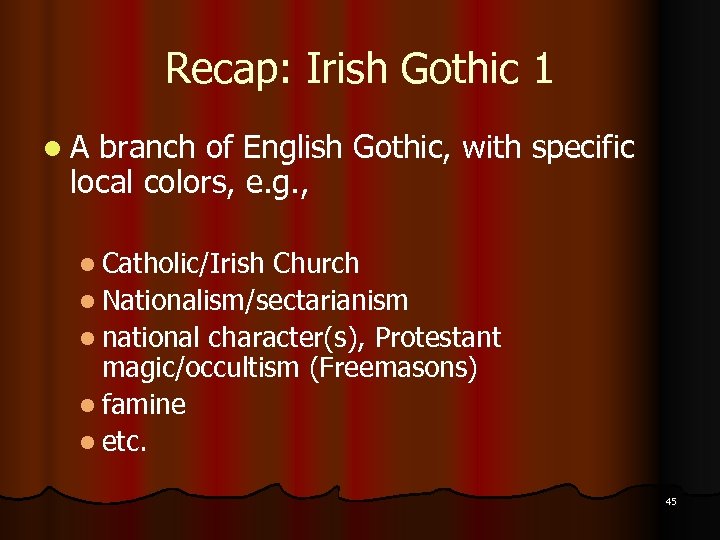 Recap: Irish Gothic 1 l. A branch of English Gothic, with specific local colors, e. g. , l Catholic/Irish Church l Nationalism/sectarianism l national character(s), Protestant magic/occultism (Freemasons) l famine l etc. 45
 Recap: Irish Gothic 2 l. A unique mode of representing/reading the Irish experience; l But what precisely is unique about the Irish Gothic? 46
 Speculations l Ireland as a Gothic space, which is paradoxical, anomalous l Demonization of Irish and Identifying with the Irish l Anglo-Irish writing in a Gothic mode to make up for their declining influence (Roy Foster, in Killeen 2) l Gothic writing as exorcism 47
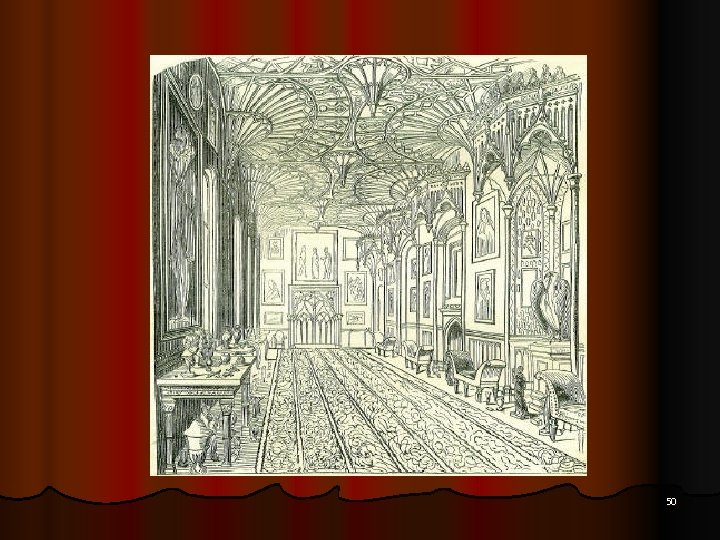
 English Gothic 1 (Periodization) l Classic/Literary Gothic (1764 -1820 s), often dealing with dynastic disorders in an alien setting involving victimizations (of a hapless maiden) l The Castle of Otronto (1764): recovered text with l The Mysteries of Udolpho (1794): the heroine’s dubious authenticity and dynastic disorders (cf. Mac. Pherson, Ossian, 1765) gradual realization of her identity as a illegitimate child (Miles 46 -47) 48
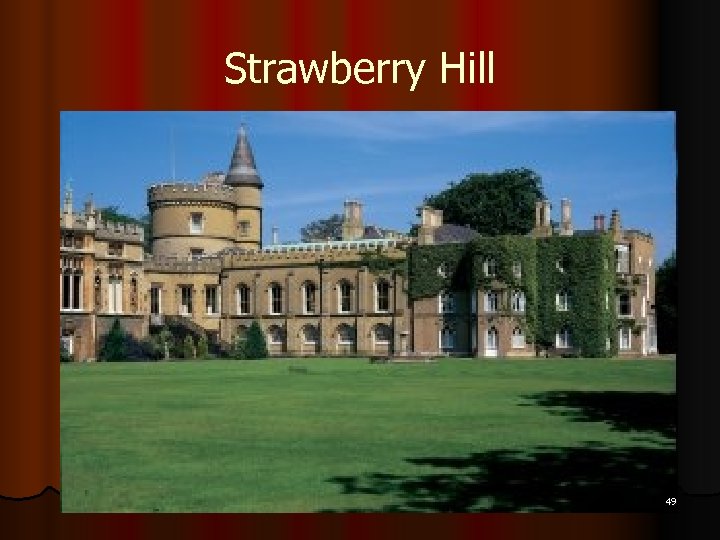 Strawberry Hill 49
 50
50
 English Gothic 2 l Romantic (1820 s-1840 s) l Frankenstein (1818, 1831): l Instinctual self (vs. rational self) l Forbidden knowledge, overreaching (the Faustian) (vs. Grace) l Science and reason (vs. religion) l Monstrosity (vs. humanity) 51
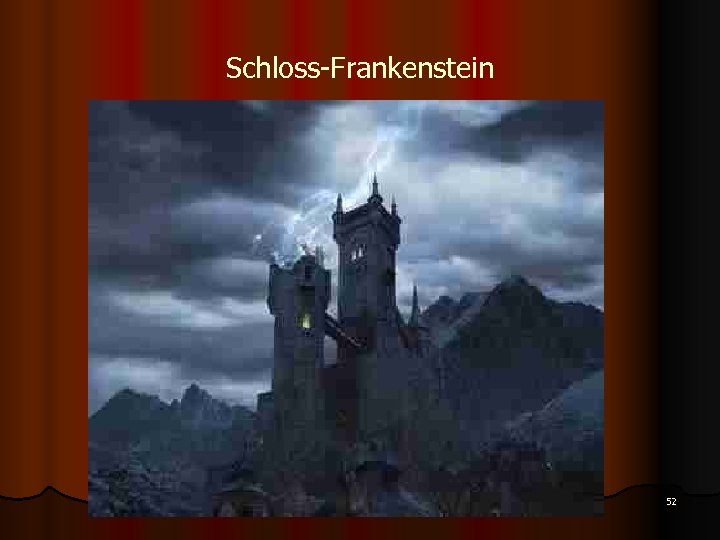 Schloss-Frankenstein 52
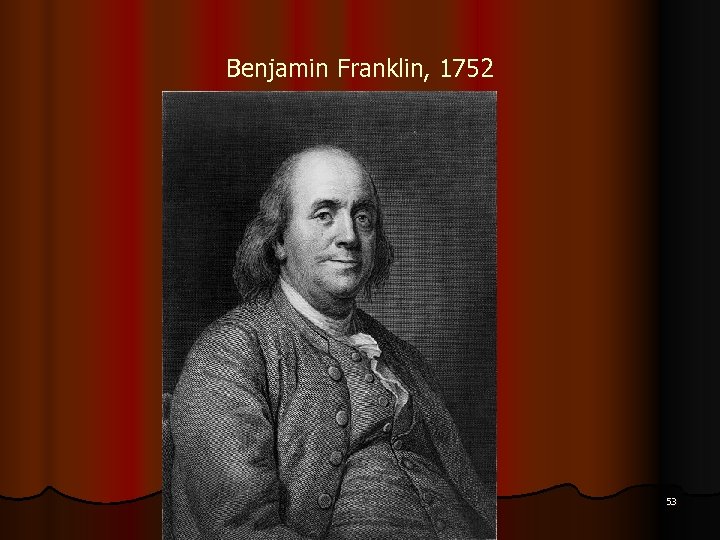 Benjamin Franklin, 1752 53
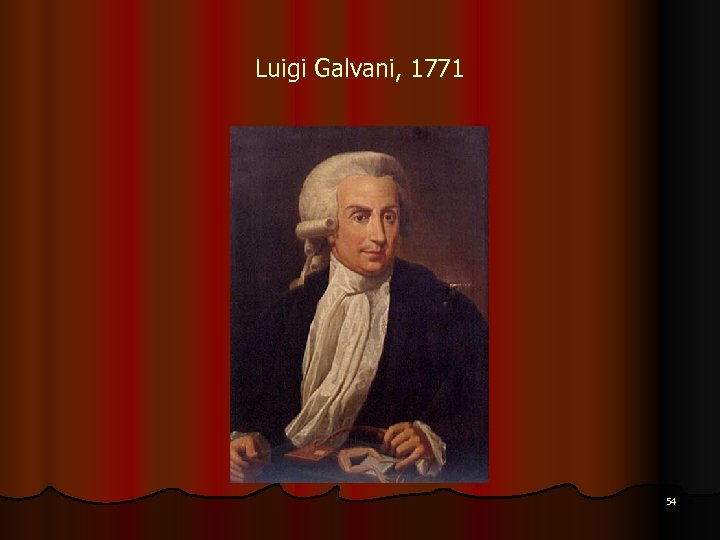 Luigi Galvani, 1771 54
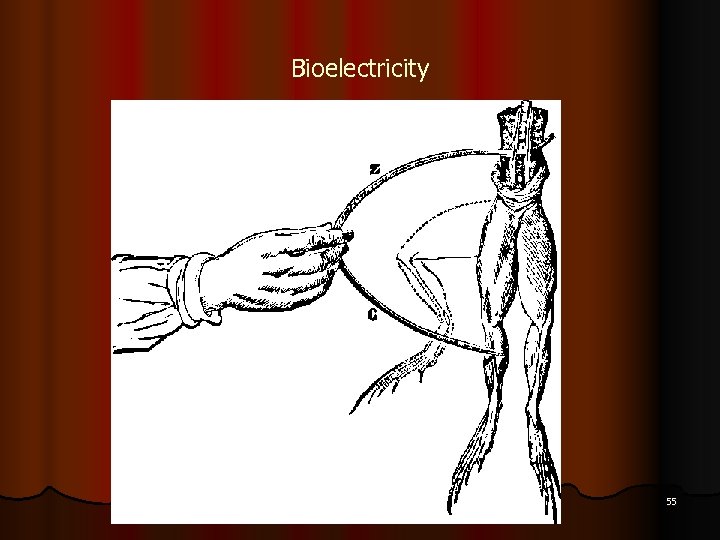 Bioelectricity 55
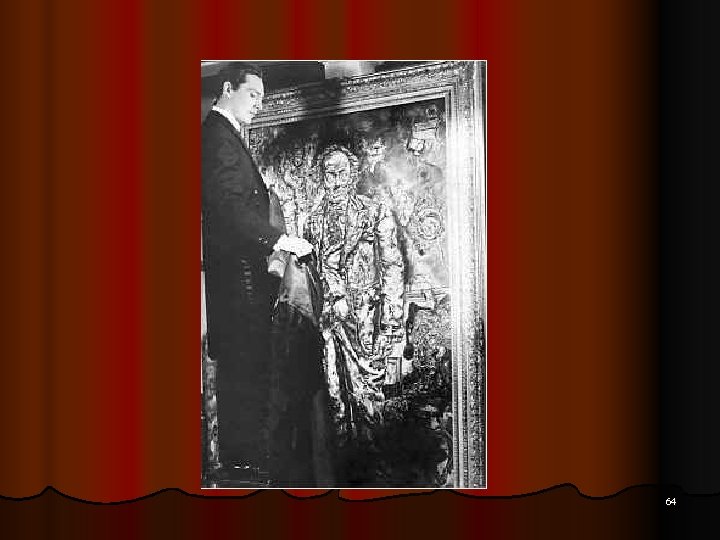
 English Gothic 3 l Victorian l Strange (1840 s*-1890 s) Case of Dr. Jekyll and Mr. Hyde (1886): self and other; good and evil; outward respectability and inner lust l The Picture of Dorian Gray (1890): fin-desiecle quest for authenticity and spontaneity 56
 *Gothic Revival l 1840 sl. A new movement in architecture favoring the medieval over the classical 57
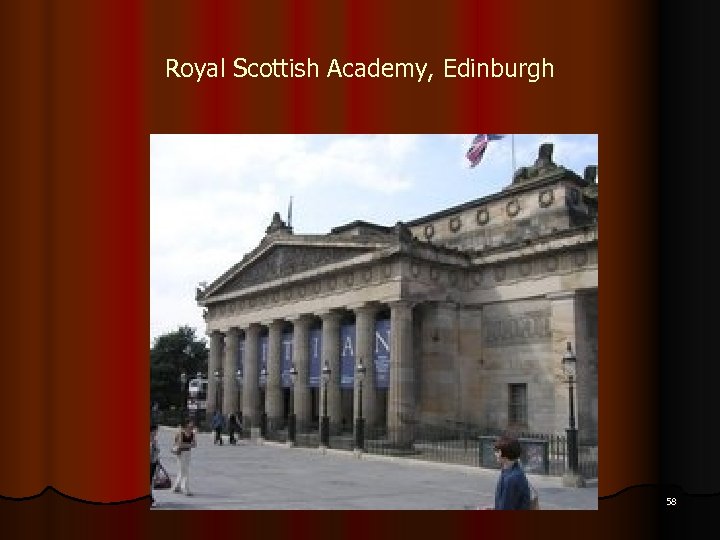 Royal Scottish Academy, Edinburgh 58
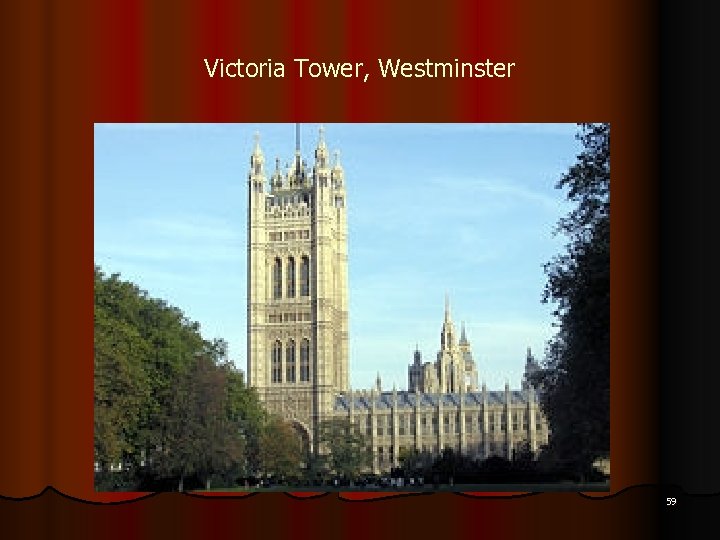 Victoria Tower, Westminster 59
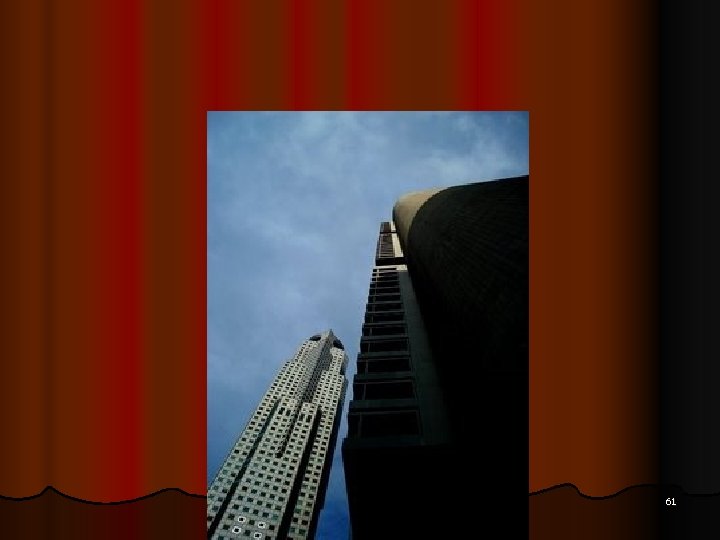
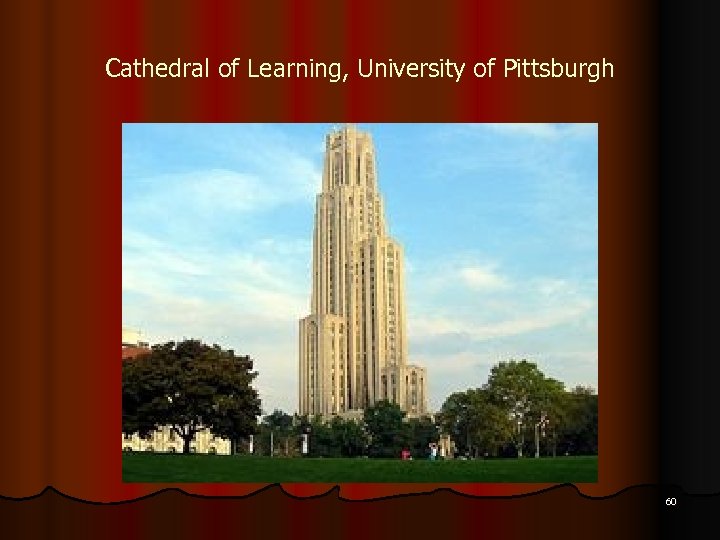 Cathedral of Learning, University of Pittsburgh 60
 61
61
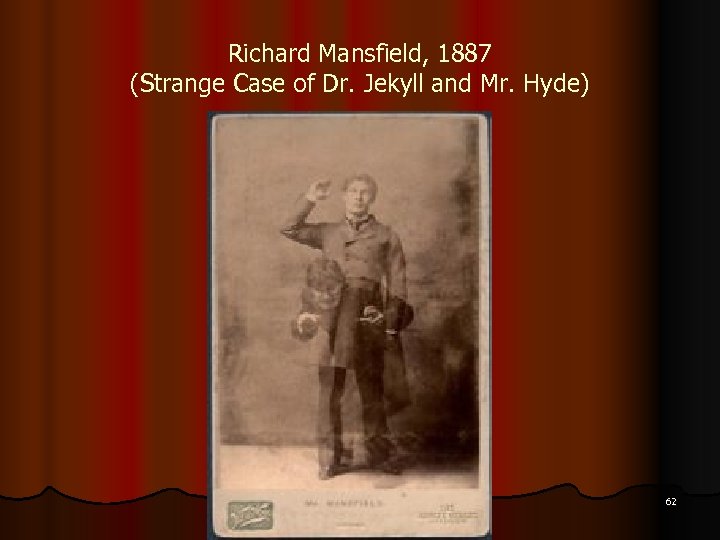 Richard Mansfield, 1887 (Strange Case of Dr. Jekyll and Mr. Hyde) 62
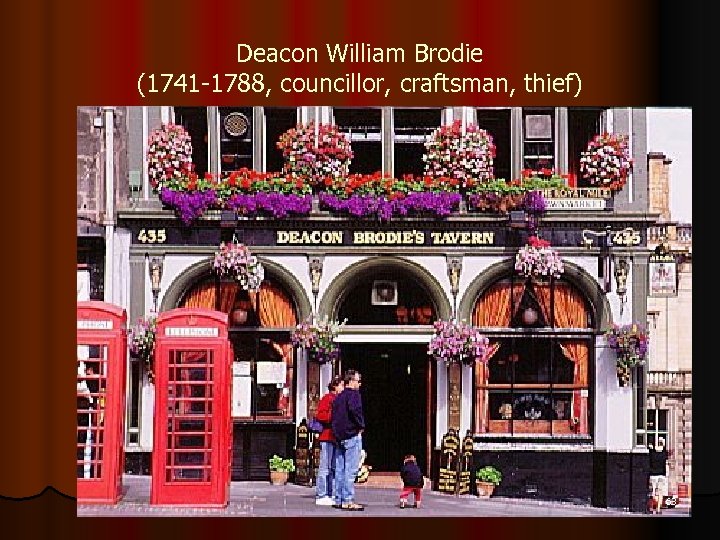 Deacon William Brodie (1741 -1788, councillor, craftsman, thief) 63
 64
64
 English Gothic 4 l Modern (1890 s-) l Dracula, 1897 l Occultism l Desire against science against Manners 65
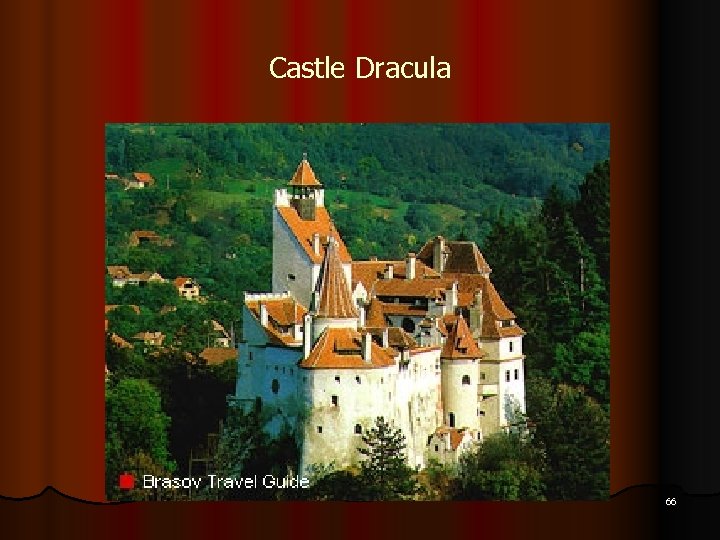 Castle Dracula 66
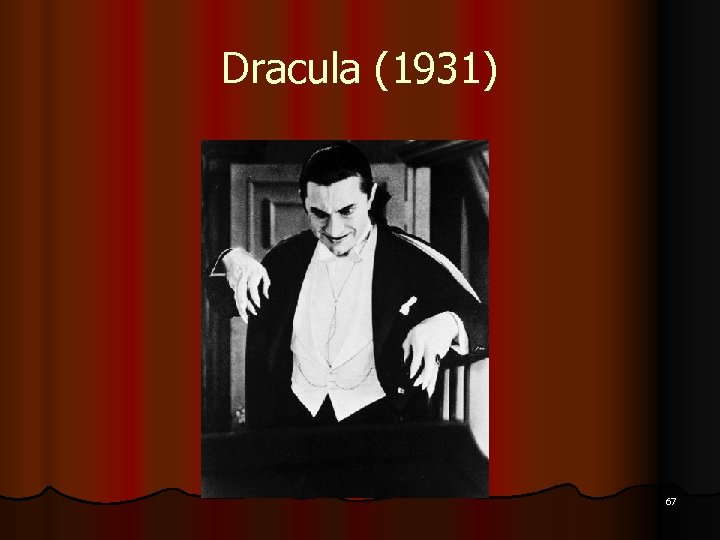 Dracula (1931) 67
 Marfan Syndrome l 馬凡氏症 Marfan Syndrome (MFS) 簡介、病因 馬凡氏症是一種系統性的結締組織病變,古時候的劉備(傳言其雙手過膝),及高瘦的美國總統林肯均被懷疑為馬凡氏症候群之病患。最早於 1896年由法國小兒科醫師 Marfan 提出臨床報告。馬凡氏症患者在臨床上具有骨骼系統、眼睛系統、心血管系統等三大方面臨床特徵,目前已知約70%~93%馬凡氏患者是因為位於第 15對染色體上的 fibrillin-1 (FBN 1) 基因發生突變所造成,帶有此基因突變者均會發病,但是依據基因突變點的不同,臨床症狀也有相當大差別,甚至同一家族中也可能有不同程度的臨床症狀, 嚴重者可能出生即有生命危險,輕微者早期幾乎不具任何症狀。 發生率、遺傳模式 馬凡氏症的發生率依國外統計約為 1/10000,而且不具有人種或性別差異性,國內並無相關統計資料,但依照台北榮總患者人數估計,國內發生率約與國外相當。馬凡氏 症為體染色體顯性遺傳疾病,因此如果雙親中有一人患有此症,其子代不分性別,每胎皆有50%的機會患有此症。 臨床症狀及診斷 臨床診斷標準根據 1996 年 De. Paepe 等人所提出的主要及次要特徵作為診斷的參考: 一、 骨骼系統 1. 主要特徵 l l l l l 胸腔骨骼異常:胸骨突出或凹陷(雞胸或漏斗胸) 上下半身比例縮減( < 0. 85/成年及年長之兒童)、展臂長與身高之比值過高( > 1. 05) 0. 85/成年及年長之兒童)、展臂長與身高之比值過高( 1. 05) 因為四肢骨骼過度生長,因此具有蜘蛛狀手指,使得手腕有Walker-Murdoch之特徵(當一邊手掌握住對側的手腕時,其姆指與小指能夠重疊在一起);姆指有 Steinberg特徵 (指在沒外力的協助下,當手姆指可以向尺骨側彎曲時,可以超出掌面) 脊柱側彎(scoliosis)、脊柱後凸(kyphosis)或脊柱脫位(spondylolithesis) 脊柱側彎(scoliosis )、脊柱後凸(kyphosis)或脊柱脫位(spondylolithesis 肘關節伸展程度減小( < 170 度) 扁平足 髖骨突出(protrusio acetabuli) 2. 次要特徵 漏斗胸嚴重程度中度 關節過動(hypermobility) 高而呈拱形的上顎及發育不全的下顎、牙齒排列擁擠 68
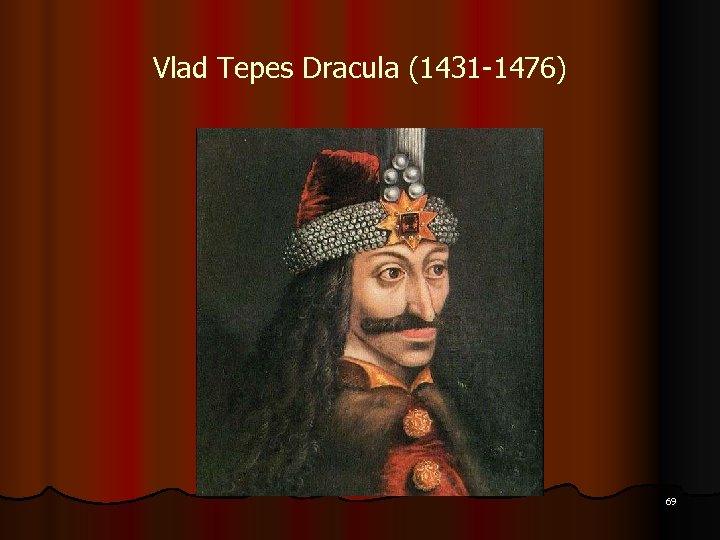 Vlad Tepes Dracula (1431 -1476) 69
 III. Irish Gothic 70
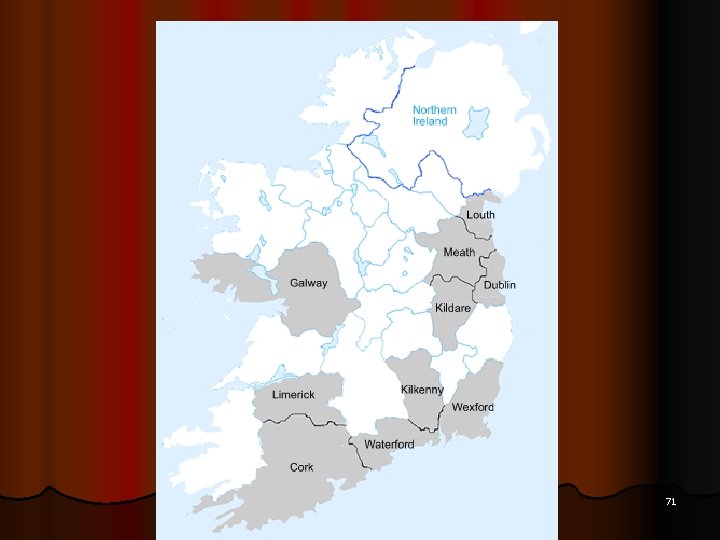 71
71
 Anglo-Irish Ascendancy: Four Phases (1) l First Settlement (1603) l Old (Gaelic) Irish l Old English vs. l Anglo-Irish/Anglican (vs. Catholics, Presbyterians and Dissenters) 72
 l Irish 60) Rebellion and Re-conquests (1652 - l Execution of rebels and Catholics after 1641 Irish uprising and settlement to the Caribbean l Proposed dispossessing of land originally owned by the Catholics to make way for the adventurers/settlers (notably from Scotland) 73
 Anglo-Irish Ascendancy: Four Phases (2) l Ascendancy (Anglo-Irish/Anglican) l Irish rising and the Williamite War (16891691) l Penal Laws against the Catholics and the Presbyterians l By mid-18 th century, 95% of land in the Protestants’ ownership 74
 l 1798 l Act rising (Emmet) of Union 1801 75
 Anglo-Irish Ascendancy: Four Phases (3) l Contraction l Absentee landlords l Catholic Emancipations (1829) l Potato Famine (1845 -52) Food shipped to England l Restrictions on relief funds l 76
 Anglo-Irish Ascendancy: Four Phases (4) l Siege l Home Rule (to grant autonomy to the territory) legislation aimed at ending exploiting the Irish since the Act of Union l Gladstone’s unsuccessful attempts to pass a Home Rule bill in 1886, 1893 l revived in 1912 but interrupted by WW 1 l l Irish War of Independence (1919 -1922) 77
 Irish Gothic 1 l Late 18 th century: l Regina Maria Roche, Children of the Abbey (1796) l Mrs. Kelly, Ruins of Avondale Priory (1796) l Mrs. F. C. Patrick, The Irish Heiress (1797) l ‘the Wife of an Officer, ” Most Ghosts (1798) l Mrs. Colpoy, The Irish Excursion (1801) 78
 Irish Gothic 2 l Charles Robert Maturin* (1780 -1824): l Melmoth the Wanderer (1820) l insanity as a symptom/trope of divided loyalty during the civil war 79
 *Huguenots l French Protestants emigrating to England Ireland in the late 17 th century l 1598: Edict of Nantes l 1572: Massacre of St. Barthelomew l 1629: Revocation of Edict l 1685: 400, 000 emigrated to England, Netherlands, Germany 80
 Irish Gothic 3 l Joseph Sheridan Le. Fanu (1814 -1873): Carmilla (1872) l Vampire Mircalla comes back after 2 hundred years and disguise herself as Carmilla (Laura’s roommate) and Millarca (the General’s niece) (anagrams) l. A past that refuses to be put to rest returns to haunt modern people 81
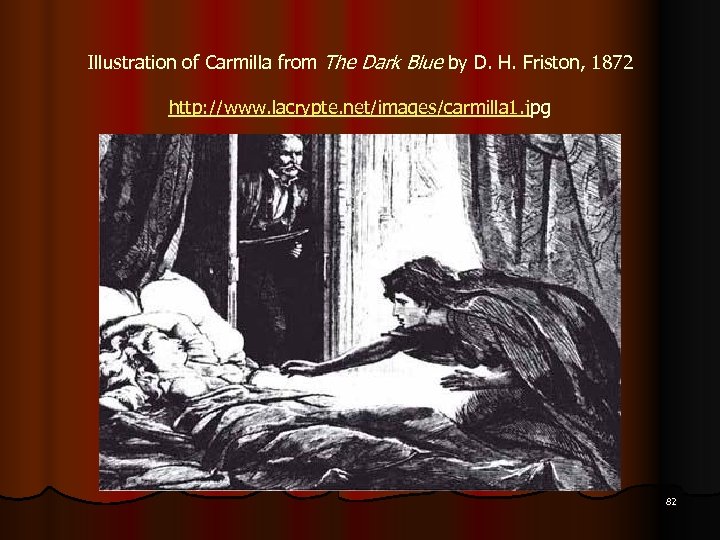 Illustration of Carmilla from The Dark Blue by D. H. Friston, 1872 http: //www. lacrypte. net/images/carmilla 1. jpg 82
 Irish Gothic 4 l Bram Stoker (1847 -1912) l Dracula (1897) 83
 Irish Gothic 5 l W. B. Yeats, John Millington Synge, Elizabeth Bowen 84
 References l Killeen, Jarlath. “Irish Gothic: A Theoretical Introduction. ” The Irish Journal of Gothic and Horror Studies. http: //irishgothichorrorjournal. homestead. com/ja rlathprinter. html l Mc. Cormack, W. J. “Irish Gothic and After. ” The Field Day Anthology of Irish Writing. Eds. Seamus Deane (General Editor), Andrew Carpenter and Jonathan Williams. Derry: Field Day Publications, 1991. Vol. II, 831 -854. 85
 l Miles, Robert. “Ann Radcliffe and Matthew Lewis. ” A Companion to the Gothic. Ed. David Punter. Oxford: Blackwell, 2001. 41 -57. l Sage, Victor. “Irish Gothic: C. R. Maturin and J. S. Le. Fanu. ” A Companion to the Gothic. Ed. David Punter. Oxford: Blackwell. 81 -93. 86
 IV. Appendix: Nationalist Gothicism 87
 l The Terrific Register; or, Record of Crimes, Judgments, Providences and Calamities, 2 vols. (London: Sherwood, Jones and Co. , 1825). 88
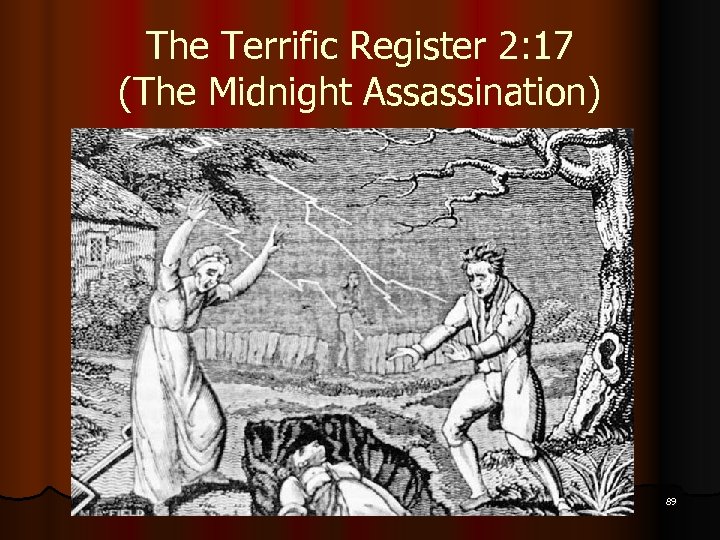 The Terrific Register 2: 17 (The Midnight Assassination) 89
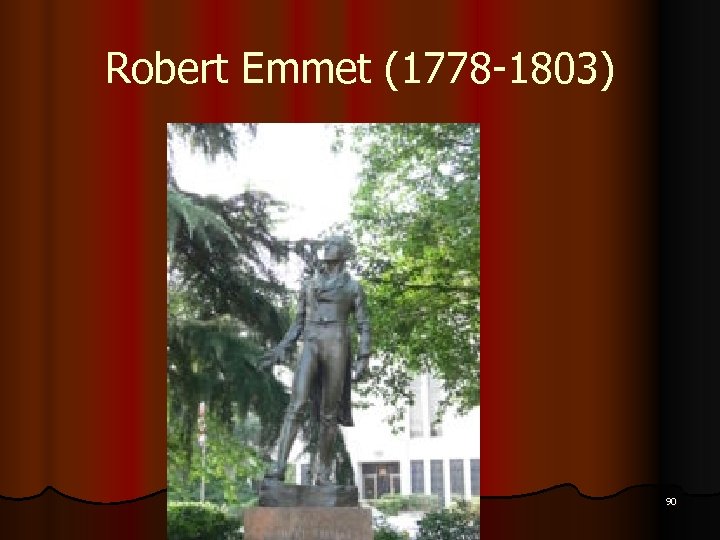 Robert Emmet (1778 -1803) 90
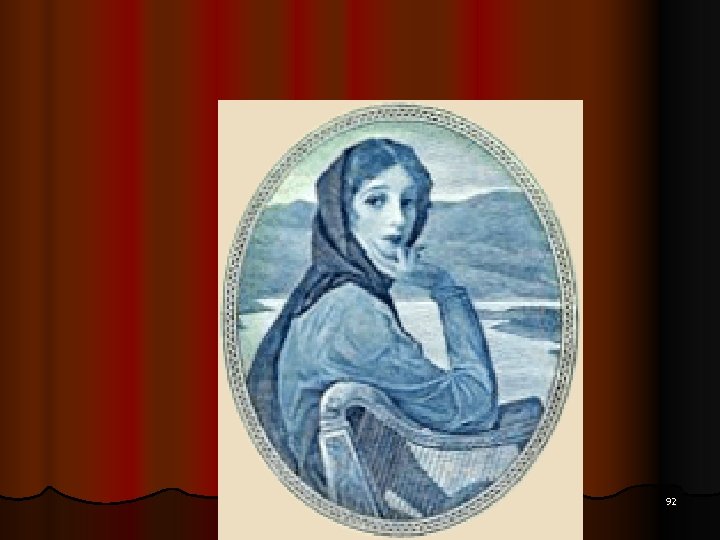
 l Unconscious act as a result of some supernatural visitations connected with nationalism l Cf. “Cathleen Ni Houlihan” (1902) by Yeats about 1798 Irish Rebellion 91
 92
92
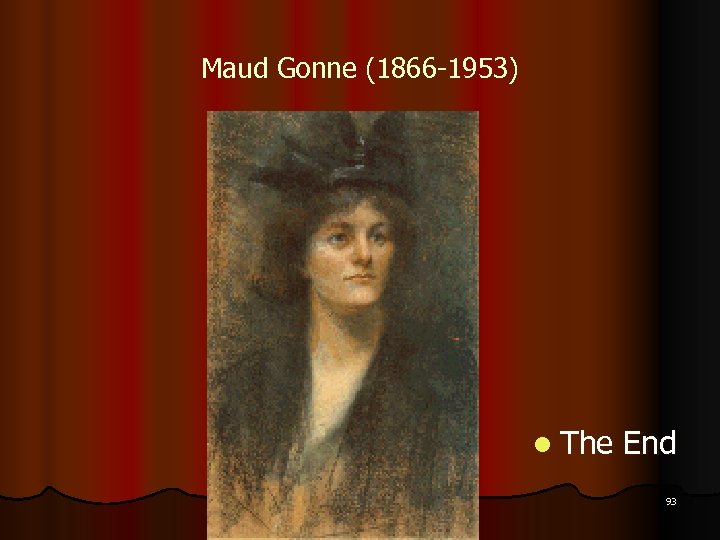 Maud Gonne (1866 -1953) l The End 93