


English in the Modern World 1) Brief History of the English Language. 2) The Role of English in the Modern World 3) English Language as a Representation of National Culture
The history of English is traditionally divided into three periods: § Old English (5 th – 11 th A. D. ) § Middle English (12 th – 15 th A. D. ) § Modern English (16 th A. D. – up till now)
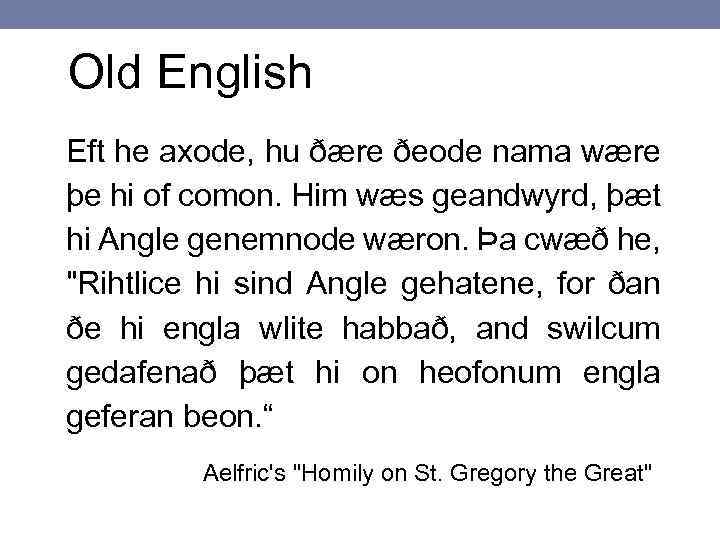
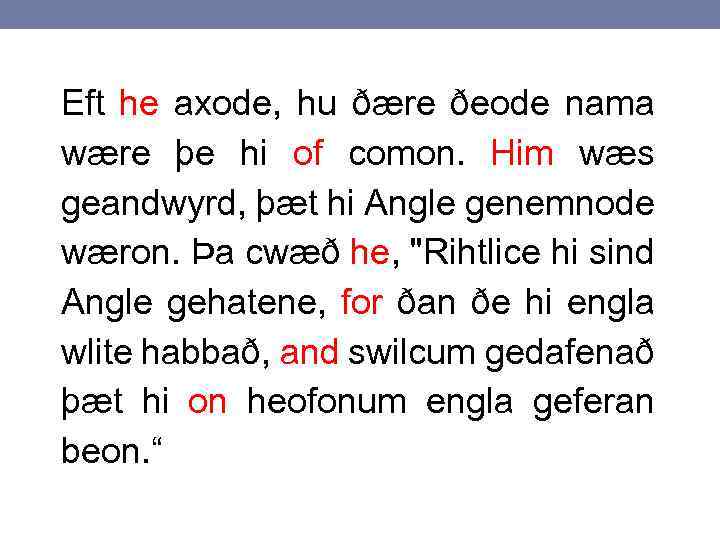
Old English Eft he axode, hu ðære ðeode nama wære þe hi of comon. Him wæs geandwyrd, þæt hi Angle genemnode wæron. Þa cwæð he, "Rihtlice hi sind Angle gehatene, for ðan ðe hi engla wlite habbað, and swilcum gedafenað þæt hi on heofonum engla geferan beon. “ Aelfric's "Homily on St. Gregory the Great"
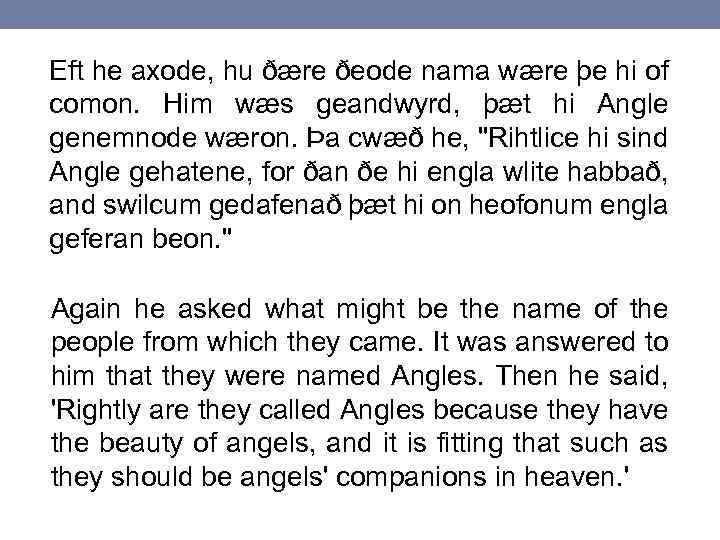
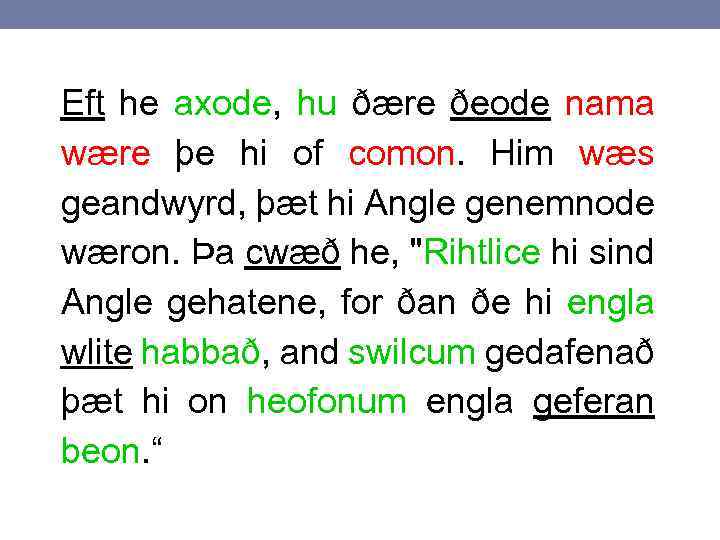
Eft he axode, hu ðære ðeode nama wære þe hi of comon. Him wæs geandwyrd, þæt hi Angle genemnode wæron. Þa cwæð he, "Rihtlice hi sind Angle gehatene, for ðan ðe hi engla wlite habbað, and swilcum gedafenað þæt hi on heofonum engla geferan beon. " Again he asked what might be the name of the people from which they came. It was answered to him that they were named Angles. Then he said, 'Rightly are they called Angles because they have the beauty of angels, and it is fitting that such as they should be angels' companions in heaven. '
Eft he axode, hu ðære ðeode nama wære þe hi of comon. Him wæs geandwyrd, þæt hi Angle genemnode wæron. Þa cwæð he, "Rihtlice hi sind Angle gehatene, for ðan ðe hi engla wlite habbað, and swilcum gedafenað þæt hi on heofonum engla geferan beon. “
Eft he axode, hu ðære ðeode nama wære þe hi of comon. Him wæs geandwyrd, þæt hi Angle genemnode wæron. Þa cwæð he, "Rihtlice hi sind Angle gehatene, for ðan ðe hi engla wlite habbað, and swilcum gedafenað þæt hi on heofonum engla geferan beon. “
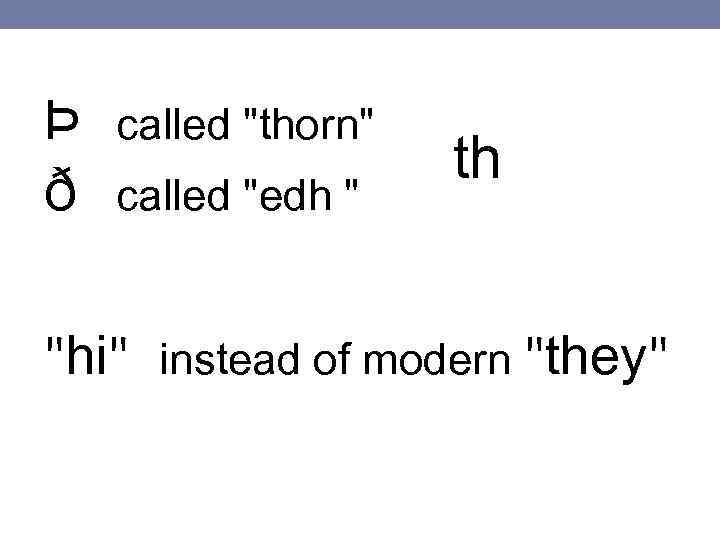
Þ called "thorn" ð called "edh " th "hi" instead of modern "they"
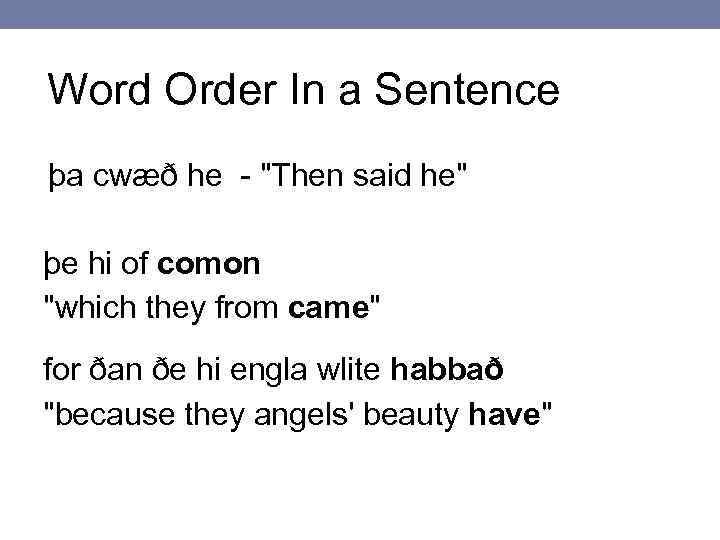
Word Order In a Sentence þa cwæð he - "Then said he" þe hi of comon "which they from came" for ðan ðe hi engla wlite habbað "because they angels' beauty have"
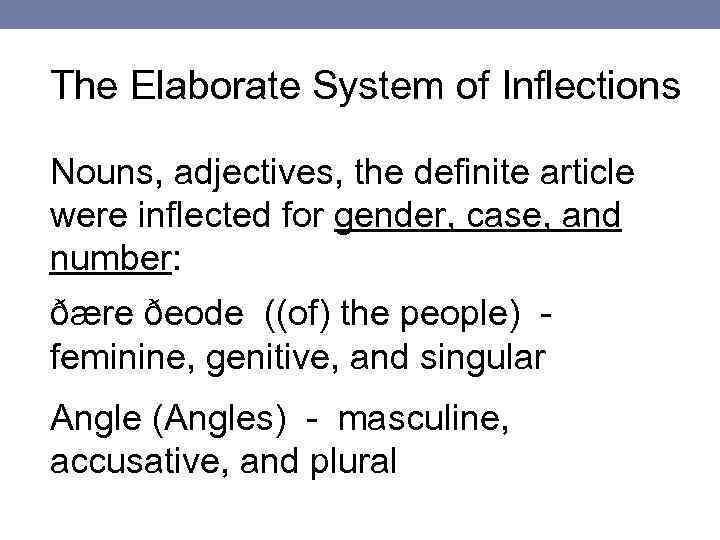
The Elaborate System of Inflections Nouns, adjectives, the definite article were inflected for gender, case, and number: ðære ðeode ((of) the people) feminine, genitive, and singular Angle (Angles) - masculine, accusative, and plural
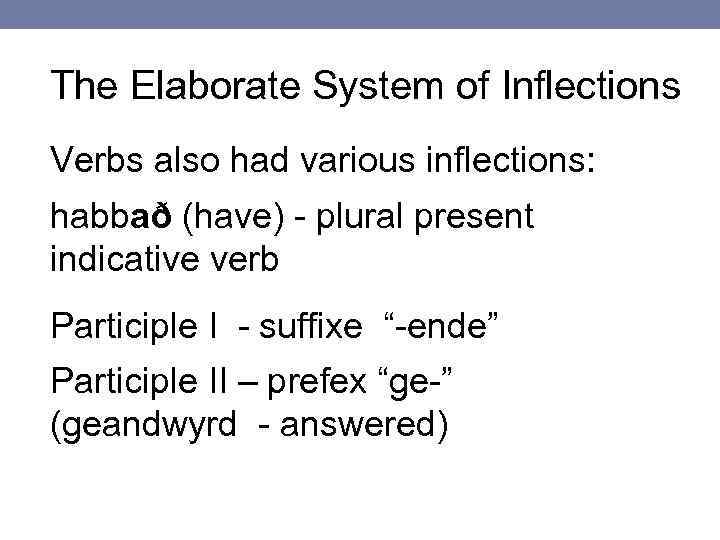
The Elaborate System of Inflections Verbs also had various inflections: habbað (have) - plural present indicative verb Participle I - suffixe “-ende” Participle II – prefex “ge-” (geandwyrd - answered)
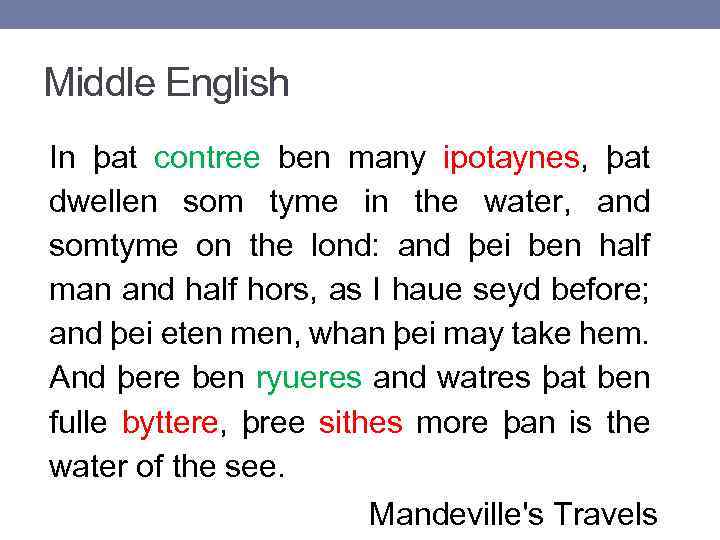
Middle English In þat contree ben many ipotaynes, þat dwellen som tyme in the water, and somtyme on the lond: and þei ben half man and half hors, as I haue seyd before; and þei eten men, whan þei may take hem. And þere ben ryueres and watres þat ben fulle byttere, þree sithes more þan is the water of the see. Mandeville's Travels
Middle English In þat contree ben many ipotaynes, þat dwellen som tyme in the water, and somtyme on the lond: and þei ben half man and half hors, as I haue seyd before; and þei eten men, whan þei may take hem. And þere ben ryueres and watres þat ben fulle byttere, þree sithes more þan is the water of the see.
Reasons for English to Become a World Language 1)Politic 2)Economic 3)Linguistic
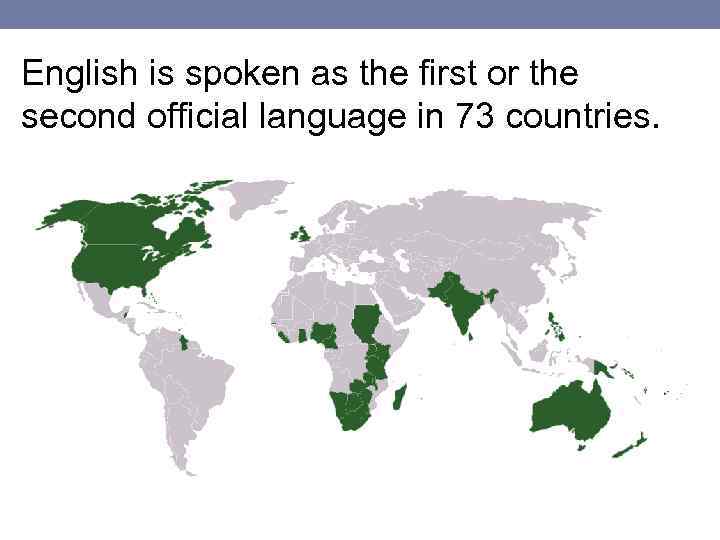
English is spoken as the first or the second official language in 73 countries.

English as an Global Language About 350 million speak it as their mother tongue whereas about 1. 5 billion speak it as their secondlanguage.
English Language as a Representation of National Culture «Paradise is where cooks are French, mechanics are German, policemen are British, lovers are Italian and it is all organized by the Swiss. Hell is where cooks are British, policemen are German, lovers are the Swiss, mechanics are French, and it is all organized by Italians» .
We can make some conclusions about the national character from: § international anecdotes; § national classic literature; § folklore; § national language.
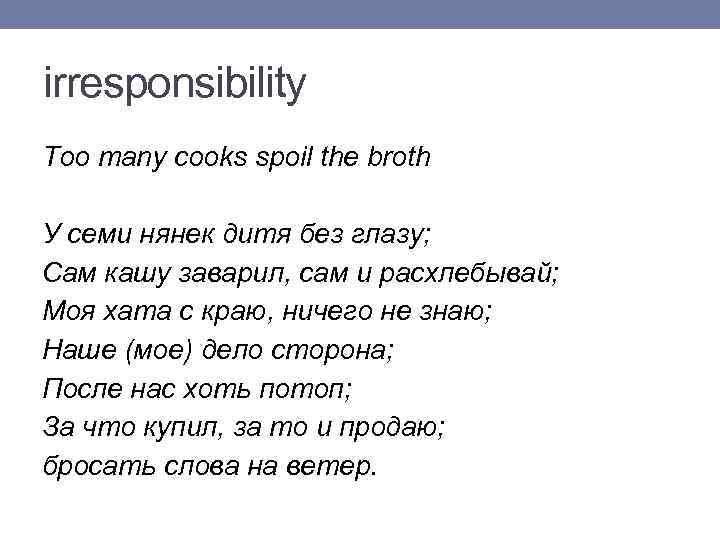
irresponsibility Too many cooks spoil the broth У семи нянек дитя без глазу; Сам кашу заварил, сам и расхлебывай; Моя хата с краю, ничего не знаю; Наше (мое) дело сторона; После нас хоть потоп; За что купил, за то и продаю; бросать слова на ветер.
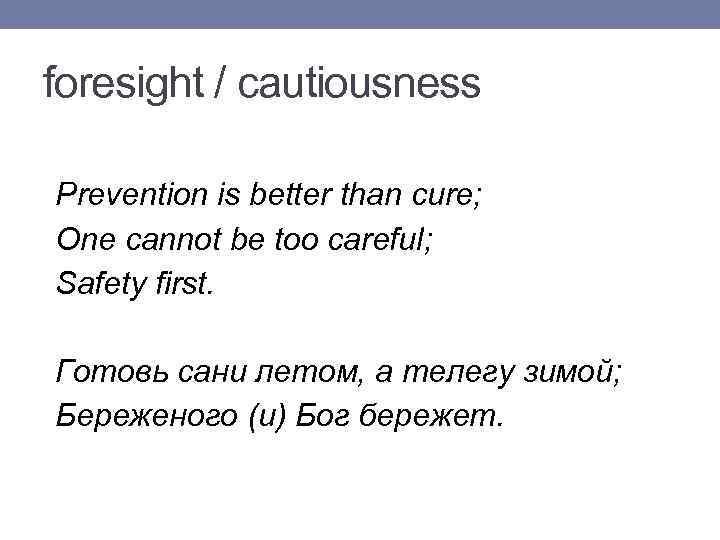
foresight / cautiousness Prevention is better than cure; One cannot be too careful; Safety first. Готовь сани летом, а телегу зимой; Береженого (и) Бог бережет.
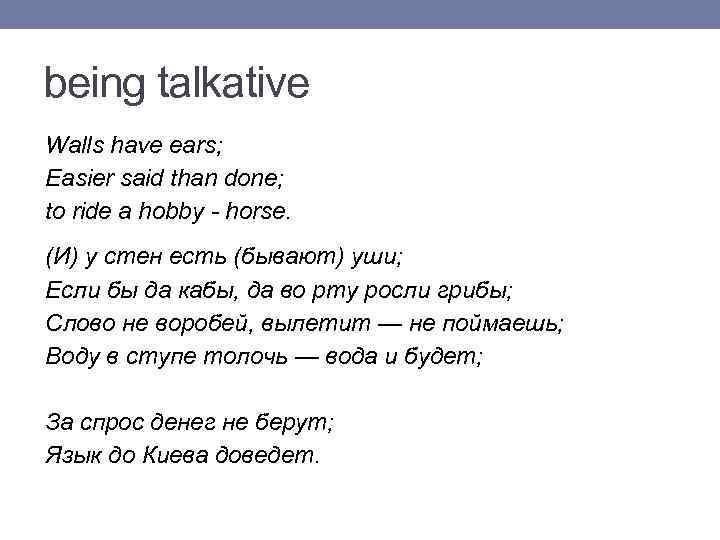
being talkative Walls have ears; Easier said than done; to ride a hobby - horse. (И) у стен есть (бывают) уши; Если бы да кабы, да во рту росли грибы; Слово не воробей, вылетит — не поймаешь; Воду в ступе толочь — вода и будет; За спрос денег не берут; Язык до Киева доведет.
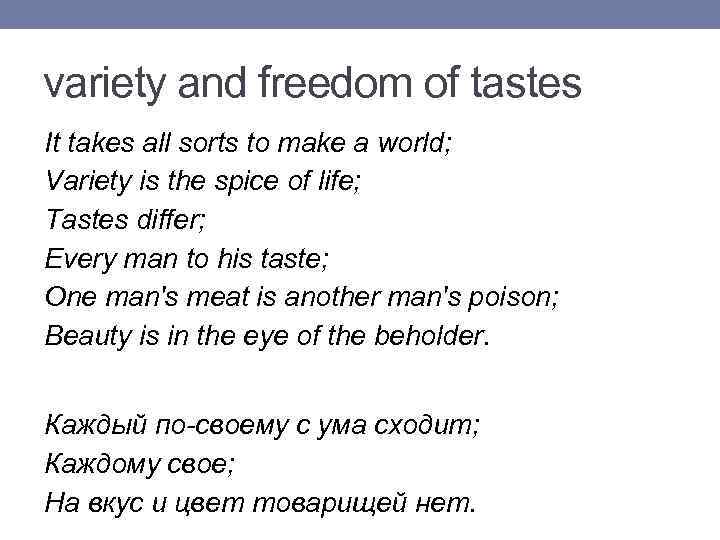
variety and freedom of tastes It takes all sorts to make a world; Variety is the spice of life; Tastes differ; Every man to his taste; One man's meat is another man's poison; Beauty is in the eye of the beholder. Каждый по-своему с ума сходит; Каждому свое; На вкус и цвет товарищей нет.
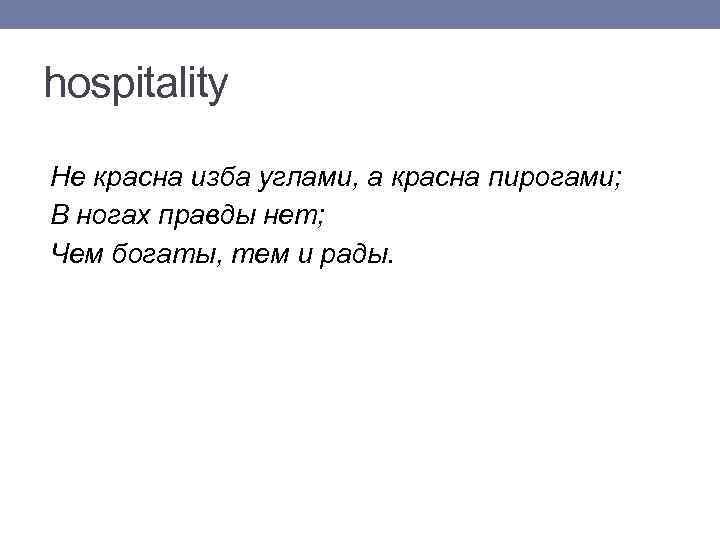
hospitality Не красна изба углами, а красна пирогами; В ногах правды нет; Чем богаты, тем и рады.
