 Скачать презентацию Engineering of Disorder in MBE grown Ultra High
ecbc302312260721f9db6afcdfbb9ae2.ppt
- Количество слайдов: 25



Engineering of Disorder in MBE grown Ultra. High Mobility 2 D Electron System Vladimir Umansky Braun Center for Submicron Research Weizmann Institute of Science, Rehovot, Israel Collaborators: Moty Heiblum & group (Braun Center for Submicron Research) Jurgen Smet & group (Max-Planck-Institut für Festkörperforschung, Stuttgart) 1
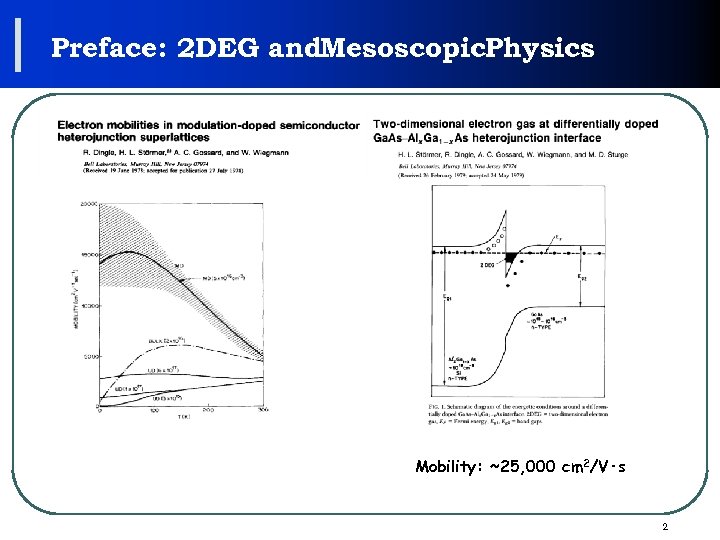
Preface: 2 DEG and. Mesoscopic. Physics Mobility: ~25, 000 cm 2/V∙s 2
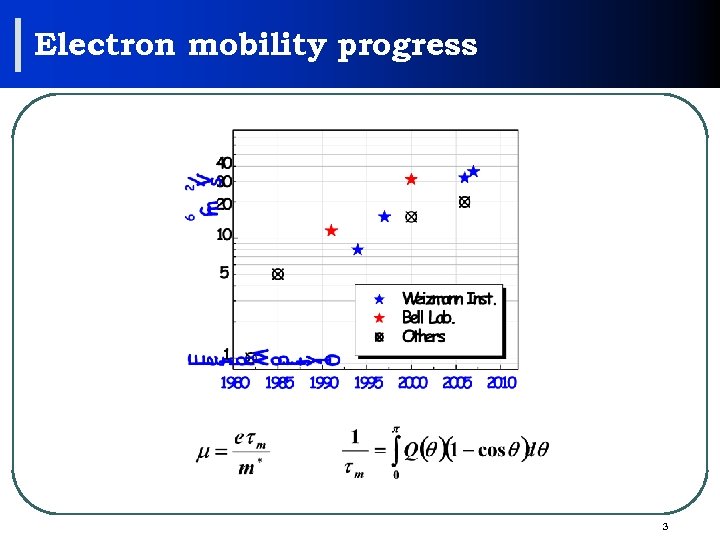
Electron mobility progress 3
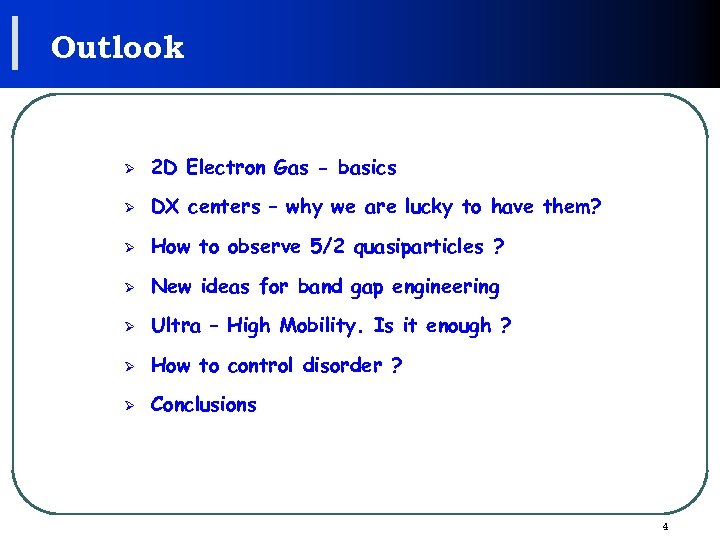
Outlook Ø 2 D Electron Gas - basics Ø DX centers – why we are lucky to have them? Ø How to observe 5/2 quasiparticles ? Ø New ideas for band gap engineering Ø Ultra – High Mobility. Is it enough ? Ø How to control disorder ? Ø Conclusions 4
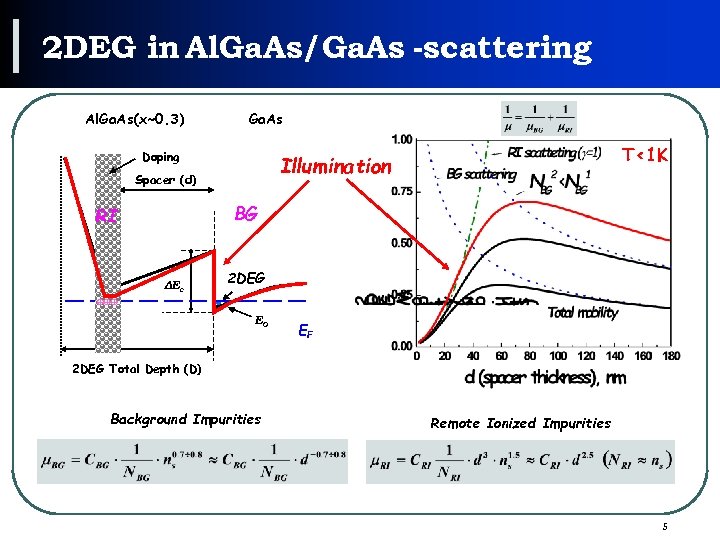
2 DEG in Al. Ga. As/Ga. As -scattering 2 DEG in Al. Ga. As/Ga. As Al. Ga. As(x~0. 3) Ga. As Doping T<1 K Illumination Spacer (d) BG RI ΔEc 2 DEG E 0 EF 2 DEG Total Depth (D) Background Impurities Remote Ionized Impurities 5
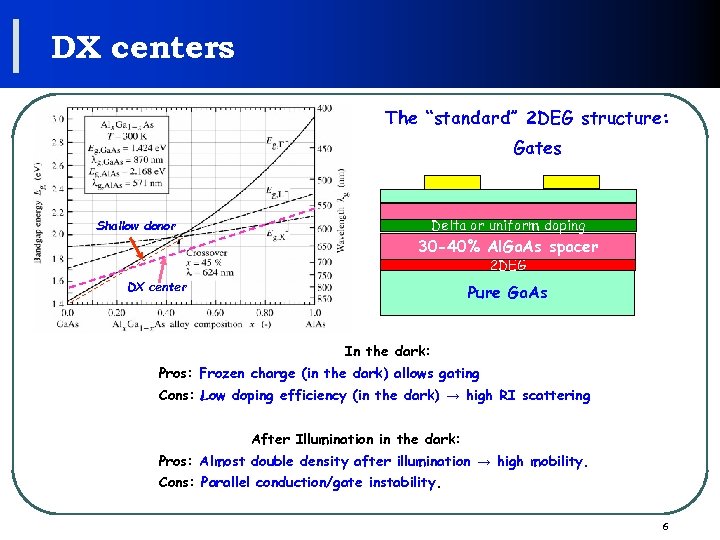
DX centers The “standard” 2 DEG structure: Gates Shallow donor Delta or uniform doping 30 -40% Al. Ga. As spacer 2 DEG DX center Pure Ga. As In the dark: Pros: Frozen charge (in the dark) allows gating Cons: Low doping efficiency (in the dark) → high RI scattering After Illumination in the dark: Pros: Almost double density after illumination → high mobility. Cons: Parallel conduction/gate instability. 6
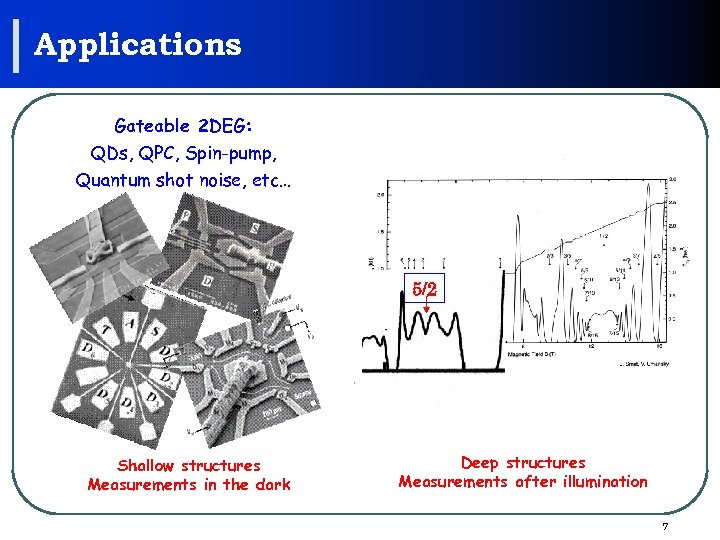
Applications Gateable 2 DEG: QDs, QPC, Spin-pump, Quantum shot noise, etc… 5/2 Shallow structures Measurements in the dark Deep structures Measurements after illumination 7
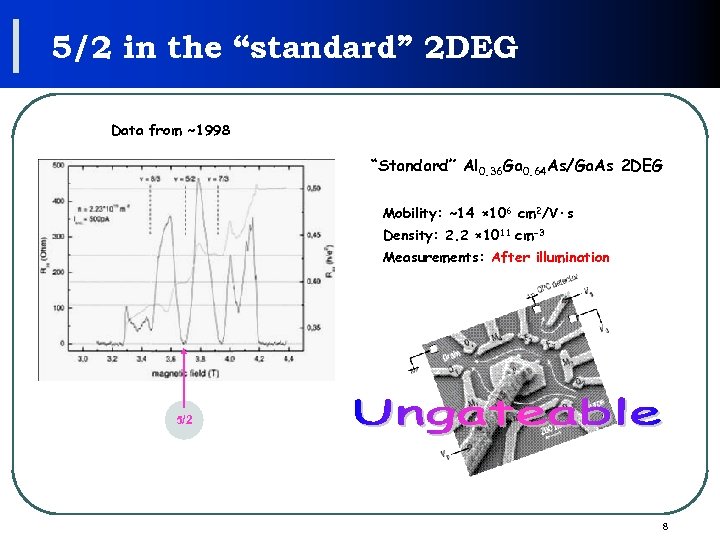
5/2 in the “standard” 2 DEG Data from ~1998 “Standard” Al 0. 36 Ga 0. 64 As/Ga. As 2 DEG Mobility: ~14 × 106 cm 2/V∙s Density: 2. 2 × 1011 cm-3 Measurements: After illumination 5/2 8
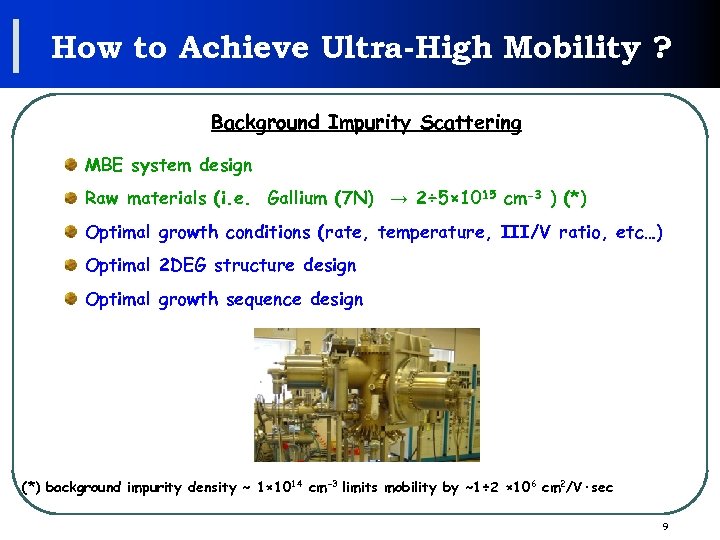
How to Achieve Ultra-High Mobility ? Background Impurity Scattering MBE system design Raw materials (i. e. Gallium (7 N) → 2÷ 5× 1015 cm-3 ) (*) Optimal growth conditions (rate, temperature, III/V ratio, etc…) Optimal 2 DEG structure design Optimal growth sequence design (*) background impurity density ~ 1× 1014 cm-3 limits mobility by ~1÷ 2 × 106 cm 2/V∙sec 9
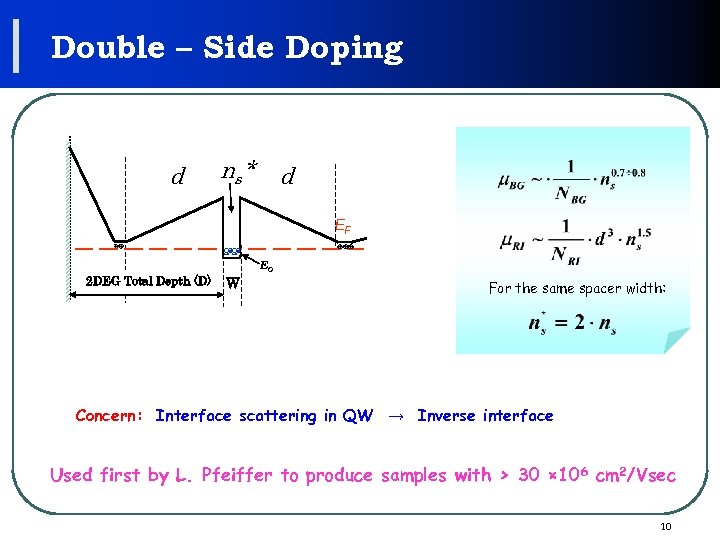
Double – Side Doping d n s* d EF E 0 2 DEG Total Depth (D) W For the same spacer width: Concern: Interface scattering in QW → Inverse interface Used first by L. Pfeiffer to produce samples with > 30 × 106 cm 2/Vsec 10
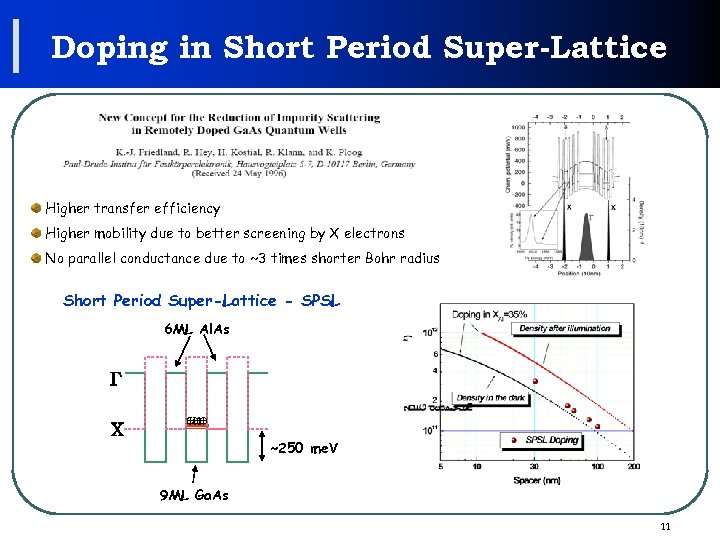
Doping in Short Period Super-Lattice Higher transfer efficiency Higher mobility due to better screening by X electrons No parallel conductance due to ~3 times shorter Bohr radius Short Period Super-Lattice - SPSL 6 ML Al. As Γ X ~250 me. V 9 ML Ga. As 11
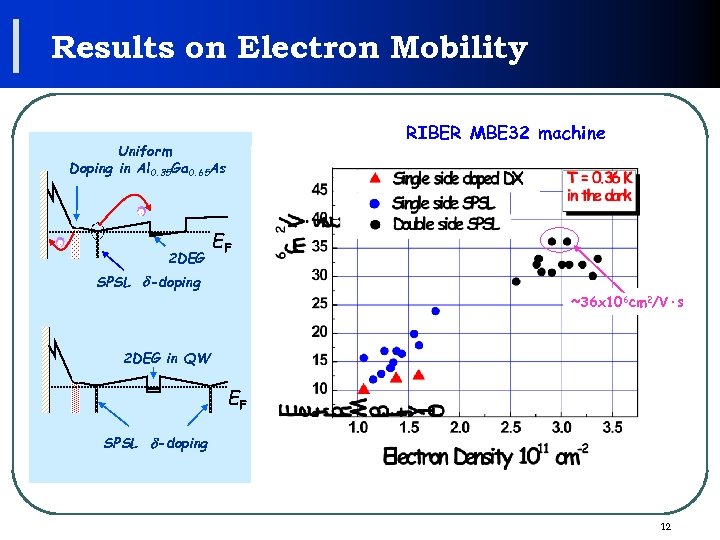
Results on Electron Mobility RIBER MBE 32 machine Uniform Doping in Al 0. 35 Ga 0. 65 As e e 2 DEG EF SPSL d-doping ~36 x 106 cm 2/V∙s 2 DEG in QW EF SPSL d-doping 12
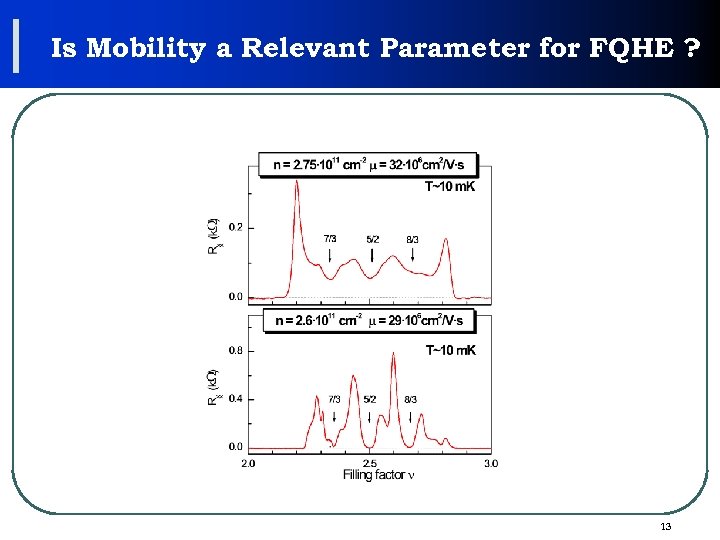
Is Mobility a Relevant Parameter for FQHE ? 13
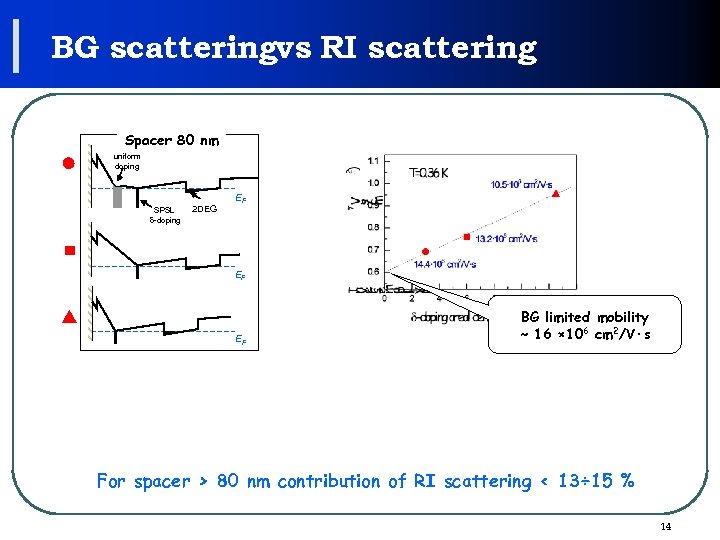
BG scatteringvs RI scattering Spacer 80 nm uniform doping SPSL d-doping 2 DEG EF EF EF BG limited mobility ~ 16 × 106 cm 2/V∙s For spacer > 80 nm contribution of RI scattering < 13÷ 15 % 14
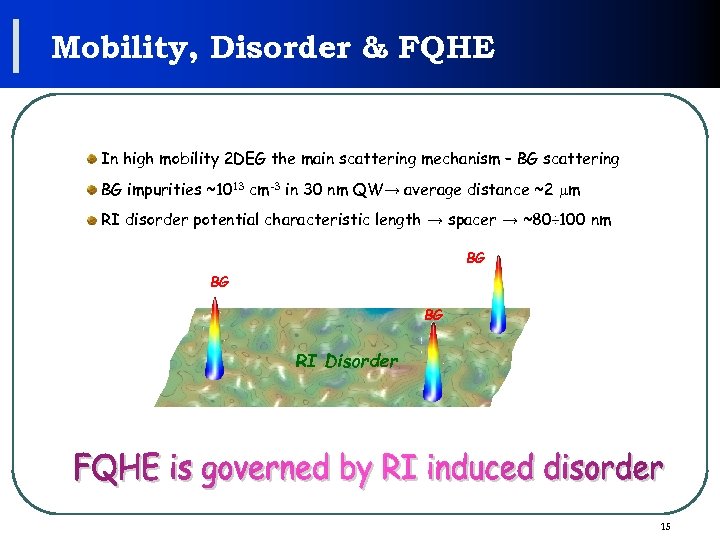
Mobility, Disorder & FQHE In high mobility 2 DEG the main scattering mechanism – BG scattering BG impurities ~1013 cm-3 in 30 nm QW→ average distance ~2 mm RI disorder potential characteristic length → spacer → ~80÷ 100 nm BG BG BG RI Disorder 15
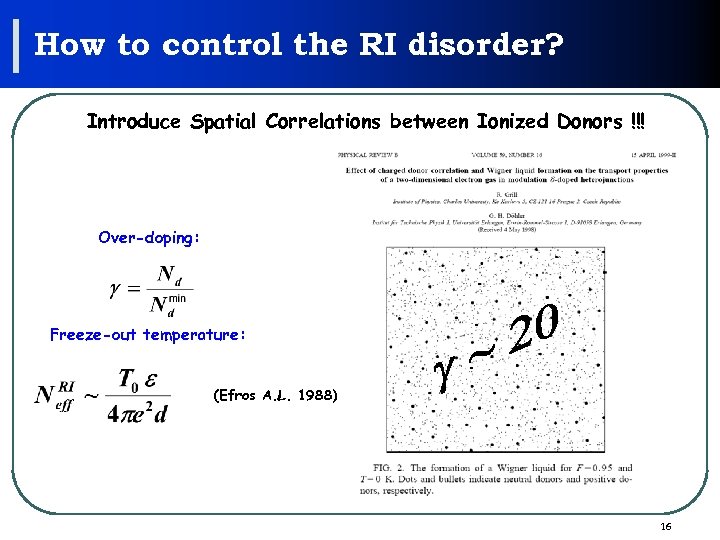
How to control the RI disorder? Introduce Spatial Correlations between Ionized Donors !!! Over-doping: Freeze-out temperature: (Efros A. L. 1988) 16
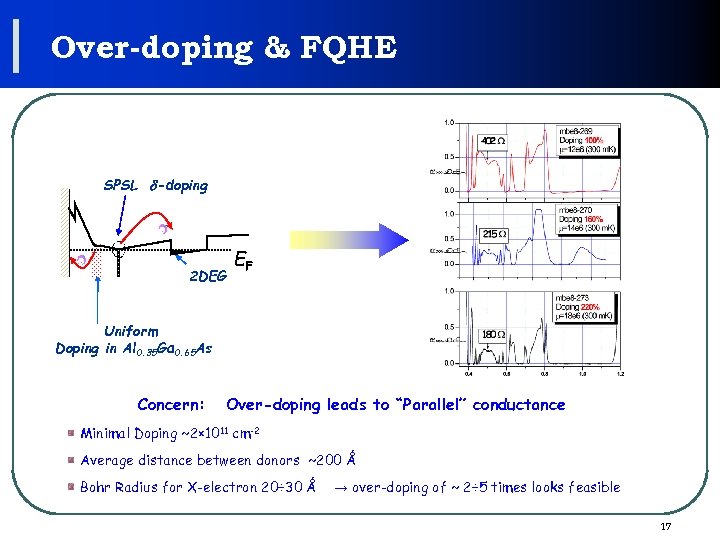
Over-doping & FQHE SPSL d-doping e e 2 DEG EF Uniform Doping in Al 0. 35 Ga 0. 65 As Concern: Over-doping leads to “Parallel” conductance Minimal Doping ~2× 1011 cm-2 Average distance between donors ~200 Ǻ Bohr Radius for X-electron 20÷ 30 Ǻ → over-doping of ~ 2÷ 5 times looks feasible 17
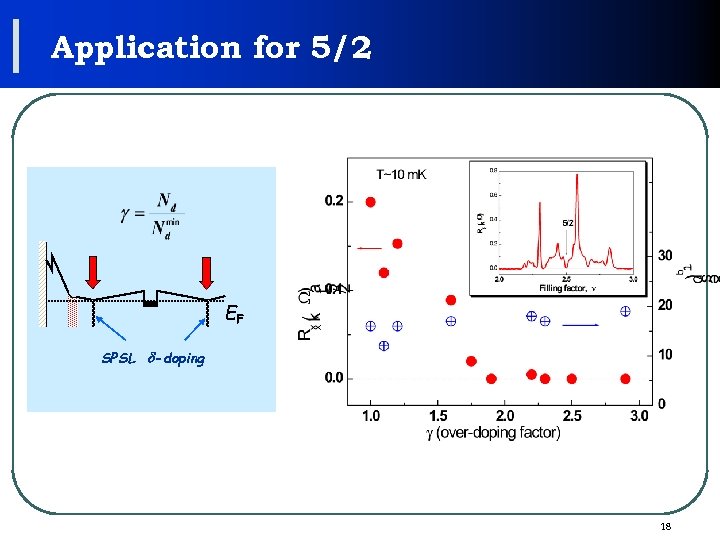
Application for 5/2 EF SPSL d-doping 18
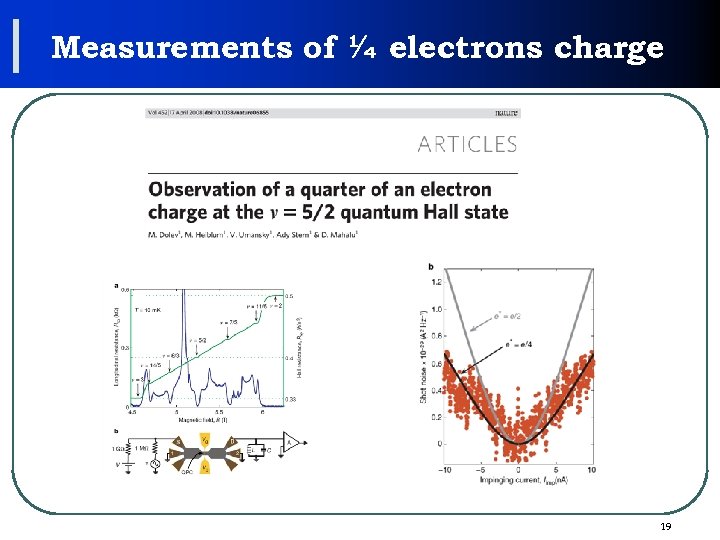
Measurements of ¼ electrons charge 19
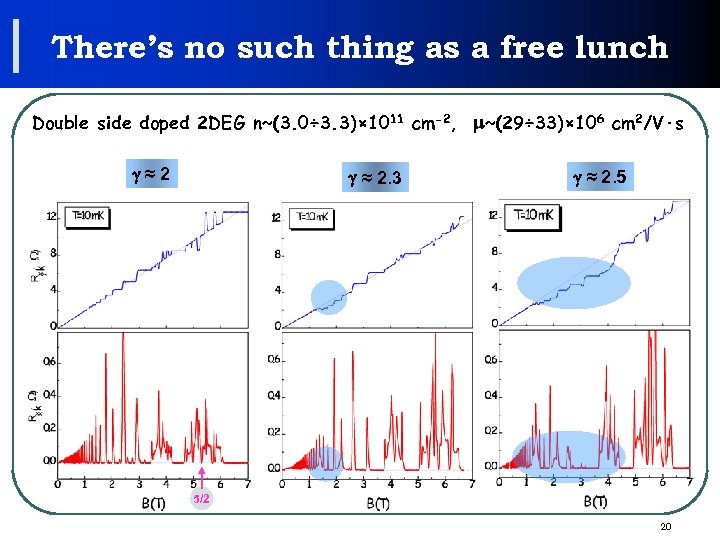
There’s no such thing as a free lunch Double side doped 2 DEG n~(3. 0÷ 3. 3)× 1011 cm-2, m~(29÷ 33)× 106 cm 2/V∙s g≈2 g ≈ 2. 3 g ≈ 2. 5 5/2 20
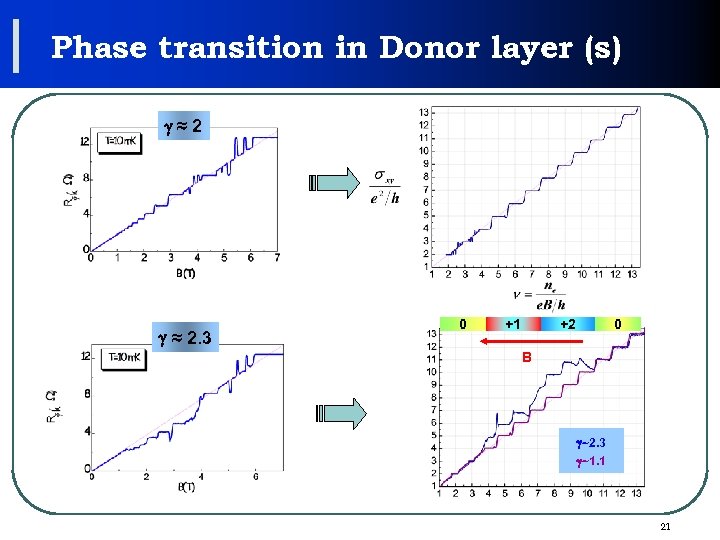
Phase transition in Donor layer (s) g≈2 g ≈ 2. 3 0 +1 +2 0 B g~2. 3 g~1. 1 21
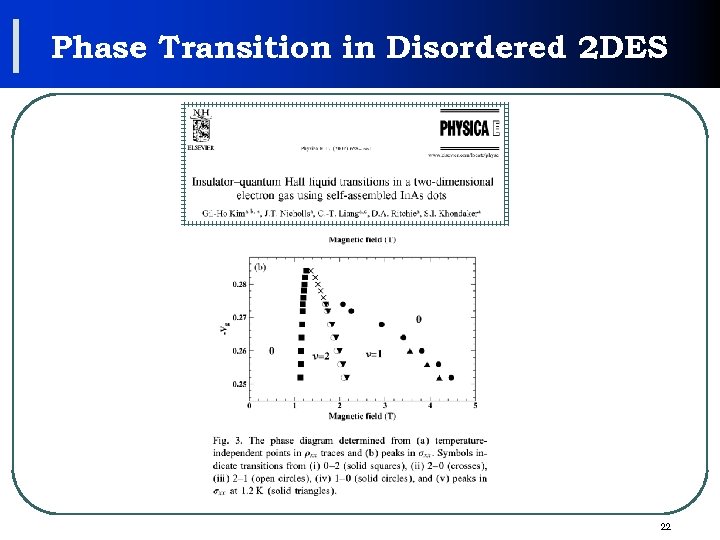
Phase Transition in Disordered 2 DES QPC 22
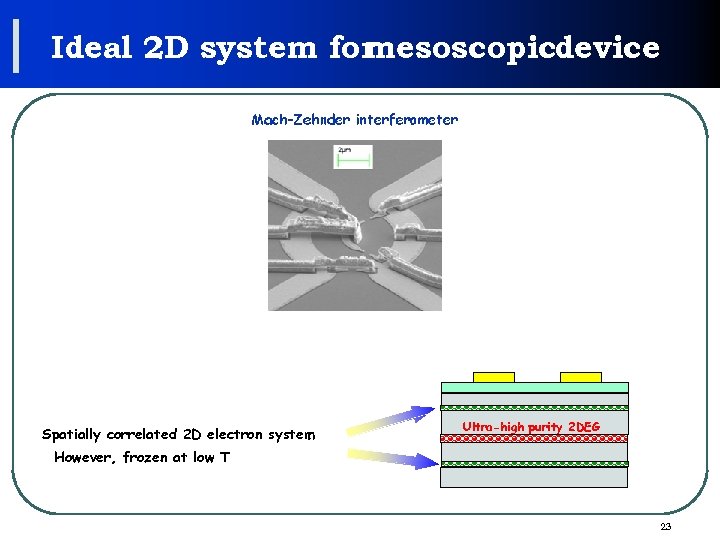
Ideal 2 D system for mesoscopicdevice Spatially correlated 2 D electron system Ultra-high purity 2 DEG However, frozen at low T 23
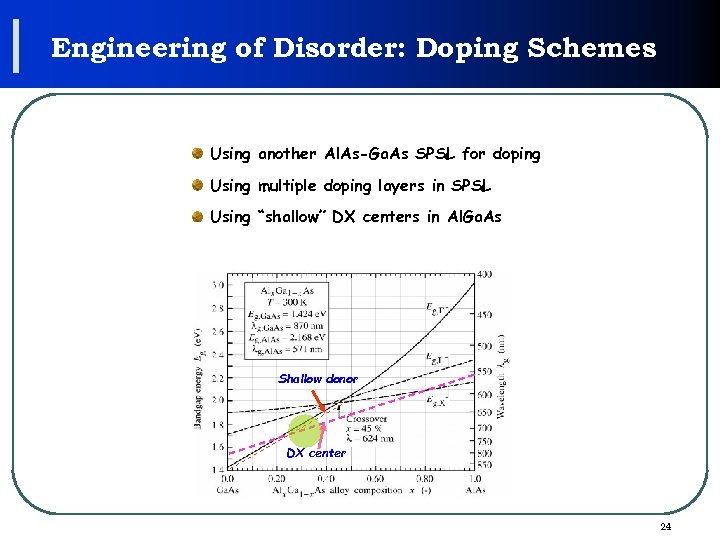
Engineering of Disorder: Doping Schemes Using another Al. As-Ga. As SPSL for doping Using multiple doping layers in SPSL Using “shallow” DX centers in Al. Ga. As Shallow donor DX center 24
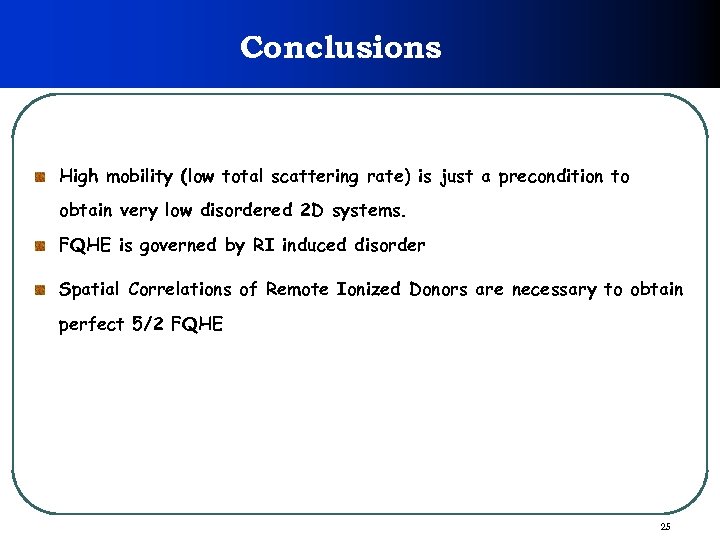
Conclusions High mobility (low total scattering rate) is just a precondition to obtain very low disordered 2 D systems. FQHE is governed by RI induced disorder Spatial Correlations of Remote Ionized Donors are necessary to obtain perfect 5/2 FQHE 25
Скачать презентацию Engineering of Disorder in MBE grown Ultra High
ecbc302312260721f9db6afcdfbb9ae2.ppt