 Скачать презентацию Engineering Branches Dom Dal Bello Engineering 100 Allan
e799f32c05a19b6b729ea00b1a397240.ppt
- Количество слайдов: 50



Engineering Branches Dom Dal Bello Engineering 100 Allan Hancock College Engineering Branches 1
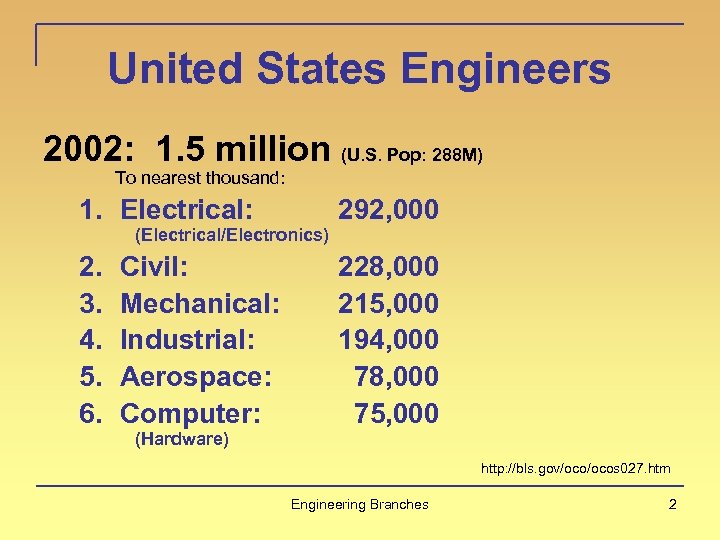
United States Engineers 2002: 1. 5 million (U. S. Pop: 288 M) To nearest thousand: 1. Electrical: 292, 000 2. 3. 4. 5. 6. 228, 000 215, 000 194, 000 78, 000 75, 000 (Electrical/Electronics) Civil: Mechanical: Industrial: Aerospace: Computer: (Hardware) http: //bls. gov/ocos 027. htm Engineering Branches 2
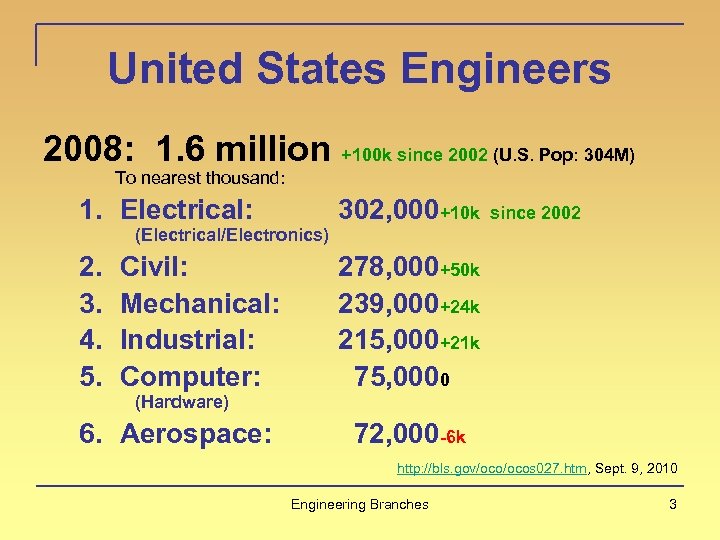
United States Engineers 2008: 1. 6 million +100 k since 2002 (U. S. Pop: 304 M) To nearest thousand: 1. Electrical: 302, 000+10 k since 2002 2. 3. 4. 5. 278, 000+50 k 239, 000+24 k 215, 000+21 k 75, 0000 (Electrical/Electronics) Civil: Mechanical: Industrial: Computer: (Hardware) 6. Aerospace: 72, 000 -6 k http: //bls. gov/ocos 027. htm, Sept. 9, 2010 Engineering Branches 3
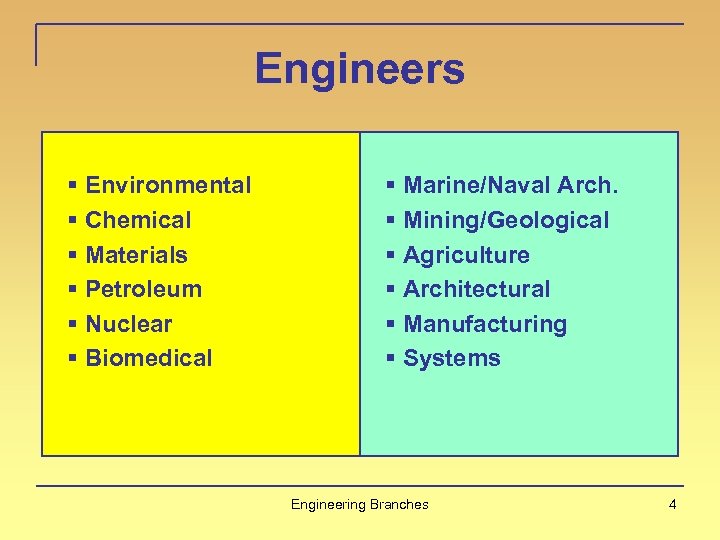
Engineers § Environmental § Chemical § Materials § Petroleum § Nuclear § Biomedical § Marine/Naval Arch. § Mining/Geological § Agriculture § Architectural § Manufacturing § Systems http: //bls. gov/ocos 027. htm Engineering Branches 4
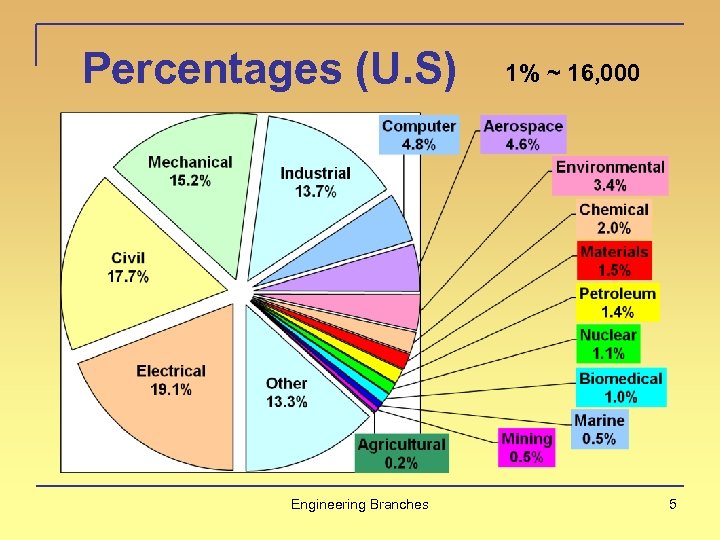
Percentages (U. S) Engineering Branches 1% ~ 16, 000 5
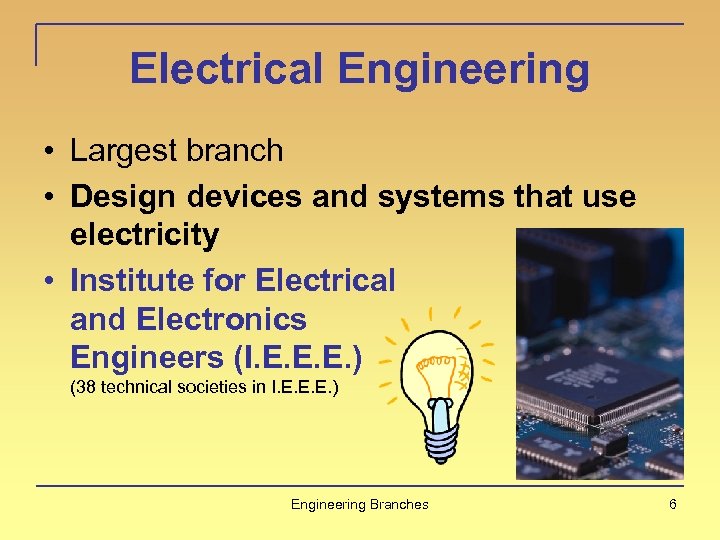
Electrical Engineering • Largest branch • Design devices and systems that use electricity • Institute for Electrical and Electronics Engineers (I. E. E. E. ) (38 technical societies in I. E. E. E. ) Engineering Branches 6
Electrical Engineering • • • Electronics Communications Power Controls Instrumentation Design of circuits & devices to produce, amplify and rectify (modify/filter) electric signals. Use transistors, semiconductors, integrated circuits (ICs). Engineering Branches 7
Electrical Engineering • • • Electronics Communications Power Controls Instrumentation Entertainment to military. Cell phones, video teleconferencing. Lasers, fiber-optics, wireless. Data transmission (data, voice, video). Engineering Branches 8
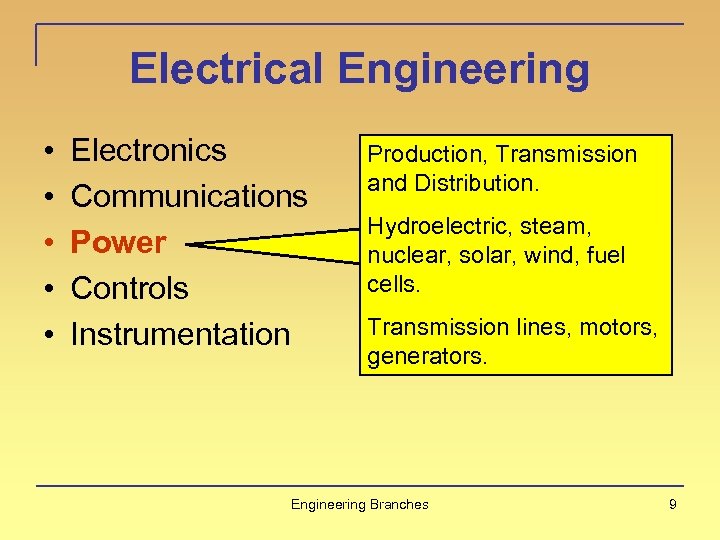
Electrical Engineering • • • Electronics Communications Power Controls Instrumentation Production, Transmission and Distribution. Hydroelectric, steam, nuclear, solar, wind, fuel cells. Transmission lines, motors, generators. Engineering Branches 9
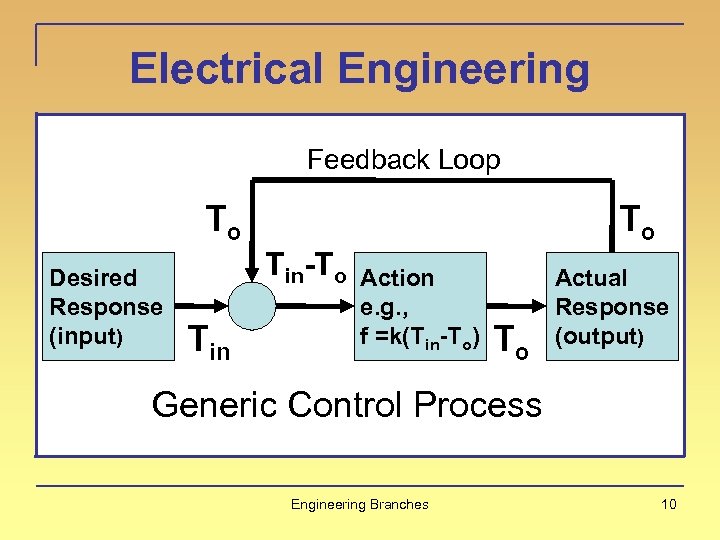
Electrical Engineering • Electronics Automated operations and Feedback Loop processes (robotics). • Communications To Compare a measured To • Power quantity Tin-To Action to desired result; difference causes. Actual a signal • Desired Controls Response e. g. , adjusts input Response that f =k(Tin-To) Tcruise control). • (input) Instrumentation (thermostats, o (output) Tin Generic Control Process Engineering Branches 10
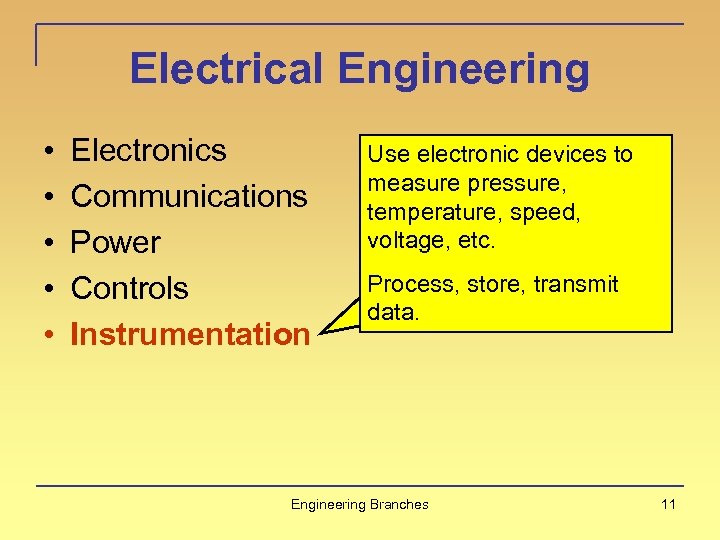
Electrical Engineering • • • Electronics Communications Power Controls Instrumentation Use electronic devices to measure pressure, temperature, speed, voltage, etc. Process, store, transmit data. Engineering Branches 11
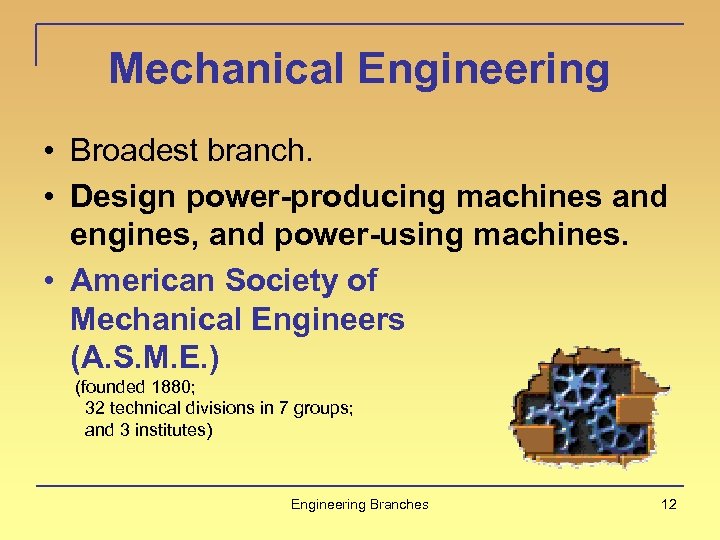
Mechanical Engineering • Broadest branch. • Design power-producing machines and engines, and power-using machines. • American Society of Mechanical Engineers (A. S. M. E. ) (founded 1880; 32 technical divisions in 7 groups; and 3 institutes) Engineering Branches 12
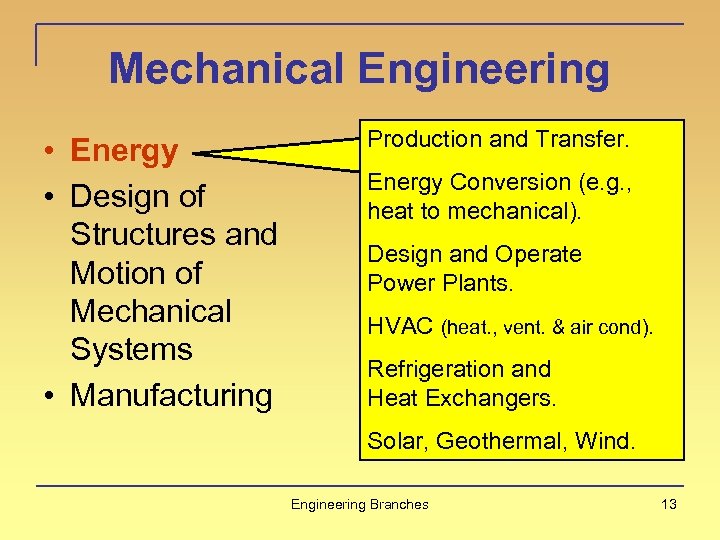
Mechanical Engineering • Energy • Design of Structures and Motion of Mechanical Systems • Manufacturing Production and Transfer. Energy Conversion (e. g. , heat to mechanical). Design and Operate Power Plants. HVAC (heat. , vent. & air cond). Refrigeration and Heat Exchangers. Solar, Geothermal, Wind. Engineering Branches 13
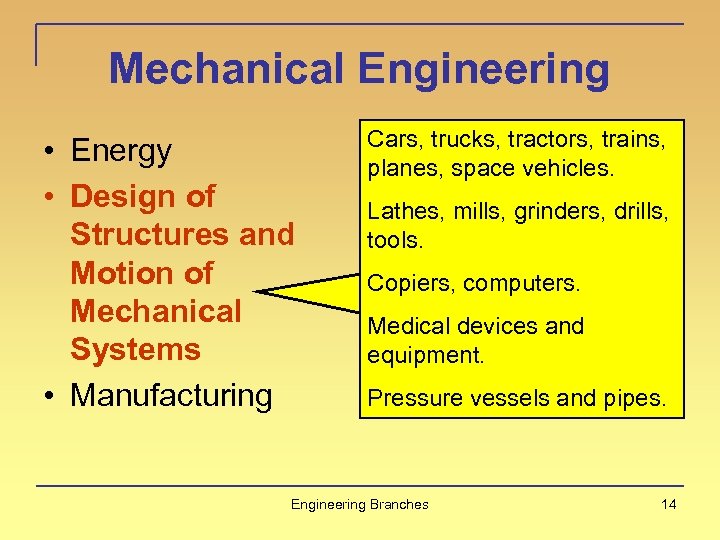
Mechanical Engineering • Energy • Design of Structures and Motion of Mechanical Systems • Manufacturing Cars, trucks, tractors, trains, planes, space vehicles. Lathes, mills, grinders, drills, tools. Copiers, computers. Medical devices and equipment. Pressure vessels and pipes. Engineering Branches 14
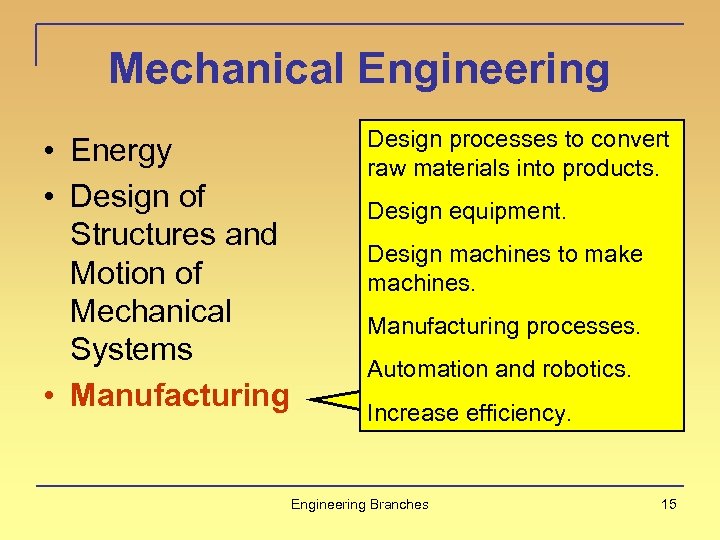
Mechanical Engineering • Energy • Design of Structures and Motion of Mechanical Systems • Manufacturing Design processes to convert raw materials into products. Design equipment. Design machines to make machines. Manufacturing processes. Automation and robotics. Increase efficiency. Engineering Branches 15
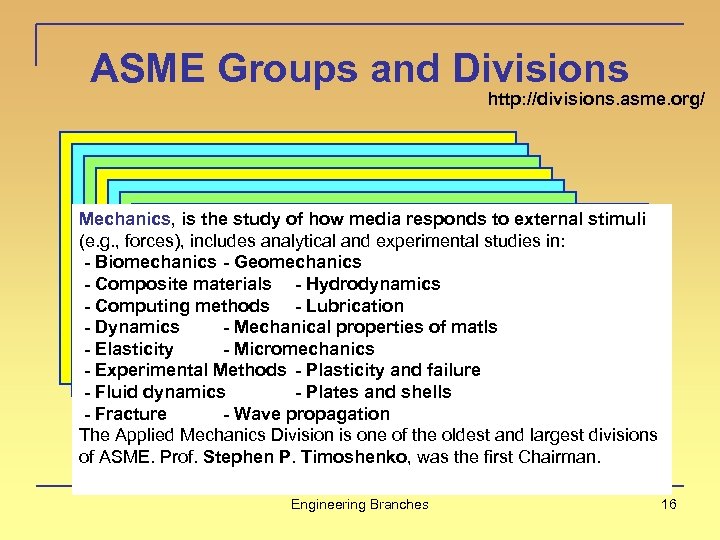
ASME Groups and Divisions http: //divisions. asme. org/ Basic Engineering Technical Group Energy Conversion Group Engr. & Tech. Management Group • • Applied Mechanics Engine Environment & Transportation Grp Internal Combustion Manufacturing Technical Group • • Management Mechanics, is the study of how media responds to external stimuli • • Bioengineering Pressure Technology Group Aerospace Nuclear Engineering & Risk Analysis System and Design Group • • Manufacturing Engineering (e. g. , forces), includes analytical and experimental studies in: • • Safety Engineering. Evaluation • • Fluids. Nondestructive Engineering Environmental Engineering Power - Biomechanics - Geomechanics Computers and • • • Pressure Vessels. Information Engineering • • Technology & Society. Engineering • • Heat. Materials Handling and Piping Transfer - Composite materials & Systems Advanced Energy Acoustics • Design Engineering • Noise Control - Hydrodynamics Plant Engineering and Maintenance - Computing methods - Lubrication • • Materials • • Rail. Energy Solar Dynamic Systems and Control • Transportation Process Industries - Dynamics (friction) • Tribology - Mechanical properties of matls • Materials & Energy Recovery - Elasticity Electronic & Photonic Packaging - Micromechanics • - Experimental Methods - Plasticity and failure • Fluid Power Systems and Technology - Fluid dynamics - Plates and shells • - Fracture Information Storage & Processing Systems - Wave propagation The Applied. Microelectromechanical Systems largest divisions • Mechanics Division is one of the oldest and (MEMS) of ASME. Prof. Stephen P. Timoshenko, was the first Chairman. Engineering Branches 16
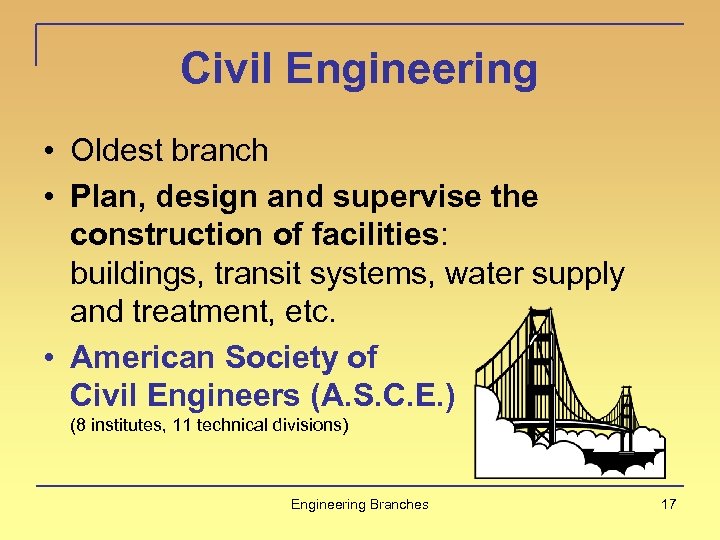
Civil Engineering • Oldest branch • Plan, design and supervise the construction of facilities: buildings, transit systems, water supply and treatment, etc. • American Society of Civil Engineers (A. S. C. E. ) (8 institutes, 11 technical divisions) Engineering Branches 17
Civil Engineering • • Structural Transportation Environmental Water Resources Geotechnical Surveying Construction Design bridges, buildings, dams, tunnels, tanks, transmission towers, offshore platforms, satellites. Analyze forces on structures. Select components & materials to ensure structures strong, stable and durable. Structural Dynamics. Engineering Branches 18
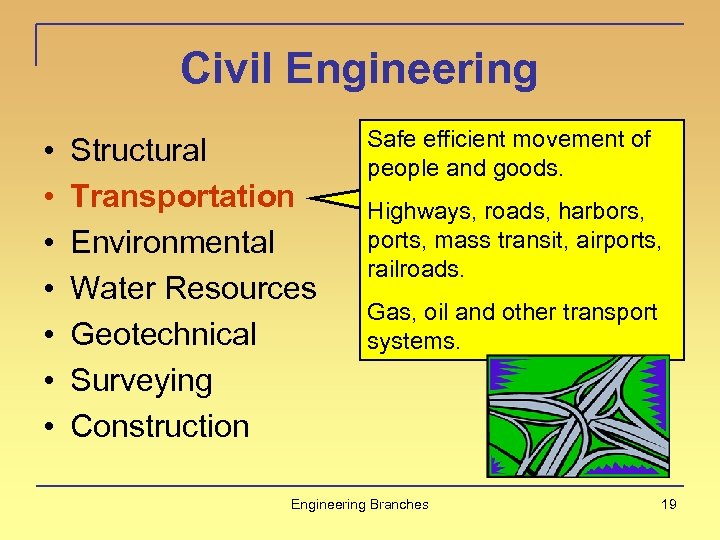
Civil Engineering • • Structural Transportation Environmental Water Resources Geotechnical Surveying Construction Safe efficient movement of people and goods. Highways, roads, harbors, ports, mass transit, airports, railroads. Gas, oil and other transport systems. Engineering Branches 19
Civil Engineering • • Structural Transportation Environmental Water Resources Geotechnical Surveying Construction Control / prevent / eliminate: air / water / soil pollution. Design / operate: water systems, waste water and sewage systems, garbage disposal systems, air quality control systems, recycling systems. Toxic clean-up and pesticide control. Engineering Branches 20
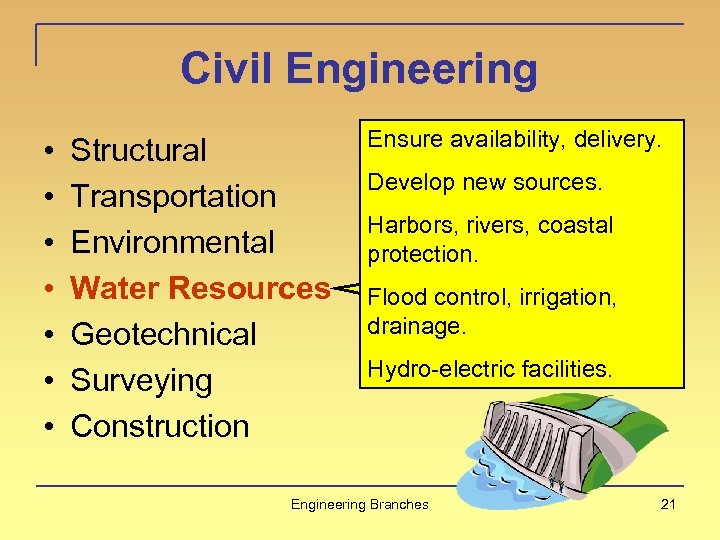
Civil Engineering • • Structural Transportation Environmental Water Resources Geotechnical Surveying Construction Ensure availability, delivery. Develop new sources. Harbors, rivers, coastal protection. Flood control, irrigation, drainage. Hydro-electric facilities. Engineering Branches 21
Civil Engineering • • Structural Transportation Environmental Water Resources Geotechnical Surveying Construction Study properties of soil / rock on which structures are placed. How does ground support the loads? Dams, levees, foundations, offshore, settlement, stability of slopes, seepage of ground water. Earthquakes. Engineering Branches 22
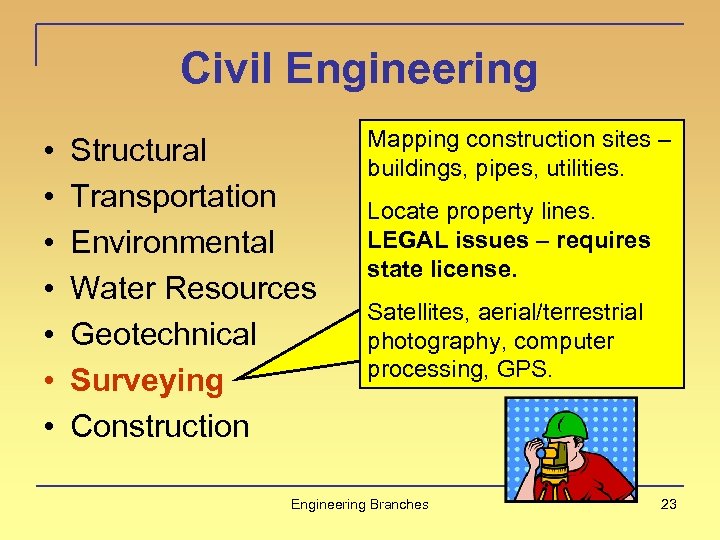
Civil Engineering • • Structural Transportation Environmental Water Resources Geotechnical Surveying Construction Mapping construction sites – buildings, pipes, utilities. Locate property lines. LEGAL issues – requires state license. Satellites, aerial/terrestrial photography, computer processing, GPS. Engineering Branches 23
Civil Engineering • • Structural Transportation Environmental Water Resources Geotechnical Surveying Construction Technical & management skills. Plan and build facilities that other engineers and architects design. Estimate costs, equipment & personnel needs. Supervise construction, operating and startup. Know methods, equipment. Engineering Branches 24
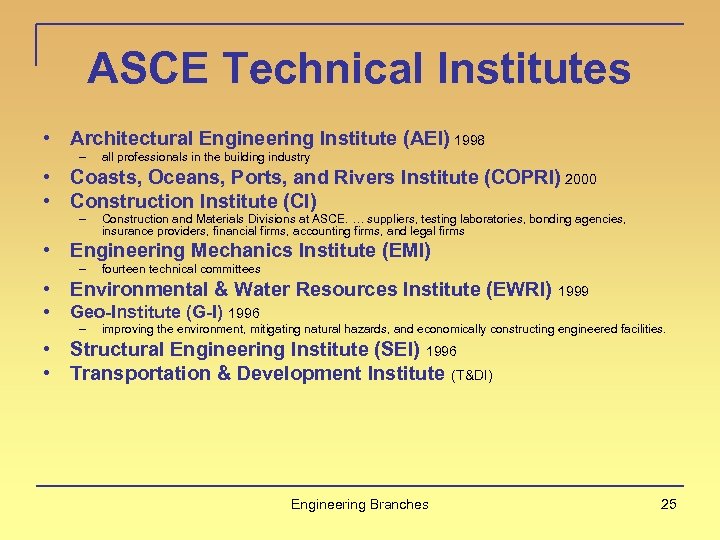
ASCE Technical Institutes • Architectural Engineering Institute (AEI) 1998 – all professionals in the building industry • Coasts, Oceans, Ports, and Rivers Institute (COPRI) 2000 • Construction Institute (CI) – Construction and Materials Divisions at ASCE. … suppliers, testing laboratories, bonding agencies, insurance providers, financial firms, accounting firms, and legal firms • Engineering Mechanics Institute (EMI) – fourteen technical committees • Environmental & Water Resources Institute (EWRI) 1999 • Geo-Institute (G-I) 1996 – improving the environment, mitigating natural hazards, and economically constructing engineered facilities. • Structural Engineering Institute (SEI) 1996 • Transportation & Development Institute (T&DI) Engineering Branches 25
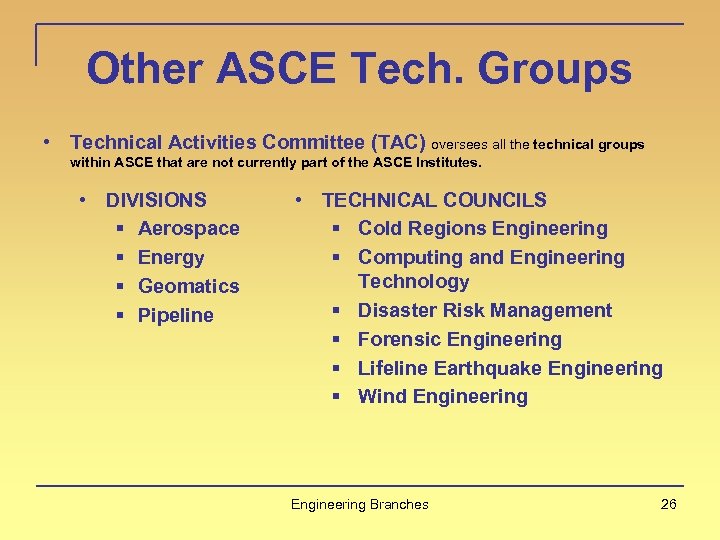
Other ASCE Tech. Groups • Technical Activities Committee (TAC) oversees all the technical groups within ASCE that are not currently part of the ASCE Institutes. • DIVISIONS § Aerospace § Energy § Geomatics § Pipeline • TECHNICAL COUNCILS § Cold Regions Engineering § Computing and Engineering Technology § Disaster Risk Management § Forensic Engineering § Lifeline Earthquake Engineering § Wind Engineering Branches 26
Computer Engineering • Fastest growing branch in 1990 s. • Design computer hardware & firmware. • Started within electrical engineering, but requires specialized knowledge. . • Computer Engineering vs. Computer Science Engineering Branches 27
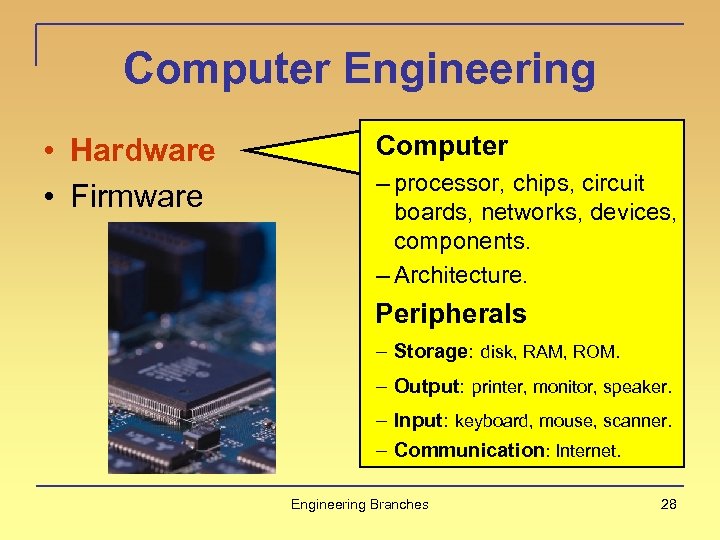
Computer Engineering • Hardware • Firmware Computer – processor, chips, circuit boards, networks, devices, components. – Architecture. Peripherals – Storage: disk, RAM, ROM. – Output: printer, monitor, speaker. – Input: keyboard, mouse, scanner. – Communication: Internet. Engineering Branches 28
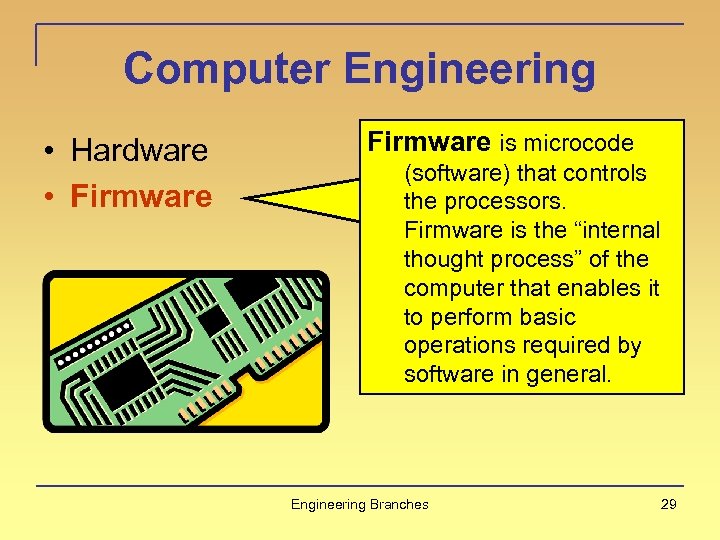
Computer Engineering • Hardware • Firmware is microcode (software) that controls the processors. Firmware is the “internal thought process” of the computer that enables it to perform basic operations required by software in general. Engineering Branches 29
Computer Engineering • Computer Science • Comp. Scientists write the programs. Theory, design and implementation of software (an intangible product). Software: set of instructions that hardware can read and execute. OS, AI, networking, comm. , database, computerhuman interaction, graphics, computations. Engineering Branches 30
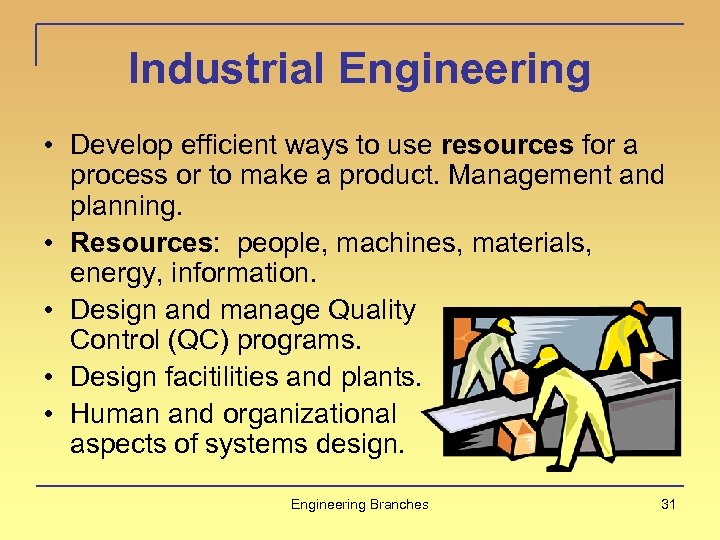
Industrial Engineering • Develop efficient ways to use resources for a process or to make a product. Management and planning. • Resources: people, machines, materials, energy, information. • Design and manage Quality Control (QC) programs. • Design facitilities and plants. • Human and organizational aspects of systems design. Engineering Branches 31
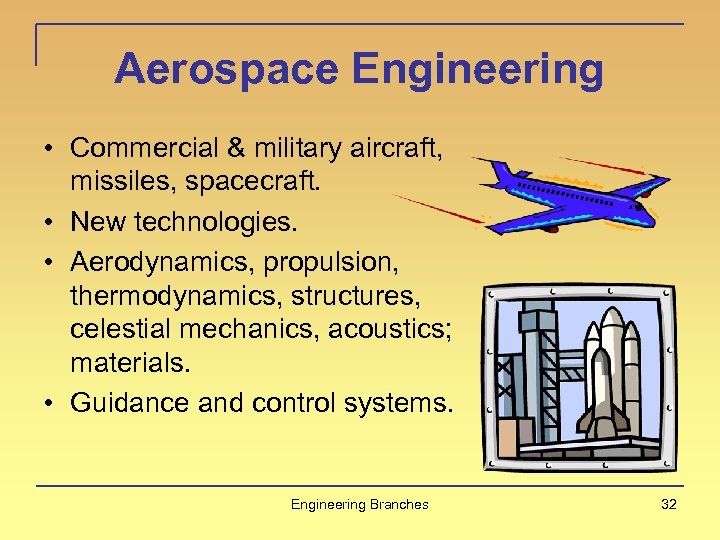
Aerospace Engineering • Commercial & military aircraft, missiles, spacecraft. • New technologies. • Aerodynamics, propulsion, thermodynamics, structures, celestial mechanics, acoustics; materials. • Guidance and control systems. Engineering Branches 32
Environmental Engineering • Use Civil Engineering, Biology and Chemistry to solve environmental problems. • Air pollution, water management, water supply, waste water, solid waste, public health, hazardous waste. • Clean up and prevent. Engineering Branches 33
Chemical Engineering • Use training in engineering and chemistry to create usable products. • Chemical production facilities; manufacturing facilities that use chemicals. • Plastics, building materials, food products, pharmaceuticals, rubber, synthetic fibers, petroleum products (plastics, shampoos, perfume, fertilizers, petrochemicals). • Environment: Clean up and prevent. Engineering Branches 34
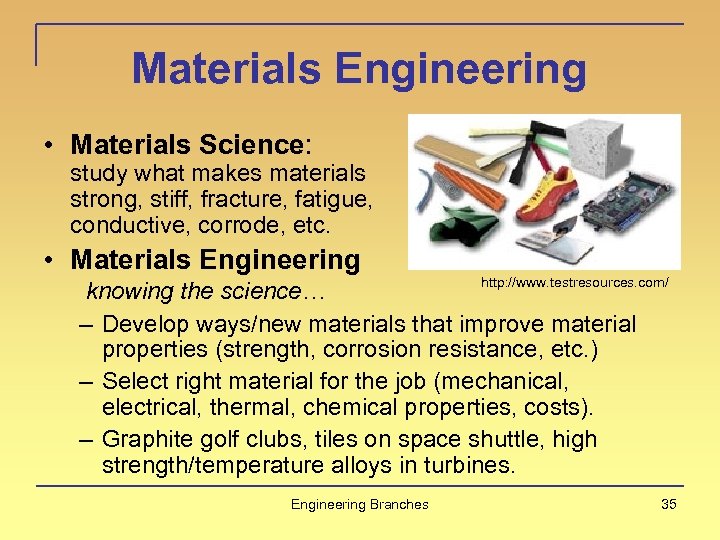
Materials Engineering • Materials Science: study what makes materials strong, stiff, fracture, fatigue, conductive, corrode, etc. • Materials Engineering http: //www. testresources. com/ knowing the science… – Develop ways/new materials that improve material properties (strength, corrosion resistance, etc. ) – Select right material for the job (mechanical, electrical, thermal, chemical properties, costs). – Graphite golf clubs, tiles on space shuttle, high strength/temperature alloys in turbines. Engineering Branches 35
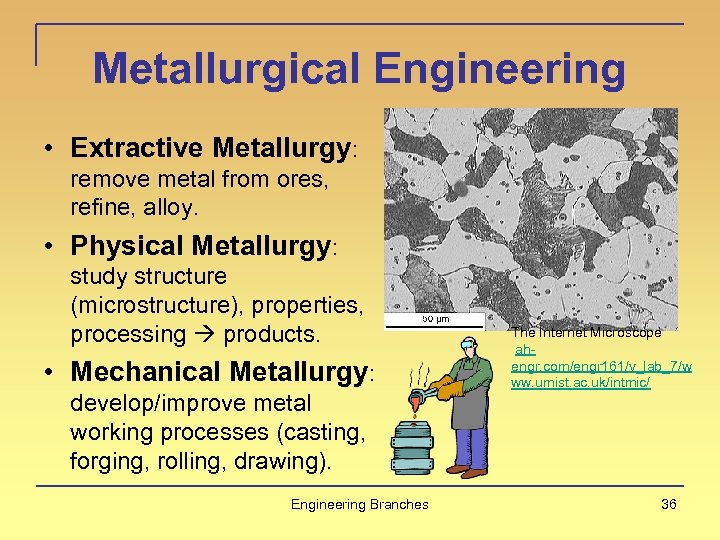
Metallurgical Engineering • Extractive Metallurgy: remove metal from ores, refine, alloy. • Physical Metallurgy: study structure (microstructure), properties, processing products. • Mechanical Metallurgy: develop/improve metal working processes (casting, forging, rolling, drawing). Engineering Branches The Internet Microscope ahengr. com/engr 161/v_lab_7/w ww. umist. ac. uk/intmic/ 36
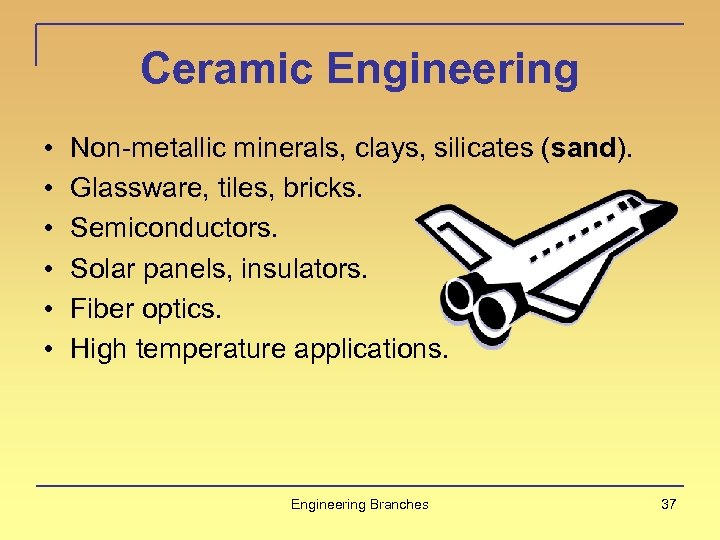
Ceramic Engineering • • • Non-metallic minerals, clays, silicates (sand). Glassware, tiles, bricks. Semiconductors. Solar panels, insulators. Fiber optics. High temperature applications. Engineering Branches 37
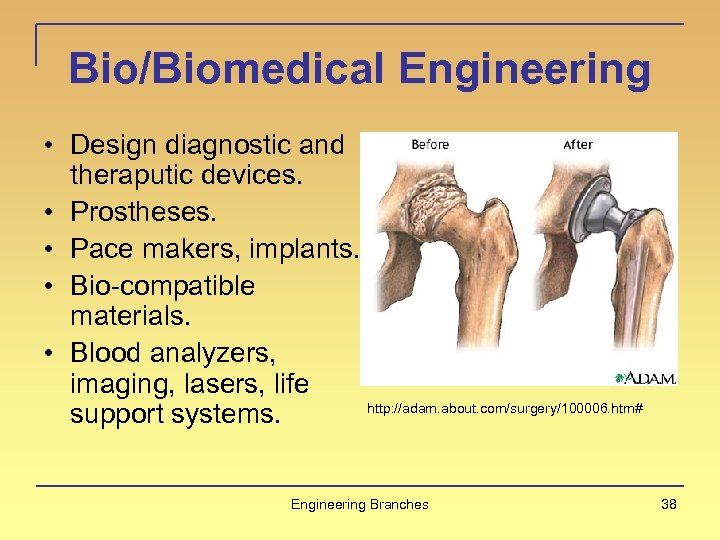
Bio/Biomedical Engineering • Design diagnostic and theraputic devices. • Prostheses. • Pace makers, implants. • Bio-compatible materials. • Blood analyzers, imaging, lasers, life http: //adam. about. com/surgery/100006. htm# support systems. Engineering Branches 38
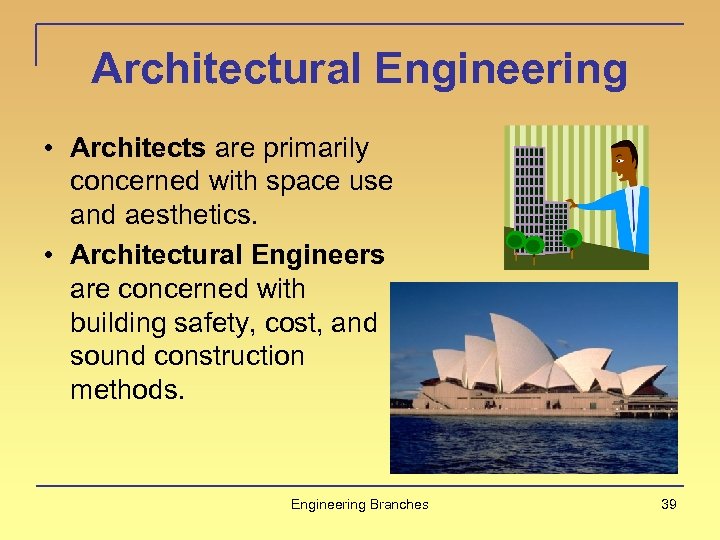
Architectural Engineering • Architects are primarily concerned with space use and aesthetics. • Architectural Engineers are concerned with building safety, cost, and sound construction methods. Engineering Branches 39
Nuclear Engineering • Design, construct and operate nuclear power plant. • Nuclear submarines, space power. • Handle fuels, dispose of waste. • Medical applications (imaging). Engineering Branches 40
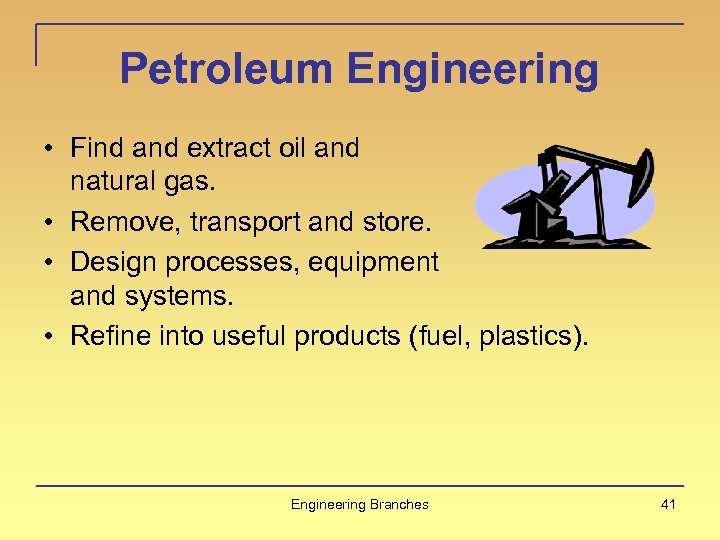
Petroleum Engineering • Find and extract oil and natural gas. • Remove, transport and store. • Design processes, equipment and systems. • Refine into useful products (fuel, plastics). Engineering Branches 41
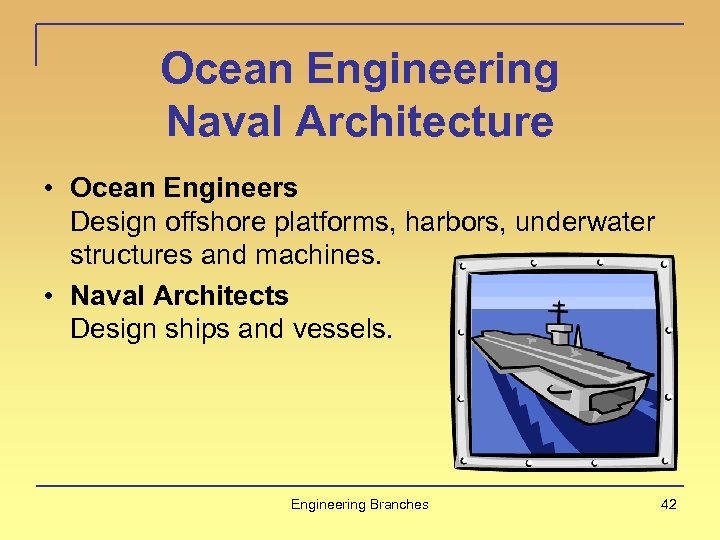
Ocean Engineering Naval Architecture • Ocean Engineers Design offshore platforms, harbors, underwater structures and machines. • Naval Architects Design ships and vessels. Engineering Branches 42
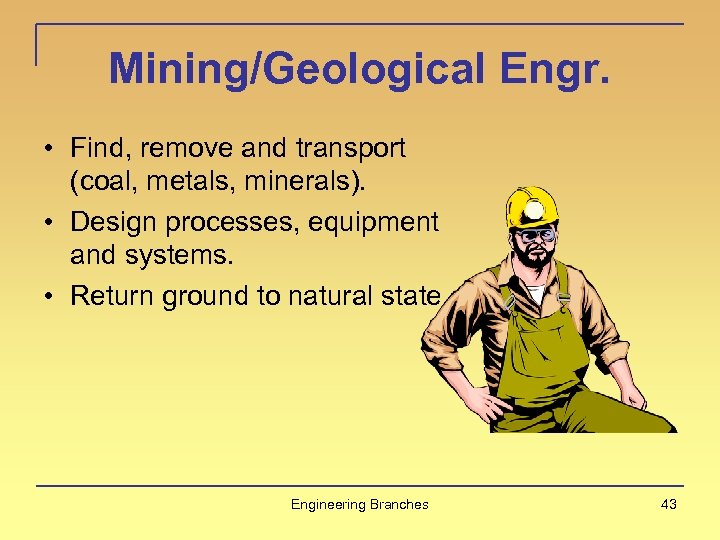
Mining/Geological Engr. • Find, remove and transport (coal, metals, minerals). • Design processes, equipment and systems. • Return ground to natural state. Engineering Branches 43
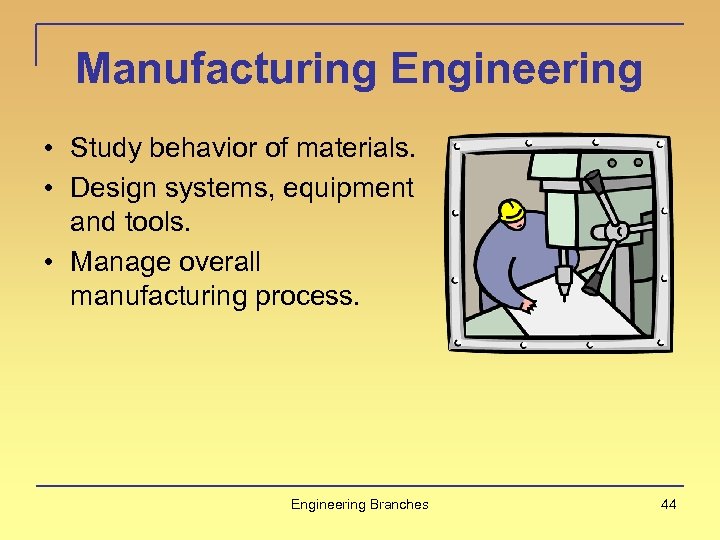
Manufacturing Engineering • Study behavior of materials. • Design systems, equipment and tools. • Manage overall manufacturing process. Engineering Branches 44
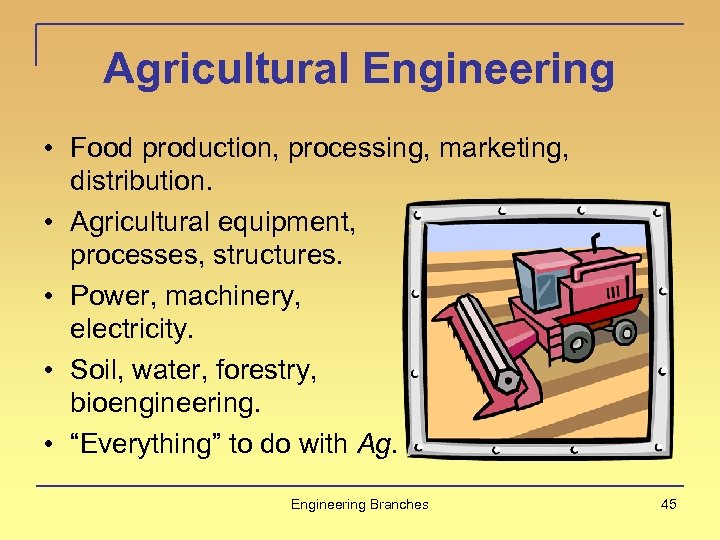
Agricultural Engineering • Food production, processing, marketing, distribution. • Agricultural equipment, processes, structures. • Power, machinery, electricity. • Soil, water, forestry, bioengineering. • “Everything” to do with Ag. Engineering Branches 45
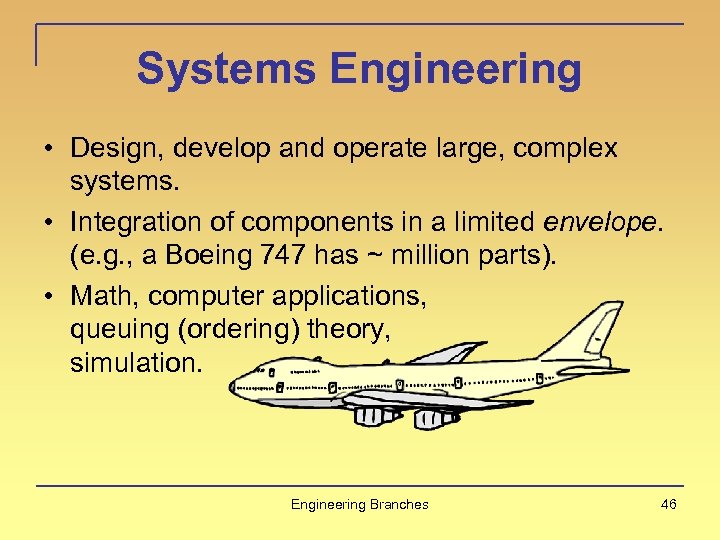
Systems Engineering • Design, develop and operate large, complex systems. • Integration of components in a limited envelope. (e. g. , a Boeing 747 has ~ million parts). • Math, computer applications, queuing (ordering) theory, simulation. Engineering Branches 46
Other Engineering Branches • • Fire Protection Military Optical Software Engineering Branches 47
UC Santa Barbara College of Engineering • • • Chemical Engineering Computer Science Computer Engineering Electrical Engineering Mechanical Engineering Materials Engineering (graduate) Engineering Branches 48
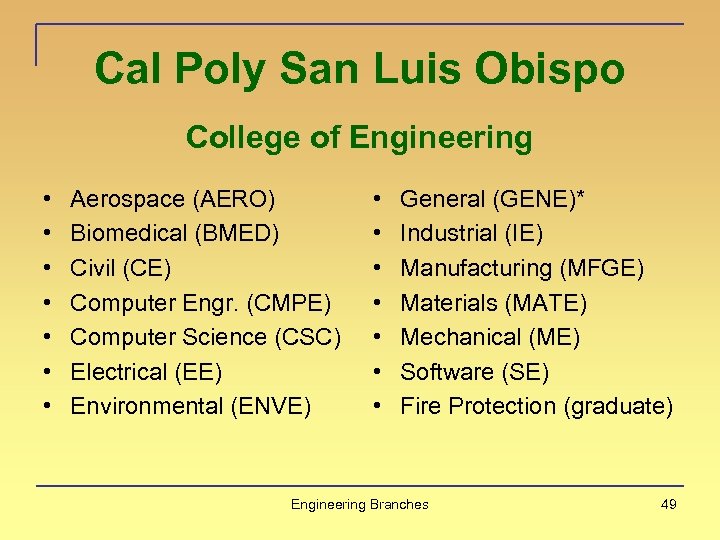
Cal Poly San Luis Obispo College of Engineering • • Aerospace (AERO) Biomedical (BMED) Civil (CE) Computer Engr. (CMPE) Computer Science (CSC) Electrical (EE) Environmental (ENVE) • • General (GENE)* Industrial (IE) Manufacturing (MFGE) Materials (MATE) Mechanical (ME) Software (SE) Fire Protection (graduate) Engineering Branches 49
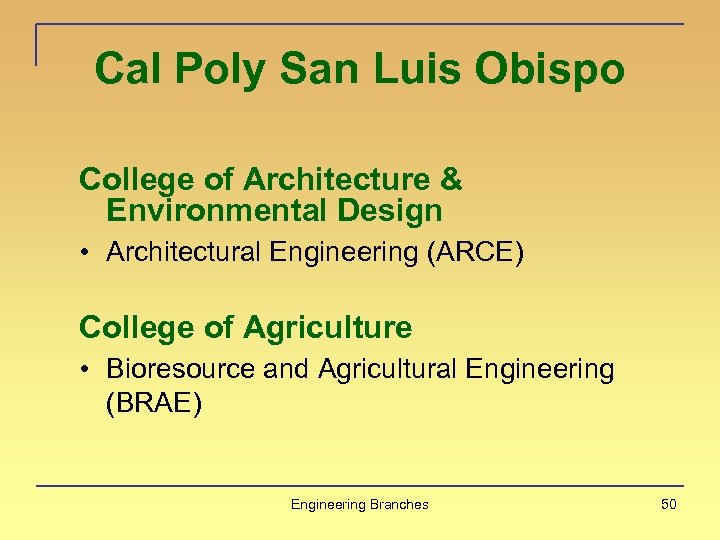
Cal Poly San Luis Obispo College of Architecture & Environmental Design • Architectural Engineering (ARCE) College of Agriculture • Bioresource and Agricultural Engineering (BRAE) Engineering Branches 50
Скачать презентацию Engineering Branches Dom Dal Bello Engineering 100 Allan
e799f32c05a19b6b729ea00b1a397240.ppt