


 Скачать презентацию Engaging parents in their children s English language learning
YLE IATEFL 2015 absolute final.pptx
- Количество слайдов: 31
 Engaging parents in their children’s English language learning IATEFL 2015 Manchester Karen Saxby
 Let’s • explorewhy parents might want or not want to engage in their child’s language learning • rethink why we learn languages and then … • using those thoughts, consider how teachers could encourage parents to engage more • look at ways in which parents can help their children
 Why might a parent want to engage in their child’s language learning? • ambitionfor their child (passing exams/bilingual hopes) • wider education(e. g. so their child could study other subjects in English) • integration in an English-speaking community • fun, valuable, shared time, doing activities together
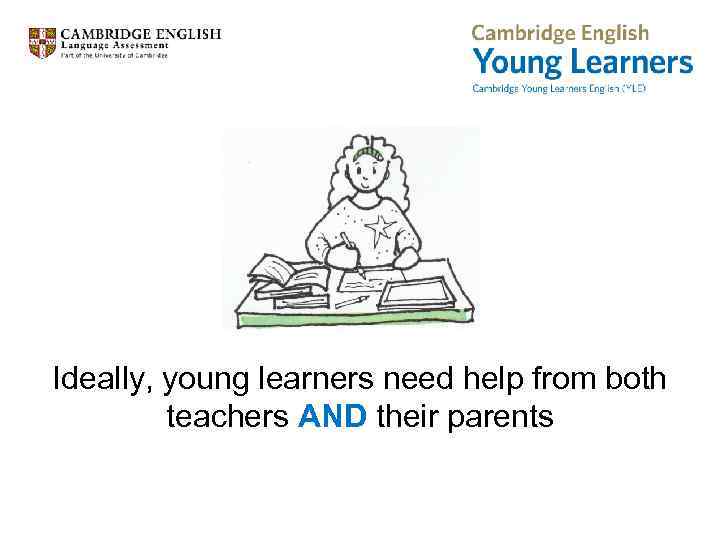 Ideally, young learners need help from both teachers AND their parents
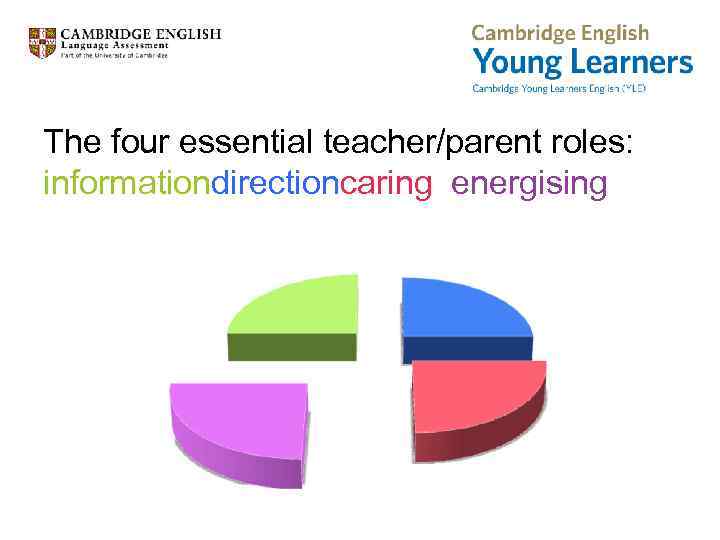 The four essential teacher/parent roles: informationdirectioncaring energising
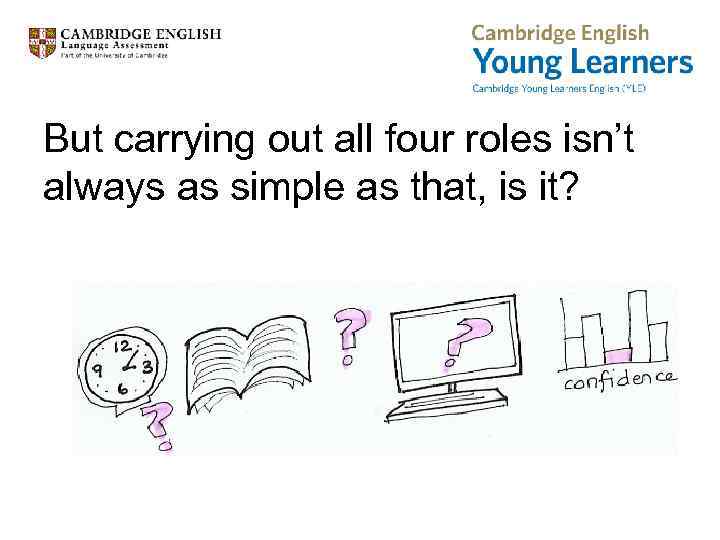 But carrying out all four roles isn’t always as simple as that, is it?
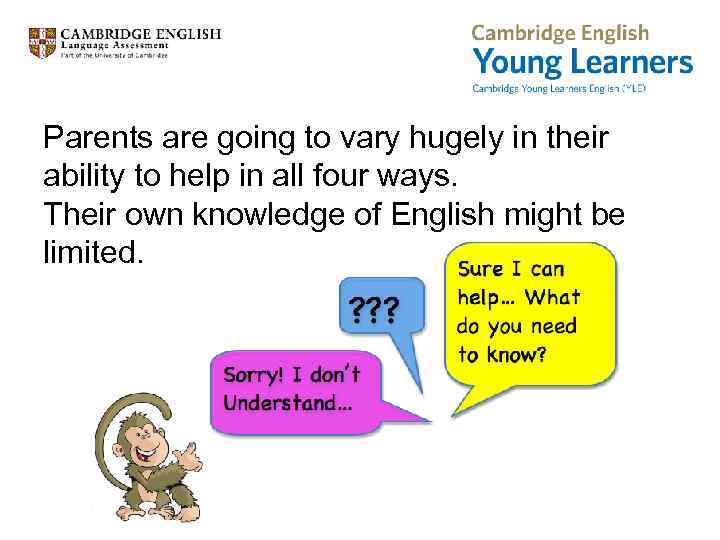 Parents are going to vary hugely in their ability to help in all four ways. Their own knowledge of English might be limited.
 Some parents may be very willing. Others may lack time or confidence. Some may think English language learning is vital. Others may think other subjects are far more important.
 How about you? And how about your students’ parents? Are you/they resource givers? Where are you/they on the engageddisengagedscale? Are you/they supporters of tiger parenting? No two of us are the same.
 To find ways to most helpfully engage parents, let’s go back to basics. Why do we learn a second language?
 Language – what’s it for? • • • sayingwhatwe think, need, like, dislike expressingour personalityandindividuality readingandlearningabout our world listening andresponding connecting with people near to us and perhaps people on the other side of the world
 Why learn a language? • to pass exams, gain status/qualifications and access wider career choices but also • to develop the confidenceto say who we are, what we believe in and what our dreams are • to communicate those thoughtsto communities we find ourselves in and therefore be present in those communities
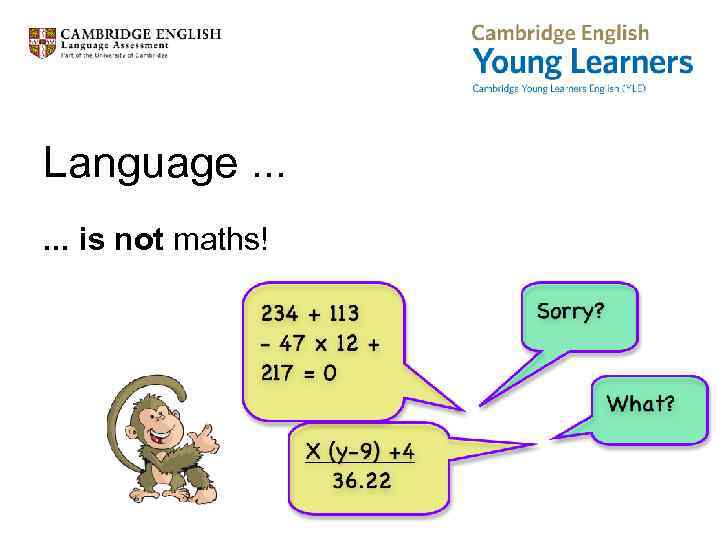 Language. . . is not maths!
 Howcan a teacher engage a parent’s help? • explain how vital their role might be EVEN IF the parent has little command of English
 To trigger intrinsicmotivation, the learning experience should be meaningful, fun, varied, interestingand should allow for personal selectionand expression.
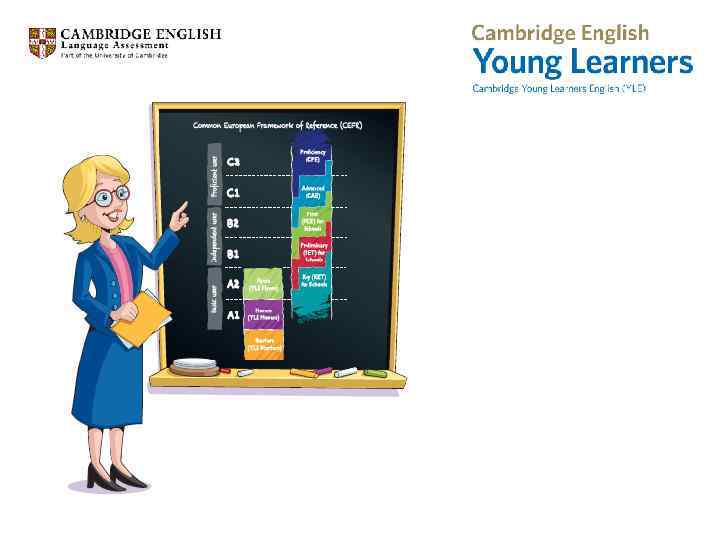
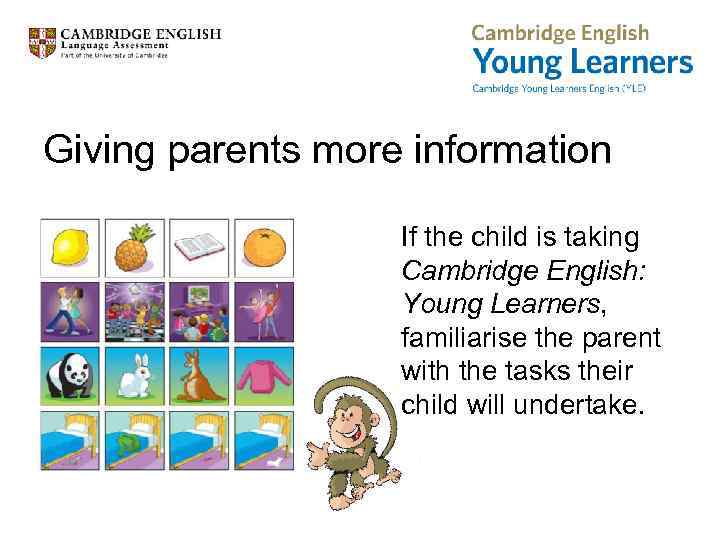 Giving parents more information If the child is taking Cambridge English: Young Learners, familiarise the parent with the tasks their child will undertake.
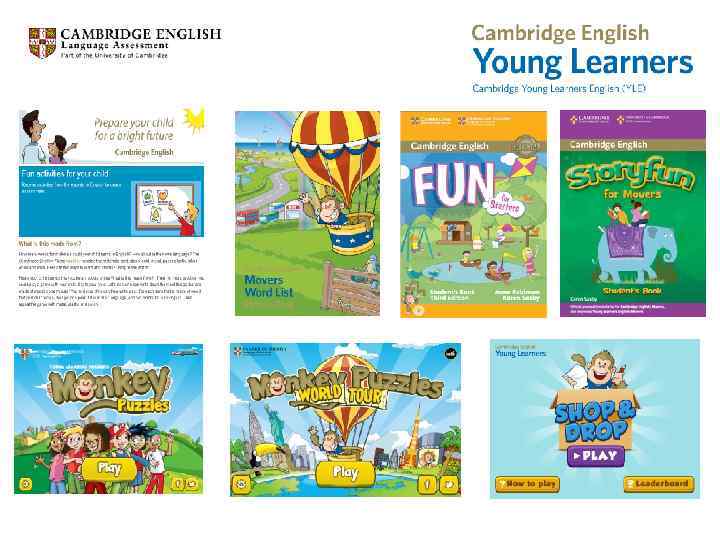
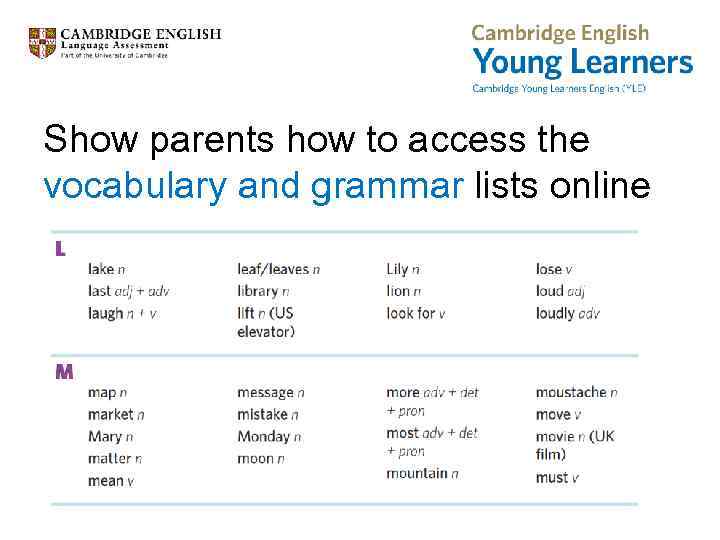 Show parents how to access the vocabulary and grammar lists online
 Remind parents of the Cambridge English: Young Learners ethos The tests: • are designed to test skills in fun, interesting and varied ways • use language that is meaningfulto a child • can develop a child’s English language skills in a natural, stress-freeway
 Share ideas with parents at an information evening • Mistakes bring opportunities for learning. • Many young children remember language more easily if learning is subtly combined with creative activities such as drawing, role play, model-making, etc. • Picturescan be used to trigger language in so many ways. • Children have an extraordinary ability to learn language through listening to or reading stories. • Even one minute of practice now and then will build confidence.
 The parent should now know: • how helpful and important their role can be (regardless of limitations) • even if they feel unable to give direction or instruction, they can show interest and provide undivided attention, motivational caring and energy/focus to the learning experience • they can have fun in this shared quest … and maybe even learn something new!
 To sum up, a parent can really help by: • keeping their Cambridge English: Young Learners task awarenessin their back pocket for reference • remembering that the tests may measure all children in the same way, but their child’s language needs are unique (as is their personality) • organisingcreative, fun, varied and meaningfulactivities to encourage language learning (reading, writing, listening and speaking)
 Ideas for parents to use at home Allow the child (on their own or with friends) to: • read stories that reflect their particular interests • listen to audio storybooks • write to English-speaking pen friends • watch appropriate cartoons and English language films • create fact files • ‘collect’ favouritewords • draw and label pictures
 The parent and child together can: • create vocabulary flash cards • explore online interactive English-language learning websites • play board games in English (e. g. bilingual Scrabble) • enjoy English speaking ‘minute activities’ (e. g. at meal times, on car journeys) • talk in English about pictures/games/filmsthe child likes (scary, funny, informative, etc. ) • play memory games • do crosswords and word searches
 Knowing their child is unique, a parent could be enormously supportive by: • • respecting and exploring that uniqueness providing books/e-books their child will want to read finding websites that will interesttheir child showing they careabout their child’s progress without applying any perceived pressure on the child • encouraging intrinsic motivation by modelling their own enthusiasm for language work at home
 Handout of suggested activities for parents to do with their children For more activities for parents and children, visit: www. cambridgeenglish. org/learning-english/parents-and-children
 Cambridge English: Young Learners tests: • assess skills through a series of tasks that are fun and as meaningful as possible in the child’s world • do not ‘measure’ the child as a pass or fail candidate • are a motivating first step in Cambridge English exams
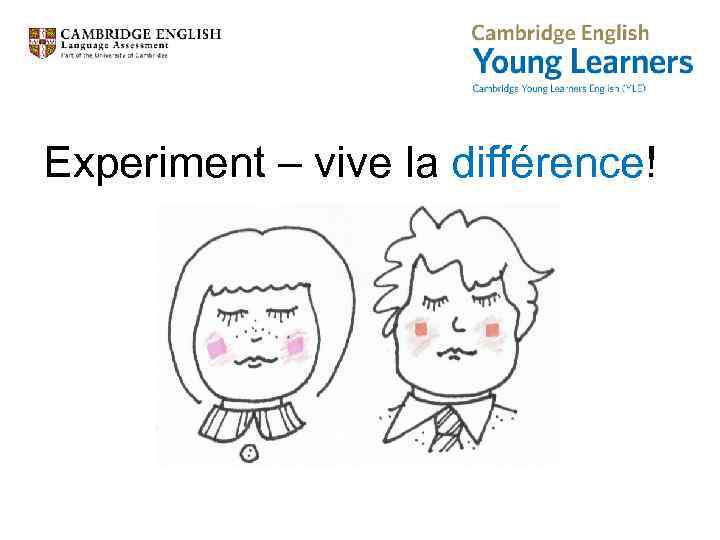 Experiment – vive la différence!
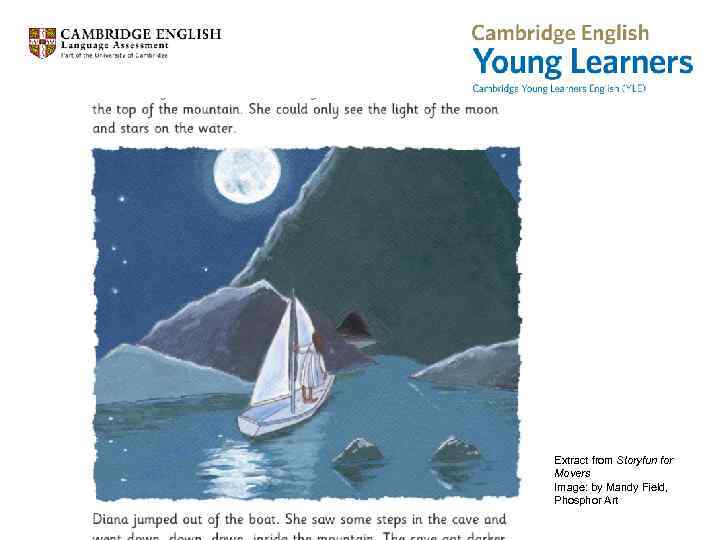 Extract from Storyfun for Movers Image: by Mandy Field, Phosphor Art
 Further information Cambridge English Language Assessment 1 Hills Road, Cambridge, CB 12 EU United Kingdom Tel: +44 (0)1223 553997 Fax: +44 (0)1223 553621 Keep up to date with what’s new via the website: www. cambridgeenglish. org For important information about Cambridge English exams: www. cambridgeenglish. org/help For more activities for parents and children, visit: www. cambridgeenglish. org/learning-english/parents-and-children