


 Скачать презентацию Enforcement of the Technical Standards and Safety Act
c72ac70a625ed1037fdee2cbef56d70d.ppt
- Количество слайдов: 56
 Enforcement of the Technical Standards and Safety Act, 2000, and Elevating Device Regulations in Ontario PUTTING Roland Hadaller, P. Eng. PUBLIC SAFETY FIRST
 Objectives · Overview of TSSA · General understanding of the Act, Regulations and CAD · Licensing, Registration & Certification · Engineering & inspection process for new and altered equipment · Periodic inspection model · Alterations · Maintenance · Accidents and Incidents Reporting PUTTING PUBLIC SAFETY FIRST
 About TSSA · Technical Standards and Safety Authority (TSSA) · Self-funded, not-for-profit private safety organization · Created in 1997 · Delegated authority on behalf of the Province of Ontario · NOT PART OF THE ONTARIO GOVERNMENT PUTTING PUBLIC SAFETY FIRST
 TSSA Mission and Vision Mission TSSA is dedicated to enhancing public safety internationally To this end – TSSA’s PASSION is to make people’s lives better by putting public safety first – TSSA is DETERMINED to understand the needs of its customers and partners, and together deliver effective, efficient and innovative risk-based safety solutions – TSSA is COMMITTED to a culture of personal growth and recognition, teamwork, leadership and accountability Vision To be the world leader in public safety services PUTTING PUBLIC SAFETY FIRST
 Why TSSA vs. a Government Agency? · TSSA is protected from government financial or policy restraints · Provides greater innovation in service delivery and greater responsiveness to industry’s changing needs · Provides greater flexibility to address identified safety gaps PUTTING PUBLIC SAFETY FIRST
 Why TSSA vs. a Government Agency? · Governed by a Board of Directors representative of public and industry with no single industry controlling the agenda · 11 Advisory Councils which effectively balance the interests between consumers, industry and government · Actively promote the harmonization of national and international safety standards · Partnered to create NPSAC-National Public Safety Advisory Committee PUTTING PUBLIC SAFETY FIRST
 Which laws are administered by TSSA for the Province of Ontario? TSSA is the sole authority in Ontario for administration and enforcement of the Technical Standards and Safety Act and 14 Supporting program regulations Elevating Devices Certification & Training of Elevating Devices Mechanics Amusement Devices Boiler & Pressure Vessels Operating Engineers Compressed Natural Gas Fuel Oil PUTTING Gaseous Fuels Liquid Fuels Propane Storage and Handling Oil & Pipeline Systems Certification of Petroleum Mechanics Upholstered & Stuffed Articles PUBLIC SAFETY FIRST
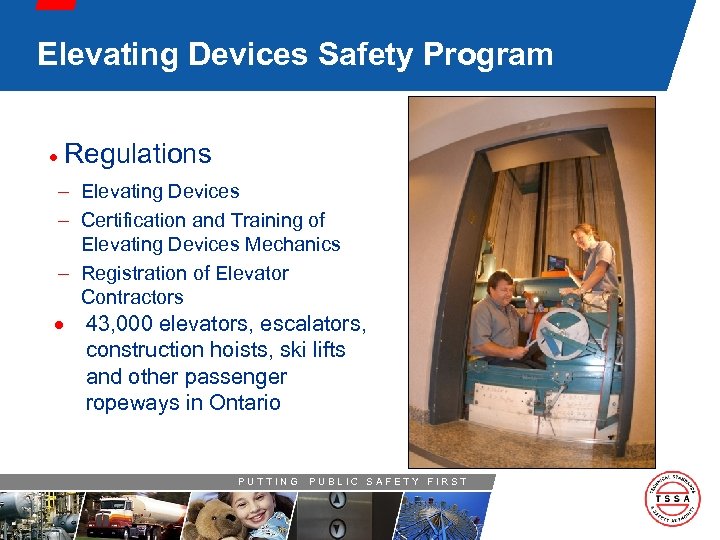 Elevating Devices Safety Program · Regulations – Elevating Devices – Certification and Training of Elevating Devices Mechanics – Registration of Elevator Contractors · 43, 000 elevators, escalators, construction hoists, ski lifts and other passenger ropeways in Ontario PUTTING PUBLIC SAFETY FIRST
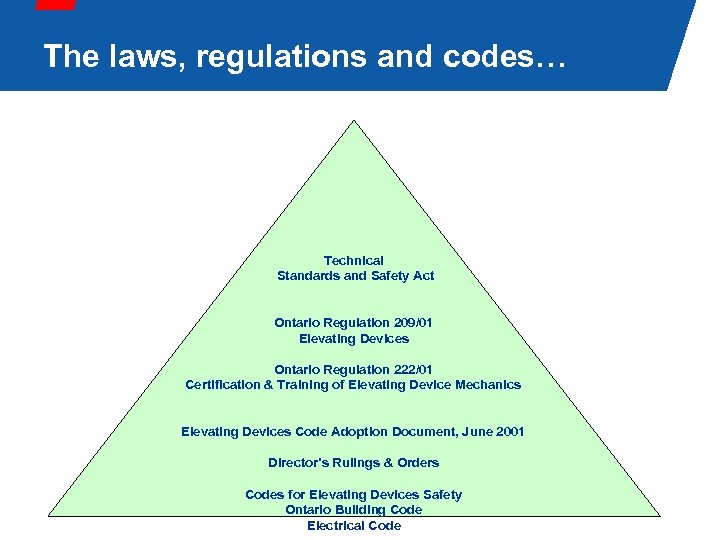 The laws, regulations and codes… Technical Standards and Safety Act Ontario Regulation 209/01 Elevating Devices Ontario Regulation 222/01 Certification & Training of Elevating Device Mechanics Elevating Devices Code Adoption Document, June 2001 Director’s Rulings & Orders Codes for Elevating Devices Safety Ontario Building Code Electrical Code
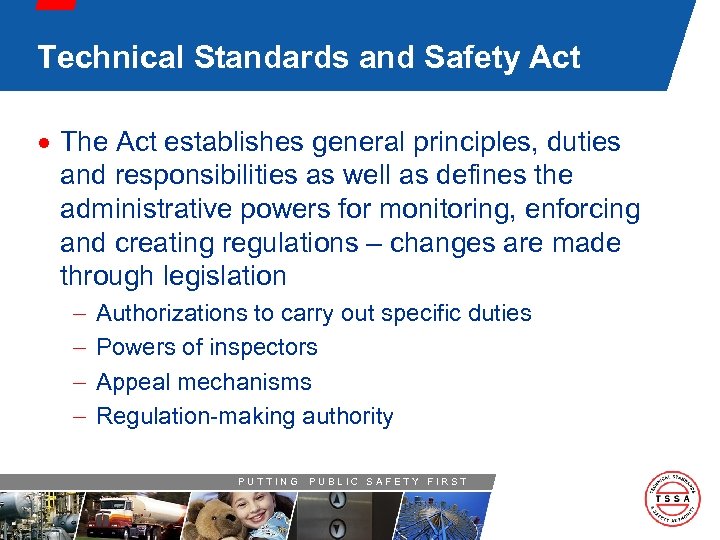 Technical Standards and Safety Act · The Act establishes general principles, duties and responsibilities as well as defines the administrative powers for monitoring, enforcing and creating regulations – changes are made through legislation - Authorizations to carry out specific duties Powers of inspectors Appeal mechanisms Regulation-making authority PUTTING PUBLIC SAFETY FIRST
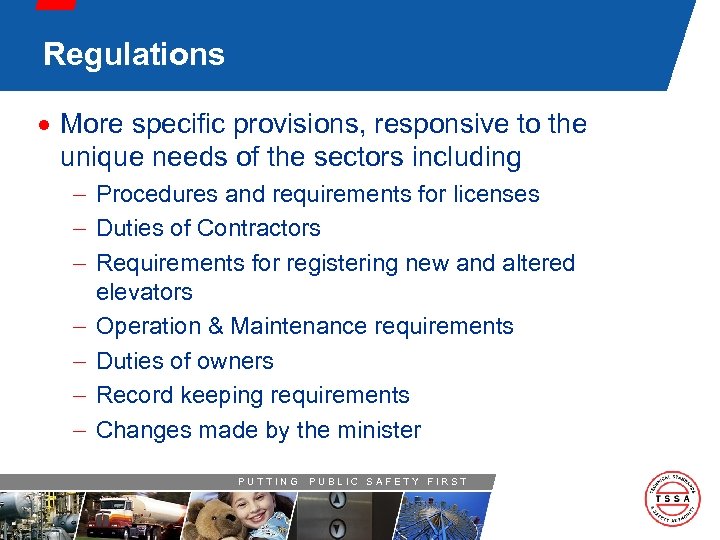 Regulations · More specific provisions, responsive to the unique needs of the sectors including - Procedures and requirements for licenses - Duties of Contractors - Requirements for registering new and altered elevators - Operation & Maintenance requirements - Duties of owners - Record keeping requirements - Changes made by the minister PUTTING PUBLIC SAFETY FIRST
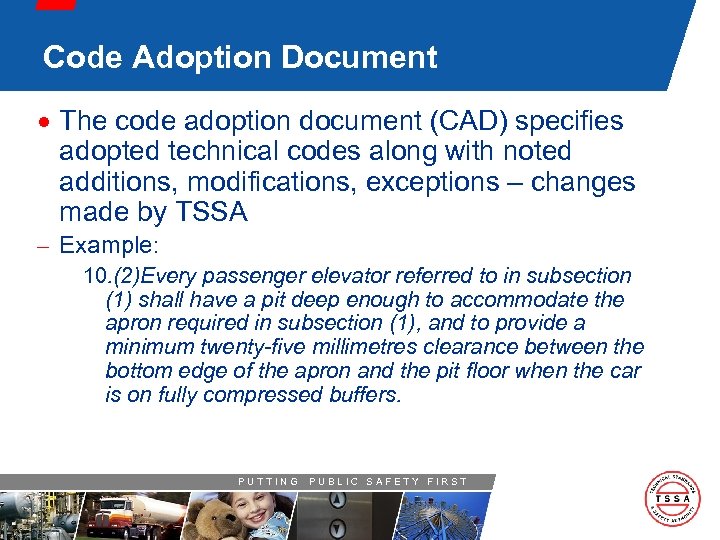 Code Adoption Document · The code adoption document (CAD) specifies adopted technical codes along with noted additions, modifications, exceptions – changes made by TSSA – Example: 10. (2)Every passenger elevator referred to in subsection (1) shall have a pit deep enough to accommodate the apron required in subsection (1), and to provide a minimum twenty-five millimetres clearance between the bottom edge of the apron and the pit floor when the car is on fully compressed buffers. PUTTING PUBLIC SAFETY FIRST
 Director’s Orders · Directors Orders/Bulletins are a quick means of putting in place new safety requirements – Adoption of new or revised codes & effective dates – Safety Orders for action on specific equipment – Information/enforcement procedures – Safety alerts – information only PUTTING PUBLIC SAFETY FIRST
 Licensing, Registration &Certification (LRC) · The Technical Standard and Safety Act, 2000 and the elevating devices regulation requires: – Elevating devices be licensed – Contractors registered – Mechanics certified · Contractors who install, alter or maintain elevating devices must – Be registered – Employ certified elevator mechanics to complete the work PUTTING PUBLIC SAFETY FIRST
 Licensing, Registration &Certification (LRC) · Before an elevating device can be put into operation, it must – Successfully complete a design review and inspection – Be licensed · Contractor registration and elevating device licenses must be renewed annually for a fee · Mechanic certifications must be renewed every two years, for a fee PUTTING PUBLIC SAFETY FIRST
 Licensing, Registration &Certification (LRC) · The elevating device mechanic regulation lists the requirements for mechanic certification which includes – Classroom learning – Written exam – Practical on the job experience PUTTING PUBLIC SAFETY FIRST
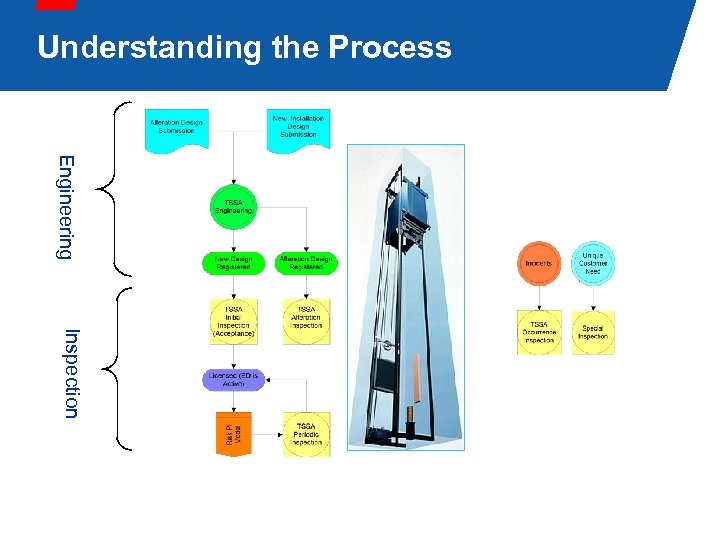
 Engineering and Inspection · Each new or altered elevating device is subject to - An engineering design review - Field inspection · If it successfully passes the design review and inspection, it qualifies for a license PUTTING PUBLIC SAFETY FIRST
 Design Review · Each new of altered elevating devices is subject to a design review for compliance to the Act, regulations and codes · The design submission must be submitted by a P. Eng. , and - Include sufficient drawings, electrical schematics and test procedures to demonstrate compliance - Contain an engineer’s statement that the design conforms to the requirements PUTTING PUBLIC SAFETY FIRST
 Design Review · The design is reviewed by TSSA engineers · The review is an audit of both electrical and mechanical areas of the device design · Electrical review includes - Single failure analysis – redundancy Redundancy checking Basic safety circuits Use of force guided relays EMI compliance PUTTING PUBLIC SAFETY FIRST
 Design Review · Mechanical review includes - Strength of members - Horizontal and vertical clearances - Factors of safety PUTTING PUBLIC SAFETY FIRST
 Acceptance Inspection · Each new or altered elevating device is subject to an acceptance inspection to - Verify that it has been manufactured and installed in compliance to the Act, regulations and codes - Agrees with registered design submission - Successfully passes all required inspection tests PUTTING PUBLIC SAFETY FIRST
 Periodic Inspections · How often do we inspect existing elevators? ` PUTTING PUBLIC SAFETY FIRST
 Understanding the Process Engineering Inspection
 Risk Based Inspection Scheduling · Risk model based on collection of information on each device gathered through - Inspections - Engineering design reviews - Incident investigations - Identification of risk factors – key information which is predictive of safety deficiencies - Create a scheduling formula - the frequency of inspection is lengthened or shortened using the risk factors PUTTING PUBLIC SAFETY FIRST
 Risk Based Inspection Scheduling · Risk factors - Severity of directives issued - Contractor performance - Age of device - Building occupancy type PUTTING PUBLIC SAFETY FIRST
 Risk Based Inspection Scheduling · How it works - Base inspection frequency is once every two years - A system of debits and credits (time oriented) is applied to each device based on the 5 risk factors - Inspection frequency is modified as a result of risk factors o maximum: “better” devices inspected every 3 years o minimum: “riskier” devices inspected every 6 months · For any device, inspection frequency adjusted over time as risk factors change PUTTING PUBLIC SAFETY FIRST
 Risk Based Inspection Scheduling · Benefits - Workload management o inspection resources are not wasted checking devices with established histories of good safety compliance o creates a more sophisticated tool to guide inspectors in determining where and when to inspect - Public safety o high risk devices and customers receive more attention - Cost savings o customers with good safety record are rewarded with less inspections and lower inspection costs PUTTING PUBLIC SAFETY FIRST
 Reduced frequency at Owners request · Can an owner, for safety and liability concerns, request more inspections than the TSSA Risk Model suggests? – TSSA will accommodate customer’s requests for an change to the inspection schedule that enhances public safety PUTTING PUBLIC SAFETY FIRST
 Understanding the Inspection Report · Report Includes – Compliance directives – Compliance times – Fees – Voluntary compliance PUTTING PUBLIC SAFETY FIRST
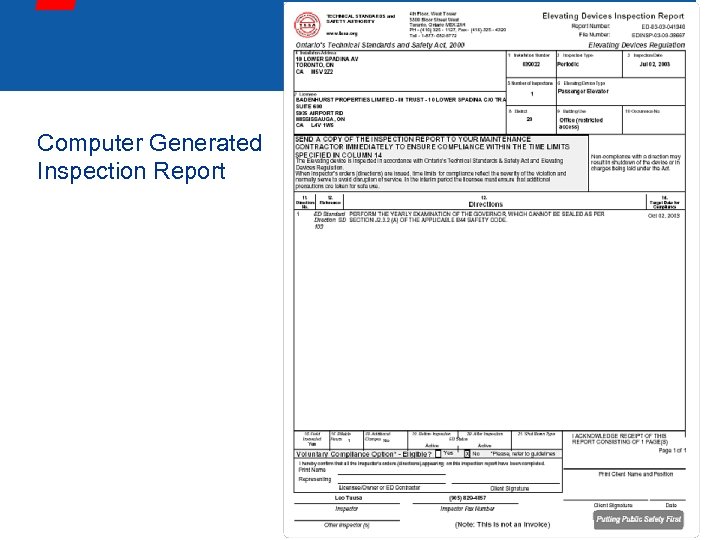 Computer Generated Inspection Report
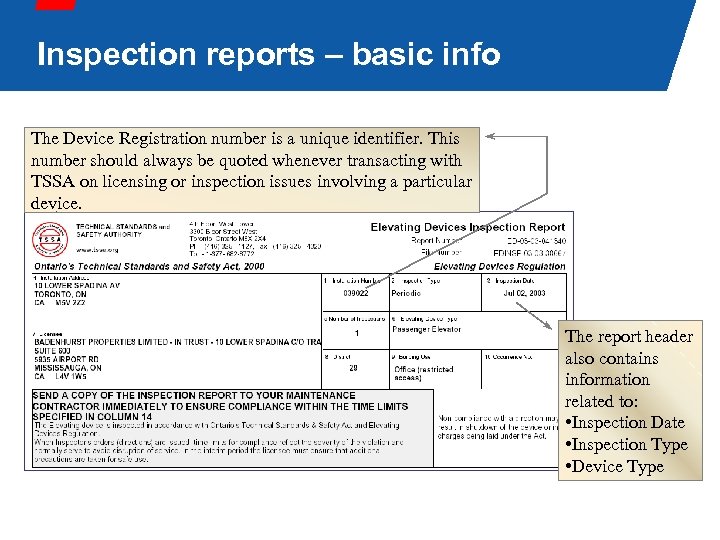 Inspection reports – basic info The Device Registration number is a unique identifier. This number should always be quoted whenever transacting with TSSA on licensing or inspection issues involving a particular device. The report header also contains information related to: • Inspection Date • Inspection Type • Device Type
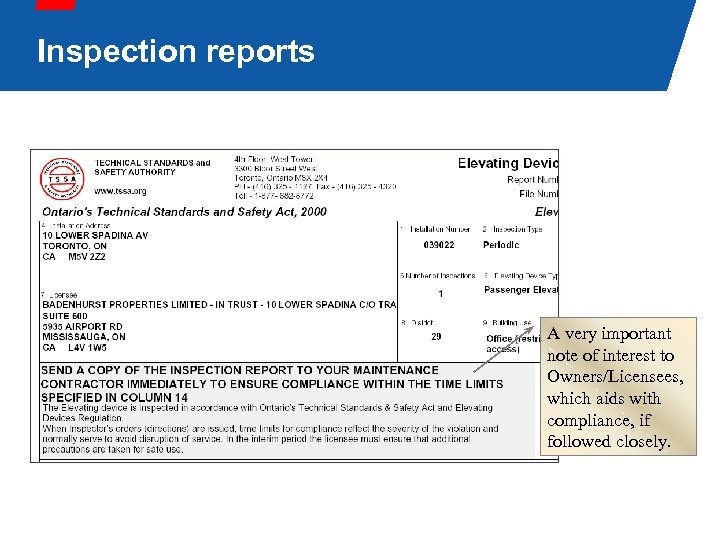 Inspection reports A very important note of interest to Owners/Licensees, which aids with compliance, if followed closely.
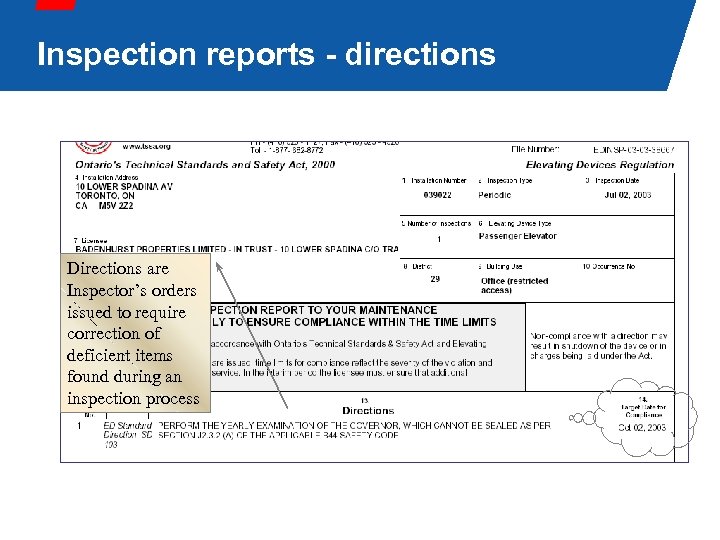 Inspection reports - directions Directions are Inspector’s orders issued to require correction of deficient items found during an inspection process
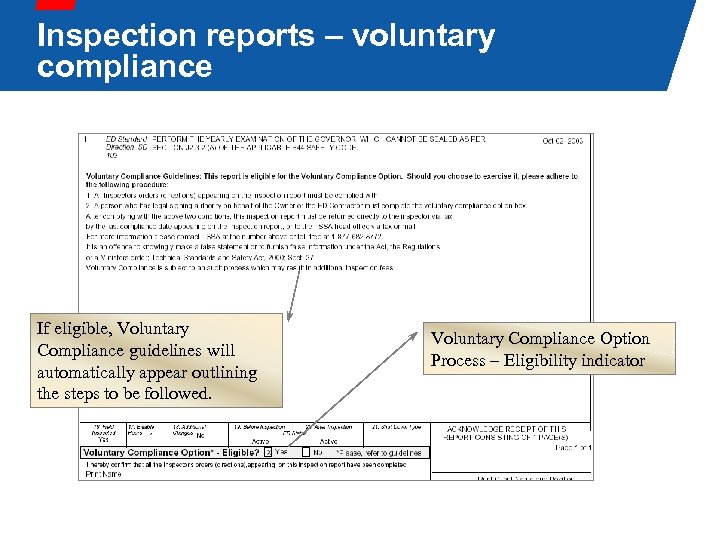 Inspection reports – voluntary compliance If eligible, Voluntary Compliance guidelines will automatically appear outlining the steps to be followed. Voluntary Compliance Option Process – Eligibility indicator
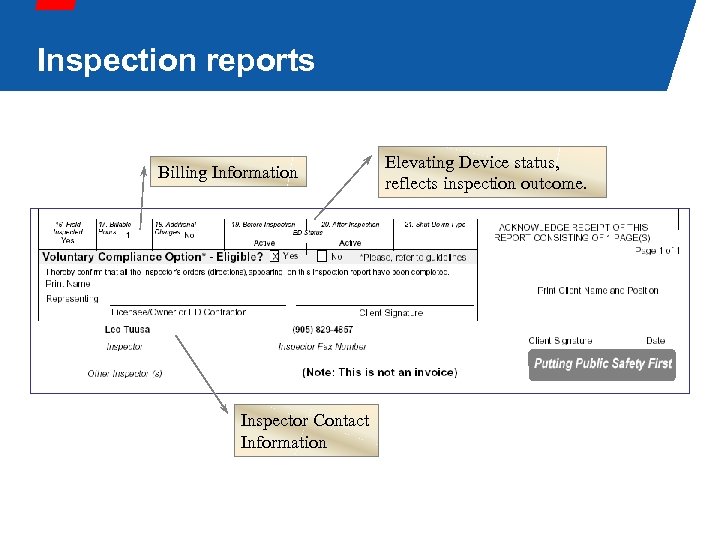 Inspection reports Billing Information Inspector Contact Information Elevating Device status, reflects inspection outcome.
 Alterations Definitions of Major and Minor Modernizations · “Alteration” means an alteration or replacement, removal or addition of any component or part of an elevating device that results in, or may result in, a change in the original design, inherent safety or operational characteristics of the elevating device PUTTING PUBLIC SAFETY FIRST
 Major Alterations · A change in - Increase of speed The method or type of control The method or type of motion/speed control The type of safety device or other safety stopping device - The type of driving machine or brake - The addition of an entrance to the elevating device - Change in weight by more than 5% such as after a cab renovation PUTTING PUBLIC SAFETY FIRST
 Minor Alterations · A minor alteration is any action or work performed on an elevating device that is - Not specified in subsection (3) - That results in a change to the original design or the operational characteristics of the elevating device - Affects the inherent safety level of the elevating device Examples: – Replacing car door operator – Changing from mechanical safety edge to multi beam – Cab interior finishes less than 5% limit PUTTING PUBLIC SAFETY FIRST
 Inspections of Alterations · Major – MUST be inspected before device is returned to service · Minor - MUST be inspected within 60 days of return to service PUTTING PUBLIC SAFETY FIRST
 Elevator Maintenance Requirements · Must have a maintenance contract · Contractor must be licensed with TSSA · Mechanics must be licensed with TSSA and have experience on your type of equipment · Owner and contractor must agree on frequency if not monthly, letter must be in log book PUTTING PUBLIC SAFETY FIRST
 Maintenance Requirements · Log Book - Must be on site, preferably in machine room - Must be maintained in accordance with ED regulation - Monthly, 12 month, 2 year and 5 year tasks must be completed and signed off in the log book - Log books must be kept on site for minimum of 5 years PUTTING PUBLIC SAFETY FIRST
 Reporting of incidents and accidents · TSSA must collect accurate incident data · Establishment of a credible and complete safety database · Identify safety hazard trends in Ontario · Work with stakeholders to evaluate and implement appropriate corrective actions PUTTING PUBLIC SAFETY FIRST
 Reporting Elevator Incidents/Accidents · When to report? - Accidents resulting in death of or serious injury shall be reported to TSSA immediately - Accident/incident that o causes injury o where there is a potentially hazardous condition o where there has been a fire - The owner and the contractor maintaining the elevating device shall notify TSSA o by telephone within 24 hours, and o submit a written report within seven days PUTTING PUBLIC SAFETY FIRST
 Key things to remember! · No person, except for the purpose of rescuing a person injured in the accident, shall interfere with, disturb, destroy, carry away or alter any wreckage, article or thing at the scene of or connected with the accident until permission to do so is given by TSSA · No person shall return the elevating device to service until - the cause of the accident or incident is identified - the safety of the device restored, and - approval has been received by TSSA PUTTING PUBLIC SAFETY FIRST
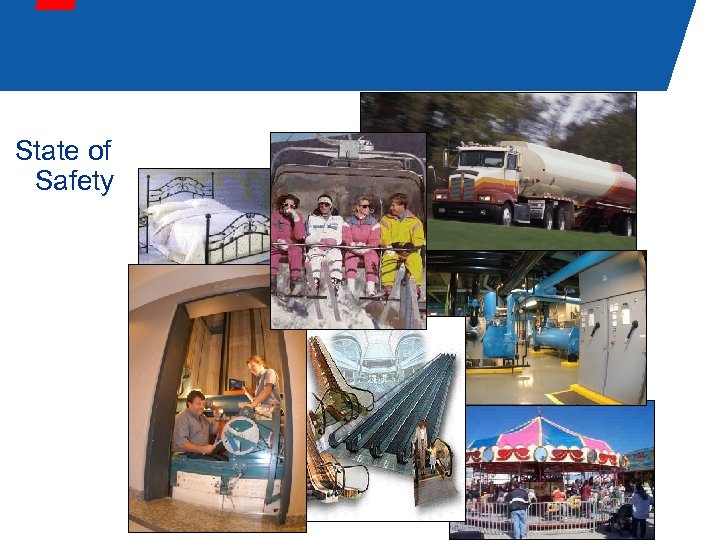 State of Safety
 Risk Management Approach · TSSA uses a risk-based management approach to help identify safety risks faster and deliver safety solutions · Risk-based management techniques provide the tools to be more proactive and focused · Provide the ability to concentrate resources on true risk and not in areas of low threat PUTTING PUBLIC SAFETY FIRST
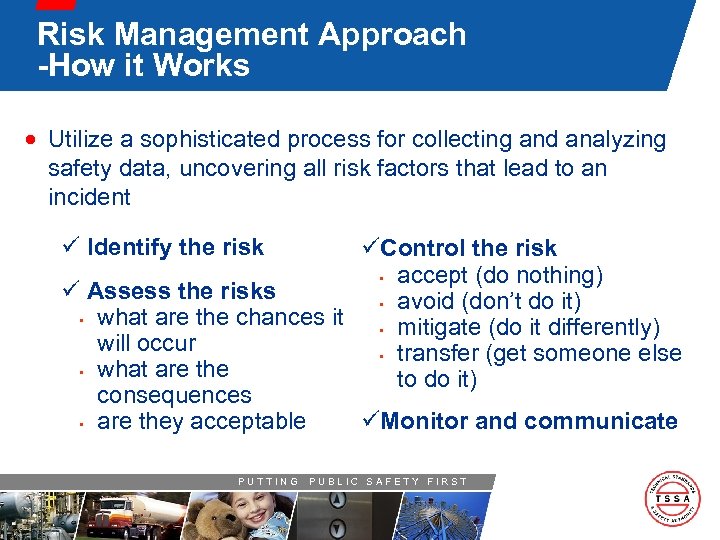 Risk Management Approach -How it Works · Utilize a sophisticated process for collecting and analyzing safety data, uncovering all risk factors that lead to an incident ü Identify the risk üControl the risk • accept (do nothing) ü Assess the risks • avoid (don’t do it) • what are the chances it • mitigate (do it differently) will occur • transfer (get someone else • what are the to do it) consequences • are they acceptable üMonitor and communicate PUTTING PUBLIC SAFETY FIRST
 State of Safety Reporting · Uses statistics provided by industry · Helps to identify actions being taken to prevent recurrence · Shows valid industry trends across Canada · Sampling size makes statistics relevant within Canadian market PUTTING PUBLIC SAFETY FIRST
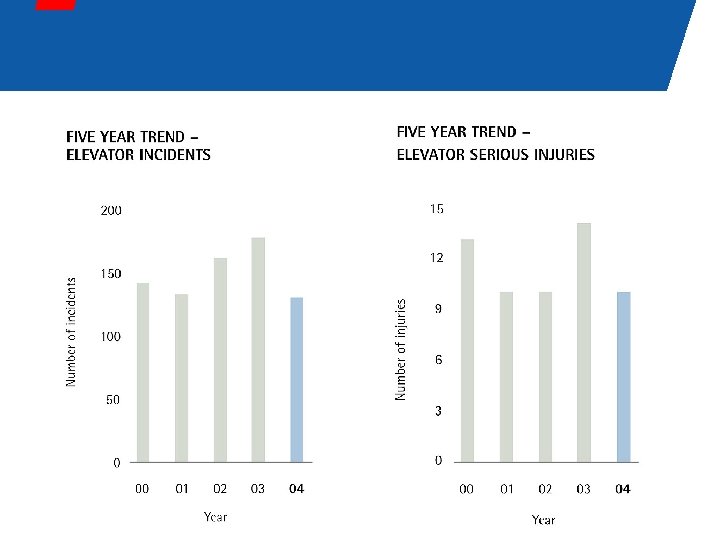
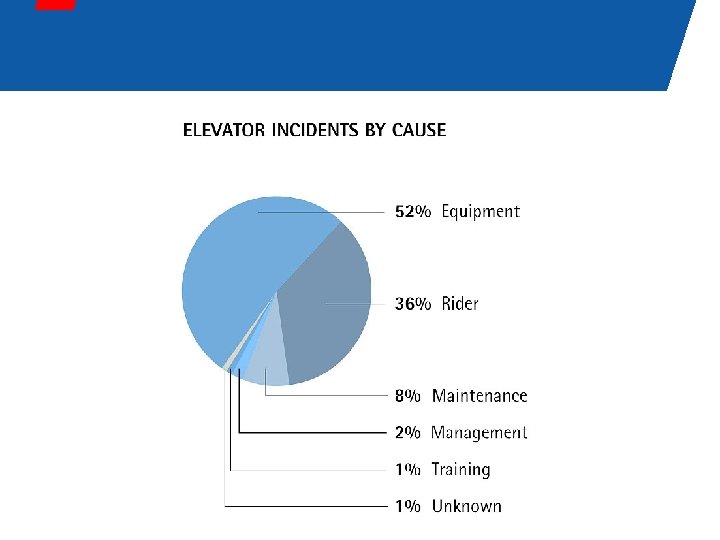
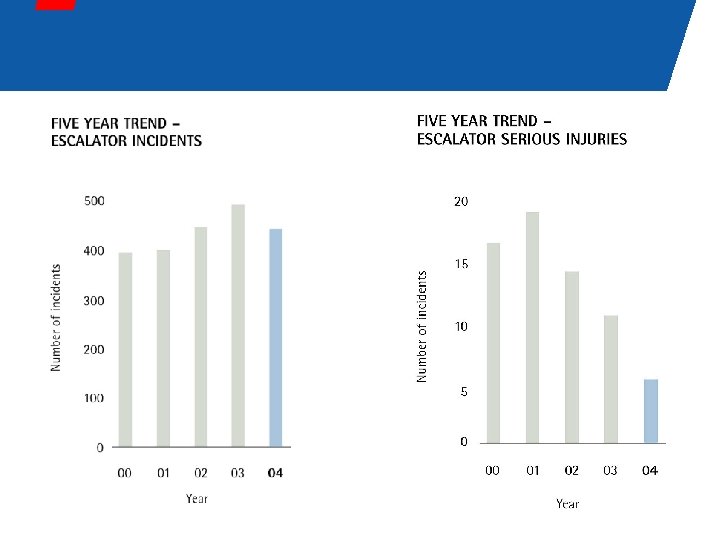
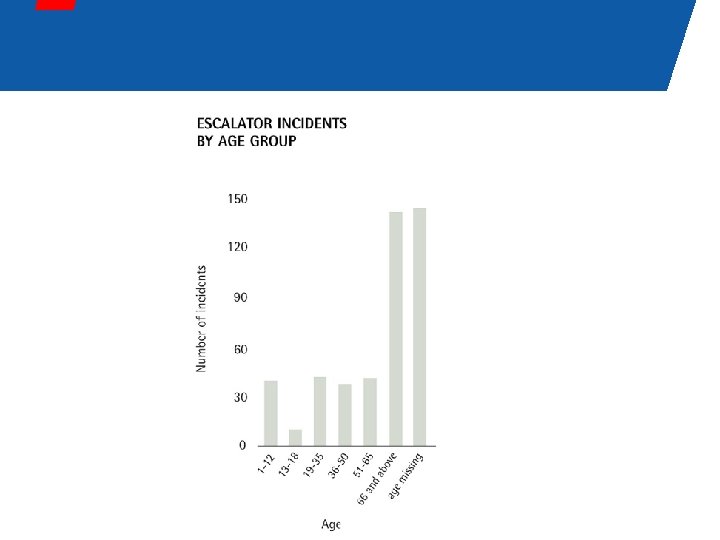
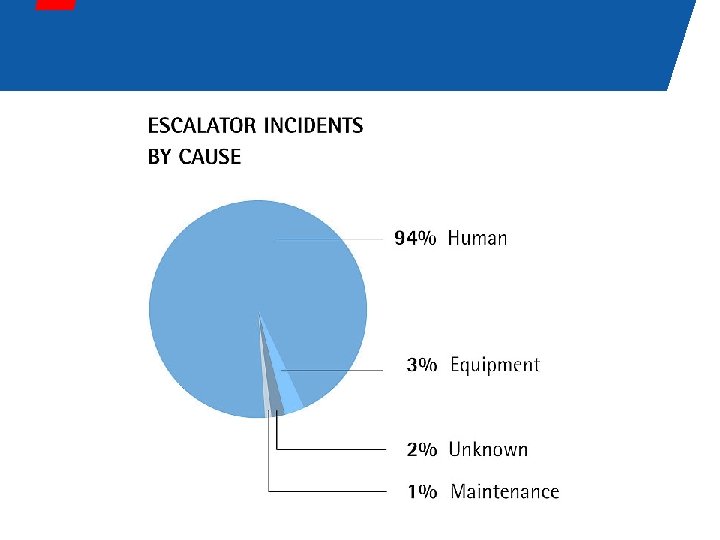
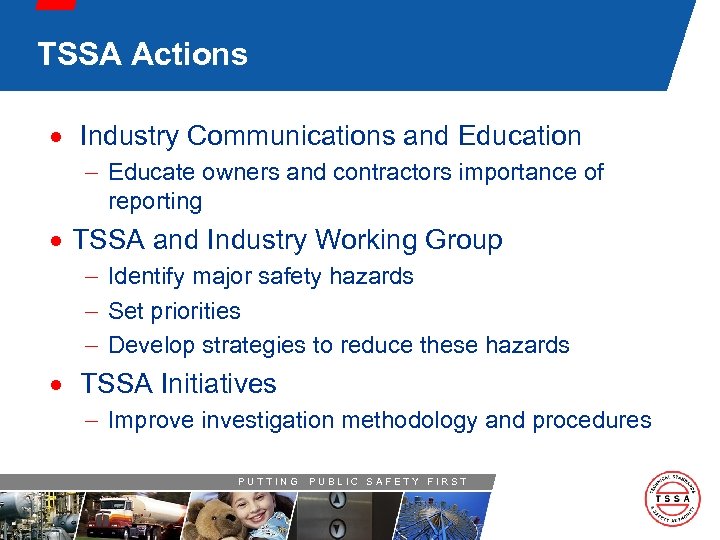 TSSA Actions · Industry Communications and Education - Educate owners and contractors importance of reporting · TSSA and Industry Working Group - Identify major safety hazards - Set priorities - Develop strategies to reduce these hazards · TSSA Initiatives - Improve investigation methodology and procedures PUTTING PUBLIC SAFETY FIRST
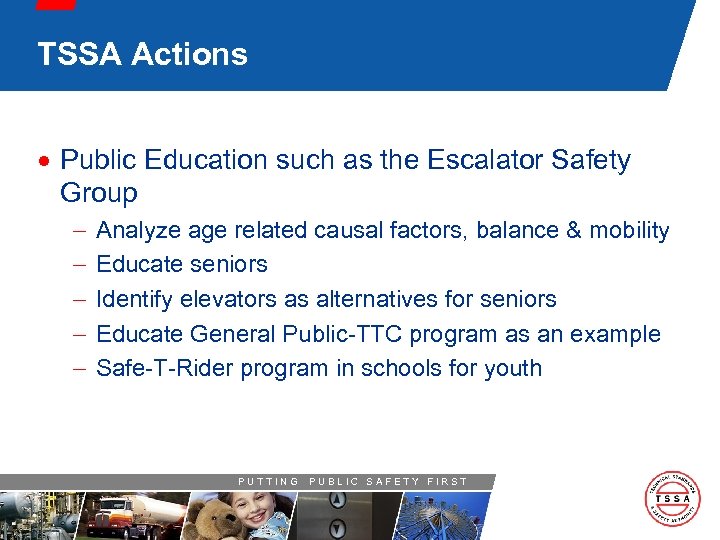 TSSA Actions · Public Education such as the Escalator Safety Group - Analyze age related causal factors, balance & mobility Educate seniors Identify elevators as alternatives for seniors Educate General Public-TTC program as an example Safe-T-Rider program in schools for youth PUTTING PUBLIC SAFETY FIRST
 Comments and Questions PUTTING PUBLIC SAFETY FIRST