


 Скачать презентацию ENERGY STAR Commercial Products U S Opportunities and
10c39702a0ed084be71b1376ec458867.ppt
- Количество слайдов: 16
 ENERGY STAR Commercial Products U. S. Opportunities and Status Canadian ENERGY STAR Participants Meeting May 4, 2006 Kate Lewis, U. S. EPA
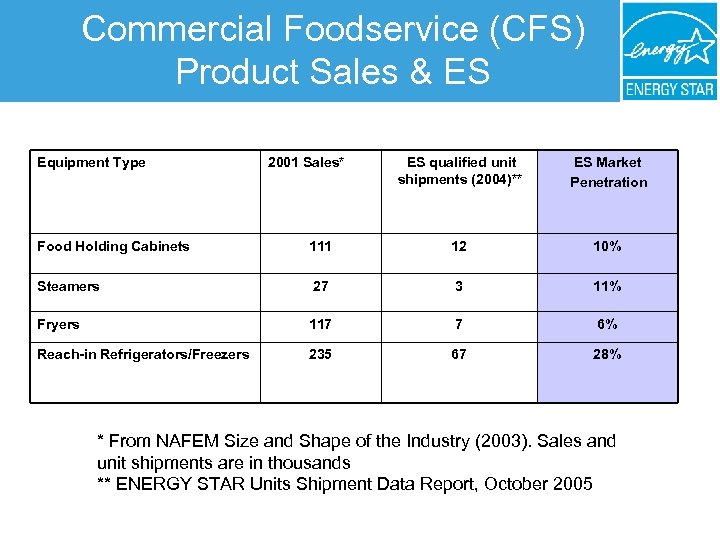 Commercial Foodservice (CFS) Product Sales & ES Equipment Type 2001 Sales* ES qualified unit shipments (2004)** ES Market Penetration Food Holding Cabinets 111 12 10% Steamers 27 3 11% Fryers 117 7 6% Reach-in Refrigerators/Freezers 235 67 28% * From NAFEM Size and Shape of the Industry (2003). Sales and unit shipments are in thousands ** ENERGY STAR Units Shipment Data Report, October 2005
 Targeted Programs: CFS • CFS Goal: Demonstrate viability of CFS platform – Facilitate communication between industry/Energy Efficiency Program Sponsors (EEPS) – Integrate ENERGY STAR messaging into EEPS programs – Develop and demonstrate CFS “whole-kitchen” concept
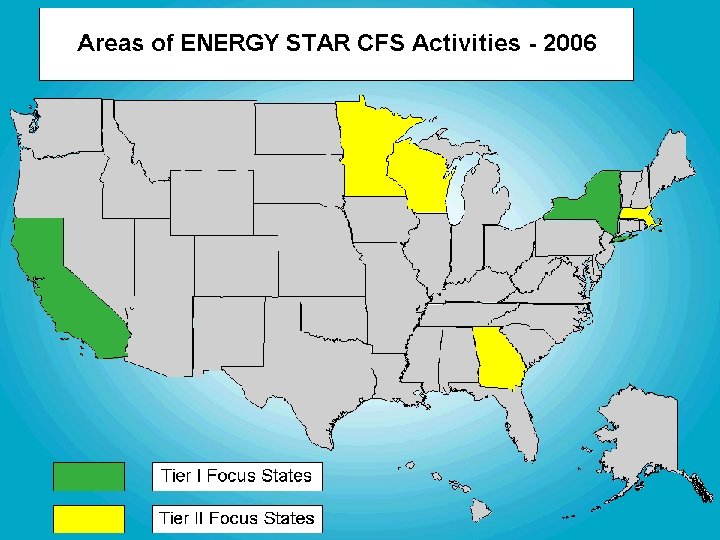
 CFS Objective • Transform the market for energy efficient commercial kitchen products by helping EEPS develop effective programs that promote (1) a bundle of ENERGY STAR qualified commercial kitchen equipment and (2) water-saving and product operating practices/recommendations for restaurants
 CFS FY 06 Strategies • Establish ES’ credibility with and value for utilities – Help make their existing commercial food service equipment programs as successful as possible • Refine equipment package, usage recommendations, and logic/savings model with utilities – CEE commercial kitchens committee • Demonstrate program support and buy-in from equipment manufacturers – ES CFS partner outreach
 CFS FY 06 Strategies • Demonstrate market adoption through pilot implementation of the kitchen package with one restaurant chain (independent, small/regional, or national) – Will likely involve ES Buildings and ES Small Business – Document best practices and lessons learned and share those cross-industry • Continue to research other non-restaurant commercial kitchen opptys. for installation of specific qualified products or bundle/suite – Schools and hospitality sectors – Follow the utility rebate funds, direct install programs and sector-focused outreach
 CFS FY 06 Goals • Early FY 07 (fall 2006) 2 -6 EEPS partners/utilities are actively promoting ENERGY STAR qualified CFS equipment to their customers – Via equipment-focused rebates/incentives • Later FY 07 (spring 2007) 1 -3 EEPS partners/utilities are actively promoting an efficient commercial kitchen via ES’ approach (the advanced kitchen package) to their customers – Primarily restaurants, but also could include schools or large institutional accounts – Via new construction or commercial rebates/incentives.
 New Specification Prospects • Battery Charging Systems* – Complement to EPSs – Seeking CEC adoption • Commercial dishwashers – Research ongoing on water and energy – 1 st draft target May ’ 06 • Ice Makers* – Research on water/energy “tradeoff” – Final document Nov ’ 05 * Product addressed in EPAct 2005
 Revised Specifications – 2006 • Imaging Equipment: values for products tested using TEC and OM approaches, includes power supply requirement, excludes grandfathering. • Milestones: – Test data due (November 1, 2005) – Distributed second draft specification (December 2005) – Released final specification (April 2006) – Effective date (March 2007) • Industry Concerns/Issues: – Integrated digital front-ends – Allowances for networked equipment – Duplex requirements – Functional adder – Remanufactured components – Recovery time
 Revised Specifications – 2006 Priorities • Vending retrofits
 EPS -- Where Are We? • Launched specification in January 2005 • Have recruited 5 end use product manufacturers (EUPM’s) • Have approached 40 to 50 EUPMs overall • Developed graphic for use on packaging (Samsung will be first to use – 2 cell phones in Nov. 05) • Identified target products for manufacturer recruitment (portable electronics products) • Begun general media – raise awareness and recruit Partners • Recruited 18 EPS makers (including 6 of the top 7 makers), representing over 50% of the market, have become ENERGY STAR Partners and supply qualified EPSs. Therefore, active recruitment of EPS makers not a major focus.
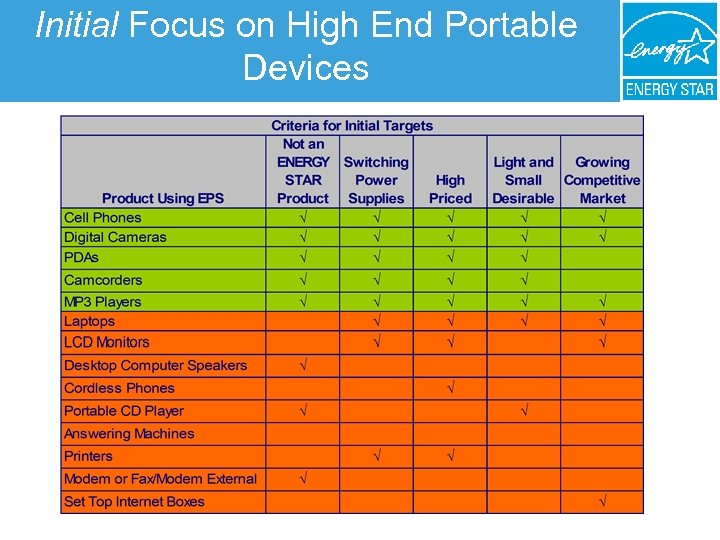 Initial Focus on High End Portable Devices
 EPS -- What We’ve Learned • Recruiting new partners can be slow (unfamiliarity with ES, legal issues, # of contacts) • Partner requirements add some obstacles – Label • Presence of English text (HP) • Label overload (brought by several partners) • Acceptability of graphic (Apple) – Efficiency levels • 230 V requirements excluding many products • Some manufacturers may not be worth recruiting (Nokia example – already have efficient EPSs, won’t use graphic, legal concerns) • Need case studies and more partners for more effective PR outreach • EUPM Recruitment will drive success not EPS manufacturers
 Overall Strategy and Activities • Current and Near term: – Directly recruit EUPMs using first to market category tactics – Develop somewhat flexible solutions for use of graphic and alternatives – Develop case studies highlighting success, use of graphic, and benefits to partner – Media outreach • Mid term: – Work closely with participating EUPMs to build number of products and to label them – Begin creating customer preference for products with ENERGY STAR EPSs through PR – Design of recognition and publicity elements – Redesign Website to a recruitment tool – Recruit direct retailer of EPSs (e. g. Targus) • Long term (Expand Market): – Begin working with retailers – Integrate into FEMP specification