 Скачать презентацию Energy Star and Affordable Housing Presentation to Newton
942155aa909791bf7adb05ec44c4f7b9.ppt
- Количество слайдов: 16



Energy Star and Affordable Housing Presentation to Newton HOME Consortium Roger D. Colton Fisher, Sheehan & Colton Belmont, MA January 2005
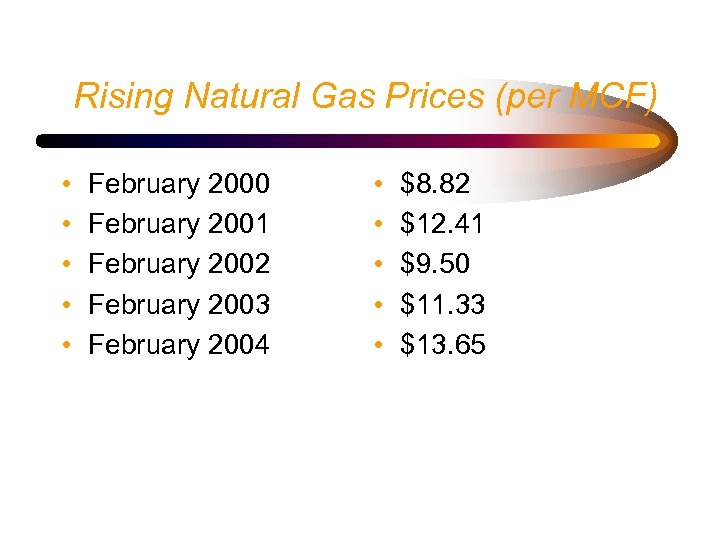
Rising Natural Gas Prices (per MCF) • • • February 2000 February 2001 February 2002 February 2003 February 2004 • • • $8. 82 $12. 41 $9. 50 $11. 33 $13. 65
Impacts on affordable housing • Reduce the “affordable sales price” of single family homes. • Freeze some lower income households out of the market altogether. • Force lower income households into less expensive homes. • Increase the risk of default by consumers.
Energy Efficiency and CDBG Section 101 of the HCDA of ’ 74 as amended: Federal assistance provided in this chapter is for the support of community development activities which are directed toward the following specific objectives 9) the conservation of the Nation's scarce energy resources, improvement of energy efficiency, and the provision of alternative and renewable energy sources of supply.
Energy Star and HUD • Introduced by the EPA in 1992 as a voluntary market-based partnership to reduce air pollution through increased energy efficiency. • In 1995, with the assistance of the Department of Energy (Do. E), the ES standard was extended to include the building industry by applying Do. E’s Home Energy Ratings System (HERS).
Energy Star Applicability • Energy Performance Standards for: – Appliances – Electronic equipment – Buildings
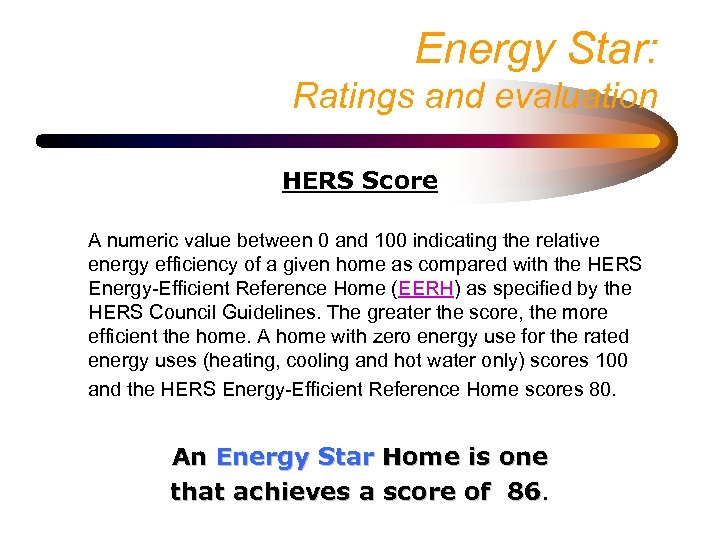
Energy Star: Ratings and evaluation HERS Score A numeric value between 0 and 100 indicating the relative energy efficiency of a given home as compared with the HERS Energy-Efficient Reference Home (EERH) as specified by the HERS Council Guidelines. The greater the score, the more efficient the home. A home with zero energy use for the rated energy uses (heating, cooling and hot water only) scores 100 and the HERS Energy-Efficient Reference Home scores 80. An Energy Star Home is one that achieves a score of 86. 86
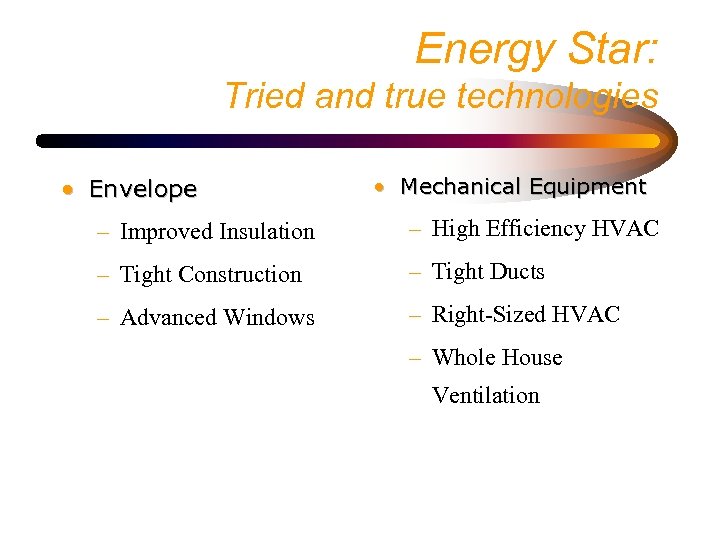
Energy Star: Tried and true technologies • Envelope • Mechanical Equipment – Improved Insulation – High Efficiency HVAC – Tight Construction – Tight Ducts – Advanced Windows – Right-Sized HVAC – Whole House Ventilation
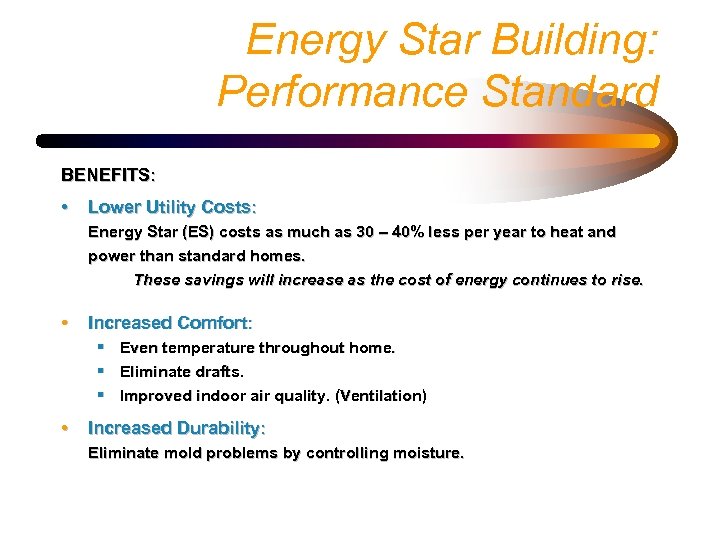
Energy Star Building: Performance Standard BENEFITS: • Lower Utility Costs: Energy Star (ES) costs as much as 30 – 40% less per year to heat and power than standard homes. These savings will increase as the cost of energy continues to rise. • Increased Comfort: § Even temperature throughout home. § Eliminate drafts. § Improved indoor air quality. (Ventilation) • Increased Durability: Eliminate mold problems by controlling moisture.
Energy Star Building: Other Advantages: • Adds value. • Higher debt load for developer or a buyer. • Increased discretionary income for a tenant or owner/resident.
Energy Star building: Why doesn’t everyone do it? “Split Incentives” • Incentive exists if owner/developer are identical. – If owner/developer/resident are not the same then no/incentive is said to be “split. ” • Developer alone – no incentive unless competing developer is offering Energy Star homes. • Lender –no incentive. • Buyer – often not involved in building decisions.
Energy Star Building: Roles and Responsibilities • Grantee / PJ: Adopts ES standard. • Developer/CDC: Reviews plans with E. STAR Rater / HERS contractor. • Contractor: Builds according to plans, and guidelines. • ES Homes staff/ HERS contractor: Inspects and tests building; evaluates energy efficiency. • Property owner: Enjoys significantly reduced operating costs. • Occupant: Enjoys improved comfort and healthier living environment.
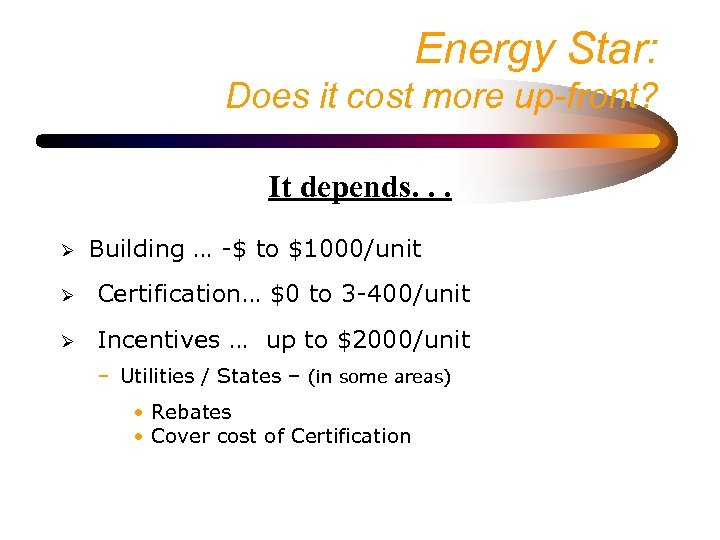
Energy Star: Does it cost more up-front? It depends. . . Ø Building … -$ to $1000/unit Ø Certification… $0 to 3 -400/unit Ø Incentives … up to $2000/unit – Utilities / States – (in some areas) • Rebates • Cover cost of Certification
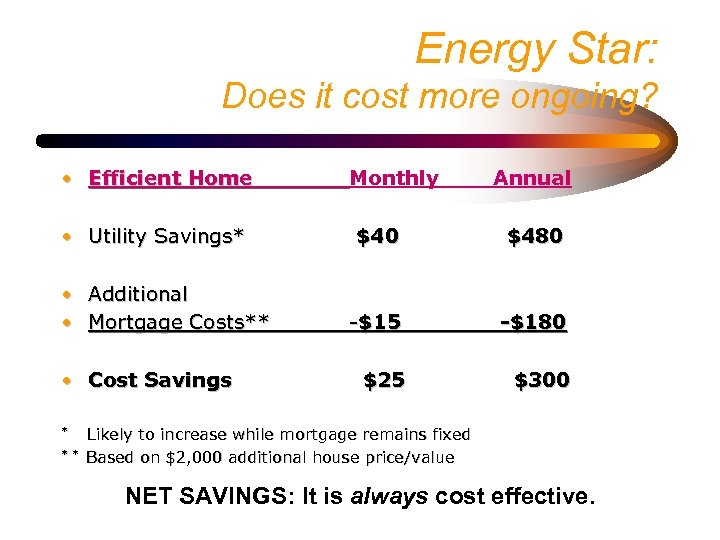
Energy Star: Does it cost more ongoing? • Efficient Home • Utility Savings* • Additional • Mortgage Costs** • Cost Savings * ** Monthly Annual $40 $480 -$15 -$180 $25 $300 Likely to increase while mortgage remains fixed Based on $2, 000 additional house price/value NET SAVINGS: It is always cost effective.
Energy Star References • www. energystar. gov • http: //rehabadvisor. pathnet. org/index. asp • http: //www. natresnet. org/accred/registry. htm Very comprehensive technical stuff in English. http: //www. buildingscience. com

For more information: roger@fsconline. com Roger D. Colton Fisher, Sheehan & Colton Public Finance and General Economics Belmont, MA (voice) 617 -484 -0597
Скачать презентацию Energy Star and Affordable Housing Presentation to Newton
942155aa909791bf7adb05ec44c4f7b9.ppt