 Скачать презентацию Energy Scenarios for Sustainable Development Nebojsa Nakicenovic International
49eb3f314499cf0284a363dadffbe184.ppt
- Количество слайдов: 26



Energy Scenarios for Sustainable Development Nebojsa Nakicenovic International Institute for Applied Systems Analysis (IIASA) naki@iiasa. ac. at 18 February 2002 Conference on Sustainability in Energy Production and Utilization in Brazil: The Next Twenty Years, Unicamps – S. Paulo, Brazil
Sustainable Energy: Energy that is produced and used in ways that simultaneously support human development over the long-term in all its social, economic, and environmental dimensions
MAJOR CHALLENGES 1. 5 billion people < $1 per day l Technology diffusion > 20 years l “Leapfrog rugs of the energy ladder” l Financing energy transformations l Achieving sustainable energy l Nakicenovic IIASA 2002
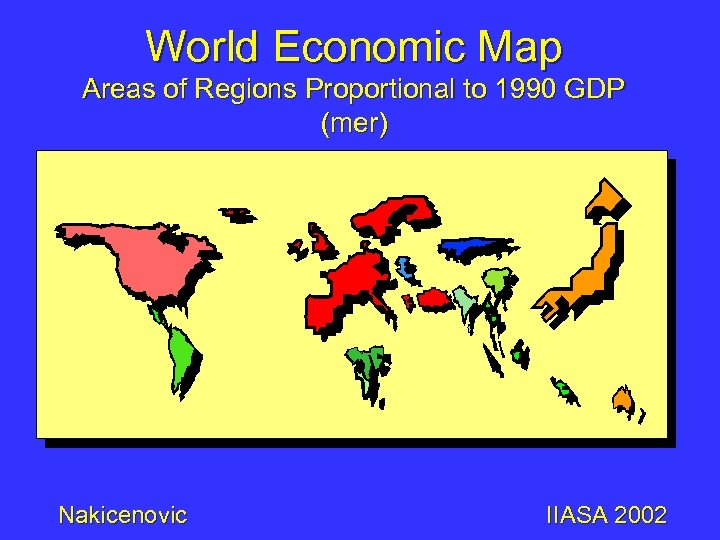
World Economic Map Areas of Regions Proportional to 1990 GDP (mer) Nakicenovic IIASA 2002
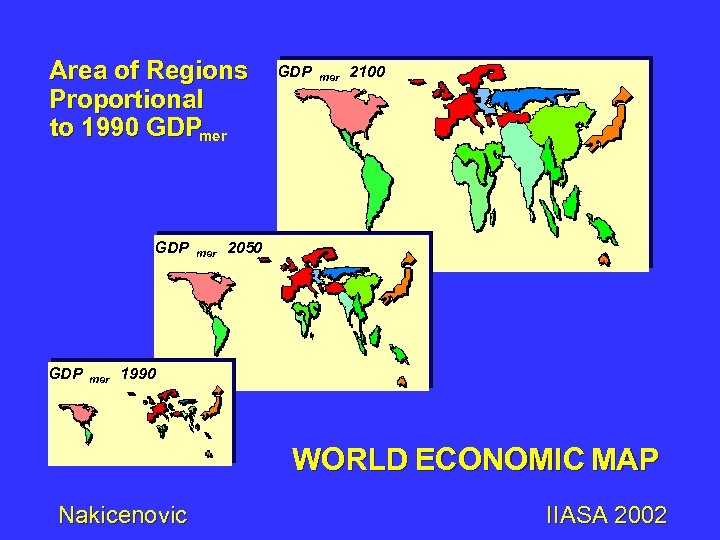
Area of Regions Proportional to 1990 GDPmer GDP mer 2100 2050 1990 WORLD ECONOMIC MAP Nakicenovic IIASA 2002
Do Sustainable Energy Futures Exist? Scenario development – thought experiments – is a useful tool in evaluating possible combinations of assumptions that may lead to sustainability The middle course B scenario l l Scenario A 3 The “ecologically” driven scenario C 1 l
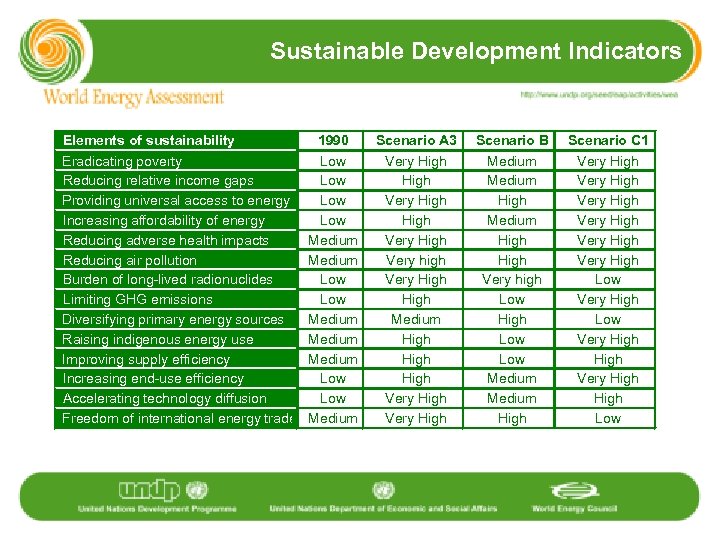
Sustainable Development Indicators Elements of sustainability Eradicating poverty Reducing relative income gaps Providing universal access to energy Increasing affordability of energy Reducing adverse health impacts Reducing air pollution Burden of long-lived radionuclides Limiting GHG emissions Diversifying primary energy sources Raising indigenous energy use Improving supply efficiency Increasing end-use efficiency Accelerating technology diffusion Freedom of international energy trade 1990 Low Low Medium Low Low Medium Scenario A 3 Very High Very High Very high Very High Medium High Very High Scenario B Medium High Very high Low High Low Medium High Scenario C 1 Very High Very High Low Very High Very High Low
IPCC Special Report IPCC Emissions Scenarios l Extensive literature review l Four narrative storylines l Six modeling frameworks l Forty emissions scenarios l Six illustrative scenarios
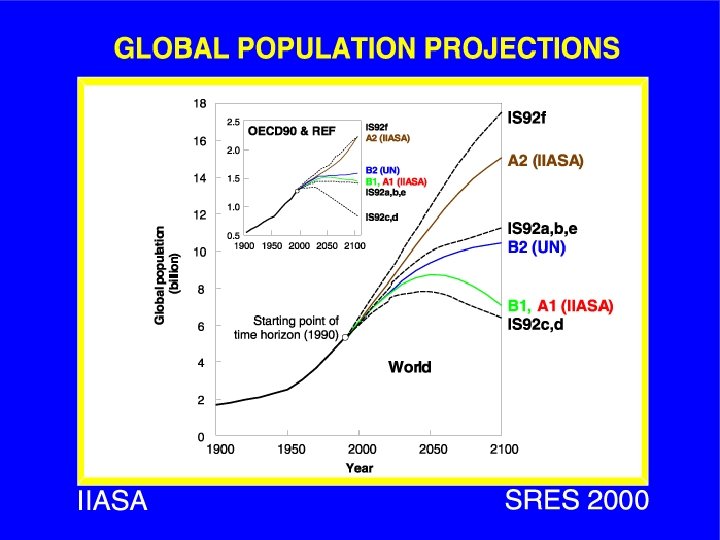
TS Figure 3
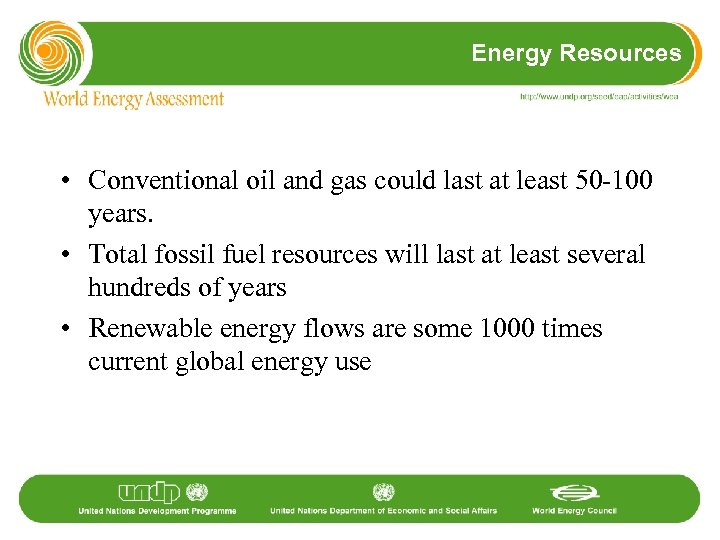
Energy Resources • Conventional oil and gas could last at least 50 -100 years. • Total fossil fuel resources will last at least several hundreds of years • Renewable energy flows are some 1000 times current global energy use
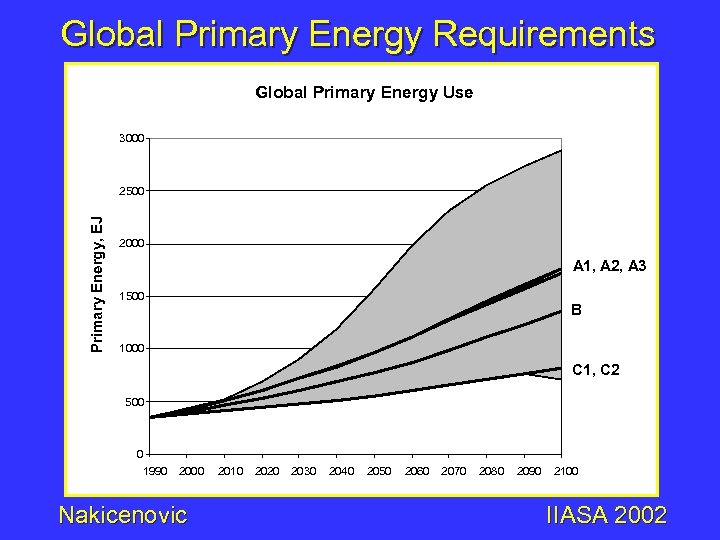
Global Primary Energy Requirements of the IIASA-WEC and IPCC SRES Scenarios Global Primary Energy Use 3000 Primary Energy, EJ 2500 2000 A 1, A 2, A 3 1500 B 1000 C 1, C 2 500 0 1990 2000 Nakicenovic 2010 2020 2030 2040 2050 2060 2070 2080 2090 2100 IIASA 2002
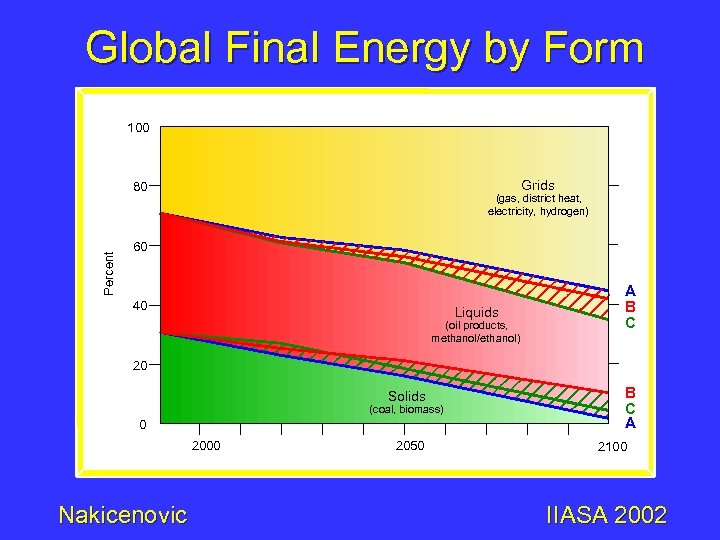
Global Final Energy by Form 100 Grids Percent 80 (gas, district heat, electricity, hydrogen) 60 40 Liquids (oil products, methanol/ethanol) A B C 20 Solids (coal, biomass) 0 2000 Nakicenovic 2050 B C A 2100 IIASA 2002
Technical Options for a more Sustainable Future • Improved Energy Efficiency - especially at the point of end-use in buildings, electric appliances, vehicles, and production processes. • More Renewable Energy: such as biomass, wind, solar, hydro, and geothermal • Advanced Energy Technologies: • next generation fossil fuel technologies • nuclear technologies, if the issues associated with nuclear can be resolved.
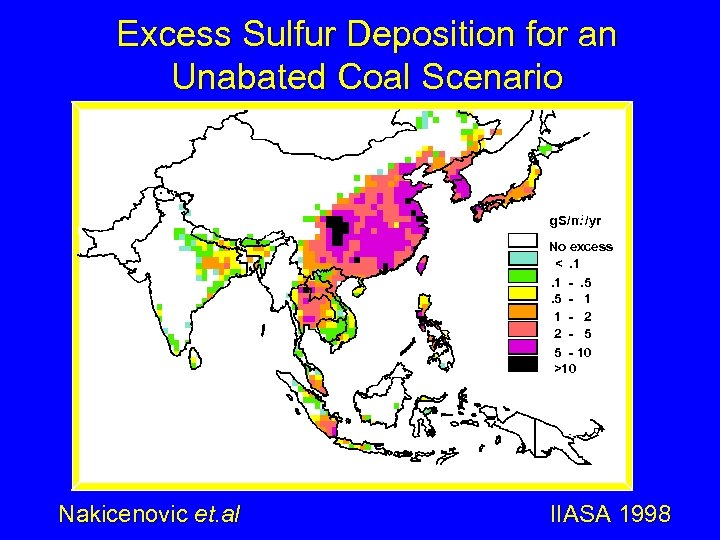
Excess Sulfur Deposition for an Unabated Coal Scenario g. S/m 2/yr No excess <. 1. 1 -. 5. 5 - 1 1 - 2 2 - 5 5 - 10 >10 Nakicenovic et. al IIASA 1998
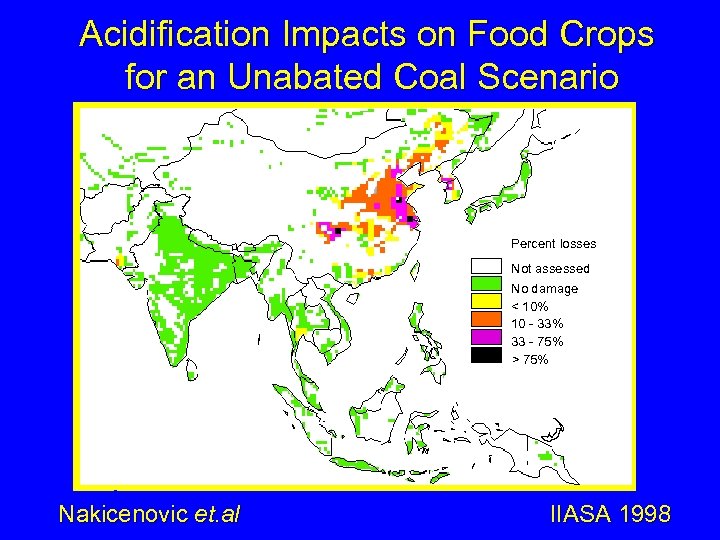
Acidification Impacts on Food Crops for an Unabated Coal Scenario Percent losses Not assessed No damage < 10% 10 - 33% 33 - 75% > 75% Nakicenovic et. al IIASA 1998
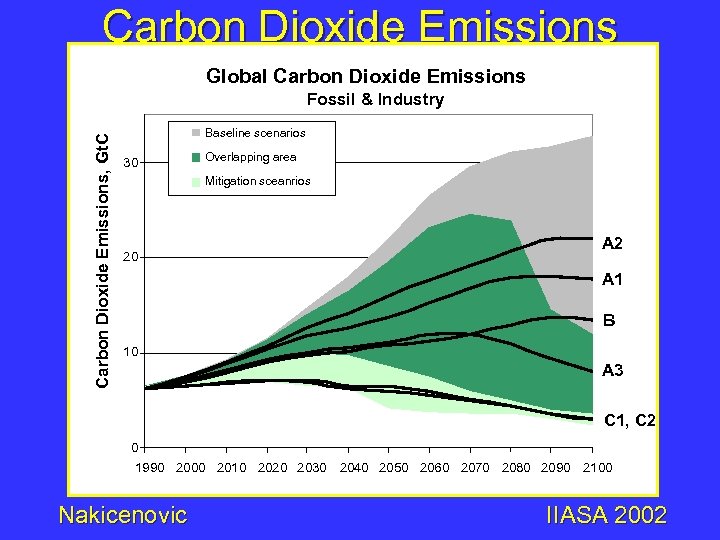
Carbon Dioxide Emissions of the IIASA-WEC and IPCC SRES Scenarios Global Carbon Dioxide Emissions, Gt. C Fossil & Industry Baseline scenarios 30 Overlapping area Mitigation sceanrios A 2 20 A 1 B 10 A 3 C 1, C 2 0 1990 2000 2010 2020 2030 Nakicenovic 2040 2050 2060 2070 2080 2090 2100 IIASA 2002
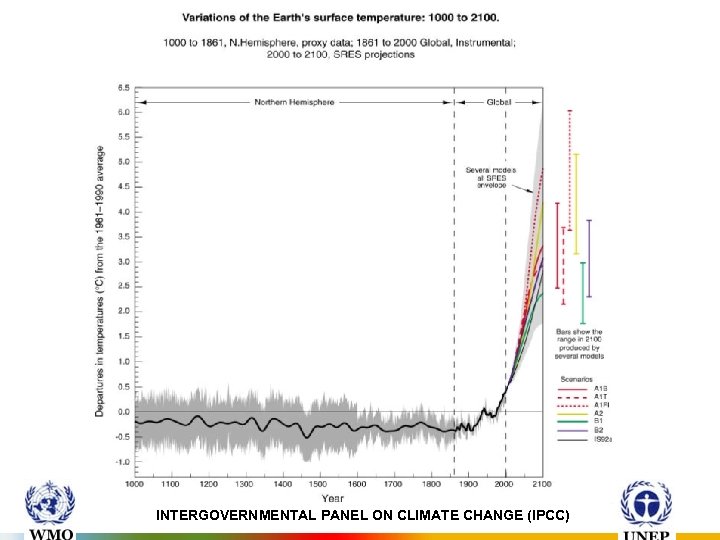
INTERGOVERNMENTAL PANEL ON CLIMATE CHANGE (IPCC)
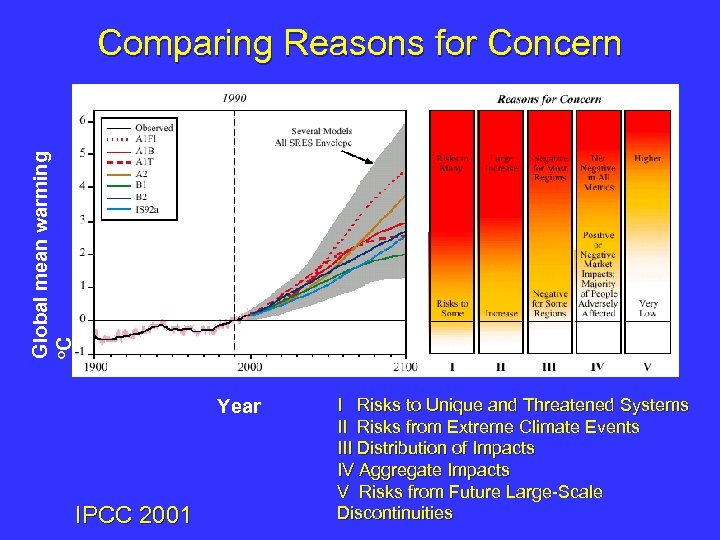
Global mean warming o. C Comparing Reasons for Concern Year IPCC 2001 I Risks to Unique and Threatened Systems II Risks from Extreme Climate Events III Distribution of Impacts IV Aggregate Impacts V Risks from Future Large-Scale Discontinuities
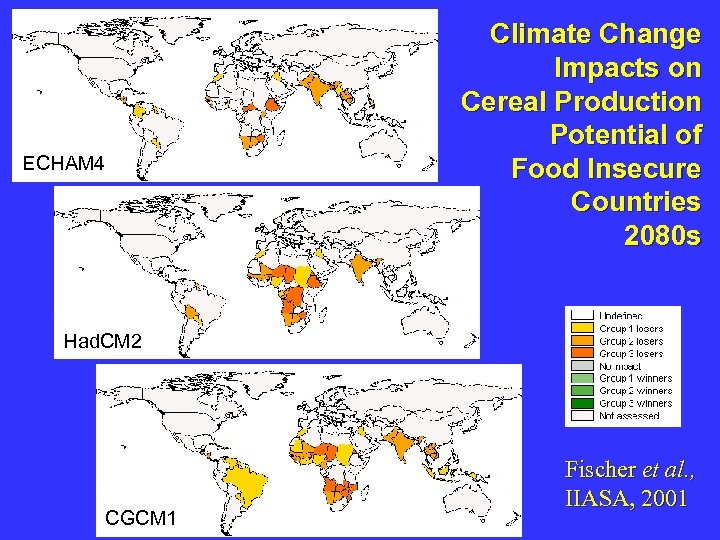
Climate Change ECHAM 4 Climate Change Impacts on Impacts Cereal Production 1 Potential of Food Insecure Countries 2080 s Had. CM 2 CGCM 1 Fischer et al. , IIASA, 2001
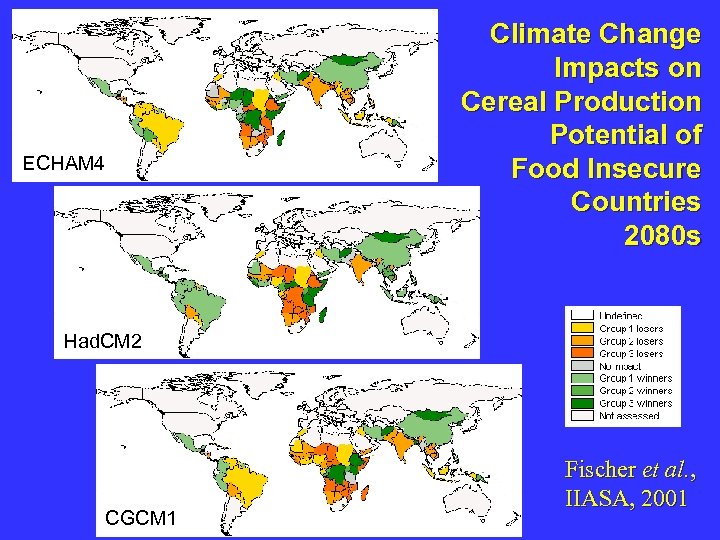
Climate Change ECHAM 4 Climate Change Impacts on Impacts Cereal Production 2 Potential of Food Insecure Countries 2080 s Had. CM 2 CGCM 1 Fischer et al. , IIASA, 2001
Investments in Energy Supply Issue: Mobilization of capital for energy supply investments • Investment in energy supply projected at $300 -500 billion per year for the next 20 years, depending on path chosen • Less than 10% of total overall investments
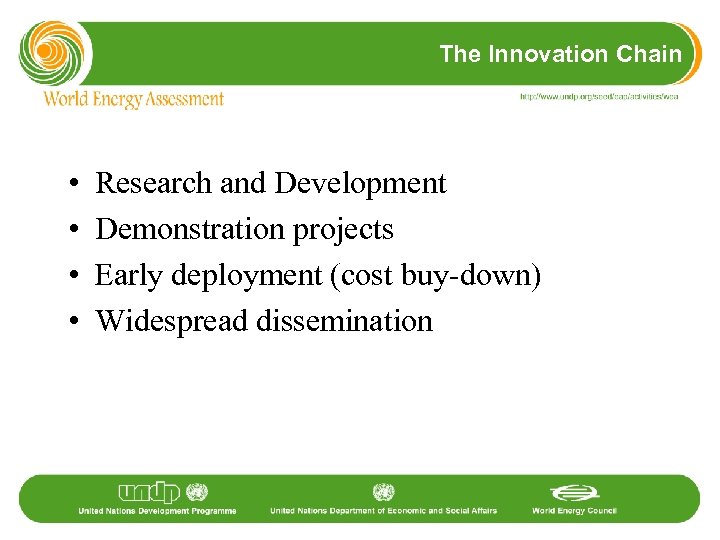
The Innovation Chain • • Research and Development Demonstration projects Early deployment (cost buy-down) Widespread dissemination Nakicenovic IIASA 2002
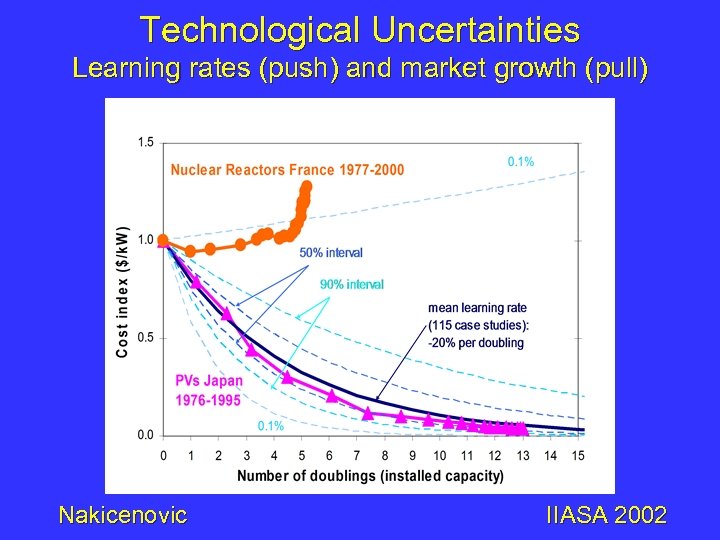
Technological Uncertainties Learning rates (push) and market growth (pull) Nakicenovic IIASA 2002
Increasing Capacity • Policy support and institution building • Education and training • Investment-friendly environments that are socially and environmentally responsible • Technological leap-frogging • Consumer credits, micro-finance
http: //www. iiasa. ac. at/Research/TNT/index. html http: //www. undp. org/seed/eap/Projects/WEA. html http: //www. ipcc. ch/ http: //www. sres. ciesin/ naki@iiasa. ac. at Nakicenovic IIASA 2002
Скачать презентацию Energy Scenarios for Sustainable Development Nebojsa Nakicenovic International
49eb3f314499cf0284a363dadffbe184.ppt