


 Скачать презентацию Energy Recreation Environment Health Water Transportation Forestry Agriculture
fc976803b0a332dba96d2d83f174717d.ppt
- Количество слайдов: 43

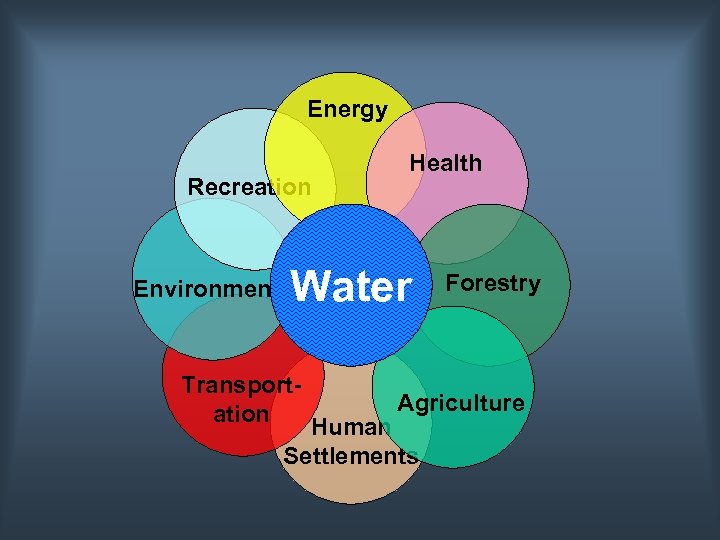 Energy Recreation Environment Health Water Transportation Forestry Agriculture Human Settlements
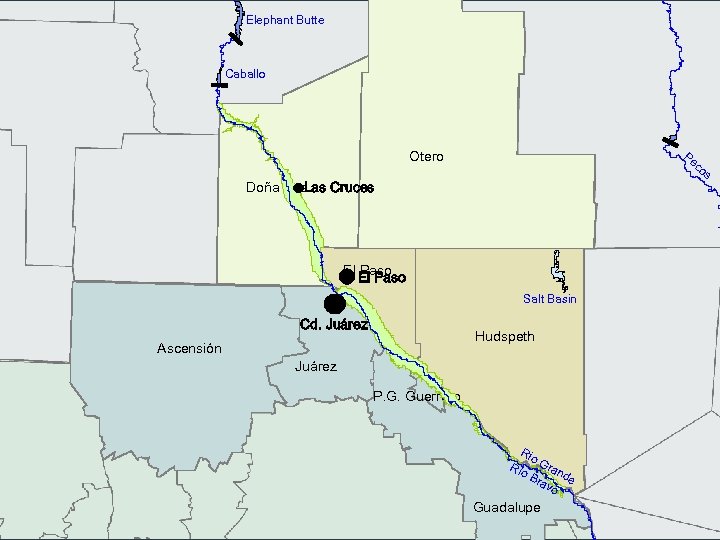 Elephant Butte Caballo Pe Otero co Doña Ana Las Cruces El Paso Salt Basin Cd. Juárez Ascensión Hudspeth Juárez P. G. Guerrero Rio Río Gr a Bra nde vo Guadalupe s
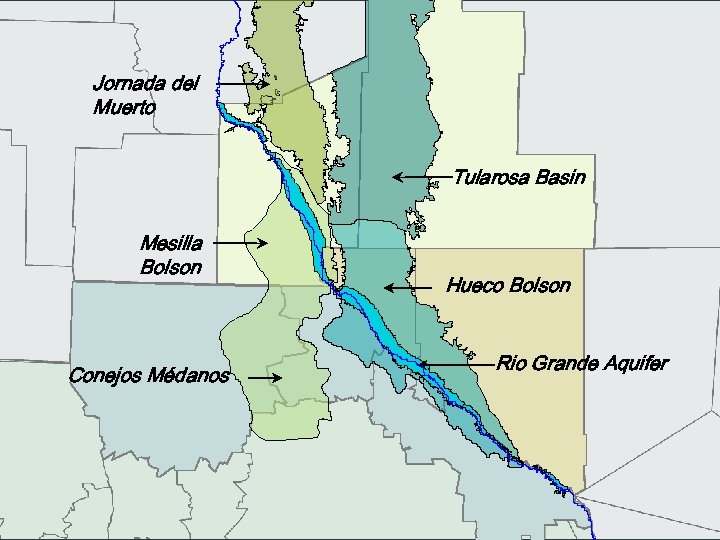 Jornada del Muerto Tularosa Basin Mesilla Bolson Conejos Médanos Hueco Bolson Rio Grande Aquifer
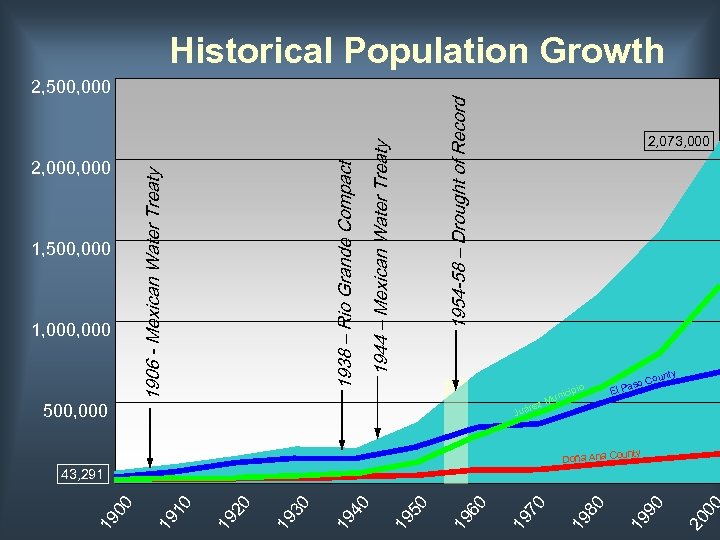 00 1954 -58 – Drought of Record 1944 – Mexican Water Treaty 1938 – Rio Grande Compact aso El P 20 90 43, 291 u pio nici 19 ez M 80 r Juá 19 70 19 60 19 50 19 40 19 30 19 20 500, 000 19 1, 000 10 1, 500, 000 1906 - Mexican Water Treaty 2, 000 19 Historical Population Growth 2, 500, 000 2, 073, 000 Cou nty Doña Ana Cou
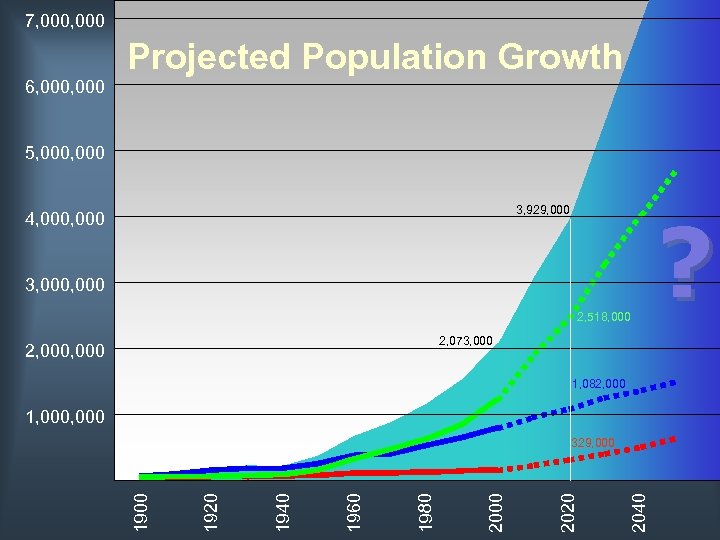 7, 000 6, 000 Projected Population Growth 5, 000 3, 929, 000 4, 000 3, 000 2, 518, 000 2, 073, 000 2, 000 1, 082, 000 1, 000 2040 2020 2000 1980 1960 1940 1920 1900 329, 000 ?
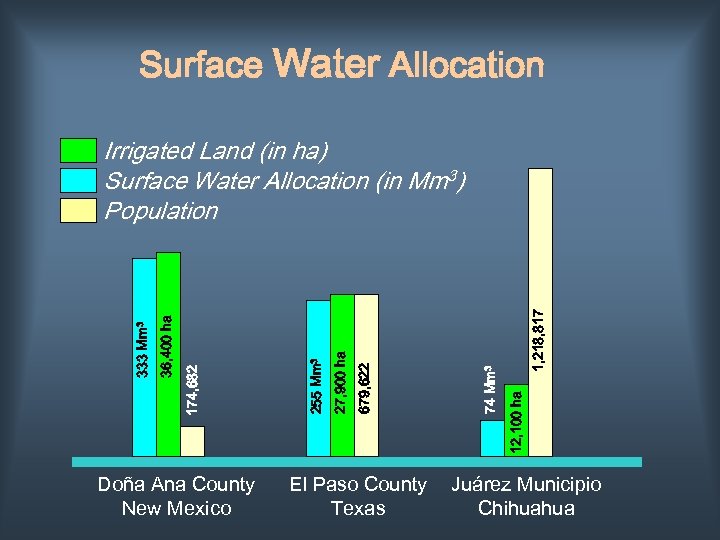 Surface Water Allocation Doña Ana County New Mexico El Paso County Texas 1, 218, 817 12, 100 ha 74 Mm 3 679, 622 27, 900 ha 255 Mm 3 174, 682 36, 400 ha 333 Mm 3 Irrigated Land (in ha) Surface Water Allocation (in Mm 3) Population Juárez Municipio Chihuahua
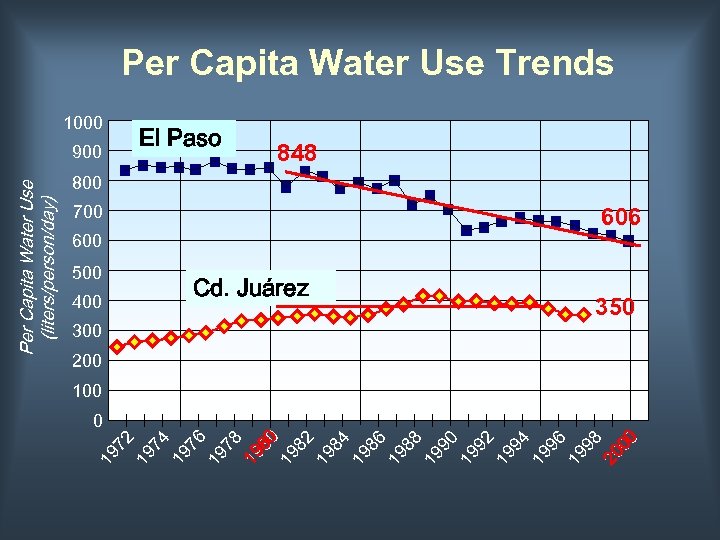 19 80 19 82 19 84 19 86 19 88 19 90 19 92 19 94 19 96 19 98 20 00 400 78 500 19 76 900 19 1000 74 19 72 19 Per Capita Water Use (liters/person/day) Per Capita Water Use Trends El Paso 848 800 700 606 Cd. Juárez 300 350 200 100 0
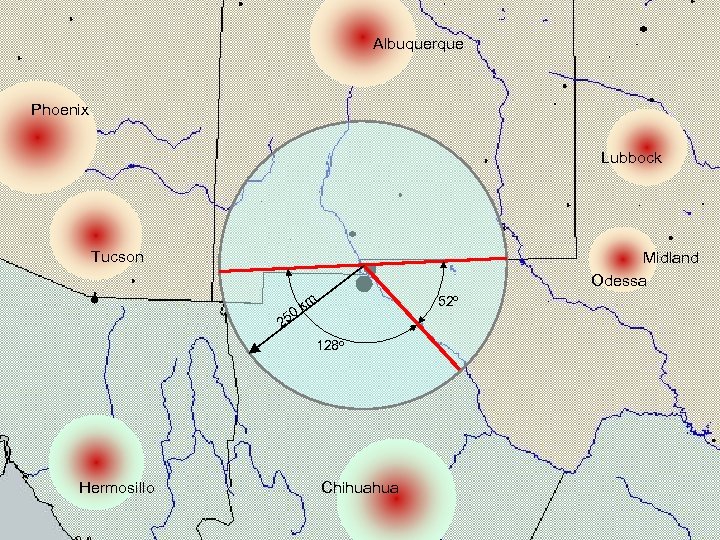 Albuquerque Phoenix Lubbock Tucson Midland Odessa 25 0 52 o km 128 o Hermosillo Chihuahua
 New Mexico / Texas Water Commission • City of Las Cruces • Do a Ana County • El Paso Water Utilities • Elephant Butte Irrigation District • El Paso County Water Improvement District No. 1 • New Mexico State University (WRRI) • Texas A&M University (Research Center) • University of Texas at El Paso
 Impediments to Rationalizing Water Allocation • Fragmentation of jurisdictions & separate regulation of surface and ground waters • Information voids / reticence to share information • Limitations on transferring surface water to M&I use • Continued rapid population growth • Limited financial means to address water / wastewater problems among different jurisdictions
 Alphabet Soup of Water Management • • • IBWC / CILA EPCWID / EBID / 009 USBR / COE / CNA EPA / SEMARNAT BECC / COCEF TCEQ / OSE • USF&WS / ISC
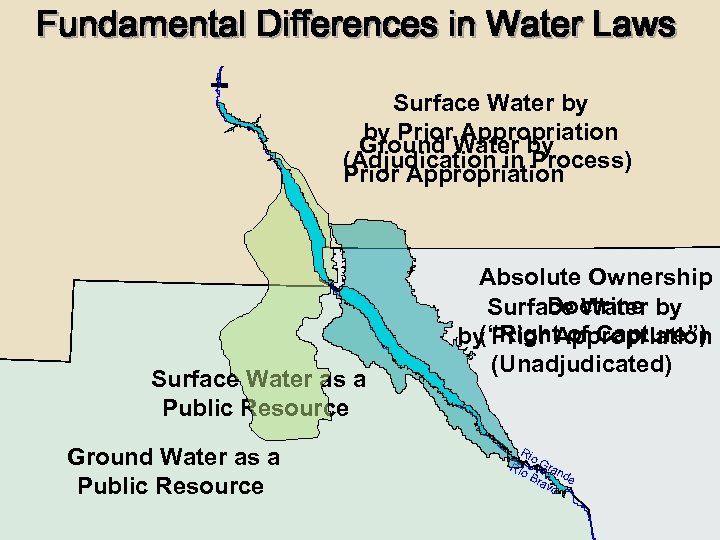 Fundamental Differences in Water Laws Surface Water by by Prior Appropriation Ground Water by (Adjudication in Process) Prior Appropriation Surface Water as a Public Resource Ground Water as a Public Resource Absolute Ownership Doctrine Surface Water by (“Right of Capture”) by Prior Appropriation (Unadjudicated) Rio Río Gr a Bra nde vo
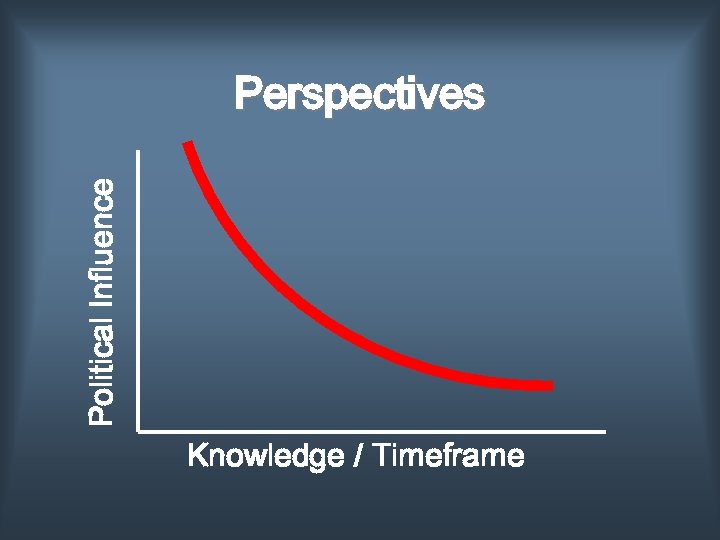 Political Influence Perspectives Knowledge / Timeframe
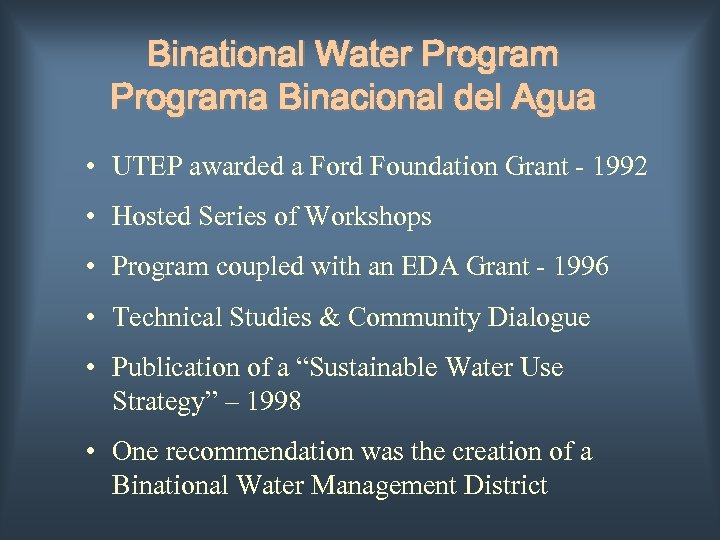 Binational Water Programa Binacional del Agua • UTEP awarded a Ford Foundation Grant - 1992 • Hosted Series of Workshops • Program coupled with an EDA Grant - 1996 • Technical Studies & Community Dialogue • Publication of a “Sustainable Water Use Strategy” – 1998 • One recommendation was the creation of a Binational Water Management District
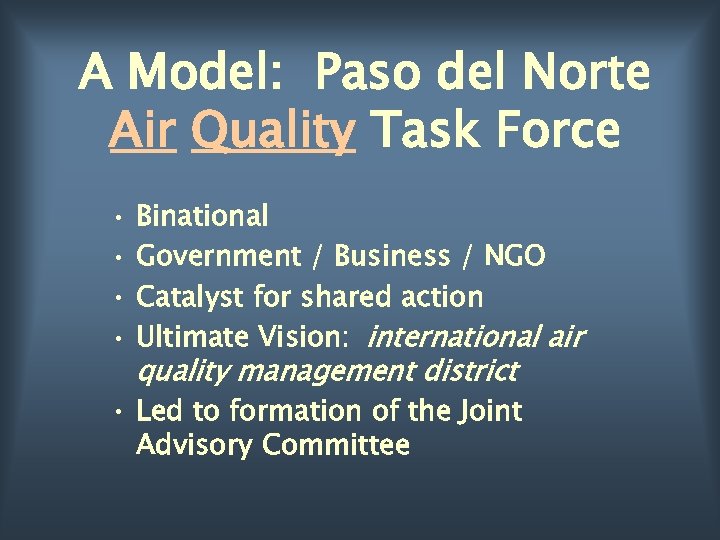 A Model: Paso del Norte Air Quality Task Force • • Binational Government / Business / NGO Catalyst for shared action Ultimate Vision: international air quality management district • Led to formation of the Joint Advisory Committee
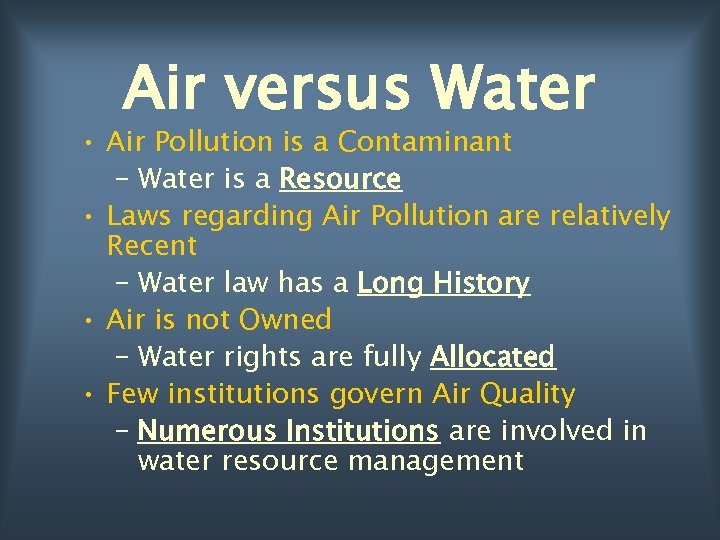 Air versus Water • Air Pollution is a Contaminant – Water is a Resource • Laws regarding Air Pollution are relatively Recent – Water law has a Long History • Air is not Owned – Water rights are fully Allocated • Few institutions govern Air Quality – Numerous Institutions are involved in water resource management
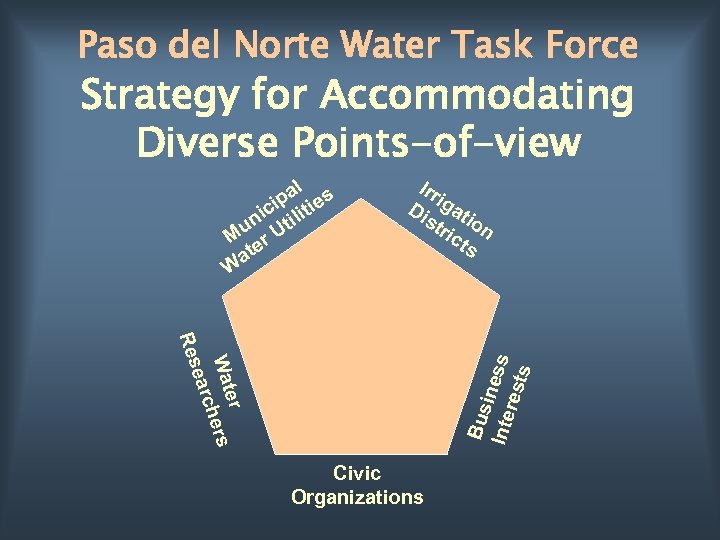 Paso del Norte Water Task Force Strategy for Accommodating Diverse Points-of-view l pa ies ici ilit un U t M er at W Irr Di igat st ion ric ts Bus i Inte ness rest s er Wat hers earc Res Civic Organizations
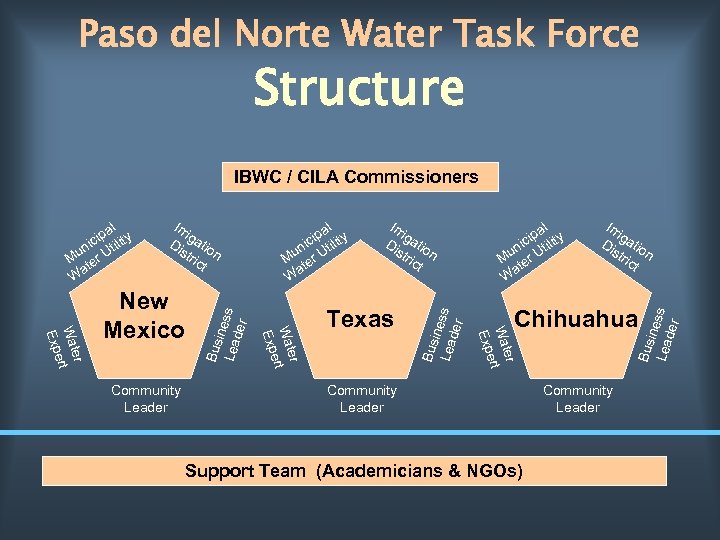 Paso del Norte Water Task Force Structure IBWC / CILA Commissioners Texas l ipa lity ic i un r Ut M te a W Irr ig Di atio str n ict Chihuahua Bus in Lea ess der Irr ig Di atio str n ict er Wat rt e Exp Community Leader er Wat rt e Exp New Mexico l ipa lity ic i un r Ut M te a W Bus in Lea ess der Irr ig Di atio str n ict Bus in Lea ess der l ipa lity ic i un r Ut M te a W Community Leader Support Team (Academicians & NGOs) Community Leader
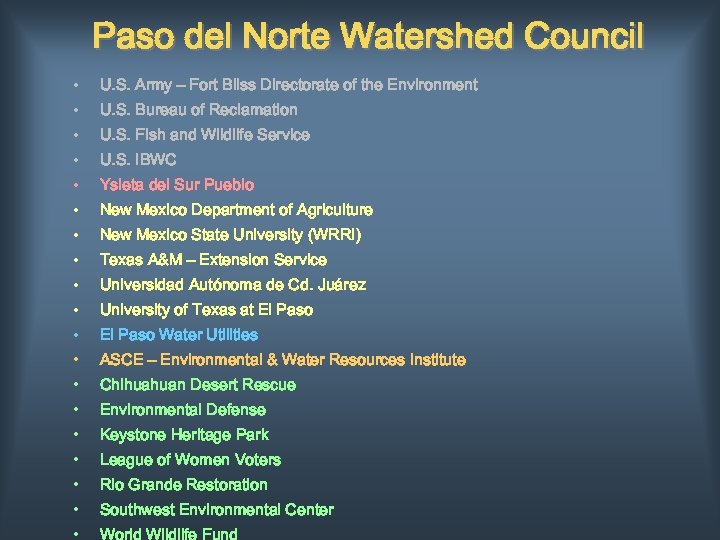 Paso del Norte Watershed Council • U. S. Army – Fort Bliss Directorate of the Environment • U. S. Bureau of Reclamation • U. S. Fish and Wildlife Service • U. S. IBWC • Ysleta del Sur Pueblo • New Mexico Department of Agriculture • New Mexico State University (WRRI) • Texas A&M – Extension Service • Universidad Autónoma de Cd. Juárez • University of Texas at El Paso • El Paso Water Utilities • ASCE – Environmental & Water Resources Institute • Chihuahuan Desert Rescue • Environmental Defense • Keystone Heritage Park • League of Women Voters • Rio Grande Restoration • Southwest Environmental Center
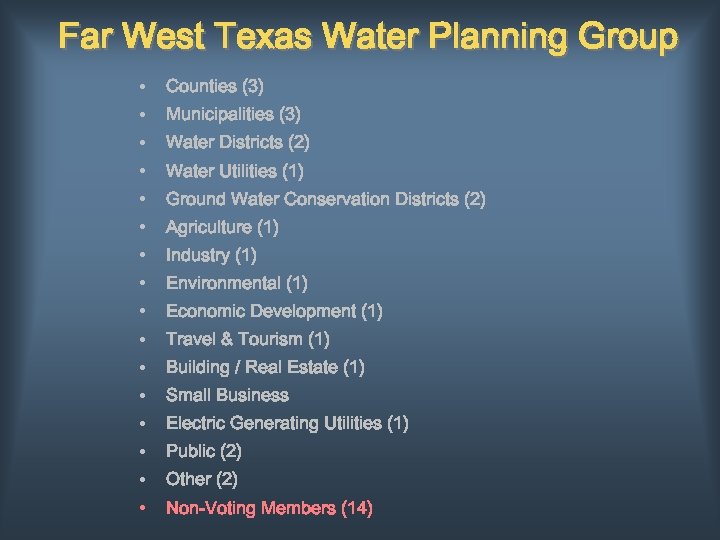 Far West Texas Water Planning Group • Counties (3) • Municipalities (3) • Water Districts (2) • Water Utilities (1) • Ground Water Conservation Districts (2) • Agriculture (1) • Industry (1) • Environmental (1) • Economic Development (1) • Travel & Tourism (1) • Building / Real Estate (1) • Small Business • Electric Generating Utilities (1) • Public (2) • Other (2) • Non-Voting Members (14)
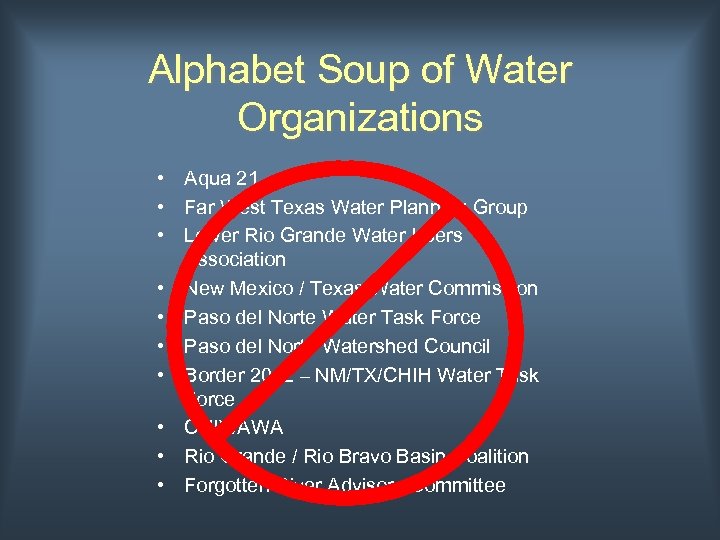 Alphabet Soup of Water Organizations • Aqua 21 • Far West Texas Water Planning Group • Lower Rio Grande Water Users Association • New Mexico / Texas Water Commission • Paso del Norte Water Task Force • Paso del Norte Watershed Council • Border 2012 – NM/TX/CHIH Water Task Force • CHIWAWA • Rio Grande / Rio Bravo Basin Coalition • Forgotten River Advisory Committee
 SUSTAINABILITY: Meeting the needs of today without compromising the ability of future generations to meet their needs. from the Brundtland Report, Our Common Future World Commission on Environment & Development
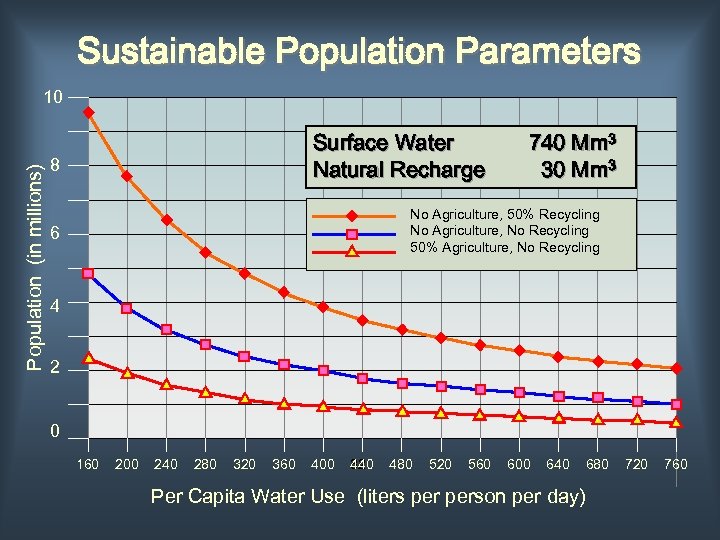 Sustainable Population Parameters Population (in millions) 10 Surface Water Natural Recharge 8 740 Mm 3 30 Mm 3 No Agriculture, 50% Recycling No Agriculture, No Recycling 50% Agriculture, No Recycling 6 4 2 0 160 200 240 280 320 360 400 320 440 480 520 560 600 640 Per Capita Water Use (liters person per day) 680 720 760
 Friends of the Earth Middle East • Affiliated with Friends of the Earth International • Acts as an ‘umbrella’ for several Mid-East environmental groups • Membership includes Israelis, Palestinians & Jordanians Fo. EME
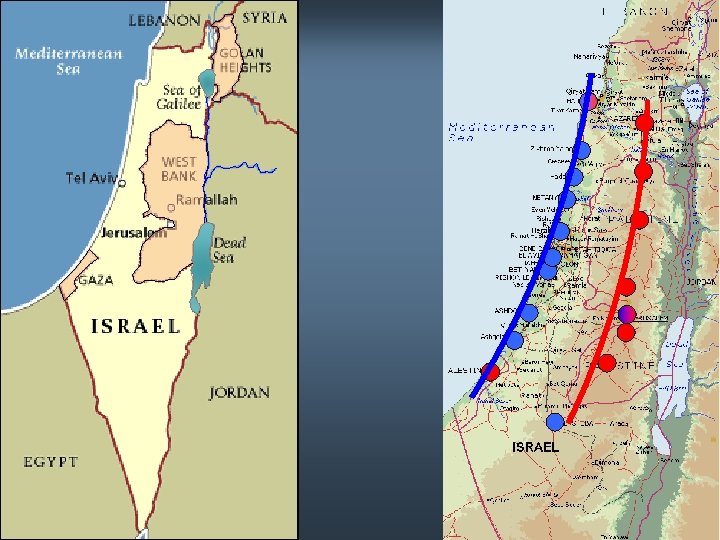
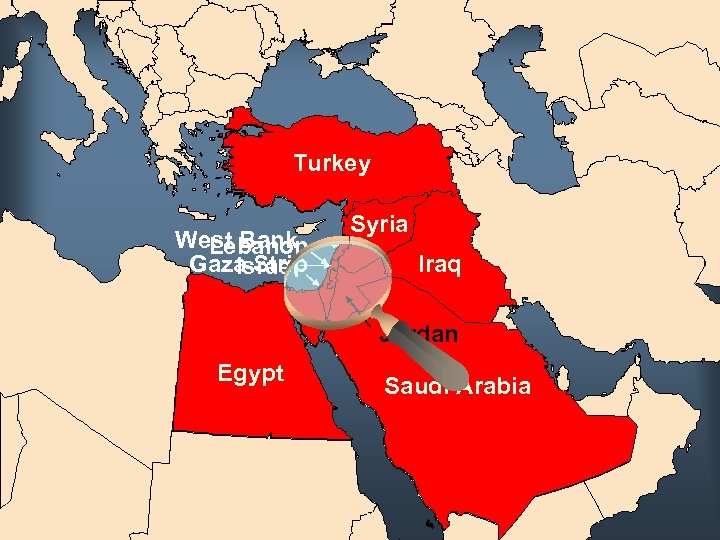 Turkey West Bank Lebanon Gaza Strip Israel Syria Iraq Jordan Egypt Saudi Arabia
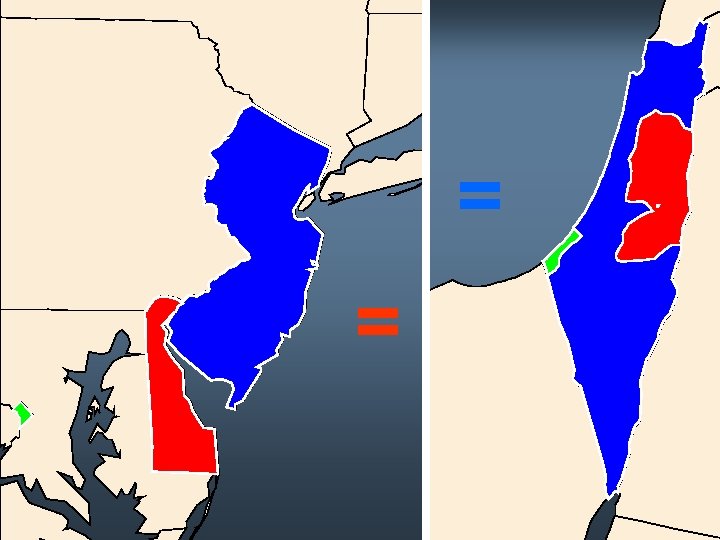 = =
= =
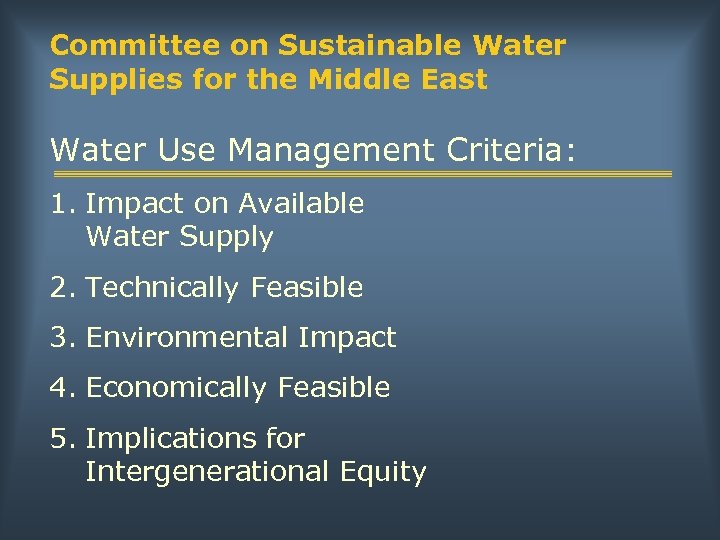 Committee on Sustainable Water Supplies for the Middle East Water Use Management Criteria: 1. Impact on Available Water Supply 2. Technically Feasible 3. Environmental Impact 4. Economically Feasible 5. Implications for Intergenerational Equity
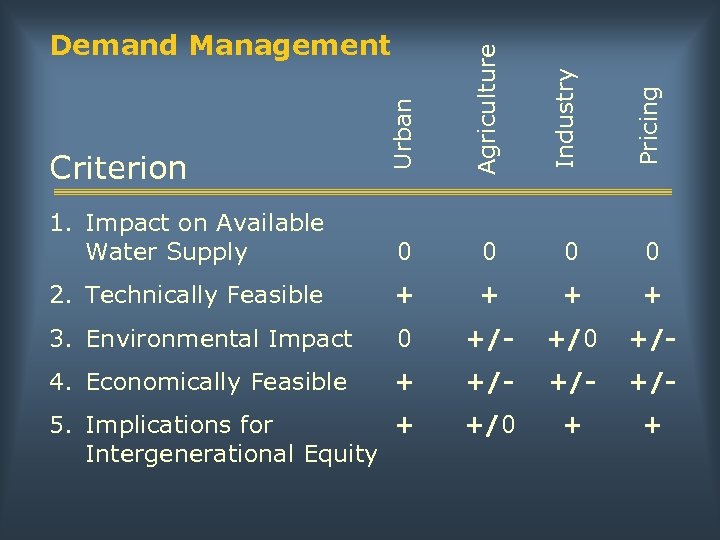 Urban Agriculture Industry Pricing Demand Management 1. Impact on Available Water Supply 0 0 2. Technically Feasible + + 3. Environmental Impact 0 +/- +/0 +/- 4. Economically Feasible + +/- +/- 5. Implications for + Intergenerational Equity +/0 + + Criterion
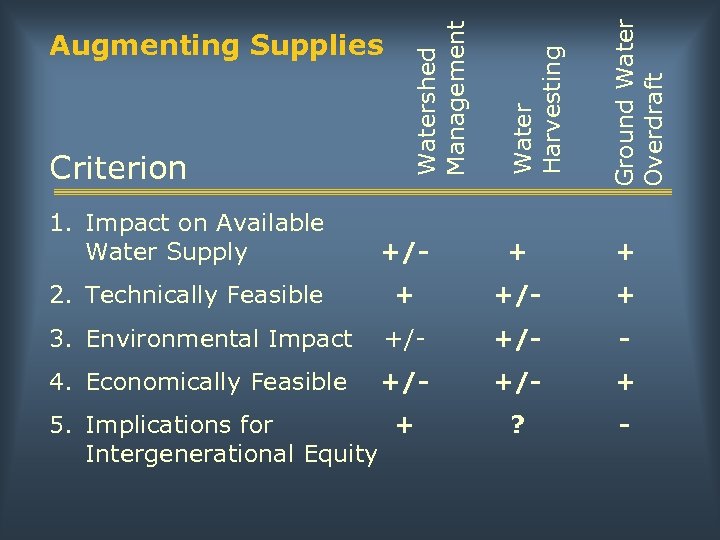 Water Harvesting Ground Water Overdraft +/- + + 2. Technically Feasible + +/- + 3. Environmental Impact +/- - 4. Economically Feasible +/- + ? - Criterion Watershed Management 1. Impact on Available Water Supply Augmenting Supplies 5. Implications for + Intergenerational Equity
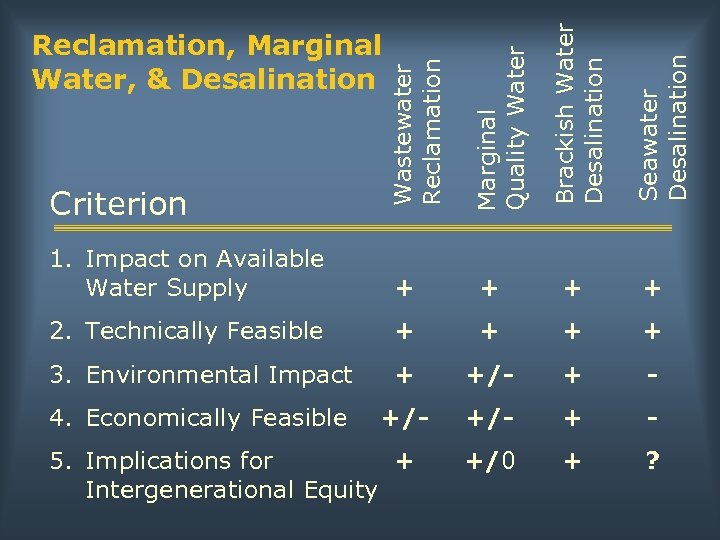 Seawater Desalination Brackish Water Desalination Marginal Quality Water Criterion Wastewater Reclamation, Marginal Water, & Desalination 1. Impact on Available Water Supply + + 2. Technically Feasible + + 3. Environmental Impact + +/- + - 4. Economically Feasible +/- + - +/0 + ? 5. Implications for + Intergenerational Equity
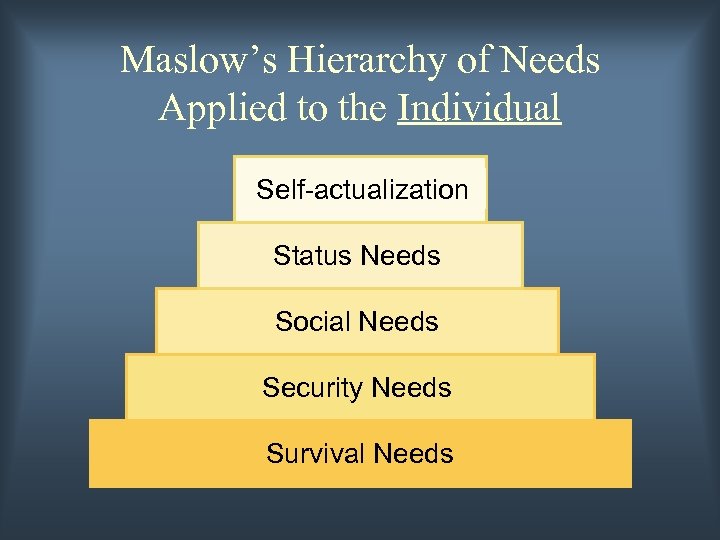 Maslow’s Hierarchy of Needs Applied to the Individual Self-actualization Status Needs Social Needs Security Needs Survival Needs
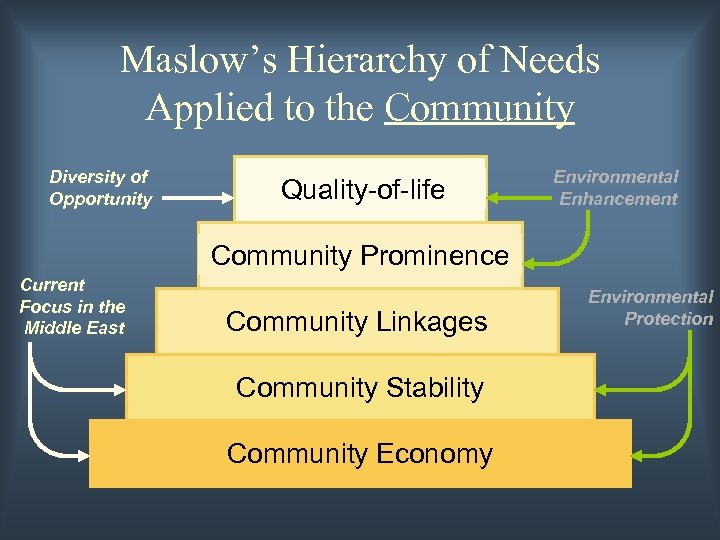 Maslow’s Hierarchy of Needs Applied to the Community Diversity of Opportunity Quality-of-life Environmental Enhancement Community Prominence Current Focus in the Middle East Community Linkages Community Stability Community Economy Environmental Protection
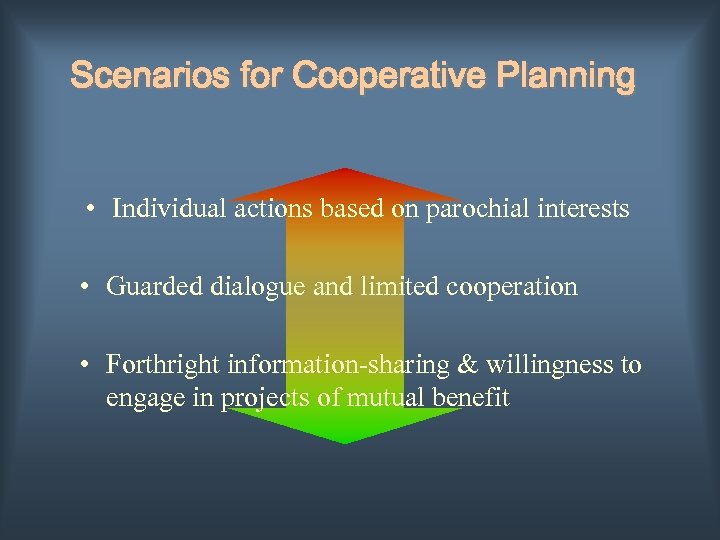 Scenarios for Cooperative Planning • Individual actions based on parochial interests • Guarded dialogue and limited cooperation • Forthright information-sharing & willingness to engage in projects of mutual benefit
 Collaborative Planning Principles 1. There is no magical leadership structure – just people & relationships. 2. Collaboration is messy & frustrating … but indispensable! 3. No one is excluded; no one is excused.
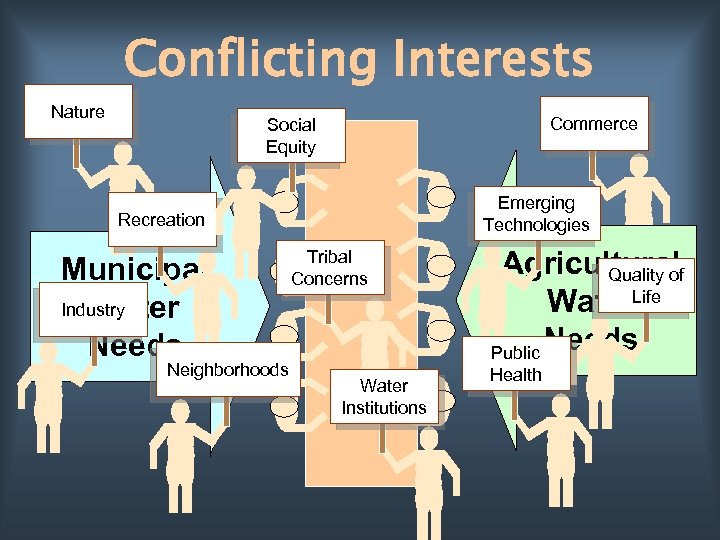 Conflicting Interests Nature Commerce Social Equity Emerging Technologies Recreation Municipal Industry Water Needs Neighborhoods Tribal Concerns Water Institutions Agricultural Quality of Water. Life Public Needs Health
 Collaboration Principle #4: As the Table Gets Larger … … It Gets Rounder.
 Collaborative Planning Principles 1. There is no magical leadership structure – just people and relationships. 2. Collaboration is messy and frustrating … but indispensable! 3. No one is excluded; no one is excused. 4. As the table gets larger, it gets rounder. 5. As the process continues, the agenda gets tougher. 6. It’s never over.
 Tools for Possible Solutions • Conservation • Technology • Financial Capability • Region-based Cooperation • Water Markets • Growth Management
 Not to know what happened before one was born is to live always as a child. – Cicero