


 Скачать презентацию Energy Justice Network helping communities protect themselves from
c7656606330c5302d13f2b2e8ba8a85e.ppt
- Количество слайдов: 28
 Energy Justice Network …helping communities protect themselves from polluting energy and waste technologies November 2007
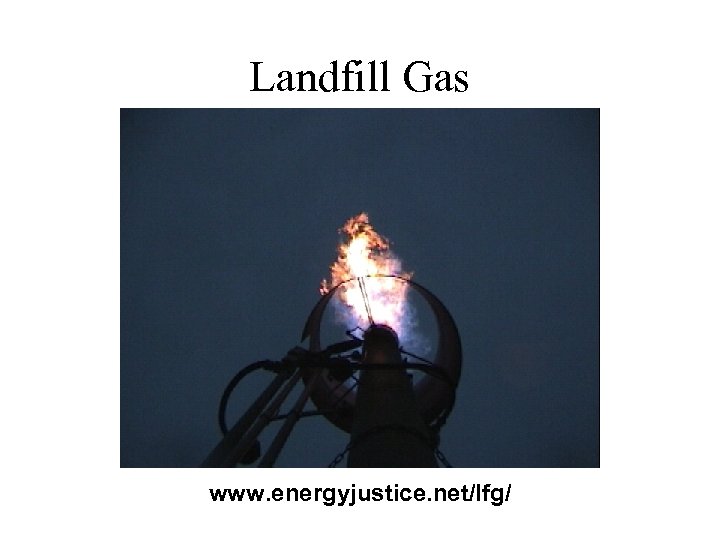 Landfill Gas www. energyjustice. net/lfg/
 Landfill Gas: What it is… • Not simply “methane” • About half methane, half CO 2 • Hundreds of toxic contaminants – Halogenated compounds (trichloroethane, vinyl chloride, carbon tetrachloride and many more) – Mercury (methylmercury – the really bad kind) – Tritium – Other toxic organic compounds (benzene , toluene…)
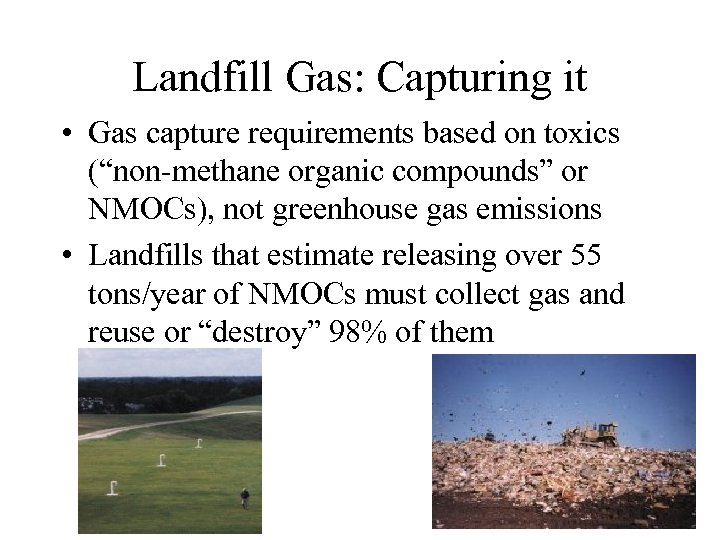 Landfill Gas: Capturing it • Gas capture requirements based on toxics (“non-methane organic compounds” or NMOCs), not greenhouse gas emissions • Landfills that estimate releasing over 55 tons/year of NMOCs must collect gas and reuse or “destroy” 98% of them
 Landfill Gas: Options • • Flare Internal Combustion Engine (electricity) Turbine (electricity) Boiler (heat/steam) Piping into natural gas lines Hydrogen production Reuse of chemicals (methane and CO 2) for industrial feedstocks
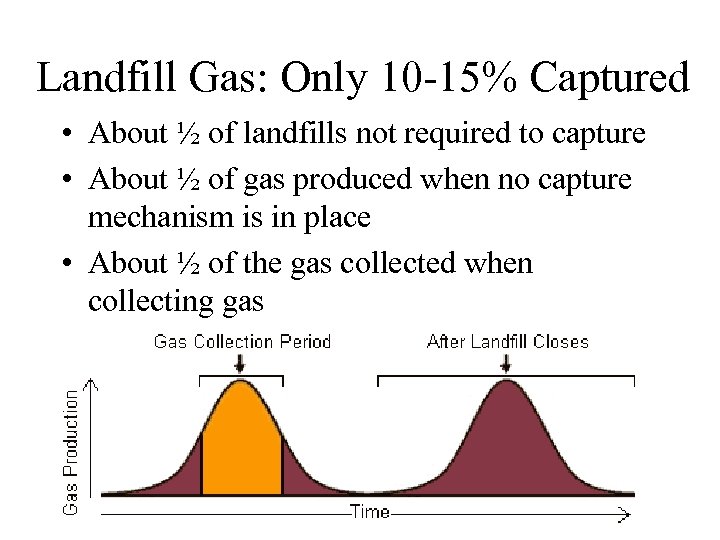 Landfill Gas: Only 10 -15% Captured • About ½ of landfills not required to capture • About ½ of gas produced when no capture mechanism is in place • About ½ of the gas collected when collecting gas
 Landfill Gas: Air Emissions • For some chemicals, burning for electricity is more polluting than flaring • Burning halogenated compounds creates significant amounts of dioxins/furans
 Landfill Gas: Mercury • Mercury Emissions Comparable to Coal Power Plant Exhaust • Landfills are one of two known sources of methylmercury (the fat-soluble kind) – Other source is sewage sludge • Burning reduces it back to elemental mercury, but since most isn’t burned, most escapes in its methylated form
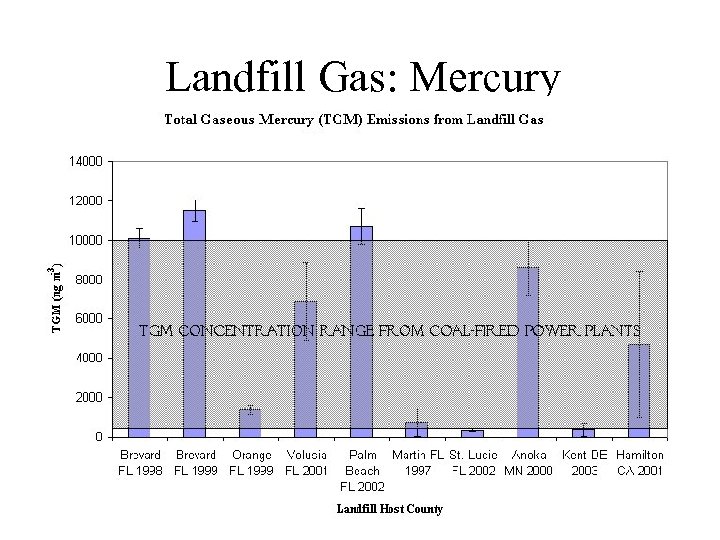 Landfill Gas: Mercury
 Landfill Gas: Filtering • Landfills usually filter only sulfur & water vapor • Need to filter out the hundreds of other toxics before using gas for any other purpose • Must filter into a solid medium, like carbon filters – Acrion’s technology filters into a gaseous stream which gets flared; this was used to clean up gas for fuel cell demonstration projects in order to not “poison” the fuel cells • Must containerize the filters, not “recycle” or “regenerate” (incinerate) them
 Landfill Gas: Prevention • Only sound management practice for landfill gas is to prevent its production • It’s not “already there” • Get organics out of landfills – Europe and many other places in the world are ahead of the U. S. on this – World Bank and International Panel on Climate Change agree • Organics breaking down create the methane; methane helps the toxic chemicals escape
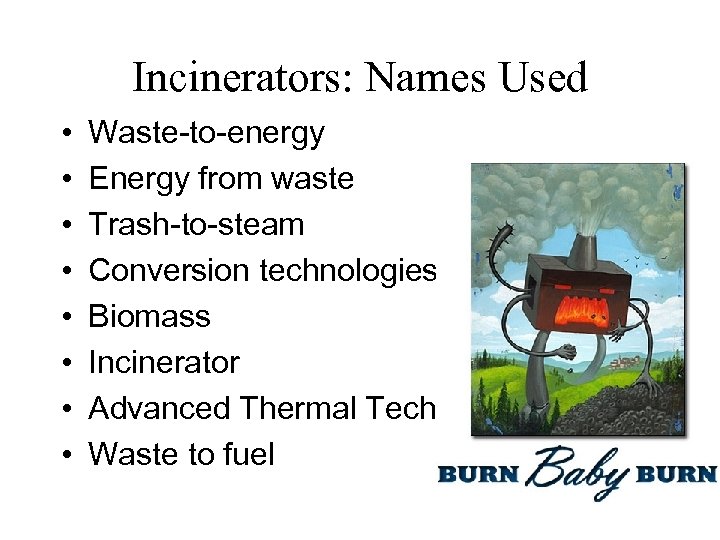 Incinerators: Names Used • • Waste-to-energy Energy from waste Trash-to-steam Conversion technologies Biomass Incinerator Advanced Thermal Tech Waste to fuel
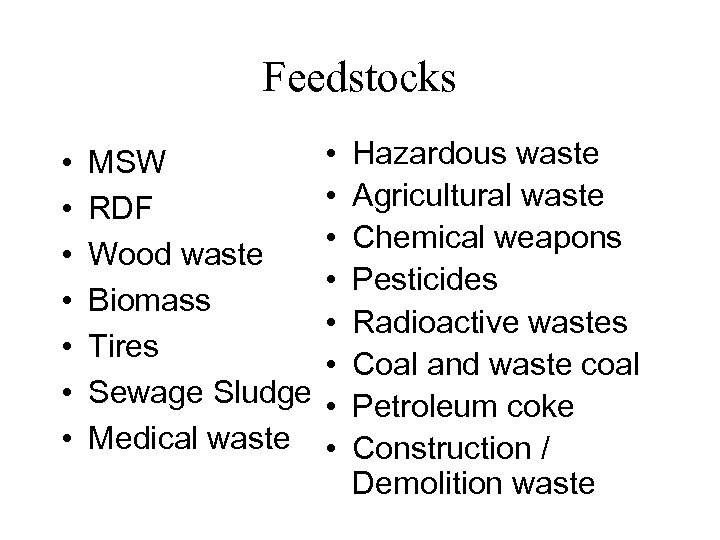 Feedstocks • • MSW RDF Wood waste Biomass Tires Sewage Sludge Medical waste • • Hazardous waste Agricultural waste Chemical weapons Pesticides Radioactive wastes Coal and waste coal Petroleum coke Construction / Demolition waste
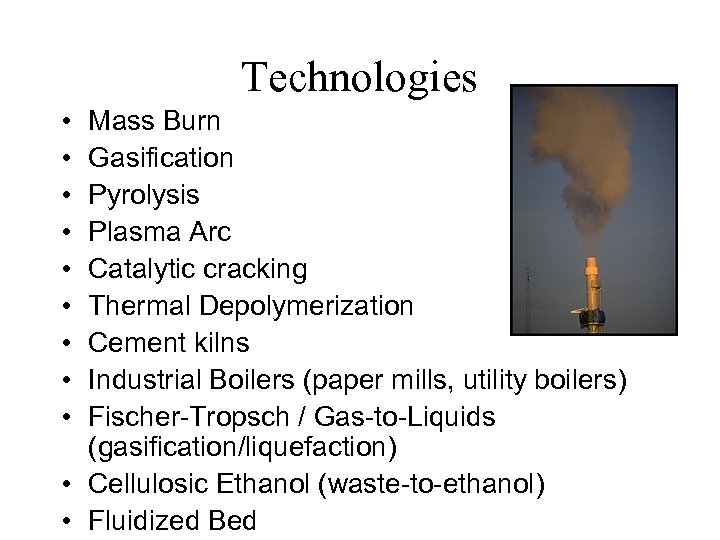 Technologies • • • Mass Burn Gasification Pyrolysis Plasma Arc Catalytic cracking Thermal Depolymerization Cement kilns Industrial Boilers (paper mills, utility boilers) Fischer-Tropsch / Gas-to-Liquids (gasification/liquefaction) • Cellulosic Ethanol (waste-to-ethanol) • Fluidized Bed
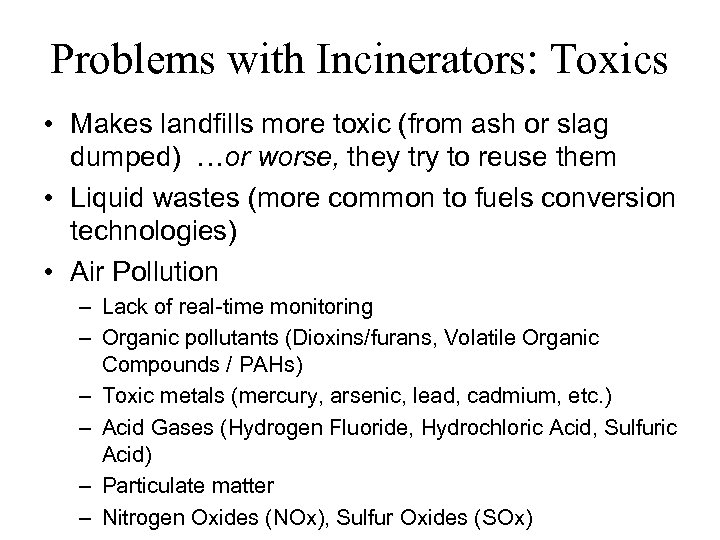 Problems with Incinerators: Toxics • Makes landfills more toxic (from ash or slag dumped) …or worse, they try to reuse them • Liquid wastes (more common to fuels conversion technologies) • Air Pollution – Lack of real-time monitoring – Organic pollutants (Dioxins/furans, Volatile Organic Compounds / PAHs) – Toxic metals (mercury, arsenic, lead, cadmium, etc. ) – Acid Gases (Hydrogen Fluoride, Hydrochloric Acid, Sulfuric Acid) – Particulate matter – Nitrogen Oxides (NOx), Sulfur Oxides (SOx)
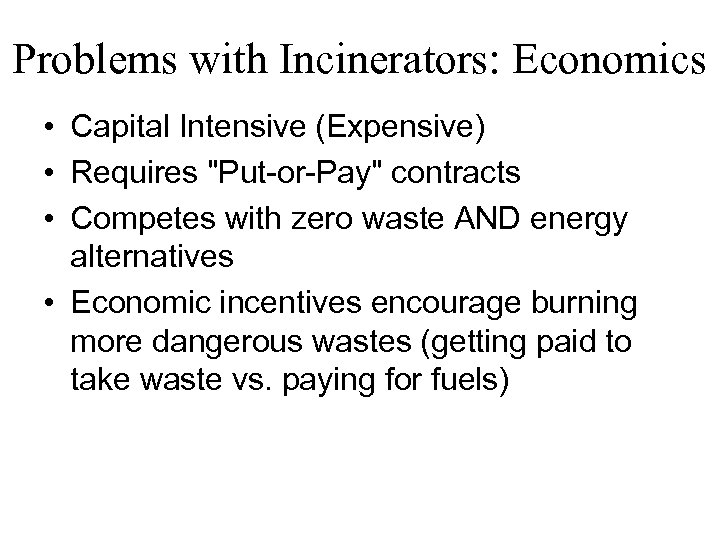 Problems with Incinerators: Economics • Capital Intensive (Expensive) • Requires "Put-or-Pay" contracts • Competes with zero waste AND energy alternatives • Economic incentives encourage burning more dangerous wastes (getting paid to take waste vs. paying for fuels)
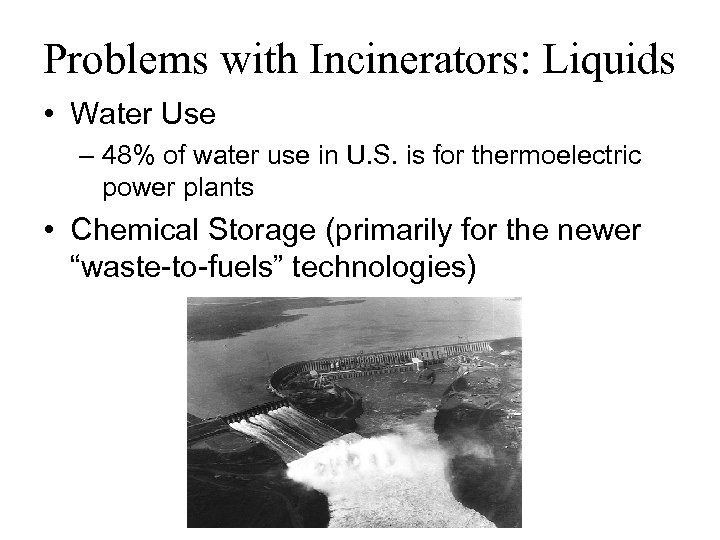 Problems with Incinerators: Liquids • Water Use – 48% of water use in U. S. is for thermoelectric power plants • Chemical Storage (primarily for the newer “waste-to-fuels” technologies)
 Bigger Problems with Incinerators • Destroys materials – “waste-OF-energy” – net energy issues • Global warming contribution worse than zero waste solutions • Makes the problem "invisible" rather than making it very visible so that unsustainablyproduced products can be properly dealt with
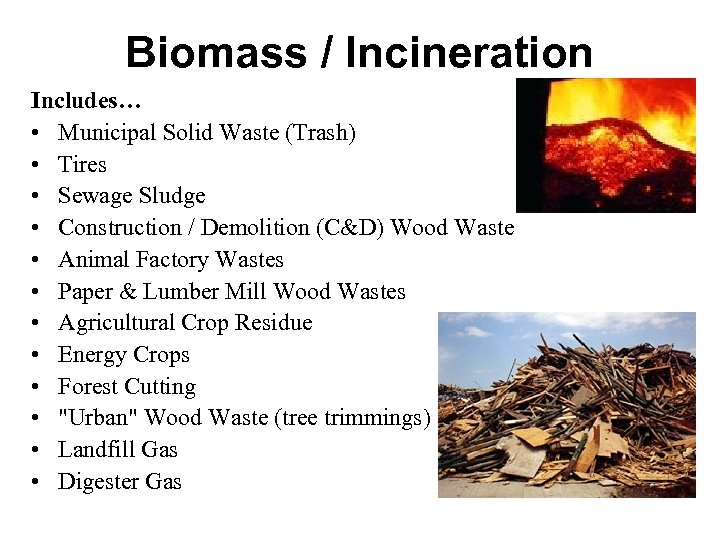 Biomass / Incineration Includes… • Municipal Solid Waste (Trash) • Tires • Sewage Sludge • Construction / Demolition (C&D) Wood Waste • Animal Factory Wastes • Paper & Lumber Mill Wood Wastes • Agricultural Crop Residue • Energy Crops • Forest Cutting • "Urban" Wood Waste (tree trimmings) • Landfill Gas • Digester Gas
 Biomass / Incineration • • Existing facilities mostly on east coast and mid-west Proposals all over the U. S. Many contaminants involved Harms waste issues (competes with source reduction, composting and recycling) Destroys resources Biotechnology One of the most polluting energy technologies per unit of energy produced (little energy is produced) “Green” biomass (energy crops) are foot in the door for more toxic waste streams
 Policies that Promote Incinerators and Landfill Gas
 Private standards: • Center for Resource Solutions' Green-e standard • Environmental Resources Trust's Eco. Power® Renewable Energy Certificate Standard
 Emissions Attributes Markets: • Carbon trading schemes (ex: Chicago Climate Exchange) • Other emissions trading markets (NOx, SOx, VOCs, PM…)
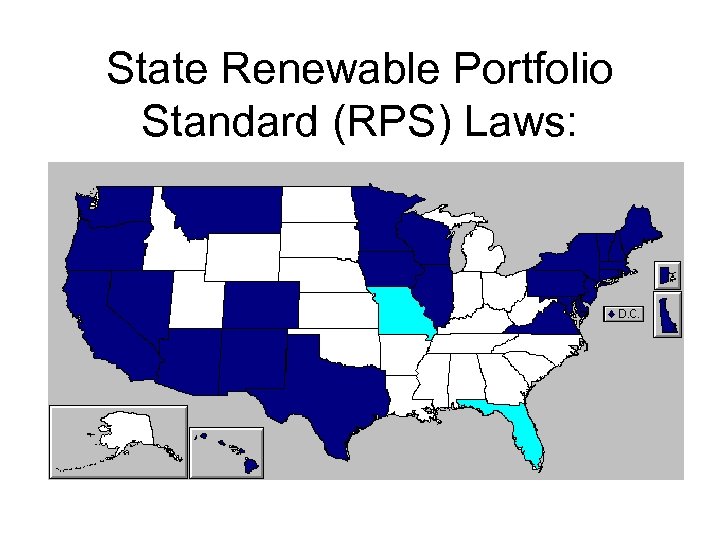 State Renewable Portfolio Standard (RPS) Laws:
 State Renewable Portfolio Standard (RPS) Laws: • Most states that have an RPS which also have trash incinerators, include those incinerator in their RPS laws – Exceptions: NY, NH, WA, OR and 2 of 3 MSW incins in CA • RPS credit trading – regional (not limited to impacting the states where the laws are) – mostly just supporting existing incinerators, not "new" ones – dispute over whether incinerator owners are initial owners of credits or whether the power purchasers are • power purchaser: CT, CO, ME, MN, ND, NJ, NM, NV, TX, WI and maybe CA • incinerator owner (but only if it's a new contract): CO, NV, OR, RI, TX, UT and maybe AZ; PA now allows it for old contracts, too
 Federal Policies: • Energy Policy Act of 2005 – Tax credit for plants/units starting up by 1/1/2008 (expanded from wind to poultry waste to landfill gas to MSW incinerators) – Renewable Fuel Standard (includes trash-toethanol and other waste-based fuels) – Trash-to-ethanol (loan program) – “biomass” but not MSW: • Federal government electricity purchase requirement • Bioenergy program (research $$)
 Upcoming Federal Legislation: • Energy and Farm Bills • Renewable Portfolio Standard – may include trash incinerators; already includes biomass and landfill gas • Production Tax Credit includes trash incineration, poultry waste incineration and landfill gas • Biomass, biofuels (ethanol and cellulosic ethanol) R&D • Renewable Fuels Standard would massively increase production mandates for ethanol and create a new one for cellulosic ethanol (waste-to-fuels) • Climate legislation (cap and trade models most likely to pass; technologies not likely to be specifically mentioned)
 Energy Justice Network Mike Ewall Founder & Director 215 -743 -4884