 Скачать презентацию Energy Heat from Biomass State of Art and
0c2f38c1481778c70103537de0423202.ppt
- Количество слайдов: 48



Energy Heat from Biomass. State of Art and Best Practice Examples Christian Letalik (Engineer of Agriculture) C. A. R. M. E. N. e. V. www. renewables-made-in-germany. de
Content Overview C. A. R. M. E. N. e. V. Importance of Biomass in Comparison to other Renewable Energy Sources Heat from Biomass - Sources / Markets / Prices - Best Practise Examples Conclusions
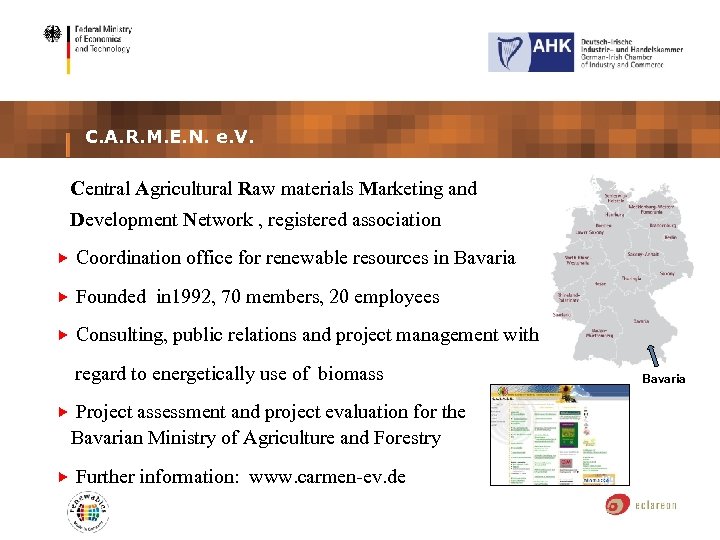
C. A. R. M. E. N. e. V. Central Agricultural Raw materials Marketing and Development Network , registered association Coordination office for renewable resources in Bavaria Founded in 1992, 70 members, 20 employees Consulting, public relations and project management with regard to energetically use of biomass Project assessment and project evaluation for the Bavarian Ministry of Agriculture and Forestry Further information: www. carmen-ev. de Bavaria
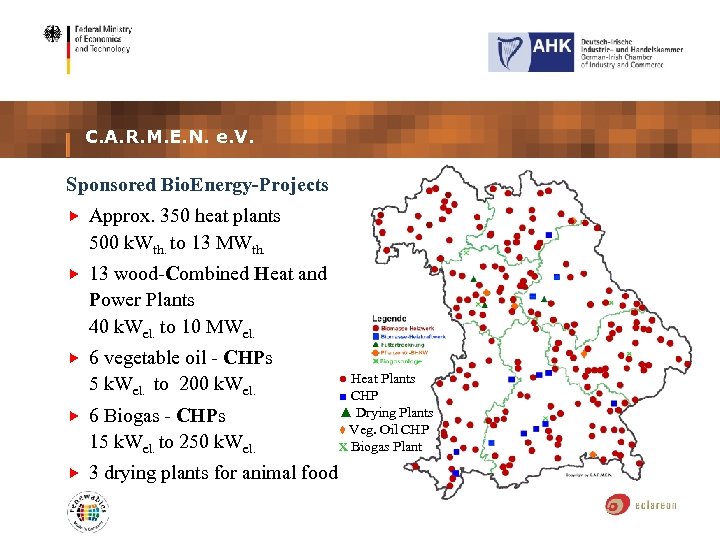
C. A. R. M. E. N. e. V. Sponsored Bio. Energy-Projects Approx. 350 heat plants 500 k. Wth. to 13 MWth. 13 wood-Combined Heat and Power Plants 40 k. Wel. to 10 MWel. 6 vegetable oil - CHPs 5 k. Wel. to 200 k. Wel. 6 Biogas - CHPs 15 k. Wel. to 250 k. Wel. 3 drying plants for animal food ● Heat Plants ■ CHP ▲ Drying Plants ♦ Veg. Oil CHP X Biogas Plant
Content Overview C. A. R. M. E. N. e. V. Importance of Biomass in Comparison to other Renewable Energy Sources Heat from Biomass - Sources / Markets / Economics / Prices - Best Practise Conclusions
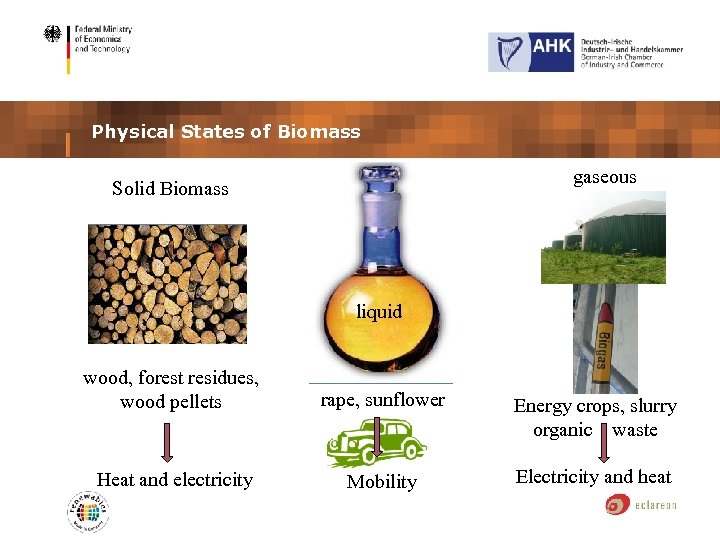
Physical States of Biomass Solid Biomass flüssig gaseous liquid wood, forest residues, wood pellets rape, sunflower Energy crops, slurry organic waste Heat and electricity Mobility Electricity and heat
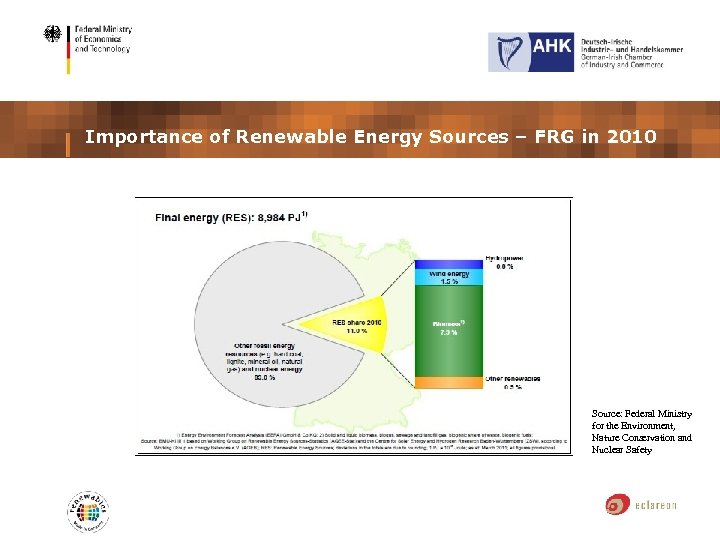
Importance of Renewable Energy Sources – FRG in 2010 Source: Federal Ministry for the Environment, Nature Conservation and Nuclear Safety
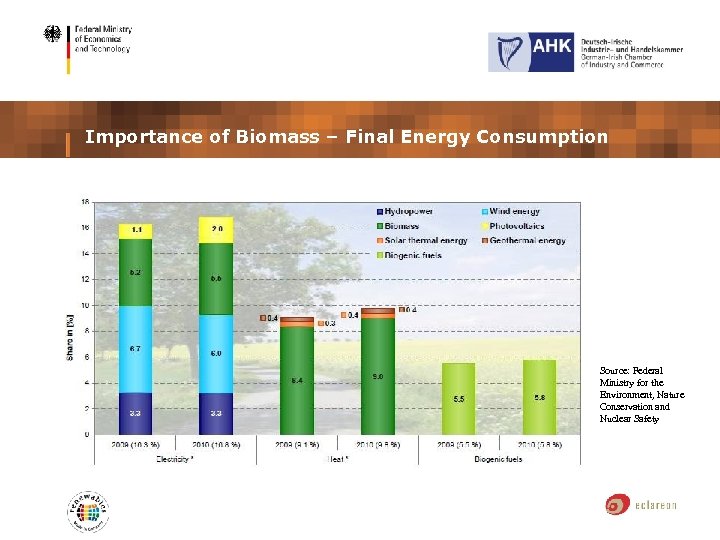
Importance of Biomass – Final Energy Consumption Source: Federal Ministry for the Environment, Nature Conservation and Nuclear Safety
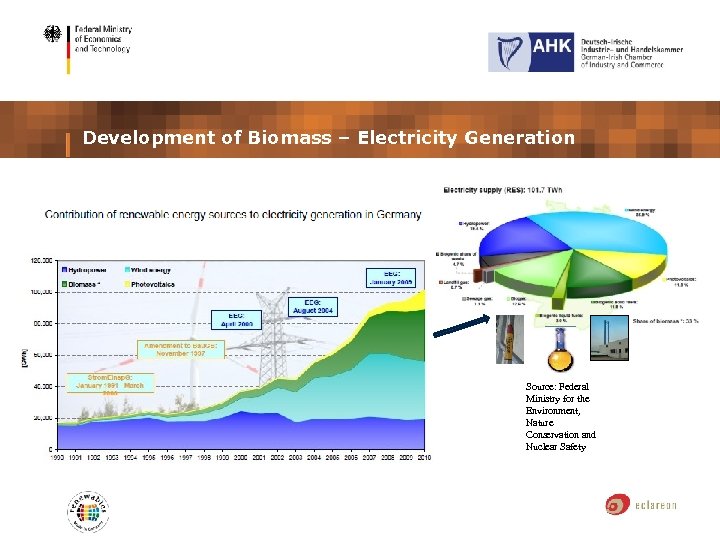
Development of Biomass – Electricity Generation Source: Federal Ministry for the Environment, Nature Conservation and Nuclear Safety
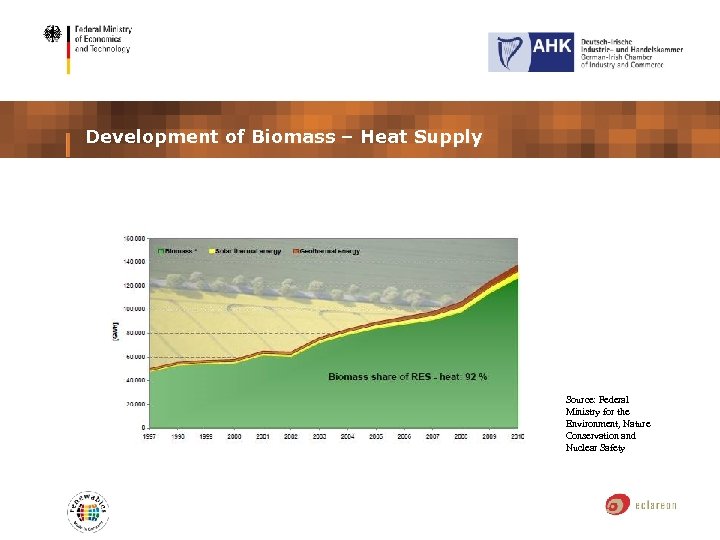
Development of Biomass – Heat Supply Source: Federal Ministry for the Environment, Nature Conservation and Nuclear Safety
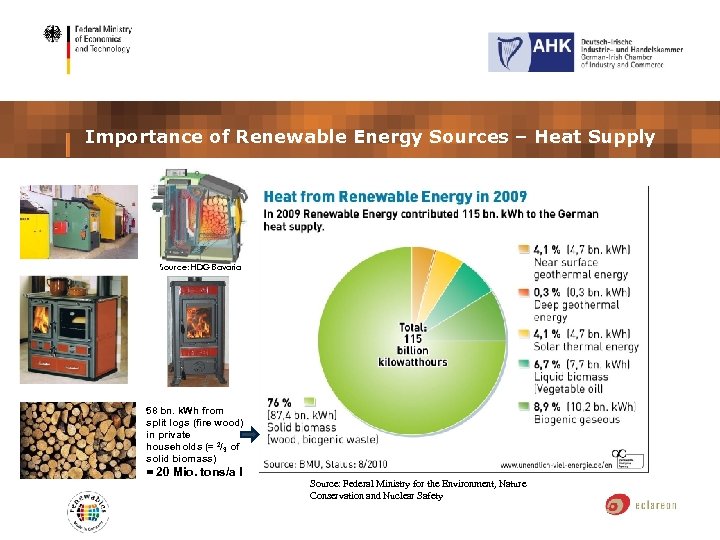
Importance of Renewable Energy Sources – Heat Supply Source: HDG Bavaria 58 bn. k. Wh from split logs (fire wood) in private households (= 2/3 of solid biomass) = 20 Mio. tons/a ! Source: Federal Ministry for the Environment, Nature Conservation and Nuclear Safety
Content Overview C. A. R. M. E. N. e. V. Importance of Biomass in Comparison to other Renewable Energy Sources Heat from Biomass - Sources / Markets / Prices - Best Practise Examples Conclusions
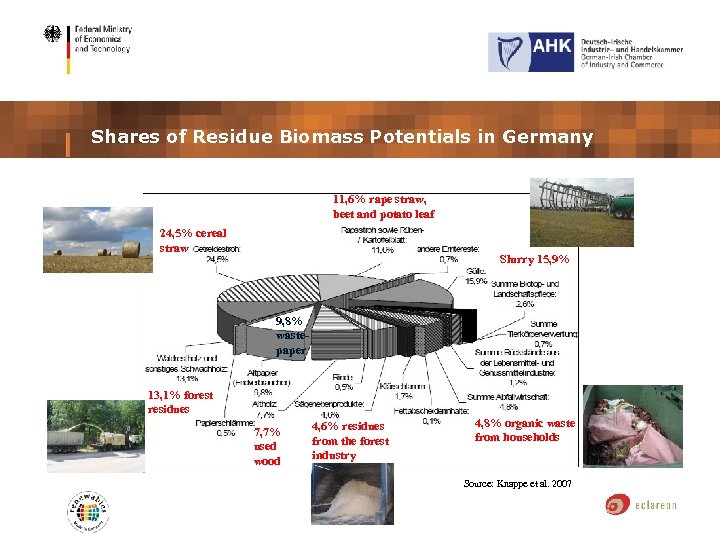
Shares of Residue Biomass Potentials in Germany 11, 6% rape straw, beet and potato leaf 24, 5% cereal straw Slurry 15, 9% 9, 8% wastepaper 13, 1% forest residues 7, 7% used wood 4, 6% residues from the forest industry 4, 8% organic waste from households Source: Knappe et al. 2007
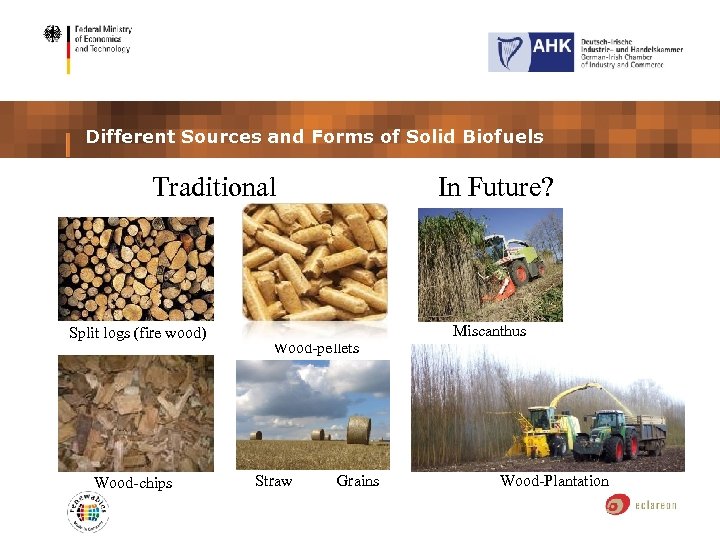
Different Sources and Forms of Solid Biofuels Traditional Split logs (fire wood) Wood-chips In Future? Wood-pellets Straw Grains Miscanthus Wood-Plantation
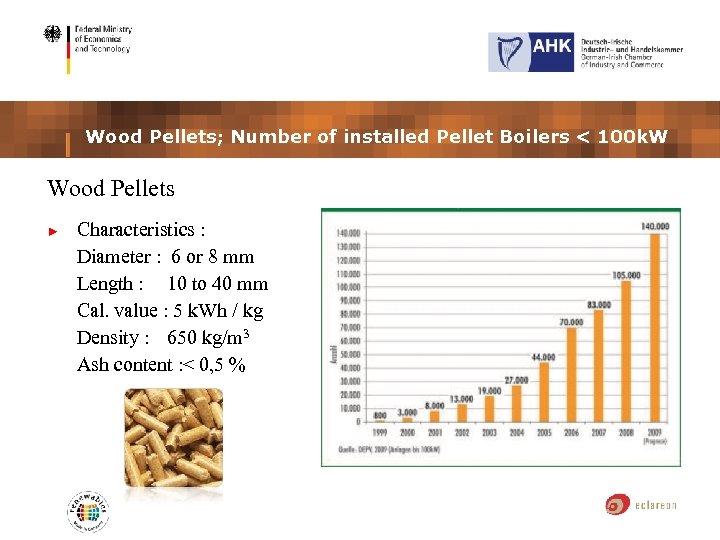
Wood Pellets; Number of installed Pellet Boilers < 100 k. W Wood Pellets ► Characteristics : Diameter : 6 or 8 mm Length : 10 to 40 mm Cal. value : 5 k. Wh / kg Density : 650 kg/m 3 Ash content : < 0, 5 %
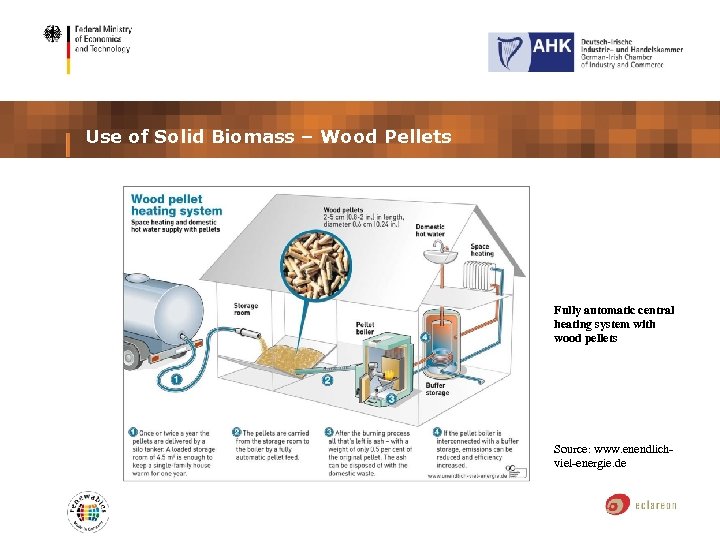
Use of Solid Biomass – Wood Pellets Fully automatic central heating system with wood pellets Source: www. enendlichviel-energie. de
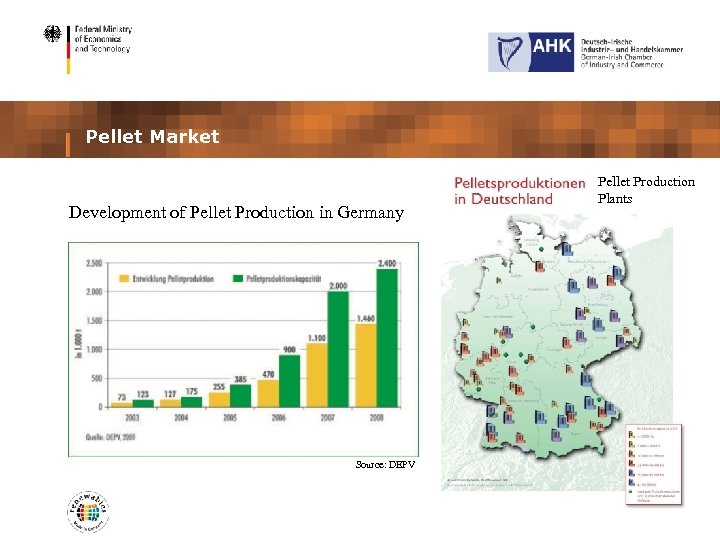
Pellet Market Development of Pellet Production in Germany Source: DEPV Pellet Production Plants
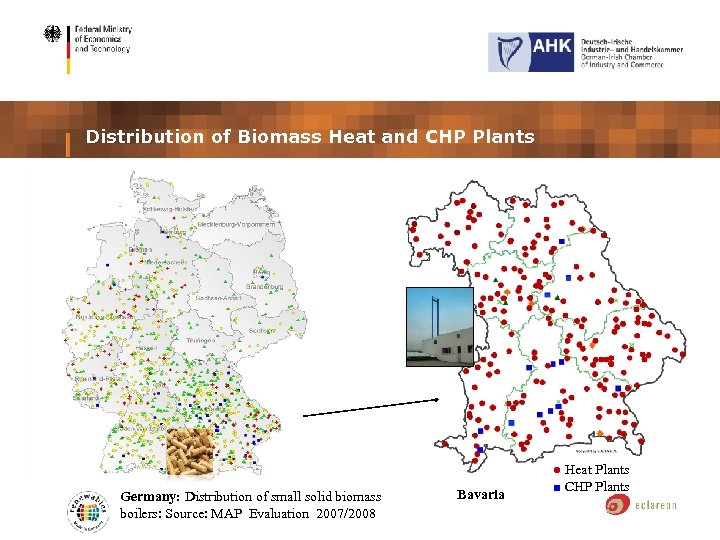
Distribution of Biomass Heat and CHP Plants Germany: Distribution of small solid biomass boilers: Source: MAP Evaluation 2007/2008 Bavaria ● Heat Plants ■ CHP Plants
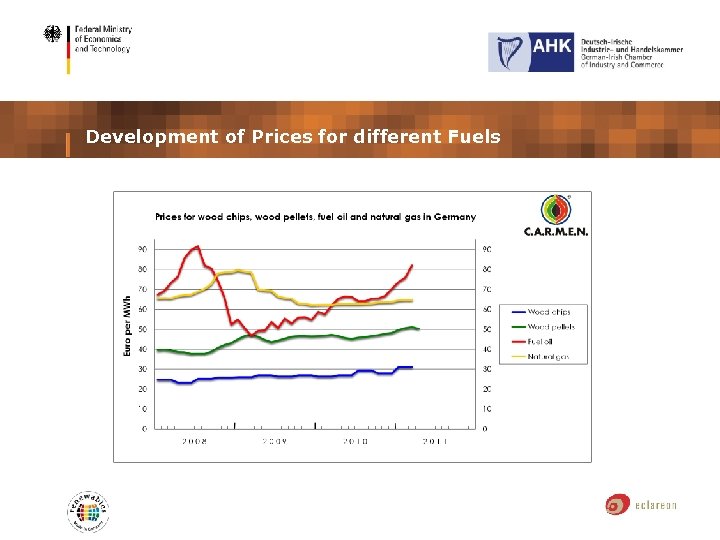
Development of Prices for different Fuels
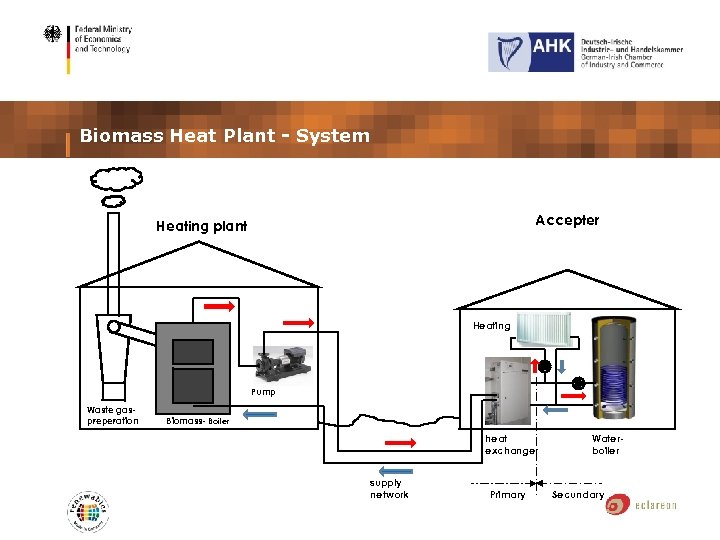
Biomass Heat Plant - System Accepter Heating plant Heating Pump Waste gaspreperation Biomass- Boiler heat exchanger supply network Primary Waterboiler Secundary
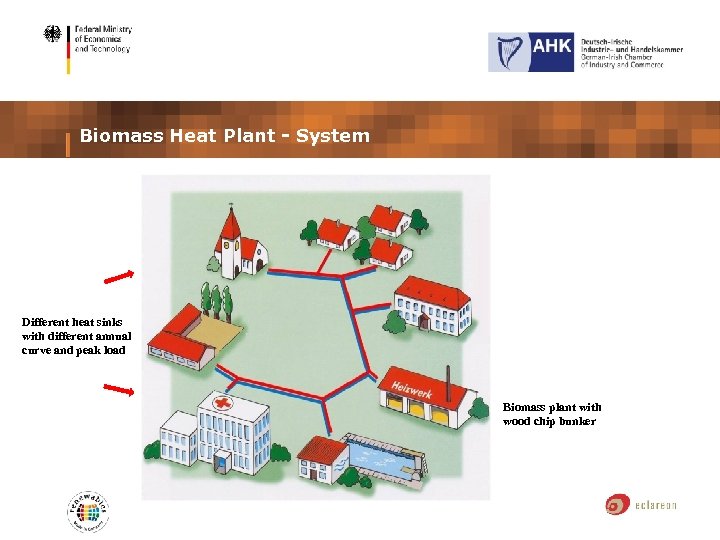
Biomass Heat Plant - System Different heat sinks with different annual curve and peak load Biomass plant with wood chip bunker
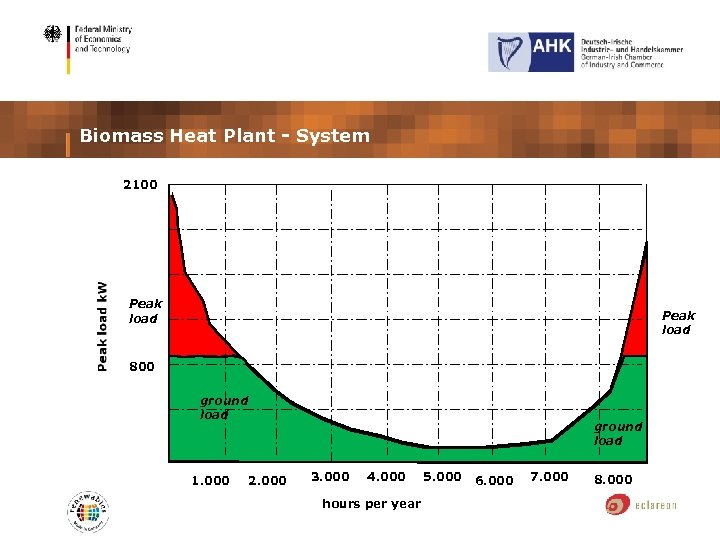
Biomass Heat Plant - System 2100 Peak load 800 ground load 1. 000 ground load 2. 000 3. 000 4. 000 hours per year 5. 000 6. 000 7. 000 8. 000
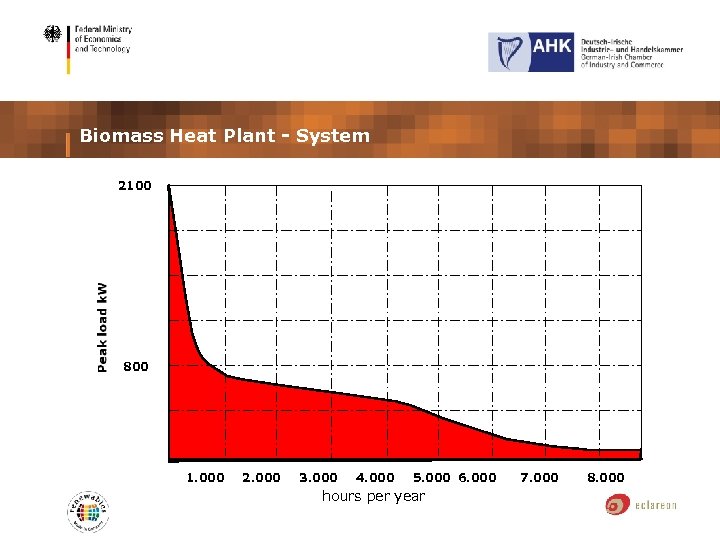
Biomass Heat Plant - System 2100 800 1. 000 2. 000 3. 000 4. 000 5. 000 6. 000 hours per year 7. 000 8. 000
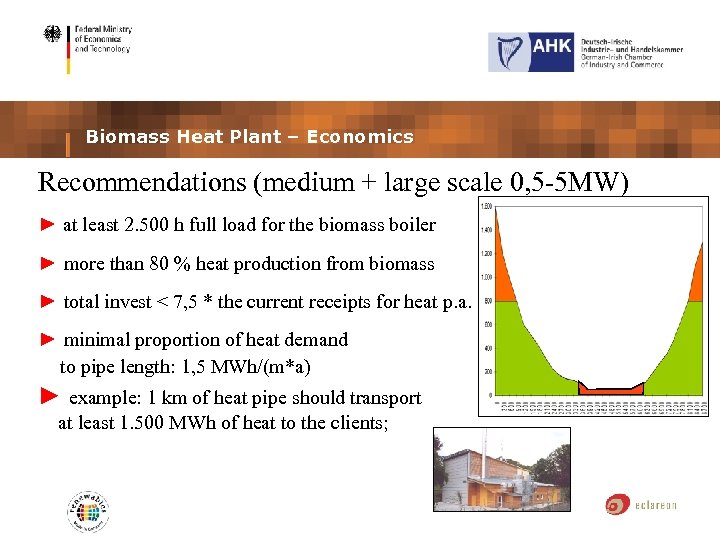
Biomass Heat Plant – Economics Recommendations (medium + large scale 0, 5 -5 MW) ► at least 2. 500 h full load for the biomass boiler ► more than 80 % heat production from biomass ► total invest < 7, 5 * the current receipts for heat p. a. ► minimal proportion of heat demand to pipe length: 1, 5 MWh/(m*a) ► example: 1 km of heat pipe should transport at least 1. 500 MWh of heat to the clients;
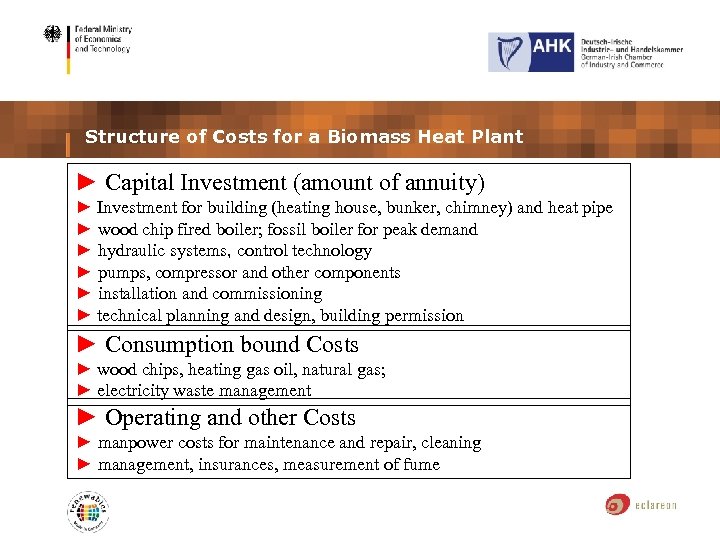
Structure of Costs for a Biomass Heat Plant ► Capital Investment (amount of annuity) ► Investment for building (heating house, bunker, chimney) and heat pipe ► wood chip fired boiler; fossil boiler for peak demand ► hydraulic systems, control technology ► pumps, compressor and other components ► installation and commissioning ► technical planning and design, building permission ► Consumption bound Costs ► wood chips, heating gas oil, natural gas; ► electricity waste management ► Operating and other Costs ► manpower costs for maintenance and repair, cleaning ► management, insurances, measurement of fume
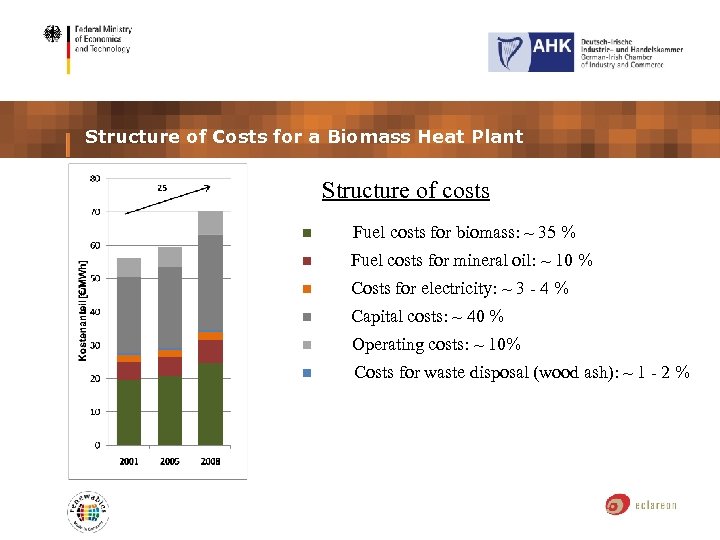
Structure of Costs for a Biomass Heat Plant Structure of costs Fuel costs for biomass: ~ 35 % Fuel costs for mineral oil: ~ 10 % Costs for electricity: ~ 3 - 4 % Capital costs: ~ 40 % Operating costs: ~ 10% Costs for waste disposal (wood ash): ~ 1 - 2 %
Content Overview C. A. R. M. E. N. e. V. Importance of Biomass in Comparison to other Renewable Energy Sources Solid Biomass - Sources / Markets / Economics /Prices - Best Practise Conclusions
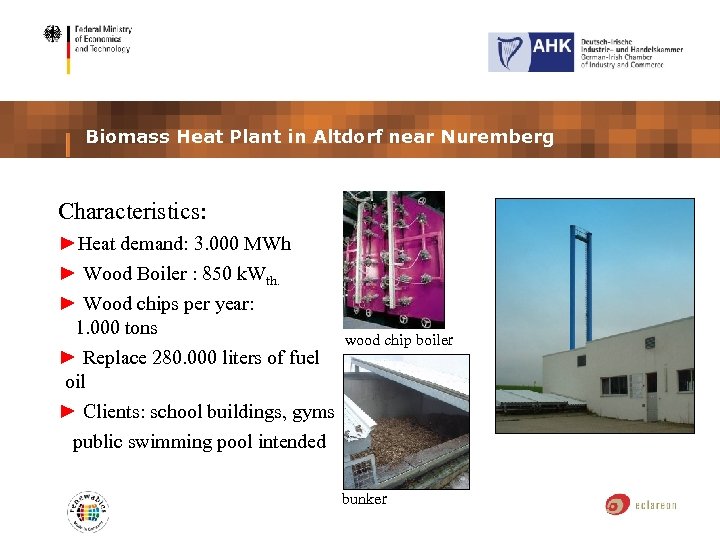
Biomass Heat Plant in Altdorf near Nuremberg Characteristics: ►Heat demand: 3. 000 MWh ► Wood Boiler : 850 k. Wth. ► Wood chips per year: 1. 000 tons ► Replace 280. 000 liters of fuel oil ► Clients: school buildings, gyms public swimming pool intended wood chip boiler bunker
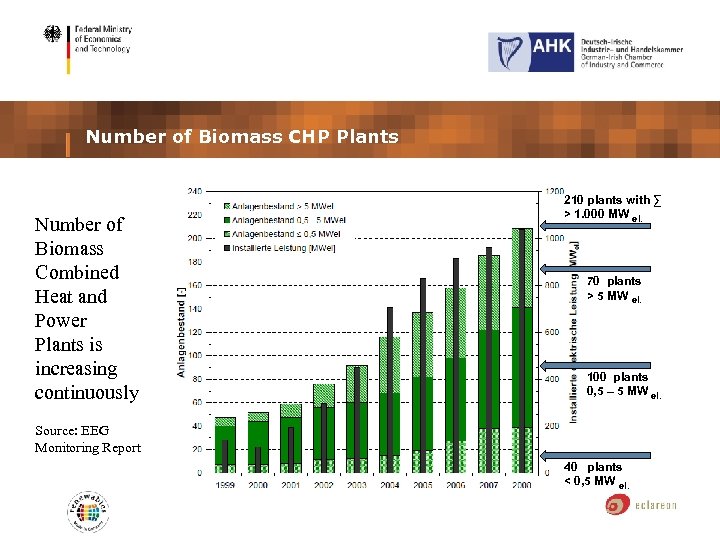
Number of Biomass CHP Plants Number of Biomass Combined Heat and Power Plants is increasing continuously 210 plants with ∑ > 1. 000 MW el. 70 plants > 5 MW el. 100 plants 0, 5 – 5 MW el. Source: EEG Monitoring Report 40 plants < 0, 5 MW el.
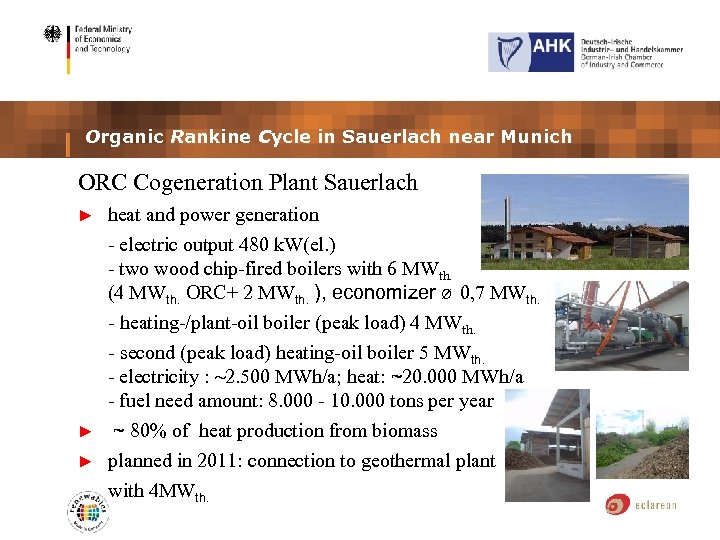
Organic Rankine Cycle in Sauerlach near Munich ORC Cogeneration Plant Sauerlach ► heat and power generation - electric output 480 k. W(el. ) - two wood chip-fired boilers with 6 MWth. (4 MWth. ORC+ 2 MWth. ), economizer Ø 0, 7 MWth. - heating-/plant-oil boiler (peak load) 4 MWth. - second (peak load) heating-oil boiler 5 MWth. - electricity : ~2. 500 MWh/a; heat: ~20. 000 MWh/a - fuel need amount: 8. 000 - 10. 000 tons per year ► ~ 80% of heat production from biomass planned in 2011: connection to geothermal plant with 4 MWth. ►
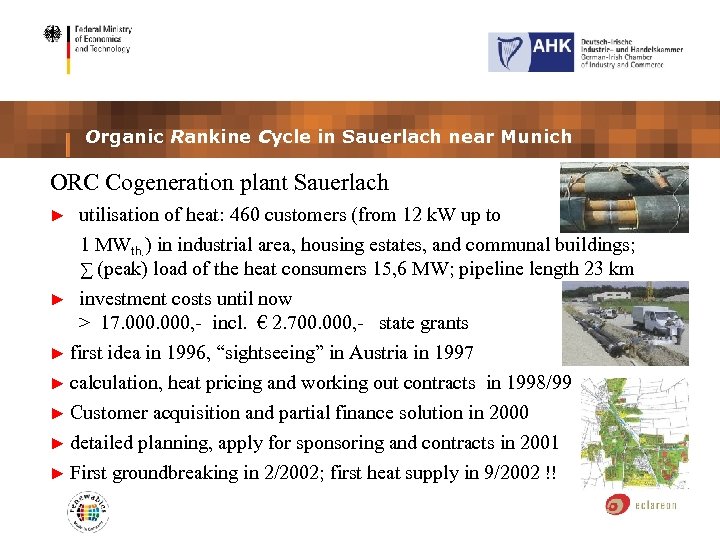
Organic Rankine Cycle in Sauerlach near Munich ORC Cogeneration plant Sauerlach utilisation of heat: 460 customers (from 12 k. W up to 1 MWth. ) in industrial area, housing estates, and communal buildings; ∑ (peak) load of the heat consumers 15, 6 MW; pipeline length 23 km ► investment costs until now > 17. 000, - incl. € 2. 700. 000, - state grants ► first idea in 1996, “sightseeing” in Austria in 1997 ► calculation, heat pricing and working out contracts in 1998/99 ► Customer acquisition and partial finance solution in 2000 ► detailed planning, apply for sponsoring and contracts in 2001 ► First groundbreaking in 2/2002; first heat supply in 9/2002 !! ►
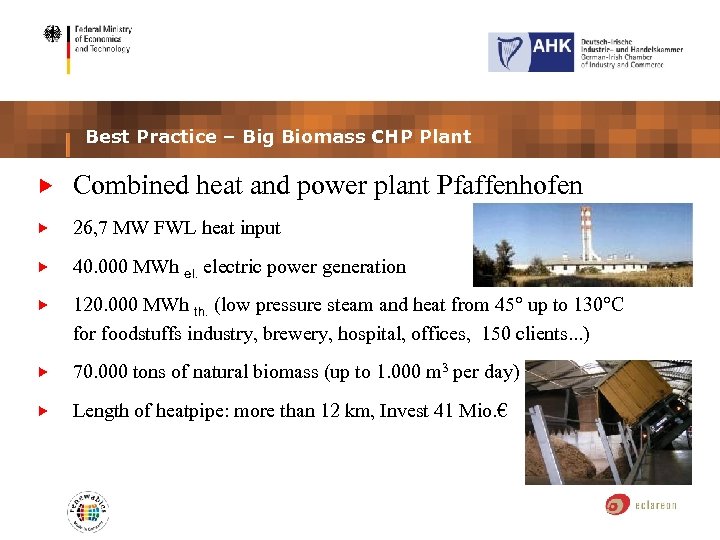
Best Practice – Big Biomass CHP Plant Combined heat and power plant Pfaffenhofen 26, 7 MW FWL heat input 40. 000 MWh el. electric power generation 120. 000 MWh th. (low pressure steam and heat from 45° up to 130°C for foodstuffs industry, brewery, hospital, offices, 150 clients. . . ) 70. 000 tons of natural biomass (up to 1. 000 m 3 per day) Length of heatpipe: more than 12 km, Invest 41 Mio. €
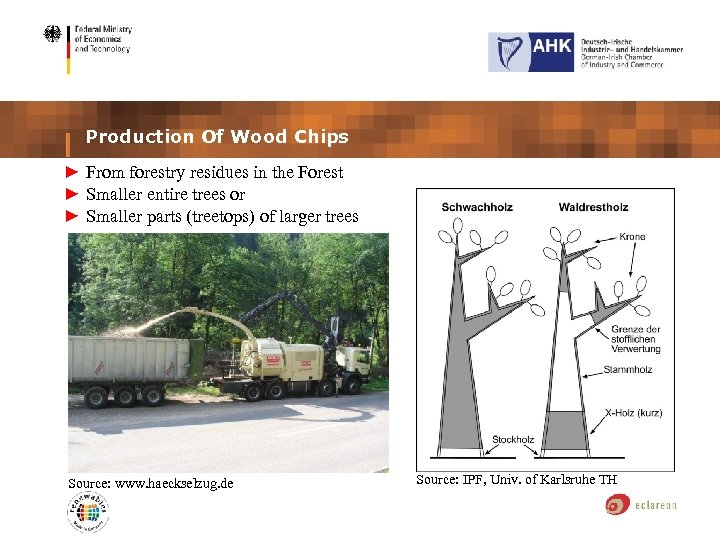
Production Of Wood Chips ► From forestry residues in the Forest ► Smaller entire trees or ► Smaller parts (treetops) of larger trees Source: www. haeckselzug. de Source: IPF, Univ. of Karlsruhe TH
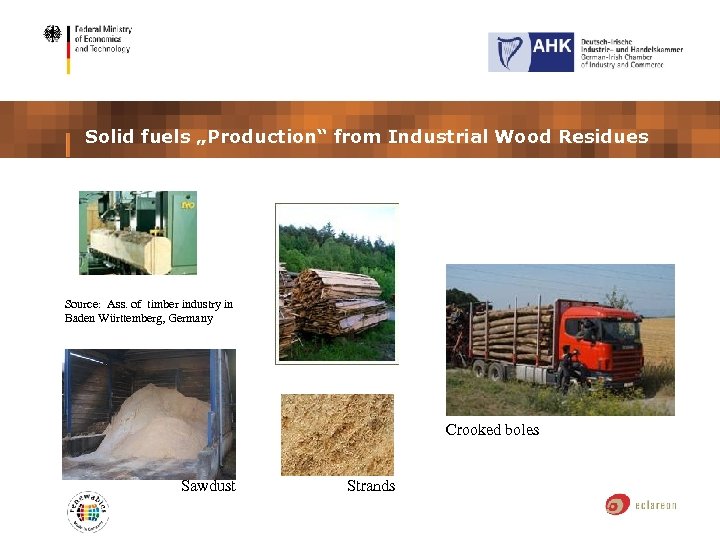
Solid fuels „Production“ from Industrial Wood Residues Source: Ass. of timber industry in Baden Württemberg, Germany Crooked boles Sawdust Strands
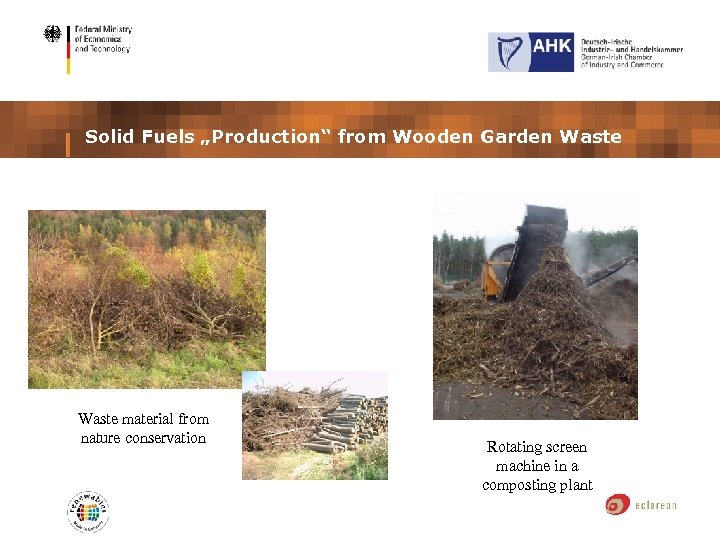
Solid Fuels „Production“ from Wooden Garden Waste material from nature conservation Rotating screen machine in a composting plant
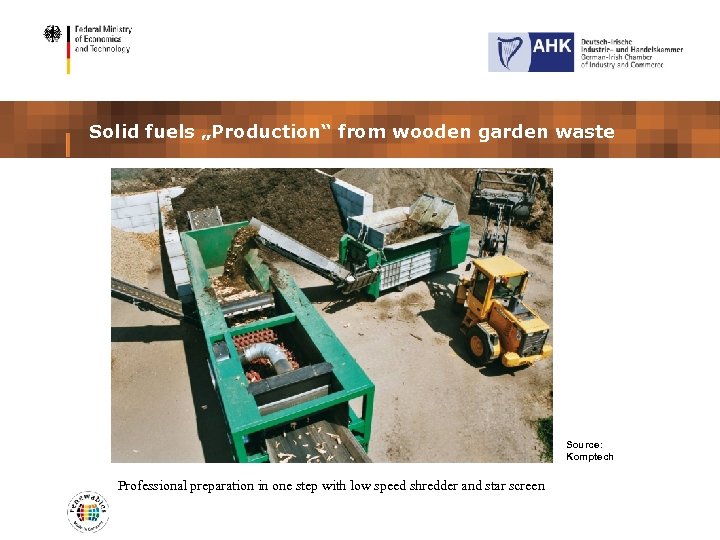
Solid fuels „Production“ from wooden garden waste Source: Komptech Professional preparation in one step with low speed shredder and star screen
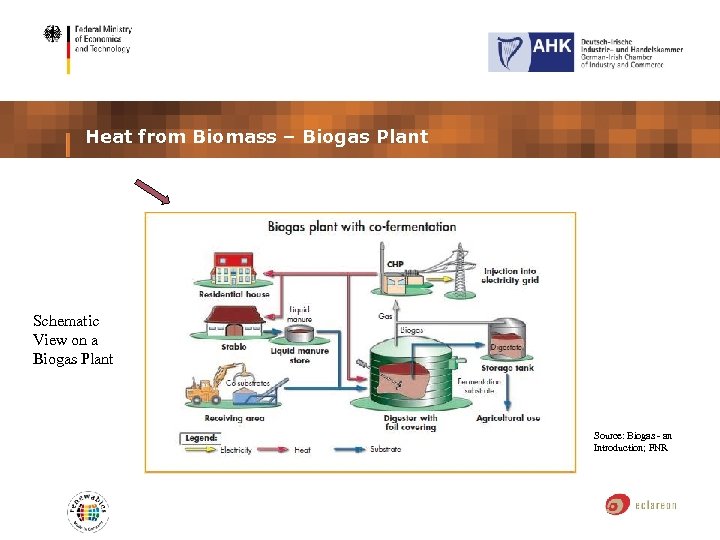
Heat from Biomass – Biogas Plant Schematic View on a Biogas Plant Source: Biogas - an Introduction; FNR
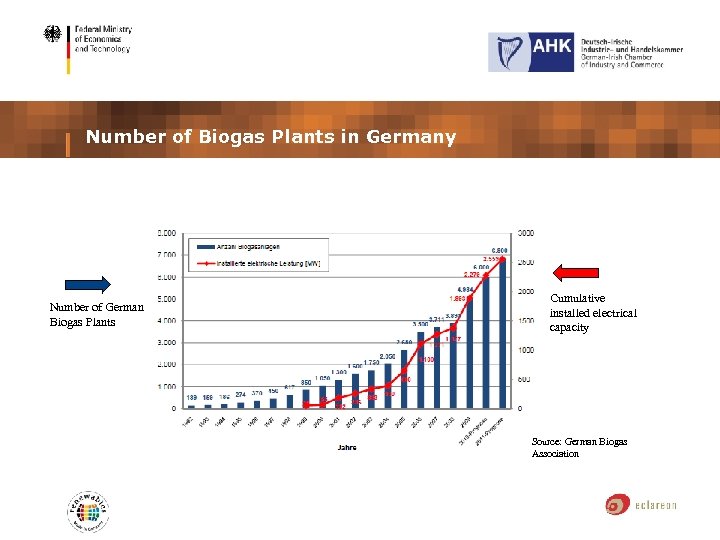
Number of Biogas Plants in Germany Number of German Biogas Plants Cumulative installed electrical capacity Source: German Biogas Association
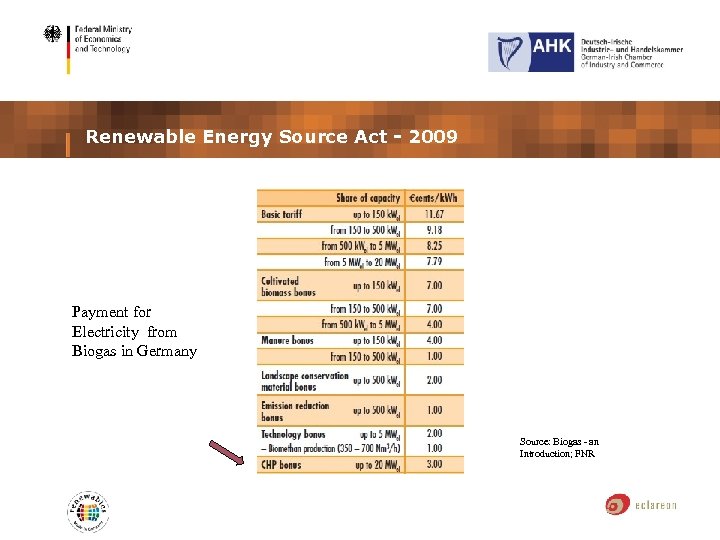
Renewable Energy Source Act - 2009 Payment for Electricity from Biogas in Germany Source: Biogas - an Introduction; FNR
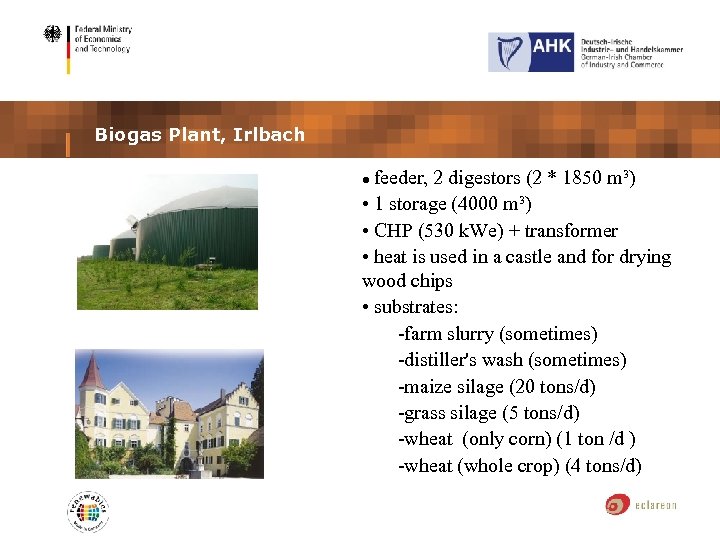
Biogas Plant, Irlbach ● feeder, 2 digestors (2 * 1850 m³) • 1 storage (4000 m³) • CHP (530 k. We) + transformer • heat is used in a castle and for drying wood chips • substrates: -farm slurry (sometimes) -distiller's wash (sometimes) -maize silage (20 tons/d) -grass silage (5 tons/d) -wheat (only corn) (1 ton /d ) -wheat (whole crop) (4 tons/d)
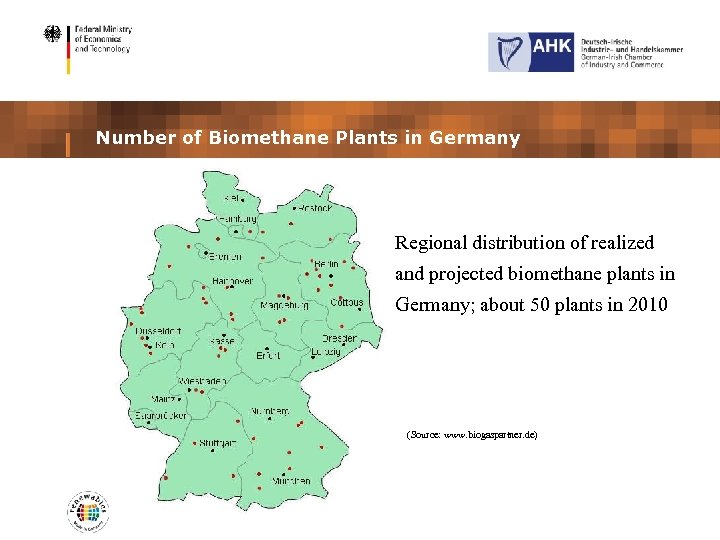
Number of Biomethane Plants in Germany Regional distribution of realized and projected biomethane plants in Germany; about 50 plants in 2010 (Source: www. biogaspartner. de)
Final Arguments for Heat from Biomass technically mature short transport distances (versus oil and natural gas) reduced dependence on the fossil fuel market new market for otherwise unused fuels new operation field for companies regional added value and conservation of rural structures/employment less environmental damage in case of accident saving of fossil resources (we are running out of supplies) reduction of emissions CO 2
Content Overview C. A. R. M. E. N. e. V. Importance of Biomass in Comparison to other Renewable Energy Sources Solid Biomass - Sources / Markets / Economics / Prices - Best Practise Conclusions
Possible Conclusions I General Conditions in Ireland: Very few forest areas - in average up to 10% of total area Promotion program for reafforestation from the EU; Timber harvest: 2008: 3, 5 mio. m 3 per year. Aim: 10 mio. m 3 in 2030 Infrastructure (road network) is not yet fully developed , which is relevant for harvest and transportation costs; Timber Industry is developing and growing Economic Circumstances Prices for natural gas ? Prices for heating gas oil ? Debate on peat
Possible Conclusions II Biomass heat plants: In regions without natural gas main and high demand for heat e. g. : hospitals, homes for the aged, public swimming pools, school buildings, gymnasiums, playschools, offices, town halls, monasteries, hotels and restaurants etc. the development of biomass heat plants should be proved ! CHP, Combined heat and power plants depending on prices for electricity from Renewable Sources (EEG? ) should not be projected without heat sink or demand for steam in the surrounding (max. 10 km) area of the plant, for example: any kind of food industries (brewery, creamery, slaughterhouse, cannery etc. ), drying plants for animal food, sludge and plants for pellet production, timber industries
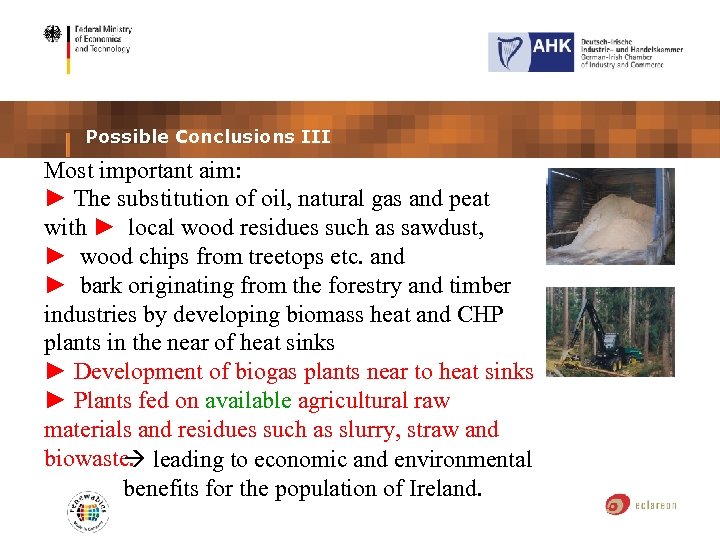
Possible Conclusions III Most important aim: ► The substitution of oil, natural gas and peat with ► local wood residues such as sawdust, ► wood chips from treetops etc. and ► bark originating from the forestry and timber industries by developing biomass heat and CHP plants in the near of heat sinks ► Development of biogas plants near to heat sinks ► Plants fed on available agricultural raw materials and residues such as slurry, straw and biowaste. leading to economic and environmental benefits for the population of Ireland.
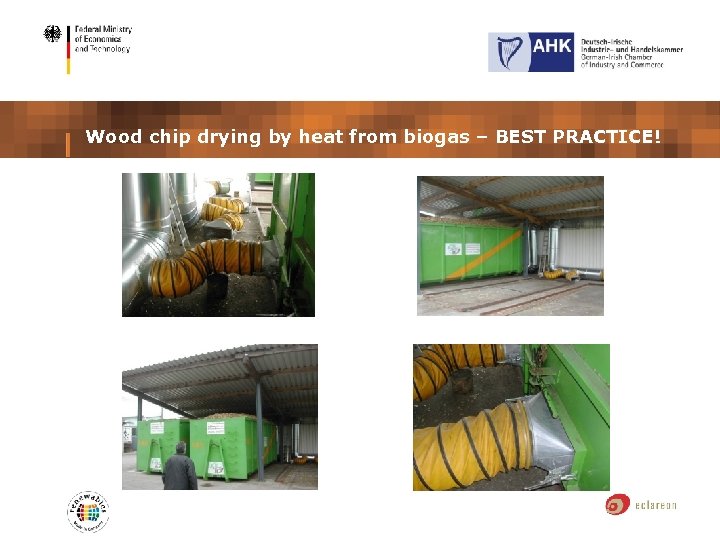
ÖNorm M 7133 Wood chip drying by heat from biogas – BEST PRACTICE!
Heat from Biomass Christian Letalik (Engineer of Agriculture) C. A. R. M. E. N. e. V. www. carmen-ev. de Thank you for your attention !
Скачать презентацию Energy Heat from Biomass State of Art and
0c2f38c1481778c70103537de0423202.ppt