Скачать презентацию Energy Challenge and Nanotechnology Prashant V Kamat Radiation
af7a8fe8540c91d930a2168e5e6f0c37.ppt
- Количество слайдов: 31
 Energy Challenge and Nanotechnology Prashant V. Kamat Radiation Laboratory and Dept Of Chemical & Biomolecular Engineering University of Notre. Dame Notre Dame, Indiana 46556 -0579 Researchers/Collaborators Amy Dawson, Ella Jakob Ravi Subramanian, Roxana Nicolaescu Istvan Robel Said Barazzouk T. Hasobe Dr. T. Hirakawa Dr. Girish Kumar Dr. K. George Thomas (RRL, India) Prof. Fukuzumi (Osaka U. ) Prof. Imahori (Kyoto) Support: US DOE
 Humanity’s Top Ten Problems for next 50 years 1. 2. 3. 4. 5. 6. 7. 8. 9. 10. ENERGY WATER FOOD ENVIRONMENT POVERTY TERRORISM & WAR DISEASE EDUCATION DEMOCRACY POPULATION 2004 2050 6. 5 ~ 10 Billion People …. . R. Smalley, Rice Univ.
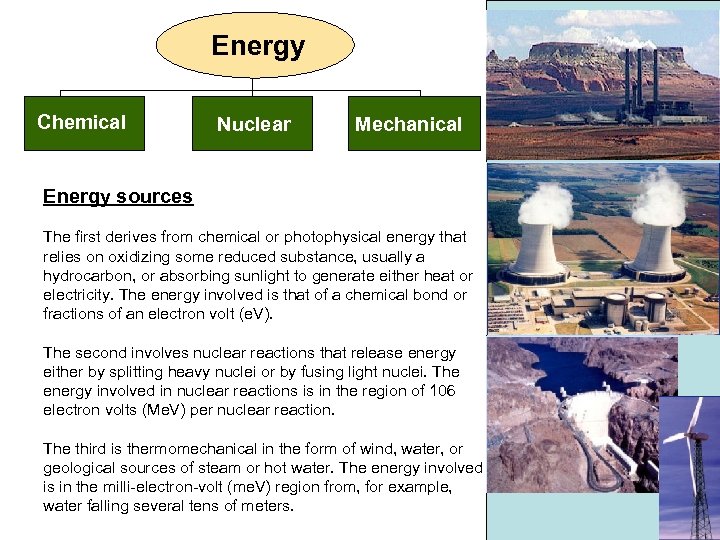 Energy Chemical Nuclear Mechanical Energy sources The first derives from chemical or photophysical energy that relies on oxidizing some reduced substance, usually a hydrocarbon, or absorbing sunlight to generate either heat or electricity. The energy involved is that of a chemical bond or fractions of an electron volt (e. V). The second involves nuclear reactions that release energy either by splitting heavy nuclei or by fusing light nuclei. The energy involved in nuclear reactions is in the region of 106 electron volts (Me. V) per nuclear reaction. The third is thermomechanical in the form of wind, water, or geological sources of steam or hot water. The energy involved is in the milli-electron-volt (me. V) region from, for example, water falling several tens of meters.
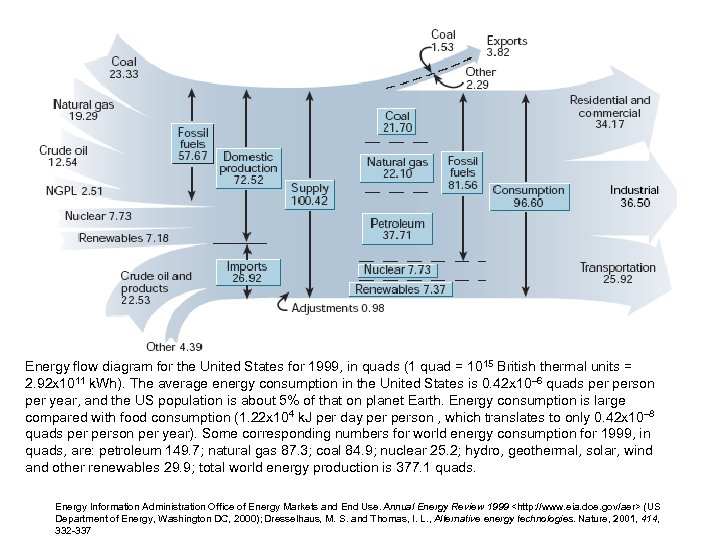 Energy flow diagram for the United States for 1999, in quads (1 quad = 1015 British thermal units = 2. 92 x 1011 k. Wh). The average energy consumption in the United States is 0. 42 x 10– 6 quads person per year, and the US population is about 5% of that on planet Earth. Energy consumption is large compared with food consumption (1. 22 x 104 k. J per day person , which translates to only 0. 42 x 10– 8 quads person per year). Some corresponding numbers for world energy consumption for 1999, in quads, are: petroleum 149. 7; natural gas 87. 3; coal 84. 9; nuclear 25. 2; hydro, geothermal, solar, wind and other renewables 29. 9; total world energy production is 377. 1 quads. Energy Information Administration Office of Energy Markets and End Use. Annual Energy Review 1999
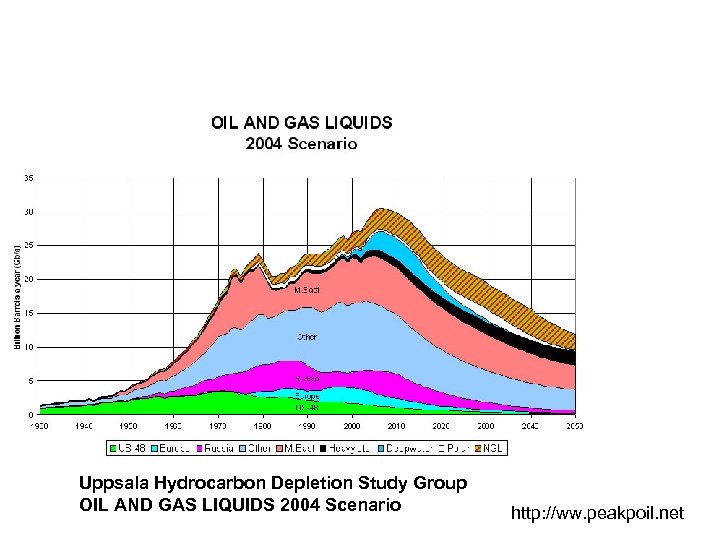 Uppsala Hydrocarbon Depletion Study Group OIL AND GAS LIQUIDS 2004 Scenario http: //ww. peakpoil. net
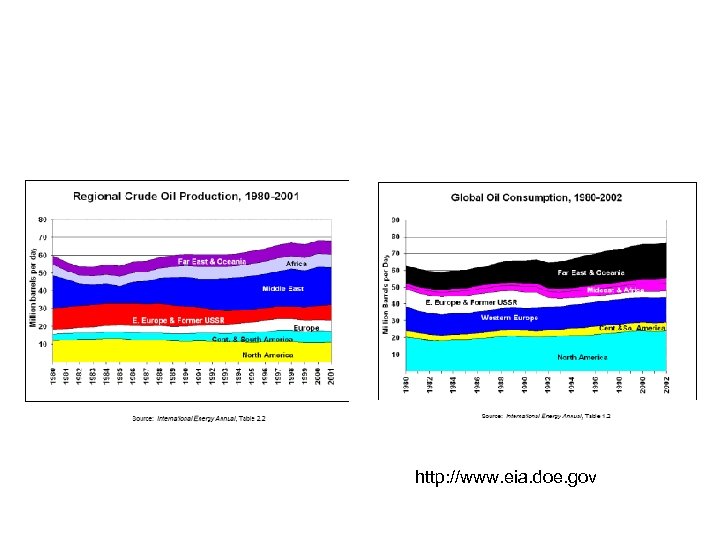 http: //www. eia. doe. gov
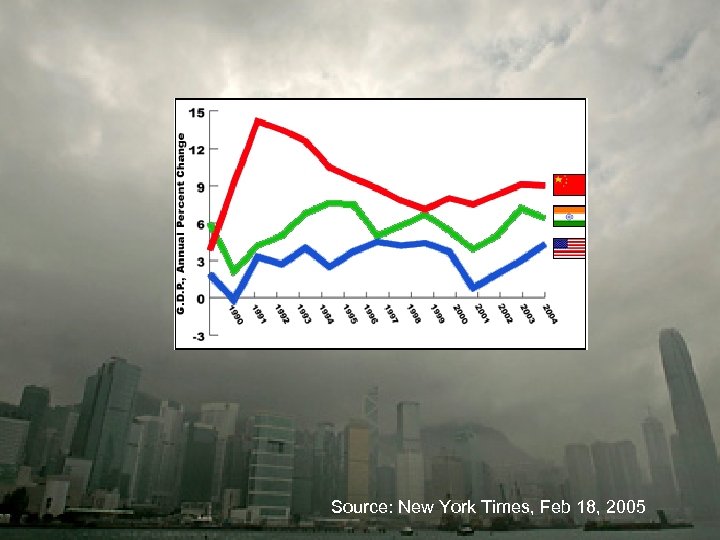 Source: New York Times, Feb 18, 2005
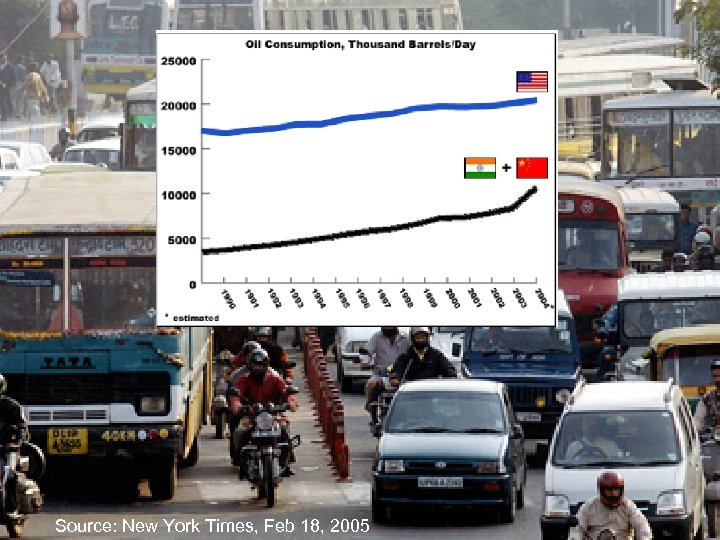 Source: New York Times, Feb 18, 2005
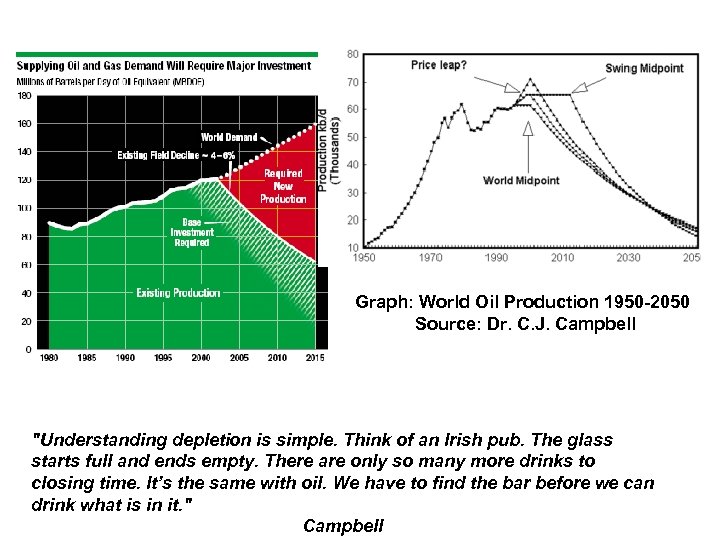 Graph: World Oil Production 1950 -2050 Source: Dr. C. J. Campbell "Understanding depletion is simple. Think of an Irish pub. The glass starts full and ends empty. There are only so many more drinks to closing time. It’s the same with oil. We have to find the bar before we can drink what is in it. " Campbell
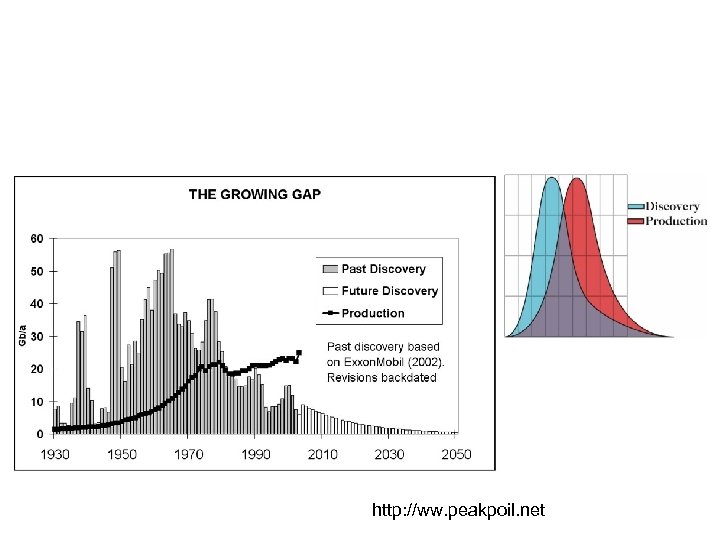 http: //ww. peakpoil. net
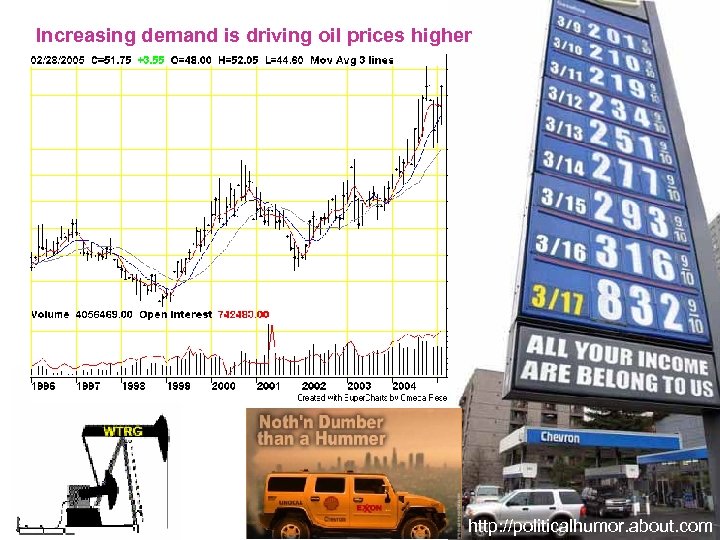 Increasing demand is driving oil prices higher http: //politicalhumor. about. com
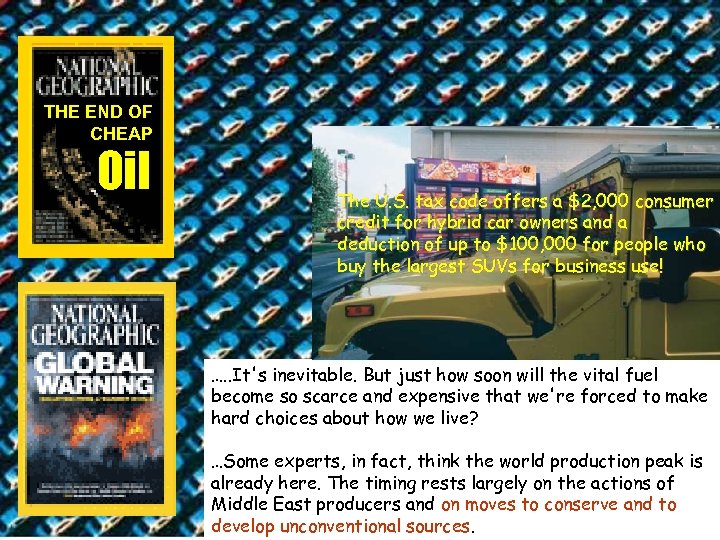 THE END OF CHEAP Oil The U. S. tax code offers a $2, 000 consumer credit for hybrid car owners and a deduction of up to $100, 000 for people who buy the largest SUVs for business use! …. . It's inevitable. But just how soon will the vital fuel become so scarce and expensive that we're forced to make hard choices about how we live? …Some experts, in fact, think the world production peak is already here. The timing rests largely on the actions of Middle East producers and on moves to conserve and to develop unconventional sources.
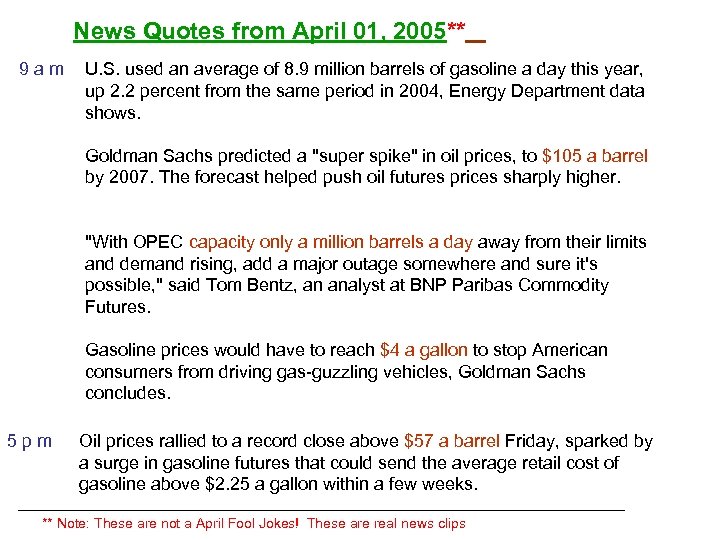 News Quotes from April 01, 2005** 9 am U. S. used an average of 8. 9 million barrels of gasoline a day this year, up 2. 2 percent from the same period in 2004, Energy Department data shows. Goldman Sachs predicted a "super spike" in oil prices, to $105 a barrel by 2007. The forecast helped push oil futures prices sharply higher. "With OPEC capacity only a million barrels a day away from their limits and demand rising, add a major outage somewhere and sure it's possible, " said Tom Bentz, an analyst at BNP Paribas Commodity Futures. Gasoline prices would have to reach $4 a gallon to stop American consumers from driving gas-guzzling vehicles, Goldman Sachs concludes. 5 pm Oil prices rallied to a record close above $57 a barrel Friday, sparked by a surge in gasoline futures that could send the average retail cost of gasoline above $2. 25 a gallon within a few weeks. ** Note: These are not a April Fool Jokes! These are real news clips
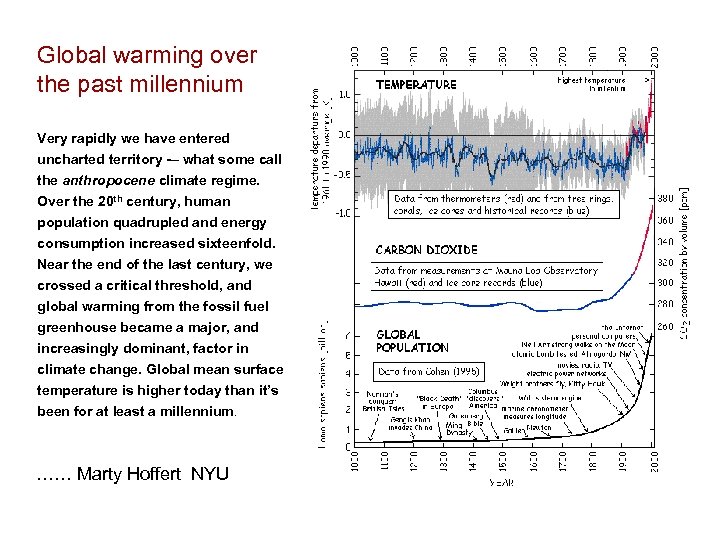 Global warming over the past millennium Very rapidly we have entered uncharted territory -– what some call the anthropocene climate regime. Over the 20 th century, human population quadrupled and energy consumption increased sixteenfold. Near the end of the last century, we crossed a critical threshold, and global warming from the fossil fuel greenhouse became a major, and increasingly dominant, factor in climate change. Global mean surface temperature is higher today than it’s been for at least a millennium. …… Marty Hoffert NYU
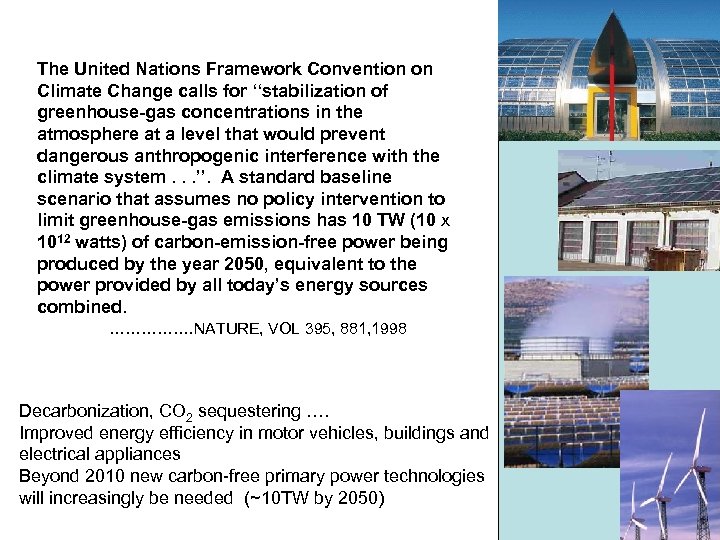 The United Nations Framework Convention on Climate Change calls for ‘‘stabilization of greenhouse-gas concentrations in the atmosphere at a level that would prevent dangerous anthropogenic interference with the climate system. . . ’’. A standard baseline scenario that assumes no policy intervention to limit greenhouse-gas emissions has 10 TW (10 x 1012 watts) of carbon-emission-free power being produced by the year 2050, equivalent to the power provided by all today’s energy sources combined. ……………. NATURE, VOL 395, 881, 1998 Decarbonization, CO 2 sequestering …. Improved energy efficiency in motor vehicles, buildings and electrical appliances Beyond 2010 new carbon-free primary power technologies will increasingly be needed (~10 TW by 2050)
 The Silver Lining ……. The earth receives more energy from the sun in just one hour than the world uses in a whole year. Cumulative solar energy production accounts for less than 0. 01% of total Global Primary Energy demand. Solar Energy demand has grown at about 25% per annum over the past 15 years (hydrocarbon energy demand typically grows between 0 -2% per annum). Worldwide photovoltaic installations increased by 927 MW in 2004, up from 574 MW installed during the previous year. An average crystalline silicon cell solar module has an efficiency of 15%, an average thin film cell solar module has an efficiency of 6%. (Thin film manufacturing costs potentially are lower, though. ) Solar Energy (photovoltaic) prices have declined on average 4% per annum over the past 15 years. For the Fiscal Year 2002, the Japanese solar roof top program received applications from 42, 838 households. Without incentive programs, solar energy costs (in an average sunny climate) range between 22 -40 cents/k. Wh for very large PV systems. (installation costs $8 -$10 with no government incentives) Japan has taken over from the United States as the largest net exporter of PV cells and modules. Around 50 % of the world's solar cell production was manufactured in Japan in 2003. United States accounted for 12%. www. solarbuzz. com
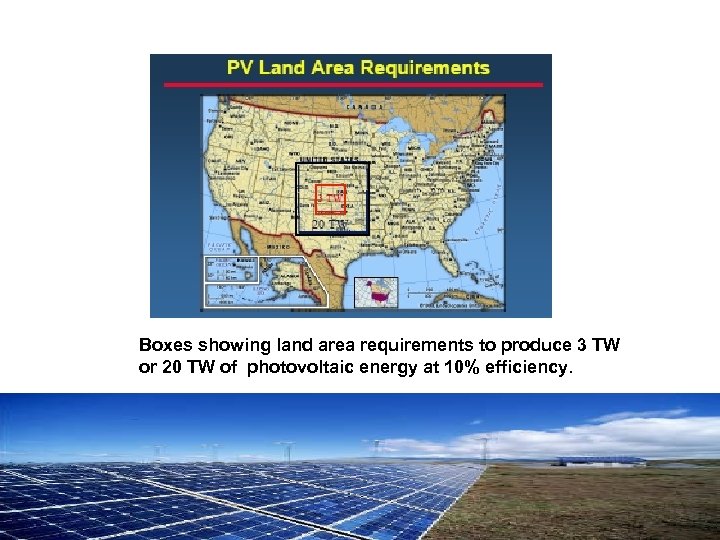 Boxes showing land area requirements to produce 3 TW or 20 TW of photovoltaic energy at 10% efficiency.
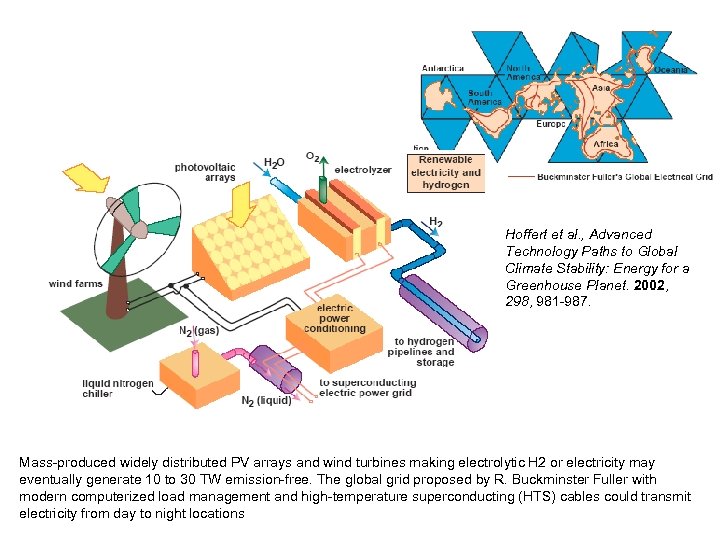 Hoffert et al. , Advanced Technology Paths to Global Climate Stability: Energy for a Greenhouse Planet. 2002, 298, 981 -987. Mass-produced widely distributed PV arrays and wind turbines making electrolytic H 2 or electricity may eventually generate 10 to 30 TW emission-free. The global grid proposed by R. Buckminster Fuller with modern computerized load management and high-temperature superconducting (HTS) cables could transmit electricity from day to night locations
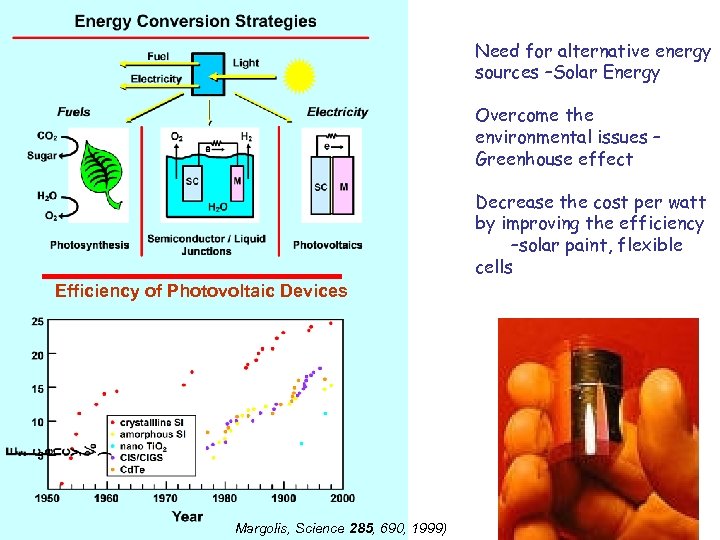 Need for alternative energy sources –Solar Energy Overcome the environmental issues – Greenhouse effect Decrease the cost per watt by improving the efficiency –solar paint, flexible cells Efficiency of Photovoltaic Devices Margolis, Science 285, 690, 1999)
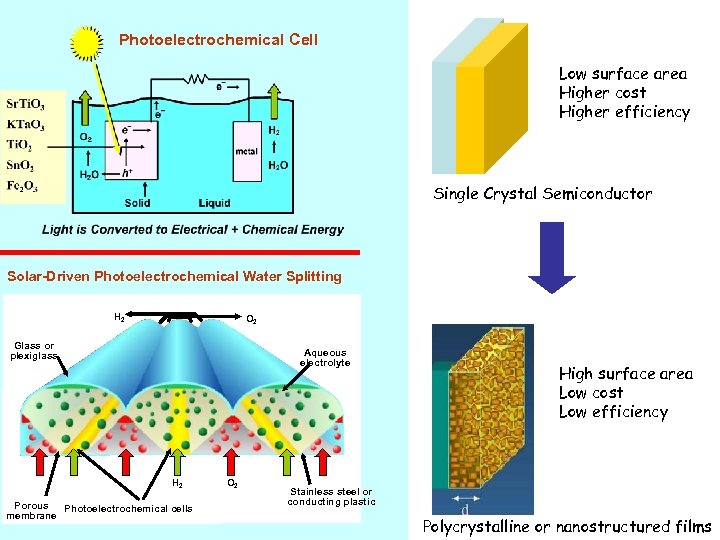 Photoelectrochemical Cell Low surface area Higher cost Higher efficiency Single Crystal Semiconductor Solar-Driven Photoelectrochemical Water Splitting H 2 O 2 Glass or plexiglass Aqueous electrolyte H 2 Porous Photoelectrochemical cells membrane O 2 High surface area Low cost Low efficiency Stainless steel or conducting plastic Polycrystalline or nanostructured films
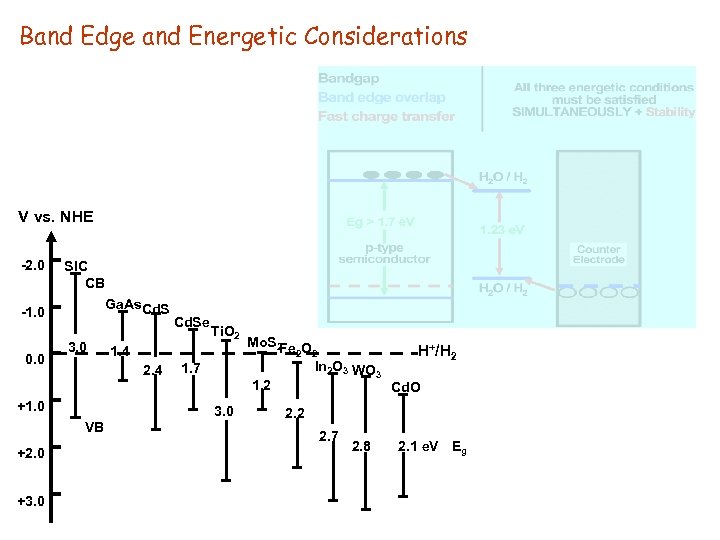 Band Edge and Energetic Considerations V vs. NHE -2. 0 SIC CB Ga. As. Cd. S -1. 0 0. 0 3. 0 +3. 0 1. 7 3. 0 VB +2. 0 Ti. O 2 1. 4 2. 4 +1. 0 Cd. Se Mo. S 2 Fe O H+/H 2 2 2 In 2 O 3 WO 3 1. 2 Cd. O 2. 2 2. 7 2. 8 2. 1 e. V Eg

 How can we address the energy challenge with advances in Nanotechnology?
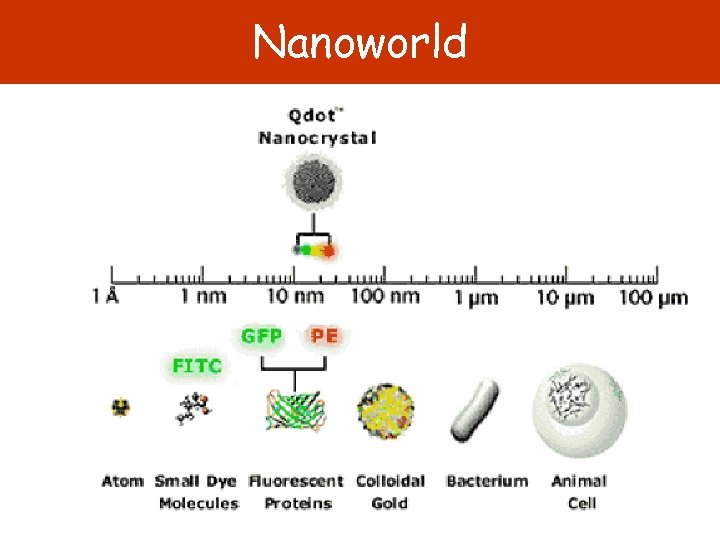 Nanoworld
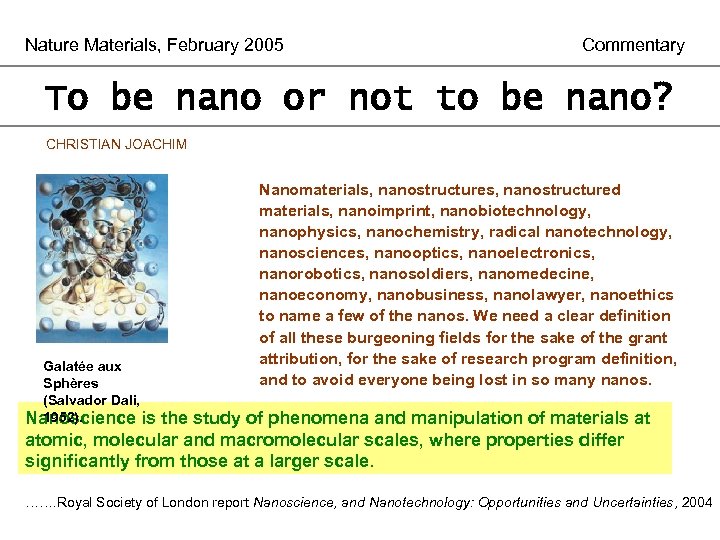 Nature Materials, February 2005 Commentary To be nano or not to be nano? CHRISTIAN JOACHIM Galatée aux Sphères (Salvador Dali, 1952). Nanoscience is Nanomaterials, nanostructured materials, nanoimprint, nanobiotechnology, nanophysics, nanochemistry, radical nanotechnology, nanosciences, nanooptics, nanoelectronics, nanorobotics, nanosoldiers, nanomedecine, nanoeconomy, nanobusiness, nanolawyer, nanoethics to name a few of the nanos. We need a clear definition of all these burgeoning fields for the sake of the grant attribution, for the sake of research program definition, and to avoid everyone being lost in so many nanos. the study of phenomena and manipulation of materials at atomic, molecular and macromolecular scales, where properties differ significantly from those at a larger scale. ……. Royal Society of London report Nanoscience, and Nanotechnology: Opportunities and Uncertainties, 2004
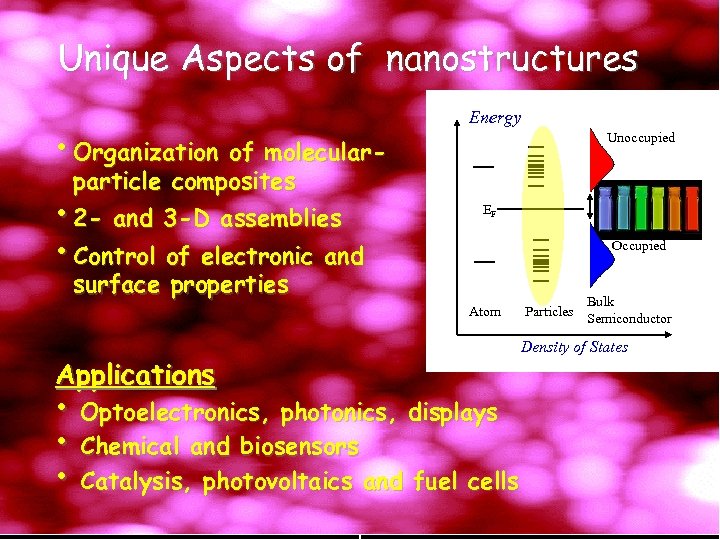 Unique Aspects of nanostructures • Organization of molecular- Energy Unoccupied particle composites • 2 - and 3 -D assemblies • Control of electronic and EF Occupied surface properties Atom Applications • Optoelectronics, photonics, displays • Chemical and biosensors • Catalysis, photovoltaics and fuel cells Bulk Particles Semiconductor Density of States
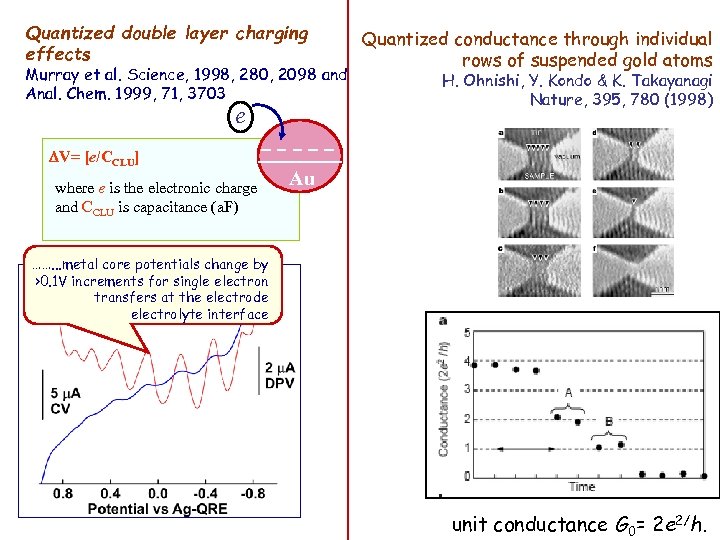 Quantized double layer charging effects Murray et al. Science, 1998, 280, 2098 and Anal. Chem. 1999, 71, 3703 e DV= [e/CCLU] where e is the electronic charge and CCLU is capacitance (a. F) Quantized conductance through individual rows of suspended gold atoms H. Ohnishi, Y. Kondo & K. Takayanagi Nature, 395, 780 (1998) Au ……. . . metal core potentials change by >0. 1 V increments for single electron transfers at the electrode electrolyte interface unit conductance G 0= 2 e 2/h.
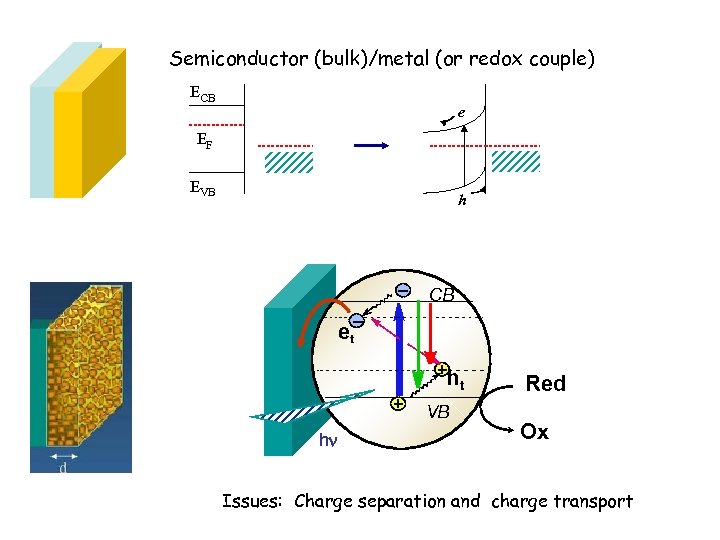 Semiconductor (bulk)/metal (or redox couple) ECB e EF EVB h – CB – et + hn VB Red Ox Issues: Charge separation and charge transport
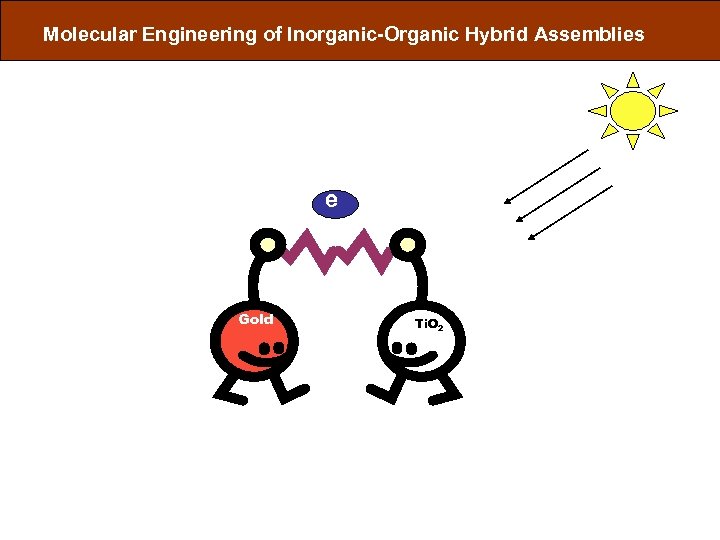 Molecular Engineering of Inorganic-Organic Hybrid Assemblies e Pt Gold Ti. O 2
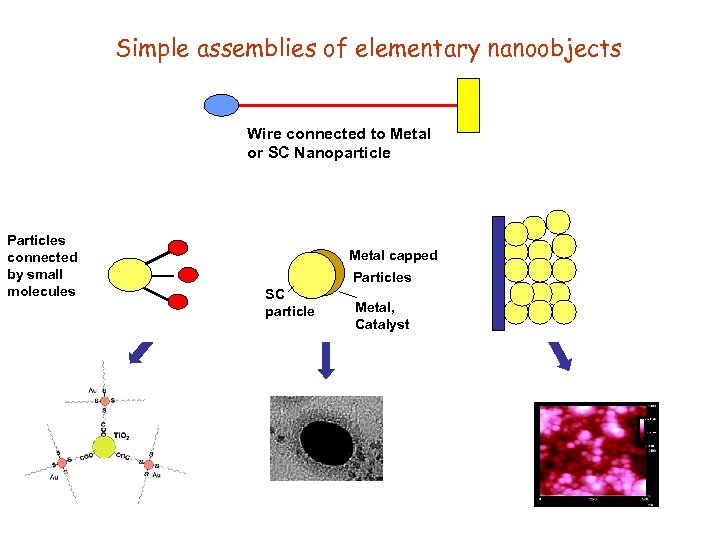 Simple assemblies of elementary nanoobjects Wire connected to Metal or SC Nanoparticle Particles connected by small molecules Metal capped Particles SC particle Metal, Catalyst