 Скачать презентацию Energy and Innovation NL Greenhouse sector Olaf Hietbrink
99329c8859feaeea8a23bcb9c88a3983.ppt
- Количество слайдов: 29



Energy and Innovation NL Greenhouse sector Olaf Hietbrink LEI Wageningen UR 16 februari 2011 Den Haag
Content • • • Trends towards the future Greenhouse horticulture NL Energy use en energy saving Horticulture and Innovation; energy as the driving factor Entrepeneur is the key player
Trends in agriculture n n n Efficiency of scale: not only larger, also a second or third holding / location (even abroad), separated for technological / economic reasons Forward and backward integration: contracts, short chains, farm shops Diversification in agri niche markets (organic, nature contracts, agri-tourism, agri-healthcare etc. ) Diversification outside agriculture: pluri-activity, investing capital elsewhere, including non-agricultural use of buildings, energy production Combinations of these trends
Foresight(s) 2050 • • Big issue: can we feed 9 billion (with higher income levels) with less environmental impacts? The debate focus on scarcities: • • Climate change Environmental impact and biodiversity loss Energy supply, biobased economy Phosphate supply Water availability Declining productivity growth Resistance to industrialisation of agriculture in Western countries
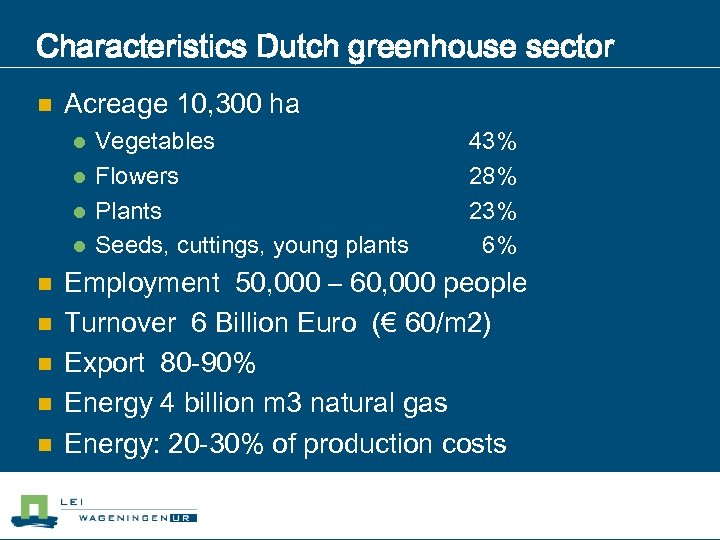
Characteristics Dutch greenhouse sector n Acreage 10, 300 ha l l n n n Vegetables Flowers Plants Seeds, cuttings, young plants 43% 28% 23% 6% Employment 50, 000 – 60, 000 people Turnover 6 Billion Euro (€ 60/m 2) Export 80 -90% Energy 4 billion m 3 natural gas Energy: 20 -30% of production costs
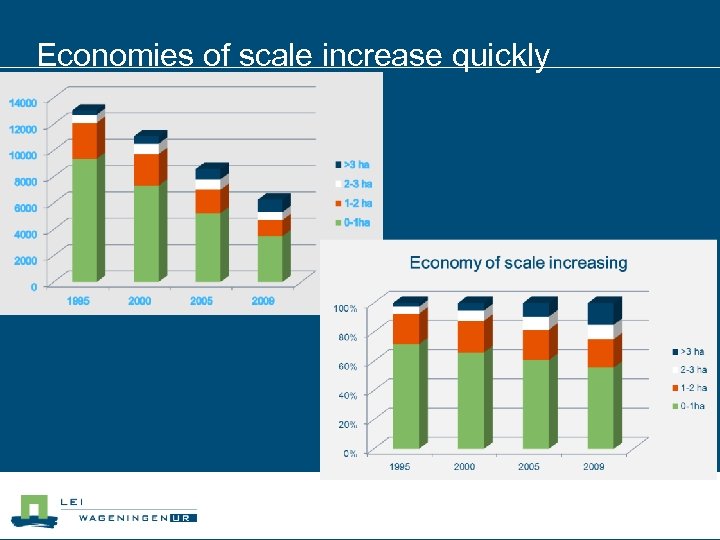
Economies of scale increase quickly
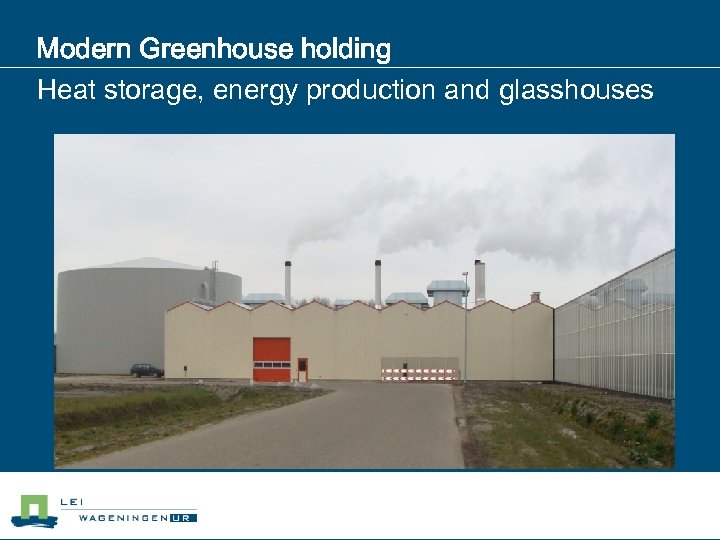
Modern Greenhouse holding Heat storage, energy production and glasshouses
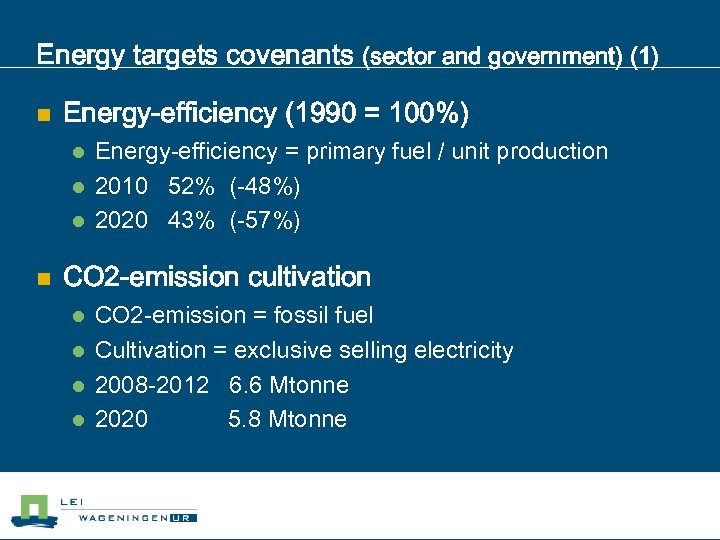
Energy targets covenants (sector and government) (1) n Energy-efficiency (1990 = 100%) l l l n Energy-efficiency = primary fuel / unit production 2010 52% (-48%) 2020 43% (-57%) CO 2 -emission cultivation l l CO 2 -emission = fossil fuel Cultivation = exclusive selling electricity 2008 -2012 6. 6 Mtonne 2020 5. 8 Mtonne
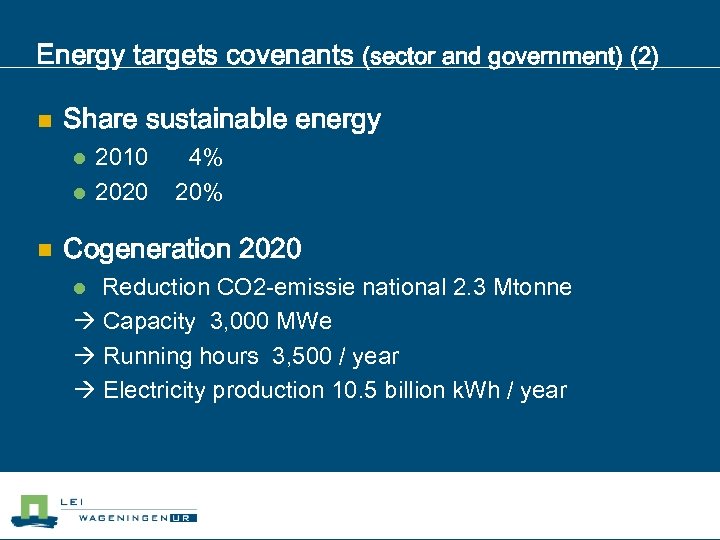
Energy targets covenants (sector and government) (2) n Share sustainable energy l l n 2010 2020 4% 20% Cogeneration 2020 Reduction CO 2 -emissie national 2. 3 Mtonne Capacity 3, 000 MWe Running hours 3, 500 / year Electricity production 10. 5 billion k. Wh / year l
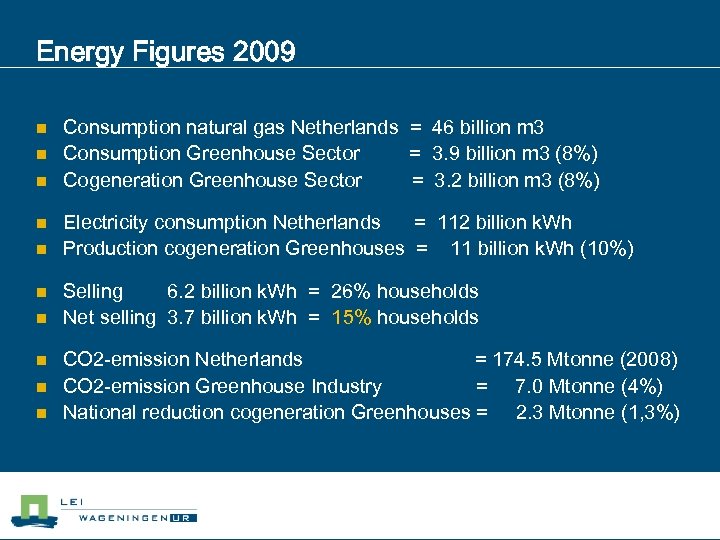
Energy Figures 2009 n n n n n Consumption natural gas Netherlands = 46 billion m 3 Consumption Greenhouse Sector = 3. 9 billion m 3 (8%) Cogeneration Greenhouse Sector = 3. 2 billion m 3 (8%) Electricity consumption Netherlands = 112 billion k. Wh Production cogeneration Greenhouses = 11 billion k. Wh (10%) Selling 6. 2 billion k. Wh = 26% households Net selling 3. 7 billion k. Wh = 15% households CO 2 -emission Netherlands = 174. 5 Mtonne (2008) CO 2 -emission Greenhouse Industry = 7. 0 Mtonne (4%) National reduction cogeneration Greenhouses = 2. 3 Mtonne (1, 3%)
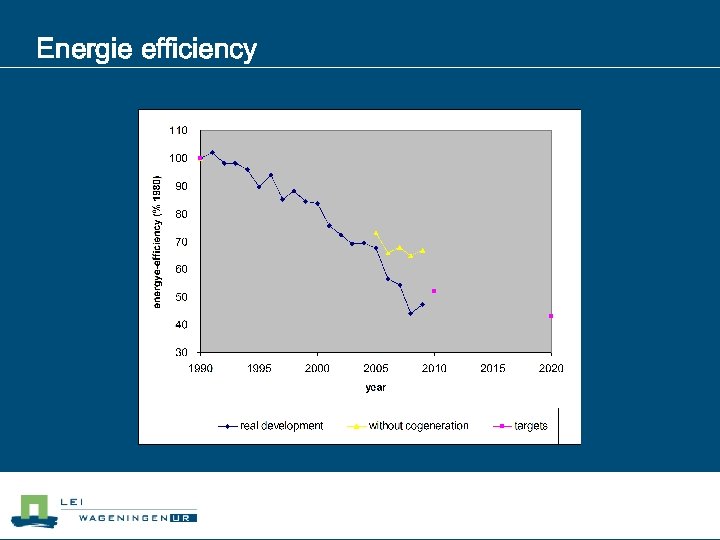
Energie efficiency
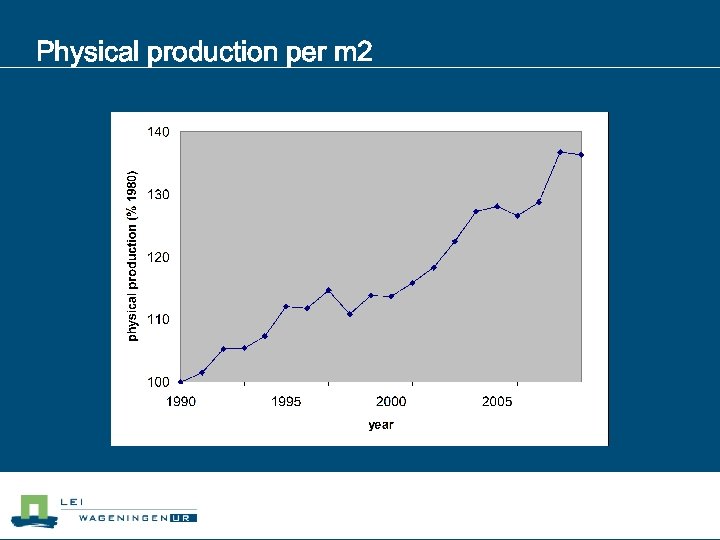
Physical production per m 2
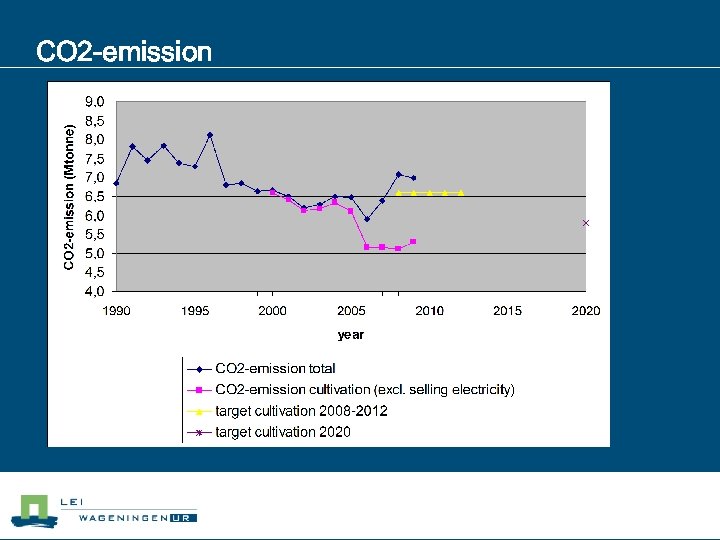
CO 2 -emission
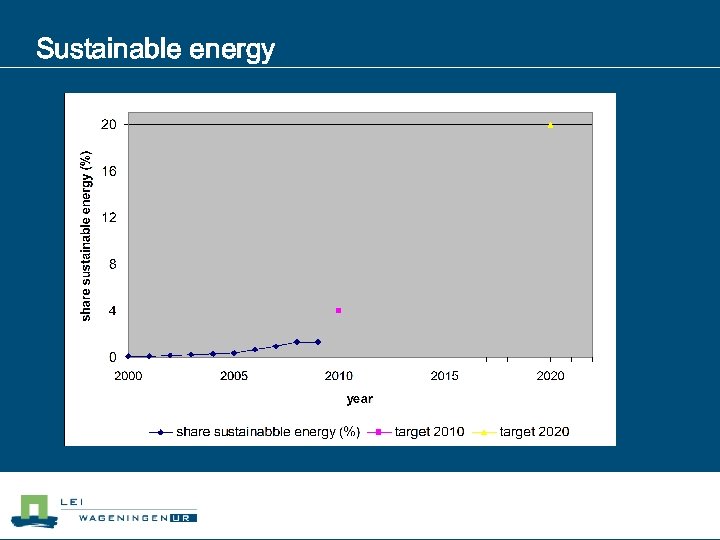
Sustainable energy
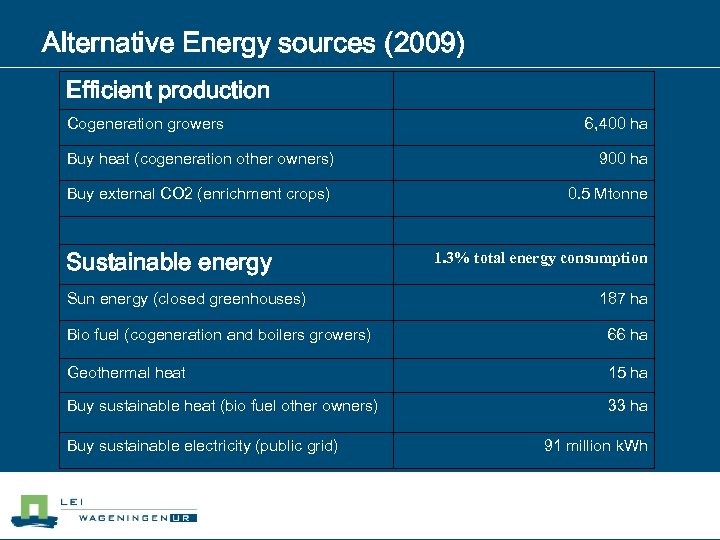
Alternative Energy sources (2009) Efficient production Cogeneration growers 6, 400 ha Buy heat (cogeneration other owners) 900 ha Buy external CO 2 (enrichment crops) 0. 5 Mtonne Sustainable energy Sun energy (closed greenhouses) 1. 3% total energy consumption 187 ha Bio fuel (cogeneration and boilers growers) 66 ha Geothermal heat 15 ha Buy sustainable heat (bio fuel other owners) 33 ha Buy sustainable electricity (public grid) 91 million k. Wh
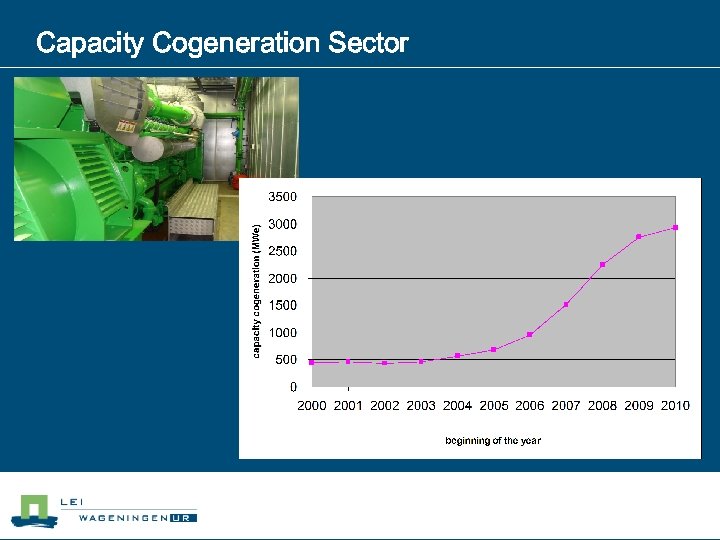
Capacity Cogeneration Sector
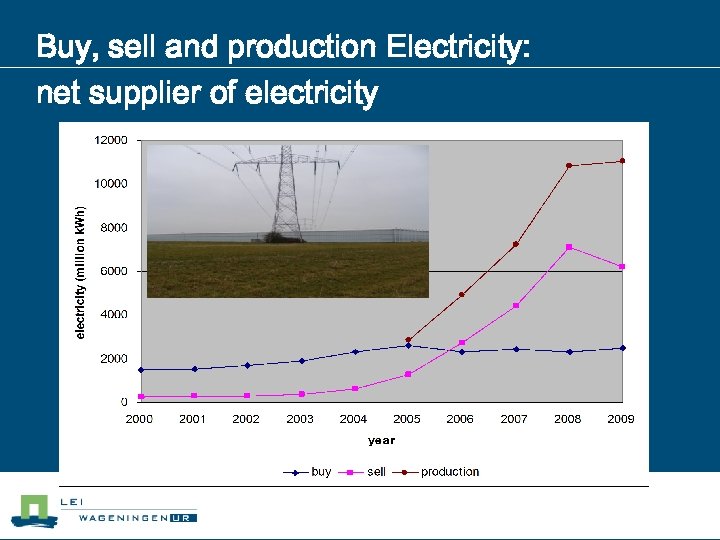
Buy, sell and production Electricity: net supplier of electricity
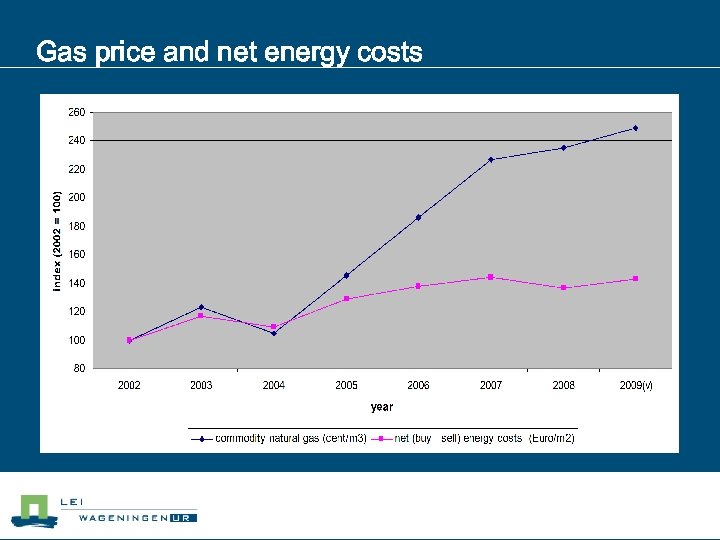
Gas price and net energy costs
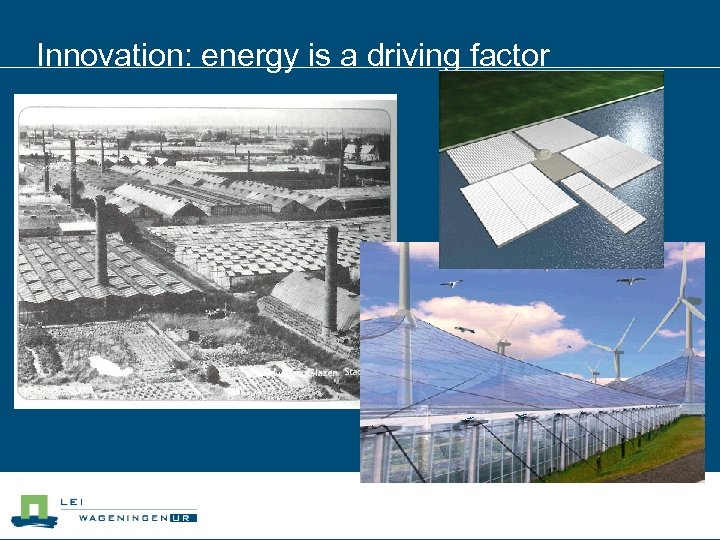
Innovation: energy is a driving factor
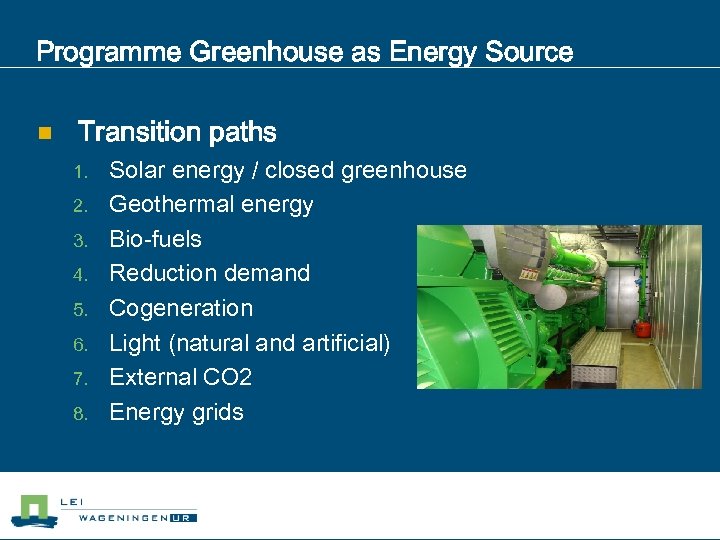
Programme Greenhouse as Energy Source n Transition paths 1. 2. 3. 4. 5. 6. 7. 8. Solar energy / closed greenhouse Geothermal energy Bio-fuels Reduction demand Cogeneration Light (natural and artificial) External CO 2 Energy grids
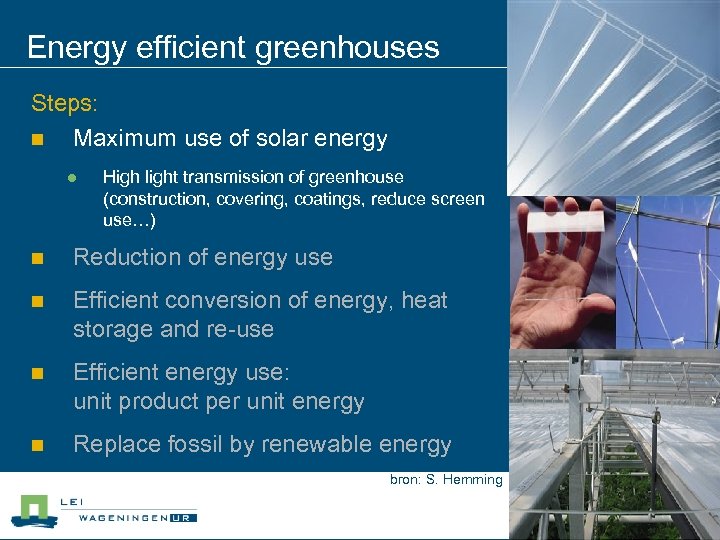
Energy efficient greenhouses Steps: n Maximum use of solar energy l High light transmission of greenhouse (construction, covering, coatings, reduce screen use…) n Reduction of energy use n Efficient conversion of energy, heat storage and re-use n Efficient energy use: unit product per unit energy n Replace fossil by renewable energy bron: S. Hemming
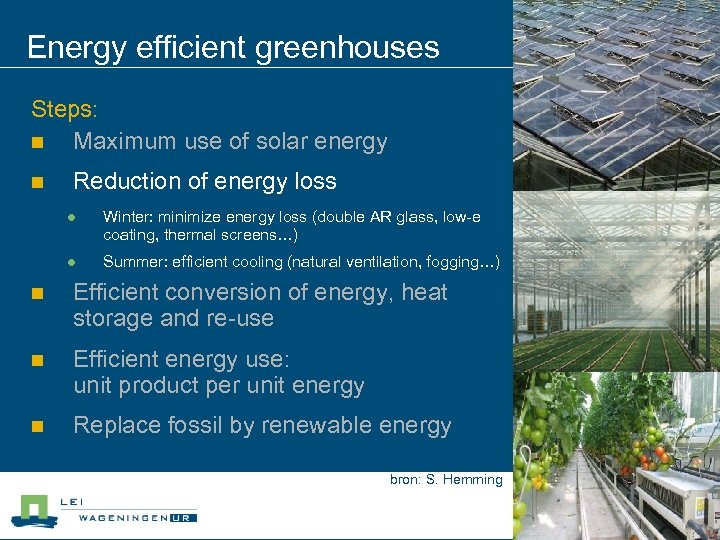
Energy efficient greenhouses Steps: n Maximum use of solar energy n Reduction of energy loss l Winter: minimize energy loss (double AR glass, low-e coating, thermal screens…) l Summer: efficient cooling (natural ventilation, fogging…) n Efficient conversion of energy, heat storage and re-use n Efficient energy use: unit product per unit energy n Replace fossil by renewable energy bron: S. Hemming
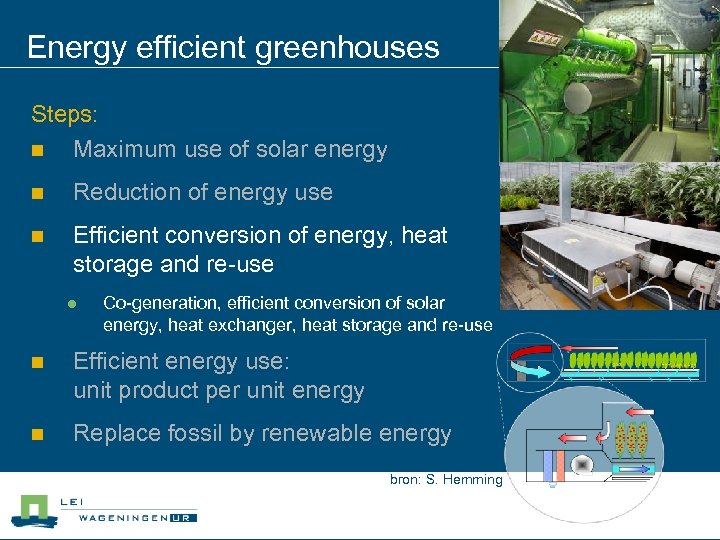
Energy efficient greenhouses Steps: n Maximum use of solar energy n Reduction of energy use n Efficient conversion of energy, heat storage and re-use l Co-generation, efficient conversion of solar energy, heat exchanger, heat storage and re-use n Efficient energy use: unit product per unit energy n Replace fossil by renewable energy bron: S. Hemming
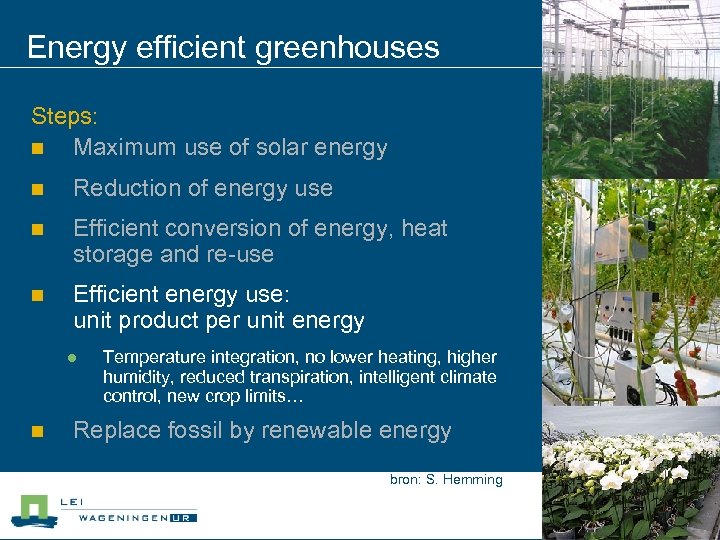
Energy efficient greenhouses Steps: n Maximum use of solar energy n Reduction of energy use n Efficient conversion of energy, heat storage and re-use n Efficient energy use: unit product per unit energy l n Temperature integration, no lower heating, higher humidity, reduced transpiration, intelligent climate control, new crop limits… Replace fossil by renewable energy bron: S. Hemming
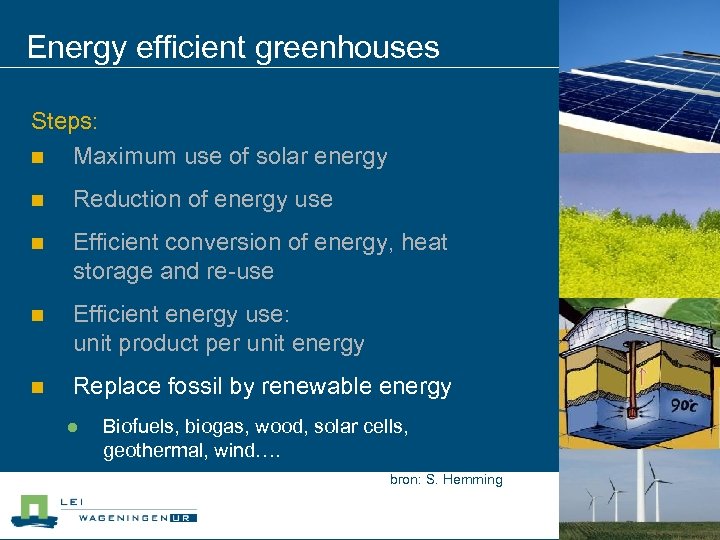
Energy efficient greenhouses Steps: n Maximum use of solar energy n Reduction of energy use n Efficient conversion of energy, heat storage and re-use n Efficient energy use: unit product per unit energy n Replace fossil by renewable energy l Biofuels, biogas, wood, solar cells, geothermal, wind…. bron: S. Hemming
Climate controlled-energy efficient More conditioned greenhouses are the future control production factors high quality product, ready on demand economics of production Reduce energy consumption is demanded in the future maximum use of sun light reduce energy losses explore the limits of the crop use renewable energy sources
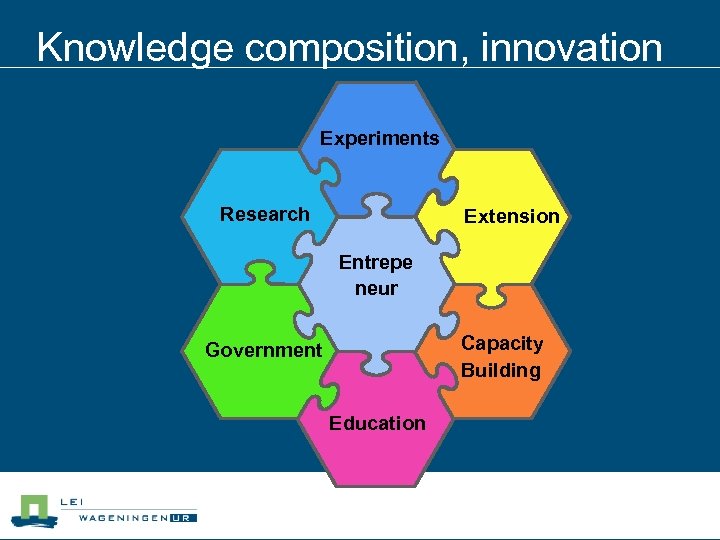
Knowledge composition, innovation Experiments Research Extension Entrepe neur Capacity Building Government Education
Entrepeneurial skills makes things happen Entrepeneurship essential for innovation and success (economic & sustainable production) Important factors for innovation : n n n Intensity of production Energy market Markets & price development Consumer demand en societal impact Financial situation
Thanks for your attention olaf. hietbrink@wur. nl www. lei. wur. nl © Wageningen UR
Скачать презентацию Energy and Innovation NL Greenhouse sector Olaf Hietbrink
99329c8859feaeea8a23bcb9c88a3983.ppt