


 Скачать презентацию Energy and Greenhouse Gas Considerations for Various ZEV
d3042f168390b4d7e82b2168efb03b59.ppt
- Количество слайдов: 25
 Energy and Greenhouse Gas Considerations for Various ZEV Alternatives Alec Brooks Aero. Vironment CARB ZEV Technology Symposium Sept. 26, 2006
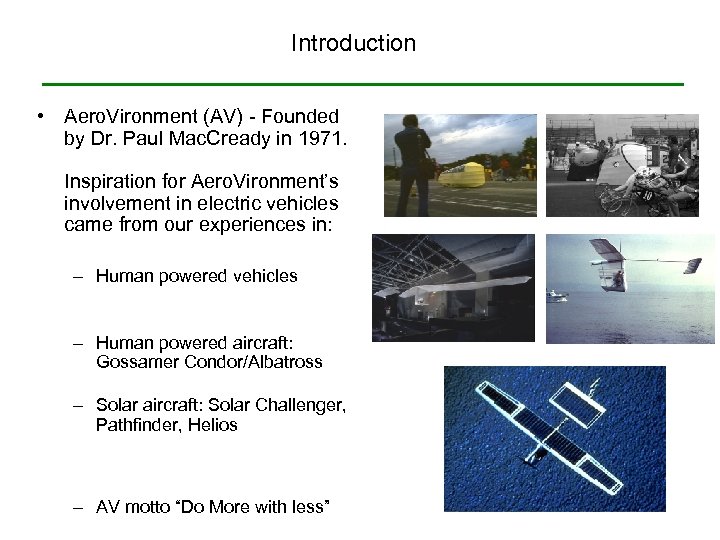 Introduction • Aero. Vironment (AV) - Founded by Dr. Paul Mac. Cready in 1971. Inspiration for Aero. Vironment’s involvement in electric vehicles came from our experiences in: – Human powered vehicles – Human powered aircraft: Gossamer Condor/Albatross – Solar aircraft: Solar Challenger, Pathfinder, Helios – AV motto “Do More with less”
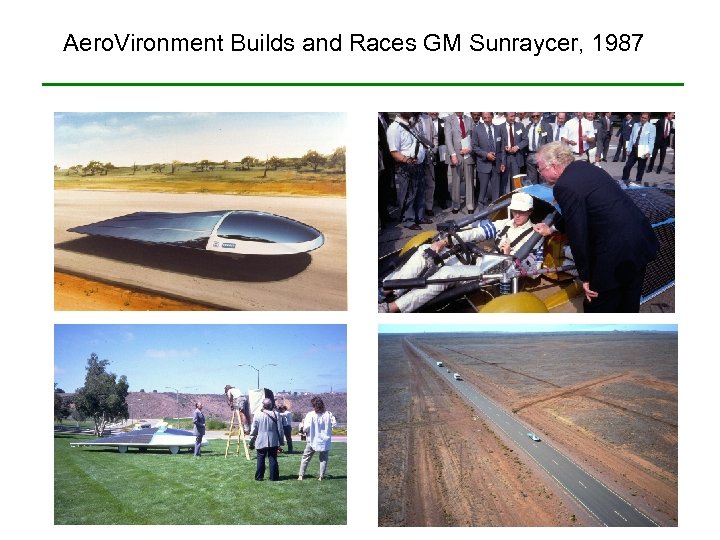 Aero. Vironment Builds and Races GM Sunraycer, 1987
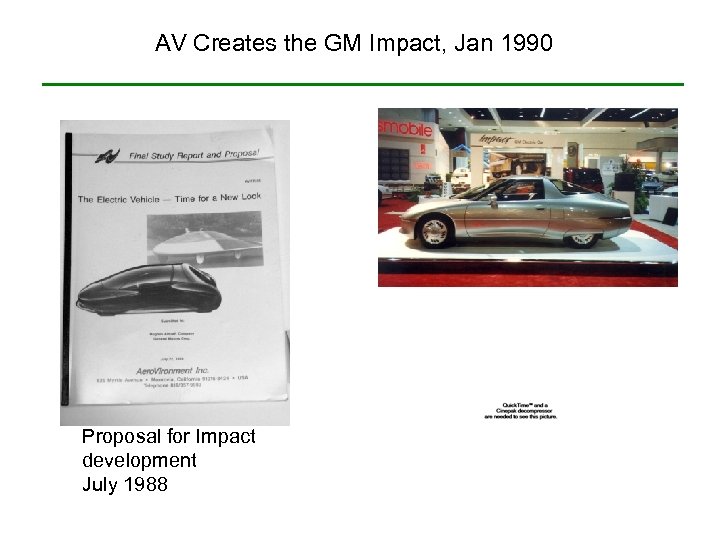 AV Creates the GM Impact, Jan 1990 Proposal for Impact development July 1988
 Roger Smith, GM Chairman at Impact Introduction • Jan 3, 1990, Los Angeles
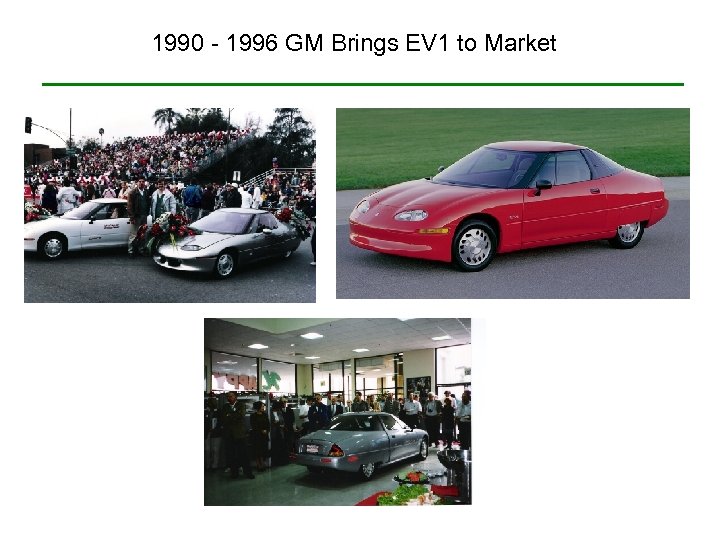 1990 - 1996 GM Brings EV 1 to Market
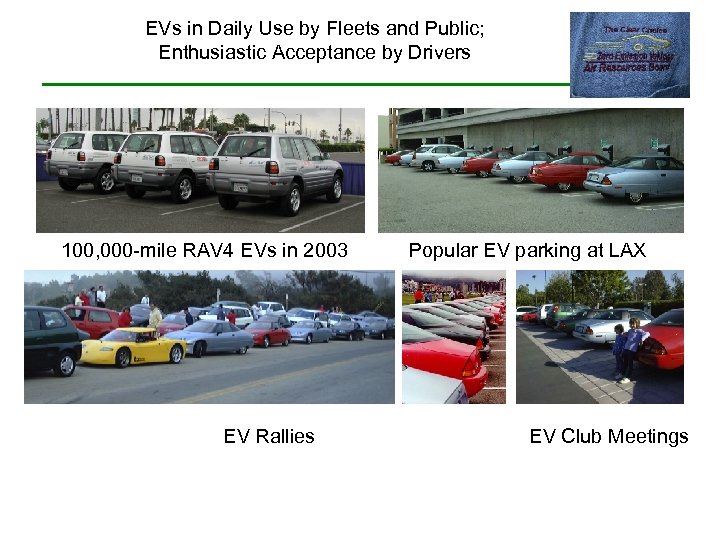 EVs in Daily Use by Fleets and Public; Enthusiastic Acceptance by Drivers 100, 000 -mile RAV 4 EVs in 2003 EV Rallies Popular EV parking at LAX EV Club Meetings
 Aero. Vironment EV-Related Activities after GM Impact • • Consulted with GM on EV 1 development Partner in GM/DOE Hybrid Vehicle Program Fast Chargers for EVs Charger electric bicycle (with GT Bicycles) Battery Cycler Product Line EV Fast Charging System Fast charging for electric lift trucks and airport ground service equipment • Electric, solar, and hydrogen powered unmanned airplanes
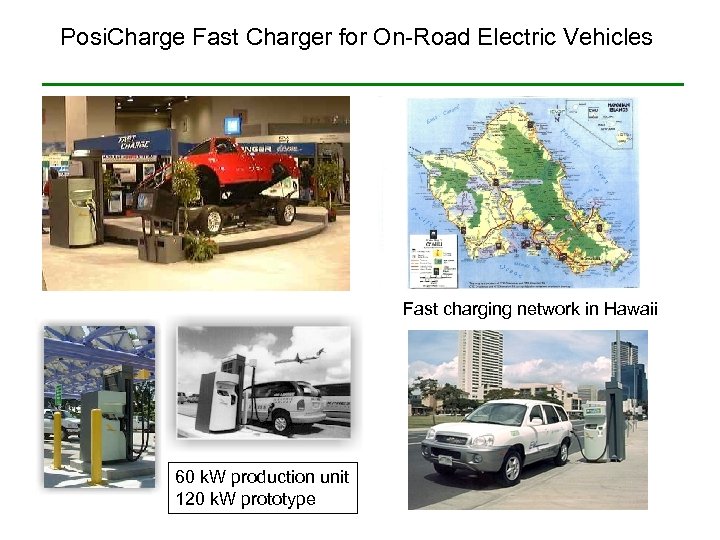 Posi. Charge Fast Charger for On-Road Electric Vehicles Fast charging network in Hawaii 60 k. W production unit 120 k. W prototype
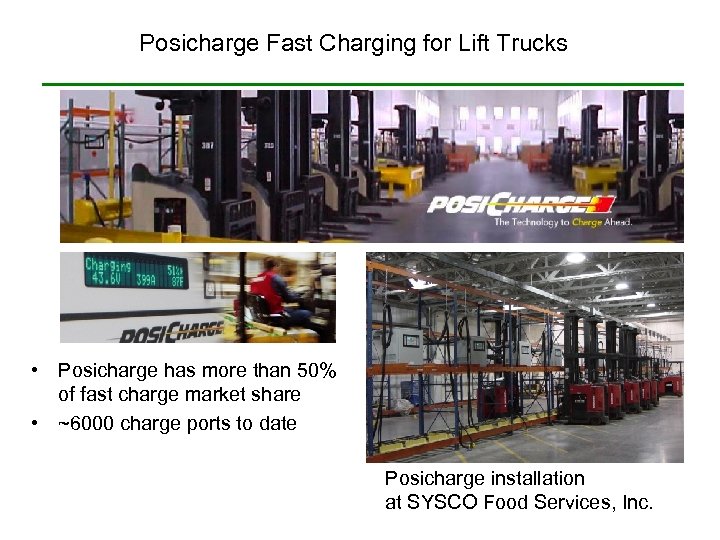 Posicharge Fast Charging for Lift Trucks • Posicharge has more than 50% of fast charge market share • ~6000 charge ports to date Posicharge installation at SYSCO Food Services, Inc.
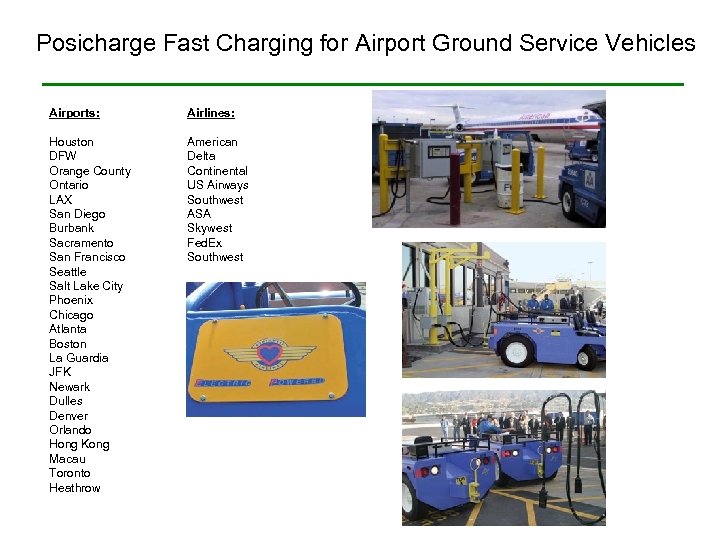 Posicharge Fast Charging for Airport Ground Service Vehicles Airports: Airlines: Houston DFW Orange County Ontario LAX San Diego Burbank Sacramento San Francisco Seattle Salt Lake City Phoenix Chicago Atlanta Boston La Guardia JFK Newark Dulles Denver Orlando Hong Kong Macau Toronto Heathrow American Delta Continental US Airways Southwest ASA Skywest Fed. Ex Southwest
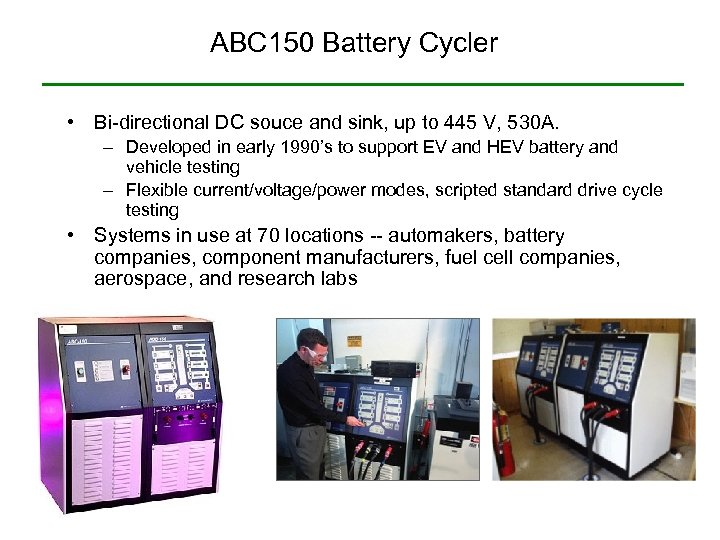 ABC 150 Battery Cycler • Bi-directional DC souce and sink, up to 445 V, 530 A. – Developed in early 1990’s to support EV and HEV battery and vehicle testing – Flexible current/voltage/power modes, scripted standard drive cycle testing • Systems in use at 70 locations -- automakers, battery companies, component manufacturers, fuel cell companies, aerospace, and research labs
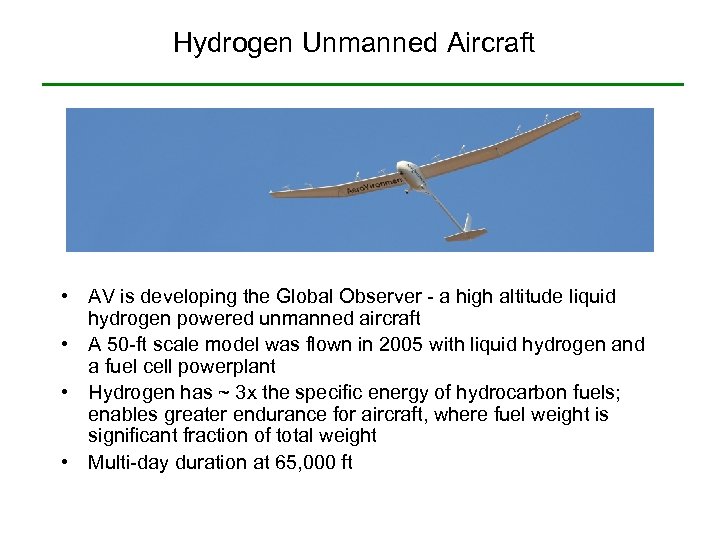 Hydrogen Unmanned Aircraft • AV is developing the Global Observer - a high altitude liquid hydrogen powered unmanned aircraft • A 50 -ft scale model was flown in 2005 with liquid hydrogen and a fuel cell powerplant • Hydrogen has ~ 3 x the specific energy of hydrocarbon fuels; enables greater endurance for aircraft, where fuel weight is significant fraction of total weight • Multi-day duration at 65, 000 ft
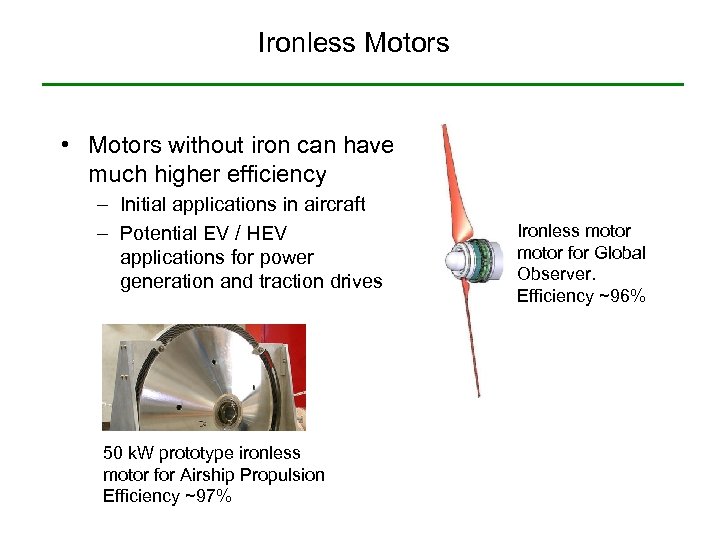 Ironless Motors • Motors without iron can have much higher efficiency – Initial applications in aircraft – Potential EV / HEV applications for power generation and traction drives 50 k. W prototype ironless motor for Airship Propulsion Efficiency ~97% Ironless motor for Global Observer. Efficiency ~96%
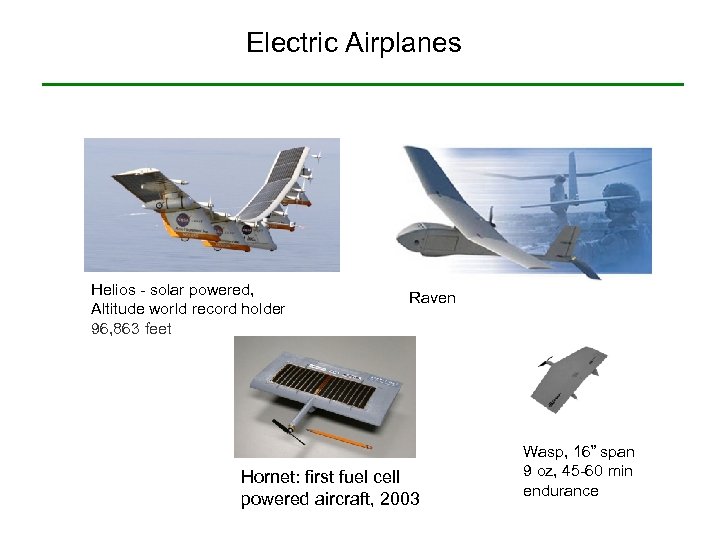 Electric Airplanes Helios - solar powered, Altitude world record holder 96, 863 feet Raven Hornet: first fuel cell powered aircraft, 2003 Wasp, 16” span 9 oz, 45 -60 min endurance
 Architectural Wind Energy • AV developing architectural wind products for integration on buildings
 Considerations when Comparing ZEV options
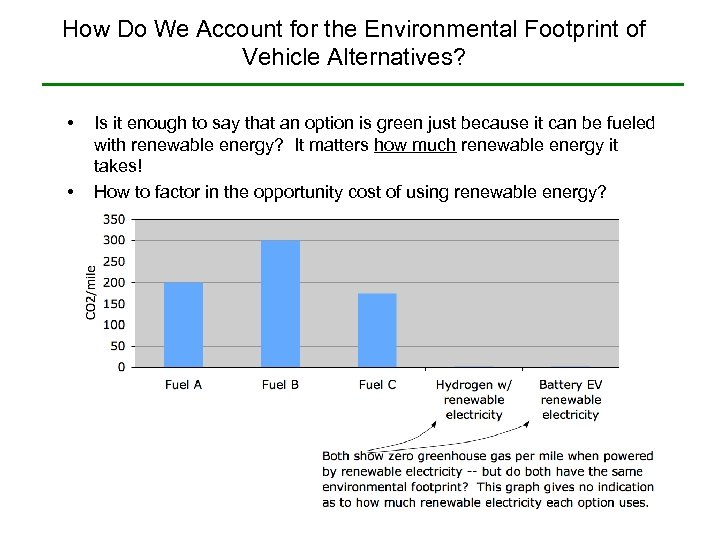 How Do We Account for the Environmental Footprint of Vehicle Alternatives? • • Is it enough to say that an option is green just because it can be fueled with renewable energy? It matters how much renewable energy it takes! How to factor in the opportunity cost of using renewable energy?
 Hydrogen • Hydrogen is an energy carrier made from other sources of energy - principally natural gas and electricity • Natural gas and electricity work well directly in vehicles • There needs to be a compelling reason to go through the trouble of converting natural gas or electricity to hydrogen to use in a vehicle, rather than using these energy sources directly in vehicles
 Reduction of Greenhouse Gasses - Compared to What? • SB 76, the Calif. Hydrogen Highway funding bill requires – 30 percent reduction of greenhouse gas emissions relative to comparable emissions from current year vehicles. • CARB set the greenhouse gas ‘bar’ based on 25. 5 mpg, or 444 g/mi CO 2 • CARB selected hydrogen Prius as one of the demo vehicle types to lease – 634 g/mi CO 2 with H 2 made with California electricity – 287 -363 g/mi CO 2 with H 2 made from natural gas • CO 2: 13. 0 kg/kg for H 2, on-site steam reforming 11. 5 kg/gal for gasoline, full fuel cycle (source: Hydrogen Highway Societal Benefits final report) – Standard Prius 206 g/mi – RAV 4 EV 134 g/mi – Hummer H 3: 641 g/mi • Adding ‘new renewable’ energy doesn’t change the numerical difference between hydrogen vehicle and other alternatives
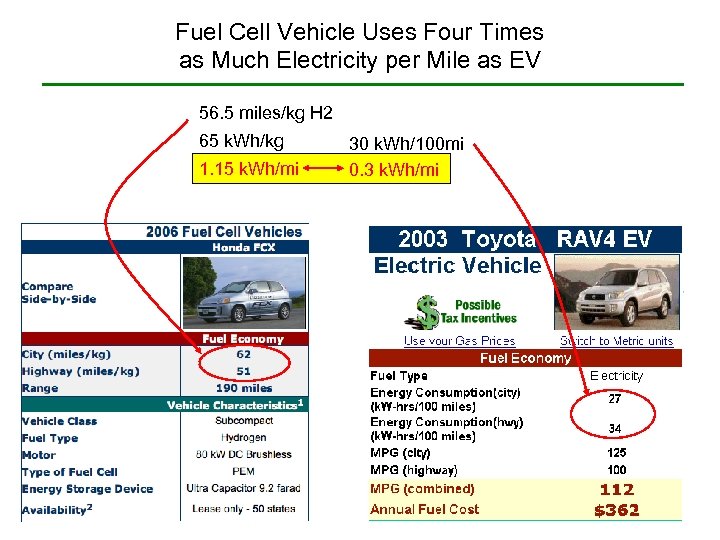 Fuel Cell Vehicle Uses Four Times as Much Electricity per Mile as EV 56. 5 miles/kg H 2 65 k. Wh/kg 1. 15 k. Wh/mi 30 k. Wh/100 mi 0. 3 k. Wh/mi
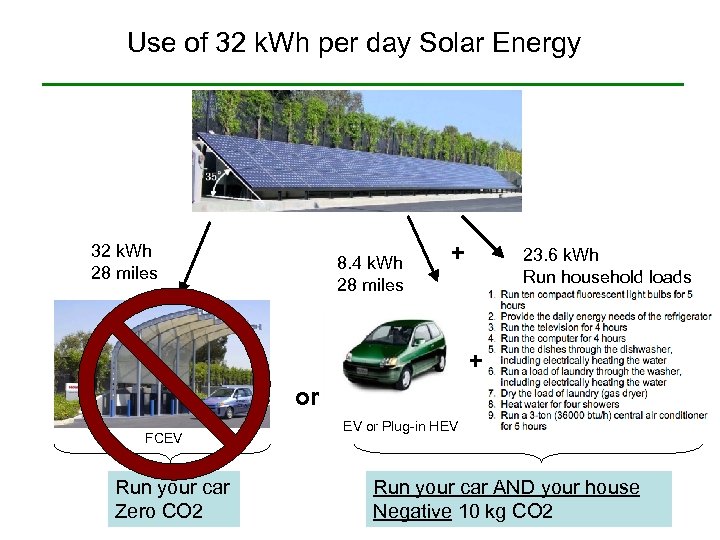 Use of 32 k. Wh per day Solar Energy 32 k. Wh 28 miles 8. 4 k. Wh 28 miles + 23. 6 k. Wh Run household loads + or FCEV Run your car Zero CO 2 EV or Plug-in HEV Run your car AND your house Negative 10 kg CO 2
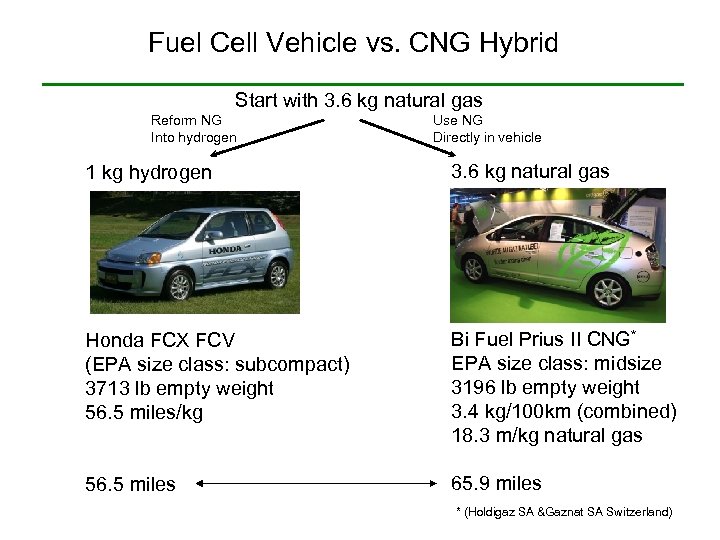 Fuel Cell Vehicle vs. CNG Hybrid Start with 3. 6 kg natural gas Reform NG Into hydrogen Use NG Directly in vehicle 1 kg hydrogen 3. 6 kg natural gas Honda FCX FCV (EPA size class: subcompact) 3713 lb empty weight 56. 5 miles/kg Bi Fuel Prius II CNG* EPA size class: midsize 3196 lb empty weight 3. 4 kg/100 km (combined) 18. 3 m/kg natural gas 56. 5 miles 65. 9 miles * (Holdigaz SA &Gaznat SA Switzerland)
 ZEV Data Shortfall • Dig in and get real data for kg H 2/mi, k. Wh/mile, etc. in both test cycle and real world driving • CARB has been supporter of hydrogen for years through grants and Cal FCP, yet doesn’t have information on H 2 consumption it is a secret (or what information it does has cannot be released to the public) • CARB has not tested electrolyzer energy consumption • In the past, CARB tested EVs for range and energy consumption at El Monte lab: SCE and EV America ran independent tests, published data.
 Final Thoughts • Evaluate greenhouse gas emissions per mile based on marginal emissions rates – Compare total ‘global’ greenhouse gas emissions for incremental miles driven with each technology – Allocate the same amount of “new renewables” to different options when making comparisons • Reconsider state policy that places greatest emphasis on hydrogen fuel and use of renewable energy to produce hydrogen – Until true zero carbon source of hydrogen is available, use of current energy sources to make hydrogen for transportation will increase greenhouse gas emissions – If a zero carbon source of hydrogen becomes available as a vehicle energy source, that does not mean that hydrogen itself needs to be distributed and stored in cars; • Hydrogen could instead be used in a powerplant to make electricity for plug-in vehicles, or be used to create synthetic liquid fuels that can be blended into existing hydrocarbon-based fuels • Set basis for evaluation of new technologies as BACT “Best Available Current Technology”, not ACT “Average Current Technology” – e. g. is hydrogen vehicle better than current hybrid or electric vehicle? , not is hydrogen vehicle better than current average vehicle?