


 Скачать презентацию Endocrine system ENDOCRINE GLANDS IN HUMAN The
endocrine system 1 lesson.pptx
- Количество слайдов: 15
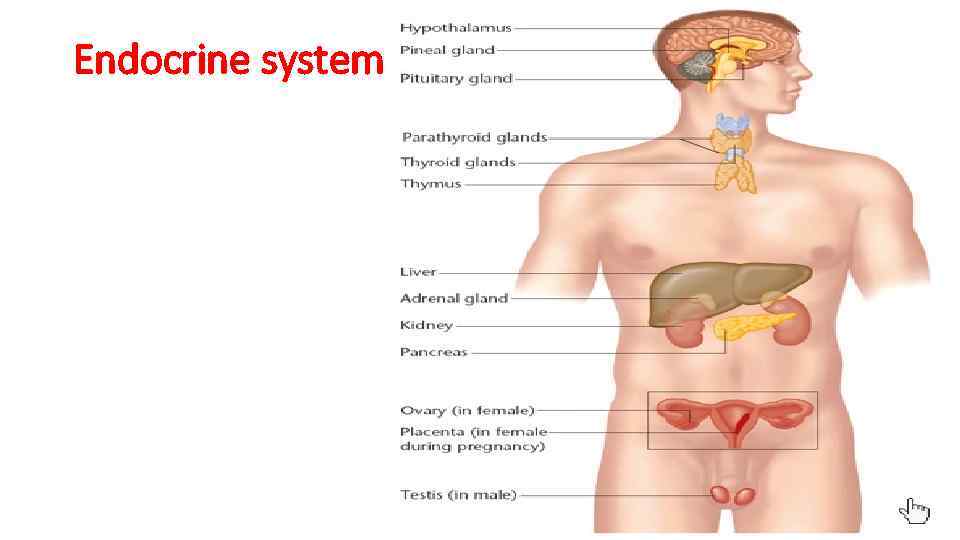 Endocrine system
 ENDOCRINE GLANDS IN HUMAN The endocrine system consists of PITUITARY GLAND ADRENAL GLANDS PARATHYROID GLAND PANCREAS GONADS
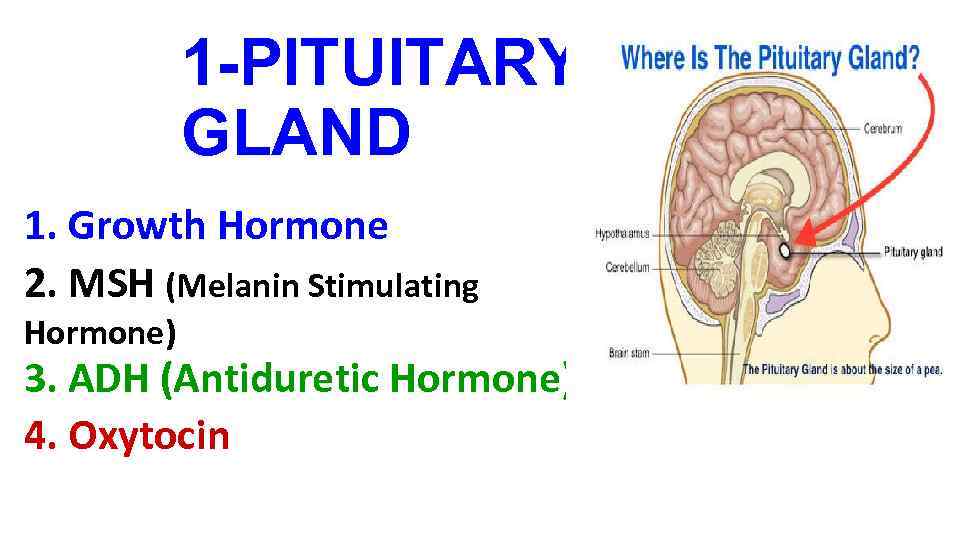 1 -PITUITARY GLAND 1. Growth Hormone 2. MSH (Melanin Stimulating Hormone) 3. ADH (Antiduretic Hormone) 4. Oxytocin
 Growth Hormone • Responsible for normal growth of an organism • A deficiency in this hormone will result in a condition known as DWARFISM. • An excess amount of this hormone causes an abnormal increase in the length. This condition is known as GIGANTISM.

 • Melanin Stimulating Hormone (MSH) determines the color of the skin. • Antidiuretic hormone (ADH): Its main function is to regulate the water balance of the body. • Oxytocin is responsible for milk production
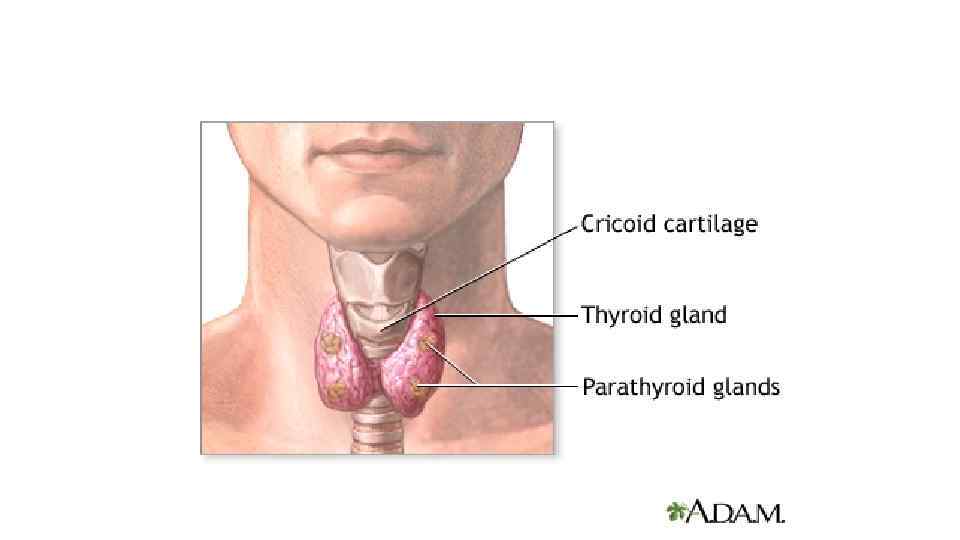
 • Parathormone is produced in this gland. • It regulates the amount of calcium and phosphate in tne blood. • The amount of Ca++ is necessary for the normal functioning of muscles, heart, skeleton and nerves.
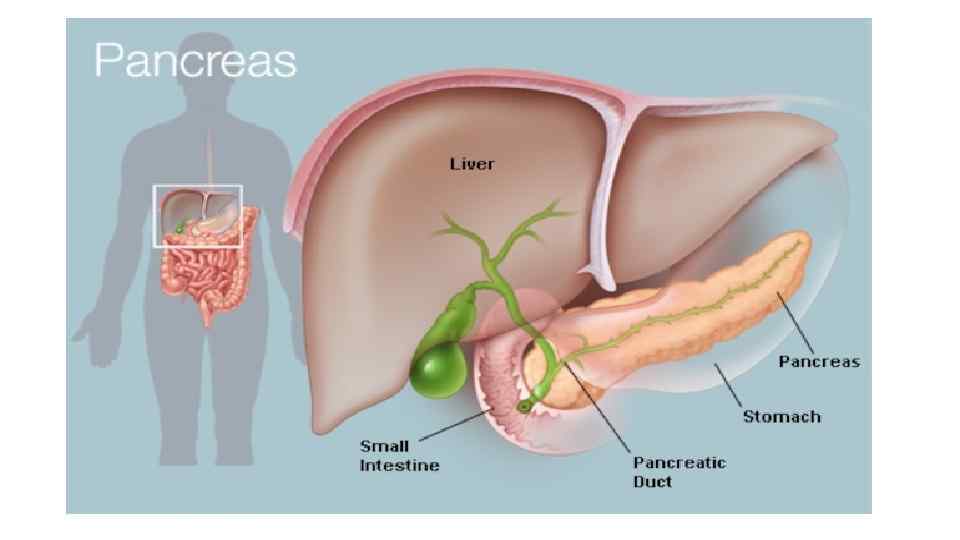
 3. Pancreas • Insulin and Glucagon are produced by pancreas. • Insulin decreases concentration of sugar in blood. • A lack of insulin is known as diabetes. • Glucagon increases the concentration of sugar in blood.
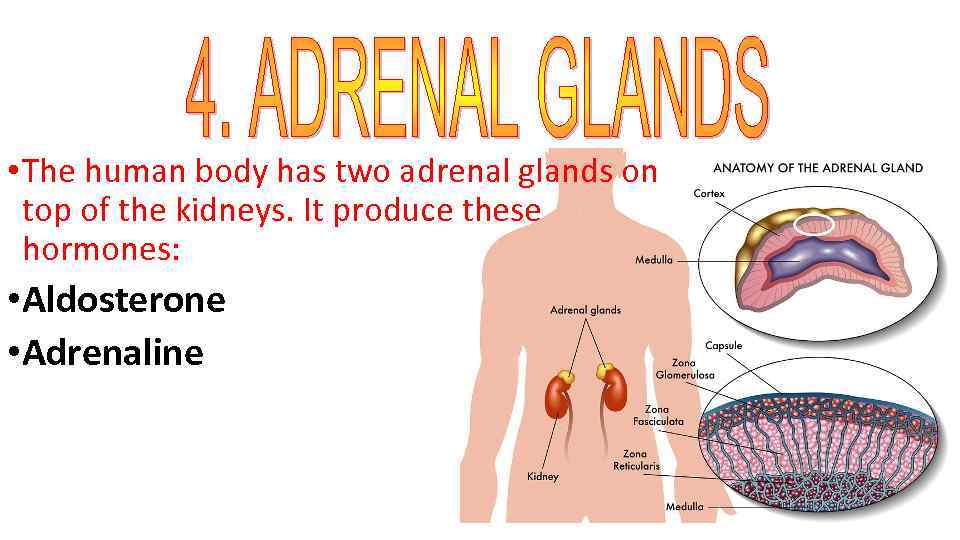 • The human body has two adrenal glands on top of the kidneys. It produce these hormones: • Aldosterone • Adrenaline
 ALDOSTERONE: It effects the reabsorption of Na+ from the kidney. EPINEPHRINE (ADRENALIN): It accelerates the rate of heart beat.
 • The main function of the male and female gonads is in the development of the reproductive system.
 Estrogen: It effects female secondary sexual characteristics Progesterone: It effects the development of the mammary glands.
 8 -TESTES • Testosterone stimulate the production of sperm. • It is involved in growth and maintenance of male sex organs. • Testosterone also affect male secondary sexual characteristics.