 Скачать презентацию Ending the Energy Stalemate A Bipartisan Strategy to
8d36354e84393218364bc7cbae6c11de.ppt
- Количество слайдов: 22



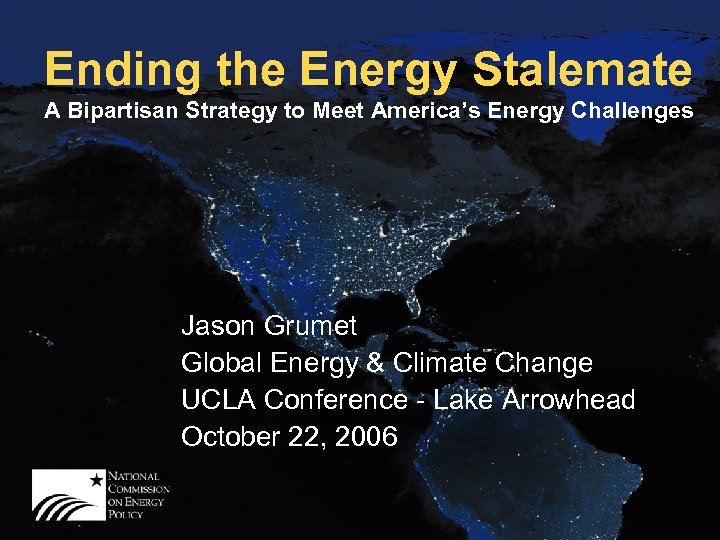
Ending the Energy Stalemate A Bipartisan Strategy to Meet America’s Energy Challenges Jason Grumet Global Energy & Climate Change UCLA Conference - Lake Arrowhead October 22, 2006
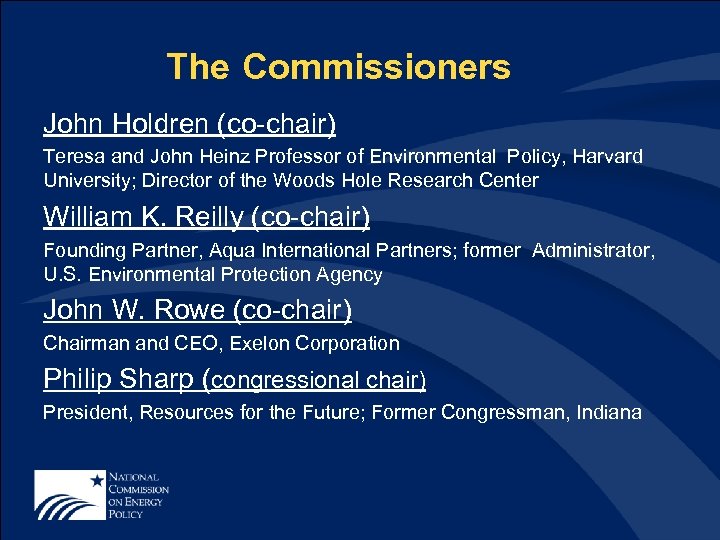
The Commissioners John Holdren (co-chair) Teresa and John Heinz Professor of Environmental Policy, Harvard University; Director of the Woods Hole Research Center William K. Reilly (co-chair) Founding Partner, Aqua International Partners; former Administrator, U. S. Environmental Protection Agency John W. Rowe (co-chair) Chairman and CEO, Exelon Corporation Philip Sharp (congressional chair) President, Resources for the Future; Former Congressman, Indiana
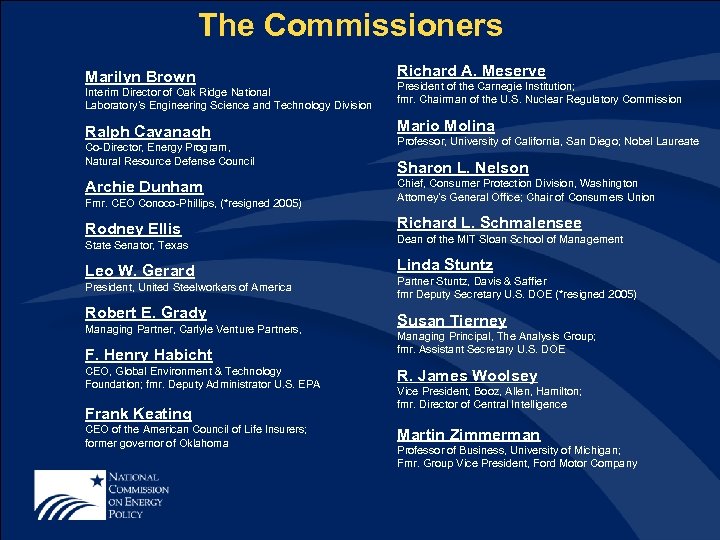
The Commissioners Marilyn Brown Interim Director of Oak Ridge National Laboratory’s Engineering Science and Technology Division Ralph Cavanagh Co-Director, Energy Program, Natural Resource Defense Council Archie Dunham Fmr. CEO Conoco-Phillips, (*resigned 2005) Rodney Ellis State Senator, Texas Leo W. Gerard President, United Steelworkers of America Robert E. Grady Managing Partner, Carlyle Venture Partners, F. Henry Habicht CEO, Global Environment & Technology Foundation; fmr. Deputy Administrator U. S. EPA Frank Keating CEO of the American Council of Life Insurers; former governor of Oklahoma Richard A. Meserve President of the Carnegie Institution; fmr. Chairman of the U. S. Nuclear Regulatory Commission Mario Molina Professor, University of California, San Diego; Nobel Laureate Sharon L. Nelson Chief, Consumer Protection Division, Washington Attorney’s General Office; Chair of Consumers Union Richard L. Schmalensee Dean of the MIT Sloan School of Management Linda Stuntz Partner Stuntz, Davis & Saffier fmr Deputy Secretary U. S. DOE (*resigned 2005) Susan Tierney Managing Principal, The Analysis Group; fmr. Assistant Secretary U. S. DOE R. James Woolsey Vice President, Booz, Allen, Hamilton; fmr. Director of Central Intelligence Martin Zimmerman Professor of Business, University of Michigan; Fmr. Group Vice President, Ford Motor Company
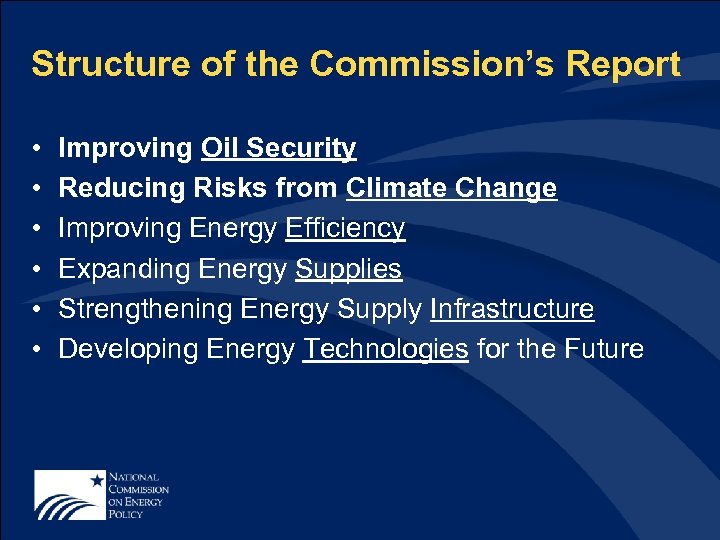
Structure of the Commission’s Report • • • Improving Oil Security Reducing Risks from Climate Change Improving Energy Efficiency Expanding Energy Supplies Strengthening Energy Supply Infrastructure Developing Energy Technologies for the Future
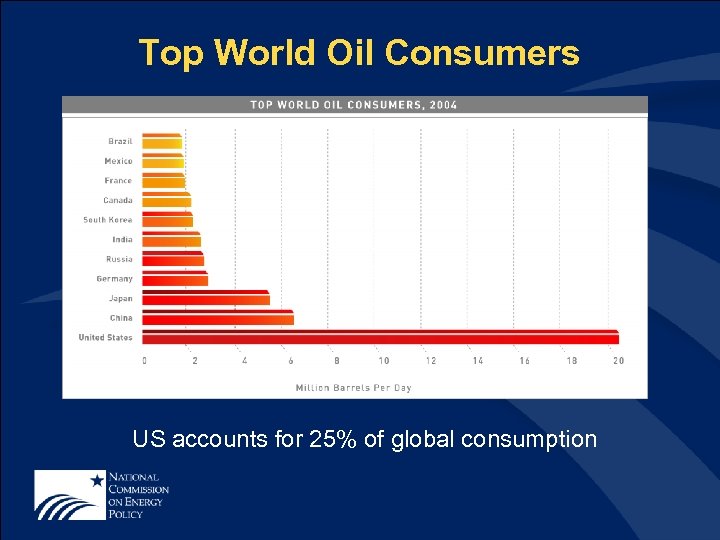
Top World Oil Consumers US accounts for 25% of global consumption
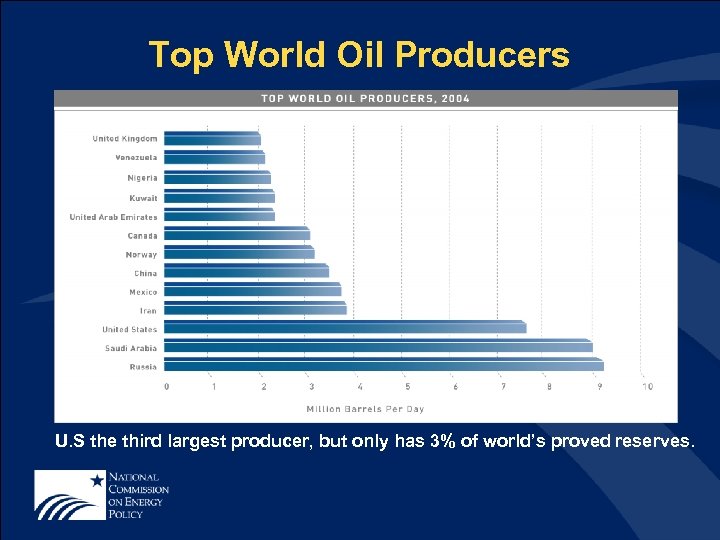
Top World Oil Producers U. S the third largest producer, but only has 3% of world’s proved reserves.
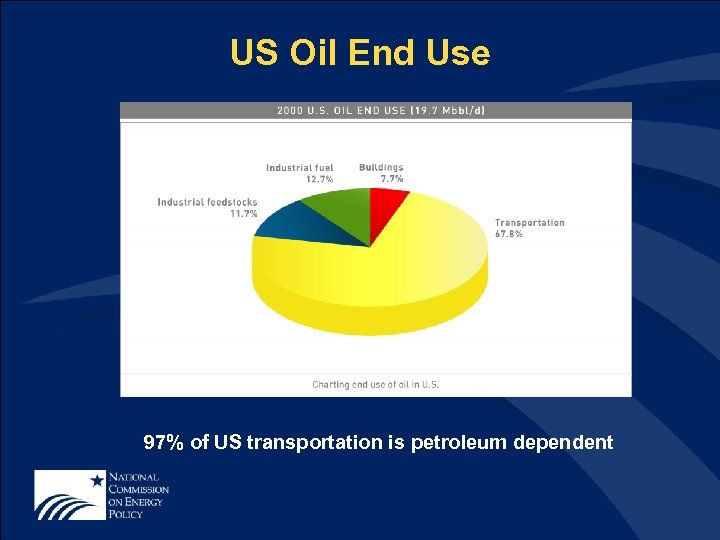
US Oil End Use 97% of US transportation is petroleum dependent
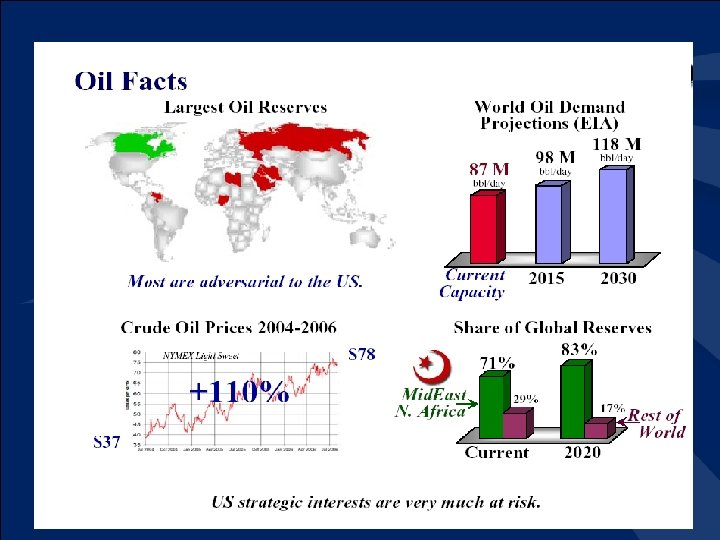
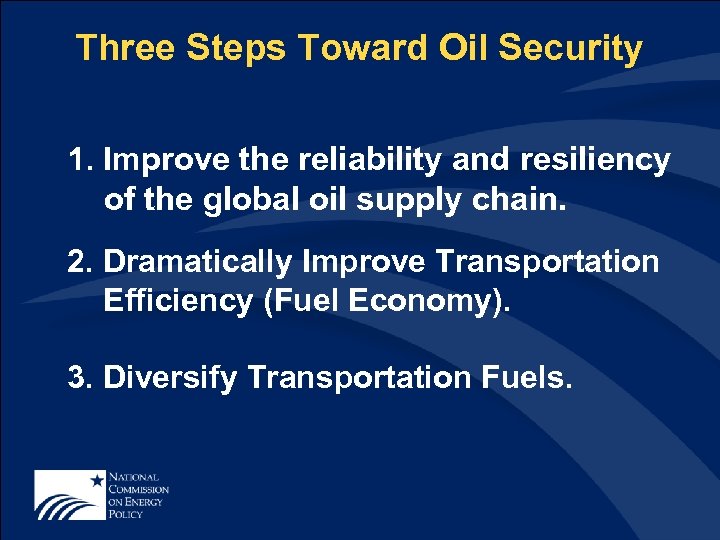
Three Steps Toward Oil Security 1. Improve the reliability and resiliency of the global oil supply chain. 2. Dramatically Improve Transportation Efficiency (Fuel Economy). 3. Diversify Transportation Fuels.
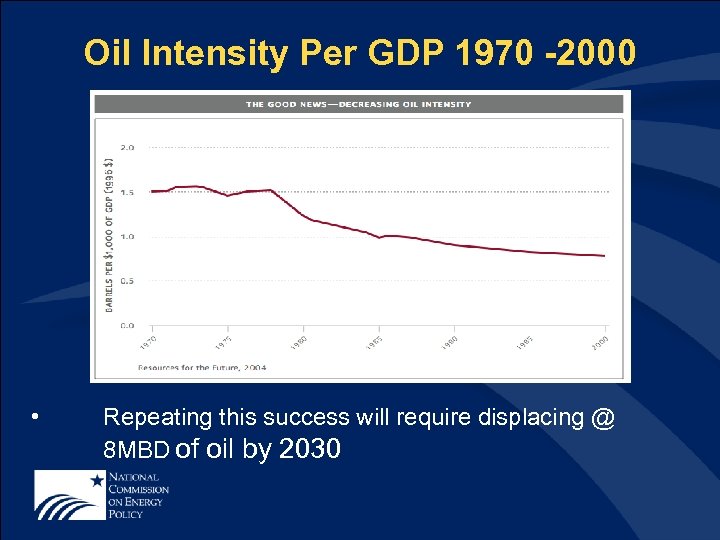
Oil Intensity Per GDP 1970 -2000 • Repeating this success will require displacing @ 8 MBD of oil by 2030
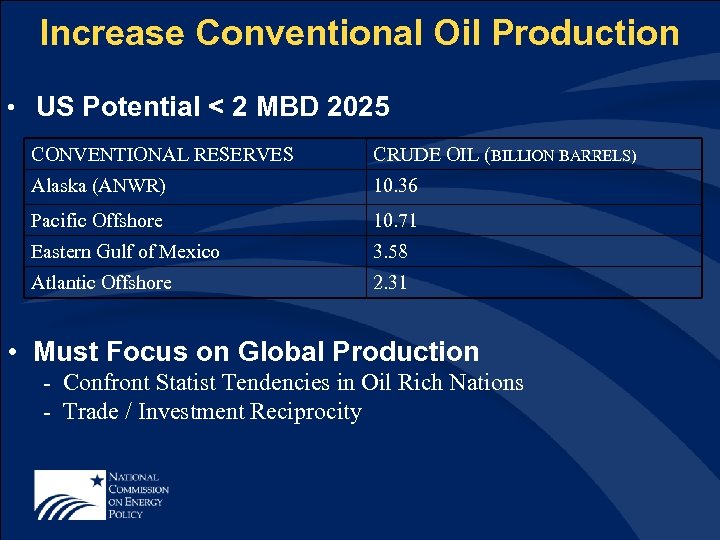
Increase Conventional Oil Production • US Potential < 2 MBD 2025 CONVENTIONAL RESERVES CRUDE OIL (BILLION BARRELS) Alaska (ANWR) 10. 36 Pacific Offshore 10. 71 Eastern Gulf of Mexico 3. 58 Atlantic Offshore 2. 31 • Must Focus on Global Production - Confront Statist Tendencies in Oil Rich Nations - Trade / Investment Reciprocity
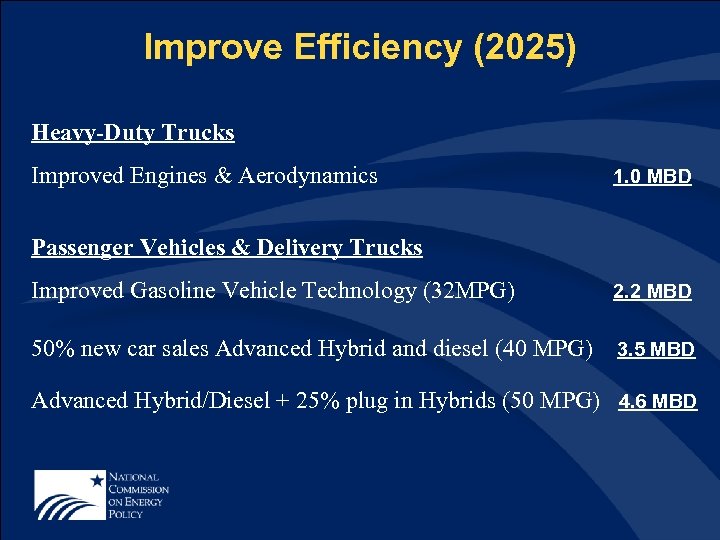
Improve Efficiency (2025) Heavy-Duty Trucks Improved Engines & Aerodynamics 1. 0 MBD Passenger Vehicles & Delivery Trucks Improved Gasoline Vehicle Technology (32 MPG) 2. 2 MBD 50% new car sales Advanced Hybrid and diesel (40 MPG) 3. 5 MBD Advanced Hybrid/Diesel + 25% plug in Hybrids (50 MPG) 4. 6 MBD
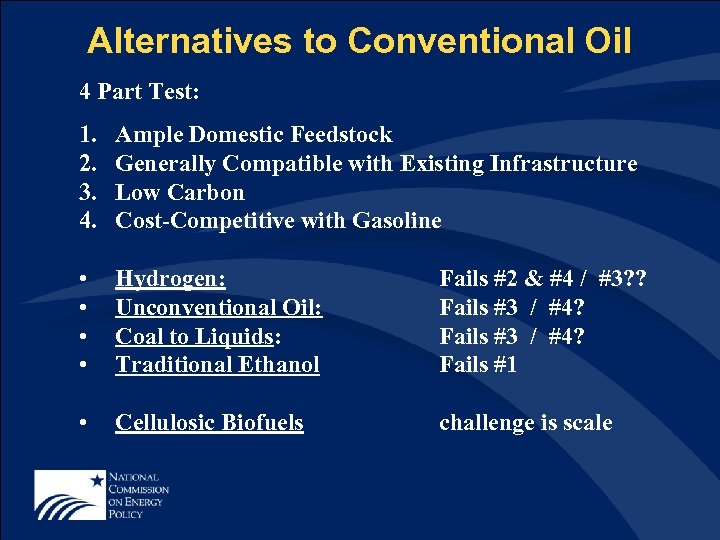
Alternatives to Conventional Oil 4 Part Test: 1. 2. 3. 4. Ample Domestic Feedstock Generally Compatible with Existing Infrastructure Low Carbon Cost-Competitive with Gasoline • • Hydrogen: Unconventional Oil: Coal to Liquids: Traditional Ethanol Fails #2 & #4 / #3? ? Fails #3 / #4? Fails #1 • Cellulosic Biofuels challenge is scale
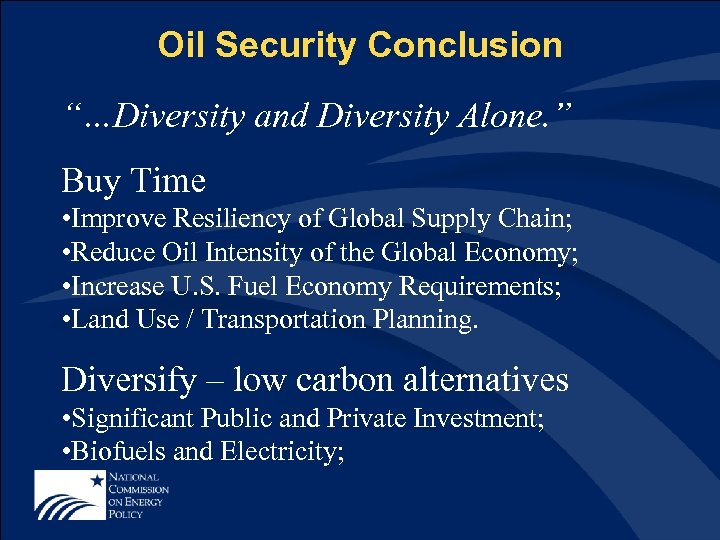
Oil Security Conclusion “…Diversity and Diversity Alone. ” Buy Time • Improve Resiliency of Global Supply Chain; • Reduce Oil Intensity of the Global Economy; • Increase U. S. Fuel Economy Requirements; • Land Use / Transportation Planning. Diversify – low carbon alternatives • Significant Public and Private Investment; • Biofuels and Electricity;
Climate Change • “Technology is the Answer” • The Question is who pays to accelerate technology development and deployment • Must combine a long term market signal and technology incentives
Ecological Considerations • Move Quickly • Volunteerism is not a credible response • Combine gradually increasing market signal & significant technology incentives • Adopt robust program architecture that will evolve and strengthen over time • Recapture ability to effectively engage developing countries
Economic & Political Considerations • Limit premature retirement of otherwise valuable energy infrastructure • Address economic/technology uncertainty through cost cap or “Safety-Valve” • Link future action to international efforts • Engage key political constituencies in designing technology incentives and adaptation funding • Design equitable allowance distribution
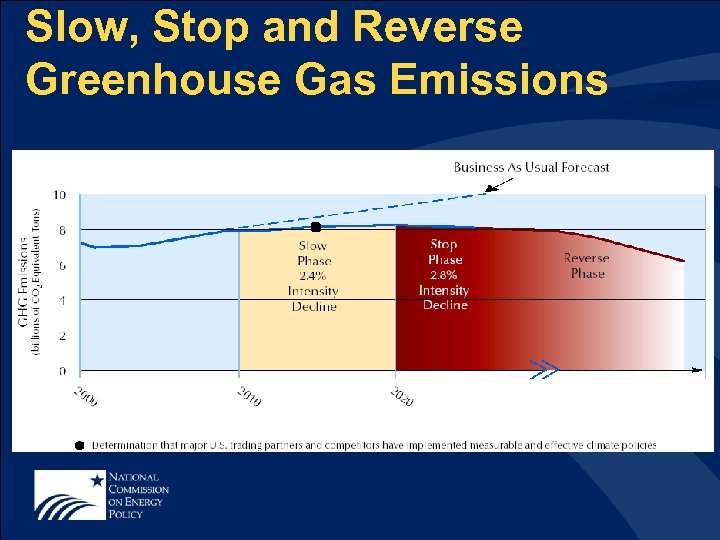
Slow, Stop and Reverse Greenhouse Gas Emissions
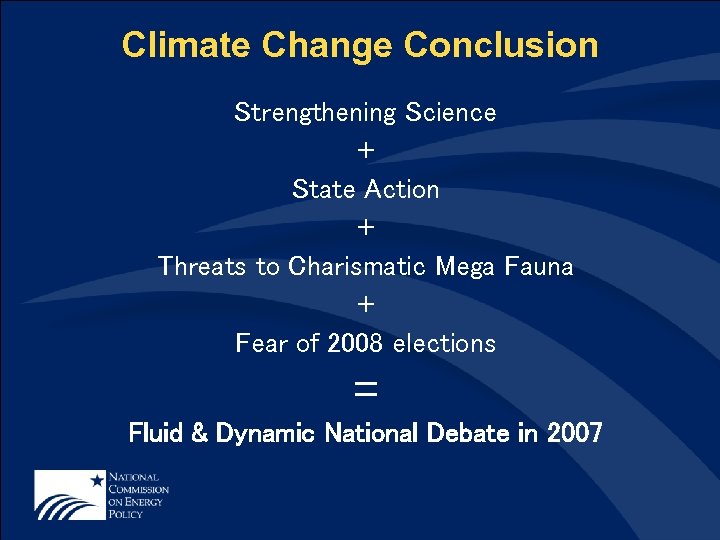
Climate Change Conclusion Strengthening Science + State Action + Threats to Charismatic Mega Fauna + Fear of 2008 elections = Fluid & Dynamic National Debate in 2007
Thank You For More Information… • Go to www. energycommission. org. • jgrumet@energycommission. org 1250 I St NW Washington, DC 20005 202 -637 -0400
Скачать презентацию Ending the Energy Stalemate A Bipartisan Strategy to
8d36354e84393218364bc7cbae6c11de.ppt