


 Скачать презентацию Employment Unemployment Lecture 10 Dr Jennifer P
bb28c980f8d906aaef6e8079f4b5cb07.ppt
- Количество слайдов: 27
 Employment & Unemployment Lecture 10 Dr. Jennifer P. Wissink © 2018 Jennifer P. Wissink, all rights reserved. February 28, 2018
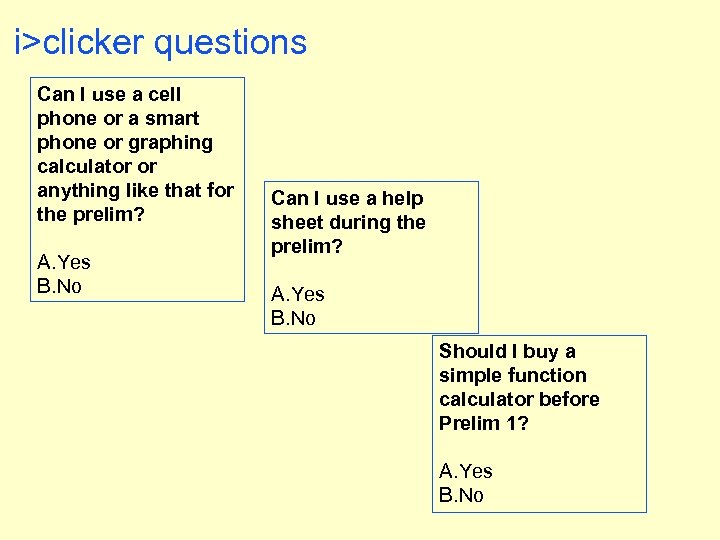 i>clicker questions Can I use a cell phone or a smart phone or graphing calculator or anything like that for the prelim? A. Yes B. No Can I use a help sheet during the prelim? A. Yes B. No Should I buy a simple function calculator before Prelim 1? A. Yes B. No
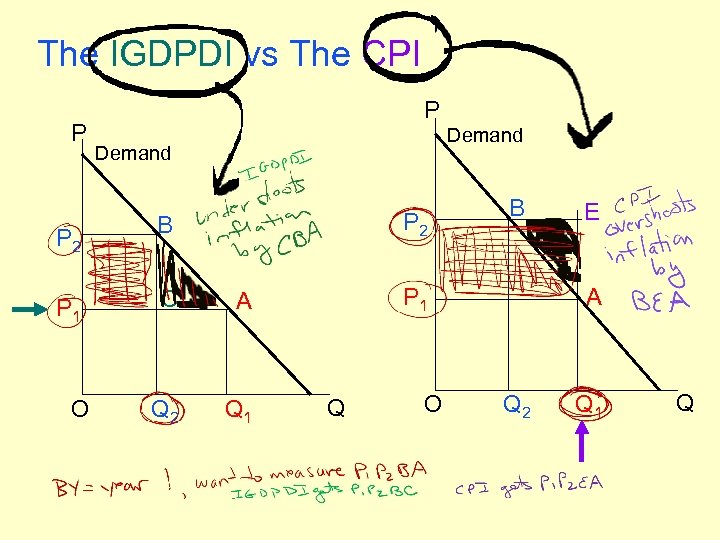 The IGDPDI vs The CPI P P 2 P 1 O P Demand P 2 B C Q 1 P 1 A Q 2 B Q O E A Q 2 Q 1 Q
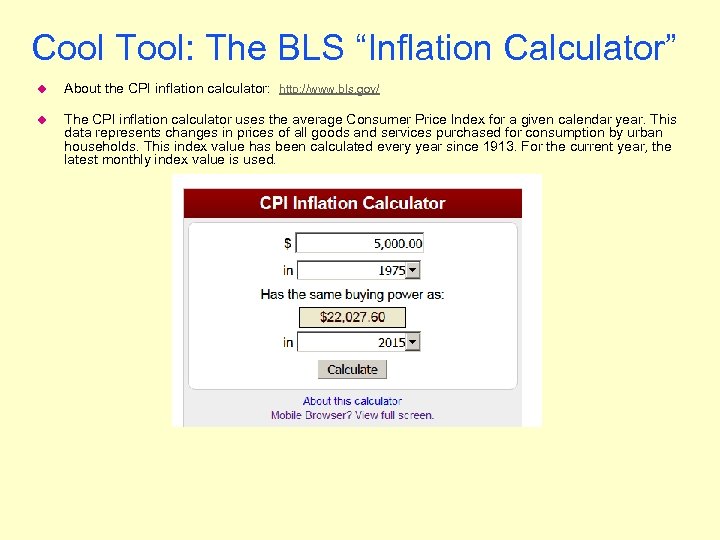 Cool Tool: The BLS “Inflation Calculator” u About the CPI inflation calculator: http: //www. bls. gov/ u The CPI inflation calculator uses the average Consumer Price Index for a given calendar year. This data represents changes in prices of all goods and services purchased for consumption by urban households. This index value has been calculated every year since 1913. For the current year, the latest monthly index value is used.
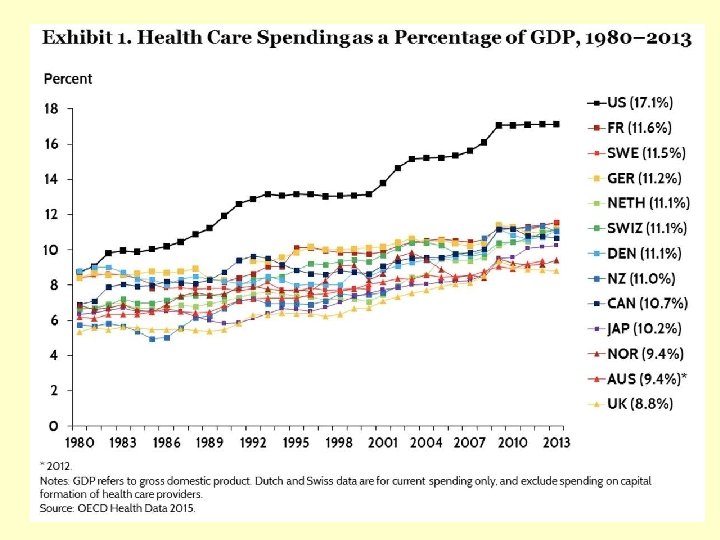
 Why Do We Care So Much About Inflation? u u u u Its potential to change the distribution of income. Its special effects on debtors & creditors. The costs of “keeping up” might be self-fulfilling. Resources (time and money) are used up in the mere act of posting and keeping up with price changes and searching for low prices. Increased likelihood that people don’t know (or can’t keep up with) changing relative prices, so they don’t allocate efficiently. Increased uncertainty, pessimism and risk, perhaps making people tentative and investment riskier depresses expenditure on consumption and investment. Real Culprit: asymmetric and unanticipated inflation
 And What About Deflation? u u u Its potential to change the distribution of income. Its special effects on debtors & creditors. Can often lead to periods of economic stagnation and high unemployment since people put off buying “stuff” today expecting prices to get lower in the future. – Seemed to be a significant part of Japan’s financial crises from circa 1990 -2000, the “lost decade”. u If it’s hard to cut nominal wages, since everyone moans about that, then real wages will rise during deflations and can lead to unemployment pressure.
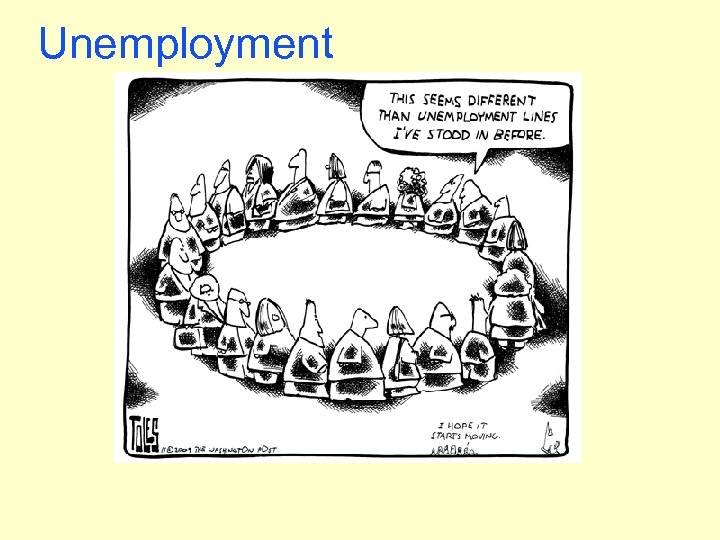 Unemployment
 Defining & Measuring Unemployment u Who does it in the U. S. ? – u United States Department of Labor, Bureau of Labor Statistics… is the principal Federal agency responsible for measuring labor market activity, working conditions, and price changes in the economy. Its mission is to collect, analyze, and disseminate essential economic information to support public and private decision-making. As an independent statistical agency, BLS serves its diverse user communities by providing products and services that are objective, timely, accurate, and relevant. An employed person is any person 16 years old or older who: 1. works for pay, either for someone else or in his or her own business for 1 or more hours per week, 2. works without pay for 15 or more hours per week in a family enterprise, or 3. has a job but has been temporarily absent, with or without pay.
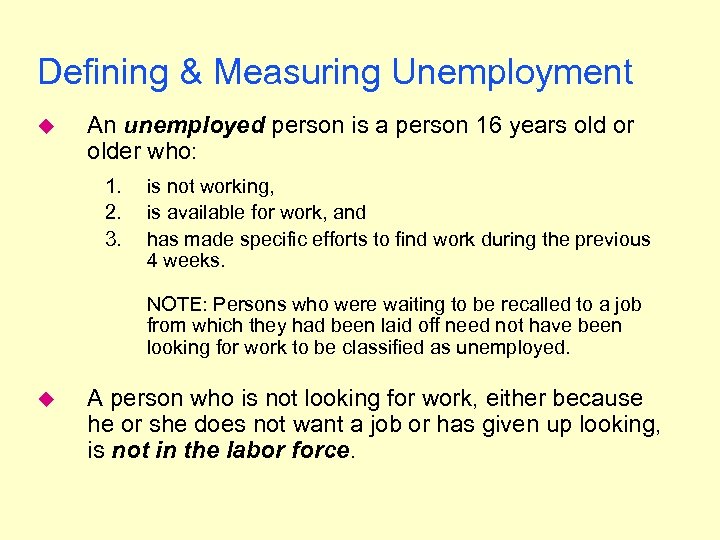 Defining & Measuring Unemployment u An unemployed person is a person 16 years old or older who: 1. 2. 3. is not working, is available for work, and has made specific efforts to find work during the previous 4 weeks. NOTE: Persons who were waiting to be recalled to a job from which they had been laid off need not have been looking for work to be classified as unemployed. u A person who is not looking for work, either because he or she does not want a job or has given up looking, is not in the labor force.
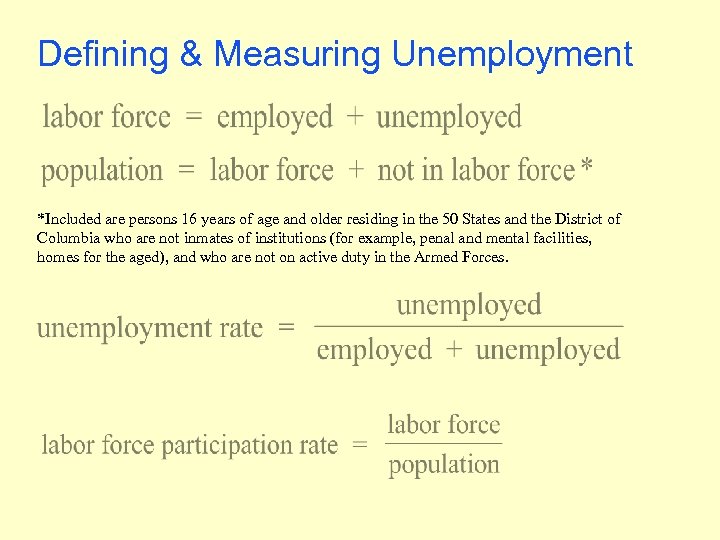 Defining & Measuring Unemployment *Included are persons 16 years of age and older residing in the 50 States and the District of Columbia who are not inmates of institutions (for example, penal and mental facilities, homes for the aged), and who are not on active duty in the Armed Forces.
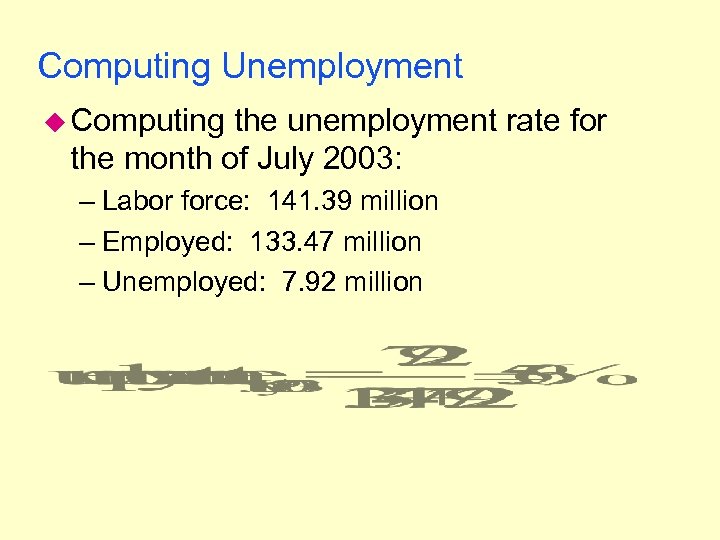 Computing Unemployment u Computing the unemployment rate for the month of July 2003: – Labor force: 141. 39 million – Employed: 133. 47 million – Unemployed: 7. 92 million
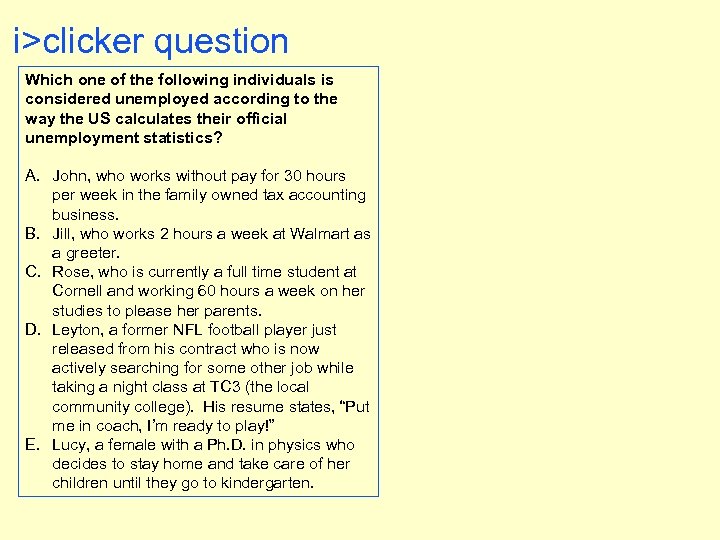 i>clicker question Which one of the following individuals is considered unemployed according to the way the US calculates their official unemployment statistics? A. John, who works without pay for 30 hours per week in the family owned tax accounting business. B. Jill, who works 2 hours a week at Walmart as a greeter. C. Rose, who is currently a full time student at Cornell and working 60 hours a week on her studies to please her parents. D. Leyton, a former NFL football player just released from his contract who is now actively searching for some other job while taking a night class at TC 3 (the local community college). His resume states, “Put me in coach, I’m ready to play!” E. Lucy, a female with a Ph. D. in physics who decides to stay home and take care of her children until they go to kindergarten.
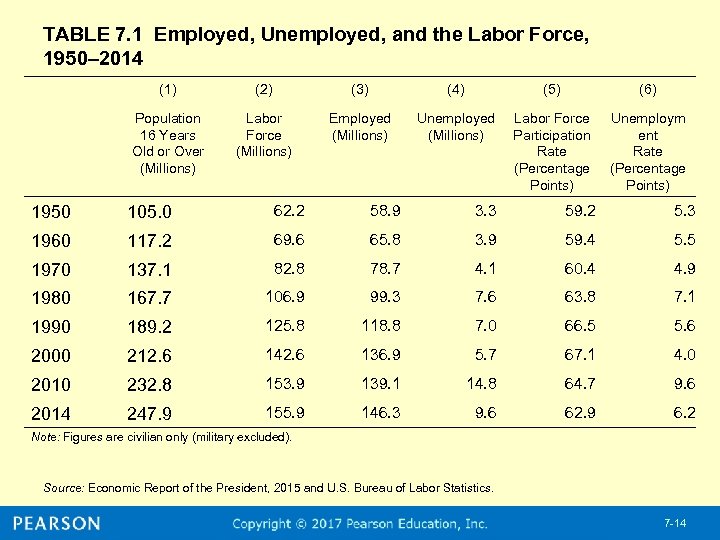 TABLE 7. 1 Employed, Unemployed, and the Labor Force, 1950– 2014 (1) (2) (3) (4) (5) (6) Population 16 Years Old or Over (Millions) Labor Force (Millions) Employed (Millions) Unemployed (Millions) Labor Force Participation Rate (Percentage Points) Unemploym ent Rate (Percentage Points) 1950 105. 0 62. 2 58. 9 3. 3 59. 2 5. 3 1960 117. 2 69. 6 65. 8 3. 9 59. 4 5. 5 1970 137. 1 82. 8 78. 7 4. 1 60. 4 4. 9 1980 167. 7 106. 9 99. 3 7. 6 63. 8 7. 1 1990 189. 2 125. 8 118. 8 7. 0 66. 5 5. 6 2000 212. 6 142. 6 136. 9 5. 7 67. 1 4. 0 2010 232. 8 153. 9 139. 1 14. 8 64. 7 9. 6 2014 247. 9 155. 9 146. 3 9. 6 62. 9 6. 2 Note: Figures are civilian only (military excluded). Source: Economic Report of the President, 2015 and U. S. Bureau of Labor Statistics. 7 -14
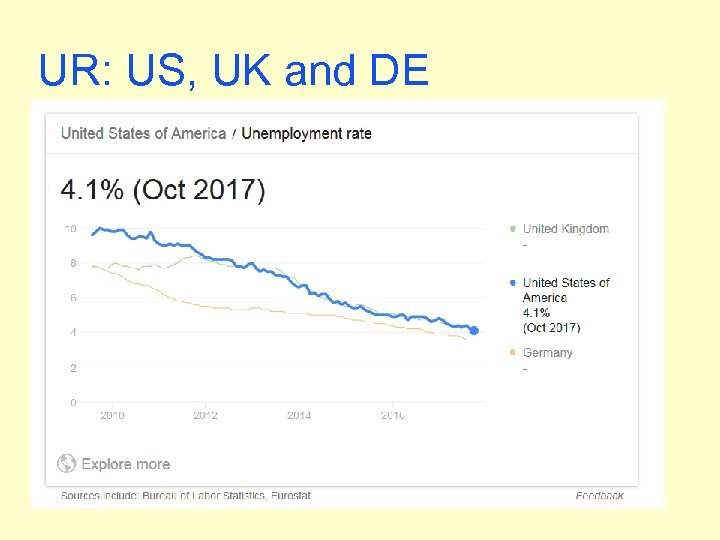 UR: US, UK and DE
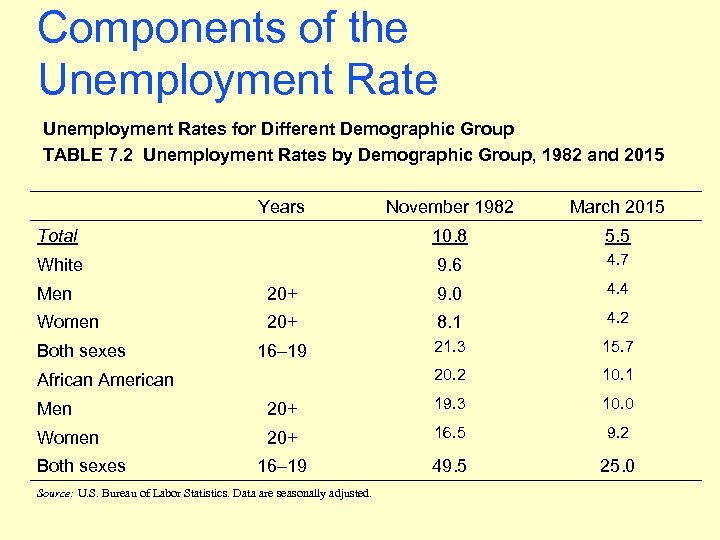 Components of the Unemployment Rates for Different Demographic Group TABLE 7. 2 Unemployment Rates by Demographic Group, 1982 and 2015 Years November 1982 March 2015 Total 10. 8 5. 5 White 9. 6 4. 7 Men 20+ 9. 0 4. 4 Women 20+ 8. 1 4. 2 16– 19 21. 3 15. 7 20. 2 10. 1 Both sexes African American Men 20+ 19. 3 10. 0 Women 20+ 16. 5 9. 2 16– 19 49. 5 25. 0 Both sexes Source: U. S. Bureau of Labor Statistics. Data are seasonally adjusted.
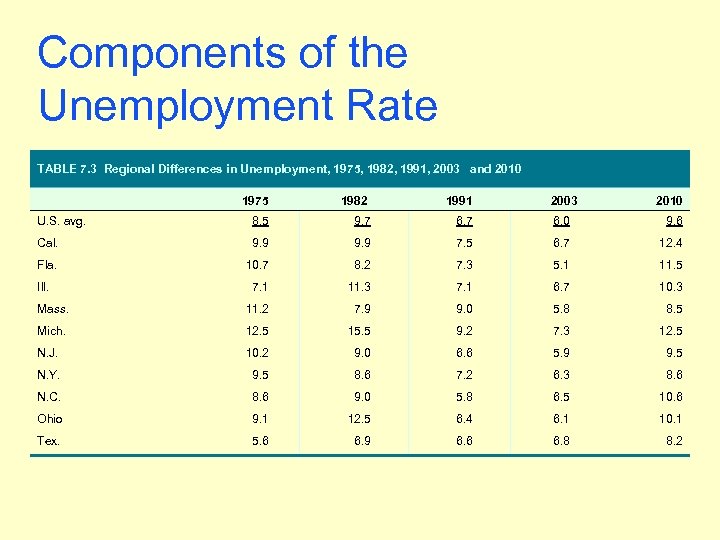 Components of the Unemployment Rate TABLE 7. 3 Regional Differences in Unemployment, 1975, 1982, 1991, 2003 and 2010 1975 1982 1991 U. S. avg. 8. 5 9. 7 6. 0 9. 6 Cal. 9. 9 7. 5 6. 7 12. 4 Fla. 10. 7 8. 2 7. 3 5. 1 11. 5 7. 1 11. 3 7. 1 6. 7 10. 3 Mass. 11. 2 7. 9 9. 0 5. 8 8. 5 Mich. 12. 5 15. 5 9. 2 7. 3 12. 5 N. J. 10. 2 9. 0 6. 6 5. 9 9. 5 N. Y. 9. 5 8. 6 7. 2 6. 3 8. 6 N. C. 8. 6 9. 0 5. 8 6. 5 10. 6 Ohio 9. 1 12. 5 6. 4 6. 1 10. 1 Tex. 5. 6 6. 9 6. 6 6. 8 8. 2 Ill. 2003 2010
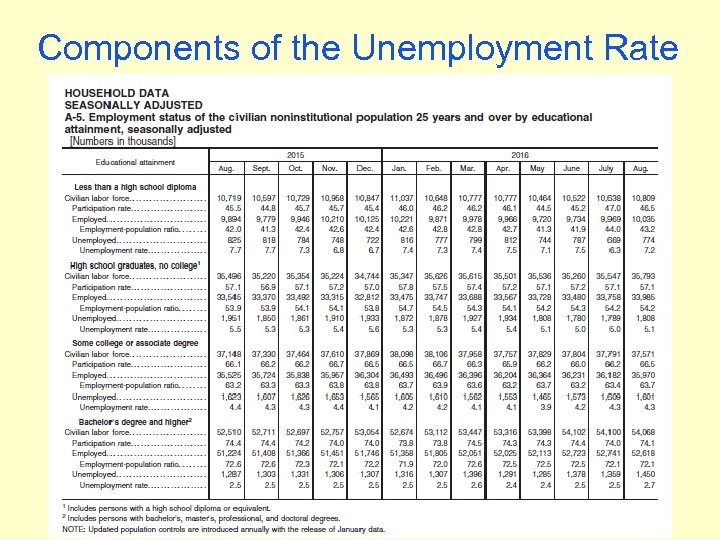 Components of the Unemployment Rate (1 of 3)
 Types of Unemployment u Frictional unemployment: the portion of unemployment that is due to the normal working of the labor market; used to denote short-run job/skill matching problems.
 Types of Unemployment u Structural unemployment: the portion of unemployment that is due to changes in the structure of the economy that result in a significant loss of jobs in certain industries.
 Types of Unemployment u Cyclical unemployment: the increase in unemployment that occurs during recessions & depressions. – Unemployment created during the swings in the business cycle.
 Types of Unemployment u The natural rate of unemployment: the unemployment that occurs as a normal part of the functioning of the economy. u Sometimes taken as: natural rate = frictional + structural
 Parting Thoughts on Unemployment u Only an aggregate average u Duration/Spells of unemployment u Trends in labor force participation u Labor force characteristics u Under/Over employment u Discouraged worker u UI benefits u Search models and transition rates
 There are Many Other V. I. P. MACRO Indicators u Income and Product Measures, especially across countries – – u Gross National Income Disposable Income Personal Income Median Income Productivity Measures – Output per worker hour – Capital per worker – Capacity utilization rates u Employment Measures – – u employment job creation job destruction average work week Final Thoughts – – Different numbers tell us different things about the big picture. Be careful how you use them. They tell us a lot. They don’t tell us everything.
 Interesting(entertaining, even) Listens/Reads u The Audacity of Hopelessness – http: //www. cc. com/video-clips/rxdrv 8/the-colbert-report-the-word---theaudacity-of-hopelessness u What's Behind The Rise Of College Tuition? – http: //www. npr. org/2012/02/19/147115868/whats-behind-the-rise-of-collegetuition u UC Students Propose Alternative To Tuition Increases – http: //www. npr. org/2012/02/07/146479925/uc-students-propose-alternative-to -tuition-increases – “Under our proposal, students would pay 5 percent of their income for 20 years" following graduation, Locacio says. u The 40 Most Unusual Economic Indicators – http: //www. businessinsider. com/40 -most-unusual-economic-indicators-20132#the-first-date-indicator-1 u Action chart; For whom the jobs toll; The new way of post-recession unemployment in America (very cool set of charts) – http: //www. economist. com/node/21620337
 END OF MATERIAL FOR PRELIM 1 u WHEW!! u HINTS: – DON’T pull an “all-nighter”. – READ questions carefully. Highlight or underline each important piece of information. – For the multiple choice: Cover up all the answers and “do” the problem based on the narrative first, then your work will lead you to the correct answer. – For “work” problem: Draw graphs big enough and carefully enough to make it so they can “show” you the way. » Always label BOTH axes right away, it helps remind you of what goes where and what you are doing. » Label any items you put into the graph (like D for demand S for supply). » Use a contrasting color to help see things. » TRY each problem – at least do something so there is some chance that you might get partial credit for what you did. » Don’t spin your wheels too long on any one problem. Give it your best shot, then move on, then go back to it if there is time.
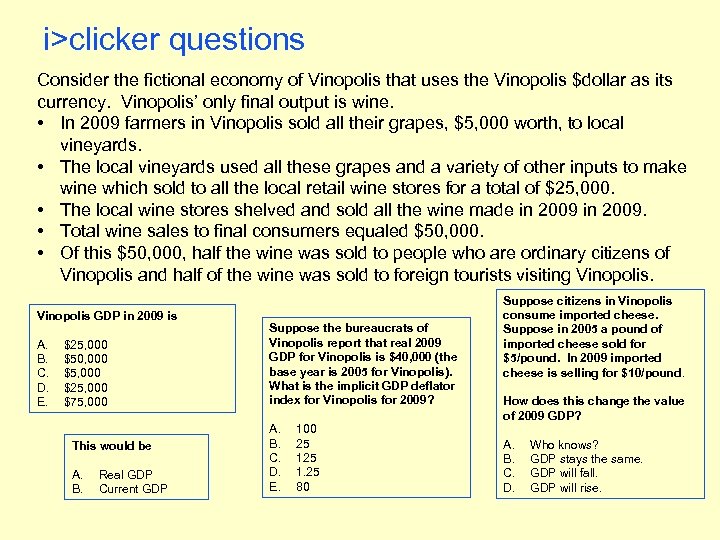 i>clicker questions Consider the fictional economy of Vinopolis that uses the Vinopolis $dollar as its currency. Vinopolis’ only final output is wine. • In 2009 farmers in Vinopolis sold all their grapes, $5, 000 worth, to local vineyards. • The local vineyards used all these grapes and a variety of other inputs to make wine which sold to all the local retail wine stores for a total of $25, 000. • The local wine stores shelved and sold all the wine made in 2009. • Total wine sales to final consumers equaled $50, 000. • Of this $50, 000, half the wine was sold to people who are ordinary citizens of Vinopolis and half of the wine was sold to foreign tourists visiting Vinopolis GDP in 2009 is A. B. C. D. E. $25, 000 $50, 000 $5, 000 $25, 000 $75, 000 This would be A. B. Real GDP Current GDP Suppose the bureaucrats of Vinopolis report that real 2009 GDP for Vinopolis is $40, 000 (the base year is 2005 for Vinopolis). What is the implicit GDP deflator index for Vinopolis for 2009? A. B. C. D. E. 100 25 1. 25 80 Suppose citizens in Vinopolis consume imported cheese. Suppose in 2005 a pound of imported cheese sold for $5/pound. In 2009 imported cheese is selling for $10/pound. How does this change the value of 2009 GDP? A. B. C. D. Who knows? GDP stays the same. GDP will fall. GDP will rise.