 Скачать презентацию Employer liability Abisheva Tabigat Turganbayeva Inkar ØCausal
leading session(10.11.17).pptx
- Количество слайдов: 9



Employer liability Abisheva Tabigat Turganbayeva Inkar
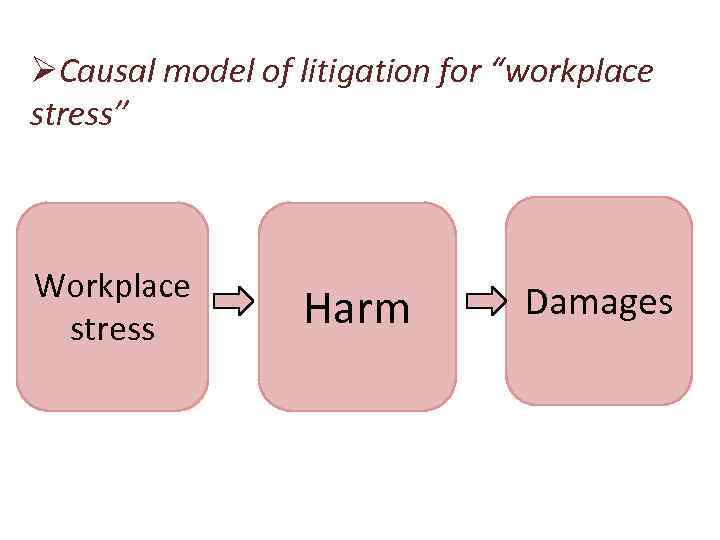
ØCausal model of litigation for “workplace stress” Workplace stress Harm Damages
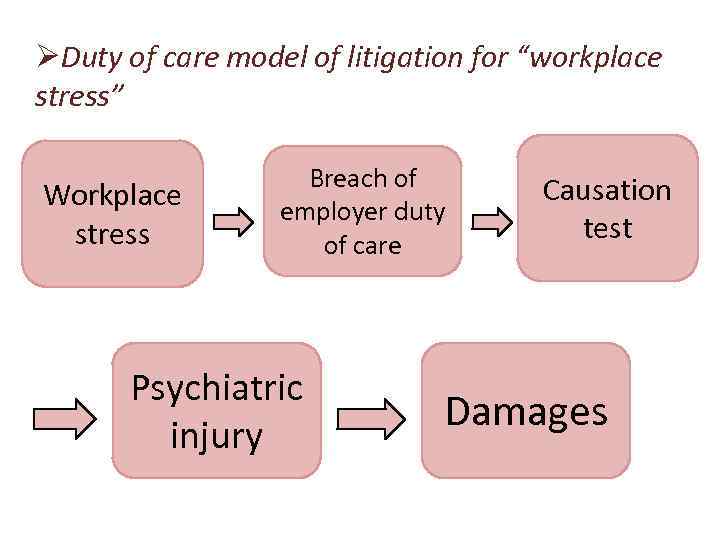
ØDuty of care model of litigation for “workplace stress” Workplace stress Breach of employer duty of care Psychiatric injury Causation test Damages
The decision of the court requires the establishment of the employer's liability for tension in the workplace. There also a number of key points that need to be considered
ØKey points ü Is the individual subject to undue pressure of work that is: – unreasonable by any standard – unreasonable judged in comparison with the workload of others in a similar job – due to individual vulnerability, which is known to the employer? Has the individual received an injury to health, either physical or psychological, that is directly attributable to stress at work? ü Was this injury reasonably foreseeable by the employer? ü Is this injury directly and mainly attributable to the employer’s breach of duty of care, in failing to reduce workplace stress.
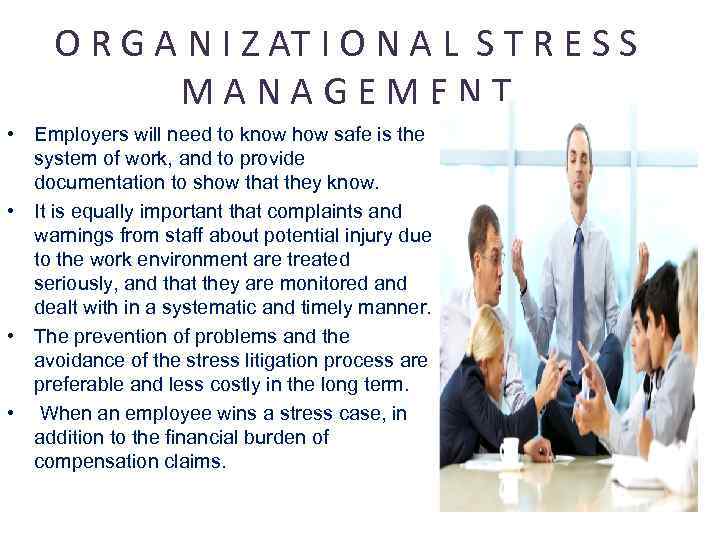
O R G A N I Z AT I O N A L S T R E S S MANAGEMENT • Employers will need to know how safe is the system of work, and to provide documentation to show that they know. • It is equally important that complaints and warnings from staff about potential injury due to the work environment are treated seriously, and that they are monitored and dealt with in a systematic and timely manner. • The prevention of problems and the avoidance of the stress litigation process are preferable and less costly in the long term. • When an employee wins a stress case, in addition to the financial burden of compensation claims.
A POLICY FOR STRESS MANAGEMENT • The objective of a policy for stress is to protect the health, safety and welfare of employees. • An effective policy on stress should recognize that stress is a health and safety issue. • It should be developed jointly and agreed with trade union assistance and cooperation. • The policy must apply to everyone in the organization and be endorsed from the most senior level within the company.
The objectives of a policy on stress should be: • ■ to prevent stress by identifying causes of workplace stress and eliminating them – that is, to deal with the source of stress • ■ to control stress by ensuring that the stress response does not cause negative impact on the individual – that is to deal with the response to stress • ■ to rehabilitate employees who are suffering from exposure to stress through the provision of a confidential counseling service – that is, • to deal with the symptoms of stress.
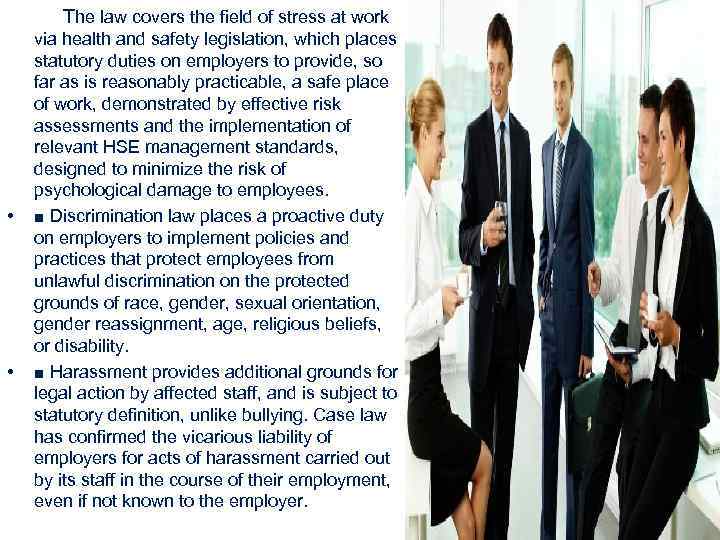
The law covers the field of stress at work • • via health and safety legislation, which places statutory duties on employers to provide, so far as is reasonably practicable, a safe place of work, demonstrated by effective risk assessments and the implementation of relevant HSE management standards, designed to minimize the risk of psychological damage to employees. ■ Discrimination law places a proactive duty on employers to implement policies and practices that protect employees from unlawful discrimination on the protected grounds of race, gender, sexual orientation, gender reassignment, age, religious beliefs, or disability. ■ Harassment provides additional grounds for legal action by affected staff, and is subject to statutory definition, unlike bullying. Case law has confirmed the vicarious liability of employers for acts of harassment carried out by its staff in the course of their employment, even if not known to the employer.
Скачать презентацию Employer liability Abisheva Tabigat Turganbayeva Inkar ØCausal
leading session(10.11.17).pptx