


 Скачать презентацию Empires of China and India Section 1 History
a558602bf2b1be989b91bc15f1d9d792.ppt
- Количество слайдов: 136
 Empires of China and India Section 1 “History is the present. That’s why every generation writes it anew. But what most people think of as history is its end product, myth. ” - E. L. Doctorow 23% of all photocopier faults world-wide are caused by people sitting on them and photocopying their rear ends.
 Empires of China and India Section 1
 Empires of China and India Section 1
 Empires of China and India Section 1 The Growth of China Main Idea The Qin and Han dynasties created strong centralized governments that unified China and shaped Chinese civilization for thousands of years to follow.
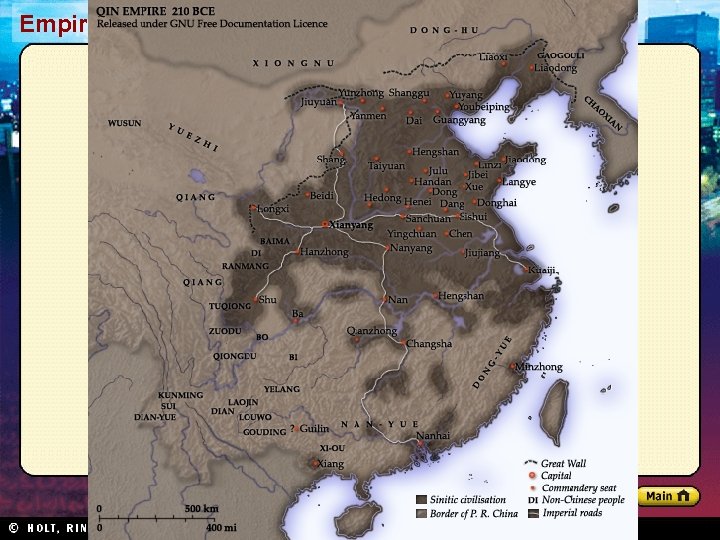
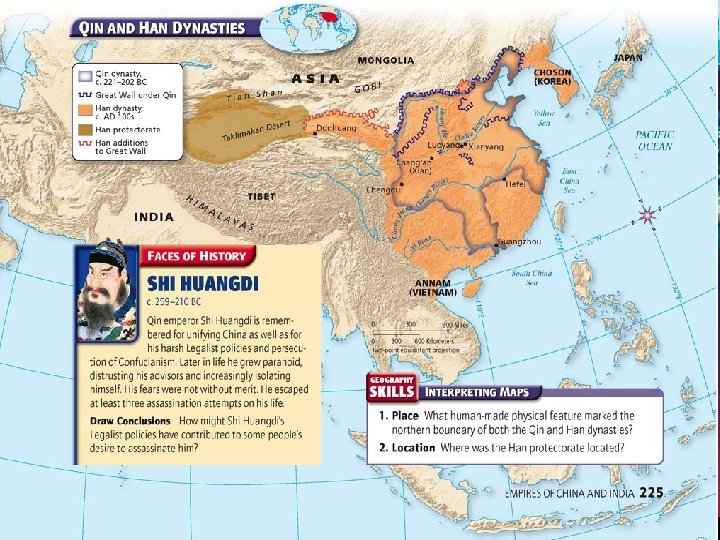
 Empires of China and India Section 1 The Qin Dynasty Zhou dynasty began to decline around 400 BC, power shifted to local nobles • Several small states battled for land, power by 300 s • State of Qin rose to power – Located on China’s western frontier – Conquered other states in military campaigns – Last rival state fell, 221 BC • Qin unified Chinese empire
 Empires of China and India Section 1
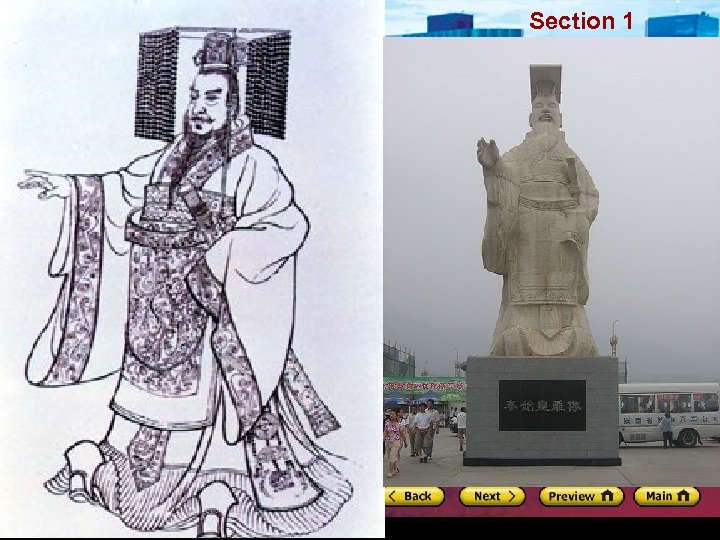
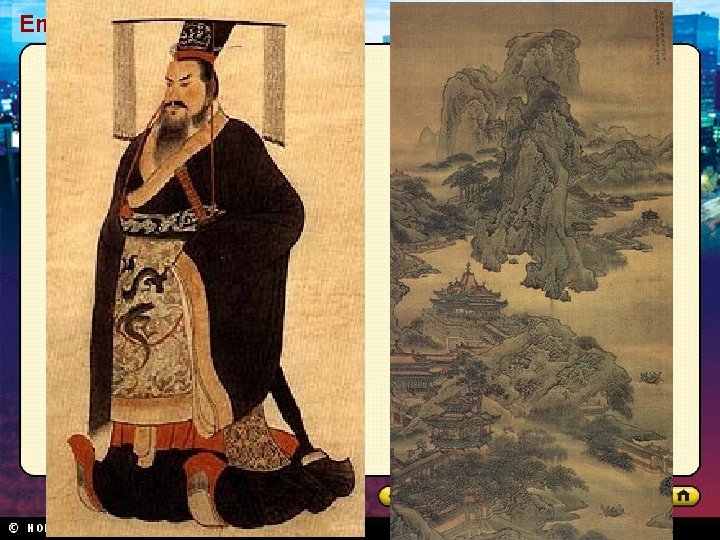
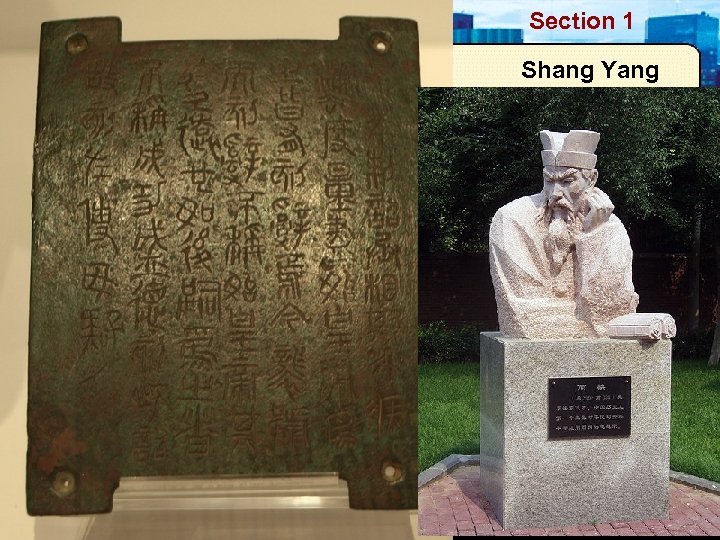
 Empires of China and India Section 1 Harsh Qin Rule • First ruler of new empire took title Shi Huangdi, “first emperor” • Founded school of Legalism: taught that powerful, efficient government key to maintaining order Rejection of Confucianism • Legalists rejected philosophy developed during Zhou dynasty: Confucianists thought rulers should be virtuous, lead by example • Legalists said rulers should be strong, govern through force - supported strict laws, stressed harsh punishment for even minor crimes
 Empires of China and India Section 1
 Empires of China and India Section 1
 Empires of China and India Section 1 Shang Yang
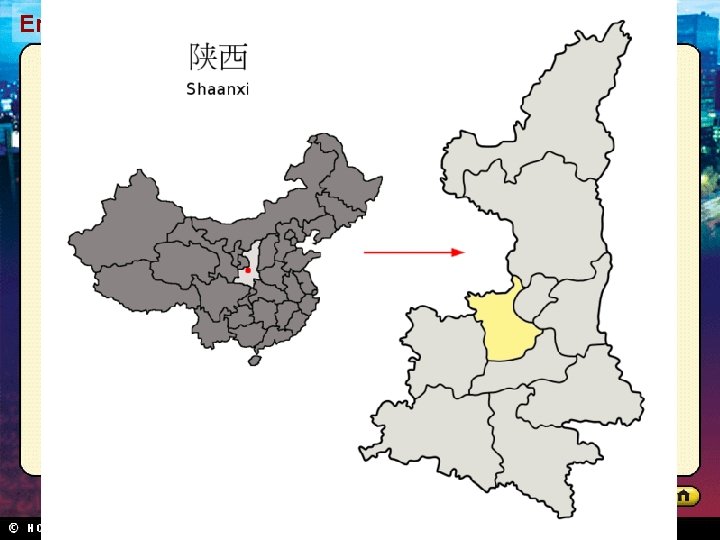
 Empires of China and India Section 1 Strong, Centralized Government • Shi Huangdi weakened rival nobles by taking land; forced them to move to capital • Seized all private arms to prevent rebellions and divided China into 36 districts, appointed loyalists to govern them Maintaining Order • Shi Huangdi ruthlessly suppressed all criticism of his rule: burned all non-Legalist books (agriculture, medicine spared) and killed Confucian critics
 Empires of China and India Section 1
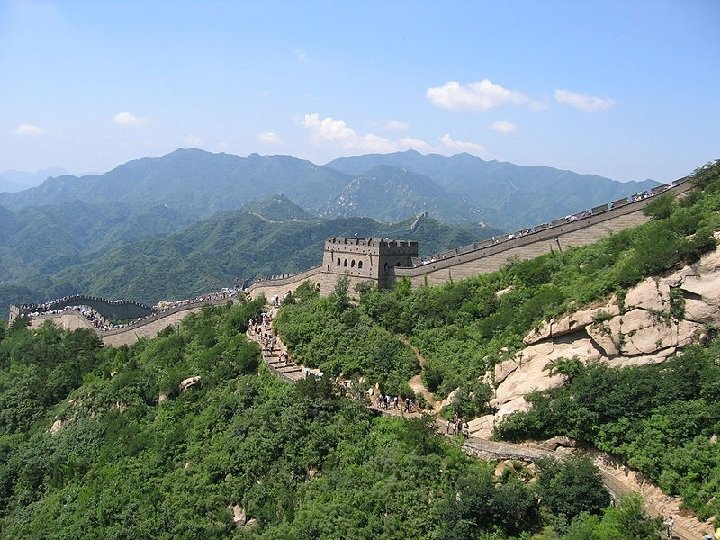
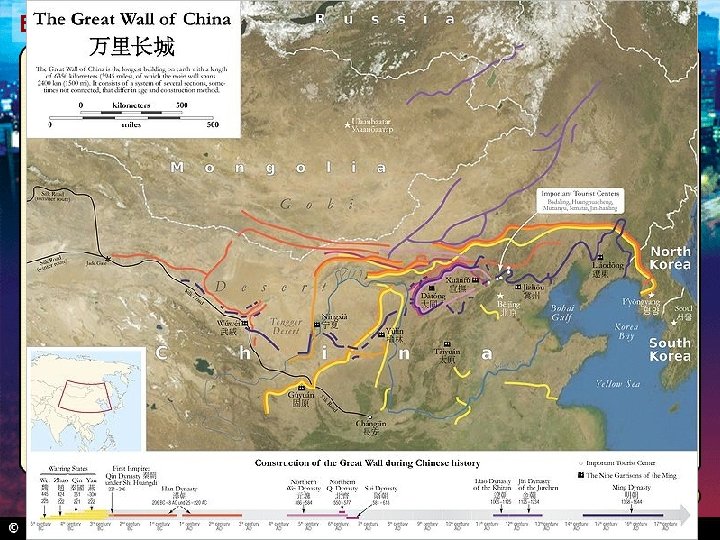
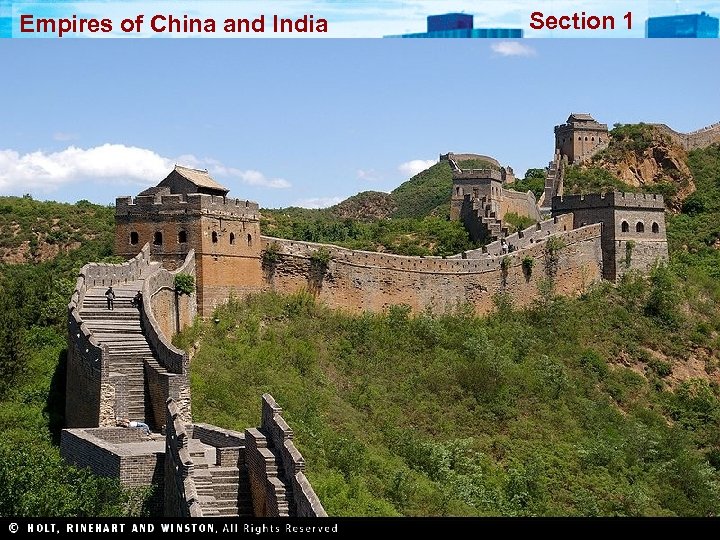
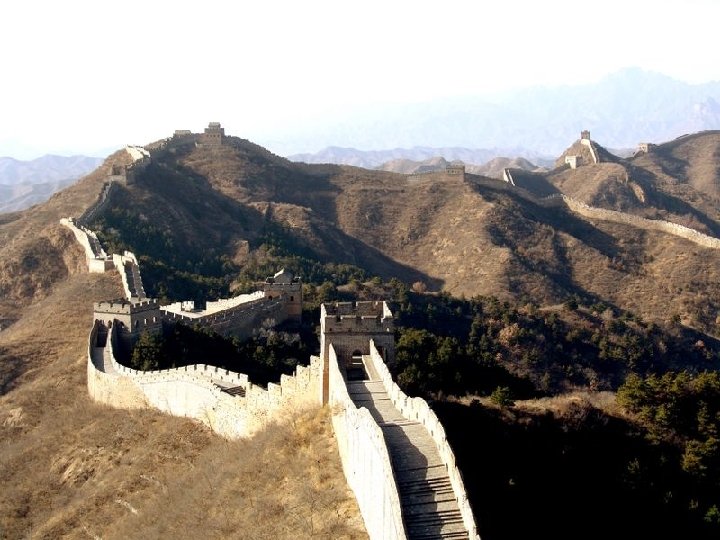
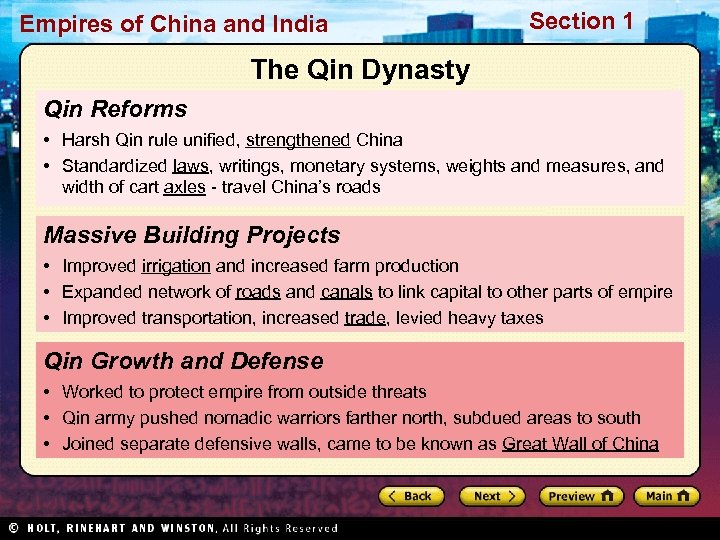 Empires of China and India Section 1 The Qin Dynasty Qin Reforms • Harsh Qin rule unified, strengthened China • Standardized laws, writings, monetary systems, weights and measures, and width of cart axles - travel China’s roads Massive Building Projects • Improved irrigation and increased farm production • Expanded network of roads and canals to link capital to other parts of empire • Improved transportation, increased trade, levied heavy taxes Qin Growth and Defense • Worked to protect empire from outside threats • Qin army pushed nomadic warriors farther north, subdued areas to south • Joined separate defensive walls, came to be known as Great Wall of China
 Empires of China and India Section 1
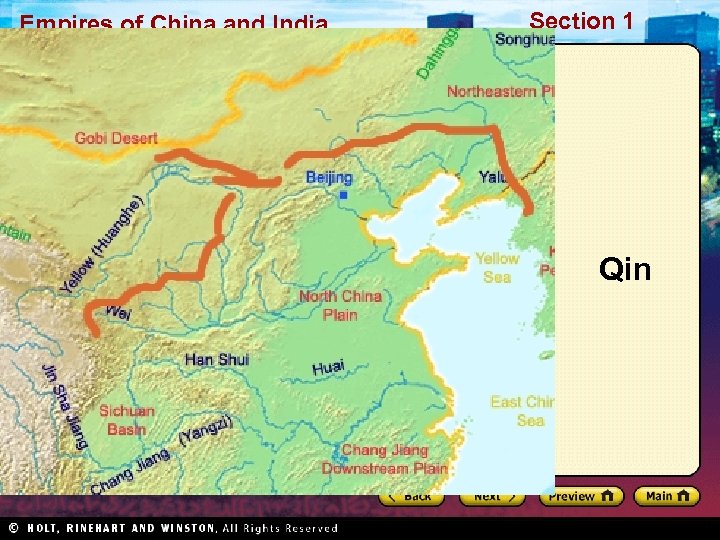 Empires of China and India Section 1 Qin
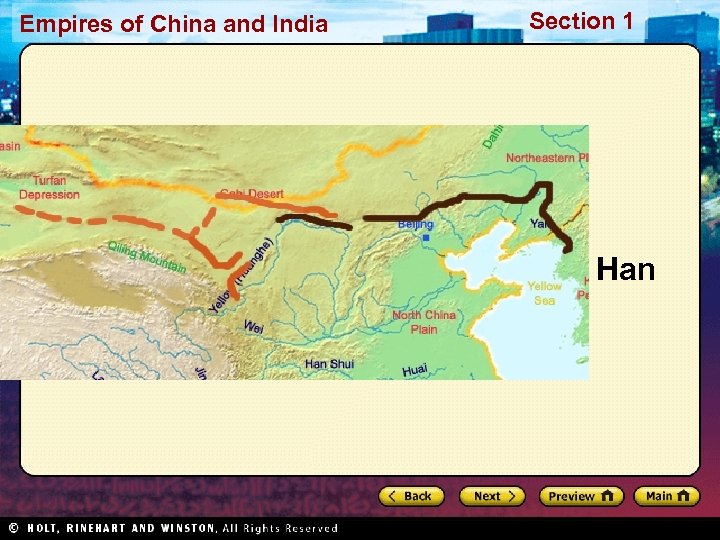 Empires of China and India Section 1 Han
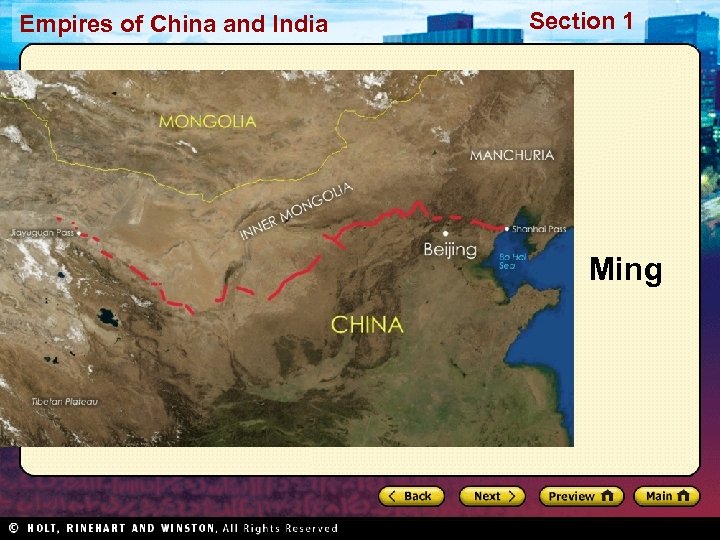 Empires of China and India Section 1 Ming
 Empires of China and India Section 1
 Empires of China and India Section 1
 Empires of China and India Section 1
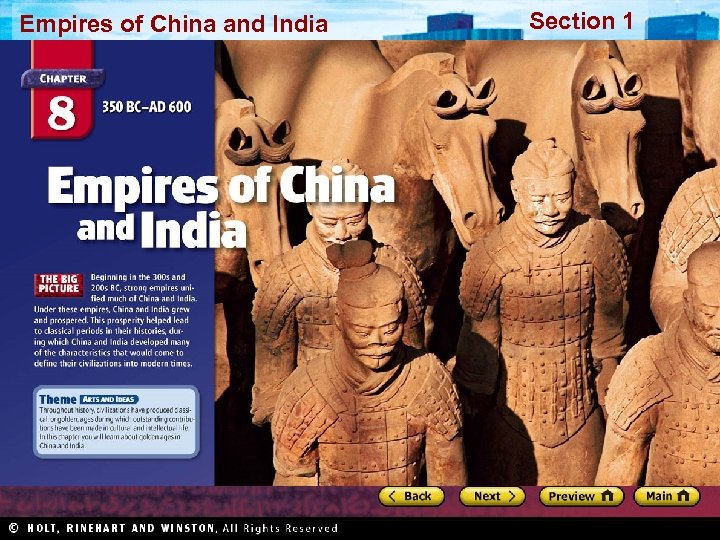
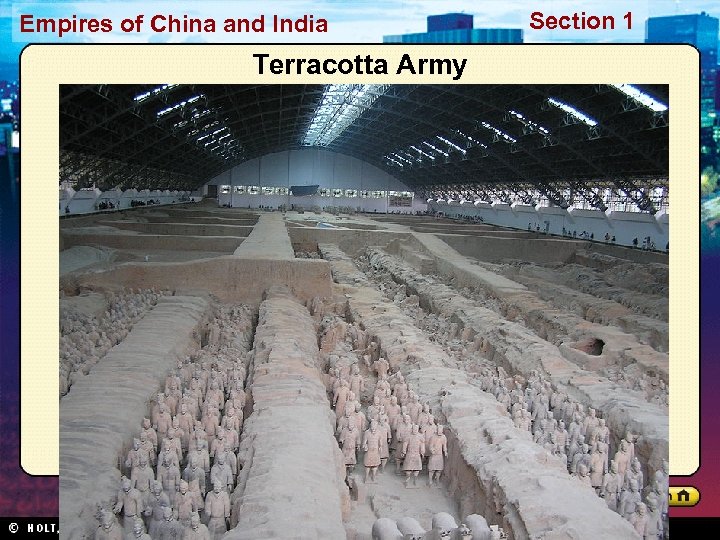 Empires of China and India Terracotta Army Section 1
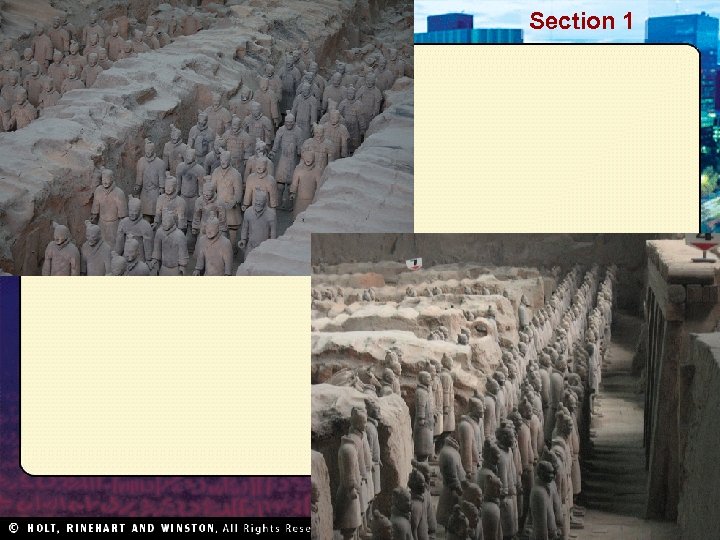 Empires of China and India Section 1
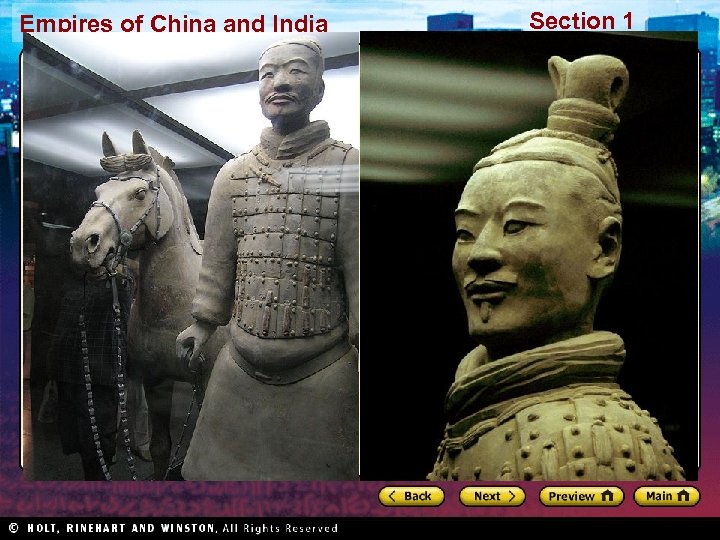 Empires of China and India Section 1
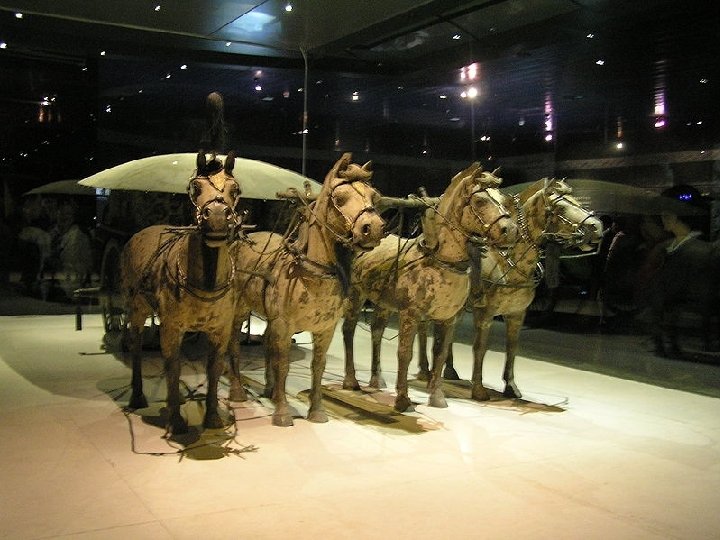 Empires of China and India Section 1
 Empires of China and India Section 1
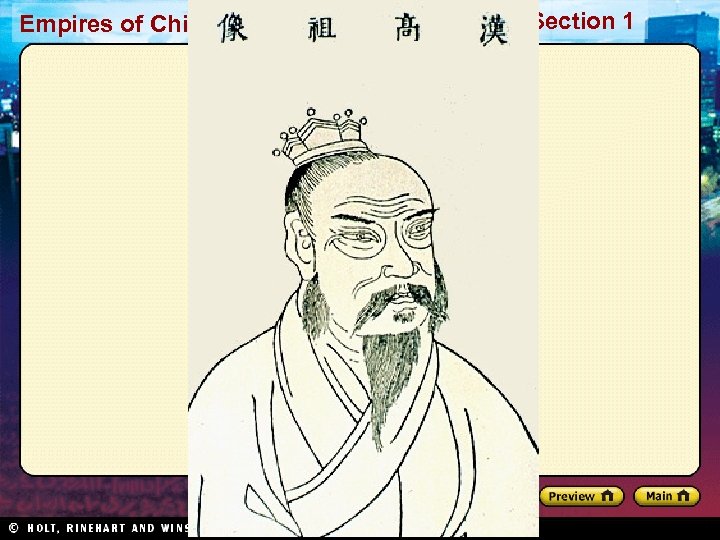
 Empires of China and India Section 1 Fall of the Qin • Dynasty’s policies fueled anger, resentment • Qin dynasty crumbled after Shi Huangdi died, 210 BC – Peasants fed up with forced labor, high taxes, rebelled – Nobles eager to regain land, power, raised armies against new emperor – Peasant rebel leader Liu Bang defeated Qin forces, founded Han dynasty
 Empires of China and India Section 1
 Empires of China and India Section 1 Summarize How did Shi Huangdi unify China and build a strong empire? Answer(s): conquered other states; centralized government; suppressed all criticism; subdued raiders to the north, constructed Great Wall
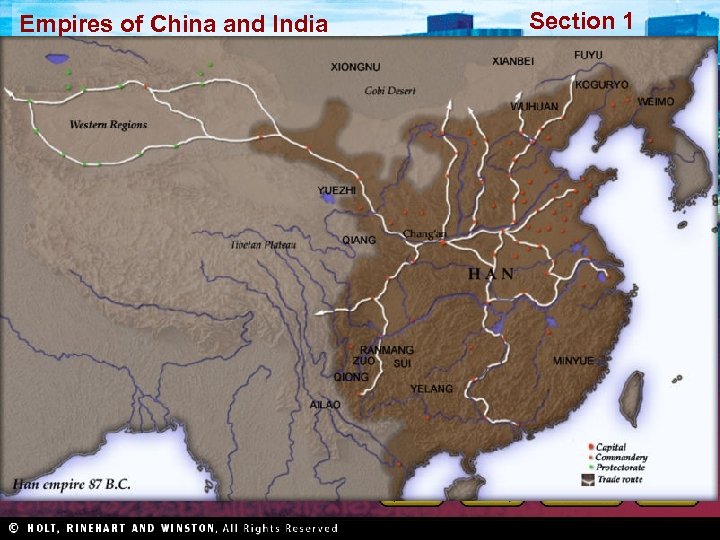
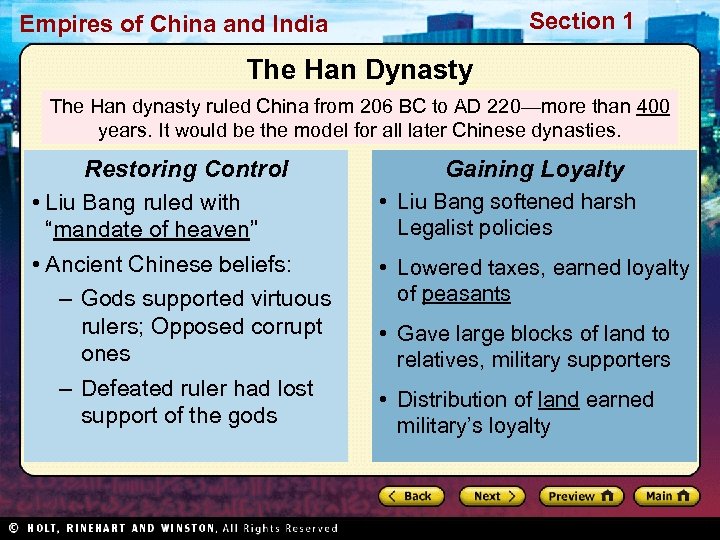 Section 1 Empires of China and India The Han Dynasty The Han dynasty ruled China from 206 BC to AD 220—more than 400 years. It would be the model for all later Chinese dynasties. Restoring Control • Liu Bang ruled with “mandate of heaven” • Ancient Chinese beliefs: – Gods supported virtuous rulers; Opposed corrupt ones – Defeated ruler had lost support of the gods Gaining Loyalty • Liu Bang softened harsh Legalist policies • Lowered taxes, earned loyalty of peasants • Gave large blocks of land to relatives, military supporters • Distribution of land earned military’s loyalty
 Empires of China and India Section 1
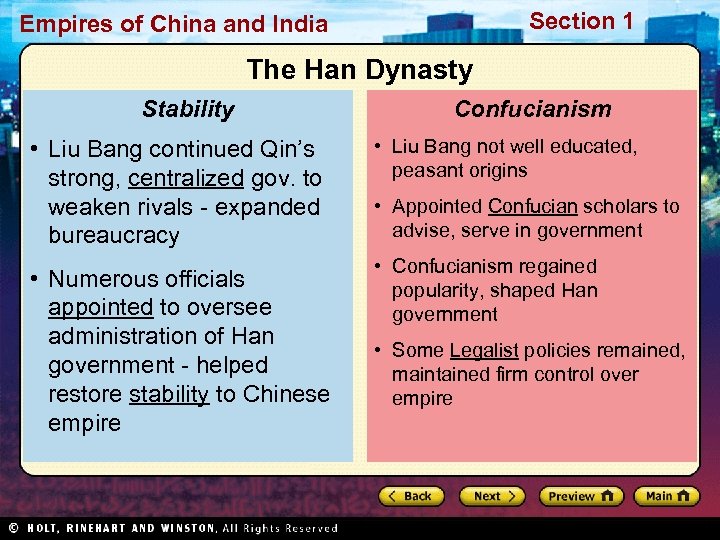 Section 1 Empires of China and India The Han Dynasty Stability Confucianism • Liu Bang continued Qin’s strong, centralized gov. to weaken rivals - expanded bureaucracy • Liu Bang not well educated, peasant origins • Numerous officials appointed to oversee administration of Han government - helped restore stability to Chinese empire • Confucianism regained popularity, shaped Han government • Appointed Confucian scholars to advise, serve in government • Some Legalist policies remained, maintained firm control over empire
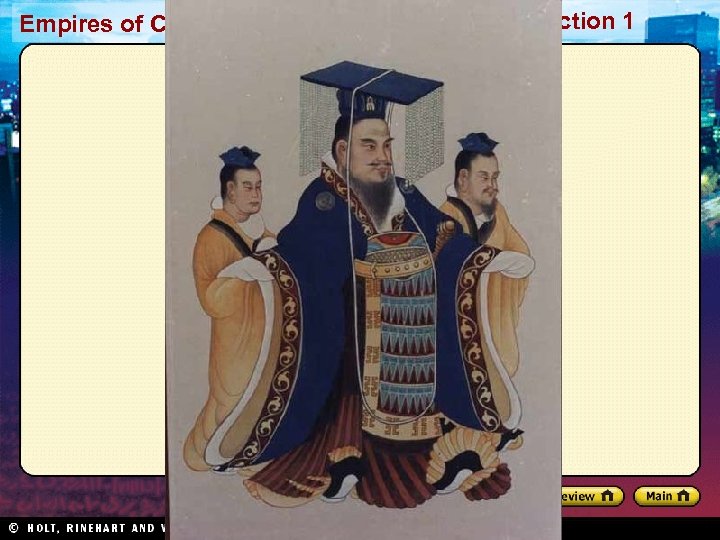
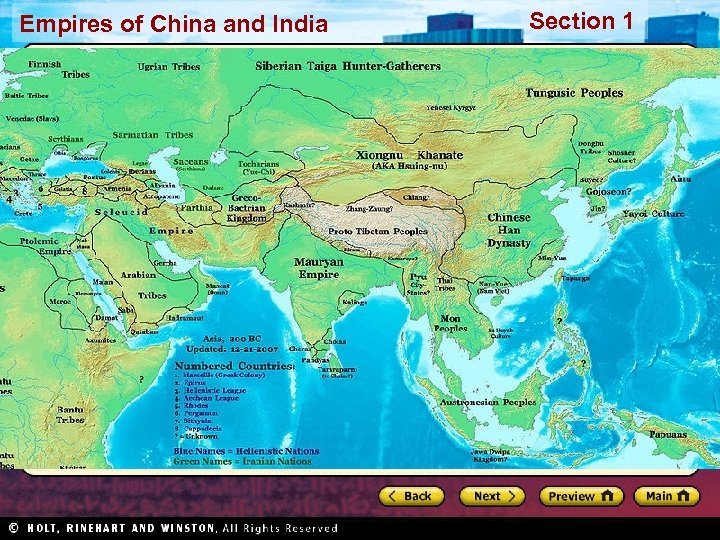
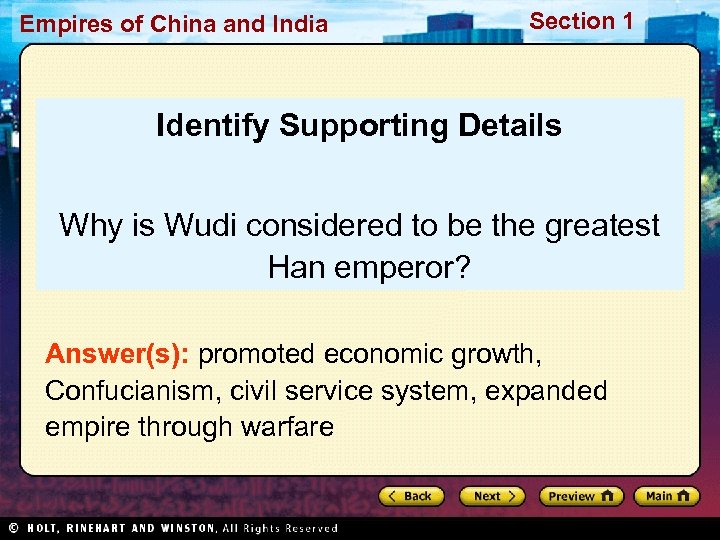
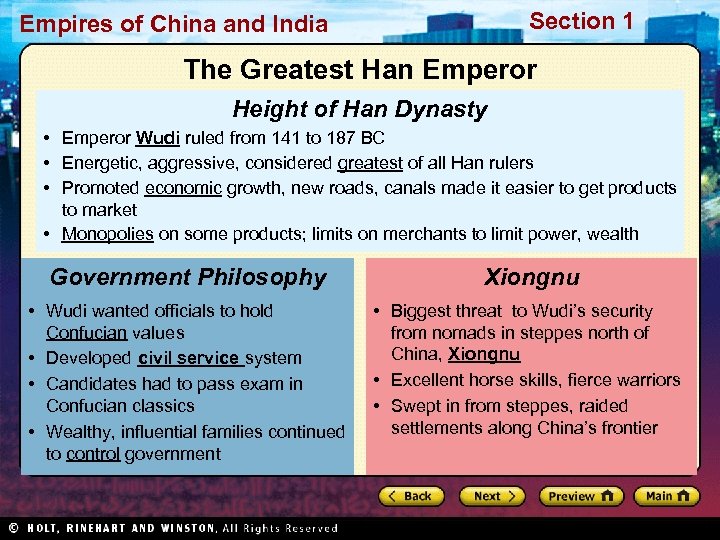 Section 1 Empires of China and India The Greatest Han Emperor Height of Han Dynasty • Emperor Wudi ruled from 141 to 187 BC • Energetic, aggressive, considered greatest of all Han rulers • Promoted economic growth, new roads, canals made it easier to get products to market • Monopolies on some products; limits on merchants to limit power, wealth Government Philosophy Xiongnu • Wudi wanted officials to hold Confucian values • Developed civil service system • Candidates had to pass exam in Confucian classics • Wealthy, influential families continued to control government • Biggest threat to Wudi’s security from nomads in steppes north of China, Xiongnu • Excellent horse skills, fierce warriors • Swept in from steppes, raided settlements along China’s frontier
 Empires of China and India Section 1
 Empires of China and India Section 1
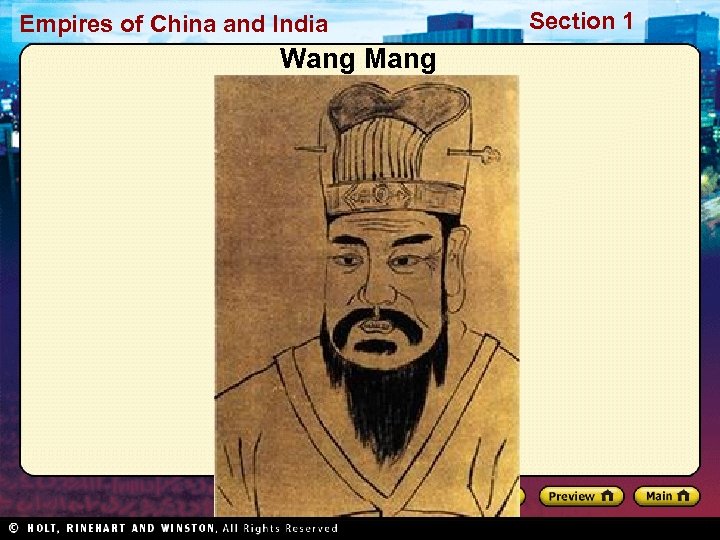
 Empires of China and India Section 1 The Greatest Han Emperor Expansion under Wudi • Wudi expanded empire through warfare - began to use force against southern Xiongnu tribes, 133 BC • Colonized parts of Korea, Manchuria to NE, Vietnam to S; extended control into Central Asia to west, opened trade routes Han Decline • Brief crisis AD 9 when rebel Wang Mang seized throne • Han regained control, AD 25, start of Later Han dynasty • Later Han weakened by court intrigues, gap between rich and poor, high taxes crushing poor • Yellow Turban revolt AD 184; Warlords, Period of Division – lasts 350 Years
 Empires of China and India Wang Mang Section 1
 Empires of China and India Section 1
 Empires of China and India Section 1
 Empires of China and India Section 1 Identify Supporting Details Why is Wudi considered to be the greatest Han emperor? Answer(s): promoted economic growth, Confucianism, civil service system, expanded empire through warfare
 Empires of China and India Section 1 Chinese Society and Culture Main Idea The Han dynasty was a time of social change, the growth of trade, and great achievements in the arts and sciences.
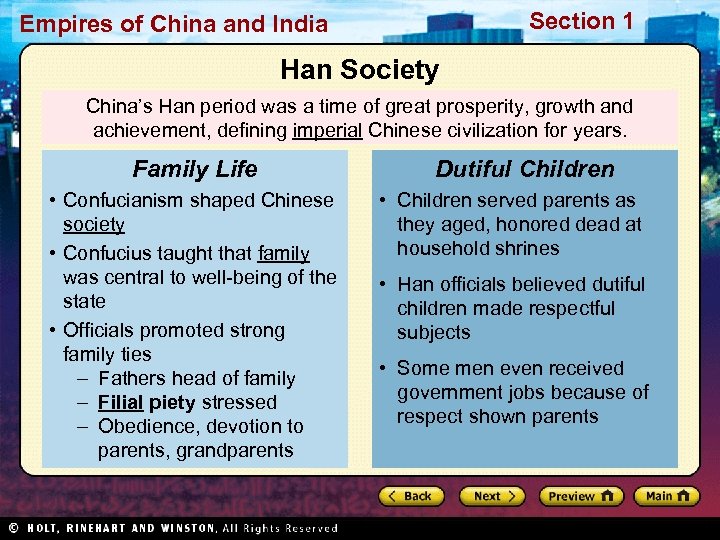 Section 1 Empires of China and India Han Society China’s Han period was a time of great prosperity, growth and achievement, defining imperial Chinese civilization for years. Family Life • Confucianism shaped Chinese society • Confucius taught that family was central to well-being of the state • Officials promoted strong family ties – Fathers head of family – Filial piety stressed – Obedience, devotion to parents, grandparents Dutiful Children • Children served parents as they aged, honored dead at household shrines • Han officials believed dutiful children made respectful subjects • Some men even received government jobs because of respect shown parents
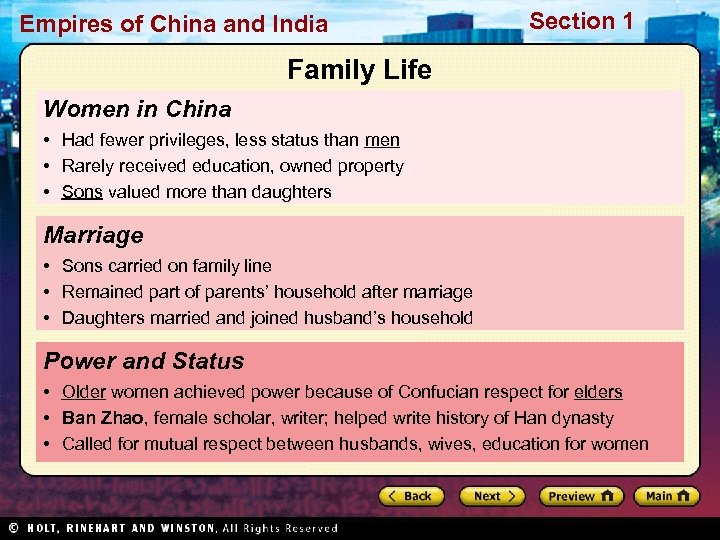 Empires of China and India Section 1 Family Life Women in China • Had fewer privileges, less status than men • Rarely received education, owned property • Sons valued more than daughters Marriage • Sons carried on family line • Remained part of parents’ household after marriage • Daughters married and joined husband’s household Power and Status • Older women achieved power because of Confucian respect for elders • Ban Zhao, female scholar, writer; helped write history of Han dynasty • Called for mutual respect between husbands, wives, education for women
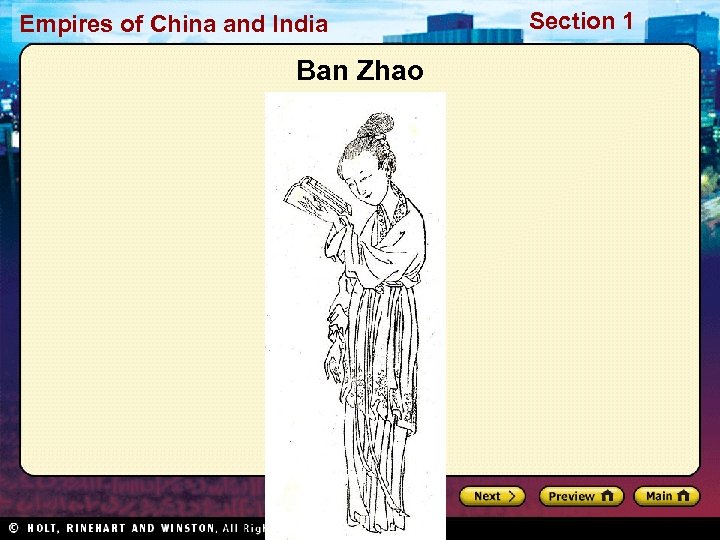 Empires of China and India Ban Zhao Section 1
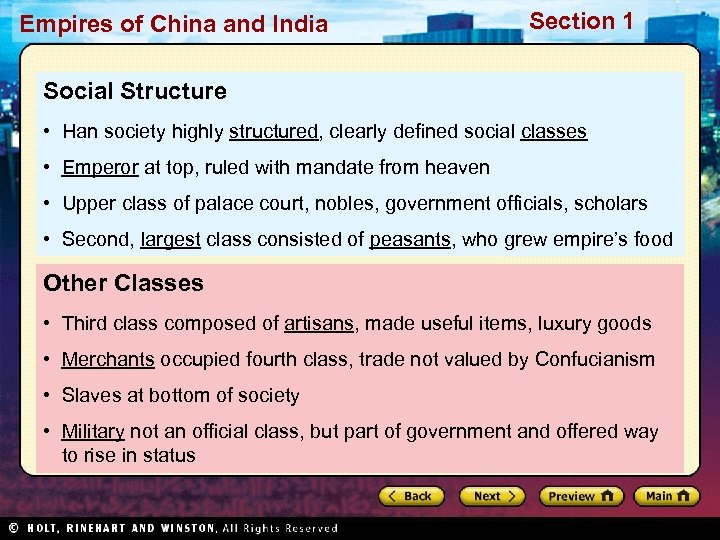 Empires of China and India Section 1 Social Structure • Han society highly structured, clearly defined social classes • Emperor at top, ruled with mandate from heaven • Upper class of palace court, nobles, government officials, scholars • Second, largest class consisted of peasants, who grew empire’s food Other Classes • Third class composed of artisans, made useful items, luxury goods • Merchants occupied fourth class, trade not valued by Confucianism • Slaves at bottom of society • Military not an official class, but part of government and offered way to rise in status
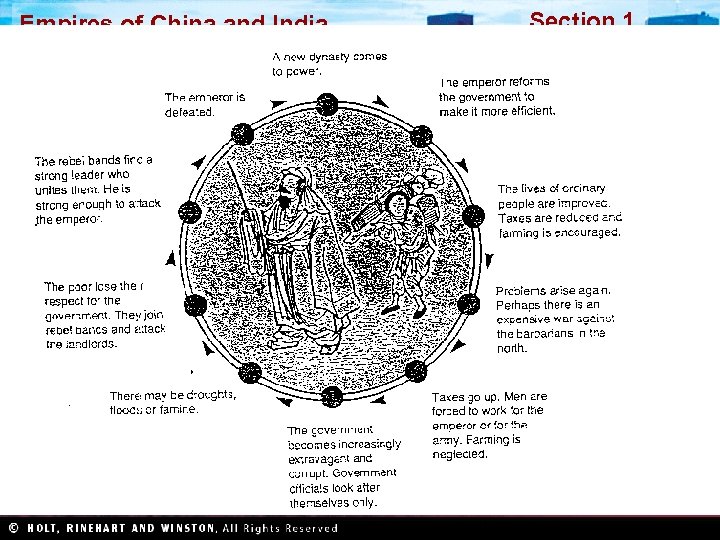 Empires of China and India Section 1
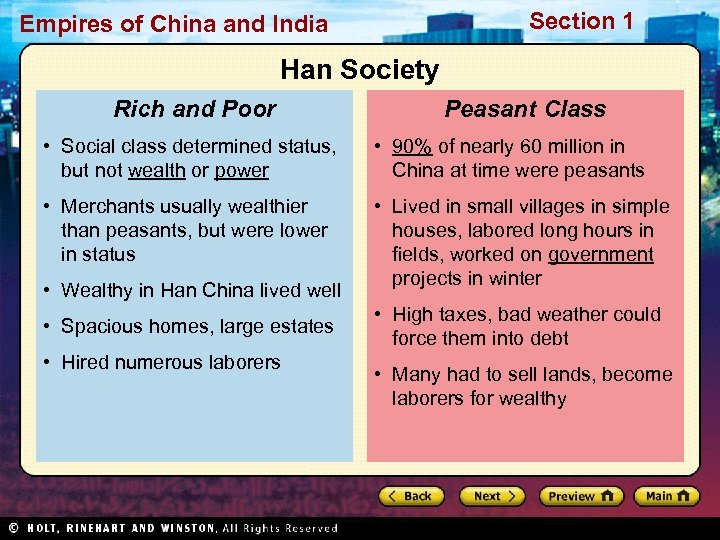 Section 1 Empires of China and India Han Society Rich and Poor Peasant Class • Social class determined status, but not wealth or power • 90% of nearly 60 million in China at time were peasants • Merchants usually wealthier than peasants, but were lower in status • Lived in small villages in simple houses, labored long hours in fields, worked on government projects in winter • Wealthy in Han China lived well • Spacious homes, large estates • Hired numerous laborers • High taxes, bad weather could force them into debt • Many had to sell lands, become laborers for wealthy
 Empires of China and India Section 1 Summarize What was life like for Chinese peasants during the Han dynasty? Answer(s): worked hard in fields, farmed, raised animals, often sold land to feed families, forced to work on building projects, easily forced into debt, worked for wealthy landowners
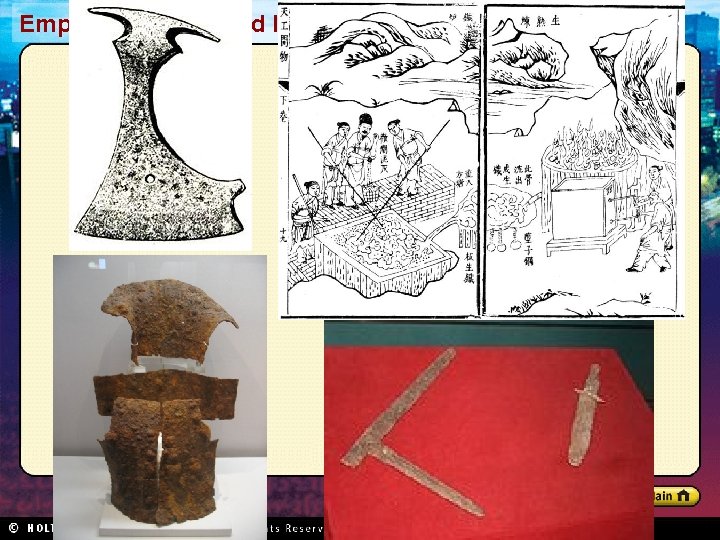
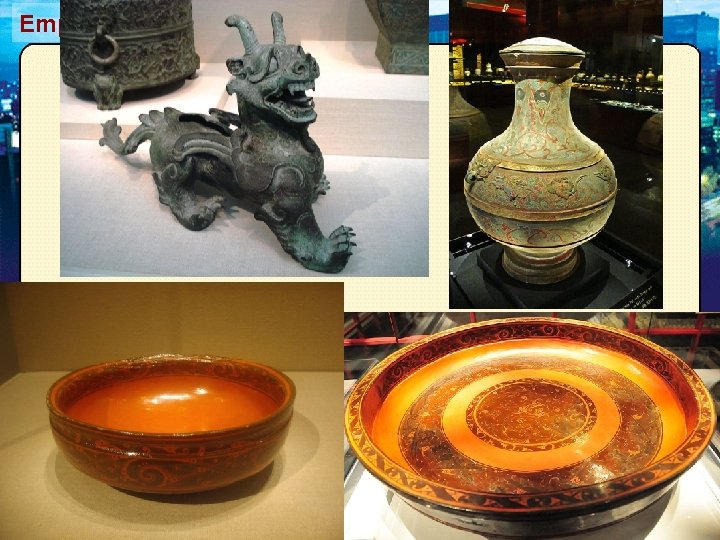
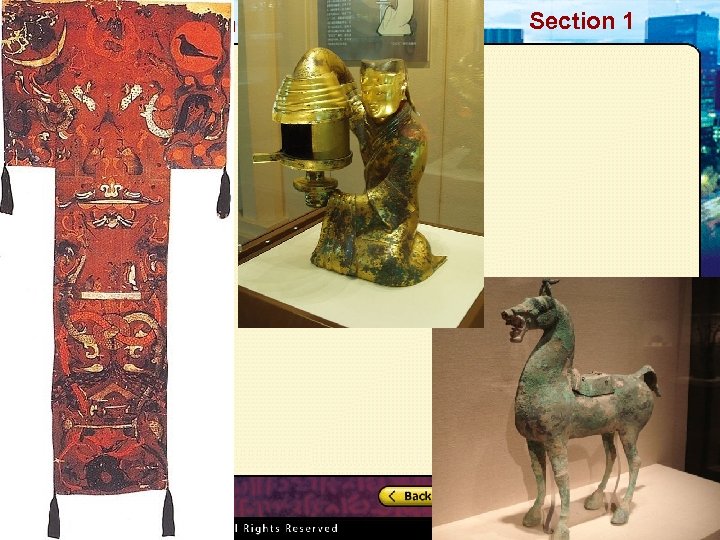
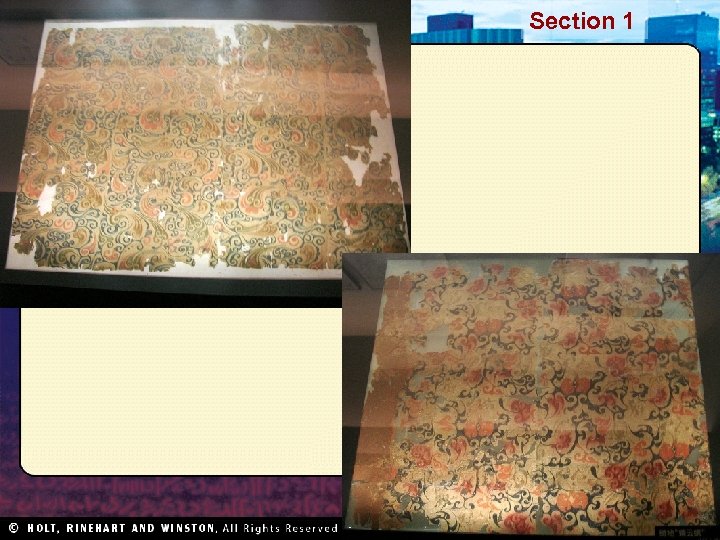
 Section 1 Empires of China and India Trade and Buddhism Trade grew in Han period • Agriculture basis of economy • Growth of trade increased prosperity • Led to contact between China, other civilizations Production of silk • Most prized Chinese product • Secret method for making silk • Revealing secret punishable by death Han products • Ironworkers made iron armor, swords • Artisans made pottery, jade and bronze objects, lacquerware Major industry • Raised silkworms, unwound threads of cocoons • Dyed threads, wove into fabric • Fabric beautiful, soft, strong • Clothing costly, in high demand
 Empires of China and India Section 1
 Empires of China and India Section 1
 Empires of China and India Section 1
 Empires of China and India Section 1
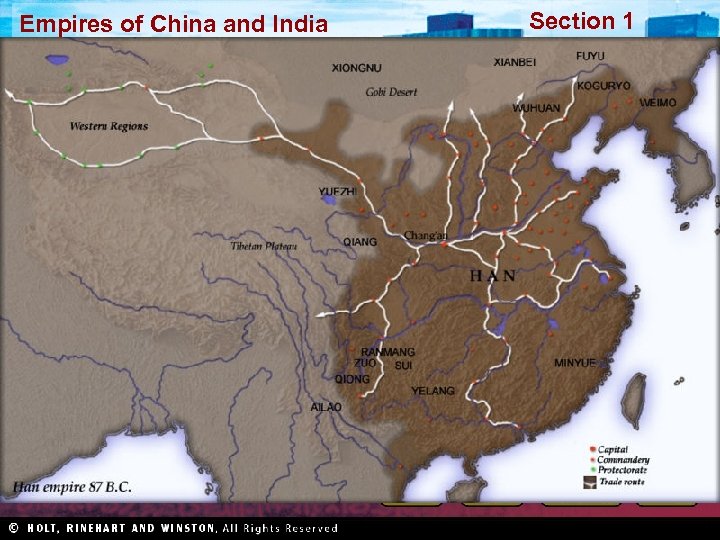
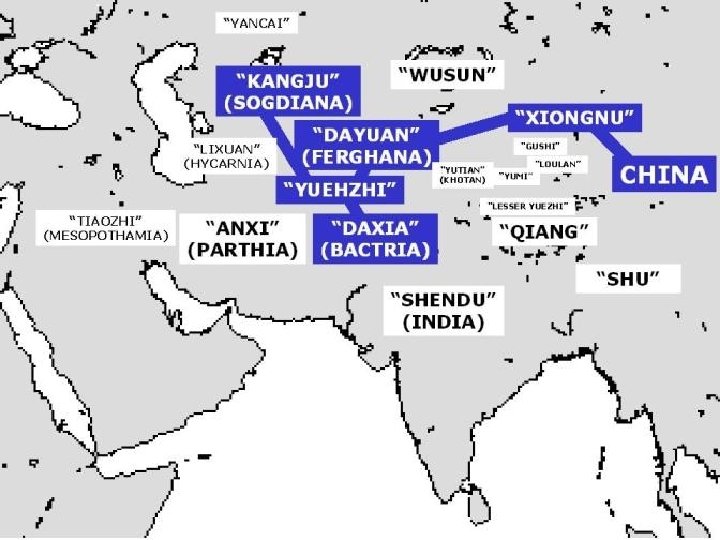
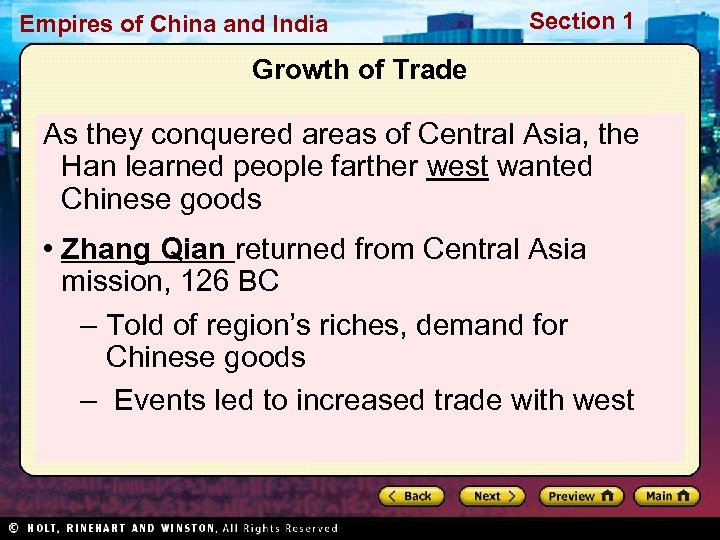 Empires of China and India Section 1 Growth of Trade As they conquered areas of Central Asia, the Han learned people farther west wanted Chinese goods • Zhang Qian returned from Central Asia mission, 126 BC – Told of region’s riches, demand for Chinese goods – Events led to increased trade with west
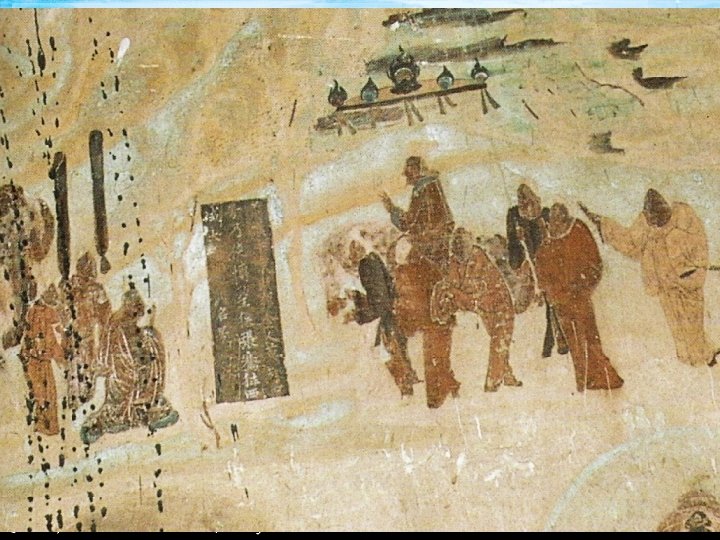 Empires of China and India Section 1
 Empires of China and India Section 1
 Empires of China and India Section 1
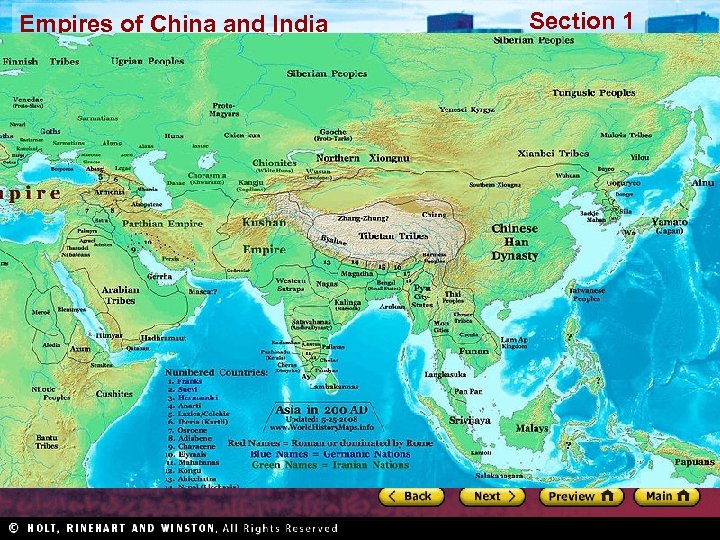
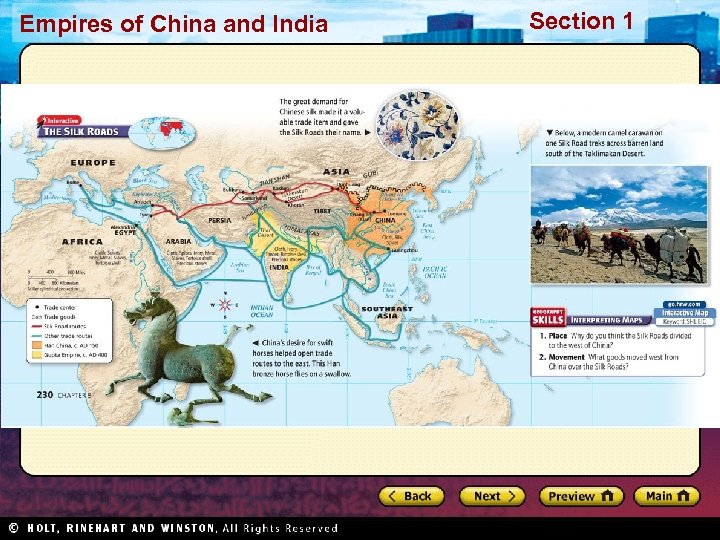
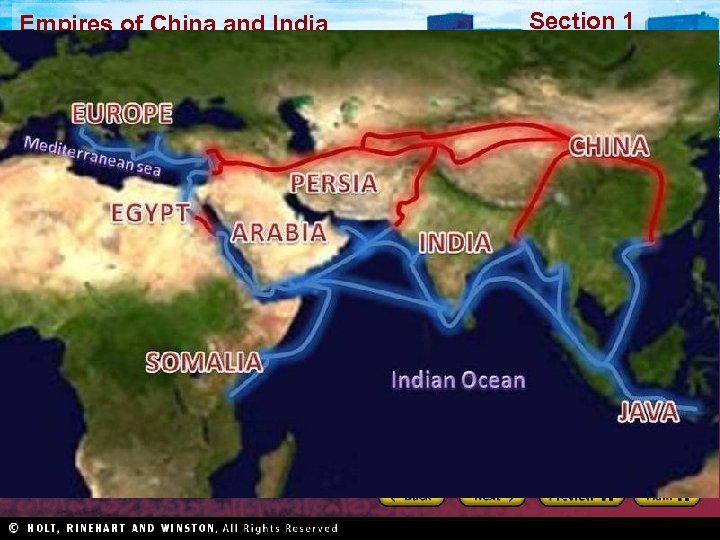
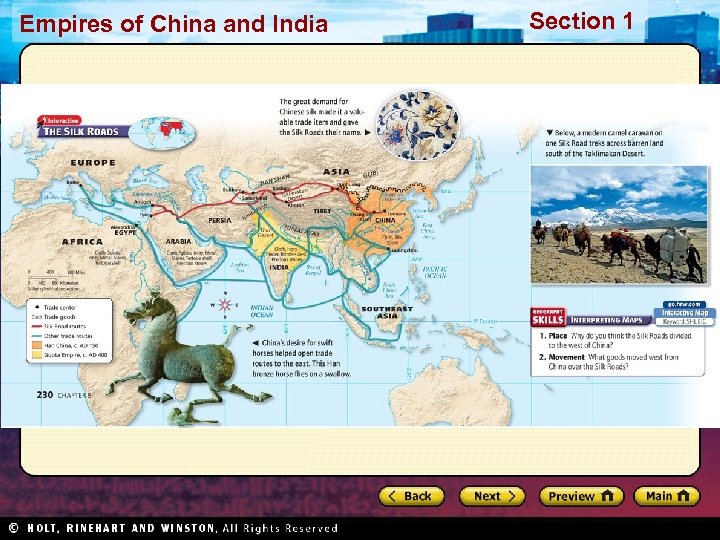
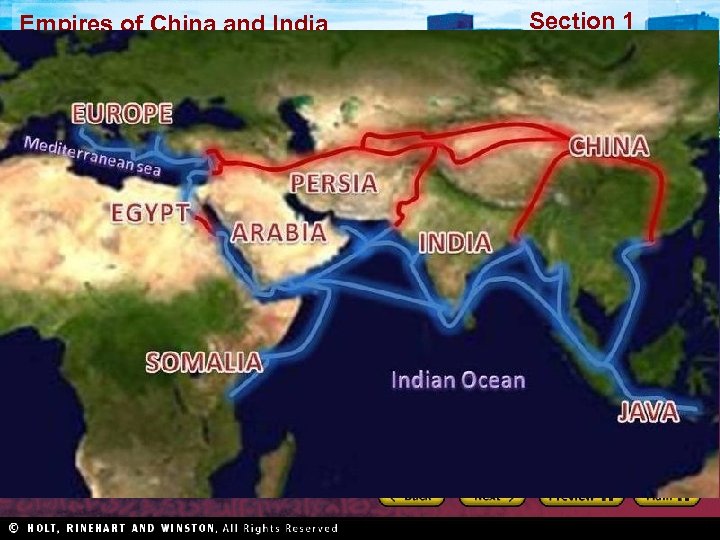
 Section 1 Empires of China and India The Silk Roads Merchants traveling between China, Central Asia used overland routes. The most famous were called the Silk Roads. This network of routes eventually stretched from China over 4, 000 miles to Mediterranean Sea, and linked China to India, the Middle East, and the Roman Empire. Travel Trade • Travelers on Silk Roads crossed rugged, barren terrain • Most merchants traveled only part of way • Faced attacks by bandits • Traded goods with merchants from distant lands • For protection, traveled in huge camel caravans • Stopped at stations along way • Most goods traded were luxury items • Small, valuable, highly profitable
 Empires of China and India Section 1
 Empires of China and India Section 1
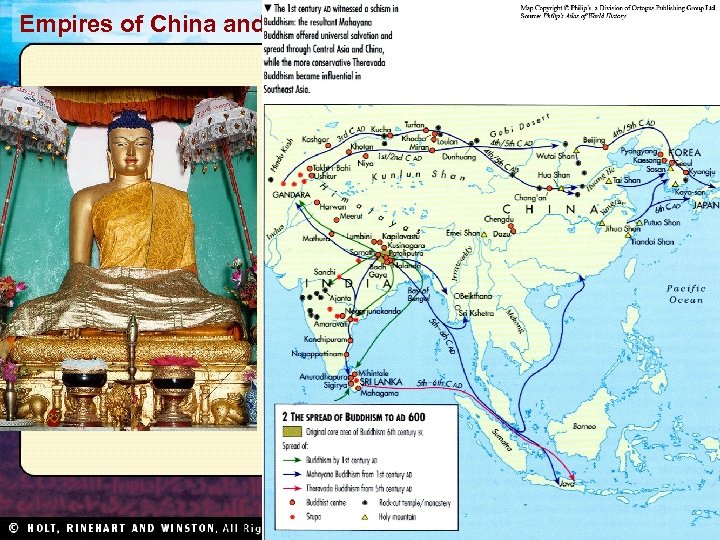
 Empires of China and India Section 1 Trade and Buddhism Traders carried ideas as well as goods over the Silk Roads • Buddhism spread from to China from India – Reached China in first century AD – Han government became less stable, violence increased – Buddhism’s message of rebirth offered hope • Buddhism gained popularity by AD 200 – Example of cultural diffusion – Spread of ideas from one culture to another
 Empires of China and India Section 1
 Empires of China and India Section 1 Draw Conclusions How did trade over the Silk Roads affect China’s culture? Answer(s): profitable trade in luxury items, connections to Central Asia, introduction of Buddhism
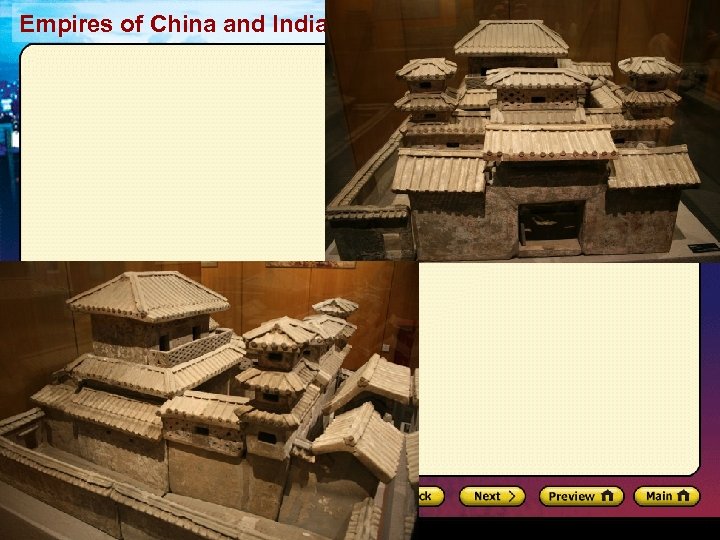
 Empires of China and India Section 1 Han Achievements Classical Age • During Han period, arts flourished, sciences and technology improved life • Han China boasted magnificent palaces, multistoried towers • None survived, but ceramic models from tombs show architecture of period Artisans and Artists • Artisans produced ceramic, bronze figurines, jade carvings, silk cloth • Artists painted portraits and nature scenes on walls, scrolls, room screens • During Later Han, Buddhist art flourished, including temple wall paintings Literature • Han literature known for poetry, new styles of verse • Fu style, combined prose and poetry to create long works of literature • Shi featured short lines of verse, could be sung
 Empires of China and India Section 1
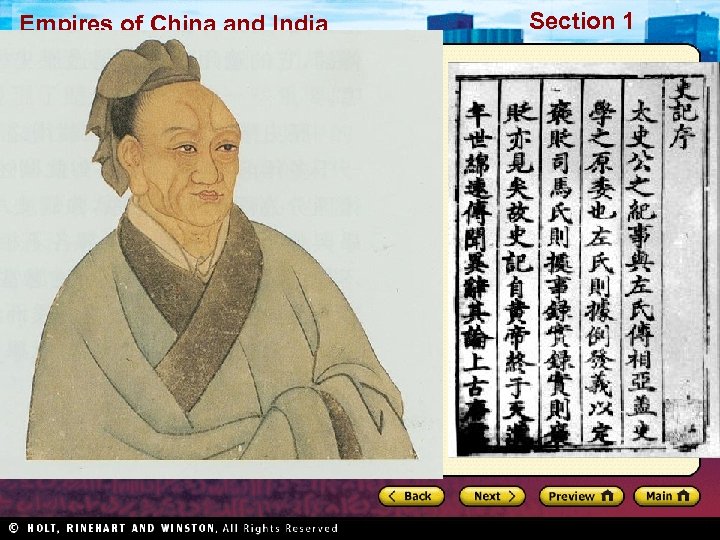
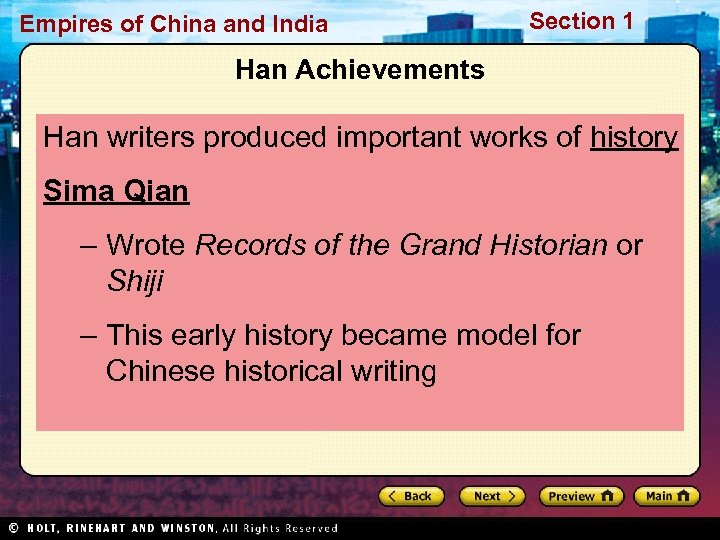 Empires of China and India Section 1 Han Achievements Han writers produced important works of history Sima Qian – Wrote Records of the Grand Historian or Shiji – This early history became model for Chinese historical writing
 Empires of China and India Section 1
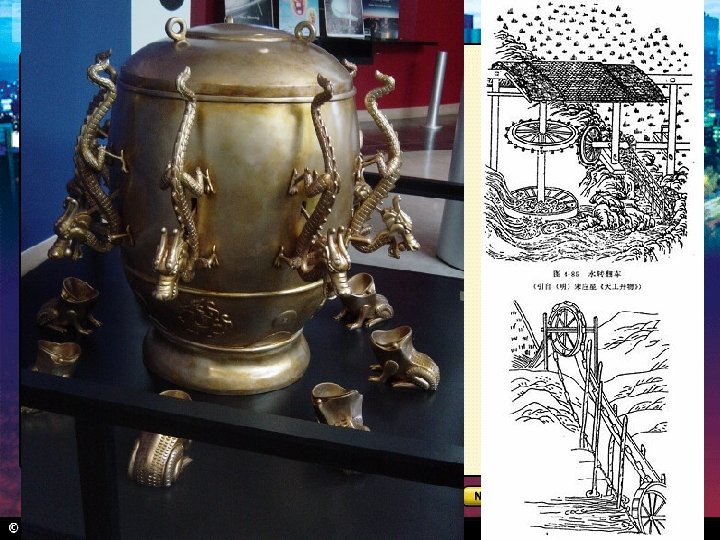
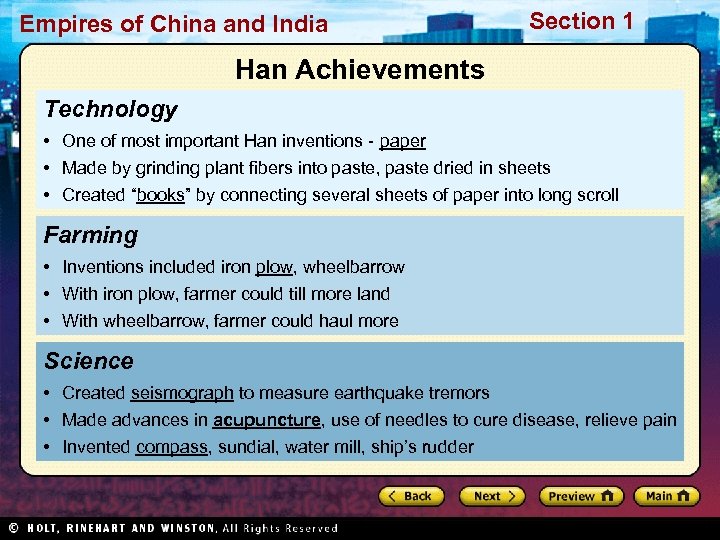 Empires of China and India Section 1 Han Achievements Technology • One of most important Han inventions - paper • Made by grinding plant fibers into paste, paste dried in sheets • Created “books” by connecting several sheets of paper into long scroll Farming • Inventions included iron plow, wheelbarrow • With iron plow, farmer could till more land • With wheelbarrow, farmer could haul more Science • Created seismograph to measure earthquake tremors • Made advances in acupuncture, use of needles to cure disease, relieve pain • Invented compass, sundial, water mill, ship’s rudder
 Empires of China and India Section 1
 Empires of China and India Section 1 Summarize What were some technological advances of the Han dynasty? Answer(s): paper, iron plow, wheelbarrow, acupuncture, compass, sundial, water mill, rudder
 Empires of China and India Section 1 “History is a guide to navigation in perilous times. History is who we are and why we are the way we are. ” - David C. Mc. Cullough A duck’s quack doesn’t echo, and no one know why.
 Empires of China and India Section 1
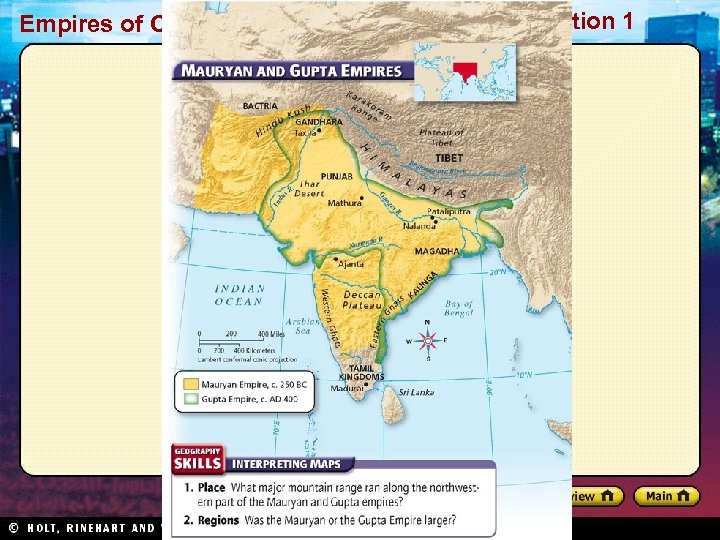
 Empires of China and India Section 1 Early Indian Empires Main Idea The Mauryas and Guptas created powerful empires that united much of India, while trading kingdoms thrived in southern India.
 Empires of China and India Section 1
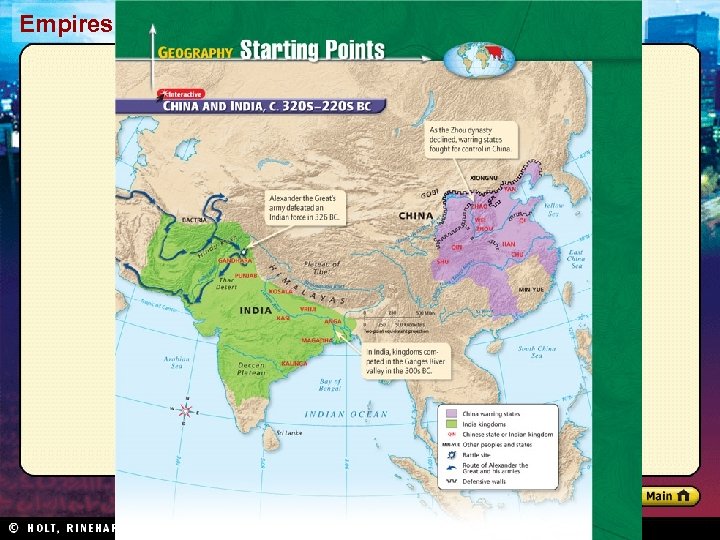
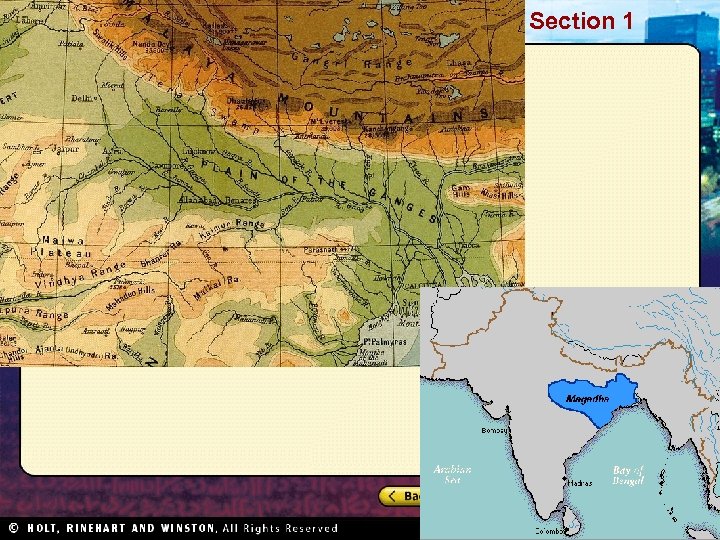
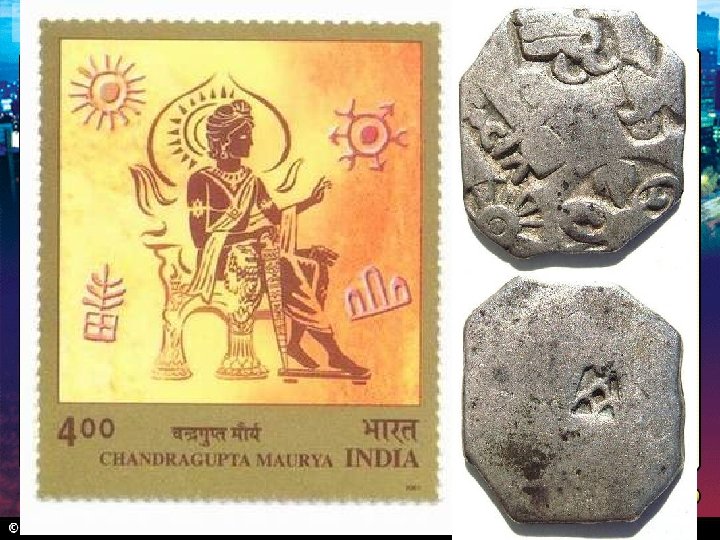
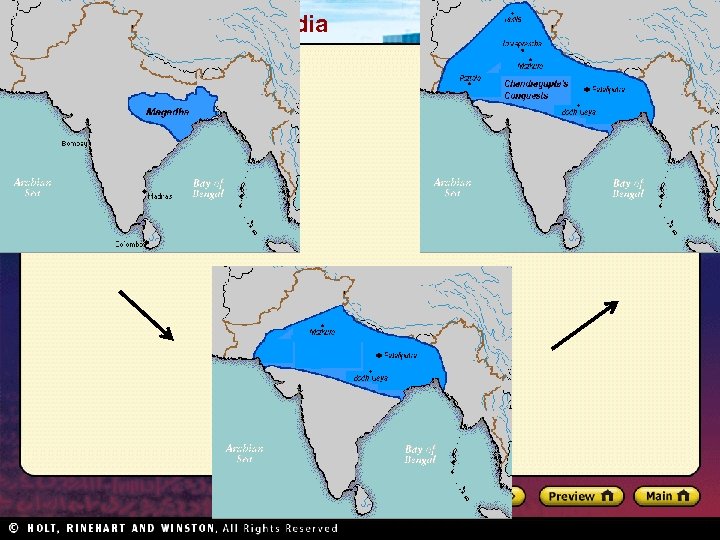
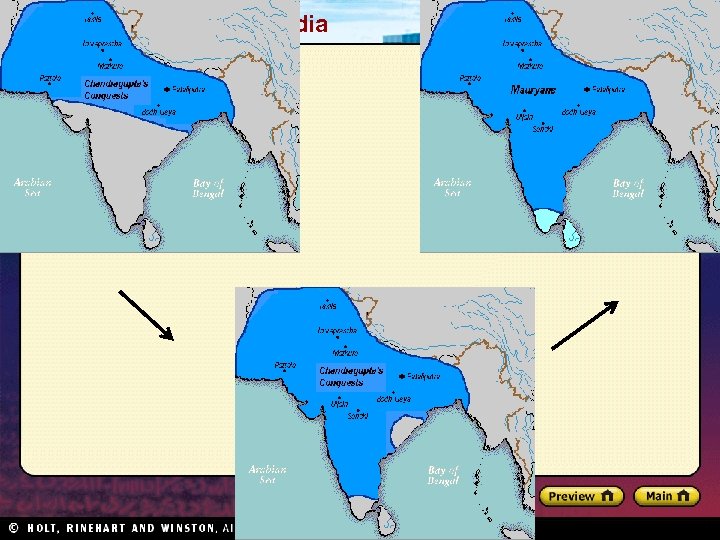
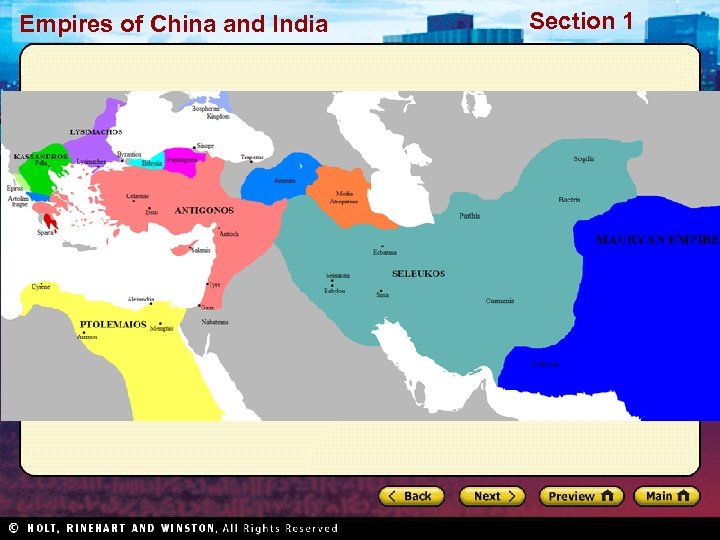
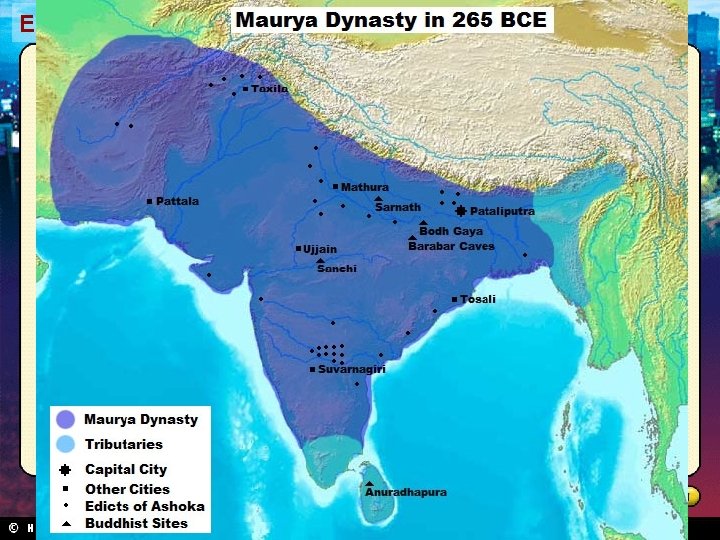
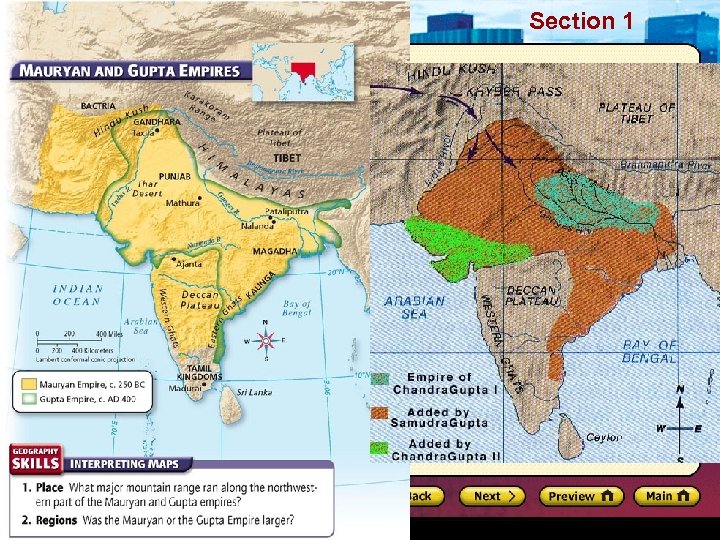
 Empires of China and India Section 1 The Mauryan Empire • Many small kingdoms existed across India in 300 s BC • Each kingdom had own ruler; no central authority united them • Magadha a dominant kingdom near Ganges – Strong leader, Chandragupta Maurya gained control – Began conquering surrounding kingdoms – Conquests led to founding of Mauryan empire
 Empires of China and India Section 1
 Empires of China and India Section 1
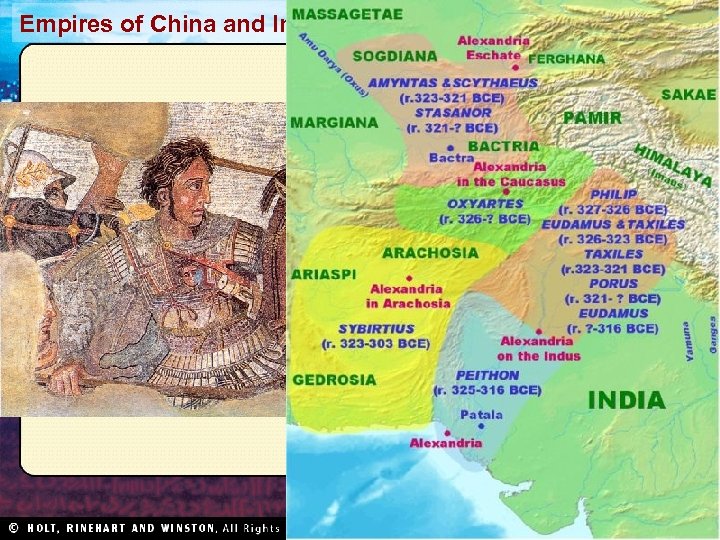
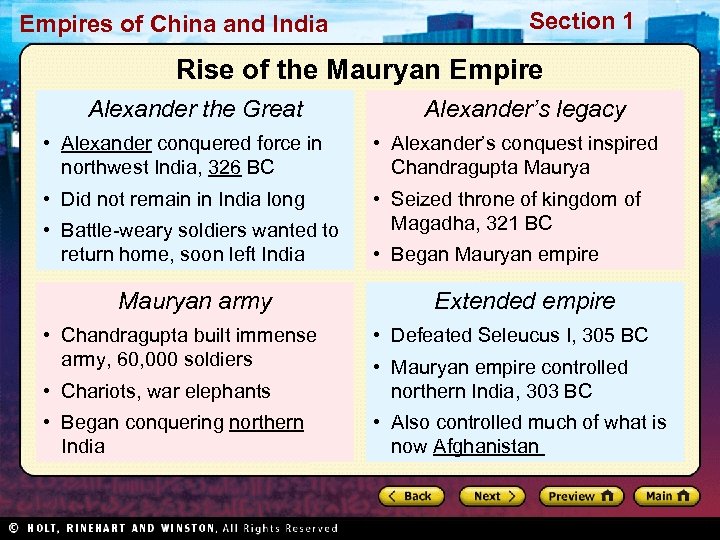 Empires of China and India Section 1 Rise of the Mauryan Empire Alexander the Great Alexander’s legacy • Alexander conquered force in northwest India, 326 BC • Alexander’s conquest inspired Chandragupta Maurya • Did not remain in India long • Seized throne of kingdom of Magadha, 321 BC • Battle-weary soldiers wanted to return home, soon left India Mauryan army • Chandragupta built immense army, 60, 000 soldiers • Began Mauryan empire Extended empire • Defeated Seleucus I, 305 BC • Chariots, war elephants • Mauryan empire controlled northern India, 303 BC • Began conquering northern India • Also controlled much of what is now Afghanistan
 Empires of China and India Section 1
 Empires of China and India Section 1
 Empires of China and India Section 1
 Empires of China and India Section 1
 Empires of China and India Section 1 Mauryan Rule Strong government • Like Qin, Han rulers, Chandragupta Maurya established centralized government to control empire, crush resistance • Relied on brilliant adviser Kautilya, Brahmin, member of the priest caste Arthasastra • Manual for statecraft, thought to be written by Kautilya • Arthasastra called for strict state control • Also called for use of spies, even assassination Empire divided • Chandragupta divided empire into districts, appointed loyalists to rule them • Organized bureaucracy ran government, spies monitored officials, gathered information, rooted out threats to state
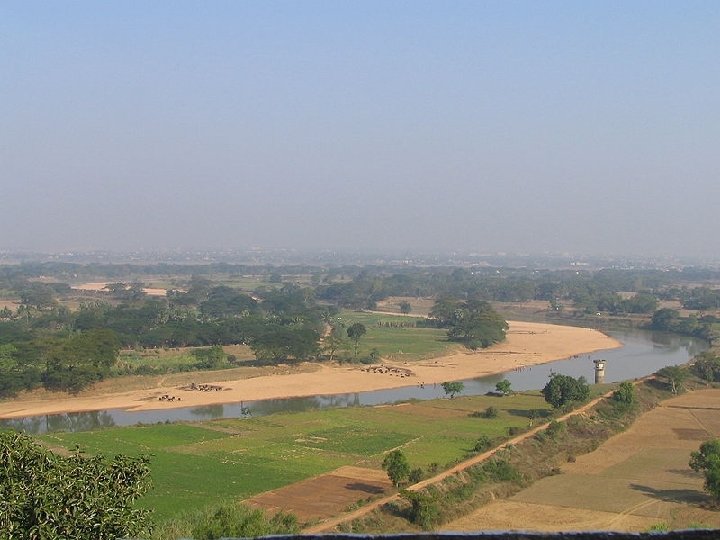
 Section 1 Empires of China and India The Mauryan Empire Megasthenes Pataliputra • Greek ambassador visited Mauryan Empire during Chandragupta’s reign • Greatest city, Mauryan capital: magnificent palaces, temples, parks • Wrote about his observations • Gov. controlled economy • Described land of prosperity • Emperor owned land, rent money from farmers funded government
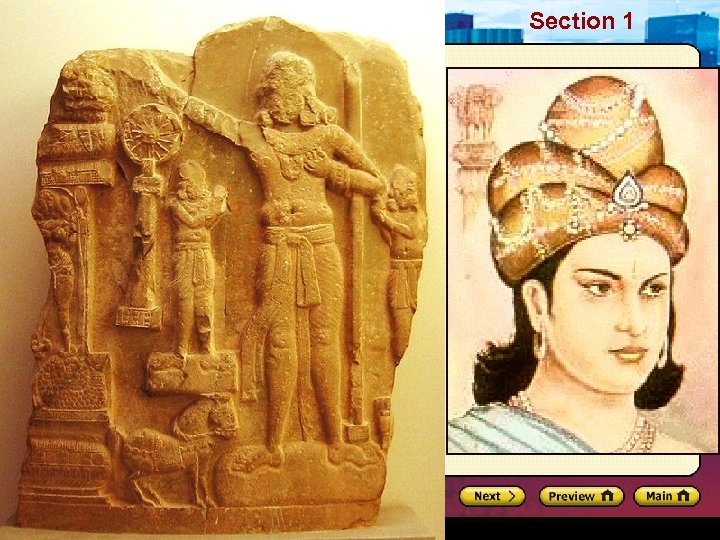
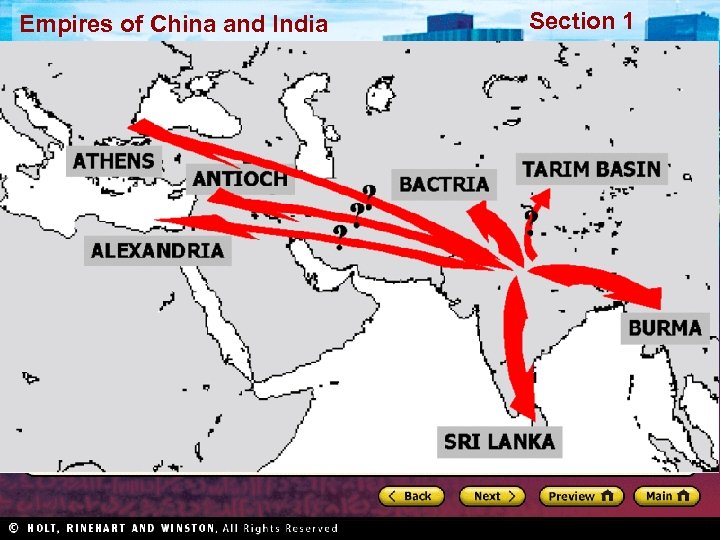
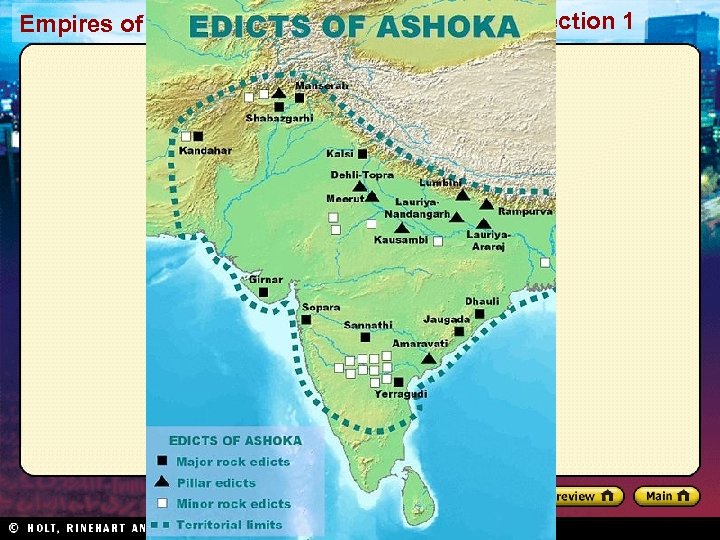
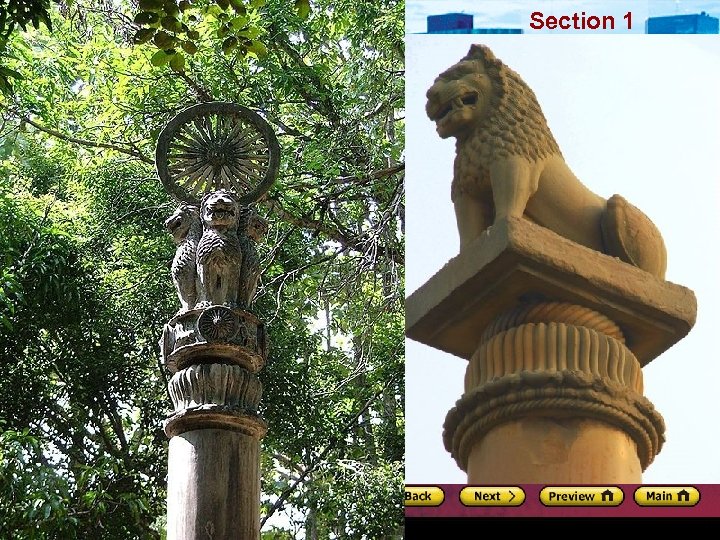
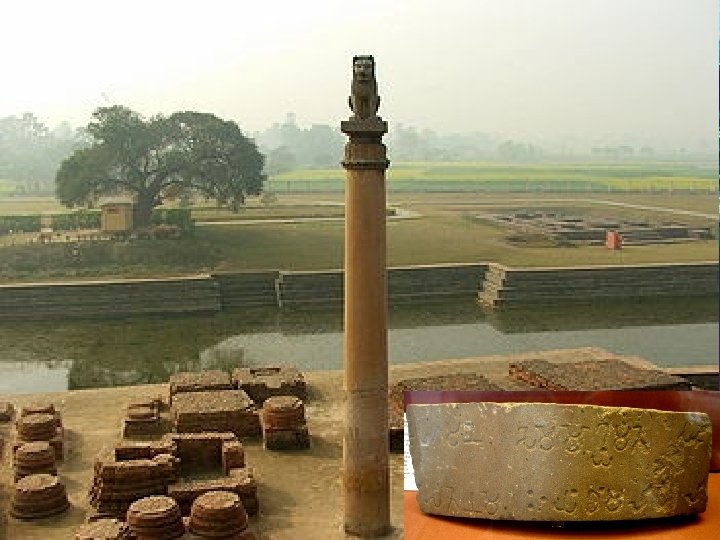
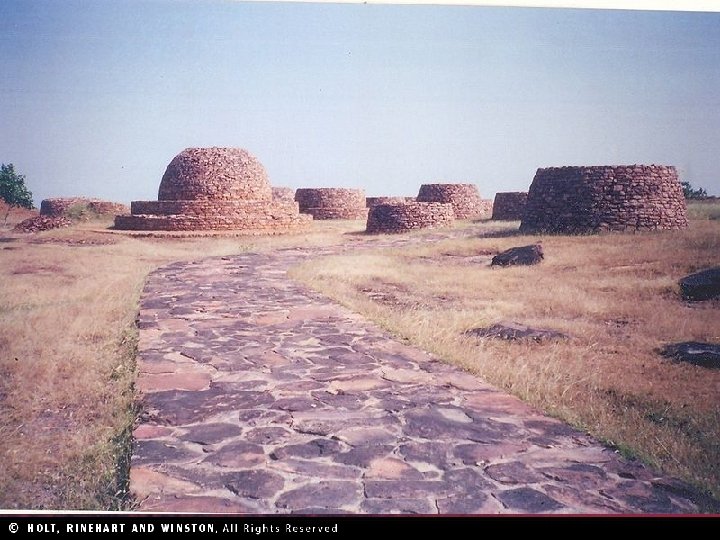
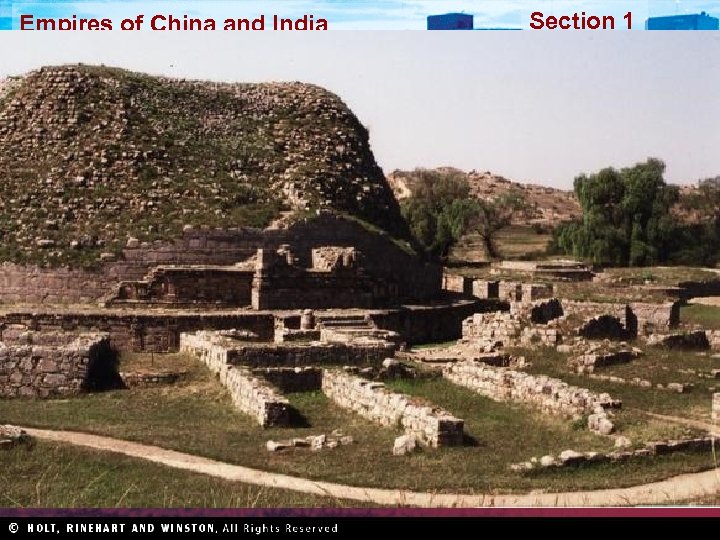
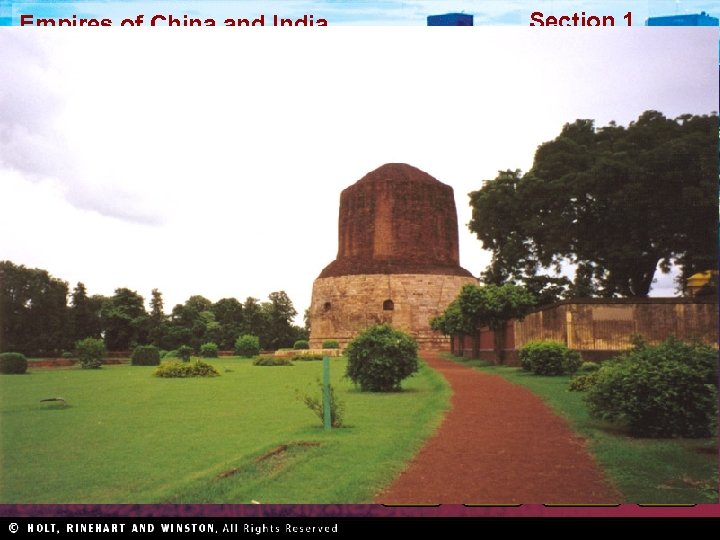
 Empires of China and India Section 1 Rule under Ashoka • Chandragupta gave up throne, 301 BC, became Jainist monk • Son became emperor, followed by grandson Ashoka • Mauryan empire reached height under Ashoka • Through warfare empire expanded, included most of India Kalinga campaign • Violence of fighting at Kalinga appalled Ashoka • Abandoned policy of conquest and converted to Buddhism • Began to promote, spread policy of right conduct, Buddhism • Supported Buddhist missionaries, worked to improve lives of his people
 Empires of China and India Section 1
 Empires of China and India Section 1
 Empires of China and India Section 1
 Empires of China and India Section 1
 Empires of China and India Section 1
 Empires of China and India Section 1
 Empires of China and India Section 1
 Empires of China and India Section 1
 Empires of China and India Section 1
 Empires of China and India Section 1
 Empires of China and India Section 1
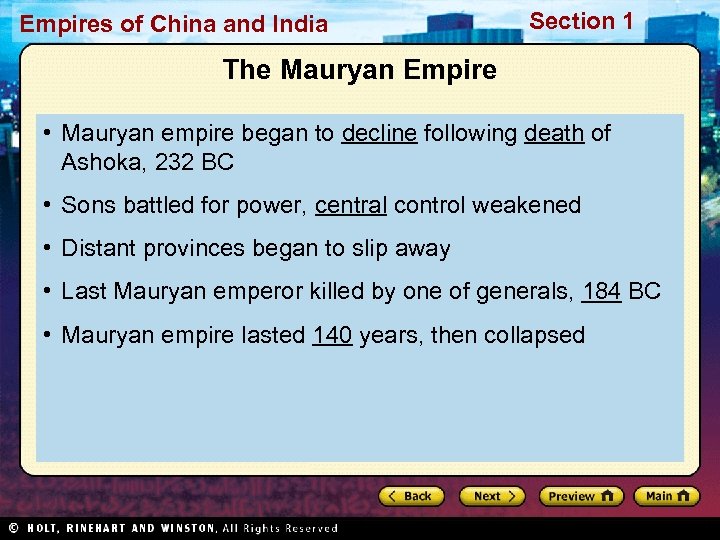 Empires of China and India Section 1 The Mauryan Empire • Mauryan empire began to decline following death of Ashoka, 232 BC • Sons battled for power, central control weakened • Distant provinces began to slip away • Last Mauryan emperor killed by one of generals, 184 BC • Mauryan empire lasted 140 years, then collapsed
 Empires of China and India Section 1 Contrast How did the reigns of Chandragupta and Ashoka differ? Answer(s): Chandragupta—strict state control, spies, conquest; Ashoka—nonviolence, public works, Buddhist teachings
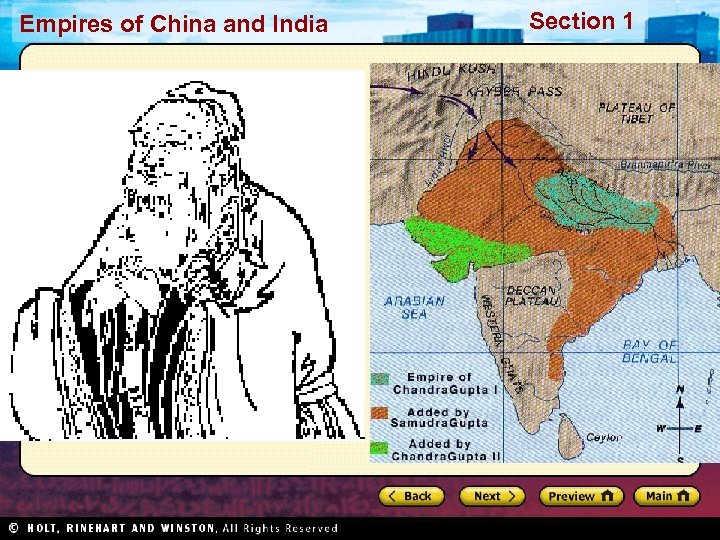
 Section 1 Empires of China and India The Gupta Empire India remained divided into small kingdoms for about 400 years. Then around AD 320, the Gupta dynasty took over northern India. Under the Gupta, northern India was reunited, Indian society prospered, and the religion of Hinduism grew in popularity. Rise of Gupta Empire • Like Mauryan, Gupta dynasty rose to power in region of Magadha • Founder was Chandra Gupta I • From base in Magadha, Chandra conquered neighboring lands, brought much of northern India under Gupta control India under Gupta Rule • Gupta rule less centralized • Divided main part of empire into units • Royal officials governed each unit • Governed through local rulers in distant conquered areas • Local rulers had to pay tribute Gupta power expanded under the heirs of Chandra Gupta I, and the empire reached its height under Chandra Gupta II.
 Empires of China and India Section 1
 Empires of China and India Section 1
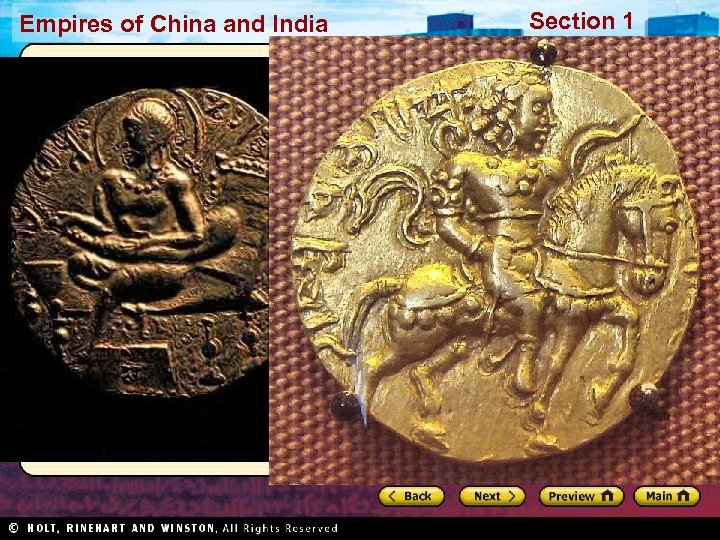
 Empires of China and India Section 1 The Gupta Empire • Chandra Gupta II, ruled from AD 375 to 415 • Further expanded empire, strengthened economy • Reign was period of prosperity, cultural achievement • Chinese Buddhist monk, Faxian, traveled to India • Described empire as rich, prosperous, and punishments fair
 Empires of China and India Section 1
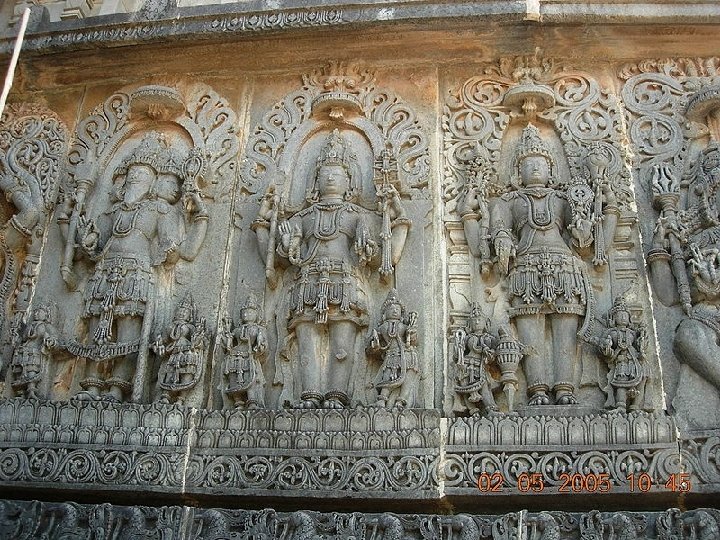
 Section 1 Empires of China and India The Gupta Empire Support of Hinduism • Buddhism prospered, spread during period between Mauryan, Gupta empires • Hinduism lost popularity during this period • Under Guptas, Hinduism became main religion • Rulers supported building Hindu temples, promoted revival of writings • Buddhism began to lose influence during this period End of Gupta Rule Weakened Empire • Began to weaken, late 400 s • Problems disrupted trade • Loose Gupta control allowed some parts of empire to break away • Gupta military efforts to defend empire drained treasury • Central Asian nomads, White Huns, began invading India • Gupta rule ended, 550 • Again India divided into small, regional kingdoms
 Section 1 Empires of China and India The Gupta Empire Support of Hinduism • Buddhism prospered, spread during period between Mauryan, Gupta empires • Hinduism lost popularity during this period • Under Guptas, Hinduism became main religion • Rulers supported building Hindu temples, promoted revival of writings • Buddhism began to lose influence during this period End of Gupta Rule Weakened Empire • Began to weaken, late 400 s • Problems disrupted trade • Loose Gupta control allowed some parts of empire to break away • Gupta military efforts to defend empire drained treasury • Central Asian nomads, White Huns, began invading India • Gupta rule ended, 550 • Again India divided into small, regional kingdoms
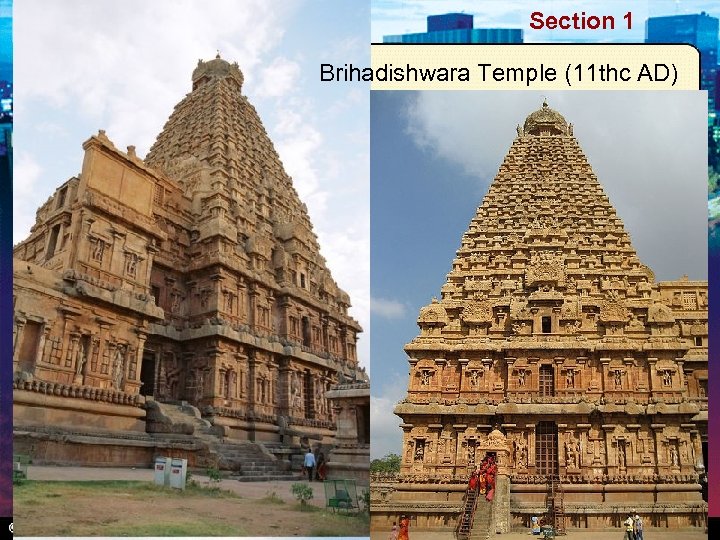 Empires of China and India Section 1 Brihadishwara Temple (11 thc AD)
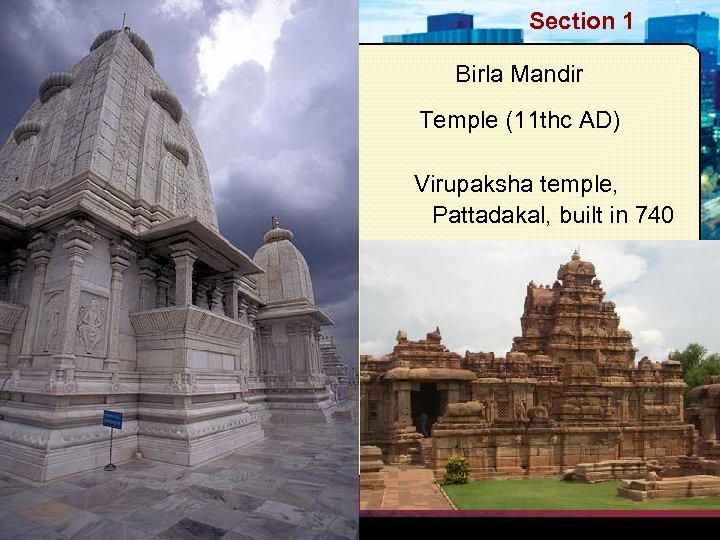 Empires of China and India Section 1 Birla Mandir Temple (11 thc AD) Virupaksha temple, Pattadakal, built in 740
 Empires of China and India Section 1 Identify Supporting Details How did the Guptas rule their empire? Answer(s): ruled central part directly with royal officials; ruled outlying areas indirectly through local rulers
 Empires of China and India Section 1 Indian Society and Culture Main Idea The strength, prosperity, and stability of the Gupta Empire helped lead to a golden age in Indian society, trade, and culture.
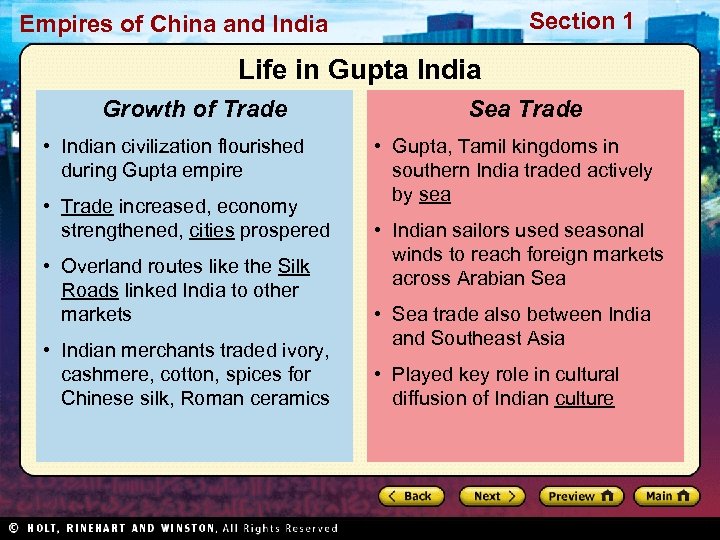 Section 1 Empires of China and India Life in Gupta India Growth of Trade • Indian civilization flourished during Gupta empire • Trade increased, economy strengthened, cities prospered • Overland routes like the Silk Roads linked India to other markets • Indian merchants traded ivory, cashmere, cotton, spices for Chinese silk, Roman ceramics Sea Trade • Gupta, Tamil kingdoms in southern India traded actively by sea • Indian sailors used seasonal winds to reach foreign markets across Arabian Sea • Sea trade also between India and Southeast Asia • Played key role in cultural diffusion of Indian culture
 Empires of China and India Section 1
 Empires of China and India Section 1
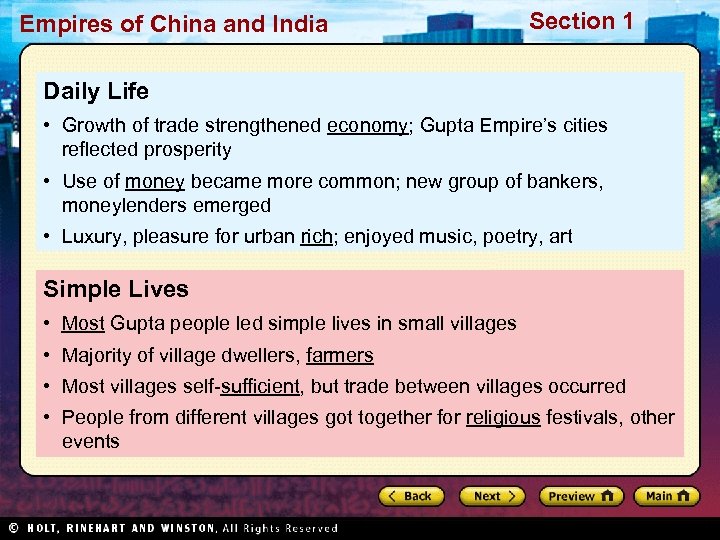 Empires of China and India Section 1 Daily Life • Growth of trade strengthened economy; Gupta Empire’s cities reflected prosperity • Use of money became more common; new group of bankers, moneylenders emerged • Luxury, pleasure for urban rich; enjoyed music, poetry, art Simple Lives • Most Gupta people led simple lives in small villages • Majority of village dwellers, farmers • Most villages self-sufficient, but trade between villages occurred • People from different villages got together for religious festivals, other events
 Empires of China and India Section 1
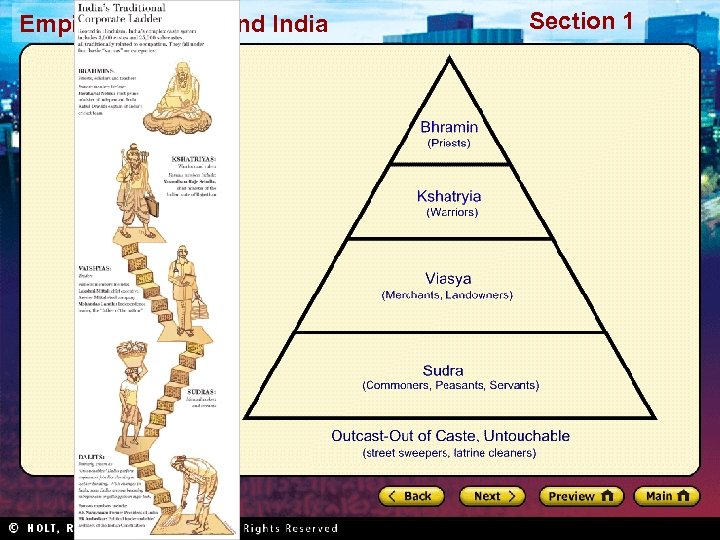
 Section 1 Empires of China and India Life in Gupta India Social structure Legal codes • Most people in ancient India belonged to specific caste • Legal codes also defined people’s roles • Castes determined jobs, interaction with others • Laws of Manu, compiled between 200 BC, AD 200 • Number grew, developed rules • Defined proper behavior Gender • Also shaped Indian society • Men had more rights than women • Patriarchal society, similar to China Laws of Manu • Female child subject to father, female youth to husband • Men expected to treat women with respect • Abused women could leave
 Empires of China and India Section 1
 Empires of China and India Section 1 Identify Cause and Effect How did trade affect city life in Gupta India? Answer(s): cities prospered, shops and markets bustled, money became common, culture stressed luxury and pleasure for urban wealth
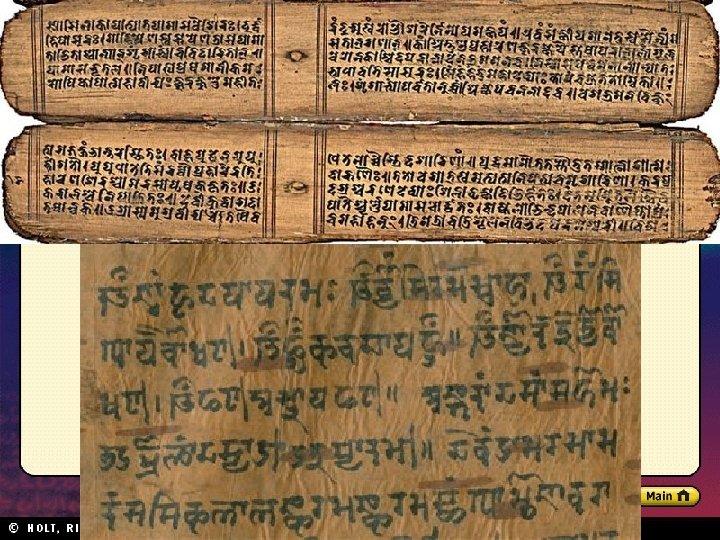
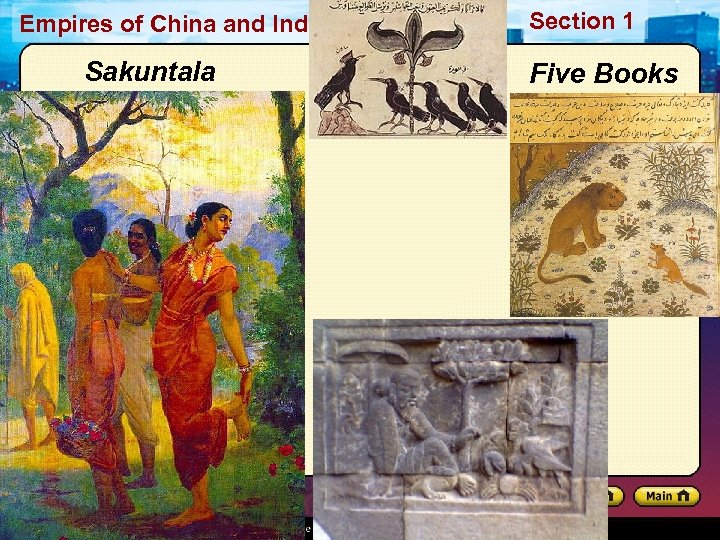
 Section 1 Empires of China and India A Gupta Golden Age Like the Han period in China, the Gupta period was a golden age of cultural and scientific achievements. Sanskrit Literature Panchatantra • Many great works created during Gupta period • Another popular work of period • One of greatest writers, Kalidasa – Poet, playwright • Five Books, collection of stories meant to teach lessons • “The good and bad of given schemes – Wrote plays for royal court Wise thought must first reveal – Sakuntala, most famous The stupid heron saw his chicks – Play combines myth, humor, court life, lyric poetry Provide a mongoose meal. ” • Warning to think before acting
 Empires of China and India Section 1
 Empires of China and India Sakuntala Section 1 Five Books
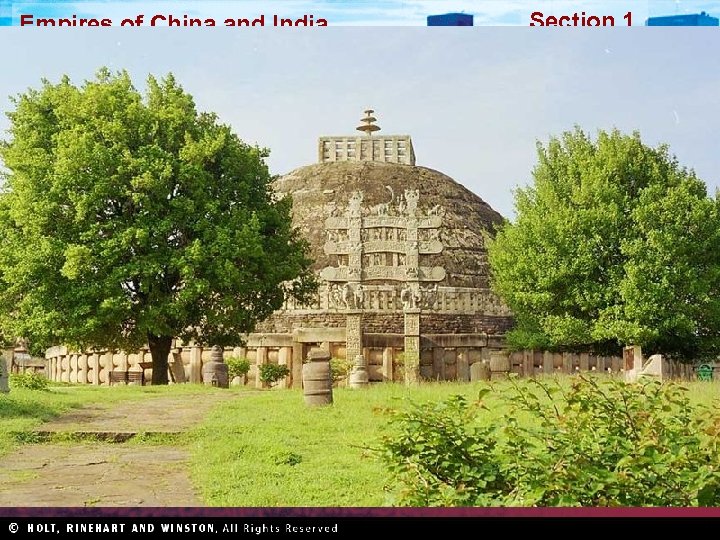
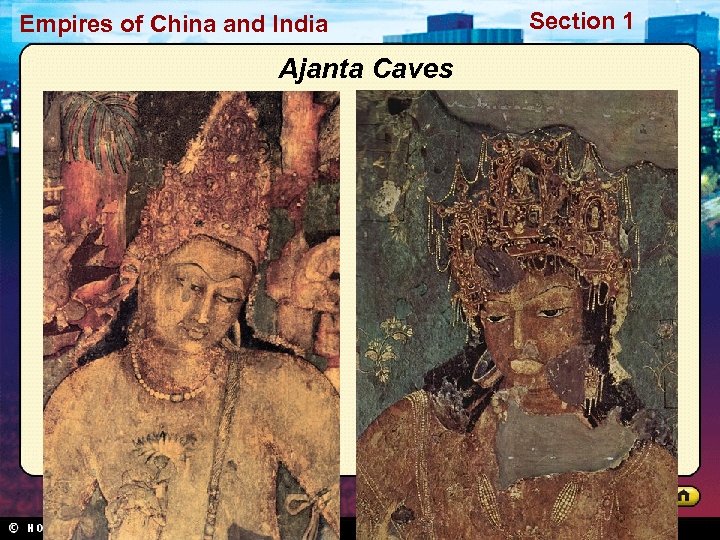
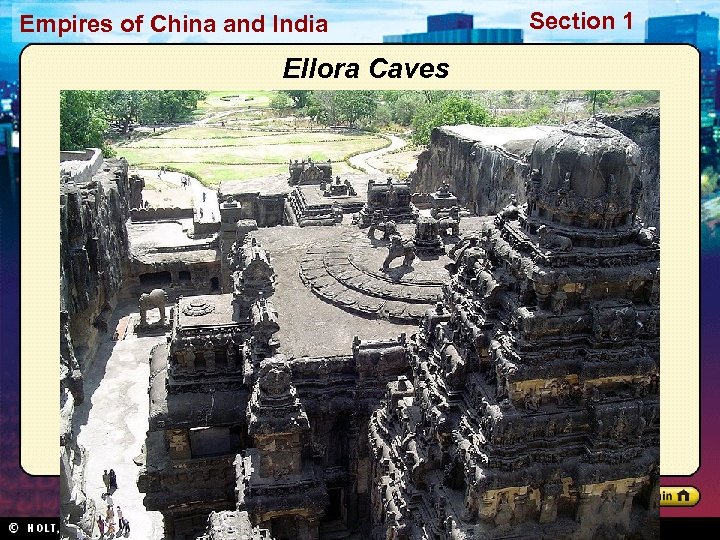
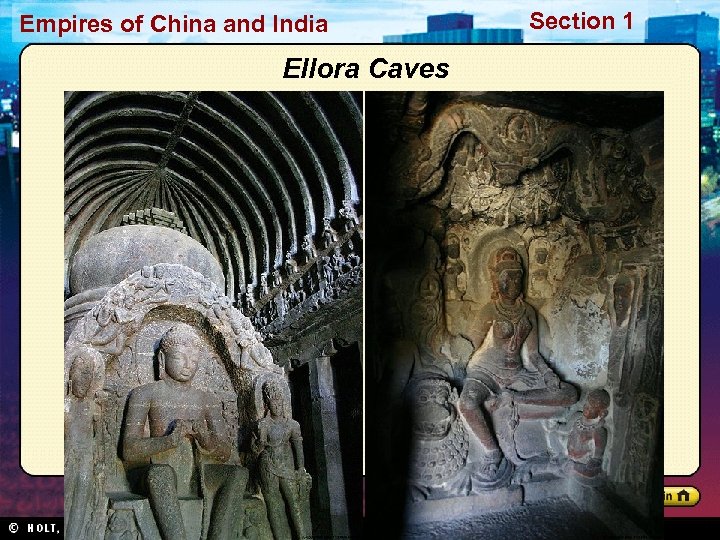
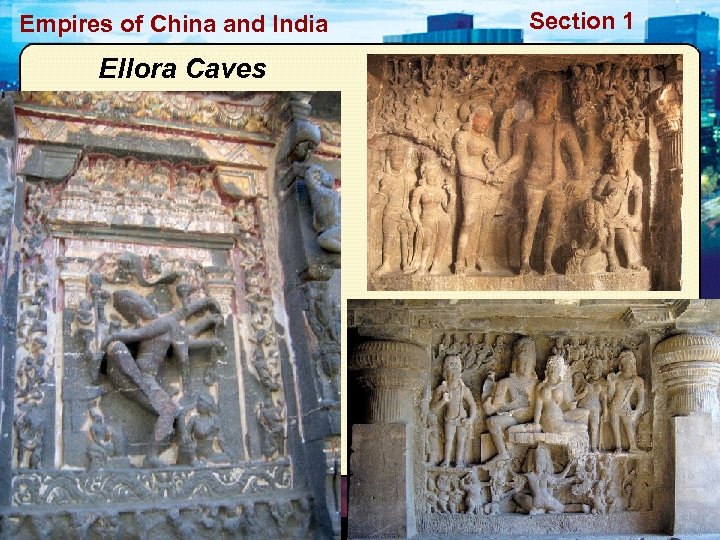
 Empires of China and India Art and Architecture Religious • Much of art, architecture of Gupta period religious • Magnificent Hindu, Buddhist temples built across India • Hindu temples: huge towers, covered with carvings Buddhist temples • Included stupas, temples with domed roofs • Built to house sacred items from life of Buddha • Like Hindu temples, covered with detailed carvings Most spectacular architecture • Temples, monuments carved out of rock and cliff faces • Most famous, cave temples at Ajanta and Ellora • Intricately carved columns; include halls, rooms, windows Section 1
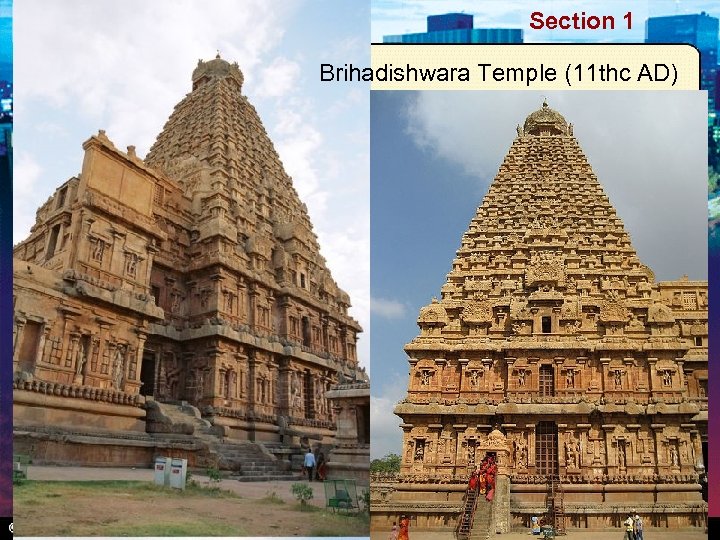 Empires of China and India Section 1 Brihadishwara Temple (11 thc AD)
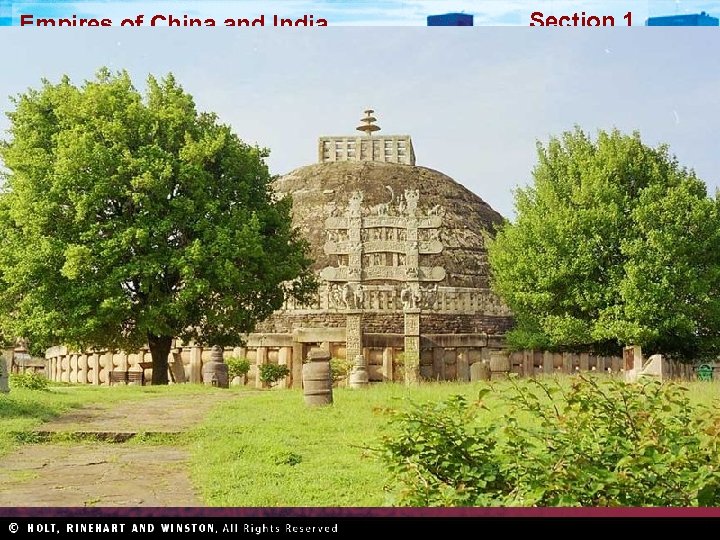 Empires of China and India Section 1
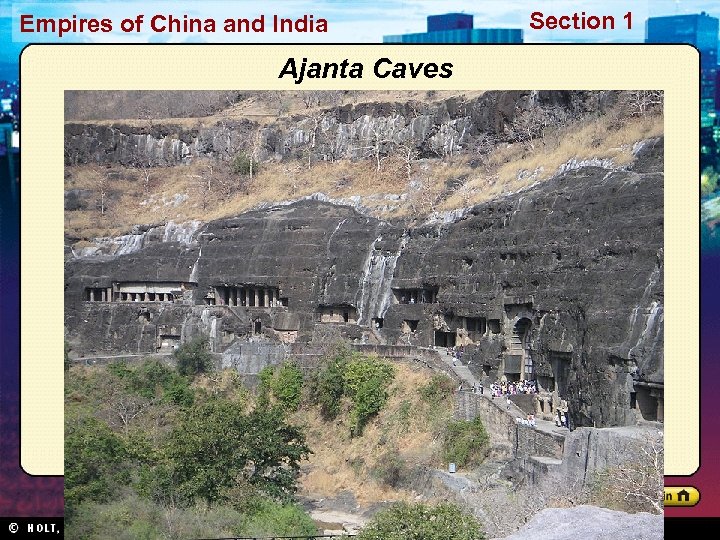 Empires of China and India Ajanta Caves Section 1
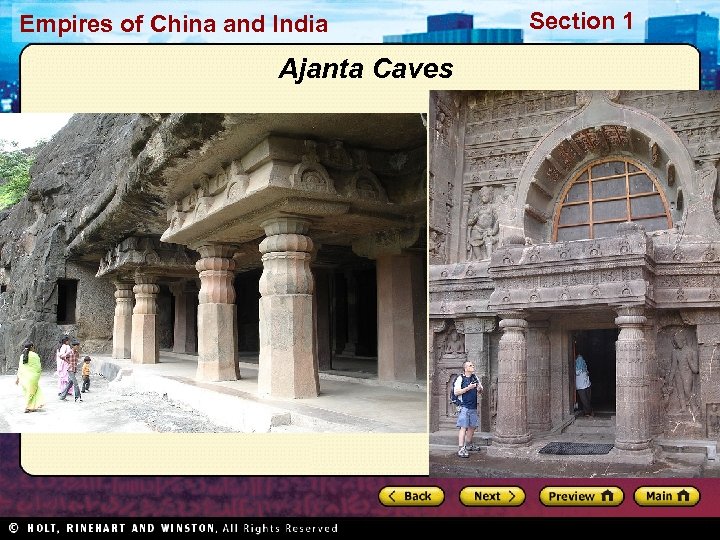 Empires of China and India Ajanta Caves Section 1
 Empires of China and India Ajanta Caves Section 1
 Empires of China and India Ellora Caves Section 1
 Empires of China and India Ellora Caves Section 1
 Empires of China and India Ellora Caves Section 1
 Empires of China and India Section 1 Art and Architecture Great works of art • Paintings of the time often portray beautiful, graceful Indians wearing fine jewelry, stylish clothing • Many of finest paintings found in Buddhist and Hindu temples Temple paintings • Hindu artists decorated walls, entrances with devas, aspects of Brahman • Buddhists covered plaster walls, ceilings with scenes from life of Buddha • Some of finest examples of Buddhist art found in Ajanta cave temples Statues • Made for temples • Buddhist temples, statues of Buddha, kings • Hindu temples, statues of Siva, Vishnu, other devas
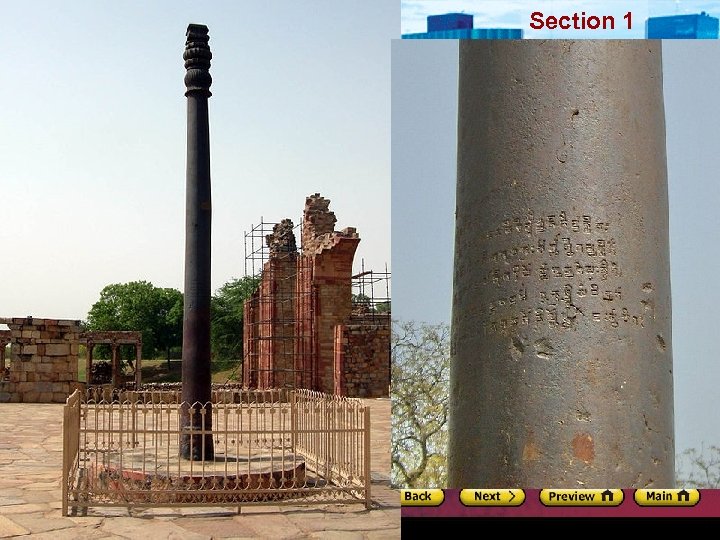
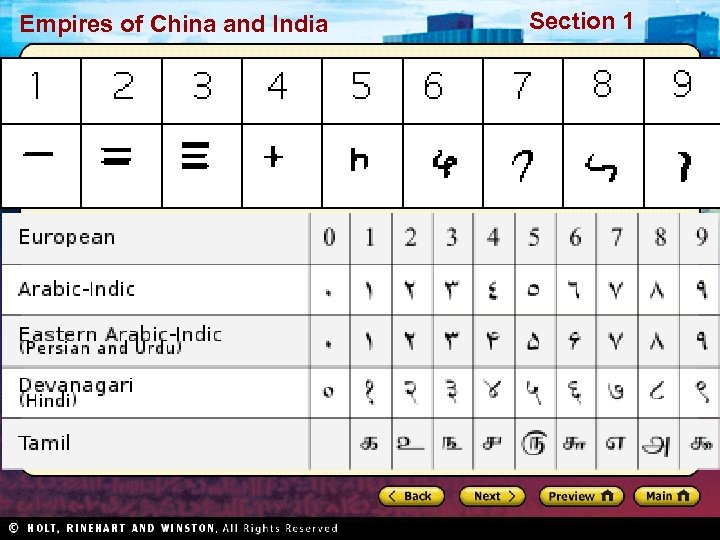
 Section 1 Empires of China and India Science and Technology Metallurgy • • • Ancient Indians pioneers of science of working with metals Indian iron valued for hardness, purity Gupta metalworkers built famous Iron Pillar, near Delhi Iron Pillar is resistant to rust Still being studied by scholars today Mathematics • Gupta scholars most advanced mathematicians of their day • Developed modern math system • First to use concept, symbol of zero • Hindu-Arabic numerals; created by Indians, brought to Europe by Arabs Medical Science • Ancient Indians quite advanced • Made medicines from plants • Knew how to inject small amounts of viruses to protect against disease • Doctors could perform surgery, repair broken bones, treat wounds
 Empires of China and India Section 1
 Empires of China and India Section 1
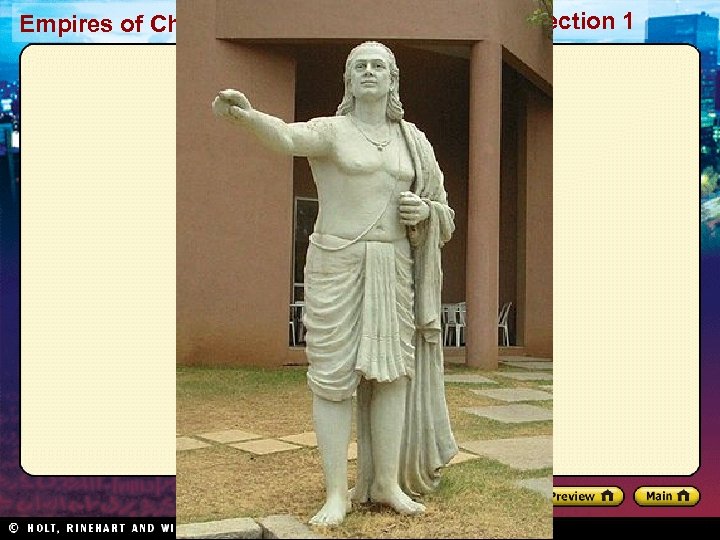
 Empires of China and India Section 1 Science and Technology Astronomy • Indians identified seven planets in solar system • Could predict eclipses of sun, moon • Aryabhata, one of most famous Indian astronomers – Correctly argued that Earth rotates on axis, revolves around sun – Knew Earth was sphere, calculated circumference with remarkable accuracy
 Empires of China and India Section 1
 Empires of China and India Section 1 Find the Main Idea Why do historians consider the Gupta period to have been a golden age in the history of ancient India? Answer(s): significant cultural contributions, Sanskrit, magnificent carvings, statues of Buddha, wall paintings; advancements in mathematics, medicine, and astronomy
 Empires of China and India Section 1