


 Скачать презентацию Emissions from Animal Production Systems John W Worley
7201c5a8726e3b279be118a27cdeb156.ppt
- Количество слайдов: 33
 Emissions from Animal Production Systems John W. Worley
 Odors and Emissions u The Science of Odors and Emissions u Emissions Control Strategies – Buildings and Storage Structures – Land Application Systems
 Science of Odors and Emissions u Odors - the main reason you are here today u Emissions and Health – Effects are still being debated – Toxic Effects (H 2 S) – Depression – Ear, Nose, and Throat Problems u Odors are a Nuisance (Quality of Life)
 Science of Odors and Emissions u Odor – 54% of complaints from swine operations – 50% from land application – At least 168 compounds in swine odor v NH 3, amines, H 2 S, VFA’s, indoles, skatole, phenols, mercaptans, alcohols, carbonyls
 Science of Odors and Emissions u Greenhouse gases – CO 2, Methane u Acid Rain concerns (ammonia) u Dust u Pathogens u Flies
 Science of Odors and Emissions u Movement and Dispersion – Several models available – Worst problem is night and early morning v Low airflow rates – Prevailing winds don’t always predict this effect – Setbacks are the main regulatory tool – Not enough scientific evidence to accurately determine setbacks
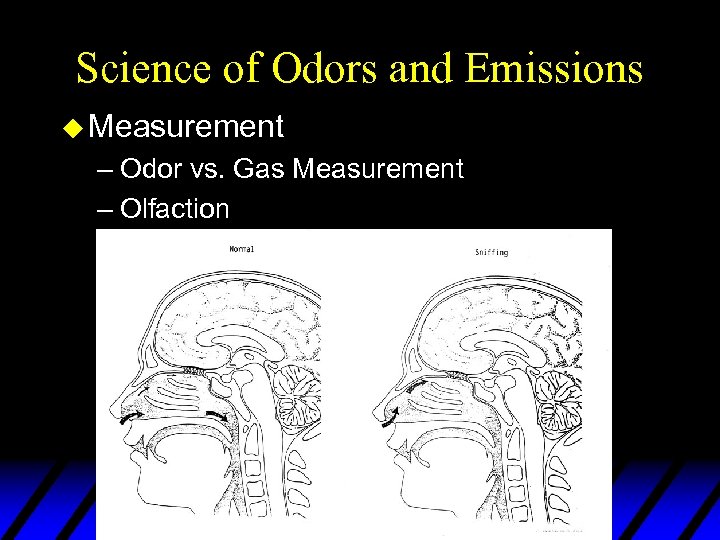 Science of Odors and Emissions u Measurement – Odor vs. Gas Measurement – Olfaction
 Science of Odors and Emissions u Gas Measurement – Indicator Tubes – Ammonia and H 2 S meters – Cassette Tape system – Gas Chromatograph/Mass spectrometer (GC/MS) u Generally accurate, but expensive and are not a reliable predictor of odors
 Science of Odors and Emissions u Olfactometry – Electronic Noses – Scentometer – Dynamic, triangular forced-choice olfactometer – Field Sniffer – Cotton Swatch
 Science of Odors and Emissions u Olfactometry – Concentration – Intensity – Persistence – Hedonic Tone – Character or descriptor
 Science of Odors and Emissions u Olfactometry – Uses real or simulated human noses – Some methods filter dust before measurement – Requires training – Expensive – Subjective
 Science of Odors and Emissions u Dust Measurement – Gravimetric Methods (filters and impacters) – Particle Counters – Can add pathogen measurements by collecting particles on agar plate and incubating
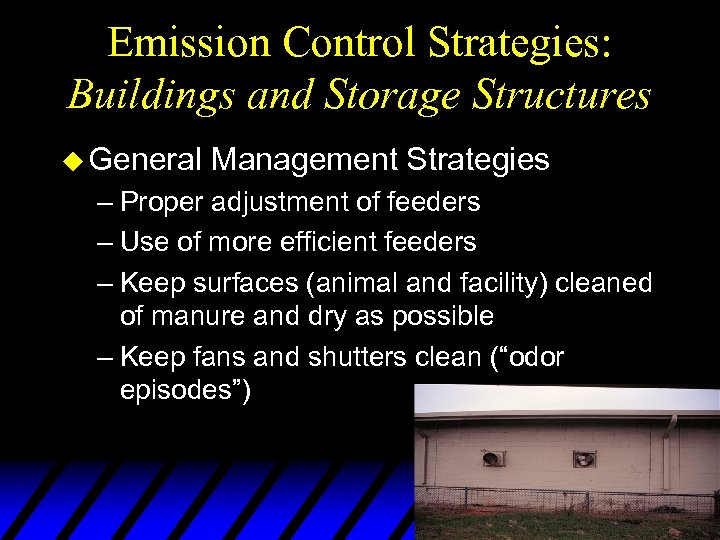 Emission Control Strategies: Buildings and Storage Structures u General Management Strategies – Proper adjustment of feeders – Use of more efficient feeders – Keep surfaces (animal and facility) cleaned of manure and dry as possible – Keep fans and shutters clean (“odor episodes”)
 Emission Control Strategies: Buildings and Storage Structures u Dust and Odor – Dust absorbs and intensifies odors – Dust enables odors to travel further u Facility Siting – Models – Wind direction in early morning – Buffers
 Emission Control Strategies: Buildings and Storage Structures u Dietary Manipulation – For nutrient management – For odor control v Lower protein v Additives u Storage in under-floor pits (pull plug) – 5 days – recharge water
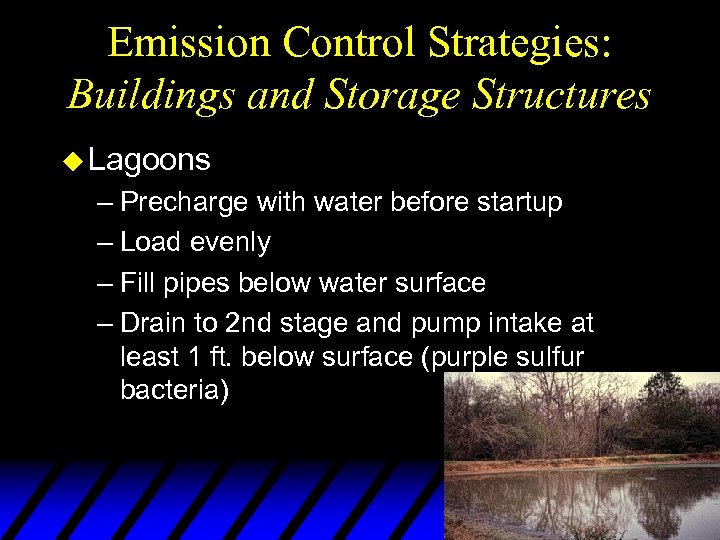 Emission Control Strategies: Buildings and Storage Structures u Lagoons – Precharge with water before startup – Load evenly – Fill pipes below water surface – Drain to 2 nd stage and pump intake at least 1 ft. below surface (purple sulfur bacteria)
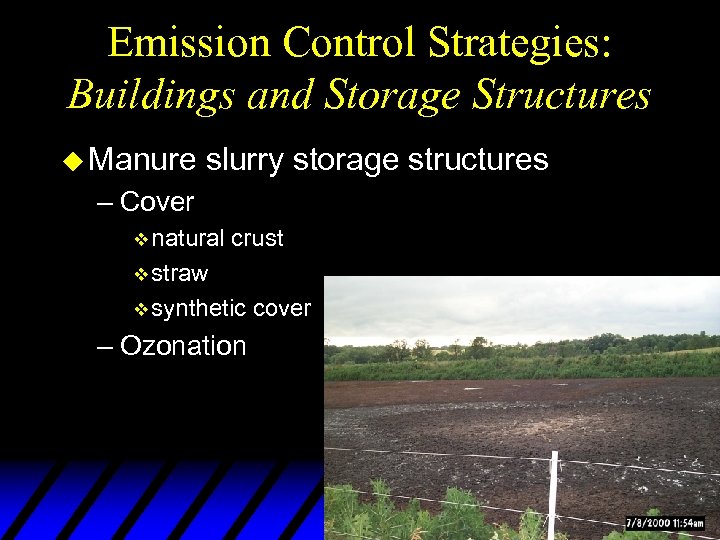 Emission Control Strategies: Buildings and Storage Structures u Manure slurry storage structures – Cover v natural crust v straw v synthetic – Ozonation cover
 Emission Control Strategies: Buildings and Storage Structures u Natural Windbreaks – Rows of trees around storage pond v absorbs odors v disperses odors v screens view – Multistoried canopy gives best coverage
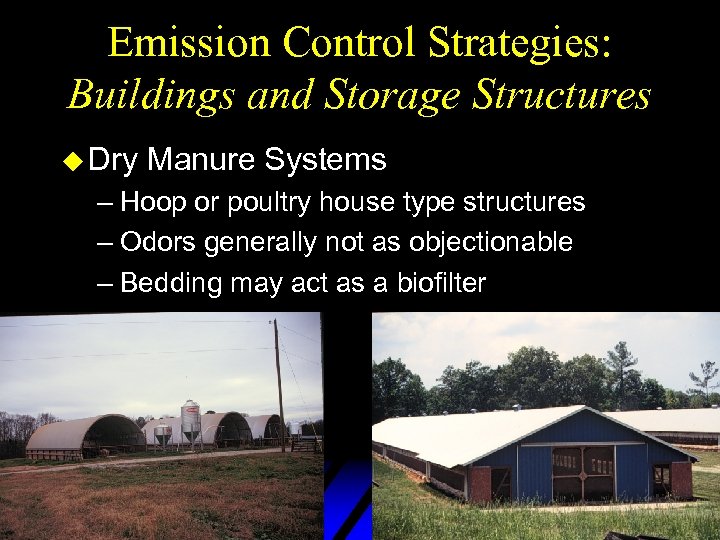 Emission Control Strategies: Buildings and Storage Structures u Dry Manure Systems – Hoop or poultry house type structures – Odors generally not as objectionable – Bedding may act as a biofilter
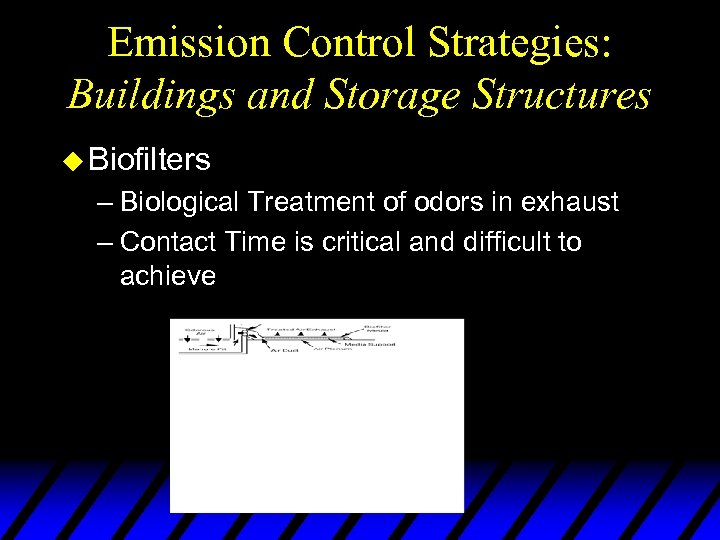 Emission Control Strategies: Buildings and Storage Structures u Biofilters – Biological Treatment of odors in exhaust – Contact Time is critical and difficult to achieve
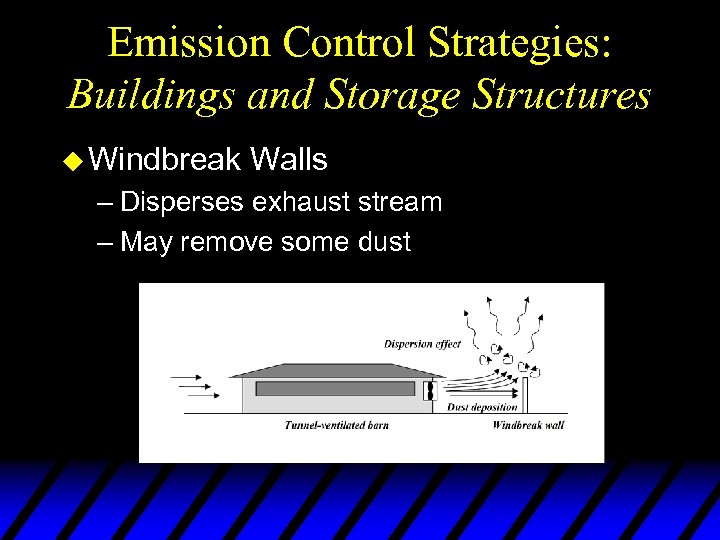 Emission Control Strategies: Buildings and Storage Structures u Windbreak Walls – Disperses exhaust stream – May remove some dust
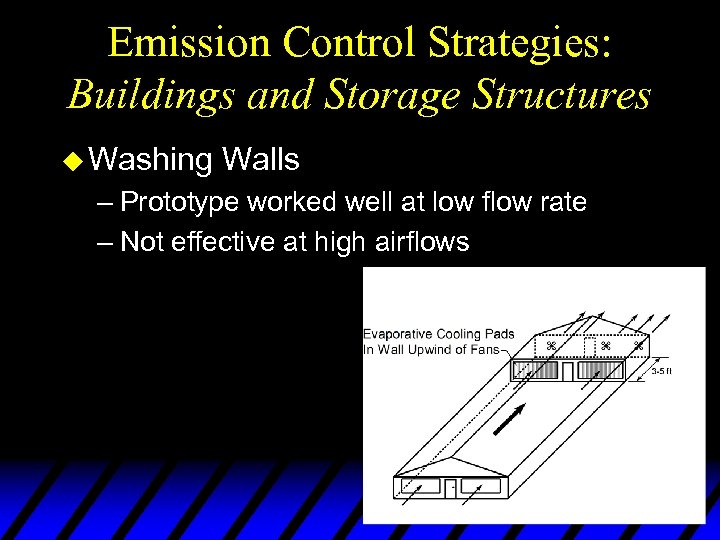 Emission Control Strategies: Buildings and Storage Structures u Washing Walls – Prototype worked well at low flow rate – Not effective at high airflows
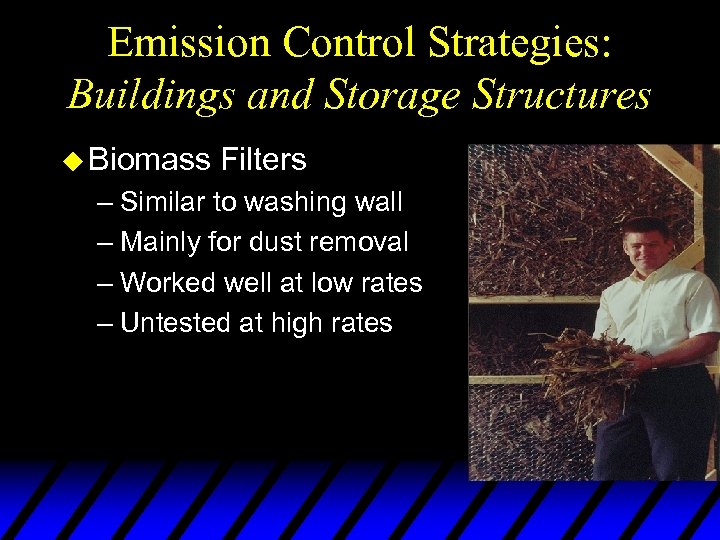 Emission Control Strategies: Buildings and Storage Structures u Biomass Filters – Similar to washing wall – Mainly for dust removal – Worked well at low rates – Untested at high rates
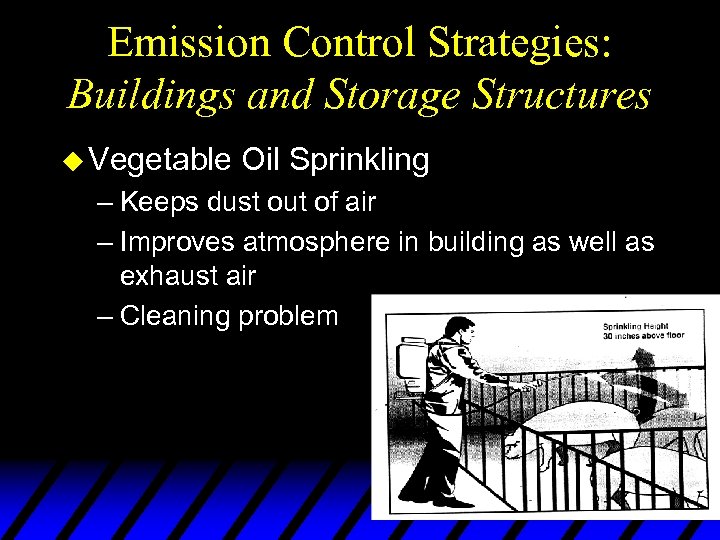 Emission Control Strategies: Buildings and Storage Structures u Vegetable Oil Sprinkling – Keeps dust out of air – Improves atmosphere in building as well as exhaust air – Cleaning problem
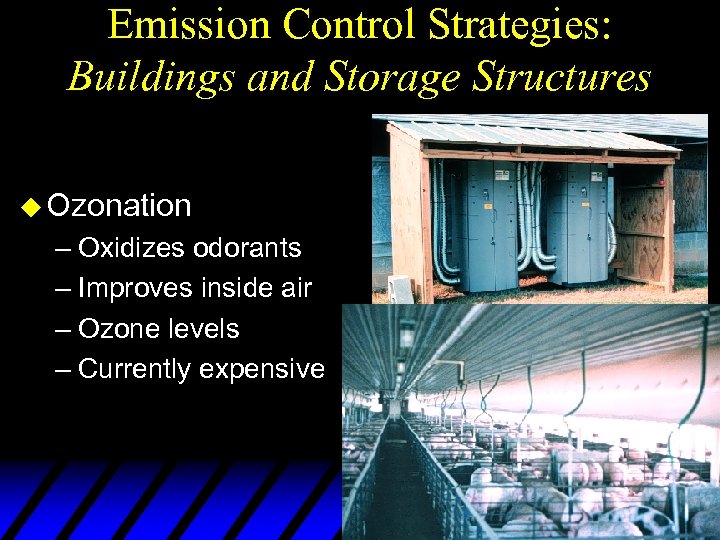 Emission Control Strategies: Buildings and Storage Structures u Ozonation – Oxidizes odorants – Improves inside air – Ozone levels – Currently expensive
 Emission Control Strategies: Buildings and Storage Structures u Chemical or Biological Additives – Some seem to help – Difficult to quantify – Difficult to get repeatable results
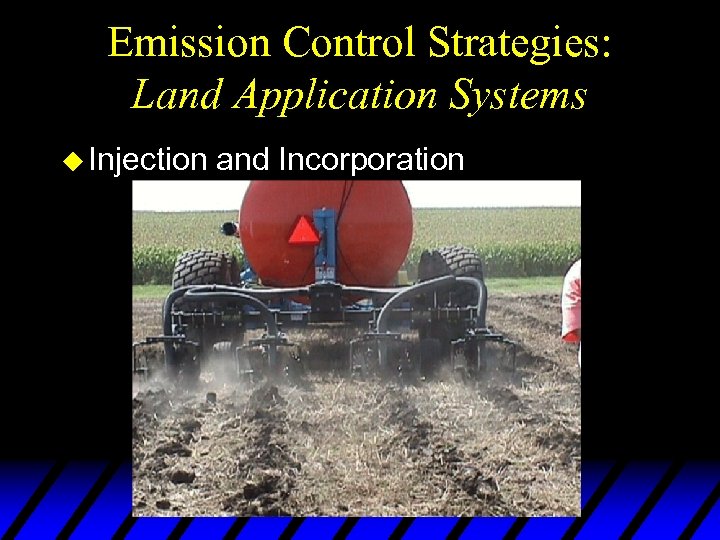 Emission Control Strategies: Land Application Systems u Injection and Incorporation
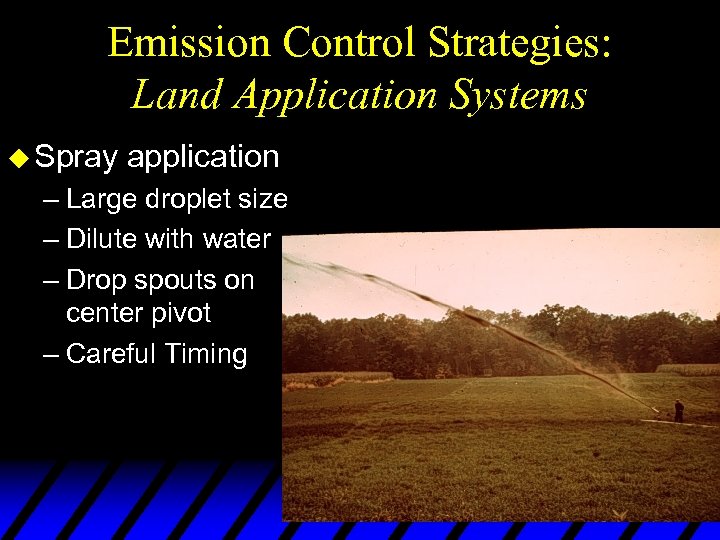 Emission Control Strategies: Land Application Systems u Spray application – Large droplet size – Dilute with water – Drop spouts on center pivot – Careful Timing
 Emission Control Strategies: Land Application Systems u Dry Manure – Compost before application (also homogenizes the mixture) – Possible chemical pretreatment – Careful Timing
 Summary u Odor problems are real u Odors are hard to measure and are not predicted well by gas measurement u Olfactometry uses the human nose or a simulation of it u Approx. 200 compounds have been identified in swine odor u Most problems at night and early morning
 Summary – Odors adhere to dust particles and are intensified by them – Removal of dust and/or dispersion of odor plumes should reduce odors – Cleaning fans – Keep manure either dry or submerged in water – Keep lagoons healthy (purple sulfur bacteria) – Natural windbreaks
 Summary – Cover slurry storages (natural or synthetic) – Inject or incorporate if possible – Minimize drift (wind and droplet size) – Be sensitive to neighbors
 Questions?