


 Скачать презентацию Emission reduction value in financing clean energy projects
451d65443e54084e4d13654d555bc8e5.ppt
- Количество слайдов: 23
 Emission reduction value in financing clean energy projects By Jan-Willem Martens Eco. Securities
 Eco. Securities • Eco. Securities leading greenhouse gas advisor (Environmental Finance survey, 2001, 2002, 2003, 2004) • Five offices around the world, 27 people • Currently working on over 70 CDM projects in more than 50 countries • Active in sale of CERs 2
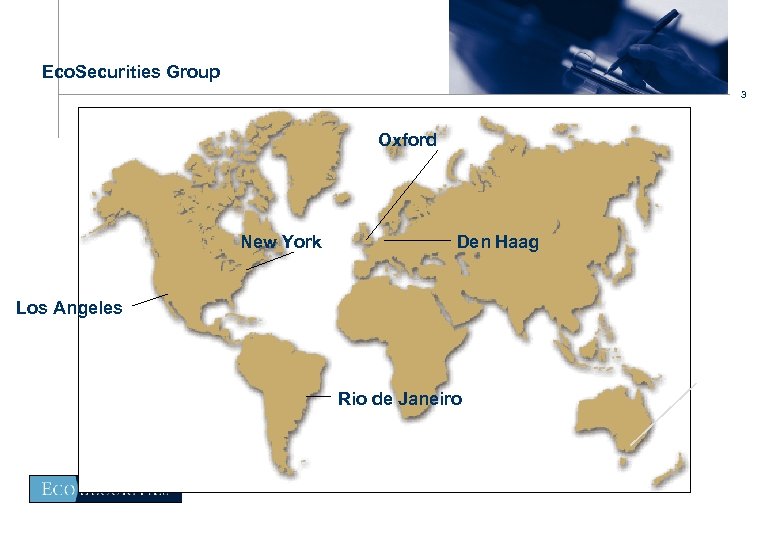 Eco. Securities Group 3 Oxford New York Den Haag Los Angeles Rio de Janeiro
 Overview 1. Introduction 2. Market Developments – Who is selling, who is buying ? 3. Project Transaction Issues 4. How can CDM help project finance? 5. How can CDM and ODA go together 6. Country competitiveness 7. Conclusions 4
 5 Who are the players in the CDM market?
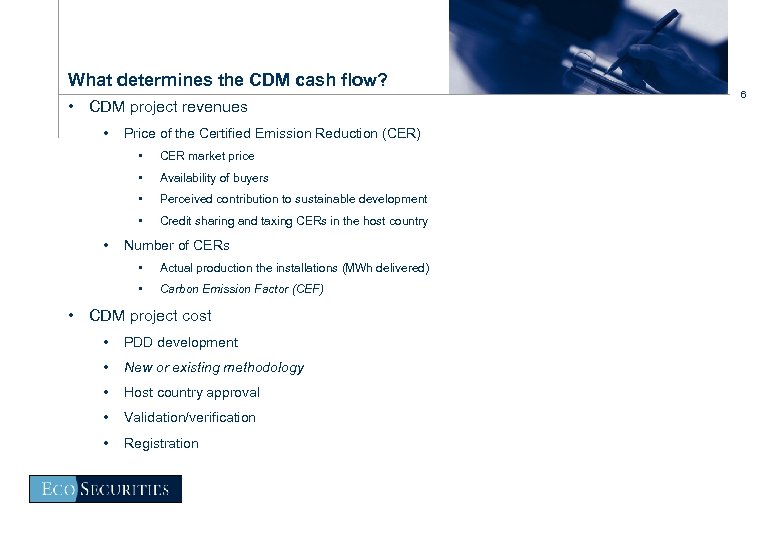 What determines the CDM cash flow? • CDM project revenues • Price of the Certified Emission Reduction (CER) • • Availability of buyers • Perceived contribution to sustainable development • • CER market price Credit sharing and taxing CERs in the host country Number of CERs • Actual production the installations (MWh delivered) • Carbon Emission Factor (CEF) • CDM project cost • PDD development • New or existing methodology • Host country approval • Validation/verification • Registration 6
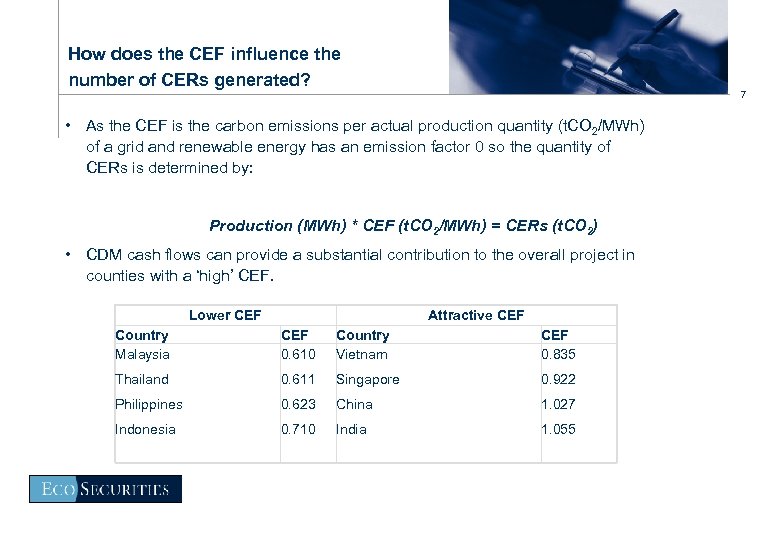 How does the CEF influence the number of CERs generated? 7 • As the CEF is the carbon emissions per actual production quantity (t. CO 2/MWh) of a grid and renewable energy has an emission factor 0 so the quantity of CERs is determined by: Production (MWh) * CEF (t. CO 2/MWh) = CERs (t. CO 2) • CDM cash flows can provide a substantial contribution to the overall project in counties with a ‘high’ CEF. Lower CEF Attractive CEF Country Malaysia CEF 0. 610 Country Vietnam CEF 0. 835 Thailand 0. 611 Singapore 0. 922 Philippines 0. 623 China 1. 027 Indonesia 0. 710 India 1. 055
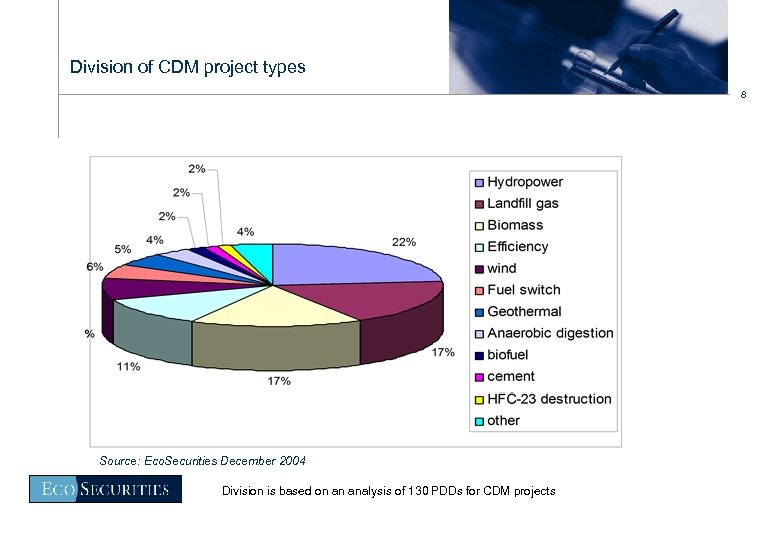 Division of CDM project types 8 Source: Eco. Securities December 2004 Division is based on an analysis of 130 PDDs for CDM projects
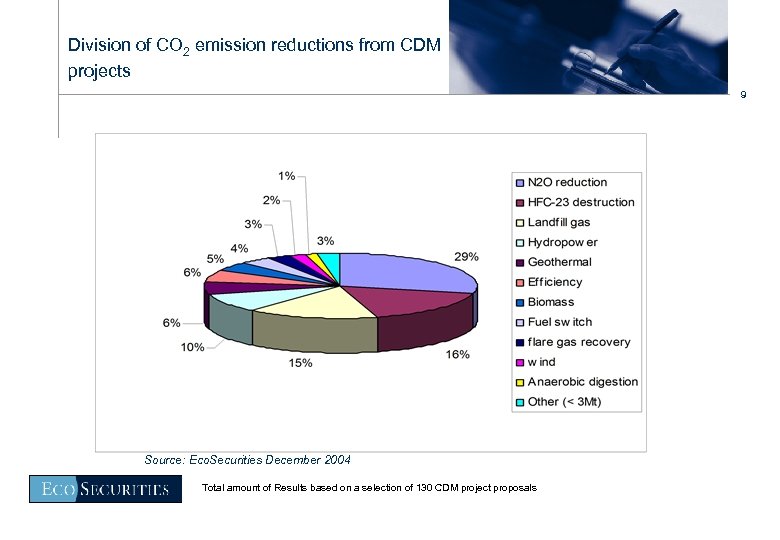 Division of CO 2 emission reductions from CDM projects 9 Source: Eco. Securities December 2004 Total amount of Results based on a selection of 130 CDM project proposals
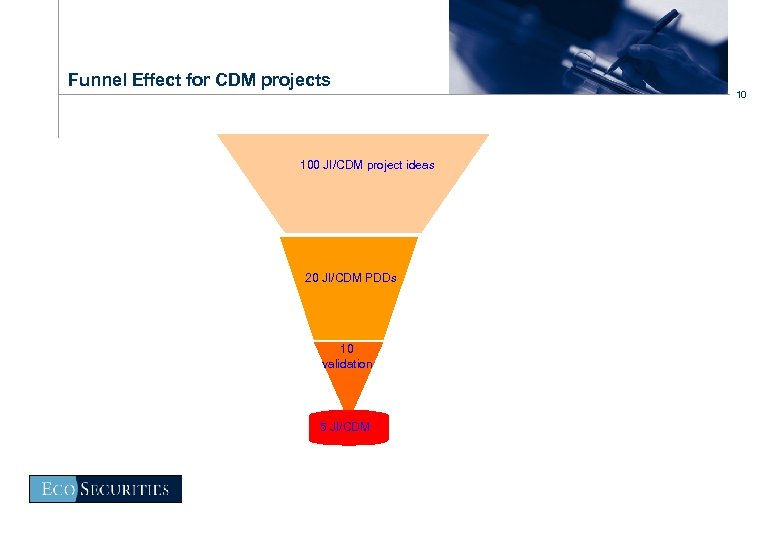 Funnel Effect for CDM projects 100 JI/CDM project ideas 20 JI/CDM PDDs 10 validation 5 JI/CDM 10
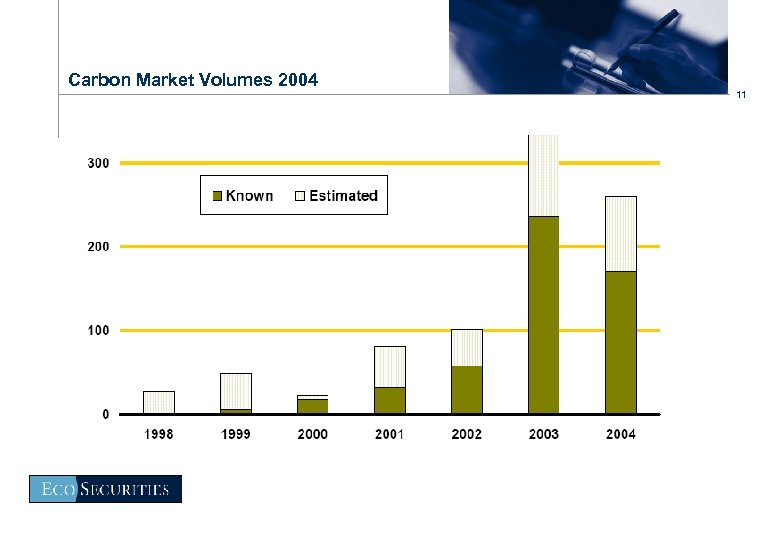 Carbon Market Volumes 2004 11
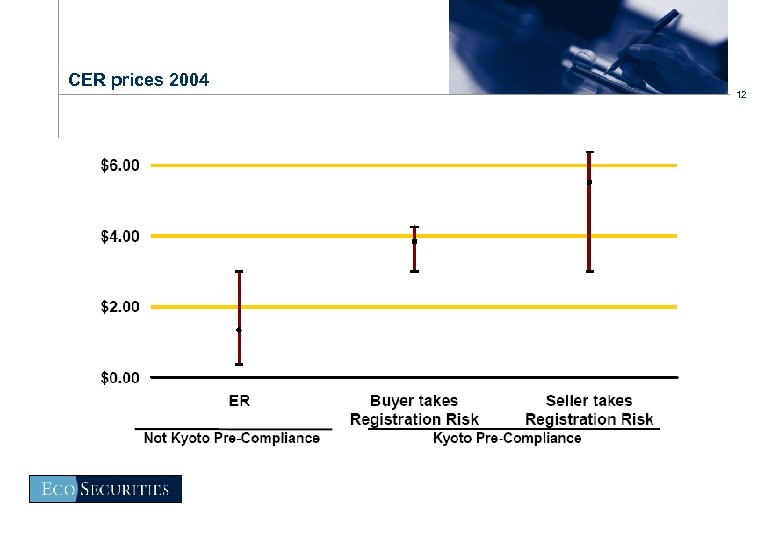 CER prices 2004 12
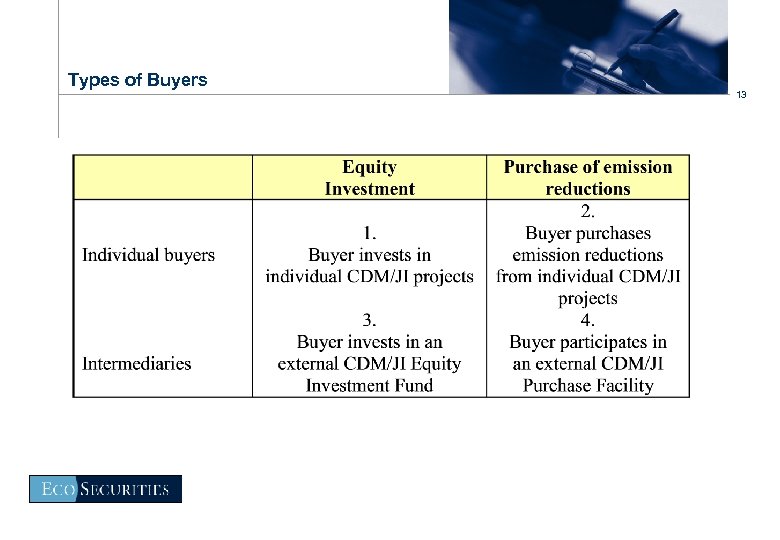 Types of Buyers 13
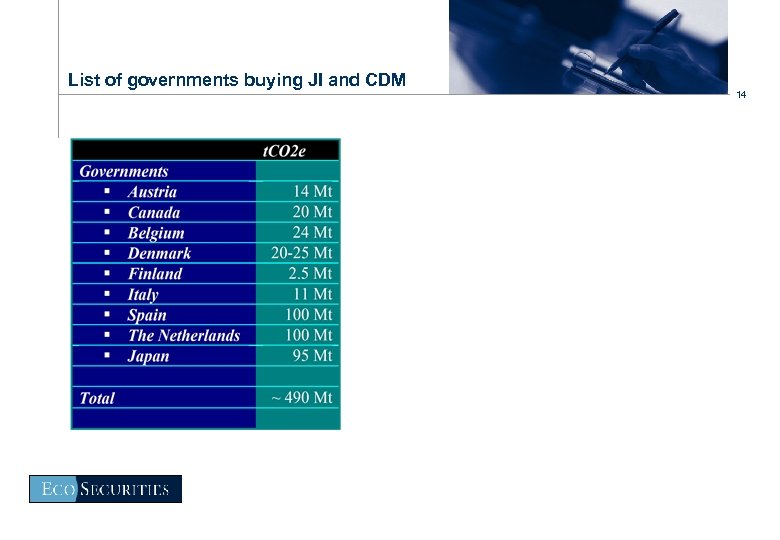 List of governments buying JI and CDM 14
 Project Transaction Issues
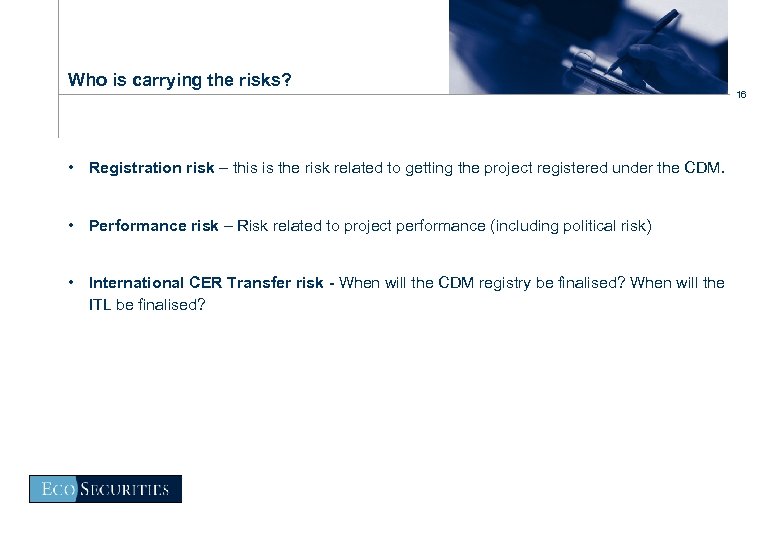 Who is carrying the risks? • Registration risk – this is the risk related to getting the project registered under the CDM. • Performance risk – Risk related to project performance (including political risk) • International CER Transfer risk - When will the CDM registry be finalised? When will the ITL be finalised? 16
 Different ways to structure carbon finance 1. Contract form “guaranteed delivery” 2. Contract form “No guaranteed delivery” 3. Contract form with “floor price” 4. Contract form X% of the EUA market price 5. Sales of CERs on the EU Spot market (is it possible: Yes, no unilateral CDM, but obligation to report Annex I counter-party to CDM EB? ) 17
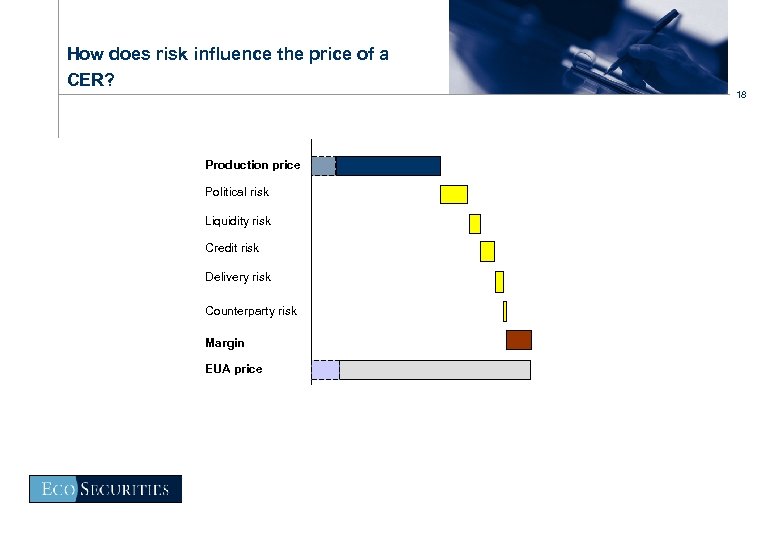 How does risk influence the price of a CER? Production price Political risk Liquidity risk Credit risk Delivery risk Counterparty risk Margin EUA price 18
 19 Country Competitiveness
 Does Geography Matter in CDM transactions? 20 • • For most commercial buyers, price and risk sensitivity outweighs geographic strategy For government buyers, there are geographic preferences • • • Forthcoming DBJ fund is expected to be “Asia weighted” • • Denmark is targeting Malaysia, Thailand, South Africa and Central America Does this mean ASEAN or India/China PCF funds looking for a global approach with sectoral distribution For multinational “buyer/sellers” internal CDM opportunities are very attractive • However, exposure to a country does not equate desire for exposure to 3 rd Party CDM CERs from that country • Expectation should be for MNC’s presenting their own CDM projects to host nation DNAs – 3 rd party project finance will give way to balance sheet corporate finance as the dominant paradigm
 How do buyers assess attractiveness of projects? • Likelihood of Project Approval at host country and EB level • Credit sharing and taxing CERs in the host country • Credibility of Counterparty • Price, price and price • Who covers upfront costs prior to ERPA? • Divisions of risk between buyer and seller • Underlying project risks (technology risk, political risk, market risk, etc) • Will seller deliver even if it experiences underperformance? • Willingness to give buyers options for residue at; • Same price or discount to market price 21
 What can countries do to improve their position? • Assuming the DNA office is competent and knowledgeable, keep individuals in position as long as possible • Continuity is key • Domestic capital for asset finance (either project or corporate) must understand that these cash flows are bankable • CDM enhances project economics, still requires underlying capital and domestic is the most realistic source • CDM alone cannot overcome other cross border investment biases but can create interest in new opportunities from unconventional sources 22
 23 Thank you!