 Скачать презентацию Emergency Preparedness Prepared by Zan Turner City
6b811ad7199a0bad47d4a1761fea2374.ppt
- Количество слайдов: 59



Emergency Preparedness Prepared by Zan Turner City & County of San Francisco Department of Building Inspection
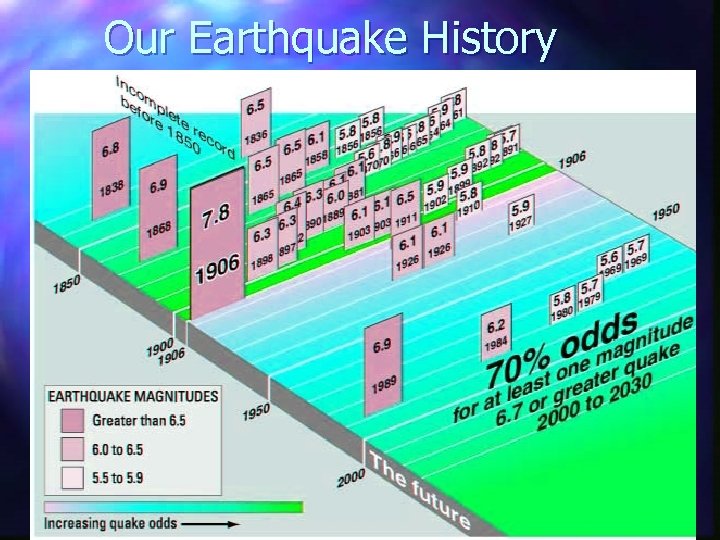
Our Earthquake History
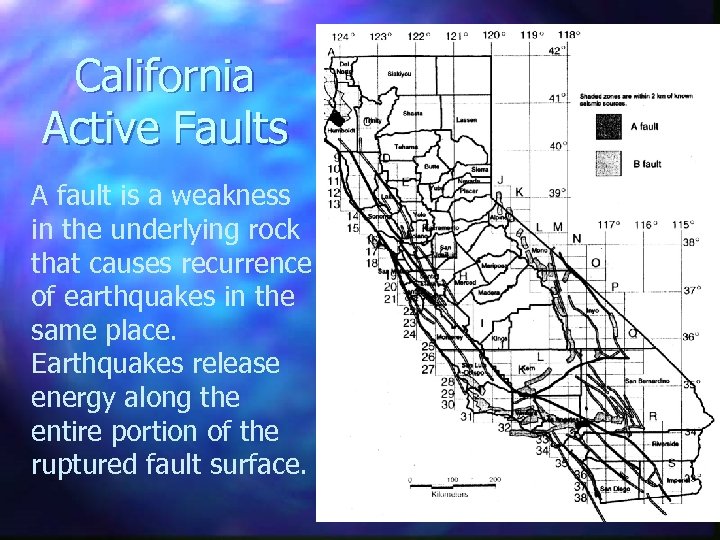
California Active Faults A fault is a weakness in the underlying rock that causes recurrence of earthquakes in the same place. Earthquakes release energy along the entire portion of the ruptured fault surface.
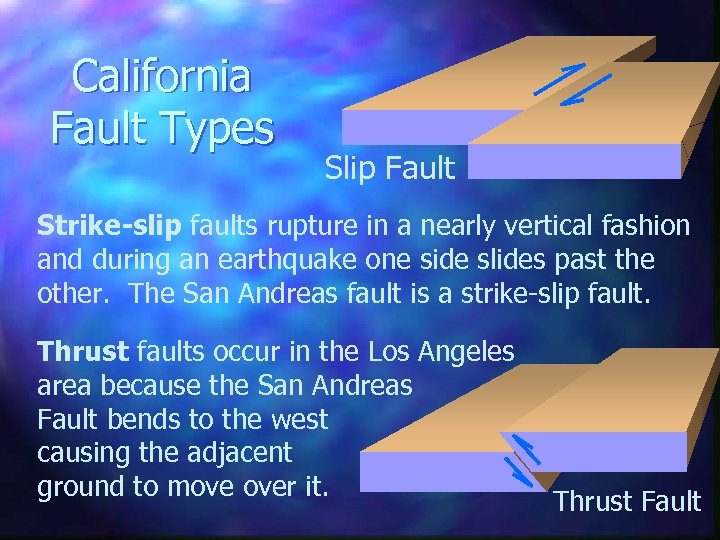
California Fault Types Slip Fault Strike-slip faults rupture in a nearly vertical fashion and during an earthquake one side slides past the other. The San Andreas fault is a strike-slip fault. Thrust faults occur in the Los Angeles area because the San Andreas Fault bends to the west causing the adjacent ground to move over it. Thrust Fault
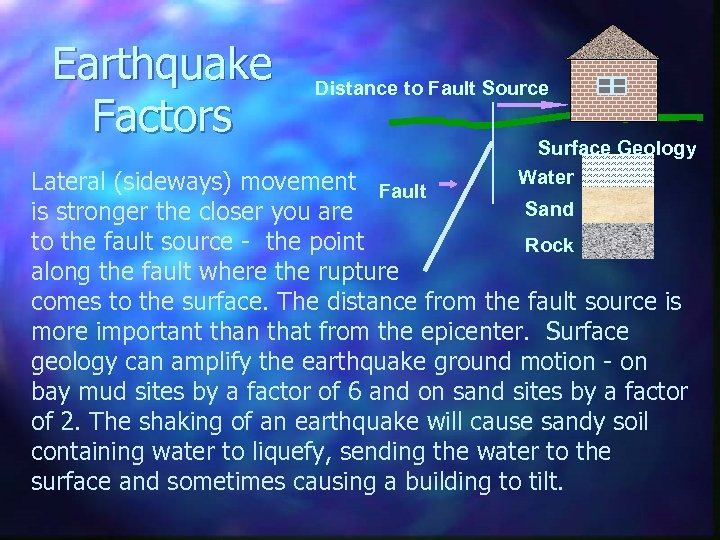
Earthquake Factors Distance to Fault Source Surface Geology Water Lateral (sideways) movement Fault Sand is stronger the closer you are to the fault source - the point Rock along the fault where the rupture comes to the surface. The distance from the fault source is more important than that from the epicenter. Surface geology can amplify the earthquake ground motion - on bay mud sites by a factor of 6 and on sand sites by a factor of 2. The shaking of an earthquake will cause sandy soil containing water to liquefy, sending the water to the surface and sometimes causing a building to tilt.
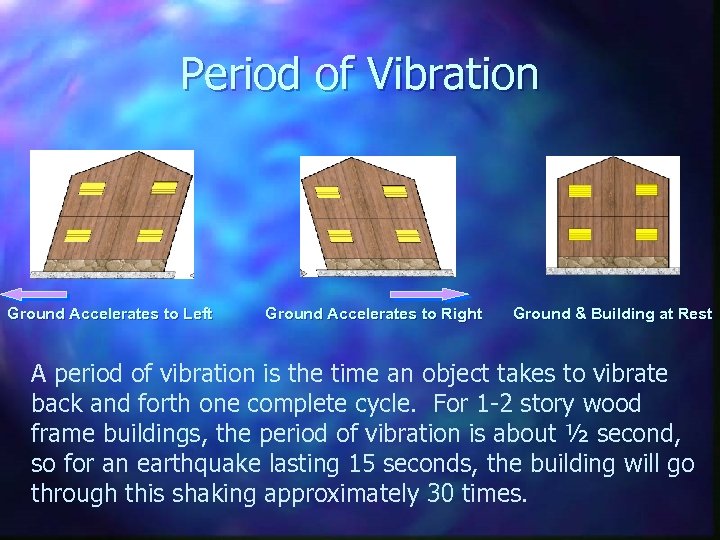
Period of Vibration Ground Accelerates to Left Ground Accelerates to Right Ground & Building at Rest A period of vibration is the time an object takes to vibrate back and forth one complete cycle. For 1 -2 story wood frame buildings, the period of vibration is about ½ second, so for an earthquake lasting 15 seconds, the building will go through this shaking approximately 30 times.
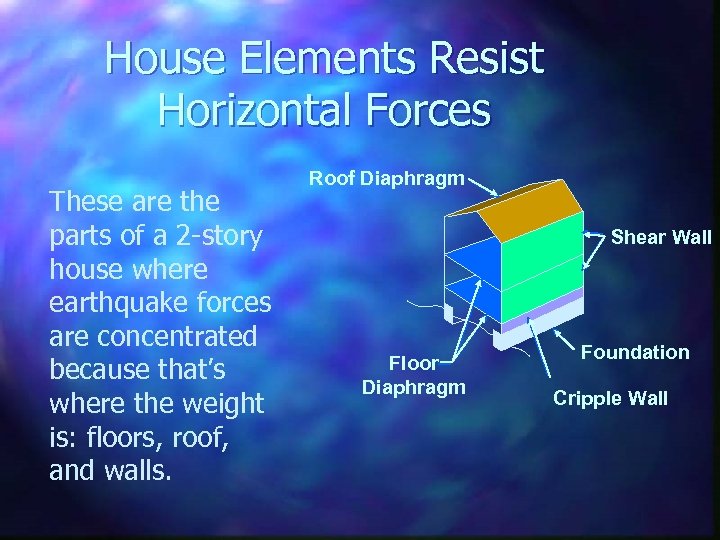
House Elements Resist Horizontal Forces These are the parts of a 2 -story house where earthquake forces are concentrated because that’s where the weight is: floors, roof, and walls. Roof Diaphragm Shear Wall Floor Diaphragm Foundation Cripple Wall

Evaluate Your Home You should take a look at the building you live in and see how well it is constructed to deal with earthquake forces. There a number of factors to take into account:

Know underlying soil conditions Find out if any of these conditions apply; state or local maps are available in some areas. n Near fault – damage can be more severe n Liquefaction – potential for soil to liquefy and damage foundation n Landslide potential due to earthquake shaking
Age and Type of Construction The age of a building can be important because there are significant improvements that have been added to the building code in later years. Buildings constructed before 1960 may not have anchor bolts into the foundation. Those built before 1973 may not have some features of seismic detailing contained in later editions of the building code. The type of construction is also important. Wood frame buildings generally perform pretty well in quakes. Unreinforced masonry buildings (usually older brick or concrete block), older concrete buildings, and soft story buildings (with large open spaces for garages, windows, etc. ) tend to be more vulnerable.
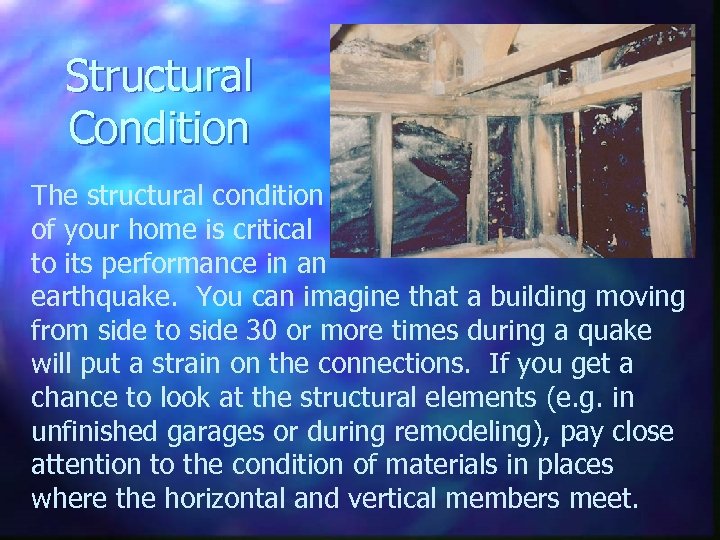
Structural Condition The structural condition of your home is critical to its performance in an earthquake. You can imagine that a building moving from side to side 30 or more times during a quake will put a strain on the connections. If you get a chance to look at the structural elements (e. g. in unfinished garages or during remodeling), pay close attention to the condition of materials in places where the horizontal and vertical members meet.
Remodeling Impact Consider the impact of any additions or renovations that have been made to the building. Irregular shapes are more vulnerable to earthquake damage than squares or rectangles because the different wings will move in different directions during an earthquake.
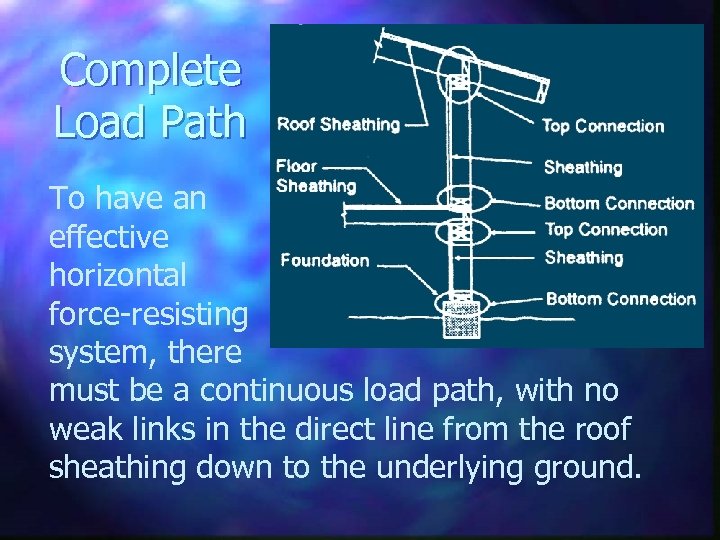
Complete Load Path To have an effective horizontal force-resisting system, there must be a continuous load path, with no weak links in the direct line from the roof sheathing down to the underlying ground.
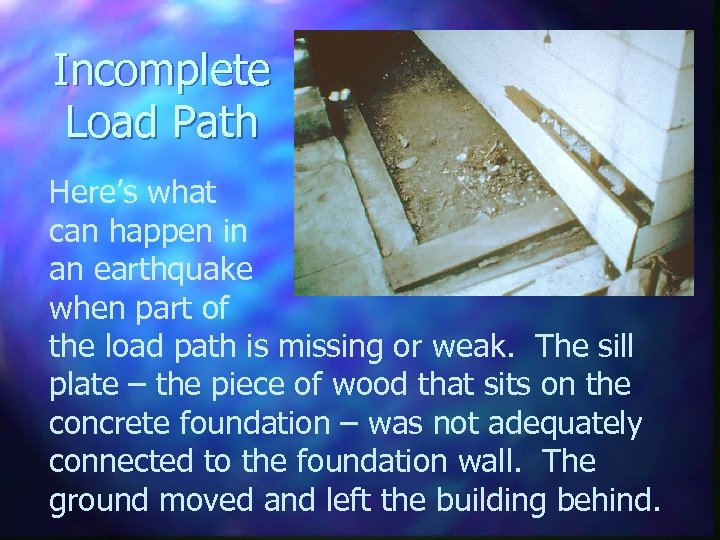
Incomplete Load Path Here’s what can happen in an earthquake when part of the load path is missing or weak. The sill plate – the piece of wood that sits on the concrete foundation – was not adequately connected to the foundation wall. The ground moved and left the building behind.
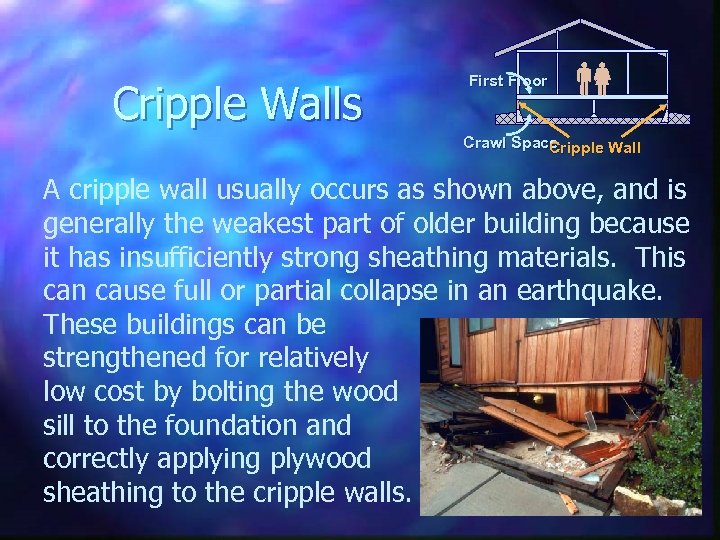
Cripple Walls First Floor Crawl Space Cripple Wall A cripple wall usually occurs as shown above, and is generally the weakest part of older building because it has insufficiently strong sheathing materials. This can cause full or partial collapse in an earthquake. These buildings can be strengthened for relatively low cost by bolting the wood sill to the foundation and correctly applying plywood sheathing to the cripple walls.
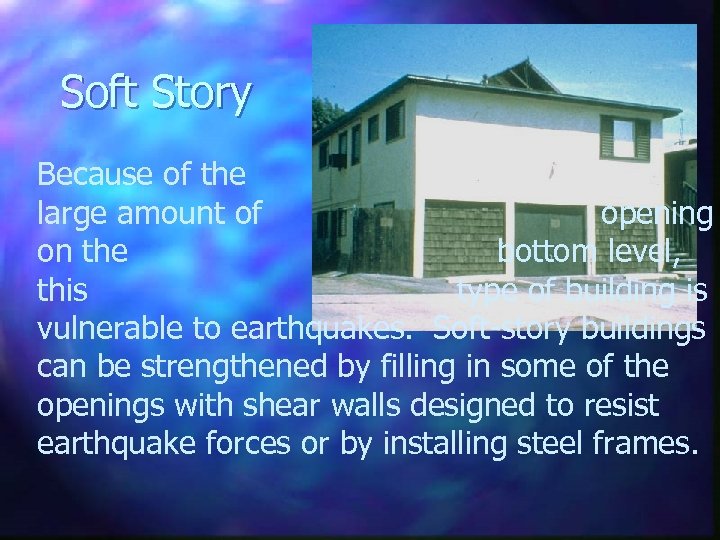
Soft Story Because of the large amount of opening on the bottom level, this type of building is vulnerable to earthquakes. Soft-story buildings can be strengthened by filling in some of the openings with shear walls designed to resist earthquake forces or by installing steel frames.
Investigate Retrofit Options Decide level of performance desired n Determine extent of retrofit needed n Evaluate costs and benefits n Arrange for retrofit or… n Develop a good evacuation plan! n

Cost-Effective Remedy Bolting your house to its foundation is the best improvement you can make for the least amount of money. Instructions and materials can be obtained at many hardware or lumber stores. A do-it-yourself video titled “Bolt It Down” can be purchased for $14 from the International Code Council Customer Service Dept. , 800 -423 -6587, item #288 X 93.

California Building Code Bolt Requirements Minimum 5/8” diameter n At least 7” embedment into foundation n Spaced not more than 6’ apart n Minimum of 2 bolts per piece n – One bolt located not more than 12” from each end of the piece – One bolt located not less than 7 bolt diameters from each end of the piece
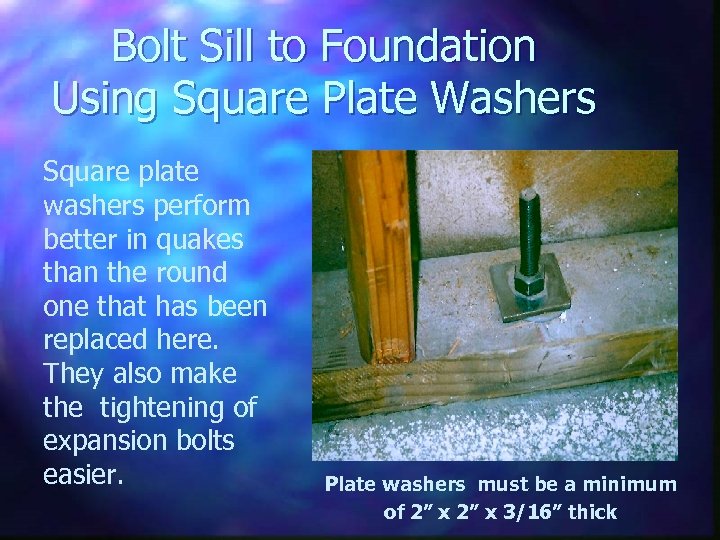
Bolt Sill to Foundation Using Square Plate Washers Square plate washers perform better in quakes than the round one that has been replaced here. They also make the tightening of expansion bolts easier. Plate washers must be a minimum of 2” x 3/16” thick

Mechanical Anchors Easier to install than adhesive anchors Concrete must be in good shape n Minimum edge distance must be maintained n Required torque and calibrated torque wrench must be used n

Adhesive Anchors More expensive n Work in weaker concrete n Require proper drilling & cleaning of holes n Require owner employment of a special inspector to check the drilled holes n Come in a two-part tube applicator n Can be used in masonry n
Post-Quake Consequences (other reasons to retrofit now) n n n Scarcity of engineer and contractor availability Lack of competitive bidding opportunities Delays in repair completion Limits on existing construction materials and equipment Delays in repair inspection and approvals

Research Insurance Alternatives n n n Check earthquake insurance availability Compare rates between California Earthquake Authority & private firms Contrast insurance costs with retrofit investment
Mitigate Nonstructural Hazards The greatest amount of earthquake damage is generally caused by hazards that most people can do something about. Look around your home and note items that aren’t secured against earthquake movement.
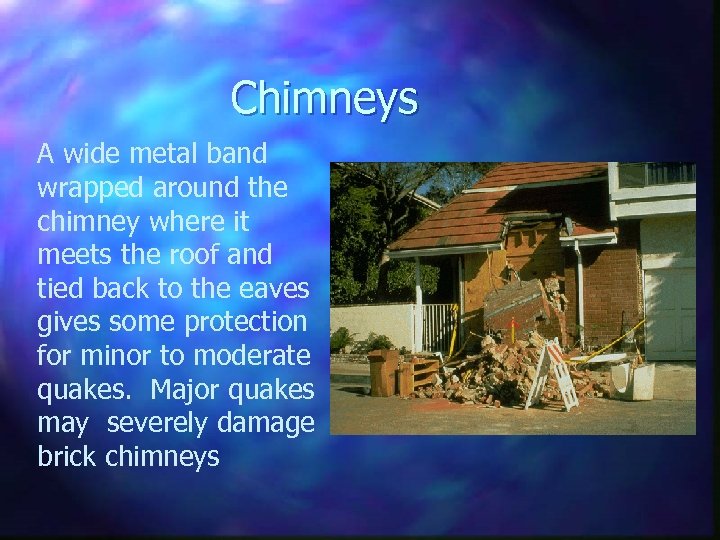
Chimneys A wide metal band wrapped around the chimney where it meets the roof and tied back to the eaves gives some protection for minor to moderate quakes. Major quakes may severely damage brick chimneys
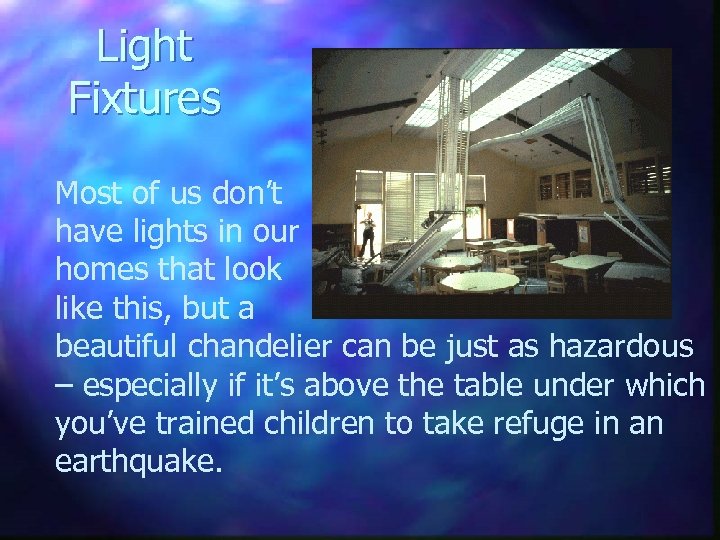
Light Fixtures Most of us don’t have lights in our homes that look like this, but a beautiful chandelier can be just as hazardous – especially if it’s above the table under which you’ve trained children to take refuge in an earthquake.
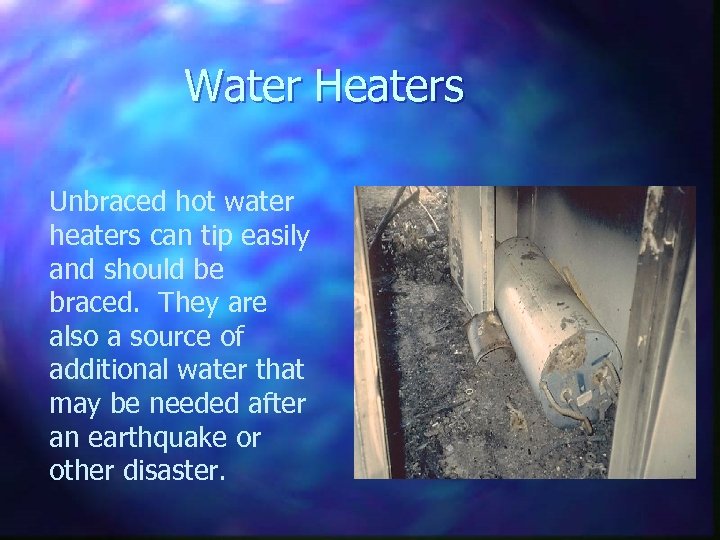
Water Heaters Unbraced hot water heaters can tip easily and should be braced. They are also a source of additional water that may be needed after an earthquake or other disaster.
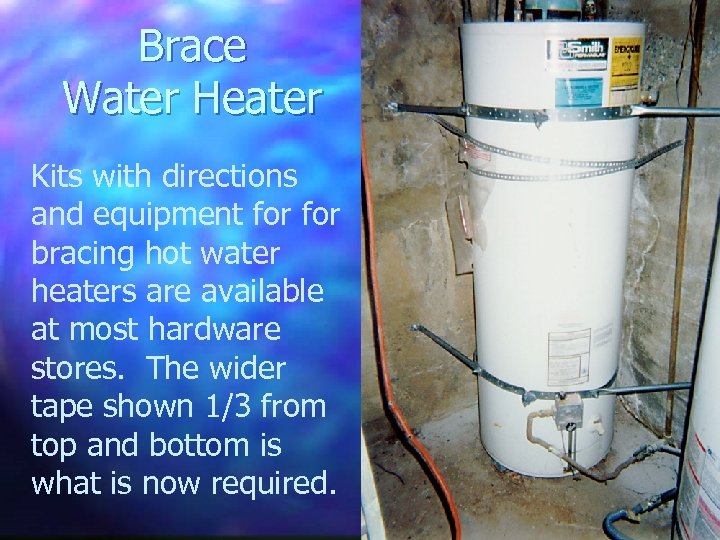
Brace Water Heater Kits with directions and equipment for bracing hot water heaters are available at most hardware stores. The wider tape shown 1/3 from top and bottom is what is now required.

Secure wall hangings Pictures and other heavy wall hangings, especially those that are heavy, contain glass, or hang over beds should be firmly attached to the wall with double-backed tape or other means.
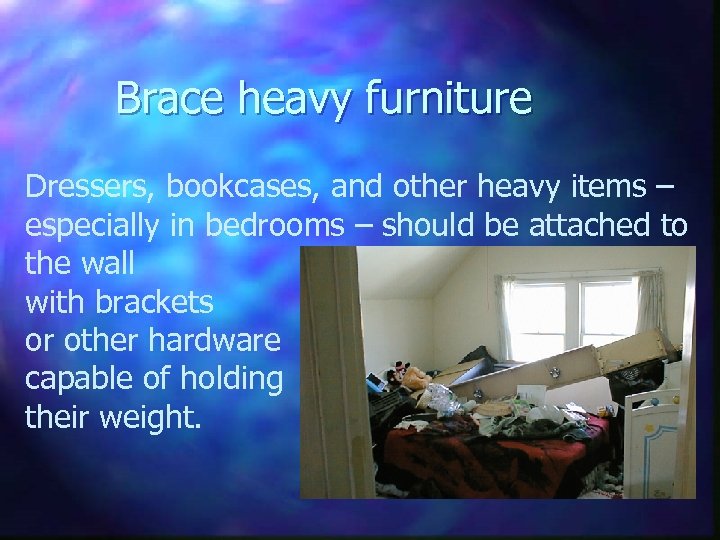
Brace heavy furniture Dressers, bookcases, and other heavy items – especially in bedrooms – should be attached to the wall with brackets or other hardware capable of holding their weight.
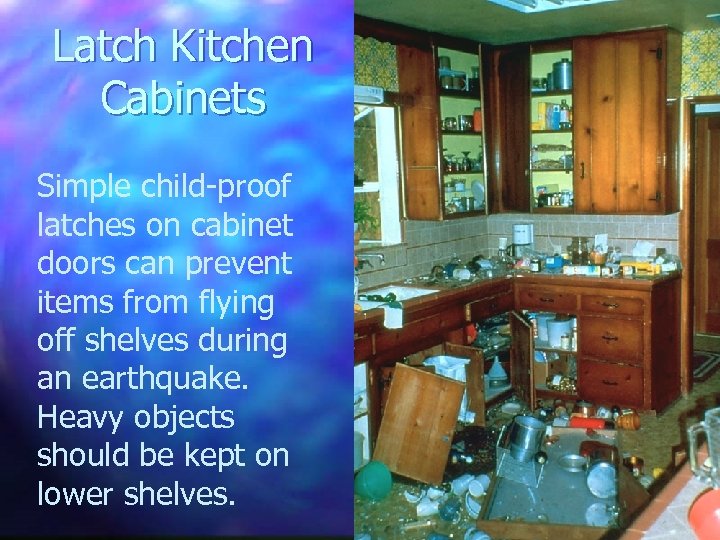
Latch Kitchen Cabinets Simple child-proof latches on cabinet doors can prevent items from flying off shelves during an earthquake. Heavy objects should be kept on lower shelves.
Note other potential hazards Appliances should be secured from rolling or tipping. n Computers should be attached to surfaces with velcro or strong double-backed tape. n Any other items that can cause injuries should be secured. n

Protect your heirlooms and personal treasures Take special care to protect the items you most cherish. Family heirlooms, photo albums, and other precious objects should be protected from breakage and fire.
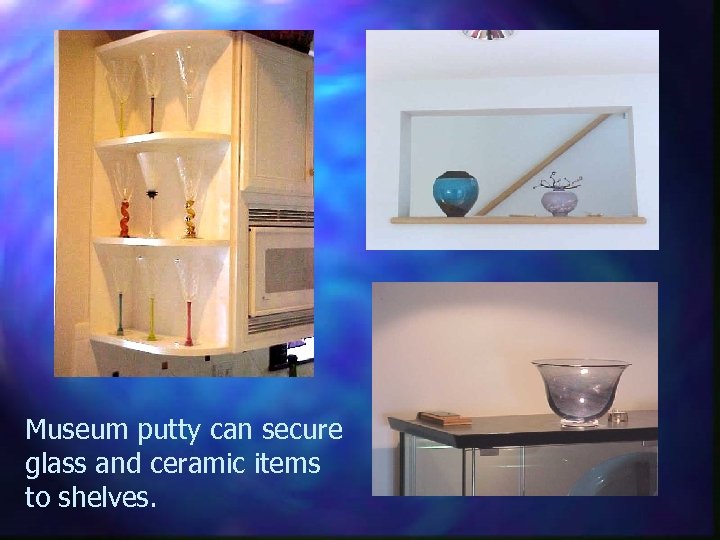
Museum putty can secure glass and ceramic items to shelves.
Personal Preparedness In order to function effectively after a major disaster, you need to prepare yourself and your family, in addition to your home.
Develop a Family Emergency Plan Locate safe shelter areas in your home n Identify places to store emergency supplies n Arrange where to meet after a disaster n Learn landmarks near home & meeting place n Establish a distant phone contact n Create an emergency information card n
Create a Family Emergency Card In case of an earthquake or other emergency if you are away from the family, call ____________ at ( ) , say where you are and whether or not you will be going to the arranged meeting place. Find out if there is any information regarding a change of meeting place. Meeting Place #1________________ If this location is damaged or inaccessible, go to Meeting Place #2 _______________
Learn School/Daycare Emergency Plans Ask about emergency plan n Learn evacuation notification procedures n Make sure first aid supplies are on hand n Find out where at the school or daycare children can store survival kits n Learn how children will be cared for if parents are unable to retrieve them n Learn if daycare meets license requirements for emergency supplies and bi-annual drills n
Assemble and Maintain Emergency Supplies n Home n Transportable n Work n School/Daycare n Vehicles
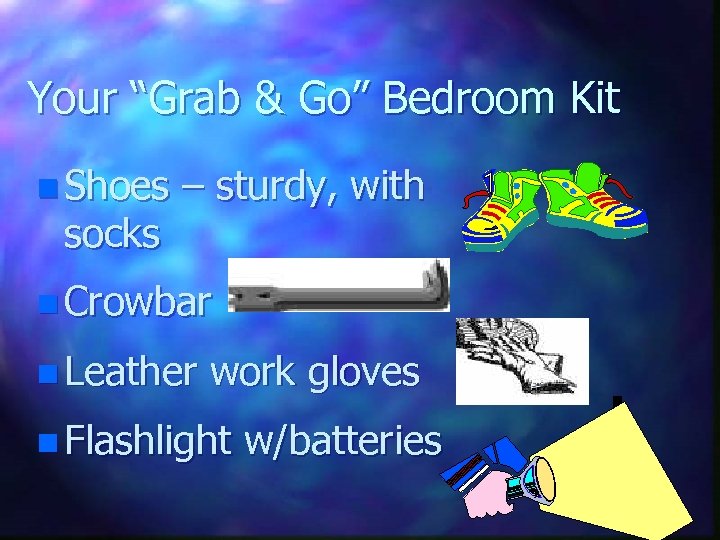
Your “Grab & Go” Bedroom Kit n Shoes socks – sturdy, with n Crowbar n Leather work gloves n Flashlight w/batteries

“Grab & Go” Items n Cash n Essential medication and eye glasses n Whistle n Scissors n Watch or clock
Home/transportable supplies Water purification kit n First aid kit and instruction book n Antiseptic wipes or baby wipes n Foods requiring little heat or water n Can opener n Portable stove and fuel n Butane barbeque igniter n
more home/transportable supplies… Battery-operated radio, spare batteries n Flashlights, spare batteries, and bulbs n Blankets for all family members n Leather work gloves & surgical gloves n Diapers, if needed n Pet food, leash, and carrier, if needed n Plastic bags for storage and sanitation n Backpacks to carry emergency supplies n
Water – Minimum 1 gallon/person/dayx 7 Containers: Sanitized sealable food-grade containers – camping supplies or reusable juice, etc. n 1 -2 gal. bottled water from store – may begin to leak after 6 months storage n 5 gal. container from private company n Airtight pouches, specially sealed n Store water in a cool, dark, accessible location, secure from animals. Do not store any plastic water container directly on concrete.

Purifying Stored or Tap Water Best – Boil water vigorously for one minute; let cool n Good – Add 8 drops of pure unscented liquid bleach per gallon of water; double if water is cloudy; let stand 30 minutes n Acceptable –Add 12 drops of 2% tincture of iodine per gallon of water; double if water is cloudy; let stand 30 minutes n
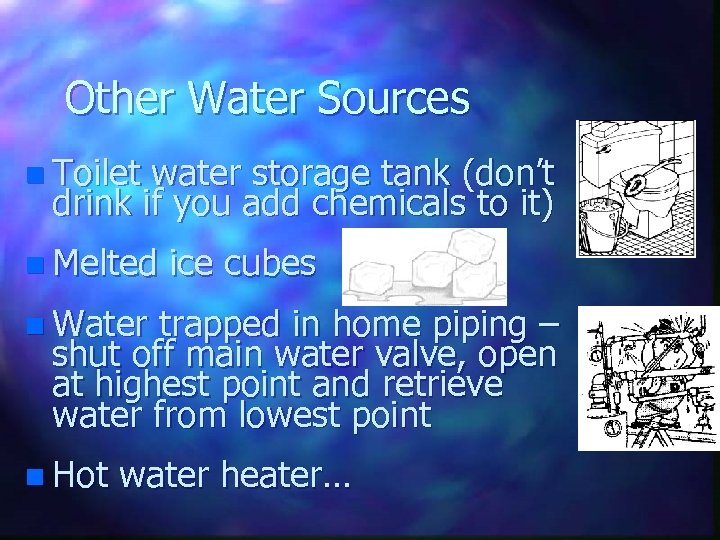
Other Water Sources n Toilet water storage tank (don’t drink if you add chemicals to it) n Melted ice cubes n Water trapped in home piping – shut off main water valve, open at highest point and retrieve water from lowest point n Hot water heater…

Getting Water from Water Heater Use extreme caution. Let the water cool. n Turn off the cold water supply to the tank n Turn off the tank’s gas or electric heater n Open the drain valve at the bottom n Drain water until it becomes clear. Some sediment at the bottom of the tank may make first water flowing out look murky. n Strain through clean cloth or layers of paper towels n Purify as shown for stored or tap water n
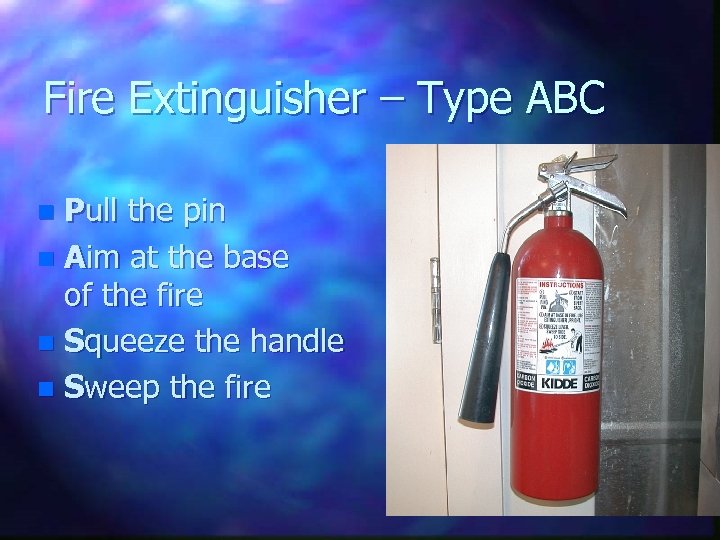
Fire Extinguisher – Type ABC Pull the pin n Aim at the base of the fire n Squeeze the handle n Sweep the fire n

Utilities Train family to turn off utilities, if necessary n n n Natural gas Electricity Water
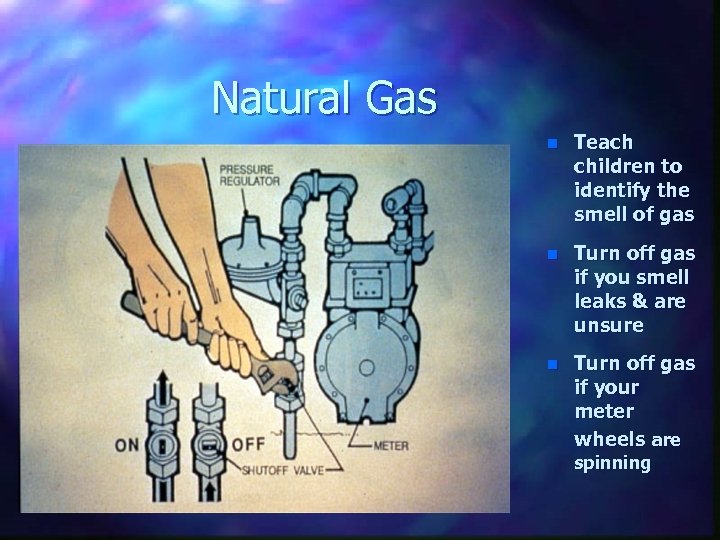
Natural Gas n Teach children to identify the smell of gas n Turn off gas if you smell leaks & are unsure n Turn off gas if your meter wheels are spinning
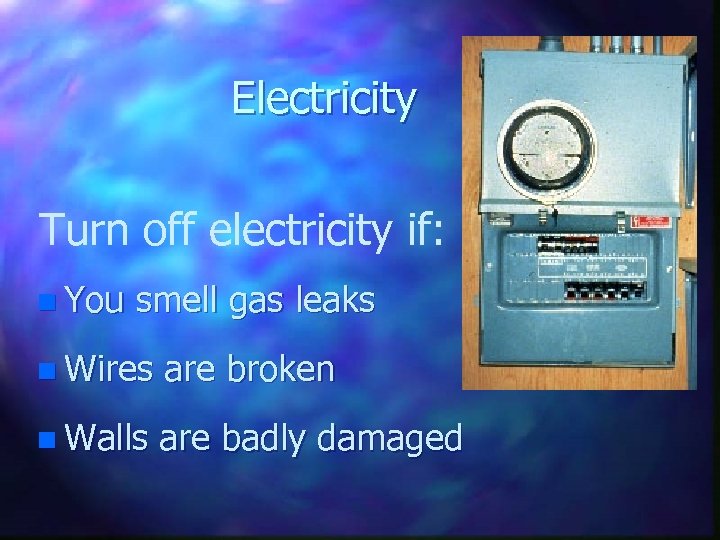
Electricity Turn off electricity if: n You smell gas leaks n Wires are broken n Walls are badly damaged
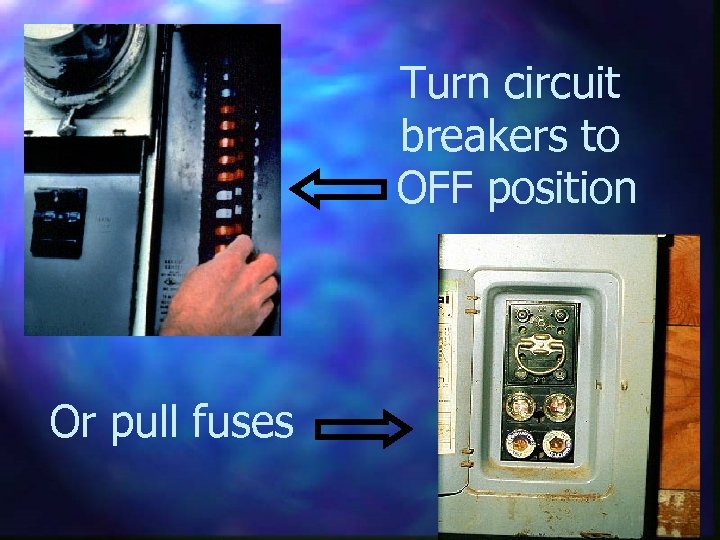
Turn circuit breakers to OFF position Or pull fuses
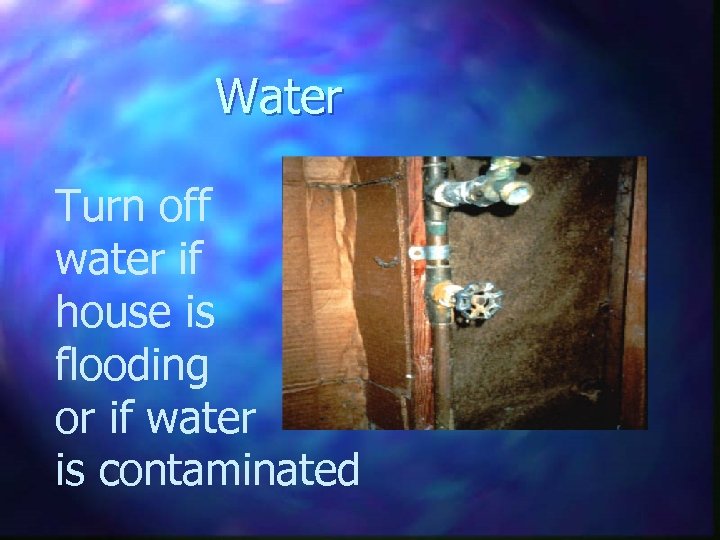
Water Turn off water if house is flooding or if water is contaminated
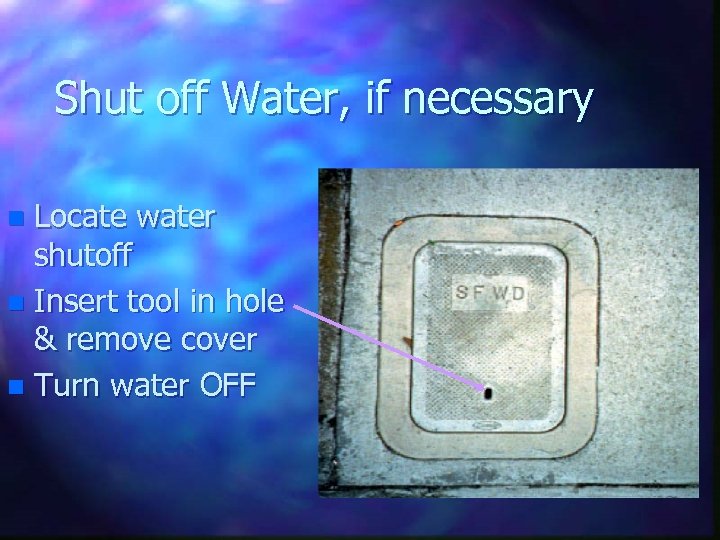
Shut off Water, if necessary Locate water shutoff n Insert tool in hole & remove cover n Turn water OFF n
Train Your Family in First Aid Train family members who are old enough in simple first aid. For more in-depth instruction, take Red Cross classes or the Community Emergency Response Team training offered by the Fire Department.

Consider taking first aid classes http//www. bayarea-redcross. org
Remind Yourself… n n n Major SF Bay Area Earthquakes April 18, 1906 & October 17, 1989 Drill with your family at least once a year; local earthquake anniversaries are good reminders Maintain first aid and other emergency skills Check family emergency supplies, replenish them as needed
 Скачать презентацию Emergency Preparedness Prepared by Zan Turner City
6b811ad7199a0bad47d4a1761fea2374.ppt