


 Скачать презентацию EM ORGAN DONATION PATHWAY UHW WHY
2908aff67ebc73ba2fe61e4cb2f500be.ppt
- Количество слайдов: 11
 EM ORGAN DONATION PATHWAY UHW
 WHY? • UHW: • very busy ED, 140, 000 attendances per annum • Neurosurgical tertiary referral, trauma centre • Potential donors - 1 per fortnight • ED pathway normalises and standardises referral • Gives a structure to something that remains stressful and usual for ED staff • Encourages and supports good practice • End of life care • Collaborative approach
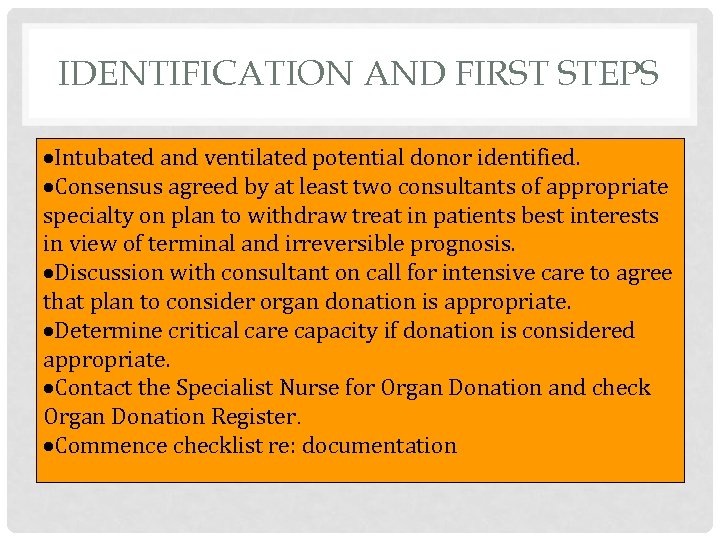 IDENTIFICATION AND FIRST STEPS Intubated and ventilated potential donor identified. Consensus agreed by at least two consultants of appropriate specialty on plan to withdraw treat in patients best interests in view of terminal and irreversible prognosis. Discussion with consultant on call for intensive care to agree that plan to consider organ donation is appropriate. Determine critical care capacity if donation is considered appropriate. Contact the Specialist Nurse for Organ Donation and check Organ Donation Register. Commence checklist re: documentation
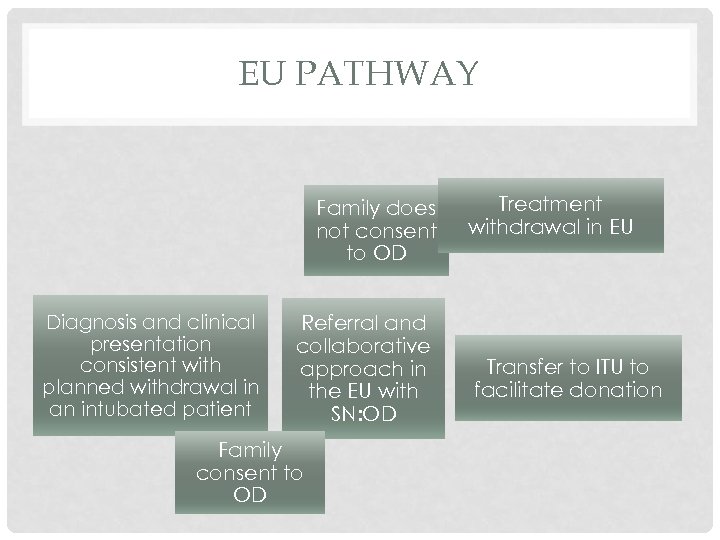 EU PATHWAY Family does not consent to OD Diagnosis and clinical presentation consistent with planned withdrawal in an intubated patient Referral and collaborative approach in the EU with SN: OD Family consent to OD Treatment withdrawal in EU Transfer to ITU to facilitate donation
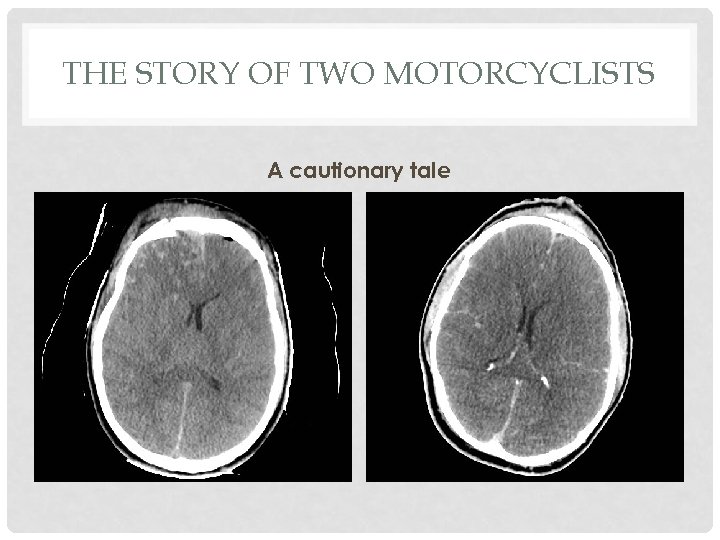 THE STORY OF TWO MOTORCYCLISTS A cautionary tale
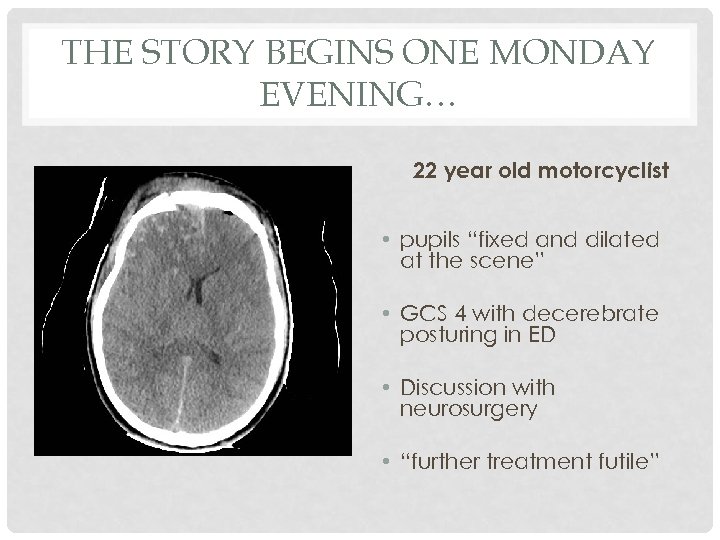 THE STORY BEGINS ONE MONDAY EVENING… 22 year old motorcyclist • pupils “fixed and dilated at the scene” • GCS 4 with decerebrate posturing in ED • Discussion with neurosurgery • “further treatment futile”
 THE STORY CONTINUES… • Difficult family dynamics • Father refuses to proceed with OD conversation before patient’s grandmother can attend the next day. • The patient is “optimised” overnight in the EU. • At some point the pupils are noted to be slightly unequal and sluggishly reacting. • The next morning the EU consultant is uncomfortable with the decision to withdraw and insists on further assessment. • Patient transferred to ITU for active medical treatment. • Patient since transferred to neuro ward for rehabilitation.
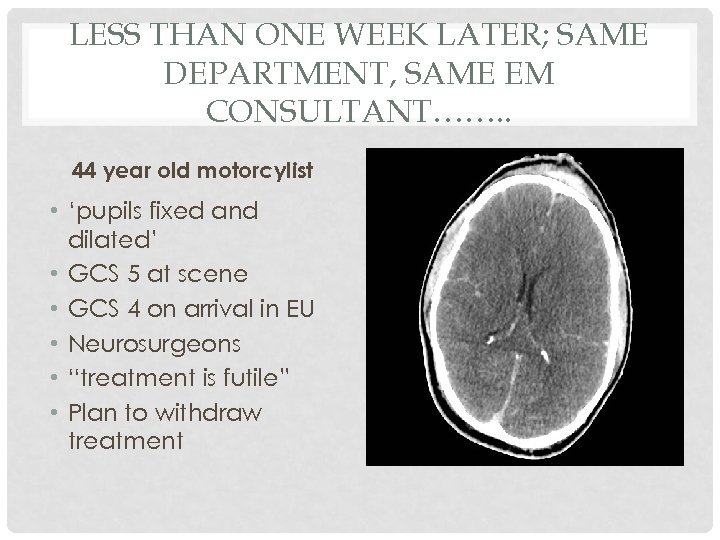 LESS THAN ONE WEEK LATER; SAME DEPARTMENT, SAME EM CONSULTANT……. . 44 year old motorcylist • ‘pupils fixed and dilated’ • GCS 5 at scene • GCS 4 on arrival in EU • Neurosurgeons • “treatment is futile” • Plan to withdraw treatment
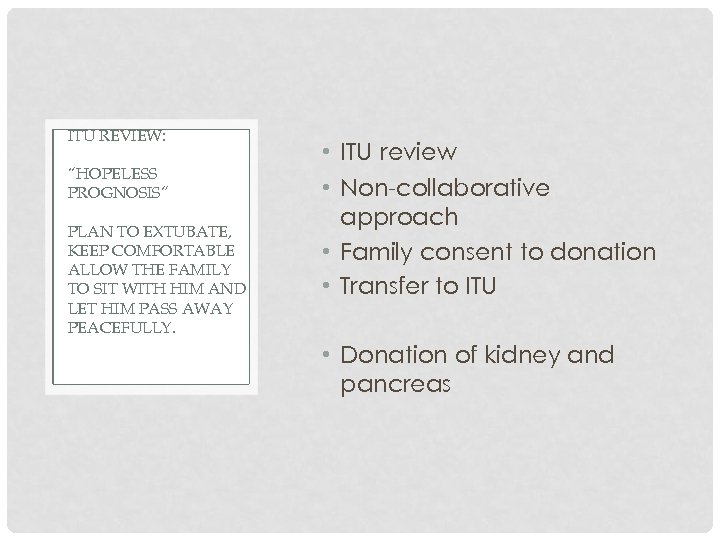 ITU REVIEW: “HOPELESS PROGNOSIS” PLAN TO EXTUBATE, KEEP COMFORTABLE ALLOW THE FAMILY TO SIT WITH HIM AND LET HIM PASS AWAY PEACEFULLY. • ITU review • Non-collaborative approach • Family consent to donation • Transfer to ITU • Donation of kidney and pancreas
 LEARNING POINTS • • Open dialogue between ITU and EU is essential Don’t take information for granted Review everything and assume nothing Document all decisions and their timings accurately and as contemporaneously as possible • Further introductory information to emphasis process of decision making about withdrawal • Addition of a checklist
 CONCLUSION • Local pathways should reflect local issues • UHW: • capacity is an issue • Senior decision makers present for extended hours • Needs regular review and a dialogue between senior colleagues