


 Скачать презентацию Elmer et al Ann Pharmacother 2007 40 1617
2f26bc27eed9f79aedda7924e2e4c550.ppt
- Количество слайдов: 77
 Elmer et al. Ann Pharmacother. 2007; 40: 1617 -24.
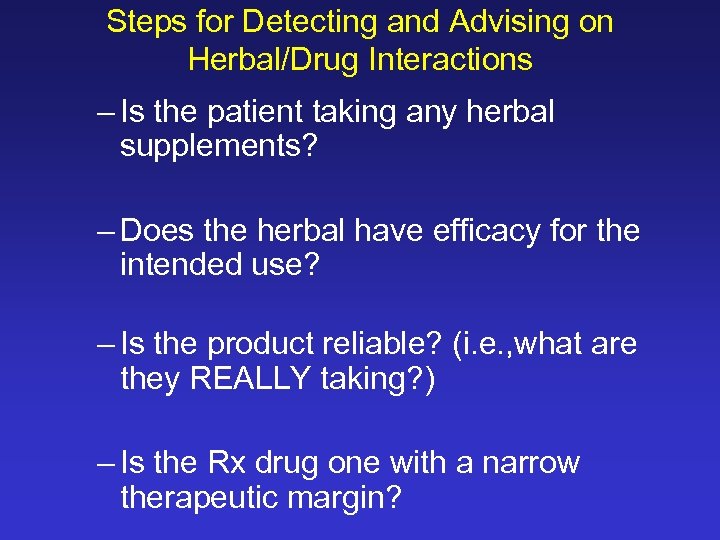 Steps for Detecting and Advising on Herbal/Drug Interactions – Is the patient taking any herbal supplements? – Does the herbal have efficacy for the intended use? – Is the product reliable? (i. e. , what are they REALLY taking? ) – Is the Rx drug one with a narrow therapeutic margin?
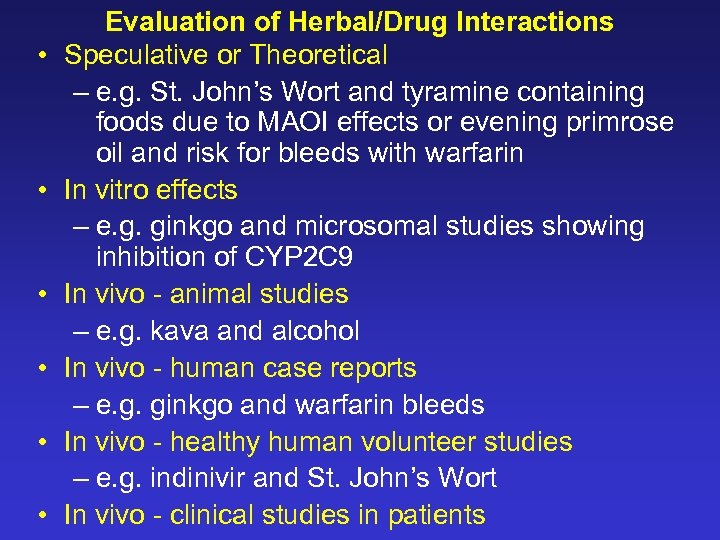 • • • Evaluation of Herbal/Drug Interactions Speculative or Theoretical – e. g. St. John’s Wort and tyramine containing foods due to MAOI effects or evening primrose oil and risk for bleeds with warfarin In vitro effects – e. g. ginkgo and microsomal studies showing inhibition of CYP 2 C 9 In vivo - animal studies – e. g. kava and alcohol In vivo - human case reports – e. g. ginkgo and warfarin bleeds In vivo - healthy human volunteer studies – e. g. indinivir and St. John’s Wort In vivo - clinical studies in patients
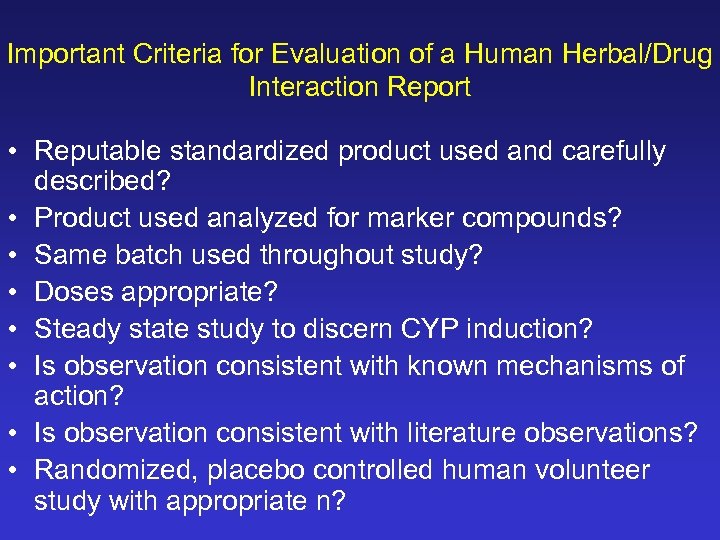 Important Criteria for Evaluation of a Human Herbal/Drug Interaction Report • Reputable standardized product used and carefully described? • Product used analyzed for marker compounds? • Same batch used throughout study? • Doses appropriate? • Steady state study to discern CYP induction? • Is observation consistent with known mechanisms of action? • Is observation consistent with literature observations? • Randomized, placebo controlled human volunteer study with appropriate n?
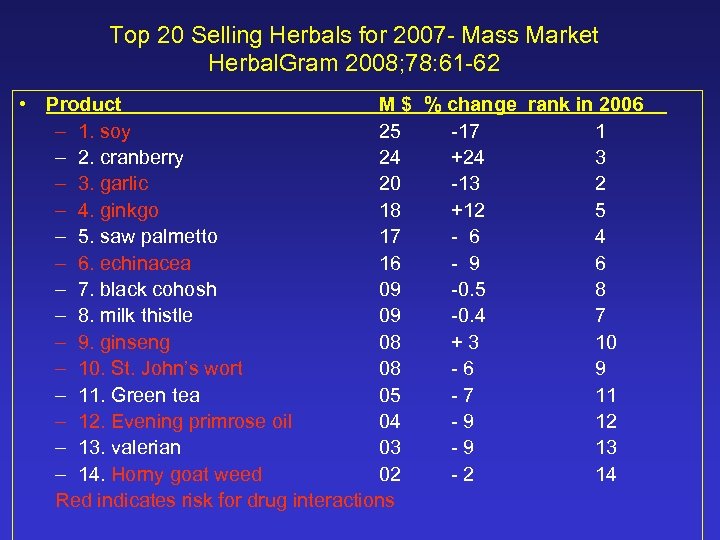 Top 20 Selling Herbals for 2007 - Mass Market Herbal. Gram 2008; 78: 61 -62 • Product M $ % change rank in 2006 – 1. soy 25 -17 1 – 2. cranberry 24 +24 3 – 3. garlic 20 -13 2 – 4. ginkgo 18 +12 5 – 5. saw palmetto 17 - 6 4 – 6. echinacea 16 - 9 6 – 7. black cohosh 09 -0. 5 8 – 8. milk thistle 09 -0. 4 7 – 9. ginseng 08 +3 10 – 10. St. John’s wort 08 -6 9 – 11. Green tea 05 -7 11 – 12. Evening primrose oil 04 -9 12 – 13. valerian 03 -9 13 – 14. Horny goat weed 02 -2 14 Red indicates risk for drug interactions
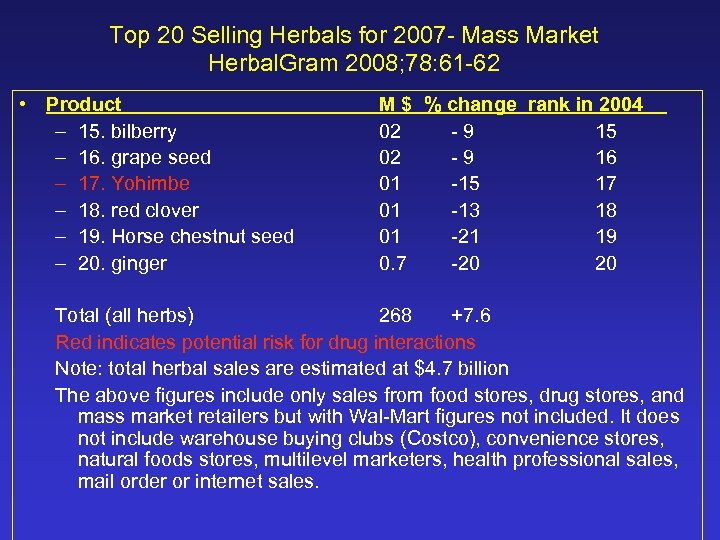 Top 20 Selling Herbals for 2007 - Mass Market Herbal. Gram 2008; 78: 61 -62 • Product – 15. bilberry – 16. grape seed – 17. Yohimbe – 18. red clover – 19. Horse chestnut seed – 20. ginger M $ % change rank in 2004 02 -9 15 02 -9 16 01 -15 17 01 -13 18 01 -21 19 0. 7 -20 20 Total (all herbs) 268 +7. 6 Red indicates potential risk for drug interactions Note: total herbal sales are estimated at $4. 7 billion The above figures include only sales from food stores, drug stores, and mass market retailers but with Wal-Mart figures not included. It does not include warehouse buying clubs (Costco), convenience stores, natural foods stores, multilevel marketers, health professional sales, mail order or internet sales.
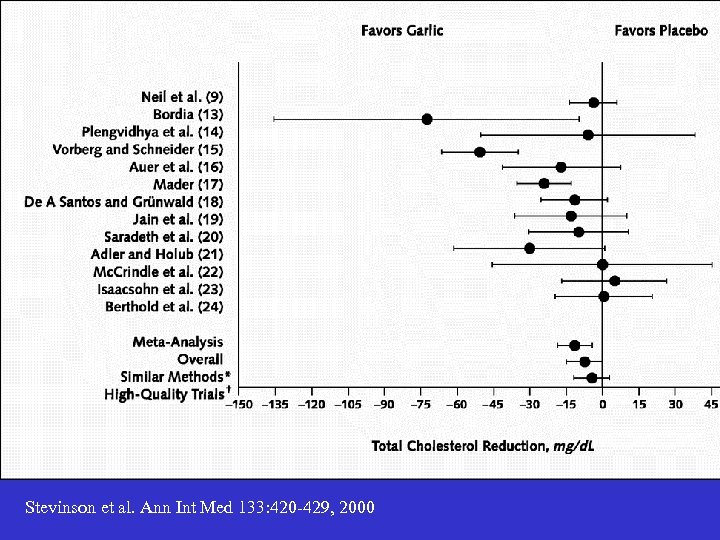 Stevinson et al. Ann Int Med 133: 420 -429, 2000
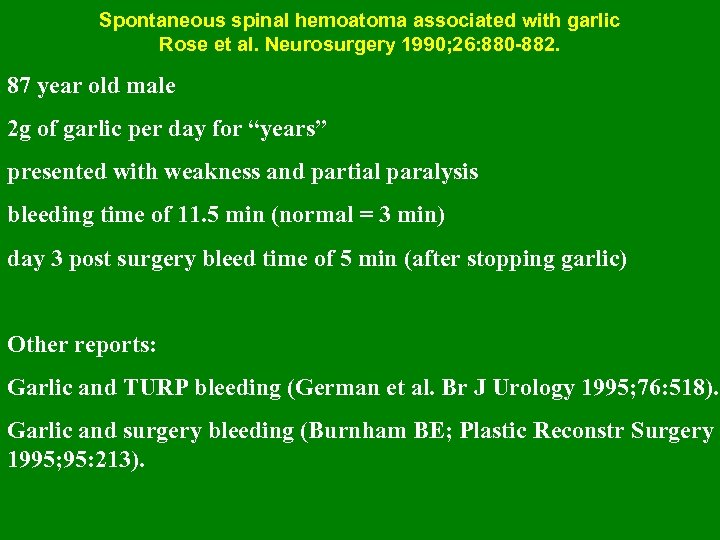 Spontaneous spinal hemoatoma associated with garlic Rose et al. Neurosurgery 1990; 26: 880 -882. 87 year old male 2 g of garlic per day for “years” presented with weakness and partial paralysis bleeding time of 11. 5 min (normal = 3 min) day 3 post surgery bleed time of 5 min (after stopping garlic) Other reports: Garlic and TURP bleeding (German et al. Br J Urology 1995; 76: 518). Garlic and surgery bleeding (Burnham BE; Plastic Reconstr Surgery 1995; 95: 213).
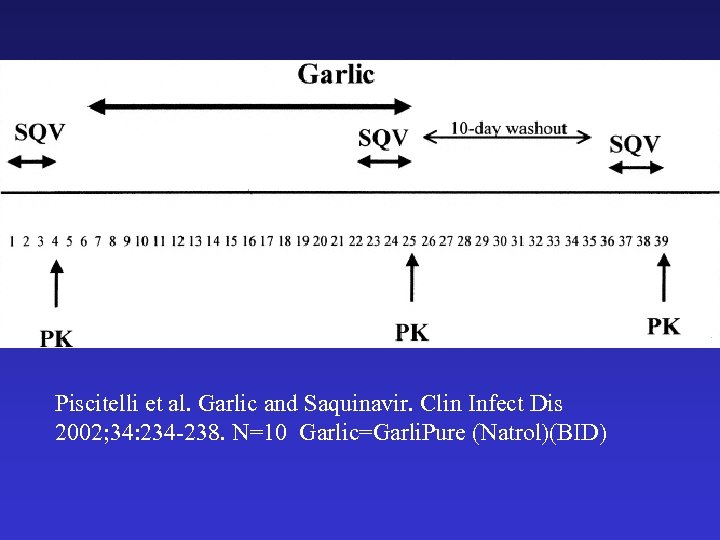 Piscitelli et al. Garlic and Saquinavir. Clin Infect Dis 2002; 34: 234 -238. N=10 Garlic=Garli. Pure (Natrol)(BID)
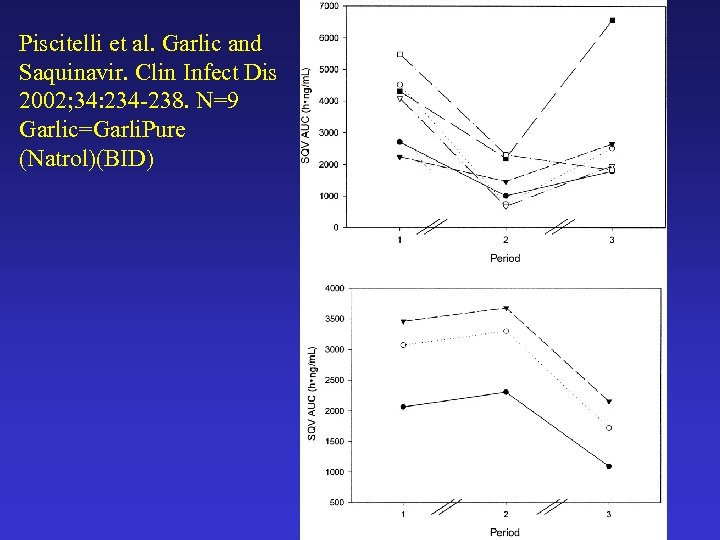 Piscitelli et al. Garlic and Saquinavir. Clin Infect Dis 2002; 34: 234 -238. N=9 Garlic=Garli. Pure (Natrol)(BID)
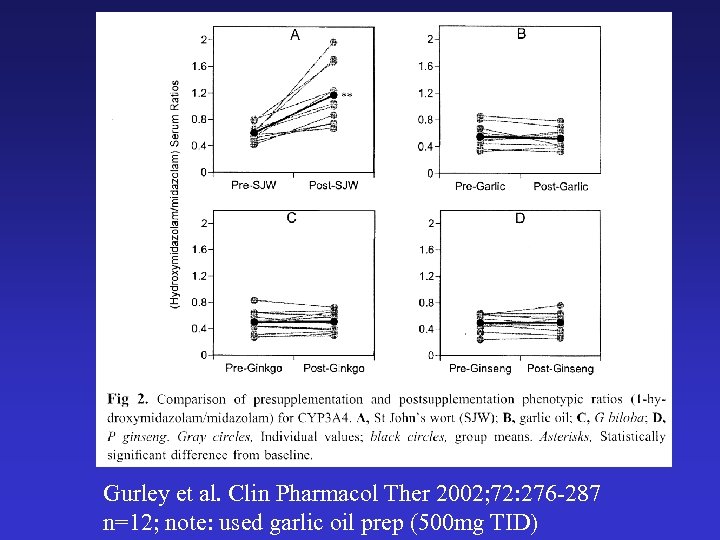 Gurley et al. Clin Pharmacol Ther 2002; 72: 276 -287 n=12; note: used garlic oil prep (500 mg TID)
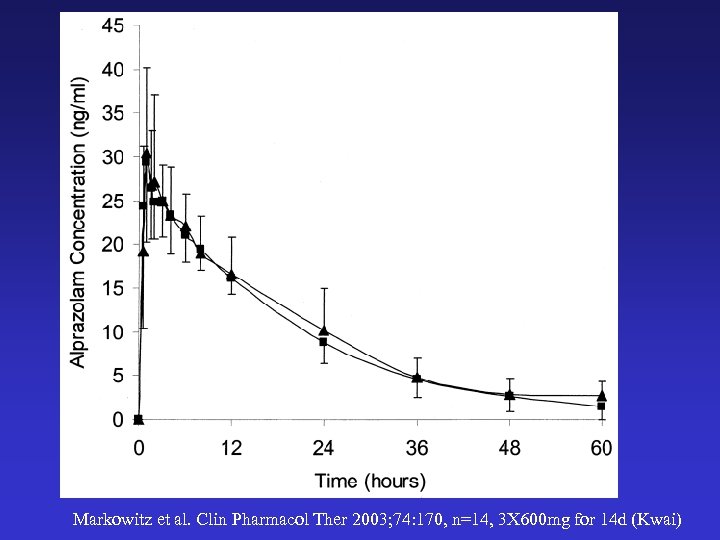 Markowitz et al. Clin Pharmacol Ther 2003; 74: 170, n=14, 3 X 600 mg for 14 d (Kwai)
 Garlic and warfarin • Another study showed no effect of aged garlic extract (Kyolic) on patients taking warfarin. HDL went up. No other changes – Mecan et al. J. Nutr. 2006; 136: 793 s 795 s.
 Garlic summary – Efficacy: ? benefit for use in hyperlipidemia. Possible other cardiovascular benefits. – Safety: good – Drug interactions: warfarin; possibly aspirin and other antiplatelet adhesion drugs (pharmacodynamic interaction); not with HIV drugs (other 3 A 4 substrates? ) but depends on product (pharmacokinetic interaction) (maybe raw garlic induces 3 A 4 but not extracts? ? ) – Product selection: Suggest enteric coated tablets standardized to about 4 mg allicin yield/tablet – Dose: equivalent of about 4 g (2 -3 cloves) of fresh garlic per day i. e. 8 -12 mg allicin/d
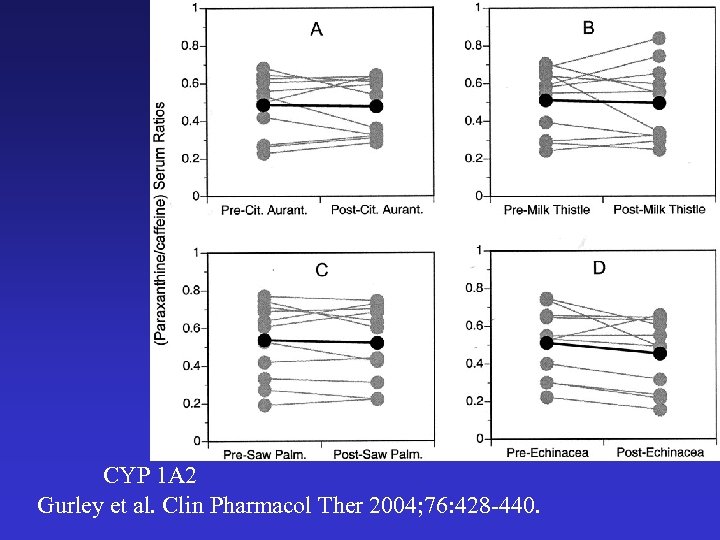 CYP 1 A 2 Gurley et al. Clin Pharmacol Ther 2004; 76: 428 -440.
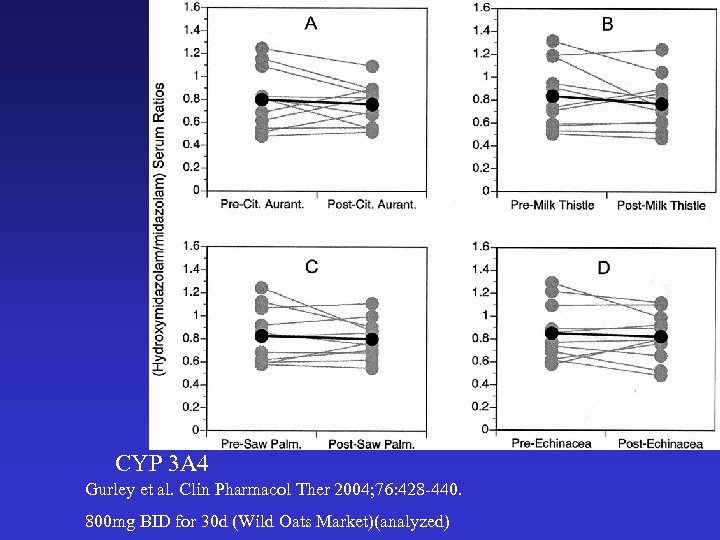 CYP 3 A 4 Gurley et al. Clin Pharmacol Ther 2004; 76: 428 -440. 800 mg BID for 30 d (Wild Oats Market)(analyzed)
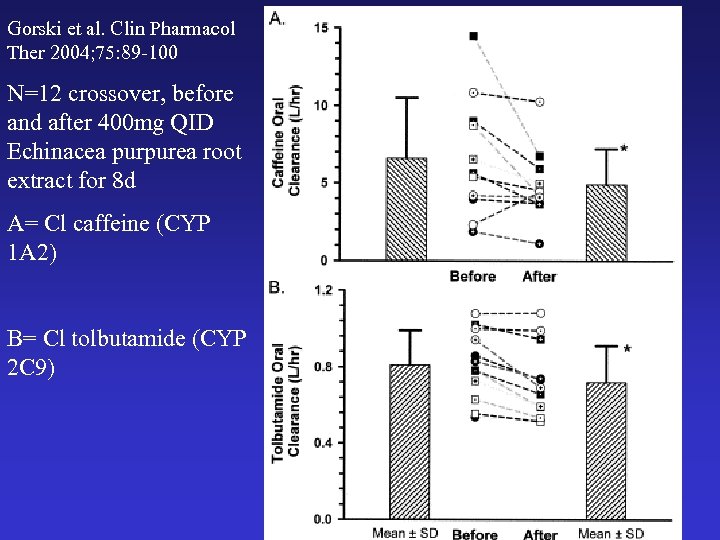 Gorski et al. Clin Pharmacol Ther 2004; 75: 89 -100 N=12 crossover, before and after 400 mg QID Echinacea purpurea root extract for 8 d A= Cl caffeine (CYP 1 A 2) B= Cl tolbutamide (CYP 2 C 9)
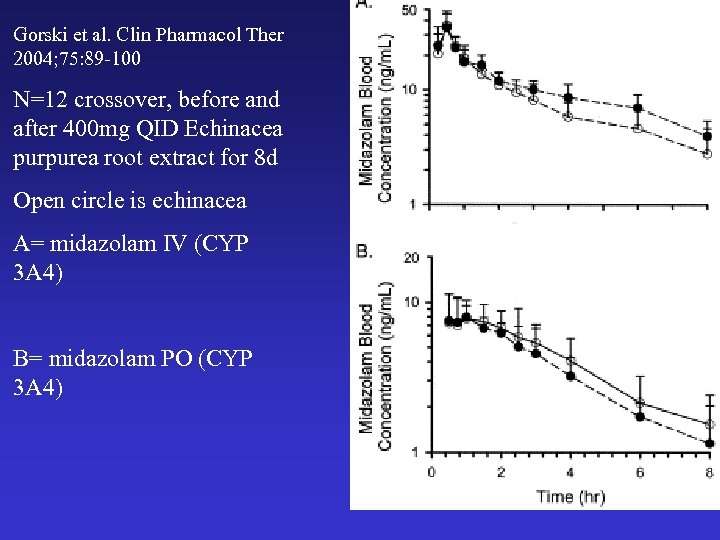 Gorski et al. Clin Pharmacol Ther 2004; 75: 89 -100 N=12 crossover, before and after 400 mg QID Echinacea purpurea root extract for 8 d Open circle is echinacea A= midazolam IV (CYP 3 A 4) B= midazolam PO (CYP 3 A 4)
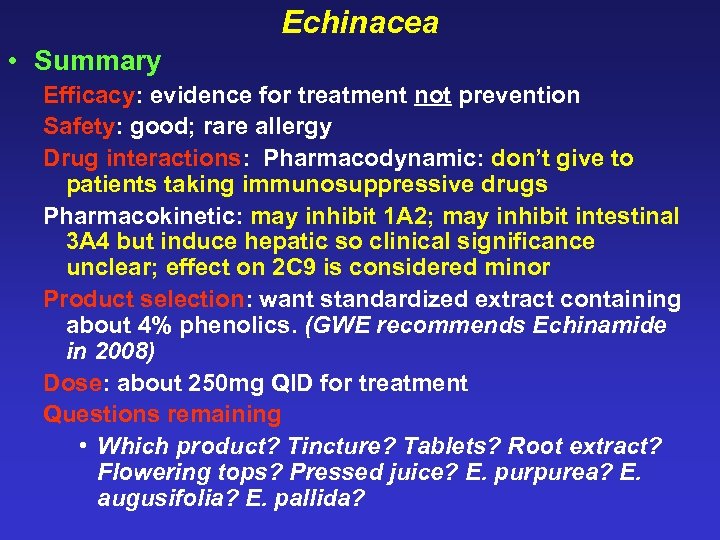 Echinacea • Summary Efficacy: evidence for treatment not prevention Safety: good; rare allergy Drug interactions: Pharmacodynamic: don’t give to patients taking immunosuppressive drugs Pharmacokinetic: may inhibit 1 A 2; may inhibit intestinal 3 A 4 but induce hepatic so clinical significance unclear; effect on 2 C 9 is considered minor Product selection: want standardized extract containing about 4% phenolics. (GWE recommends Echinamide in 2008) Dose: about 250 mg QID for treatment Questions remaining • Which product? Tincture? Tablets? Root extract? Flowering tops? Pressed juice? E. purpurea? E. augusifolia? E. pallida?
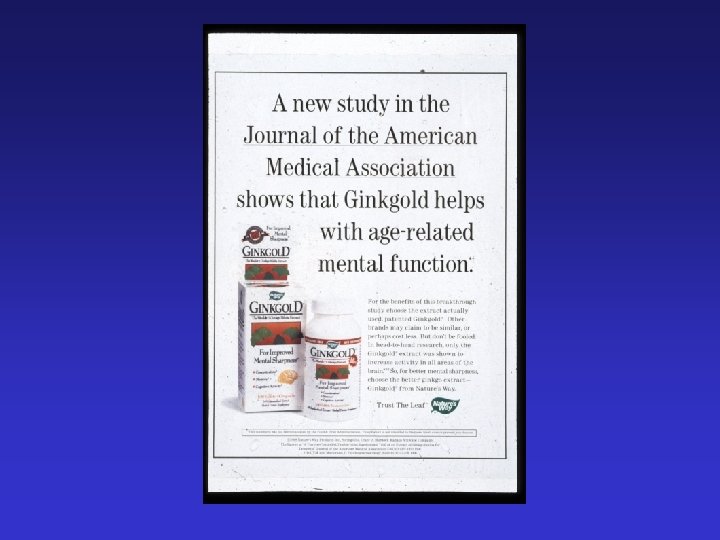
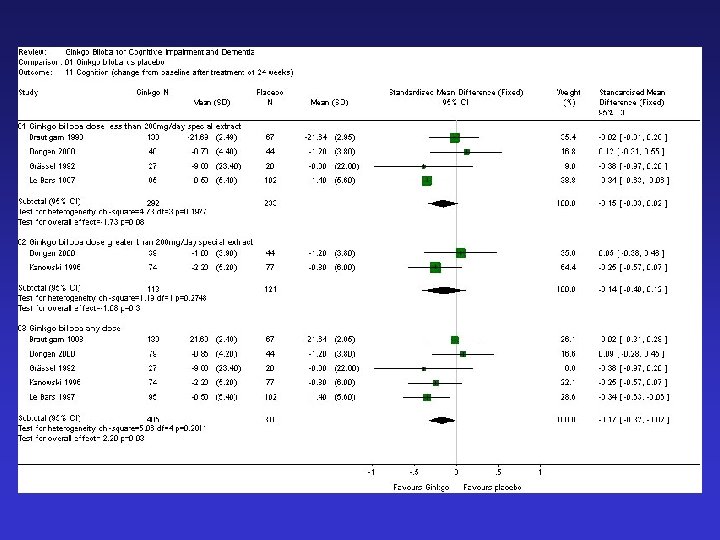
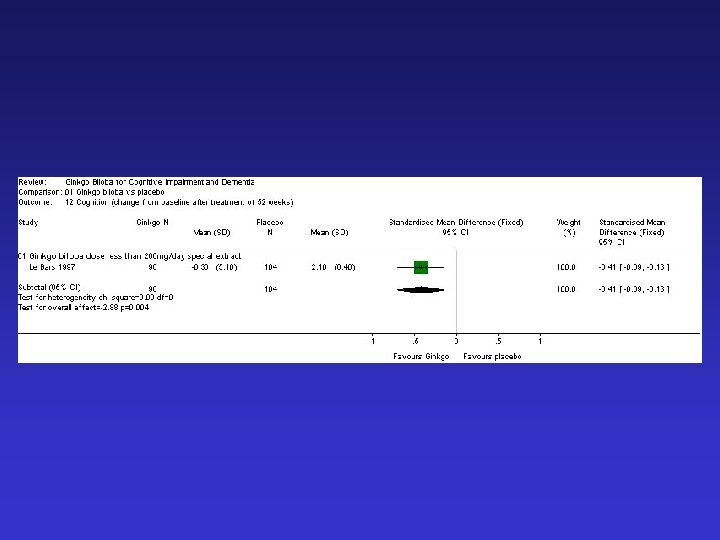
 Bleeds associated with ginkgo use
 Ginkgo-warfarin interactions?
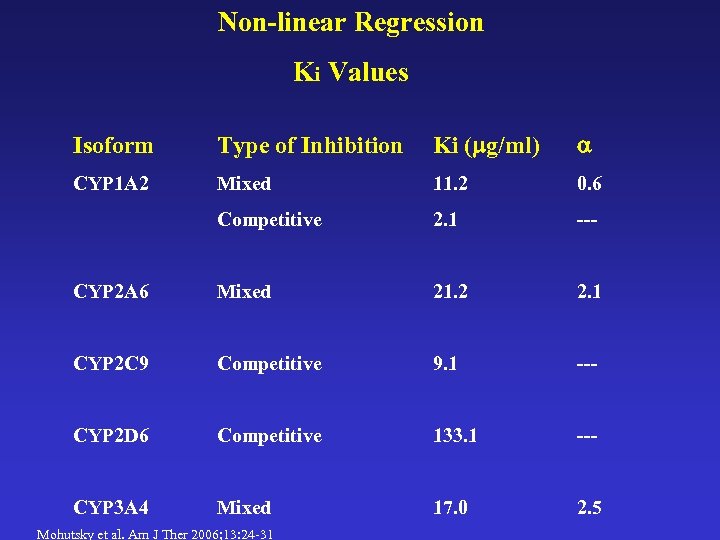 Non-linear Regression Ki Values Isoform Type of Inhibition Ki ( g/ml) CYP 1 A 2 Mixed 11. 2 0. 6 Competitive 2. 1 --- CYP 2 A 6 Mixed 21. 2 2. 1 CYP 2 C 9 Competitive 9. 1 --- CYP 2 D 6 Competitive 133. 1 --- CYP 3 A 4 Mixed 17. 0 2. 5 Mohutsky et al. Am J Ther 2006; 13: 24 -31
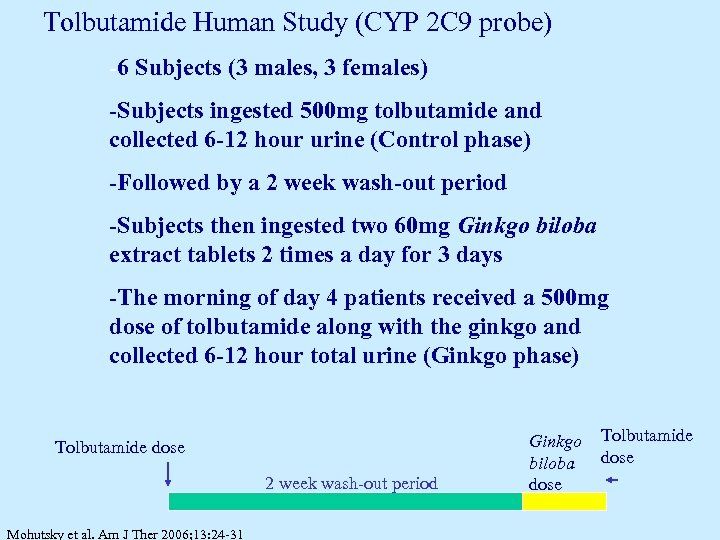 Tolbutamide Human Study (CYP 2 C 9 probe) -6 Subjects (3 males, 3 females) -Subjects ingested 500 mg tolbutamide and collected 6 -12 hour urine (Control phase) -Followed by a 2 week wash-out period -Subjects then ingested two 60 mg Ginkgo biloba extract tablets 2 times a day for 3 days -The morning of day 4 patients received a 500 mg dose of tolbutamide along with the ginkgo and collected 6 -12 hour total urine (Ginkgo phase) Tolbutamide dose 2 week wash-out period Mohutsky et al. Am J Ther 2006; 13: 24 -31 Ginkgo biloba dose Tolbutamide dose
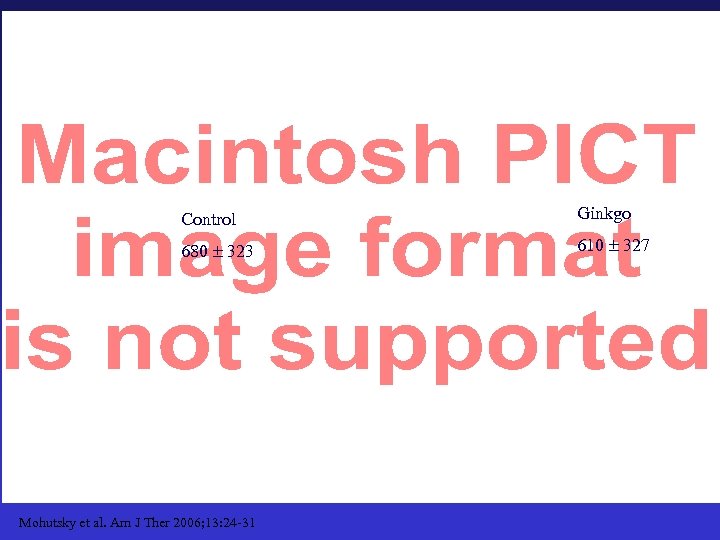 Control Ginkgo 680 323 610 327 Mohutsky et al. Am J Ther 2006; 13: 24 -31
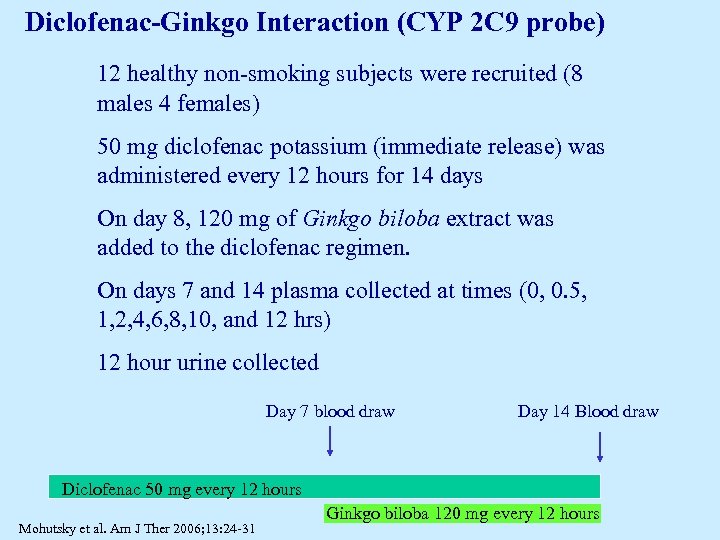 Diclofenac-Ginkgo Interaction (CYP 2 C 9 probe) 12 healthy non-smoking subjects were recruited (8 males 4 females) 50 mg diclofenac potassium (immediate release) was administered every 12 hours for 14 days On day 8, 120 mg of Ginkgo biloba extract was added to the diclofenac regimen. On days 7 and 14 plasma collected at times (0, 0. 5, 1, 2, 4, 6, 8, 10, and 12 hrs) 12 hour urine collected Day 7 blood draw Day 14 Blood draw Diclofenac 50 mg every 12 hours Mohutsky et al. Am J Ther 2006; 13: 24 -31 Ginkgo biloba 120 mg every 12 hours
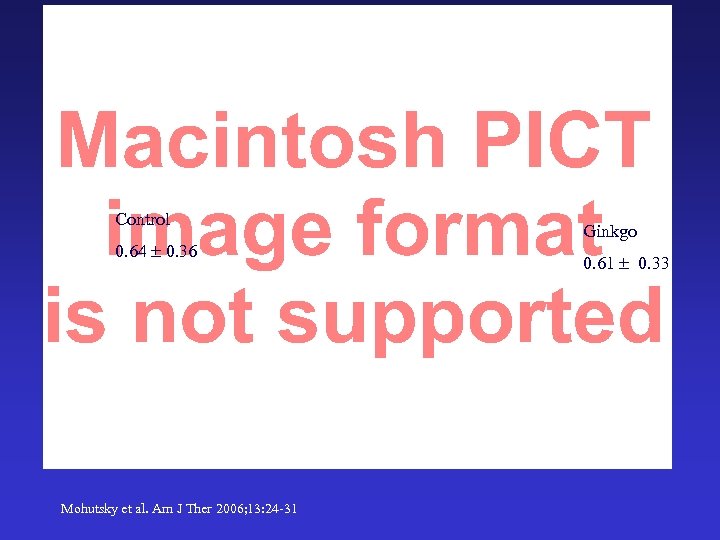 Control Ginkgo 0. 64 0. 36 Mohutsky et al. Am J Ther 2006; 13: 24 -31 0. 61 0. 33
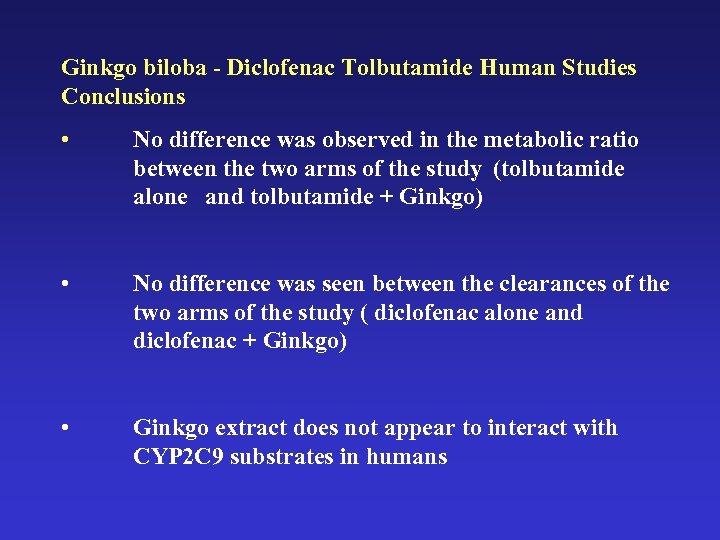 Ginkgo biloba - Diclofenac Tolbutamide Human Studies Conclusions • No difference was observed in the metabolic ratio between the two arms of the study (tolbutamide alone and tolbutamide + Ginkgo) • No difference was seen between the clearances of the two arms of the study ( diclofenac alone and diclofenac + Ginkgo) • Ginkgo extract does not appear to interact with CYP 2 C 9 substrates in humans
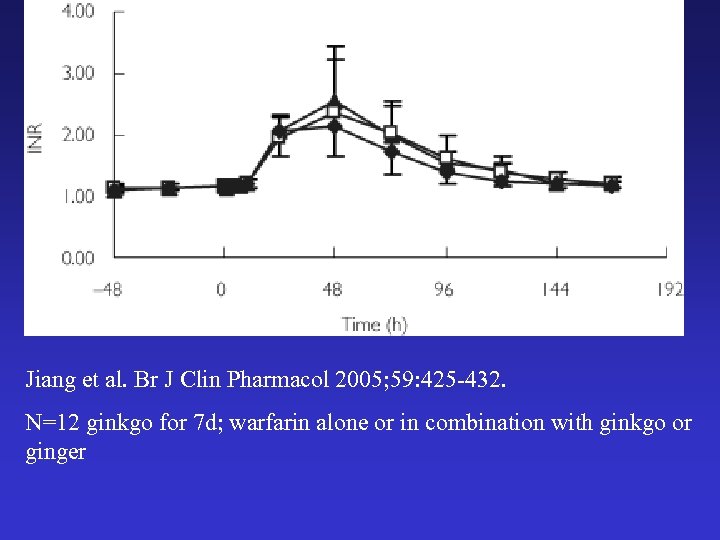 Jiang et al. Br J Clin Pharmacol 2005; 59: 425 -432. N=12 ginkgo for 7 d; warfarin alone or in combination with ginkgo or ginger
 Engelsen et al, Thromb Haemost 2002; 87: 1075 -6. N=21, double blind, crossover. Rx=1 month with 2 week washout. Dose of warfarin did not change.
 Ginkgo and coagulation and pharmacodynamic interactions with antiplatelet adhesion inhibitors Coagulation in healthy adults (in absence of other drugs) Kohler et al. Blood Coagul Fibrinolysis. 2004; 15: 303 -9. (company study). No effect on coagulation parameters in healthy adults after 7 d of EGb 761 120 mg/d. n=50.
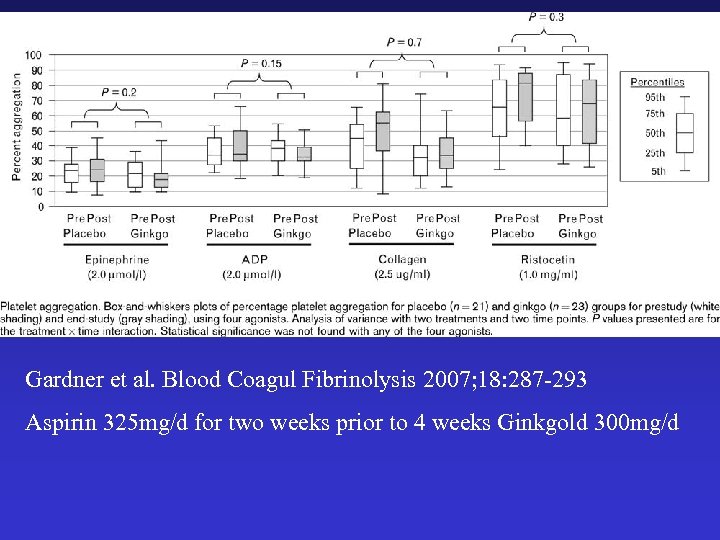 Gardner et al. Blood Coagul Fibrinolysis 2007; 18: 287 -293 Aspirin 325 mg/d for two weeks prior to 4 weeks Ginkgold 300 mg/d
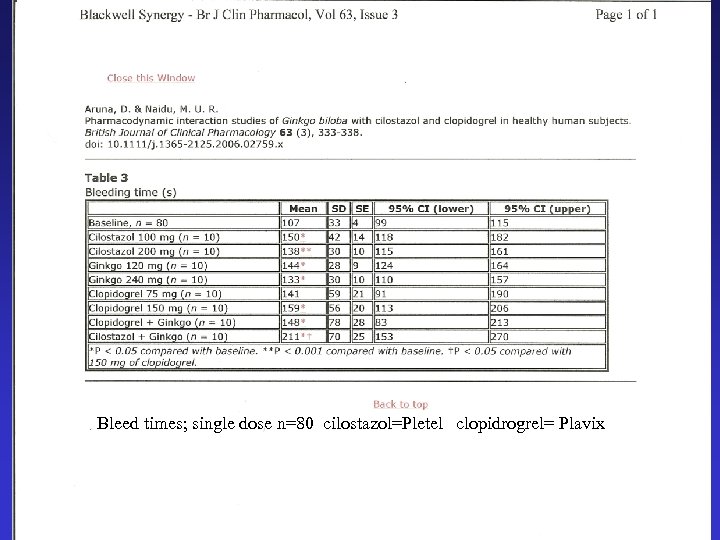 Bleed times; single dose n=80 cilostazol=Pletel clopidrogrel= Plavix
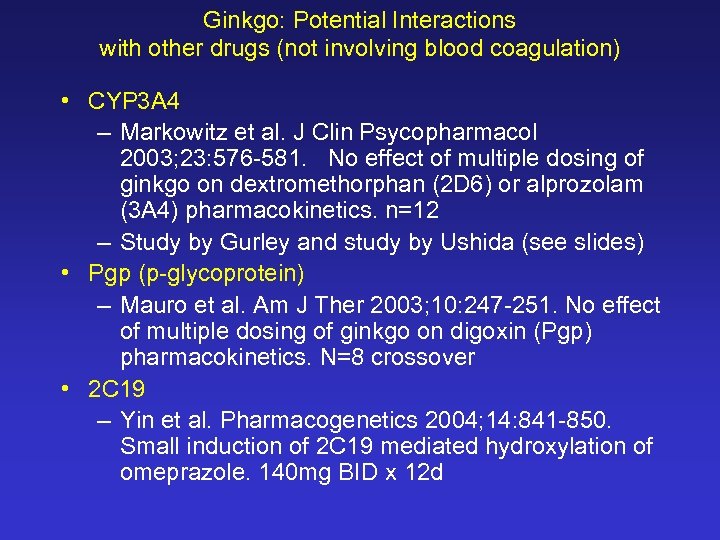 Ginkgo: Potential Interactions with other drugs (not involving blood coagulation) • CYP 3 A 4 – Markowitz et al. J Clin Psycopharmacol 2003; 23: 576 -581. No effect of multiple dosing of ginkgo on dextromethorphan (2 D 6) or alprozolam (3 A 4) pharmacokinetics. n=12 – Study by Gurley and study by Ushida (see slides) • Pgp (p-glycoprotein) – Mauro et al. Am J Ther 2003; 10: 247 -251. No effect of multiple dosing of ginkgo on digoxin (Pgp) pharmacokinetics. N=8 crossover • 2 C 19 – Yin et al. Pharmacogenetics 2004; 14: 841 -850. Small induction of 2 C 19 mediated hydroxylation of omeprazole. 140 mg BID x 12 d
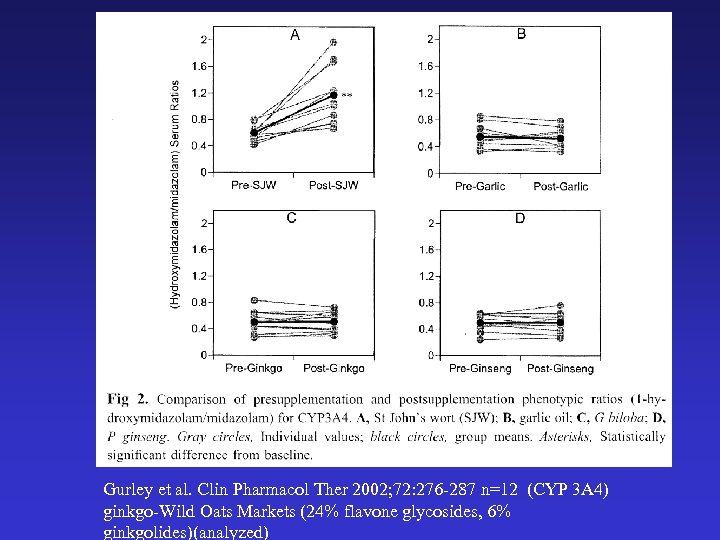 Gurley et al. Clin Pharmacol Ther 2002; 72: 276 -287 n=12 (CYP 3 A 4) ginkgo-Wild Oats Markets (24% flavone glycosides, 6% ginkgolides)(analyzed)
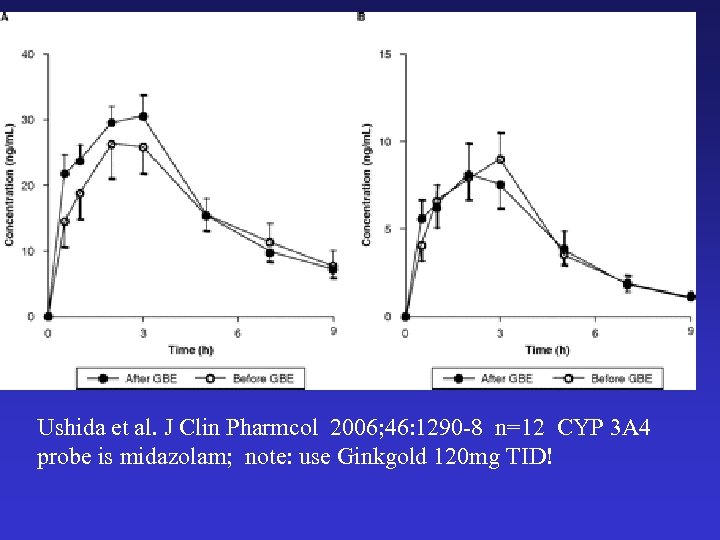 Ushida et al. J Clin Pharmcol 2006; 46: 1290 -8 n=12 CYP 3 A 4 probe is midazolam; note: use Ginkgold 120 mg TID!

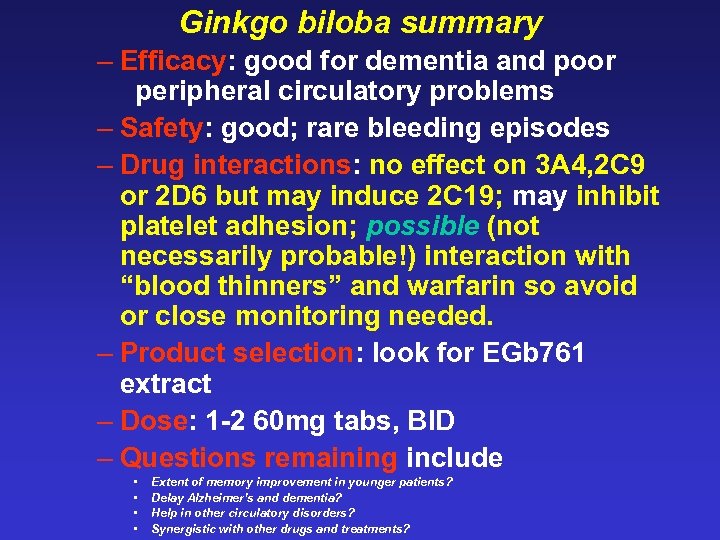 Ginkgo biloba summary – Efficacy: good for dementia and poor peripheral circulatory problems – Safety: good; rare bleeding episodes – Drug interactions: no effect on 3 A 4, 2 C 9 or 2 D 6 but may induce 2 C 19; may inhibit platelet adhesion; possible (not necessarily probable!) interaction with “blood thinners” and warfarin so avoid or close monitoring needed. – Product selection: look for EGb 761 extract – Dose: 1 -2 60 mg tabs, BID – Questions remaining include • • Extent of memory improvement in younger patients? Delay Alzheimer’s and dementia? Help in other circulatory disorders? Synergistic with other drugs and treatments?
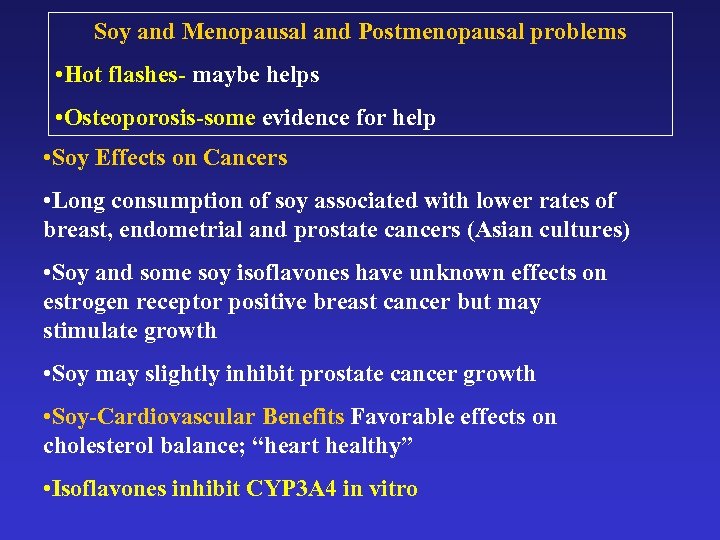 Soy and Menopausal and Postmenopausal problems • Hot flashes- maybe helps • Osteoporosis-some evidence for help • Soy Effects on Cancers • Long consumption of soy associated with lower rates of breast, endometrial and prostate cancers (Asian cultures) • Soy and some soy isoflavones have unknown effects on estrogen receptor positive breast cancer but may stimulate growth • Soy may slightly inhibit prostate cancer growth • Soy-Cardiovascular Benefits Favorable effects on cholesterol balance; “heart healthy” • Isoflavones inhibit CYP 3 A 4 in vitro
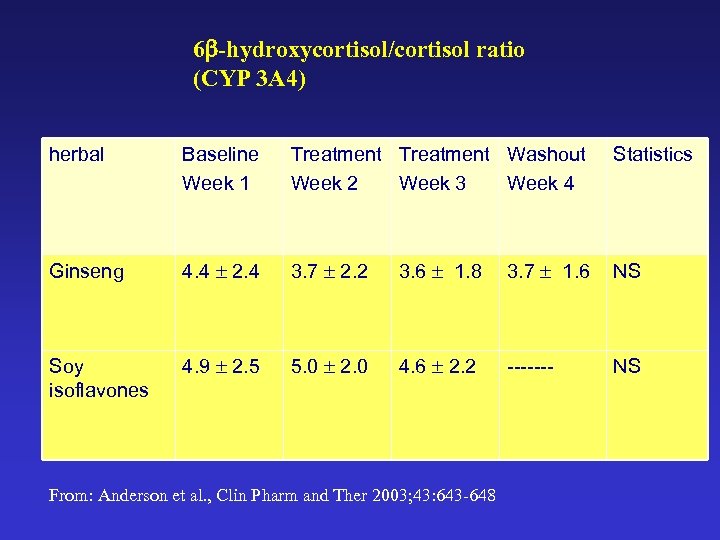 6 -hydroxycortisol/cortisol ratio (CYP 3 A 4) herbal Baseline Week 1 Treatment Washout Week 2 Week 3 Week 4 Statistics Ginseng 4. 4 2. 4 3. 7 2. 2 3. 6 1. 8 3. 7 1. 6 NS Soy isoflavones 4. 9 2. 5 5. 0 2. 0 4. 6 2. 2 ------- NS From: Anderson et al. , Clin Pharm and Ther 2003; 43: 643 -648
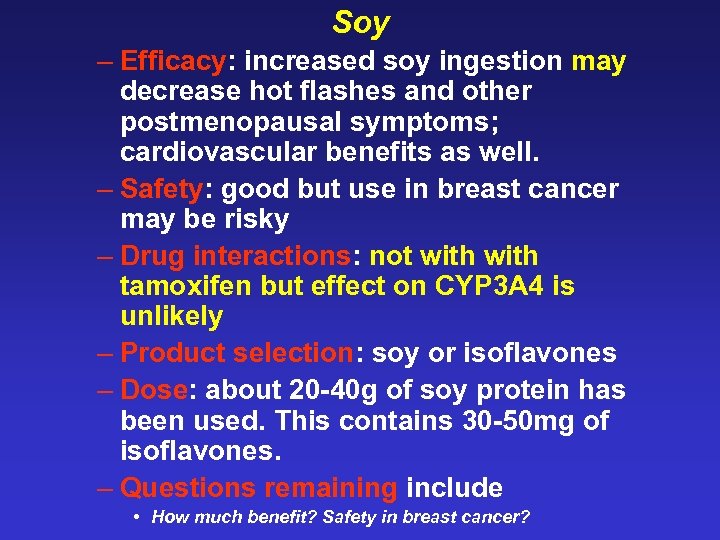 Soy – Efficacy: increased soy ingestion may decrease hot flashes and other postmenopausal symptoms; cardiovascular benefits as well. – Safety: good but use in breast cancer may be risky – Drug interactions: not with tamoxifen but effect on CYP 3 A 4 is unlikely – Product selection: soy or isoflavones – Dose: about 20 -40 g of soy protein has been used. This contains 30 -50 mg of isoflavones. – Questions remaining include • How much benefit? Safety in breast cancer?
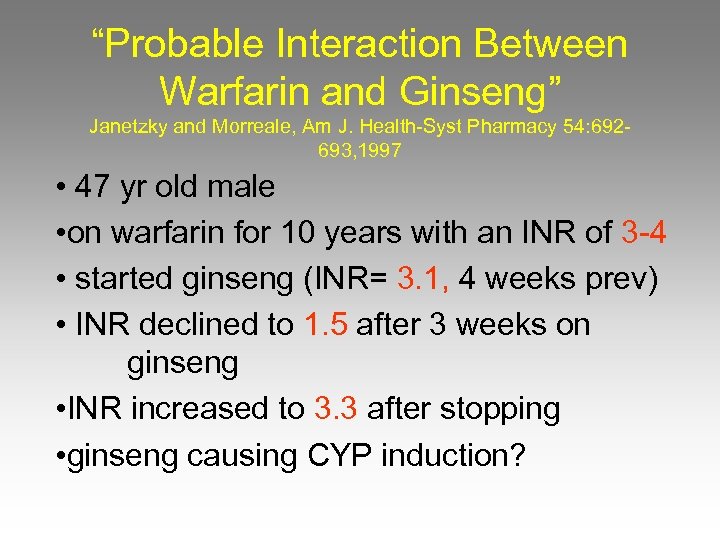 “Probable Interaction Between Warfarin and Ginseng” Janetzky and Morreale, Am J. Health-Syst Pharmacy 54: 692693, 1997 • 47 yr old male • on warfarin for 10 years with an INR of 3 -4 • started ginseng (INR= 3. 1, 4 weeks prev) • INR declined to 1. 5 after 3 weeks on ginseng • INR increased to 3. 3 after stopping • ginseng causing CYP induction?
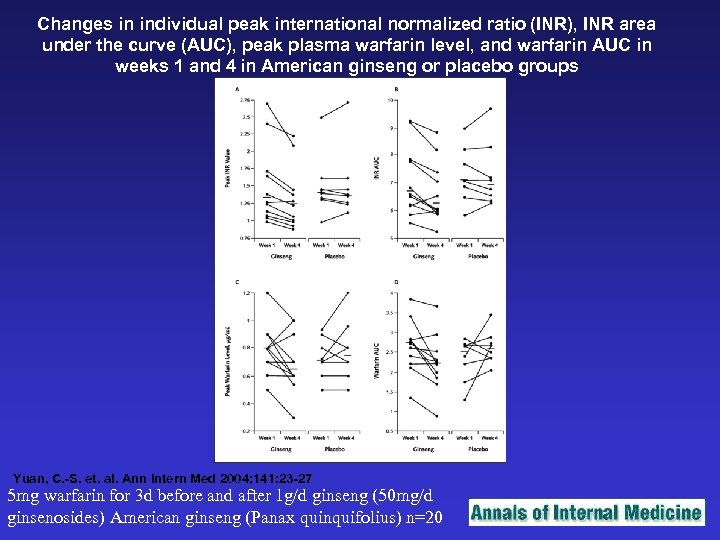 Changes in individual peak international normalized ratio (INR), INR area under the curve (AUC), peak plasma warfarin level, and warfarin AUC in weeks 1 and 4 in American ginseng or placebo groups Yuan, C. -S. et. al. Ann Intern Med 2004; 141: 23 -27 5 mg warfarin for 3 d before and after 1 g/d ginseng (50 mg/d ginsenosides) American ginseng (Panax quinquifolius) n=20
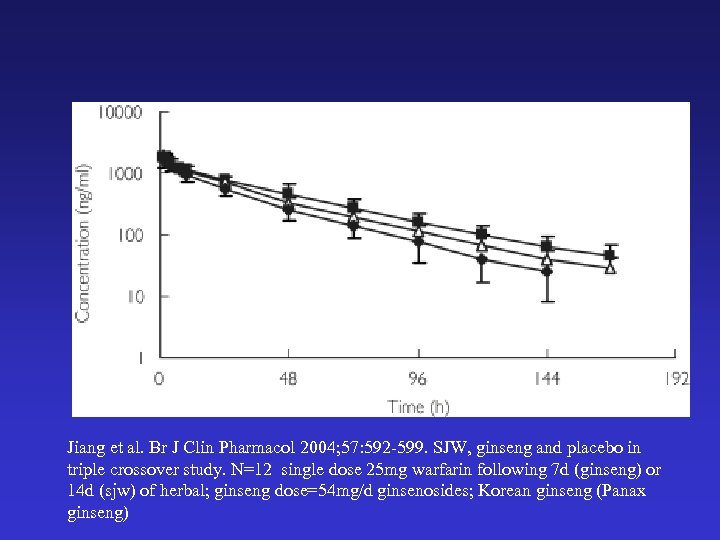 Jiang et al. Br J Clin Pharmacol 2004; 57: 592 -599. SJW, ginseng and placebo in triple crossover study. N=12 single dose 25 mg warfarin following 7 d (ginseng) or 14 d (sjw) of herbal; ginseng dose=54 mg/d ginsenosides; Korean ginseng (Panax ginseng)
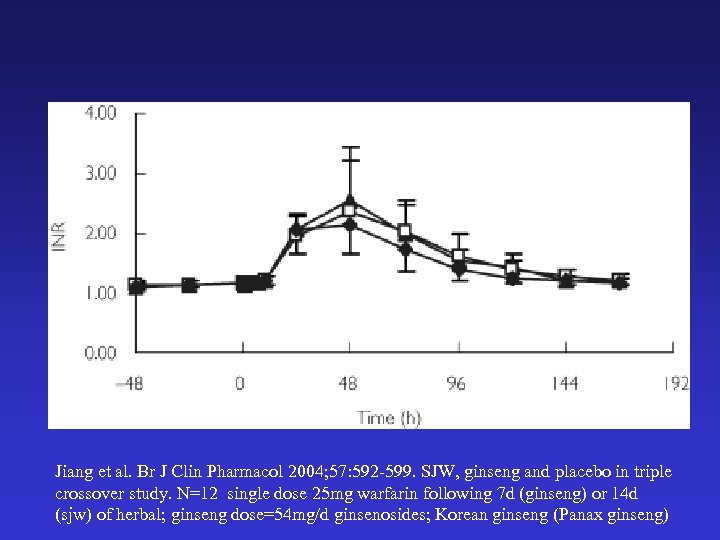 Jiang et al. Br J Clin Pharmacol 2004; 57: 592 -599. SJW, ginseng and placebo in triple crossover study. N=12 single dose 25 mg warfarin following 7 d (ginseng) or 14 d (sjw) of herbal; ginseng dose=54 mg/d ginsenosides; Korean ginseng (Panax ginseng)
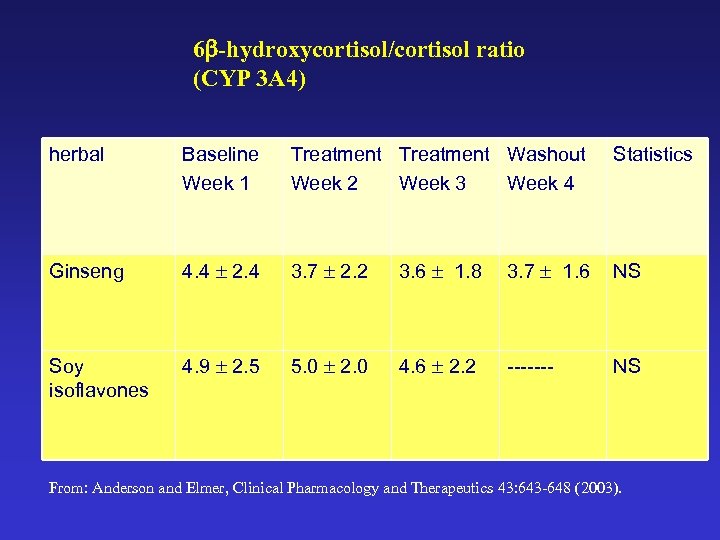 6 -hydroxycortisol/cortisol ratio (CYP 3 A 4) herbal Baseline Week 1 Treatment Washout Week 2 Week 3 Week 4 Statistics Ginseng 4. 4 2. 4 3. 7 2. 2 3. 6 1. 8 3. 7 1. 6 NS Soy isoflavones 4. 9 2. 5 5. 0 2. 0 4. 6 2. 2 ------- NS From: Anderson and Elmer, Clinical Pharmacology and Therapeutics 43: 643 -648 (2003).
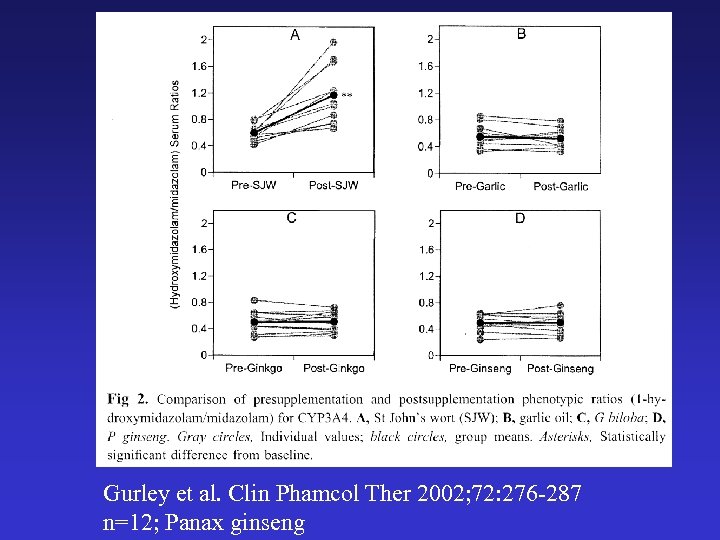 Gurley et al. Clin Phamcol Ther 2002; 72: 276 -287 n=12; Panax ginseng
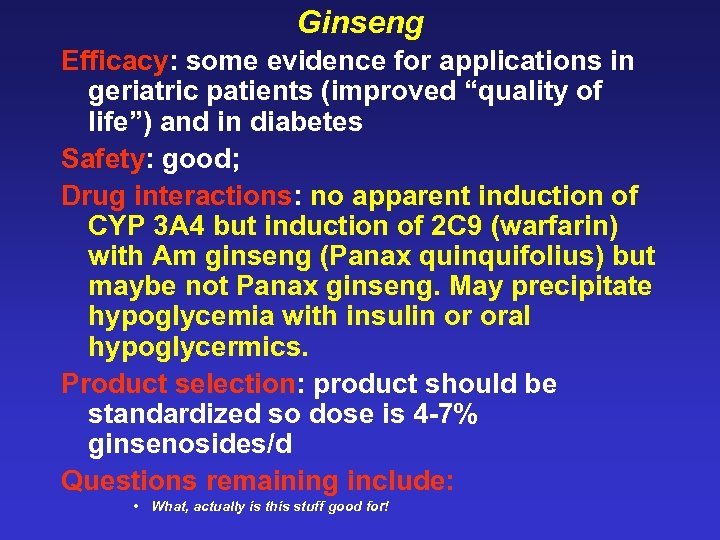 Ginseng Efficacy: some evidence for applications in geriatric patients (improved “quality of life”) and in diabetes Safety: good; Drug interactions: no apparent induction of CYP 3 A 4 but induction of 2 C 9 (warfarin) with Am ginseng (Panax quinquifolius) but maybe not Panax ginseng. May precipitate hypoglycemia with insulin or oral hypoglycermics. Product selection: product should be standardized so dose is 4 -7% ginsenosides/d Questions remaining include: • What, actually is this stuff good for!
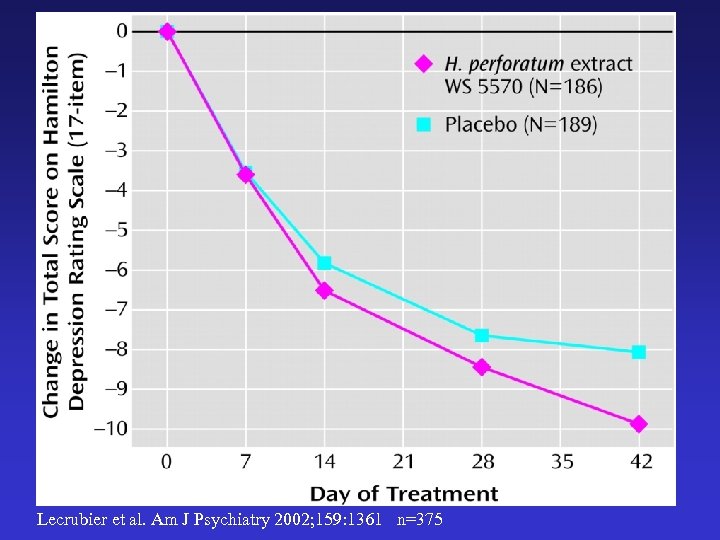 Lecrubier et al. Am J Psychiatry 2002; 159: 1361 n=375
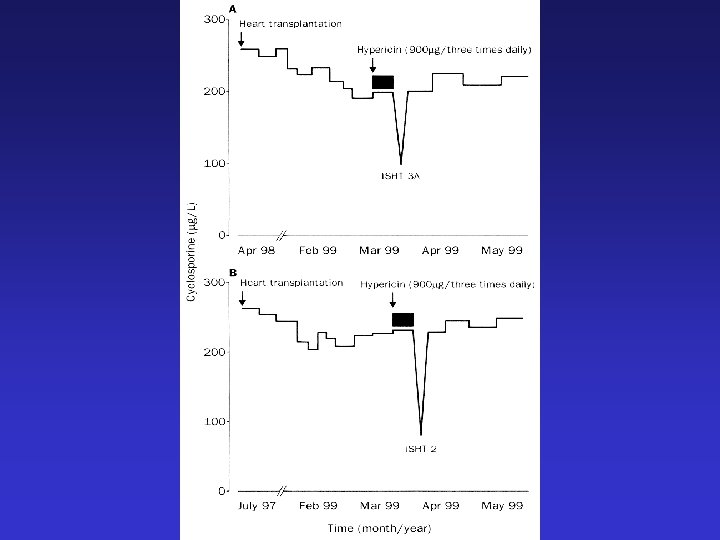
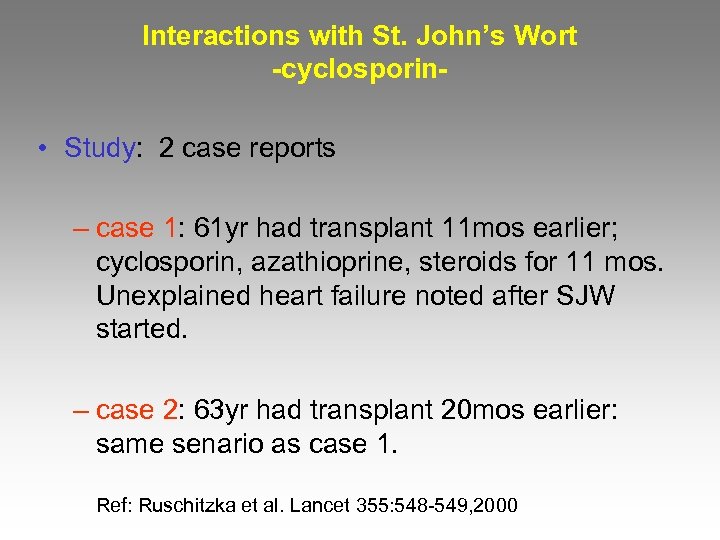 Interactions with St. John’s Wort -cyclosporin- • Study: 2 case reports – case 1: 61 yr had transplant 11 mos earlier; cyclosporin, azathioprine, steroids for 11 mos. Unexplained heart failure noted after SJW started. – case 2: 63 yr had transplant 20 mos earlier: same senario as case 1. Ref: Ruschitzka et al. Lancet 355: 548 -549, 2000
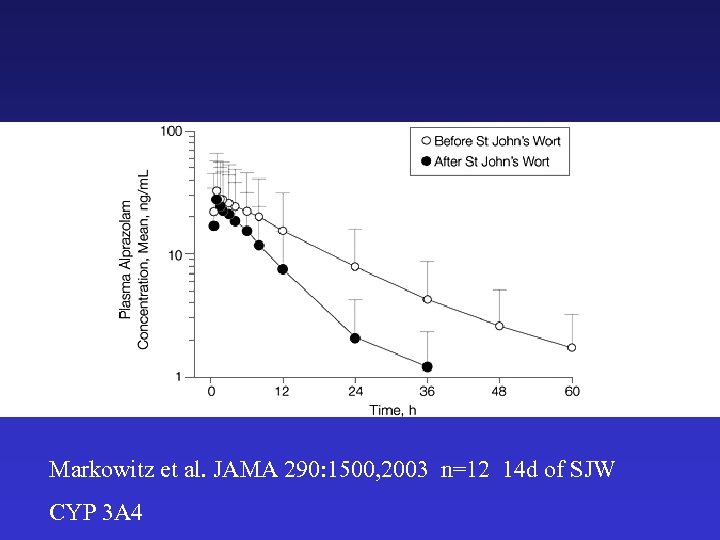 Markowitz et al. JAMA 290: 1500, 2003 n=12 14 d of SJW CYP 3 A 4
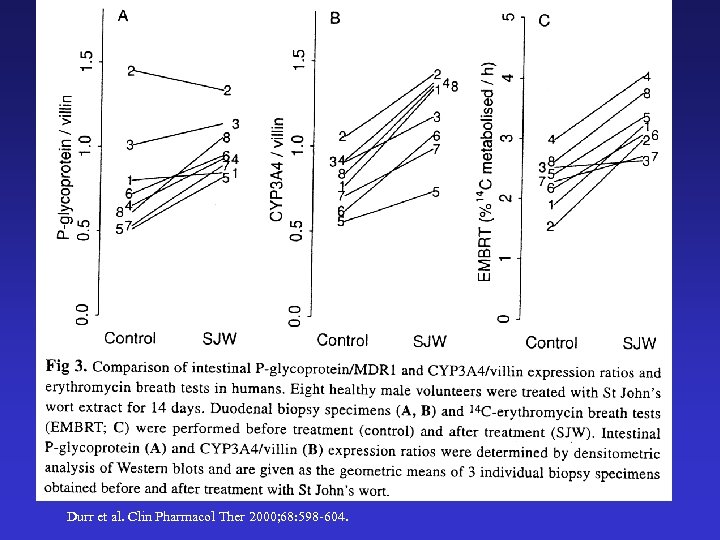 Durr et al. Clin Pharmacol Ther 2000; 68: 598 -604.
 Summary of SJW Interactions (adapted from Henderson et al. Br J Clin Pharmacol 2002; 54: 349 -346)
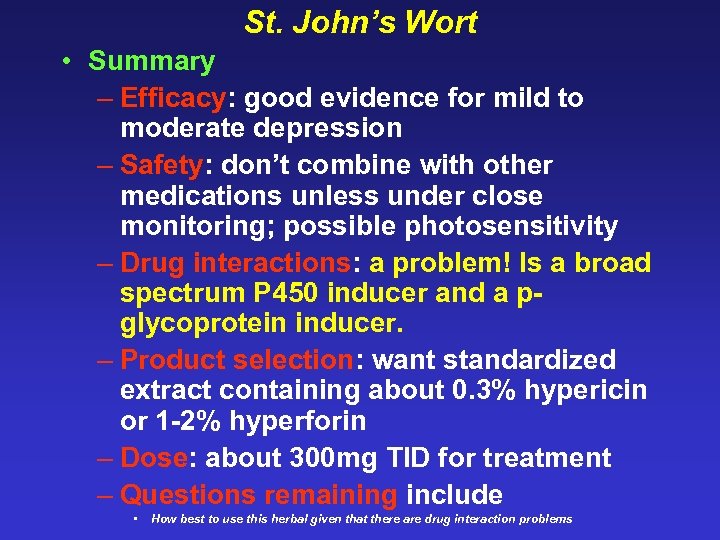 St. John’s Wort • Summary – Efficacy: good evidence for mild to moderate depression – Safety: don’t combine with other medications unless under close monitoring; possible photosensitivity – Drug interactions: a problem! Is a broad spectrum P 450 inducer and a pglycoprotein inducer. – Product selection: want standardized extract containing about 0. 3% hypericin or 1 -2% hyperforin – Dose: about 300 mg TID for treatment – Questions remaining include • How best to use this herbal given that there are drug interaction problems
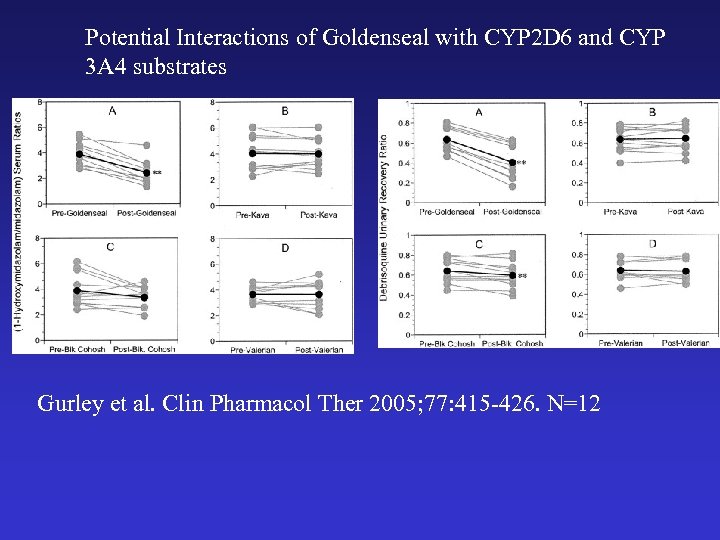 Potential Interactions of Goldenseal with CYP 2 D 6 and CYP 3 A 4 substrates Gurley et al. Clin Pharmacol Ther 2005; 77: 415 -426. N=12
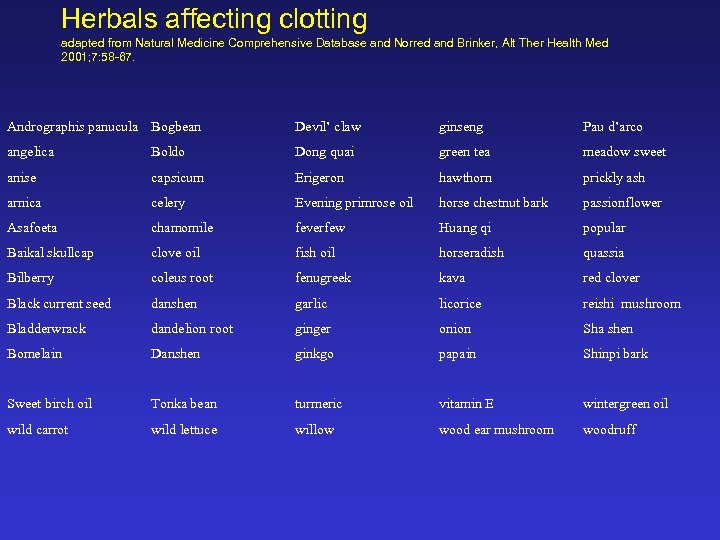 Herbals affecting clotting adapted from Natural Medicine Comprehensive Database and Norred and Brinker, Alt Ther Health Med 2001; 7: 58 -67. Andrographis panucula Bogbean Devil’ claw ginseng Pau d’arco angelica Boldo Dong quai green tea meadow sweet anise capsicum Erigeron hawthorn prickly ash arnica celery Evening primrose oil horse chestnut bark passionflower Asafoeta chamomile feverfew Huang qi popular Baikal skullcap clove oil fish oil horseradish quassia Bilberry coleus root fenugreek kava red clover Black current seed danshen garlic licorice reishi mushroom Bladderwrack dandelion root ginger onion Sha shen Bomelain Danshen ginkgo papain Shinpi bark Sweet birch oil Tonka bean turmeric vitamin E wintergreen oil wild carrot wild lettuce willow wood ear mushroom woodruff
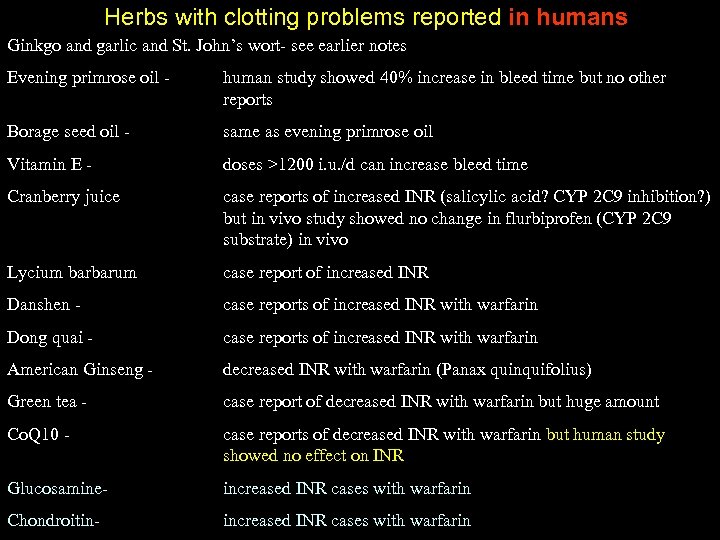 Herbs with clotting problems reported in humans Ginkgo and garlic and St. John’s wort- see earlier notes Evening primrose oil - human study showed 40% increase in bleed time but no other reports Borage seed oil - same as evening primrose oil Vitamin E - doses >1200 i. u. /d can increase bleed time Cranberry juice case reports of increased INR (salicylic acid? CYP 2 C 9 inhibition? ) but in vivo study showed no change in flurbiprofen (CYP 2 C 9 substrate) in vivo Lycium barbarum case report of increased INR Danshen - case reports of increased INR with warfarin Dong quai - case reports of increased INR with warfarin American Ginseng - decreased INR with warfarin (Panax quinquifolius) Green tea - case report of decreased INR with warfarin but huge amount Co. Q 10 - case reports of decreased INR with warfarin but human study showed no effect on INR Glucosamine- increased INR cases with warfarin Chondroitin- increased INR cases with warfarin
 From: Lam AY, Mohutsky MA and Elmer GW. Probable herbal/drug interaction between warfarin and a common Chinese herb, Lycium barbarum. Ann Pharmacother 2001; 35: 11991201
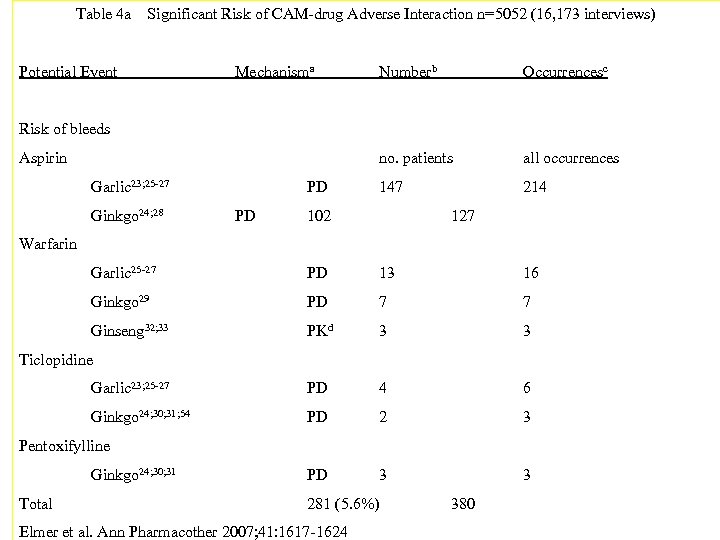 Table 4 a Significant Risk of CAM-drug Adverse Interaction n=5052 (16, 173 interviews) Potential Event Mechanisma Numberb Occurrencesc no. patients all occurrences 147 214 Risk of bleeds Aspirin Garlic 23; 25 -27 Ginkgo 24; 28 PD PD 102 127 Warfarin Garlic 25 -27 PD 13 16 Ginkgo 29 PD 7 7 Ginseng 32; 33 PKd 3 3 Garlic 23; 25 -27 PD 4 6 Ginkgo 24; 30; 31; 54 PD 2 3 PD 3 3 Ticlopidine Pentoxifylline Ginkgo 24; 30; 31 Total 281 (5. 6%) Elmer et al. Ann Pharmacother 2007; 41: 1617 -1624 380
 Elmer et al. Ann Pharmacother 2007; 41: 1617 -1624
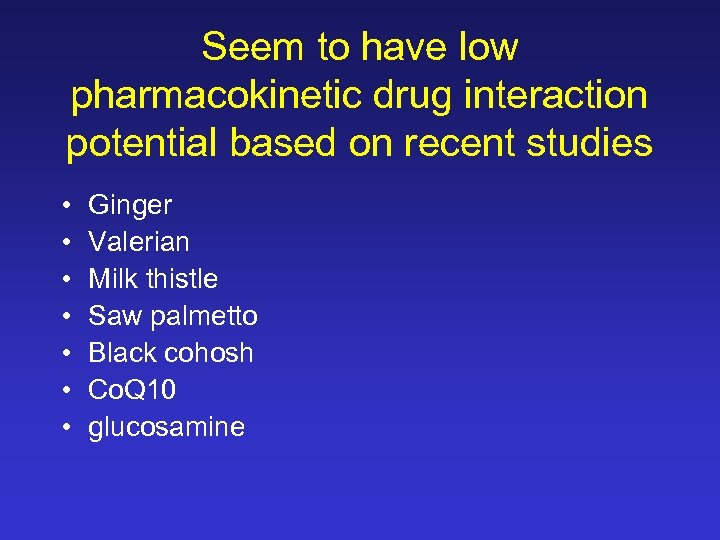 Seem to have low pharmacokinetic drug interaction potential based on recent studies • • Ginger Valerian Milk thistle Saw palmetto Black cohosh Co. Q 10 glucosamine
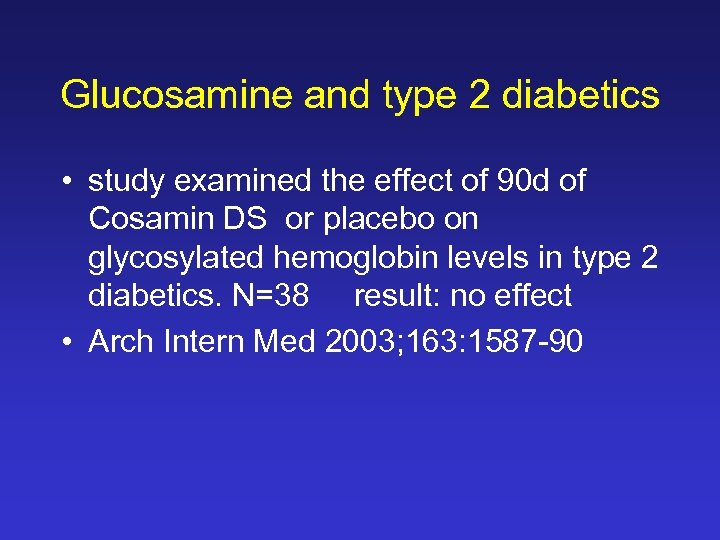 Glucosamine and type 2 diabetics • study examined the effect of 90 d of Cosamin DS or placebo on glycosylated hemoglobin levels in type 2 diabetics. N=38 result: no effect • Arch Intern Med 2003; 163: 1587 -90
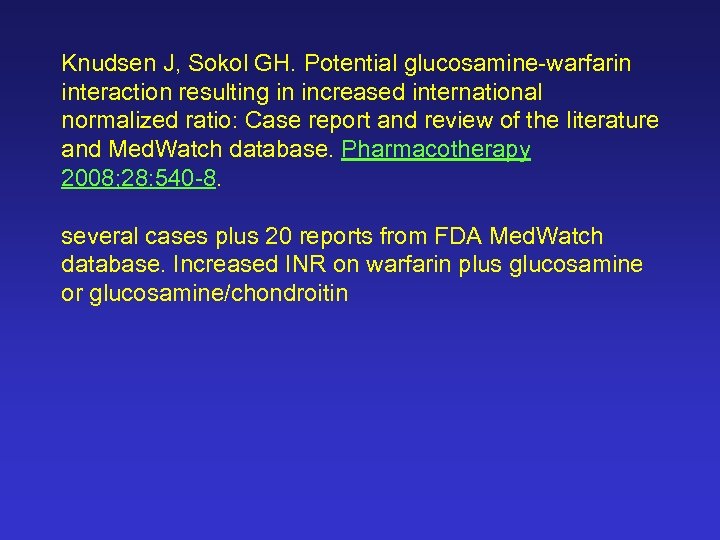 Knudsen J, Sokol GH. Potential glucosamine-warfarin interaction resulting in increased international normalized ratio: Case report and review of the literature and Med. Watch database. Pharmacotherapy 2008; 28: 540 -8. several cases plus 20 reports from FDA Med. Watch database. Increased INR on warfarin plus glucosamine or glucosamine/chondroitin
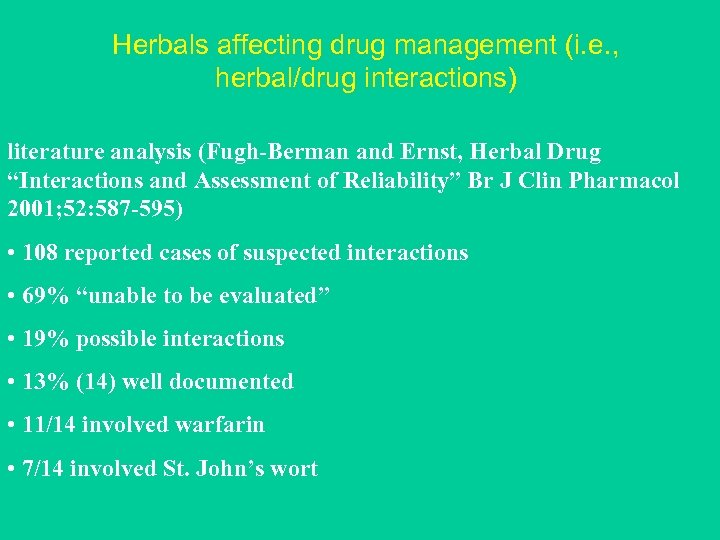 Herbals affecting drug management (i. e. , herbal/drug interactions) literature analysis (Fugh-Berman and Ernst, Herbal Drug “Interactions and Assessment of Reliability” Br J Clin Pharmacol 2001; 52: 587 -595) • 108 reported cases of suspected interactions • 69% “unable to be evaluated” • 19% possible interactions • 13% (14) well documented • 11/14 involved warfarin • 7/14 involved St. John’s wort
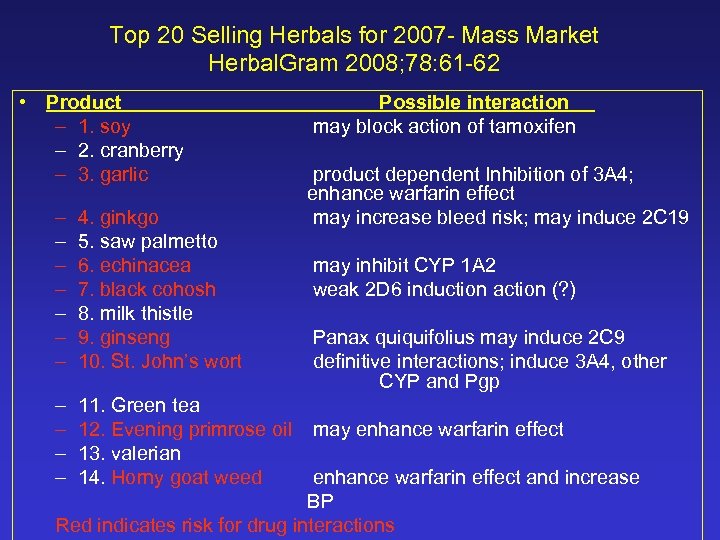 Top 20 Selling Herbals for 2007 - Mass Market Herbal. Gram 2008; 78: 61 -62 • Product – 1. soy – 2. cranberry – 3. garlic – – – – 4. ginkgo 5. saw palmetto 6. echinacea 7. black cohosh 8. milk thistle 9. ginseng 10. St. John’s wort – – 11. Green tea 12. Evening primrose oil 13. valerian 14. Horny goat weed Possible interaction may block action of tamoxifen product dependent Inhibition of 3 A 4; enhance warfarin effect may increase bleed risk; may induce 2 C 19 may inhibit CYP 1 A 2 weak 2 D 6 induction action (? ) Panax quiquifolius may induce 2 C 9 definitive interactions; induce 3 A 4, other CYP and Pgp may enhance warfarin effect and increase BP Red indicates risk for drug interactions
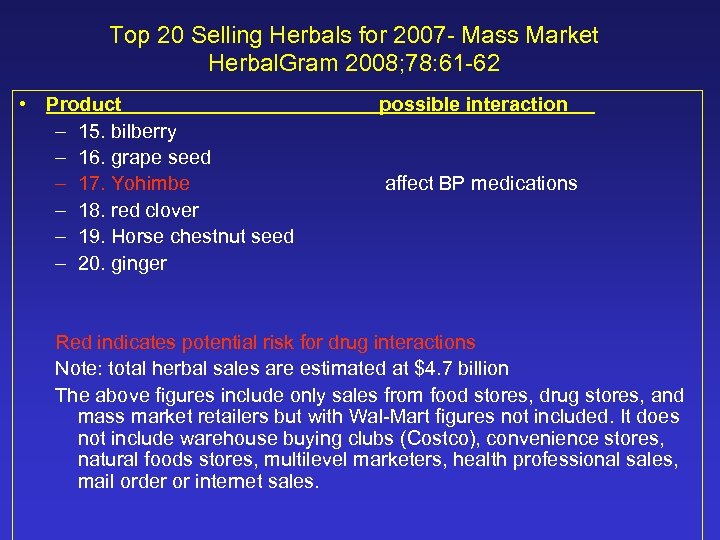 Top 20 Selling Herbals for 2007 - Mass Market Herbal. Gram 2008; 78: 61 -62 • Product – 15. bilberry – 16. grape seed – 17. Yohimbe – 18. red clover – 19. Horse chestnut seed – 20. ginger possible interaction affect BP medications Red indicates potential risk for drug interactions Note: total herbal sales are estimated at $4. 7 billion The above figures include only sales from food stores, drug stores, and mass market retailers but with Wal-Mart figures not included. It does not include warehouse buying clubs (Costco), convenience stores, natural foods stores, multilevel marketers, health professional sales, mail order or internet sales.
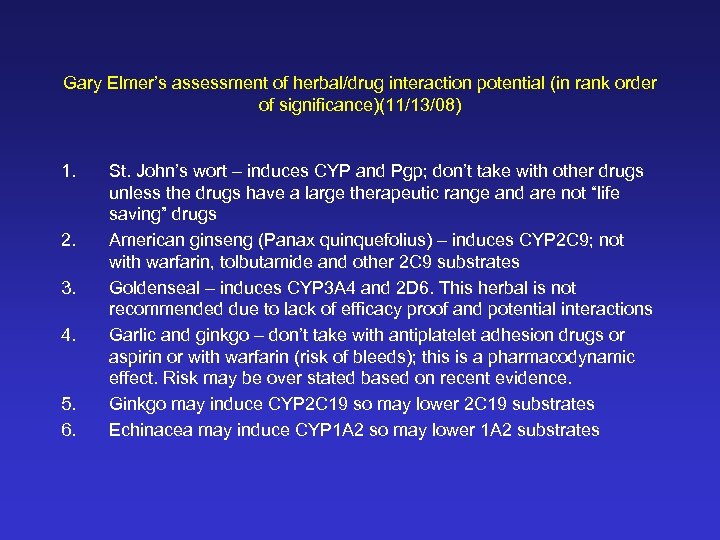 Gary Elmer’s assessment of herbal/drug interaction potential (in rank order of significance)(11/13/08) 1. 2. 3. 4. 5. 6. St. John’s wort – induces CYP and Pgp; don’t take with other drugs unless the drugs have a large therapeutic range and are not “life saving” drugs American ginseng (Panax quinquefolius) – induces CYP 2 C 9; not with warfarin, tolbutamide and other 2 C 9 substrates Goldenseal – induces CYP 3 A 4 and 2 D 6. This herbal is not recommended due to lack of efficacy proof and potential interactions Garlic and ginkgo – don’t take with antiplatelet adhesion drugs or aspirin or with warfarin (risk of bleeds); this is a pharmacodynamic effect. Risk may be over stated based on recent evidence. Ginkgo may induce CYP 2 C 19 so may lower 2 C 19 substrates Echinacea may induce CYP 1 A 2 so may lower 1 A 2 substrates
 References with Good Herbal/Drug Interactions Discussion – “Top 100 Drug Interactions” Hansten PD and Horn JD. H&H Publications 2008 – Natural Medicines Comprehensive Database. Online version updated “daily”. UW Healthlinks http: //www. naturaldatabase. com/; $92
 Recent Reviews • Izzo AA. Herb-drug interactions: an overview of the clinical evidence. Fundam Clin Pharmacol. 2005 Feb; 19(1): 1 -16. • Ernst E. Prescribing herbal medications appropriately. J Fam Pract. 2004 Dec; 53(12): 985 -8. • Skalli S, Zaid A, Soulaymani R. Drug interactions with herbal medicines. Ther Drug Monit. 2007 Dec; 29(6): 679 -86 • Chavez ML, Jordan MA, Chavez PI. Evidence-based drug-herbal interactions. Life Sci. 2006; 78: 2146 -57.
 What can we do? • dialog with NDs and other prescribers • recommend the best products • ask patients about herbals they may be taking • herbals should not usually be recommended for acute or serious illnesses • avoid herbal use with drugs with narrow therapeutic window, esp. warfarin, cyclosporin, digoxin, HIV protease inhibitors, theophylline, carbamazepine • stay informed