


 Скачать презентацию Ellery Wong Senior Systems Engineer Xerox Corporation Co-Team
08acc5be9657138e73be77af10355a63.ppt
- Количество слайдов: 13
 Ellery Wong Senior Systems Engineer, Xerox Corporation Co-Team Leader, Team 191 Xerox/Joseph C. Wilson Magnet HS X-Cats (Est. 1992 – Rochester, NY)
 Key Points • • • Preseason -Get structured and understand roles ***Benchmark and learn from the past Understand game & brainstorm “Killer App” Requirements for maximum scoring strategies Strategy & Architecture team develops subteam requirements • Systems integration and testing
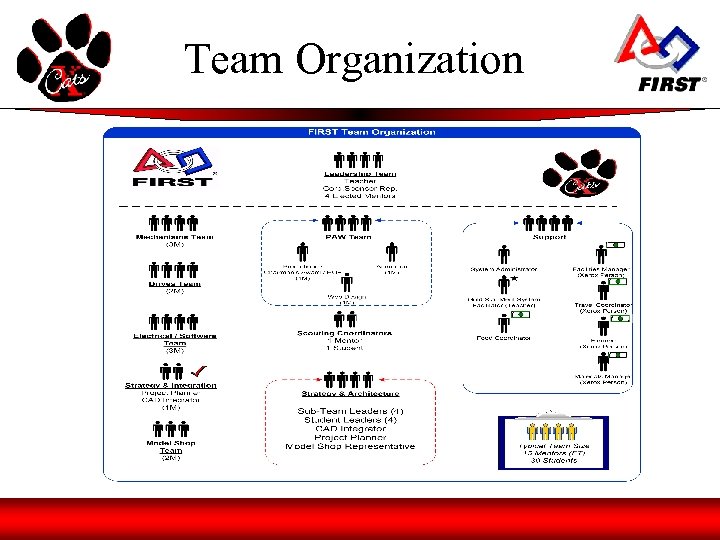 Team Organization
 Preseason • • Teambuilding Walk through schedule and team roles Basic shop, CAD, and safety training Benchmarking Mechanical Systems – Lessons learned from prior seasons • Develop team theme for the season 2006 Theme “Keep It Super Simple In Technology”
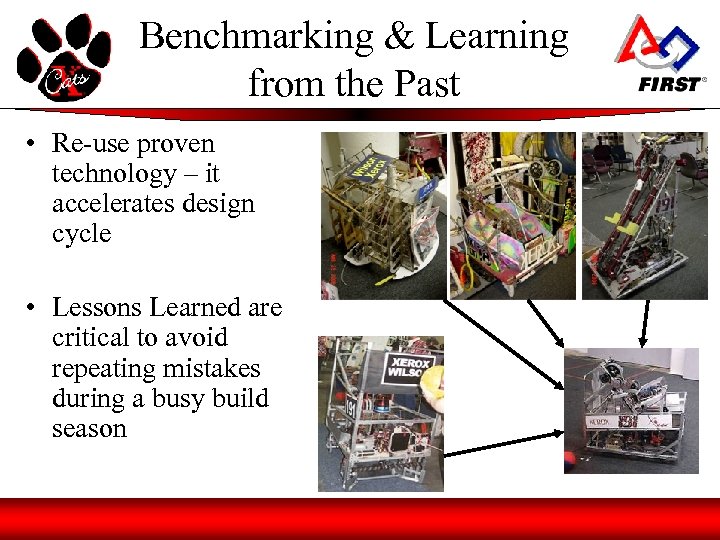 Benchmarking & Learning from the Past • Re-use proven technology – it accelerates design cycle • Lessons Learned are critical to avoid repeating mistakes during a busy build season
 Brainstorming • Understand Game play and goals (Entire Team) • Break down all scoring elements to calculate maximum scoring strategy (Sub-Teams) • Brainstorm “Killer App” characteristics – What is the attribute that would consistently win the game? – Don’t design just think of functional goals • Game elements were ranked by scoring potential and level of design effort.
 Requirements for Maximum Scoring Strategy • Strategy & Architecture Team consolidates team strategies and performs risk assessment • S&A ranks and chooses top 2 game strategies (Includes both offense and defense) • Attempt to identify “Killer App” in game • Requirements characteristics developed based by functions needed to be achieved by chosen game strategies • Sub-Team Leaders buy-in to requirements and delivery schedule
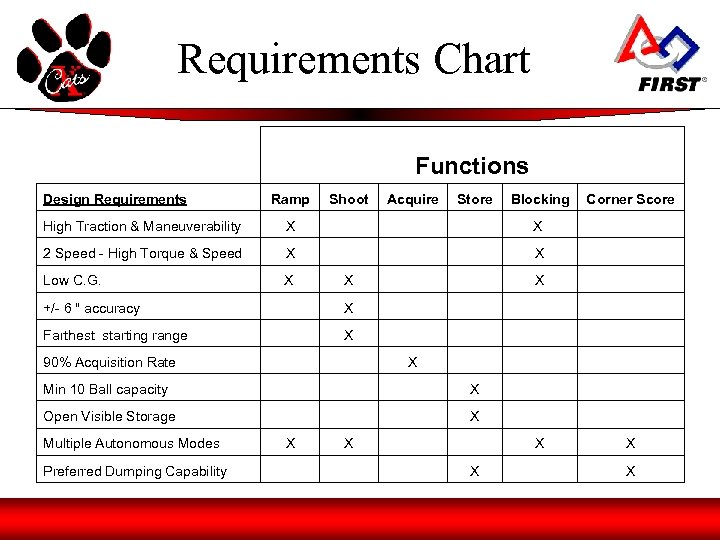 Requirements Chart Functions Design Requirements Ramp Shoot Acquire Store Blocking Corner Score High Traction & Maneuverability X X 2 Speed - High Torque & Speed X X Low C. G. X X X +/- 6 " accuracy X Farthest starting range X 90% Acquisition Rate X Min 10 Ball capacity X Open Visible Storage X Multiple Autonomous Modes X X Preferred Dumping Capability X X
 Sub-Teams • Receive requirements and develop functional prototypes to meet them • On-going CAD integration of various design concepts • Designs focus on K. I. S. S. I. T theme and “Lessons Learned” • Working Prototype is integrated for S/W trial by end of 2 nd Saturday.
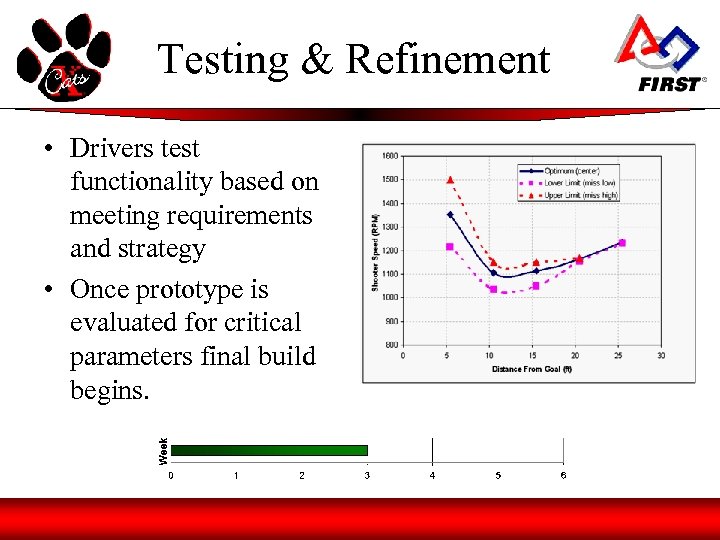 Testing & Refinement • Drivers test functionality based on meeting requirements and strategy • Once prototype is evaluated for critical parameters final build begins.
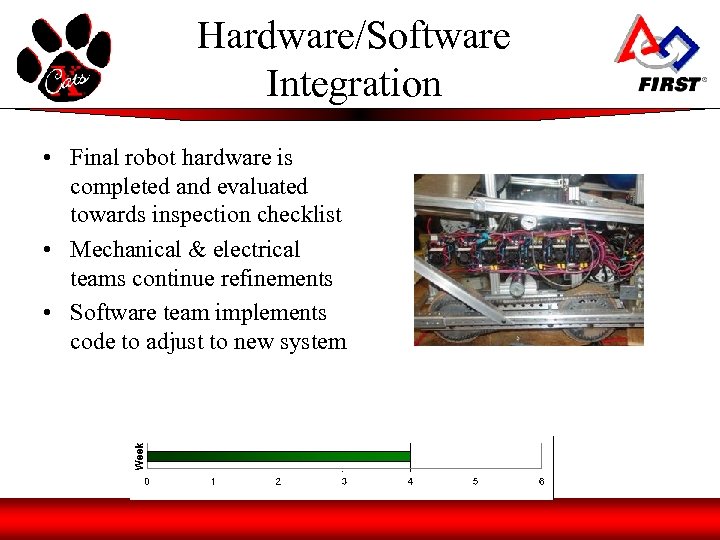 Hardware/Software Integration • Final robot hardware is completed and evaluated towards inspection checklist • Mechanical & electrical teams continue refinements • Software team implements code to adjust to new system
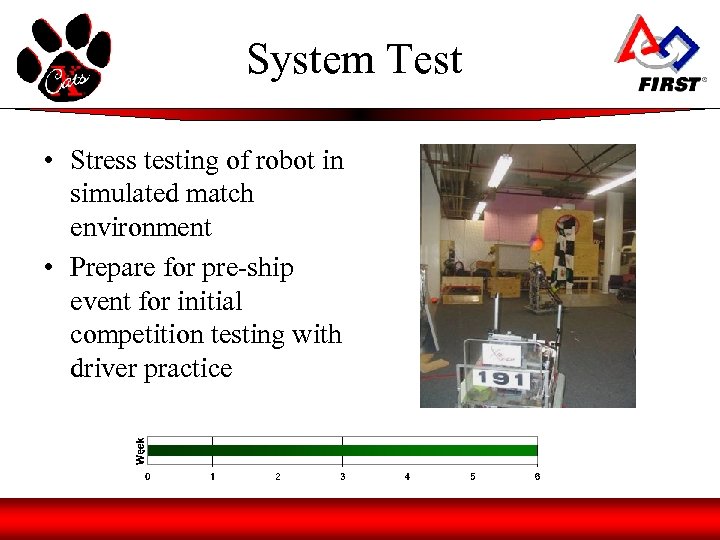 System Test • Stress testing of robot in simulated match environment • Prepare for pre-ship event for initial competition testing with driver practice
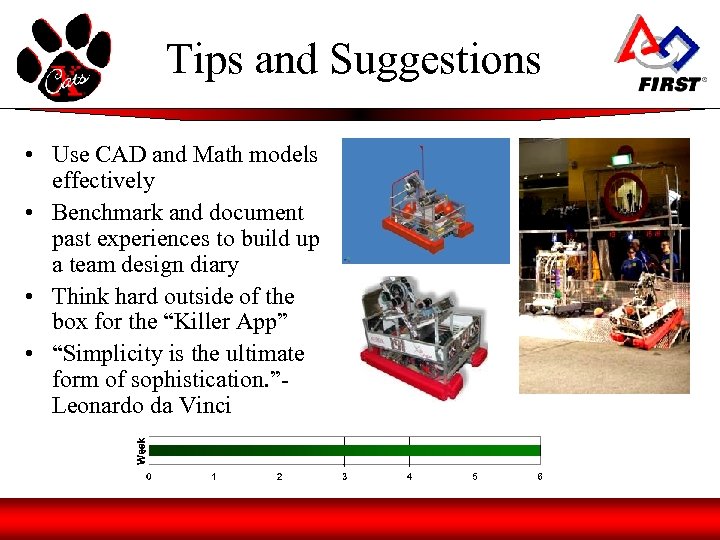 Tips and Suggestions • Use CAD and Math models effectively • Benchmark and document past experiences to build up a team design diary • Think hard outside of the box for the “Killer App” • “Simplicity is the ultimate form of sophistication. ”Leonardo da Vinci