 Скачать презентацию Elisabeth Binder MPI Psychiatry Munich binder mpipsykl mpg de
3d118384e163782633f2f1f45faa63d8.ppt
- Количество слайдов: 19




Elisabeth Binder MPI Psychiatry Munich binder@mpipsykl. mpg. de 089 -30622 -301
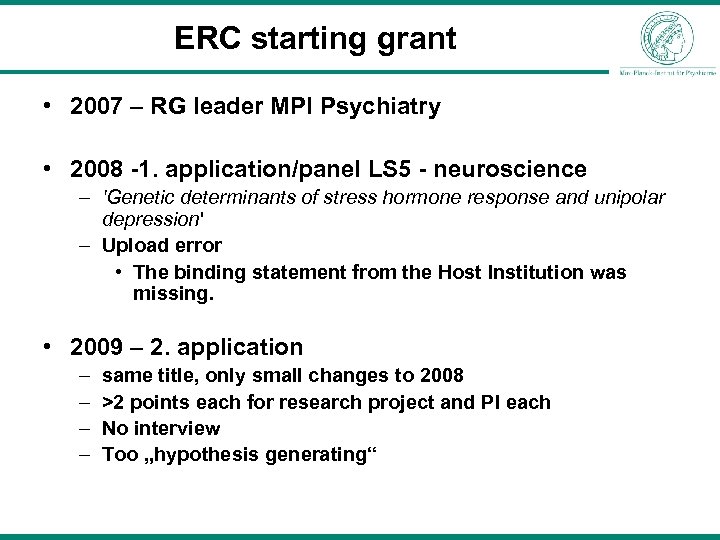
ERC starting grant • 2007 – RG leader MPI Psychiatry • 2008 -1. application/panel LS 5 - neuroscience – 'Genetic determinants of stress hormone response and unipolar depression' – Upload error • The binding statement from the Host Institution was missing. • 2009 – 2. application – – same title, only small changes to 2008 >2 points each for research project and PI each No interview Too „hypothesis generating“
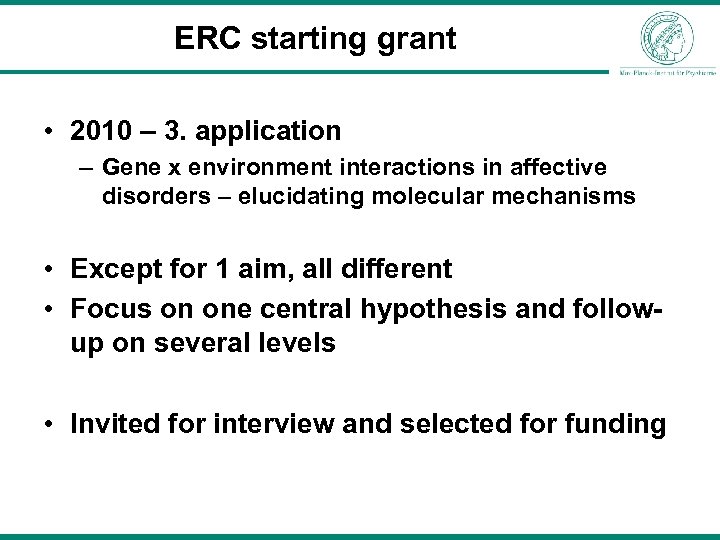
ERC starting grant • 2010 – 3. application – Gene x environment interactions in affective disorders – elucidating molecular mechanisms • Except for 1 aim, all different • Focus on one central hypothesis and followup on several levels • Invited for interview and selected for funding
ERC Starting Grant Gene x environment interactions in affective disorders – elucidating molecular mechanisms Gx. E molmech Elisabeth Binder
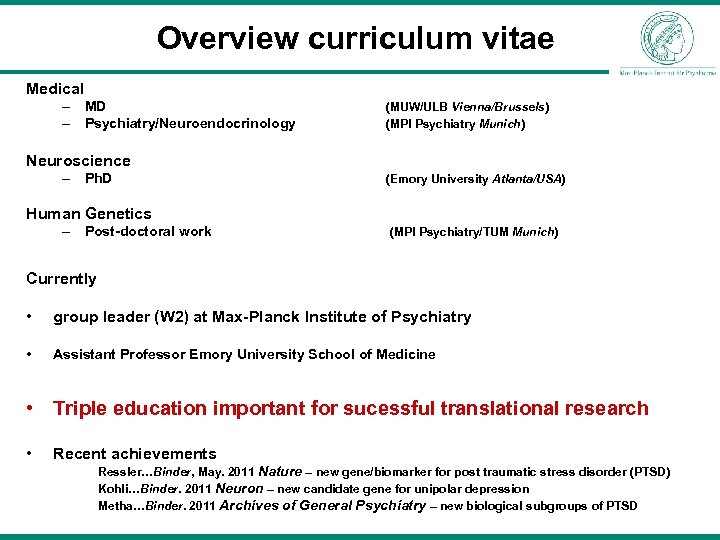
Overview curriculum vitae Medical – MD – Psychiatry/Neuroendocrinology (MUW/ULB Vienna/Brussels) (MPI Psychiatry Munich) Neuroscience – Ph. D (Emory University Atlanta/USA) Human Genetics – Post-doctoral work (MPI Psychiatry/TUM Munich) Currently • group leader (W 2) at Max-Planck Institute of Psychiatry • Assistant Professor Emory University School of Medicine • Triple education important for sucessful translational research • Recent achievements Ressler…Binder, May. 2011 Nature – new gene/biomarker for post traumatic stress disorder (PTSD) Kohli…Binder. 2011 Neuron – new candidate gene for unipolar depression Metha…Binder. 2011 Archives of General Psychiatry – new biological subgroups of PTSD
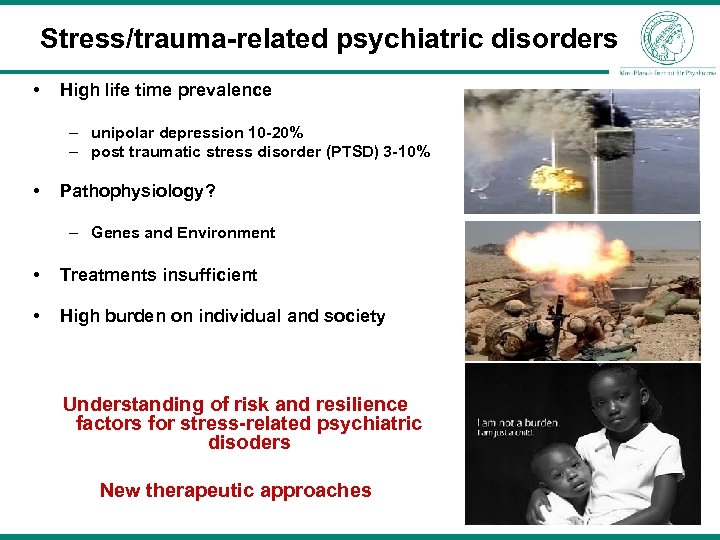
Stress/trauma-related psychiatric disorders • High life time prevalence – unipolar depression 10 -20% – post traumatic stress disorder (PTSD) 3 -10% • Pathophysiology? – Genes and Environment • Treatments insufficient • High burden on individual and society Understanding of risk and resilience factors for stress-related psychiatric disoders New therapeutic approaches
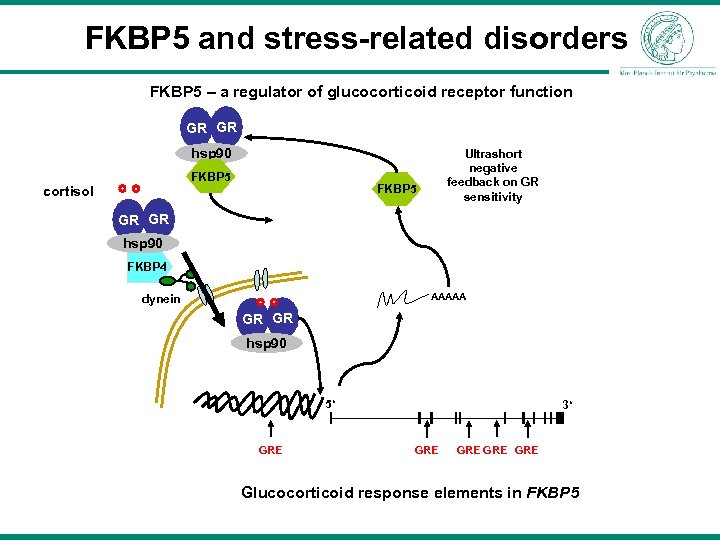
FKBP 5 and stress-related disorders FKBP 5 – a regulator of glucocorticoid receptor function GR GR hsp 90 FKBP 5 Ultrashort negative feedback on GR sensitivity FKBP 5 cortisol GR GR hsp 90 FKBP 4 AAAAA dynein GR GR hsp 90 5‘ GRE 3‘ GRE GRE Glucocorticoid response elements in FKBP 5
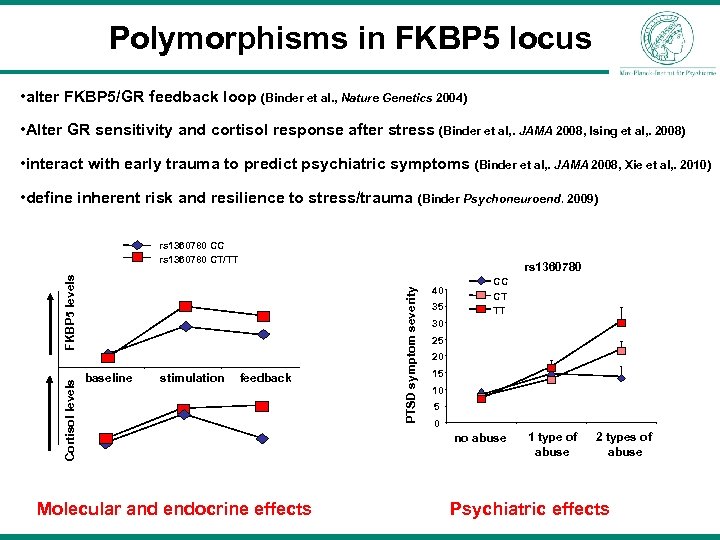
Polymorphisms in FKBP 5 locus • alter FKBP 5/GR feedback loop (Binder et al. , Nature Genetics 2004) • Alter GR sensitivity and cortisol response after stress (Binder et al, . JAMA 2008, Ising et al, . 2008) • interact with early trauma to predict psychiatric symptoms (Binder et al, . JAMA 2008, Xie et al, . 2010) • define inherent risk and resilience to stress/trauma (Binder Psychoneuroend. 2009) rs 1360780 CC rs 1360780 CT/TT baseline stimulation feedback Molecular and endocrine effects PTSD symptom severity Cortisol levels FKBP 5 levels rs 1360780 40 35 CC CT TT 30 25 20 15 10 5 0 no abuse 1 type of abuse 2 types of abuse Psychiatric effects
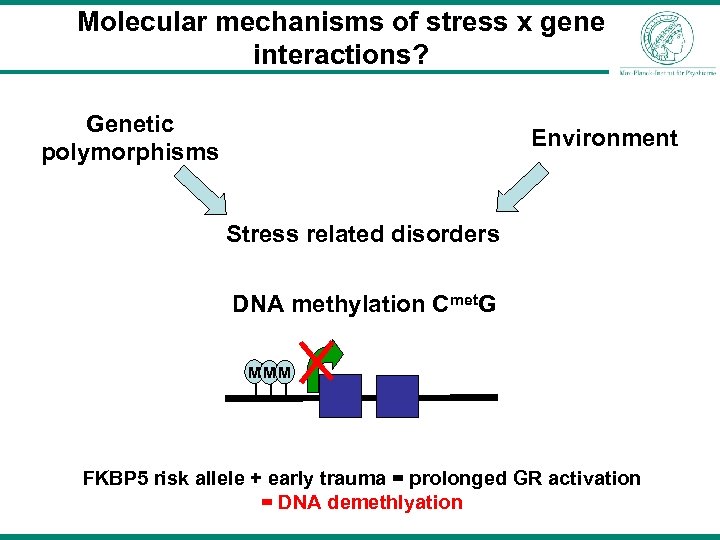
Molecular mechanisms of stress x gene interactions? Genetic polymorphisms Environment Stress related disorders DNA methylation Cmet. G MM M FKBP 5 risk allele + early trauma = prolonged GR activation = DNA demethlyation
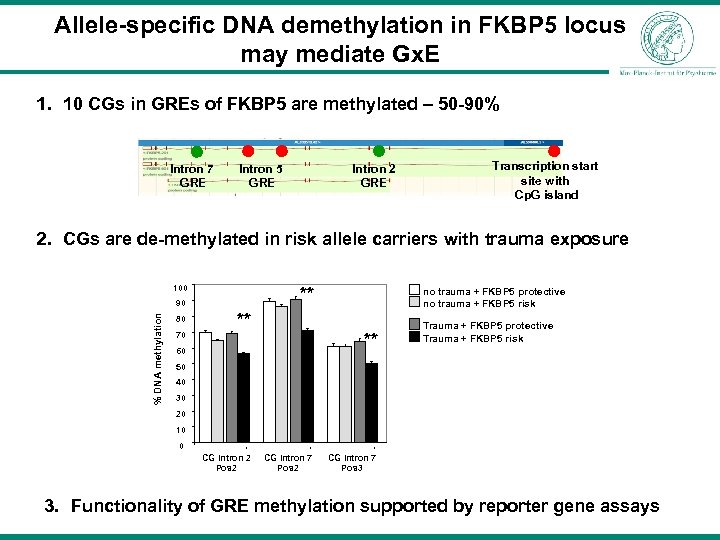
Allele-specific DNA demethylation in FKBP 5 locus may mediate Gx. E 1. 10 CGs in GREs of FKBP 5 are methylated – 50 -90% Intron 7 GRE Intron 5 GRE Intron 2 GRE Transcription start site with Cp. G island 2. CGs are de-methylated in risk allele carriers with trauma exposure 100 ** % DNA methylation 90 80 70 no trauma + FKBP 5 protective no trauma + FKBP 5 risk ** ** 60 Trauma + FKBP 5 protective Trauma + FKBP 5 risk 50 40 30 20 10 0 CG intron 2 Pos 2 CG intron 7 Pos 3 3. Functionality of GRE methylation supported by reporter gene assays
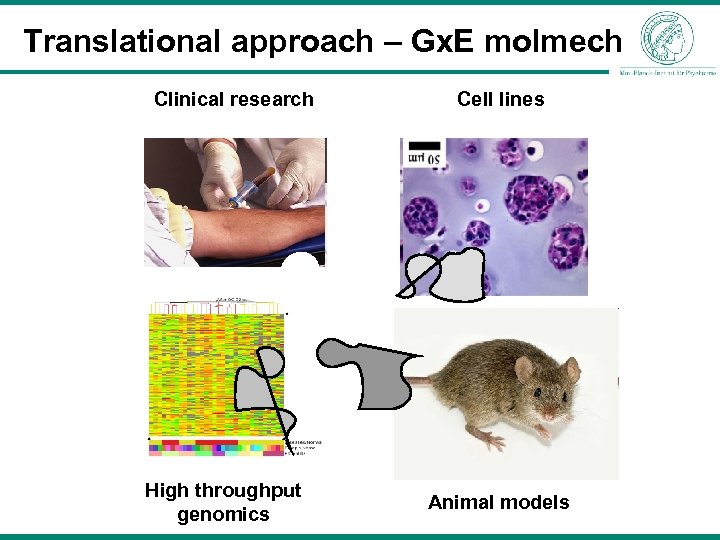
Translational approach – Gx. E molmech Clinical research High throughput genomics Cell lines Animal models
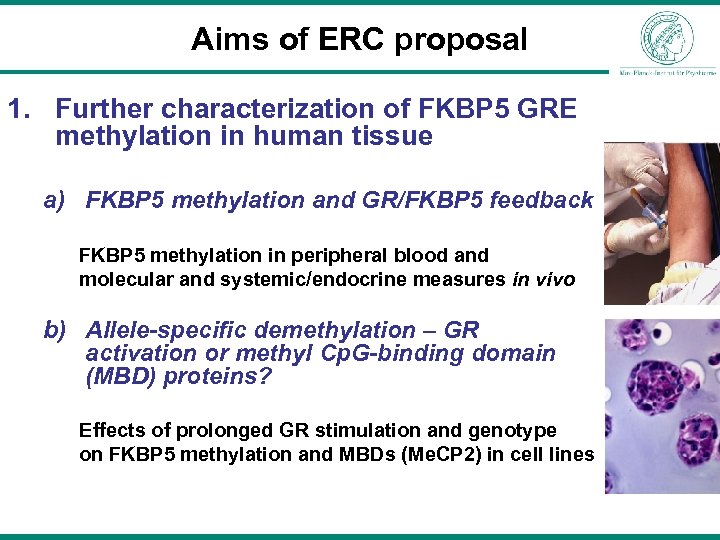
Aims of ERC proposal 1. Further characterization of FKBP 5 GRE methylation in human tissue a) FKBP 5 methylation and GR/FKBP 5 feedback FKBP 5 methylation in peripheral blood and molecular and systemic/endocrine measures in vivo b) Allele-specific demethylation – GR activation or methyl Cp. G-binding domain (MBD) proteins? Effects of prolonged GR stimulation and genotype on FKBP 5 methylation and MBDs (Me. CP 2) in cell lines
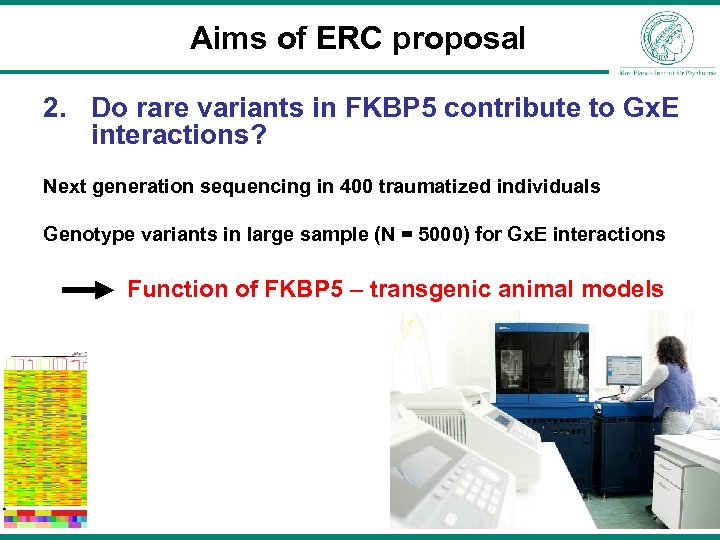
Aims of ERC proposal 2. Do rare variants in FKBP 5 contribute to Gx. E interactions? Next generation sequencing in 400 traumatized individuals Genotype variants in large sample (N = 5000) for Gx. E interactions Function of FKBP 5 – transgenic animal models
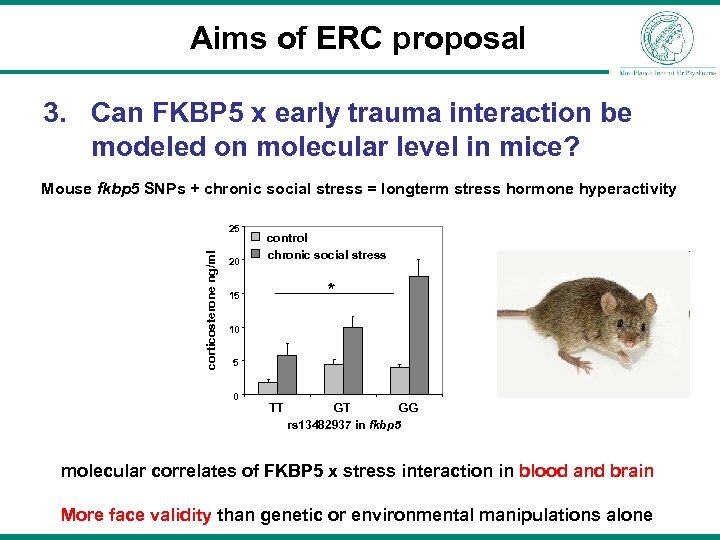
Aims of ERC proposal 3. Can FKBP 5 x early trauma interaction be modeled on molecular level in mice? Mouse fkbp 5 SNPs + chronic social stress = longterm stress hormone hyperactivity corticosterone ng/ml 25 20 control chronic social stress * 15 10 5 0 TT GT GG rs 13482937 in fkbp 5 molecular correlates of FKBP 5 x stress interaction in blood and brain More face validity than genetic or environmental manipulations alone
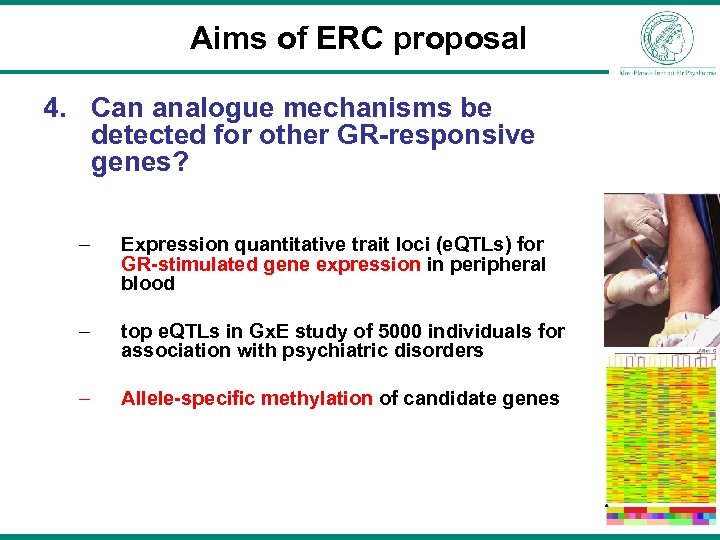
Aims of ERC proposal 4. Can analogue mechanisms be detected for other GR-responsive genes? – Expression quantitative trait loci (e. QTLs) for GR-stimulated gene expression in peripheral blood – top e. QTLs in Gx. E study of 5000 individuals for association with psychiatric disorders – Allele-specific methylation of candidate genes
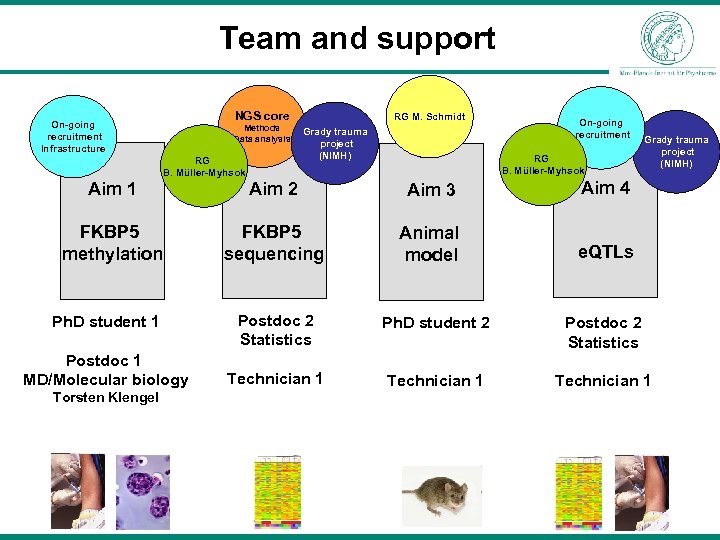
Team and support NGS core On-going recruitment Infrastructure Methods Data analysis RG B. Müller-Myhsok RG M. Schmidt Grady trauma project (NIMH) On-going recruitment RG B. Müller-Myhsok Aim 1 Aim 2 Aim 3 Aim 4 FKBP 5 methylation FKBP 5 sequencing Animal model Grady trauma project (NIMH) e. QTLs Ph. D student 1 Postdoc 1 MD/Molecular biology Torsten Klengel Postdoc 2 Statistics Ph. D student 2 Postdoc 2 Statistics Technician 1
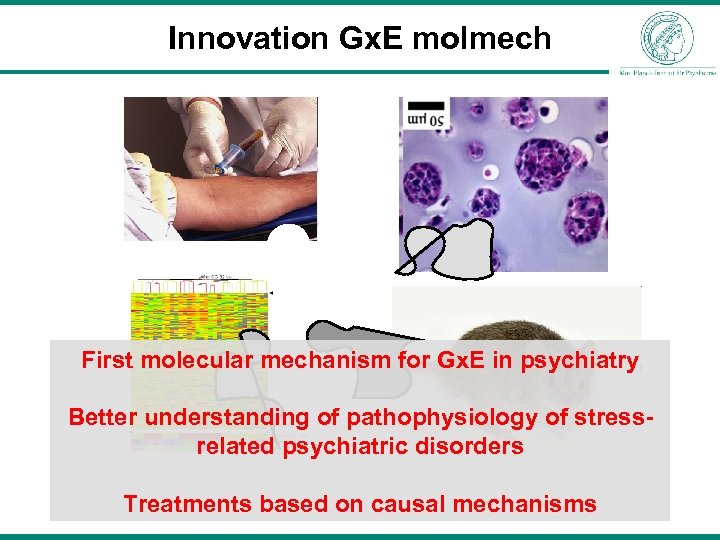
Innovation Gx. E molmech First molecular mechanism for Gx. E in psychiatry Better understanding of pathophysiology of stressrelated psychiatric disorders Treatments based on causal mechanisms

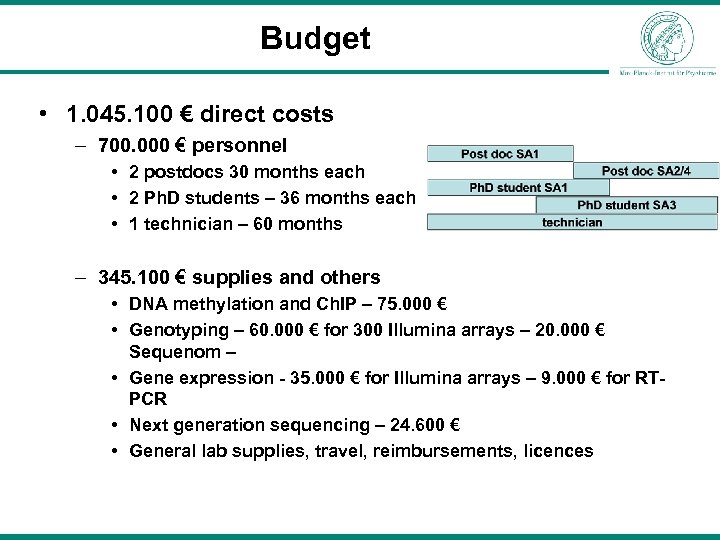
Budget • 1. 045. 100 € direct costs – 700. 000 € personnel • 2 postdocs 30 months each • 2 Ph. D students – 36 months each • 1 technician – 60 months – 345. 100 € supplies and others • DNA methylation and Ch. IP – 75. 000 € • Genotyping – 60. 000 € for 300 Illumina arrays – 20. 000 € Sequenom – • Gene expression - 35. 000 € for Illumina arrays – 9. 000 € for RTPCR • Next generation sequencing – 24. 600 € • General lab supplies, travel, reimbursements, licences
Скачать презентацию Elisabeth Binder MPI Psychiatry Munich binder mpipsykl mpg de
3d118384e163782633f2f1f45faa63d8.ppt