



 Elemanov Nurlan
 Plan I. III. IV. What are Antioxidants? Dark side of oxygen Antioxidants from food Сhemical properties of antioxidants
 What are Antioxidants? • All living organisms utilize oxygen to metabolize and use the dietary nutrients in order to produce energy for survival. Oxygen thus is a vital component for living. Oxygen meditates chemical reactions that metabolize fats, proteins, and carbohydrates to produce energy.
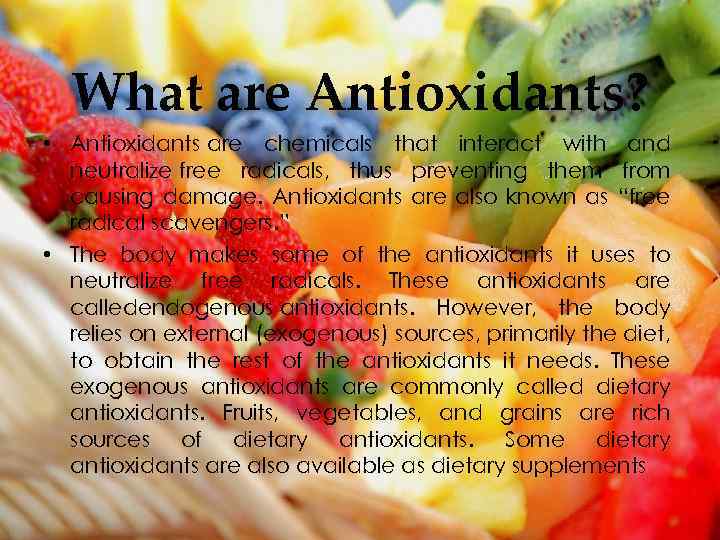 What are Antioxidants? • Antioxidants are chemicals that interact with and neutralize free radicals, thus preventing them from causing damage. Antioxidants are also known as “free radical scavengers. ” • The body makes some of the antioxidants it uses to neutralize free radicals. These antioxidants are calledendogenous antioxidants. However, the body relies on external (exogenous) sources, primarily the diet, to obtain the rest of the antioxidants it needs. These exogenous antioxidants are commonly called dietary antioxidants. Fruits, vegetables, and grains are rich sources of dietary antioxidants. Some dietary antioxidants are also available as dietary supplements
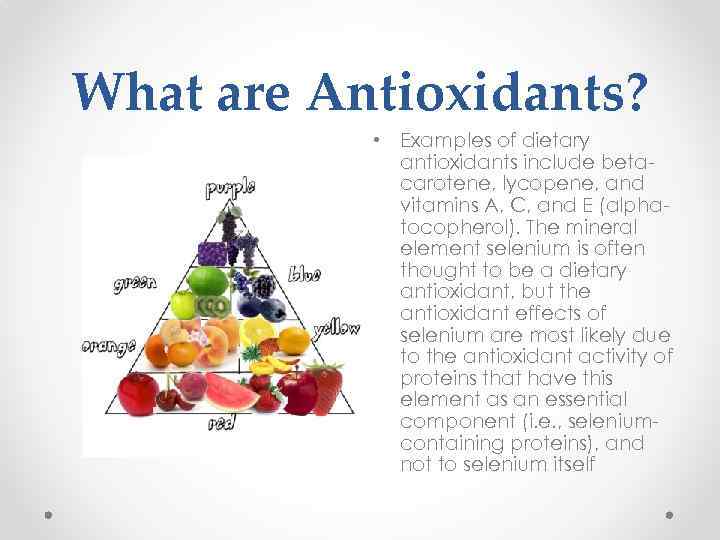 What are Antioxidants? • Examples of dietary antioxidants include betacarotene, lycopene, and vitamins A, C, and E (alphatocopherol). The mineral element selenium is often thought to be a dietary antioxidant, but the antioxidant effects of selenium are most likely due to the antioxidant activity of proteins that have this element as an essential component (i. e. , seleniumcontaining proteins), and not to selenium itself
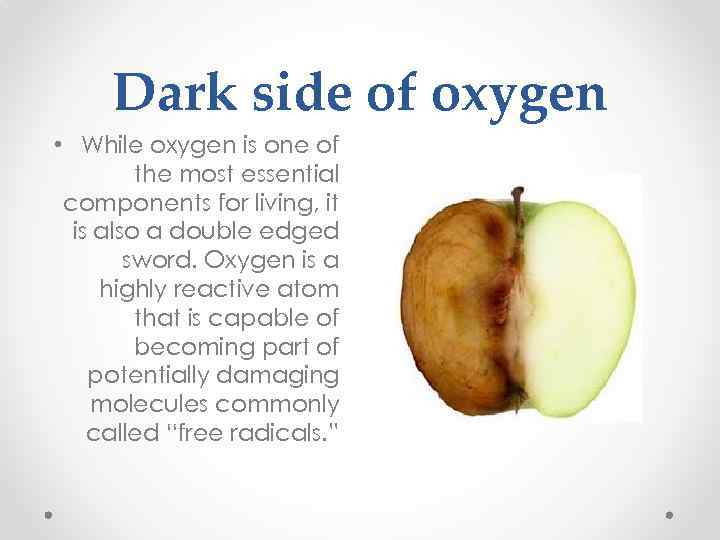 Dark side of oxygen • While oxygen is one of the most essential components for living, it is also a double edged sword. Oxygen is a highly reactive atom that is capable of becoming part of potentially damaging molecules commonly called “free radicals. ”
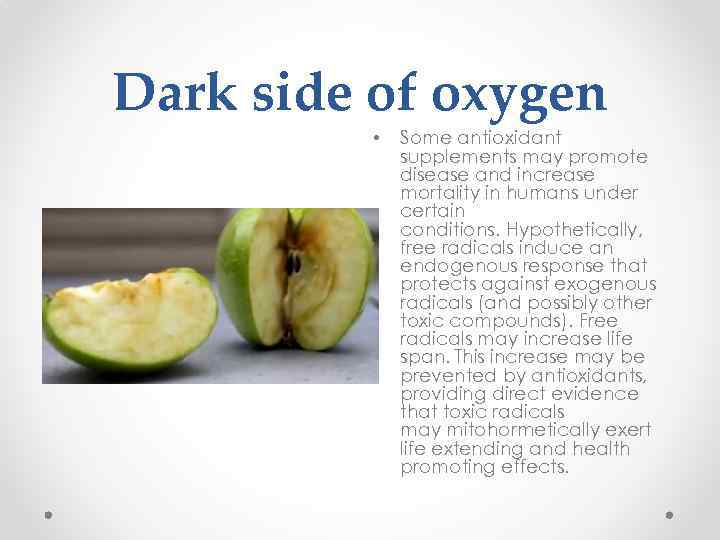 Dark side of oxygen • Some antioxidant supplements may promote disease and increase mortality in humans under certain conditions. Hypothetically, free radicals induce an endogenous response that protects against exogenous radicals (and possibly other toxic compounds). Free radicals may increase life span. This increase may be prevented by antioxidants, providing direct evidence that toxic radicals may mitohormetically exert life extending and health promoting effects.
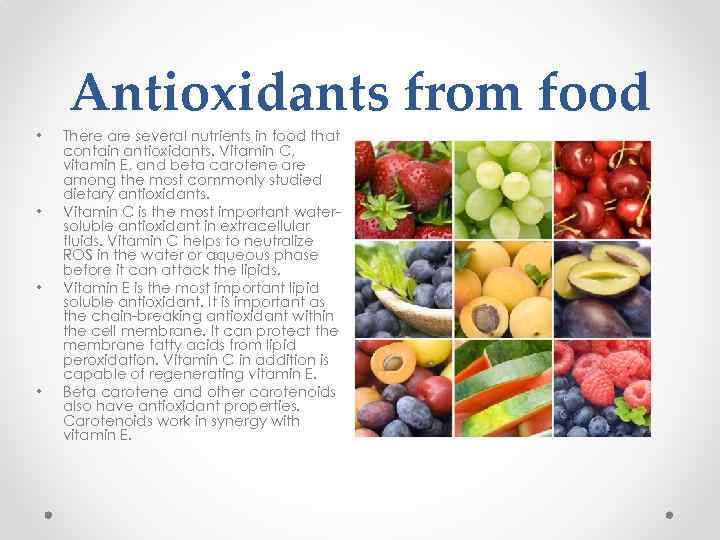 Antioxidants from food • • There are several nutrients in food that contain antioxidants. Vitamin C, vitamin E, and beta carotene are among the most commonly studied dietary antioxidants. Vitamin C is the most important watersoluble antioxidant in extracellular fluids. Vitamin C helps to neutralize ROS in the water or aqueous phase before it can attack the lipids. Vitamin E is the most important lipid soluble antioxidant. It is important as the chain-breaking antioxidant within the cell membrane. It can protect the membrane fatty acids from lipid peroxidation. Vitamin C in addition is capable of regenerating vitamin E. Beta carotene and other carotenoids also have antioxidant properties. Carotenoids work in synergy with vitamin E.
 Antioxidants from food • Antioxidants are used as food additives to help guard against food deterioration. Exposure to oxygen and sunlight are the two main factors in the oxidation of food, so food is preserved by keeping in the dark and sealing it in containers or even coating it in wax, as with cucumbers. However, as oxygen is also important for plant respiration, storing plant materials in anaerobic conditions produces unpleasant flavors and unappealing colors. Consequently, packaging of fresh fruits and vegetables contains an ~8% oxygen atmosphere. Antioxidants are an especially important class of preservatives as, unlike bacterial or fungalspoilage, oxidation reactions still occur relatively rapidly in frozen or refrigerated food. These preservatives include natural antioxidants such as ascorbic acid (AA, E 300) and tocopherols (E 306), as well as synthetic antioxidants such as propyl gallate (PG, E 310), tertiary butylhydroquinone (TBHQ), butylated hydroxyanisole (BHA, E 320) and butylated hydroxytoluene (BHT, E 321).
 Antioxidants from food • The most common molecules attacked by oxidation are unsaturated fats; oxidation causes them to turn rancid. Since oxidized lipids are often discolored and usually have unpleasant tastes such as metallic orsulfurous flavors, it is important to avoid oxidation in fat-rich foods. Thus, these foods are rarely preserved by drying; instead, they are preserved by smoking, salting or fermenting. Even less fatty foods such as fruits are sprayed with sulfurous antioxidants prior to air drying. Oxidation is often catalyzed by metals, which is why fats such as butter should never be wrapped in aluminium foil or kept in metal containers. Some fatty foods such as olive oil are partially protected from oxidation by their natural content of antioxidants, but remain sensitive to photooxidation. Antioxidant preservatives are also added to fat based cosmetics such as lipstick and moisturizers to prevent rancidity.
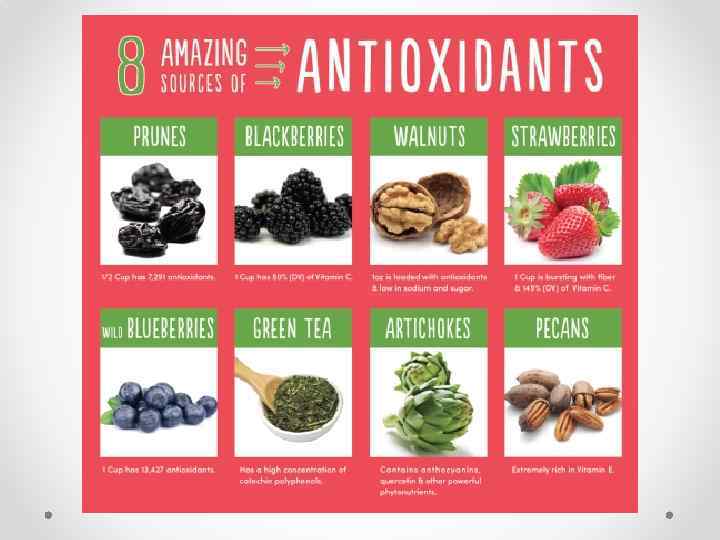
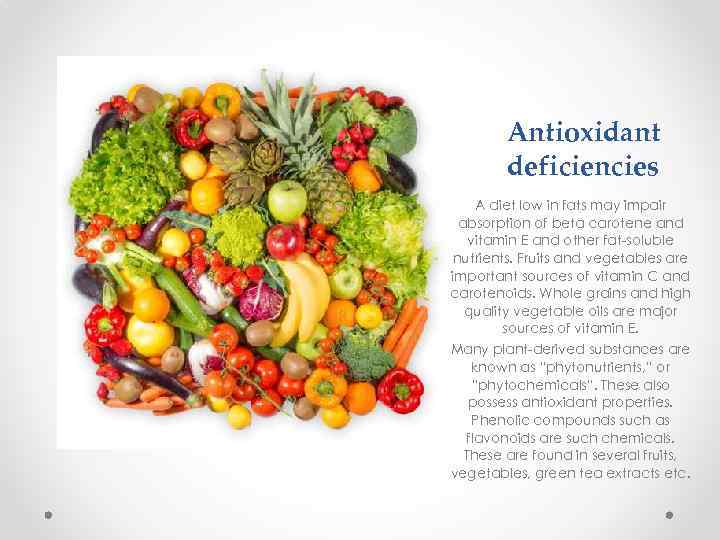 Antioxidant deficiencies A diet low in fats may impair absorption of beta carotene and vitamin E and other fat-soluble nutrients. Fruits and vegetables are important sources of vitamin C and carotenoids. Whole grains and high quality vegetable oils are major sources of vitamin E. Many plant-derived substances are known as “phytonutrients, ” or “phytochemicals”. These also possess antioxidant properties. Phenolic compounds such as flavonoids are such chemicals. These are found in several fruits, vegetables, green tea extracts etc.
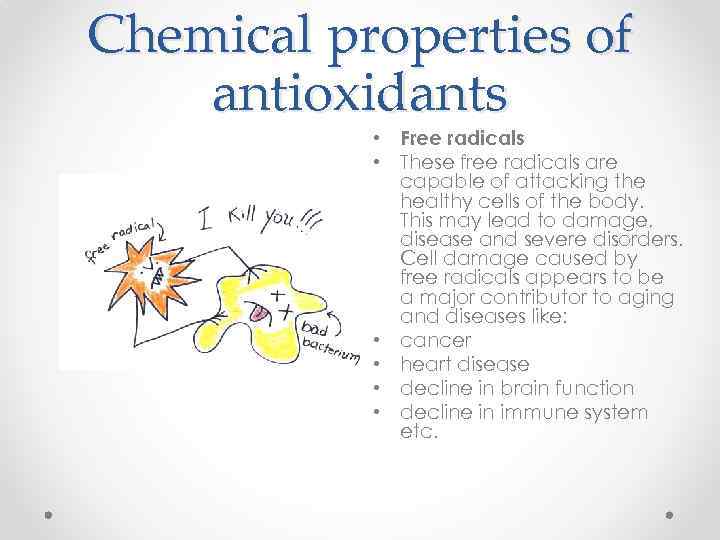 Сhemical properties of antioxidants • Free radicals • These free radicals are capable of attacking the healthy cells of the body. This may lead to damage, disease and severe disorders. Cell damage caused by free radicals appears to be a major contributor to aging and diseases like: • cancer • heart disease • decline in brain function • decline in immune system etc.
 Сhemical properties of antioxidants • Free radicals • Overall, free radicals have been implicated in the pathogenesis of at least 50 diseases. • Since free radicals contain an unpaired electron they are unstable and reach out and capture electrons from other substances in order to neutralize themselves. This initially stabilizes the free radical but generates another in the process. Soon a chain reaction begins and thousands of free radical reactions can occur within a few seconds on the primary reaction.
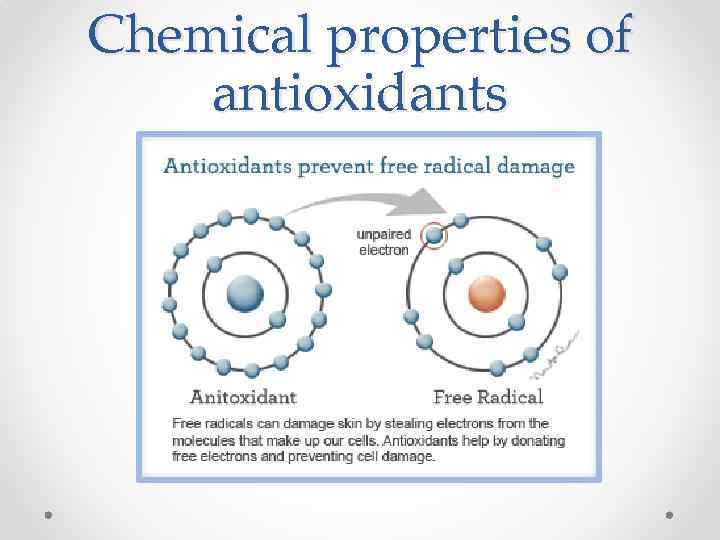 Сhemical properties of antioxidants
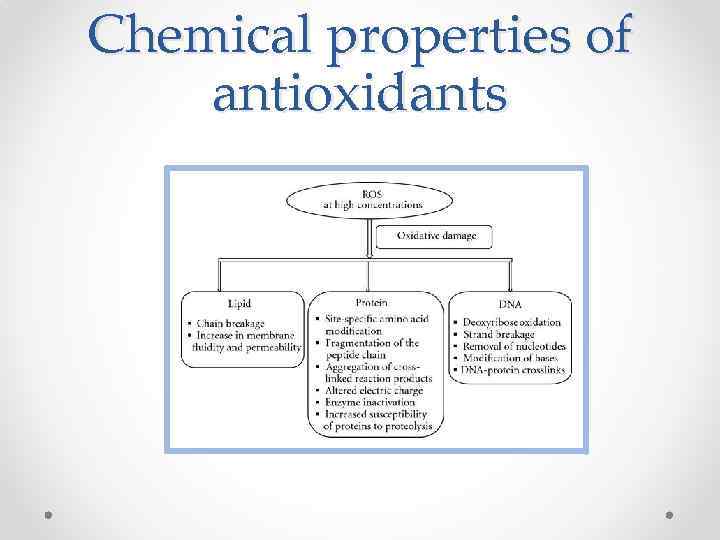
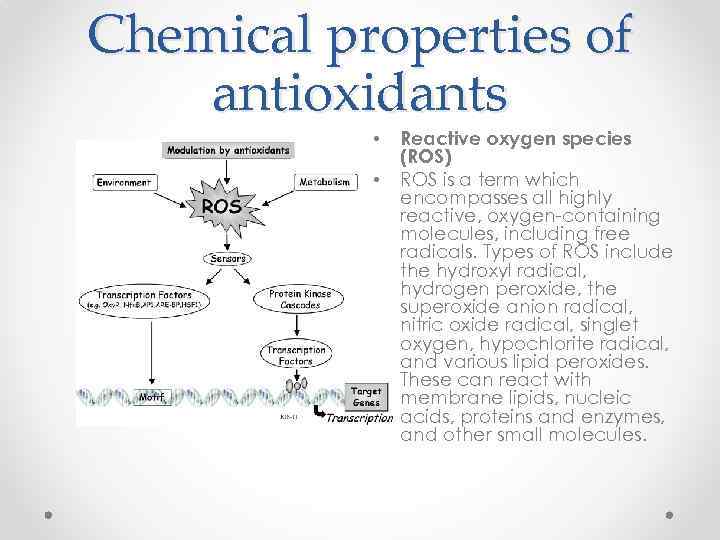 Сhemical properties of antioxidants • • Reactive oxygen species (ROS) ROS is a term which encompasses all highly reactive, oxygen-containing molecules, including free radicals. Types of ROS include the hydroxyl radical, hydrogen peroxide, the superoxide anion radical, nitric oxide radical, singlet oxygen, hypochlorite radical, and various lipid peroxides. These can react with membrane lipids, nucleic acids, proteins and enzymes, and other small molecules.
 Сhemical properties of antioxidants
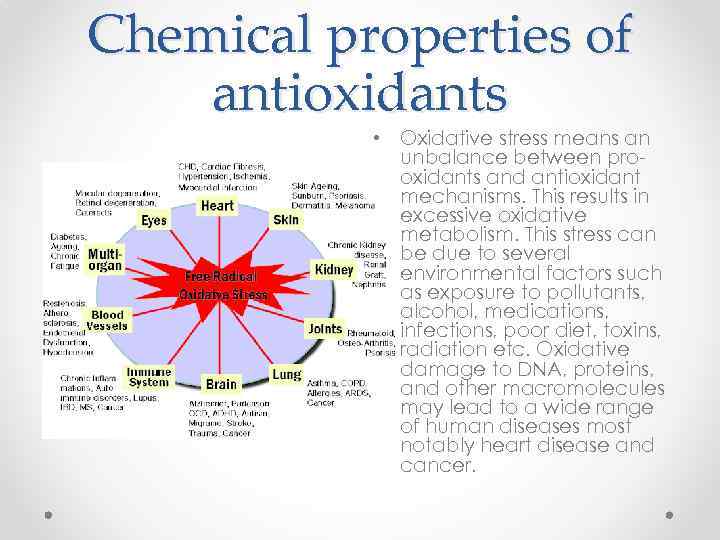 Сhemical properties of antioxidants • Oxidative stress means an unbalance between prooxidants and antioxidant mechanisms. This results in excessive oxidative metabolism. This stress can be due to several environmental factors such as exposure to pollutants, alcohol, medications, infections, poor diet, toxins, radiation etc. Oxidative damage to DNA, proteins, and other macromolecules may lead to a wide range of human diseases most notably heart disease and cancer.
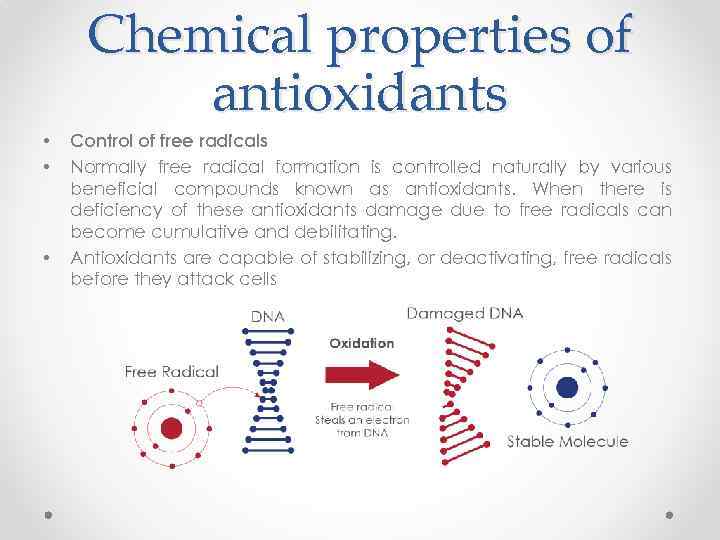 Сhemical properties of antioxidants • • • Control of free radicals Normally free radical formation is controlled naturally by various beneficial compounds known as antioxidants. When there is deficiency of these antioxidants damage due to free radicals can become cumulative and debilitating. Antioxidants are capable of stabilizing, or deactivating, free radicals before they attack cells
 Сhemical properties of antioxidants • Antioxidants within the human body • Apart from diet, the body also has several antioxidant mechanisms that can protect itself from ROS mediated damage. The antioxidant enzymes – glutathione peroxidase, catalase, and superoxide dismutase (SOD) are such enzymes. They require micronutrient cofactors such as selenium, iron, copper, zinc, and manganese for their activity. It has been suggested that an inadequate dietary intake of these trace minerals may also lead to low antioxidant activity.