 Скачать презентацию Electron transfer into metastable He-like ions Investigation of
9669620c08d3bd5a94928e7d2345e0b2.ppt
- Количество слайдов: 28



Electron transfer into metastable He-like ions: Investigation of non-statistical population mechanisms A proposal for atomic collision experiments at the Demokritos TANDEM Theo J. M. Zouros Dept. of Physics, University of Crete Heraklion, Crete, GREECE 69 th NUPECC meeting October 8, 2010 1
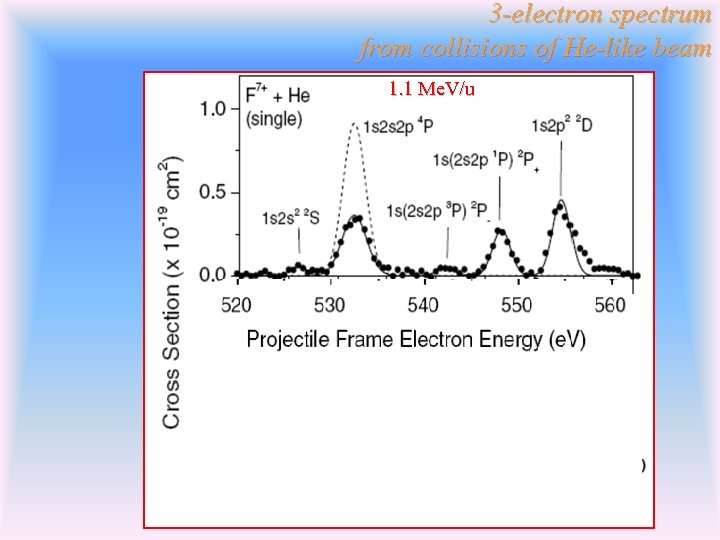
3 -electron spectrum from collisions of He-like beam 1. 1 Me. V/u F 7+ (1 s 2) 75% F 7+ (1 s 2 s 1 S) <1% F 7+ (1 s 2 s 3 S) 24% τ1/2 = stable τ1/2 = 0. 198 μs τ1/2 = 277 μs
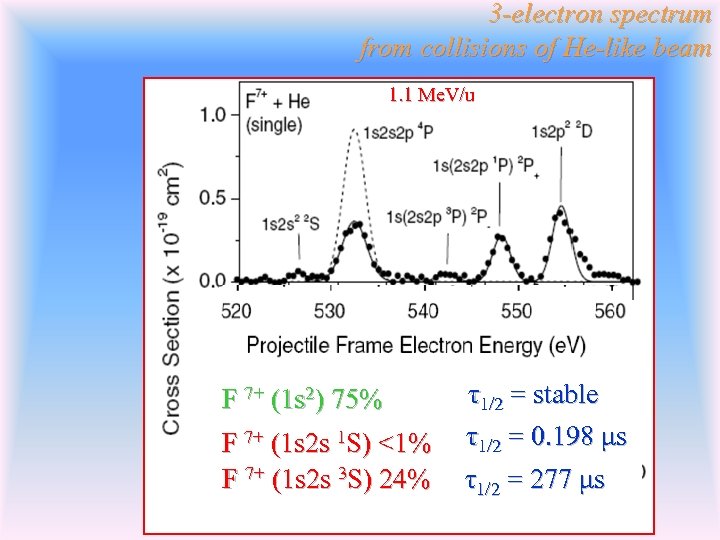
3 -electron spectrum from collisions of He-like beam 1. 1 Me. V/u F 7+ (1 s 2) 75% F 7+ (1 s 2 s 1 S) <1% F 7+ (1 s 2 s 3 S) 24% τ1/2 = stable τ1/2 = 0. 198 μs τ1/2 = 277 μs
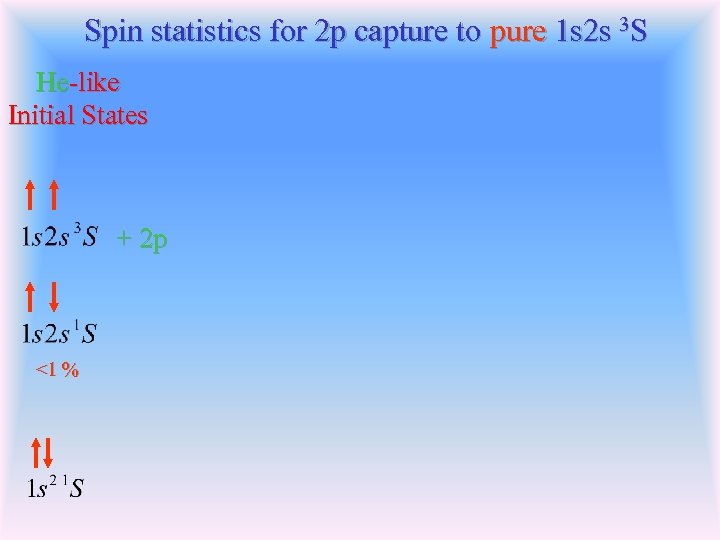
Spin statistics for 2 p capture to pure 1 s 2 s 3 S He-like Initial States + 2 p <1 %
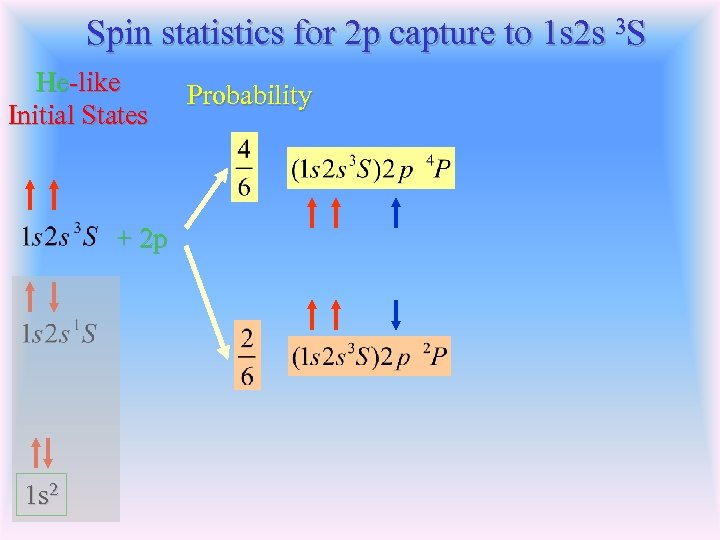
Spin statistics for 2 p capture to 1 s 2 s 3 S He-like Initial States + 2 p 1 s 2 Probability
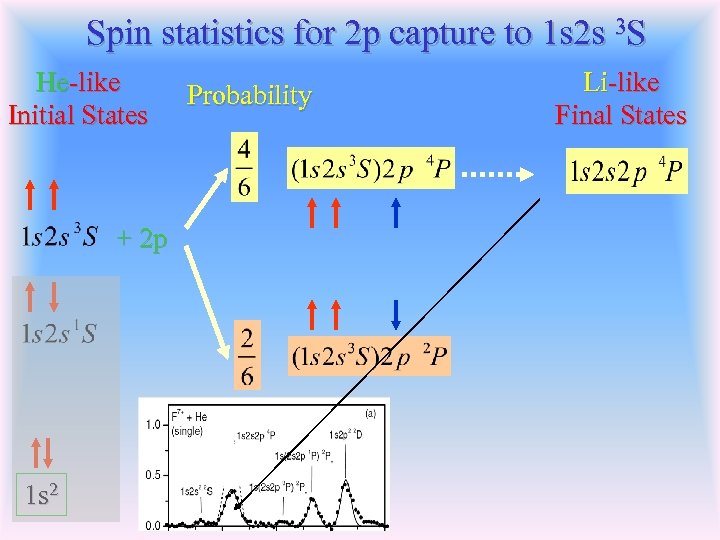
Spin statistics for 2 p capture to 1 s 2 s 3 S He-like Initial States + 2 p 1 s 2 Probability Li-like Final States
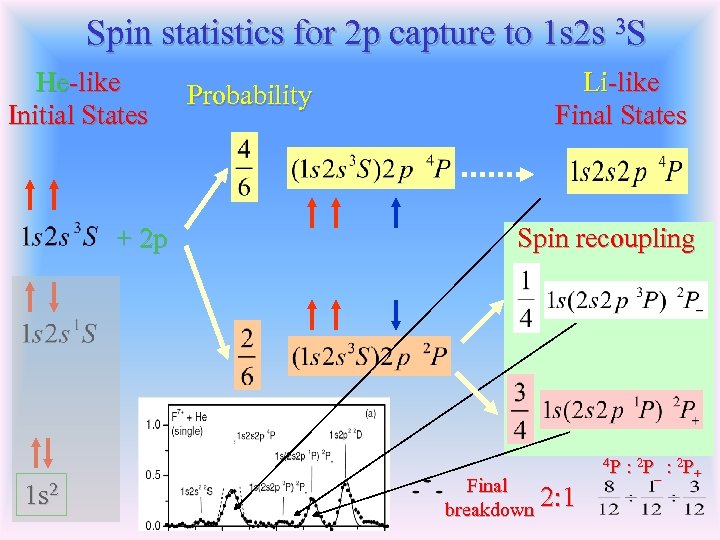
Spin statistics for 2 p capture to 1 s 2 s 3 S He-like Initial States + 2 p 1 s 2 Probability Li-like Final States Spin recoupling Final 2: 1 breakdown 4 P : 2 P_ : 2 P+
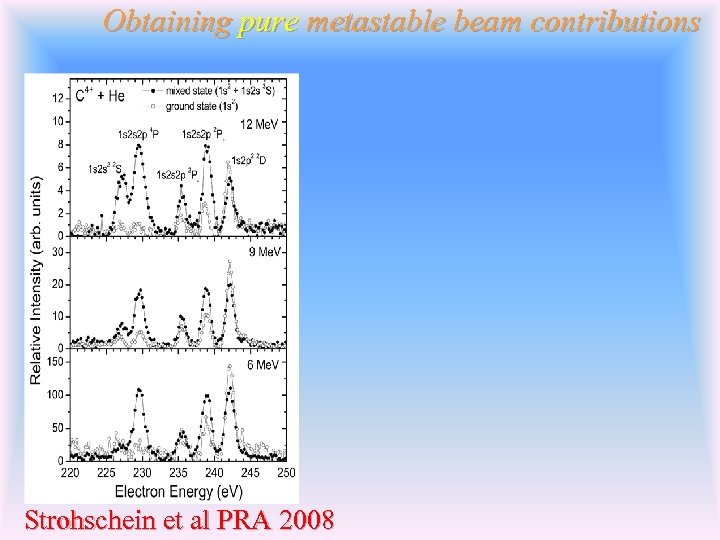
Obtaining pure metastable beam contributions Strohschein et al PRA 2008
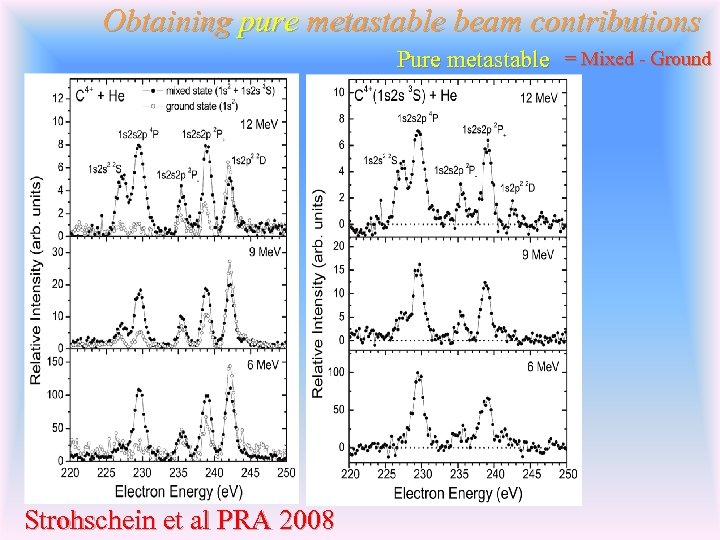
Obtaining pure metastable beam contributions Pure metastable = Mixed - Ground Strohschein et al PRA 2008
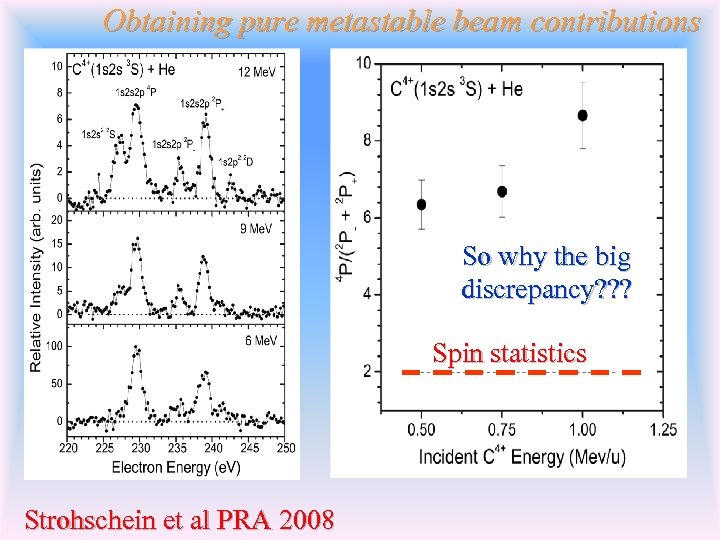
Obtaining pure metastable beam contributions So why the big discrepancy? ? ? Spin statistics Strohschein et al PRA 2008
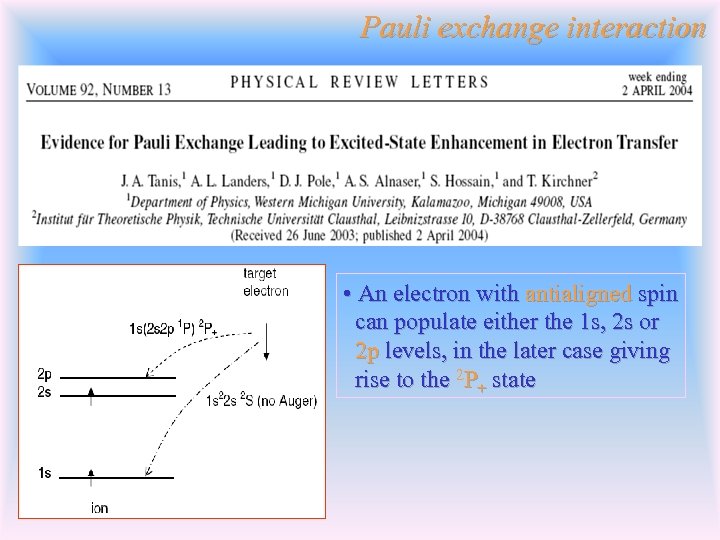
Pauli exchange interaction • An electron with antialigned spin can populate either the 1 s, 2 s or 2 p levels, in the later case giving rise to the 2 P+ state
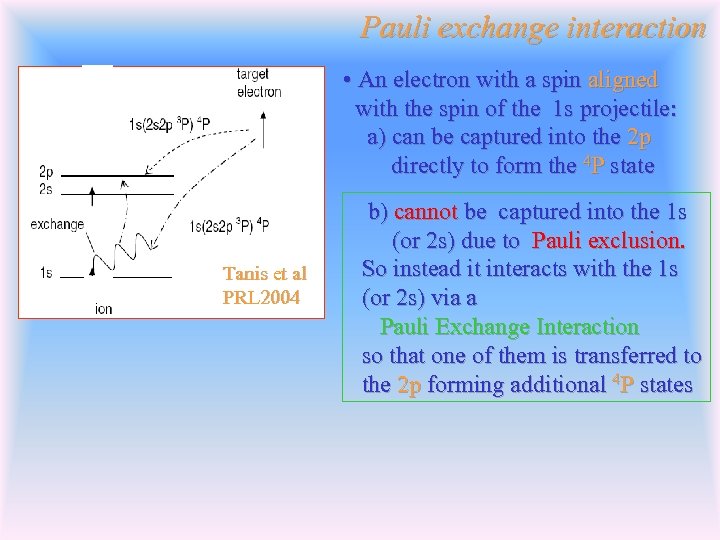
Pauli exchange interaction • An electron with a spin aligned with the spin of the 1 s projectile: a) can be captured into the 2 p directly to form the 4 P state Tanis et al PRL 2004 b) cannot be captured into the 1 s (or 2 s) due to Pauli exclusion. So instead it interacts with the 1 s (or 2 s) via a Pauli Exchange Interaction so that one of them is transferred to the 2 p forming additional 4 P states
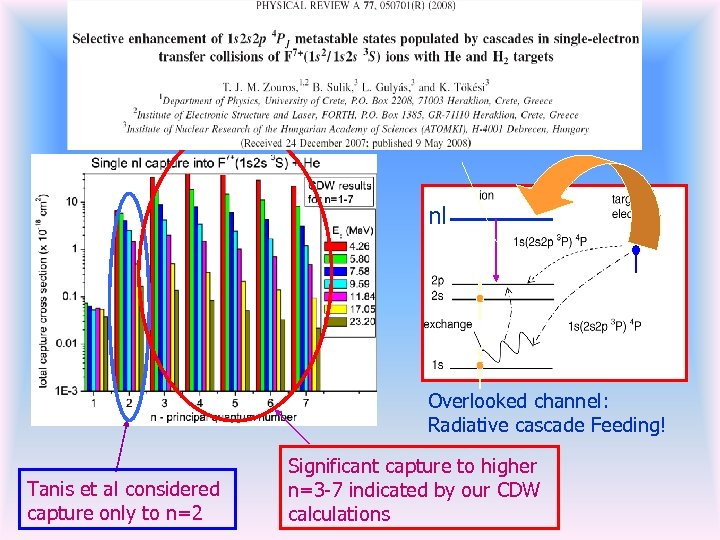
nl Overlooked channel: Radiative cascade Feeding! Tanis et al considered capture only to n=2 Significant capture to higher n=3 -7 indicated by our CDW calculations
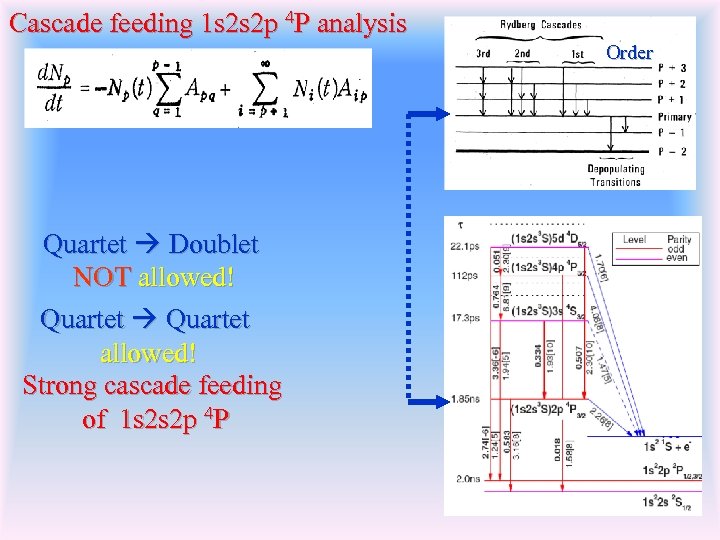
Cascade feeding 1 s 2 s 2 p 4 P analysis Order Quartet Doublet NOT allowed! Quartet allowed! Strong cascade feeding of 1 s 2 s 2 p 4 P
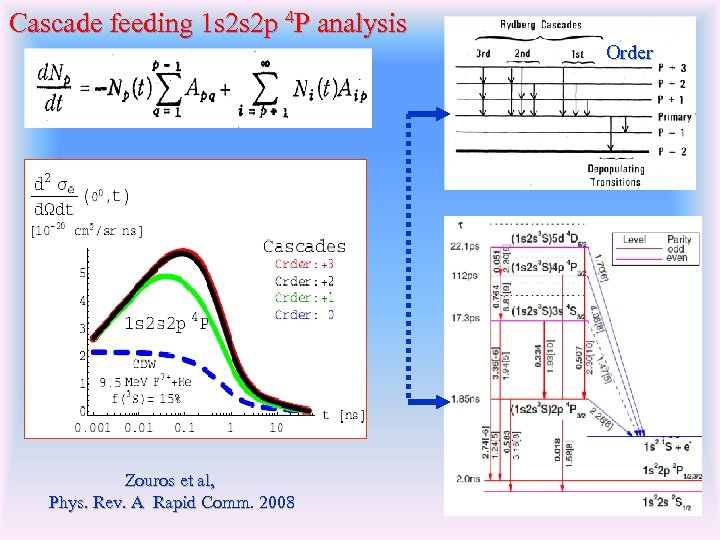
Cascade feeding 1 s 2 s 2 p 4 P analysis Order Zouros et al, Phys. Rev. A Rapid Comm. 2008
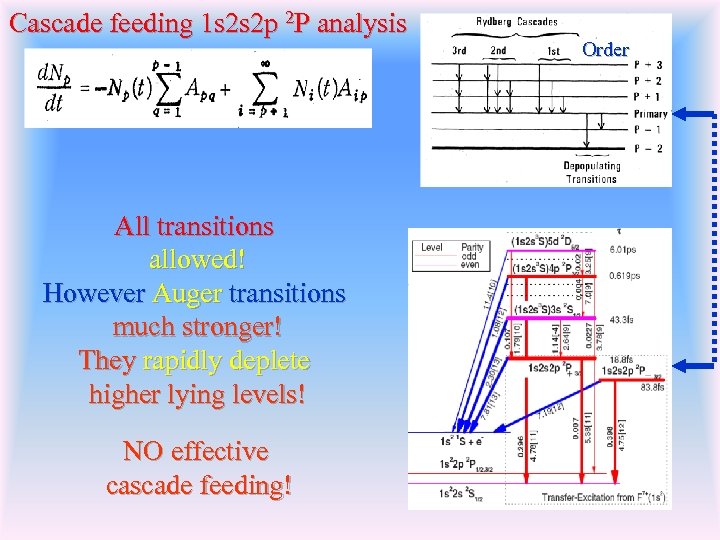
Cascade feeding 1 s 2 s 2 p 2 P analysis All transitions allowed! However Auger transitions much stronger! They rapidly deplete higher lying levels! NO effective cascade feeding! Order
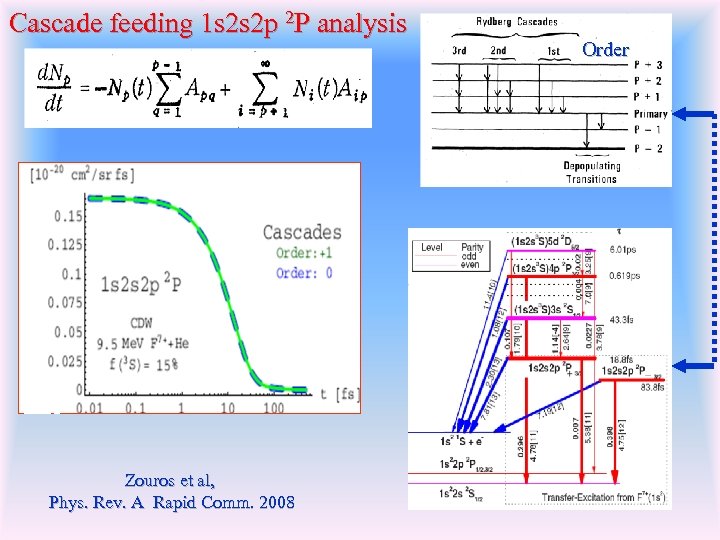
Cascade feeding 1 s 2 s 2 p 2 P analysis Zouros et al, Phys. Rev. A Rapid Comm. 2008 Order
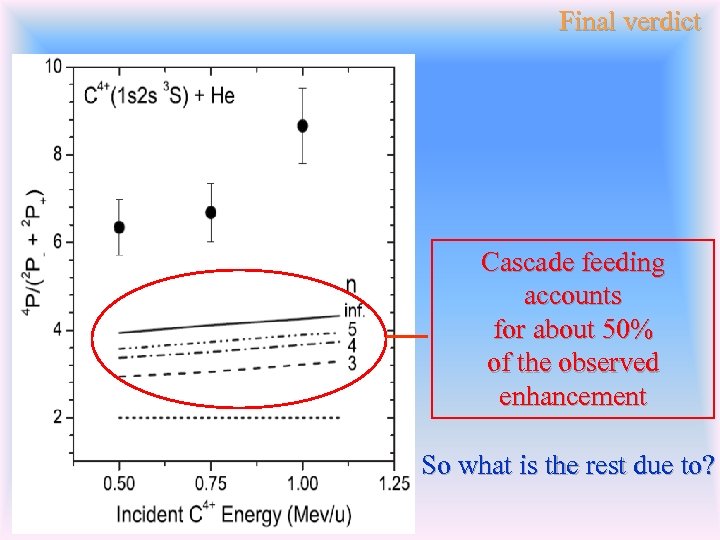
Final verdict Cascade feeding accounts for about 50% of the observed enhancement So what is the rest due to?
Proposal • Isoelectronic sequence study using He-like ions from Li+ to F 7+ in the 0. 1 -0. 5 Me. V/u where capture is strongest and effect seems to be the largest
Proposal • Isoelectronic sequence study using He-like ions from Li+ to F 7+ in the 0. 1 -0. 5 Me. V/u where capture is strongest and effect seems to be the largest • Ideally suited to the Demokritos tandem energy range of 0. 8 -4 MV.
Proposal • Isoelectronic sequence study using He-like ions from Li+ to F 7+ in the 0. 1 -0. 5 Me. V/u where capture is strongest and effect seems to be the largest. • Ideally suited to the Demokritos tandem energy range of 0. 8 -4 MV • Needed: terminal gas stripper to produce pure ground state He-like beams – low intensity beams ~1 -10 n. A
Proposal • Isoelectronic sequence study using He-like ions from Li+ to F 7+ in the 0. 1 -0. 5 Me. V/u where capture is strongest and effect seems to be the largest. • Ideally suited to the Demokritos tandem energy range of 0. 8 -4 MV • Needed: terminal gas stripper to produce pure ground state He-like beams – low intensity beams ~1 -10 n. A • Will use electron hemispherical spectrometer with position sensitive detector for high quality statistics ideally suited for working with low intensity beams
Proposal • Isoelectronic sequence study using He-like ions from Li+ to F 7+ in the 0. 1 -0. 5 Me. V/u where capture is strongest and effect seems to be the largest • Ideally suited to the Demokritos tandem energy range of 0. 8 -4 MV • Needed: terminal gas stripper to produce pure ground state He-like beams – low intensity beams ~1 -10 n. A. • Will use electron hemispherical spectrometer with position sensitive detector for high quality statistics ideally suited for working with low intensity beams • Spectrometer and collision chamber already in house however need to be connected to a new beam line
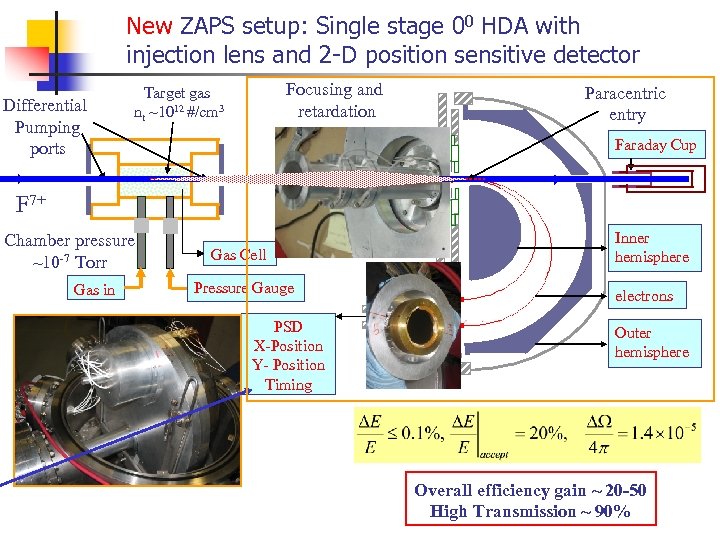
New ZAPS setup: Single stage 00 HDA with injection lens and 2 -D position sensitive detector Differential Pumping ports Focusing and retardation Target gas nt ~1012 #/cm 3 Paracentric entry Faraday Cup F 7+ Chamber pressure ~10 -7 Torr Gas in 4 -element lens Gas Cell Pressure Gauge PSD X-Position Y- Position Timing Inner hemisphere electrons Outer hemisphere Overall efficiency gain ~ 20 -50 High Transmission ~ 90%
The end – thank you for listening References Non-statistical results • Tanis et al. PRL 92 (2004) 133201 • Zouros et al. PRA 77 (2008) 050701 • Strohschein et al. PRA 77 (2008) 022706 • Rohrbein et al, PRA 81 (2010) 042701 Production of pure ground state He-like ion beams • Benis & Zouros, PRA 65 (2002) 064701 Contact: tzouros@physics. uoc. gr
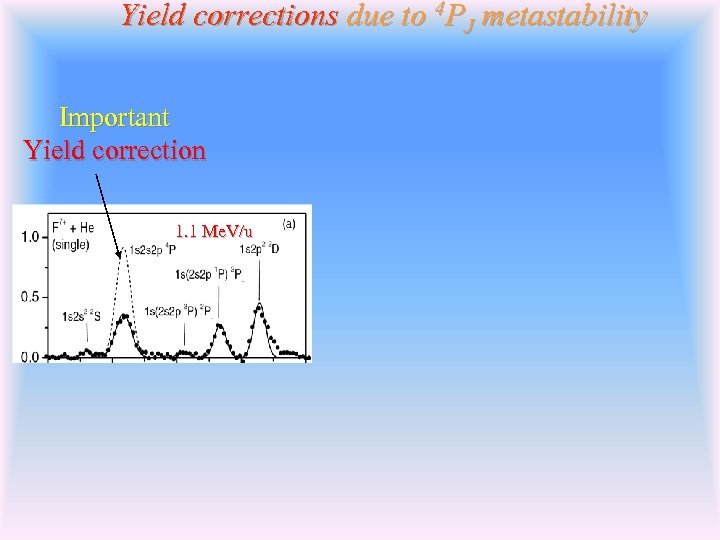
Yield corrections due to 4 PJ metastability Important Yield correction 1. 1 Me. V/u
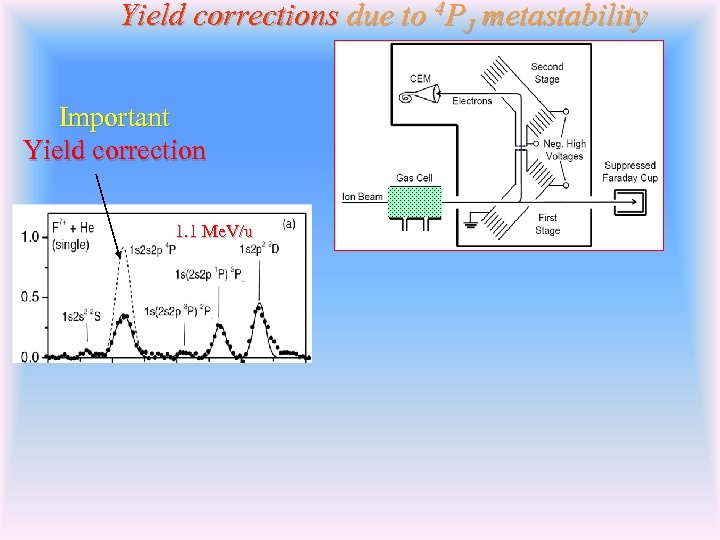
Yield corrections due to 4 PJ metastability Important Yield correction 1. 1 Me. V/u
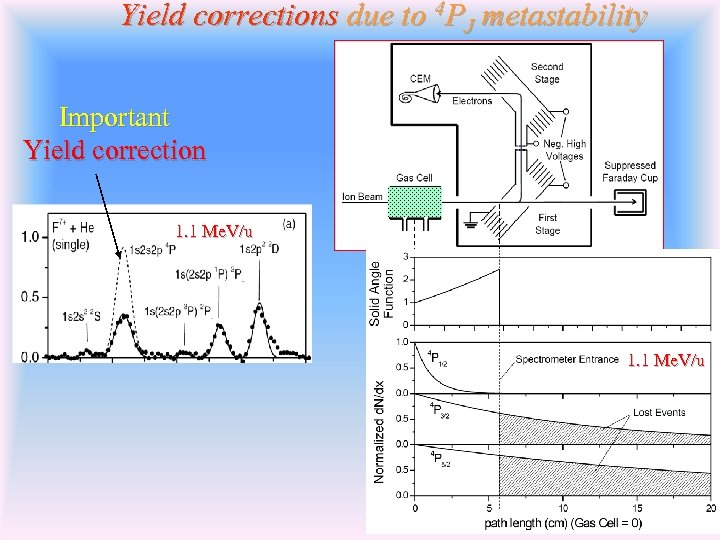
Yield corrections due to 4 PJ metastability Important Yield correction 1. 1 Me. V/u
Скачать презентацию Electron transfer into metastable He-like ions Investigation of
9669620c08d3bd5a94928e7d2345e0b2.ppt