Скачать презентацию Electricity Principles of Electricity as it is related
1ffd112685c2812da19a1cb9f1a579f0.ppt
- Количество слайдов: 67
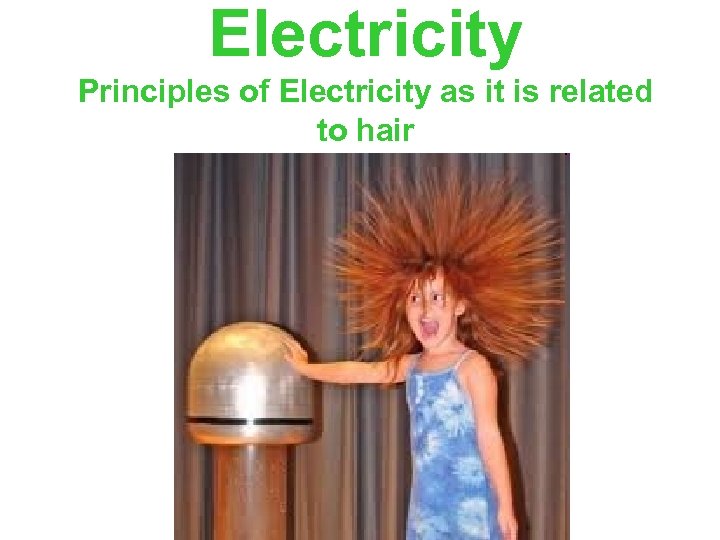 Electricity Principles of Electricity as it is related to hair
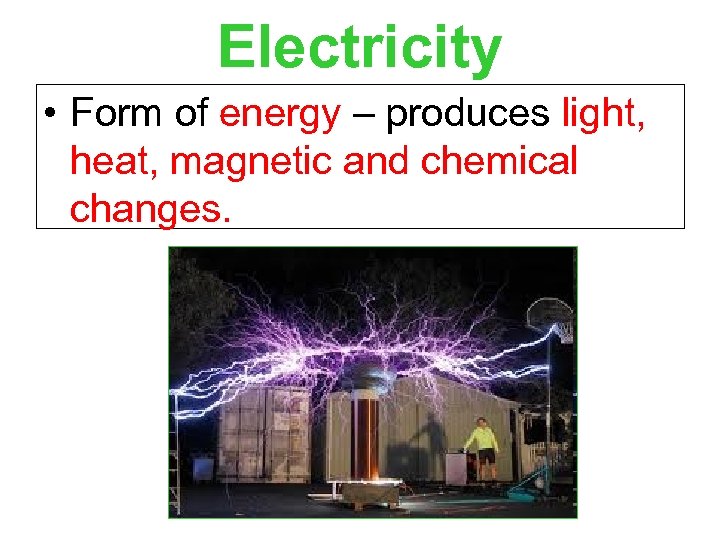 Electricity • Form of energy – produces light, heat, magnetic and chemical changes.
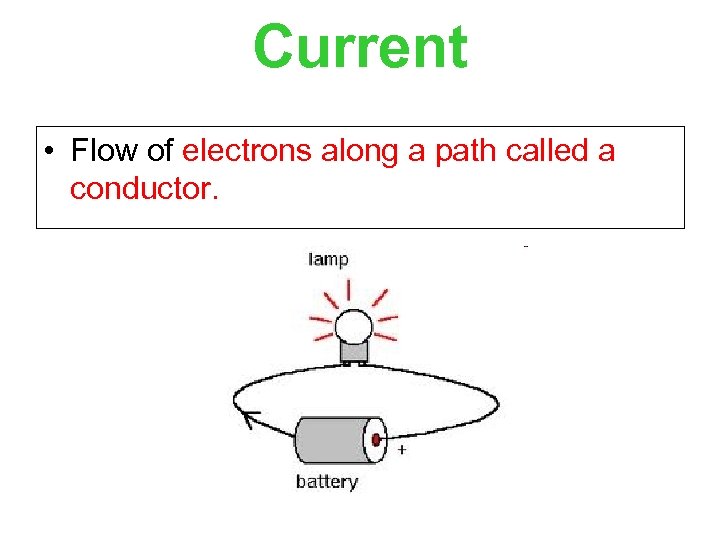 Current • Flow of electrons along a path called a conductor.
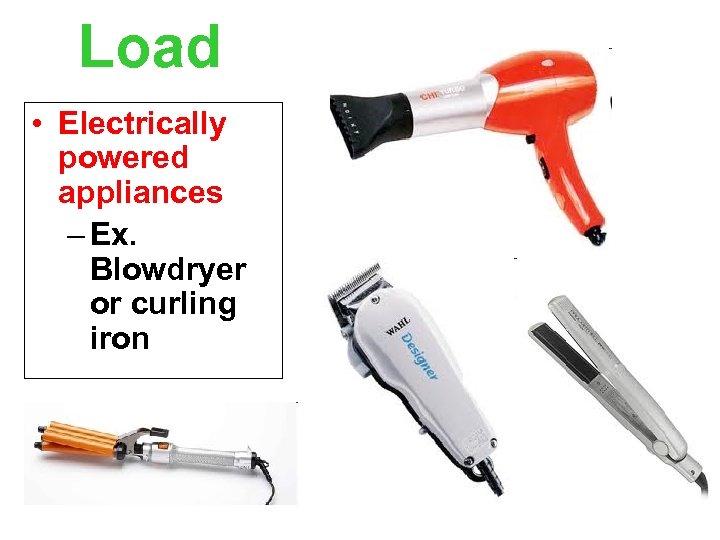 Load • Electrically powered appliances – Ex. Blowdryer or curling iron
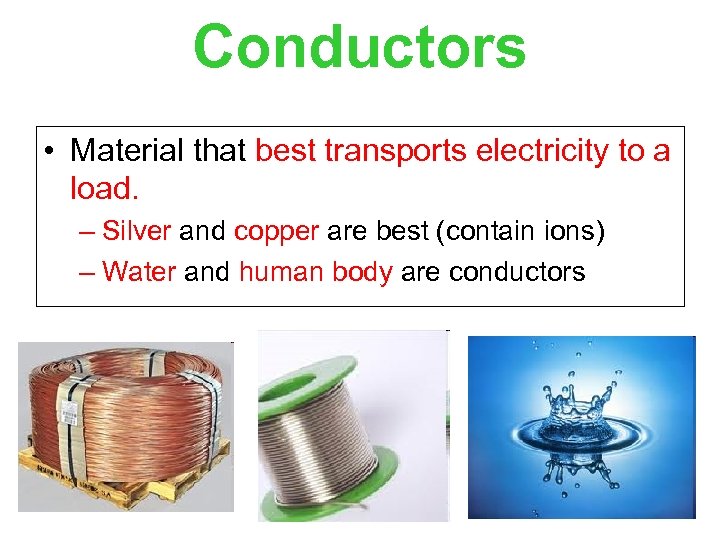 Conductors • Material that best transports electricity to a load. – Silver and copper are best (contain ions) – Water and human body are conductors
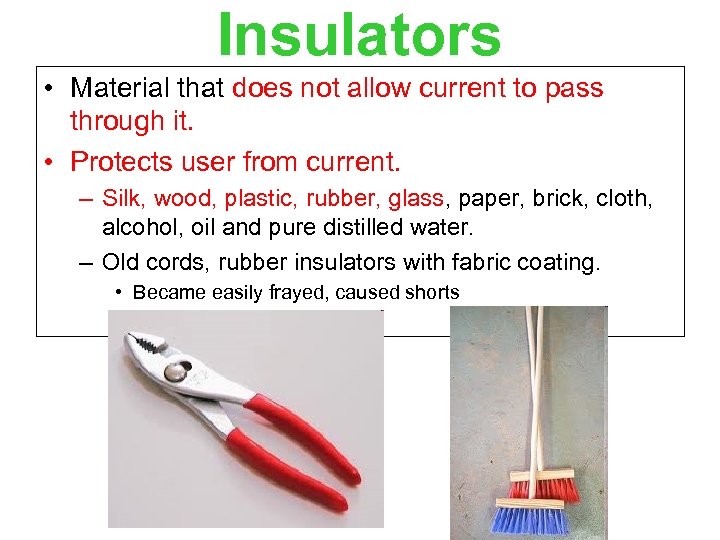 Insulators • Material that does not allow current to pass through it. • Protects user from current. – Silk, wood, plastic, rubber, glass, paper, brick, cloth, alcohol, oil and pure distilled water. – Old cords, rubber insulators with fabric coating. • Became easily frayed, caused shorts
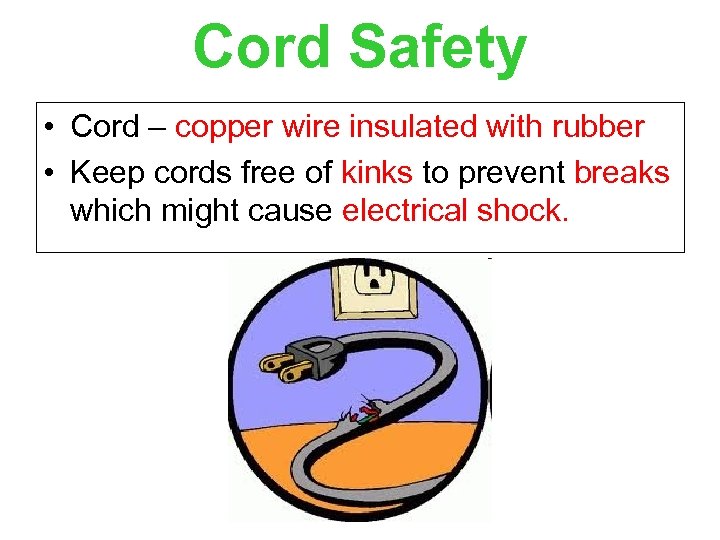 Cord Safety • Cord – copper wire insulated with rubber • Keep cords free of kinks to prevent breaks which might cause electrical shock.
 Measures of Electricity
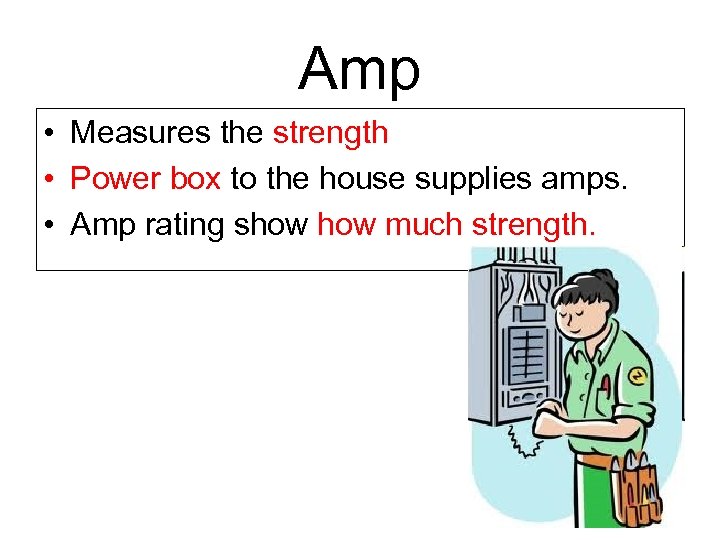 Amp • Measures the strength • Power box to the house supplies amps. • Amp rating show much strength.
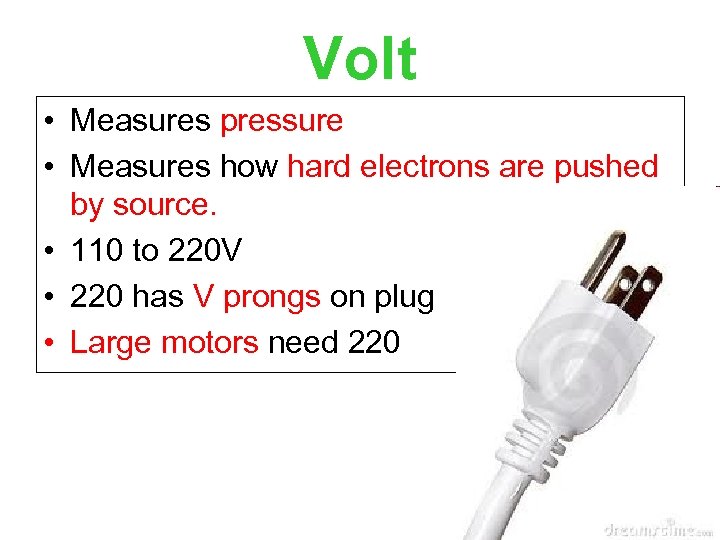 Volt • Measures pressure • Measures how hard electrons are pushed by source. • 110 to 220 V • 220 has V prongs on plug • Large motors need 220
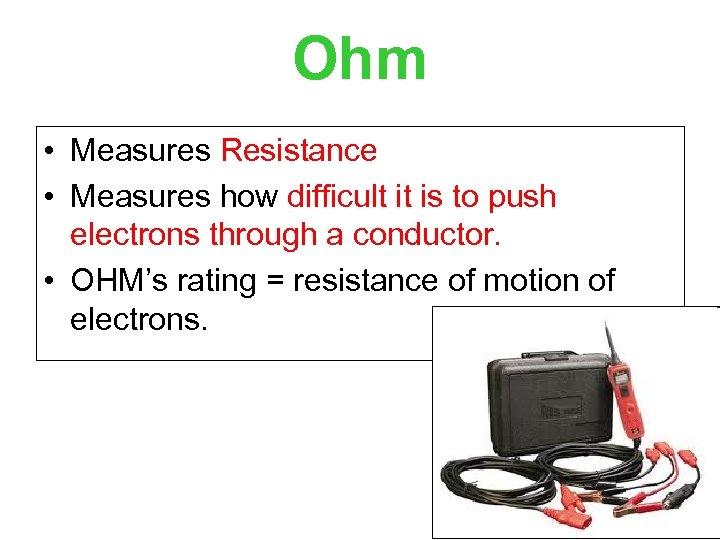 Ohm • Measures Resistance • Measures how difficult it is to push electrons through a conductor. • OHM’s rating = resistance of motion of electrons.
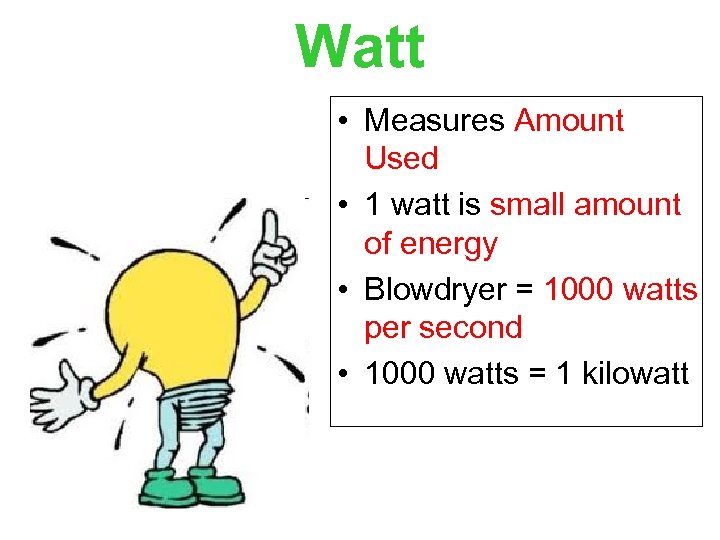 Watt • Measures Amount Used • 1 watt is small amount of energy • Blowdryer = 1000 watts per second • 1000 watts = 1 kilowatt
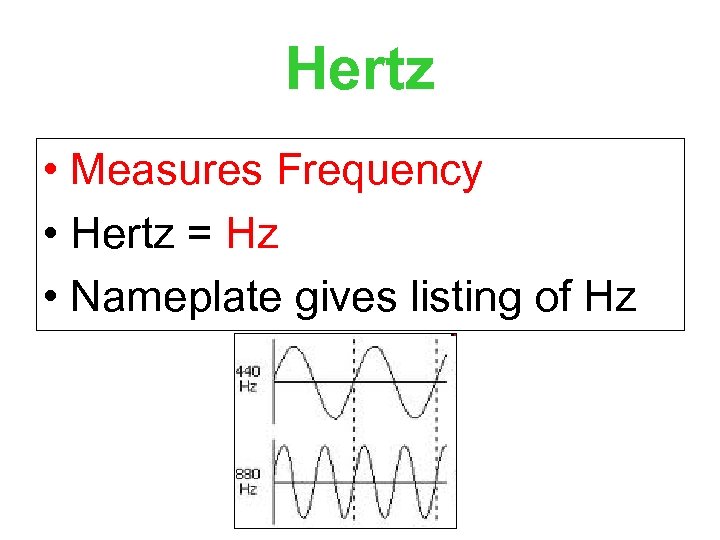 Hertz • Measures Frequency • Hertz = Hz • Nameplate gives listing of Hz
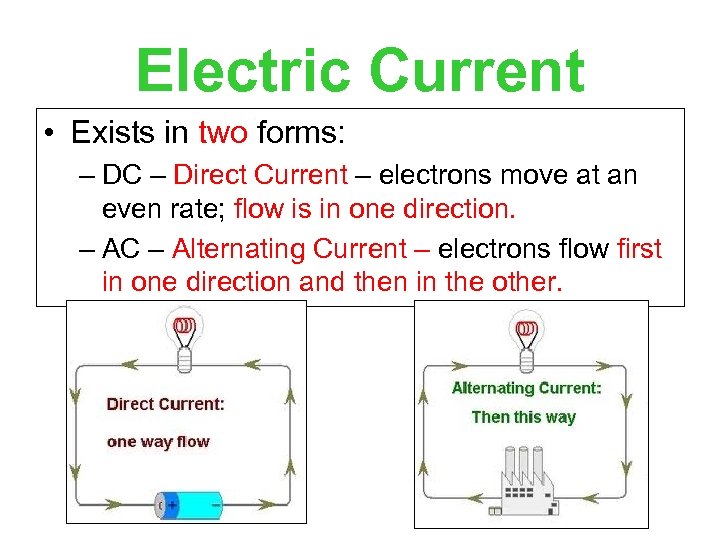 Electric Current • Exists in two forms: – DC – Direct Current – electrons move at an even rate; flow is in one direction. – AC – Alternating Current – electrons flow first in one direction and then in the other.
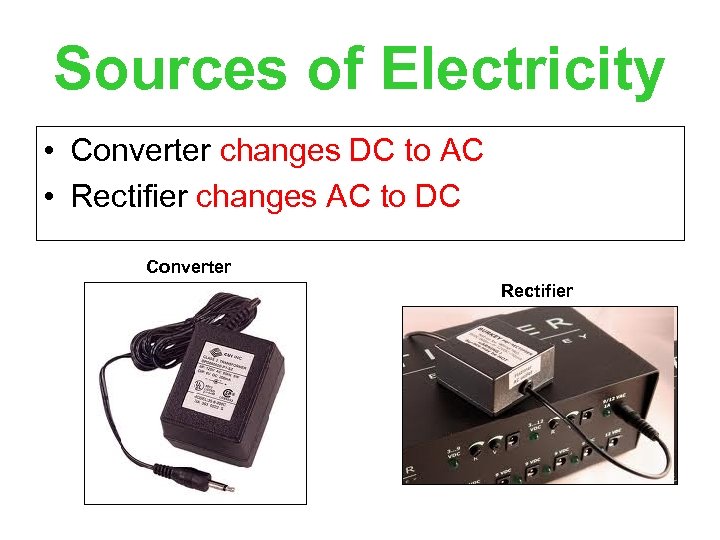 Sources of Electricity • Converter changes DC to AC • Rectifier changes AC to DC Converter Rectifier
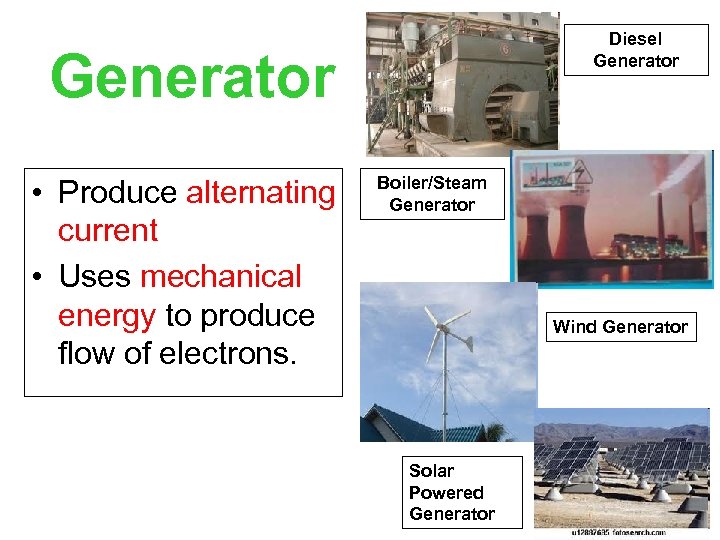 Diesel Generator • Produce alternating current • Uses mechanical energy to produce flow of electrons. Boiler/Steam Generator Wind Generator Solar Powered Generator
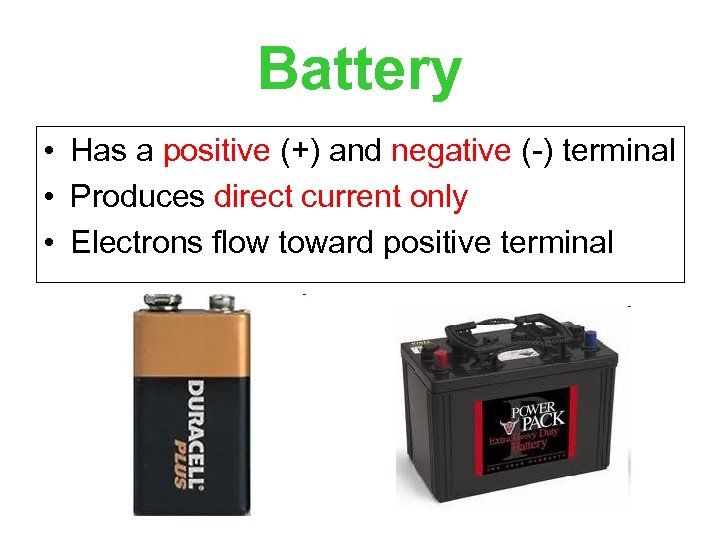 Battery • Has a positive (+) and negative (-) terminal • Produces direct current only • Electrons flow toward positive terminal
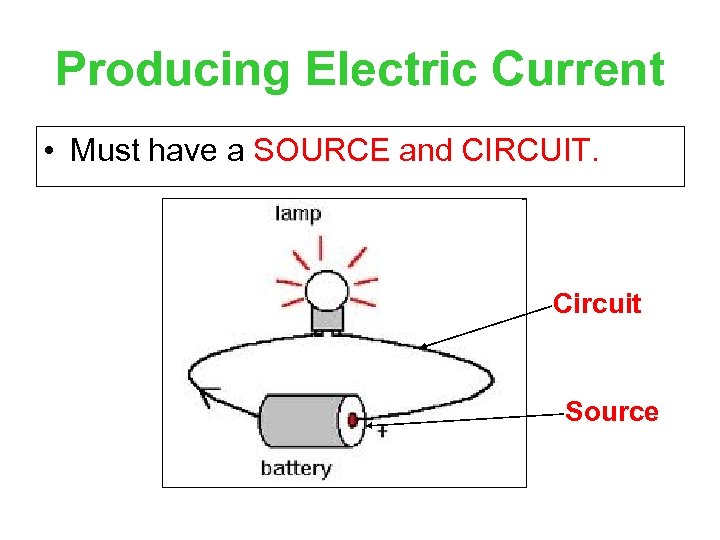 Producing Electric Current • Must have a SOURCE and CIRCUIT. Circuit Source
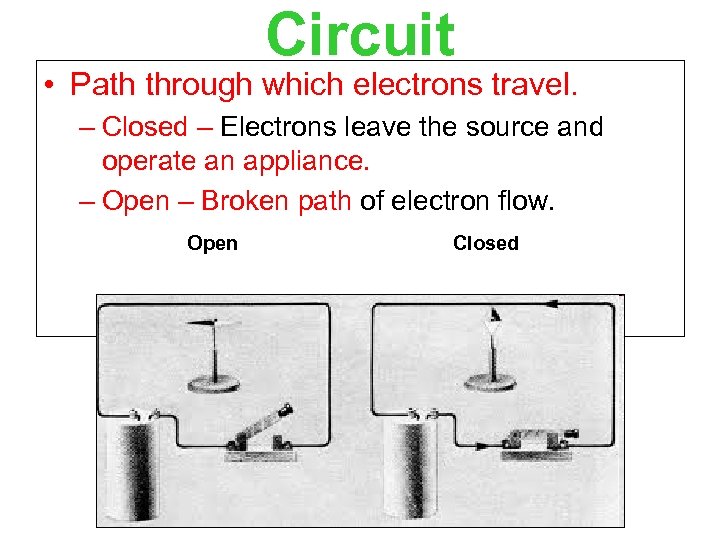 Circuit • Path through which electrons travel. – Closed – Electrons leave the source and operate an appliance. – Open – Broken path of electron flow. Open Closed
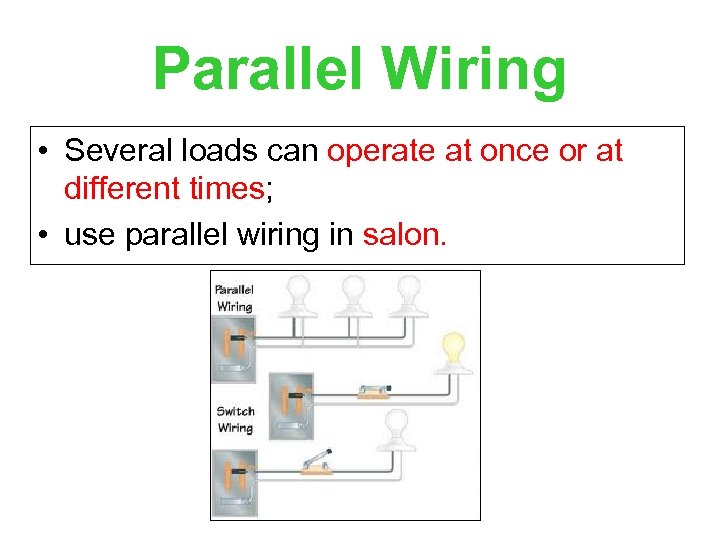 Parallel Wiring • Several loads can operate at once or at different times; • use parallel wiring in salon.
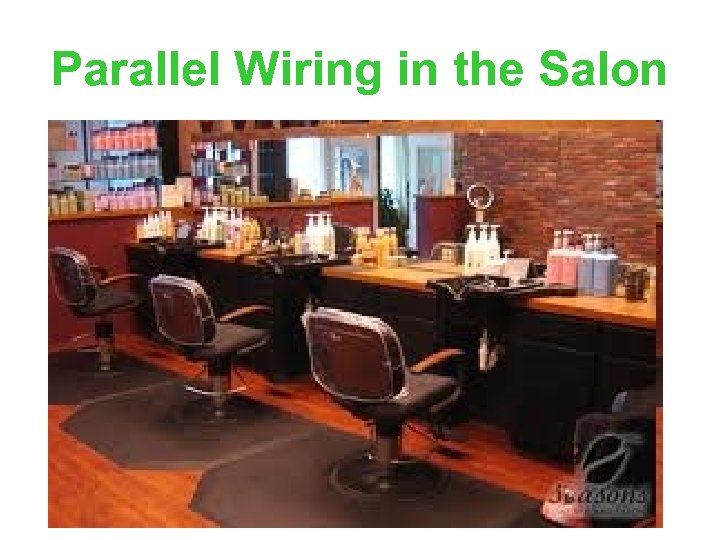 Parallel Wiring in the Salon
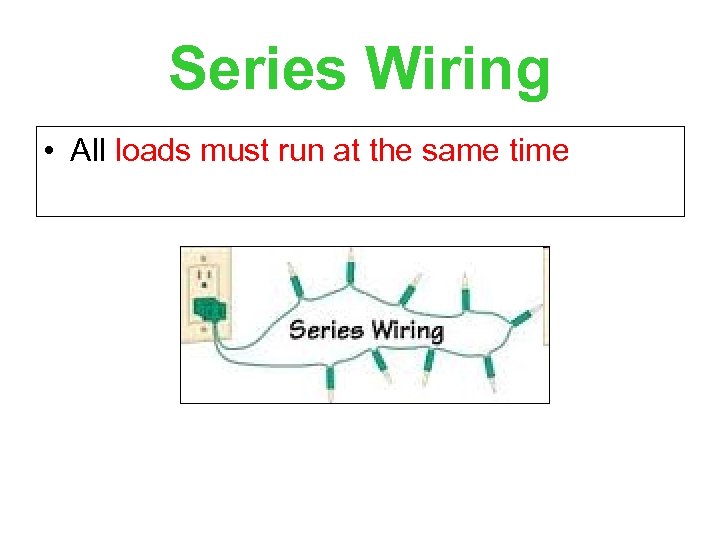 Series Wiring • All loads must run at the same time
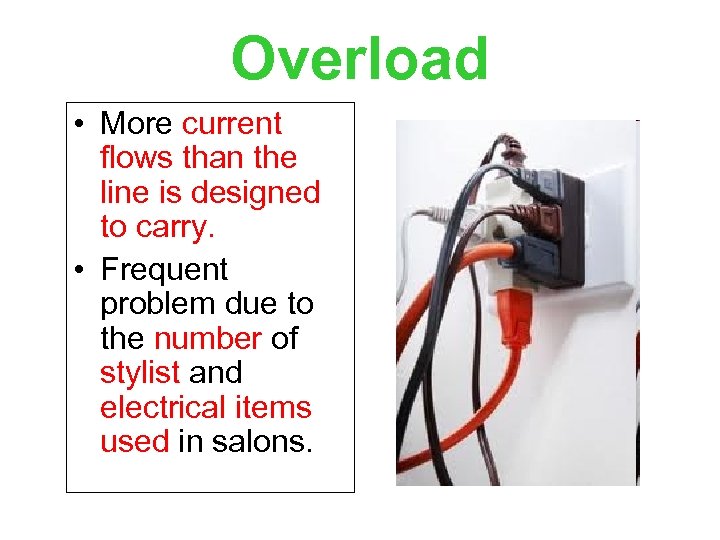 Overload • More current flows than the line is designed to carry. • Frequent problem due to the number of stylist and electrical items used in salons.
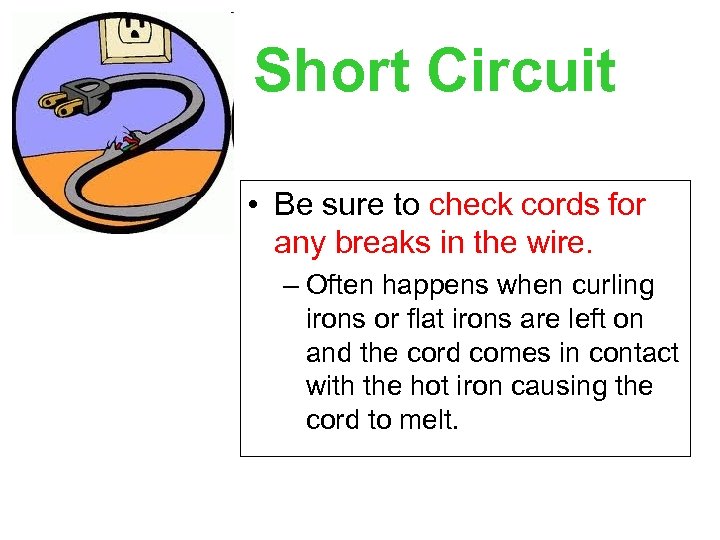 Short Circuit • Be sure to check cords for any breaks in the wire. – Often happens when curling irons or flat irons are left on and the cord comes in contact with the hot iron causing the cord to melt.
 Safety Measures
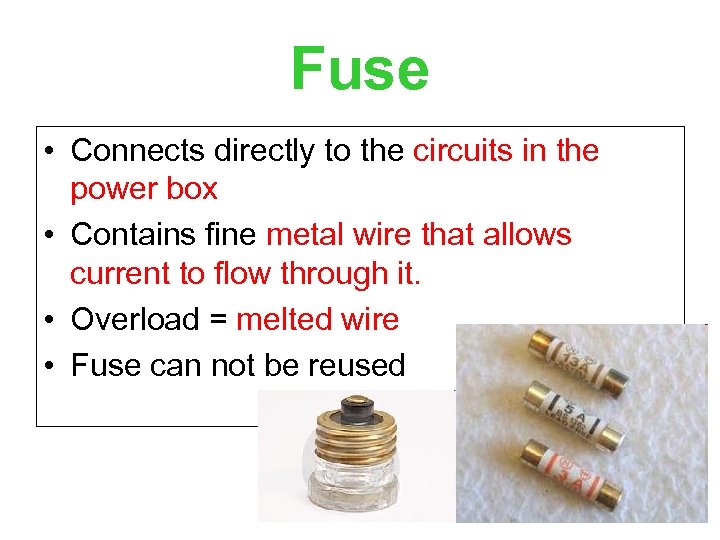 Fuse • Connects directly to the circuits in the power box • Contains fine metal wire that allows current to flow through it. • Overload = melted wire • Fuse can not be reused
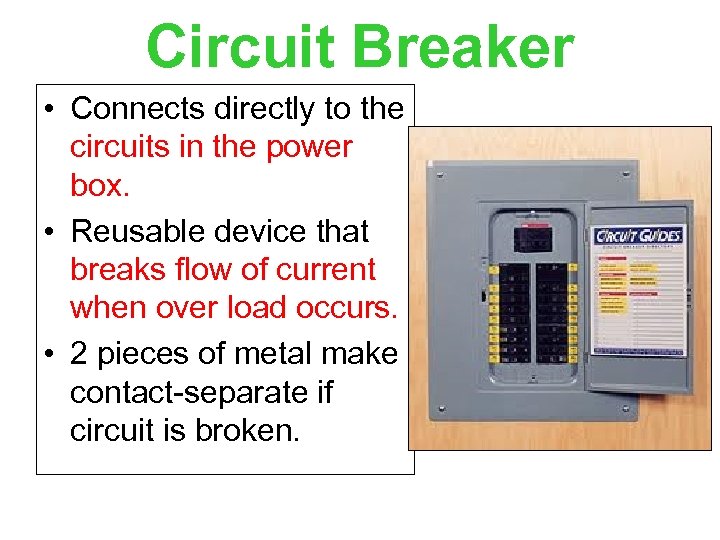 Circuit Breaker • Connects directly to the circuits in the power box. • Reusable device that breaks flow of current when over load occurs. • 2 pieces of metal make contact-separate if circuit is broken.
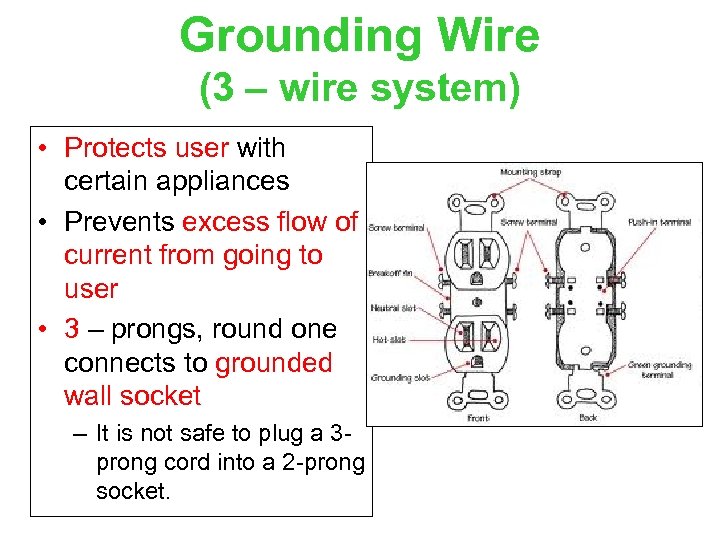 Grounding Wire (3 – wire system) • Protects user with certain appliances • Prevents excess flow of current from going to user • 3 – prongs, round one connects to grounded wall socket – It is not safe to plug a 3 prong cord into a 2 -prong socket.
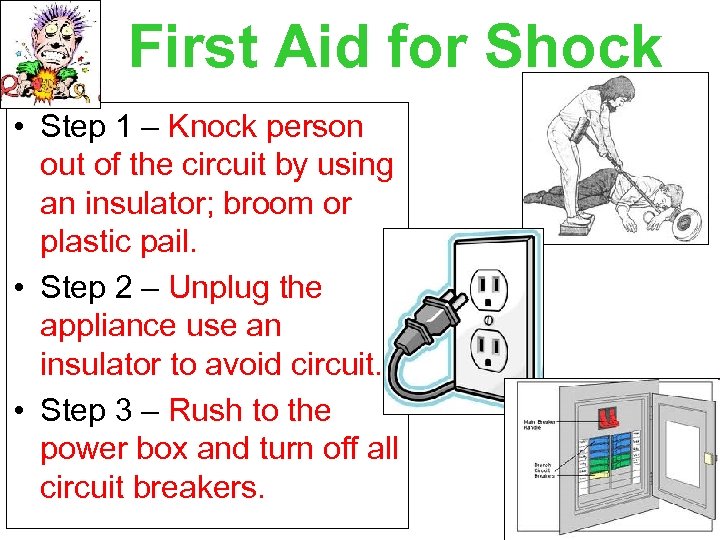 First Aid for Shock • Step 1 – Knock person out of the circuit by using an insulator; broom or plastic pail. • Step 2 – Unplug the appliance use an insulator to avoid circuit. • Step 3 – Rush to the power box and turn off all circuit breakers.
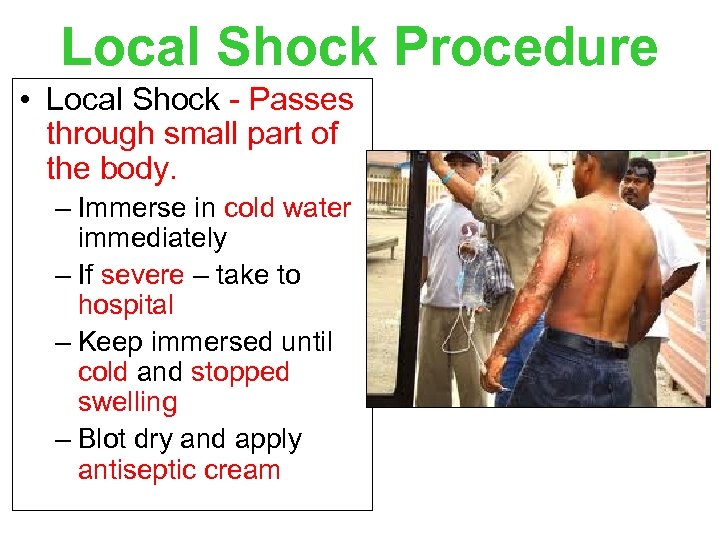 Local Shock Procedure • Local Shock - Passes through small part of the body. – Immerse in cold water immediately – If severe – take to hospital – Keep immersed until cold and stopped swelling – Blot dry and apply antiseptic cream
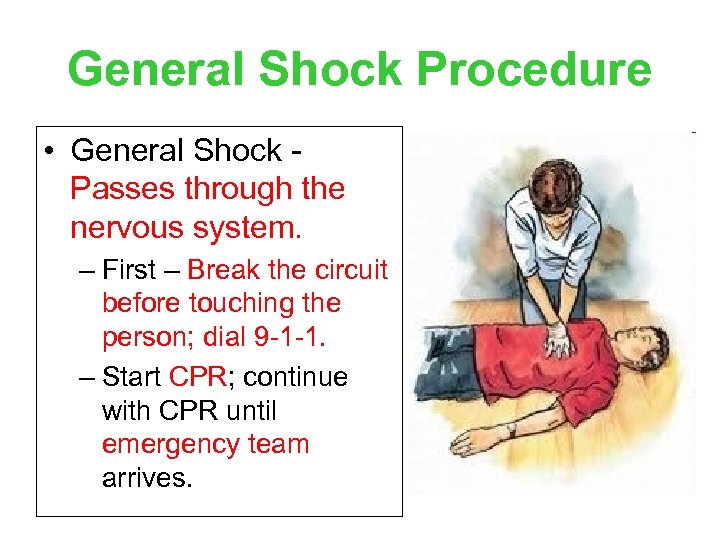 General Shock Procedure • General Shock Passes through the nervous system. – First – Break the circuit before touching the person; dial 9 -1 -1. – Start CPR; continue with CPR until emergency team arrives.
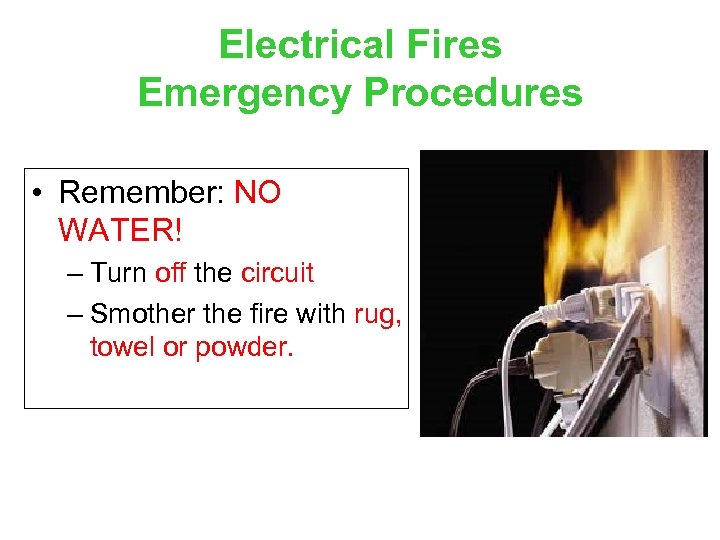 Electrical Fires Emergency Procedures • Remember: NO WATER! – Turn off the circuit – Smother the fire with rug, towel or powder.
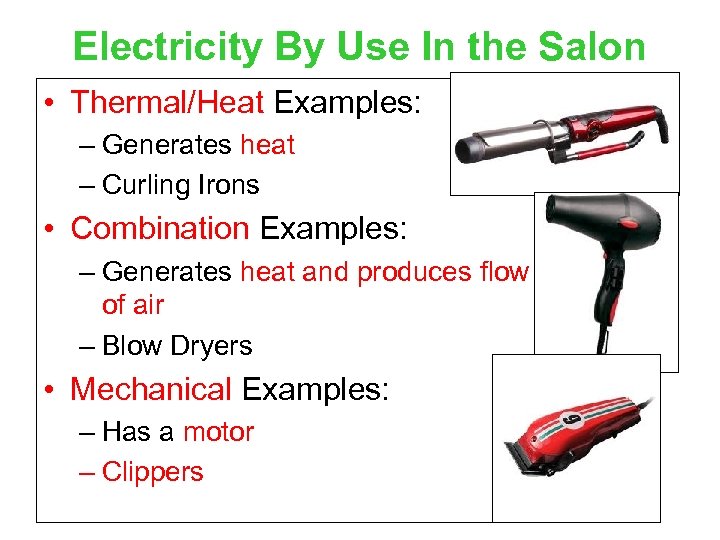 Electricity By Use In the Salon • Thermal/Heat Examples: – Generates heat – Curling Irons • Combination Examples: – Generates heat and produces flow of air – Blow Dryers • Mechanical Examples: – Has a motor – Clippers
 Electricity Talking Points
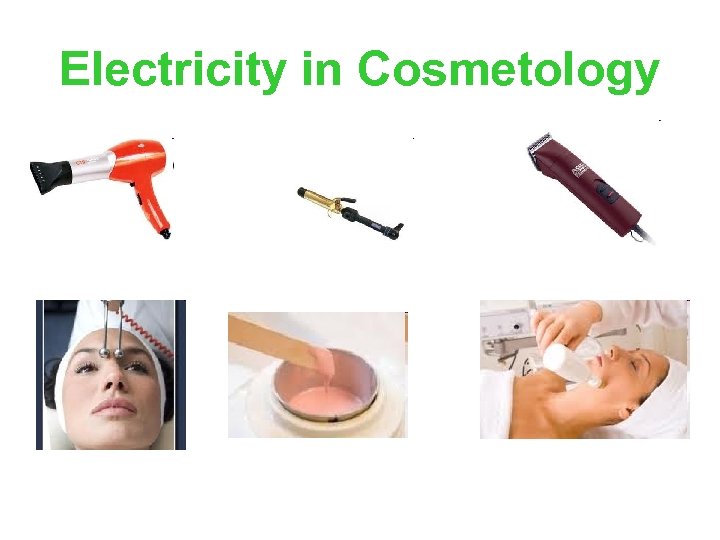 Electricity in Cosmetology
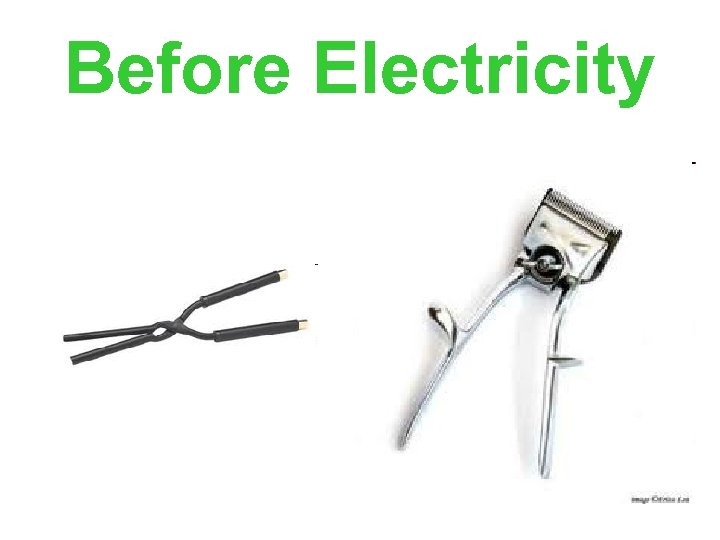 Before Electricity
 Effects of Electric Current • Heating – More resistance = more heat – Heating elements heat up when current flows through. • Mechanical or Magnetic – Push – pull effect causes motor to turn • Electrochemical – Electric current travels through a water – based solution to produce relaxing or stimulating effects.
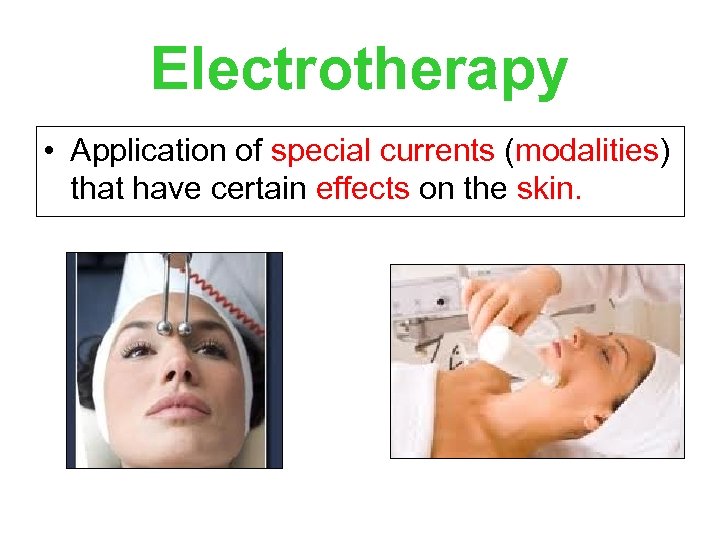 Electrotherapy • Application of special currents (modalities) that have certain effects on the skin.
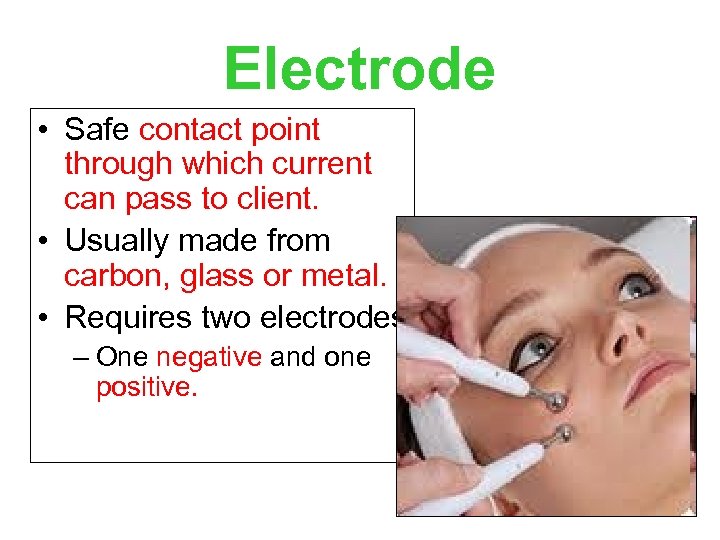 Electrode • Safe contact point through which current can pass to client. • Usually made from carbon, glass or metal. • Requires two electrodes. – One negative and one positive.
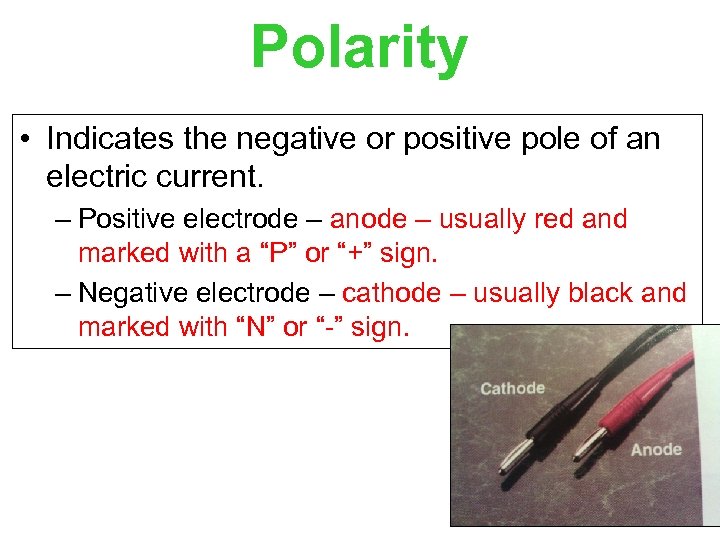 Polarity • Indicates the negative or positive pole of an electric current. – Positive electrode – anode – usually red and marked with a “P” or “+” sign. – Negative electrode – cathode – usually black and marked with “N” or “-” sign.
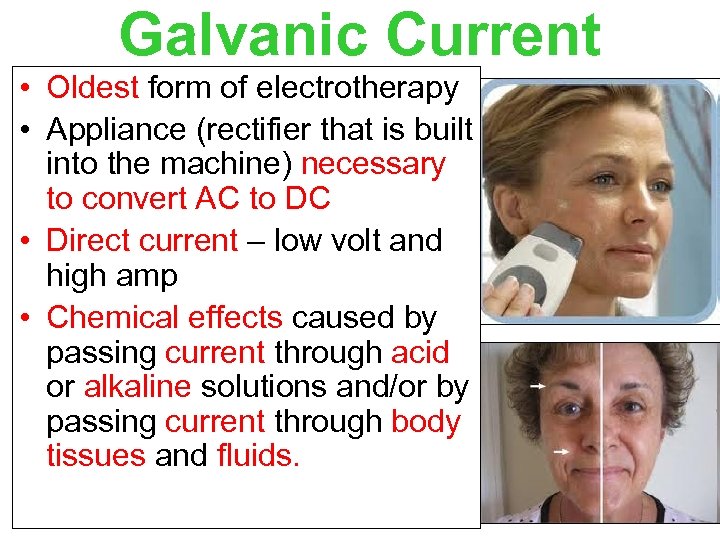 Galvanic Current • Oldest form of electrotherapy • Appliance (rectifier that is built into the machine) necessary to convert AC to DC • Direct current – low volt and high amp • Chemical effects caused by passing current through acid or alkaline solutions and/or by passing current through body tissues and fluids.
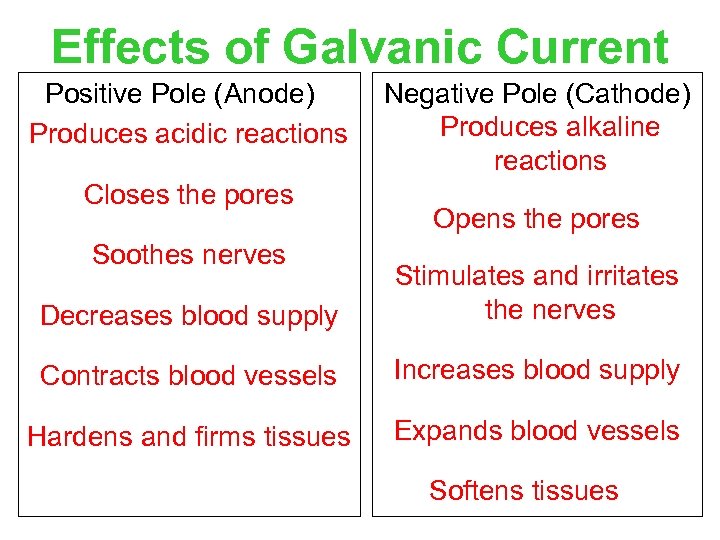 Effects of Galvanic Current Positive Pole (Anode) Produces acidic reactions Closes the pores Soothes nerves Negative Pole (Cathode) Produces alkaline reactions Opens the pores Decreases blood supply Stimulates and irritates the nerves Contracts blood vessels Increases blood supply Hardens and firms tissues Expands blood vessels Softens tissues
 How to Use Galvanic Current
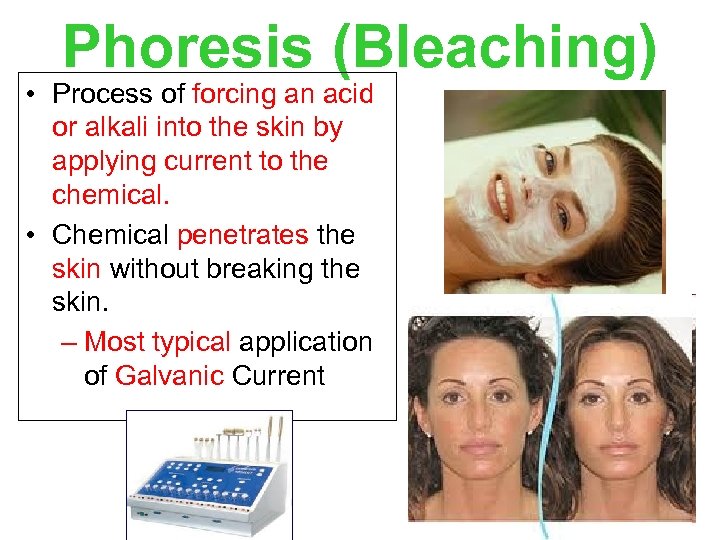 Phoresis (Bleaching) • Process of forcing an acid or alkali into the skin by applying current to the chemical. • Chemical penetrates the skin without breaking the skin. – Most typical application of Galvanic Current
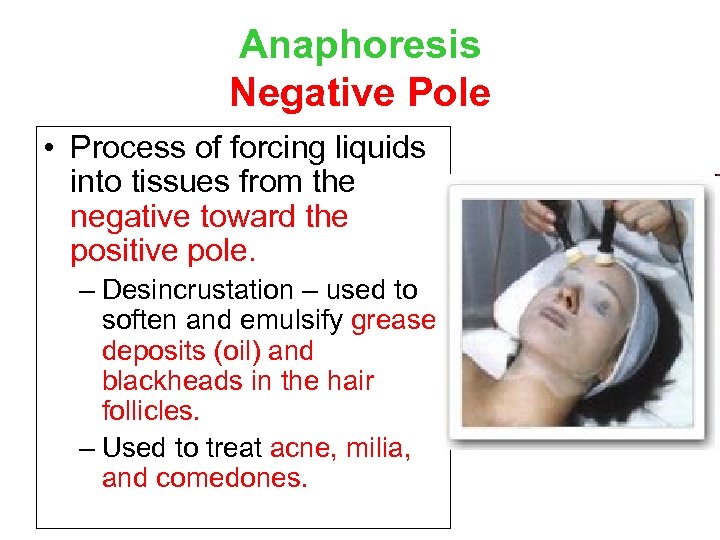 Anaphoresis Negative Pole • Process of forcing liquids into tissues from the negative toward the positive pole. – Desincrustation – used to soften and emulsify grease deposits (oil) and blackheads in the hair follicles. – Used to treat acne, milia, and comedones.
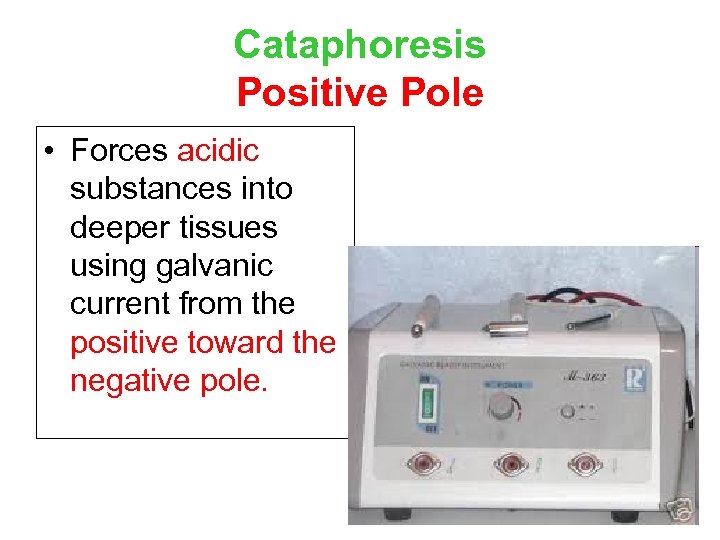 Cataphoresis Positive Pole • Forces acidic substances into deeper tissues using galvanic current from the positive toward the negative pole.
 Caution!! Do not use negative galvanic current on skin with broken capillaries or pustular acne conditions, or on a client with high blood pressure or metal implants!!
 How to Use Phoresis
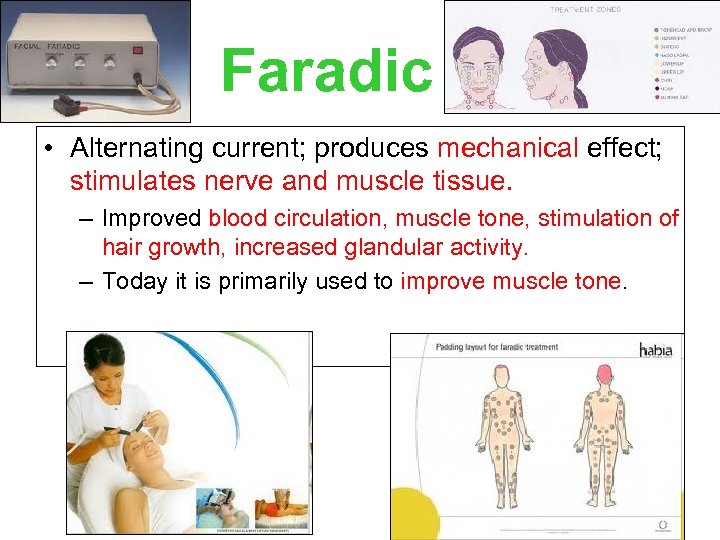 Faradic • Alternating current; produces mechanical effect; stimulates nerve and muscle tissue. – Improved blood circulation, muscle tone, stimulation of hair growth, increased glandular activity. – Today it is primarily used to improve muscle tone.
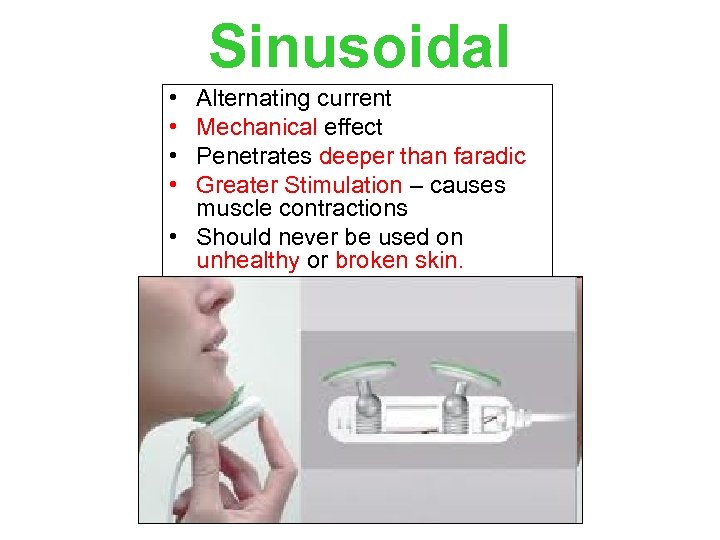 Sinusoidal • • Alternating current Mechanical effect Penetrates deeper than faradic Greater Stimulation – causes muscle contractions • Should never be used on unhealthy or broken skin.
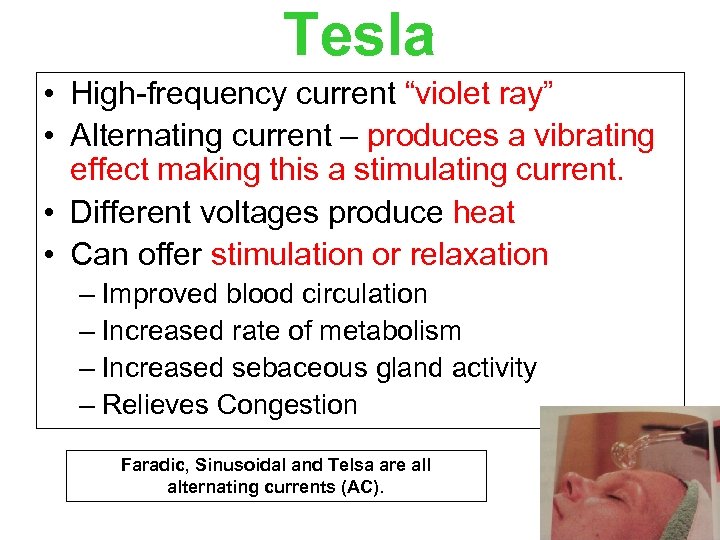 Tesla • High-frequency current “violet ray” • Alternating current – produces a vibrating effect making this a stimulating current. • Different voltages produce heat • Can offer stimulation or relaxation – Improved blood circulation – Increased rate of metabolism – Increased sebaceous gland activity – Relieves Congestion Faradic, Sinusoidal and Telsa are all alternating currents (AC).
 Electrotherapy Web
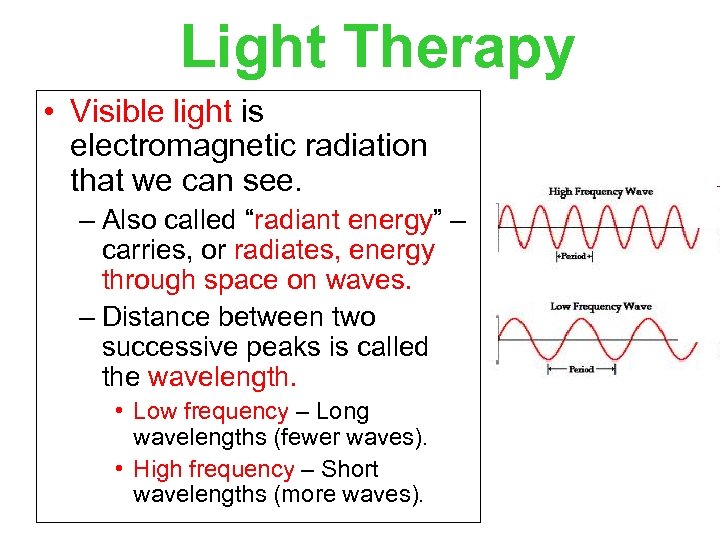 Light Therapy • Visible light is electromagnetic radiation that we can see. – Also called “radiant energy” – carries, or radiates, energy through space on waves. – Distance between two successive peaks is called the wavelength. • Low frequency – Long wavelengths (fewer waves). • High frequency – Short wavelengths (more waves).
 • Electromagnetic Spectrum – the entire range of electromagnetic radiation. – Visible light – the part of the electromagnetic spectrum that we can see. • Makes up 35% of natural sunlight. – Ultraviolet rays and Infrared rays – also forms of electomagnetic radiation. • Invisible – wavelengths are beyond the visible spectrum of light. • Makes up 65% of natural sunlight.
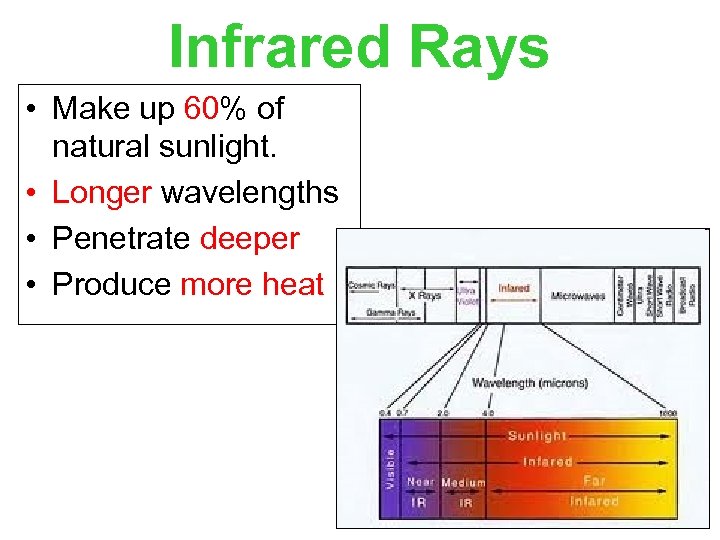 Infrared Rays • Make up 60% of natural sunlight. • Longer wavelengths • Penetrate deeper • Produce more heat
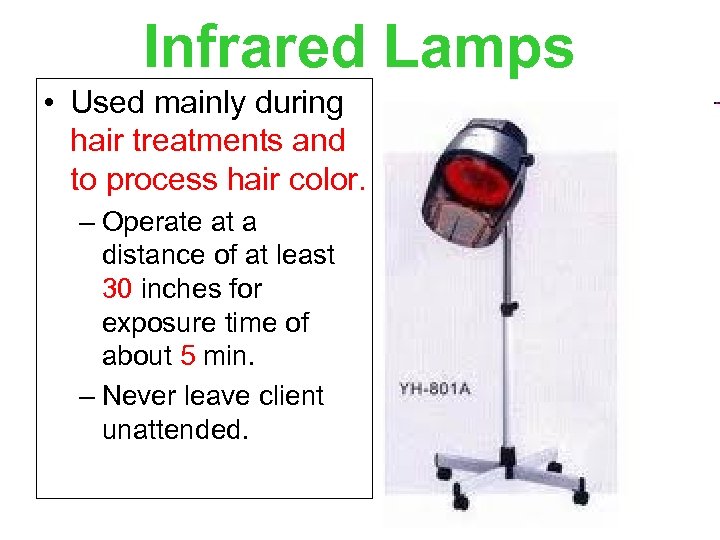 Infrared Lamps • Used mainly during hair treatments and to process hair color. – Operate at a distance of at least 30 inches for exposure time of about 5 min. – Never leave client unattended.
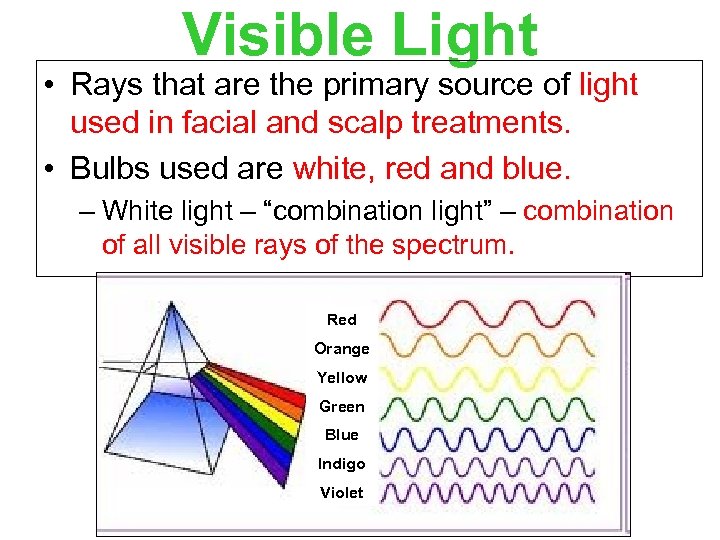 Visible Light • Rays that are the primary source of light used in facial and scalp treatments. • Bulbs used are white, red and blue. – White light – “combination light” – combination of all visible rays of the spectrum. Red Orange Yellow Green Blue Indigo Violet
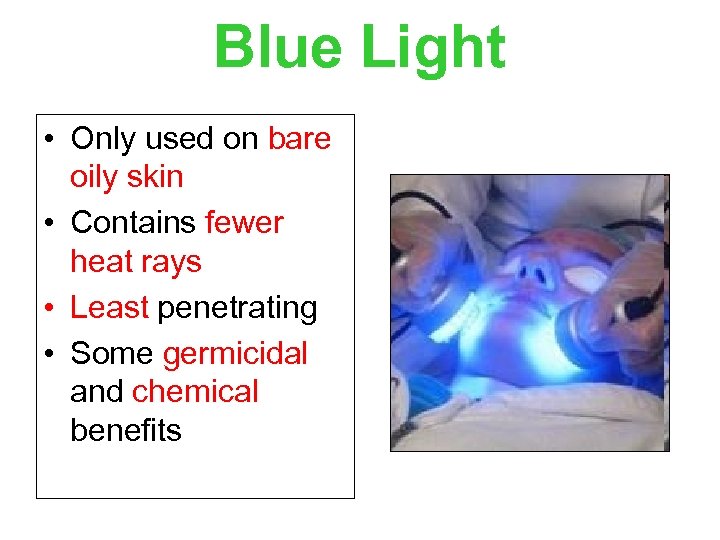 Blue Light • Only used on bare oily skin • Contains fewer heat rays • Least penetrating • Some germicidal and chemical benefits
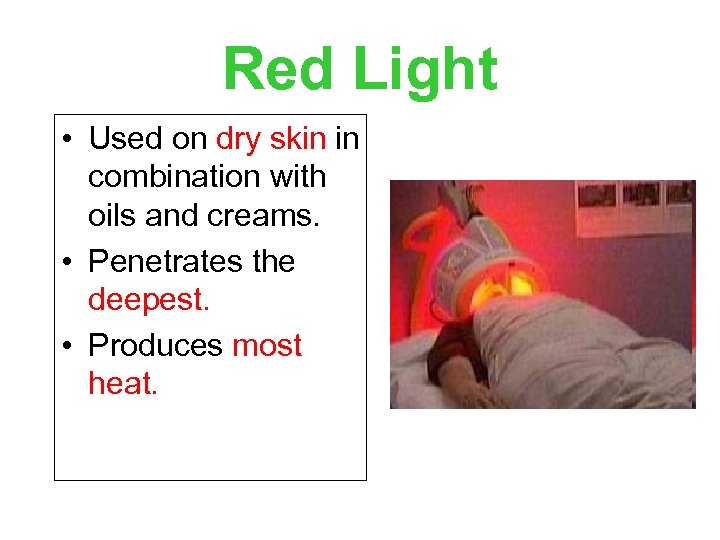 Red Light • Used on dry skin in combination with oils and creams. • Penetrates the deepest. • Produces most heat.
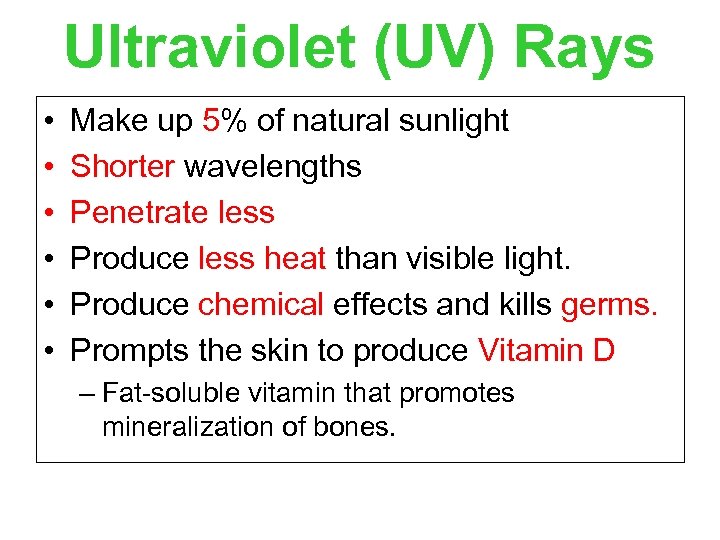 Ultraviolet (UV) Rays • • • Make up 5% of natural sunlight Shorter wavelengths Penetrate less Produce less heat than visible light. Produce chemical effects and kills germs. Prompts the skin to produce Vitamin D – Fat-soluble vitamin that promotes mineralization of bones.
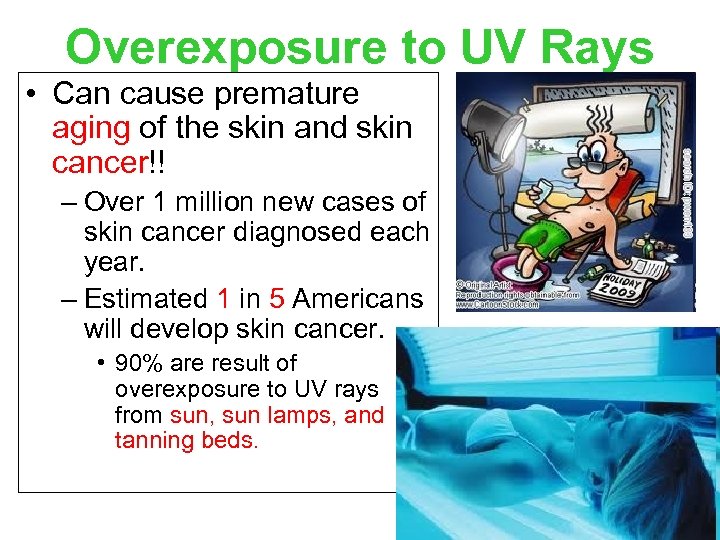 Overexposure to UV Rays • Can cause premature aging of the skin and skin cancer!! – Over 1 million new cases of skin cancer diagnosed each year. – Estimated 1 in 5 Americans will develop skin cancer. • 90% are result of overexposure to UV rays from sun, sun lamps, and tanning beds.
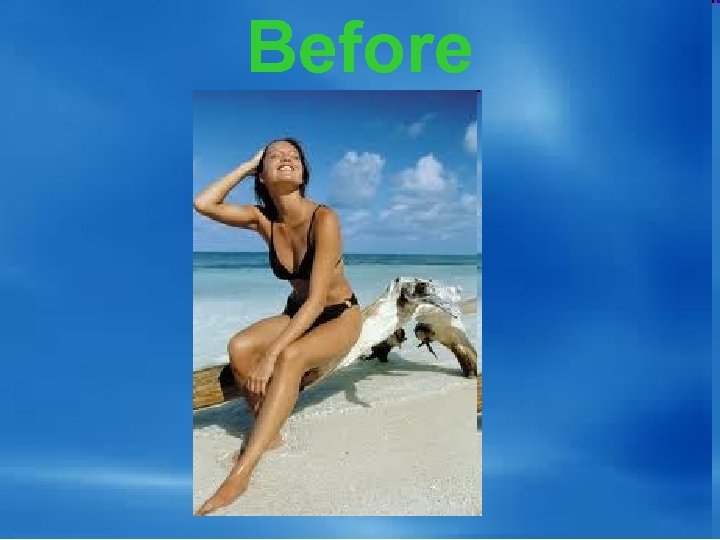 Before
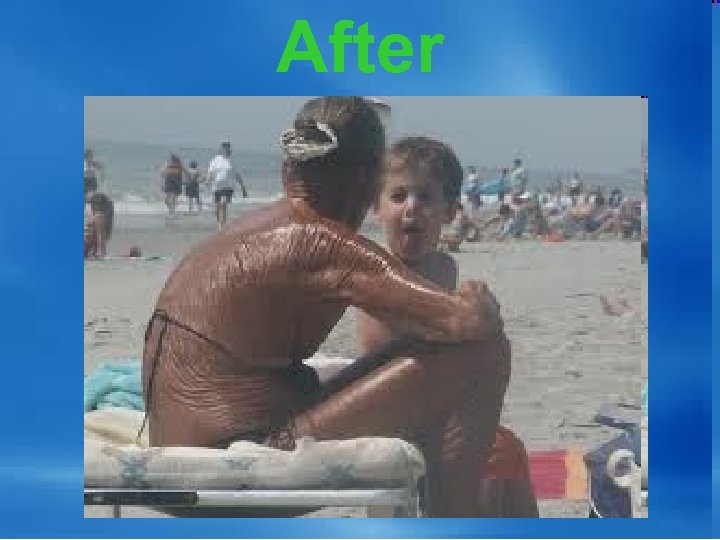 After
After
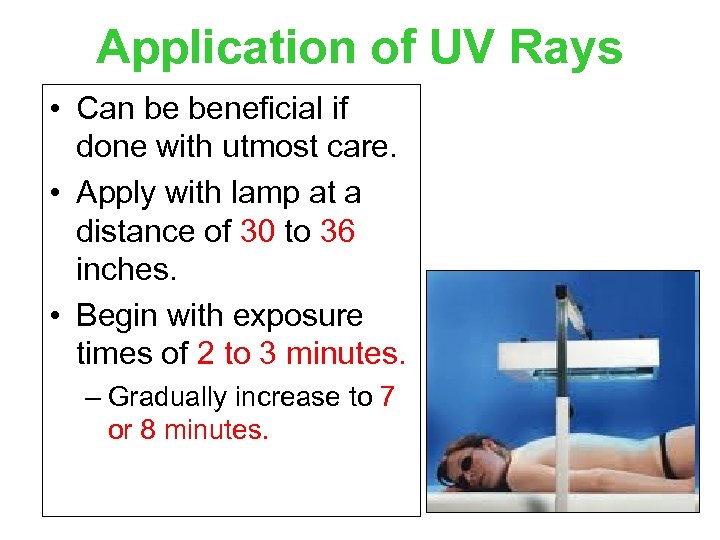 Application of UV Rays • Can be beneficial if done with utmost care. • Apply with lamp at a distance of 30 to 36 inches. • Begin with exposure times of 2 to 3 minutes. – Gradually increase to 7 or 8 minutes.
 Light Therapy Web
 etirtclieyc rtitevlalou syar rutrnec beul ilhtg ldoa tucuconrd rde iltgh dfareinr arsy sauntiorsl lgtih yrptahe uiitccr nolssaidiu rplaeall wrigin ersishop ircticu rkbeaer alest allco ockhs gerlaen sohkc lcvigaan rtcuren ohaetcpelrtery