


 Скачать презентацию Electricity Natural Gas GHG Modeling Methodology
4ce627543c5243d86a608fe90c9dfa01.ppt
- Количество слайдов: 67
 Electricity & Natural Gas GHG Modeling Methodology & Key Revisions April 21 st, 2008 Snuller Price, Partner Energy and Environmental Economics, Inc. 101 Montgomery Street, Suite 1600 San Francisco, CA 94104 415 -391 -5100
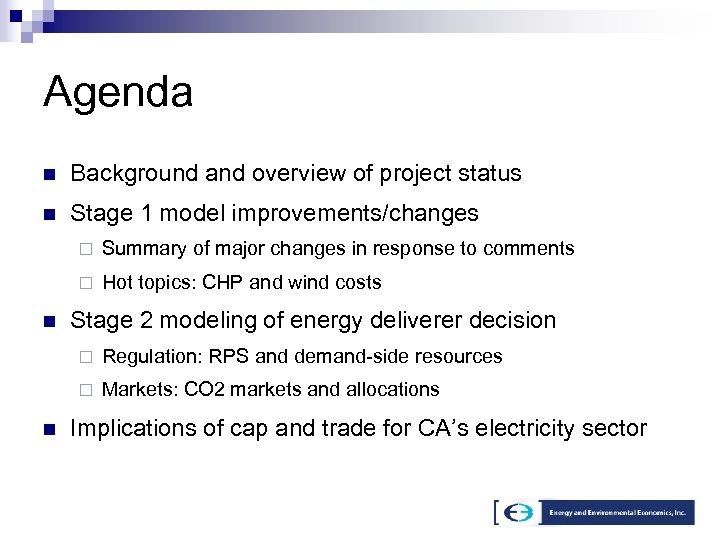 Agenda n Background and overview of project status n Stage 1 model improvements/changes ¨ ¨ n Summary of major changes in response to comments Hot topics: CHP and wind costs Stage 2 modeling of energy deliverer decision ¨ ¨ n Regulation: RPS and demand-side resources Markets: CO 2 markets and allocations Implications of cap and trade for CA’s electricity sector
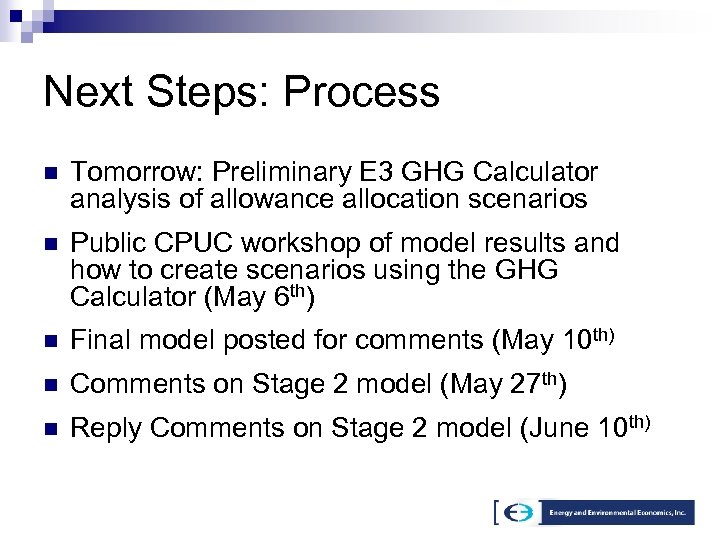 Next Steps: Process n Tomorrow: Preliminary E 3 GHG Calculator analysis of allowance allocation scenarios n Public CPUC workshop of model results and how to create scenarios using the GHG Calculator (May 6 th) n Final model posted for comments (May 10 th) n Comments on Stage 2 model (May 27 th) n Reply Comments on Stage 2 model (June 10 th)
 Energy and Environmental Economics, Inc. (E 3) n San Francisco-based firm established in 1993 n Electric and natural gas utility sectors n Practice areas ¨ Energy efficiency and building standards ¨ Distributed ¨ Integrated generation, demand response and CHP resource planning ¨ Transmission ¨ Retail planning and pricing rate design
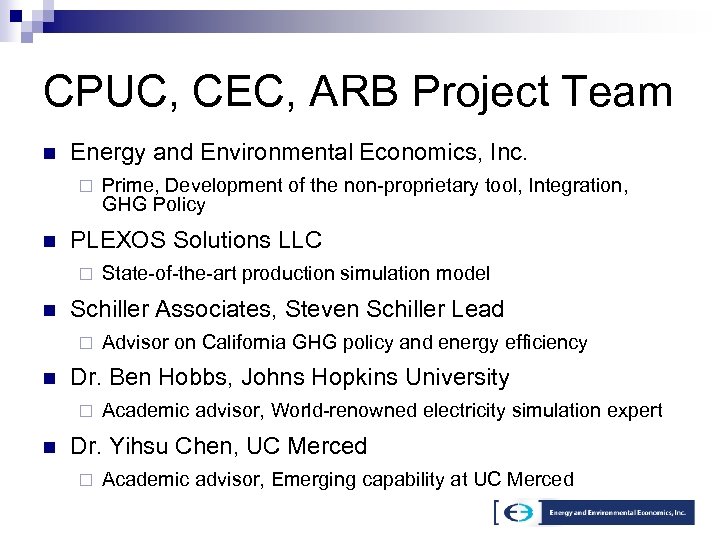 CPUC, CEC, ARB Project Team n Energy and Environmental Economics, Inc. ¨ n PLEXOS Solutions LLC ¨ n Advisor on California GHG policy and energy efficiency Dr. Ben Hobbs, Johns Hopkins University ¨ n State-of-the-art production simulation model Schiller Associates, Steven Schiller Lead ¨ n Prime, Development of the non-proprietary tool, Integration, GHG Policy Academic advisor, World-renowned electricity simulation expert Dr. Yihsu Chen, UC Merced ¨ Academic advisor, Emerging capability at UC Merced
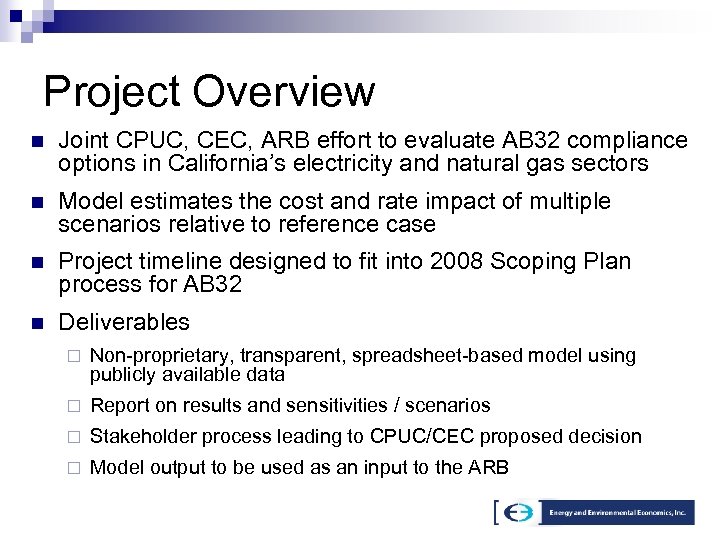 Project Overview n Joint CPUC, CEC, ARB effort to evaluate AB 32 compliance options in California’s electricity and natural gas sectors n Model estimates the cost and rate impact of multiple scenarios relative to reference case n Project timeline designed to fit into 2008 Scoping Plan process for AB 32 n Deliverables ¨ Non-proprietary, transparent, spreadsheet-based model using publicly available data ¨ Report on results and sensitivities / scenarios ¨ Stakeholder process leading to CPUC/CEC proposed decision ¨ Model output to be used as an input to the ARB
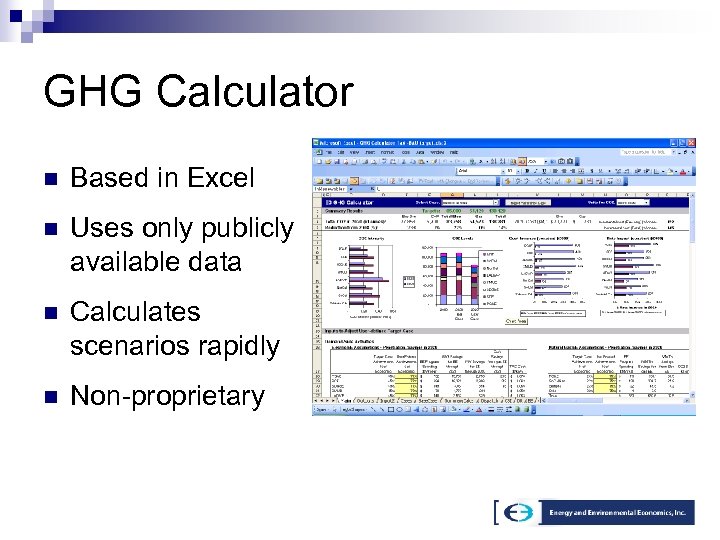 GHG Calculator n Based in Excel n Uses only publicly available data n Calculates scenarios rapidly n Non-proprietary
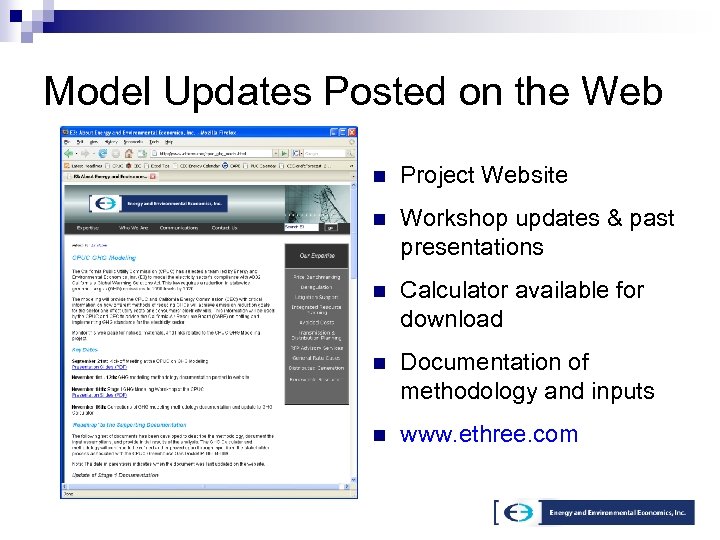 Model Updates Posted on the Web n Project Website n Workshop updates & past presentations n Calculator available for download n Documentation of methodology and inputs n www. ethree. com
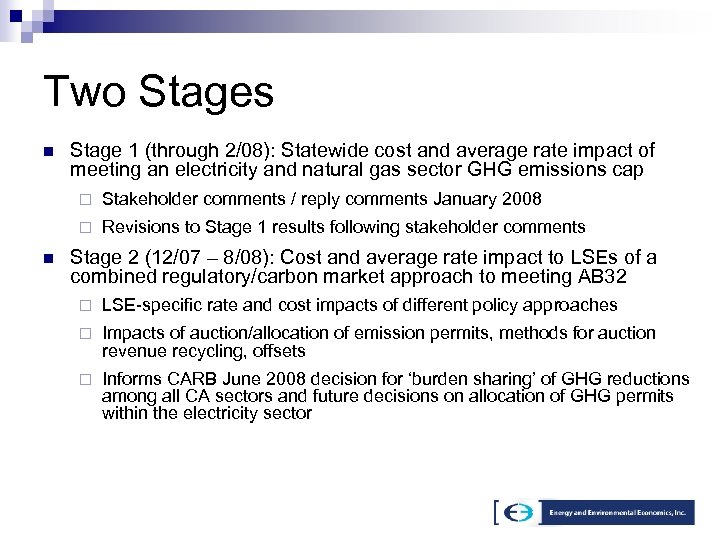 Two Stages n Stage 1 (through 2/08): Statewide cost and average rate impact of meeting an electricity and natural gas sector GHG emissions cap ¨ ¨ n Stakeholder comments / reply comments January 2008 Revisions to Stage 1 results following stakeholder comments Stage 2 (12/07 – 8/08): Cost and average rate impact to LSEs of a combined regulatory/carbon market approach to meeting AB 32 ¨ LSE-specific rate and cost impacts of different policy approaches ¨ Impacts of auction/allocation of emission permits, methods for auction revenue recycling, offsets ¨ Informs CARB June 2008 decision for ‘burden sharing’ of GHG reductions among all CA sectors and future decisions on allocation of GHG permits within the electricity sector
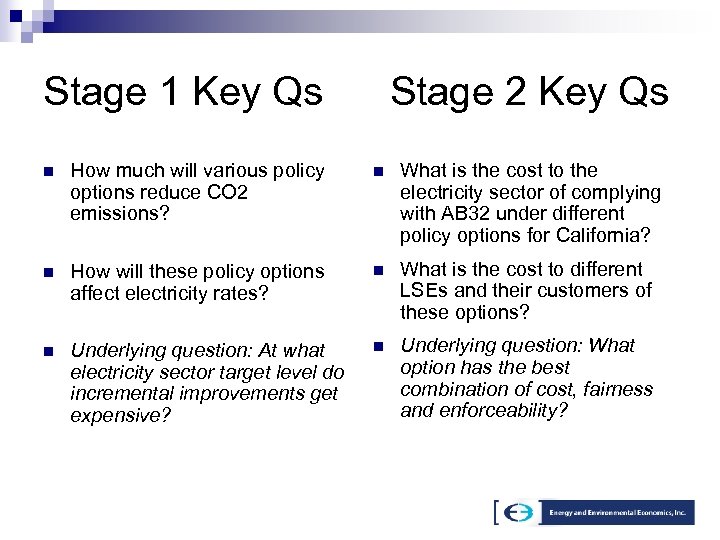 Stage 1 Key Qs Stage 2 Key Qs n How much will various policy options reduce CO 2 emissions? n What is the cost to the electricity sector of complying with AB 32 under different policy options for California? n How will these policy options affect electricity rates? n What is the cost to different LSEs and their customers of these options? n Underlying question: At what electricity sector target level do incremental improvements get expensive? n Underlying question: What option has the best combination of cost, fairness and enforceability?
 Stage 1 Review and Revisions based on Party Comment
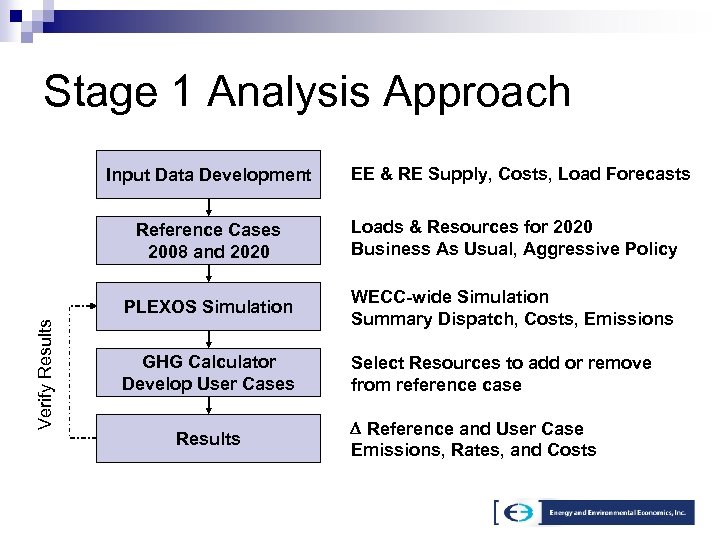 Stage 1 Analysis Approach Input Data Development EE & RE Supply, Costs, Load Forecasts Loads & Resources for 2020 Business As Usual, Aggressive Policy PLEXOS Simulation Verify Results Reference Cases 2008 and 2020 WECC-wide Simulation Summary Dispatch, Costs, Emissions GHG Calculator Develop User Cases Select Resources to add or remove from reference case Results D Reference and User Case Emissions, Rates, and Costs
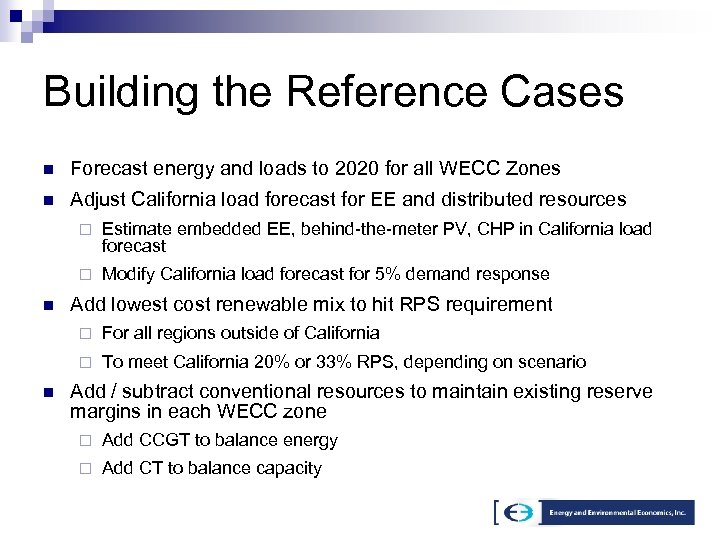 Building the Reference Cases n Forecast energy and loads to 2020 for all WECC Zones n Adjust California load forecast for EE and distributed resources ¨ ¨ n Estimate embedded EE, behind-the-meter PV, CHP in California load forecast Modify California load forecast for 5% demand response Add lowest cost renewable mix to hit RPS requirement ¨ ¨ n For all regions outside of California To meet California 20% or 33% RPS, depending on scenario Add / subtract conventional resources to maintain existing reserve margins in each WECC zone ¨ Add CCGT to balance energy ¨ Add CT to balance capacity
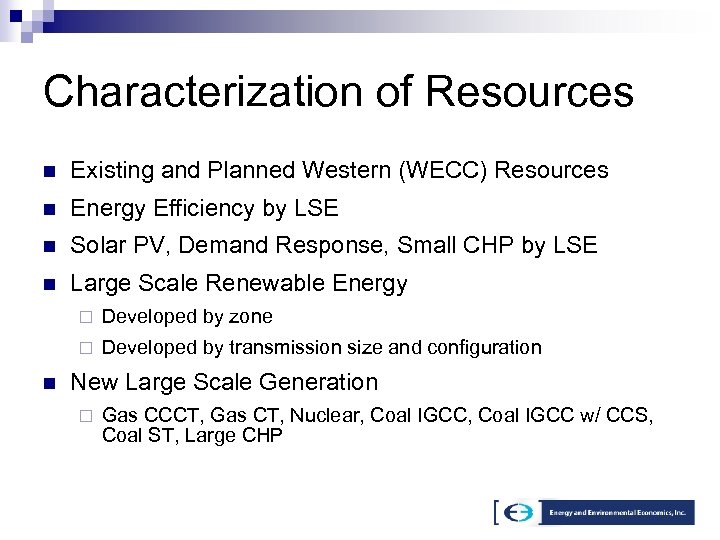 Characterization of Resources n Existing and Planned Western (WECC) Resources n Energy Efficiency by LSE n Solar PV, Demand Response, Small CHP by LSE n Large Scale Renewable Energy ¨ ¨ n Developed by zone Developed by transmission size and configuration New Large Scale Generation ¨ Gas CCCT, Gas CT, Nuclear, Coal IGCC w/ CCS, Coal ST, Large CHP
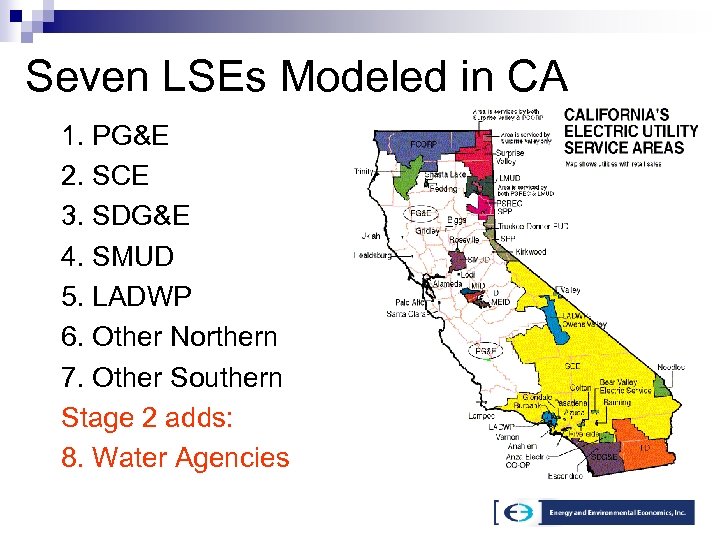 Seven LSEs Modeled in CA 1. PG&E 2. SCE 3. SDG&E 4. SMUD 5. LADWP 6. Other Northern 7. Other Southern Stage 2 adds: 8. Water Agencies
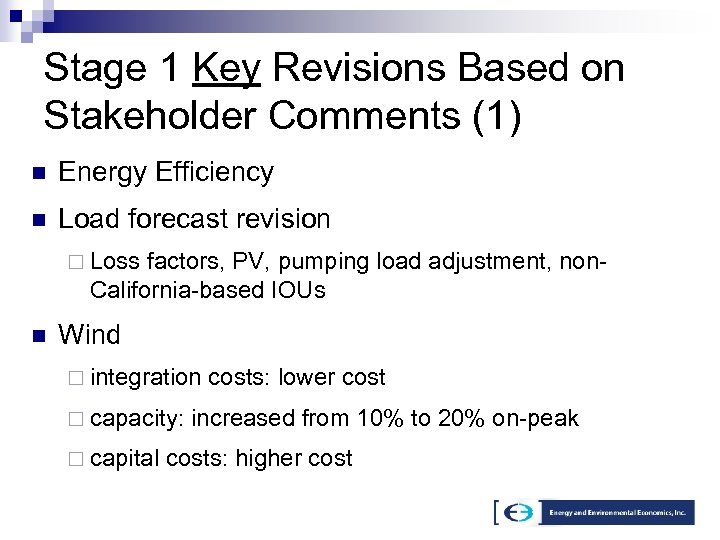 Stage 1 Key Revisions Based on Stakeholder Comments (1) n Energy Efficiency n Load forecast revision ¨ Loss factors, PV, pumping load adjustment, non. California-based IOUs n Wind ¨ integration ¨ capacity: ¨ capital costs: lower cost increased from 10% to 20% on-peak costs: higher cost
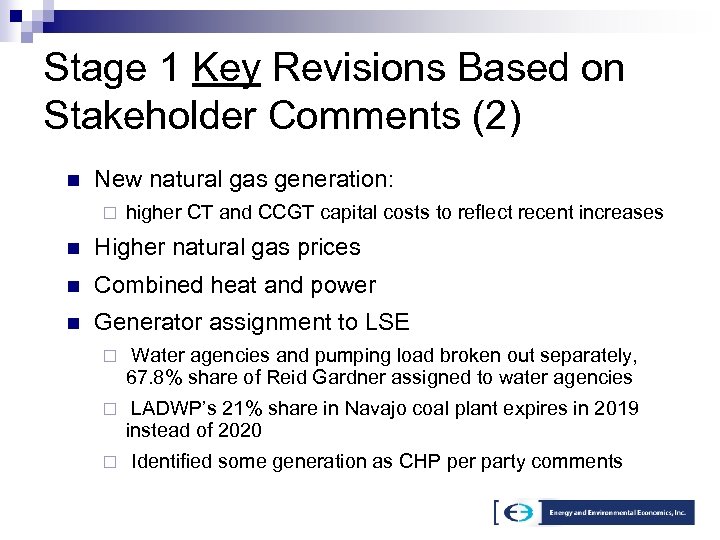 Stage 1 Key Revisions Based on Stakeholder Comments (2) n New natural gas generation: ¨ higher CT and CCGT capital costs to reflect recent increases n Higher natural gas prices n Combined heat and power n Generator assignment to LSE ¨ Water agencies and pumping load broken out separately, 67. 8% share of Reid Gardner assigned to water agencies ¨ LADWP’s 21% share in Navajo coal plant expires in 2019 instead of 2020 ¨ Identified some generation as CHP per party comments
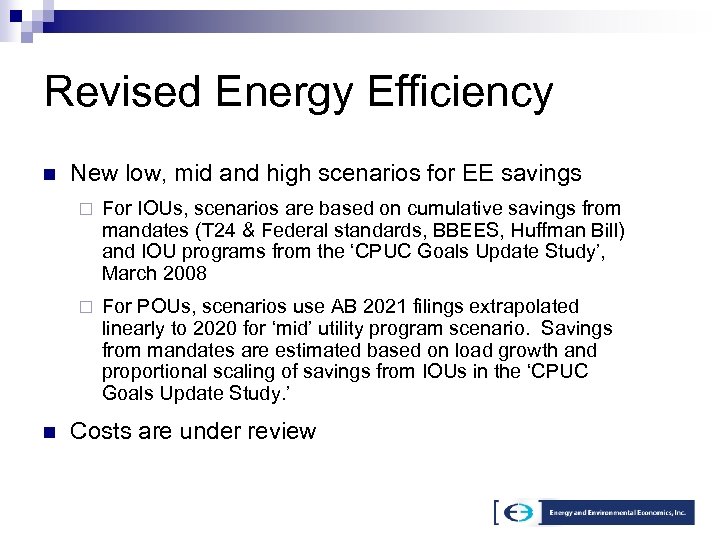 Revised Energy Efficiency n New low, mid and high scenarios for EE savings ¨ ¨ n For IOUs, scenarios are based on cumulative savings from mandates (T 24 & Federal standards, BBEES, Huffman Bill) and IOU programs from the ‘CPUC Goals Update Study’, March 2008 For POUs, scenarios use AB 2021 filings extrapolated linearly to 2020 for ‘mid’ utility program scenario. Savings from mandates are estimated based on load growth and proportional scaling of savings from IOUs in the ‘CPUC Goals Update Study. ’ Costs are under review
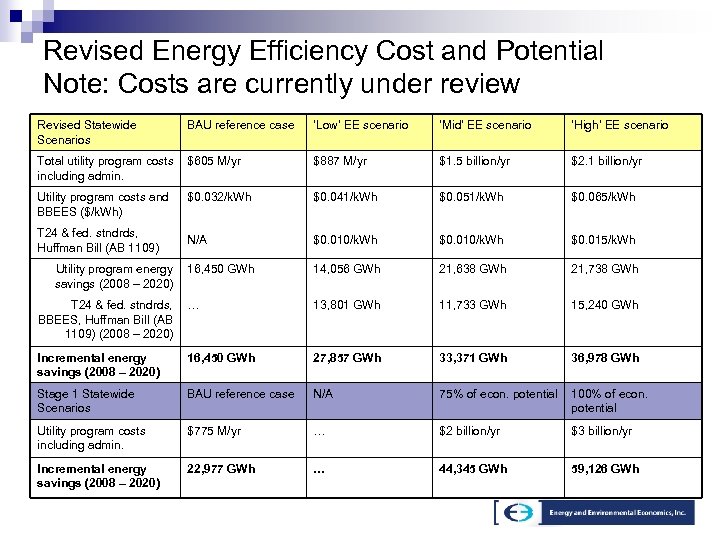 Revised Energy Efficiency Cost and Potential Note: Costs are currently under review Revised Statewide Scenarios BAU reference case ‘Low’ EE scenario ‘Mid’ EE scenario ‘High’ EE scenario Total utility program costs including admin. $605 M/yr $887 M/yr $1. 5 billion/yr $2. 1 billion/yr Utility program costs and BBEES ($/k. Wh) $0. 032/k. Wh $0. 041/k. Wh $0. 051/k. Wh $0. 065/k. Wh N/A $0. 010/k. Wh $0. 015/k. Wh 16, 450 GWh 14, 056 GWh 21, 638 GWh 21, 738 GWh T 24 & fed. stndrds, BBEES, Huffman Bill (AB 1109) (2008 – 2020) … 13, 801 GWh 11, 733 GWh 15, 240 GWh Incremental energy savings (2008 – 2020) 16, 450 GWh 27, 857 GWh 33, 371 GWh 36, 978 GWh Stage 1 Statewide Scenarios BAU reference case N/A 75% of econ. potential 100% of econ. potential Utility program costs including admin. $775 M/yr … $2 billion/yr $3 billion/yr Incremental energy savings (2008 – 2020) 22, 977 GWh … 44, 345 GWh 59, 126 GWh T 24 & fed. stndrds, Huffman Bill (AB 1109) Utility program energy savings (2008 – 2020)
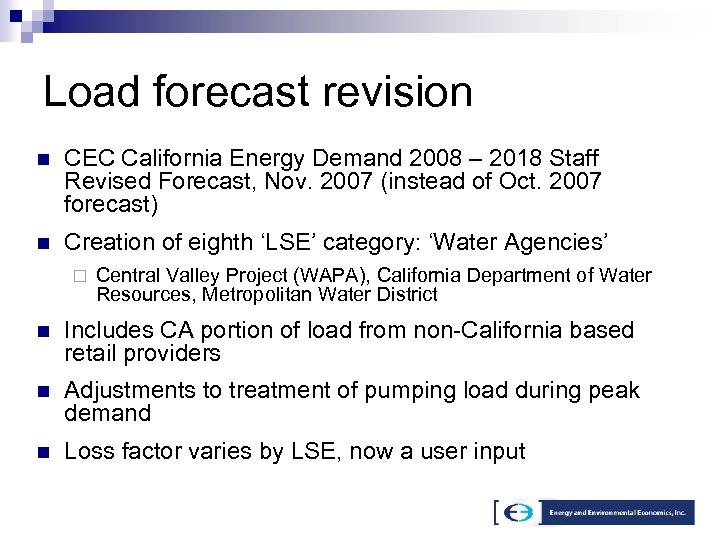 Load forecast revision n CEC California Energy Demand 2008 – 2018 Staff Revised Forecast, Nov. 2007 (instead of Oct. 2007 forecast) n Creation of eighth ‘LSE’ category: ‘Water Agencies’ ¨ Central Valley Project (WAPA), California Department of Water Resources, Metropolitan Water District n Includes CA portion of load from non-California based retail providers n Adjustments to treatment of pumping load during peak demand n Loss factor varies by LSE, now a user input
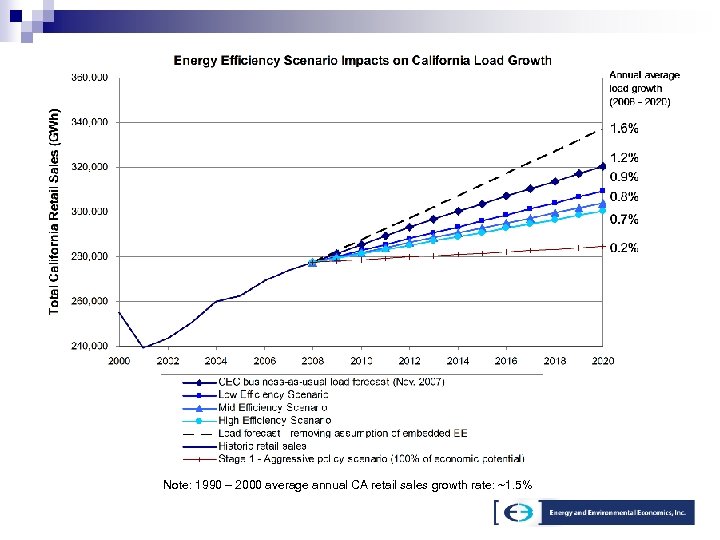 Note: 1990 – 2000 average annual CA retail sales growth rate: ~1. 5%
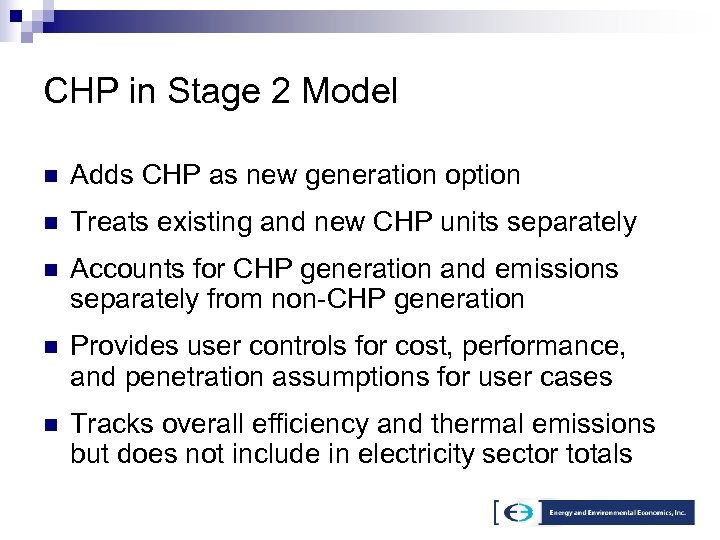 CHP in Stage 2 Model n Adds CHP as new generation option n Treats existing and new CHP units separately n Accounts for CHP generation and emissions separately from non-CHP generation n Provides user controls for cost, performance, and penetration assumptions for user cases n Tracks overall efficiency and thermal emissions but does not include in electricity sector totals
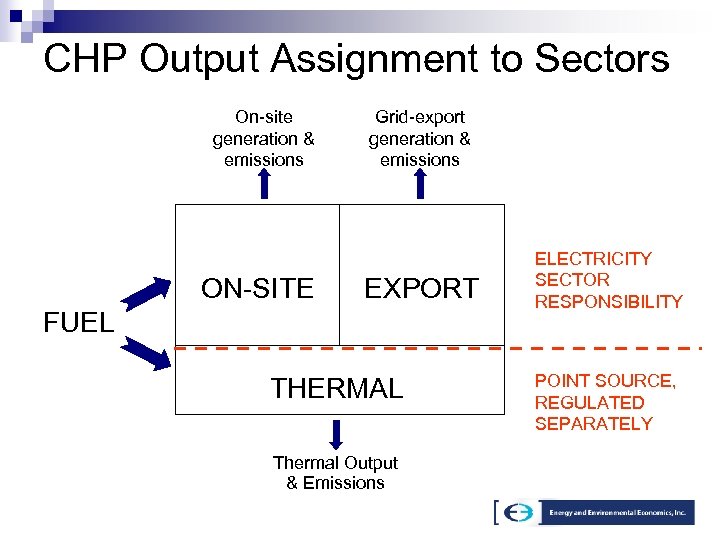 CHP Output Assignment to Sectors On-site generation & emissions ON-SITE Grid-export generation & emissions EXPORT FUEL THERMAL Thermal Output & Emissions ELECTRICITY SECTOR RESPONSIBILITY POINT SOURCE, REGULATED SEPARATELY
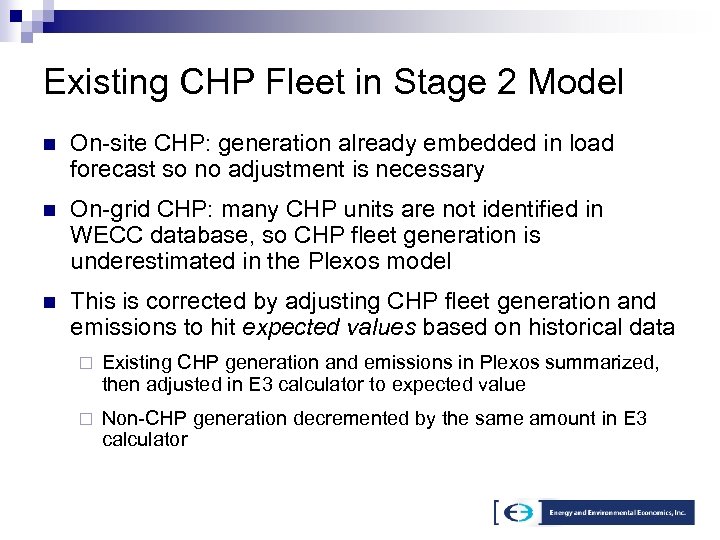 Existing CHP Fleet in Stage 2 Model n On-site CHP: generation already embedded in load forecast so no adjustment is necessary n On-grid CHP: many CHP units are not identified in WECC database, so CHP fleet generation is underestimated in the Plexos model n This is corrected by adjusting CHP fleet generation and emissions to hit expected values based on historical data ¨ Existing CHP generation and emissions in Plexos summarized, then adjusted in E 3 calculator to expected value ¨ Non-CHP generation decremented by the same amount in E 3 calculator
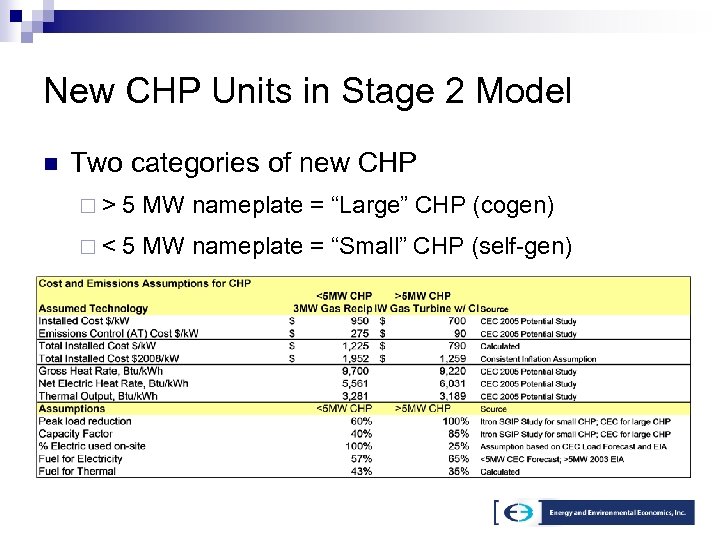 New CHP Units in Stage 2 Model n Two categories of new CHP ¨> 5 MW nameplate = “Large” CHP (cogen) ¨< 5 MW nameplate = “Small” CHP (self-gen)
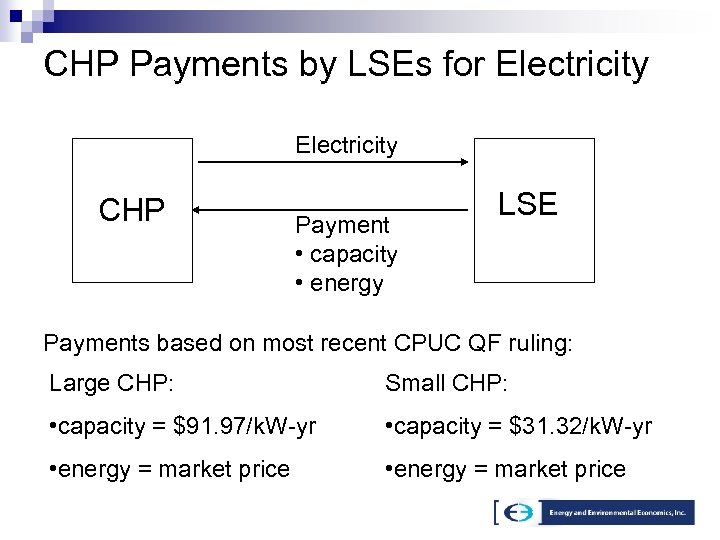 CHP Payments by LSEs for Electricity CHP Payment • capacity • energy LSE Payments based on most recent CPUC QF ruling: Large CHP: Small CHP: • capacity = $91. 97/k. W-yr • capacity = $31. 32/k. W-yr • energy = market price
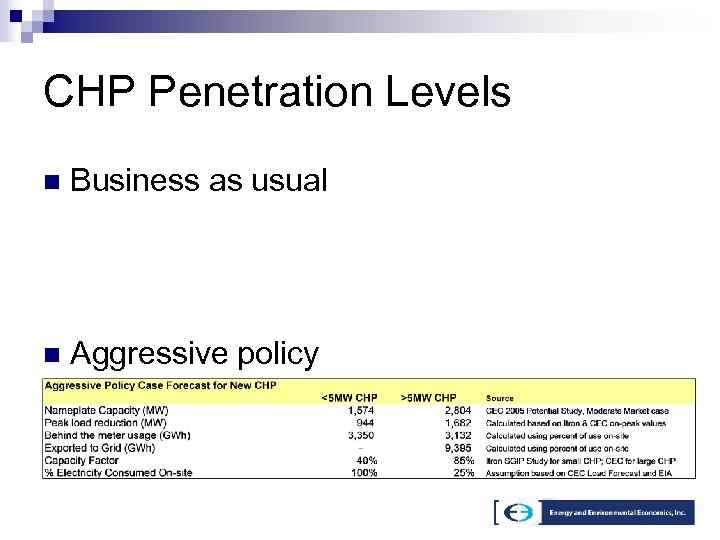 CHP Penetration Levels n Business as usual n Aggressive policy
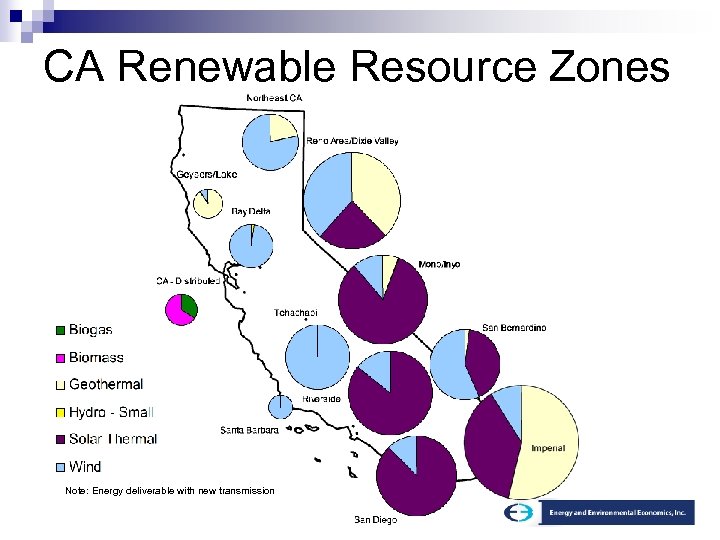 CA Renewable Resource Zones Note: Energy deliverable with new transmission
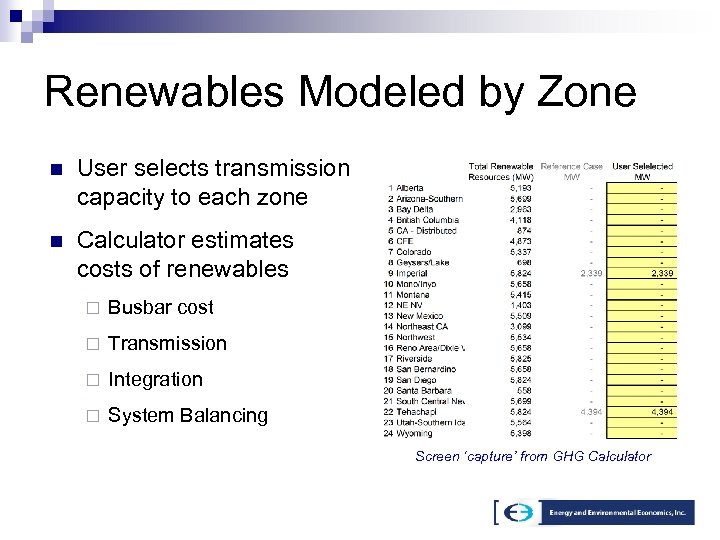 Renewables Modeled by Zone n User selects transmission capacity to each zone n Calculator estimates costs of renewables ¨ Busbar cost ¨ Transmission ¨ Integration ¨ System Balancing Screen ‘capture’ from GHG Calculator
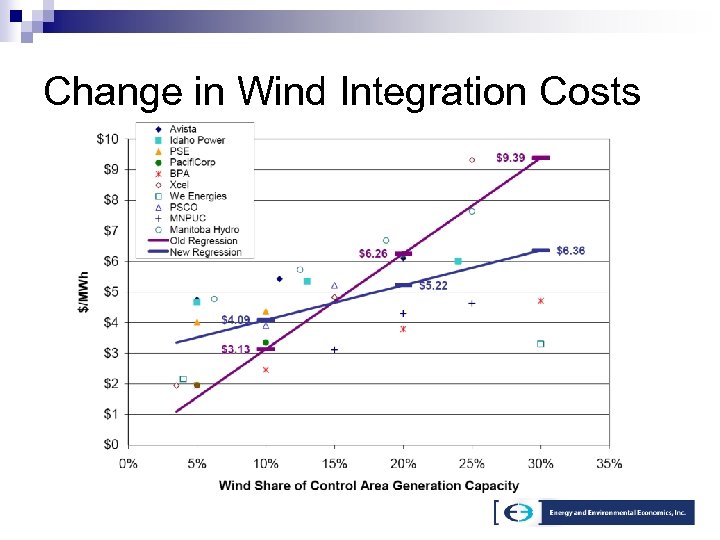 Change in Wind Integration Costs
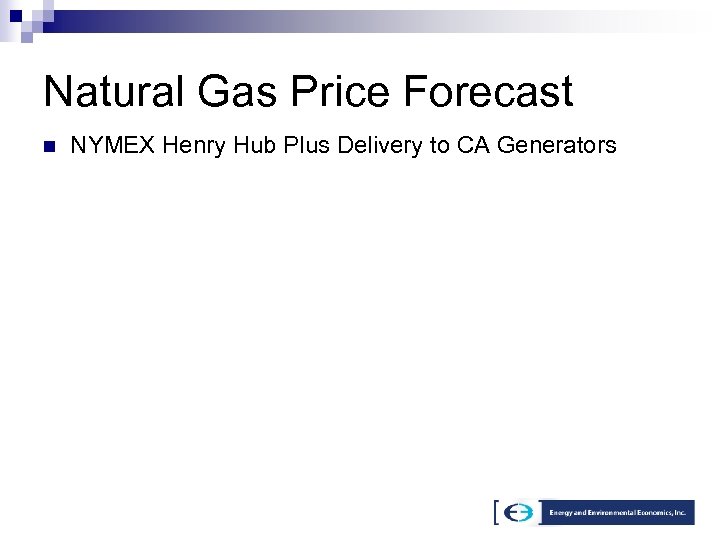 Natural Gas Price Forecast n NYMEX Henry Hub Plus Delivery to CA Generators
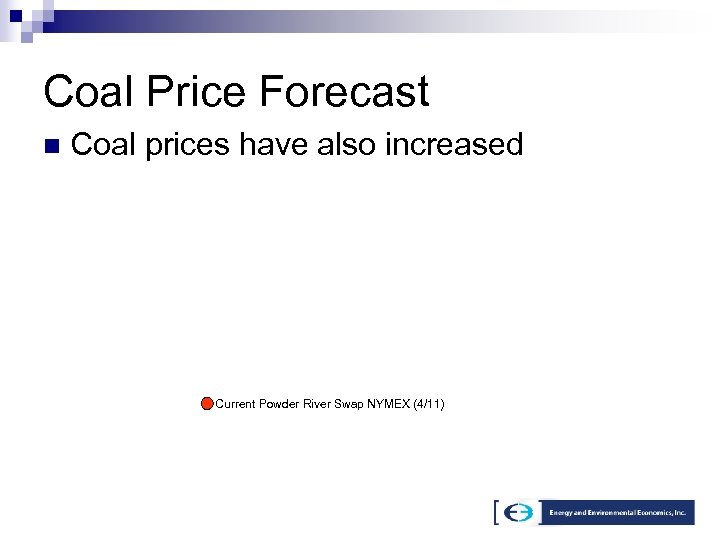 Coal Price Forecast n Coal prices have also increased Current Powder River Swap NYMEX (4/11)
 Generator Assignment n Publicly available information used to map generators to LSEs ¨ Utility-owned ¨ Known generation long term contracts n Stage 1 assignments posted for LSEs to review n Updates incorporated into the Stage 2 model

 Recent Changes in ARB Electricity Sector Emissions Inventory n Stage 1 Model used Aug. 2007 ARB inventory as reference point for electricity sector GHG reductions n Adopted (Nov. 2007) ARB inventory is significantly different ¨ New 1990 level for electricity sector is 110. 63 MMT CO 2 e (previously: 100. 07 MMT CO 2 e) ¨ 1990 ¨ Most to 2004 increase is now ~60% smaller of the change is due to the change in the emissions factor for unspecified imports

 Stage 1 Revised Outputs
 WECC Resource Additions to 2020 n Business As Usual Case – Nameplate MW
 Detail on CA 20% RPS Development
 WECC Resource Additions to 2020 n Aggressive Policy Case, 33% RPS in CA – Nameplate MW
 Detail on CA 33% RPS Development
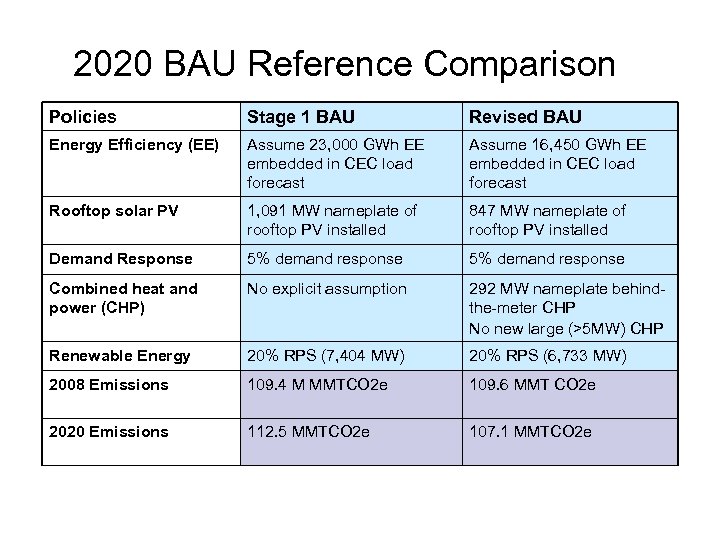 2020 BAU Reference Comparison Policies Stage 1 BAU Revised BAU Energy Efficiency (EE) Assume 23, 000 GWh EE embedded in CEC load forecast Assume 16, 450 GWh EE embedded in CEC load forecast Rooftop solar PV 1, 091 MW nameplate of rooftop PV installed 847 MW nameplate of rooftop PV installed Demand Response 5% demand response Combined heat and power (CHP) No explicit assumption 292 MW nameplate behindthe-meter CHP No new large (>5 MW) CHP Renewable Energy 20% RPS (7, 404 MW) 20% RPS (6, 733 MW) 2008 Emissions 109. 4 M MMTCO 2 e 109. 6 MMT CO 2 e 2020 Emissions 112. 5 MMTCO 2 e 107. 1 MMTCO 2 e
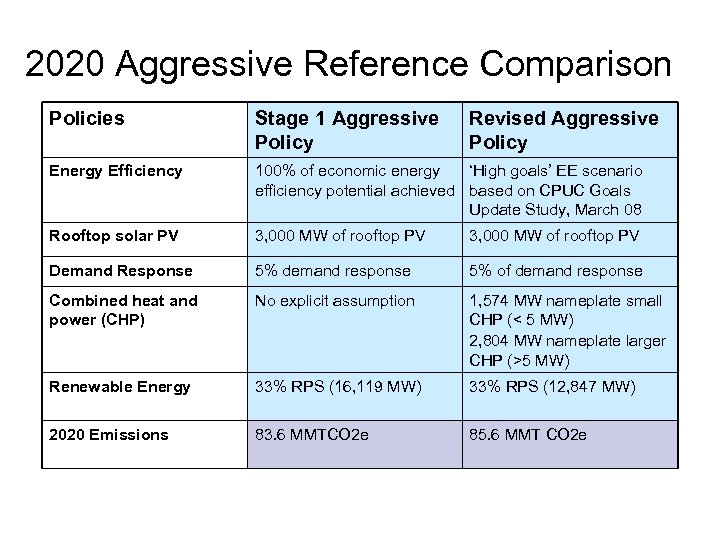 2020 Aggressive Reference Comparison Policies Stage 1 Aggressive Policy Revised Aggressive Policy Energy Efficiency 100% of economic energy ‘High goals’ EE scenario efficiency potential achieved based on CPUC Goals Update Study, March 08 Rooftop solar PV 3, 000 MW of rooftop PV Demand Response 5% demand response 5% of demand response Combined heat and power (CHP) No explicit assumption 1, 574 MW nameplate small CHP (< 5 MW) 2, 804 MW nameplate larger CHP (>5 MW) Renewable Energy 33% RPS (16, 119 MW) 33% RPS (12, 847 MW) 2020 Emissions 83. 6 MMTCO 2 e 85. 6 MMT CO 2 e
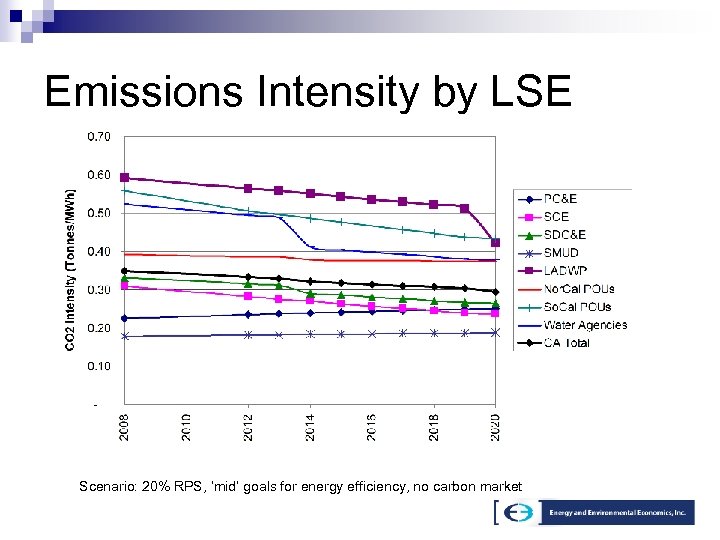 Emissions Intensity by LSE Scenario: 20% RPS, ‘mid’ goals for energy efficiency, no carbon market
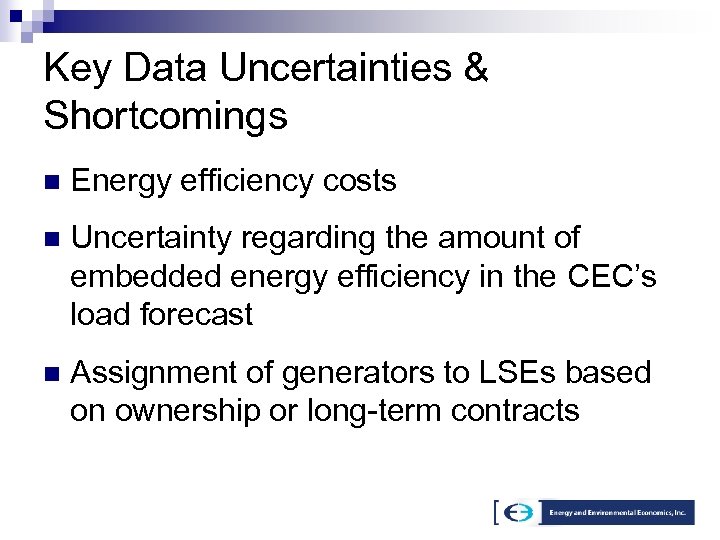 Key Data Uncertainties & Shortcomings n Energy efficiency costs n Uncertainty regarding the amount of embedded energy efficiency in the CEC’s load forecast n Assignment of generators to LSEs based on ownership or long-term contracts
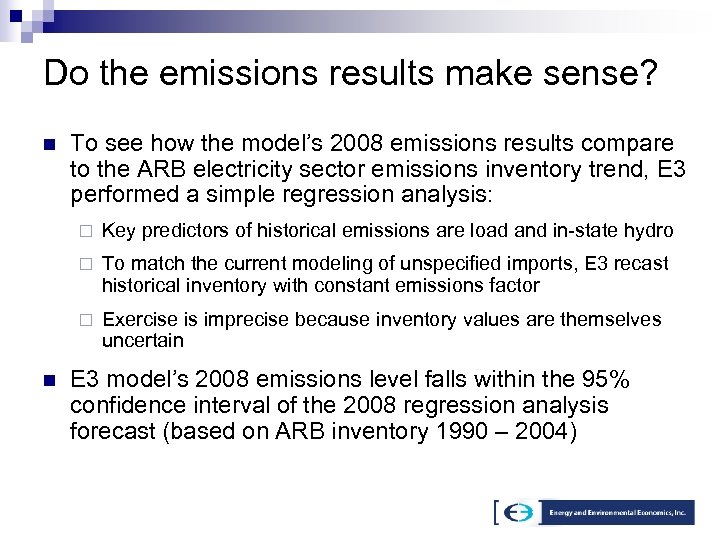 Do the emissions results make sense? n To see how the model’s 2008 emissions results compare to the ARB electricity sector emissions inventory trend, E 3 performed a simple regression analysis: ¨ ¨ To match the current modeling of unspecified imports, E 3 recast historical inventory with constant emissions factor ¨ n Key predictors of historical emissions are load and in-state hydro Exercise is imprecise because inventory values are themselves uncertain E 3 model’s 2008 emissions level falls within the 95% confidence interval of the 2008 regression analysis forecast (based on ARB inventory 1990 – 2004)
 Historical vs. Predicted Electricity Sector Emissions
 Stage 2 Approach
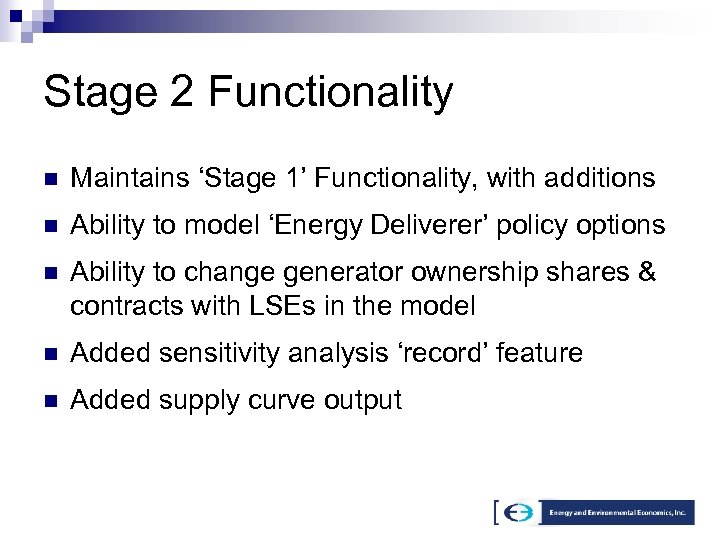 Stage 2 Functionality n Maintains ‘Stage 1’ Functionality, with additions n Ability to model ‘Energy Deliverer’ policy options n Ability to change generator ownership shares & contracts with LSEs in the model n Added sensitivity analysis ‘record’ feature n Added supply curve output
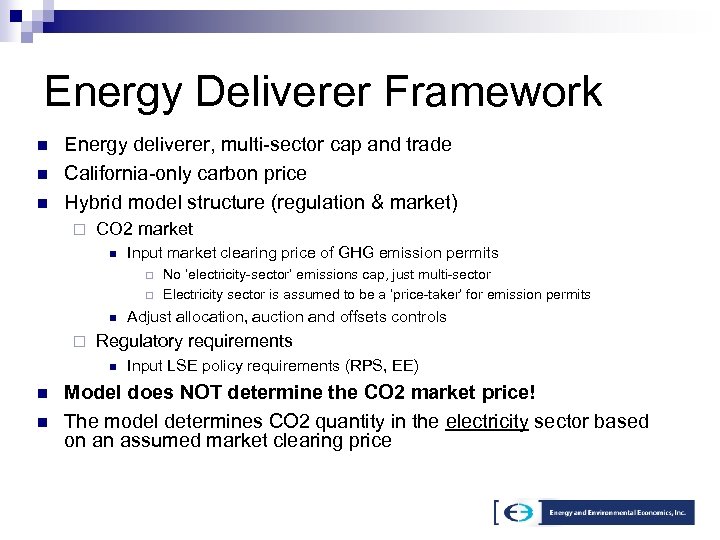 Energy Deliverer Framework n n n Energy deliverer, multi-sector cap and trade California-only carbon price Hybrid model structure (regulation & market) ¨ CO 2 market n Input market clearing price of GHG emission permits ¨ ¨ n Adjust allocation, auction and offsets controls Regulatory requirements n n No ‘electricity-sector’ emissions cap, just multi-sector Electricity sector is assumed to be a ‘price-taker’ for emission permits Input LSE policy requirements (RPS, EE) Model does NOT determine the CO 2 market price! The model determines CO 2 quantity in the electricity sector based on an assumed market clearing price
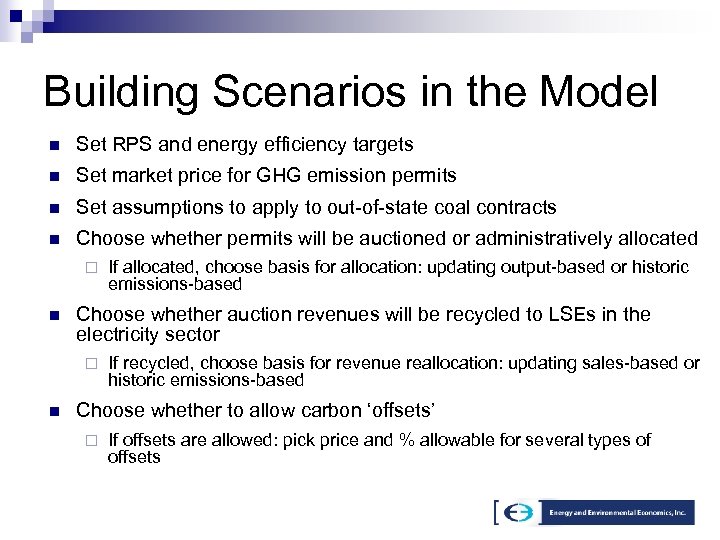 Building Scenarios in the Model n Set RPS and energy efficiency targets n Set market price for GHG emission permits n Set assumptions to apply to out-of-state coal contracts n Choose whether permits will be auctioned or administratively allocated ¨ n Choose whether auction revenues will be recycled to LSEs in the electricity sector ¨ n If allocated, choose basis for allocation: updating output-based or historic emissions-based If recycled, choose basis for revenue reallocation: updating sales-based or historic emissions-based Choose whether to allow carbon ‘offsets’ ¨ If offsets are allowed: pick price and % allowable for several types of offsets
 ‘Mock-up’ of CO 2 Market Control Panel
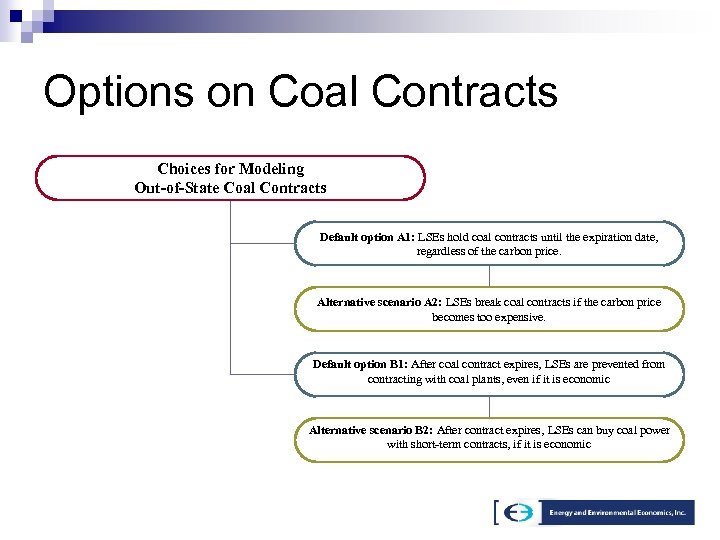 Options on Coal Contracts Choices for Modeling Out-of-State Coal Contracts Default option A 1: LSEs hold coal contracts until the expiration date, regardless of the carbon price. Alternative scenario A 2: LSEs break coal contracts if the carbon price becomes too expensive. Default option B 1: After coal contract expires, LSEs are prevented from contracting with coal plants, even if it is economic Alternative scenario B 2: After contract expires, LSEs can buy coal power with short-term contracts, if it is economic
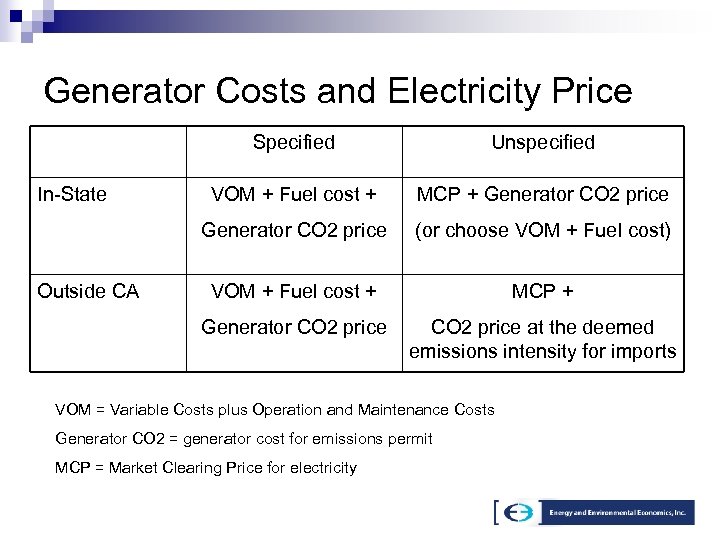 Generator Costs and Electricity Price Specified MCP + Generator CO 2 price (or choose VOM + Fuel cost) VOM + Fuel cost + MCP + Generator CO 2 price Outside CA VOM + Fuel cost + Generator CO 2 price In-State Unspecified CO 2 price at the deemed emissions intensity for imports VOM = Variable Costs plus Operation and Maintenance Costs Generator CO 2 = generator cost for emissions permit MCP = Market Clearing Price for electricity
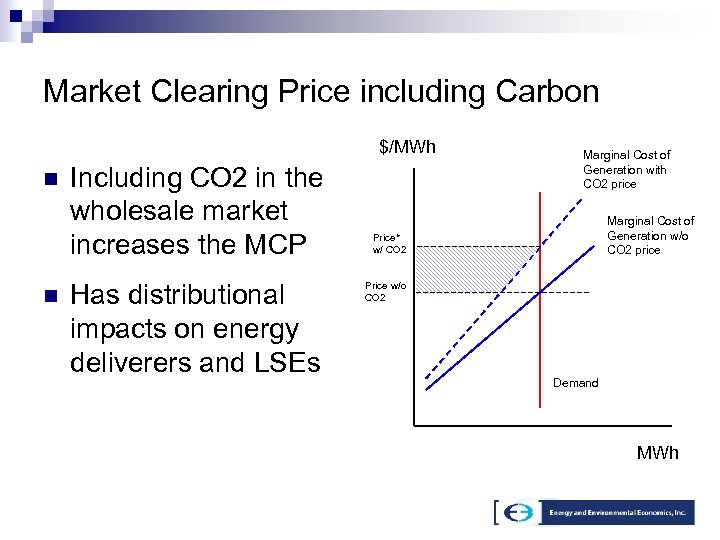 Market Clearing Price including Carbon $/MWh n n Including CO 2 in the wholesale market increases the MCP Has distributional impacts on energy deliverers and LSEs Marginal Cost of Generation with CO 2 price Marginal Cost of Generation w/o CO 2 price Price* w/ CO 2 Price w/o CO 2 Demand MWh
 Implications of GHG Cap and Trade for California’s Electricity Sector
 Possible Impacts of a California GHG Market on the Electricity Sector n Change in operation of existing plants ¨ n Reduction of emissions intensity of imports ¨ n Cost of CO 2 could make all-in costs of low-carbon resources look relatively less than fossil-fuel resources Technology innovation (not directly modeled) ¨ n Increase in low-carbon specified imports and/or reduction in high-carbon specified imports New capital investment ¨ n Cost of CO 2 could change the relative economics of natural gas and coal A higher market price for power and a CO 2 price could drive new technology innovation, resulting in new sources of emission reductions Distributional impacts ¨ Distributional impacts due to emission allocation policy choices and impacts due to impact of CO 2 market on electricity prices
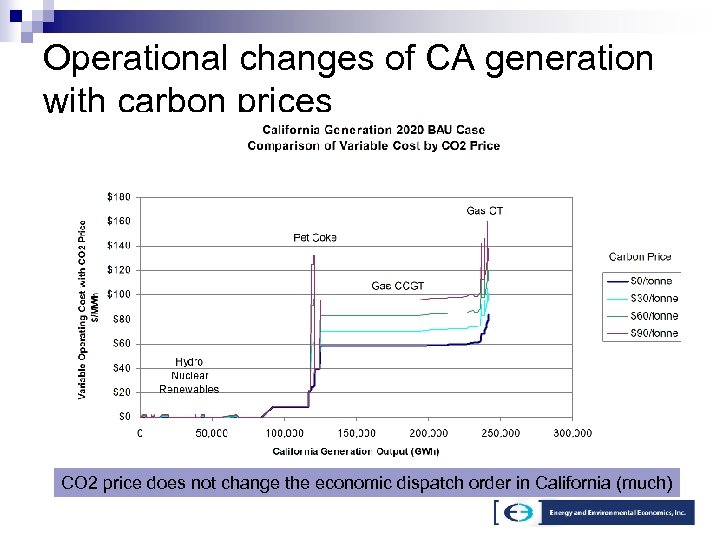 Operational changes of CA generation with carbon prices CO 2 price does not change the economic dispatch order in California (much)
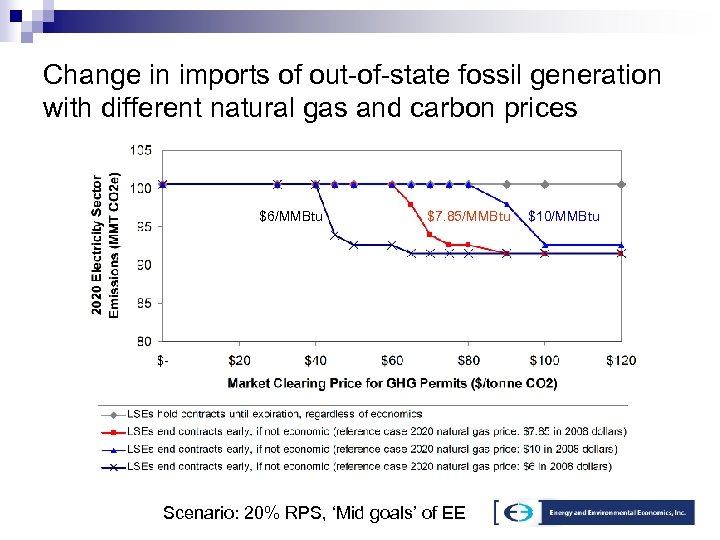 Change in imports of out-of-state fossil generation with different natural gas and carbon prices $6/MMBtu $7. 85/MMBtu Scenario: 20% RPS, ‘Mid goals’ of EE $10/MMBtu
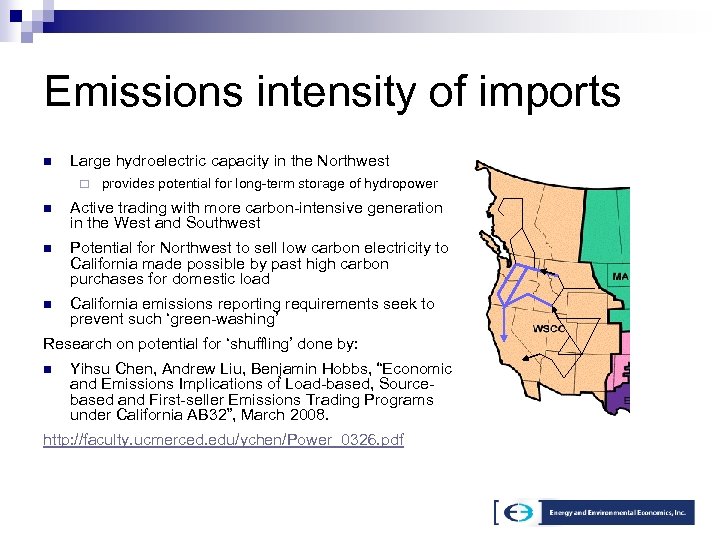 Emissions intensity of imports n Large hydroelectric capacity in the Northwest ¨ provides potential for long-term storage of hydropower n Active trading with more carbon-intensive generation in the West and Southwest n Potential for Northwest to sell low carbon electricity to California made possible by past high carbon purchases for domestic load n California emissions reporting requirements seek to prevent such ‘green-washing’ Research on potential for ‘shuffling’ done by: n Yihsu Chen, Andrew Liu, Benjamin Hobbs, “Economic and Emissions Implications of Load-based, Sourcebased and First-seller Emissions Trading Programs under California AB 32”, March 2008. http: //faculty. ucmerced. edu/ychen/Power_0326. pdf
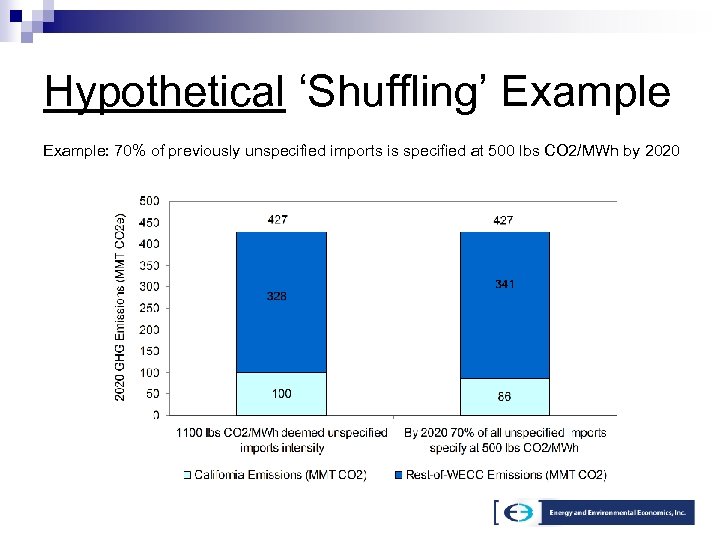 Hypothetical ‘Shuffling’ Example: 70% of previously unspecified imports is specified at 500 lbs CO 2/MWh by 2020
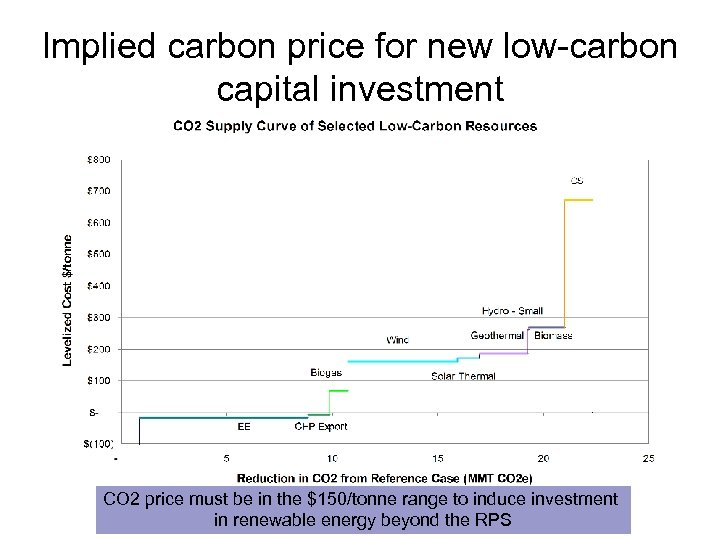 Implied carbon price for new low-carbon capital investment CO 2 price must be in the $150/tonne range to induce investment in renewable energy beyond the RPS
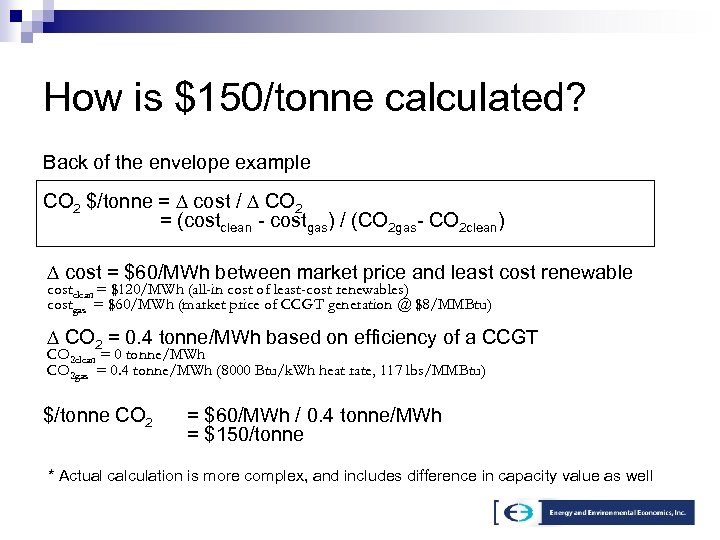 How is $150/tonne calculated? Back of the envelope example CO 2 $/tonne = cost / CO 2 = (costclean - costgas) / (CO 2 gas- CO 2 clean) cost = $60/MWh between market price and least cost renewable costclean = $120/MWh (all-in cost of least-cost renewables) costgas = $60/MWh (market price of CCGT generation @ $8/MMBtu) CO 2 = 0. 4 tonne/MWh based on efficiency of a CCGT CO 2 clean = 0 tonne/MWh CO 2 gas = 0. 4 tonne/MWh (8000 Btu/k. Wh heat rate, 117 lbs/MMBtu) $/tonne CO 2 = $60/MWh / 0. 4 tonne/MWh = $150/tonne * Actual calculation is more complex, and includes difference in capacity value as well
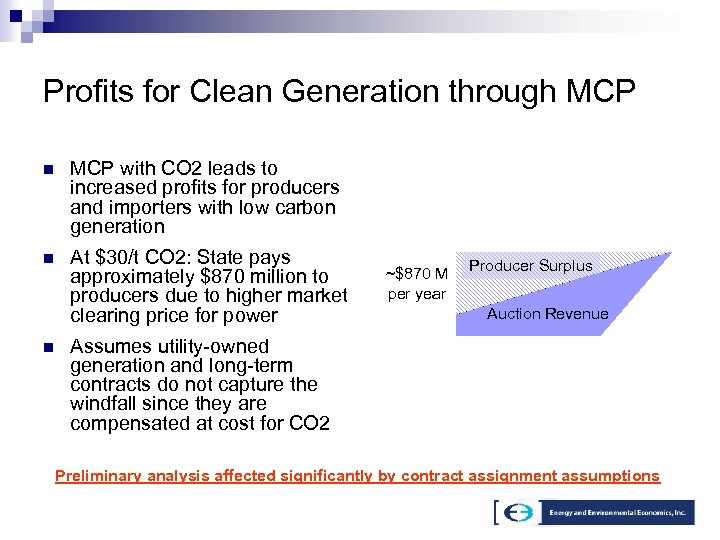 Profits for Clean Generation through MCP $/MWh n n n MCP with CO 2 leads to increased profits for producers and importers with low carbon generation At $30/t CO 2: State pays approximately $870 million to producers due to higher market clearing price for power Assumes utility-owned generation and long-term contracts do not capture the windfall since they are compensated at cost for CO 2 Marginal Cost of Generation with CO 2 price Price* w/ CO 2 ~$870 M Price w/o CO 2 per year Producer Surplus Marginal Cost of Generation w/o CO 2 price Auction Revenue Demand MWh Preliminary analysis affected significantly by contract assignment assumptions
 Regional Carbon Price Scenario n Regional scenario limits contract shuffling n PLEXOS analysis of a regional carbon price on WECC-wide dispatch ¨ Driven ¨ Fuel by coal - natural gas price spread prices vary by location in WECC n Gas: $9. 50 - $10. 50/MMBtu n Coal: $0. 80 - $2. 00/MMBtu
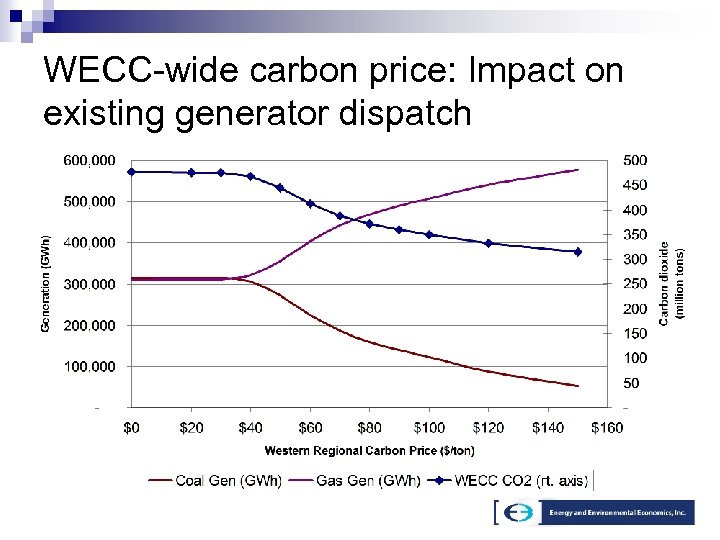 WECC-wide carbon price: Impact on existing generator dispatch
 Thank You