


 Скачать презентацию Electricity M D The Professional Development Service for
18f9990903b843d0e2927c20cb3d987e.ppt
- Количество слайдов: 39
 Electricity M. D. The Professional Development Service for Teachers is funded by the Department of Education and Skills under the National Development Plan
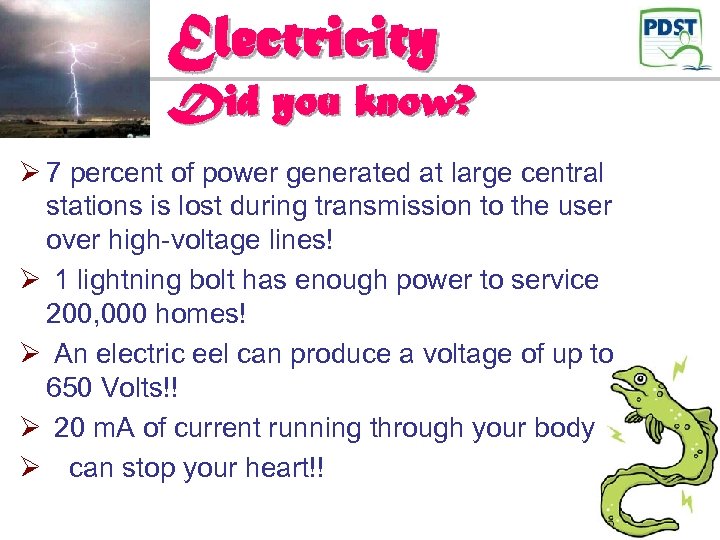 Electricity Did you know? Ø 7 percent of power generated at large central stations is lost during transmission to the user over high-voltage lines! Ø 1 lightning bolt has enough power to service 200, 000 homes! Ø An electric eel can produce a voltage of up to 650 Volts!! Ø 20 m. A of current running through your body Ø can stop your heart!!
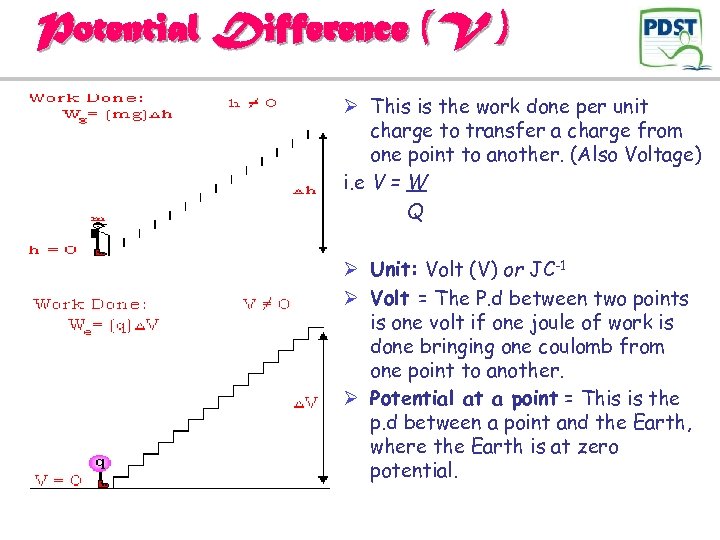 Potential Difference (V ) Ø This is the work done per unit charge to transfer a charge from one point to another. (Also Voltage) i. e V = W Q Ø Unit: Volt (V) or JC-1 Ø Volt = The P. d between two points is one volt if one joule of work is done bringing one coulomb from one point to another. Ø Potential at a point = This is the p. d between a point and the Earth, where the Earth is at zero potential.
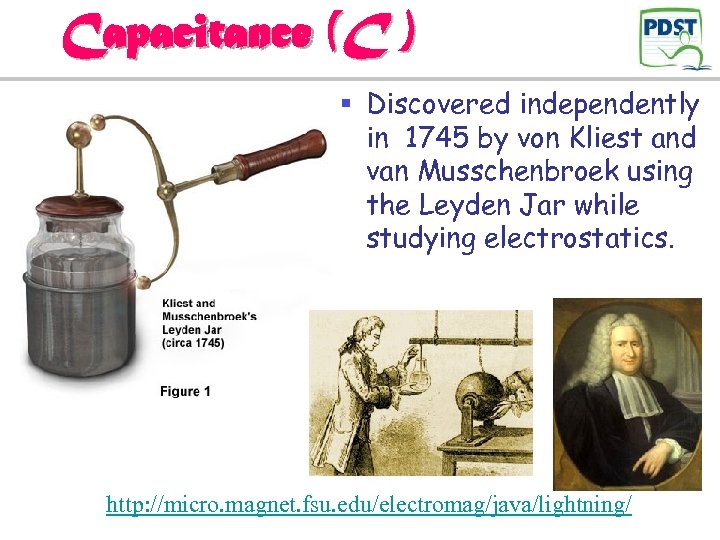 Capacitance (C ) § Discovered independently in 1745 by von Kliest and van Musschenbroek using the Leyden Jar while studying electrostatics. http: //micro. magnet. fsu. edu/electromag/java/lightning/
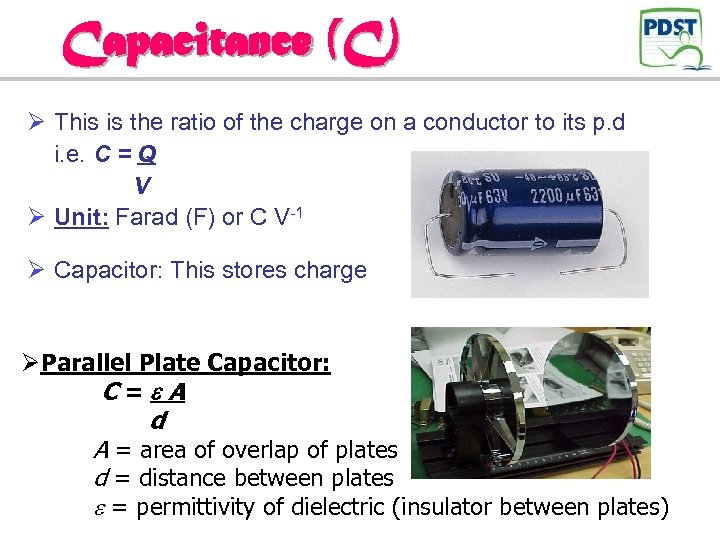 Capacitance (C) Ø This is the ratio of the charge on a conductor to its p. d i. e. C = Q V Ø Unit: Farad (F) or C V-1 Ø Capacitor: This stores charge ØParallel Plate Capacitor: C= A d A = area of overlap of plates d = distance between plates = permittivity of dielectric (insulator between plates)
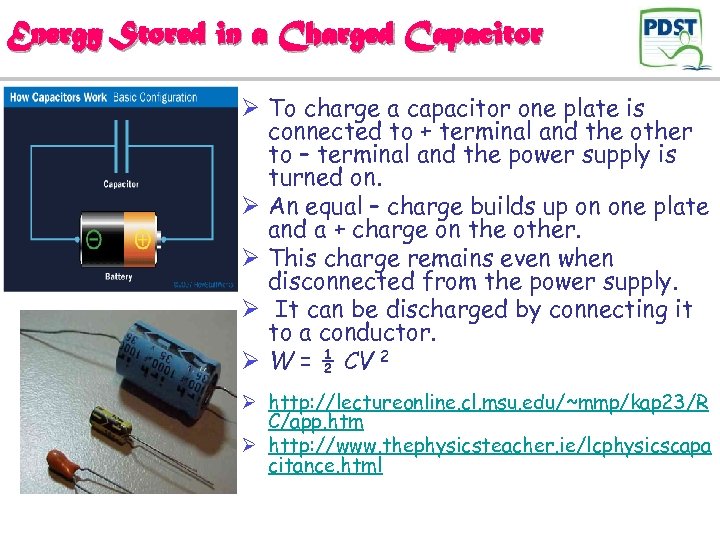 Energy Stored in a Charged Capacitor Ø To charge a capacitor one plate is connected to + terminal and the other to – terminal and the power supply is turned on. Ø An equal – charge builds up on one plate and a + charge on the other. Ø This charge remains even when disconnected from the power supply. Ø It can be discharged by connecting it to a conductor. Ø W = ½ CV 2 Ø http: //lectureonline. cl. msu. edu/~mmp/kap 23/R C/app. htm Ø http: //www. thephysicsteacher. ie/lcphysicscapa citance. html
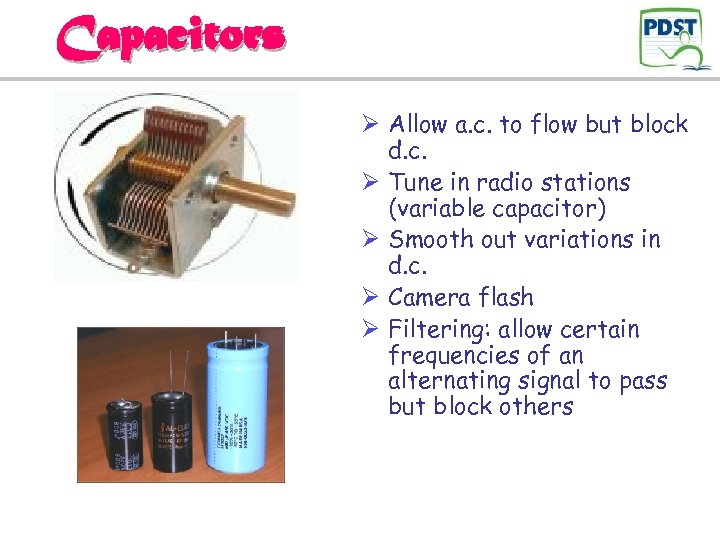 Capacitors Ø Allow a. c. to flow but block d. c. Ø Tune in radio stations (variable capacitor) Ø Smooth out variations in d. c. Ø Camera flash Ø Filtering: allow certain frequencies of an alternating signal to pass but block others
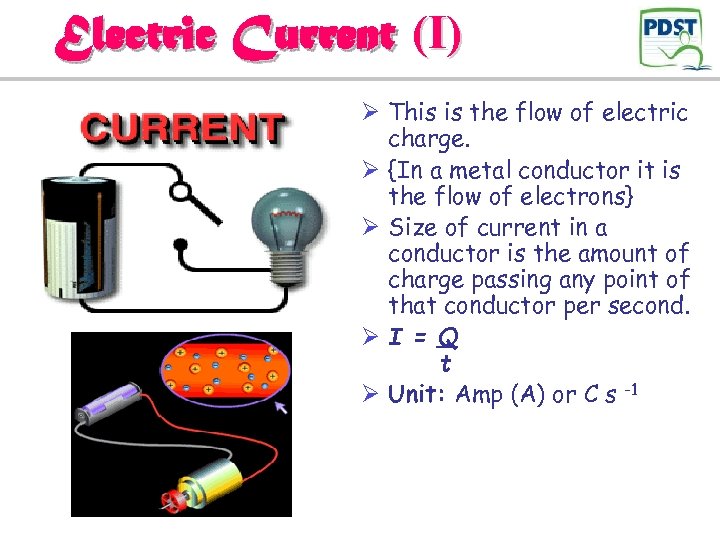 Electric Current (I) Ø This is the flow of electric charge. Ø {In a metal conductor it is the flow of electrons} Ø Size of current in a conductor is the amount of charge passing any point of that conductor per second. ØI = Q t Ø Unit: Amp (A) or C s -1
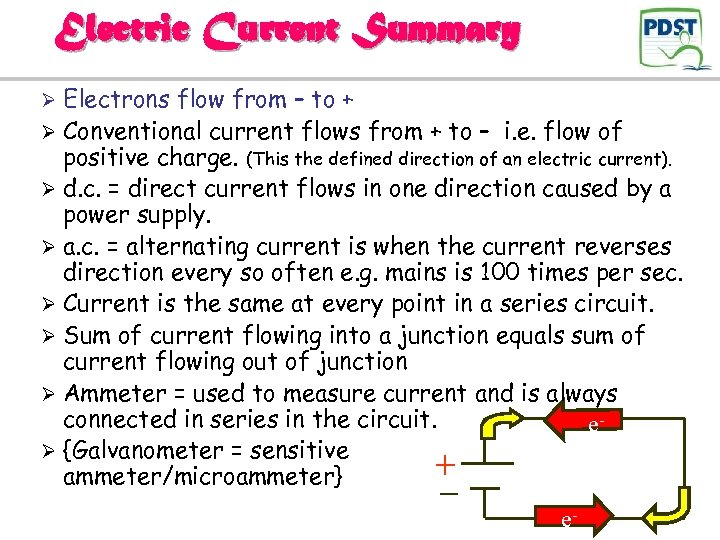 Electric Current Summary Electrons flow from – to + Ø Conventional current flows from + to – i. e. flow of positive charge. (This the defined direction of an electric current). Ø d. c. = direct current flows in one direction caused by a power supply. Ø a. c. = alternating current is when the current reverses direction every so often e. g. mains is 100 times per sec. Ø Current is the same at every point in a series circuit. Ø Sum of current flowing into a junction equals sum of current flowing out of junction Ø Ammeter = used to measure current and is always connected in series in the circuit. eØ {Galvanometer = sensitive + ammeter/microammeter} _ Ø e-
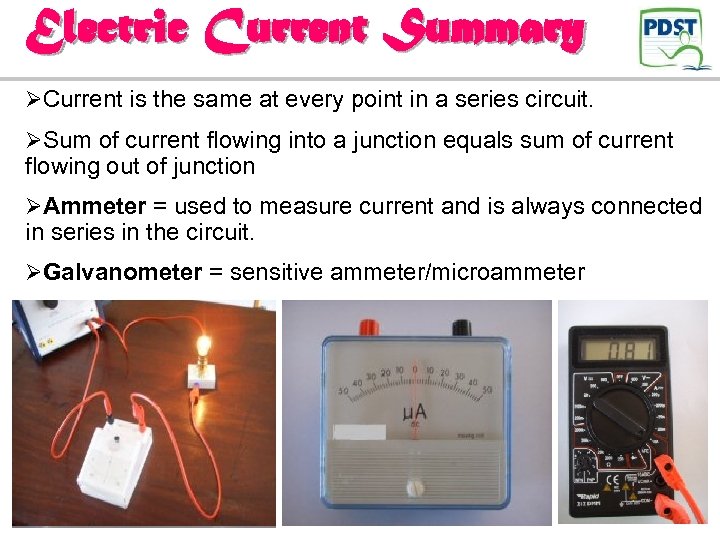 Electric Current Summary ØCurrent is the same at every point in a series circuit. ØSum of current flowing into a junction equals sum of current flowing out of junction ØAmmeter = used to measure current and is always connected in series in the circuit. ØGalvanometer = sensitive ammeter/microammeter
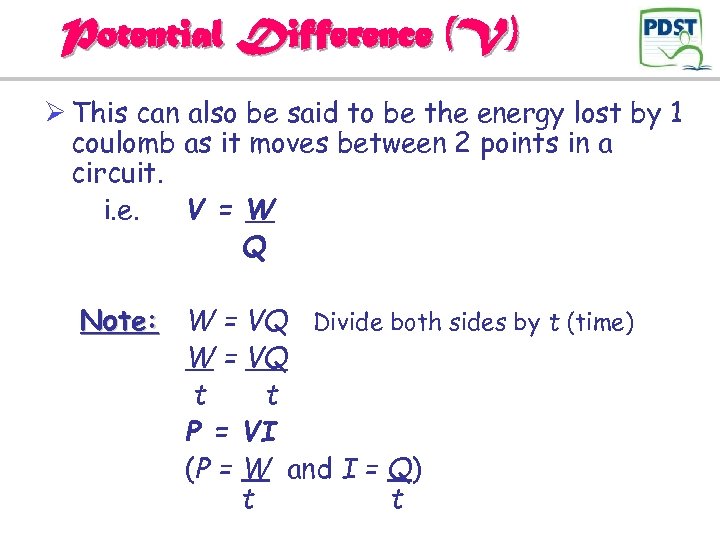 Potential Difference (V) Ø This can also be said to be the energy lost by 1 coulomb as it moves between 2 points in a circuit. i. e. V = W Q Note: W = VQ Divide both sides by t (time) W = VQ t t P = VI (P = W and I = Q) t t
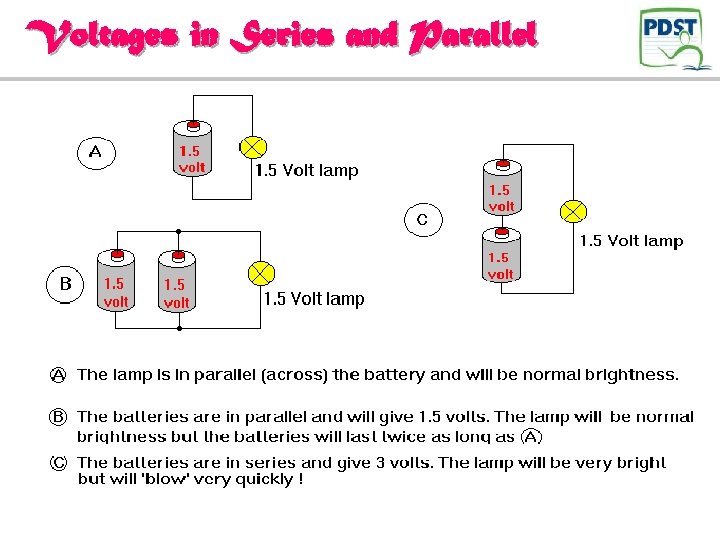
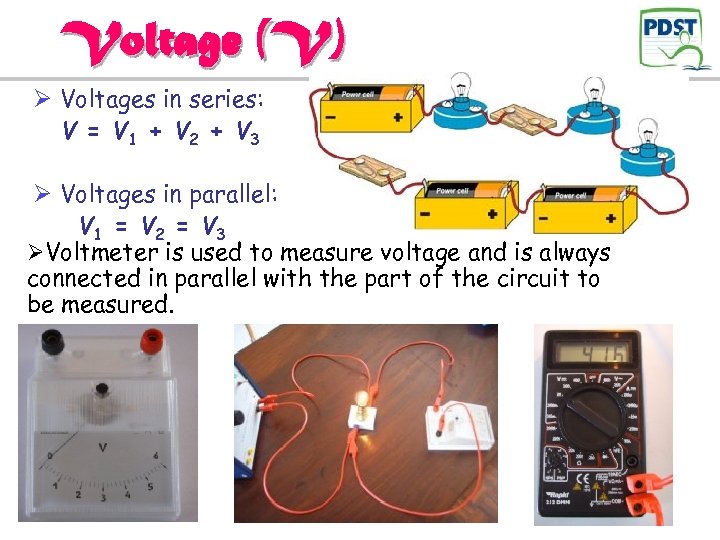 Voltage (V) Ø Voltages in series: V = V 1 + V 2 + V 3 Ø Voltages in parallel: V 1 = V 2 = V 3 ØVoltmeter is used to measure voltage and is always connected in parallel with the part of the circuit to be measured.
 Voltages in Series and Parallel
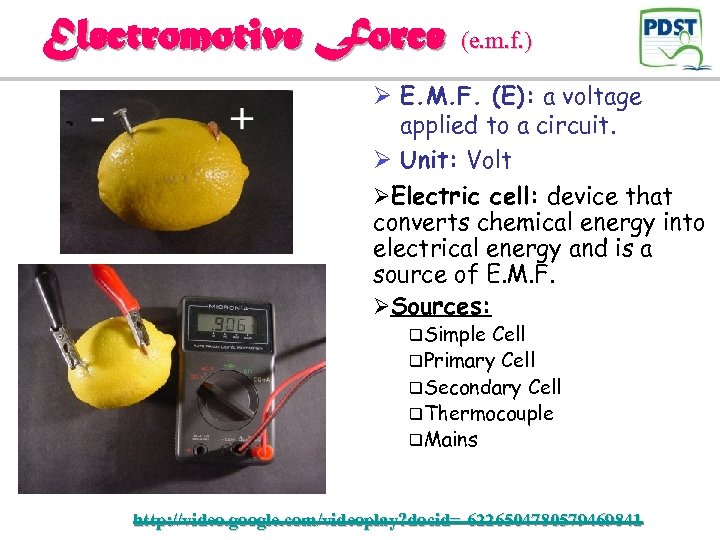 Electromotive Force (e. m. f. ) Ø E. M. F. (E): a voltage applied to a circuit. Ø Unit: Volt ØElectric cell: device that converts chemical energy into electrical energy and is a source of E. M. F. ØSources: q. Simple Cell q. Primary Cell q. Secondary Cell q. Thermocouple q. Mains http: //video. google. com/videoplay? docid=-6226504780579469841
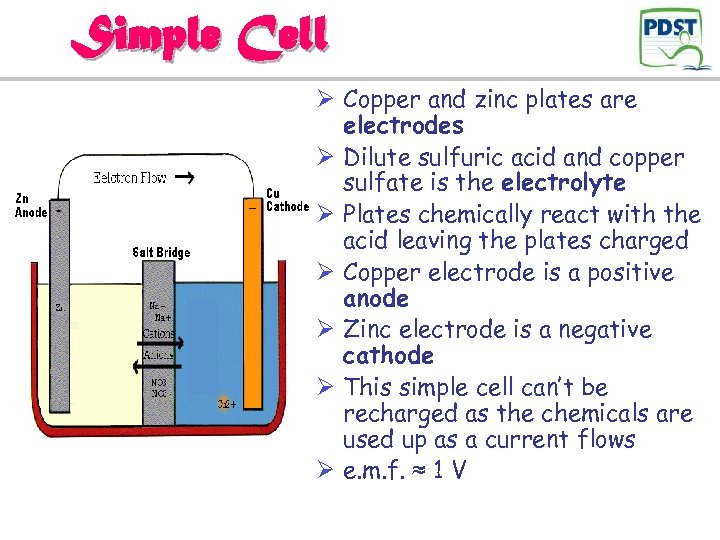 Simple Cell Ø Copper and zinc plates are electrodes Ø Dilute sulfuric acid and copper sulfate is the electrolyte Ø Plates chemically react with the acid leaving the plates charged Ø Copper electrode is a positive anode Ø Zinc electrode is a negative cathode Ø This simple cell can’t be recharged as the chemicals are used up as a current flows Ø e. m. f. ≈ 1 V
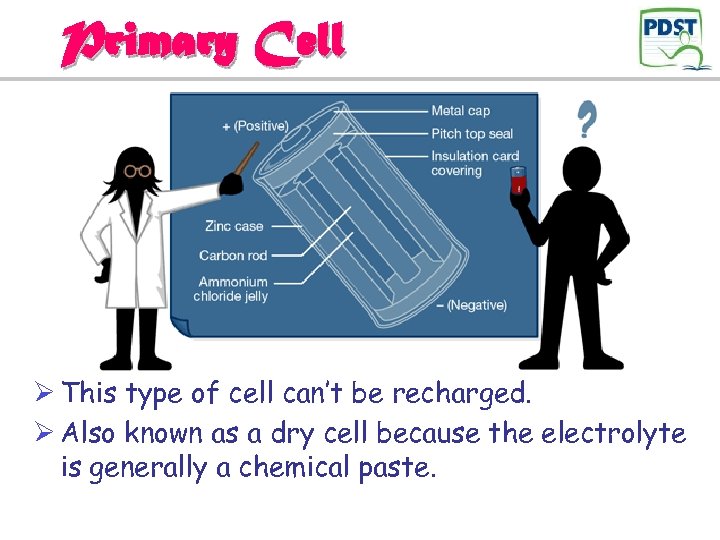 Primary Cell Ø This type of cell can’t be recharged. Ø Also known as a dry cell because the electrolyte is generally a chemical paste.
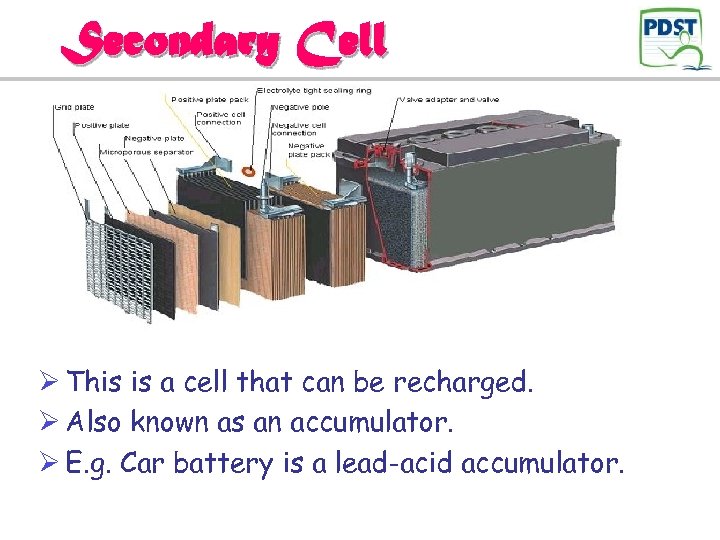 Secondary Cell Ø This is a cell that can be recharged. Ø Also known as an accumulator. Ø E. g. Car battery is a lead-acid accumulator.
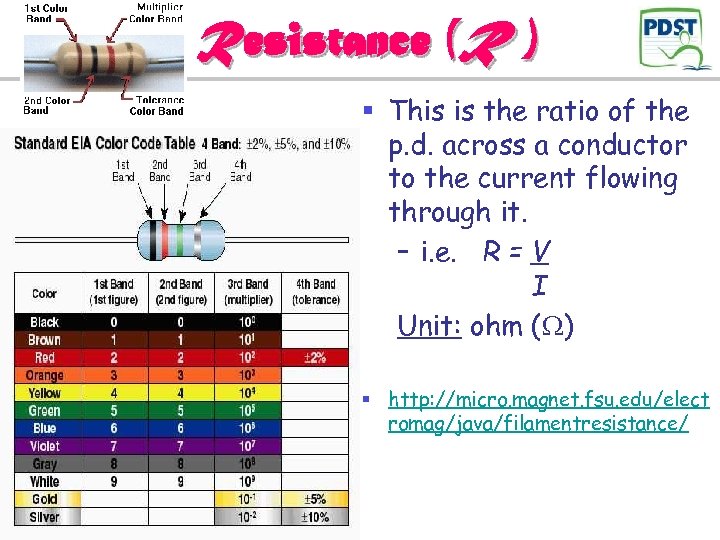 Resistance (R ) § This is the ratio of the p. d. across a conductor to the current flowing through it. – i. e. R = V I Unit: ohm ( ) § http: //micro. magnet. fsu. edu/elect romag/java/filamentresistance/
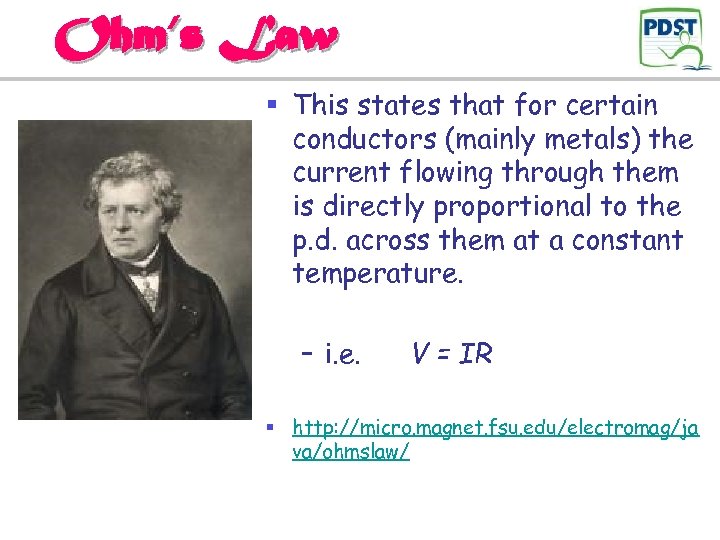 Ohm’s Law § This states that for certain conductors (mainly metals) the current flowing through them is directly proportional to the p. d. across them at a constant temperature. – i. e. V = IR § http: //micro. magnet. fsu. edu/electromag/ja va/ohmslaw/
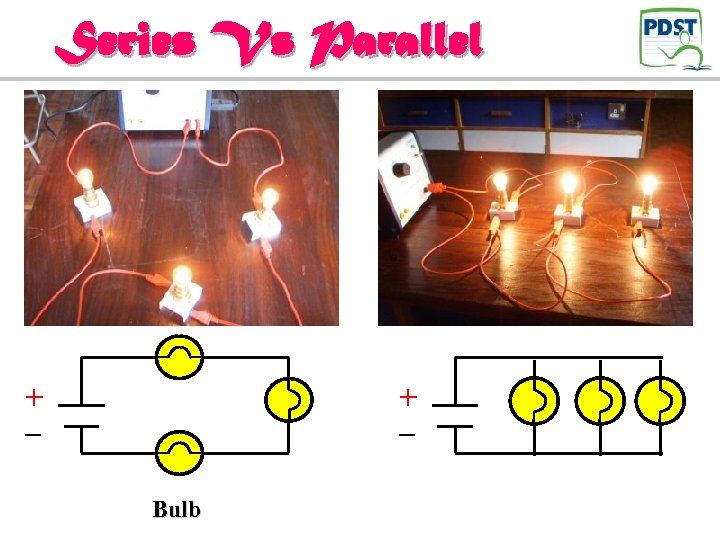 Series Vs Parallel + _ Bulb
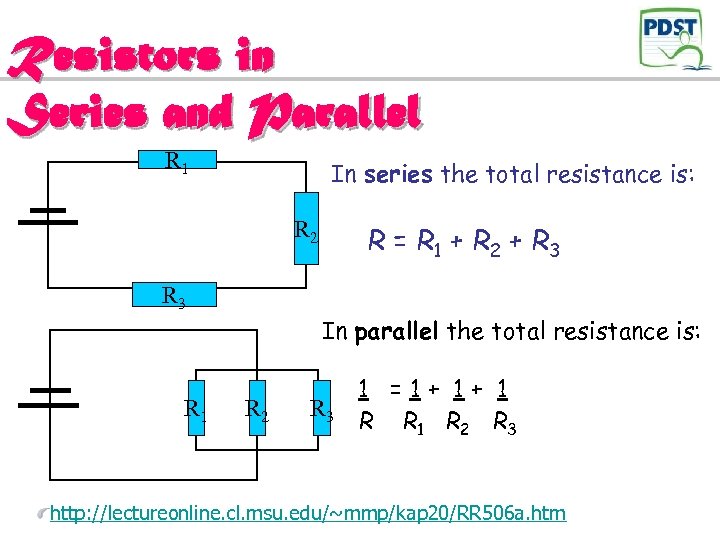 Resistors in Series and Parallel R 1 In series the total resistance is: R 2 R = R 1 + R 2 + R 3 In parallel the total resistance is: R 1 R 2 R 3 1 =1+ 1+ 1 R R 1 R 2 R 3 http: //lectureonline. cl. msu. edu/~mmp/kap 20/RR 506 a. htm
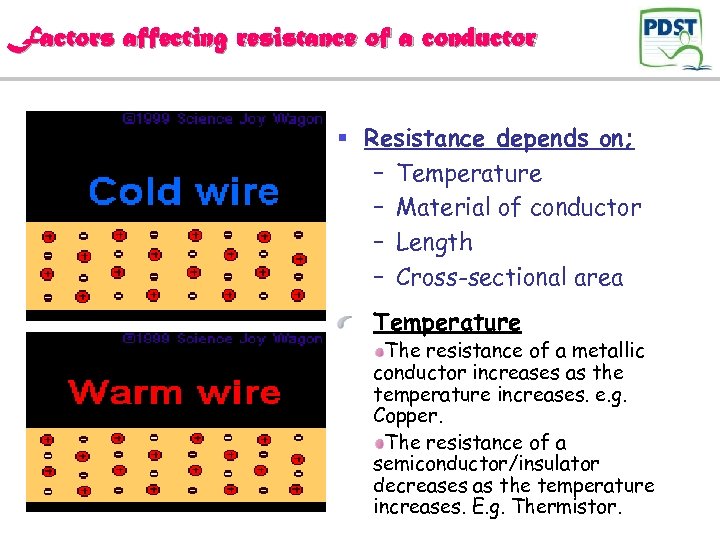 Factors affecting resistance of a conductor § Resistance depends on; – Temperature – Material of conductor – Length – Cross-sectional area Temperature The resistance of a metallic conductor increases as the temperature increases. e. g. Copper. The resistance of a semiconductor/insulator decreases as the temperature increases. E. g. Thermistor.
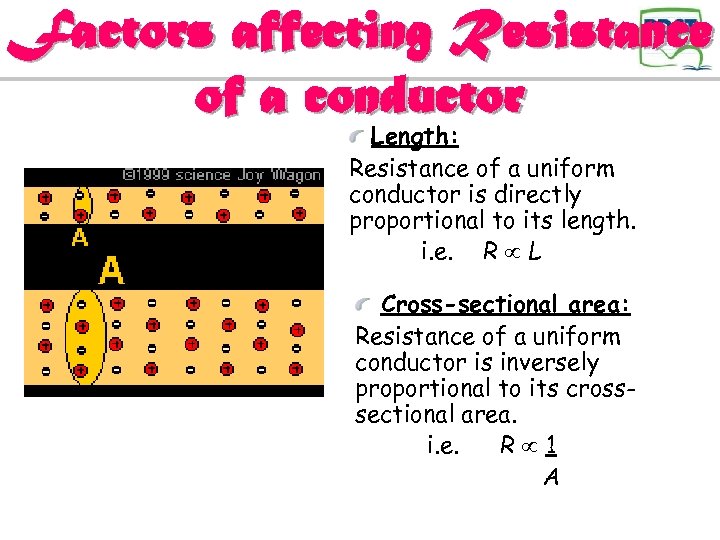 Factors affecting Resistance of a conductor Length: Resistance of a uniform conductor is directly proportional to its length. i. e. R L Cross-sectional area: Resistance of a uniform conductor is inversely proportional to its crosssectional area. i. e. R 1 A
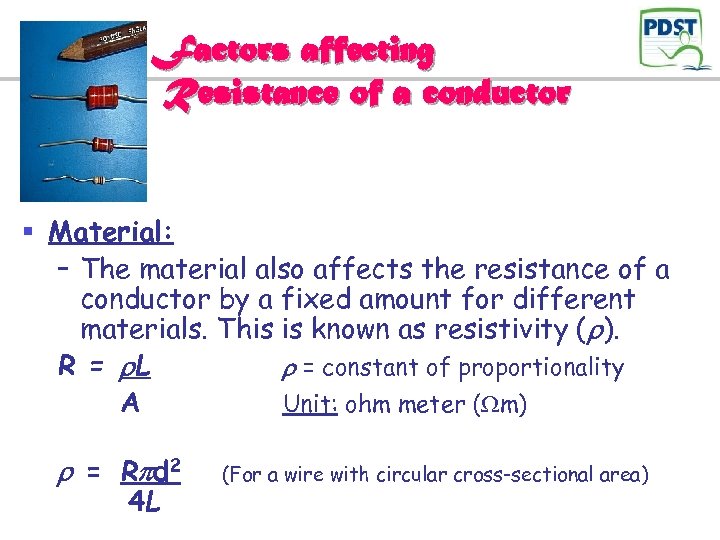 Factors affecting Resistance of a conductor § Material: – The material also affects the resistance of a conductor by a fixed amount for different materials. This is known as resistivity ( ). R = L = constant of proportionality A Unit: ohm meter ( m) = R d 2 4 L (For a wire with circular cross-sectional area)
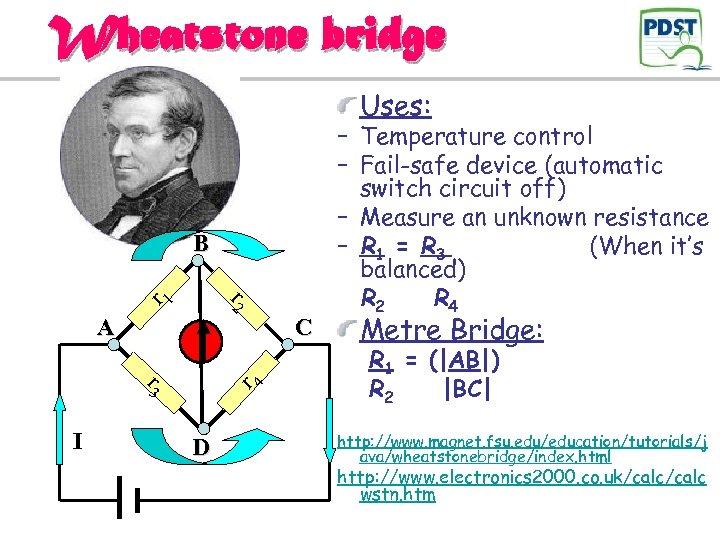 Wheatstone bridge Uses: r 2 r 1 B A I r 4 r 3 D C – Temperature control – Fail-safe device (automatic switch circuit off) – Measure an unknown resistance – R 1 = R 3 (When it’s balanced) R 2 R 4 Metre Bridge: R 1 = (|AB|) R 2 |BC| http: //www. magnet. fsu. edu/education/tutorials/j ava/wheatstonebridge/index. html http: //www. electronics 2000. co. uk/calc wstn. htm
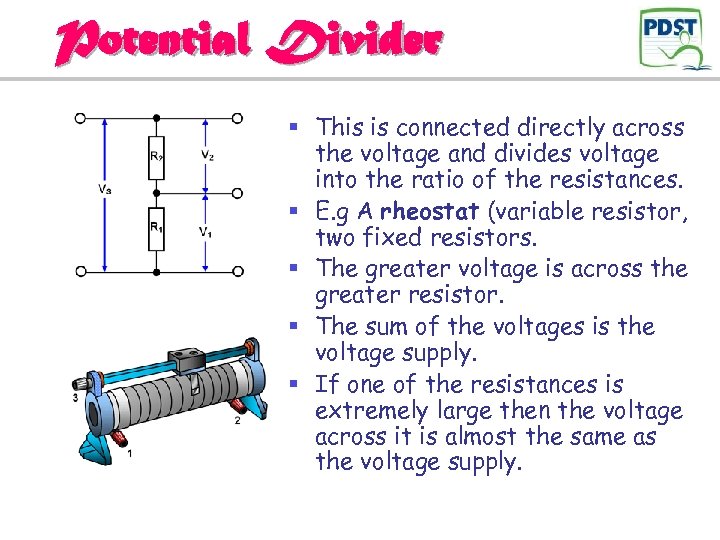 Potential Divider § This is connected directly across the voltage and divides voltage into the ratio of the resistances. § E. g A rheostat (variable resistor, two fixed resistors. § The greater voltage is across the greater resistor. § The sum of the voltages is the voltage supply. § If one of the resistances is extremely large then the voltage across it is almost the same as the voltage supply.
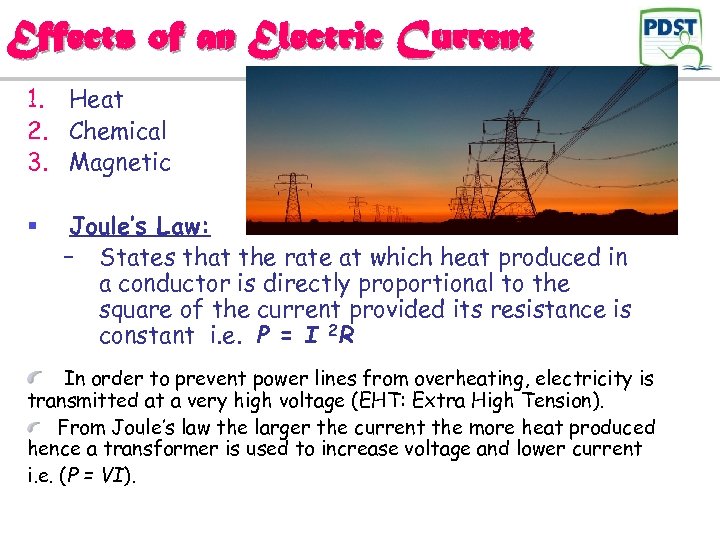 Effects of an Electric Current 1. Heat 2. Chemical 3. Magnetic § Joule’s Law: – States that the rate at which heat produced in a conductor is directly proportional to the square of the current provided its resistance is constant i. e. P = I 2 R In order to prevent power lines from overheating, electricity is transmitted at a very high voltage (EHT: Extra High Tension). From Joule’s law the larger the current the more heat produced hence a transformer is used to increase voltage and lower current i. e. (P = VI).
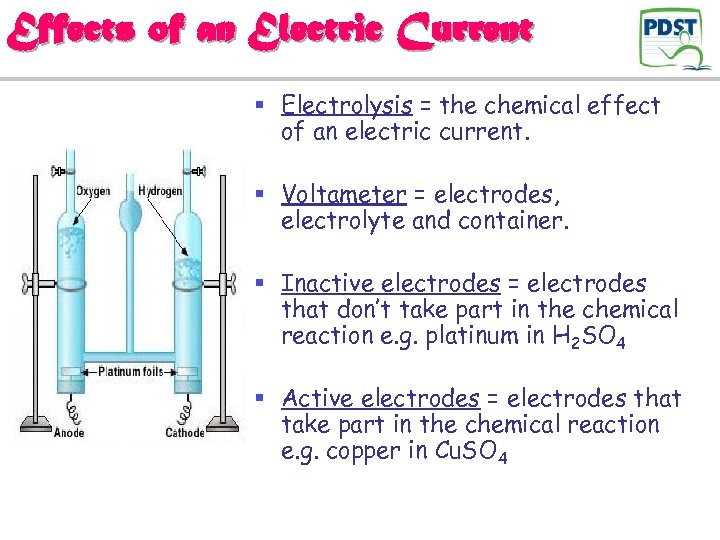 Effects of an Electric Current § Electrolysis = the chemical effect of an electric current. § Voltameter = electrodes, electrolyte and container. § Inactive electrodes = electrodes that don’t take part in the chemical reaction e. g. platinum in H 2 SO 4 § Active electrodes = electrodes that take part in the chemical reaction e. g. copper in Cu. SO 4
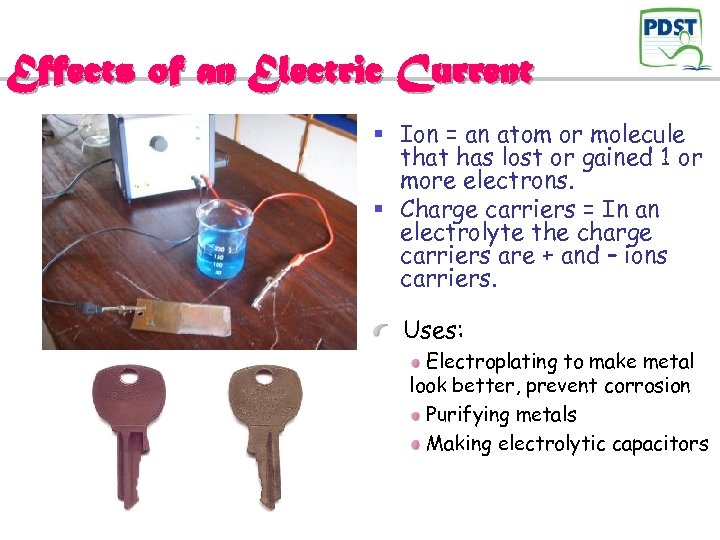 Effects of an Electric Current § Ion = an atom or molecule that has lost or gained 1 or more electrons. § Charge carriers = In an electrolyte the charge carriers are + and – ions carriers. Uses: Electroplating to make metal look better, prevent corrosion Purifying metals Making electrolytic capacitors
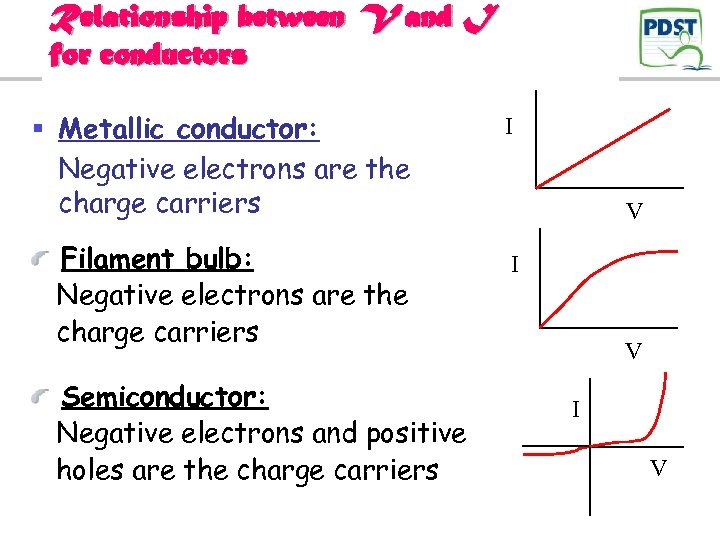 Relationship between V and I for conductors § Metallic conductor: Negative electrons are the charge carriers Filament bulb: Negative electrons are the charge carriers Semiconductor: Negative electrons and positive holes are the charge carriers I V I V
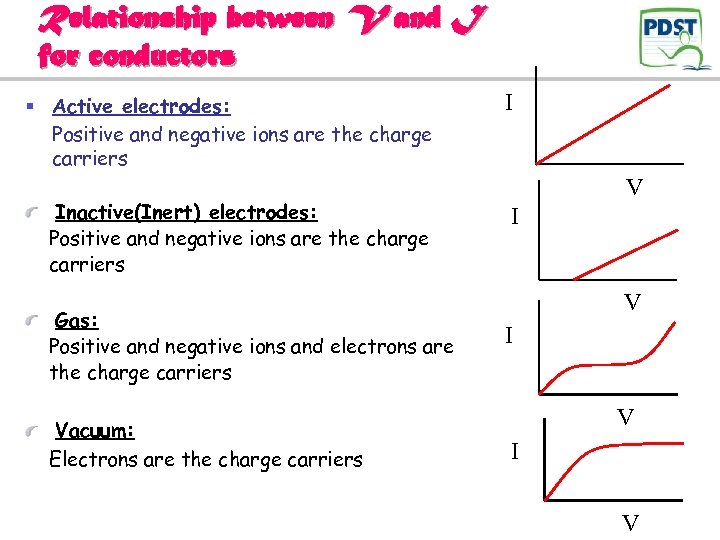 Relationship between V and I for conductors § Active electrodes: Positive and negative ions are the charge carriers Inactive(Inert) electrodes: Positive and negative ions are the charge carriers Gas: Positive and negative ions and electrons are the charge carriers Vacuum: Electrons are the charge carriers I V I V
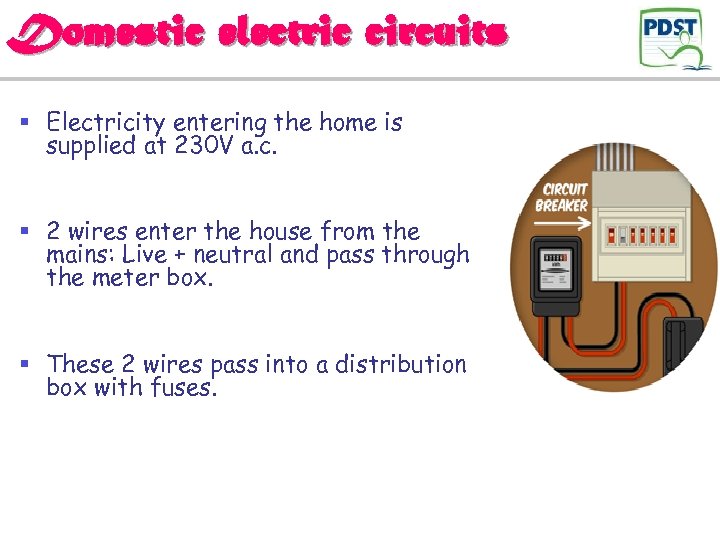 Domestic electric circuits § Electricity entering the home is supplied at 230 V a. c. § 2 wires enter the house from the mains: Live + neutral and pass through the meter box. § These 2 wires pass into a distribution box with fuses.
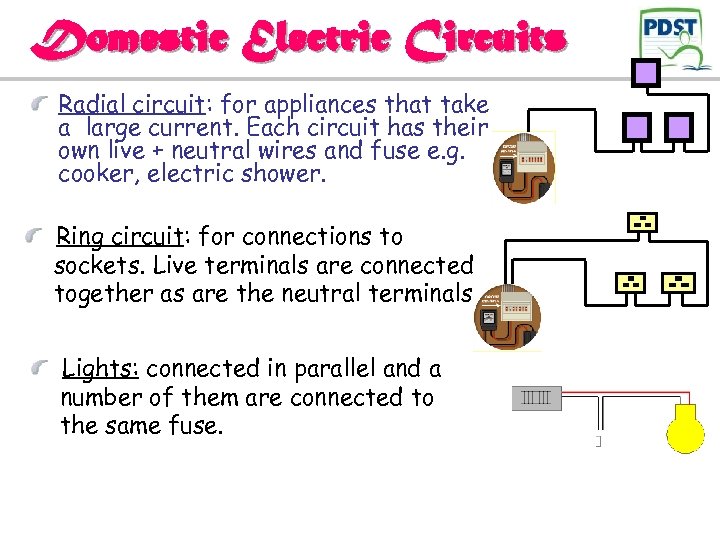 Domestic Electric Circuits Radial circuit: for appliances that take a large current. Each circuit has their own live + neutral wires and fuse e. g. cooker, electric shower. Ring circuit: for connections to sockets. Live terminals are connected together as are the neutral terminals. Lights: connected in parallel and a number of them are connected to the same fuse.
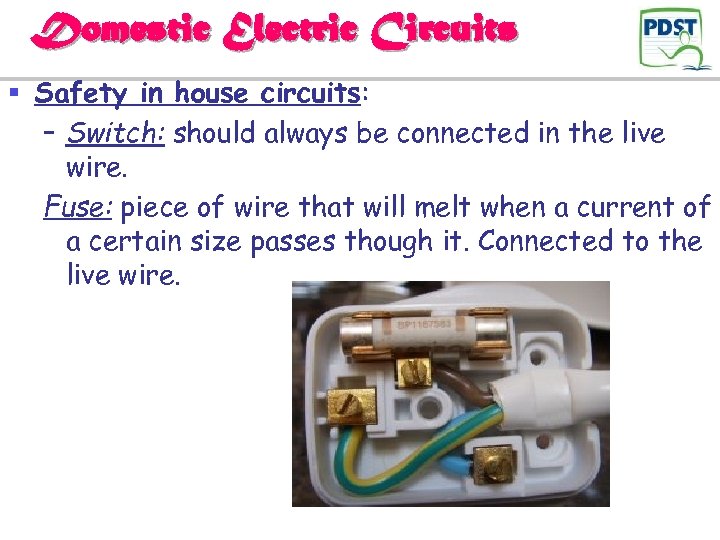 Domestic Electric Circuits § Safety in house circuits: – Switch: should always be connected in the live wire. Fuse: piece of wire that will melt when a current of a certain size passes though it. Connected to the live wire.
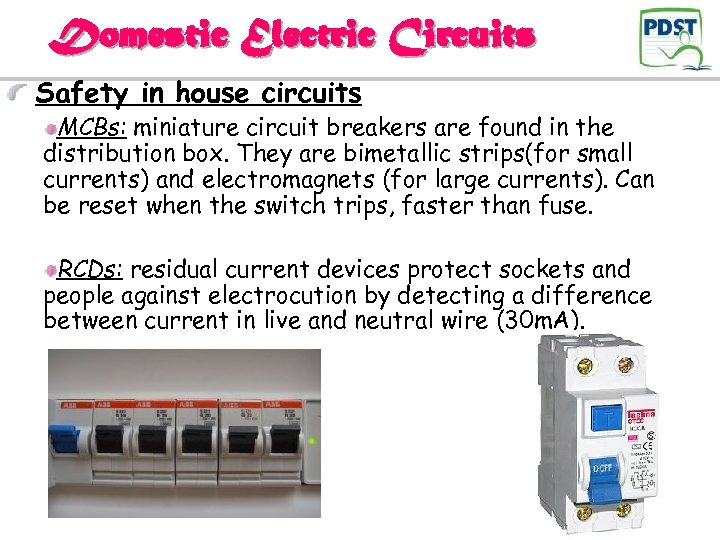 Domestic Electric Circuits Safety in house circuits MCBs: miniature circuit breakers are found in the distribution box. They are bimetallic strips(for small currents) and electromagnets (for large currents). Can be reset when the switch trips, faster than fuse. RCDs: residual current devices protect sockets and people against electrocution by detecting a difference between current in live and neutral wire (30 m. A).
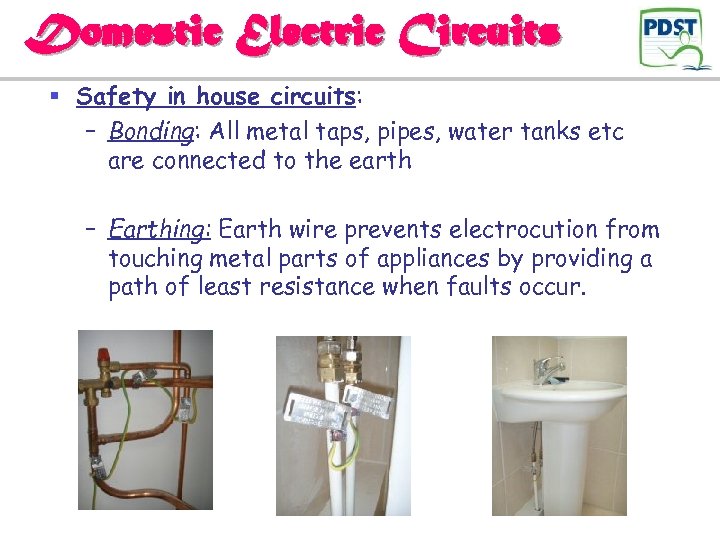 Domestic Electric Circuits § Safety in house circuits: – Bonding: All metal taps, pipes, water tanks etc are connected to the earth – Earthing: Earth wire prevents electrocution from touching metal parts of appliances by providing a path of least resistance when faults occur.
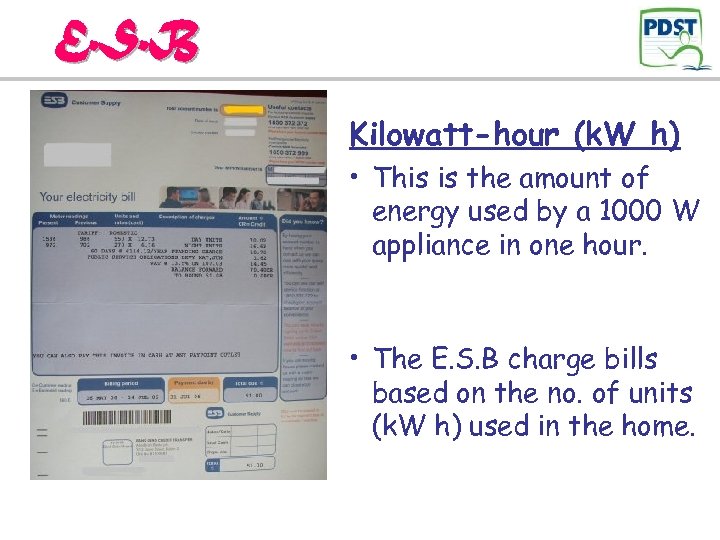 E. S. B Kilowatt-hour (k. W h) • This is the amount of energy used by a 1000 W appliance in one hour. • The E. S. B charge bills based on the no. of units (k. W h) used in the home.
 Credits Slide 2: Lightning Bolt Image http: //www. msha. gov/Accident_Prevention/Tips/li ghtning. htm Electric eel image ~ Amy Lebeau www. nfpa. org/riskwatch/teach_eslp_pkk_04. html Slide 3: Animation ~ Irina Nelson and Johnny Erickson www. slcc. edu/schools/hum_sci/physics/tutor/222 0/e_potential Slide 4: None Slide 5: First capacitor image www. mainlinegroup. co. uk/jacksonbrothers/5250. htm Slide 6: Capacitor image ~ Christopher Borg http: //qarnita. tripod. com/comp. htm Slide 7: Bulb and battery animation ~ David Chase Edventures. com http: //discover. edventures. com/functions/termlib. php? action=&termid=153&alpha=c&searchs tring= Electric Motor animation ~ UK Motion Gallery www. bbc. co. uk/science/robots/techlab/v_ rollerbots. shtml Slide 8: None Slide 9: None Slide 10: None 10: Slide 11: Voltages in series image ~ Andrew Turner Primary School Science www. primaryschoolscience. com/about_as sessment. php Slide 12: Voltages in series and parallel image ~ Graham Knot http: //ourworld. compuserve. com/homepages/g_k nott/elect 27. htm Slide 13: Lemon battery image and video link ~ Carol and Wayne Campbell www. hilaroad. com/camp/projects/lemon_ battery. html Note: google video player needs to be downloaded from the web page to play video clip Slide 14: None Slide 15: Battery image ~ EDF Energy www. edfenergy. com/powerup/keystage 3/in/page 2. html Slide 16: Lead-acid battery image ~ EUROBAT The Association of European Storage Battery Manufacturers. www. mpoweruk. com/cell_construction. htm
 Credits Ø Slide 2: Resistors image q www. sffej. net/educational/resistor_Colour. ht m Resistor colour codes Ø Ø Ø Ø q www. radiodaze. com/rescarbcomp. htm Slide 3: George Ohm image~ www. past. dk/artefacts/photos/53/photo 1113908435 -89551 -5995. tkl? o Slide 4: None (Note: Use P, for previous and N, for next on key board to go back and forth between photos if no remote control available. Both circuits are connected to a 12 V power supply and can be compared in terms of how bright the 3 bulbs are) Slide 5: None Slide 6: Temperature and resistance animation ~ Science Joy Wagon (www. sciencejoywagon. com) q www. regentsprep. org/Regents/physics/phys 03/bresit/default. htm Slide 7: Cross sectional area and resistance animation ~ Science Joy Wagon (www. sciencejoywagon. com) q www. regentsprep. org/Regents/physics/phys 03/bresit/default. htm Slide 8: Resistors image q http: //homepages. nildram. co. uk/~vwlowe n/radio/alarm/how 2. htm Slide 9: Sir Charles Wheatstone image ~ from the BT Connected Earth Collection. q See www. connected-earth. com Ø Ø Ø Ø Slide 10: Sunset Power Lines q www. tonyboon. co. uk/imgs/pages/powerlines. htm Slide 11: Hoffman Voltameter image q www. dalefield. com/earth/hydrogen 1. html Slide 12: Electroplating image ~ www. finishing. com/faqs/howworks. html Slide 13: None Slide 14: None Slide 15: Circuit Breaker image ~ Edfenergy q www. edfenergy. com/powerup/keystage 3/in/ page 2. html Slide 16: Circuit Breaker image ~ Edfenergy as above Light Circuit image ~ www. buzzybee. org/diy/projects/electri cal/lighting/wiring. html Ø Ø Slide 17: None Slide 18: None Slide 19: None Slide 20: None