 Скачать презентацию Electricity Consumers LED Lighting AHELI CHATTOPADHYAY ARIEL MARBER
f332752a2cb4c92cf804184b5b775f5d.ppt
- Количество слайдов: 19



Electricity Consumers: LED Lighting AHELI CHATTOPADHYAY, ARIEL MARBER, ZYGIMANTAS STRAZNICKAS
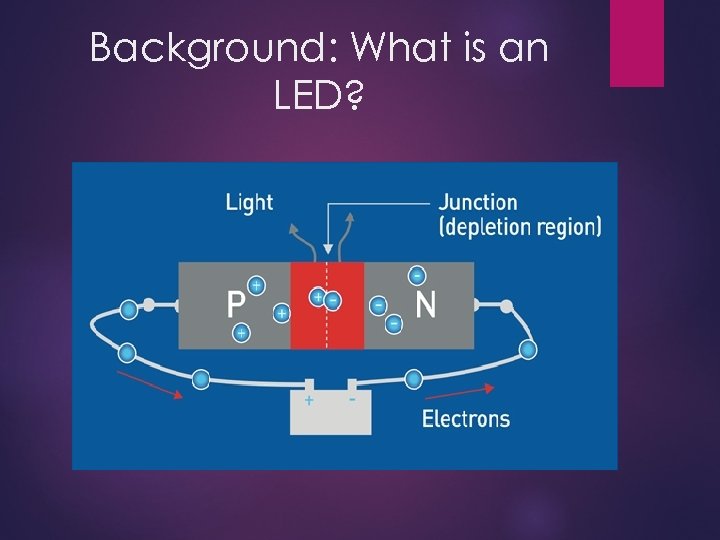
Background: What is an LED?
Advantages of LED Lighting Ultra-long lifetime No toxic mercury content No UV or IR radiation Small size Digitally controllable Fast-changing light intensity
LED Applications for a Home Replace incandescent and fluorescent light bulbs in homes Light sensors – responding to changing light levels TV - more dynamic images Outdoor lighting – for gardening
Problem LED lighting tends to have a high junction temperature, or operating temperature.
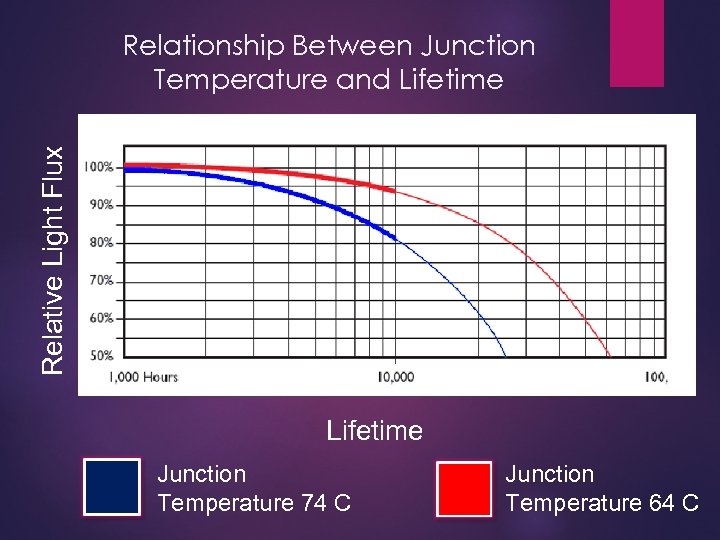
Relative Light Flux Relationship Between Junction Temperature and Lifetime Junction Temperature 74 C Junction Temperature 64 C
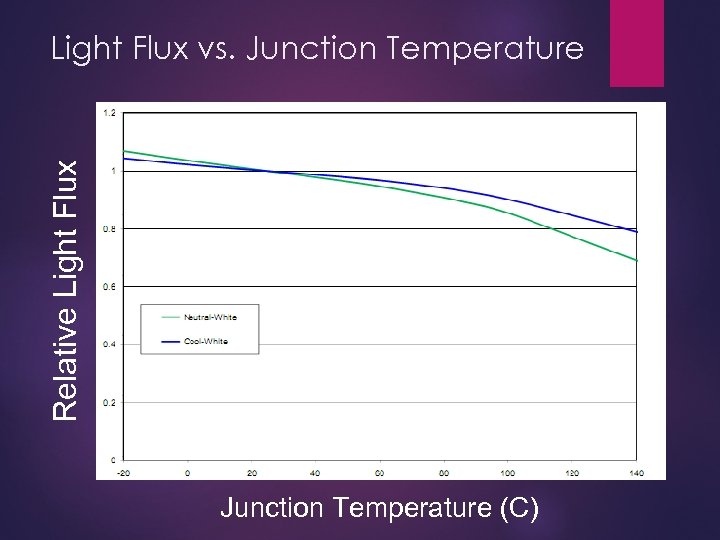
Relative Light Flux vs. Junction Temperature (C)
Goal / Purpose To increase LED efficiency by reducing LED junction temperature through the use of: - aluminum nitride (AIN) substrate - Phase-Change Material (PCM) - aluminum heat sink
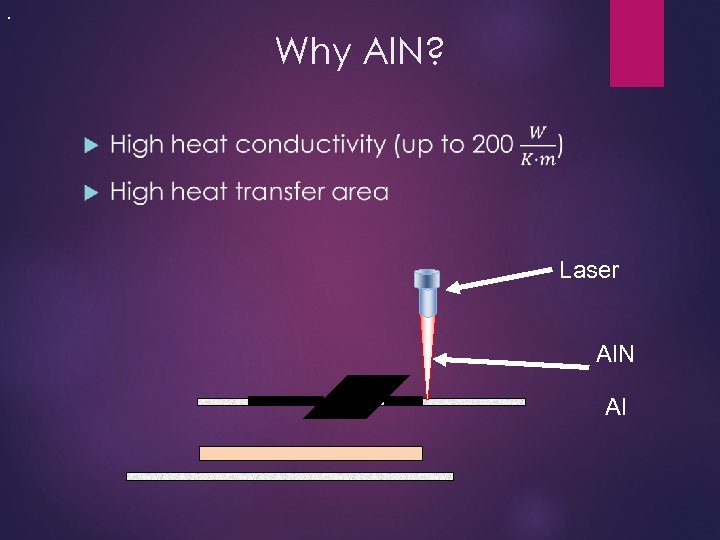
. Why Al. N? Laser Al. N Al
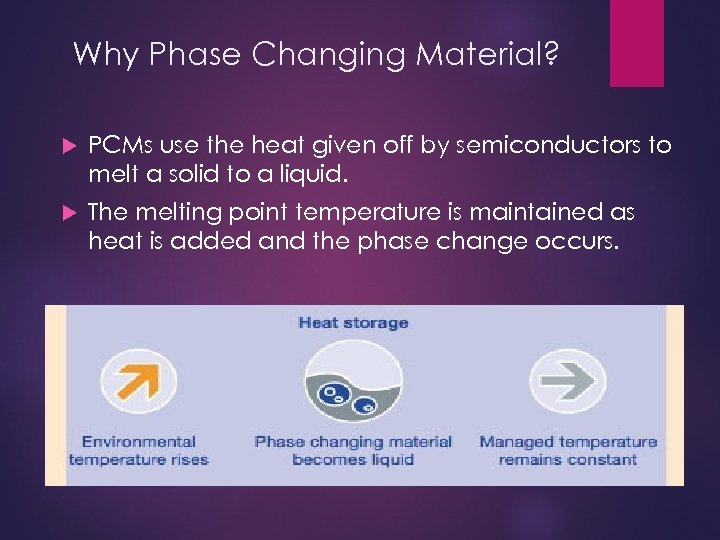
Why Phase Changing Material? PCMs use the heat given off by semiconductors to melt a solid to a liquid. The melting point temperature is maintained as heat is added and the phase change occurs.
Why a Heat Sink? A heat sink is a passive heat exchanger that cools a device by dissipating heat into surrounding air. By releasing heat, a heat sink can accelerate the freezing process when liquid PCM turns back into solid PCM.
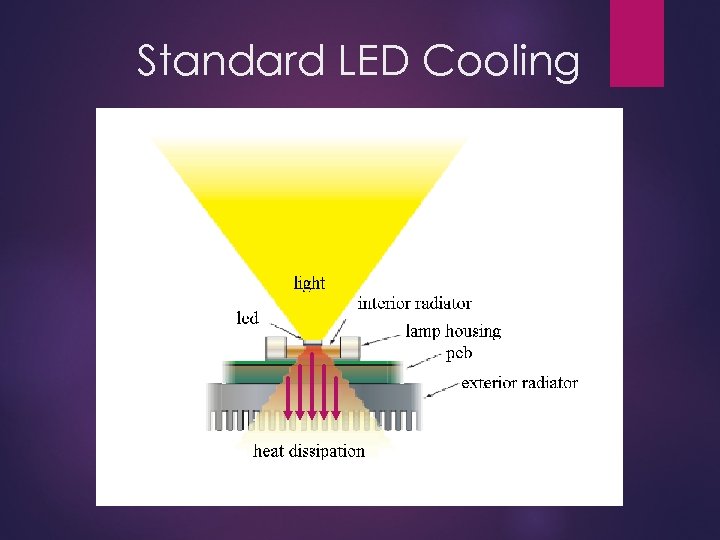
Standard LED Cooling
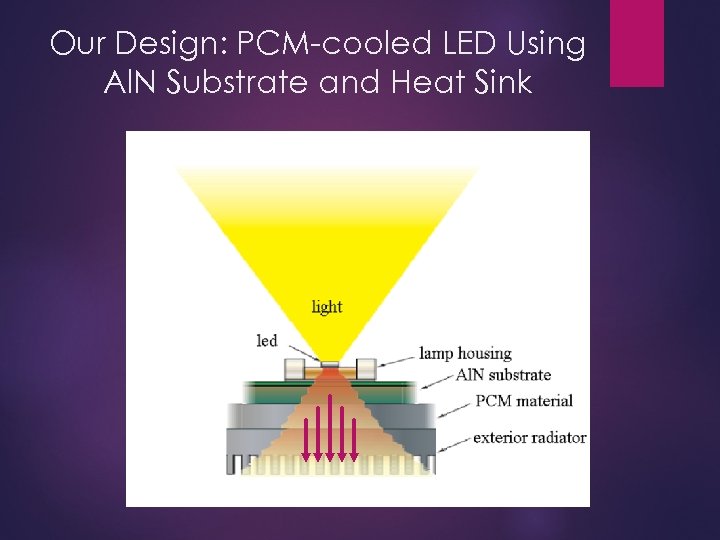
Our Design: PCM-cooled LED Using Al. N Substrate and Heat Sink
Efficiency Related to Cost Paraffine PCMs, Al. N, and Al come at low cost Although these lights are more expensive, the high upfront cost is compensated by improvement of LED lifetime. All three components might not be necessary to lower-power LEDs.
Conclusion The use of Al. N substrate, PCM cooling, and a heat sink in a single system can: 1) decrease the junction temperature of the LED 2) improve the lifetime of the LED 3) improve LED efficiency (by up to 20 %) 4) be economically feasible
References http: //ledsmagazine. com/features/2/5/8 2010 Philips solid-state lighting solutions, Inc. Evaluating Light Output Technical brief (Philips) U. S. Department of Energy

Acknowledgements A special thank you to the advisors, Dr. Mark Geller and Dr. Eli for their feedback and guidance.
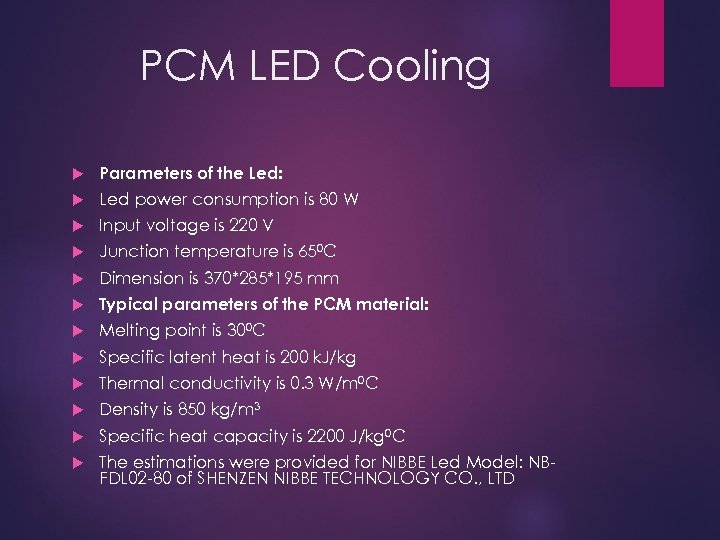
PCM LED Cooling Parameters of the Led: Led power consumption is 80 W Input voltage is 220 V Junction temperature is 650 C Dimension is 370*285*195 mm Typical parameters of the PCM material: Melting point is 300 C Specific latent heat is 200 k. J/kg Thermal conductivity is 0. 3 W/m 0 C Density is 850 kg/m 3 Specific heat capacity is 2200 J/kg 0 C The estimations were provided for NIBBE Led Model: NBFDL 02 -80 of SHENZEN NIBBE TECHNOLOGY CO. , LTD
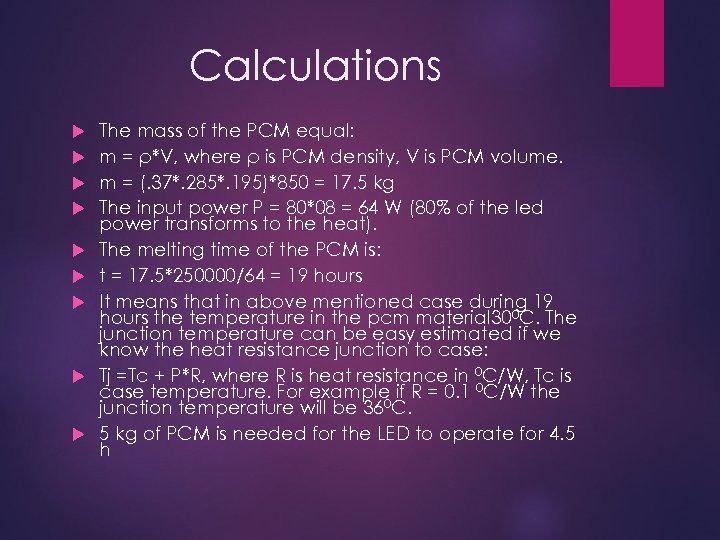
Calculations The mass of the PCM equal: m = ρ*V, where ρ is PCM density, V is PCM volume. m = (. 37*. 285*. 195)*850 = 17. 5 kg The input power P = 80*08 = 64 W (80% of the led power transforms to the heat). The melting time of the PCM is: t = 17. 5*250000/64 = 19 hours It means that in above mentioned case during 19 hours the temperature in the pcm material 300 C. The junction temperature can be easy estimated if we know the heat resistance junction to case: Tj =Tc + P*R, where R is heat resistance in 0 C/W, Tc is case temperature. For example if R = 0. 1 0 C/W the junction temperature will be 360 C. 5 kg of PCM is needed for the LED to operate for 4. 5 h
Скачать презентацию Electricity Consumers LED Lighting AHELI CHATTOPADHYAY ARIEL MARBER
f332752a2cb4c92cf804184b5b775f5d.ppt