 Скачать презентацию ELECTRIC VEHICLE TECHNOLOGY David Brandt P E
b9a8355d9b881bc01383d28388a7c11d.ppt
- Количество слайдов: 30



ELECTRIC VEHICLE TECHNOLOGY David Brandt, P. E.
The Basics: • EV: electric vehicle • Are EV’s practical? Golf courses and airports have thought so for many years. • But what about on the road? Are there EV’s among us? Yes, and not just in California! • Is there actually technology available to you and me to allow us to operate a practical EV? Yes!
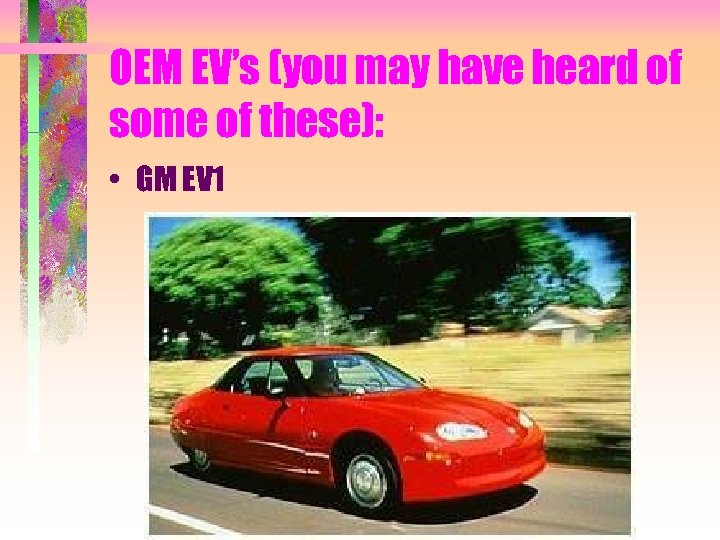
OEM EV’s (you may have heard of some of these): • GM EV 1
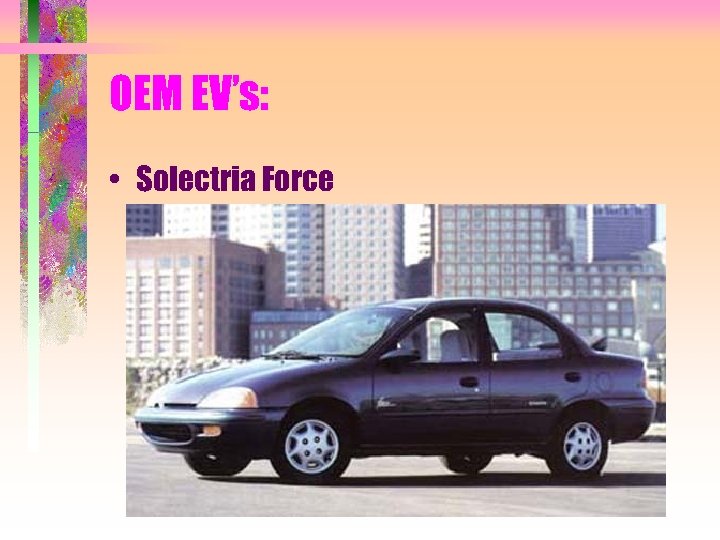
OEM EV’s: • Solectria Force
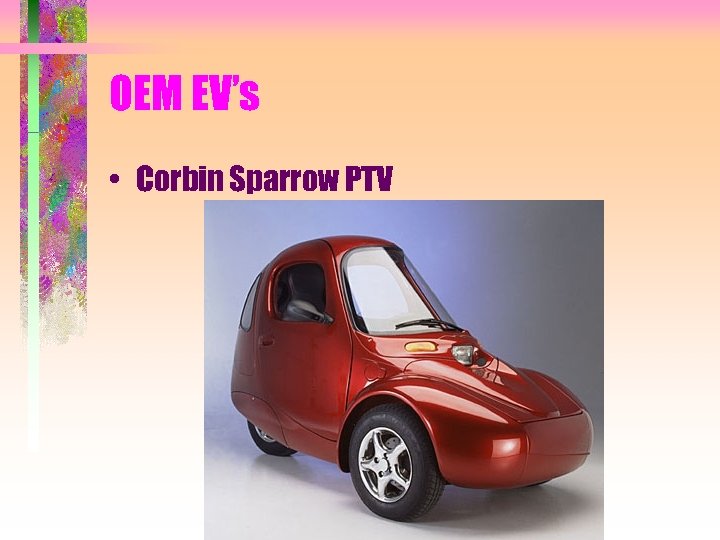
OEM EV’s • Corbin Sparrow PTV
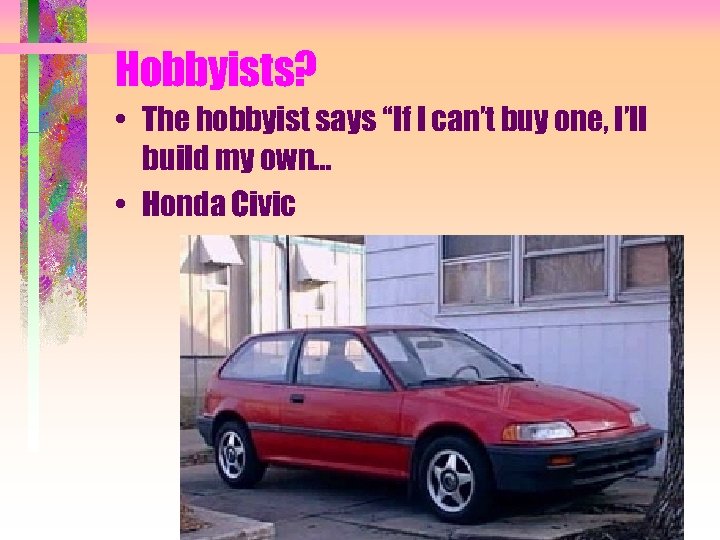
Hobbyists? • The hobbyist says “If I can’t buy one, I’ll build my own… • Honda Civic
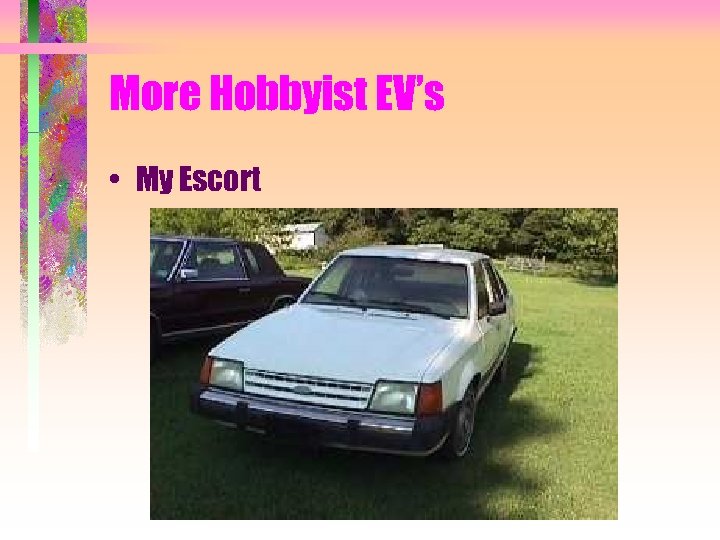
More Hobbyist EV’s • My Escort

More hobbyist EV’s • Ford Ranger
Components • What is out there that you need to have to build an EV (besides batteries)? – Motor – Controller – Charger – DC/DC Converter – Heater – Instrumentation – Contactor(s) – Safety Equipment
Motors • OEM’s: typically AC drive – Fail-safe design – Low initial torque, higher at speed – requires complicated electronics package • • AC speed control (similar to industrial) Inverter (convert DC to AC) High voltage (240 -350 VDC) Bearings only mechanical maintenance item
Motors • Hobbyist: typically brushed DC series wound – Motors are available and inexpensive – 100% torque at 0 RPM – Controllers are dirt cheap compared to AC – No inverter stage required – Lower voltage system (72 -156 VDC) – Bearings and brushes are potential maintenance items (change brushes every 100, 000 hours or so)
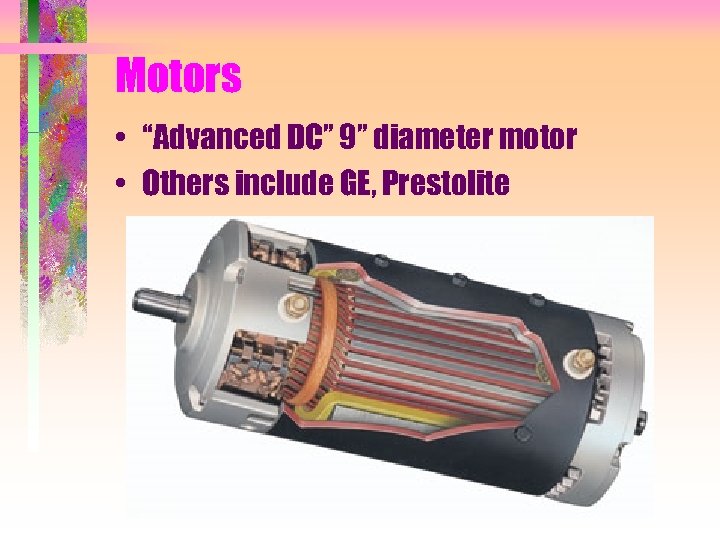
Motors • “Advanced DC” 9” diameter motor • Others include GE, Prestolite
Controllers • In General, Volts = Speed, Amps = Torque – Curtis • to 144 VDC, 500 Amps – Auburn Scientific • to 192 VDC, 1200 Amps – DCP • to 336 VDC, 600/1200 Amps – EVCL • “GODZILLA” to 336 VDC, 1200 Amps
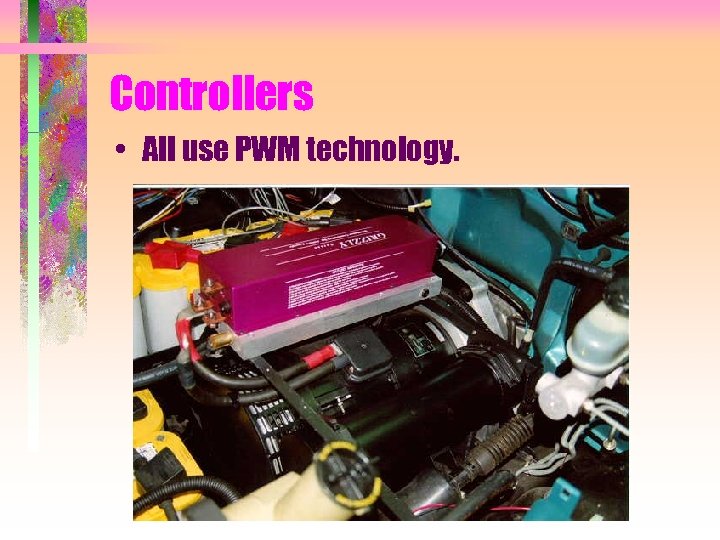
Controllers • All use PWM technology.
Chargers • OEM: uses weird connectors like inductive “paddle” or AVCON “gas pump” nozzle. • Hobbyist: How about something everyone already has, like 120 VAC household outlets and 240 VAC dryer outlets? • Simple (voltage regulated) to complicated (computer controlled charging algorithms) • More advanced charging required for advanced batteries (AGM)
DC/DC Converters • Uses PWM to step traction pack voltage down to 12 V to run car accessories. • Common in electronics use • Not widely available in the voltages required
Heater • Ceramic - Self-regulating temperature of about 180° F. • As temp. increases, resistance increases, decreasing power and stabilizing temp. • Therefore, more air across the element = more heat. • Typically 1500 W. Can be stacked for more heat.
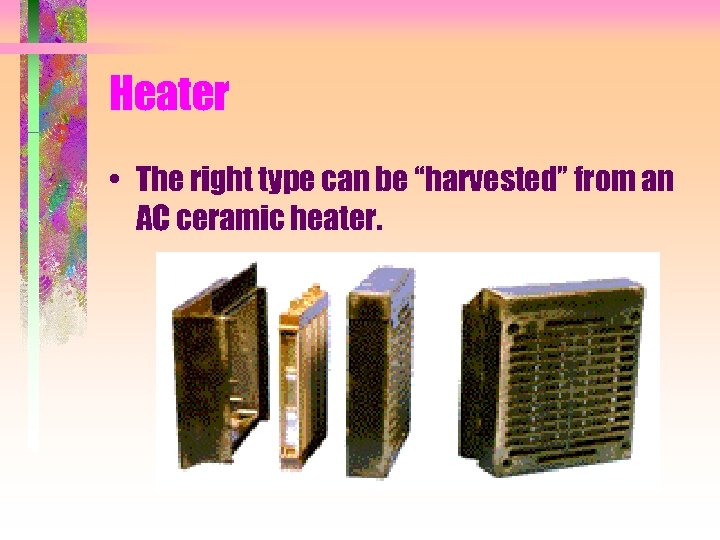
Heater • The right type can be “harvested” from an AC ceramic heater.
Instrumentation • Instrumentation can be as simple as an expanded scale voltmeter, but can be sophisticated, and include: – Traction Pack Voltmeter – Battery Current Ammeter – Motor Current Ammeter – Amp-hour/k. Wh meter (“E-Meter”)
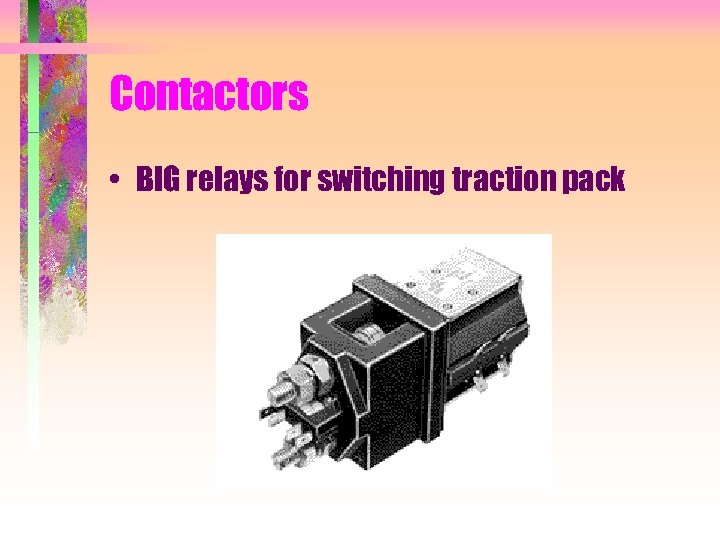
Contactors • BIG relays for switching traction pack
Safety • Inertia switch to deactivate contactor(s) – same as is used to shut off fuel pumps in ICE cars • • AGM batteries - no spillage Service disconnects - BIG circuit breakers Fuses, of course Traction pack is electrically isolated from frame • 8 G crash load rating recommended for battery boxes
Performance • Acceleration and speed – About the same as ICE – Ranges from “economy car” to “muscle car”. – DC motors great for drag racing – Current NEDRA record 8. 801 seconds in the 1/4 mile by “Current Eliminator”
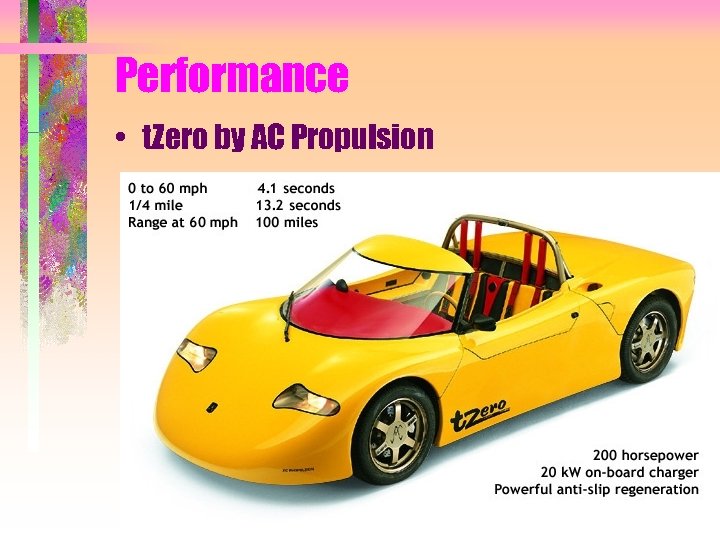
Performance • t. Zero by AC Propulsion
Performance - t. Zero • AC Propulsion's tzero out-accelerated a Ferrari F 355, a new Corvette, and a Porsche Carrera 4 in a series of impromptu 1/8 mile drag races held on January 22, 2000 at Moffett Field in Mountain View, California, and at Calstart's northern facility at the former Alameda Naval Air Station.

Performance - t. Zero • t. Zero mfg. By AC Propulsion versus Corvette
Performance • Range - typically 30 -60 miles – somewhat dependent on if you have a lead foot – great for commuting, which is where people use the most gas anyway. – Use an ice vehicle for long trips - the right tool for the right job. • Over 100 miles attainable with purposebuilt EV’s or using advanced batteries
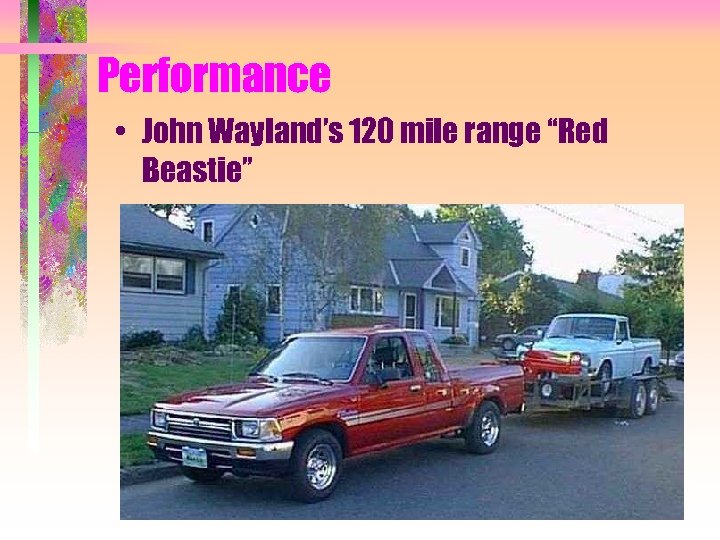
Performance • John Wayland’s 120 mile range “Red Beastie”
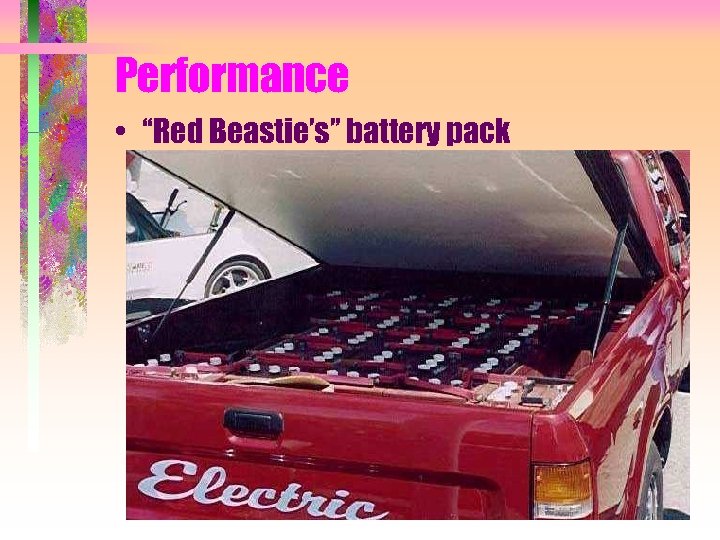
Performance • “Red Beastie’s” battery pack
Emissions • Common claim is EV’s just move the pollution • Point taken, but power plant emissions are scrubbed to a point not possible on a vehicle.
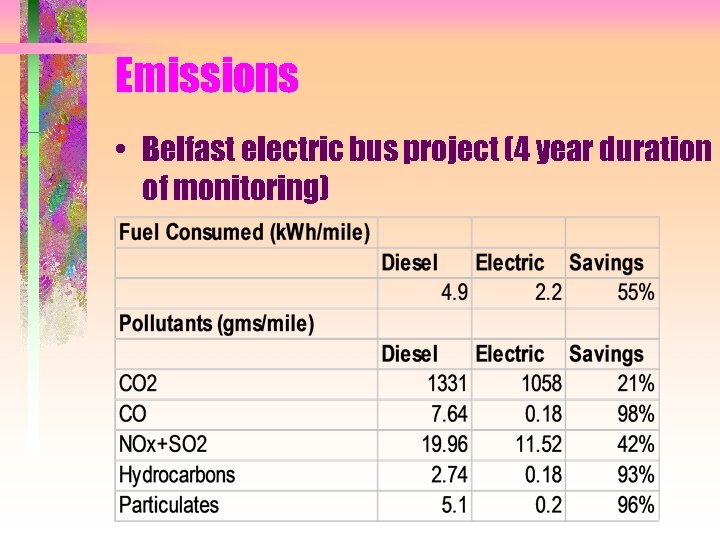
Emissions • Belfast electric bus project (4 year duration of monitoring)
Скачать презентацию ELECTRIC VEHICLE TECHNOLOGY David Brandt P E
b9a8355d9b881bc01383d28388a7c11d.ppt