 Скачать презентацию Electoral College AP Lectures 2012 Dr Rebecca Deen
5c55ab30e9e4d9dc65e88cd68c4af58d.ppt
- Количество слайдов: 35



Electoral College AP Lectures 2012 Dr. Rebecca Deen Department of Political Science UT Arlington deen@uta. edu
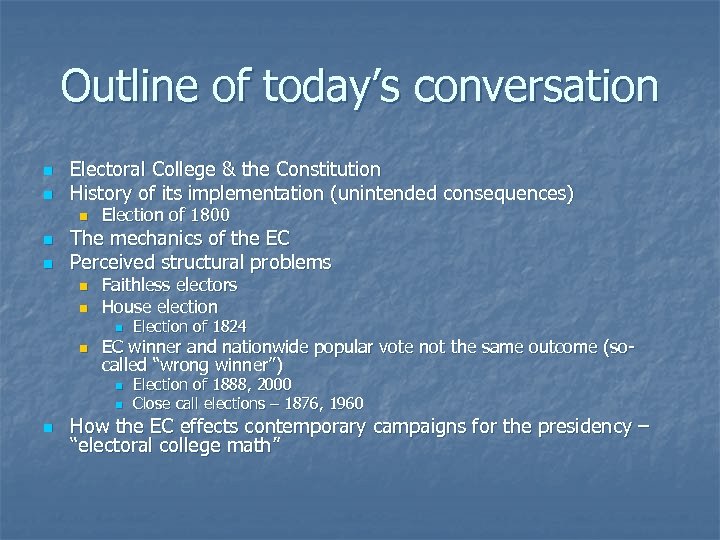
Outline of today’s conversation n n Electoral College & the Constitution History of its implementation (unintended consequences) n n n Election of 1800 The mechanics of the EC Perceived structural problems n n Faithless electors House election n n EC winner and nationwide popular vote not the same outcome (socalled “wrong winner”) n n n Election of 1824 Election of 1888, 2000 Close call elections – 1876, 1960 How the EC effects contemporary campaigns for the presidency – “electoral college math”
Electoral College History n http: //www. archives. gov/federal-register/electoral-college/about. html n Issues before the Constitutional Convention n Balance the experiences of the colonists n n n Tyranny under Great Britain Ineffective government under Articles of Confederation Conflicts and Compromises How does creating the Executive fit into this discussion? One of the ways these tensions were manifested was in the method of selecting the President and the length of his term.
Rules and the Structure of Debate Matter n n Life tenure? Hereditary succession? Rejected both of these, but beyond that, though, little consensus. Several ideas were floated: n Legislative selection? n n Pro? Con?
Rules/Structure cont’ n Legislative Selection would threaten executive independence and autonomy n Way to avoid that would be to have one long term n Problem? n n No accountability – not reflective of republican ideals n The Framers decided that this term limit was undesirable and the advocates for its removal had the votes, so it was removed. However, once it was removed, the long term wasn’t so attractive, so it was shortened. Once the term was shorted and reelection made possible, congressional selection didn’t look so good.
Rules/Structure cont’ n Direct election by populace? n Was reconsidered briefly, but was rejected (was twice defeated by overwhelming votes). n In addition to fearing direct democracy, the framers considered a national election impractical n Regional sectionalism too divisive n Worry about regional “favorite sons” who would govern with interests of region and not nation n (“We the People” from Preamble to Constitution)
Rules/Structure cont’ n Section through intermediaries Senators were already chosen through state legislatures n Another kind of intermediary body? - Electoral College n Late in session n Drew on other compromises n Reflected federalism n Independence of electors protected. n
Unintended Consequences Election of 1800 http: //www. history. org/history/teaching/enewsletter/volume 7/oct 08/teachstrategy. cfm n Historical context n n Young nation – tenuous international relationships Political disagreements over Constitution still present n Antifederalists Jeffersonian Democrats n n Federal v. state power n Slavery, taxes, land Campaign of 1800 n n n Fierce battle Outcome – Jefferson & Burr tied in EC with 73 votes Adams (Federalist) – 65 votes
12 th Amendment n n n Separate votes for P and VP This is concurrent with the rise of political parties, which were not accounted for by Framers Reinforced federalism – states decide their own elections laws
Mechanics of Electoral College today http: //www. archives. gov/federal-register/electoral-college/state_responsibilities. html#dates n Elector allocation – based on Great Compromise n n States have chosen to cast votes en bloc, with the exception of Maine and Nebraska n n Plurality of the state wide vote all the state’s electors December - the electors meet in their respective states and vote n n 538 electors – 270 to win Vote is mailed to VP (who is P of Senate) January - VP announces the vote on the floor of the Senate. n http: //www. youtube. com/watch? v=Bc. Gt 8 h. QZzg 4 from 2009
Mechanics cont’ n If no majority in Electoral College n n House decides P with each state getting 1 vote. Senate picks VP
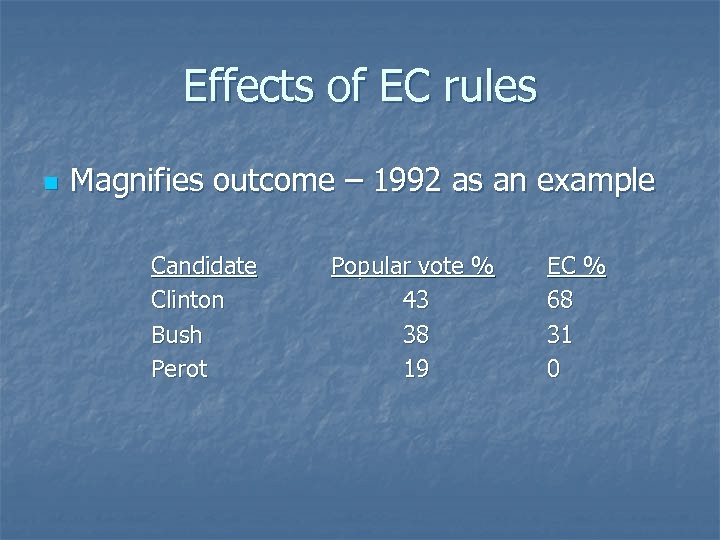
Effects of EC rules n Magnifies outcome – 1992 as an example Candidate Clinton Bush Perot Popular vote % 43 38 19 EC % 68 31 0
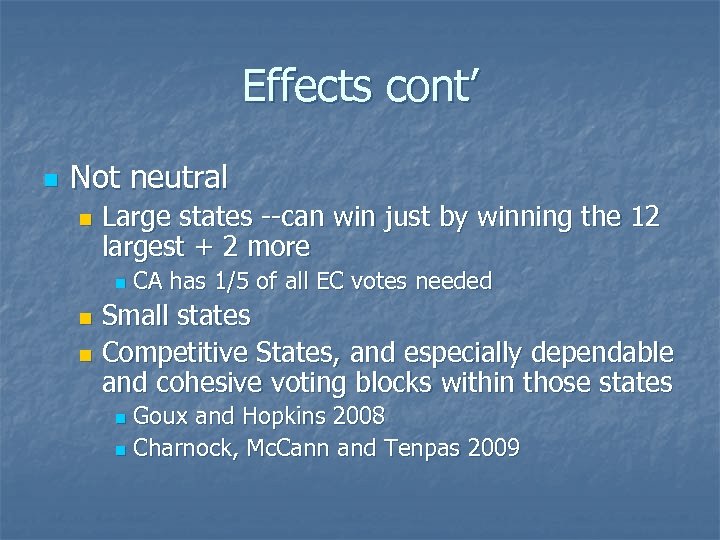
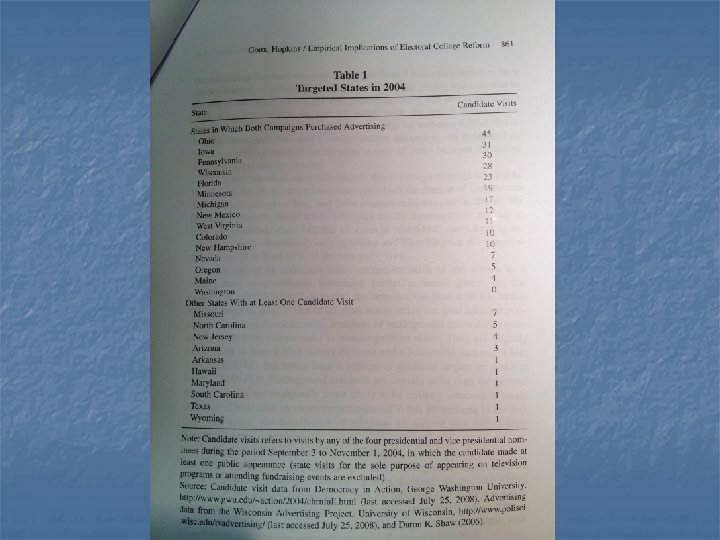
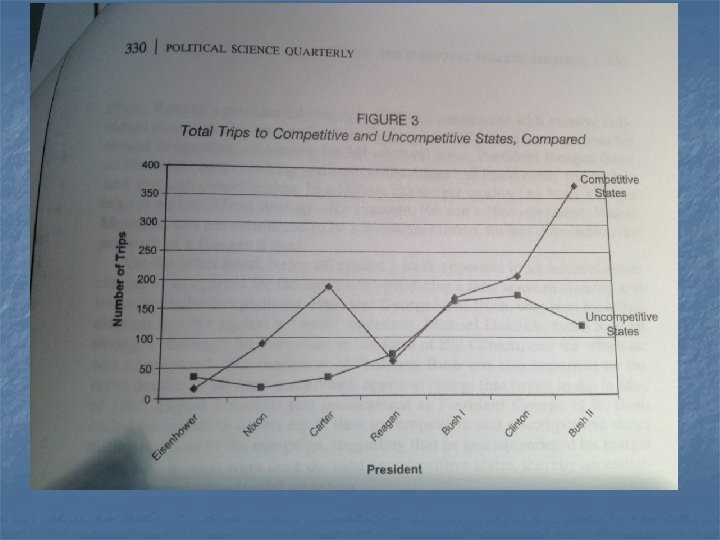
Effects cont’ n Not neutral n Large states --can win just by winning the 12 largest + 2 more n CA has 1/5 of all EC votes needed Small states n Competitive States, and especially dependable and cohesive voting blocks within those states n Goux and Hopkins 2008 n Charnock, Mc. Cann and Tenpas 2009 n
Perceived Structural Problems n n What is the biggest fear? - “wrong winner” Faithless electors n Rare http: //archive. fairvote. org/e_college/faithless. htm#1 Barbara Lett-Simons - 2000 n Gore elector from DC n n State have varied laws on electors n http: //www. archives. gov/federal-register/electoral-college/laws. html
Perceived problems cont’ n House election n Compromise with the 2 nd or 3 rd place candidate n Already saw this with election of 1800 n n 1824 - Andrew Jackson garnered some support beyond his regional base, however, wasn’t strong enough – he got a plurality but not a majority of the EC. Went to the House who chose John Quincy Adams by one vote. n n n Henry Clay, Speaker of the House, was the distant 4 th in the race. His supporters in the House, threw their support behind Adams, defeating Jackson. Clay was appointed Secretary of State and Jackson was furious, charging a corrupt bargain. http: //millercenter. org/president/jqadams/essays/biography/3
Perceived problems cont’ n n Win nation wide popular vote but not the EC majority Election of 1888 n n Cleveland won plurality but lost in EC to Harrison. 3000 votes in IN and 15000 in NY made difference. http: //www. presidency. ucsb. edu/showelection. php? year=1888 “The election outcome gave President Cleveland approximately 90, 000 popular votes more than Harrison, but Harrison carried the electoral college 233 to 168. Harrison's victory was based upon two swing states: New York and Indiana. ” http: //millercenter. org/president/bharrison/essays/biography/3
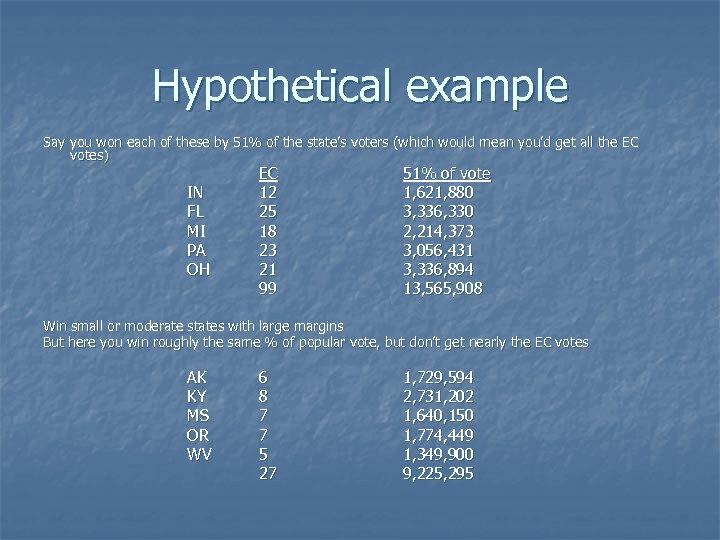
Hypothetical example Say you won each of these by 51% of the state’s voters (which would mean you’d get all the EC votes) IN FL MI PA OH EC 12 25 18 23 21 99 51% of vote 1, 621, 880 3, 336, 330 2, 214, 373 3, 056, 431 3, 336, 894 13, 565, 908 Win small or moderate states with large margins But here you win roughly the same % of popular vote, but don’t get nearly the EC votes AK KY MS OR WV 6 8 7 7 5 27 1, 729, 594 2, 731, 202 1, 640, 150 1, 774, 449 1, 349, 900 9, 225, 295
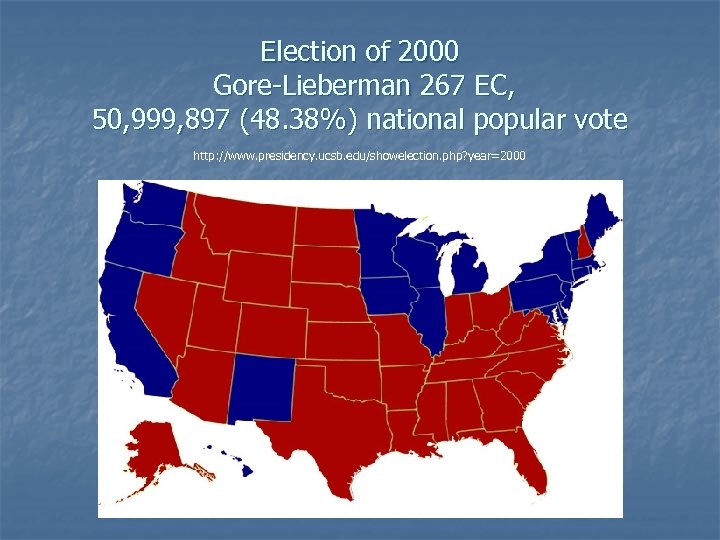
Election of 2000 Gore-Lieberman 267 EC, 50, 999, 897 (48. 38%) national popular vote http: //www. presidency. ucsb. edu/showelection. php? year=2000
Other “close calls” n Truman v. Dewey 1948 n n 12500 in CA would have changed outcome Kennedy v. Nixon 1960 n 900 votes in IA and MS would have deprived JFK the EC majority.
Other close calls cont’ n n However, the race that had many parallels to 2000: 1876 Tilden v. Hayes n n Reconstruction Economic recession Contested slates of electors (LA, FL, SC) http: //elections. harpweek. com/controversy. htm
Hayes v. Tilden cont’ n n n Very long and contested battle between the Republican Hayes and Democratic challenger Tilden. It appeared after the election that Tilden had won, in what would be the first victory for the Democrats since before the Civil War. With 20 electoral votes in dispute, the resolution was brokered by an Electoral Commission and a series of backroom negotiations The result was the GOP retaining presidency and the federal government giving home rule back to South – the end of Reconstruction. Library of Congress portal for scores of digital resources on election of 1876 http: //www. loc. gov/rr/program/bib/elections/election 1876. html
How will this affect 2012? n n We will examine several Electoral College calculators as we explore the truth that the rules of the game affect the way the game is played Let’s start by comparing and contrasting the primary/nomination season with the general election:
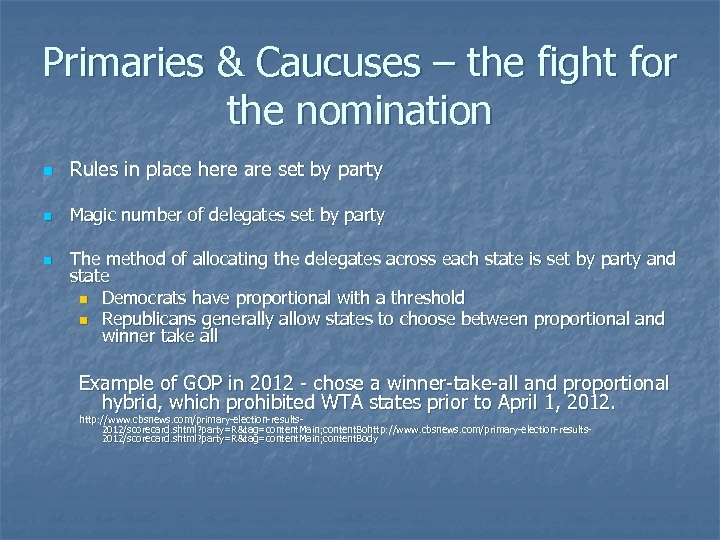
Primaries & Caucuses – the fight for the nomination n Rules in place here are set by party n Magic number of delegates set by party n The method of allocating the delegates across each state is set by party and state n Democrats have proportional with a threshold n Republicans generally allow states to choose between proportional and winner take all Example of GOP in 2012 - chose a winner-take-all and proportional hybrid, which prohibited WTA states prior to April 1, 2012. http: //www. cbsnews. com/primary-election-results 2012/scorecard. shtml? party=R&tag=content. Main; content. Body
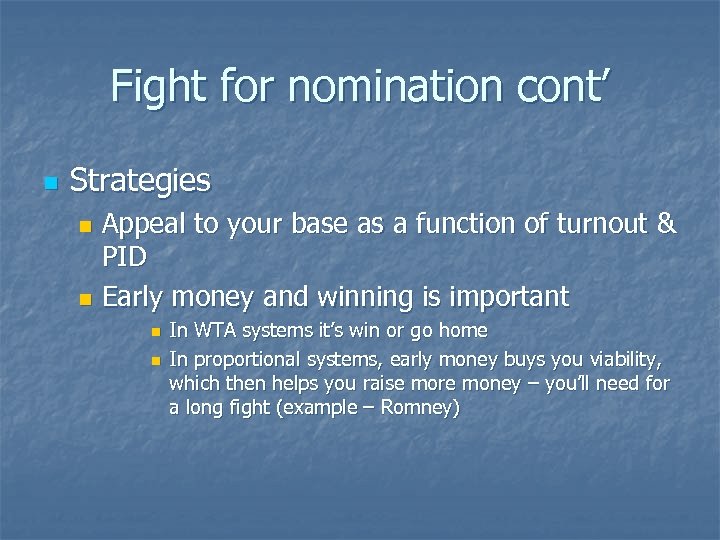
Fight for nomination cont’ n Strategies Appeal to your base as a function of turnout & PID n Early money and winning is important n n n In WTA systems it’s win or go home In proportional systems, early money buys you viability, which then helps you raise more money – you’ll need for a long fight (example – Romney)
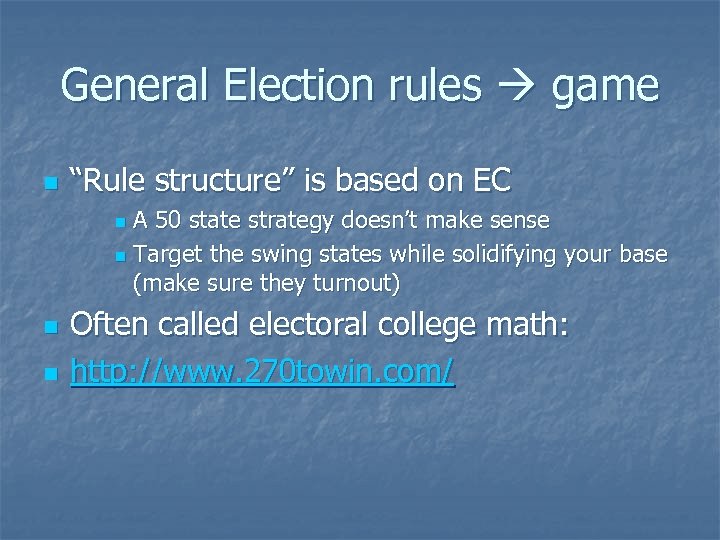
General Election rules game n “Rule structure” is based on EC A 50 state strategy doesn’t make sense n Target the swing states while solidifying your base (make sure they turnout) n n n Often called electoral college math: http: //www. 270 towin. com/
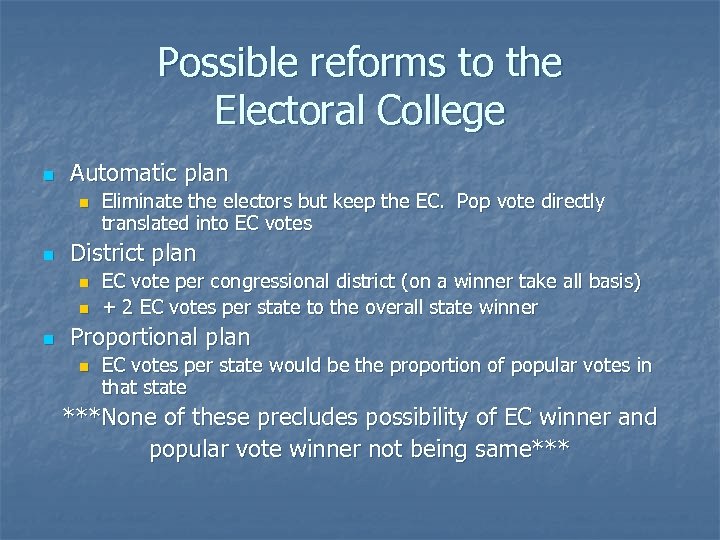
Possible reforms to the Electoral College n Automatic plan n n District plan n Eliminate the electors but keep the EC. Pop vote directly translated into EC votes EC vote per congressional district (on a winner take all basis) + 2 EC votes per state to the overall state winner Proportional plan n EC votes per state would be the proportion of popular votes in that state ***None of these precludes possibility of EC winner and popular vote winner not being same***
Possible reforms cont’ n Direct popular election n Do away with EC altogether. n n If no one gets a majority, there would be a runoff election between the two top vote getters What effects would this have?
Wrong winner – really? n Some argue that there really isn’t a “wrong winner” (Glenn 2003) n Framers of the Constitution intentionally vested decision making power in the states federalism. Constitutionally, there is no such thing as the national popular vote, only the statewide popular vote
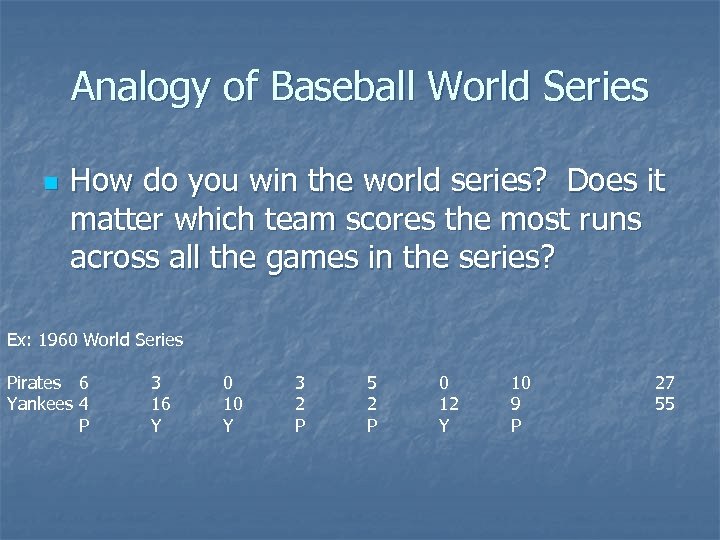
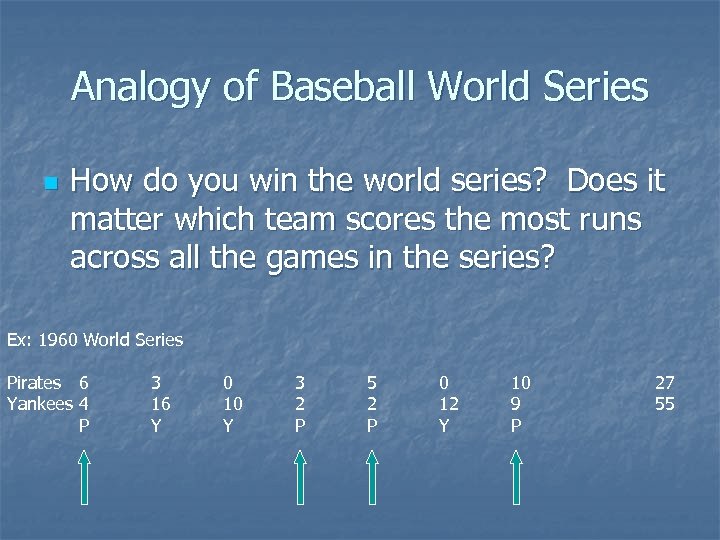
Analogy of Baseball World Series n How do you win the world series? Does it matter which team scores the most runs across all the games in the series? Ex: 1960 World Series Pirates 6 Yankees 4 P 3 16 Y 0 10 Y 3 2 P 5 2 P 0 12 Y 10 9 P 27 55
Analogy of Baseball World Series n How do you win the world series? Does it matter which team scores the most runs across all the games in the series? Ex: 1960 World Series Pirates 6 Yankees 4 P 3 16 Y 0 10 Y 3 2 P 5 2 P 0 12 Y 10 9 P 27 55
Is the system we have good for democracy? n Direct election system n n Candidate would win who appealed to that largest voting block - they would never have to consider the minority. Another component of the argument is that what dilutes the power of voters is not the electoral college, but lopsided outcomes. n n In close races, the swing voters matters In asymmetrical outcomes, there are no swing voters
…the rest of the story n n The Yankees were the favorite through much of the season. Came down to decisive Game 7 n Yankees had led through much of game n Pirates scored 5 runs in the 8 th to go ahead 9 -7 n Amazingly, the Yankees scored two in the top of the 9 th, to tie.
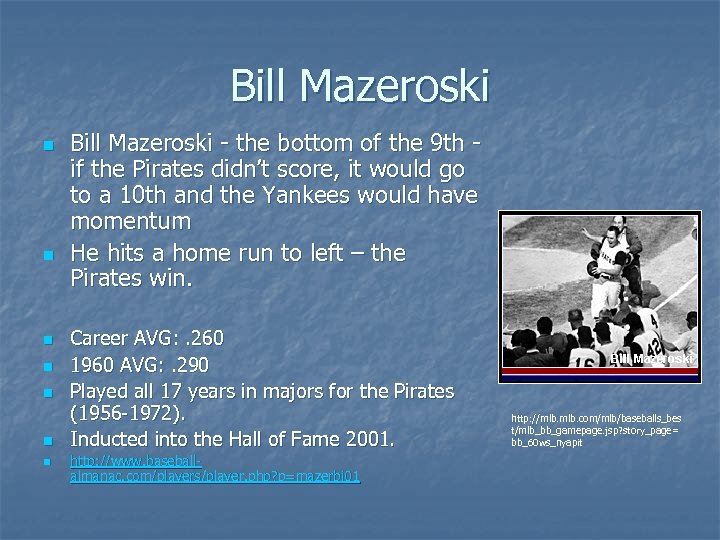
Bill Mazeroski n n n n Bill Mazeroski - the bottom of the 9 th if the Pirates didn’t score, it would go to a 10 th and the Yankees would have momentum He hits a home run to left – the Pirates win. Career AVG: . 260 1960 AVG: . 290 Played all 17 years in majors for the Pirates (1956 -1972). Inducted into the Hall of Fame 2001. http: //www. baseballalmanac. com/players/player. php? p=mazerbi 01 http: //mlb. com/mlb/baseballs_bes t/mlb_bb_gamepage. jsp? story_page= bb_60 ws_nyapit
Скачать презентацию Electoral College AP Lectures 2012 Dr Rebecca Deen
5c55ab30e9e4d9dc65e88cd68c4af58d.ppt